Confidential 10/7/2013 1
AGILE TOUR YEREVAN
05, October, 2013
Agile Requirements Management
Sona Sahakyan
QA Engineer, PSM
Agenda
 Introduction
 Product Backlog
 Backlog Items
 Acceptance criteria
 How Requirements Work in Scrum
 Agile RDM
 Decomposition
 Summary
2
Introduction
 Myth about Agile
 Agile Manifesto
 Working software over comprehensive documentation
 Value question
 Lean thinking
 RDM(Agile requirements definition and management)
3
4
Product Backlog
“The product backlog is an ordered list of everything that
might be needed in the product and is the single source of
requirements for any changes to be made to the product.
5
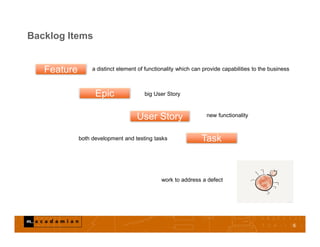
Backlog Items
6
Feature
Epic
User Story
Task
a distinct element of functionality which can provide capabilities to the business
big User Story
new functionality
both development and testing tasks
work to address a defect
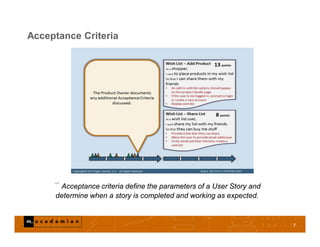
Acceptance Criteria
7
“ Acceptance criteria define the parameters of a User Story and
determine when a story is completed and working as expected.
Benefits of acceptance criteria
 Focusing the team on how a feature will work from the
customer’s perspective
 Removing ambiguity from the requirements
 Forming the tests that will confirm that the feature is
working and complete
 Limiting the developers to adding only the functionality
that the US requires
Confidential 10/7/2013 8
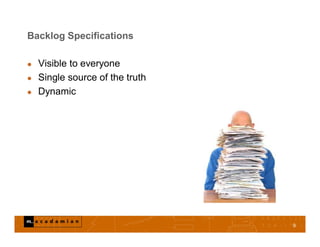
Backlog Specifications
 Visible to everyone
 Single source of the truth
 Dynamic
9
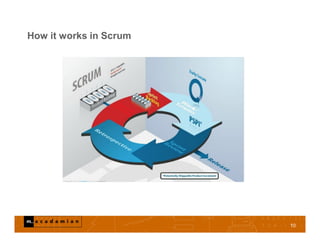
How it works in Scrum
10
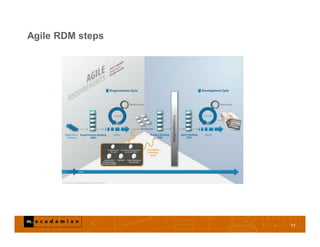
Agile RDM steps
11
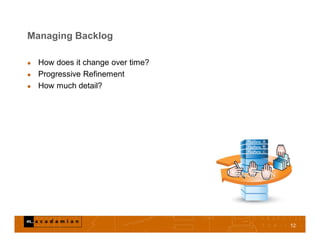
Managing Backlog
 How does it change over time?
 Progressive Refinement
 How much detail?
12
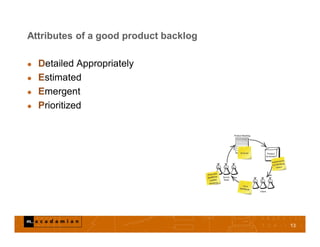
Attributes of a good product backlog
 Detailed Appropriately
 Estimated
 Emergent
 Prioritized
13
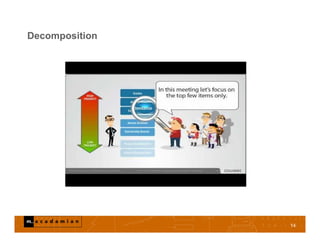
Decomposition
14
Summary
 Agile or not do not skip RDM
 Good backlog as a way to build a software that matters
 Acceptance criteria and its’ benefits
 Ways of managing backlog and requirements
15
16

6. Requirements Management, Macadamian - Sona Sahakyan

  • 1.
    Confidential 10/7/2013 1 AGILETOUR YEREVAN 05, October, 2013 Agile Requirements Management Sona Sahakyan QA Engineer, PSM
  • 2.
    Agenda  Introduction  ProductBacklog  Backlog Items  Acceptance criteria  How Requirements Work in Scrum  Agile RDM  Decomposition  Summary 2
  • 3.
    Introduction  Myth aboutAgile  Agile Manifesto  Working software over comprehensive documentation  Value question  Lean thinking  RDM(Agile requirements definition and management) 3
  • 4.
  • 5.
    Product Backlog “The productbacklog is an ordered list of everything that might be needed in the product and is the single source of requirements for any changes to be made to the product. 5
  • 6.
    Backlog Items 6 Feature Epic User Story Task adistinct element of functionality which can provide capabilities to the business big User Story new functionality both development and testing tasks work to address a defect
  • 7.
    Acceptance Criteria 7 “ Acceptancecriteria define the parameters of a User Story and determine when a story is completed and working as expected.
  • 8.
    Benefits of acceptancecriteria  Focusing the team on how a feature will work from the customer’s perspective  Removing ambiguity from the requirements  Forming the tests that will confirm that the feature is working and complete  Limiting the developers to adding only the functionality that the US requires Confidential 10/7/2013 8
  • 9.
    Backlog Specifications  Visibleto everyone  Single source of the truth  Dynamic 9
  • 10.
    How it worksin Scrum 10
  • 11.
  • 12.
    Managing Backlog  Howdoes it change over time?  Progressive Refinement  How much detail? 12
  • 13.
    Attributes of agood product backlog  Detailed Appropriately  Estimated  Emergent  Prioritized 13
  • 14.
  • 15.
    Summary  Agile ornot do not skip RDM  Good backlog as a way to build a software that matters  Acceptance criteria and its’ benefits  Ways of managing backlog and requirements 15
  • 16.