1
2
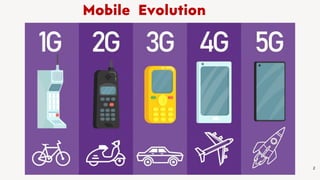
Mobile Evolution
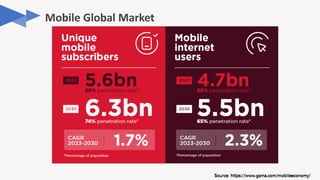
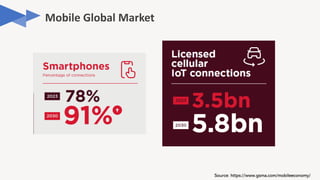
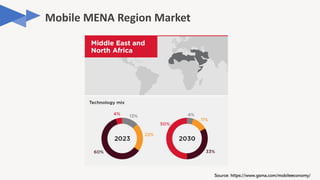
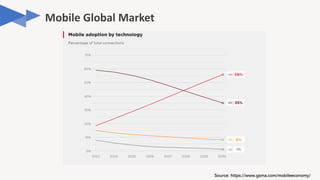
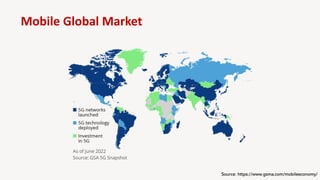
Source: https://www.gsma.com/mobileeconomy/
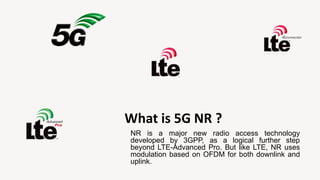
NR is a major new radio access technology
developed by 3GPP, as a logical further step
beyond LTE-Advanced Pro. But like LTE, NR uses
modulation based on OFDM for both downlink and
uplink.
5G
challenges
5G shall provide wireless connectivity for
anything that can benefit from being
connected
To enable a truly networked society, there are three
major challenges:
• A massive growth in the number of connected devices.
• A massive growth in traffic volume.
• A wide range of applications with diverse requirements
and characteristics.
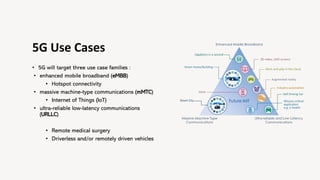
5G Use Cases
• 5G will target three use case families :
• enhanced mobile broadband (eMBB)
• Hotspot connectivity
• massive machine-type communications (mMTC)
• Internet of Things (IoT)
• ultra-reliable low-latency communications
(URLLC)
• Remote medical surgery
• Driverless and/or remotely driven vehicles
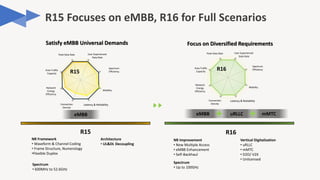
R15 Focuses on eMBB, R16 for Full Scenarios
R15
NR Framework
• Waveform & Channel Coding
• Frame Structure, Numerology
•Flexible Duplex
Architecture
• UL&DL Decoupling
NR Improvement
• New Multiple Access
• eMBB Enhancement
• Self-Backhaul
Vertical Digitalization
• uRLLC
• mMTC
• D2D/ V2X
• Unlicensed
R16
Focus on Diversified Requirements
Satisfy eMBB Universal Demands
eMBB eMBB
Peak Data Rate User Experienced
Data Rate
Spectrum
Efficiency
Mobility
Latency & Reliability
Connection
Density
Area Traffic
Capacity
Network
Energy
Efficiency
R16
Peak Data Rate User Experienced
Data Rate
Spectrum
Efficiency
Mobility
Latency & Reliability
Connection
Density
Area Traffic
Capacity
Network
Energy
Efficiency
R15
uRLLC mMTC
Spectrum
• 600MHz to 52.6GHz
Spectrum
• Up to 100GHz
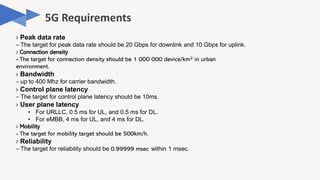
› Peak data rate
– The target for peak data rate should be 20 Gbps for downlink and 10 Gbps for uplink.
› Connection density
- The target for connection density should be 1 000 000 device/km2 in urban
environment.
› Bandwidth
– up to 400 Mhz for carrier bandwidth.
› Control plane latency
– The target for control plane latency should be 10ms.
› User plane latency
• For URLLC, 0.5 ms for UL, and 0.5 ms for DL.
• For eMBB, 4 ms for UL, and 4 ms for DL.
› Mobility
- The target for mobility target should be 500km/h.
› Reliability
– The target for reliability should be 0.99999 msec within 1 msec.
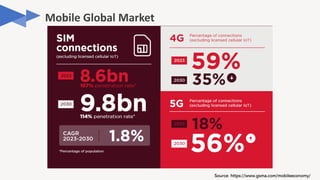
Source: https://www.gsma.com/mobileeconomy/
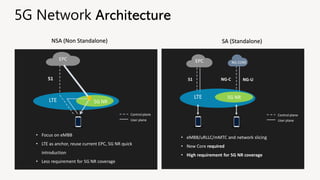
NSA (Non Standalone)
• Focus on eMBB
• LTE as anchor, reuse current EPC, 5G NR quick
introduction
• Less requirement for 5G NR coverage
SA (Standalone)
• eMBB/uRLLC/mMTC and network slicing
• New Core required
• High requirement for 5G NR coverage
LTE
S1
EPC
Control plane
User plane
5G NR
S1
EPC
LTE 5G NR
NG-C
NG CORE
NG-U
Control plane
User plane
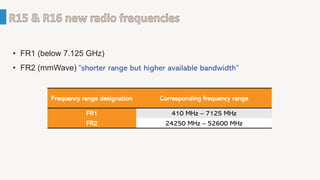
R15 & R16 new radio frequencies
• FR1 (below 7.125 GHz)
• FR2 (mmWave) “shorter range but higher available bandwidth”
Frequency range designation Corresponding frequency range
FR1 410 MHz – 7125 MHz
FR2 24250 MHz – 52600 MHz
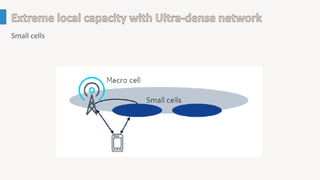
Extreme local capacity with Ultra-dense network
Small cells
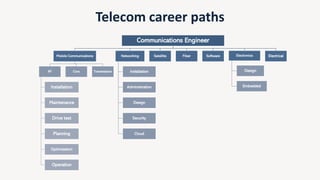
Telecom career paths
Communications Engineer
Mobile Communications
RF
Installation
Maintenance
Drive test
Planning
Optimization
Operation
Core Transmission
Networking
Installation
Administration
Design
Security
Cloud
Satellite Fiber Software Electronics
Design
Embedded
Electrical
NEEDED
SKILLS
• TECHNICAL
• ENGLISH
• PERSONAL SKILLS
How we get
there?
Build a good CV
Make a LinkedIn Profile
Enhance your Knowledge and skills
20
“Business opportunities are
like buses. There’s always
another one coming.”
Richard Branson
21
Thank you
Waleed Elsafoury
01004066730
www.waleedelsafoury.net

5G Presentation for Egyptian Engineering Syndicate.pdf

  • 1.
  • 2.
  • 3.
  • 4.
  • 5.
  • 6.
  • 7.
  • 8.
    NR is amajor new radio access technology developed by 3GPP, as a logical further step beyond LTE-Advanced Pro. But like LTE, NR uses modulation based on OFDM for both downlink and uplink.
  • 9.
    5G challenges 5G shall providewireless connectivity for anything that can benefit from being connected To enable a truly networked society, there are three major challenges: • A massive growth in the number of connected devices. • A massive growth in traffic volume. • A wide range of applications with diverse requirements and characteristics.
  • 10.
    5G Use Cases •5G will target three use case families : • enhanced mobile broadband (eMBB) • Hotspot connectivity • massive machine-type communications (mMTC) • Internet of Things (IoT) • ultra-reliable low-latency communications (URLLC) • Remote medical surgery • Driverless and/or remotely driven vehicles
  • 11.
    R15 Focuses oneMBB, R16 for Full Scenarios R15 NR Framework • Waveform & Channel Coding • Frame Structure, Numerology •Flexible Duplex Architecture • UL&DL Decoupling NR Improvement • New Multiple Access • eMBB Enhancement • Self-Backhaul Vertical Digitalization • uRLLC • mMTC • D2D/ V2X • Unlicensed R16 Focus on Diversified Requirements Satisfy eMBB Universal Demands eMBB eMBB Peak Data Rate User Experienced Data Rate Spectrum Efficiency Mobility Latency & Reliability Connection Density Area Traffic Capacity Network Energy Efficiency R16 Peak Data Rate User Experienced Data Rate Spectrum Efficiency Mobility Latency & Reliability Connection Density Area Traffic Capacity Network Energy Efficiency R15 uRLLC mMTC Spectrum • 600MHz to 52.6GHz Spectrum • Up to 100GHz
  • 12.
    › Peak datarate – The target for peak data rate should be 20 Gbps for downlink and 10 Gbps for uplink. › Connection density - The target for connection density should be 1 000 000 device/km2 in urban environment. › Bandwidth – up to 400 Mhz for carrier bandwidth. › Control plane latency – The target for control plane latency should be 10ms. › User plane latency • For URLLC, 0.5 ms for UL, and 0.5 ms for DL. • For eMBB, 4 ms for UL, and 4 ms for DL. › Mobility - The target for mobility target should be 500km/h. › Reliability – The target for reliability should be 0.99999 msec within 1 msec.
  • 13.
  • 14.
    NSA (Non Standalone) •Focus on eMBB • LTE as anchor, reuse current EPC, 5G NR quick introduction • Less requirement for 5G NR coverage SA (Standalone) • eMBB/uRLLC/mMTC and network slicing • New Core required • High requirement for 5G NR coverage LTE S1 EPC Control plane User plane 5G NR S1 EPC LTE 5G NR NG-C NG CORE NG-U Control plane User plane
  • 15.
    R15 & R16new radio frequencies • FR1 (below 7.125 GHz) • FR2 (mmWave) “shorter range but higher available bandwidth” Frequency range designation Corresponding frequency range FR1 410 MHz – 7125 MHz FR2 24250 MHz – 52600 MHz
  • 17.
    Extreme local capacitywith Ultra-dense network Small cells
  • 18.
    Telecom career paths CommunicationsEngineer Mobile Communications RF Installation Maintenance Drive test Planning Optimization Operation Core Transmission Networking Installation Administration Design Security Cloud Satellite Fiber Software Electronics Design Embedded Electrical
  • 19.
  • 20.
    How we get there? Builda good CV Make a LinkedIn Profile Enhance your Knowledge and skills 20
  • 21.
    “Business opportunities are likebuses. There’s always another one coming.” Richard Branson 21
  • 22.