CASE STUDY ON SDLC
-BY YUKTA BATRA
(19CSU364)
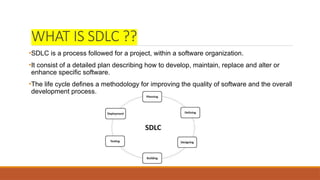
WHAT IS SDLC ??
•SDLC is a process followed for a project, within a software organization.
•It consist of a detailed plan describing how to develop, maintain, replace and alter or
enhance specific software.
•The life cycle defines a methodology for improving the quality of software and the overall
development process.
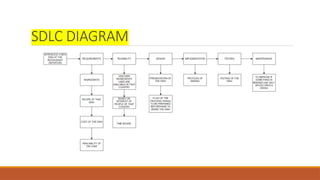
SDLC DIAGRAM
Stage 1:Requirement Analysis
Requirement analysis is the most important and fundamental stage in SDLC.
It is performed by the senior members of the team with inputs from the customer, the sales
department, market surveys and domain experts in the industry.
This information is then used to plan the basic project approach and to conduct product
feasibility study in the economical, operational and technical areas.
CASE STUDY
1. Ingredients will be required.
2. Recipe of the dish should be known.
3. Cost of the dish should be estimated beforehand.
4. It is to be checked whether the chef is available or not.
Stage 2:Feasibility Analysis
Planning for the quality assurance requirements and identification of the risks associated
with the project.
The outcome of the technical feasibility study is to define the various technical approaches
that can be followed to implement the project successfully with minimum risks.
CASE STUDY
1. In feasibility check we can check whether the ingredients used in that new dish is
available in that country or not.
2. It should be based on interest and taste of that country whether that area is full of only
vegetarian people and new dish is non vegetarian or vica versa.
3. It should be checked beforehand that dish should be served to the customer in
particular time.
Stage 3: Design phase
A design approach clearly defines all the architectural modules of the product along with
its communication and data flow representation with the external and third party
modules (if any).
The internal design of all the modules of the proposed architecture should be clearly
defined.
CASE STUDY
1. It includes how the dish should be presented to the customer.
2. If anything like gravy etc should be made beforehand or not .
Stage 4: Implementation
The implementation of design begins concerning writing code.
Developers have to follow the coding guidelines described by their management
and programming tools like compilers, interpreters, debuggers, etc. are used to
develop and implement the code.
CASE STUDY
1. It includes process of making the dish.
Stage 5: Testing
This stage refers to the testing only stage of the product where product defects are
reported, tracked, fixed and retested, until the product reaches the quality standards.
CASE STUDY
1. Tasting of the dish and taking review from the customers.
Stage 6: Maintenance
Once the product is tested and ready to be deployed it is released formally in the
appropriate market.
Sometimes product deployment happens in stages as per the business strategy of that
organization.
 The product may first be released in a limited segment and tested in the real business
environment
CASE STUDY
1. To work on the feedback of the customers.
2. To add and remove things like salt, spices after testing phase.

559450869-Case-Study-on-Study-on-Sdlc.pptx document

  • 1.
    CASE STUDY ONSDLC -BY YUKTA BATRA (19CSU364)
  • 2.
    WHAT IS SDLC?? •SDLC is a process followed for a project, within a software organization. •It consist of a detailed plan describing how to develop, maintain, replace and alter or enhance specific software. •The life cycle defines a methodology for improving the quality of software and the overall development process.
  • 3.
  • 4.
    Stage 1:Requirement Analysis Requirementanalysis is the most important and fundamental stage in SDLC. It is performed by the senior members of the team with inputs from the customer, the sales department, market surveys and domain experts in the industry. This information is then used to plan the basic project approach and to conduct product feasibility study in the economical, operational and technical areas. CASE STUDY 1. Ingredients will be required. 2. Recipe of the dish should be known. 3. Cost of the dish should be estimated beforehand. 4. It is to be checked whether the chef is available or not.
  • 5.
    Stage 2:Feasibility Analysis Planningfor the quality assurance requirements and identification of the risks associated with the project. The outcome of the technical feasibility study is to define the various technical approaches that can be followed to implement the project successfully with minimum risks. CASE STUDY 1. In feasibility check we can check whether the ingredients used in that new dish is available in that country or not. 2. It should be based on interest and taste of that country whether that area is full of only vegetarian people and new dish is non vegetarian or vica versa. 3. It should be checked beforehand that dish should be served to the customer in particular time.
  • 6.
    Stage 3: Designphase A design approach clearly defines all the architectural modules of the product along with its communication and data flow representation with the external and third party modules (if any). The internal design of all the modules of the proposed architecture should be clearly defined. CASE STUDY 1. It includes how the dish should be presented to the customer. 2. If anything like gravy etc should be made beforehand or not .
  • 7.
    Stage 4: Implementation Theimplementation of design begins concerning writing code. Developers have to follow the coding guidelines described by their management and programming tools like compilers, interpreters, debuggers, etc. are used to develop and implement the code. CASE STUDY 1. It includes process of making the dish.
  • 8.
    Stage 5: Testing Thisstage refers to the testing only stage of the product where product defects are reported, tracked, fixed and retested, until the product reaches the quality standards. CASE STUDY 1. Tasting of the dish and taking review from the customers.
  • 9.
    Stage 6: Maintenance Oncethe product is tested and ready to be deployed it is released formally in the appropriate market. Sometimes product deployment happens in stages as per the business strategy of that organization.  The product may first be released in a limited segment and tested in the real business environment CASE STUDY 1. To work on the feedback of the customers. 2. To add and remove things like salt, spices after testing phase.