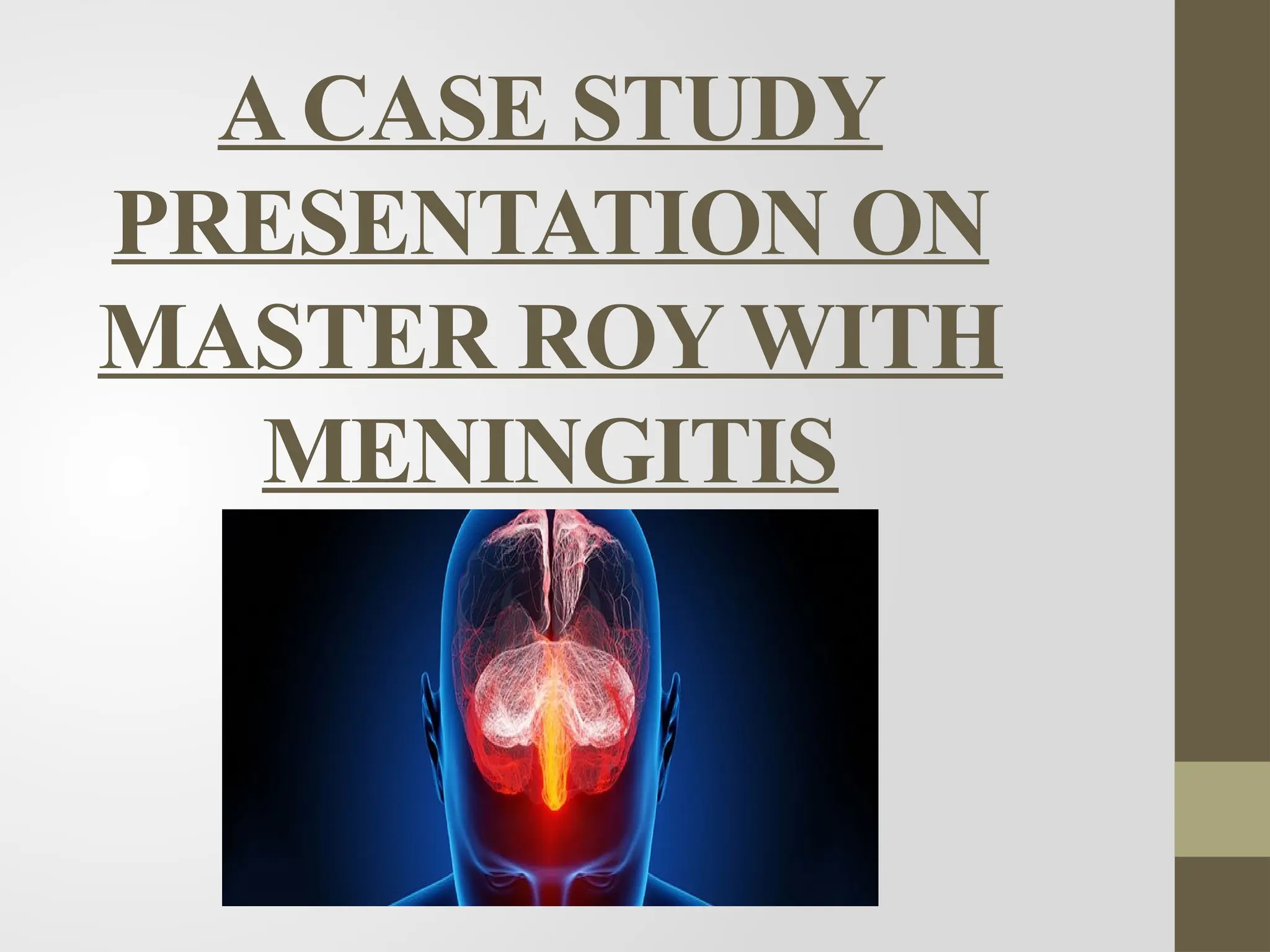
A CASE STUDY
PRESENTATION ON
MASTER ROY WITH
MENINGITIS
HISTORY OF THE CHILD
CHILD`S PROFILE
• Name : Master Roy
• Age : 4 years
• Sex : Male
• Date of admission : 11-05-2021
• Diagnosis : Meningitis
PRESENT CHIEF COMPLAINTS
• Fever, nausea and vomiting since 2 days
• Drowsy since 1 day.
PAST MEDICAL HISTORY
Admitted at his 1 year of age for pneumonia for 6 days,
and treated with antibiotics.
BIRTH HISTORY
ANTENATAL HISTORY: Not significant
NATAL HISTORY:
• Place of birth : Hospital
• Mode of delivery : Full term normal delivery
• Birth weight : 2.8 kg
• Apgar : 9/10
POSTNATAL HISTORY:
• Health status of mother after delivery was good.
• Child is having sucking and swallowing reflex.
• Breastfed for 6 months, weaning was started at the age of
6th
month.
NUTRITIONAL HISTORY
• Exclusively breastfeed for 6 months.
• Weaning was started at the age of 6th
month.
• No history of allergy pertaining to any food.
• Consumes normal diet.
• Degree of malnutrition was about 100% . He is well
nourished and having normal nutritional status.
FAMILY HISTORY
• Belongs to a nuclear family.
• Master Roy is the 2nd
child and the first child is 6 years old
and healthy.
• No report of any kind of communicable diseases and
hereditary diseases.
IMMUNIZATION HISTORY
Master Roy has been vaccinated up to 24 months of age.
PHYSICAL EXAMINATION
GENERAL OBSERVATION:
• Moderately build, active and well nourished.
• Well groomed and hygienic.
• Conscious and oriented.
VITAL SIGNS:
• Temperature : 100 degree F (pyrexia)
• Pulse rate : 122 beats/min (tachycardia)
• Respiration : 34 breaths/min (tachypnea)
• Spo2 : 94% (decreased)
PHYSICAL EXAMINATION FINDINGS:
• Pyrexia.
• Tachypnea.
• Tachycardia.
• Decreased spo2 level.
• Presence of papilledema.
• Kerning`s sign positive.
• Severe neck rigidity.
GROWTH AND DEVELOPMENT
• Anthropometric measurements are normal.
• Mile stones- Master Roy had attained all the milestones at
appropriate age and his growth and
development is appropriate for the age.
LAB INVESGTIGATION
• Hemoglobin- 12mg/dl
• N/L- 70/20%
• CSF analysis:
- Total count: 200per mm
- Glucose : 30mg/dl
- Protein : 200mg/dl
MEDICATION
• Syp. Paracetomol
• Inj. Ceftriaxone
DISEASE CONDITION
MENINGITIS
DEFINITION
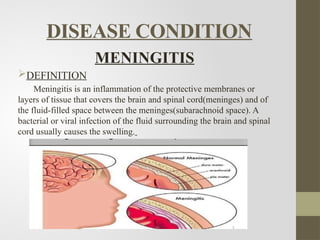
Meningitis is an inflammation of the protective membranes or
layers of tissue that covers the brain and spinal cord(meninges) and of
the fluid-filled space between the meninges(subarachnoid space). A
bacterial or viral infection of the fluid surrounding the brain and spinal
cord usually causes the swelling.
INCIDENCE
Estimated 2.82 million cases of meningitis occur globally each
year, with more than 300,000 deaths – a third of which occur in
children between 1 month and 5 years of age.
TYPES AND CAUSES
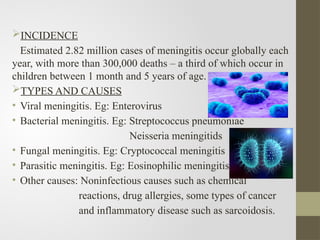
• Viral meningitis. Eg: Enterovirus
• Bacterial meningitis. Eg: Streptococcus pneumoniae
Neisseria meningitids
• Fungal meningitis. Eg: Cryptococcal meningitis
• Parasitic meningitis. Eg: Eosinophilic meningitis.
• Other causes: Noninfectious causes such as chemical
reactions, drug allergies, some types of cancer
and inflammatory disease such as sarcoidosis.
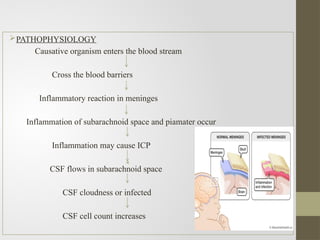
PATHOPHYSIOLOGY
Causative organism enters the blood stream
Cross the blood barriers
Inflammatory reaction in meninges
Inflammation of subarachnoid space and piamater occur
Inflammation may cause ICP
CSF flows in subarachnoid space
CSF cloudness or infected
CSF cell count increases
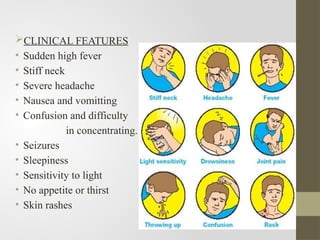
CLINICAL FEATURES
• Sudden high fever
• Stiff neck
• Severe headache
• Nausea and vomitting
• Confusion and difficulty
in concentrating.
• Seizures
• Sleepiness
• Sensitivity to light
• No appetite or thirst
• Skin rashes
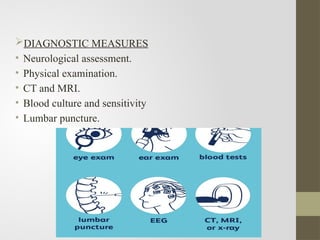
DIAGNOSTIC MEASURES
• Neurological assessment.
• Physical examination.
• CT and MRI.
• Blood culture and sensitivity
• Lumbar puncture.
MANAGEMENT
Medical management:
-Pharmacological management:
• Antibiotis- ampicillin, penicillin, amoxicillin
• Antiviral- tenofovir
• Antifungal- fluconazole
• Corticosteroid- dexamethasone
• Iv mannitol for diuresis
• Iv phenytoin
• Antipyretics- acetaminophen
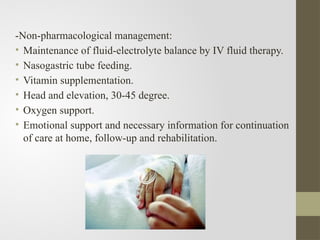
-Non-pharmacological management:
• Maintenance of fluid-electrolyte balance by IV fluid therapy.
• Nasogastric tube feeding.
• Vitamin supplementation.
• Head and elevation, 30-45 degree.
• Oxygen support.
• Emotional support and necessary information for continuation
of care at home, follow-up and rehabilitation.
SURGICAL MANAGEMENT
• Usually there is no surgical therapy.
• Cochlear implantation rehabilitation due to deafness.
• In rare, patients in whom viral meningitis is complicated
by hydrocephalous, a CSF diversion procedure, such as
ventriculoperitoneal(VP) or LP shunting, may be required.
• Surgical treatment repair of dural lacerations and cyst
debridement have an advantage in the treatment of
meningitis complicated with pseudomeningocele, wound
infection or CSF leakage.
NURSING MANAGEMENT
• History collection
• Assessment
• Physical examination
• Nursing diagnosis:
-Ineffective tissue perfusion(cerebral) related to infectious
process as evidenced by decreased o2 saturation rate.
-Hyperthermia related to infectious process and cerebral
edema as evidenced by showing increased temperature.
-Risk for imbalanced fluid volume related to vomiting and
decrease intake.
-Impaired physical mobility related to prolonged bed rest as
evidenced by inability to do the activities.
-Decreased sleep pattern related to disease process as evidenced by
drowsiness.
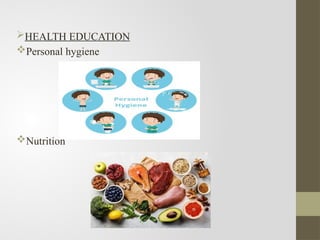
HEALTH EDUCATION
Personal hygiene
Nutrition
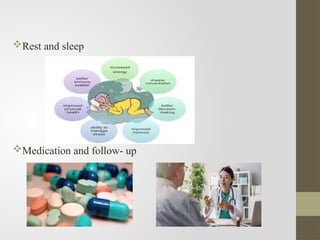
Rest and sleep
Medication and follow- up
513302815-CASE-STUDY-meningitis.pptx Jitendra bhargav SlideShare com

513302815-CASE-STUDY-meningitis.pptx Jitendra bhargav SlideShare com

  • 1.
    A CASE STUDY PRESENTATIONON MASTER ROY WITH MENINGITIS
  • 2.
    HISTORY OF THECHILD CHILD`S PROFILE • Name : Master Roy • Age : 4 years • Sex : Male • Date of admission : 11-05-2021 • Diagnosis : Meningitis PRESENT CHIEF COMPLAINTS • Fever, nausea and vomiting since 2 days • Drowsy since 1 day. PAST MEDICAL HISTORY Admitted at his 1 year of age for pneumonia for 6 days, and treated with antibiotics.
  • 3.
    BIRTH HISTORY ANTENATAL HISTORY:Not significant NATAL HISTORY: • Place of birth : Hospital • Mode of delivery : Full term normal delivery • Birth weight : 2.8 kg • Apgar : 9/10 POSTNATAL HISTORY: • Health status of mother after delivery was good. • Child is having sucking and swallowing reflex. • Breastfed for 6 months, weaning was started at the age of 6th month.
  • 4.
    NUTRITIONAL HISTORY • Exclusivelybreastfeed for 6 months. • Weaning was started at the age of 6th month. • No history of allergy pertaining to any food. • Consumes normal diet. • Degree of malnutrition was about 100% . He is well nourished and having normal nutritional status. FAMILY HISTORY • Belongs to a nuclear family. • Master Roy is the 2nd child and the first child is 6 years old and healthy. • No report of any kind of communicable diseases and hereditary diseases.
  • 5.
    IMMUNIZATION HISTORY Master Royhas been vaccinated up to 24 months of age. PHYSICAL EXAMINATION GENERAL OBSERVATION: • Moderately build, active and well nourished. • Well groomed and hygienic. • Conscious and oriented. VITAL SIGNS: • Temperature : 100 degree F (pyrexia) • Pulse rate : 122 beats/min (tachycardia) • Respiration : 34 breaths/min (tachypnea) • Spo2 : 94% (decreased)
  • 6.
    PHYSICAL EXAMINATION FINDINGS: •Pyrexia. • Tachypnea. • Tachycardia. • Decreased spo2 level. • Presence of papilledema. • Kerning`s sign positive. • Severe neck rigidity. GROWTH AND DEVELOPMENT • Anthropometric measurements are normal. • Mile stones- Master Roy had attained all the milestones at appropriate age and his growth and development is appropriate for the age.
  • 7.
    LAB INVESGTIGATION • Hemoglobin-12mg/dl • N/L- 70/20% • CSF analysis: - Total count: 200per mm - Glucose : 30mg/dl - Protein : 200mg/dl MEDICATION • Syp. Paracetomol • Inj. Ceftriaxone
  • 8.
    DISEASE CONDITION MENINGITIS DEFINITION Meningitis isan inflammation of the protective membranes or layers of tissue that covers the brain and spinal cord(meninges) and of the fluid-filled space between the meninges(subarachnoid space). A bacterial or viral infection of the fluid surrounding the brain and spinal cord usually causes the swelling.
  • 9.
    INCIDENCE Estimated 2.82 millioncases of meningitis occur globally each year, with more than 300,000 deaths – a third of which occur in children between 1 month and 5 years of age. TYPES AND CAUSES • Viral meningitis. Eg: Enterovirus • Bacterial meningitis. Eg: Streptococcus pneumoniae Neisseria meningitids • Fungal meningitis. Eg: Cryptococcal meningitis • Parasitic meningitis. Eg: Eosinophilic meningitis. • Other causes: Noninfectious causes such as chemical reactions, drug allergies, some types of cancer and inflammatory disease such as sarcoidosis.
  • 10.
    PATHOPHYSIOLOGY Causative organism entersthe blood stream Cross the blood barriers Inflammatory reaction in meninges Inflammation of subarachnoid space and piamater occur Inflammation may cause ICP CSF flows in subarachnoid space CSF cloudness or infected CSF cell count increases
  • 11.
    CLINICAL FEATURES • Suddenhigh fever • Stiff neck • Severe headache • Nausea and vomitting • Confusion and difficulty in concentrating. • Seizures • Sleepiness • Sensitivity to light • No appetite or thirst • Skin rashes
  • 12.
    DIAGNOSTIC MEASURES • Neurologicalassessment. • Physical examination. • CT and MRI. • Blood culture and sensitivity • Lumbar puncture.
  • 13.
    MANAGEMENT Medical management: -Pharmacological management: •Antibiotis- ampicillin, penicillin, amoxicillin • Antiviral- tenofovir • Antifungal- fluconazole • Corticosteroid- dexamethasone • Iv mannitol for diuresis • Iv phenytoin • Antipyretics- acetaminophen
  • 14.
    -Non-pharmacological management: • Maintenanceof fluid-electrolyte balance by IV fluid therapy. • Nasogastric tube feeding. • Vitamin supplementation. • Head and elevation, 30-45 degree. • Oxygen support. • Emotional support and necessary information for continuation of care at home, follow-up and rehabilitation.
  • 15.
    SURGICAL MANAGEMENT • Usuallythere is no surgical therapy. • Cochlear implantation rehabilitation due to deafness. • In rare, patients in whom viral meningitis is complicated by hydrocephalous, a CSF diversion procedure, such as ventriculoperitoneal(VP) or LP shunting, may be required. • Surgical treatment repair of dural lacerations and cyst debridement have an advantage in the treatment of meningitis complicated with pseudomeningocele, wound infection or CSF leakage.
  • 16.
    NURSING MANAGEMENT • Historycollection • Assessment • Physical examination • Nursing diagnosis: -Ineffective tissue perfusion(cerebral) related to infectious process as evidenced by decreased o2 saturation rate. -Hyperthermia related to infectious process and cerebral edema as evidenced by showing increased temperature. -Risk for imbalanced fluid volume related to vomiting and decrease intake. -Impaired physical mobility related to prolonged bed rest as evidenced by inability to do the activities. -Decreased sleep pattern related to disease process as evidenced by drowsiness.
  • 17.
  • 18.