Nursery Rizario School – Greece 
5 Ways to Keep the Environment Clean 
With the ever increasing use of technology and industries flourishing 
the amount of pollution in our environment is increasing at a rapid pace. 
Keeping our environment clean is a very important part of our lives in 
these days. It is important to focus on this as we have to make sure that 
the environment is preserved for future generations. Water pollution and 
litter are considered to be two of the main cause of the environment being 
dirty. 
In order to clean the environment there are 5 steps that we can follow: 
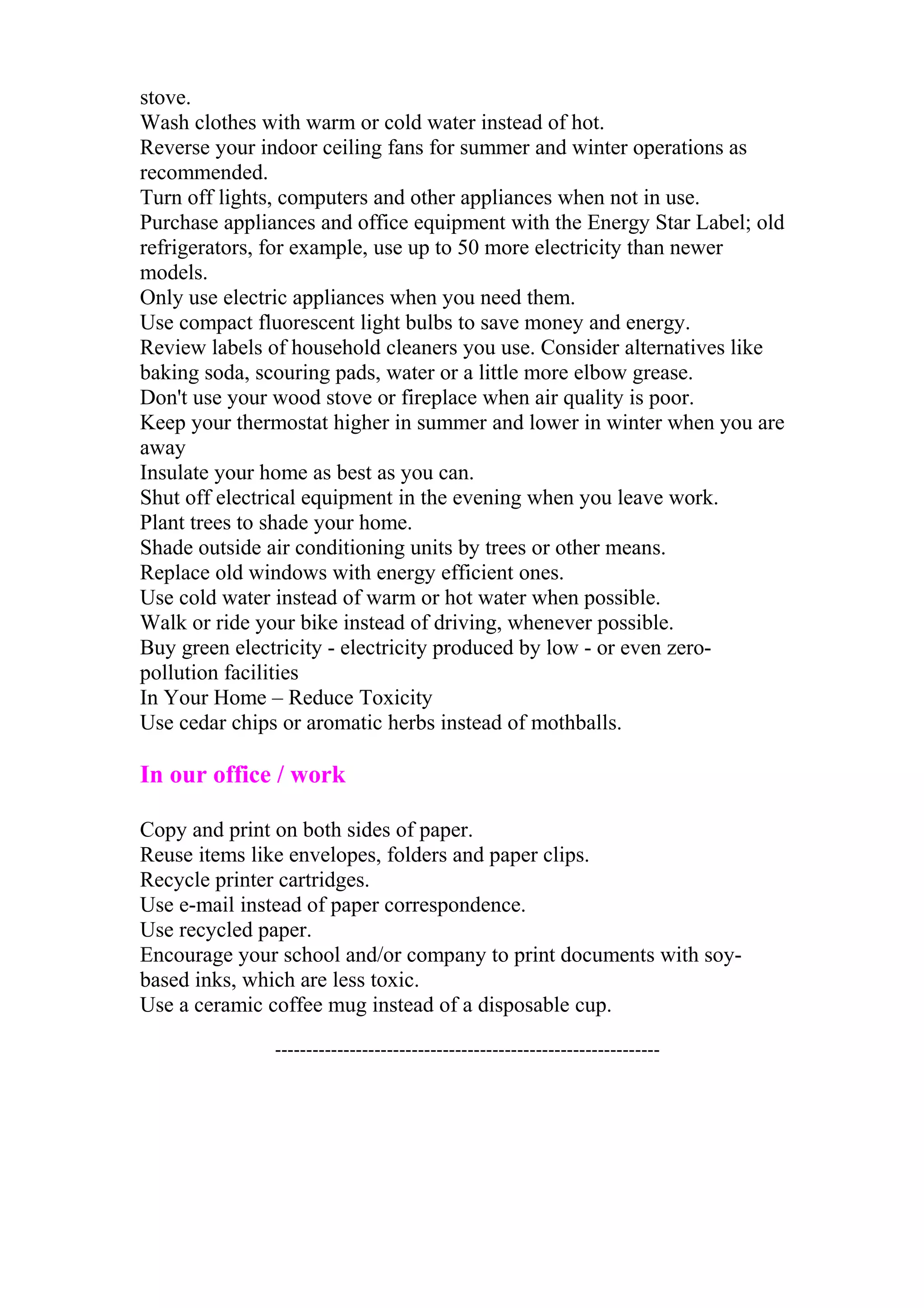
· The 3Rs are considered to be the most important and easiest way to 
keep our environment clean and refrain it from pollution. Reduce, 
recycle and reuse are the famous 3 Rs that can keep our 
environment clean. By reducing the usage of harmful materials, 
and recycling items such as paper and glass and at the same time 
reusing goods that can be reused will reduce the pollution levels in 
the air and keep the environment clean. 
· Planting more trees increase the oxygen level in the atmosphere. 
This way there is an increase in the total oxygen level thus 
resulting in cleaner air to breathe and keeping environment clean.
· Many people tend to litter. This is a bad habit as littering causes a 
rapid increase in pollution levels. Instead of throwing garbage on 
the roads, there should be recycling bins on every corner of the 
road so that people do not litter. 
· Cigarettes are another harmful item that increases the air pollution 
as well as the well known health benefits. 
· By using eco friendly and biodegradable cleaning items the 
environment will be a better and cleaner place for humans to live in 
and by the continuous use of these products the environment will 
improve for future generation. 
These tips are helpful in keeping our environment clean. 
--------------------------------------------------- 
How we can make our environment clean? 
In our home 
Clean or replace air filters on your air conditioning unit at least once a 
month. 
If you have central air conditioning, do not close vents in unused rooms. 
Wrap your water heater in an insulated blanket. 
Turn down or shut off your water heater when you will be away for 
extended periods. 
Turn off unneeded lights even when leaving a room for a short time. 
Clean the lint filter in your dryer after every load so that it uses less 
energy. 
Unplug seldom used appliances. 
Use a microwave when- ever you can instead of a conventional oven or
stove. 
Wash clothes with warm or cold water instead of hot. 
Reverse your indoor ceiling fans for summer and winter operations as 
recommended. 
Turn off lights, computers and other appliances when not in use. 
Purchase appliances and office equipment with the Energy Star Label; old 
refrigerators, for example, use up to 50 more electricity than newer 
models. 
Only use electric appliances when you need them. 
Use compact fluorescent light bulbs to save money and energy. 
Review labels of household cleaners you use. Consider alternatives like 
baking soda, scouring pads, water or a little more elbow grease. 
Don't use your wood stove or fireplace when air quality is poor. 
Keep your thermostat higher in summer and lower in winter when you are 
away 
Insulate your home as best as you can. 
Shut off electrical equipment in the evening when you leave work. 
Plant trees to shade your home. 
Shade outside air conditioning units by trees or other means. 
Replace old windows with energy efficient ones. 
Use cold water instead of warm or hot water when possible. 
Walk or ride your bike instead of driving, whenever possible. 
Buy green electricity - electricity produced by low - or even zero-pollution 
facilities 
In Your Home – Reduce Toxicity 
Use cedar chips or aromatic herbs instead of mothballs. 
In our office / work 
Copy and print on both sides of paper. 
Reuse items like envelopes, folders and paper clips. 
Recycle printer cartridges. 
Use e-mail instead of paper correspondence. 
Use recycled paper. 
Encourage your school and/or company to print documents with soy-based 
inks, which are less toxic. 
Use a ceramic coffee mug instead of a disposable cup. 
--------------------------------------------------------------

5 ways to keep the environment clean

  • 1.
    Nursery Rizario School– Greece 5 Ways to Keep the Environment Clean With the ever increasing use of technology and industries flourishing the amount of pollution in our environment is increasing at a rapid pace. Keeping our environment clean is a very important part of our lives in these days. It is important to focus on this as we have to make sure that the environment is preserved for future generations. Water pollution and litter are considered to be two of the main cause of the environment being dirty. In order to clean the environment there are 5 steps that we can follow: · The 3Rs are considered to be the most important and easiest way to keep our environment clean and refrain it from pollution. Reduce, recycle and reuse are the famous 3 Rs that can keep our environment clean. By reducing the usage of harmful materials, and recycling items such as paper and glass and at the same time reusing goods that can be reused will reduce the pollution levels in the air and keep the environment clean. · Planting more trees increase the oxygen level in the atmosphere. This way there is an increase in the total oxygen level thus resulting in cleaner air to breathe and keeping environment clean.
  • 2.
    · Many peopletend to litter. This is a bad habit as littering causes a rapid increase in pollution levels. Instead of throwing garbage on the roads, there should be recycling bins on every corner of the road so that people do not litter. · Cigarettes are another harmful item that increases the air pollution as well as the well known health benefits. · By using eco friendly and biodegradable cleaning items the environment will be a better and cleaner place for humans to live in and by the continuous use of these products the environment will improve for future generation. These tips are helpful in keeping our environment clean. --------------------------------------------------- How we can make our environment clean? In our home Clean or replace air filters on your air conditioning unit at least once a month. If you have central air conditioning, do not close vents in unused rooms. Wrap your water heater in an insulated blanket. Turn down or shut off your water heater when you will be away for extended periods. Turn off unneeded lights even when leaving a room for a short time. Clean the lint filter in your dryer after every load so that it uses less energy. Unplug seldom used appliances. Use a microwave when- ever you can instead of a conventional oven or
  • 3.
    stove. Wash clotheswith warm or cold water instead of hot. Reverse your indoor ceiling fans for summer and winter operations as recommended. Turn off lights, computers and other appliances when not in use. Purchase appliances and office equipment with the Energy Star Label; old refrigerators, for example, use up to 50 more electricity than newer models. Only use electric appliances when you need them. Use compact fluorescent light bulbs to save money and energy. Review labels of household cleaners you use. Consider alternatives like baking soda, scouring pads, water or a little more elbow grease. Don't use your wood stove or fireplace when air quality is poor. Keep your thermostat higher in summer and lower in winter when you are away Insulate your home as best as you can. Shut off electrical equipment in the evening when you leave work. Plant trees to shade your home. Shade outside air conditioning units by trees or other means. Replace old windows with energy efficient ones. Use cold water instead of warm or hot water when possible. Walk or ride your bike instead of driving, whenever possible. Buy green electricity - electricity produced by low - or even zero-pollution facilities In Your Home – Reduce Toxicity Use cedar chips or aromatic herbs instead of mothballs. In our office / work Copy and print on both sides of paper. Reuse items like envelopes, folders and paper clips. Recycle printer cartridges. Use e-mail instead of paper correspondence. Use recycled paper. Encourage your school and/or company to print documents with soy-based inks, which are less toxic. Use a ceramic coffee mug instead of a disposable cup. --------------------------------------------------------------