Downloaded 95 times
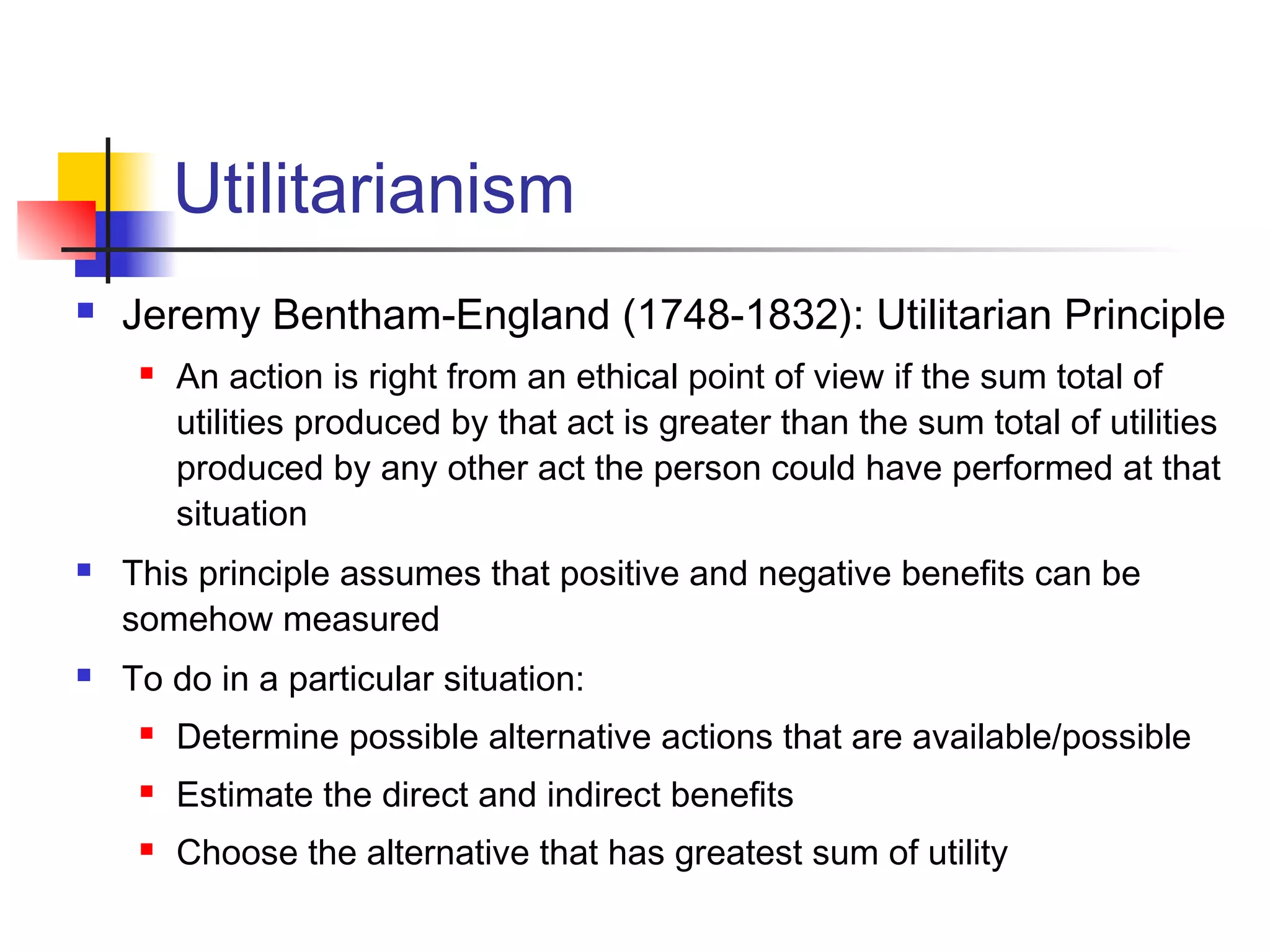
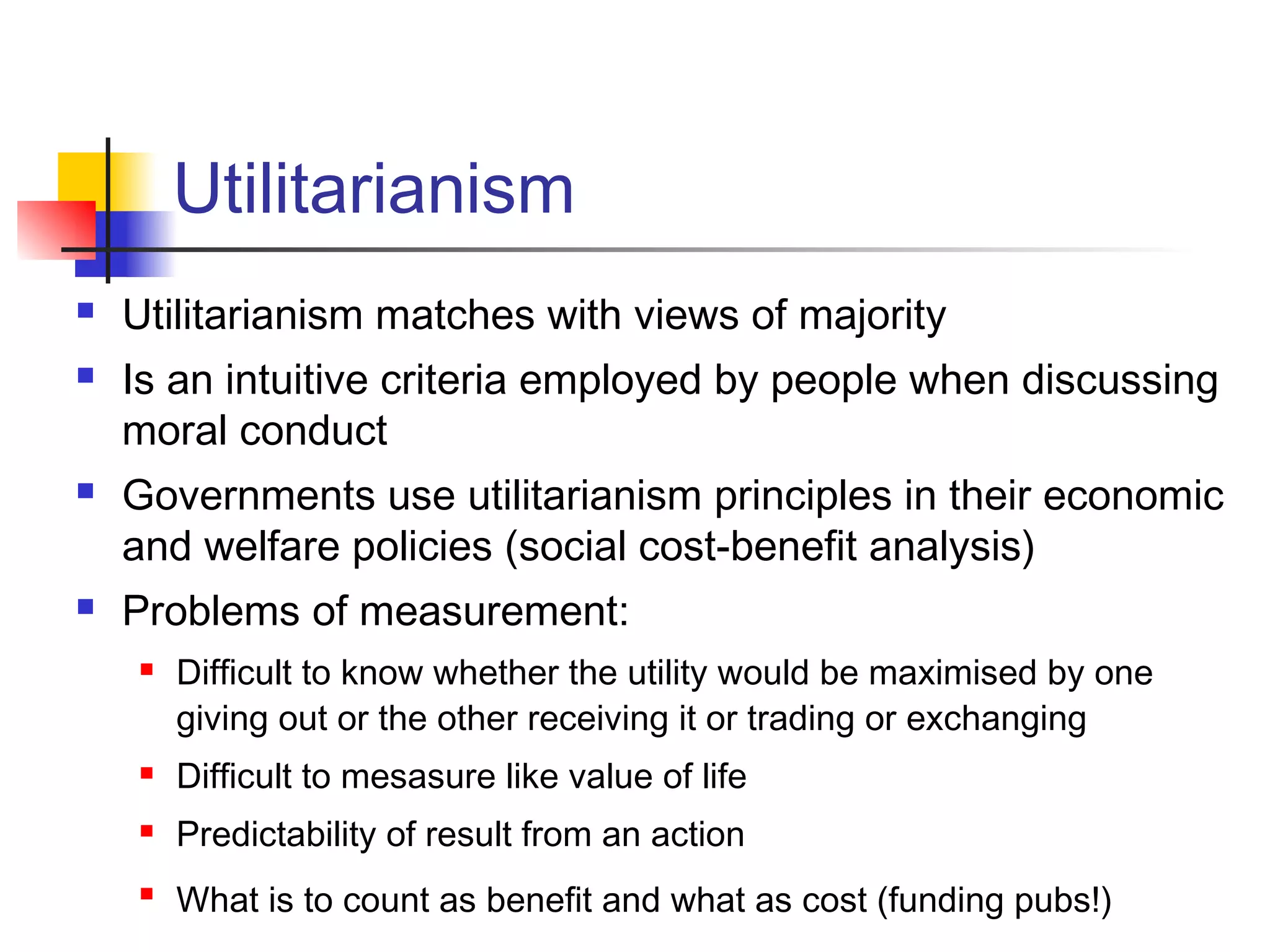
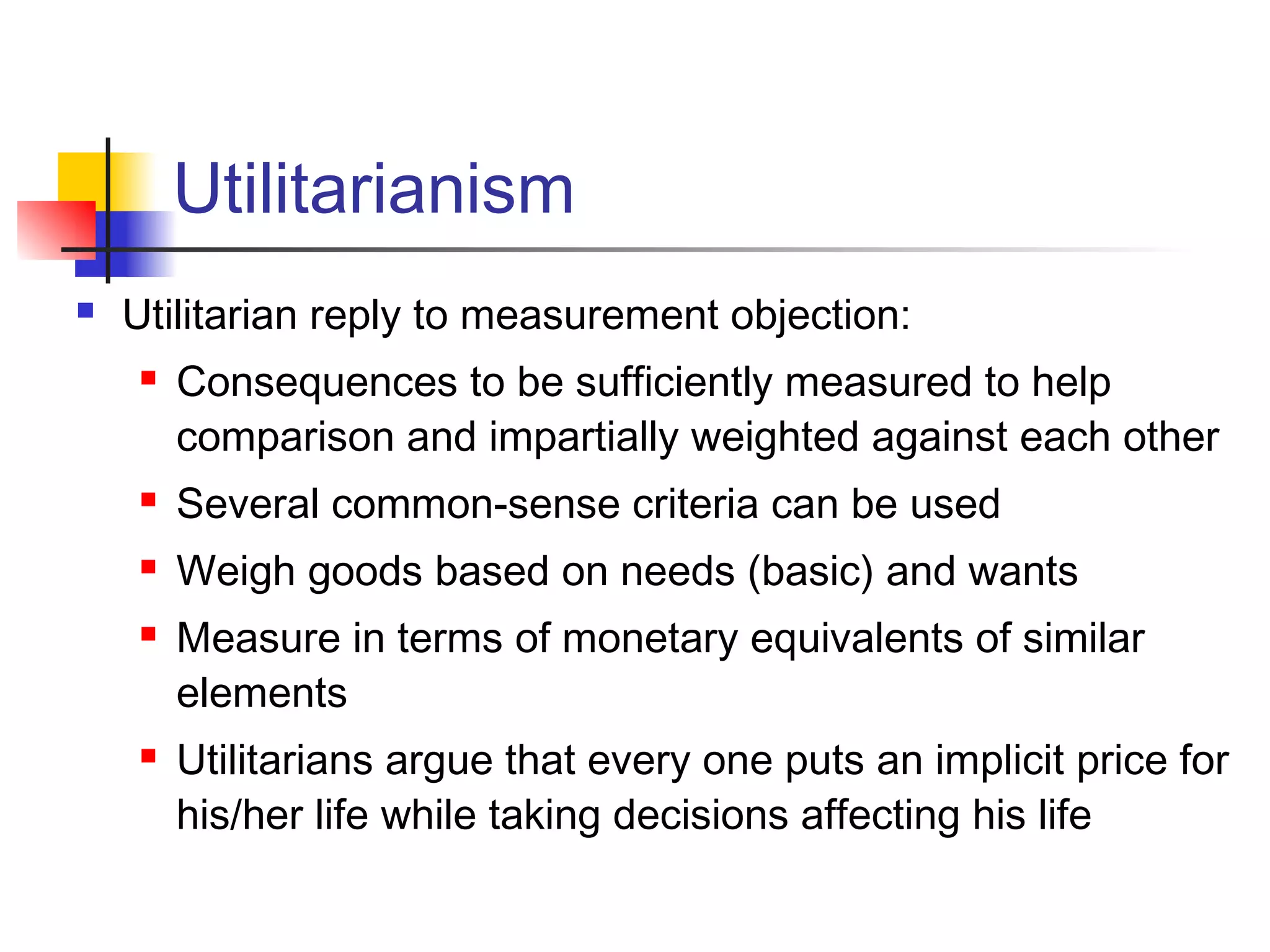


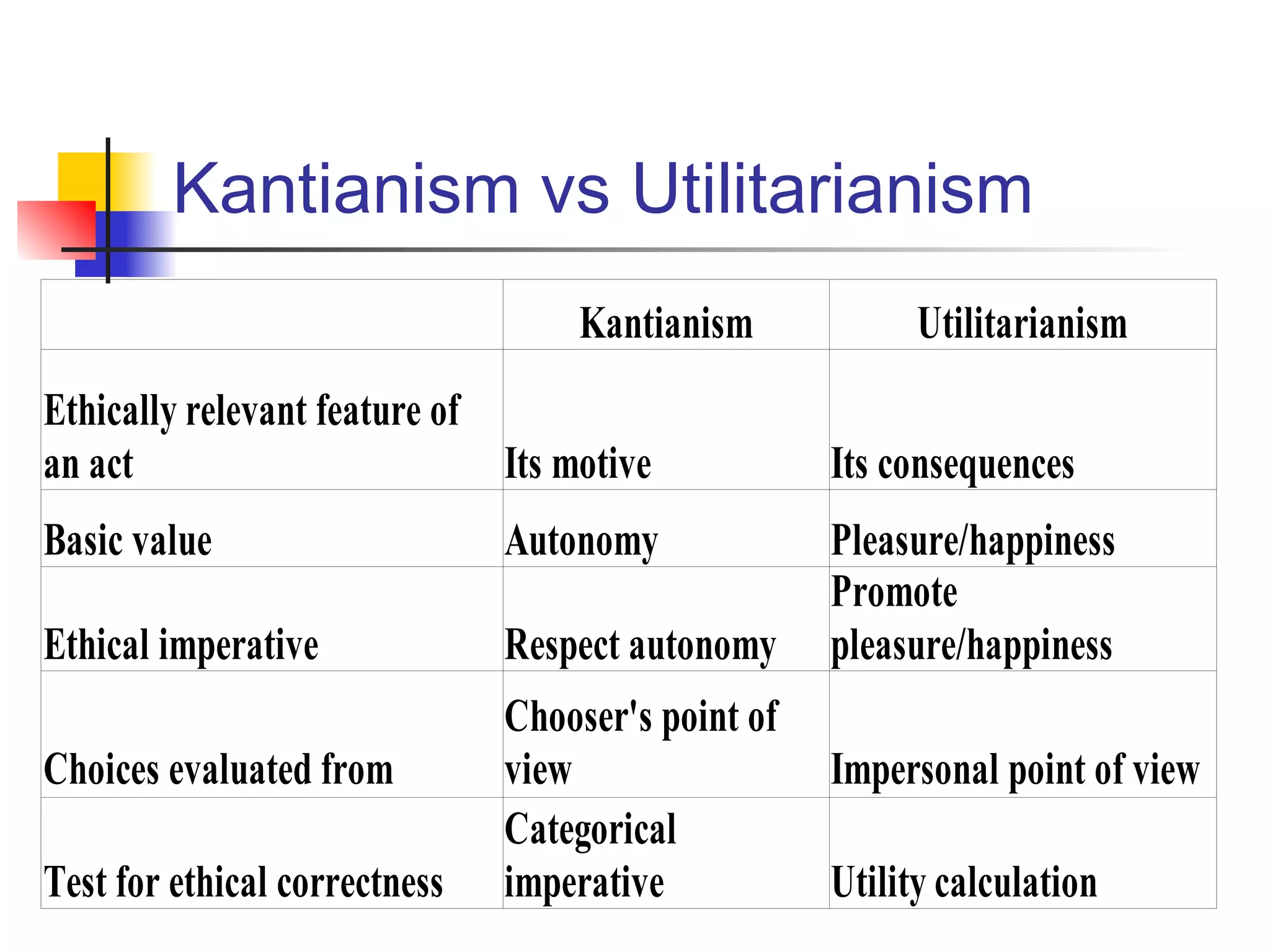

Utilitarianism holds that an action is morally right if it produces the greatest balance of happiness and suffering. Jeremy Bentham established the utilitarian principle that considers the total utilities, or benefits and harms, of all people affected by an action. Utilitarianism guides many government policies but faces challenges in measuring and comparing utilities. Kantian ethics focuses on intentions and treating people as ends rather than means. In contrast to utilitarianism, Kant's categorical imperative evaluates actions based on universalizability and respect for human autonomy rather than consequences.


