TRF
Vegetation
Starter


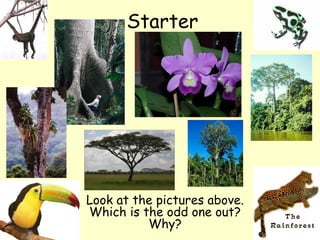
Look at the pictures above.
Which is the odd one out?
          Why?
Lesson Objectives

• What is the rainforest vegetation like?
• How has the rainforest vegetation
  adapted to the climate?

 Here
Pg 50
How have these leaves
adapted to the climate?
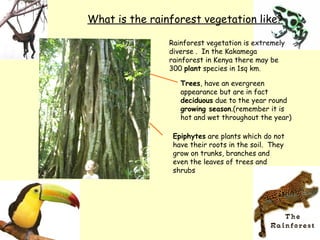
What is the rainforest vegetation like?

                Rainforest vegetation is extremely
                diverse . In the Kakamega
                rainforest in Kenya there may be
                300 plant species in 1sq km.

                   Trees, have an evergreen
                   appearance but are in fact
                   deciduous due to the year round
                   growing season.(remember it is
                   hot and wet throughout the year)

                 Epiphytes are plants which do not
                 have their roots in the soil. They
                 grow on trunks, branches and
                 even the leaves of trees and
                 shrubs
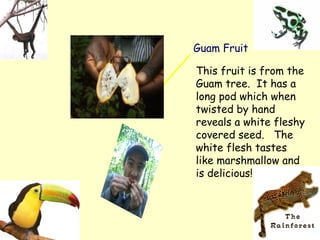
Guam Fruit

This fruit is from the
Guam tree. It has a
long pod which when
twisted by hand
reveals a white fleshy
covered seed. The
white flesh tastes
like marshmallow and
is delicious!
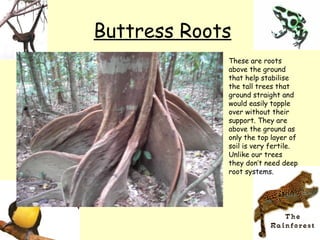
Buttress Roots
             These are roots
             above the ground
             that help stabilise
             the tall trees that
             ground straight and
             would easily topple
             over without their
             support. They are
             above the ground as
             only the top layer of
             soil is very fertile.
             Unlike our trees
             they don’t need deep
             root systems.
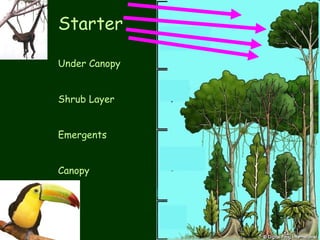
Starter

Under Canopy


Shrub Layer


Emergents


Canopy
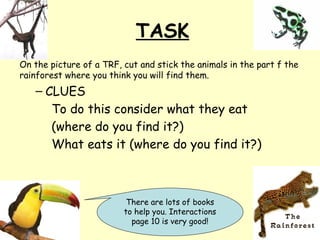
TASK
On the picture of a TRF, cut and stick the animals in the part f the
rainforest where you think you will find them.
   – CLUES
      To do this consider what they eat
      (where do you find it?)
      What eats it (where do you find it?)


                          There are lots of books
                         to help you. Interactions
                           page 10 is very good!
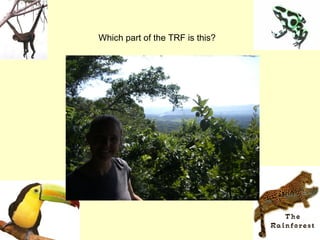
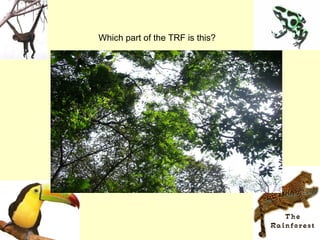
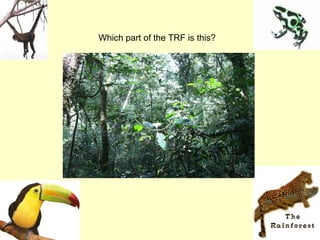
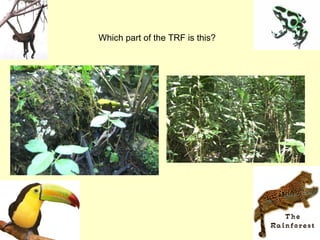
Which part of the TRF is this?
Learning Objectives

To use IT to locate what layer certain animals in a rainforest live.

To describe why any particular animal lives in that layer of the rainforest
Layers BBC: Here

BBC rainforests : Here
Learning Objectives

What is the rainforest nutrient cycle?
What happens to the nutrient cycle when you
clear the rainforests?
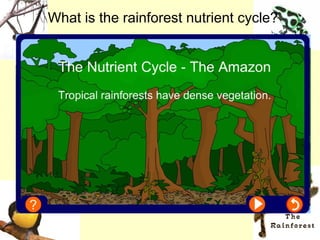
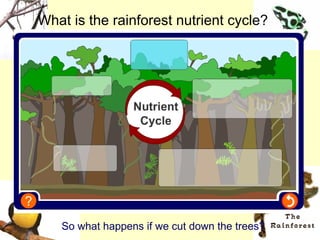
What is the rainforest nutrient cycle?


   So what happens if we cut down the trees?
Task

• Draw and annotate the nutrient cycle
• Explain what happens if the cycle is
  broken

5 trf adaptation

  • 1.
  • 2.
    Starter Look at thepictures above. Which is the odd one out? Why?
  • 3.
    Lesson Objectives • Whatis the rainforest vegetation like? • How has the rainforest vegetation adapted to the climate? Here
  • 4.
    Pg 50 How havethese leaves adapted to the climate?
  • 5.
    What is therainforest vegetation like? Rainforest vegetation is extremely diverse . In the Kakamega rainforest in Kenya there may be 300 plant species in 1sq km. Trees, have an evergreen appearance but are in fact deciduous due to the year round growing season.(remember it is hot and wet throughout the year) Epiphytes are plants which do not have their roots in the soil. They grow on trunks, branches and even the leaves of trees and shrubs
  • 6.
    Guam Fruit This fruitis from the Guam tree. It has a long pod which when twisted by hand reveals a white fleshy covered seed. The white flesh tastes like marshmallow and is delicious!
  • 7.
    Buttress Roots These are roots above the ground that help stabilise the tall trees that ground straight and would easily topple over without their support. They are above the ground as only the top layer of soil is very fertile. Unlike our trees they don’t need deep root systems.
  • 8.
  • 9.
    TASK On the pictureof a TRF, cut and stick the animals in the part f the rainforest where you think you will find them. – CLUES To do this consider what they eat (where do you find it?) What eats it (where do you find it?) There are lots of books to help you. Interactions page 10 is very good!
  • 10.
    Which part ofthe TRF is this?
  • 11.
    Which part ofthe TRF is this?
  • 12.
    Which part ofthe TRF is this?
  • 13.
    Which part ofthe TRF is this?
  • 15.
    Learning Objectives To useIT to locate what layer certain animals in a rainforest live. To describe why any particular animal lives in that layer of the rainforest
  • 16.
    Layers BBC: Here BBCrainforests : Here
  • 18.
    Learning Objectives What isthe rainforest nutrient cycle? What happens to the nutrient cycle when you clear the rainforests?
  • 19.
    What is therainforest nutrient cycle?
  • 20.
    What is therainforest nutrient cycle? So what happens if we cut down the trees?
  • 21.
    Task • Draw andannotate the nutrient cycle • Explain what happens if the cycle is broken