1
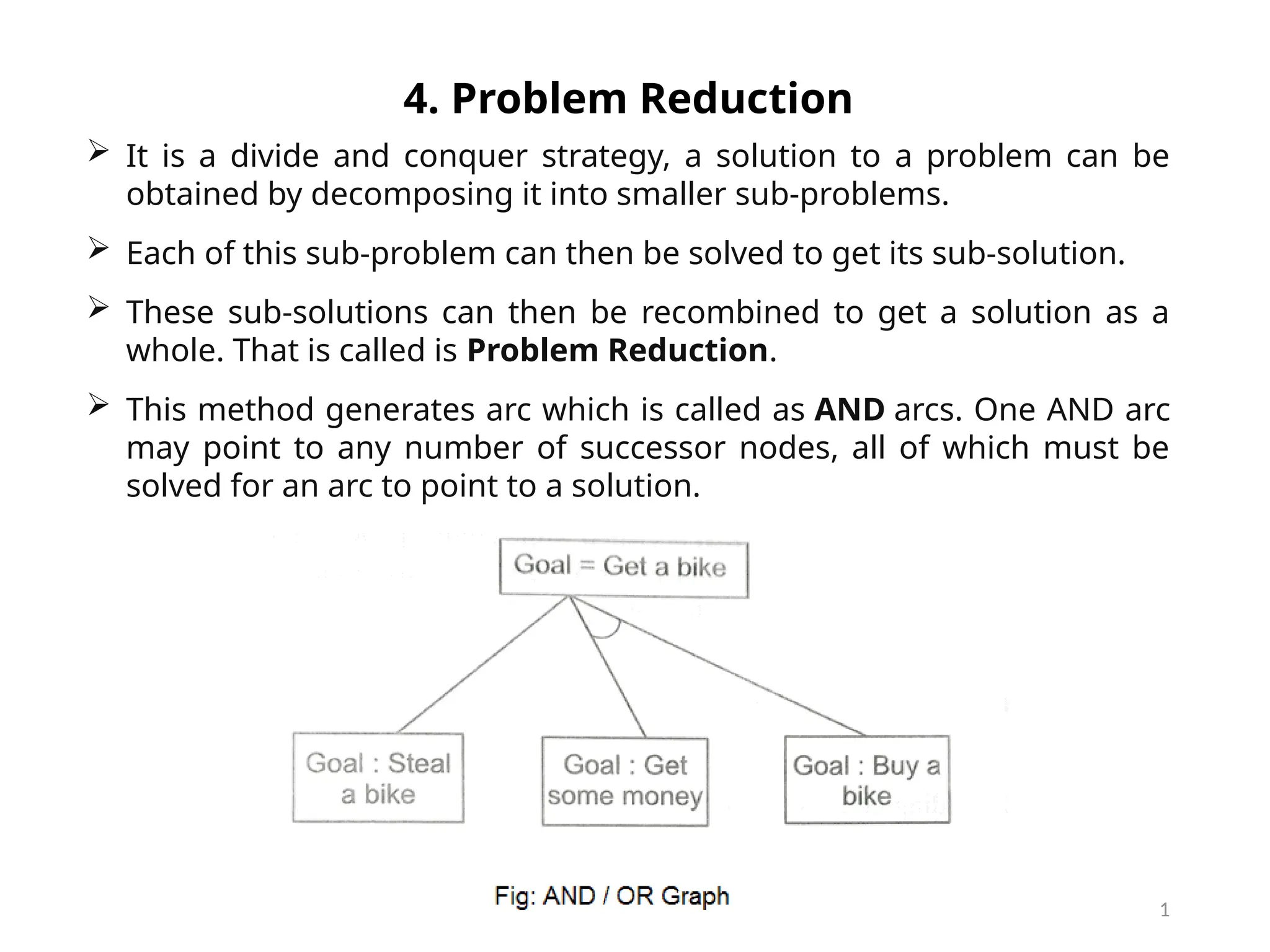
 It is a divide and conquer strategy, a solution to a problem can be
obtained by decomposing it into smaller sub-problems.
 Each of this sub-problem can then be solved to get its sub-solution.
 These sub-solutions can then be recombined to get a solution as a
whole. That is called is Problem Reduction.
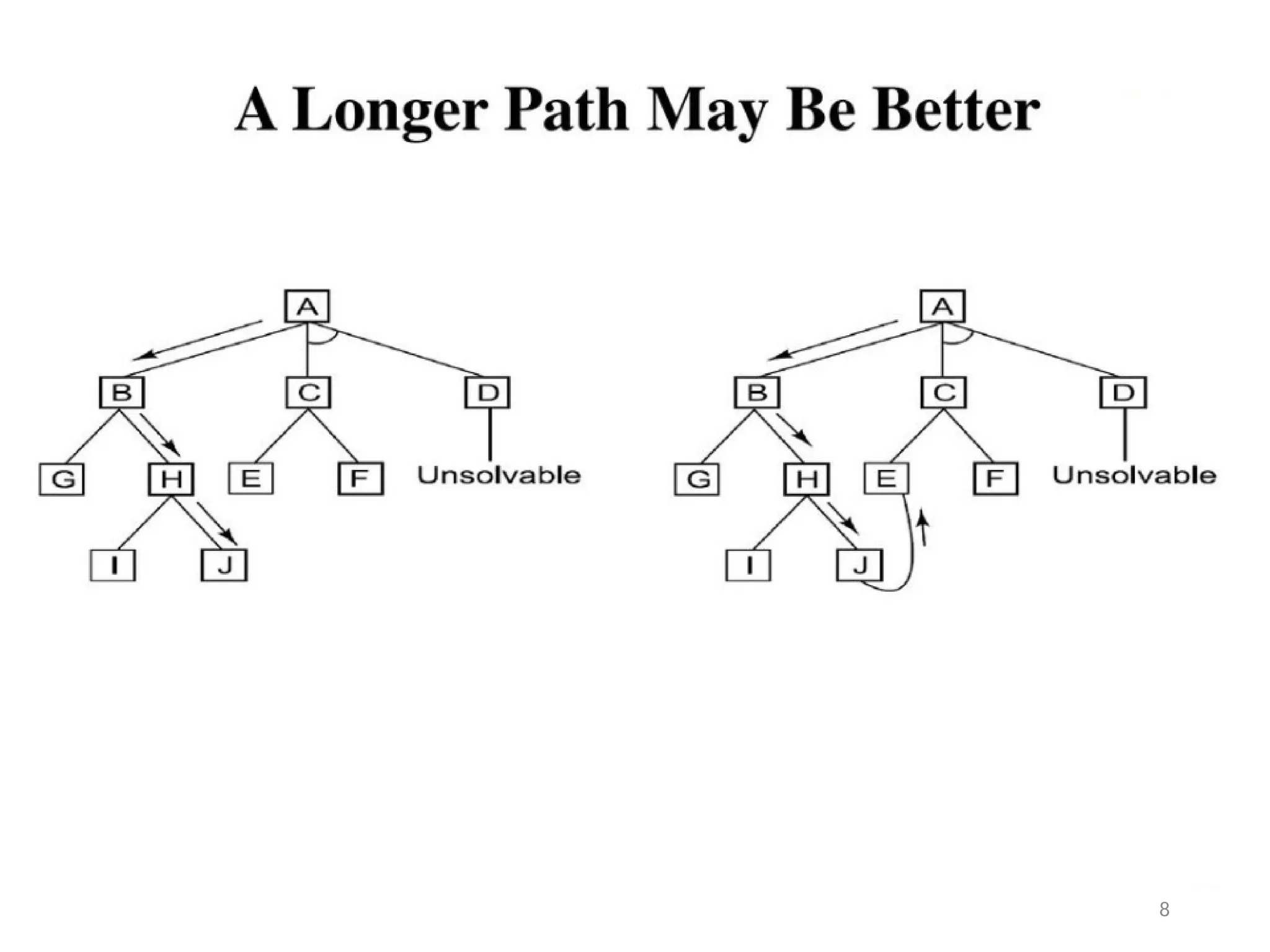
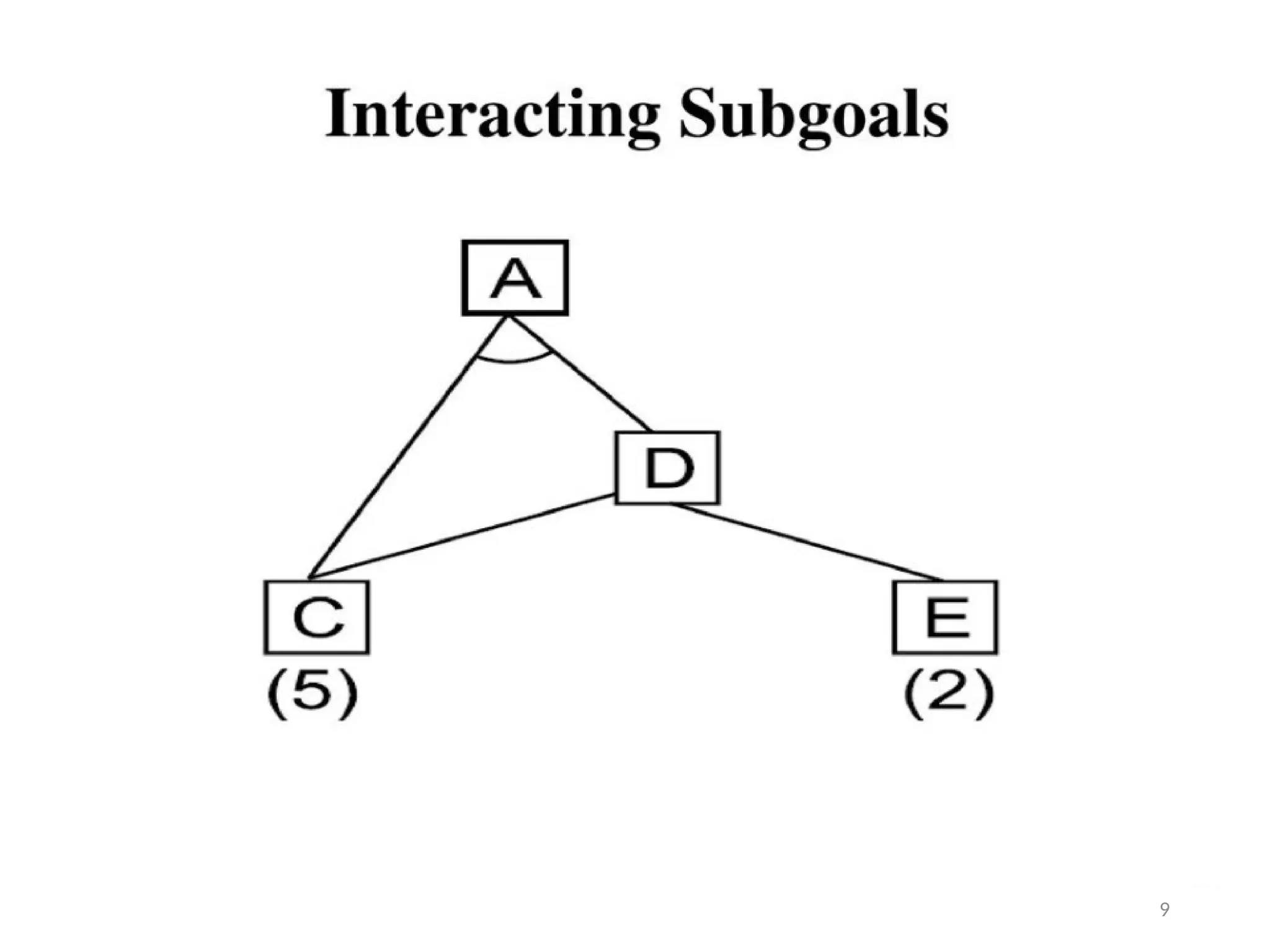
 This method generates arc which is called as AND arcs. One AND arc
may point to any number of successor nodes, all of which must be
solved for an arc to point to a solution.
4. Problem Reduction
2
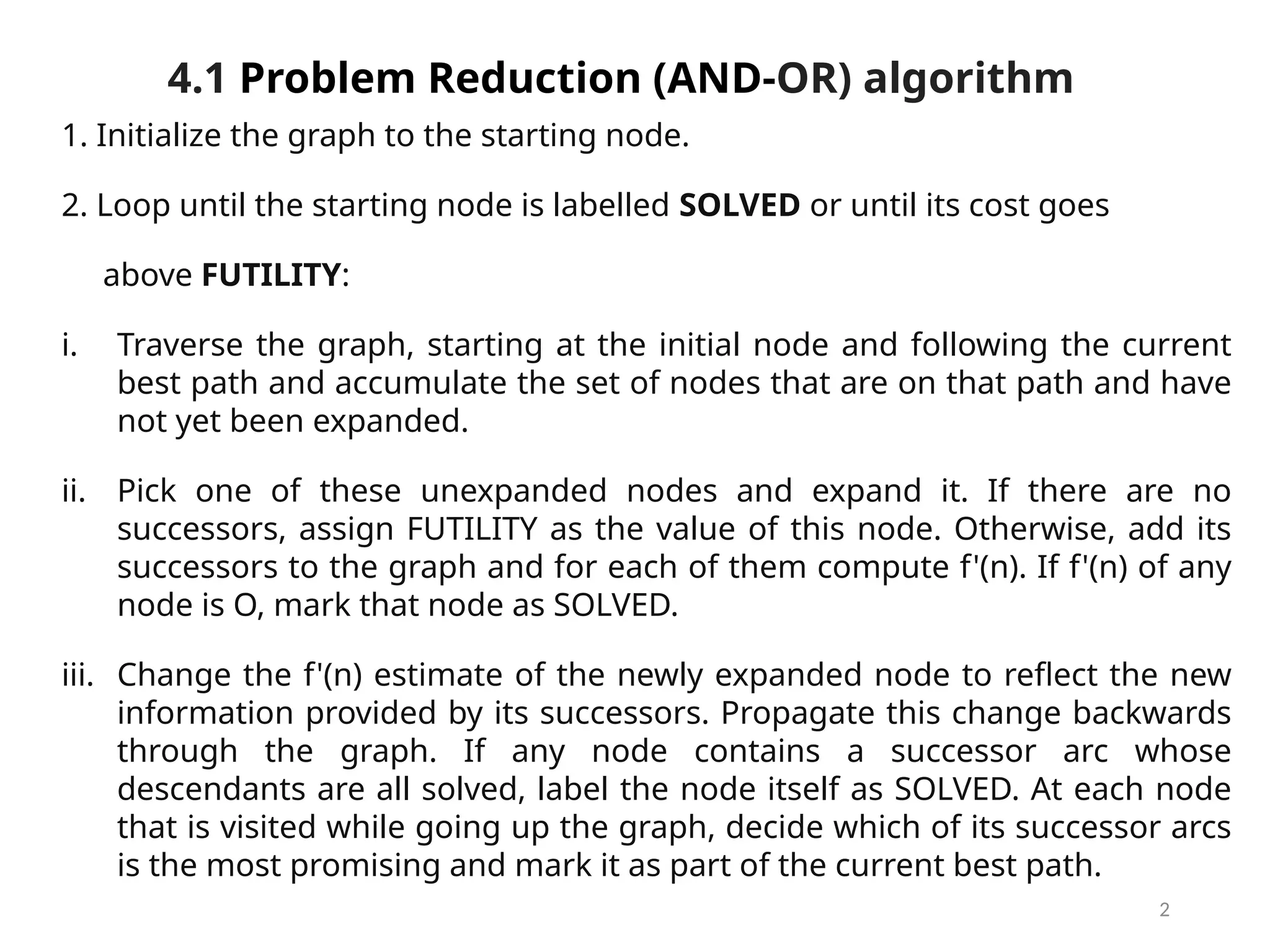
4.1 Problem Reduction (AND-OR) algorithm
1. Initialize the graph to the starting node.
2. Loop until the starting node is labelled SOLVED or until its cost goes
above FUTILITY:
i. Traverse the graph, starting at the initial node and following the current
best path and accumulate the set of nodes that are on that path and have
not yet been expanded.
ii. Pick one of these unexpanded nodes and expand it. If there are no
successors, assign FUTILITY as the value of this node. Otherwise, add its
successors to the graph and for each of them compute f'(n). If f'(n) of any
node is O, mark that node as SOLVED.
iii. Change the f'(n) estimate of the newly expanded node to reflect the new
information provided by its successors. Propagate this change backwards
through the graph. If any node contains a successor arc whose
descendants are all solved, label the node itself as SOLVED. At each node
that is visited while going up the graph, decide which of its successor arcs
is the most promising and mark it as part of the current best path.
3
4
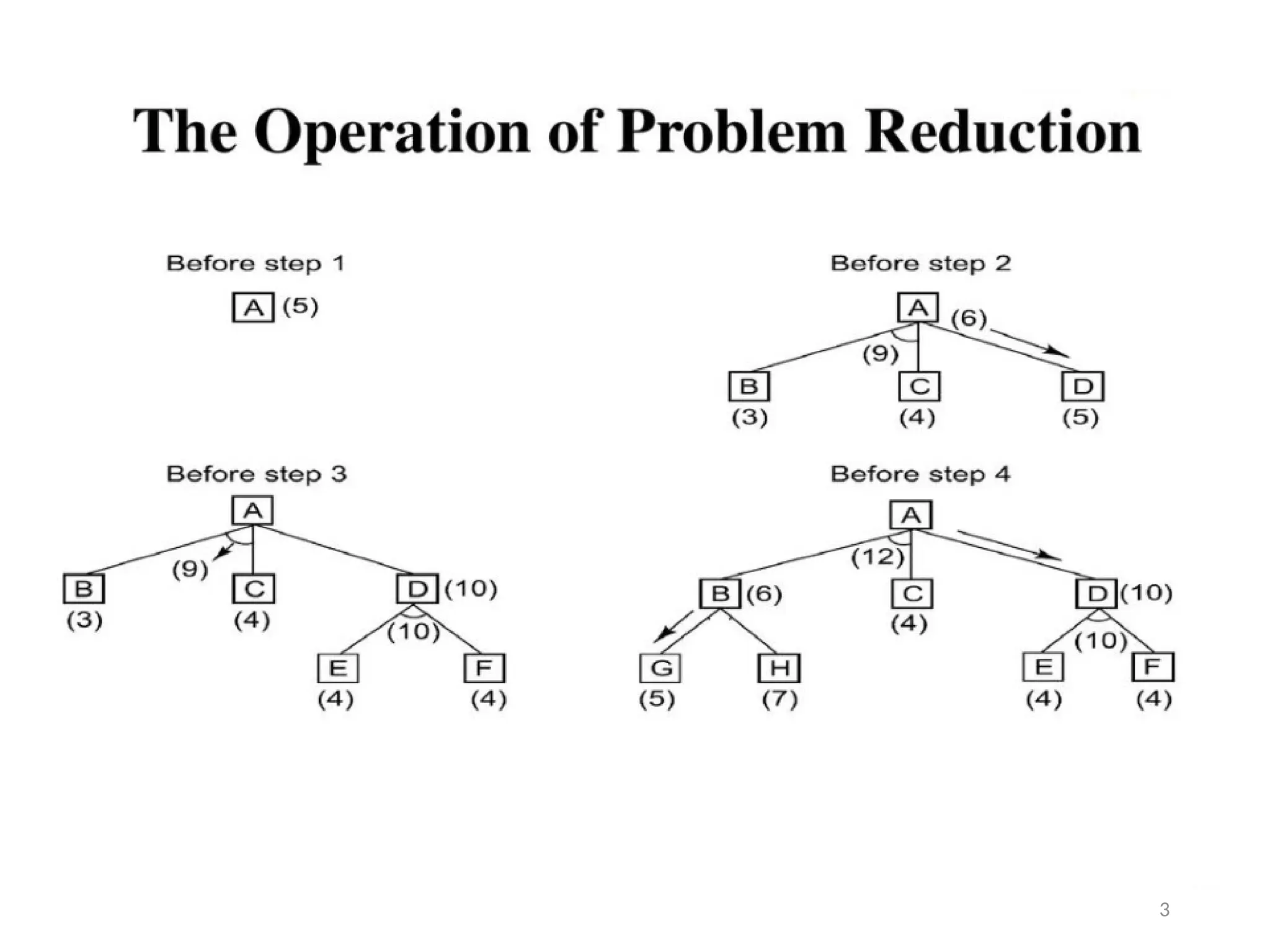
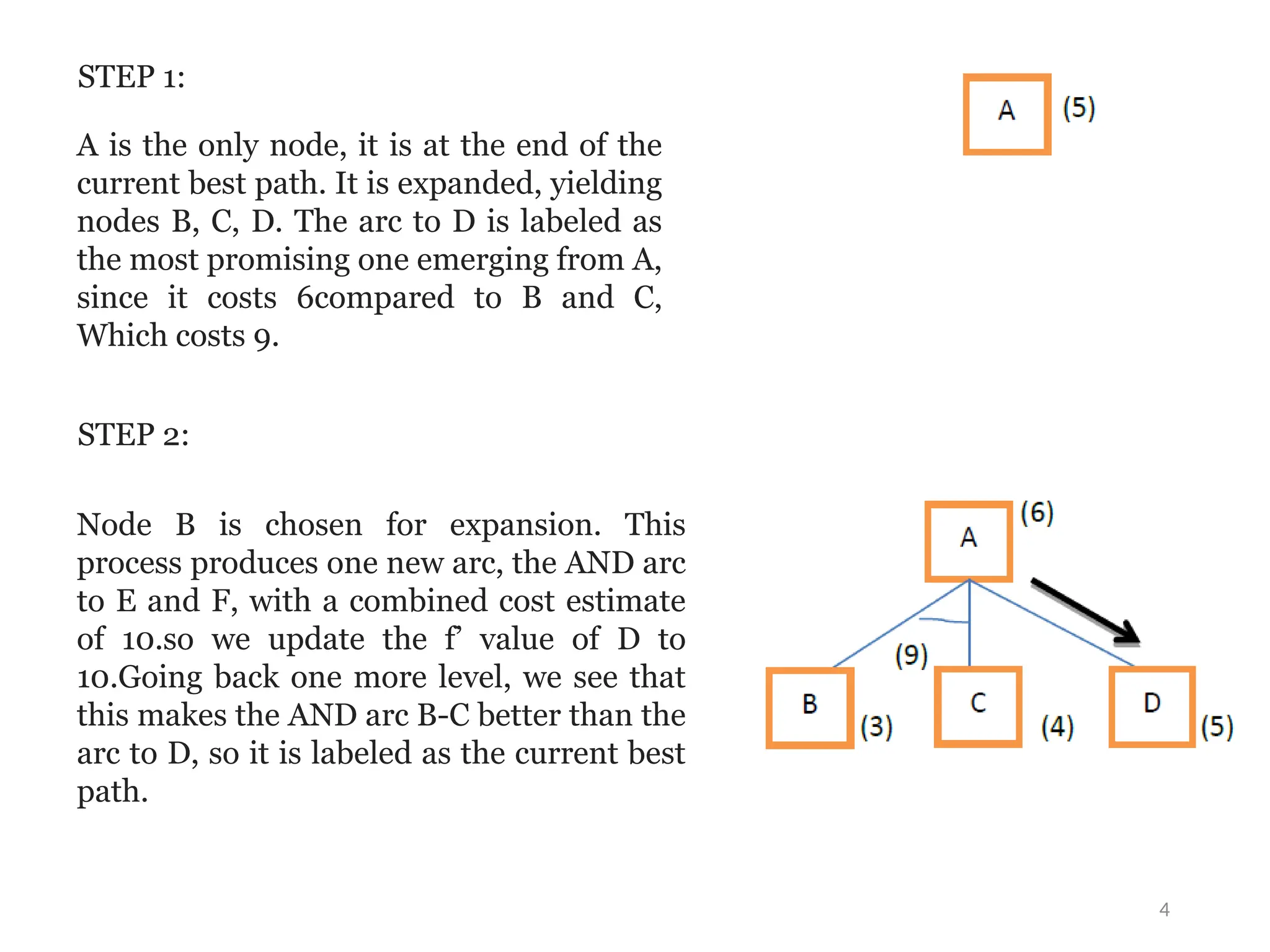
STEP 1:
A is the only node, it is at the end of the
current best path. It is expanded, yielding
nodes B, C, D. The arc to D is labeled as
the most promising one emerging from A,
since it costs 6compared to B and C,
Which costs 9.
STEP 2:
Node B is chosen for expansion. This
process produces one new arc, the AND arc
to E and F, with a combined cost estimate
of 10.so we update the f’ value of D to
10.Going back one more level, we see that
this makes the AND arc B-C better than the
arc to D, so it is labeled as the current best
path.
5
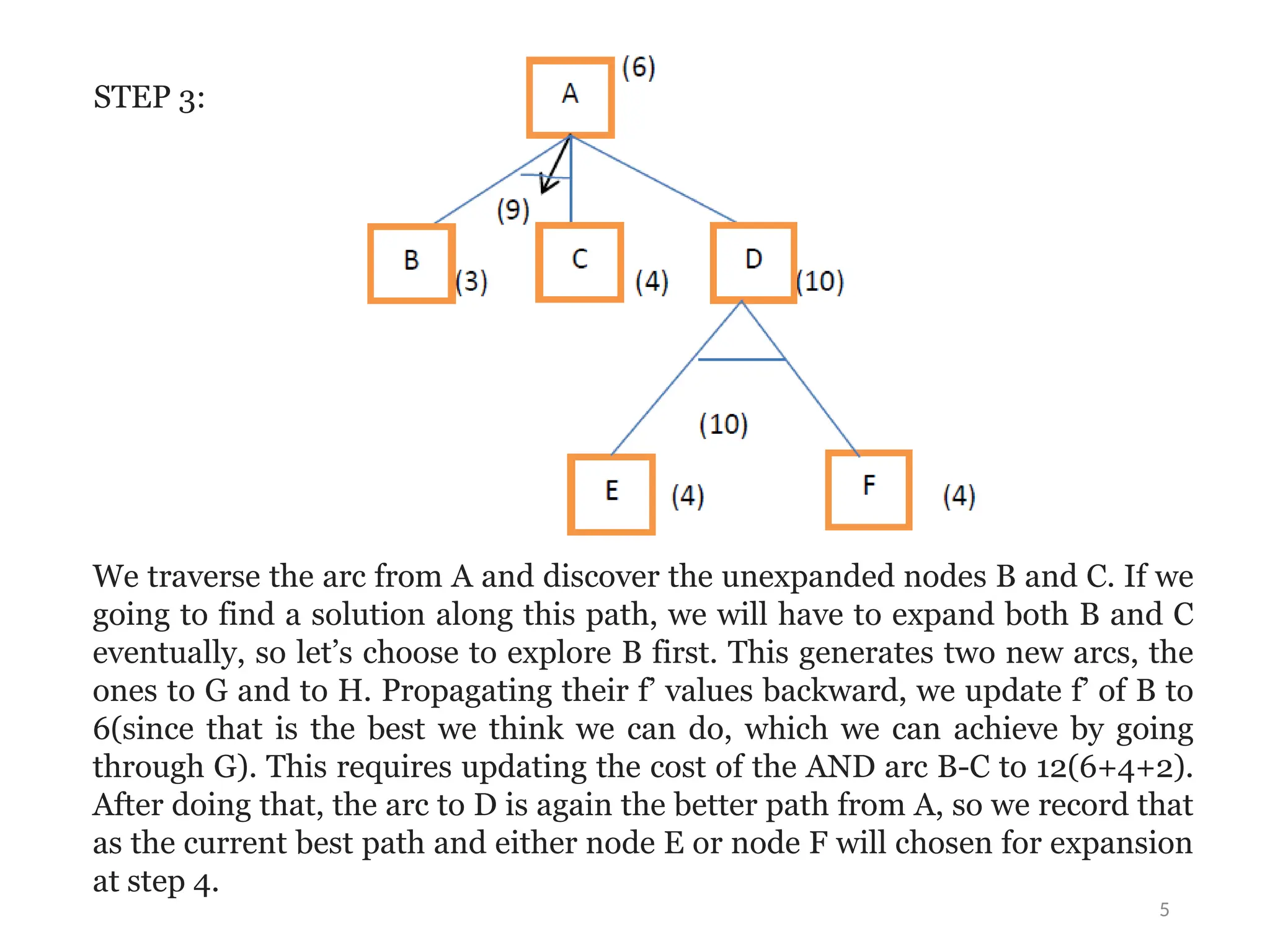
STEP 3:
We traverse the arc from A and discover the unexpanded nodes B and C. If we
going to find a solution along this path, we will have to expand both B and C
eventually, so let’s choose to explore B first. This generates two new arcs, the
ones to G and to H. Propagating their f’ values backward, we update f’ of B to
6(since that is the best we think we can do, which we can achieve by going
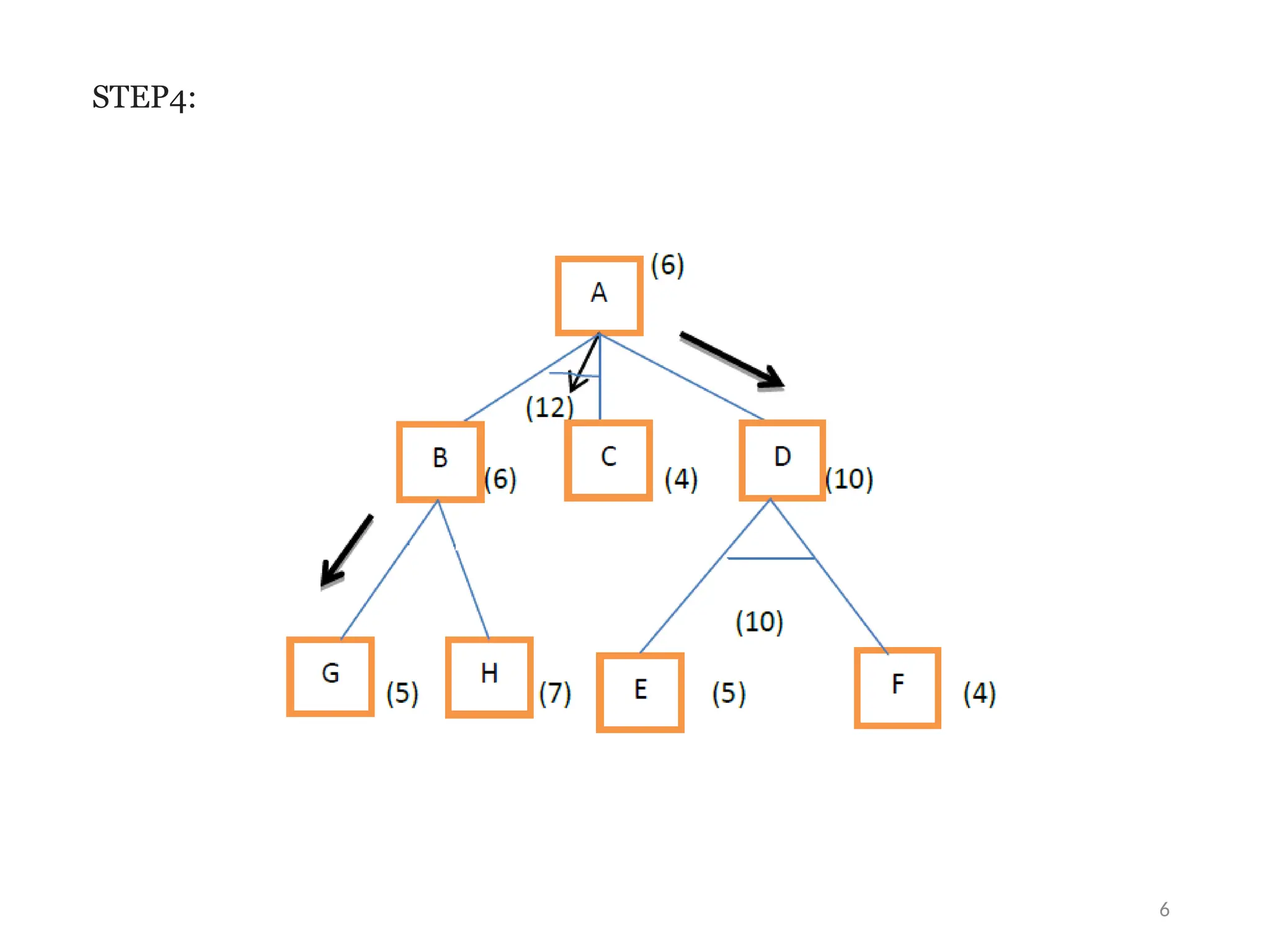
through G). This requires updating the cost of the AND arc B-C to 12(6+4+2).
After doing that, the arc to D is again the better path from A, so we record that
as the current best path and either node E or node F will chosen for expansion
at step 4.
6
STEP4:
7
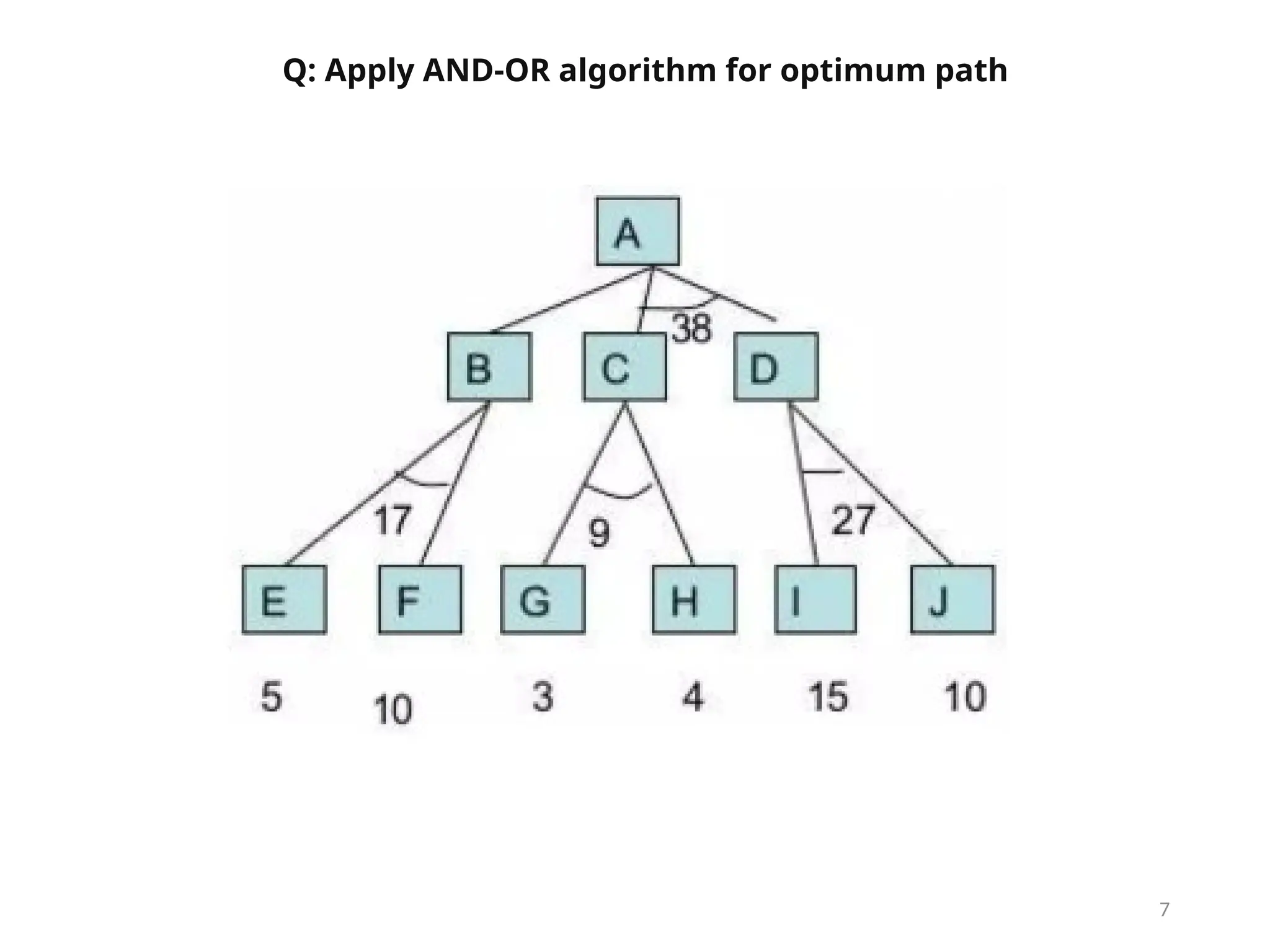
Q: Apply AND-OR algorithm for optimum path
8
9
10
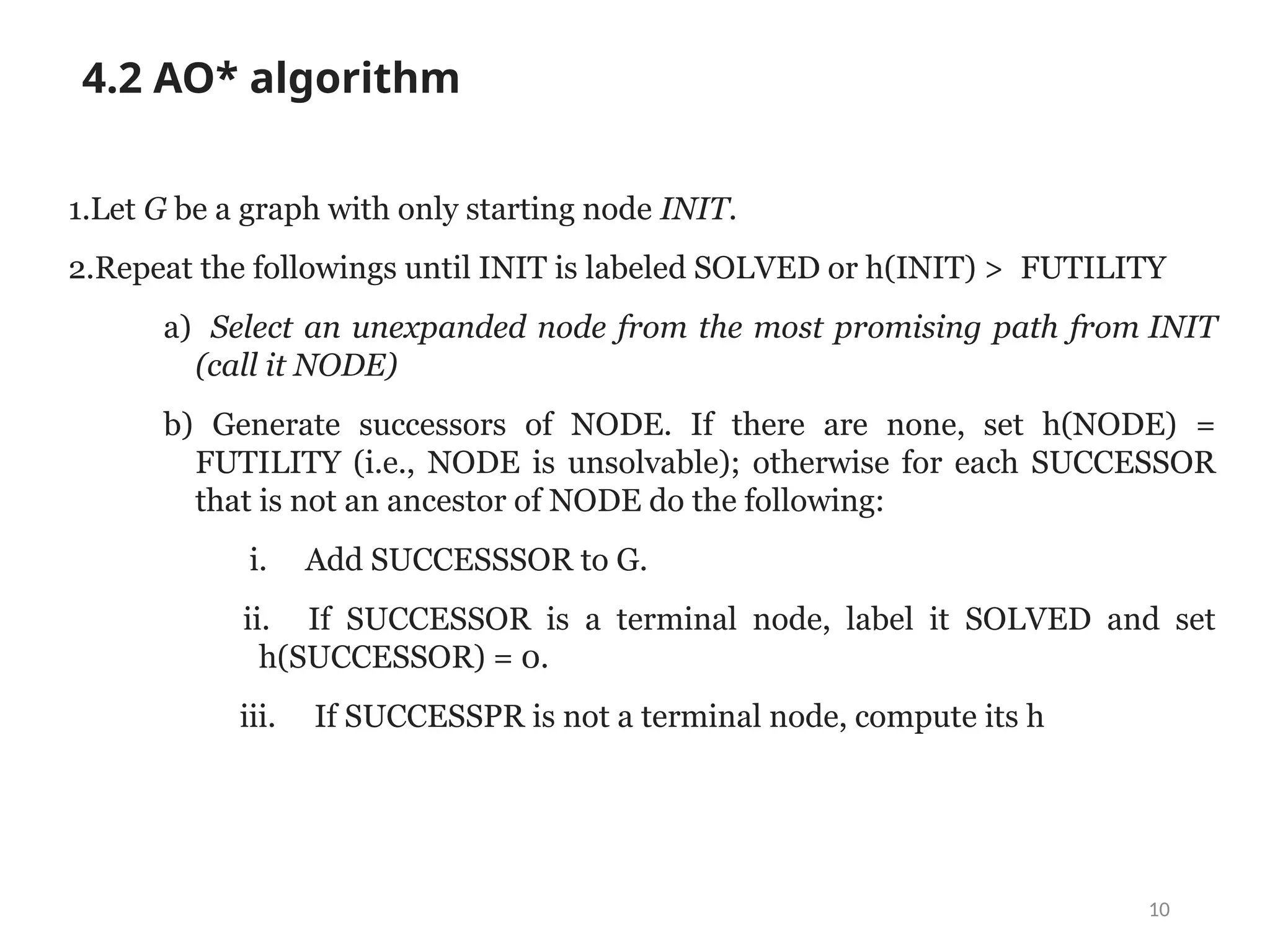
4.2 AO* algorithm
1.Let G be a graph with only starting node INIT.
2.Repeat the followings until INIT is labeled SOLVED or h(INIT) > FUTILITY
a) Select an unexpanded node from the most promising path from INIT
(call it NODE)
b) Generate successors of NODE. If there are none, set h(NODE) =
FUTILITY (i.e., NODE is unsolvable); otherwise for each SUCCESSOR
that is not an ancestor of NODE do the following:
i. Add SUCCESSSOR to G.
ii. If SUCCESSOR is a terminal node, label it SOLVED and set
h(SUCCESSOR) = 0.
iii. If SUCCESSPR is not a terminal node, compute its h
11
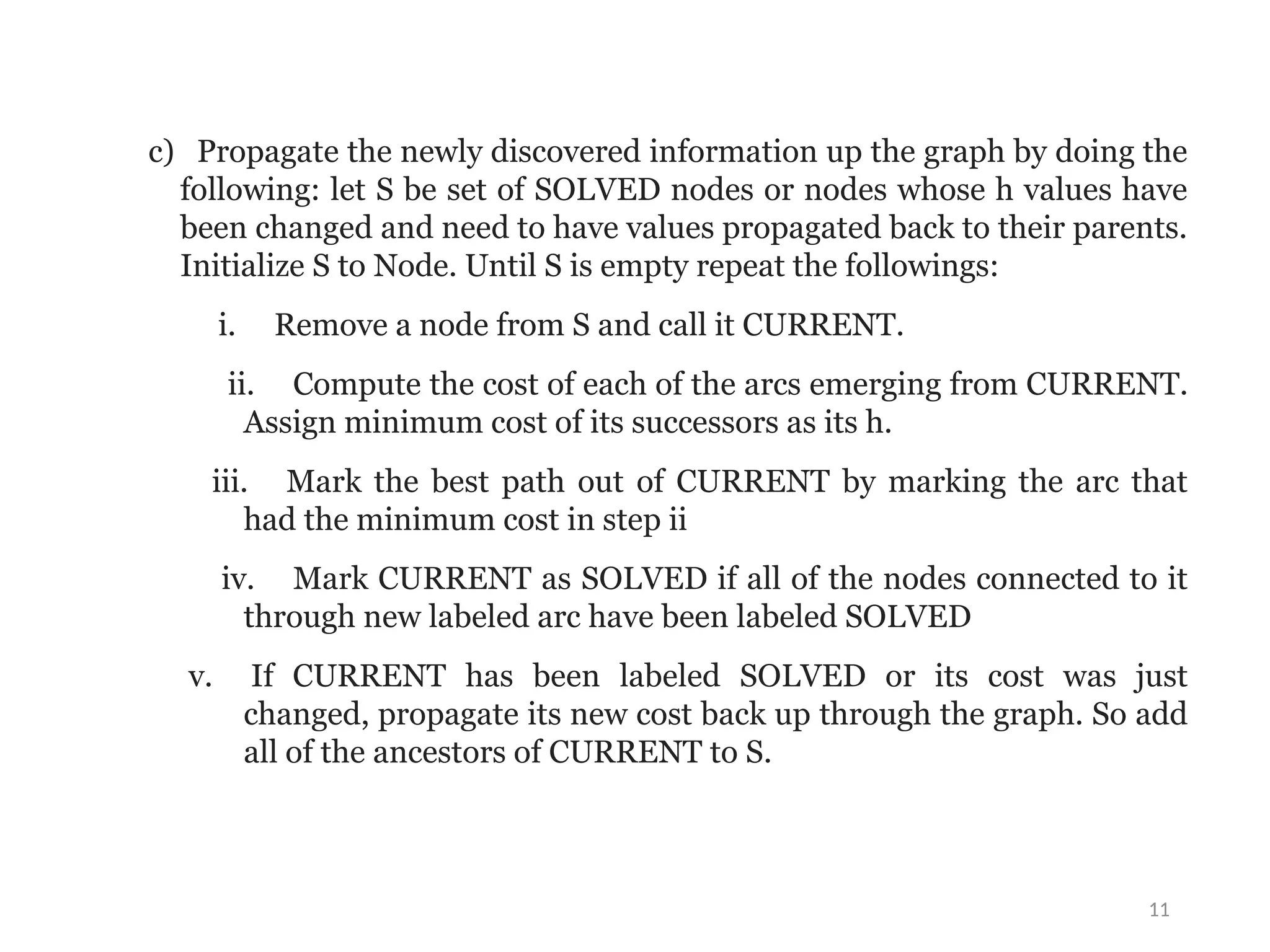
c) Propagate the newly discovered information up the graph by doing the
following: let S be set of SOLVED nodes or nodes whose h values have
been changed and need to have values propagated back to their parents.
Initialize S to Node. Until S is empty repeat the followings:
i. Remove a node from S and call it CURRENT.
ii. Compute the cost of each of the arcs emerging from CURRENT.
Assign minimum cost of its successors as its h.
iii. Mark the best path out of CURRENT by marking the arc that
had the minimum cost in step ii
iv. Mark CURRENT as SOLVED if all of the nodes connected to it
through new labeled arc have been labeled SOLVED
v. If CURRENT has been labeled SOLVED or its cost was just
changed, propagate its new cost back up through the graph. So add
all of the ancestors of CURRENT to S.
12
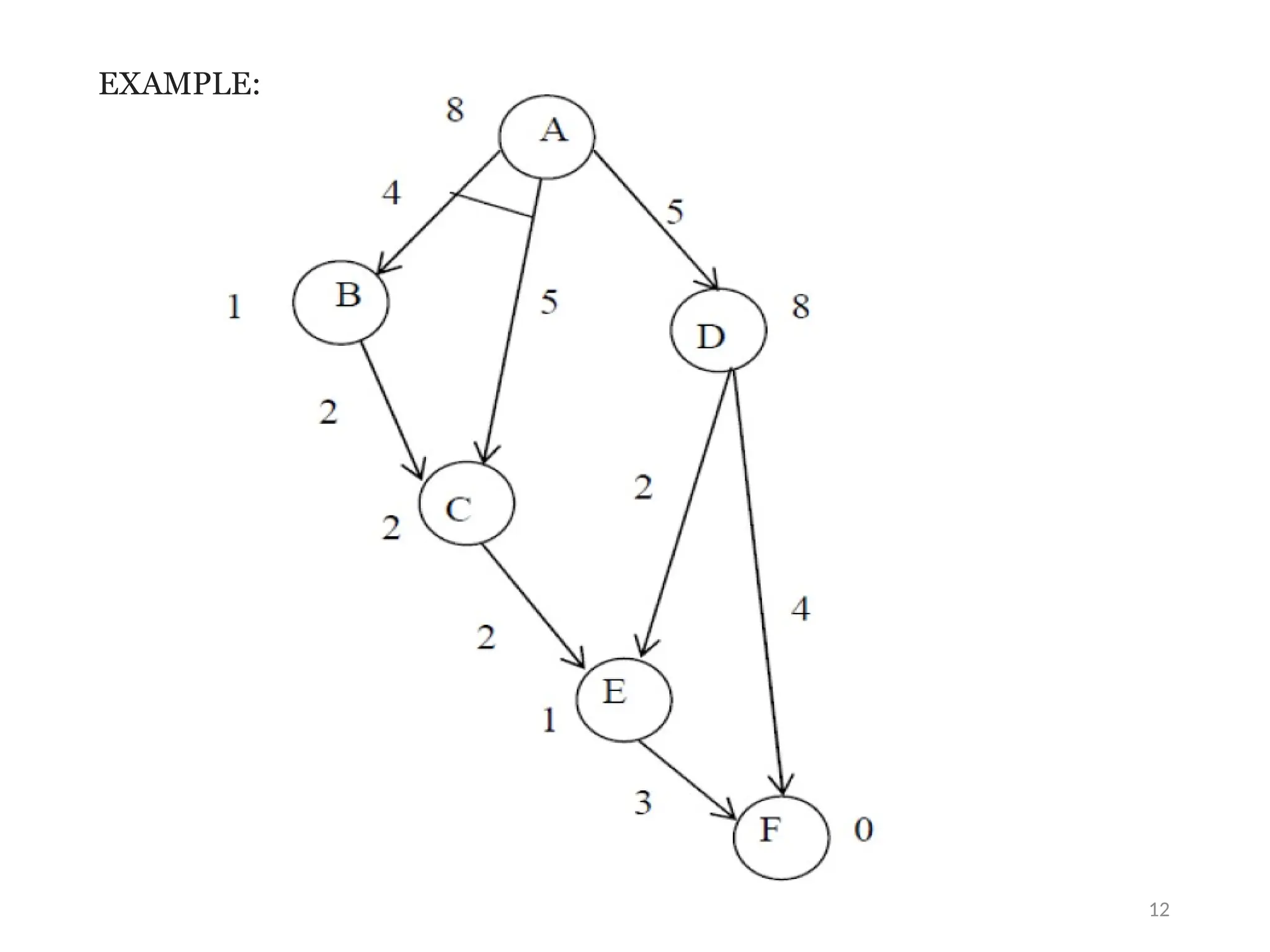
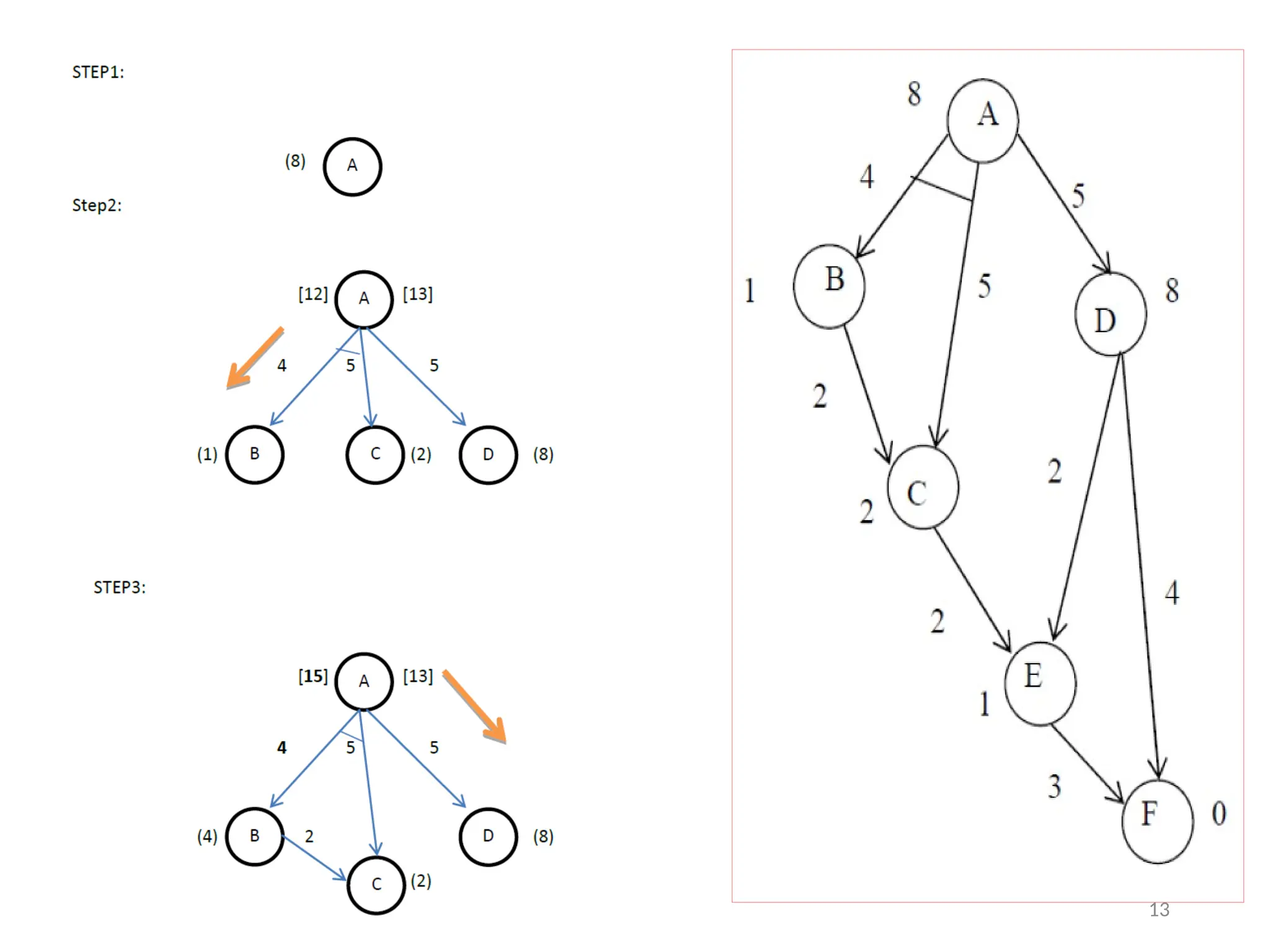
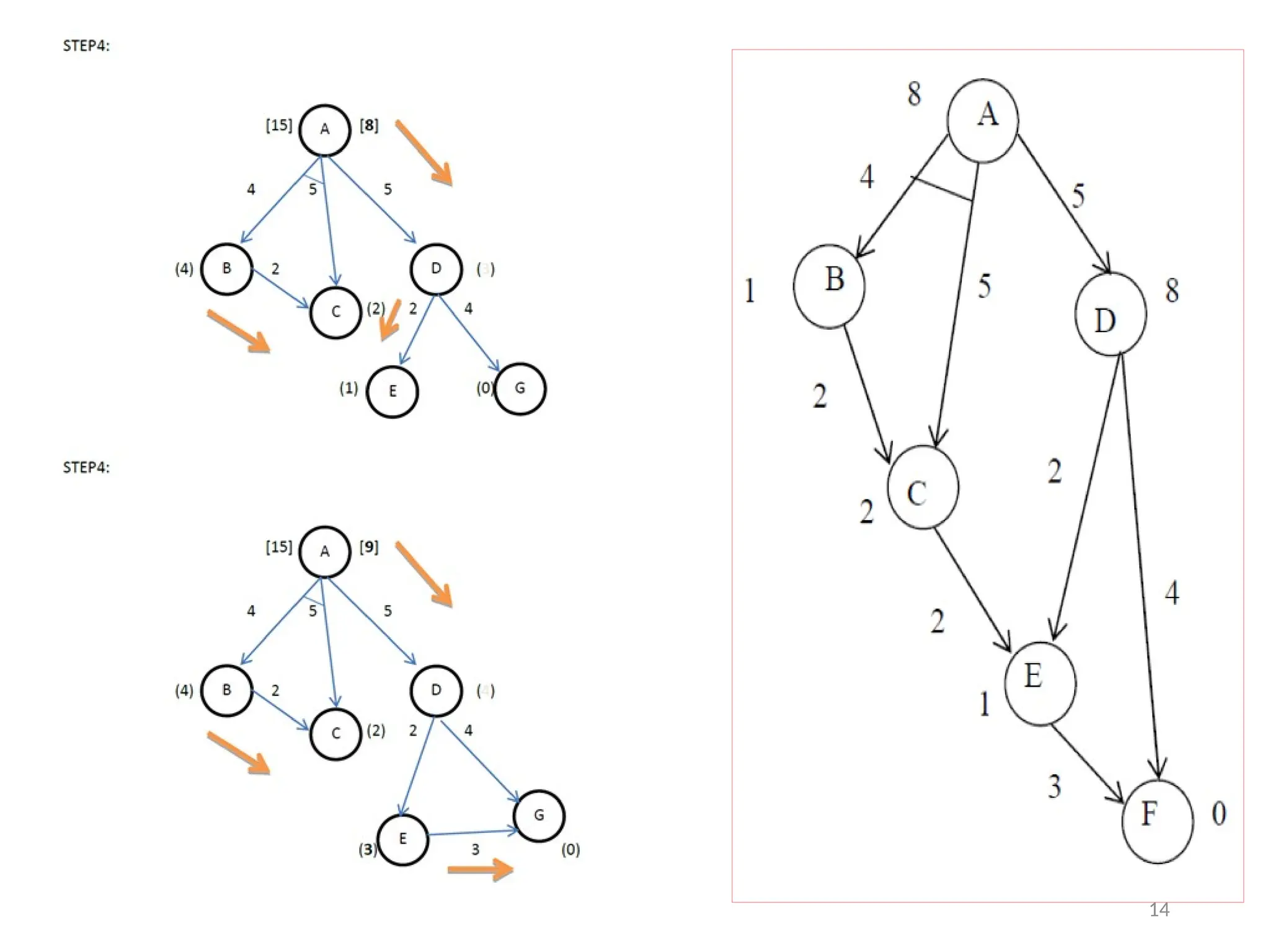
EXAMPLE:
13
14

5.problem reduction in artificial intelligence.pptx

  • 1.
    1  It isa divide and conquer strategy, a solution to a problem can be obtained by decomposing it into smaller sub-problems.  Each of this sub-problem can then be solved to get its sub-solution.  These sub-solutions can then be recombined to get a solution as a whole. That is called is Problem Reduction.  This method generates arc which is called as AND arcs. One AND arc may point to any number of successor nodes, all of which must be solved for an arc to point to a solution. 4. Problem Reduction
  • 2.
    2 4.1 Problem Reduction(AND-OR) algorithm 1. Initialize the graph to the starting node. 2. Loop until the starting node is labelled SOLVED or until its cost goes above FUTILITY: i. Traverse the graph, starting at the initial node and following the current best path and accumulate the set of nodes that are on that path and have not yet been expanded. ii. Pick one of these unexpanded nodes and expand it. If there are no successors, assign FUTILITY as the value of this node. Otherwise, add its successors to the graph and for each of them compute f'(n). If f'(n) of any node is O, mark that node as SOLVED. iii. Change the f'(n) estimate of the newly expanded node to reflect the new information provided by its successors. Propagate this change backwards through the graph. If any node contains a successor arc whose descendants are all solved, label the node itself as SOLVED. At each node that is visited while going up the graph, decide which of its successor arcs is the most promising and mark it as part of the current best path.
  • 3.
  • 4.
    4 STEP 1: A isthe only node, it is at the end of the current best path. It is expanded, yielding nodes B, C, D. The arc to D is labeled as the most promising one emerging from A, since it costs 6compared to B and C, Which costs 9. STEP 2: Node B is chosen for expansion. This process produces one new arc, the AND arc to E and F, with a combined cost estimate of 10.so we update the f’ value of D to 10.Going back one more level, we see that this makes the AND arc B-C better than the arc to D, so it is labeled as the current best path.
  • 5.
    5 STEP 3: We traversethe arc from A and discover the unexpanded nodes B and C. If we going to find a solution along this path, we will have to expand both B and C eventually, so let’s choose to explore B first. This generates two new arcs, the ones to G and to H. Propagating their f’ values backward, we update f’ of B to 6(since that is the best we think we can do, which we can achieve by going through G). This requires updating the cost of the AND arc B-C to 12(6+4+2). After doing that, the arc to D is again the better path from A, so we record that as the current best path and either node E or node F will chosen for expansion at step 4.
  • 6.
  • 7.
    7 Q: Apply AND-ORalgorithm for optimum path
  • 8.
  • 9.
  • 10.
    10 4.2 AO* algorithm 1.LetG be a graph with only starting node INIT. 2.Repeat the followings until INIT is labeled SOLVED or h(INIT) > FUTILITY a) Select an unexpanded node from the most promising path from INIT (call it NODE) b) Generate successors of NODE. If there are none, set h(NODE) = FUTILITY (i.e., NODE is unsolvable); otherwise for each SUCCESSOR that is not an ancestor of NODE do the following: i. Add SUCCESSSOR to G. ii. If SUCCESSOR is a terminal node, label it SOLVED and set h(SUCCESSOR) = 0. iii. If SUCCESSPR is not a terminal node, compute its h
  • 11.
    11 c) Propagate thenewly discovered information up the graph by doing the following: let S be set of SOLVED nodes or nodes whose h values have been changed and need to have values propagated back to their parents. Initialize S to Node. Until S is empty repeat the followings: i. Remove a node from S and call it CURRENT. ii. Compute the cost of each of the arcs emerging from CURRENT. Assign minimum cost of its successors as its h. iii. Mark the best path out of CURRENT by marking the arc that had the minimum cost in step ii iv. Mark CURRENT as SOLVED if all of the nodes connected to it through new labeled arc have been labeled SOLVED v. If CURRENT has been labeled SOLVED or its cost was just changed, propagate its new cost back up through the graph. So add all of the ancestors of CURRENT to S.
  • 12.
  • 13.
  • 14.