LEADERSHIP DEVELOPMENT
FRAMEWORK
PURPOSE OF PRESENTATION
 To develop leadership skills in managers of the company
 To promote leadership behaviour across all staff regardless of their experience and
position
 To manage resistance to the leadership development program
 To brainstorm alternative approaches to leadership development
LEADERSHIP DEVELOPMENT
FRAMEWORK
 It is a framework designed to outline and develop the behaviours that
are required to become an engaging leader within the company
 The major purpose of this framework is to brainstorm alternative ways
of developing leadership skills and apply best methods in the
organisation.
LEADERSHIP DEVELOPMENT
FRAMEWORK
 The framework is expected to develop strong, competent and
operational leadership within the company and retain the workforce.
 It will also help to skilled professionals and plug skilled labour
shortages.
 It will also achieve and promote Boutique Build Australia’s strategic
objectives to attract, engage and develop best staff.
LEADERSHIP DEVELOPMENT
FRAMEWORK
 The guideline of using this framework is: employees are asked to
complete a series of reflective question to encourage thinking around
intentions and motivations at work
 The behaviours of staff and management are analysed and evaluated to
correct future behaviours.
 A personalised leadership development action plan can be developed
to assist managers develop their leadership skills.
KEY LEADERSHIP BEHAVIOURS
1. Team engagement:
 Team engagement is the extent to which the team members feel valued
and motivated
 Leadership can improve employee engagement by better communication,
by sharing and involving them into the organisational goals and decision
making and by rewarding them for their hard work.
KEY LEADERSHIP BEHAVIOURS
2. Communication:
Communicate the mission and vision to the team of staff at the company or organisation so
that it will motivate the staff to work harder.
Increase productivity and efficiency.
Key to inspire people around in the team.
KEY LEADERSHIP BEHAVIOURS
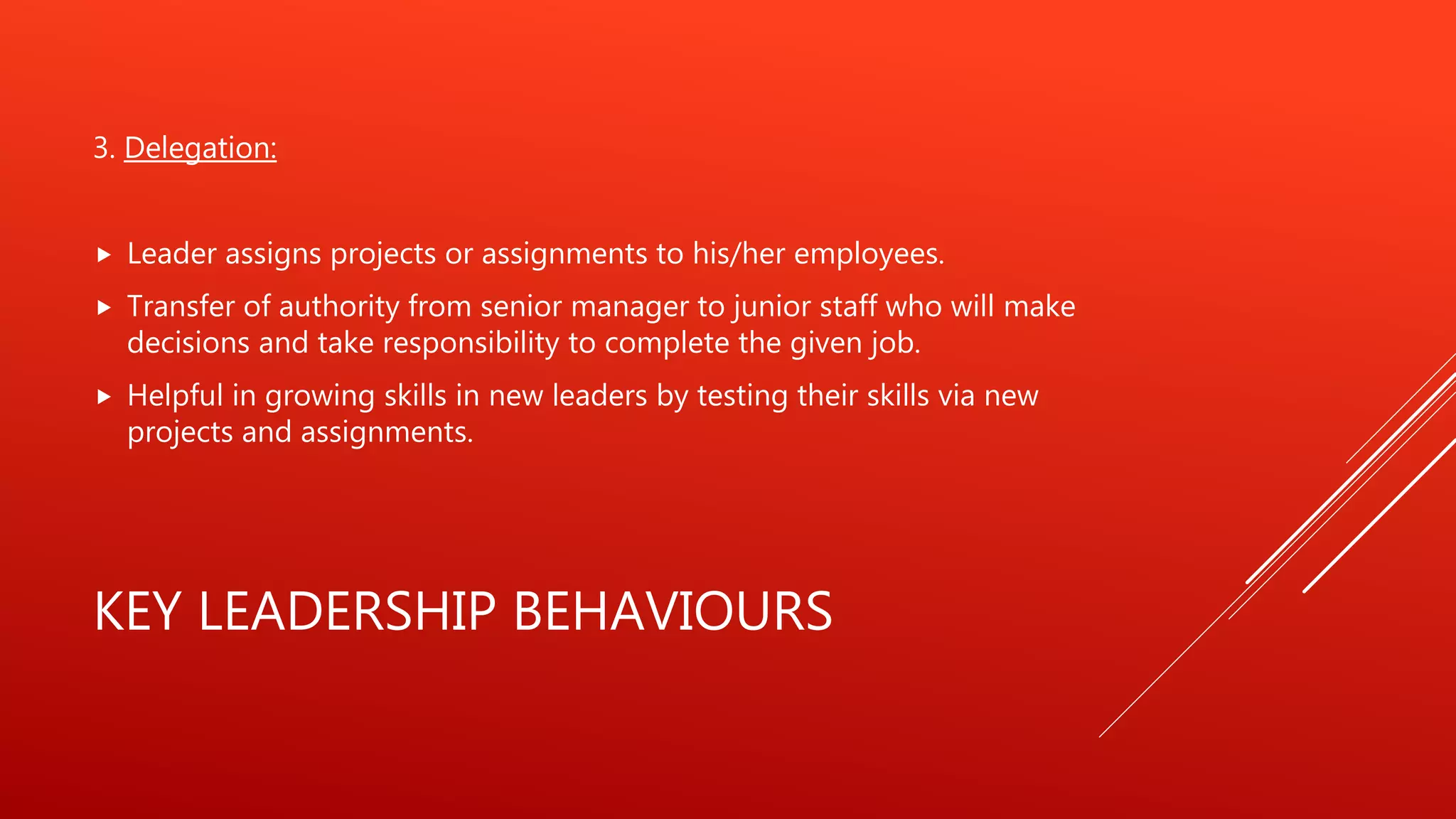
3. Delegation:
 Leader assigns projects or assignments to his/her employees.
 Transfer of authority from senior manager to junior staff who will make
decisions and take responsibility to complete the given job.
 Helpful in growing skills in new leaders by testing their skills via new
projects and assignments.
KEY LEADERSHIP BEHAVIOURS
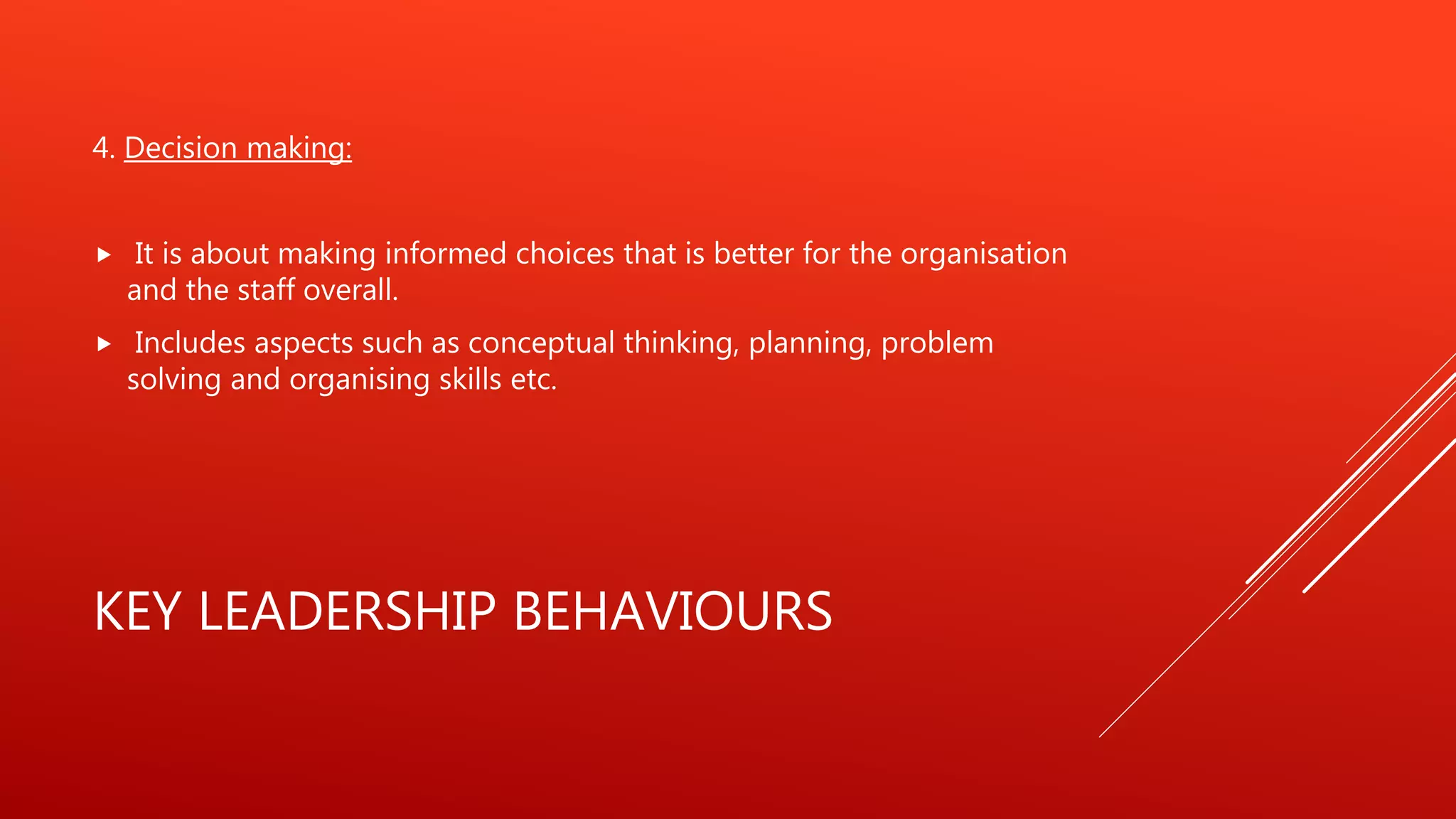
4. Decision making:
 It is about making informed choices that is better for the organisation
and the staff overall.
 Includes aspects such as conceptual thinking, planning, problem
solving and organising skills etc.
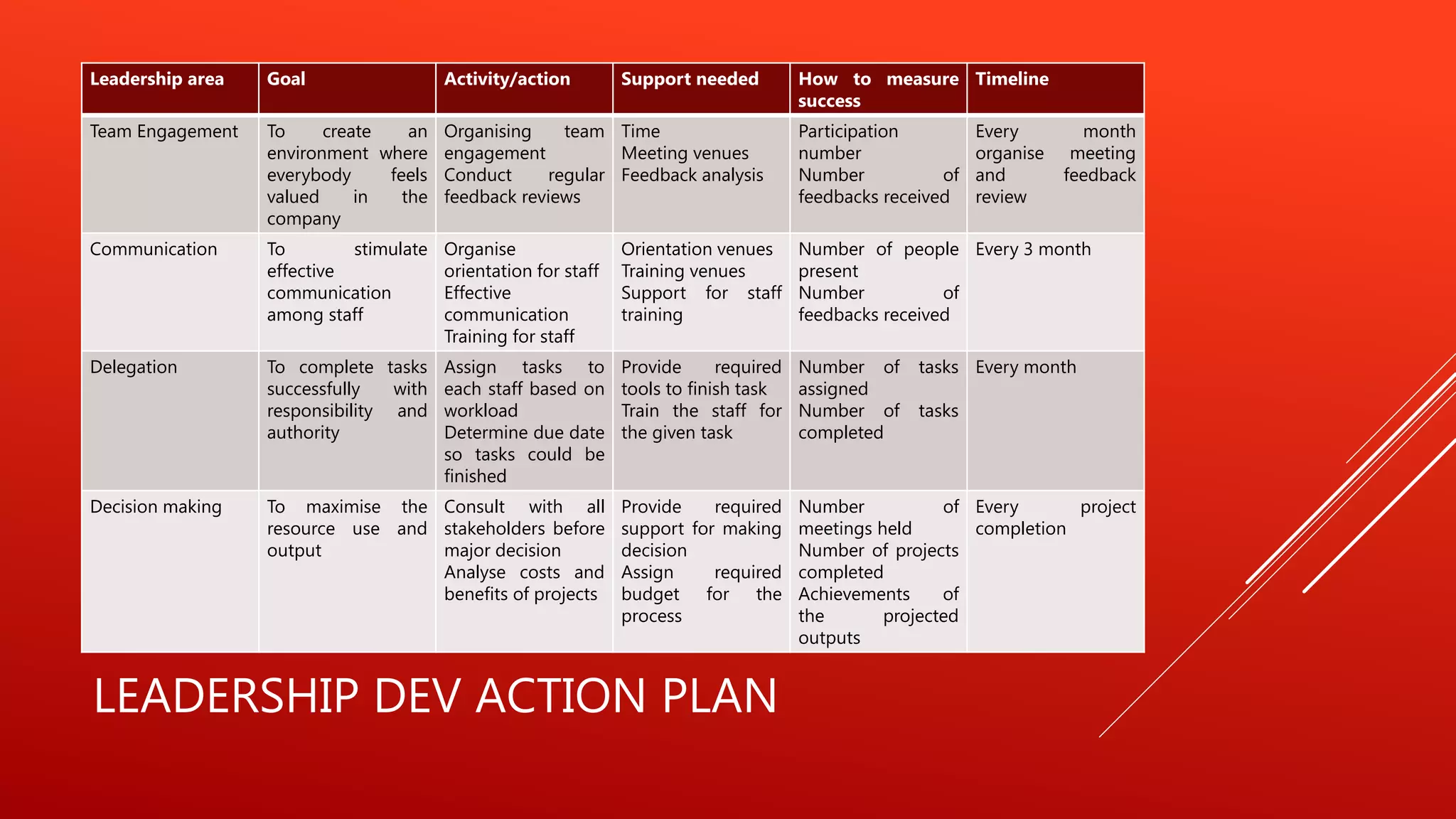
LEADERSHIP DEV ACTION PLAN
Leadership area Goal Activity/action Support needed How to measure
success
Timeline
Team Engagement To create an
environment where
everybody feels
valued in the
company
Organising team
engagement
Conduct regular
feedback reviews
Time
Meeting venues
Feedback analysis
Participation
number
Number of
feedbacks received
Every month
organise meeting
and feedback
review
Communication To stimulate
effective
communication
among staff
Organise
orientation for staff
Effective
communication
Training for staff
Orientation venues
Training venues
Support for staff
training
Number of people
present
Number of
feedbacks received
Every 3 month
Delegation To complete tasks
successfully with
responsibility and
authority
Assign tasks to
each staff based on
workload
Determine due date
so tasks could be
finished
Provide required
tools to finish task
Train the staff for
the given task
Number of tasks
assigned
Number of tasks
completed
Every month
Decision making To maximise the
resource use and
output
Consult with all
stakeholders before
major decision
Analyse costs and
benefits of projects
Provide required
support for making
decision
Assign required
budget for the
process
Number of
meetings held
Number of projects
completed
Achievements of
the projected
outputs
Every project
completion
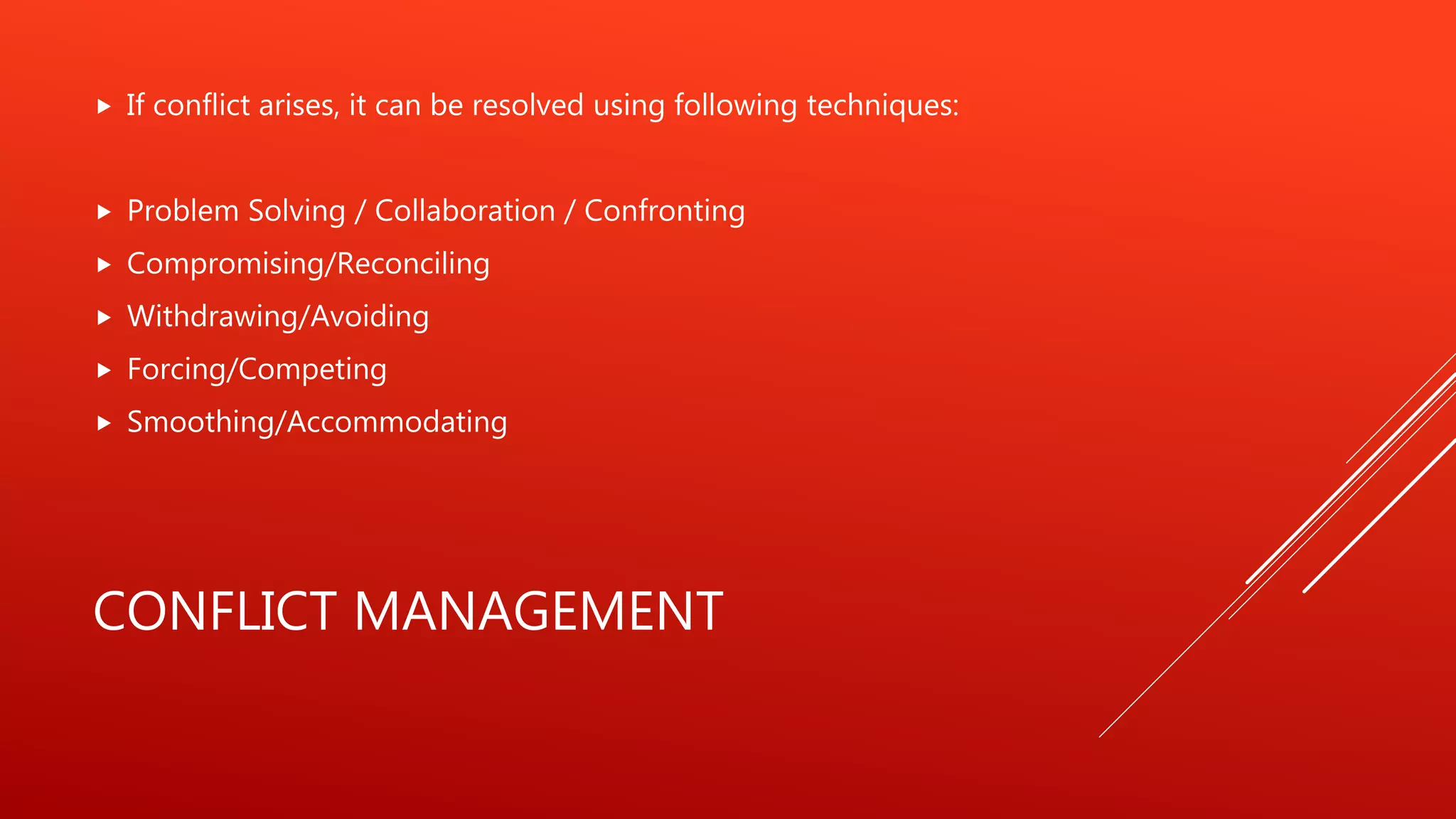
CONFLICT MANAGEMENT
 If conflict arises, it can be resolved using following techniques:
 Problem Solving / Collaboration / Confronting
 Compromising/Reconciling
 Withdrawing/Avoiding
 Forcing/Competing
 Smoothing/Accommodating
(fig: projectmanagement.com)
CONFLICT MANAGEMENT TECHNIQUES
SUMMARY
 This leadership development framework will be able to develop high
calibre leaders required in our industry and organisation
 It will enable Boutique Build Australia to be ahead in competition and
be the leader in housing market in Australia that it aspires to.
Q & A SESSION
 any questions regarding slides?

5. Leadership Development Framework.pptx

  • 1.
  • 2.
    PURPOSE OF PRESENTATION To develop leadership skills in managers of the company  To promote leadership behaviour across all staff regardless of their experience and position  To manage resistance to the leadership development program  To brainstorm alternative approaches to leadership development
  • 3.
    LEADERSHIP DEVELOPMENT FRAMEWORK  Itis a framework designed to outline and develop the behaviours that are required to become an engaging leader within the company  The major purpose of this framework is to brainstorm alternative ways of developing leadership skills and apply best methods in the organisation.
  • 4.
    LEADERSHIP DEVELOPMENT FRAMEWORK  Theframework is expected to develop strong, competent and operational leadership within the company and retain the workforce.  It will also help to skilled professionals and plug skilled labour shortages.  It will also achieve and promote Boutique Build Australia’s strategic objectives to attract, engage and develop best staff.
  • 5.
    LEADERSHIP DEVELOPMENT FRAMEWORK  Theguideline of using this framework is: employees are asked to complete a series of reflective question to encourage thinking around intentions and motivations at work  The behaviours of staff and management are analysed and evaluated to correct future behaviours.  A personalised leadership development action plan can be developed to assist managers develop their leadership skills.
  • 6.
    KEY LEADERSHIP BEHAVIOURS 1.Team engagement:  Team engagement is the extent to which the team members feel valued and motivated  Leadership can improve employee engagement by better communication, by sharing and involving them into the organisational goals and decision making and by rewarding them for their hard work.
  • 7.
    KEY LEADERSHIP BEHAVIOURS 2.Communication: Communicate the mission and vision to the team of staff at the company or organisation so that it will motivate the staff to work harder. Increase productivity and efficiency. Key to inspire people around in the team.
  • 8.
    KEY LEADERSHIP BEHAVIOURS 3.Delegation:  Leader assigns projects or assignments to his/her employees.  Transfer of authority from senior manager to junior staff who will make decisions and take responsibility to complete the given job.  Helpful in growing skills in new leaders by testing their skills via new projects and assignments.
  • 9.
    KEY LEADERSHIP BEHAVIOURS 4.Decision making:  It is about making informed choices that is better for the organisation and the staff overall.  Includes aspects such as conceptual thinking, planning, problem solving and organising skills etc.
  • 10.
    LEADERSHIP DEV ACTIONPLAN Leadership area Goal Activity/action Support needed How to measure success Timeline Team Engagement To create an environment where everybody feels valued in the company Organising team engagement Conduct regular feedback reviews Time Meeting venues Feedback analysis Participation number Number of feedbacks received Every month organise meeting and feedback review Communication To stimulate effective communication among staff Organise orientation for staff Effective communication Training for staff Orientation venues Training venues Support for staff training Number of people present Number of feedbacks received Every 3 month Delegation To complete tasks successfully with responsibility and authority Assign tasks to each staff based on workload Determine due date so tasks could be finished Provide required tools to finish task Train the staff for the given task Number of tasks assigned Number of tasks completed Every month Decision making To maximise the resource use and output Consult with all stakeholders before major decision Analyse costs and benefits of projects Provide required support for making decision Assign required budget for the process Number of meetings held Number of projects completed Achievements of the projected outputs Every project completion
  • 11.
    CONFLICT MANAGEMENT  Ifconflict arises, it can be resolved using following techniques:  Problem Solving / Collaboration / Confronting  Compromising/Reconciling  Withdrawing/Avoiding  Forcing/Competing  Smoothing/Accommodating
  • 12.
  • 13.
    SUMMARY  This leadershipdevelopment framework will be able to develop high calibre leaders required in our industry and organisation  It will enable Boutique Build Australia to be ahead in competition and be the leader in housing market in Australia that it aspires to.
  • 14.
    Q & ASESSION  any questions regarding slides?