DARIAH-EU: towards sustainable digital research
infrastructure in the Arts and Humanities
Ingrida Vosyliūtė
Vilnius University Faculty of Communication
ingrida.vosyliute@kf.vu.lt

www.dariah.eu
What is DARIAH?

“Aims to enhance and support digitally-enabled
research across the humanities and arts”
• To develop, maintain and operate an infrastructure in
Sally Chambers
support of ICT-based research practices
DARIAH-EU Coordination Office
• To help researchers in using ICT-enabled methods to
analyse and interpret digital resources
• To facilitate long-term access to, and use for, digital
research data
A quick history of DARIAH
• 2006: DARIAH included in the ESFRI
Roadmap
• 2008 – 2011: Preparatory Phase:
project Preparing DARIAH
• 2011 – 2013: Transition Phase:
establishing the DARIAH-ERIC

Cash

In-kind
Establishing European organization
DARIAH-EU
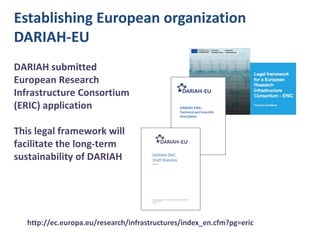
DARIAH submitted
European Research
Infrastructure Consortium
(ERIC) application

In-kind

This legal framework will
facilitate the long-term
sustainability of DARIAH

Cash
http://ec.europa.eu/research/infrastructures/index_en.cfm?pg=eric
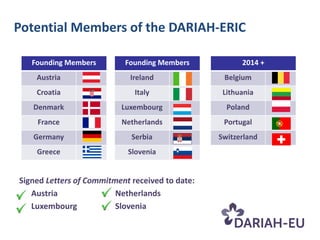
Potential Members of the DARIAH-ERIC
Founding Members

Founding Members

2014 +

Austria

Ireland

Belgium

Croatia

Italy

Lithuania

Denmark

Luxembourg

Poland

France

Netherlands

Portugal

Germany

Serbia

Switzerland

Greece

Slovenia

Signed Letters of Commitment received to date:
Austria
Netherlands
Luxembourg
Slovenia
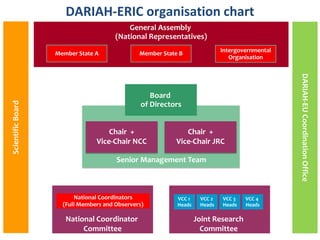
DARIAH-ERIC organisation chart
General Assembly
(National Representatives)
Intergovernmental
Organisation

Member State B

DARIAH-EU Coordination Office

Scientific Board

Member State A

Board
of Directors
Chair +
Vice-Chair NCC

Chair +
Vice-Chair JRC

Senior Management Team

National Coordinators
(Full Members and Observers)

National Coordinator
Committee

VCC 1
Heads

VCC 2
Heads

VCC 3
Heads

Joint Research
Committee

VCC 4
Heads
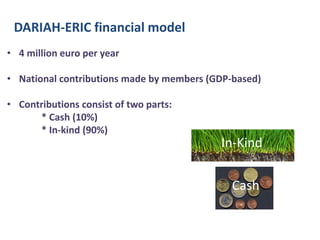
DARIAH-ERIC financial model
• 4 million euro per year
• National contributions made by members (GDP-based)
• Contributions consist of two parts:
* Cash (10%)
* In-kind (90%)

In-kind
In-Kind
In-Kind
Cash
Cash
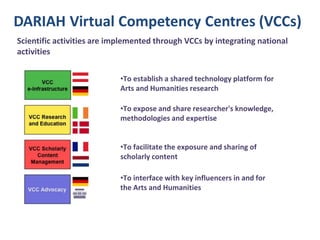
Scientific activities are implemented through VCCs by integrating national
activities
•To establish a shared technology platform for
Arts and Humanities research

•To expose and share researcher's knowledge,
methodologies and expertise
•To facilitate the exposure and sharing of
scholarly content
•To interface with key influencers in and for
the Arts and Humanities
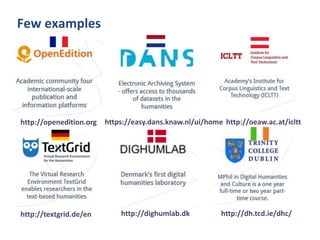
Few examples

http://openedition.org

http://textgrid.de/en

https://easy.dans.knaw.nl/ui/home http://oeaw.ac.at/icltt

http://dighumlab.dk

http://dh.tcd.ie/dhc/
Towards DARIAH collaboration strategy
Affiliated projects
• ARIADNE, CENDARI, DASISH, EHRI, NeDiMAH, (DiXit)
Sibling initiatives
• BAMBOO, CLARIN, TEI

Cultural heritage initiatives
• Europeana, DC-Net
Technological initiatives
• EGI, EUDAT
Larger circle initiatives
• APA, GRDI2020, OpenAIRE
Key elements for sustainable DARIAH
•
•
•
•
•

Legal Status
Reliable partners
Efficient organisational structure In-kind
Established financial model
Wide range scientific activities, including national
projects
• Collaboration with other European projects and
infrastructures

Cash
Thank you!

www.dariah.eu

dariah-info@dariah.eu

4th OpenAIRE Workshop Ingrida Vosyliute

  • 1.
    DARIAH-EU: towards sustainabledigital research infrastructure in the Arts and Humanities Ingrida Vosyliūtė Vilnius University Faculty of Communication ingrida.vosyliute@kf.vu.lt www.dariah.eu
  • 2.
    What is DARIAH? “Aimsto enhance and support digitally-enabled research across the humanities and arts” • To develop, maintain and operate an infrastructure in Sally Chambers support of ICT-based research practices DARIAH-EU Coordination Office • To help researchers in using ICT-enabled methods to analyse and interpret digital resources • To facilitate long-term access to, and use for, digital research data
  • 3.
    A quick historyof DARIAH • 2006: DARIAH included in the ESFRI Roadmap • 2008 – 2011: Preparatory Phase: project Preparing DARIAH • 2011 – 2013: Transition Phase: establishing the DARIAH-ERIC Cash In-kind
  • 4.
    Establishing European organization DARIAH-EU DARIAHsubmitted European Research Infrastructure Consortium (ERIC) application In-kind This legal framework will facilitate the long-term sustainability of DARIAH Cash http://ec.europa.eu/research/infrastructures/index_en.cfm?pg=eric
  • 5.
    Potential Members ofthe DARIAH-ERIC Founding Members Founding Members 2014 + Austria Ireland Belgium Croatia Italy Lithuania Denmark Luxembourg Poland France Netherlands Portugal Germany Serbia Switzerland Greece Slovenia Signed Letters of Commitment received to date: Austria Netherlands Luxembourg Slovenia
  • 6.
    DARIAH-ERIC organisation chart GeneralAssembly (National Representatives) Intergovernmental Organisation Member State B DARIAH-EU Coordination Office Scientific Board Member State A Board of Directors Chair + Vice-Chair NCC Chair + Vice-Chair JRC Senior Management Team National Coordinators (Full Members and Observers) National Coordinator Committee VCC 1 Heads VCC 2 Heads VCC 3 Heads Joint Research Committee VCC 4 Heads
  • 7.
    DARIAH-ERIC financial model •4 million euro per year • National contributions made by members (GDP-based) • Contributions consist of two parts: * Cash (10%) * In-kind (90%) In-kind In-Kind In-Kind Cash Cash
  • 8.
    Scientific activities areimplemented through VCCs by integrating national activities •To establish a shared technology platform for Arts and Humanities research •To expose and share researcher's knowledge, methodologies and expertise •To facilitate the exposure and sharing of scholarly content •To interface with key influencers in and for the Arts and Humanities
  • 9.
  • 10.
    Towards DARIAH collaborationstrategy Affiliated projects • ARIADNE, CENDARI, DASISH, EHRI, NeDiMAH, (DiXit) Sibling initiatives • BAMBOO, CLARIN, TEI Cultural heritage initiatives • Europeana, DC-Net Technological initiatives • EGI, EUDAT Larger circle initiatives • APA, GRDI2020, OpenAIRE
  • 11.
    Key elements forsustainable DARIAH • • • • • Legal Status Reliable partners Efficient organisational structure In-kind Established financial model Wide range scientific activities, including national projects • Collaboration with other European projects and infrastructures Cash
  • 12.