Basic Chemical Principles
Atomic structure
Periodic table trends
Chemical bonding (ionic & covalent)
Molecular geometry and polarity
Chemical Reactions
Balancing chemical equations
Types of reactions (synthesis, decomposition, redox, etc.)
Stoichiometry
States of Matter & Properties
Gases, liquids, and solids
Gas laws (Boyle’s, Charles’s, Ideal Gas Law)
Intermolecular forces
Solutions and Concentrations
Molarity, solubility, and solution preparation
Acids, bases, and pH
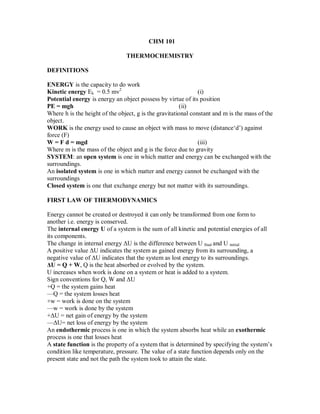
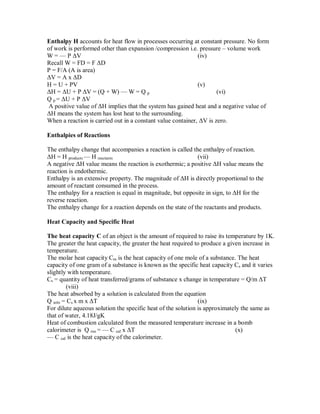
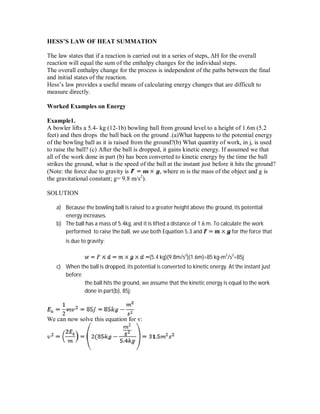
Thermochemistry & Energy Changes
Heat, temperature, and enthalpy
Endothermic vs. exothermic reactions
Intro to Chemical Kinetics and Equilibrium
Reaction rates
Dynamic equilibrium and Le Chatelier’s Principle
🧪 Lab Component (If Included):
Many CHM 101 courses include a lab section, where students get hands-on experience:
Conducting chemical experiments
Practicing safe lab techniques
Making observations and drawing conclusions based on data
🎯 Who Should Take CHM 101?
Science and pre-med students
Engineering majors
Students fulfilling general education science requirements
Anyone looking to build a strong foundation in chemistry
💡 Why It Matters:
Understanding chemistry is essential for fields like medicine, pharmacy, biology, environmental science, and engineering. CHM 101 helps you develop analytical thinking, problem-solving skills, and a scientific mindset.
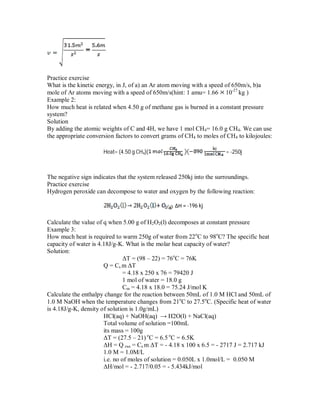
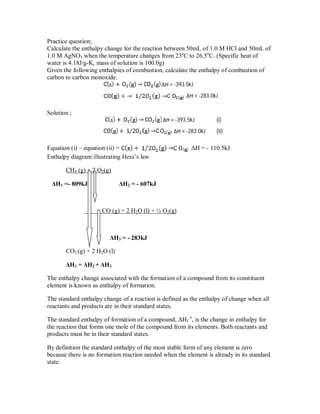
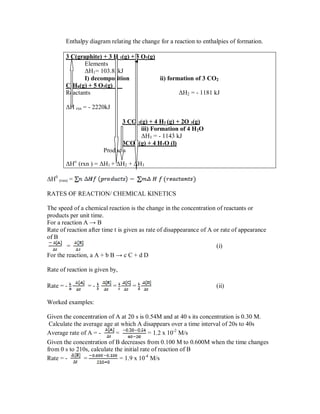
![Reaction rates decreases as reaction proceeds, because the concentration of reactants
decreases.
Factors That Affect Rates of Reactions
1. Physical state of the reactants: when reactants are in different phases for
example when a solid reacts with a liquid the reaction is limited to the area of
contact. Reactions involving solids will proceed faster if the surface area of the
solid is increased.
2. Concentration of the reactants: as concentration increases the frequency with
which the reactants collide increases and the rates of reaction increases.
3. Temperature: rates of chemical reactions increases as the temperature
increases. Increasing temperature increases the kinetic energy of molecules, at
higher energy more molecules collide more frequently.
4. Catalyst speed up rates of reaction without being used up.
Reaction rates depend on the frequency of collisions between molecules. The greater the
frequency of collisions, the greater the rate of reactions.
The rate law
For the reaction, a A + b B → c C + d D
The rate law is written in the form
Rate = k [A]m
[B]n
(iii)
Generally the rate law can be written as
Rate = [reactant 1]m
[reactant 2]n
(iv)
Where k is the rate constant, and it is temperature dependent. The exponents’ m and n are
whole numbers (0, 1, 2) are known as the reaction order. The overall order of the reaction
is the sum of the m and n.
The unit of the rate = (units of rate constant) (units of concentration)2
for the reaction
above is
Unit of rate constant = 2
= = M-1
s -1
(v)
The rate of a first order reaction depends on the concentration of only one reactant raised
to the first power.
Rate = = k [A] (vi)
The integrated rate law is written as ln [A]t = - kt + ln [A]o (vii)
The rate of a second order reaction depends on the concentration of one reactant raised to
the second power or on the concentrations of two different reactants.
Rate = = k [A]2
(viii)
The integrated rate law is written as (ix)](https://image.slidesharecdn.com/474chm101updatethermochemistry-250903022416-a762ec29/85/474_CHM-101-UPDATE-THERMOCHEMISTRY-pdf-7-320.jpg)
![A plot of 1/[A]t against t will give a straight line with a slope equal to k and an intercept
equal to 1/[A]o.
The half – life of a reaction t1/2 , is the time required for the concentration a reactant to
reach one – half of its initial value, [A] t1/2 = [A]o (x)
The half – life of a first order reaction is derived as follows
ln = = - k t1/2 (xi)
ln ½ = k t1/2 (xii)
t1/2 = = (xiii)
The half – life of a second order reaction is given as
t1/2 = . (xiv)
It depends on the initial concentration of the reactant. The lower the initial concentration,
the greater the half – life.
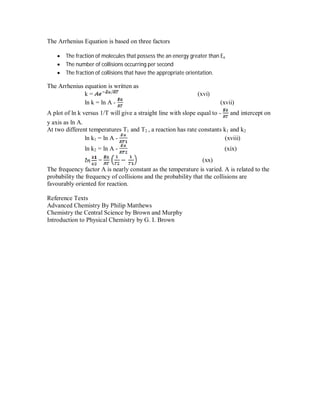
Activation energy – E a is the minimum energy required to initiate a chemical reaction.
Generally the lower the activation energy the faster the rate of reaction. As the
temperature at which a reaction is carried out increases, a greater fraction of molecules
has kinetic energy greater than the activation energy which causes more effective
collisions and a greater rate of reaction. The fraction of molecules that has energy equal
to or greater than Ea is given by the expression
F = (xv)
activated complex
P.E Ea
reactants ΔE
products
reaction pathways
Negative value of ΔE means reaction is exothermic
Positive value of ΔE means reaction is endothermic](https://image.slidesharecdn.com/474chm101updatethermochemistry-250903022416-a762ec29/85/474_CHM-101-UPDATE-THERMOCHEMISTRY-pdf-8-320.jpg)