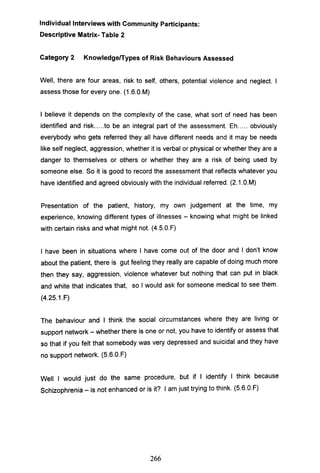
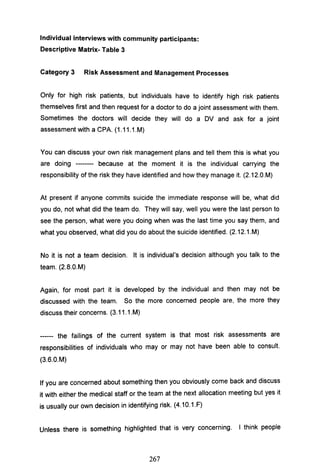
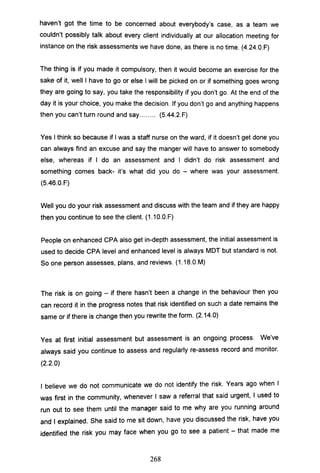
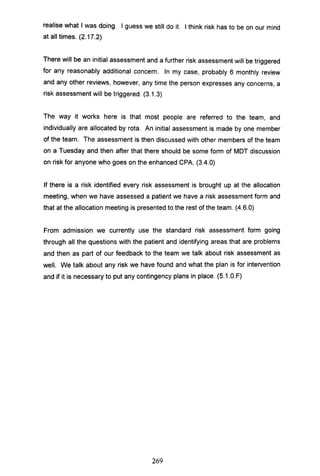
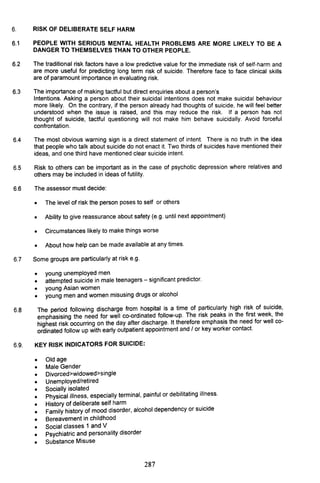
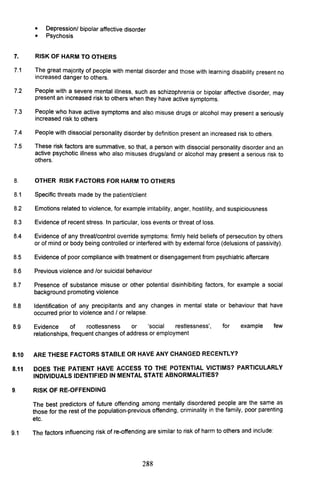
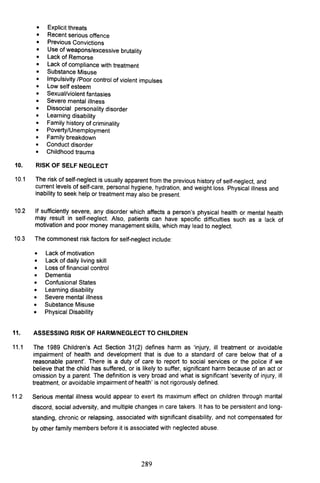
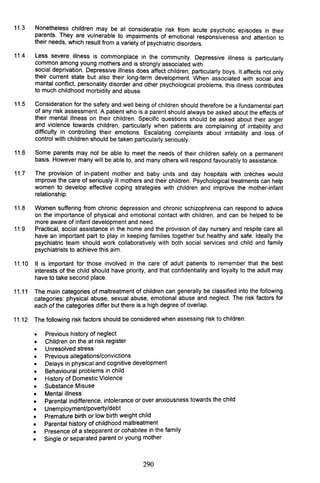
RISK MANAGEMENT: AN INVESTIGATION INTO NURSES RESPONSE TO RISK
PRESENTED BY PEOPLE WITH SEVERE MENTAL
HEALTH PROBLEMS
BY
MAVIS ODDOYE, R.N. MSc.
SUBMITTED FOR THE DEGREE OF DOCTOR OF PHILOSOPHY
EUROPEAN INSTITUTE OF HEALTH AND MEDICAL SECIENCES
MAY 2005
Abstract
Background
In the last few years clinical risk assessment and management in people with severe mental
health problems has become a national agenda following various critical incidents reported in
national confidential enquiries (Sheppard 1996, Bloom-Cooper 1996, Ritchie 1994) and the
media. Evidence from previous studies suggested that nurses' risk assessment and
management practices have not been fully explored although the risk assessment and
management practices of other professionals such as doctors and psychologists have been
explored (Modestine 1989, Lidz et al).
Aim
The aim of this study was to explore how nurses managed risk presented by people with severe
mental health problems.
Method
Data collection involved a mixed approach of both qualitative and quantitative methods in a
three stage process. Stage I involved the review of a number of case notes (N=300), 150 case
notes from the community and 150 case notes from the in-patient services. Gaps in the case
notes reviewed led to a stage II of the study in an attempt to understand the nurses risk
assessment and management practices from their point of view. Stage II of the study involved
an interview with qualified nurses (N=10) in the UK, 5 participants from the community and 5
participants from the in-patients services. Following the data collection and analysis in both
stages one and two of the study the researcher believed that an international focus and
perception of factors that influenced the risk assessment and management agenda and
practices would be useful for comparison and learning. This therefore led to a stage III of the
study which involved the collection of data through an interview process with international
experts in clinical risk assessment and management and a group of clinicians and managers
from two different clinical settings in the United States. The data from the case notes reviewed
was analysed using Statistical Package for Social Sciences version 12 and contents analysis
was used to analyse the data collected from the interviews.
Results
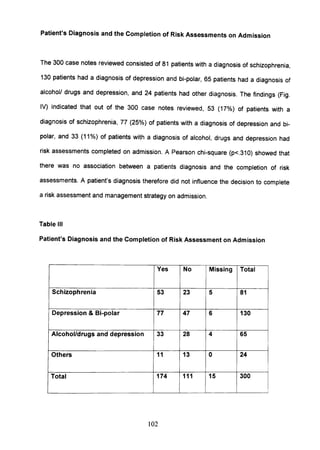
The major findings from the case notes reviewed showed that the community patients were
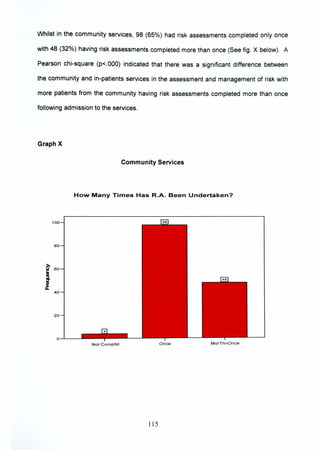
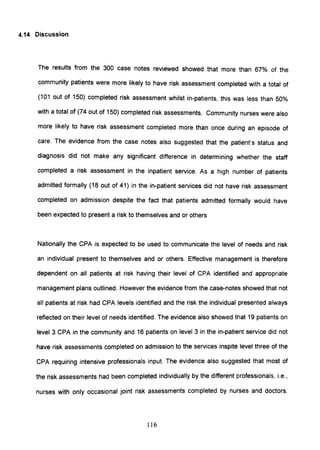
more likely to have risk assessments completed with a total of 101 out of 150 completed risk
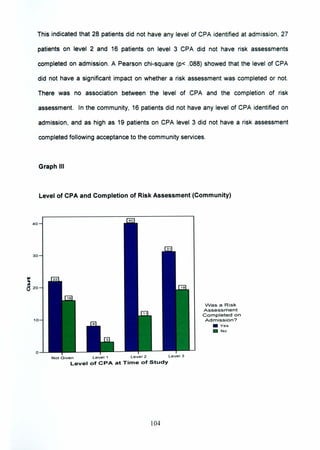
assessments. Nineteen (19) patients on level 3 CPA did not have completed risk assessments.
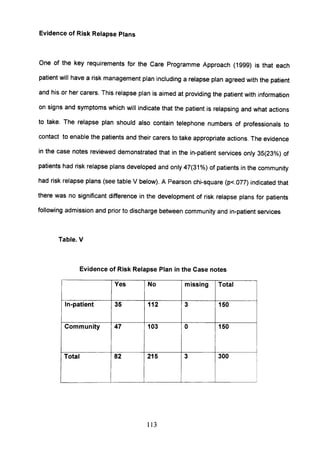
One hundred and thirteen (113) out of 150 patients had risk management plans and only 47 out
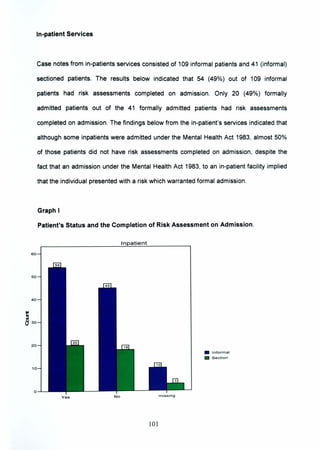
of 150 patients had risk relapse plans completed. The in-patients case notes reviewed showed
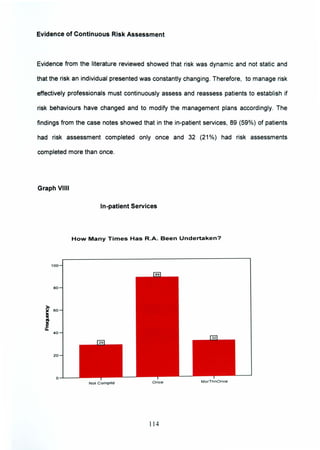
that only 74 out of 150 patients had risk assessments completed on admission. Only 21 out of
43 formal (detained under the Mental Health Act 1983) patients had risk assessments
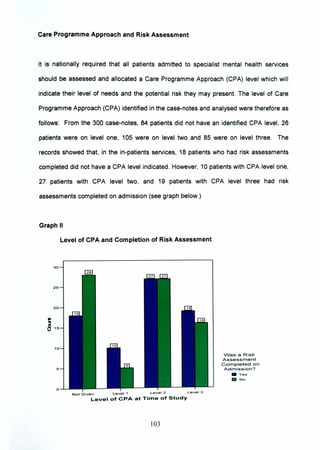
completed on admission. Sixteen (16) patients on level 3 CPA did not have completed risk
assessment. Ninety two (92) patients had risk management plans with only 35 risk relapse
plans completed.
Major findings from the interviews showed that nurses risk assessment and management
practices were diverse and inconsistent with varied perceptions of responsibilities and practices.
Evidence of diffusion of responsibility within the in-patient services indicated that high risk
patients admitted formally (under the Mental Health Act 1983) did not have risk assessments
completed on admission. The perception of the 'blame culture' within the organisation hindered
the completion of risk assessment, management and relapse plans.
The interviews with the participants from the United States demonstrated that risk assessment
and management was very much team focused with professionals developing and using
creative ways of engaging high risk patients who presented a risk to themselves and others. A
standardised risk assessment tool approved by the State in which the study was conducted, and
used by all the mental health facilities was perceived to be protective against litigation by the
participants.
Recommendations
Recommendations for practice included a review of risk assessment and management training
for nurses at both pre and post registration levels to include strong emphasis on responsibilities
and communication. National Health Service Trust hospitals to introduce robust mechanisms for
monitoring risk assessment and management practices to ensure that risk assessment and
management practices are viewed by the professionals as a dynamic and not a static process.
National Health Service Trust hospitals should address the perception of the 'blame culture' and
the diffusion of responsibility and promote life-long learning cultures to enhance risk assessment
and management practices. National Health Service Trust Boards to support clinicians
especially nurses in developing creative ways of engaging high risk patients who present a risk
to themselves and others.
3
1.1
1.1.1
1.2
1.3
1.4
1.4.1
1.5
1.6
1.7
1.8
2.
2.1
2.2
2.3
2.4
Contents
Abstract
Acknowledgements
Chapter 1
Rationale for the Study
Introduction
Scope of Problems
Political Expectations
National Strategies for Mental Health Services
Health of the Nation
National Service Framework
National Strategy for Suicide Prevention
Local Issues
Working Definition
Chapter 2
Literature
Introduction
Risk Assessment and Management
Suicides in People with Schizophrenia and Depression
Self Harm
4
Page No
15
15-16
17-18
18
18
18-19
19-20
20-22
22-23
23-25
26
26-27
27-31
31-38
38-39
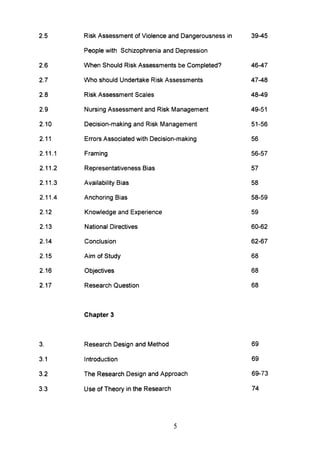
2.5
2.6
2.7
2.8
2.9
2.10
2.11
2.11.1
2.11.2
2.11.3
2.11.4
2.12
2.13
2.14
2.15
2.16
2.17
3.
3.1
3.2
3.3
Risk Assessment of Violence and Dangerousness in
People with Schizophrenia and Depression
When Should Risk Assessments be Completed?
Who should Undertake Risk Assessments
Risk Assessment Scales
Nursing Assessment and Risk Management
Decision-making and Risk Management
Errors Associated with Decision-making
Framing
Representativeness Bias
Availability Bias
Anchoring Bias
Knowledge and Experience
National Directives
Conclusion
Aim of Study
Objectives
Research Question
Chapter 3
Research Design and Method
Introduction
The Research Design and Approach
Use of Theory in the Research
5
39-45
46-47
47-48
48-49
49-51
51-56
56
56-57
57
58
58-59
59
60-62
62-67
68
68
68
69
69
69-73
74
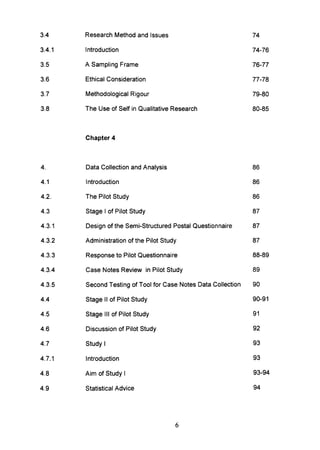
3.4 Research Method and Issues 74
3.4.1 Introduction 74-76
3.5 A Sampling Frame 76-77
3.6 Ethical Consideration 77-78
3.7 Methodological Rigour 79-80
3.8 The Use of Self in Qualitative Research 80-85
Chapter 4
4. Data Collection and Analysis 86
4.1 Introduction 86
4.2. The Pilot Study 86
4.3 Stage I of Pilot Study 87
4.3.1 Design of the Semi-Structured Postal Questionnaire 87
4.3.2 Administration of the Pilot Study 87
4.3.3 Response to Pilot Questionnaire 88-89
4.3.4 Case Notes Review in Pilot Study 89
4.3.5 Second Testing of Tool for Case Notes Data Collection 90
4.4 Stage II of Pilot Study 90-91
4.5 Stage III of Pilot Study 91
4.6 Discussion of Pilot Study 92
4.7 Study I 93
4.7.1 Introduction 93
4.8 Aim of Study I 93-94
4.9 Statistical Advice 94
6
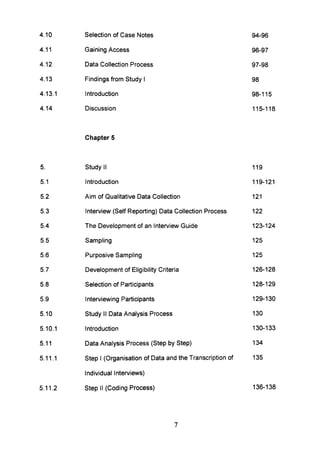
4.10 Selection of Case Notes 94-96
4.11 Gaining Access 96-97
4.12 Data Collection Process 97-98
4.13 Findings from Study I 98
4.13.1 Introduction 98-115
4.14 Discussion 115-118
Chapter 5
5. Study II 119
5.1 Introduction 119-121
5.2 Aim of Qualitative Data Collection 121
5.3 Interview (Self Reporting) Data Collection Process 122
5.4 The Development of an Interview Guide 123-124
5.5 Sampling 125
5.6 Purposive Sampling 125
5.7 Development of Eligibility Criteria 126-128
5.8 Selection of Participants 128-129
5.9 Interviewing Participants 129-130
5.10 Study II Data Analysis Process 130
5.10.1 Introduction 130-133
5.11 Data Analysis Process (Step by Step) 134
5.11.1 Step I (Organisation of Data and the Transcription of 135
Individual Interviews)
5.11.2 Step II (Coding Process) 136-138
7
5.11.3 Step III (Data Filing System) 138-139
5.11.4 Step IV (Developing Categories) 139-141
5.12 Emerging Categories 141-142
5.12.1 Category I ( Perception of Assessment and 142-147
Management)
5.12.2 Category II (Knowledge/Types of Risk Behaviours) 147-149
5.12.3 Category III (Risk Assessment and Management 150-154
Practices and Processes)
5.13 Links Between the Key Categories 154-155
5.14 The Development of Themes from Study II 155
5.14.1 Introduction 155-156
5.14.2 Content (Interpretive) Analysis 156
5.15 Summary of Community Participants Matrix 157
5.15.1 Context 157
5.15.2 Summary of Category I Matrix (Perception and 158-159
Personal Views on Risk Assessment and Management)
5.15.3 Summary of Category II Matrix (Knowledge and Types 159
Of Risk Behaviours)
5.15.4 Summary of Category III Matrix (Risk Assessment and 160-163
Management Practices and Processes)
5.16 Summary of In-patient Category Matrix 163
5.16.1 Context 163
5.16.2 Summary of Category I Matrix 163-164
5.16.3 Summary of Category II Matrix 164
5.16.4 Summary of Category III Matrix 164-166
8
5.17
5.18
5.18.1
5.18.2
5.19
5.19.1
5.19.2
5.19.3
5.19.4
6
6.1
6.2
6.3
6.4
6.5
6.6
Comparisons of Risk Assessment and Management
Practices and Processes between In-patients and
Community Participants
Perception of Risk Assessment and Evidence from
Case Notes
Knowledge of Risk and Evidence from Case Notes
Risk Assessment and Management Practices and
Processes and Evidence from Case Notes
Discussion
Reliability and Validity
Truth Value
Applicability
Consistency
Chapter 6
Study III Interviews with International Experts and
Clinicians from the United States
Introduction
Aim of Data Collection
Selecting Participants
Accessing Participants
Developing Interview Guide
Data Collection Process
9
166
167-168
168
169-171
171-173
173
174
175
175-176
177
177
176-177
178
178
179
179-180
6.7 Data Analysis Process 180
6.8 Data Reduction 180
6.8.1 Coding Process 180
6.8.2 Data Filing 181
6.8.3 Generating Codes or 'Label' 181
6.8.4 Developing Meaning 182
6.9 Emerging Categories from the Interviews with 182
Participants from the United States
6.9.1 Category I ( Perception of Assessment and 182-186
Management)
6.9.2 Category II (Knowledge/Types of Risk Behaviours) 187-189
6.9.3 Category III (Risk Assessment and Management 189-194
Practices and Processes)
6.10 Discussion from Study III 195-197
Chapter 7
7. Emerging Themes 198
7.1 Introduction 198
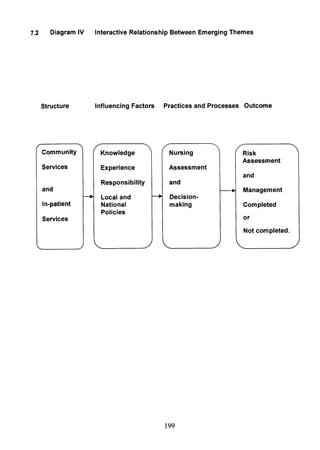
7.2 Interactive Relationship Between Emerging Themes 199
7.3 Structures for Services 200
7.3.1 Community Services 200
7.3.2 In-patient Services 200-201
7.4 Theme I (Influencing Factors) 201
7.4.1 Knowledge and Experience 201-204
10
7.4.2
7.4.3
7.5
7.5.1
7.5.2
7.5.3
8
8.1
8.2
8.3
8.4
Table 1
Table II
Table III
Table IV
Table V
Responsibility
National and Local Directives
Theme 2 (Practices and Processes)
Nursing Assessment and Decision-making (Community
Services)
Nursing Process
Decision-making in Risk Management
Chapter 8
Discussion
Implications for Practice
Recommendations
Limitations of Study
Conclusion
List of Tables
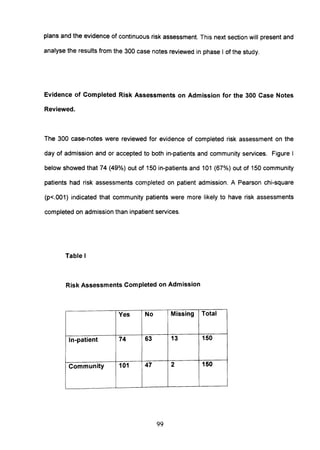
Risk Assessment Completed on Admission
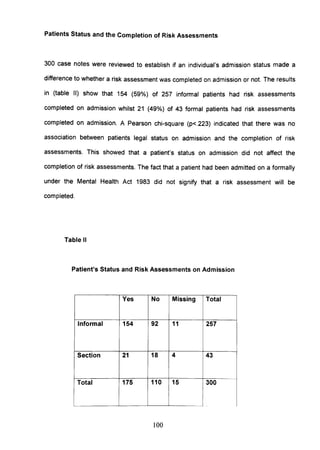
Patients Status and Risk Assessment Completed on
Admission
Patients Diagnosis and the Completion of Risk
Assessment on Admission.
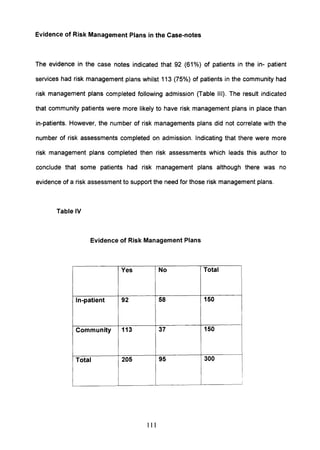
Evidence of Risk Management Plans
Evidence of Risk Relapse Plans
11
204-208
208-209
209
209-216
217-219
220-223
224-231
231-233
233-235
235-236
237-238
99
100
102
111
113
Graph I
Graph II
Graph III
Graph IV
Graph V
Graph VI
Graph VII
Graph VIII
Graph Villi
Graph X
Diagram I
Diagram II
Diagram III
Diagram IV
List of Graphs
Patients Status and the Completion of Risk
Assessments on Admission (in-patients)
Level of CPA and the Completion of Risk Assessment
(in-patients)
Level of CPA and the Completion of Risk Assessment
(community patients)
Which Professional Assessment Patient on Admission
(in-patients)
Which Professional Assessment Patient on Admission
(community)
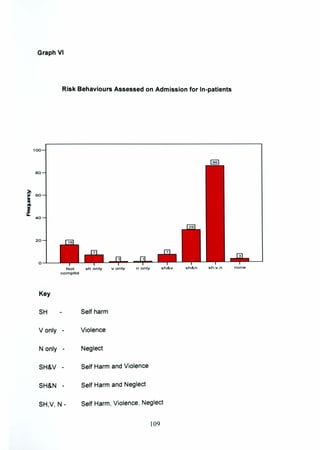
Risk Behaviours Assessed on Admission for In-patients
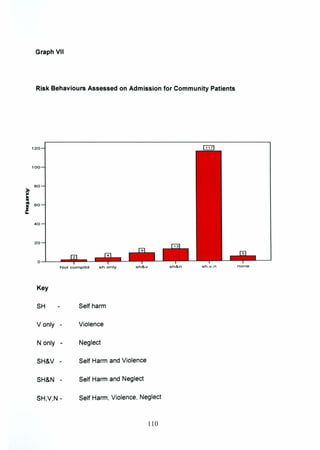
Risk Behaviours Assessed on Admission for Community
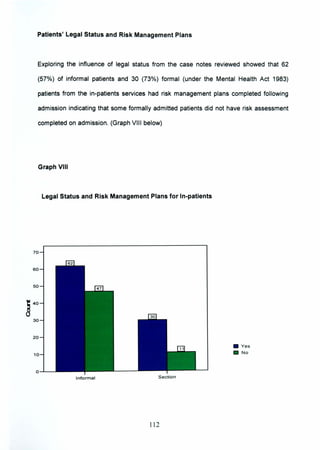
Legal Status and Risk Assessment and Management
Frequency of Risk Assessments for In-patients
Frequency of Risk Assessment for Community Patients
List of Diagrams
Conceptual Framework Underpinning Study
A Modified Three Stage Analysis Process
Data Analysis Process in Study II
Emerging Categories
12
101
103
104
106
107
109
110
112
114
115
67
133
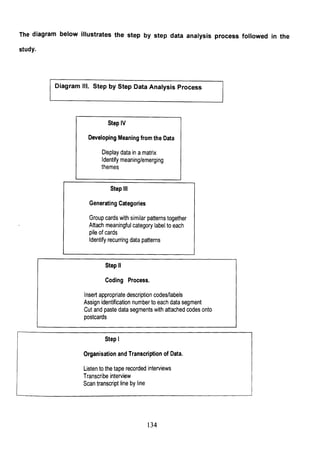
134
199
Appendices
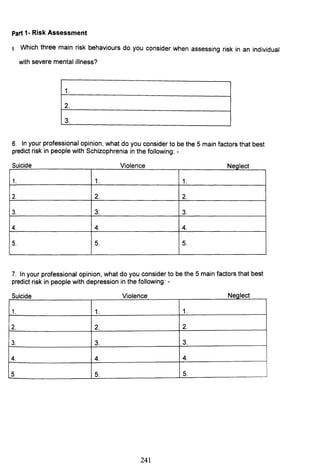
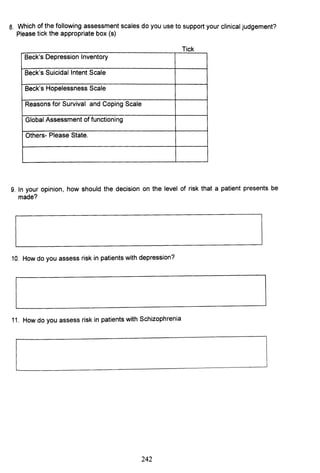
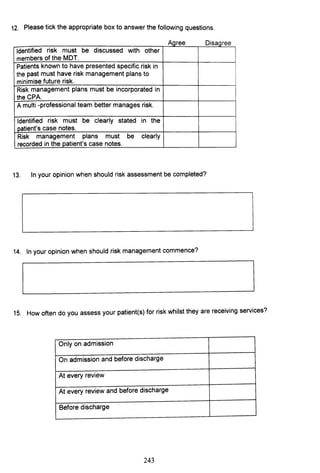
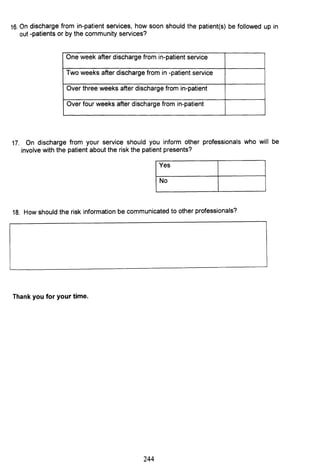
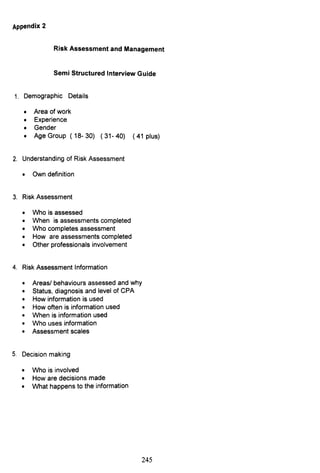
Appendix 1 Interview Questionnaire (Guide) 240-244
Appendix 2 Modified Interview (Guide) 245-246
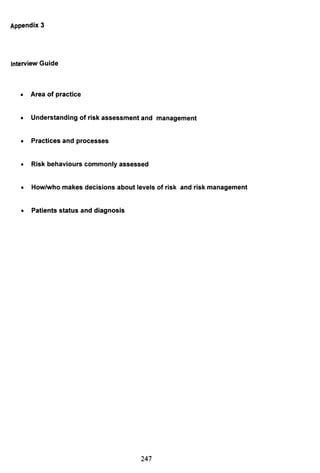
Appendix 3 Final - Interview Guide 247
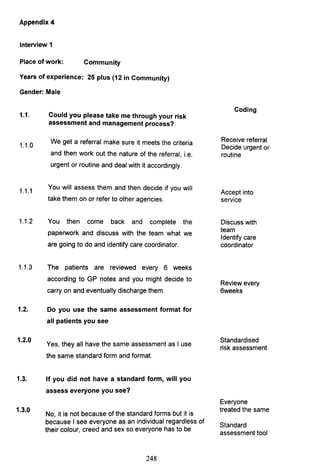
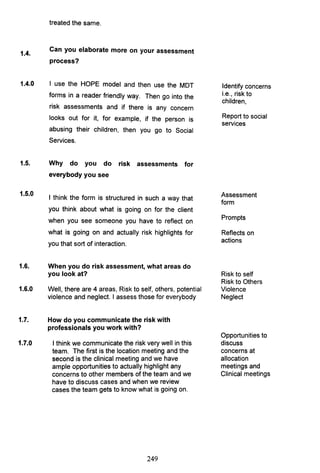
Appendix 4 Developing Codes 248-264
Appendix 5 Developing Categories 265-275
Appendix 6 Developing Categories for Group Interview from USA 276-284
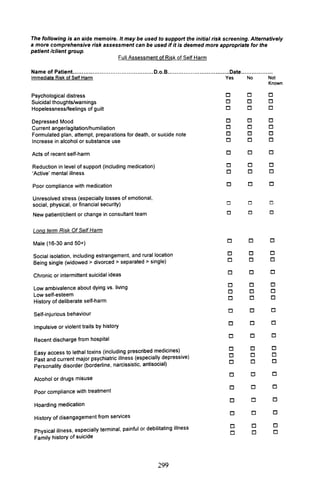
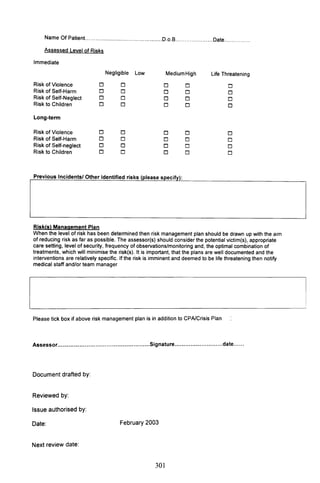
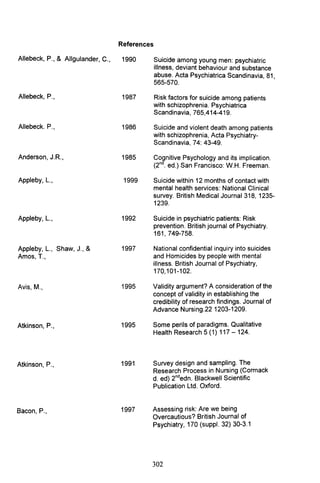
Appendix 7 Trust Risk Assessment and Management Policy 285-301
References 302-324
Acknowledgements
The researcher would like to thank:
Professor Karen Bryan and Professor Ian Robbins for their support and supervision in enabling
the completion of this study.
The Florence Nightingale Foundation for the travel scholarship which enabled the researcher to
visit the United States to gather valuable information which contributed to this study.
Surrey Oaklands NHS Trust for their support, patience and understanding over the last few
years.
14
Chapter 1
1. Rationale for Study
1.1 Introduction
In the last few years various high profile incidents involving people with mental health
problems discharged from institutions into the community, and the opposition to the
closure of psychiatric hospitals have increased public fear of the mentally ill. Various
inquiries into the deaths of members of the public have persistently indicated that
professionals were failing to provide the appropriate care for people with mental health
problems to stop them from harming themselves or others. Recommendations from
various inquiries have also emphasised the need for good communication among all
agencies to ensure that any risk identified is communicated to all appropriate
professionals (Ritchie 1994, Sheppard 1996, 1997). Following the deaths of Zito,
Robinson, Dewberry and others (Sheppard, 1996), the Department of Health set out
recommendations in a ten point plan on the management of people with mental health
problems who were deemed to be at risk to themselves and to the community
(Department of Health, 1983). The ten-point plan was supposed to ensure that people
with severe mental health problems were adequately supervised and supported in the
community. And that those providing the services were appropriately trained to
implement the care programme and to utilise the code of practice for the Mental Health
Act 1983 legislation if and when necessary.
Although the ten point plan emphasised the need for training for all professionals, any
training developed tented to focus on the care programme approach which is an after
15
care process for providing care and services for people with mental health problems,
who have received either in-patient or community care from the specialist mental health
services. The ten pOint plan did not make any reference to risk assessment training and
the need for professionals to be proficient in the assessment of people with mental
health problems who may present a risk to themselves or others. It appeared to have
been taken for granted that all professionals, including nurses have the knowledge and
skills to complete comprehensive risk assessment and implement risk management
strategies effectively.
Bowis (1994) Parliamentary Secretary at the Department of Health also announced new
guidance on the discharge of the mentally disordered and their continuing care in the
community. This guidance stated that risk assessment must be completed before a
patient is discharged from hospital into the community. The guidance also stipulated that
hospital and other staff should consider before deciding to discharge a patient, whether
the patient would present a risk to themselves or others in the community, or whether
they could be better managed in a supportive staffed accommodation. The guidance
further stated that no patient should be discharged from hospital unless those making
the decision were satisfied that supervision and appropriate care was available in the
community (Department of Health 1994). More recently further Department of Health
guidance and policies have strongly emphasised the need for specialist mental health
services to manage risk and set targets for suicide preventions (NSF 1999 and National
Suicide Prevention Strategy 2002). Since then the need for effective risk management
has become a focal point in ensuring the safety of both patients and the general public.
16
1.2 Scope of Problem
With the closure of psychiatric institutions and the NHS reforms, health care
professionals are expected to identify needs/problems and to provide care using
evidence based practice, knowledge and skills and to involve carers and the patient
when implementing care in the community (Care in the Community 1996). The
identification of risk predicting factors and their consequent management has become
crucial in mental health care in the last few years. It has become more evident that
professionals will be held accountable for their actions or inactions for any harm that
comes to a patient whilst in their care (Carson 1989). The researcher's experience show
that coroner's inquests have asked to see documented evidence of care management
strategies implemented in sudden death cases on psychiatric in-patient wards. This has
led to professionals expressing concerns about possible future negligence actions that
may be taken by patients and their carers against the care received from the care
professionals.
Authors such as Daly (1993) have asserted that in cases of suicide the court considers
three factors that are crucial to the standards of care provided. These are:-
» Was the patient's suicide foreseeable?
» Was reasonable care provided and were necessary precautions implemented?
» Was treatment reliably and dependably implemented?
In the Health Service the judicial statements of duty of care states that professionals
have a duty of care to all those people whom they can reasonably foresee might be
harmed by the professional actions or inaction's (Carson 1989). In cases of suicide,
17
professionals must be able to demonstrate whether the suicide was foreseeable and
whether reasonable care was taken to prevent the suicidal behaviour.
1.3 Political Expectations of Health Organisations
The removal of crown immunity and the increased independence status for the National
Health Service has left many NHS Trusts open to litigation arising from patients harming
themselves or others (William 1994). The introduction of the Care in the Community Act
(1990) led to more people with mental illness/health problems being cared for in the
community as the Government directed that Mental Health services must target the
severely mentally ill when planning services (Care Programme Approach 1991). It can
therefore be argued that the political expectation is that, health and social services
professionals have the responsibility to protect the individual and the public from anyone
with a mental disorder who may present a risk. Health and social services professionals
could therefore be called to account for the care provided for an individual with mental
health problems following a homicide or suicide.
1.4 National Strategies for Mental Health Services
1.4.1 Health of the Nation
Mental illness was identified as one of the five key areas in the strategy for improving
health (DoH 1993). The main issues set out in the government's White Paper were:-
i) to improve significantly the health and social functioning of mental ill people.
18
ii» to reduce the overall suicide rate by at least 15% by the year 2000 from 1990
levels of 11 per 100,000 populations.
iii) to reduce the life time suicide rate of severely mentally ill people by at least 33%
by the year 2000 (from the life time estimate of 15% in 1990 to no more than
10%).
1.5 National Service Framework
The National Service Framework (1999) set national standards and defined service
models for promoting mental health and treating mental illness in five key areas: mental
health promotion, primary care and access to services, effective services for people with
severe mental illness, caring about carers and preventing suicides. The National Service
Framework (1999) was developed in response to the government's strategy set out in
Modernising Mental Health Services to ensure:
• safe services to protect the public and provide effective care for those with mental illness
at the time they need it
• sound services to ensure patients and service users have access to the full range of
services which they need
• supportive services to work with patients and service users, their families and carers to
build healthier communities.
19
In preventing suicide the National Service Framework (1999) required that:
• local health and social care communities promote mental health for all, working with
individuals and the community
• deliver high quality primary health care
• ensure that anyone with mental health problems can contact local services via the
primary care team or Accident &Emergency department
• ensure that individuals with severe and enduring mental illness have a care plan which
meets their specific needs, including access to service around the clock
• provide safe hospital accommodation for individuals who need it
• enable individuals caring for someone with severe mental illness to receive the support
which they need to continue to care and in addition
• support local prison staff in preventing suicides among prisoners
• ensure that staff are competent to assess the risk among individuals at greatest risk,
develop local systems for suicide audit to learn lessons and take any necessary action.
1.6 National Strategy for Suicide Prevention
More recently the national strategy for suicide prevention was introduced to support the
targets set in the White Paper - 'Saving Lives: Our Healthier Nation' (1998) and to
reinforce the National Service Framework (1999) for Mental Health standard six, aimed
at reducing the death rate from suicide and undetermined injury by at least a fifth by the
year 2010. This strategy also acknowledged that suicide prevention was not the
exclusive responsibility of anyone sector of society, or the health service alone. It further
acknowledged that people with mental health problems are a high risk group therefore
20
mental health services have a vital part to play in the prevention of suicide. However
information available suggested that about three quarters of people who commit suicide
were not in contact with the specialist mental health services (Appleby 1999). Therefore
suicide prevention should be viewed as the responsibility of every one, including the
general public. The suicide strategy therefore aimed to:
~ reduce the availability and lethality of suicide methods
~ reduce risk among high risk groups
~ promote mental well-being in the wider population
~ improve the reporting of suicidal behaviour in the media
~ promote research on suicide prevention
~ improve the monitoring of progress towards the saving lives: Our Healthier Nation
target for suicide reduction.
The above government strategies aimed at improving the health of the nation have
further demonstrated how vital it is for health and social care professionals to assess the
needs of individuals, especially those in high risk categories to ensure that risks are
identified at an early stage, and appropriate management strategies formulated and
implemented effectively. It is also important to acknowledge that the emphasis on
suicide reduction in the general population has been strengthened in the various
government strategies such as the White Paper (1997) and the National Service
Framework (1999). However, it can still be argued that there is no national risk
assessment tool to support professionals' clinical judgement when assessing risk in
people with mental health problems. Risk assessments are therefore inconsistent as
there is no nationally agreed standard. The development of national strategies also
indicate that the government will continue to monitor the care provision for people with
21
mental health problems by health and social care professionals in their effort to prevent
self harm and harm to others.
1.7 Local Issues
In the Trust where the study was conducted the Trust Board had identified that there
was an urgent need to review current documentation for all professionals and to
incorporate effective risk assessment and risk management in all areas of patient care.
The need for a review of current risk assessment and risk management procedures had
come about as a result of an external inquiry following a serious incident in the Trust.
Clinical risk management has also become a major issue for the Trust as it has to
demonstrate that there are systems in place to support staff in the management of risk in
order to be included in the Clinical Negligence Scheme for Trusts, which insures NHS
Trusts against litigation.
Another major issue for the Trust is that currently all professional groups have their own
health care records for individual patients. This means an individual patient could have
two or three opened health records which do not communicate with each other. As a
result of these different systems, information on risk assessment and risk management
are not always accessible to all professionals involved in providing care for the patient.
The current systems within the in-patient services consist of separate nursing notes,
medical notes and other case notes for other professionals such as occupational
therapists involved in providing the care. Community case notes are integrated in part by
the professional groups, but not in all community teams. The Trust therefore is currently
in the process of developing one set of integrated case notes for each patient to ensure
22
that all health and social care professionals have access to the same clinical information
which should improve risk assessment and management practices.
1.8 Working Definitions
Risk management is a systematic process of assessment, identification and reduction of
risk to people and the prevention and avoidance of untoward incidence and events
(Merrett 1995). Risk is identified as the likelihood of an event which may be positive or
negative occurring in response to changes in an individual's personal circumstances
(Snowdon 1977). This risk can then be identified through a systematic process of
examining past risk incidents in the light of current circumstances (Morgan 1998). Risk
assessment therefore is a process that allows an examination of the contents and the
details of past risk incidents, and its implications for the current situation. From this,
predictions and judgements of the future likelihood of risk behaviour are extracted. For
the purpose of this study violence will be defined as an expression of despair, through
an extreme and forceful delivery of actions and emotions, inflicting harmful and
damaging effects to self and others. Violence will include actual physical assault on
another individual, extreme outpour of verbal or written threats and damage to property
(Morgan 1998).
Suicide and self-harm are defined as the inflicting of damage or injury to self, with an
intention of relieving extreme tension or distress, or drawing attention to a need for help,
or causing death. This include suicidal behaviours with a planned intent, suicidal
behaviours as a call for help, attention through cutting or mutilation, and abusing or
addictive behaviours with the intention of inflicting harm or injury (Morgan 1998). Severe
self-neglect is defined as the act of disregarding care for self, with the consequence of
23
serious risk to personal health and well-being. Degrees of self- neglect may endanger
other people who come into contact with the individual (Morgan 1998).
The study therefore focused on the following key risk variables: suicide and self-harm,
aggression and violence towards others and in addition self neglect. The rationale for
including the risk of violence, self-harm and suicide in this study was due to growing
recognition that suicide is the most significant consequence of psychiatric disorders and
that most major psychiatric disorders carry a high suicide risk (Appleby 1992). There is
also an acknowledgement that both suicide and violence carry major consequences
which could lead to the loss of life (Appleby 2000). The national confidential inquiries into
suicides and homicides have consistently identified factors which related to both suicide
and violent behaviours leading to suicides and homicides (Appleby 1998, 2000).
Evidence also suggests that mental disorders have association with violent behaviour
0Nessely 1997) with Gunn (1997) suggesting the need for balance of perspective on
suicide risk as the risk did not only involve individuals killing themselves but also the
killing of others. It is also accepted that both nationally and internationally there is media
preoccupation with harm to others by people with mental health problems (Monahan
2002). National directives and policies such as the National Strategy for Suicide
Prevention (2002) and the National Service Framework (2000) have emphasised the
need for suicide prevention and the prevention of harm to others by people with mental
health problems. It was the combination of these factors which prompted the researcher
to include the key risk behaviours namely, suicide, self harm and violence in this study
as the evidence suggested that there was an association between the risk of self harm,
suicide, violence and mental disorder. It was therefore imperative that this study
considered the totality of the key risk behaviours associated with mental disorders.
24
For the purpose of this study, severe mental illness will include patients who have a
diagnosis of schizophrenia, psychotic symptoms and depression with and or without
alcohol related problems and are regularly in contact with the mental health services. It
will also include patients admitted to the mental health services within the period of
December 2000 to December 2002 and remained with the services either as in-patient
or community patient for a period of two weeks or more.
25
Chapter 2
2. Literature Review on Risk Assessment and Risk Management
2.1 Introduction
Risk management has become a fundamental issue over the last few years following the
publication of high profile incidents in England and Wales involving people with severe
mental illness (Sheppard 1996). The need for professionals such as nurses to
understand the phenomena of risk to enable them to manage risk has become a high
priority on the national agenda as a result of the national strategies for mental health
(National Service Framework 1999, National Strategy for Suicide Prevention 2002).
Snowden (1997) defined risk as the likelihood of an event occurring, an event which may
be positive or negative. Risk has also been defined as been fundamentally about
uncertainty with variation in possible outcomes and the inability to predict with 100%
accuracy the outcome of a situation (Vinestock 1996). Risk assessment therefore
involves the examination of the context and the details of past risk incidents, in the light
of current circumstances to extrapolate the predictions of the future likelihood of risk
behaviours (Morgan 1998), whilst risk management involves the development of
treatment strategies (medical, psychological, social) within a multi-professional context,
involving patients, carers and significant others to reduce the severity and frequency of
the identified risk (Reed 1997).
In general, the process of managing risk involved, firstly, identifying the risk presented by
the patient. This could be a single risk such as suicide or a complex risk such as self -
26
harm and/or violence to others, or relapse of illness due to not taking prescribed
medication. To identify the risk presented, the professional have to assess the patient.
This assessment is based on the professional's knowledge of the patient, information
given by the patient, knowledge of risk behaviours and risk predicting factors, the
possible outcomes, and likelihood of the outcome if the risk is taken (National Health
Service Executive 1994) before a judgement is made about the possible outcome based
on the severity and frequency of the risk behaviour identified.
2.2 Risk Assessment and Management
Clinical risk assessment and management in psychiatry has become a permanent
feature on the national agenda to ensure that people with mental health problems in the
community or in-patients services presenting with risk behaviours are identified and the
risk they present minimised. Mental health organisations in the voluntary sector such as
the ZitoTrust' and 'MIND' have also expressed concerns about the care in the
community for the mentally ill following a number of high profile incidents reported by the
various national and local inquiries (Sheppard 1996). The confidential inquiry into
homicides and suicides in England and Wales by severely mentally ill found that over a
period of eighteen months, a total of 34 homicides were committed by people known to
the specialist psychiatric services (Boyd 1994).
Various national inquiries into homicides have all expressed concerns about the failures
by health and social care professionals to protect individuals with mental illness and the
public from suicides and homicides (Bloom-Cooper 1996, Ritchie 1994). Previous
editorials and studies in risk assessment and management focused on areas such as
criminology and dangerousness (Pollock and Webster 1990, Monahan 1994, Gunn
27
1984). Recently there has been a shift and most editorials and studies have focused on
risk in people with mental illness within general psychiatry (Ryan 1996, Walker 1997,
Bates 1995, Thomas 1998, Lidz et al 1993, Mulvey 1994). However, the available data
on risk assessment and management have focused on professionals in the field of
medicine and psychology professionals with very limited information on nurses'
knowledge and ability to assess and identify risk in people with mental health problems.
The various editorials focused mainly on issues such as the importance of accurate
record keeping, effective communication systems, informed consent, supervision for
junior staff and continued education for professionals (Merrett 1995). The editorials also
gave advice and expressed opinions on how risk can be managed to avoid negligence
with emphasis on the need for organisations to develop risk conscious staff to minimise
the risk of high cost litigation (Merrett 1995). It can be argued that these editorials are
individual views and opinions therefore not evidence based, are diverse and not
scientifically validated. It has been asserted that risk can be managed effectively only if
factors likely to lead to clinical accidents such as inadequate training and the supervision
of staff are identified and managed by those providing the services (Bingley 1994). It has
also been acknowledged that the management of risk is central to the long-term success
of other initiatives directed at increasing service quality and effectiveness. The
management of risk is also central to health care and is the responsibility of all direct
care givers and those who manage services. It is therefore expected that mental health
facilities and, in particular, acute psychiatric facilities and those that provide secure care
have to manage the risk that patients may either harm themselves or others around
them (Bingley 1994, Jones 1993, Greetham 1994).
28
Various studies and editorials criticised the inadequacies in professionals' ability to
assess risk and suggested that professionals must develop clinical skills to enable them
to assess risk (Modestin 1987, Morgan 1993, Ritchie et al 1994, Bloom- Cooper et al
1995). However, these authors have not specified specific skills required by clinicians or
indicated whether all clinicians should be able to assess risk following a period of
professional and or additional training. Others have argued that poor prediction of risks
are due to risk incidents being rare and the predictions being crude as research studies
continues to focus on completed events which can not be generalised as accurate
predictors (Hawton 1994). There are indications that short-term and long -term risks are
different and that most risk factors with exception to gender fluctuate. Evidence also
suggested that other studies have focused on generalised group characteristics, which
are not necessarily helpful for prediction with individuals (Hawton 1994).
Reed (1997) supported Hawton's (1994) findings and indicated that professionals have a
good general understanding of risk factors, but had difficulties in bridging the gap from
general risk factors to particular risk factors. The literature revealed that in relation to
violence, there was a diversity of evidence which suggest that the prediction of risk differ
widely on almost every pOint except that, professionals are not very accurate at
predicting violence (Modestine et al 1988). It is suggested that in response to the
professionals' poor predictive abilities, the professionals' become overcautious and
restrictive in their practices (Modestine 1986, Monahan 1988, Bacon 1997). It has also
been argued that risk assessment involved the concept of dangerousness and the
prediction of violence and aggression Gunn (1997). However, it has been suggested that
the process of prediction in risk assessment is much broader. It is a process which
encompasses the identification of risk that an individual may present through a process
of discussions with the individual. It involves the assessor having domain specific
29
knowledge of risk behaviours and risk predictors. It also involves discussions with
carers, reviewing available records and discussions with other professionals who may
have had or continue to have contact with the individual to enable a judgement to be
made about the risk presented.
Gunn (1997) also suggested that there has to be a balance of perspectives on suicide
risk as it does not only involve an individual killing themselves but also the killing of
others. There has been a number of debates on how risk assessment must be
completed. Monahan (1997) advocated that statistical (actuarial) techniques best predict
risk. He argued that statistical techniques (actuarial) have been used in criminology to
predict risk over the years whilst general psychiatry on the other hand have relied on
clinical judgement until recently. He went on to suggest that the use of actuarial
predictions in general psychiatry is not evident as most clinicians relied on their clinical
assessment to make judgements as to the level of risk an individual presented. Harrison
(1993) suggested that additional research was needed to determine the degree to which
the validity of actuarial predictions can be applied to other populations.
It is acknowledged that risk assessment and management is vital to the care provision
for people with mental illness. It is also central to the quality of care provided by health
and social services. However, to date there is no centralised directive from either the
Department of Health or the National Health Service Executives that risk training should
be mandatory for all health and social services staff who provide care for the mentally ill.
There is no standardised risk assessment and management training nationally to enable
health and social care professionals to transfer their knowledge to any area of practice
as every Trust and organisation have developed training processes to meet the
institutions needs. Until recently the internal market in health care meant there was no
30
sharing of knowledge, experiences and skills on risk assessment and management
within the National Health Service hospitals.
Although available literature has established factors that predicted risk in people with
mental illness, there has been a tendency to focus on specific diagnoses and specific
risk such as suicides in depressive illness and suicides in people with schizophrenia and
or violence and dangerousness in people with schizophrenia (Drake et ai, 1992, Strosahl
et al 1992, Gunn 1988, Monahan 1988, Monahan 1996, Gunn 1977, Wilson 1996,
Steadman et ai, 1970, Monahan 1980). Other aspects of risk factors such as severe
neglect and exploitation of people with mental illness have been ignored. More recently
the literature has begun to focus on the impact and association of drugs and alcohol
misuse and risk for people with mental health problems.
2.3 Suicides in People with Schizophrenia and Depression
The Health of the Nation (1992) targeted a 15% reduction of suicides in the general
population and a 33% reduction of suicides in people with mental illness by the year
2000. However, evidence from the literature indicate that not all suicides can be
prevented as young men found to be in the high suicide risk group were also identified
as the group least likely to seek help (Morgan 1993). The national inquiry into suicides
and homicide also concluded that most suicides were committed by people who have
seen their GP's in the last three months leading to the suicide or were in contact with
psychiatric services (Appleby 1999). In the late 1980's there was a view that a
population approach to suicide prevention may reduce suicide rate in the general
population (Regier et al 1988). In the late 1990's House et al (1999) suggested that the
prevention of suicide should not only be focused towards the high risk groups but also
31
needs to include the general population. This view was supported by Regeir et al (1988)
who suggested a process of public education as a means of reducing the risk of suicide.
However, the current debate on suicide reduction in the general population is focusing
on limiting accessibility to suicide means such as, limiting the amount of medication
(paracetamol) that can be purchased at one time and reducing the lethality of carbon
monoxide fumes (Department of Health 2002).
The debate about whether to target the high risk groups or the general population in
suicide reduction does not appear to have influenced the national agenda as the
government strategy required health care professionals to target the severely mentally ill
when planning and providing services (Care Programme Approach 1999). This strategy
ensured that high-risk groups are targeted even though the Health of the Nation (1993)
targets included reduction of suicide among the general population. The strategy does
not indicate how health professionals were to achieve these targets. Therefore achieving
these targets for the high risk groups may present difficulties, especially, since
professionals must be able to accurately identify those presenting high risk and
demonstrate understanding of the factors that prevent suicide in this group before
preventative measures can be applied in the reduction of suicide risk (Appleby 1992).
Previous studies by Barraclough et al (1974) and Morgan (1979) showed that in England
drug overdose accounted for two-thirds of suicides among women and one-third among
men. Drugs most commonly used were analgesic and antidepressants. Symonds (1995)
also identified death by physical means such as hanging, shooting, falling in front of
moving vehicles or trains, wounding, drowning, and jumping from high places.
Barraclough et al (1974) and Morgan (1979) established that two-thirds of the people
who committed suicide had consultations with their GP's within the previous month and
32
40% had consultation with their GP's within the previous week. A quarter were out-
patients who had seen a psychiatrist a week prior to the suicide. More recently Appleby
(1999) has identified similar findings to that of Barraclough et al (1974) and Morgan
(1978) in the confidential inquiries into homicides and suicides.
Appleby (1999) also reiterated that professionals' ability to manage risk has not
improved since the late 1970's and that they continue to fail to identify patients who are
at high risk of self harm or harm to others. Appleby (1992) further argued that risk
protective factors were not simply images of the risk the individual presented, but that
there were circumstances which in the presence of considerable risk, act preventively
without altering the risk factors themselves. Unfortunately there is no evidence to
suggest that these protective factors are commonly known to professionals involved in
assessing the risk. Few studies have investigated what prevents an individual from
killing themselves (Appleby 1992). A comparative study between in-patients who have
thought of suicide and those who have carried out para-suicide gave their reasons for
living as concern for children, religion and fear of pain as the commonest reasons for not
attempting suicide, with concern for children being the most powerful protective factor for
high risk groups (Linehan et al 1993).
Studies dating between the 1970's to 1999, have consistently indicated that in-patient
suicide occurred either in the acute phase of psychotic relapse, first week of admission,
at the time of clinical improvement or often when there were problems in planning
discharge (Gale et al 1980). Studies showed that that 18% of patients died within one
week of discharge, 44% died within one month, 89% died within one year, 90% died
within one month of their last out-patient appointment (Roy et. al. 98). Similar
conclusions have also been identified in the confidential inquiries into homicides and
33
suicides (Appleby 1999). Over the decades, the trend has remained unchanged with the
same issues continuing to be identified as health and social service professionals
continue to fail to identify individual at immediate risk of suicide (Appleby et al 1999,
Barraclough 1978).
Appleby (1992) asserted that although risk-predicting factors were common in
psychiatric disorders, professionals did not seem to use these factors to predict risk
accurately. Thomas (1995), Monahan (1980), Gunn (1988), Steadman (1970), Drake et
al (1992) and Strosahl et al (1992) identified high risk predicting factors in suicide as:-
demography- age, sex, race, previous deliberate self harm, social-economic status,
previous sexual assaults, mental state, suicide statements, stress, seriousness of
previous attempt, severity of mental disorder, type of mental disorder, treatment
available, family support, personal relationships, availability of means, time, availability
of drugs and alcohol, preparatory acts, attitude towards death, declared intentions to
others and suggested that these factors should be considered when asseSSing risk in
people with mental illness.
The literature on the international perspective on suicides highlighted factors such as
insomnia, impaired memory and self-neglect and anxiety symptoms, difficulty
concentrating and alcohol abuse as short term risk predictors whilst hopelessness, mood
cycling and history of suicide behaviour (para-suicide) were identified as long term risk
predictors (Thomas 1995, Monahan 1988, 1994, Drake et al 1984, Fawcett et al 1990,
Isometsa et al 1994). These authors concluded that a more direct predictor of suicide
intent was the importance attached to survival and coping beliefs rather then the feeling
of hopelessness, depression and negative life stresses. Positive personality features
such as survival and coping beliefs were also found to have an influence on risk. Their
34
absence removed the important defence against suicidogenic behaviour, which made
individuals' belief that suicide was the only solution. This played a major role on the
individual's attitude towards suicide beliefs and intent (Strosahl et al 1992).
Other emerging theories have asserted that para-suicides may possess both a problem
solving and an expressive statement of emotional pain and hopelessness components.
Jonsson (1986) supported the view that a direct assessment of an individual's
perception of suicide as a problem solving behaviour was valuable in the prediction of
high-risk patients. A study on suicide among people with schizophrenia involving the
review of clinical charts and death certificates concluded that the completed suicides
were young, unemployed and unmarried with good educational background, a
downward drift in social status. They had committed the suicide while depressed and
feeling hopeless but not when in a psychotic state of the illness. The majority were male
with chronic illness and numerous exacerbations and remissions and many had made
previous suicide attempts (Strosahl et al1984 and Drake et aI1984).
Drake et al (1984) further stated that schizophrenic patients who killed themselves had
developed awareness during remission and then became unable to accept the
limitations brought on by their chronic illness. This resulted in depression and
hopelessness. These findings are supported by Beck et al (1975) who asserted that
negative future expectations was a strong link to suicide behaviour. Strosahl et al (1992)
also showed that hallucinations and delusions were not a major contributing factor to
suicidal behaviour. They found that schizophrenics who committed suicide became ill at
an early age, had difficulties with employment, needed longer hospitalisation, and
demonstrated more negative psychosocial behaviour. All of which was supported by
35
Drake et al (1984) and Strosahl's et al (1992) assertion of a downward drift in social
status as the illness progressed. Other psychosocial difficulties identified as having
direct link to suicide behaviour include, unemployment, incapacity to work, past suicide
threats, and suicide acts (Drake et al 1984, Roy 1982, Allebeck 1987). Other authors
established that predictions of suicides in schizophrenic patients was difficult as only a
few gave any warning of mood changes, however, they all agreed that a history of
previous self harm was an important factor to consider when making decisions on levels
of risk.
It has been suggested that the lack of warning signs from schizophrenics could account
for why General Practitioners and psychiatrists were and are still failing to identify high
risk people who go on to commit suicide as identified in the confidential inquiries and
other studies (Appleby 1999, 8arrauclough 1988). However, these inquiries did not
indicate the risk assessment training that General Practitioners and psychiatrist have
had in comparison with other professionals such as nurses and occupational therapists
to support their clinical decision-making in risk assessment and management. Neither
did the inquiries report if the professionals assessed risk at each consultation with a
patient. This suggested that the lack of standardised processes and structures including
the diversity of views and opinions about risk predictors all contribute to the difficulties
professionals have in assessing and managing risk. The gaps in the procedure for
assessing risk leads this researcher to propose a need for further studies to explore how
General Practitioners, psychiatrist, nurses and other professionals make decision about
risk during consultation with their patients and to establish their knowledge base of risk
assessment.
36
A study with 93 people measuring the severity of suicide behaviour using the schedule
for affective disorders and schizophrenia suicide subscale for the Kruskal-Wallis test and
the correlation between age, gender, type of affective illness, psychosis, race and mania
subtype concluded that gender and psychosis were not related to suicidality (Dilsaver et
al (1994). However the subtype of mania had the strongest relationship to suicidality
therefore indicating that the presentation of a manic state is an indicator for careful
assessment of depressive symptoms and suicidality. Neuringer et al (1974) suggested a
link between suicide attempter's intent and lethality of the method chosen. However,
they further indicated that men with shot gun wounds varied in their intent even though
shot gun wounds have high fatality results and indicated the need for a rethink about the
link between intent and lethality of methods used.
The literature highlighted the difficulties professionals have in identifying risk predicting
factors and the levels of the risk presented, as intent and suicide methods could not
always be relied upon as the only guide in making judgement about the levels of risk
presented by the patient. Different methodologies have been used by researchers in an
attempt to establish how professionals assess the risk of suicide. These have included
retrospective blind chart reviews of hospital medical notes. Emergency room and
psychiatric consultations, comparing patients' records following a set of criteria by two
raters and interviews with clinicians to verify suicide status. Self reporting psychiatric
consultation to verify suicide status, self reporting studies and questionnaires to
clinicians, longitudinal study with follow-up of patients discharged from institutions.
Outcomes studies, information on death and analysis of unexpected deaths amongst
patients, and interviews with carers and professionals who have knowledge of the
clients, (Morgan et al 1993, Monahan & Steadman 1988, Modestin et al 1992, Drake et
al 1984, Grootenhuis et ai, 1994, Spirito et al 1990, Pollock and Webster 1990).
37
Evidence from the various studies suggests that records are not a reliable method of
data collection (Drake et al 1984). As such studies do not inform on the level of
experience of the professionals involves in the studies or the client groups they had
assessed. It also does not give any specific risk assessment tools or scales that the
professionals have used in their assessment to support clinical decision making. These
activities were absent from the studies reviewed therefore their effects on the outcomes
could not be evaluated. Some methodologies lacked clarity about definitions of mental
illness and made inadequate comparisons between groups due to difficulties in finding
comparative group therefore the results could not be generalised. (Mulvey 1994, Ryan
1994, Bates 1995, Rose 1998, Steadman 1990)
2.4 Self Harm
The need to reduce self harm behaviour in people with mental health problems and the
general public has become top of the national agenda with national guidelines for self-
harm prevention (Self-harm Prevention 2004). Hawton et al. 2002 suggest that many
acts of self-harm do not come to the attention of healthcare services therefore hospital
attendance rates may not reflect the true scale of the problem. The studies also asserted
that overall women were more likely to self-harm than men and concluded that self-harm
can occur at any age Hawton et aI., 2002, Meltzer et al 2002). However self-harm was
most common in adolescence and young adulthood with only about 5% of all episodes
of self-harm occurring in people over the age of 65 (Hawton et aI., 2002).
The literature affirms that self-harm occurs in all section of the population (Meltzer 2002)
but is more common among people on low income, single, divorced, single parents or
38
people with no social support. Hawton et al (2002) found that the likelihood of self-harm
and the number and types of adverse events that a person reported suggest a strong
association between life events and self-harm. Hawton et al (2002) further reported that
most people who attended accident and emergency department following acts of self
harm met the criteria for one or more psychiatric diagnosis. He also suggested that
about one-half of people who attended Accident and Emergency department following
self-harm had consumed alcohol immediately preceding or as part of the self-harm
episode and about one third of those who self- harm had been misusing drugs or alcohol
on a regular basis with a higher rate in men (Hawton et al 2001).
2.5 Risk Assessment of Violence and Dangerousness in People with Schizophrenia
and Depression
Scott (1977) defined dangerousness as an unpredictable and untreatable tendency to
cause irreversible injury or destruction, or to incite others to do so. Floud (1982) argued
that risk was a matter of fact, but danger was a matter of judgement or opinion. Alberg et
al (1996) asserted that the term 'dangerousness' is often used to describe a potentially
violent mentally ill person. They continued to argue that in contrast to risk,
dangerousness concerned a subjective judgement made about an individual, identifying
a static, enduring trait, inherent in the individual, whereas, risk was a characteristic of an
individual's response to his or her changing situation and may include more than one
outcome.
Studies over the last 10 years have explored whether the risk of violence and
dangerousness can be predicted (Gunn 1990, Monahan 1988). Reviews of the literature
39
in the 1980's indicated that risk of violence and dangerousness could not be predicted
accurately (Gunn 1988). However, Monahan (1988) argued that there was need for
caution in the generalisation of the findings as the studies have focused on people
released from institutions into the community, therefore the results could not be
generalised. The MacArthur study (1996), on violence concluded that six homicides
were committed by former patients and that most incidents of violence occurred in the
first month after release from hospital. They concluded that drug or alcohol misuse
combined with a mental disorder increased the risk of violence (Monahan 1996). On the
prediction of violence amongst psychiatric patients Monahan (1996) indicated that it is
possible to predict psychiatric patients who will become violent after releases into the
community. The evidence suggested that professionals are able to predict violent
behaviour in the mentally ill better through risk assessment than by chance (Lidz et al
1993). There was also a suggestion that the negative opinion about professionals'
inability to predict violence might be due to shortcomings in the way studies were
conducted (Swanson et al 1990).
Other factors identified as increasing risk included refusal to continue treatment, inability
to function effectively in daily life, several changes of residence, poor anger control and
an impulsive personality with poor behaviour controls, violent fantasies and pervasive
delusion (Monahan et al 1996). Similar findings have also been identified in the United
Kingdom by the various inquiries into homicides and suicides by the mentally ill (Bloom
Cooper et al 1995, Ritchie et al 1994). Studies by Steadman et al (1974) also concluded
that individuals leaving institutions frequency of committing violence in the community
was low, therefore the view that mentally disordered people committed more violent
offences was not sustained. Research from the 1980's until recently did not appear to
support the link between violence and mental disorder. However, reviews in the literature
40
have indicated that there is a link between mental disorder and violence although the link
is weak (Swanson et al 1990, Monahan 1992).
Wessely (1997) asserted that there is growing recognition that mental disorder has an
association, albeit small with violent behaviour. He highlighted the divergent opinions
regarding the link between violence and mental illness by drawing attention to
criminologists and forensic psychiatrist who contradicted each other. Wessely (1997)
continued to argue that such divergent views did not promote confidence in practitioner's
ability to predict risk. Monahan & Steadman (1983) also argued that there was no
consistent evidence to support the view that the time prevalence of criminal behaviour
among former mental patients exceeds true prevalence of criminal behaviour among the
general population. Therefore findings from the criminology studies could not be
generalised into the general population.
Recent research has indicated that clinicians had little predictive ability concerning
violent behaviour and the mentally disordered (Huxley at al 1996, Monahan 1996). In an
international collaborative study involving six countries and 169 raters from different
professional backgrounds, raters were asked to indicate the degree of dangerousness
by reviewing 16 case histories. The outcome indicated low agreement between the
raters. The evidence indicated that psychiatrist tended to rate individuals as more
dangerous than the other professionals (Montandon 1984).
In an earlier study on the prediction of violence, Steadman et al (1982) investigated the
accuracy of psychiatric predictions and the gains achieved from using statistical
equations obtained from one study group to predict assaultiveness in two comparative
groups through a retrospective analysis. They concluded that assaultive behaviour was
41
setting specific which implied that not all findings could be generalised. This led
Montandon et al (1994) to assert that psychiatrists and psychologists were only accurate
in one in three predictions of violent behaviour even though it was expected that these
health professionals should be able to assess risk and take appropriate actions to
manage the identified risk.
Mulvey et al (1993) compared patients rated by clinicians as potentially highly assaultive
on the ward, and patients who were involuntary committed on the grounds of danger to
others, with a comparative group of patients predicted by clinicians not to be assultive
and patients admitted for reasons other than danger to others by reviewing charts to
establish if any violence acts, seclusion for violent acts or threats of violence. They
concluded that clinicians were able to predict violence in the short-term. They argued
that there was a need for concern, as the concept of dangerousness did not have the
same meaning for all professionals (Mulvey et al 1993). This supports this author's view
that studies on risk assessment and management must involve other professionals such
as nurses as until now studies have only included doctors, psychologists and social
workers.
Carson (1985) argued that the under prediction of violence may have been due to under
reporting of violence incidents. Wessely (1997) highlighted the divergence between
criminological and medical views on mental disorder. He argued that criminologist
believe that mental illness is not a significant cause for crime, however, psychiatrists
experiences, together with sound epidemiological work indicate that those charged with
homicide have a higher rate of schizophrenia compared with population base rate from
the local population. The literature therefore is contradictory, as criminologists have
concluded that mental illness is not a Significant factor in the causes of crime yet
42
psychiatrists have concluded that there is a higher rate of criminality in the mentally ill
population than in the general population (Wessely 1997)
The behaviours identified by the various authors to predict high risk of violence included,
age, sex, race, previous violence, social- economic status, substance abuse,
intelligence, marital status, detailed history, substance abuse, criminal history, mental
state, treatment, seriousness of previous aggressions, seriousness of mental disorder,
type of mental disorder, treatment available, family support, personal relationships,
employment, availability of victims, availability of weapons, availability of drugs and
alcohol, declared intentions to previous victims, declared intentions to potential future
victims and declared intentions to caring staff (Thomas 1995, Mulhurn 1984, Monahan
1980, Gunn1988, Steadman 1970, Drake et al 1992, Strosahl et al 1992, Dyer 1996)
The authors suggested that these factors should be considered when assessing risk in
people with mental illness.
Brooks (1984) identified seven risk factors, these included the nature of harm involved,
its magnitude, its imminence, its frequency, the likelihood or unlikelihood that it will
occur, situational circumstances and conditions that affect the likelihood of harm
occurring. He recommended that balancing the alleged harm with the nature of society's
intervention should be considered when deciding whether an individual was dangerous.
Binder and McNiel (1987), Monahan (1988), Steadman and Morrissey (1982) focused on
the difficulties in identifying reliable risk variables. Binder et al (1987) asserted that risk-
predicting factors of violence in patients are reduced two days after admission due to the
effects of medication therefore past studies on violence by in-patients have been difficult.
43
Monahan (1988) argued that researchers in the past have designed their own risk
variables and risk predicting criteria instead of replicating existing studies hence
progress on further research have been hindered. Mullen (1992) highlighted various
British studies such as Bowden (1991), Robertson (1983) which all concluded that
patients discharged from high secure hospitals in a followed up over a 15 year period
were found to have re-offended with most of the offences being violent in nature with
some homicides. These authors all agreed that the most common predictor of violence
in the ex-patients was the extent and types of previous convictions. Mullen (1982)
suggested that the most accurate evidence on the probability of dangerousness pOints to
previous records of violence with age as a significant factor among the young. The
diagnosis of mental illness on its own was not a predicting factor. Despite the vast
amount of literature on risk assessment, there is very limited empirical data on risk
management and even more limited information on risk in people with mental illness
within general psychiatry. Until recently the majority of the studies and editorials
focussed on forensic psychiatry and criminology.
Authors such Ryan (1994), Lidz et al (1993) and Thomas (1995) suggested the need for
accurate assessments but acknowledged the difficulties professionals have in assessing
risk effectively as traditionally professionals have been unreliable in their assessment
and prediction of risk. Lidz et al (1993) argued that problems with various studies have
been due to the use of unreliable hospital records and other data collection
methodologies. Various authors have also suggested that there was a need for policies
and standards to support professionals in the management risk (Harrison 1997, Wilson
1996, Tingle 1997). They argued that such policies and standards must reflect the views
of professional bodies such as, medical or nursing opinions and relevant specialities.
44
Walker (1997) and Thomas (1995) identified accurate documentation and
communication as vitally important for all professionals in the management of risk. Other
suggestions made by these authors included the development and use of clinical
guidelines for professionals to clarify standards and ensure consistency in approach and
process (Wilson 1996, Campbell 1997, Tingle 1997). These issues also gained strong
support in the confidential inquiries into homicides and suicides in England and Wales
(Bloom-Cooper et al 1995, Bowden 1995, Morrison 1996 and Sheppard 1996). Despite
the acknowledgement of the difficulties professionals have in identifying risk in people
with mental health problems, there is no national agreed guideline on the documentation
of risk factors.
Limitations of these findings are that the majority of the information available are
editorials. However, they all identified risk predicting factors and agreed the processes
for identifying risk and developing risk plan management strategies (Wilson 1998,
Walker 1997). The authors demonstrated their authority on the subject of risk
assessment and management by validating each other in the identification of risk
predicting factors. The evidence suggested that most of the studies had focused on the
more dangerous aspects of offending behaviour, in particular, homicides, and
highlighted the increase in homicidal behaviour in the mentally ill. Most of studies have
been carried out on people discharged from institutions such as prisons therefore the
results could not always be generalised in general psychiatry (Gunn 1977, Monahan
1988, Klassen and O'Connor 1988). The editorials did not describe any standardised
format or criteria for selecting subjects, however, the studies indicated that diagnosis
using International Classification of Diseases and Diagnostic Statistical Manual IV
criteria have been used to select subjects and randomised methodologies have been
45
used to select the case note for both prospective and retrospective analyses (Modestin
et a11994, Drake et al. 1984).
2.6 When Should Risk Assessments be Completed?
Most authors agreed that suicide behaviour occurred during the acute phase of
psychotic relapse, the first week of admission, one month after admission, when there
was clinical improvement, when planning to discharge from inpatients, one week after
discharge from in-patient care, within one month of attending out-patient, during the first
year as an out-patient, or within the last month of out-patient appointment (Appleby
1992). This supported the view that risk assessments should be completed at certain
critical periods in the patient's journey through the health care system such as at the
point of admission, changes in mental state before discharge and during changes in the
care provision. Other authors argued that risk assessments must be continuous as
observations made between when patients are seen by the medical staff and what
nurses observe are crucial in clinical decision-making (Wilson 1996).
Morgan (1997) suggested that risk assessments must be completed at a point when
deciding to admit a patient into in-patient care and when deciding to discharge the
person who has presented some risk behaviours in the past, into the community. This
suggestion is supported by the Department of Health Service Guidelines (94/27) which
states that, before a patient is discharged from hospital, professionals must ensure that
"any risk to the public or to the patient themselves, is minimised and is managed
effectively", and also that "no patient should be discharged from hospital unless and
until, those taking the decision, are satisfied that the patient can live safely in the
community".
46
Thomas (1995), Lidz (1993) on the other hand stated that assessments must be
completed on admissions, but as most professionals are aware, risk presented by
patients, is not static therefore, a one off assessment on admission alone, is not enough
to ensure that effective management is implemented. Gunn (1994) argued that risk
assessment must be completed over short periods of time, whilst Huxley et al (1996)
suggested that risk assessment should take place within a stated time scale to improve
its predictive value. These authors asserted that it is easier to predict outcomes in the
short term (weeks) rather than in the long term (years) and that ongoing process of risk
assessment rather than a snap shot increased the predictive accuracy.
Studies on decision making have also highlighted the complex cognitive process required
which enabled the professional to make a judgement based on the problem presented. It
is suggested that in order to make a judgement of the risk presented the professional
should be able identify important features, retrieve other information from memory and to
organise the information in a meaningful (Pitz et ai, 1984). They further suggested that
professionals may experience difficulties in making decisions over periods of time due to
the inability to retrieve information from memory.
2.7 Who Should Undertake Risk Assessments?
Department of Health and Social Security Guidelines (1984) acknowledged that
assessment and after care planning could be undertaken by staff other then psychiatrists
such as nurses or social workers provided they had proper training and supervision.
Some studies have concluded that the content and quality of assessments by nurses are
comparable with those made by trainee psychiatrists however Gardner et al (1977)
47
warned that any claim which suggested that there was no difference between the
assessment of a psychiatrist and a non psychiatrist must be viewed with caution.
2.8 Risk Assessment Scales
Morgan (1990) asserted that assessment scales such as Beck's Suicide Ideation and
Suicide Intent Beck Hopelessness Scale, Global Assessment of Functioning Scale were
useful in supporting clinical assessment as they enabled the professional to make a
judgement on the condition or behaviour presented. However, Morgan (1990) stated
that the assessment scale were only useful if used in conjunction with clinical
assessment, as the scales themselves do not predict risk. Strosahl et al (1992)
examined the efficacy of self rating scales such as the Beck Hopelessness scale,
Reasons for Living Inventory scale, Beck Depression Inventory, Survival and Coping
Beliefs scale and Live Experience Survey as predictors of suicide intent. They found that
the importance associated with survival and coping belief was a direct predictor of
suicide intent. However, in practice it is not known if these scales are used by nurses as
most professionals have not been trained to use them and or analyse them.
Strosahl et al (1992) and Morgan et al (1995) argued that if these scales were not used
correctly they can introduce errors. Also the initial requests to patients on how to
complete these scales are crucial to the responses given. For instance if a patient is
asked to score using information from a week or more ago, the response may be
different to if asked to respond to how they feel today. They asserted that the rating
scales by themselves are not very useful as respondents do not always answer truthfully
when completing such scales. They further argued that standardised risk assessment
scales are only useful in detecting people at high risk of suicide and have a low
48
predictive power in the vast majority of people who have self-harmed, have low
sensitivity and high specificity or high sensitivity and low specificity. It can also be argued
that nurses tend to use the rating scales as part of their assessment process, however,
many of the nurses are not trained to interpret the scores and their interpretation is
therefore purely based on limited knowledge and the final score rather than analysing
individual responses for meaning. It can therefore be argued that there are problems
with communicating these scores to other professionals as most professionals' do not
regularly use them in practice therefore may not be able to interpret them accurately.
There was no evidence in the literature about how and who updates these scales.
2.9 Nursing Assessment and Risk Management
Nursing practice is based on the nursing process model which is considered to be a
problem solving activity based on a particular model of human action which involved an
information processing and a problem solving model (Walton 1995). The nursing
process is divided into four sub processes of assessment, planning, implementation and
evaluation which are related to the different aspects of decision making.
The first phase of the nursing process is the assessment which involves a critical
analysis and evaluation or judgement of the status or quality of a particular condition and
situation (Miller & Keane 1987). This begins with the collection of information about the
patient's health status and then analysed by the nurse and a nursing diagnosis is made
by identifying the patient's problem (Marriner 1983). It has been suggested that during
the assessment phase (Schaefer 1974) of the nursing process the nurse searches for
cues to determine where the patient is on the health - illness continuum and to predict
the level of wellness the patient might reach if present health needs are met. Benner
49
(1984) agreed that the practitioner's knowledge and experiences were essential
components of this decision making process and that the broader the nurse's conceptual
knowledge base the wider the range of cues the nurses will discover and use during the
deliberation of the decision-making process.
The assumption is that nurses can see their patient objectively and holistically but
studies have challenged these assumptions and suggested that nurses see their
patients only in specific ways. For instance on a medical or surgical wards the nurses
seem to be mainly concerned with the patients physical and medical needs and not the
patients psychological needs (Miller 1990). The planning phase in the nursing process is
linked to the choice phase of decision making (Schaefer 1974) when alternatives are
considered and the most appropriate intervention is chosen and implemented. During
the intervention phase the nurse continues to search and gather additional information
and reassesses the initial nursing diagnosis to determine whether the patient's condition
is improving or deteriorating. The evaluation phase enables the nurse to reassess the
interventions implemented and the patient's condition and situation, and then formulate a
judgement on whether to continue with the interventions or to discontinue and discharge
the patient from the services.
Authors such as Crow et al (1995) identified the cognitive strategies involved in nursing
assessments and asserted that there was evidence that the gathering of information in
nursing assessment was directed by some internally driven search process. Jacovone et
al (1992) also suggested that nurses generated descriptions of physical states in the
form of perceptual patterns to direct their search and expert nurses generated outward
perceptual appearances which they expected to see very quickly. Prescott et al (1989)
also highlighted the importance of the nurse's knowledge of the individual patient and
50
suggested that nurses developed specific knowledge structures for gathering and
organising information about individual patients. Various authors supported this view
with her assertion that knowing the patient was an inherent part of the expert nurses'
clinical reasoning and that the need to know the patient as an individual was central to
individualised care and that the nurses come to know the patient's typical pattern of
responses and the patient as a person and use the patient's current presentation in
deciding what to do (van Servellan 1982, Tanner et al 1993, Jacovone et al 1992,
Corcoran-Perry et al 1990).
2.10 Decision-making and Risk Management
The fundamental principle in risk management is the ability to assess and identify the
risk involved and to reach a decision on how to manage the risk effectively. Decision -
making therefore involves making a judgement about the risk presented and the possible
outcome, then deciding on what to do about it. Carroll et al (1990) and Pitz et al (1984)
asserted that decision-making was an activity which involved a sequential process of the
presentation of a problem, important features identified, other information retrieved from
memory, and the information is then organised in a meaningful way. The individual then
explores and classifies the decision situation to ensure they understand the relevant
objectives and values, formulates the situation or behaviour presented then generates
alternative solutions. The decision maker then chooses a single alternative or attribute or
compares alternatives, evaluates the different benefits and makes a judgement as to
what is best.
Carroll et al (1990) assertion suggested that decision makers followed a rational process
of decision making which involved recognition, formulation, alternative generation,
51
information search, judgement or choice, action and feed-back. They established that
the process involved the individual realising that a decision has to be made. Kahneman
et al (1990) however, argued that decision makers did not always follow a rational
process as suggested by Carroll et al (1990), but instead decision making involved a
shorthand mental activity of recognition, structuring' decision situations and the
evaluation of preferences to produce a judgement and choice. Betteman (1979) also
argued that prior learning habits and exposures reduced individuals' ability to generate
alternative solutions to resolve present situations.
Pitz et al (1984) asserted that before a person can respond to the problem presented,
they must understand the information and develop a representation of the problem.
Johnson-Laird (1981) described this representation of a problem as a 'mental model'
that related the problem to other knowledge. Johnson-Laid (1981) argued that in building
the mental model, uncertain issues left by the problem such as the unpredictability of
future events must be resolved or represented in a model in some way. Tversky and
Kahneman (1981) and Siovic et al (1982) argued that the way in which uncertainties are
represented in a mental model depends on the way a problem statement is worded, as
the wording of the problem may have a marked effect on the subsequent judgement
made. Payne et al (1978) and Svenson (1979) supported the view that everyone has a
store of decision rules which has been developed through experience and training. The
individual therefore tries to achieve a preferred outcome, objective or goal, by deciding
on a preferred solution based on the repertoire they have developed through experience
and training. The individual then develops a plan to achieve their preferred outcome or
goal.
52
Payne et al (1978) and Svenson (1979) continued to assert that because we cannot hold
large amounts of short-term information at once, decision-makers tend to simplify
situations to enable them to formulate decisions through the limited information they can
hold at one time therefore only dealing with part of the issue and not the whole issue
(Newell et al 1972). It was also affirmed by Kahneman et al (1982b) that a person was
more able to deal with a problem if the problem has happened before. They argued that
if an event was important, the information retrieved from memory can be used accurately
to assess relative frequencies. This is supported by Howell et ai's (1982) view that the
more information given directly or retrieved from memory the less uncertain the person
feels, therefore any task performed using such information will be performed accurately.
Decision-making in risk management therefore involved critical thinking to enable the
nurse to make a judgement about the risk presented by the patient. Glasser et al (1994)
supported the view that knowledge was necessary in critical thinking, however it is
suggested that the knowledge has to be domain specific nursing knowledge to enable
the nurse to make a decision. The relevance of domain specific knowledge is also
supported by Elstein et al (1990) assertion that domain specific knowledge was
important to ensure successful clinical reasoning. However Yahiro et al (1994) also
argued that experience was also important in decision making as it enabled the nurse to
recognise patterns of behaviour and possible outcomes. They argued that lack of
experience can affect a nurse's ability to develop critical thinking skills.
Benner (1984) asserted that practical knowledge is only developed through clinical
experience whilst Tanner et al (1993) and Schon (1983) acknowledged the importance
of experiential knowledge in enabling the recognition of patterns and intuitive responses
in expert judgement. Benner (1984) continued to assert that an expert nurse understood
a situation, recognised cues and interpreted them as to what is relevant and what is not
53
relevant. However, to understand a complex situation, the nurse must have experienced
a similar or opposing situation.
The nurse must also possess diagnostic reasoning skills and clinical decision making
skills, which will indicate their level of competency. Pitz et al (1984) points out that the
basis for arriving at a judgement and decision-making was the use of existing
information to gain further propositions about the problem. They also supported the view
that the ability to utilise the judgement process was a consequence of many years of
learning and maturation. Crow et al (1995) also argued that intuition and domain specific
knowledge are used without conscious deliberation when making a decision on how
situations must be managed following an assessment. They asserted that nurses use an
internally driven information search when making assessments and developed core
ideas and opinions from clinical experiences which are generated as situations to
expect. These authors agreed with Yates (1990) suggestion that general nursing
assessment was about likelihood judgement.
Other authors recognised the importance of tacit knowledge (Herbis et al 2001,
Broadbent et al 1986, Dienes et al 1997) and asserted that the acquisition of tacit
knowledge was not dependent on the attention or awareness of learning (Reber 1989)
therefore its content could not be reflected upon or examined. Herbis (2001) suggested
that tacit knowledge was not consciously perceived as guiding ones actions as it worked
below a subjective threshold and has complex structures therefore its contents could be
'na'ive' or have incorrect theories that can not be examined or modified through
explanation (Gaines and Shaw 1993, Berry and Broadbent 1988, Dienes and Berry
1997)
54
Herbis (2001) suggested that expert nurses often reported perceptions they viewed as
'intuition' when describing feelings they have about a patient but could not support those
feelings by the presenting evidence. Herbis (2001) argued that these phenomena
classified as 'intuition' were often tacit knowledge acquired during experience in a
special domain. Various authors asserted that the unpredictability of situations, the
impossibility to plan due to constant changing information as well as the necessity to
recognise critical situations and to deal with them promptly required experience and
intuition and consequently tacit knowledge (Herbis 2001, Benner 1984, Benner and
Tanner 1987). It is suggested that tacit knowledge was similar to the heuristics
developed by decision makers to enable decision makers to make a judgement based
on similar experiences or prior knowledge acquired however heuristics and tacit
knowledge are acquired without awareness for learning and therefore not reflected upon
their use can negatively influence the decision made if the knowledge used is 'wrong'.
It is acknowledged that the fundamental principle in risk management is the ability to
assess and identify the risk involved and to reach a decision on how to manage the risk
effectively. Risk decision-making therefore involves making a judgement about the risk
presented and the possible outcome, then deciding on the best solution. Risk
management also involves uncertainties as future events cannot be predicted with one
hundred percent accuracy (Huxley et al 1996, Vinestock 1996). It also involves the nurse
making a mental model representation of the risk the patient is presenting by retrieving
past information relating to a similar problem from memory, organising the information in
a meaningful way, evaluating and integrating the information to enable the nurse to
make a judgement (Johnson Laid 1981).
55
Pitz et al. (1984) acknowledged that the past information retrieved is only stored as a
result of experiencing an event or situation and or having knowledge about the situation
or event. They further suggested that judgement and decision-making processes will not
be complete unless they speak to the representation of the problem stored as a result of
how prior experience has been incorporated into the mental model created for the
problem.
2.11 Errors Associated with Decision-making
2.11.1 Framing
It can be argued that even under normal circumstances, individual nurses dealing with
complex issues do not always have the necessary or appropriate information to make
the necessary decisions. Russo et al (1992) asserted that as a result of the complexities
involved in decision making the human mind employed 'decision frames' or structures to
keep the complex issues within dimensions and to enable the human mind to manage
the issues presented. They argued that people cannot make decisions without using the
framing concept and that the process of framing can also affect the outcome or the
decisions made, as the individual only uses one 'frame' at a time and may therefore
have a partial view of the problem or issues presented. Decisions made on a partial view
of the problem presented may therefore not be as effective as decisions made with a
complete view or understanding of the situation (Russo et al 1992).
Tversky et al (1974) and Kahneman et al (1974) and Thaller (1980) suggested that
decision makers deal with complex, difficult and risky situations by employing limited
number of pre-psychological routines known as 'heuristics'. They defined heuristics as
56
innate, automatic processes, operating without volition and possible outside conscious
awareness which reduces complex judgmental task to sets of simpler operations.
However, although these heuristics increase the rate at which judgements are made
they also lead to judgement inaccuracies or errors. The three heuristics identified by
Tversky et al (1974) were representativeness, availability bias and anchoring bias.
2.11.2 Representativeness Bias
Kahneman et al (1973) suggested that the process of bias originated from the way in
which professionals attempt to assess an encounter in a given situation by judging how
similar or 'representative' it is to a previous encounter. This type of decision making is
sometimes effective, and enabled the professional to make a quick decision about the
presented situation, by comparing the current situation with a previously similar situation.
Problems may arise when the nurses perception of similarity between the current and
previous encounters are inaccurate, but still relied on the perception of similarities of the
encounters as the basis upon which the decision of the identified risk is made. An
example is when a nurse's assessment of the immediate risk presented by a known
violent patient does not make reference to that person's actual current violent behaviour.
Instead, a decision is made based on the nurse's perception of how a violent patient will
behave and the risk they present although that particular patient may not have presented
the same behaviour. Kahneman et al (1973) and Russo et al (1992) also suggested that
representative bias becomes more prominent when professionals encounter a complex
and rare situation and compares that to a previous situation which presents similar
characteristics.
57
2.11.3 Availability Bias
Availability bias is the tendency to judge an event to be more probable, the more easily it
can be recalled or pictured mentally and has been generally acknowledged that
vividness can influence availability (Kahneman et al 1973). Availability heuristic also
enabled professionals to recall situations or events witnessed frequently or experienced
easily. Applying this theory to risk assessment supports this researcher's observation
that nurses tend to assess only suicide and self harm when assessing risk. This may be
because nurses may be recalling situations and events involving suicides and self harm,
either through their professional experiences, or the high profile cases involving people
with mental health problems such as the Clunis inquiries (Sheppard 1996).
Although, issues involving homicides, violence and suicides have been widely publicised
by Sheppard (1996) and Reed (1997), inquiry after inquiry have highlighted that health
care professionals are failing to provide adequate care for people with long term mental
illness (Ritchie 1995, Bloom-Cooper 1996). This also supported this researcher's view
that there is a need for empirical studies to establish how nurses assess and identify risk
as without a good assessment to identify the risks, nurses will not be able to manage the
risks presented effectively.
2.11.4 Anchoring Bias
Anchoring bias is defined as a therapist's tendency to adhere to their initial assessment
of a client's characteristics rather than to adjust their evaluations in response to further
information received about the situation or condition (Kahneman et al 1975). In risk
58
management this could lead to the nurse making an incorrect judgement about the
situation or condition then decide on a management strategy which may not be
appropriate for the risk presented.
2.12 Knowledge and Experience
Benner (1984) and Pitz et al (1984) suggested that knowledge and experience were
important in decision making as it enabled decision makers to retrieve information stored
in the memory. It is also acknowledged that knowledge and experience have the ability
to either help or hinder the decision making process by enabling the decision maker to
retrieve information on similar problems, situations or event and to compare that
information to the current presentation of the patient. This then enables the decision
maker to make a judgement based on their prior experience and knowledge. It also
allows a decision to be made about the current risk presented, the possible
consequences if the risk behaviour continues and to decide the best possible solution
based on previous similar experience. Heuristics and tacit knowledge are also crucial in
decision-making as if the wrong knowledge or experience has been stored they may be
used to make decisions in what is perceived as a similar situation by the decision maker,
therefore making the decision made unsafe.
Researchers of clinical judgement have also implied that concepts of judgement have
emerged from one of three theoretical perspectives. These are: information processing
(Elstein and Bordages 1979), social judgement (Elstein et al 1982, Hammond et al
1975), and behaviour decision theory (Beach 1982, Einhorn and Hogarth 1981). All three
theorists agreed that the major factors that hamper judgement accuracy are biases, the
effect of amount of information and the effects of training and experience.
59
2.13 National Directives
Recent directives from the Department of Health (Care in the Community 1990, National
Service Framework 1995, Discharged of the Mentally Disordered Offenders 1995, and
Strategy for Suicide Prevention 2002) have prompted NHS Trust hospitals to manage
risk effectively in people with mental health problems. There is also a national drive
(National Strategy for Suicide Prevention 2002) to reduce suicides in the general
population and the mentally ill which has led NHS Trust to developed local risk
assessment and management policies and to monitor the effectiveness of these policies
in practice.
These national and local directives and policies have highlighted the importance of risk
assessment and management and brought the issues of responsibility and accountability
including consequences into focus. Risk management as a decision-making process,
therefore starts from an assessment phase when a judgement is made about the
condition or situation presented by a patient. The cognitive process of assessment such
as the recognition that there is a problem, the formulation of the problem into a mental
model so it can be represented require the use of domain specific knowledge about the
patient, about risk behaviours and risk indicators to form the basis on which the nurse
makes a judgement about the condition or situation then decides on the best possible
management strategies.
Services for people with mental illness are encouraged and expected nationally to
provide a multi disciplinary approach to care. However, it is also expected that each
profession (nursing, medical, and psychology) will contribute their professional specific
knowledge to the process to enable the care and services provided to be effective and
60
comprehensive. To achieve this aim requires multi professional working and clear
communication systems to allow for discussions, joint assessments and joint risk
management processes. Therefore, in relation to risk assessment in mental health it will
be expected that although an individual professional from a domain specific professional
background, for example nursing, may complete a risk assessment independently, it will
also be expected that the findings of such an assessment will be discussed with the
other members of the team who are actively involved in the care provision and a joint
decision is made on the risks the patient presents and the best possible solutions to
manage the risks identified.
The decision-making processes and the cognitive processes involved in decision-making
indicate that, for a nurse to be able to make an effective judgement and decision about
the risk an individual patient presented, the nurse must have sufficient knowledge of risk
behaviours, risk predictors, knowledge of the patient's background, current
circumstances and the current situation. The nurse must also be able to recognise that a
decision has to be made. That is, the nurse must recognise that the patient presents a
risk. The risk the patient presents must then be explored to allow the nurse to gain an
understanding of the situation. This may include the risk behaviours presented, the risk
presenting factors, the immediacy of the risk occurring and the possible or likelihood of
the outcome although according to Kahneman (1979), Payne at al (1978 and Sevenson
(1979) the nurse may only be able to make such a decision if they have acquired prior
knowledge of risk behaviours and risk predictors through experience and knowledge.
Nevertheless in nursing both experts and novices are expected to assess individuals to
establish if they present a risk as part of the assessment process so far as the nurse is a
first level nurse. Currently there is no evidence to support the effectiveness of nursing
61
assessments (Crow et al 1995), neither is the profession able to assert that all nursing
risk assessments are accurate as Modestine et al (1984) indicated that other
professionals such as psychiatrists and psychologists were not always accurate in the
predictions of risk.
Understanding the nature of decision-making highlighted the complex nature and
processes nurses followed in order to make a judgement about a situation then decide
on the best possible solution. It can be concluded that the assessment and management
of identified risk involved unconscious cognitive processes of recognition, formulation,
alternative generation, information search, judgement or choice, decision, action and
feedback. It also involved having prior domain specific knowledge about the condition or
situation, experience, and the appropriate training. The need for the nurses to have prior
knowledge of risk predicting factors, risk behaviours, their likely outcomes and possible
consequences is imperative in enabling the generation of alternative solutions in the
assessment and the management.
2.14 Conclusion
Current initiatives in the Community Care Act (1992) coupled with violent crimes
committed by people with severe mental illness in the community has intensified the
spotlight on community care. The important question been asked by the general public is
whether the community is at risk of further violence and criminal behaviour from people
with severe mental illness. Various studied have investigated the link between mental
disorder and criminal behaviour. Studies by Gunn and Taylor (1984) suggested that
people with schizophrenia committed violent crimes however these findings were
62
disputed by Lindqvist and Allebect (1990) who suggested that more non- violent crimes
were committed by schizophrenics.
Studies on violence committed by people diagnosed with schizophrenia only looked at
the most severe crimes and not all aspects. However, other studies have linked crime
and violence with mental disorder in relation to delusional disorders (Taylor et al 1993).
The literature highlighted the diversity of opinion between professionals, the various
authors in risk assessment and risk management and the difficulties in estimating the
relationship between mental disorder and crime (Rabkin 1979). It also indicated that risk
has a number of variables which affected different people at different periods. The
literature gave no clear indication as to how the risk identified could be managed
effectively, except through observation and in-patient admission. There was no clear
indication of what is expected from the different professionals in the management of risk
in people with mental health problems except the expectation that psychiatrist should be
able to assess risk in the mentally disordered for the criminal justice system.
Furthermore, information regarding nurses' role in risk assessment and risk
management was scanty although in most cases nurses are usually the professionals
likely to be involved in providing care for the mentally ill, either in the community, or
hospitals. Evidence from the studies indicated that most of the earlier studies and
majority of the current studies in risk assessment are in the field of criminology and
forensic psychiatry therefore, the findings could not always be generalised for people
within the general psychiatry.
The literature highlighted a dearth of studies and editorials on suicides and violence,
however, there was no information on severe neglect although this is a high risk factor
63
for people with severe mental health problems and is one of the risk behaviours
identified in the Department of Health document under supervised discharge and
supervision register. Most of the studies on risk assessment have recommended the
need for empirical testing of assessment scales, as these scales have been crudely
tested in the past and they consequently show little generalisation effects, (Robins et al
1996).
Other recommendations have included the availability of policies and
procedures/guidelines, effective communication processes and auditing processes to
support professionals (Walker 1997, Wilson 1996) in their roles as key workers. Some
authors suggest the development of multi-disciplinary pathways of care to help improve
the problems of documentation and communication, as improving communication and
documentation, are fundamental to implementing effective risk management systems,
(Wilson 1996, Walker 1997, Van Liew 1997, Campbell 1997, Tingle 1997, Harrison
1997). Most of the studies have concluded with a warning about the generalisation of
finding, as the studies have usually been carried out looking at specific cases, within
specific environments with specific diagnoses and risk factors, i.e. suicide predictions in
hospitalised para-suicides, violence in hospitalised patients.
The current debate therefore centres on how best to manage risk. It has been suggested
that suicide behaviour can be best managed by developing a population strategy (House
et al 1999) rather than the long running view that only the high-risk group should be
targeted. However, the Health of the Nation (1992) strategy required that risk is not only
reduced in the mentally ill but also in the general population. Nevertheless, crucial
factors such as the links between the risk of severe neglect, exploitation and suicide or
self harm behaviours have been omitted in all the studies. Also none of the editorials
64
discussed other risk indicators such as severe neglect and, or exploitation. This
omission could probably be attributed to the fact that previous studies had focused on
offenders and not patients in general psychiatry.
The view that the whole population must be targeted rather than high risk group (House
et al 1997) in the prevention of suicide is supported. It appeared that the Department of
Health supported this view by indicating in the Health of Nation (1994) and the New and
Modern NHS (1998) document that there should be 70% reduction of suicide in the
general population by the year 2010. However the studies did not identify standardised
processes or structures to assist professionals in the assessment of risk in the mentally
ill. There was no clear view in the literature about risk assessment training for
professionals, it was also not evident as to whether only key professionals should
assess risk in people with mental disorders.
The diagram below therefore illustrates the complex processes involved in risk
assessment and management. It also highlights the role played by the cognitive
processes such as heuristics, knowledge and experience in enabling the nurse to
assess and identify the risk that a patient might present. The conceptual framework
underpinning the study therefore involved an interactive process of nursing assessment,
decision-making, knowledge and experience which are influenced by
representativeness, framing and anchoring heuristics to enable the nurse to make a
judgement about the risk presented.
The conceptual framework suggested that to manage risk presented by people with
severe mental health problems, the risk presented must first be identified. The
identification of risk presented by people with mental health problems is best achieved
65
through the process of nursing assessment which involved the identification of the
patient's problems and how the problems identified affected the patient's ability to meet
their needs of activities of daily living. The nurse must also have knowledge and
experience of risk behaviours and risk predicting factors to enable the explorations of
risk behaviours and risk predicting factors. This is then followed by a decision making
process when the nurse decides whether the patient presents a risk, the specific risk
behaviour presented, the risk predicting factors, and the best possible management
strategies to minimise the risk. This decision-making process however is influenced by
heuristics such as framing, representativeness, availability bias and anchoring by either
enhancing or hindering the decision made.
66
Diagram I
This Diagram Illustrates the Conceptual Framework Underpinning the Study
Decision-making, Risk Assessment, Experience, Nursing Process and Knowledge
(The D.R.E.N.K. Triangle)
Nursing
Process
Decision-making
Framing
Representativeness
Availability bias
Anchoring
Risk Assessment
and Management
67
Experience
and
Knowledge
2.15 Aim of the Study:
The study investigated nurses risk assessment and management practices in people
with severe mental health problems and endeavoured to understand the nurses'
perceptions of their practices.
2.16 Objectives:
.:. To explore nurses perception of their risk assessment and management practices
.:. To ascertain nurses' knowledge of risk behaviours and risk predicting factors found in
clients/patients with severe mental illness
.:. To identify good practices in risk assessment and management
2.17 Research Question
How do nurses manage risk presented by people with severe mental illness?
68
Chapter 3
3. Research Design and Method
3.1 Introduction
The purpose of this chapter is to describe and discuss the research design and the
methodological considerations and give a detailed account of the 'trail' followed for the
study. There will be four main sections beginning with an examination of the principles
and theoretical perspectives underpinning the research design and approach including
methodological rigor and ethical consideration. The second section will describe and
discuss the strategies used for data collection, including the sources and nature of the
data in the first phase of the study. The third section will describe, present and discuss
the organisation and procedures developed for the collection and analysis of the data in
the second phase of the study. The final section will then present and discuss the data
collection and analysis in the third phase of the study.
3.2 The Research Design and Approach: (Principles and theoretical perspective)
Numerous studies have established the various methodological approaches of inquiry
used to answer relevant research questions. Therefore the principles and theoretical
perspective underlying research can be traced to two basic paradigms described as
quantitative and qualitative methodologies. Conflicts and values within the different
schools of Social Sciences have led to debates and their respective uses have been
distinguished from one another through their basic supposition (Duffy 1985). It has been
asserted that a notable difference between the two paradigms is the focus of their
69
analysis and the assumptions associated with each paradigm (Cormack 1996) as whilst
quantitative research focused primarily on numbers, qualitative research concentrated
on words. Quantitative methods have therefore often been associated with the aim of
identifying and explaining causal relationships between variables and events (Duffy
1985). The positivist view therefore is developed from theory and concepts established
before the study begins and does not address the subjects experiences and
interpretations nor the context of the research. Alternatively qualitative methodologies
derived from philosophies within social and behavioural human sciences, known as
naturalist inquiry do not seek to primarily provide quantitative answers (Pope 1995).
Qualitative methodologies aims to describe and understand the meanings of individual's
experiences or particular events within their natural settings based on the belief that
behaviour can be understood in the context in which it occurs (Lincoln and Guba 1985).
The naturalist inquiry therefore allowed the investigator to be open to all elements of the
situation (Guba 1979). Qualitative researchers also argued that the focus on numbers
when the subject matter of the research is the actions of human beings was
inappropriate and that research on human behaviour should focus on the motivation that
people have for doing the sorts of things they do.
The naturalistic approach for that reason has no initial hypothesis however concept and
theories are developed from the data with the focus on lived experiences, interpretations
and the meaning people attached to events or situations. Benoliel (1984) suggested that
qualitative paradigm was concerned with the value of meaning and the social world from
which meaning was derived with More (1991) supporting the use of naturalist inquiry
when the research context was poorly understood. The rigid differentiation of qualitative
and quantitative approaches as opposing traditions does not encourage interaction
between the two camps but instead researchers on either side become entrenched and
70
often ignorant of each other's work (Pope 1996). The view that quantitative methods aim
for reliability through the use of tools whilst qualitative methods aimed for stability by
understanding how people really behaved and what people mean when they describe
their experiences, attitudes and behaviours had been strongly supported by authors
such as Pope (1996). It can therefore be argued that qualitative and quantitative
processes complemented each other rather then oppose each other. Combining the two
approaches enabled the researcher to build a wider picture of the phenomena being
studied. As the focus of this study was on nursing practices and perceptions of those
practices, methodological triangulation was considered to be the most appropriate
approach. This involved the use of both qualitative and quantitative processes of data
collection within a single study to enable the researcher to depict more accurately the
phenomenon being investigated.
Schatzman and Strauss (1973) asserted that qualitative approaches to research is not in
the same sense as experimentation and survey approaches but rather it was an
umbrella of activities in which a range of techniques may be used for gaining
information. As qualitative research conveyed different meanings to different people it
had caused considerable confusion and had often been misleading (Sandelowski 1986,
Jacob 1988) with the underlying principle indicating that different authors focused on
different aspects. It is therefore argued that the quantitative approach with its lead from
the physical and natural sciences is promulgated by those who favour a systematic and
objective way of gathering facts about a phenomenon whilst qualitative methodologists
on the other hand, did not place emphasis on the idea of predicting human behaviours,
but rather favour the understanding of human behaviour (Weber 1947).
71
Dingwall and Mcintosh (1978) argued that nursing research has tended to take the
quantitative approach. They believed that to gain access to study the problems facing
the profession the researchers had needed to gain official approval from the
administrators whose views and interest has had to be respected. They suggested that
this resulted in nursing research defining problems in the same way as the senior
administrators. Consequently nursing research has been perceived as being led by
authoritarian traditions. However whilst not denying that these methods had a place,
nursing had been in danger of missing a wealth of rich data, data which allowed the
interpretative understanding of the phenomenon under study. This study therefore did
not adhere rigidly to one specific approach as Atkinson (1995) and Sandelwoski (1994)
had cautioned about restrictive and prescriptive approaches and their exclusivity.
Halloway and Wheeler (1996) also suggested that methodological processes and
strategies involve breaking the rules and guidelines of specific approaches. Therefore
based on the philosophical nature of this study, it was felt that an eclectic approach to
data collection and analysis would provide flexibility and allow for theoretical
explanations.
The use of triangulation aimed to prevent biases of researchers and overcome
deficiencies inherent in single methods (Denzin 1970). It has been suggested that
triangulation encourages creativity, flexibility and insight into data collection and analysis
as quantitative methods confirmed the findings derived from qualitative data whilst
qualitative methods provided richness to quantitative data when clarifying investigations
(Cowman 1993, Duffy 1987). The use of methodological triangulation was considered
appropriate as it would enable the researcher to explore and validate the findings from
the case notes and allow the participants to explain their practices from their point of
view and the meanings they attached to their practices and perceptions. The study
72
further intended to establish the links between nurses risk assessment and management
practices, processes and factors that influence those practices and processes, and to
identify good practices. The emphasis on nursing practices and the perception of those
practices influenced the research strategy and design used to address the study
objectives. It was imperative that such data was collected as the evidence from the
literature indicated that very little was known about nursing practices and knowledge of
risk assessment and management in people with severe mental health problems within
general psychiatry. The studies also showed that risk assessment and management
practices had focused mainly on medical and psychology professionals (Montadon 1994,
Drake et al 1984) and had not addressed nursing practices, knowledge and experiences
of managing risk in people with severe mental health problem in general psychiatry.
The design of the study was based on the concept that knowledge was socially
developed and the assumption that in order to understand nursing practices, views,
perception and experiences, the meanings to these events must be explored. Having
established the epistemology of the study, the design pointed to a collection of different
research approaches using both qualitative and quantitative data collection processes as
the focus was on exploring nursing practices, knowledge, experiences and the meanings
they attached to these. The triangulation methodology used therefore did not have
predetermined outcomes but initially focused on the recorded evidence in the patients
case-notes and then followed by an exploration of the nurses' views, perceptions and
their experiences and the values they attached to these. The use of triangulation also
ensured that errors and biases in the data collection process were minimised by using
quality data to validate and support evidence alluded from quantitative data and the
complementary nature of both qualitative and quantitative methods added rigor to the
study.
73
3.3 Use of Theory in the Research
It has been suggested that qualitative studies should be flexible to enable the inclusion
of all pertinent theories and assumptions about the subject (Schatzman and Strauss
1973). They continued to assert that research need to add theoretical framework to gain
conceptual entry into the subject. This was supported by De Poy and Gitlin (1993)
assertion that all research began from a particular framework based on human
experiences and assumptions. Therefore the framework of key areas (decision making,
risk assessment and management practices, experience, nursing assessment and
knowledge) to be studied was designed to form the basis of data collection for this study.
These were identified from the literature reviewed and were only used in the data
analysis if they emerged from the data.
3.4 Research Method and Issues
3.4.1 Introduction
The study was a combination of the use of multiple research approaches involving the
collection of both qualitative and quantitative data as the main aim of this study was to
obtain data about nurses' experience and perception of their risk assessment and
management practices. While it has been acknowledged that direct observation was at
the forefront of qualitative research, interviewing process was also used to collect data
which provided meaning from participants within a specific context. Therefore the main
data collection processes used in this study were in-depth, open ended interviews with
individual partiCipants, group interview with clinicians and the collection of data through
case notes analysis. The process of data collection through case note analysis and
74
interviews with healthcare professionals, had been widely used by researchers such as
Drake et al (1984), Modestin et al (1994) and Lidz et al (1993) who advocated that data
collection through these processes were reliable. However, the authors had also warned
that biases such as poor record keeping may affect the result of data collected from case
notes analysis as professionals did not always accurately record information or that the
information recorded had not been recorded with research in mind therefore making it
sometimes difficult to use the recorded information in studies. The use of interview
process has also been considered to be a special mode of gathering information where
the participants are human due to actions of people being complex (Schatzman &
Strauss 1973). As the participants in this study were required to describe their
experiences and perceptions of their practices, an interview was considered to be
appropriate.
The researcher acknowledged that various nurses were involved in the assessment and
management of patients in the acute in-patient setting, whilst in the community the same
community nurses assessed a patient and provided the care or on occasions referred to
other professionals. Therefore to limit the biases that may occur from the nurses working
within the in-patient settings, the researcher identified the named nurse as the key nurse
to ensure that risk assessment and management information were documented and
discussed with appropriate professionals. They also ensured that risk management
plans were implemented as directed through the Care Programme Approach (1994).
The named nurse was also interviewed by the researcher. This allowed the researcher
to compare the nurses' responses at the interview to what had been documented in the
patient's case notes. The researcher sought to overcame these biases through a case
notes review, followed by an interview to supplement data that were not present in the
75
case notes reviewed. A sampling frame was also developed for the selection of
participants for the interviews to further minimise bias.
3.5. A Sampling Frame
To obtain consistencies and unbiased estimation of the population a sampling frame was
developed for the participants in the UK. The sample frame for the random selection of
nurses included:
• male and female
• first level registered mental nurses working within the acute and community setting
• basic qualification of Registered Mental Health Nurse (RMN)
• named nurses to a group of clients/patient's either in the community or in-patient
services
• subjects worked either on day or night duty
• subjects included grades under the nursing structure of grades D, E, F, G, H.
The sampling frame for the random selection of the case notes included:-
• all admissions aged between 18 years of age to 65years
• male and female patients
• formal and informal patients from any ethnic background
• patients with a diagnosis of schizophrenia and depression with or without alcohol and
substance misuse
•
•
one or more admissions to the services, and would have received the services for
two weeks or more
admitted between December 2000 to December 2002
76
All names of patients who matched the categories above were included in the study.
This process of case notes selection of patients applied to both in-patient and the
community patients. The researcher also acknowledged that these needed to be
included in the study as the grading structure did not always accurately indicate the
actual responsibility of the qualified nurse. It was also recognised that there was a
possibility of bias as the 150 nurses were from the same Trust. However, these nurses
had been assessed and certified to be competent registered mental health nurses by a
professional body (English National Board for Nurses) and have the qualifications
required of all first level registered mental health nurses registered by the professional
nursing body (Nursing and Midwifery Council) therefore they would be expected to abide
by the professional code of practice and ethics expected of all registered mental health
nurse within the United Kingdom.
3.6. Ethical Consideration
Permission was obtained from both the local ethics and the research committee in the
Trust where the study was carried out, as this study included case-notes reviews,
interviews and discussions with the nursing staff and the exploration of clinical practice.
All staff working in the trust were informed of the research through the Trust Professional
Nursing Committee. A letter was sent to all participants informing them about
confidentiality issues and how the study will be conducted. The staff were advised that
confidentiality will be maintained at all times and that no individual staff or study site will
be identified in the study however individuals or groups of staff will be given feed back if
they so wished. The nurses' were asked for their permission to participate in the study.
The researcher then agreed dates and time with the participants for the interviews. The
77
researcher also made herself available by visiting the clinical sites to meet with staff and
to explain the research and to answer any questions that the nurses' may about the
study before the data collection commenced.
The researcher acknowledged that some staff felt threatened as they believed that their
practice was being scrutinised and could possibly be reported to management. The
participants were reassured of the confidential nature of the study and also a written
agreement confirming that no individual professional or work area will be identified was
provided. The researcher advised the participants that the only time the researcher may
have to give information to a third party, i.e. ward manger, is when a patient's life was at
risk and as such by the researcher ignoring those facts will endanger the patient's life
therefore failing in their duty of care to ensure the patient does not come to any harm
(Nursing and Midwifery Council 2001, formally known as United Kingdom Central
Council for Nurses 1983) code of practice. It was also emphasised that should such an
incident arise then the patient will be immediately removed from the study. The staff
were informed that they will be informed of the results of the study and opportunities for
discussions with the researcher about the overall study will be encouraged. A report will
be provided to the Trust Board and this report will be made available to all staff. All
information collected for the purpose of the study will be kept for a period of six months
then destroyed. This will allow the researcher to answer any questions which the
participants may want to ask at a later date.
78
3.7 Methodological Rigor
Avis (1995).argued that the success of a research activity depended on the methodology
used to convince others of the credibility of the research findings. One concept used by
researchers to assure the research community about the authenticity of evidence from
research findings is validity. However, there is also evidence to show that the process of
assessing validity of research findings is different between sections of the research
community (Avis 1995). Validity therefore is about the extend to which an instrument will
measure what it is intended to measure (internal validity) and the extend to which the
instrument will provide data which will be compatible with other relevant evidence
(external validity), Burns et al (1993) and Diers (1979). Internal validity therefore related
to the confidence that can be placed on a specific instrument to produce a desired
outcome whilst external validity on the other hand is concerned with the extent to which
research findings can be generalised to other samples and settings. However, threats
such as the effects of variables external to the instrument can confuse the evidence.
Robertson et al (1984), Field and Morse (1985), Duffy (1985) and Brink (1989) have also
argued that the criteria for reliability and validity can be used to assess the credibility of
both qualitative and quantitative research findings. LeComple and Goetz (1982) also
argued that although qualitative research is exposed to different threats such as
accurate representation arising from its interactive methods and interpretative analytical
techniques, the same criteria of reliability, internal and external validity can be used to
assess the credibility of quantitative research findings. Avis (1997) also suggested that
the epistemological issues central to validity is how an empirical account can be shown
to be an adequate representation of the phenomena. It has also been pointed out that
the reliability of a measurement is a necessary but not sufficient requirement for validity
79
(Polit and Hungler 1987). They argued that a measuring device that is not reliable can
not possibly be valid and that an instrument cannot validly be measuring an attribute of
interest if it is erratic, inconsistent and inaccurate. Therefore to ensure reliability and
validity, the research tools were piloted. The next chapter will present, describe and
discuss the data collection process used in the study.
3.8 The Use of Self in Qualitative Research
It has been argued (King 1990) that interviewing within qualitative study can situate both
the interviewer and the participants in a vulnerable position. King (1996) further asserted
that even if there were clear guidelines for interviewing it was unlikely that the
interviewee will have been in a similar situation where the focus was almost exclusively
on the participants for a considerable period of time. Therefore, interviewers must decide
how to present themselves and their projects as they can be influenced by who is
being interviewed and where the interview was taking place.
Reinharz (1992) argued that interviewers sometimes either 'play down' or 'play up' their
professional status according to who was being interviewed. However, the 'playing up,
and playing down' approach is contrary to the model advocated by Oakley (1981) who
suggested that interviewers should be open, responsive, engage and strive for intimacy.
She proposed an interview model that used self-disclosure and the development of a
potentially long lasting relationship. King (1996) suggested that 'being yourself was
inherently problematic, but being open was viewed positively. King (1996) therefore
suggested that the interviewer presentation of themselves had considerable influence
upon the study.
80
I have worked in the Trust where the study was conducted for a member of years and
have developed working and social relationships with some of the participants. However
Hammersley and Atkinson (1983) assertion that there has to be some degree of both
social and intellectual distance as it was this distance that created the opportunity for
analytical work reinforced my awareness of the working relationship I had with the
participants. I was therefore aware that my working relationship could influence the
participant's responses by either preventing them from responding truthfully to my
questions or encouraging them to say things that they think I wanted to hear from their
knowledge of me. I was concerned that the participant's responses could be influenced
by their fear of been ostracised by their colleagues especially if they disclosed poor
practices that were happening in the teams. I was also conscious of the possibility that
the interviews could resurrect emotions that may have been hidden for years about
incidents that participants may have witnessed, or may say things they did not intend to
say. I decided that I would deal with the situation if it became necessary to do so.
However, having an 'inside knowledge' of the organisation helped me to understand
what was happening in practice as I was aware that there was a Trust risk assessment
and management policy and a Trust referral processes to both in-patient and the
community services. I also believed that the working relationship between me and the
participants created a relaxed atmosphere and encouraged the patients to be open and
honest about their practices.
I was sensitive to my own feelings, views and perceptions. I decided not to say or do
anything that could be misinterpreted therefore influence participants' responses to the
questions. I also had an issue with self disclosure during the interviews as I believed
that if I disclosed too much it may influence the responses from the participants. I
therefore took a stand that I will not intentionally disclose anything in the interview that I
81
felt strongly about but wait to be open in the feedback. Therefore when during the
interviews it became apparent that not all patients were having risk assessments
completed on admission, especially formally (under Mental Health Act 1983) admitted
patients. I made a conscious effort not to express any emotions such as 'surprise' or
'shock ' or express any views at the time which would have influenced or affected the
interviews. I decided to speak to the individuals involved immediately affect the
interviews and also as part of the feedback process highlighted the poor practices to the
managers and clinicians. I was also aware that some disclosures were in conflict with my
own values, knowledge and experience and on occasions questioned myself away from
the interviews as to why the nurses' perceptions were diverse and inconsistent. I
occasionally questioned myself about why the Trust policy had not been adhered to
although occasionally partiCipants indicated that they were ware of the Trust policy on
risk assessment and management. I also learnt that to define and create boundaries in
research required experience, sensitivity, intuition and a strong sense of self.
During the interviewing I was conscious of creating and conducting the interviews on the
guiding principles that the participants were autonomous practitioners, however this was
soon called into question when one of the participants suddenly became defensive about
a question on why people admitted under the Mental Health Act 1983 would not have a
risk assessment completed on admission. The following excerpts demonstrates the
dialogue:
Researcher: 'The case notes reviewed showed that some patients admitted formally did
not have risk assessments completed on admission, could you give me any reason why
that will happen?'
82
Participant: 'It does not happen on this ward, we do risk assessments on admission for
every patient who is admitted to this ward. It will never happen on this ward' /' don't think
I want to answer to that'
My immediate thought to the above response was that I had to have a degree of control
as I work with participant's to shape the interviews. I was also aware that I had to
carefully word appropriate questions so that I remain neutral and not give any verbal or
non verbal cues to support or encourage participant's. I decided to restrict any direction
to a minimum and refrain from interrupting or redirecting the participants despite working
within a constraint time frame.
3.8.1 Interviewer Responsibility
Trust is a central issue underpinning a successful research but it has to be earned.
(Reinharz 1992). To be trusted however means that the interviewer has to disclose a
considerable amount of information about his or herself. The trust the participants places
in the interviewer enhances the confidentiality. With this in mind, I was aware from the
onset that I had to gain the trust and confidence of the participants. This was because I
have worked in the Trust for a number of years in a senior position and was well known
by most of the staff therefore I was initially concerned that there might be an issue about
the participants trusting me. I initially questioned whether the participants would trust me
enough to honestly disclose their practices without fear of recrimination. I therefore
believed that I had to gain the participant's trust and confidence. To gain the participant's
trust and confidence I made an appointment to attend one of the team's meeting where
all the professionals working within the team would be present to explain the research,
83
the data collection process, how and why individual's and teams would be protected
through anonymising the reports and interview transcripts and what I would happen to
the findings. I allowed the team members to ask questions about confidentiality and
reassured all team member including the participants that their confidentiality would be
maintained however, we agreed that after the interviews I would feed back and where
there are issues of concerns I will highlight them immediately after the interviews to the
individuals and then to the team at the feedback.
3.8.2 Developing Appropriate Guidelines
Ethical protocols guided my research process therefore after going through an
introductory statement with the partiCipants, I allowed for questions and elaborations to
enhance the understanding of the participants. This was because I was aware that due
to the highly personal and interpersonal nature of an in-depth interview, the process
could open up issues that were sensitive. I therefore explained that if at any time the
partiCipants felt they did not want to answer a particular question, then they could 'opt
out' and that they could also stop the interview at any time should they wish to. This
offered the participants some degree of protection and control. As a researcher I had to
be sensitive to some of the commitments of the participants and therefore agreed that
during the interview process if there was an emergency and the participant was required
to assist then the interview will be terminated immediately. On two occasions we had to
stop the interviews to assist the ward staff to deal with psychiatric emergencies.
84
I also agreed that once I have transcribed the interviews I will show it to the participants
to allow them to validate if the contents is what was discussed at the interview. In my
opinion this enabled the participants to feel valued and involved in the research process.
It also allowed the participants to reflect on their practices as having read the transcripts
the participants made the following comments:
". 'it's not too bad'
~ 'I did not realise how bad things had got'
~ 'We need to change our practices'
~ 'I am not surprised at our lack of risk assessments'
~ 'We just have to protect ourselves'
~ 'It's because of management, always looking for someone to blame'
85
Chapter 4
4. Data Collection and Analysis
4.1 Introduction
This chapter will describe and discuss the process of data collection and analysis and
present the findings from the three distinct but linked stages of the thesis. Each phase
of the study presented will include aims of the study, participants and the process of data
collection, analysis and the findings. The first phase of the study involved the collection
of quantitative data through case notes review. This phase of the study therefore
commenced with a three stage pilot study of the tools to be used in the study followed by
the data collection and analysis of phase one of the study.
4.2. The Pilot Study
4.2.1 Aim of the Pilot study
The aim of the pilot study was to enable the researcher to test and review the process of
data collection chosen for the study to ensure validity and reliability. The two data
collection processes tested in the pilot study were a semi-structured questionnaire for
the interviews and the tool to collect data from the case notes review.
86
4.3 Stage I of Pilot Study
4.3.1 Design of the Semi-structured Postal Questionnaire
The first stage of the pilot study commenced with the testing of a 20-item postal
questionnaire (appendix 1) to generate information on:-
» clinical site where the clinician is based
» respondent's length of service
» the clinician's knowledge on risk predicting factors
» the clinician's knowledge of risk management
» tools used to assess risk currently in clinical area
» how interventions are planned and implemented
» whether risk assessments and management plans are documented in the patient's
case notes.
4.3.2 Administration of the Pilot Study
Before piloting the questionnaire in the clinical sites, a community mental health team
and an acute admission ward were visited separately by the researcher. The purpose of
the visit was to explain the aims and objectives of the pilot study and to inform the
participants that their responses will be anonymous and their consent obtained. Those
who gave consent consisted of 5 community psychiatric nurses and 16 nurses from the
in-patient service with a nursing grade ranging from 5 grade G's, 8 grade E's and 8
grade D's. The 20-item questionnaire was then sent to this convenience sample of 21
qualified staff who were requested to completed and return the questionnaire to the
researcher via the Trust internal post system.
87
4.3.3 Response to Pilot Questionnaire
Of the 21 questionnaires sent to the qualified nurses working within the acute admission
unit and to the community psychiatric nurses, a total of 16 completed questionnaires
were completed and returned. The 16 returned questionnaire were from 3 nurses from
the community and 13 nurses from the acute admission in-patient setting. The results
indicated that the postal questionnaire process of data collection for this study was not
suitable as some questions were misinterpreted or were not completed. Some gave a
long list of risk predicting factors that which did not correspond to the questions asked.
Other respondents did not answer all questions therefore the responses could not be
analysed. The researcher was not able to explore why some questions were not
answered or the nurses' interpretation of the questions. The postal questionnaire
process did not allow the nurses to explain their responses or allow for further
exploration of the responses.
There were inconsistencies in how the identified risk was managed between the
respondents. However, further exploration of the nurses' knowledge and understanding
of the risk management process or an exploration of how decisions were made about
interventions was not possible. The researcher therefore believed that an interview
process using a semi-structured questionnaire, combined with case note analysis
process, would be more appropriate as it will enable the exploration of why some
questions have not been answered and allow for evidence in the case notes to be
reviewed. The researcher's view of the using a combination of methodology is
supported in the literature which indicated that interviews and case notes reviewed had
been used in previous studies.
88
The questionnaire was redesigned to be used in an interview to allow for the generation
of discussion between the researcher and the participants. This modified interview
schedule was then retested with 5 nursing staff selected randomly from the 21
respondents in the first test. The responses generated specific answers as respondents
were asked specific questions. Re-phrasing the questions enabled the respondents to
focus on questions being asked. The respondents were also able to ask for clarification if
they did not understand a specific question. The responses indicated that the interview
process was a more reliable tool to be used in this study.
4.3.4 Case Notes Reviewed in Pilot Study
The review of the case notes in the pilot study involved the random selection of eight
case-notes, 4 from the in-patients settings and 4 from the community setting. Factors
focused on within the case notes included were:
» evidence of application of a risk assessment tool to assess the patient?
» evidence of recorded risk assessment in the case notes
» evidence of recorded interventions implemented following the identification of risk?
» evidence of risk management plans which correlates with the identified risk
The findings indicated that the tool for data collection of information from the case notes
needed to be more explicit and ask specific questions to ensure that specific data was
collected. The tool was therefore redesigned and was re-tested.
89
4.3.5 Second Testing of Tool for Case Notes Data Collection
Twenty case notes were selected at random for re-testing of the study tool. Ten case
notes from in-patients services and 10 case notes from the community services were
reviewed. The findings indicated that the re-designed questionnaire and the pre-coded
data sheet were reliable as it allowed the researcher to collect the specific data required.
However it also indicated that minor adjustments had to be made to the pre- coded data
to include factors such as when risk assessments and management plans were
completed following admission for both the in-patients or to the community services.
4.4 Stage II of Pilot Study
Two research assistants were asked to retest the study tools for reliability and validity.
This phase of the study was conducted in two parts, the first part required the research
assistants to test the interview questionnaire by answering the questions. This was to
enable the researcher to establish if the research assistants will identify any ambiguities
in the questionnaire. The first test identified further ambiguities in four of the questions.
The questionnaire was then modified and the same process repeated with the research
assistants. The second test produced consistency in the research assistants
understanding and interpretations of the questionnaire. The second part of this pilot
process involved the research assistants testing the reliability and validity of the
questionnaire with a convenience sample of 10 nurses working in an acute admission
unit and 3 community nurses in a private psychiatric hospital. This environment was
chosen because it was similar to the environment where the study will be conducted.
The nurses working in this private psychiatric hospital were all qualified Registered
Mental Health nurses, with nursing experience ranging between 5 to 25 years and
90
working at grades equivalent to G, E and D of the nursing grading structure. The hospital
also catered for patients suffering from mental health problems with an age range of 18
to 75 years old. The 10 nurses were interviewed by the two research assistants who
checked for the nurses understanding of the interview questionnaire and the responses
given by each nurse which indicated whether the nurse understood the question or not.
The findings to the questionnaire indicated that as an interview tool, it generated the
appropriate responses and the responses from the ten nurses were consistent with each
other as to the understanding and meaning. Two responses under the management
process of risk which needed clarification for two nurses were modified, and the two
nurses were re-interviewed by the researchers. Reponses indicated understanding of
the questions and the responses were consistent with the other eight respondents.
4.5. Stage III of Pilot Study
This phase involved the testing of the questionnaire for the case notes analysis by the
two research assistants. This process involved the research assistants analysing the
same 20 case notes independently then comparing their findings and discussing the
appropriateness of the questionnaire in extracting the information required from the case
notes. The findings showed that the data collected by the two research assistants were
consistent with each other however, there was a need to modify some of the information
on the coding sheet to correlate with the questionnaire. The coding sheet was amended
in line with the research assistants' recommendations.
91
4.6 Discussion of Pilot Study
The tools tested in the pilot indicated that the questionnaire generated a lot of useful
information however some of the information could not be used as it did not relate to the
questions. The questionnaire therefore needed to be more explicit to give specific
responses. This may have been due to the way the questions were asked. There was
evidence to suggest that other useful questions should have been asked but these were
not included in the questionnaire therefore vital information relating to how and why
nurses responded to risk presented by people with severe mental health problems was
not always effectively identified. The re-designed interview schedule allowed the
respondents to be specific in their responses. The case notes analysiS in phase I of the
pilot did not allow for verification of some of the information documented in the notes.
This indicated that there was a need for the questionnaire to be used for the case notes
analysis to be more precise to enable the collection of appropriate information and the
development of the pre-coded information sheet to allow the researcher to collect
specific data. The findings from the pilot indicated that modification of the data collecting
process allowed the generation of more useful and meaningful information and enabled
the researcher to explore the views, perceptions and knowledge of nurses on risk
assessment and risk management, including record keeping. The reliability and validity
of the data collection process was increased following the testing and re-testing and the
modification of the study tools therefore enabling the researcher to collect the
appropriate data. Following completion of the pilot study, stage I of the study (case notes
review) was commenced.
92
4.7 Study I
4.7.1 Introduction
Following the pilot study of the study tools, it was believed that the study tools were
appropriate for the study as they would enable the researcher to collect the appropriate
data. The first phase of the study therefore commenced with the collection of quantitative
data through a process of case notes review. This section will therefore describe,
discuss and present the data collection and analysis process and the findings from the
first phase of the study.
4.8 Aim of study I
The aim of the data collection using a case-note analysis was to enable the researcher
to establish nursing practices and to identify good practices through documented
evidence in the case-notes based on the propositions that:
» all patients (community and in-patients services) had a completed risk assessment
on admission regardless of status
» doctors and nurses jointly assessed risk for all in-patients on admission
» risk identified was routinely discussed within the team (community)
» risk of self-harm, violence towards others and severe self-neglect and drug and
alcohol misuse will be the minimum risk behaviours identified for all patients
» there will be evidence of continuous risk assessment and management planning
93
, all patients will have a risk management plan which correlates with the risks
identified
" all patients will have risk relapse plans which correlates with the risks assessment
and identified needs.
4.9 Statistical Advice
Following consultation with a medical statistician it was agreed that the sample will
include: 25 nurses randomly selected from the community setting, 25 nurses randomly
selected from the acute in-patient setting. 6 case notes randomly selected from each of
the 50 nurses case load. A total of 300 case notes were selected. This allowed for a
typical nurse in the community to have a case-load of 30 patients, and a typical nurse on
an in-patient acute unit to have been a named nurse to about 30 patients from
December 2000 to December 2002.This process of sampling was supported by De Vaus
(1997) suggestion that for a study to be statistically significant the sample size should
represent 30% of the population to be studied. This researcher therefore interpreted De
Vaus (1997) suggestion in deciding the sample size. As the population to be studied was
a small size the researcher chose a sample size of 33% of the population to be studied.
4.10 Selection of Case Notes
The selection of case notes for review begun with the identification of all the 150 first
level nurses working within the acute and community settings. The names of the 150 first
level nurses were computerised alphabetically and 50 names chosen at random. These
94
names included names of nurses who worked on both days and nights within the in-
patient. Each community nurse was requested to provide a list of all their patients who
matched the criteria for inclusion. A computerised system was used to generate six
names from each of the case lists provided. Nurses working within the in-patient
services were also requested to provide similar information and the same process was
used to generate six names. This process generated a total of 300 case notes of
patients with a diagnosis of schizophrenia and or depression, with an age range of
between 18 to 75 years old, currently being cared for either as an in- patient or a
community setting. The criteria for inclusion in the 300 case notes were: - all referrals to
the 25 randomly selected nurses working in the community from December 2000 to
December 2002 and patients admitted to the in-patients unit from December 2000 to
December 2002. Patient's case notes were included in the sample if they were on the list
of those named nurses. Case notes of patients were included in the sample if the patient
had a diagnosis of Schizophrenia and depression, alcohol and or substance misuse, an
aged between 18 to 75 years old with one or two previous admissions to the services
and treated either in the community or as an in-patient.
The criteria ensured that all patients seen by the mental health services who matched
the criteria were included in the study. The rationale for selecting the sample of case
notes from December 2000 to December 2002 was as a result of a pilot study carried
out by the researcher which indicated that although some of the patients on the nurse's
current case load were known to the services for one year or more. It was also vitally
important that patients already known to the services were included in the study, as
evidence from the literature by Appleby at al (1999), highlighted that most suicides
occurred within the first week of discharge from psychiatric in-patient services, within
95
three months of discharge or the first year after in-patient care. This suggested that most
of the people who committed suicides were known to the specialist mental health
services. The researcher intended to explore the nurses' practices to establish whether
there was any variance or similarities in the assessment and management processes for
patients already known to the services and those newly admitted patients, and if there
was any differences and how this influenced the risk assessment and management
decision making.
4.11 Gaining Access
The recruitment of participants for the study in the United Kingdom commenced in
December 2000, with the success of the study depending on gaining access to the sites
selected. The initial data from the case-notes was collected from the five community
team bases and the four acute in patient units. The participants were seen at locations
convenient for them. Access to case notes and participants was therefore sought
through informal discussions with the nurses within the trust where the study was
conducted following approval of the study from the Trust's Professional Nursing
Committee. Arrangements were then made with the five community mental health
teams to meet all team members to discuss the research proposal and the purpose of
the study with a view to seeking consent even before the participants had been selected.
This was to allow the forging of links with the subjects and to explore how the proposed
research could be mutually and reciprocally advantageous to both the researcher and
the partiCipants as suggested by Hornsby-Smith (1993). After careful negotiation of
access to the case notes and partiCipants, credibility was felt to have been established.
The researcher was known in the Trust and therefore thought of as having 'insider'
96
status which seemed to have facilitated an unconditional access. However, this open
access was later to become closed as some participants reacted negatively to the
established research-participant relationship. This incident supported Honsby-Smith's
assertion that the 'creation of barriers' may be due to participant's perception of external
threats from intruders'. Because of this there was a need to provide appropriate
reassurance to suspicious groups. The role of the researcher was therefore discussed
along with expectations of the participant's perception of the role in order to gain trust,
corporation, openness and acceptances from the potential participants. The role of the
researcher including the methods for data collection was outlined and issues such as
how the researcher will respond to poor risk assessment and management practices
were discussed and agreed between the researcher and nurses working in the Trust
prior to the selection of the participants.
4.12 Data Collection Process
Case-notes were only included in the population for selection if the care co-ordinator or
named nurse was a nurse. Six case notes was then selected from each of the fifty
nurses whose names had been randomly selected from the population to be studied
therefore generating a total of 300 case-notes consisting of patients with the diagnosis
of: schizophrenia, depression and bi-polar disorder, alcohol/drug misuse and
depression. The 300 case-notes also included 257 informal patients and 43 formal
(sectioned) patients all selected at random. A structured questionnaire (appendix 1) was
used retrospectively to analyse the contents of the 300 case-notes randomly selected
from both the community and the in-patient services to establish if there was a risk
assessment. When the assessment was completed, who completed the assessment,
97
which risk behaviours had been assessed and how often was the risk assessment
completed. This was followed by the identification of evidence of collaboration on risk
management plan and risk relapse plan. A Statistical Package for the Social Sciences
version 12 was then used to analyse the data collected. The rationale for the data
collection using a retrospective case-note analysis was to enable the researcher to
explore the nurse' knowledge of risk behaviours and risk management practices through
the documented evidence in the case-notes. The use of retrospective case notes review
in exploring recorded evidence in case notes had been used by various authors
(Modestine 1984, Drake et al 1989) to elicit data for research purposes with health
professionals. It was also believed that health records was the documentary evidence
mostly used for communication across the professional groups, therefore it was thought
to be important and crucial in the effective management of risk in people with severe
mental health problems.
4.13 Findings from Study I (Case notes review)
4.13.1 Introduction
During the review of the case notes, ten key areas were focused on, they included:
evidence of risk assessment on admission, patients status and the completion of risk
assessments, patients diagnosis and the completion of risk assessment, levels of CPA
and the completion of risk assessment, which professional completed the risk
assessment, risk behaviours assessed on admission, evidence of corresponding risk
management plans, patients status and risk management plans, evidence of risk relapse
98
plans and the evidence of continuous risk assessment. This next section will present and
analyse the results from the 300 case notes reviewed in phase I of the study.
Evidence of Completed Risk Assessments on Admission for the 300 Case Notes
Reviewed.
The 300 case-notes were reviewed for evidence of completed risk assessment on the
day of admission and or accepted to both in-patients and community services. Figure I
below showed that 74 (49%) out of 150 in-patients and 101 (67%) out of 150 community
patients had risk assessments completed on patient admission. A Pearson chi-square
(p<.001) indicated that community patients were more likely to have risk assessments
completed on admission than inpatient services.
Table I
Risk Assessments Completed on Admission
Yes No Missing Total
In-patient 74 63 13 150
Community 101 47 2 150
99
Patients Status and the Completion of Risk Assessments
300 case notes were reviewed to establish if an individual's admission status made a
difference to whether a risk assessment was completed on admission or not. The results
in (table II) show that 154 (59%) of 257 informal patients had risk assessments
completed on admission whilst 21 (49%) of 43 formal patients had risk assessments
completed on admission. A Pearson chi-square (p<.223) indicated that there was no
association between patients legal status on admission and the completion of risk
assessments. This showed that a patient's status on admission did not affect the
completion of risk assessments. The fact that a patient had been admitted on a formally
under the Mental Health Act 1983 did not signify that a risk assessment will be
completed.
Table II
Patient's Status and Risk Assessments on Admission
Yes No Missing Total
Informal 154 92 11 257
Section 21 18 4 43
--
Total 175 110 15 300
-
100
In-patient Services
Case notes from in-patients services consisted of 109 informal patients and 41 (informal)
sectioned patients. The results below indicated that 54 (49%) out of 109 informal
patients had risk assessments completed on admission. Only 20 (49%) formally
admitted patients out of the 41 formally admitted patients had risk assessments
completed on admission. The findings below from the in-patient's services indicated that
although some inpatients were admitted under the Mental Health Act 1983, almost 50%
of those patients did not have risk assessments completed on admission, despite the
fact that an admission under the Mental Health Act 1983, to an in-patient facility implied
that the individual presented with a risk which warranted formal admission.
Graph I
Patient's Status and the Completion of Risk Assessment on Admission.
In atient
60
50
40
~ 30
20
• Informal
• Section
10
o
101
Patient's Diagnosis and the Completion of Risk Assessments on Admission
The 300 case notes reviewed consisted of 81 patients with a diagnosis of schizophrenia,
130 patients had a diagnosis of depression and bi-polar, 65 patients had a diagnosis of
alcoholl drugs and depression, and 24 patients had other diagnosis. The findings (Fig.
IV) indicated that out of the 300 case notes reviewed, 53 (17%) of patients with a
diagnosis of schizophrenia, 77 (25%) of patients with a diagnosis of depression and bi-
polar, and 33 (11%) of patients with a diagnosis of alcohol, drugs and depression had
risk assessments completed on admission. A Pearson chi-square (p<.310) showed that
there was no association between a patients diagnosis and the completion of risk
assessments. A patient's diagnosis therefore did not influence the decision to complete
a risk assessment and management strategy on admission.
Table III
Patient's Diagnosis and the Completion of Risk Assessment on Admission
Yes No Missing Total
Schizophrenia 53 23 5 81
Depression & Bi-polar 77 47 6 130
Alcohol/drugs and depression 33 28 4 65
Others 11 13 0 24
Total 174 111 15 300
102
Care Programme Approach and Risk Assessment
It is nationally required that all patients admitted to specialist mental health services
should be assessed and allocated a Care Programme Approach (CPA) level which will
indicate their level of needs and the potential risk they may present. The level of Care
Programme Approach (CPA) identified in the case-notes and analysed were therefore as
follows: From the 300 case-notes, 84 patients did not have an identified CPA level, 26
patients were on level one, 105 were on level two and 85 were on level three. The
records showed that, in the in-patients services, 18 patients who had risk assessments
completed did not have a CPA level indicated. However, 10 patients with CPA level one,
27 patients with CPA level two, and 19 patients with CPA level three had risk
assessments completed on admission (see graph below.)
Graph II
Level of CPA and Completion of Risk Assessment
30
25
20
~ 15
1
5
o
Not G iven Level 1
Level of CPA at Time of Study
103
Was a Risk
Assessment
Completed on
Admission?
• Ye s
• No
This indicated that 28 patients did not have any level of CPA identified at admission, 27
40
30
~ 20
patients on level 2 and 16 patients on level 3 CPA did not have risk assessments
completed on admission. A Pearson chi-square (p< .088) showed that the level of CPA
did not have a significant impact on whether a risk assessment was completed or not.
There was no association between the level of CPA and the completion of risk
assessment. In the community, 16 patients did not have any level of CPA identified on
admission, and as high as 19 patients on CPA level 3 did not have a risk assessment
completed following acceptance to the community services.
Graph III
Level of CPA and Completion of Risk Assessment (Community)
Was a R isk
Assessment
Completed on
10 Admission?
• Yes
• No
o
Not G iven Level 1 Level 2
Level of CPA at Time of Study
104
It should be noted that since the data was collected, the levels of CPA have been
changed nationally to two levels namely, standard and enhanced levels. The results
above show that levels of CPA did not always imply that risk assessments will be
completed for the individual therefore indicating that the completion of risk assessment
was not dependent upon the identified level of CPA.
Professionals Completed Risk Assessment on Admission?
Good practice requires that consultant's psychiatrist support nurses and junior medical
staff in their attempt to identifying the risks that a patient may present on admission. It is
also professionally and nationally acknowledged that risk assessment and management
is more effective if it is managed by a team rather than individually. However it was
evident from the data collected that different professional groups had occasionally been
involved in the assessment of patients on admission. The findings however indicated
that risk assessments were completed on admission as follows:
In-patients Services
In the in-patient services, nurses completed risk assessment on 69 (46%) occasions,
doctors completed risk assessments on 33 (22%) occasions, nurses and consultant
psychiatrist jointly completed risk assessments on 9 (6%) occasions and nurses and
junior/duty doctors jointly completed risk assessments on 28 (19%) occasions.
105
Graph IV
Which Professional Assessed Patient on Admission?
70
60
50
20
o~-
Nurse Doctor Nur&Consultant Nur&DtyDoc Others
The findings above demonstrate that most risk assessments were completed by
individual professionals, with joint risk assessments between consultant psychiatrist and
other staff taking place on 9% of the time.
Community Services
In the community, the nurses completed risk assessment on 123 (82%) occasions,
doctors completed risk assessments on 14 (9%) occasions, nurses and consultant
psychiatrist jointly completed risk assessments on 3 occasions, nurses and junior
106
doctors completed risk assessments on 9 (6%) occasions indicating that risk
assessments were completed by individual professionals more often than completed
jointly as recommended in the Trust policy.
Graph V
Which Professional Assessed Patient on Admission?
125
100
50
25
0-1---
Nurse Doctor Nur&Consultant Nur&DtyDoc Others
107
Risk Behaviours Assessed on Admission
National directives require that before a patient was discharged from the psychiatric
services a risk assessment must be completed and appropriate risk management
implemented to ensure that the individual did not harm themselves or others in the
community (Department of Health 1995). The three risk behaviours identified for
assessment by the Department of Health were, (a) risk of self-harm, (b) risk of violence
to others and (c) risk of severe neglect. It was therefore expected that all patients
admitted to the psychiatric services would have these risk behaviours assessed and any
risk identified would have appropriate risk management strategies in place. The findings
showed that both the community and in-patients nurses' assessed risk of violence,
neglect and self harm for most patients. As evidence in the case notes showed that in-
patient staff assessed the three risk behaviours (violence, neglect and self harm) for 86
(57%) patients out of the 150 patients with the community staff completing 117 (78%)
assessments out of 150 on the three risk behaviours identified. The evidence
demonstrated that most nurses assessed against the three key risk behaviours
(violence, self harm and neglect) as recommended by the Department of Health. (See
graphs below)
108
Graph VI
Risk Behaviours Assessed on Admission for In-patients
100
80
20
0---'---
Not sh only v only n only sh&v sh&n sh,v,n none
compltd
Key
SH Self harm
V only - Violence
N only - Neglect
SH&V - Self Harm and Violence
SH&N - Self Harm and Neglect
SH,V, N- Self Harm, Violence, Neglect
109
Graph VII
Risk Behaviours Assessed on Admission for Community Patients
Not compltd sh only sh&v sh&n sh ,v ,n none
Key
SH Self harm
Vonly - Violence
N only - Neglect
SH&V - Self Harm and Violence
SH&N - Self Harm and Neglect
SH,V,N - Self Harm, Violence, Neglect
110
Evidence of Risk Management Plans in the Case-notes
The evidence in the case notes indicated that 92 (61%) of patients in the in- patient
services had risk management plans whilst 113 (75%) of patients in the community had
risk management plans completed following admission (Table III). The result indicated
that community patients were more likely to have risk management plans in place than
in-patients. However, the number of risk managements plans did not correlate with the
number of risk assessments completed on admission. Indicating that there were more
risk management plans completed then risk assessments which leads this author to
conclude that some patients had risk management plans although there was no
evidence of a risk assessment to support the need for those risk management plans.
Table IV
Evidence of Risk Management Plans
Yes No Total
In-patient 92 58 150
Community 113 37 150
Total 205 95 300
i
I
I
111
Patients' Legal Status and Risk Management Plans
Exploring the influence of legal status from the case notes reviewed showed that 62
(57%) of informal patients and 30 (73%) formal (under the Mental Health Act 1983)
patients from the in-patients services had risk management plans completed following
admission indicating that some formally admitted patients did not have risk assessment
completed on admission. (Graph VIII below)
Graph VIII
Legal Status and Risk Management Plans for In-patients
70
60
50
~ 40
30
20
• Yes
10 • No
0
Informal Section
112
Evidence of Risk Relapse Plans
One of the key requirements for the Care Programme Approach (1999) is that each
patient will have a risk management plan including a relapse plan agreed with the patient
and his or her carers. This relapse plan is aimed at providing the patient with information
on signs and symptoms which will indicate that the patient is relapsing and what actions
to take. The relapse plan should also contain telephone numbers of professionals to
contact to enable the patients and their carers to take appropriate actions. The evidence
in the case notes reviewed demonstrated that in the in-patient services only 35(23%) of
patients had risk relapse plans developed and only 47(31 %) of patients in the community
had risk relapse plans (see table V below). A Pearson chi-square (p<.077) indicated that
there was no significant difference in the development of risk relapse plans for patients
following admission and prior to discharge between community and in-patient services
Table. V
Evidence of Risk Relapse Plan in the Case notes
Yes No missing Total
In-patient 35 112 3 150
Community 47 103 0 150
Total 82 215 3 300
I
113
Evidence of Continuous Risk Assessment
Evidence from the literature reviewed showed that risk was dynamic and not static and
that the risk an individual presented was constantly changing. Therefore, to manage risk
effectively professionals must continuously assess and reassess patients to establish if
risk behaviours have changed and to modify the management plans accordingly. The
findings from the case notes showed that in the in-patient services, 89 (59%) of patients
had risk assessment completed only once and 32 (21 %) had risk assessments
completed more than once.
Graph Villi
In-patient Services
How Many Times Has R.A. Been Undertaken?
100
80
40
2 0
0......1..---
Not Com pltd Once
114
Whilst in the community services, 98 (65%) had risk assessments completed only once
with 48 (32%) having risk assessments completed more than once (See fig. X below). A
Pearson chi-square (p<.OOO) indicated that there was a significant difference between
the community and in-patients services in the assessment and management of risk with
more patients from the community having risk assessments completed more than once
following admission to the services.
Graph X
Community Services
How Many Times Has R.A. Been Undertaken?
80
40
20
o~-----Not Compltd Once MorThnOnce
115
4.14 Discussion
The results from the 300 case notes reviewed showed that more than 67% of the
community patients were more likely to have risk assessment completed with a total of
(101 out of 150) completed risk assessment whilst in-patients, this was less than 50%
with a total of (74 out of 150) completed risk assessments. Community nurses were also
more likely to have risk assessment completed more than once during an episode of
care. The evidence from the case notes also suggested that the patient's status and
diagnosis did not make any significant difference in determining whether the staff
completed a risk assessment in the inpatient service. As a high number of patients
admitted formally (18 out of 41) in the in-patient services did not have risk assessment
completed on admission despite the fact that patients admitted formally would have
been expected to present a risk to themselves and or others
Nationally the CPA is expected to be used to communicate the level of needs and risk
an individual present to themselves and or others. Effective management is therefore
dependent on all patients at risk having their level of CPA identified and appropriate
management plans outlined. However the evidence from the case-notes showed that not
all patients at risk had CPA levels identified and the risk the individual presented always
reflected on their level of needs identified. The evidence also showed that 19 patients on
level 3 CPA in the community and 16 patients on level 3 in the in-patient service did not
have risk assessments completed on admission to the services inspite level three of the
CPA requiring intensive professionals input. The evidence also suggested that most of
the risk assessments had been completed individually by the different professionals, i.e.,
nurses with only occasional joint risk assessments completed by nurses and doctors.
116
The findings suggested that where joint risk assessments between nurses and doctors
occurred, this tended to be in the in-patient's services although this was still very low at
only 6% of the time, whilst most community assessments were completed by individual
professionals. This indicated that risk assessment and management is not always
addressed through the multi disciplinary team despite the national and international
agenda for the promotion of team risk assessment and management. The evidence in
the case notes suggested that most patients from both the community and in patients'
services had the three main risk behaviours namely: self harm, violence and neglect
assessed either on admission or during an episode of care. There was also evidence to
suggest that other risk behaviours such as the risk of being exploited and the risk the
individual presented to children had been considered although not in all cases. This
therefore suggested that nurses are aware of the common risk behaviours recognised as
a national minimum standard to be assessed for all patients.
The findings suggested that the risk management did not correlate with identified risk to
ensure that any risk identified is effectively managed by the professionals caring for the
patient. However, the evidence showed that the community patients were more likely to
have risk management plans with 113 and 47 risk relapse plans than in-patients services
with 92 risk management plans and 35 relapse plans completed. The evidence also
indicated that more risk management plans had been completed then risk assessments
completed suggesting there was no correlation between the risk assessments and
management plans. It is therefore unclear as to what underpins the nurses' decision in
developing their risk management plans in the absence of a risk assessment. The
evidence suggested that some in-patients admitted formally did not have risk
management plans completed although formal admission would suggest that the patient
either presented a risk to themselves or others, hence the need to identified risk and
117
manage the risk presented. The findings strongly suggested that more patients were
likely to have risk assessments completed once during an episode of care. This
indicated that risk assessments and risk management plans were not regularly up-dated
and the dynamic nature of risk presented by people with mental health problems were
not considered by the professionals managing the risk presented by the individuals. The
findings therefore showed that a high proportion of patients presenting with high risk did
not have risk assessments and appropriate management plans developed and
implemented. The risk management plans were not always consistently reviewed by the
professionals. The risk assessments were not always completed by the team but rather
by individuals therefore there was no evidence of team decision making processes
within both the community and the in-patient's services. The next chapter will focus on
exploring and understanding the nurses' perception of their practices on risk assessment
and management and its influence on the effective management of risk in people with
severe mental health problems.
118
Chapter 5
5. Study II
5.1 Introduction
Following the analysis of the findings from study I, it became evident that there were
areas that could not be explored by the structured questionnaire data collection process
therefore a second phase of the study was required to further explore the areas that the
case notes review could not give sufficient or coherent information on. This led to a
second phase of the study involving a qualitative approach modelled on the work of
Glaser & Strauss (1967) and their view on the generation of grounded theory. This
process of data analysis described the constant comparative method of the analyst
comparing incident by incident in the data in the process of establishing conceptual
categories which served to explain the data. Many authors have criticise grounded
theory and argued that grounded theory reflected bias against the naturalism and
relativism of ethnographic tradition, and favoured emerging theories as the only
meaningful goal (Thorne 1991). Supporters of grounded theory however suggested that
the purpose of grounded theory is to examine the effects of social behaviour which
differentiates it from ethnography which involves a quest to determine why a person
thinks he or she is doing what it is that he or she is doing. It also differed from
phenomenology which attempts to uncover how the person articulates the experiences
of what he or she is experiencing (Thorne 1991).
119
Grounded theory allows for the researcher to discover a conceptual framework that
offers explanation of the scene under study (Stein 1985). Phenomenologist believes that
there is no objective reality in the phenomenological world (Salsberry et al 1989).
However in grounded theory approach working hypotheses are generated from the
theory developed which can later be transferred to other settings. Lincoln & Guba (1985)
suggested that grounded theory must be judged by whether theories generated enhance
patient care. They asserted that theory must 'fit', have a 'grab' and 'work'. Chenitz et al
(1986) suggested that to 'fit' means that the categories generated must be indicated by
the data and applied readily to other data. Whilst Glaser (1978) suggested that to have
'grab', theory must be relevant to the particular group, and to 'work', a theory should be
able to explain what happened, predict what will happen and interpret what is
happening.
Lesley (1998) asserted that during the past 35 years nursing knowledge has
encompassed a plethora of views of the world. Meleis (1985) also suggested that it was
importance to reflect on the epistemology of nursing knowledge, for in doing so an
awareness of the knowledge required to practice safe, sensitive and competent care will
develop. It further acknowledged that nursing is a practice-based discipline but is often
described as an art and a science. Schultz and Meleis therefore suggested that
articulating nursing epistemology was a complex task as the study of nursing knowledge
must range from intuition of the experienced nurse to the systematically verified
knowledge of empirical researchers. Schatzman and Strauss therefore argued that the
two principle data collection methods used in grounded theory strived to 'discover the
underlying social forces shaping human action'. They further suggested that in this way
grounded theory could help nursing to explain their theoretical interest in certain areas of
human subjectivity. Chenitz and Swanson (1986) therefore asserted that grounded
120
theory offered a systematic method for data collection, organisation and analysis from
the empirical world to nursing practice as it embraced multiple realities and provided an
eclectic view of the 'truth'. This researcher therefore believed that grounded theory
approach was the most appropriate as it allowed for the questions to be flexible and
open-ended to allow for theory development. It was also sufficiently broad to enable a
thorough investigation to be carried out at the same time providing a focus to prevent the
researcher from floundering.
The use of qualitative method in study II was considered to be the most appropriate
method as qualitative research was interested in why people behave as they do rather
than in estimating the proportion of individuals holding a particular view (Crombie et al
1998). A process of self reporting in the form of an interview was used to collect the data
as it enabled the researcher to focus on the participants perceptions of the behaviour
expected from them and the behaviour of others (Crombie 1998). This process of data
collection also enabled the researcher to validate and collaborate the data collected in
study I (case notes review) by clarifying unanswered questions identified in the case
notes reviewed. It also allowed the participants to describe their risk assessment and
management practices and explored their understanding and interpretations of these
practices.
5.2 Aim of Qualitative Data Collection
The aim of using qualitative data collection (interviewing) process in study II was to
enable the researcher to gain understanding of the participants perceptions from the
participants' frame of reference as the partiCipants provided descriptions and
explanations of their practices recorded in the case notes reviewed.
121
5.3 Interviews (Self Reporting) Data Collection Process
Miller et al (1997) asserted that the primary purpose of interviews was to generate data
which gave authentic insight into people's experiences. Other authors argued that
qualitative research can not provide the mirror reflection of the social world that
positivists strive for, but they provided access to the meanings people attribute to their
experiences and social world. The advantages of data collection through an interview
process have been identified by various authors who asserted that interviewing method
of data collection generated high response rates (Cormack 1991, Polit & Hungler 1991).
They continued to emphasise that the control over the interview process lay with the
interviewer who could put the interviewees at ease by the use of effective interpersonal
skills and the willingness to rephrase questions as appropriate. This ensured that
ambiguous or unclear questions which may be misinterpreted by respondents are
clarified by the interviewer.
Qualitative interviewing therefore provided the researcher with the means of exploring
participant's points of view and also provided a means of generating empirical data by
asking participants to talk about the research subject. It has also been argued that
interviewee's response to the interviewer are based on who the interviewer is, as well
as the social categories to which the interviewer belongs, such as age and gender and
as a result the interviewee may purposely mislead the interviewer in their responses
(Miller et al 1997). Nevertheless, the researcher supported the use of an interview (self
reporting) as the means for data collection in the second stage of the study. This
enabled the exploration of the gaps and contradictions identified in stage one of the
study and the explorations of complex areas that could not be explored in the stage one
of the study.
122
5.4 The Development of an Interview Guide
This process commenced with the development of a semi-structured interview schedule.
The items in the interview schedule were based on gaps identified from the case notes
reviewed as the results had indicated that there were issues that could not be explored.
For example it was not possible to identify and audit trail the process of risk assessment
and risk management in the case notes as these were not systematically recorded. It
was also not possible to establish the nurses' knowledge and perception of risk
assessment and risk management practices and explore the importance they attached
to the risk assessment and management practices.
The eighteen-item interview schedule (appendix 1) was initially piloted with three
qualified nurses working in a private acute psychiatric hospital similar to the organisation
where the research will be carried out. The results suggested that the eighteen-item
schedule was too long and repetitive and the participants gave the same responses
without any new information. It did not encourage an active dialogue as the participants
only answered to questions on the semi-structured schedule. It therefore did not allow
for exploration of experiences and knowledge as was required to provide information
about participants' views and perceptions about their risk assessment and management
practices and processes.
The interview schedule was reviewed and further modifications made. The revised
interview schedule consisted of main headings with various sub-headings to act as
prompts (appendix 2). This was piloted again with another group of three qualified
nurses working in the same private acute psychiatric hospital but on a different ward.
123
The result indicated that the researcher was adhering too rigidly to the main headings
and sub-headings with all the interviewees and was not allowing the interviewee to
respond spontaneously. The researcher also believed that the interviewees should be
allowed to talk about their practices with minimum prompts. The responses indicated
that the information generated would enable the researcher to validate the information
missing from the case notes if the researcher did not adhere rigidly to the headings and
sub-headings. The interview schedule was further modified to be used as an interview
guide in a semi-structured interview (Appendix 3). This was considered necessary, as
the semi-structured interview allowed the researcher to delve beneath the surface of the
superficial responses to obtain the meanings that individuals attributed to events and the
complexities of behaviours and experiences associated with such meanings.
The topic guide for the unstructured interviews therefore included:
• demographic details (area of practice)
• views of risk assessment and management
• who assessed patients on admission
• what was assessed, who was involved
• how decisions were made
• who and how risk management plans were developed and implemented
• who and how risk relapse plans were developed and implemented
This ensured that the content of the interview was mainly determined by the responses
from the participants. The seven main headings covered the areas the researcher
needed to further explore and to enable the validation and collaboration of the findings
from the case notes reviewed in the stage one of the study.
124
5.5 Sampling (Participants)
Sampling is an essential aspect of any research as it enabled the researcher to select a
portion of the population to represent the entire population and to ensure that the
findings can be generalised (Polit et al 1997). However, in qualitative studies
generalisation was not the guiding principle as the purpose was to illuminate meaning
and understand the multiple realities (Polit et al 1997). In qualitative research, the
researcher started by exploring who could be involved in the study to provide the
information-rich data required (Polit et al 1997) with an awareness that as the data
collection progresses new sampling questions may emerge. Sampling in qualitative
studies therefore was emergent and capitalised on early learning to give subsequent
directions. It has also been highlighted that there was no firm established criterion or
rules for sampling in qualitative studies as the sampling was largely a function of the
purpose of the inquiry, the quality of the informants and the sampling strategy used (Polit
et al 1997). Purposive sampling was therefore be used to select participants for the
study II.
5.6 Purposive Sampling
Purposive sampling is a process of sample selection in which the sample selected are
based on their relevance to the research question, analytical framework and explanation
or account being developed in the research rather than their representativeness. The
researcher's reason for choosing purposive sampling was to enable the inclusion of the
participants who could provide the best information to achieve the objective of the study.
And to ensure that the participants included in the second phase of the study had been
involved in the first phase of the study as it enabled the researcher to validate and
125
collaborate the data collected from both the case notes reviewed and the responses
from the interviews. The researcher was also aware that this process of sample
selection could introduce bias to the sampling selection and therefore affect the findings
as participants selected through this process could be seen as participants who the
researcher expected to give the answers required rather the participants expressing their
own views and perceptions. To minimise the bias this process of sampling selection
could introduce, the researcher developed a staff profile (eligibility criteria) to ensure that
any biases were minimised.
5.7 Development of Eligibility Criteria for Inclusion
Although the researcher postulated that purposive sampling was the most appropriate
method for participant selection for the phase two of the study, the researcher also
believed that it was important to use criteria to select the participants to ensure that any
biases were minimised and participant's selection was not ad hoc and allowed the
researcher to explain why particular subjects were selected. The following eligibility
criteria were therefore developed for the selection of the community participants.
Eligibility Criteria - (Community nurses profile)
The eligibility criteria for participants from the community services included:
•
•
•
•
must have a current case-load in the community
both male and female staff
registered mental health nurse
case-notes reviewed in phase one of study
126
• minimum of six months community working experience
The researcher included the above profile as the initial participants in phase one of the
study (case notes reviewed) had included both males and females. The researcher also
required that each participant had a minimum of six months experience working in the
community as the researcher believed that years of experience could highlight
individuals' experiences and knowledge and how that influences their risk assessment
process and practices. The qualification of a registered mental health nurse was
essential as a minimum standard for community nurses as it was a recognised
qualification by the nursing professional body and all those who hold that qualification
have been certified as competent practitioners. The individual must have a current case
load to enable them to describe their risk assessment and management practices. This
was felt necessary, as all staff must have a period of preceptorship after qualifying or
moving to a new area of practice to ensure a period of consolidation of learning, (theory)
and support in the new environment. The researcher was aware that there was a six-
month period of preceptorship for all nurses who match the criteria at the Trust where
the study was carried out. Finally, age group was also included to enable the researcher
to explore whether the ages of the nurses reflected in their practices and decision
making processes.
Eligibility Criteria - (In-patient services)
The eligibility criteria for participants from the in-patients services included:
• minimum six months experience in an in-patient setting
• registered mental health nurse qualification
127
• current named nurse to a group of patients
• case notes included in phase one of study
• both male and female staff
The above eligibility criteria were used to select the participants as it ensured that those
included have similar years of experience and have had a period of preceptorship to
consolidate their prior learning and support in a new environment. It also ensured that
they hold the recognised registered nurse qualification and have been certified as
competent nurses and therefore were licensed to practice and able to describe and
explain their risk assessment and management practices. Both male and female staff
were included in the initial sample as both groups of staff worked directly with patients in
the in-patient and community setting, and had the same basic qualification of a
registered mental health nurse and were certified to be competent clinicians by the
professional body. Participants who matched the above criteria were asked if they would
be willing to be interviewed about their practices to enable the researcher to explore and
gain understanding of the current practices and processes and to compare their
responses to the findings in stage I of the study.
5.8 Selection of Participants
Participants who agreed to participate in the second phase of the study were contacted
and asked if they were still willing to participate in the interview process. The participants
consisted of males and females from both the community and in-patient services. All
participants had over five years of post qualification experience. Upon receipt of
confirmation to participate in the study, a date and time was agreed. The researcher and
128
participant then met at a location convenient for the participants. All participants agreed
to be interviewed at the work place.
5.9 Interviewing of Participants
The researcher met with the participants as agreed. The researcher explained the
purpose of the meeting and clarified that the participants were still willing to continue
with the interview and for the interview to be recorded. The researcher emphasised that
the participants' team or practice area would not be identified. It was also emphasised
that all data collected, from both case notes and interviews will only be kept in a locked
cupboard for a period of six months after the study and then destroyed. This was to
enable the researcher to revisit the raw data if needed for further work on the research
report or to answer questions from the participants. Each interview lasted for about 40-
45minutes. Participants working in the community were the first to be interviewed
followed by the participants working in the in-patient services. The interview proceeded
in an informal, conversational format following the interview guide in varying order and
not always completing it depending on the participant responses and the activities
around at the time. The agenda covered: views of risk assessment and management,
who assessed patients on admission, what was assessed, who was involved, how
decisions were made, who and how risk management plans were developed and
implemented, who and how risk relapse plans were developed and implemented. The
next question was then generated from the response given by the participant. The ideas
or issues raised by participants were tested out in later interviews if the opportunity
arose or if the issue was worth discussing with other participants. This allowed for the
amassing of data which was updated and elaborated upon rather than data collected to
be analysed later. The interview guide used enabled the participants to talk freely about
129
their experiences, knowledge and perception of risk assessment and management
practices and processes and to explore and clarify issues that were unclear from the
case notes reviewed. Throughout the interviews, open-ended questions were used as
they enabled the participants to elaborate on their experiences therefore generating a
wealth of detailed information. The data collection was stopped when the researcher
believed that key concepts have been identified from the data collected and the data has
reached saturation point. The interviews were tape recorded.
5.10 Study II Data Analysis Process
5.10.1 Introduction
Various authors such as Dey (1993), Wolcott (1994), and Miles and Huberman (1994)
have suggested a variety of analytical frameworks for data analysis. Some authors have
focused on the importance of analysis as primarily a task of manipulating data such as
coding, indexing, sorting and retrieving and from such prospective analysis which was
viewed in terms of data handling, making the procedures of organisation and retrieval
paramount. Other authors have focused on the importance of imagination and
interpretation with the procedural and categorising task such as sorting the data seen as
the preliminary work. For these authors (Coffey and Atkinson 1996) it appeared that
analysis was essentially about imagination and speculation. Dey (1993) process of
analysis suggested a three level process of describing, classification and connecting the
data whilst Wolcott (1994) argued a rather different process of exploring and interpreting
data and based his process on describing, analysing and interpreting the data. Dey
(1993) process appeared to make a strong emphasis on the importance of describing
the context of action, the people involved and the process in which social action is
130
embedded and based his analysis on the patterns and connections that emerge from the
data. Wolcott (1994) on the other hand, emphasised the need to describe what, who
and where things are happening, however he considered each process to have three
distinctive phases with a special emphasis on analysis and also the researcher's own
interpretation of what is going on, unlike Dey (1993) who emphasised on what was
emerging from the data. Wolcott's (1993) description of analysis in this context differed
from other authors who asserted that analysis was an all encompassing term. Wolcott's
(1994) interpretation of analysis indicated that he did not consider his process of
description, analysis and interpretation to be applied in its entirety in all cases.
Miles and Huberman (1994) also proposed a three staged cyclical process: a systematic
process of data reduction from the interview transcriptions, the organisation and the
presentation of the condensed data in a narrative text supported by extracts from the
data along with visual matrices allowed for the drawing of conclusions and verifications.
These different assertions and descriptions of data analysis indicated that one can not
apply one approach of analysis in it's entirety but instead an eclectic approach to data
analysis utilising different approaches may be more appropriate and useful. The process
of data analysis in this study was therefore based on a modified framework of Miles and
Hubermann (1994) as the researcher believed that Miles and Huberman's approach
offered a more pragmatic and flexible approach to data analysis. However, it also
envisaged that some of the philosophies of Dey (1993) and Wolcott (1994) may be
incorporated in the analysis process to allow for an eclectic and flexible approach. The
data analysis therefore involved a three stage process of data reduction, data
organisation and display and the drawing of conclusions and verifications from the data.
However, stage I and stage II of the analysis process were closely interlinked and the
131
process therefore moved backwards and forwards between the two stages as illustrated
below.
132
(Diagram II) A Modified (Miles and Huberman 1994) Three Stage Analysis Processes
used in the Study
Stage 1
Data Reduction
A process of
summarising,
breaking down data
into categories
Stage 3
Conclusion and
Verifications.
Interpret data and
draw meaning
Stage 2
Data display in a
matrix
The above three stage process illustrated the data analysis process used to
analyse the data.
133
The diagram below illustrates the step by step data analysis process followed in the
study.
Diagram III. Step by Step Data Analysis Process
Step IV
Developing Meaning from the Data
Display data in amatrix
Identify meaning/emerging
themes
Step III
Generating Categories
Group cards with similar patterns together
Attach meaningful category label to each
pile of cards
Identify recurring data patterns
Step II
Coding Process.
Insert appropriate description codes/labels
Assign identification number to each data segment
Cut and paste data segments with attached codes onto
postcards
Step I
Organisation and Transcription of Data.
Listen to the tape recorded interviews
Transcribe interview
Scan transcript line by line
134
5.11 Data Analysis Process (Step by Step)
5.11.1 Step I
Organisation of Data and the Transcription of Individual Interviews
Data reduction refers to the process of focusing, simplifying, selecting, transforming and
abstracting the data (Miles & Huberman 1994) as the research draws out meaning and
views from the words of the participants (Marshall & Rossman 1989). Step I of the data
analysis commenced with the organisation of the raw data from the interviews. This
process started with the transcription of the tape recorded interviews to enable the
researcher to analyse the data. The process of transcribing the tape recorded interviews
involved the playing and listening carefully to each tape to allow for the familiarisation of
the data as a first priority in the data analysis process. The tapes were then transcribed
verbatim. Where appropriate notations such as dots and dashes were made in the
transcription to denote pauses or unfinished sentences. Following each transcription, the
tape was replayed to check for accuracy. The transcripts were then checked with
participant to verify that, the transcription was an accurate recollection of their
responses. Three copies of each transcription were made and used as working
documents. All original tapes were kept separately in a safe place to protect against
loss and data protection.
135
5.11.2 Step II
Coding Process
Coding is an important aspect of the data analysis as it allowed for labelling and the
retrieval of meaningful data and the identification of patterns, categories and themes and
in the transcribed text. Following the transcription of the interviews each transcript was
examined line by line with a series of questions such as 'what is going on here, what are
the important issues or areas of interest' in mind as the researcher attempted to identify
the causal conditions arising from the data (Strauss and Corbin 1990). Word or words
that best described the contents was attached to the data segments. The process
continued by checking the rest of the text for all possible instances of new codes. It was
essential that the codes fitted the phenomenon described in the data so that it could be
instantly recognised under scrutiny. During the coding process, the codes were
continually reviewed by reading the data segments over and over and on occasions
some of the codes were changed or fine tuned until the code fitted the data segment.
The illustration below demonstrates an example of the coding process.
Why do you complete risk assessments for
everybody you see?
I think the form is structured in such a way that you think
about what is going on for the client when you see
someone you have to reflect on what is going on and
actually risk highlights for you that sort of interaction.
136
Structured forms
Prompts from form
Reflects on actions
Could you talk me through your risk assessment
and management process?
I believe it depends on the complexity of the case, what
sort of need has been identified and risk ............. to be
an integral part of the assessment. eh... Obviously
everybody who gets referred they all have different
needs and it may be needs like self-neglect, aggression,
whether it is verbal or physical or whether they are a
danger to themselves or others or whether they are at
risk of being used by someone else. So it is good to
record the assessment that reflects whatever you have
identified and agreed obviously with the individual
referred.
How do you manage risk? Can you talk me through
the process of risk assessment and management from
admission to discharge?
From admission we currently use the standard risk
Dependent on
complexity of case.
Integral part of
assessment.
Self- neglect,
aggression, danger,
exploitation by
others.
Agree with individual.
assessment form going through all the questions with the Standardised form
patient and identifying areas that there are problems and Identify problems
then as part of our feedback to the team we talk about risk Feedback to team
assessment as well. We talk about any risks we have
found and what the plan is for intervention and if it is
necessary to put any contingency plans in place.
137
Each participant was allocated a unique identification number starting from 1 to 10.
Number 1 was the first participant interviewed and number 10, the tenth participant
interviewed. Each question asked was given a number from 1 onwards, depending on
the number of questions and each response was also given a number which started
from 0 onwards. The gender of the participant was attached to the identification
numbers. The letter 'M' denoted male participants and 'F' denoted a female participant.
For example 1.5.0.M referred to the first participant interviewed, question five and the
response located in the first paragraph and a male participant. 2.1.3.M referred to the
second participant, question number one and the third paragraph where the response is
located and a male participant. 5.1.4.F referred to the fifth participant, the second
question and the fourth paragraph where the response is located and a female
participant. (See appendix 4). An index of all cards segments as well as an index for
each participant was kept to allow for the identification of participant and occurrences.
5.11.3 Step III
Data Filing System
A data filing system was set by hand to ensure that every data segment for each
category was easily and quickly retrieved during the analysis. Each significant data
segment consisting of phrases or quote from the transcribed text was cut and pasted
onto index cards which had instances of the category label it belonged to. Cards with
similar data patterns were grouped together and category labels that best described
them were attached. It was anticipated that this will allow for the creation of categories
138
and the identification of frequencies of each category. As the process progressed the
number of index cards rapidly expanded.
5.11.4 Step IV
Developing Categories
The process of coding the data segments was followed by generating categories, a
process which involved the identification of data segments which could be related for the
purpose of comparison. The data segments were organised by grouping segments
which seemed similar or related together. The data segments were then compared
within each pile to identify any interesting similarities or differences and to allow for the
identification of patterns or variations in the data. Category labels which best described
the contents on the index cards were identified for each pile of data segments. As this
analysis progressed nine different categories were identified. These were:
» perception of risk assessment and management,
» knowledge/type or risk
» rationale for team risk assessment
» rationale for individual risk assessment
» risk management process
» risk assessment practices
» relapse plans
» status and risk assessment
).- diagnosis and risk assessment
139
The data was critically analysed to establish if the data segments had been meaningfully
grouped and to identify incidents of overlapping and to review if some categories had too
many or too few segments. This review resulted in some of the categories being merged
as they overlapped. Seven categories then emerged following the merging of some of
the categories. The seven categories were:
» perception of risk assessment and management
» knowledge/type or risk
» rationale for team risk assessment
» rationale for individual risk assessment
» risk management process
» risk assessment practices
» diagnosis, status and risk assessment
This was rechecked and the researcher believed that some of the categories such as
diagnosis and status and relapse planning had very few segments and therefore could
be merged with the risk management practices as these described the risk management
practices. The researcher also believed that the categories of rationale for team risk
assessment and rationale for individual risk assessments described the participants risk
assessment practices therefore those two categories were also merged under the
category of risk assessment practices. A further review and refining of the categories
identified three key categories. The three categories were:
» perception of risk assessment and management
» knowledge of risk behaviours
» risk assessment and management practices and processes
140
The transcripts were then given to an independent researcher to verify the codes and
categories. The categories and codes generated by the independent researcher were
compared with those identified by the primary researcher for validation and
appropriateness. Overall both primary and the independent researcher agreed on the
code and categories. However it was also noted that the independent researcher
occasionally used different terminologies to describe some of the codes. For example
the independent researcher used the word 'sole' instead of 'individual' responsibility.
These differences were discussed between the two researchers and the meanings were
clarified and agreed.
141
5.12 Emerging Categories
5.12.1 Category 1 (Perception of Risk Assessment and Management)
Category one described the participants views and perceptions of risk assessment and
management from their subjective perspective. This category indicated that there were
some similarities as well as differences in the perception of risk assessment and
management between the in-patients and community participants. It also highlighted the
vast diversity and inconsistency in the perceptions of risk assessment and management
practices and processes between the individual participants. The responses indicated
that participants had different views and perceptions about risk assessment and
management and there was no consensus of opinion between the participants. For
example there was a perception that all patients had risk assessment and management
plans completed when admitted to the services as indicated by the following illustrations:
> "Yes, they all have the same assessment as I use the same standard form and
format. " (1.2.O.M)
> "No, it should not affect my assessment. Everyone should have the same. So
everyone gets risk assessment. " (2. 19.O.M)
> "I would say during the initial assessment yes I do personally. It might not cover
every aspect of risk, i. e. have you got a gun at home or more intimate question. "
(4.4.0. F)
142
,. "If they have had an assessment, yes." (S.3.0.F)
~ "/ think it is Trust policy. We nurses are actually qualified to do it but it's the doctors
who do the risk assessment on admission. " (10.2. O. M)
~ "Well it should be done, it's bad, it should have been done- you know. I can only
speak for this ward, we do the risk assessment on admission, and I can't speak for
other wards." (6.22.0.M)
One participant believed that very ill people did not always get the care they needed as
the threshold for concerns amongst the professionals was diverse.
~ "The levels of concerns are therefore varied and highly experienced staff may not
have the same concerns as those with less experience so what will concern me may
not concern them. However if people who do not have concerns but high risk
patients do not have patient's harming themselves or others, then what they are
doing must be correct. " (3. 12. 1.M)
~ "Only in an ideal world it would be useful to be discussed by a team but it does not
happen like that. What concerns me is that the format of what triggers what
concerns ---- the thresholds are not consistent. " (3. 12.O.M)
Other participants believed that risk assessment and management did not happen or
was not effective.
143
,. "To be honest with you, I do not think any of us do. Again that should form part of
CPA discharge plan, even for in patient, but when a patient is admitted all they are
interested in, is the package of care and the risk seems to be forgotten and not even
mentioned. I am guilty of that as a care co-ordinator, I should say. " (2. 15.O.M)
~ "I don't personally think it works very well. Whereby everybody is included in doing
it, R, oh it's R's patient wait for R to come, but if we are all made responsible..... "
(9. 14.0.M)
~ "Uh, one of the reasons might actually be, and it's probably not a very satisfactory
reason, one of the reason's is that we don't think about it, that's being perfectly
honest, I think the other reason is time consumption. Certainly people, like I mean,
the E.... Team have 17 patients in at the moment. So the ward rounds tend to be
very lengthy anyway and the risk assessment is seen to be quite a lengthy process
so I think that's why it tends to happen, and the CPA, 117 situation, when by the
sheer nature of the meeting, more time is allowed within a ward round situation,
anyway." (7.13.1.F)
~ "Some of the nurses are not proactive in that discussion because sometimes I find
the doctors are anxious if the nurses are not able to tell them exactly what is going
on so that if they come for handover they are not able to say look this one does not
need that observation because of a, b, c, d. If you don't give them that information
they become a bit hesitant in taking people off wards I don't know if that has got
anything to do with it?" (10.22.2.M)
144
Other participants believed that risk assessment and management was an individual
responsibility and expect those individuals to complete the risk assessments on
admission:
» "It is down to the named nurse to get the doctor's to discuss it or make sure it's
dealt with in the first ward round. It really depends.... " (7.6. O.M)
» "When it comes to that we do it individually. Like we have a named nurse who do
that. If the named nurse is not here that associate nurse you know, will do it."
(9. 12.0.M)
» "No it is not a team responsibility. It is individual's decision although you talk to the
team." (2.B.0.M)
"Only for high risk patients, but individuals have to identify high risk patients
themselves first and then request for a doctor to do a joint assessment with them.
Sometimes the doctors will decide they will do a DV and ask for a joint assessment
with a CPA." (1.11.1M)
» "You can discuss your own risk management plans and tell them this is what you are
doing -------- because at the moment it is the individual carrying the responsibility of
the risk they have identified and how they manage it." (2. 12.O.M)
» "If you are concerned about something then you obviously come back and discuss it
with either the medical staff or the team at the next allocation meeting but yes it is
usually our own decision in identifying risk." (4.10. 1.F)
145
Whilst others believed that risk assessments were completed by the team and decision
about risk were made by the team:
» "It is a multidisciplinary approach so it is not only for the assessor but for the medics
and the rest of the team......" (S.2.0.F)
» "Yes everyone who is assessed by any member of the team, his or her assessments
are discussed here and as part of the discussion the risk assessment is also
discussed." (S.16.0.F)
» "The Trust has its own risk assessment which is multi-disciplinary and the tool that
we use to do risk to determine the degree of risk. I suppose to some extent the
degree of attention you pay to individual areas is determined on the nature of
referral." (3. 1. 1.M)
» "You may have your own ideas but you bring it to the team and say this is what you
think would be the best way to deal with it and then it is open to the team to discuss
but somebody else might come up with a better idea than yours but it is open to
discussion and as a general agreement you draw up the plan to deal with the risk.
That is how we do it in our team anyway." (S.13.0.F)
» "If there is a risk identified every risk assessment is brought up at the allocation
meeting, when we have assessed a patient we have a risk assessment form and that
at the allocation meeting is presented to the rest of the team." (4.6.0.F)
146
There was also a view that risk assessments were only completed to avoid blame and
the participants believed that they worked in 'blame culture'.
» "At present if anyone commits suicide the immediate response will be, what did
you do, not what did the team do........" (2. 12. 1.M)
» "We are in a blame culture. You will never be blamed for over-reacting although you
might get shot at the time, but God help you if you get it wrong.. ........... " (3. 12.2.M)
It was evident from the category above that the participant held different views about risk
assessment and management and although there were some similarities there was no
consistency in the participants' perception and views. These differences in perception
and views also influenced the participant's practices.
5.12.2 Category II (Knowledge of Risk Behaviours)
Category two highlighted the nurse's knowledge of risk behaviours commonly found in
people with severe mental health problems and the risk behaviours consistent assessed
on admission. The risk behaviours identified were violence, self-harm and neglect and
the responses indicated that these were the risk behaviours assessed for majority of the
patients on admission.
» "Well there are 4 areas, risk to self, others, potential violence and neglect. I assess
those for everyone." (1.6.0.M)
147
~ II/ believe it depends on the complexity of the case, what sort of need has been
identified and risk.....to be an integral part of the assessment. Eh ..... obviously
everybody who gets referred they all have different needs and it may be needs like
self neglect, aggression, whether it is verbal or physical or whether they are a danger
to themselves or others or whether they are at risk of being used by someone else.
So it is good to record the assessment that reflects whatever you have identified and
agreed obviously with the individual referred. " (2. 1.o.M)
~ IIPresentation of the patient, history, my own judgement at the time, my experience,
knowing different types of illnesses - knowing what might be linked with certain risks
and what might not." (4.S.O.F)
~ IIViolence, suicide, right, maybe linked to alcohol and drugs, right. A lot of them come
here have a history of depression and with alcohol related, yes and whichever the
first problem goes on diagnosis, and based on this too, it also lead to violence."
(6.S.0.M)
There was some evidence that suggested that other participants did consider other risk
behaviours such as alcohol and substance misuse and risk towards children although it
did not appear to be a common practice amongst the participants. "
~ liMy main concern used to be that they will harm themselves, but now I am
concerned with them harming others. So it will be risk to themselves, others,
children, risk of neglecting themselves, are they at risk of being exploited and some
form of environmental risk, although that is not always appropriate in the
community." (3.3. o. M)
148
, "The risk to be assessed starts from the patients themselves whether the patient got
a history of self harm and for how long and what circumstances, previous history that
kind of thing and how severe it is. Is there any family or children involved in it, is the
self harm also affecting other people if the person has got family, is that person also
at risk to others also with the risk involved, is the risk related to any other single thing
like medication or drug or alcohol or could lead to violence. " (S. 1.2.M)
~ "I mean, I know it's important to assess a person's risk at the time, but I think when
you are doing risk assessments you do need to be aware ofhistory, or it's good to be
aware of history. It may not repeat itself, it may have been a one off, but I think if
you've got that extra information, it's got to be helpful. It's got to be helpful."
(7.7.1.F)
~ "The behaviour and I think the social circumstances where they are living or support
network - whether there is one or not, you have to identify or assess that so that if
you felt that somebody was very depressed and suicidal and they have no support
network." (5.S.O.F)
The above category indicated that some participants considered other risk behaviours
such as the social support and network available to the individual patient, the level of risk
the individual presented the children and the risk of exploitation from other people due to
the vulnerability of the individual.
149
5.12.3 Category III (Process and Practices of Risk Assessment and Management)
Initially this category was identified as two separate categories, namely, processes and
practices. However, it became evident that the process of risk assessment and
management could not be differentiated from the practices of risk assessment and
management as the two overlapped were interlinked therefore complemented each
other. This category identified the process and practices of risk assessments within the
in-patient and the community setting and indicated that practices were diverse and
inconsistent within the service areas. For example, all referrals to the in patient services
were seen and assessed by a doctor and a nurse usually, separately with occasional
joint assessments between nurses and doctors:
» "Sometimes the patient is seen by the doctor on the ward, sometimes is seen by the
nurse......." (6.1.1.M)
» "When someone is admitted we normally, welcome the patient, make them
comfortable depending on the nature of the admission, if the patient has to go on
some sort of observation straight away whilst waiting for the doctor to see them ..... "
(6.1.0.M)
» "There have been occasions when the duty doctor will not have completed the risk
assessment, in which case, it really is down to the named nurse to complete that or
raise it in the first ward round whereby a risk assessment would be carried out then,
and certainly when it comes to doing the CPA's and 117 which is usually round about
the time of discharge, um, the risk assessment would be repeated and sometimes
we have people who are in hospital for a very long time, so they will have more than
150
one CPA, more than one 117 meeting, so some will actually have a few risk
assessments carried out within........ carried out throughout the time of their
admission." (7.1.1.F)
~ "When somebody's actually referred to....... Ward, what would happen is obviously
the duty doctor would be the first one to do the initial assessment to determine
whether or not in fact the patient needs to be admitted. We encourage our duty
doctors to complete and carry out a risk assessment on admission. Umm, they are
actually, on the whole, most of them are pretty good and they will actually do the risk
assessment." (7.1.0.F)
~ "It's not that clear cut, some doctor's are good at doing it and will do it automatically,
some you have to prompt, and some if you're not there to prompt them - it won't be
done. So it's not about the patient, it's about the doctor, and most of them are top
notch, but some of them aren't and If you happen to have a nurse on the ward who's
not very confident reminding doctors about what they are doing, it may be that the
risk assessment won't be done. It's not dependent on the patient, it's dependent on
the doctor or the person doing the admission and that's being honest. " (7. 10. O.F)
However, all the community referrals went to a team where an individual was then
allocated to complete an initial assessment including a risk assessment and report back
to the team and then a care co-ordinator was allocated. However there was no
systematic process for feeding back on risk assessment therefore any discussions about
the risk identified within the team was ad hoc.
151
,. "You could discuss them vety briefly or in details for complex cases but it is up to
you and other members will ask you questions." (1.B.1.M)
~ "Only for high risk patients, but individuals have to identify high risk patients
themselves first and then request for a doctor to do a jOint assessment with them. "
(1. 17.1.M)
~ "You can discuss your own risk management plans and tell them this is what you are
doing -------- because at the moment it is the individual cartying the responsibility of
the risk they have identified and how they manage it. " (2. 12.o.M)
~ "Again, for most part it is developed by the individual and then may not be discussed
with the team. So the more concerned people are, the more they discuss their
concerns." (3. 11.0.M)
There were differences in perceptions about why risk assessment and management
plans were not completed on occasions for patients. Some participants blamed the
doctors whilst others indicated that pressure of workloads affected their risk assessment
and management practices:
~ "To be honest with you, I do not think any of us do. Again that should form part of
the CPA discharge plan, even for inpatient, but when a patient is admitted all they
are interested in is the package of care and the risk seems to be forgotten and not
mentioned. I am guilty of that as a care co-ordinator, I should say. " (2. 15.O. M)
152
» "I have great difficulty sometimes in presenting that to the patient, there are some
things they are sometimes quite ashamed about." (4.22.1.F)
» "People on enhanced CPA also get in-depth assessment, the initial assessment is
used to decide CPA level and enhanced level is always MDT but standard is not..."
(1. 1B. 1.M)
» "No, not actually doing the Risk Assessment, what I am trying to say is that due to
pressure of the ward when you are doing risk assessment you don't do it as it should
be done, because there is something else to be done so you are hurrying all the
time." (9.24.O. M)
» "Uh, One of the reasons might actually be, and it's probably not a very satisfactory
reason, one of the reason's is that we don't think about it, that's being perfectly
honest, I think the other reason is time consumption. Certainly people, like I mean,
the.... Team have 17 patients in at the moment. So the ward rounds tend to be very
lengthy anyway and the risk assessment is seen to be quite a lengthy process so I
think that's why it tends to happen, and the CPA, 117 situation, when by the sheer
nature of the meeting, more time is allowed within a ward round situation, anyway."
(7.3.1.F)
» "Sometimes it is due to pressure. You are doing an admission, for instance, on .....
Ward, this morning I was unit rep, they have got three level 3's and two level 2's.
Now everybody is doing it, take turns, every hour, so this level 2 and 3 take a long
period of staff time. Admission comes, you done the admission, but you think I have
153
got to do level 3, in the next 15 minutes so you are hurrying up to do things not to do
things, just to go on the continuous." (9.22. O.M)
It was therefore evident from the responses above that there were differences as well as
similarities in processes and practices within the Trust where the study was carried out
although there was a trust policy which the Trust expected all the participants to adhere
to. Category III showed that the processes in place to support the risk assessment and
management practices appeared to affect practices as the different practice areas had
different views and perceptions of what was expected from them.
5.13 Links Between the Key Categories
The three categories generated were linked and overlapped with each other. For
instance individuals' perception of risk was based on the knowledge of risk behaviour
and risk assessment processes. The knowledge of risk assessment and management
and perception of risk influenced how the individual participants perceived their
responsibility in the risk assessment and risk management process with the admission
processes influencing the completion or non completion of risk assessment. For example
in the community all referrals automatically went to the team where an individual was
allocated to complete an initial assessment which included a risk assessment. Following
the initial assessment the individual professional then decided whether or not to admit
the patient and become a care co-ordinator or to ask the team to allocate a care co-
ordinator. However, within the in-patient services referrals were admitted to the ward
under the care of the consultant psychiatrist. The initial assessment was completed by a
nurse and a doctor independently. The admitting nurse did not automatically become the
named nurse, therefore following the initial assessment the patient may be allocated a
154
different named nurse to the nurse who completed the initial assessment. The processes
and practices were therefore different, although there were some similarities between
the inpatients and the community services even though both groups of services were
working with one Trust policy and procedure. The interactive nature of perception,
knowledge, processes and practices indicated that the successful completion of
appropriate risk assessment and management depended upon the individual participant
having the appropriate knowledge of risk behaviours and risk assessment and
management processes and understand the interdependent nature of the three
categories identified. The next stage following the systematic process of generating and
creating categories was a process of displaying the data in a matrix to enable the
identification and establishment of concepts and themes in a systematic process. A
matrix of each category was developed showing the segments from the responses from
the participants.
5.14 The Development of Themes from Study II.
5.14.1 Introduction
The purpose of this chapter was to illustrate the procedures followed to analyse the data
as discussed in the previous chapter and to identify recurring themes from the data. The
data analysiS was in two stages, the first stage involved the analysiS of the interviews
with the community participants followed by the analysis of the interviews with the in-
patients' participants. The data from these sets of interviews were analysed separately.
Having identified the recurring themes and established the key emerging concepts the
next stage was to make sense of the large amount of information in their context. The
interviews with the community participants were the first to be analysed. This was
155
analysed at great length as its aim was intended to validate and or clarify omissions from
the case-notes reviewed in phase one of the study. Initially all the data collected was
considered to be important. Broad categories were generated from the data following the
analytical process discussed in the previous chapter. These categories include the
participant's perception of risk assessment and management, participant's knowledge of
risk behaviours, the processes and practices of risk assessment and management.
Three sub-categories that emerged (risk relapse management and status and diagnosis)
were reviewed and because of the few data segments from these sub-categories, the
sub-categories were merged with the broad category of the process and practices of risk
assessment and management. All the data segments within the categories were
checked against the transcriptions and were found to describe the category labels with
some reasonable accuracy.
5.14.2 Content (Interpretive) Analysis
Two descriptive matrices were developed incorporating all relevant data segments from
the interview transcripts and were linked to the emerging categories as appropriate.
These categories were then classified according to the areas of interest during the
individual interviews. The matrices were scanned and reviewed to ensure completeness
of the available data and to verify the categories. Annotations in the margin were
attached during the process as during the search for descriptive meaning and
conceptual understanding of the data within the categories, it was imperative not to lose
the meanings attached to risk assessment and management practices and processes
although the reduction of the bulk of the data into the two matrices was also important.
The matrices from both in-patients and community staff were summarised by
condensing the data segments attached to each category to highlight the views and
156
issues expressed by the participants and to establish the similarities and differences
within and between the two groups.
5.15 Summary of Community Participants Matrix
5.15.1 Context
Five community nurses consisting of three males and two females participated in the
phase II of the study. The community nurses were all based in community mental health
teams with other professionals such as: doctors, social workers, psychologists,
occupational therapists. All referrals initially were sent to the team and then an individual
professional was allocated the case for an initial assessment. Following the initial
assessment, the assessor then presented the findings to the team and a care co-
ordinator was then allocated. Usually the person who completed the initial assessment
became the care co-ordinator. However, until a care co-ordinator was allocated it was
the responsibility of the assessor to manage the case. The nurses who participated in
the study were all care co-ordinators as case notes for phase I of the study were
selected on the basis that a nurse is the care co-ordinator and therefore was responsible
for ensuring that the patients on the case load had risk assessment and risk
management plans completed although the individual did not always have to complete
the risk assessment themselves but had to have an involvement in either the
assessment or the development and implementation of a management and or relapse
plan.
157
5.15.2 Summary of Category I Matrix (Perception and Personal Views on Risk
Assessment and Management)
The perception and personal views of risk assessment and management was diverse
within the community participants with each participant expressing a different view. All
five participants agreed that all patients must have a risk assessment completed on
admission but all five did not agree on the nature and extent of that risk assessment.
Two participants (4.23.1.F) (1.18.0.M) indicated that the extent and nature of their risk
assessments is based on the diagnosis of the patient, for example, a patient with a
diagnosis of anxiety will not have the same risk assessment as a patient with
schizophrenia. One participant (3.12.1.M) expressed concerns about the varied
responses to prediction and management of risk in the community teams as there were
different levels of thresholds between experienced and novice professionals with the
level of threshold increasing as the professional became more experienced and that
although professionals may have similar experiences and training they also had different
opinions on the assessment and management of risk. One participant (3.9.6.M) also
implied that if a patient was disturbed and will not engage then that patient will not get
the service they require, however, if the patient was willing to engage then the patient
received the services.
Another participant (4.23.2.F) indicated that she found it difficult to discuss risk
assessment with psychotic and manic depressed patients but able to do so with
depressed patients. One participant (1.1S.0.M) asserted that risk assessment was easier
to complete in the community as the patients were not as disturbed as those in acute in-
patient setting therefore the community staff had time to reflect on their assessments.
Another participant (2.22.0.M) stated that sometimes the teams fail to refer to risk
158
assessments as they should when planning the patient's care. The above responses
indicated that risk assessment and management in the community was diverse and
inconsistent with individual community nurses having a different and personal view and
perspective on the assessment and management of risk in people with mental health
problems.
5.15.3 Summary of Category II Matrix (Knowledge and Types of Risk Behaviours)
The risk behaviours mostly assessed by the community staff were identified as the risk
to self, others, potential violence, neglect, aggression, suicide ideas and thoughts,
support network and the presentation of history. Four participants (4.2S.1.F), (1.6.0.M),
(2.1.0.M), (4.3.0.F) identified violence and aggression and behaviours that they regularly
assessed with two of the four also citing self harm and self neglect. One participant
(4.S.0.F) talked about the use of professional judgement, experience and knowing the
different types of illness and how they could be linked, and also the use of 'gut feeling'
and knowing when the patient is not giving you full information, and the 'clicking' of
something in your head that tells you that you have heard this before and what the
person did at the time using words such as memories, past similarities and triggers when
trying to identifying risk presented by patients with mental health problems. Another
participant (S.6.0.F) identified social support and support network as an area of risk that
she assesses. Again this indicated that the individual community nurses explored
different risk behaviours when assessing risk presented by patients with mental health
problems demonstrating the varied and diversity of perceptions, opinions and views on
risk assessment and management within the community participants.
159
5.15.4 Summary of Category III Matrix (Risk Assessment and Management Practices and
Processes)
All five participants indicated that risk assessment and management was on a whole an
individual professional's responsibility with the individual responsible for identifying any
concerns and high risk patients and developing management strategies. It was also the
view that it was up to the individual to discuss these concerns and high risk patients with
the team and occaSionally the individual professional received feedback from the team
when they presented the case. Two partiCipants (2.12.1.M) (3.12.0.M) point out that if
there was an incident the immediate management response is 'what did you do' and not
'what did the team do' and the participants perceived this as management blaming the
individual professional. One participant (3.6.0.M) stated that the failings in the current
system are due to the fact that risk assessments are the responsibility of individuals with
minimal or no support from the team. Although expressed in different ways all five
participants agreed that risk assessment should be discussed within the team. Four
participants (2.6.0.M) (S.32.0.F) (4.10.0.F) (3.11.0.M) stated that although they
completed risk assessments individually they reported their findings to the team. This
however contradicted the statement made previously by participant one (1.8.1.M) that it
was up to the individual professional to decide whether to discuss the risk assessment
as there was no structured consistent format for this process.
However, one participant (S.2.1.F) implied that if the risk assessment and management
planning was a team approach then all team members will be aware of the risk
presented and it will also encourage discussion on how best to manage the identified
risk. However, it was also pointed out that team discussion on risk assessment and
management does not happen very often due to resources. Another participant (3.1.1.M)
160
also indicated that the rationale for team risk assessment and management was
because it was a Trust policy. One participant (4.16.1.F) also stated that she would not
be happy to manage a patient who presented a high risk of aggression and violence by
herself. It can therefore be argued that most community participants perceived feeding
back assessments to the team as team discussing risk assessments and management,
despite the fact t individual already deciding the risk behaviour and the management
strategies he or she is going to implement.
The rationale given for risk assessment and management practices was varied between
the five community participants. One participant (2.13.0.M) indicated that risk
assessment was completed to assure people that a risk assessment has been
completed and documented regardless of the severity of the risk. Another participant
(2.4.0.M) indicated that completing risk assessment helped to decide whether the patient
was safe. One participant (2.12.2.M) implied that risk assessment and management was
completed and documented in case there was a suicide and one was asked to write a
report, or a patient committed suicide, it would reflect on that individual who assessed
the patient if there was no risk assessment and the carer tried to sue or if the individual
was asked for a report then they will have a record of what they had done. Two
participants (3.12.2.M) and (2.13.0.M) indicated there was a 'blame culture' and that one
would not be blamed for 'over-reacting' but 'God help you if you get it wrong'. One
participant (4.12.0.F) stated that risk assessment and management plans needed to be
highlighted more in the community as risks could be higher in the community as there
was no 24 hour service unlike the in-patient services where patients were observed
round the clock. Two participants (4.18.0.F), (S.26.0.F) asserted that one would
concentrate on most aspects of risk for people suffering from schizophrenia then would
do for people suffering from stress and anxiety, with the same participant (4.24.0.F)
161
stating that unless there were concerns then other staff did not have time to be
concerned with individual patients risk assessments. One participant (3.13.0.M) stated
that although risk relapse plans were happening they were patchy and not consistent as
risk assessment and management was not given sufficient weight. Another participant
(1.13.0.F) stated that risk relapse plans were only developed for patients who
consistently telephoned the services stating they wanted to kill themselves, whilst
another (2.1S.0.M) felt that risk relapse plans were not developed although they should
have been developed, with one participant (4.22.1.F) also stating that she experienced
difficulties in presenting relapse plans to patients as she believed that the patients will be
ashamed, especially patients with psychosis and maniac depression.
There were contradicting statements about status and diagnosis as although all five
participants believed that status and diagnosis should not influence risk assessments
however, some participants implied that status and diagnosis influenced risk assessment
as it affected the judgements people made and how staff perceived patients (2.18.O.M)
and (3. 7.0. M). One participant stated that patients with a diagnosis of anxiety did not
get the same in-depth risk assessment as a patient with schizophrenia (1.18.0.M). The
rationale for risk assessment and management processes cross referenced with the
rationale for practice. Participants (1.S.M) indicated that current processes were due to
the fact that there was a standardised risk assessment tool therefore all patients were
assessed using the tool. However, another participant (2.1.0.M) stated that risk
assessment was normally based on the reason given for the patient's referral to the
services. All five participants asserted although in varied ways, that most patients are
referred to the team and individuals from the team are allocated by rota to complete the
assessment. The assessment is then discussed with the team. All five participants
(2.6.0.M), (3.11.0.M), (4.10.1.F), (1.10.1.M) and (S.2.0.F) stated that they had regular
162
team meetings where patients are reviewed and risk identified and management
strategies highlighted.
5.16 Summary of In-patient Category Matrix
5.16.1 Context
In-patient participants consisted of 3 males and 2 females. All participants worked in the
in-patient services as named nurses to individual patients. Referrals for admission to in-
patient services are sent to the Responsible Medical officer (RMO) but admission
assessments are completed by the duty doctor or the House Officer and the nurses on
duty when the patient arrives on the ward. A named nurse is then allocated at a later
date.
5.16.2 Summary of Category I (Perception and Personal Views of Risk Assessment and
Management)
Four participants (6.1.20.M), (7.10.F), (8.1.0.F) and (9.1.0.M) indicated that risk
assessment and management plans should be completed for all patients regardless of
their status on admission. One participant (7.13.0.F) implied that this does not happen
as named nurses are expected to complete risk assessments on admission and if the
named nurse was not available then the risk assessment is not always completed.
Another participant (10.2.0.M) also stated that although nurses were qualified to
complete risk assessments the Trust policy required only doctors to complete the risk
assessment on admission. The same participant (10.22.2.M) stated that nurses were not
163
proactive in discussing and highlighting risk assessment and management plans with
medical.
5.16.3 Summary of Category II (Knowledge and Types of Risk Identified)
The types of risk behaviours identified by the five in-patient participants (B.1.2.M)
(7.B.O.F), (S.1.2.M) included: risk to self, others, self-harm behaviours, patient's history,
length of risk behaviours, current circumstances, and severity of behaviour. Two
participants (S.B.O.M) and (B.1.2.M) identified self-harm, violence and neglect. Two other
participants (S.1.2.M) and (7.7.1.F) stated that history of the patient was established as
part of the risk assessment. One participant (S.1.2.M) identified the risk to children and
family with the same participant (S.1.2.M) indicated the effects of alcohol, drugs and
other medication as part of the risk assessment.
5.16.4 Summary of Category III (Risk Assessment and Management Practices and
Processes)
All five in-patient participants implied that risk assessment was an individual
responsibility. One participant (7.S.0.F) indicated that if the duty doctor did not complete
the risk assessment then it was the responsibility of the named nurse to do so and
discuss it with the team at the earliest opportunity at the ward round. Same participant
(7.13.1.F) stated that although risk assessment was supposed to be a shared
responsibility it was more the named nurse who had the sole responsibility to make sure
that the risk assessments were completed. One participant (S.13.0.M) also asserted that
risk assessment and management strategies were not discussed routinely with others
unless an individual was interested and willing to get the notes and read themselves
164
there were no routine formal discussions at handover. There were contradictions from
participants as although the participants had previously stated that risk assessment and
management was an individual responsibility (7.7.0.F) and (S.1.0.F) one participant
rationalised team risk assessment and management as needed for when a patient was
ready for discharge and that it was a trust policy. One participant (7.7.0.F) stated that
risk assessment was a legal document and difficult to complete therefore a team effort
was required as other professionals may have more knowledge to contribute. One
participant (10.3.0.M) asserted that risk assessment must be jointly completed between
nurses and doctors as nurses spent more time with patients than the doctors with
another participant stating that both nurses and doctors were 'experts' in their field and
that the two professions should contribute to the assessment and management of risk.
Two participants (6.2.0.M) and (7.S.0.F) stated that the completion of risk assessments
were dependent on the patient's reasons for admission, the knowledge of the patient
and the severity of the risk they presented. One participant (6.16.1.M) asserted that first
admissions, psychotic patients, patients who will abscond and informal patients must
have risk assessments completed immediately. Other rationales given by another
participant (7.11.0.F) and (S.4.0.F) indicated that the completion of risk assessment was
depended on the duty doctor admitting the patient and although some duty doctors will
complete risk assessments routinely as part of the admission process others did not do
so, either because they were too busy or forgot to complete the risk assessments and
admission. One participant (7.1S.0.M) stated that risk assessment was not 'ingrained' in
them and that it was all about paper work which everyone hated. Another participant
(9.29.0.M) indicated that sometimes it was difficult to assess patients who were not in a
fit state to be assessed, for example patients admitted under section 136. Another
participant (10.13.0.M) stated that risk assessment was often completed for formal
patients, psychotic patients and patients with drug or alcohol problems, patients who had
165
been violent to others but not for informal patients such as patients with anxiety and
depression or patients who have agreed to come into hospital voluntary. Two
participants (7.14.0.F) and (S.22.0.M) blamed the lack of completed risk assessments on
the pressure of work with one participant (S.22.0.M) stating that sometimes staff on
patient's observation duties were asked at the same time to complete patient
assessments including risk assessments. It was implied that this affected the quality of
the observations and the quality of the assessments being completed. Most of the
participants agreed that the completion of risk assessments must not be influenced by a
patient's status or diagnosis and that all patients must have a risk assessment
completed on admission. The risk assessment and management process described by
participants was diverse although there was a Trust risk assessment and management
policy. It was evident that because the perception of risk assessment and management
was diverse there were inconsistencies in practices and the interpretation of Trust risk
assessment and management policy.
5.17 Comparisons of Risk Assessment and Management Practices and Processes
between the In-patient and Community Participants
Following the summary of the contents of the interviews for both the community and the
in-patients participants it was perceived necessary to compare the finding from the
interview and the findings from the case notes analysis. This was necessary to enable
the identification of the links between the participant's responses and the evidence
identified in the case notes.
166
5.18 Perceptions/personal Views of Risk Assessment and Management and Evidence
from Case Notes Reviewed
Participants from the in-patient services mainly described risk assessment and
management processes when asked for their perception and views on risk. They
emphasised that risk assessment and management was a Trust policy and named
nurses were expected to complete the risk assessment if the admitting doctor did not
complete the risk assessment on admission. One participant indicated that risk
assessments should be discussed at ward handover but believed that nurses were not
proactive in feeding back risk behaviours to doctors. The in-patient participants indicated
that patients with first admission, psychotic, formally admitted, patients with alcohol
problems or patients who have a risk of absconding were more likely to have risk
assessments completed on admission. In-patient participants also asserted that the
completion of risk assessment on admission was dependent upon the admitting doctor
and that not all admitting doctors completed risk assessments and that if the admitting
doctor did not complete the risk assessment then the named nurse was responsible for
ensuring that the risk assessment was completed. This was supported by the evidence
in the case notes which showed that only 49% of in-patients had risk assessments
completed on admission.
In comparison the community participants expressed concerns about the varied levels
of thresholds between experienced and novices who had similar experiences and
training but different opinions on the levels of risk and management of identified risk.
There were concerns about the haphazard processes of CPA and difficulties in
discussing risk with psychotic and manic patients and the patients who do not engage,
not receiving the service they required. The community participants' perceptions of risk
167
management focused on practices whilst the in-patients participants focused on
processes. The community participants also indicated that risk assessments were
completed to assure people regardless of the severity of the risk presented by the
patient and to defend practices in a blame culture. The community participants'
practices were supported by the evidence in the case notes which indicated that 67% of
risk assessments had been completed on admission compared to only 49% in the in-
patient services. The community participants appeared to be more aware of the reasons
why risk assessments were not being completed compared to the in-patient participants.
5.18.1 Knowledge I Types of Risk and Evidence from the Case Notes Reviewed
Both the community and in-patient participants identified similar risk behaviours such
as risk of self-harm, risk of violence, however there were some differences in the risk
behaviours identified as the ones commonly assessed. The in-patient participants
focused on issues such as duration of risk behaviour, the severity, the effects of the risk
behaviour on the family and the influence of alcohol and drugs misuse. Evidence in the
case notes indicated that 57% of the in-patients had the risk of self-harm, violence and
neglect assessed on admission. However, the community participants suggested that
they relied on past similarities and the knowledge of trigger factors to identify risk
behaviours. The community participants used words such as 'gut feelings', 'memories' in
describing their knowledge and types of risk behaviours assessed. With the evidence
suggesting that 78% of the community patients had the risk of self-harm, violence and
neglect assessed on admission.
168
5.18.2 Risk Assessment and Management Practices and Processes and Evidence from
the Case Notes
Risk assessment and management practices were diverse and inconsistent between the
community and in-patient participants and although about fifty percent of patients had
risk assessments completed on admission, these assessments and management plans
were completed for the same reasons but from different perspectives. As stated
previously, community participants completed risk assessments and management plans
in order to avoid blame whilst the in-patient participants failed to complete risk
assessments to also avoid being blamed. There were however, some good practices
such as 18% of risk assessments, being completed jointly by both doctors and nurses in
the in-patient services whilst only 6% joint completed risk assessments had been
completed in the community. Most patients had risk assessments completed only once
with the evidence indicating that 59% of in-patients had risk assessments completed
only on the day of admission whilst community patient's had 65% risk assessments
completed only once on admission. Not all patients had risk relapse plans completed.
61 % risk relapse plans were completed for in-patients and 75% risk relapse plans were
completed for community patients with reasons for these practices ranging from,
difficulties in assessing some patients, i.e. patients admitted on section 136, and risk
assessment and management and CPA being patchy across the Trust.
In comparing the participants' perceptions of responsibilities for risk assessment and
risk management, both groups of participants indicated that risk assessment and
management was an individual responsibility with the in-patient participants stating that
risk assessment and management was the named nurses responsibility, and that if the
admitting doctor did not complete a risk assessment then it was the named nurse who
169
completed the risk assessment and discussed it at the ward round. The in-patient
participant's also indicated that risk assessment and management plans were not
routinely discussed. This perception of responsibility supported the evidence in the case
notes reviewed which indicated that only 46% of risk assessments been completed by
the in-patient nurses. Alternatively, the community indicated that risk assessment and
management was an individual responsibility and that the individual was 'blamed' when
a patient committed suicide. The participants asserted that it was the responsibility of the
individual practitioner to highlight the risk if they had any concerns as risk assessment
and management plans were not routinely discussed within the community teams'
meetings. There was also an indication that risk assessments were completed by the
community participants to avoid blame and not necessary as good practice. Evidence
from the case notes supported this view as 82% of risk assessments were completed by
individuals in the community on admission compared to the 46% completed by the in-
patient participants who perceived the completion of risk assessments as the medical
staffs responsibility.
It was apparent from the case notes reviewed and interviews with both the community
and in-patient services participants that risk assessment and management practices and
processes were diverse, individually focused with minimum team decision-making
practices and processes despite the Trust implementing a policy and procedure
guidance for staff. It was also evident that various factors such as knowledge, perception
of responsibility and processes influenced the successful completion of risk assessment
and management plans for individual patients. The diversity of the professionals'
perception and the inability to develop common approach to risk assessment and
management practices appear to hinder the effectiveness of the risk assessments and
management practices. The diversity and differences in approach, perception, practices
170
and processes therefore prompted the need for further exploration of risk assessment
and management practices and processes and the perceptions of responsibility for risk
assessment and management. It was believed that an international focus on risk
assessment and management may provide some insight into the current risk
assessment and management agenda and help to understand the issues influencing
clinical practices both nationally and internationally and where appropriate learn lessons
and share the lessons to support professionals in their attempt to manage risk
effectively.
5.19 Discussion
The evidence from the participants' responses and the case notes reviewed showed that
under the category of perception of risk, all ten participants held different views about
how and who should complete risk assessment including who should have a risk
assessment. The in-patient participants clearly focused on the process of risk
assessment rather than good practices. The in-patient participants identified patients
they perceived to be high risk for example, first admission, psychotic patients, patients
admitted formally or patients at risk of absconding as those needing risk assessments
completed instead of all patients admitted needing a risk assessment. It was also
evident that the in-patient participants relied on the admitting doctor to complete the risk
assessments on admission or the named nurse, thus if these two clinicians did not
complete the risk assessment then it was likely that the patient may not have a risk
assessment completed. Alternatively, the community participants did not rely on the
doctors to complete the risk assessments, however they completed the risk assessment
themselves due to fear of been blamed and the perception that it was the individuals
responsibility to complete the risk assessment instead of completing the risk assessment
171
as part of good clinical practice. The community participants used words such as
'varying thresholds' 'experienced nurses' and 'gut feelings' to describe their practices
and reasons behind those practices. The community participants highlighted the issue
about engagement and expressed concerns that patients who were less likely to engage
with the services did not receive the service they needed.
The category of knowledge however, generated a much more consistent perception
about the risk behaviours that all participants assessed for patients with mental health
problems. All participants were able to name at least one of the three risk behaviours
commonly assessed for all patients namely, violence to others, self harm and self
neglect. Some participants were also able to identify other risk behaviours pertinent to
the client group, such as risk to children, exploitation from others and more importantly
the increased risk from alcohol and substance misuse which has been highlighted in all
the confidential inquiries into homicides and suicides.
The category of risk assessment and management process and practices also
highlighted some similarities and some differences in practices and processes. It was
evident that both groups of participants worked in accordance with the Trust policy and
procedure on risk assessment and management, however, the participants' perceptions
of the Trust expectations from them was diverse. It was evident from the responses that
the participant's perceptions of the Trust policy and procedure influenced their practices
and influenced individual's perception of those practices. Whilst the in-patients
participants worked with the notion that the Trust risk assessment and management
policy and procedure required that the admitting doctor completed the risk assessment
as part of the admission process the community participants believed that the same
Trust policy required that the individual assessing the patient completed the risk
172
assessment and management plan therefore the person who completed the risk
assessment in the community did not need to be the participant. Having reviewed the
Trust policy and procedure it was evident that the policy suggested a multi disciplinary
approach to risk assessment and management. The participants' perception of the Trust
'blame culture' also influenced their risk assessment and management practices by
ensuring that the assessments were completed, as one participant stated that
completing a risk assessment will 'cover my back'. Participants gave contradicting
responses when asked about whether a patient diagnosis influenced their completion of
risk assessments. Some participants stated that the patient's diagnosis did not influence
their risk assessment practices whilst others implied that the patient's diagnosis
influenced their risk assessment and management practices. For example some
community participants indicated that a patient with a diagnosis of anxiety would not get
the same in-depth risk assessment as a patient with schizophrenia. The responses
showed that although there were more male participants, the gender of the participants
did not appear to have influenced their responses as there was no consistency in their
responses. The evidence also suggested that the participants' years of experience did
not significantly influence their practices.
5.19.1 Reliability and Validity
Several authors have asserted that qualitative methods are often criticised for failing to
clearly address issues of validity and reliability (Le Compte & Goetz 1982, Brink 1989).
Authors such as Guba & Lincoln 1981, Sandelowski 1986 have also suggested that
when applying rigor to qualitative research, researchers have traditionally used terms
such as 'truth value' 'applicability' and 'consistency' therefore this researcher used these
terms to discuss the reliability and validity in the context of this study.
173
5.19.2 Truth Value
Researchers such as Sandelowski 1986 had asserted that a research instrument was
valid when there was confidence that it measured what it was intended to measure
whilst Guba and Lincoln 1981 suggested that the 'truth value' of qualitative study should
be evaluated by it's credibility rather than its internal validity. They asserted that
credibility could only be determined if the data and its interpretation was taken to the
source and asked the participants whether they found the results plausible (Guba &
Lincoln 1981) therefore implying that a qualitative study was accepted as credible if it
revealed accurate descriptions of individual's experience and the people who had those
experiences being able to recognise those experiences from the descriptions or
interpretations (Sandelowski 1986). The researcher therefore returned to the study sites
and discussed the interpretation of the study findings with four participants, two from the
in-patients services and two participants from the community services to confirm the
credibility of the analysis and to establish if the findings reflected the participant's
experiences and perceptions of risk assessment and management within their
respective clinical areas. The community participants acknowledged that the findings
from the data analysis accurately reflected their experiences and reiterated the lack of
support for clinicians and the blame culture that they believed affected their clinical
practice. However, although the in-patient participants acknowledged that the findings
reflected their experiences, they were not familiar with the word 'diffusion of
responsibility'. They believed that risk assessment was the responsibility of the doctor or
individual named nurses.
174
5.19.3 Applicability
Appleton (1995) suggested that applicability in qualitative research related to the
external validity in quantitative research. Guba & Lincoln (1986) acknowledged that the
idea of 'fittingness' was appropriate to describe generalisability when evaluating
qualitative research. Sandelowski (1986) suggested that qualitative study whose findings
'fitted' the context outside the current research study could be described as having
fittingness with further acceptability if practitioners viewed the study findings as
meaningful and applicable to their experiences. Therefore the interpretation from the
analysis should be applicable to other areas. Since the completion of the study the
researcher has presented the study findings at the International Council of Nurses
conference in Geneva where practitioners from the international nursing community
found the interpretation of the analysis (blame culture, individuals instead of teams
completing risk assessments) applicable to them.
5.19.4 Consistency
Polit and Hungler (1991) defined reliability as the degree of consistency or dependability
with which an instrument measured the attributes it was designed to measure. Lincoln &
Guba (1985) and Brink (1989) asserted that in qualitative terms this referred to the
consistency, repeatability or replicability of the study and the clarity and accuracy of the
final report. Guba and Lincoln (1981) suggested that the concept of auditability should
be the measure of consistency in qualitative research. They asserted that the study
could be judged as auditable if the reader can follow the audit trail of the research
process. This study had therefore been conducted with the view of enabling the reader
sufficient details and information to check the audit trail. In this study the interview was
175
used to explore the concept of risk assessment and management and to gain qualitative
data, therefore the researcher was the data collecting instrument. The reliability of the
data collected therefore depended on the capabilities of the researcher's interviewing
skills and the researcher believed that her skills increased with the progression of the
study.
176
Chapter 6
6. Study III (Interview with International Experts in Risk Assessment and Clinicians
from the United States)
6.1 Introduction
Following the data collection and analysis in both studies one and two, the researcher
believed that an international focus and perception of factors influencing the risk
assessment and management agenda and practices would be useful for comparison
and learning. This therefore led to study III which involved qualitative data collection
process through an interview with international experts in clinical risk assessment and
management and a group of clinicians and managers from two different clinical settings
in the United States. The MacArthur study was initiated in the late 1980's in an effort to
inform policy and decision-markers on services required for people with mental illness as
the management of violence has become of central importance throughout the world and
there was no evidence to support the laws and policies on which decisions about service
development and service provisions are based. The evidence also suggested that the
outcome of unstructured clinical assessments were also causing concerns. The
MacArthur foundation network therefore decided that the way forward in improving risk
assessment for community violence was not to address the process of clinical
judgement but to develop an evidence-based actuarial tool that would inform the
judgement as it has been well documented that statistical risk assessment was generally
superior to clinical risk assessment, however there had been few attempts to develop
actuarial tools for the specific task of assessing risk of violence to others among people
with mental disorders (Monahan et al 2001).
177
6.2 Aim of Data Collection from the United States
The aim of the data collection was to:
• discuss the MacArthur violence study and its findings
• compare clinical practices between the United States and the UK
• Identify lessons to be learnt in the United Kingdom
6.3 Selection of Participants
Using purposive sampling the researcher selected participants for the third study
following a review of an article in the medical journal about the MacArthur violence study
in the United States. The researcher wrote to the MacArthur institute in the United
States and to five clinical settings which had been involved in the MacArthur study and
requested participation in the study. Three researchers involved in the MacArthur
violence study and two clinical sites responded and agreed to participate in the study.
6.4 Accessing Participants
Through discussions with the participants it was agreed that the researcher will visit the
United States to interview the participants from the MacArthur study at MacArthur
institute in Virginia and Worcester. The two clinical sites agreed to be interviewed at
Medfield and Boston. The researcher then applied for a travel scholarship through the
Florence Nightingale Foundation and was awarded the travel scholarship.
178
6.5 Development of an Interview Guide
A semi structured interview guide was developed to enable the researcher to explore
risk assessment and management practices in the United States and also to enable an
exploration and discussions with researchers from the MacArthur violence study. The
interview guide was designed specifically for this study as there were no previous
research reports available. The interview guide consisted of 6 questions which were
intended to probe the MacArthur violence study researchers and to explore their
response as this type of study had been defined as an interview to get information in the
respondents own words and to gain descriptions that drew out details. The questions on
the interview guide included:
~ The risk assessment and management agenda in the US
~ Current risk assessment and management practices and processes
~ What lessons can we learn from the United States?
6.6 Data Collection Process
The data collection process involved an agreement with the participants on where the
interviews will take place. All participants agreed that the interviews will take place at the
work place. Interview dates and times were agreed. As this was a qualitative study
exploring risk assessment and management practices in the United States to inform
learning, it was essential that the researcher selected participants who could articulate
their experiences to enable the enhancement of the researchers understanding. The
179
researcher visited the United States and interviewed three researchers and visited two
clinical sites who had agreed to participate in the study and interview them. Particpants
were interviewed in groups and all interviews were transcribed.
6.7 Data Analysis Process
As qualitative data produced rich data that needed to be systematically analysed the
analysis in the third study was based on the modified Miles and Huberman (1984) used
in study II. The interview data was therefore subjected to the three stage process of data
reduction, data display and the drawing of conclusion.
6.8 Data Reduction
6.8.1 Coding Process
This process started with the transcription of the tape recorded interviews to enable an
analysis of the data. Similar coding process as used in study II was used in study III.
Following the transcription of the interviews the transcripts were read line by line and
codes or 'labels' as sometimes called were attached to the data segments to allow for
easy identification of those data segments at a later date. Codes of varying sizes were
attached to paragraphs, sentences or words and a system for identifying and retrieving
the codes at a later stage was developed.
180
6.8.2 Data Filing System
A data filing system was set by hand to ensure that every data segment for each
category was easily and quickly retrieved during the analysis. Each significant data
segment consisting of phrases or quotes from the transcribed text was cut and pasted
onto coded cards, which had instances of the category label it belonged to. Cards with
similar data patterns were grouped together and category labels that best describe them
were attached. It was anticipated that this will allow for the creation of categories,
differences and the identification of frequencies of each category.
6.8.3 Generating Codes or 'Label'
The process of coding involved the transcripts being read over and over to identify a
word or groups of words that best described the content of the data segment. This
process also allowed for the identification of patterns and commonalities that run through
the transcripts. Generating categories involved the identification of data segments which
could be related for the purpose of comparison. The data segments were organized by
grouping all data segments which seemed similar or related together. The data
segments were then compared within each pile to identify any interesting similarities or
differences. The different data segments were compared to allow for the identification of
patterns or variations in the data. These differences were discussed with another
researcher and the meanings were clarified and agreed.
181
6.8.4 Developing Meaning
The next stage following the systematic process of generating and creating categories
and subcategories was a process of displaying the data in a matrix to enable the
identification and establishment of concepts and themes in a systematic process. The
transcription of the interview notes were transferred onto index cards and as these grew
the analysis progressed to 50. This process allowed the researcher to become familiar
with the data which guided her focus so that the linkages could be followed up. The data
was critically analysed and questioned and 3 categories emerged.
6.9 Emerging Categories from the Interviews with Participants from the United States
6.9.1 Category 1 (Perception of Risk Assessment and Management)
This category highlighted the different aspects of the participants' perceptions as the
participants had come from different professional backgrounds with different
perspectives and objectives in risk assessment and management. However, participant's
responses at the interviews generated some similarities as well as some differences. In
describing the purpose of the MacArthur study the participants from the MacArthur study
stated that:
» "There were really 2 major purposes - risk assessment was one of them, hopefully
at the end of the study we will be able to contribute to a better assessment of risk
among persons with mental illness leaving hospitals but the other big purpose was to
182
learn some things that would help us form policy about persons with mental illness
addressing the bigger question that has been hanging around like are people with
mental illness any more likely than anybody else to be at risk to persons in the
community when they are discharged. "(1.3.2)
Participants from the MacArthur study perceived risk assessment and management as
part of the national policy strategy development which was driven by law and policy
makers and believed that the outcome of their research will inform policy makers when
making decisions about service provision for people who presented with risk and to
alleviate public fears about the level of risk presented by people with mental health
problems with the following illustrated statements:
» "The larger theoretical questions we are addressing like are persons with mental
illness any more likely to engage in violence than other people - how might that be
related to services that are provided after they return to the community and so forth. "
(1.6.1)
» "All of these things drive toward better assessment also can be used to help inform
everyone from law makers to people who devise policies about health care e.g.,
there is a general public perception that persons with mental illness represent an
increased danger to that very often when you look in the newspapers you see
reports of persons who have engaged in violent behaviours with a report of their
mental illness alongside and increases the public perception that they are a special
risk - yes they are a special risk, one that justifies special laws basically with regard
to involuntary hospitalisation with regard to how you monitor people when they leave
the hospital and so forth. " (1.6. 1)
183
The participants from the clinical areas perceived risk assessment and management as
much more focussed on violence and attributed the reasons for this focus on the belief
that violence involved other people and attracted media attention whilst suicide only
involved the individual and did not always attract much media attention:
~ "I think one of the reasons in the USA is that violence has been focussed on more is
that you are taking someone else's life and probably the values of this country says
there is not such a value placed on a person making that decision for themselves but
it is when taking another person's life. You are very fortunate if someone brought a
gun back on to a Unit that they did not turn it on someone else before shooting
themselves. " (2. 16. 1)
The clinical participants expressed concerns about the ability to predict risk and the
tension between ensuring patient's safety and restricting patients in the process of
managing risk which was believed to violate individual's right to freedom:
~ "It is a problematic area how do you know, how can you predict the future based
upon the past and how restrictive can you be without violating their rights to
freedom." (2.7.2)
There was a perception that risk assessments are influenced by the knowledge one has
about a patient as that knowledge influenced the individual's judgement when making a
decision about the risk the patient presented:
184
, "It is a tough area, we have several different types of forms that we use for risk, in
one particular one you are supposed to evaluate the patient from the perspective of
how they presented within the last week so it is hard not to be influenced by what
you know of the patient's history because you don't want to say no risk, when you do
in fact believe that the patient does present some risk so I guess it is difficult."
(2.8.10.)
Clinical participants also suggested that risk assessments were subjective as
occasionally clinical decisions were influenced by the experiences of the professionals
especially if the individual had been involved in litigations:
» "Yes, it varies from unit to unit and from clinician to clinician so sometimes if you
have a psychiatrist who is willing to weigh out risk benefits for certain patients to be
treated in one unit and then moved to another unit where you have a psychiatrist
who has had a lot of litigation against them they are very cautious so it is very
subjective. " (2.9. 1)
» "When you were asking about why we focus on violence rather than suicide I think it
is because in this country we have had a lot of high profile cases of patients with
mental illness and everyone attributes the violence to the fact that the patient is
mentally ill whereas with patients who are committing suicide in one sense that
doesn't make news like violence towards others." ( 2.9.2)
The use of privileges to manage risk was perceived by the clinical partiCipants to be very
useful as it enabled both patients and clinicians to share the responsibilities of risk
185
management with the nurses having the responsibilities for ensuring that safety of
patients are maintained through the use of agreed privileges:
~ "Privileges are never a reward they are always based on safety they may be used as
punishment but they are always based on safety and so it may be when teams are in
disagreement over someone, if the patient asks for half hour privileges they may be
going slower than other patients and because they don't handle too many privileges
without running into difficulties we may agree that we should give them more short
blocks of time like 15 minutes at a time so that we know where they are and can they
be responsible to handle them, can they get back to the unit on time, are they where
they are supposed to be and if they handle them well then moving them up." (2.11.3)
~ "The nurse needs to sit down very carefully and go over with the patient whether
they are safe to be off that unit for that half hour period of time and can document
and hold those privileges. It doesn't change the order but the nurse has a
responsibility to make sure that the person is safe so they can still hold back on
those privileges. In the old days it would have held for 24 hours. " (2. 12.2)
186
6.9.2 Category 11 (Knowledge and Types of Risk)
This category identified risk knowledge base of all participants involved in the study. All
the participants had similar views and knowledge about risk behaviours presented by
people with mental health problems however, there were also some differences in the
risk behaviours that the researchers identified to the risk behaviours that the clinicians
believed had to be assessed. The participants from the MacArthur study had broader
perceptions of risk behaviours based on evidence from the studies with suggestion that
an individual's history, age and gender played a major part in the assessment and
management of risk:
~ "There is no experimental inteNention with regard to risk management and we have
similar problems in this study to what you will see in much of the existing literature on
risk assessment which is many of the variables that best predict future dangerous
behaviour are in variant, their age, gender, past history." (1.8.1)
~ "Obviously some things come up and sUbstance abuse is one of them as a variable
that I suggest if you control it you may be able to reduce the rate of variable
behaviour. " (1.8.2)
~ 'There were some variables that clearly seemed to correlate with higher and lower
rates of violence and some of them were the sort of things that clinicians traditionally
think should be targets for inteNention so they included for example, compliance with
treatment recommendations so subjects who were more compliant with medication
and visiting actually have lower rates of violence and subjects who had more contact
with care givers over a period of time had lower rates of violence, but what that
187
doesn't tell you is whether randomisation is involved whether the people who
wouldn't be violent in the first place are the ones who complied with medication and
come to their sessions or whether the medication and sessions are actually having
some impact. " (1.8.4)
Both participants from the MacArthur study and clinical participants agreed that the
prediction of suicide was much easier than the prediction of violence in people with
mental health problems.
~ "There is some clinical evidence which is supported by no data whatsoever that
suggests that suicide is easier to predict than violence - we are better at doing it
because we are clinicians and suicide is something that we assess. Here in the data
for self harm, thoughts of self harm, none of the above, thoughts of self harm,
attempts at self harm, attempts to actually kill themselves had a significant
correlation with violence during the first 2 follow- up periods." (1.12.1)
Clinical participants identified similar risk behaviours but with more focus on a patient's
history, triggers and previous means of resolving stress, substances misuse, high risk
groups such as young men and the need to consider discrepancies from one's own
observations to what the patient is saying;
~ "I think very often it feels more like an art and a constant dialogue amongst the
clinical disciplines in terms of the person's history, how they are presenting now, their
current functioning, which is where ......... " (2.9.9)
188
y "Yes you would be able to see the discrepancies from what your observation is and
what the person is saying because sometimes when you do risk assessment you
look at the discrepancies from what the person is presenting and what they are
saying. They say one thing but may be doing something different. " (2. 13.7)
» "Incidents of violence & suicide are consistent with other areas. General high risk
group for violence are young men, substance misuse and mental health patients."
(3.5.2)
6.9.3 Category III (Risk Assessment and Management Practices and Processes)
This category highlighted risk assessment and management practices and processes as
perceived by both the participants from the MacArthur study and the clinical participants.
The participants from the MacArthur study suggested that there was no evidence based
process for risk management and that risk assessment and management was governed
by state laws with individual state deciding to systematise the instruments used for
assessing risk:
» "No because issues related to prediction of risk and the consequences and failing
to predict risk in this country are generally issues of state law rather than federal law
so claims against psychiatrists, other clinicians, facilities for release of dangerous
patients are almost always litigated in state courts. " (13. 1)
189
Clinical participants believed that the nurses were responsible for patient's safety,
however there was a shift from individual risk assessment and management to
integrated treatment plans:
» " .... the nurses do the safety assessments and all the clinicians aren't aware of it
and it doesn't get incorporated but it is something we are trying to work on." (2.5.1)
» "We have gone away from the care planning into integrated master treatment plan. I
think one of the problems for nursing is that you could have an admission that
happens on a Friday afternoon and the nurse who does the initial nursing
assessment is working on the 3 - 11 shift and checks all boxes, completes
everything, writes everything down and then you have the master treatment
planning meeting happening some time a few days later and may have a different
nurse in the room who has reviewed the assessment but may not necessarily
present the same level of concern or may not have spent as much time with that
patient as the original nurse did. " (2.5.2)
Clinical participants expressed concerns about risk assessment and management
practices and processes where for example a nurse may assess a patient on admission
and have concerns about the level of risk the patient presented. However, this nurse
may not be the same nurse who attended the risk management meeting therefore the
level of risk or concerns presented on admission may not be expressed at the same
level by the nurse attending the risk management meeting as that individual had not
assessed the patient on admission. Clinical participants also emphasised that treatment
plans were based on team consensus as team meetings were held regularly to discuss
risk management including the allocation of privileges in an effort to manage and monitor
190
risk with periodic reviews on a 3 or 6 monthly basis by the care team including the
superintendent of the hospital.
~ "But what goes on our treatment plan is the whole treatment team's consensus."
(2.5.2)
~ "On the unit you may have 1 or 2 treatment teams depending on the size and then
for each of those treatment teams you generally have 2 meetings a week. One is just
a general team meeting where you have a general discussion, discuss privileges and
things like that and then you have what is called a treatment planning meeting and at
least once a month you review every patient and have a treatment plan and a couple
of times a year you do what is called a periodic review which is another treatment
plan which is more comprehensive where you review all the special assessments.
They are done at 3 months, 6 months and annually. For a new admission is done
weekly for the first 8 weeks and then monthly. " (2.5.2)
Clinical participants also believed that the findings from the MacArthur study has had
some influence on their practices as the findings from the MacArthur study had led to a
review of the risk assessment forms:
~ "Would say that the violent behaviour assessment form has certainly had some
impetus from the findings of that study because of our connection with ........and the
chief researchers. The violent behaviour assessment form has been done by
psychology and recently our medical director has been teaching the social workers to
191
have a greater involvement with this and generally people tend to type this up as a
full report rather than necessarily filling it al/ out. " (2.9.8)
The clinical participants highlighted risk assessment and management processes which
ensured active participation of patients and the courts in decision making wherever
necessary:
» "Privileges exist on our campus, passes are what happens off the campus, we made
a change in that and we are changing it back to that system again but privileges can
go anywhere from the person who has only privileges to be on their unit and that is a
locked unit or escort by a staff member, sometimes one to one so that the first step
may be to go one to one. " (2. 10.8)
» "After escort privileges comes a destination privilege and this will involve the patient
going from one area on the campus to another and then they pick up the phone and
call and say I am here now and the understanding is if they don't show up there and
don't make that phone call we will search for them but we also know that there are
staff there so if they walked off the campus and called from there we would know that
they still hadn't arrived yet. "(2.10.2)
» "Then independent privileges which may be for a short period of time like 4, half hour
periods of independent privilege, then full ground privileges when the person is
checking in on the unit at least every 2 hours but other than that they are free to go
to place to place. They may have employment in the coffee comer, or in a number of
192
other areas, we have a green house, a progressive work centre where people are
actually employed and earn money as part oftheir rehabilitation and developing work
skills. " (2. 10.3)
~ "Even in some cases patients were turning their privileges in to safeguard them so
I'm not doing well right now they were aware they were having difficulty and they
would say I'm going to stay in the evening and I am not going out, could someone
escort me down for the last smoke of the night and they would turn their privileges in
and we would review it in rounds the next day, if the patient was more stable they
would keep their privileges and it wouldn't change but they themselves have some
control and with the help of staff recognise the fact that they are having difficulties
and turn their privilege level in before they did something off the unit that would put
them back on a 1:1 or a C. O. or that kind of thing." (2. 12.3)
The use of coercion in the management of risk was also identified as patients were
encouraged to attend health facilities to collect their state benefits which enabled the
clinicians to see and assess the patient on those occasions even though the clinicians
did not handle the patient's benefits they had a responsibility to ensure that the patient
had food and shelter. This arrangement also enabled the clinicians to monitor the
patient's mental state and where appropriate implement appropriate strategies.
~ 'This centre works in teams with cases shared between the professionals. Risk
assessments are evaluated every 6 months or in every team meeting. Treatment
programmes are revised regularly or during any major life event." (3.4.1)
193
" "We encourage empowerment - even allow for poor decisions to be made. People
committed are those who are incompetent and refuse treatment and in some cases
the courts approve medication treatment plans. Usually patients are involuntarily
committed but can refuse medication unless courts have made a judgement. The
courts sometimes substitute the client's judgement." (3.4.3)
~ "The court will sometimes approve medication - medication will then be given
against patient's wishes. Laws allow to forcibly medicate, courts have a period of
review, in-patient authorisation is usually up to 6 months. " (3.4.3)
~ "Out-patients have guardianship which include medication review once a year or
more, Judicial standards are reviewed every year. The courts will accept the
judgement of medical staff in an affidavit however sometimes these are contested by
patients. Once in a while a court will question a course of medication in accordance
with the patient's wishes. Most patients are voluntary, some are on probation."
(3.4.3.)
~ "We also use what we call benevolent coercion which includes probation,
Guardianship are benefit from the state. Patients are then required to attend the
centre for the payment of their spending money. " (3.5. 1)
194
6.10 Discussion from Study III
The responses from both the participants from the MacArthur study and the clinicians
generated a lot of similarities as well as differences in the perception of risk assessment
and management. The participants from the MacArthur study asserted that the purpose
of their study was to inform policy which would eventually inform practice as the policy
making made decision on services to be provided for people with mental health
problems who present a risk to themselves and others. There was also an aim by the
MacArthur study to alleviate public fears about the risk presented by people with mental
health problems as the MacArthur study had indicated that people with mental health
problems did not present any more risk to the public than people without mental health
problems living in the community.
The clinical participants also believed that risk assessment and management in the
United States was much more focused on violence as a result of public reactions to
people with mental health problems and the media presentation of the risk of violence
presented by this client group. Concerns were raised about the tension between
maintaining patient's safety and the perceived human rights and the violation of human
freedom. Some clinical participants stated that the identification of risk by clinicians was
subjective and sometimes influenced by previous knowledge of the patient's history and
the experiences of litigation that the assessing physician has had. Both groups of
participants knowledge of risk behaviours generated a variety of variables which they
believed should be considered when assessing people with mental health problems and
the risk that they may present to themselves and or others. The participants from the
MacArthur study identified risk variables such as age, gender, past history as well as
substance misuse and compliance with service givers. The clinical participants in
195
addition identified substance misuse, young men, trigger factors and what had helped in
the past to resolve stress that leads to an individual wanting to harm themselves or
others. All participants however, agreed that suicide behaviour was easier to predict
whilst violence was less predictable.
The category of risk assessment and management practices and processes also
showed some similarities as well as differences in practices between the participants.
The participants from the MacArthur study asserted that there was no evidence based
intervention to support clinicians in their risk assessment and management practices.
The partiCipants emphasised that issues relating to risk assessment and management
were governed by State laws and statues therefore each state adhered to its own
regulation and processes of risk assessment and management. The partiCipants
expressed their support for the laws and statutes as they perceived the State laws and
statues to be useful in protecting them from litigation. It also ensured that all clinicians
working within that State used the same risk assessment tool agreed therefore the
clinicians were familiar with and able to communicate identified risk with each other. The
clinical partiCipants highlighted the strong team focus in the management of risk with the
description of various team meetings to discuss the risk presented by the client group
and the discussion of privileges which enabled the clinicians to monitor and manage the
risk presented by people with mental health problems.
The clinical participants defended the use of privileges in managing risk as being very
useful as enabled the patients to be actively involved in the management of risk that they
presented for example, a patient could decide to turn down her privilege to go out for 30
minutes if she believed that she was not well enough to be outside the ward
environment. It appeared that the autonomy for the patient to make some decisions
196
about how safe she felt encouraged the patients to take some responsibilities for
managing the risk they presented. The responsibility to manage risk was therefore
shared although the clinicians were responsible for ensuring that the patients were safe.
A clinician therefore could override a decision by a patient who believed that they were
well enough to use their privileges if the clinician's evidence suggested that the patient
was not well enough to go outside the hospital. It should also be noted that the decision
to actively involve patients in such decision-making processes were carefully thought
through within the multidisciplinary team providing the care for the patient.
Other clinical areas used other creative ways in engaging patients as their focus was on
patient engagement. For example in one service patients were required to attend the
centre for their state benefit, for meals or to shower at least once a day. Patients who
were involved in this process of care were those client groups who otherwise will not
comply with any form of intervention and lose contact with the services. The clinicians
though could not dictate what the individual did with their state benefit they had the
responsibility to ensure that the patient had food and shelter. It also enabled the
clinicians to assess the patients whilst at the centre therefore ensuring that the risk that
the individual may present to themselves or others was managed effectively.
197
Chapter 7
7. Emerging Themes
7.1 Introduction
This session will highlight and discuss the themes that emerged from the three studies
discussed in the previous chapters. The case notes reviewed and the interviews with the
various clinicians and participants from the MacArthur violence study in the United
States highlighted the diversity as well as the similarities in practices between the United
States and the UK. The findings suggested that researchers have continued to identify
risk predicting factors to support clinical practices as well services developer and policy
making in their attempt to provide safe service for people who continue to present a risk
to themselves and or others. Previous studies and the findings from this study showed
that risk assessment and management was a complex process which was influenced by
various factors. Two key themes which influenced risk assessment and management of
risk for people with severe mental health problems emerged from the results of this
study. The key themes were: Influencing Factors which included (knowledge,
experience, responsibility and local and national guidance) and Practices and Processes
which included, (nursing assessments and decision making) in risk assessment and
management. The diagram below illustrates the interactive relationship between the
emerging themes.
198
7.2 Diagram IV Interactive Relationship Between Emerging Themes
Structure Influencing Factors Practices and Processes Outcome
Community Knowledge Nursing Risk
Assessment
Services Experience Assessment
and
Responsibility and
and Management
Local and Decision-
In-patient National making Completed
Policies
Services or
Not completed.
199
7.3 Structures for Service Provision
7.3.1 Community Services
The community mental health services involved in this study consisted of: 5 generic
teams aligned to social services geographic service provision areas, specialist
services such as community drug and alcohol service, mentally disordered offender
service and assertive outreach teams. Each team was made up of multi-disciplinary
professionals consisting of: nurses, doctors, social workers, psychologist,
occupational therapist, community support workers, a team manager and
administrative support. Each patient admitted to the community services was
allocated a care co-ordinator who was responsible for ensuring that the individual
patient's health and social needs were identified and met through the care
programme approach. Community services in the United States who participated in
the study were not linked to in-patient services but were able to refer patients for
admission through the State system.
7.3.2 In-patient Services
The in-patient services consist of three acute open wards, a close supervision unit
and a difficult and offender unit. The multi disciplinary team of professionals
consisted of nurses, doctors and occupational therapist. Each patient admitted to the
ward is allocated a named nurse who is responsible for ensuring that the patient's
care needs are met whilst in hospital. The named nurse worked collaboratively with
the care co-ordinator in the community and any other specialist service required for
the patient to promote a speedily recovery and discharged back into the community.
It was noted that the community mental health teams were closely linked to the in-
patient services with the same consultant psychiatrist for the community mental
200
health teams being responsible for the in-patient services. Care co-ordinators visited
and attended ward rounds in the in-patients units and were required to contribute to
the discharge planning although it appeared this did not happen on all occasions.
The results indicated that in-patient nurses expected the community nurses to
actively participate in the management of the patients. However, it can be argued
that this expectation was not necessarily based on best practice but mainly as a
means of devolving their responsibilities to the community nurses. Structures in the
United States for in-patient services are provided separately from the community
services. Patients considered eligible for State service are assigned to either a
hospital or day care centre. Patients can negotiate where they want to go but they
are usually assigned a place to be cared for.
7.4 Theme 1 (Influencing Factors)
Responses from the interviews with the participants indicated that knowledge,
experience, responsibility, national and local agendas were factors that influenced
the successful or unsuccessful completion of risk assessment and management
strategies for people with mental health problems. The influencing factors therefore
either enhanced or hindered the assessment and or management process.
7.4.1 Knowledge and Experience
Both the responses from the interviews and the case notes reviewed demonstrated
that the majority of the patients from the community and in-patients services had risk
of violence, self harm and neglect assessed in over 50% of all assessments. It can
therefore be deduced from the results that the completion of risk assessments were
based on the extent of the individual nurses' knowledge and experience of risk
behaviours and risk predicting factors. This was also confirmed by the responses
201
from the participants in the United States who stated that clinical decision making on
the risk that a patient presented was based on the knowledge of the person's history
and the experiences that clinicians have had with litigations also influenced the
decisions they made.
The evidence from the results suggested that the risk behaviours commonly
assessed for all patients were, self-harm, violence and neglect and therefore it is
assumed that this is because the risk of self harm, violence and neglect has been
well documented in the various confidential inquiries and suicide reviews (Appleby
1998) and Department of Health policies such as the National Service Framework
(1998). It has also been well publicised by the media over the last decade, and can
be argued that due national and local guidance and expectations, these three key
risk behaviours can be easily recalled therefore making professionals more aware of
these risk behaviours in people with mental health problems and possibly enabling
the professionals to store such information in their memory and use that information
when assessing people with severe mental health problems. It can also be argued
that responses from the clinicians in the United States implied that they also
perceived that the media perception of people with mental health problems and risk
influenced the public negative perceptions of mental illness and the risk of violence.
Alternatively, the continuous media coverage of the mentally ill and risk ensured that
clinicians remained alert to the risk factors which those client groups could present.
The risk of violence, self harm and neglect also appeared to be the most common
risk behaviours observed or experienced by most mental health professionals
working with people with mental health problems and possibly more easily recalled
therefore supporting theories such as 'availability bias' in which the tendency to judge
an event to be more probable, the more easily it can be recalled or pictured mentally
(Kahneman et al 1973). Based on the assertion by the various authors (Benner 1984,
Pitz et al 1984) that knowledge and experience are important in decision making as it
202
enabled decision makers to retrieve information stored in the memory, it can be
assumed that most professionals retrieve information on similar problem, situation or
event they have experienced or have knowledge about and compared that
information to the current presentation of the patient when completing risk
assessments. This enables the decision maker to make a judgement on the current
risk presented, the possible consequences if the risk behaviour continues and then
decide on the best possible solution based on previous similar experiences and prior
knowledge. Lack of knowledge and previous experience can mean that the decision
maker (nurse) is unable to rely on such previous information therefore unable to
make a safe judgement.
The responses from the interviews with participants showed some examples of lack
of knowledge and experiences by mostly the in-patient participants in the UK who did
not complete risk assessments for high risk patients such as patients formally
admitted who by the nature of their compulsory admission suggested that risk
assessment was imperative. Lack of knowledge, experience and the discrepancies in
risk assessment and management practices was also demonstrated by all
participants by the risk behaviours and risk predicting factors assessed and the fact
that not all patients had the three most common risk behaviours (violence, neglect
and self-harm) assessed with only one participant linking the risk of alcohol and
drugs misuse to risk behaviours and risk predicting factors. The United States
participants on the other hand, had identified other risk behaviours in addition to
violence and self harm as they also suggested considerations for behaviours such as
trigger factors, age and gender. Although not all participants acknowledged the
importance of substance misuse in predicting risk behaviours it was obvious that both
the UK and the United States perceived substance misuse as a major factor in
predicting risk as the participants from the MacArthur study had established that
mental illness alone was not a high risk factor but a combination of mental illness and
203
substance misuse increased the risk that an individual may present to themselves
and others.
The polarisation of views and perceptions by participants were expressed through
responses such as 'not all patients required in-depth risk assessment as risk
assessment should be completed for patients with a diagnosis of schizophrenia and
depression and not patients with a diagnosis of anxiety'. However, there was no
indication in the responses to ascertain whether a risk assessment was necessary for
patients with diagnosis of co-morbidity. The limitations of participants' experience and
knowledge in risk assessment and management was supported by the evidence in
the case notes reviewed which showed that risk behaviours such as violence, self
harm and neglect discussed during the interviews had been assessed or recorded in
most of the case notes with exception of cases where other risk behaviours such as
risk to children and exploitation had also been recorded.
7.4.2 Responsibility
Evidence from studies (Maynatt et al 1975) indicated that people in groups feel less
responsible for their actions than do people acting alone. Maynatt et al (1975) linked
this behaviour to the combination of personal responsibility and negative outcomes
which produces a unique and psychologically aversive state which is eliminated by
changes in responsibility or outcome perception. Maynatt et al (1975) asserted that
when an individual was confronted with implied or actual negative consequences, the
individual tended to avoid conflict by diffusing and denying responsibility if possible
(as in group situations) or by misperceiving the negativity of the outcomes. They
suggested that in all cases the combination of responsibility and negative
consequences was avoided.
204
Collins et al (1972) supported Maynatt's assertion on diffusion of responsibility by
also suggesting that individuals reduce cognitive conflict by misperceiving the
aversiveness of an outcome whereas group decision makers can deny responsibility.
Collin et al (1972) affirmed that the two responses represent the same psychological
phenomenon of dissonance reduction or avoidance and indicated that the ready
availability of other people on whom to place responsibility would presumably make
responsibility denial more probable. Collin et al (1972) therefore concluded that
responsibility of diffusion was not an active group process or one that involved social
interaction or exchange but simply an individual cognitive response to a potential
conflict arousing situation.
The evidence from the interviews suggested that community participants working
independently accepted responsibility for ensuring that risk assessment and
management were completed for patients and believed that the individual
professional will be blamed if anything untoward happened to the patient as the first
question that the individual professional will be asked is 'what did you do to prevent
this incident' and not what did the team do to prevent the incident. It was very clear
from the findings that the community nurses perceived the completion of risk
assessment and management as their responsibility by 82% of community nurses
completing the risk assessment uni-professionally which suggested that more
patients in the community had risk assessments completed than the completion of
risk assessments for in-patients.
This could be further explained by arguing that in the community there was no readily
availability of other people on who to place responsibility as it is an individual who
saw the patient and completed the risk assessment and management strategies and
then discussed their observations and decisions with other members of the team.
205
However, it was implied by the UK respondents that the risk assessment discussions
with other members of the team was only information sharing and not comprehensive
discussions and alternatives generations of possible solutions by the team. The
perceptions and views of the community participants strongly supported the belief
that individuals were responsible for the completion of risk assessment and
management strategies instead of the good practice of teams discussing and sharing
that responsibility.
In the in-patient services the responsibility appeared to be diffused with nurses
blaming doctors for non-completion of risk assessments. Staff from the in-patient
services on the other hand perceived the completion of risk assessment and risk
management as the doctors' responsibility and did not acknowledge that nurses also
had the responsibility to complete the risk assessment jointly with the doctors or to
ensure that it was completed and reviewed at critical points in the patient's journey
through the health care system. The in-patient participants also expected the
allocated named nurse to complete the risk assessment if it had not been completed
on admission. This meant a patient could be admitted for days before a risk
assessment was completed if for instance the named nurse was off duty for a couple
days.
The ward managers and other qualified staff did not seem to accept the responsibility
for ensuring that risk assessments and risk management plans were completed and
discussed with all professionals involved in the patients care provision. This
behaviour of not accepting responsibility can be supported with the theory of diffusion
of responsibility (Maynatt 1975) which asserted that people in groups feel less
responsible for their actions than do people acting alone. It was very evident that in-
patients felt less responsible for their actions as there were other members of staff
206
who could be held responsible, if risk assessment and management plans were not
completed. And as suggested by Maynatt et al (1975) the above behaviours can be
linked to the combination of personal responsibility and negative outcomes and the
fact that when an individual is confronted with implied or actual negative
consequences, the individual tends to avoid the conflict by diffusing and denying
responsibility.
Diffusion of responsibility therefore appeared to be more evident in the in-patient
services as the professionals within that service worked in groups compared to the
community services where professionals worked independently and autonomous. It
was also evident that both groups of participants attached high negativity to the
consequences of management reactions to serious incidents and perceived
management reaction as that of blaming the individual. It can be argued that the
perception of blame culture consequently influenced participant's behaviour in the
management of risk presented by patients with severe mental health problems. The
importance of completing risk assessment and management strategies had therefore
not been based on good clinical practice but mainly on the avoidance of blame and
the perceived consequences of blame.
The responses from the United States were varied and contradicted the behaviours
observed in the UK. The clinical participants in the United States, both the community
and in-patients, implied in their responses that risk assessment and management
was a shared responsibility and involved everyone including the patient who was
empowered to monitor their privileges. One can assume that participants from the
United States did not show the extent of diffusion of responsibility as observed in the
UK participants because of the support afforded to these practitioners through the
State laws and statutes, therefore the clinicians were able to participate in the shared
207
responsibility process for risk assessment and management. It was however noted
that the concern about 'blame culture' was also experienced by participants from the
United States as clinicians perceived the State laws and statutes that governed risk
assessment and management as being supportive as it protected them from
litigations. It can therefore be argued that both participants from the UK and the
United States did not complete risk assessments from a good practice point of view
but instead from what the clinicians believed was expected from them.
7.4.3 National and Local Directives
In the past few years various directives from the Department of Health (care in the
community (1990), National Service Framework (1995), Discharge of the Mentally
Disordered (1995) and the Strategy for Suicide Prevention (2002) have prompted
NHS Trust hospitals to manage risk presented by people with mental health
problems more effectively. The recent national drive (National Strategy for Suicide
Prevention 2002) to reduce suicides in the general population and the mentally ill has
reiterated the need for NHS Trusts to effectively manage risk presented by people
with mental health problems. These national and local directives have highlighted the
importance of risk assessment and management and brought to focus, the issues of
responsibility and accountability including consequences for NHS professionals.
In effect, the national directives and local policies have devolved the responsibilities
for implementing risk assessment and management to individual professionals
instead of promoting team responsibility in the community as the care co-ordinator is
usually held responsible for the care an individual patient received whilst in the in-
patient service, individual nurses do not accept responsibility for the completion of
risk assessment and management but instead the nurses blamed each other or other
208
professionals. The perception of blame in both the community and in-patient
services, have led to staff in both clinical areas defending their practices by either
completing or not completing risk assessments for people with mental health
problems for the sake of 'covering their backs' with the view that if risk assessment is
not completed then one does not get blamed for an untoward incident such as
suicide or homicide, or that risk assessment should be completed in case there was
an incident and managers decided to investigate, then there will be an evidence of
completed risk assessment. Risk assessments are therefore not completed as part
of good clinical care and effective clinical risk management but instead completed as
a means of defensive practice in a blame culture.
However, the participants from the United States appeared to perceive the State laws
which governed their risk assessment and management practices in a more positive
way as they believed it protected them from litigation. National and local agendas
from both the United States and the UK appeared to develop from critical incidents
involving people with mental health problems and hence the need for the MacArthur
violence study to alleviate public perceptions and fears about the mentally ill and also
to support clinical decision making and inform policy makers in developing
appropriate services for people with mental health problems.
7.5 Theme 2 (Practices and Processes)
7.5.1 Nursing Assessment and Decision- Making
Assessment (Community Services)
The community mental health services have an open referral system with all referrals
going directly to the team. One member of the team is then allocated the case for an
209
initial assessment and to report back to the team (see flow chart below). This
individual member of the team completed the initial assessment which included a risk
assessment and then decided whether the patient required services from the mental
health services or needed to be referred to other agencies. On completion of the
initial assessment the individual professional could either become the care co-
ordinator or where appropriate another member of the team was allocated to manage
the patient's care.
Assessment (In-patient Services)
A patient is referred for in-patient admission either by the care co-ordinator in the
community, any other professional in the team, a general practitioner or from the
accident and emergency departments. In all cases the patient was seen and
assessed by medical staff and a decision made on whether the admission is
appropriate or not. Admission to in-patient service is not based on an open referral
system as it is in the community. Once the patient is admitted an admitting nurse and
a doctor completed an initial assessment and formulated an action plan. A named
nurse is then allocated who takes over the role of co-ordinating the patient's care with
all other professionals involved in the patient's care until the patient is discharged
from the in-patient service.
210
Community Care Pathway
Patient referred to CMHT
DTeam member identified to complete initial assessment including risk assessment
Team member reports back to team
Patient not admitted
Report back to referrer
Patient admitted to team. Care co-ordinator identified
Care co-ordinator completes comprehensive assessment and management including risk
assessment
DCare co-ordinator implements comprehensive management plans including risk
management plans
Care co-ordinator evaluates management plans including risk management plans
Care co-ordinator discharges patient, if management plans have been effective
Or reviews, formulates and implements new management plans
(Process continuous until patient is discharged from services)
211
In-patient Care Pathway
Patient referred to in-patient services by CMHT
DPatient seen and assessed by medical officer and admitted
DInitial nursing assessment completed by admitting nurse
D
Named nurse identified within 24 hours
D
Named nurse and care co-ordinator responsible for ensuring care management plans
are reviewed in ward round including CPA meetings
D
Comprehensive risk assessment and management plans are formulated and
implemented.
D
If management plans are effective, the patient is discharged following discussions in
the ward round and CPA meeting. Otherwise management plans are reviewed and
new plans are formulated and implemented and continuously reviewed until patient is
ready for discharge
(Process is continued until patient is discharged)
212
Despite the close links and working relationships between the community mental
health teams and the in-patient services there were vast differences in the practices
and processes of risk assessment and management between the two services. The
findings from the case notes reviewed also supported the themes that emerged from
the interviews with the participants with the indication that 49% of in-patients and
67% of community patients had risk assessments completed on admission. 51% of
formal patients in the in-patient services did not have a risk assessment completed
on admission.
Rationale given by the participants for the divergence in their risk assessment and
management practices and processes were varied, inconsistent with each participant
giving a different view and perception of risk assessment and management therefore
highlighting the diversity of knowledge, experience and perception of risk assessment
and management among the participants. It was evident from the results that
community participants completed more risk assessments and management
strategies than the in-patient participants although it can be argued that both
community and in-patient participants where first level registered nurses had
completed same pre-registration nurse training programme and were deemed
competent practitioners by the professional regulatory body.
Participants from the in-patient services indicated that the completion of risk
assessment was dependent on whether it was the patient's first admission, patient
was psychotic, patient was formally admitted, had a diagnosis of drugs and alcohol
misuse, or whether there was a possibility of the patient absconding from the ward.
The participants also asserted that the completion of risk assessment was dependent
on the admitted doctor as the nurses perceived the admitting doctor to be
responsible for the completion of risk assessments on admission. The nursing staff
213
did not routinely assess risk on admission and viewed risk assessments as an
activity involving too much paper work and the responsibility of the admitting doctor
and the named nurse. In effect, the in-patient participants blamed the admitting
doctor for the non- completion of risk assessments on admission.
The community nurses on the other hand perceived the completion of risk
assessment as necessary to assure managers and to defend their practices in the
event of a sudden untoward incident rather than view risk assessment and
management as good clinical practice and as a positive way of effectively managing
risk presented by people with mental health problems. Nevertheless, both the
community and in-patient participants agreed that risk assessment should be
completed on admission for all patients although the participants did not agree on
whether every patient admitted (community or in-patients) should have a
comprehensive risk assessment. Community participants in general believed that a
comprehensive risk assessment was not necessary for all patients, for example, it
was perceived that patients with anxiety did not need a comprehensive risk
assessment compared to a patient with a diagnosis of schizophrenia or depression.
The varied views and perceptions on risk assessment and management practices
and processes by the participants supported the diversity in risk assessment and
management practices observed in the case notes reviewed suggested that risk
assessment and management practices were based mainly on an individual's
knowledge and experience. It also suggested that risk assessment and management
practices and processes were not supported by the team but rather individuals made
the decisions and implemented formulated action plans as they thought appropriate.
It can therefore be argued that a decision or judgement made by an individual
professional about the risk that a patient presented can be challenged as evidence
214
from the literature (Lidz et al 1989, Mulvey et al 1989) suggested that professionals
were unreliable in identifying risk therefore the identification of risk presented by a
person with mental health problems by an individual nurse without an opportunity to
discuss the issues with other team members can not be accepted as reliable at all
times. Other authors (Anderson 1985, Newell et al 1972) have also implied that
because decision-makers can not hold large amounts of short-term information at
once, decision-makers tend to simplify situations to enable them to formulate
decisions through the limited information they hold at one time, therefore the process
of decision-making only highlights some aspects of the situation being dealt with,
whilst others are ignored therefore making the decisions made unsafe and unreliable.
The cognitive processes involved in decision-making therefore indicates that for a
nurse to be able to make an effective judgement and decisions about the risk an
individual patient presents, the nurse must have sufficient knowledge of the risk
behaviours, risk predictors, knowledge of the patient's background, current
circumstances and the current situation. The nurse must also recognise that a
decision has to be made. However, the nurse may only be able to make such a
decision if they have acquired prior knowledge of risk behaviours and risk predictors
through knowledge and experience (Kahneman 1979, Payne et al 1978 and
Sevenson 1979). It can therefore be assumed that in most clinical environments,
both experts and novices are expected to complete risk assessments as the
emphasis is based on the fact the individual nurse is a first level registered nurse
and not the fact that they may not have any experience or knowledge on risk
behaviours or risk predictors. The practices identified in the case notes reviewed and
the responses from the interviews with the participants did not support the various
recommendations made in the confidential inquiries (Appleby et al 2000, Bloom-
Cooper 1998) and the literature. For example, patients should be followed up in the
215
community, one week after discharge from hospital, and that information should be
shared about the current and previous risk behaviours and risk patterns known to the
professionals. Documented evidence of information sharing from the case notes was
unclear, and the responses from the participants also indicated that risk assessments
and management plans were not routinely shared within the teams.
Both in-patient and community participants identified the three main risk behaviours
frequently assessed as: risk of suicide, risk of violence and the risk of self neglect
during the interviews and the same common risk behaviours were observed to be the
most common risk behaviours often assessed by professionals. The risk of violence,
neglect and self harm for both community and in-patients were often assessed, other
risk behaviours such as the impact of drugs and alcohol misuse and the risk of
exploitation by others, the vulnerability of the patient and the association between
depression and violence which has been highlighted in the literature (Monahan 2002)
were not assessed or explored by both community and in-patients participants. It can
be suggested that the nurses only assessed risk behaviours most commonly
identified in the national policies and risk behaviours that they were mostly familiar
with. The latter supports the availability heuristic in decision-making when an
individual retrieves information stored in the memory through previous knowledge or
experience (Kahneman 1979, Payne et al 1978).The findings also indicated that
nurses do not consider the complexities involved in the process of risk assessment
and management but instead relied on their basic knowledge of the three most
common risk behaviours (suicide, violence and neglect) identified nationally and
reported on most frequently in the media.
216
7.5.2 Nursing Process
It can be affirmed that nursing practice should be based on the nursing process
model which is considered to be a problem solving activity based on a particular
model of human action which involves an information processing and a problem
solving model (Walton 1995). The nursing process, separated into four sub
processes consists of assessment, planning, implementation and evaluation
(Christensen at al 1990) which are related to the different aspects of decision-
making.
The first phase of the nursing process is an assessment which is described as a
critical analysis and evaluation or judgement of the status or quality of a particular
condition and situation (Miller & Keane 1987). This begins with the collection of
information about the patient's health status and then analysed by the nurse and a
nursing diagnosis is made by identifying the patient's problem (Marriner 1983). It has
been suggested that during the assessment phase (Schaefer 1974) of the nursing
process the nurse searches for cues to determine where the patient is on the health
- illness continuum and to predict the level of wellness the patient might reach if
present health needs are met. Benner (1984) and Henderson (1982) both agreed
that the practitioner's knowledge and experiences were essential components of this
decision-making process and that the broader the nurses conceptual knowledge
base the wider the range of cues the nurses will discover and use during the
deliberation of the decision-making process.
The assumption is that nurses can see their patient objectively and holistically but
studies have challenged these assumptions and suggested that nurses see their
patients only in specific ways (Latimer 1986) for instance on a medical or surgical
217
ward the nurses seem to be mainly concerned with the patient's physical and medical
needs and not the patient's psychological needs (Morrison 1989, Miller 1984). It can
also be argued that this also applies to mental health where most nurses appear to
be concerned mainly with the patient's psychological health needs and not the
physical health needs.
The planning phase in the nursing process is linked to the choice phase of decision-
making (Schaefer 1974) when alternatives are considered and the most appropriate
intervention is chosen and implemented. During the intervention phase the nurse
continues to search and gather additional information and reassesses the initial
nursing diagnosis to determine whether the patient's condition is improving or
deteriorating. The evaluation phase enables the nurse to reassess the interventions
implemented and the patient's condition and situation and then formulates a
judgement on whether to continue with the interventions or to discontinue and
discharge the patient from the services. Various authors (Crow et al 1995) have
identified the cognitive strategies involved in nursing assessments and asserted that
there is evidence that the gathering of information in nursing assessment is directed
by some internally driven search process with Jacovone et al (1992) suggesting that
nurses generate descriptions of physical states in the form of perceptual patterns to
direct their search and expert nurses generated outward perceptual appearances
which they can expect to see very quickly.
Prescott et al (1989) also highlighted the importance of the nurse's knowledge of the
individual patient and suggested that nurses developed specific knowledge structures
for gathering and organising information about individual patients. Other authors
supported this view by asserting that knowing the patient was an inherent part of the
expert nurses' clinical reasoning (Jenny et al 1992) and that the need to know the
patient as an individual was central in concepts such as individualised care (van
218
Servellan 1982) and that the nurses come to know the patient's typical pattern of
responses and the patient as a person (Macleod 2090 and Tanner et al 1993) and
use the patient's current presentation in deciding what to do (Jacovone et al 1992,
Corcoran-Perry et al 1990)
Despite both in-patient and community nurses completing risk assessment plans
uni-professionally both groups of participants also indicated that risk assessments
should be completed within the multi-professional team although the in-patient
nurses perceived multi-professional risk assessment and management important as
it was a legal document, too difficult to complete by one person and a Trust policy. In
comparison to the community team, although the community nurses believed that
risk assessments should be completed by a multi-disciplinary team there was also a
view that it could only happen in an ideal world with assertions that staff in the
community did not have time to discuss individual cases therefore could not discuss
individual risk assessments routinely unless specifically identified as high risk cases
by the care co-ordinator. These views were supported by the evidence that only 61 %
of the in-patient and 75% of community patients had risk management plans. 59% of
the in-patients and 65% of community patients had risk assessments completed only
once. This clearly indicated that some patients did not have appropriate risk
management plans and completed risk assessments were not reviewed or if they
were reviewed they were not recorded in the case notes. This lack of adequate
record keeping has been highlighted in the literature (Lidz et al 1993) hence the
assertion that the use of case notes alone to gather information was not always
effective therefore the use of other data collecting processes to support case notes
data is imperative.
219
7.5.3 Decision-making in Risk Management
Carroll et al (1990) and Pitz et al (1984) asserted that decision-making is an activity
which involves a sequential process of the presentation of a problem, important
features identified, other information retrieved from memory, and the information is
then organised in a meaningful way. The individual then explores and classifies the
decision situation to ensure they understand the relevant objectives and values,
formulates the situation or behaviour presented then generates alternative solutions.
The decision-maker then chooses a single alternative or attribute or compares
alternative, evaluates the different benefits and makes a judgement as to what is
best. It is therefore suggested (Pitz et al 1984) that before a person can respond to
the problem presented, they must understand the information and develop a
representation for the problem. Johnson-Laird (1981) described this representation of
a problem as a 'mental model' that relates the problem to other knowledge. He also
argued that in building the mental model, uncertain issues left by the problem such
as the unpredictability of future events must be resolved or represented in a model in
some way.
However, authors such as Kahneman et al (1990) argued that decision-makers do
not always follow a rational process but instead make shorthand mental activity of
recognition, structuring the decision situations and the evaluation of preferences to
produce a judgement and choice. Payne et al (1978) and Svenson (1979) also
supported the view that everyone has a store of decision rules which have been
developed through experience and training. The individual therefore tries to achieve
a preferred outcome, objective or goal, by deciding on a preferred solution based on
the repertoire they have developed through experience and training. The individual
then develops a plan to achieve their preferred outcome or goal. Payne et al (1978)
and Svenson (1979) continued to assert that because we cannot hold large amounts
220
of short-term information at once, decision-makers tend to simplify situations to
enable them to formulate decisions through the limited information they can hold at
one time therefore only dealing with part of the issue and not the whole issue (Newell
et aI1972).
Kahneman et al (1982) also affirmed that a person was more able to deal with a
problem if the problem has happened before. They argued that if an event was
important, the information retrieved from memory can be used accurately to assess
relative frequencies. This is supported by Howell et al (1982) view that the more
information given directly or retrieved from memory the less uncertain the person
feels therefore any task performed using such information will be performed
accurately. It has been affirmed that decision-making in risk management involves
critical thinking to enable the nurse to make a judgement about the risk presented by
the patient. Glasser et al (1994) supported the view that knowledge is necessary in
critical thinking, however, the knowledge has to be domain specific nursing
knowledge to enable the nurse to make a decision. The relevance of domain specific
knowledge is supported by Elstein et ai's (1990) assertion that domain specific
knowledge was important to ensure successful clinical reasoning however, Yahiro et
al (1994) also argued that experience was also important in decision-making as it
enabled the nurse to recognise patterns of behaviour and possible outcomes. They
argued that lack of experience can affect a nurse's ability to develop critical thinking
skills.
Benner (1984) also asserted that practical knowledge is only developed through
clinical experience whilst Tanner et al (1993) and Schon (1983) acknowledged the
importance of experiential knowledge in enabling the recognition of patterns and
intuitive responses in expert judgement. Benner (1984) continued to assert that an
expert nurse understood a situation, recognised cues and interpreted them as to
221
what is relevant and what is not relevant. However, to understand a complex
situation, the nurse must have experienced a similar or opposing situation. The nurse
must also possess diagnostic reasoning skills and clinical decision-making skills,
which will indicate their level of competency. Pitz et al (1984) pointed out that the
basis for arriving at a judgement and decision-making was the use of existing
information to gain further propositions about the problem. They also supported the
view that the ability to utilise the judgement process was a consequence of many
years of learning and maturation. Crow et al (1995) also argued that intuition and
domain specific knowledge are used without conscious deliberation when making a
decision on how situation must be managed following and assessment. They
asserted that nurses use internally driven information searches when making
assessments and developed core ideas and opinions from clinical experience which
are generated as situations to expect, and agreed with Yates (1990) suggestion that
the general nursing assessment is about likelihood judgement.
It is therefore suggested that the fundamental principle in risk management is the
ability to assess and identify the risk involved and to reach a decision on how to
manage the risk effectively. Risk decision-making therefore involves making a
judgement about the risk presented and the possible outcome, then deciding on the
best solution. Risk management therefore involved uncertainties as future events
cannot be predicted with one hundred percent accuracy (Huxley et al 1996,
Vinestock 1996). It also involved the nurse making a mental model representation of
the risk the patient is presenting by retrieving past information relating to a similar
problem from memory, organise the information in a meaningful way, evaluate and
integrate the information (Johnson Laid 1981) to enable the nurse to make a
judgement. However, it has been acknowledged (Pitz et al. 1984) that the past
information retrieved is only stored as a result of experiencing an event or situation
and or having knowledge about the situation or event. Pitz et al (1984) affirmed that
222
judgement and decision-making processes will not be complete unless they speak to
the representation of the problem stored as a result of how prior experience has been
incorporated into the mental model created for the problem. Knowledge and
experience has been advocated by the various authors as two important factors in
decision-making as they enabled the decision-maker to retrieve information stored in
the memory. Knowledge and experience therefore have the ability to either enhance
or hinder the decision-making on risk assessment and management process
depending on knowledge and experience stored in the memory as a result of prior
knowledge and or experience.
223
Chapter 8
8. Discussion
The findings from the 300 case notes reviewed showed that out of a total of 257
informal patients only 154 (59%) had risk assessments completed on admission. The
results also showed that only 21 (49%) out of 43 formal patients had risk
assessments completed on admission for treatment. This indicated that not all
patients admitted for treatment had risk assessment completed. The patients' status
on admission for treatment, especially, formal patients who by the nature of their
admission implied that they presented a risk to themselves and or others did not
have risk assessment completed on admission. This suggested that patients who
presented a risk to themselves and or others were not having risk assessments
completed to identify the level and nature of risk that they presented. It was evident
that only 53 (17%
) out of 81 patients with a diagnosis of schizophrenia had risk
assessments completed despite the evidence which suggested that professionals
were failing to identify the high risk people with a diagnosis of schizophrenia who
committed suicide due to the lack of warning signs from schizophrenia (Appleby
1999, Barrauclough 1988). The findings showed that only 77 (25%) out of 130
patients with a diagnosis of depression and bi-polar and 33 (11 %) out of 65 patients
with a diagnosis of alcohol, drugs and depression had risk assessments completed
on admission for treatment. This indicated that a patient's diagnosis was not taken
into account when completing risk assessment on admission despite the national
agenda for suicide prevention and reduction and the drive to reduce the risk of harm
to others (National Strategy for Suicide Prevention 2002, National Service
Framework 2000). The results showed that the community participants were more
likely to complete risk assessment for patients than the in-patients participants with
224
74 (49%) out of 150 in-patients and 101 (67%) out of 150 community patients having
risk assessments completed on admission for treatment despite a Trust risk
assessment and management policy which stated that every patient will have a risk
assessment completed on admission for treatment.
Of the 300 case notes reviewed, 84 patients did not have an identified level of Care
Programme Approach in spite of the national requirement that all patients must have
a Care Programme Approach level identified which is linked to the level of risk
presented by the patient and the patient's level of need to enable the professionals to
provide appropriate care for that individual (Care Programme Approach 1999). Sixty
nine 69 (46%) risk assessments were completed by nurses in the in-patient units
whilst joint assessments between nurses and consultant psychiatrist were completed
on 9 (6%) occasions. Joint assessments between nurses and junior/duty doctors
were completed on 28 (19%) occasions although the evidence in the literature
suggested that professionals were inaccurate in their prediction of risk presented by
people with mental health problems (Montandon et al 1994). One would therefore
have expected that joint risk assessments would be completed between the medical
and nursing staff to ensure an increase in the accuracy of the prediction of risk in
people with mental health problems. In managing the risk presented by people with
mental health problems 92 (61 %) of the in-patients and 113 (75%) of community
patients had risk management plans completed. However, the evidence from the
case notes reviewed showed that only 74 in-patients and 101 community patients
had risk assessments completed on admission. This clearly demonstrated that the
development of risk management plans did not always correlate with the completion
of risk assessments, as some patients who did not have risk assessments completed
on admission had risk management plans completed. It was therefore assumed that
the nurses developed risk management plans based on their previous knowledge of
225
the patients or having assessed the patients the nurses failed to document their
assessment but developed risk management plans.
The senior medical staff did not appear to actively participate in the risk assessment
and management processes, as the risk assessments seemed to be complete by the
junior doctors. It was evident from the case notes reviewed that most of the junior
medical staff that admitted the in-patients were inexperienced and lacked the
necessary knowledge and experience as most patients did not have risk
assessments completed on admission. Findings from the case notes reviewed and
the interviews suggested that clinicians needed to be aware of other risk behaviours
such as non-compliance with treatment programmes. The effectiveness of some
treatment programmes, influence of alcohol and substances on an individual's mental
state which should be considered when assessing risk presented by people with
mental health problems as the combination of these factors increased the level of risk
that an individual presented (Thomas 1995, Drake et al 1992).
The community participants appeared to be more proactive in the assessment and
management of risk than in-patient services participants and accepted responsibility
for ensuring that risk assessment and management strategies were completed. The
practice of multi professional risk assessments and risk managements was under
developed in both practice areas suggesting poor team risk management processes
and practices. The lack of acceptance of responsibility observed in the in-patient
services hindered in-patients participants risk assessment and management
practices as the professional group who spend more time with patients than any
other professional group did not consider it their responsibility to either complete or
jointly complete risk assessment and risk management plans with the admitting
doctors or discuss the findings and jointly agree management plans. It was also
226
evident that the in-patient participants linked personal responsibilities and negative
outcomes to their practices which resulted in the individual's avoiding the
responsibilities. This behaviour of not accepting responsibility or avoiding
responsibility is supported by the theory of diffusion of responsibility which suggested
that people in groups felt less responsible for their actions than people acting alone
as the ready availability of other people on whom to place responsibility made the
denial of responsibility more probable (Maynatt et al 1975, Collins et al 1972). It also
appeared that the in-patient participants were not prepared to support their
colleagues in identifying risk and developing appropriate management strategies as
they blamed each other for the non completion of risk assessments and risk
management plans. The observed diffusion of responsibility behaviour seen in the in-
patients participants is supported by Collins et aI's (1972) assertion that the diffusion
of responsibility was not a group or social interaction or exchange but simply an
individual cognitive response to potential conflict arousing situation. It could therefore
be assumed that the nurses cognitive response to the risk that individual patient
presented was to avoid being associated with the possible negative outcome of risk
and therefore be blameless of the consequences.
Understanding the process of decision-making highlighted the complex nature and
processes nurses have to undertake in order to make a judgement about a situation
then decide on the best possible solution. It can therefore be asserted that the
assessment and management of risk involved unconscious cognitive processes such
as recognition, formulation, alternative generation, information search, judgement or
choice, decision, action and feedback (Pitz et al 1984, Kahneman 1990). It also
involved having prior domain specific knowledge about the condition or situation,
experience, and the appropriate training. The need for the nurses to have prior
knowledge of risk predicting factors, risk behaviours, their likely outcomes and
227
possible consequences was imperative in enabling the generation of alternative
solutions in the assessment and the management. However, it was also important to
recognise that having prior knowledge of risk behaviours and possible solutions
generated heuristics such as the availability bias, representativeness and tacit
knowledge which were not verified by other colleagues as team risk assessment and
management was not the norm. The lack of team risk assessment and management
practices prevented the nurses from discussing their risk assessment and
management practices therefore unable to have peer review of their practices. It is
therefore suggested that the decisions made by these nurses could be unsafe if their
decisions are based on inappropriate knowledge and experiences.
The combination and interaction of the cognitive processes such as heuristics in
decision-making, knowledge and experience enabled the experienced and expert
nurses to make decisions about the risk an individual presented and to develop
appropriate management strategies to minimise the risk. The use of the nursing
process: assessment, planning, implementation and evaluation also contributed to
the decision-making process as it enabled the nurses to utilise a structured process
which started with data collection. The planning phase in the nursing process could
be linked to the choice phase of decision-making (Schaefer 1974) when alternatives
are considered and the most appropriate intervention is chosen and implemented.
This suggested that the nurse has to retrieve previous risk management strategies
which have been noted to be effective in similar situations and implement, reviewing
regularly and modifying the strategies as appropriate. The intervention phase
enables the nurse to continue to search and gather additional information and
reassess the initial nursing diagnosis to determine whether the patient's condition
was improving or deteriorating. This process of reassessing implied that the nursing
process was dynamic in nature and therefore was not a one off assessment but a
continuous process of assessing the risk an individual presented. The evaluation
228
phase then enabled the nurse to reassess the interventions implemented and the
patient's condition and situation and formulated a judgement on whether to continue
with the interventions or to discontinue and discharge the patient from the services.
The findings from the interviews did not confirm which group of participants, (Le. in-
patient or community participants) had appropriate knowledge in risk assessment
and risk management, however community participants appeared to complete more
risk assessments. It was also evident that the completion of risk assessment was not
based on the patient's safety, good clinical practice or effective risk management but
instead risk assessments were completed to avoid being blamed. The perception of
blame and the 'blame culture' had negative effect on both community and in-patients
participants and hindered the completion of risk assessment and management plans
as participants either completed the risk assessments to avoid being blamed or
blamed others for the non completion of the risk assessments.
The findings from the interviews with the participants in the United States generated
some similarities as well as differences in practices and processes. It was evident
that both researchers and clinicians believed that the risk assessment in the United
States was much more focused on violence as a result of public reactions to people
with mental health problems and the media presentation of the risk that they
presented. This could be linked to the perception of the 'blame culture' expressed by
clinicians in the United Kingdom as the clinicians from both countries believed that
they would be blamed for any violent behaviours that people with mental health
problems presented to the public. One of the main differences between the two
countries was the perceived tension between promoting safety and the denial of
human rights and the violation of human freedom, as the participants from the United
States were more concerned about human rights and litigation. However despite the
differences in concerns about human rights and litigation both groups of participants
229
from the United States and the United Kingdom expressed concerns about the blame
culture which affected their risk assessment and management practices.
Another difference in practices between the two countries was the support of the
State Laws in the United States which appeared to govern the clinical practices and
protected the clinicians from litigation. Apart from protecting the clinicians from
litigation the State Laws ensured that there was one risk assessment tool used and
understood by all the mental health facilities in that State, therefore when a patient
moved from one facility to the other, staff in the new facilities were familiar with the
risk assessment. The findings from the United States showed that risk management
had a much stronger team focus compared to the United Kingdom. The patients in
the United States were encouraged to actively participate in the management of the
risk that they presented by empowering the in-patients to monitor how and when they
used the privileges (rewards) used to manage the risk that the individual presented.
The use of risk management panels within the in-patient facilities in the United States
also provided additional support for the clinicians as it enabled the clinicians to
discuss their concerns about high risk patients with a group of senior clinicians and
managers who contributed to the development of the risk management plans. Whilst
clinicians in the community developed more creative ways of engaging high risk
patients who would normally not comply with treatment programmes by encouraging
the patients to attend the community mental health centre for lunch or to have
showers, This ensured that the patients were regularly monitored by the clinicians
who assessed their mental state and the level of risk that they presented.
The findings showed that although the nurses may have had similar training, the
knowledge and experiences that they had acquired determined whether risk
assessment and management plans were completed or not completed. The
processes for communicating the risks identified and the management plans were
230
also imperative and suggested the need for clear local policies on risk assessment
and management processes. It was also evident that there was a need for
clarification of responsibilities for both in-patients and community clinicians to ensure
that clinicians were fully aware of their responsibilities in the risk assessment and
management process.
8.1 Implications for Practice
The evidence suggested that risk assessment and management for people with
mental health problems were ineffectively co-ordinated therefore poorly managed.
The professionals managing the risk did not appear to have the appropriate
knowledge and experience to support their attempts to manage the risks presented.
Professionals and Trust managing boards should recognise that uncoordinated risk
assessment and management practices would continue to present difficulties for
professionals working with people with mental health problems. The lack of
communication and team focus within many of the care teams suggested that
clinicians with less risk assessment and management experience had no recourse
but to work in isolation with the minimum knowledge and experience that they had.
This could lead to possible errors in decision-making therefore putting both the
clinicians and patients at risk. The lack of formal processes to support clinicians in
risk assessment and management of people with mental health problems could have
negative consequences and lead to inappropriate risk assessment and management
of high risk patients. And the possibility of 'burn out' amongst the nurses as they
continue to struggle to manage the risk presented by people with mental health
problems. The lack of risk assessment for patients on admission, especially formal
(detained under the Mental Health Act 1983) patients who by the nature of their
admission suggested that they presented a high risk could raise concerns about
231
negligence on the part of the clinicians who will be seen as failing in their duty to
provide the appropriate care that the patients required.
Lack of risk assessment and management knowledge of the varied risk behaviours
that should be considered when assessing people with mental health problems
suggested that high risk patients were not being comprehensively assessed therefore
the risk they presented was not identified which could lead to patients falling through
the 'net'. The diffusion of responsibility observed could be partly attributed to
organisational structures and partly professional practices. The diffusion of
responsibility demonstrated by the in-patient participants indicated that nurses were
failing in their duty of care to support the management of the risk presented by
people with mental health problems. Ward managers should therefore take the lead
in ensuring that risk assessments and management plans are completed for all
patients admitted to in-patient units and also take the lead role in pulling in other
professionals to contribute to the risk assessment and management process. The
community participants were also failing in their duty of care to manage risk
effectively as risk assessments were not discussed with team members and a team
risk management plan developed and implemented. The nurses' perception of the
blame culture in the organisation influenced their practices as it prevented them from
completing risk assessments and management plans. This could lead to negligible
practices and litigation. The implications from these poor risk management practices
could result in both the professionals and the organisation being accused of
negligence as both clinicians and managers are failing in their duty of care to
appropriately assess and identify risk and manage the risk presented by people with
mental health problems.
The contribution from this study to the general body of knowledge therefore included
the highlighting of the need for a review of both pre and post registration nurse
232
training to include risk assessment and management for all nurses. It has also been
established that poor risk assessment and management practices are attributes from
organisational cultures such as the 'blame culture' and its influence on nursing
practices.
8.2 Recommendations
The findings from this study highlighted the difficulties clinicians have in their attempt
to monitor and manage the risk presented by people with mental health problems. It
is therefore recommended that to improve clinicial risk assessment and management
practices NHS Trusts could address the structural processes that guided the risk
assessment and management practices by ensuring that risk assessment and
management was an integral part of clinical practice. This could be achieved by
NHS Trusts ensuring that;
1. all staff understand that risk assessment was a dynamic process which
involved both nurses and doctors and both groups of clinicians should discuss
the risk assessment with the patient and reach a consensus about the level of
risk the individual presented and agree an appropriate management plan.
2. local policies should address the importance of all patients having risk
assessment completed on admission regardless of their diagnosis. The
completion of joint risk assessments and management by nurses and doctors
should be actively encouraged.
3. clinical teams should maintain a register for high risk patients, and review
these patients on a daily or weekly basis depending on the level and nature of
risk the patient presented.
233
4. in addition to regular patient case notes reviews, all Mental Health Trust
should consider 6 monthly reviews of patients records for all high risk
patients by independent review panels to provide additional support for
clinical teams in managing risk.
It is further suggested that NHS Trust hospitals address the blame culture that
currently prevents good clinical practices by:
5. Promoting team working and decision-making to become the ethos for risk
assessment and management for all patients through local policies.
6. NHS Trust management boards should develop 'no blame' and 'learning
organisation' cultures to support the eradication of the blame culture.
7. Health organisations should set up local risk management groups, consisting
of senior clinicians from different professional backgrounds, and senior
managers to support clinicians in the risk assessment and management
process.
8. Clinicians should be encouraged and supported to develop creative ways of
engaging patients who otherwise may not engage with services but presented
risk to themselves and others to allow for the monitoring of the patients
mental state and risk status.
9. It is also suggested that patients are actively involved and empowered to
contribute to the decision-making process in the management of the risk that
they present where possible and appropriate.
234
It is also recommended that NHS Trust hospitals and nurse training institutions share
the responsibilities for promoting good clinical risk assessment and management
practices. This could be achieved through:
10. The promotion of regular clinicial updates of research findings, especially, risk
predictors to support and underpin clinical decision-making.
11. Nurse training institutions reviewing both pre and post registration training
programmes to ensure that risk assessment and management forms part of
the basic knoweledge that qualifies every nurse to be a competent
practitioner.
12. Nurse training institutions and NHS Trust hospitals ensure that the
communication in the management of risk for people with mental health
problems is at the top of the agenda of every nurse training institution and
health organisation so that risk assessment and management is enshrined in
clinical practice.
8.3 Limitations of Study
The existing literature showed that although there was a vast amount of literature
available on risk assessment and management these were mainly from the
forensic field with very limited literature from generic mental health. However,
some key principles from the field of forensic risk assessment and management
were transferable to the generic mental health field with some modifications.
Studies available were specific to single risk behaviours such as violence and
suicide although it has been implied that risk behaviours and predictors were
inter-linked and should not be viewed in isolation. For instance, a patient with an
alcohol and substance misuse was more likely to present a risk to themselves or
235
others therefore linking the alcohol and substance misuse with risk to self and or
others. Most of the studies involved medical and psychology staff and not nursing
staff therefore the researcher could not compare this study with previous nursing
studies.
It was possible that the researcher could have introduced her own biases as she
was familiar with the clinical environment where the study was conducted and
some of the participants involved in the study. This familiarity between the
researcher and some of the participants could have influenced the participants'
responses as fear of disclosing too much information about poor practices could
have led the participants to believe that by disclosing poor practices could lead to
disciplinary actions against them or their colleagues. The researcher viewed the
familiarity between herself and the participants positively as having an inside
knowledge of the clinical areas allowed for open discussions about the
participants views and perceptions and the participants risk assessment and
management practices and processes. However, being aware of the possible
biases formed part of the supervision and discussion process.
The study was conducted within one organisation therefore there may be limits
about the generalisability of the findings. However, the organisation where the
study was conducted was made up of three NHS Trust hospitals merged over the
last few years therefore the clinicians had come together with different practices,
cultures and procedures and perceptions. It was therefore accepted that the
diversity of cultures and practices within the organisation would be similar to
cultures and practices within different NHS Trust hospitals in the United Kingdom
therefore the findings could be applicable to other NHS Trust hospitals. There is
also a need for the replication of this study in other clinical settings.
236
8.4 Conclusion
Risk assessment and management for people with severe mental health problems
has been on the international agenda for decades with the United Kingdom focusing
on the risk of violence, self harm and self neglect. Various confidential inquiries into
homicides and suicides have consistently identified the need for effective risk
assessment and management for these high risk patient groups. International studies
have also highlighted the low risk predictability by professional groups. Current
processes and practices suggested that risk assessment and management strategies
were not completed as part of good clinical practice but as a means of avoiding
blame and litigation. The evidence from this study suggested that practitioners need
to reassess the reasons for completing risk assessment and management as this
study has shown that there was a remarkable lack of risk assessment for people who
present a risk to themselves and others. Professionals also need to re-think their risk
assessment and management practices and promote and foster team responsibility
and to support each other.
The perception of blame prevented clinicians from using good clinical judgements
when managing risk in people with mental health problems therefore the blame
culture needs to be addressed to foster confidence in professionals' clinical decision-
making. The need to improve clinical risk assessment and management must be a
shared responsibility between education and practice to ensure that the learning can
be transferred into practice. In conclusion, this study highlighted that risk assessment
and management plans were not completed for a significant proportion of patients
irrespective of their mental state and diagnosis. More community participants
completed risk assessment and management plans than in-patient participants. And
more risk management plans had been completed without risk assessment to
237
support the identified risk factors. In-patient participants risk assessment and
management practices were hindered by the diffusion of responsibility which
influenced the nurses' practices. In the United States, the diffusion of responsibility
had been addressed by the State laws and legislation which governed the
professional practices in relation to risk assessment. Addressing the process
involved in risk assessment would allow for safer working practices, improve clinical
outcomes and improve working environment for professionals.
238
Appendices
239
Appendix 1
Interview Questionnaire
Background
1. Which area of practice do you work in? )
ICommunit~ IIn-~atient I
2. How many years of clinical experience do you have? (Please tick as appropriate)
1 -5 years
6 -10 years
Over 11 years
3. What is your current clinical grade? Please tick the appropriate box.
D
E
F
G
H
4. What are your professional qualification(s)
RMN
Other(s) please state
240
Part 1- Risk Assessment
5. Which three main risk behaviours do you consider when assessing risk in an individual
with severe mental illness?
1.
2.
3.
6. In your professional opinion, what do you consider to be the 5 main factors that best
predict risk in people with Schizophrenia in the following: -
Suicide Violence Neglect
1. 1. 1.
2. 2. 2.
3. 3. 3.
4. 4. 4.
5. 5. 5.
7. In your professional opinion, what do you consider to be the 5 main factors that best
predict risk in people with depression in the following: -
Suicide Violence Neg ect
1. 1. 1.
2. 2. 2.
3. 3. 3.
4. 4. 4.
5 5. 5.
241
8. Which of the following assessment scales do you use to support your clinical judgement?
Please tick the appropriate box (s)
Tick
Beck's Depression Inventory
Beck's Suicidal Intent Scale
Beck's Hopelessness Scale
Reasons for Survival and Coping Scale
Global Assessment of functioning
Others- Please State.
9. In your opinion, how should the decision on the level of risk that a patient presents be
made?
10. How do you assess risk in patients with depression?
11. How do you assess risk in patients with Schizophrenia
242
12. Please tick the appropriate box to answer the following questions.
Agree D'IsaQree
Identified risk must be discussed with other
members of the MDT.
Patients known to have presented specific risk in
the past must have risk management plans to
minimise future risk.
Risk management plans must be incorporated in
the CPA.
A multi -professional team better manages risk.
Identified risk must be clearly stated in the
patient's case notes.
Risk management plans must be clearly
recorded in the patient's case notes.
13. In your opinion when should risk assessment be completed?
14. In your opinion when should risk management commence?
15. How often do you assess your patient(s) for risk whilst they are receiving services?
Only on admission
On admission and before discharge
At every review
At every review and before discharge
Before discharge
243
16. On discharge from in-patient services, how soon should the patient(s) be followed up in
out -patients or by the community services?
One week after discharge from in-patient service
Two weeks after discharge from in -patient service
Over three weeks after discharge from in-patient
Over four weeks after discharge from in-patient
17. On discharge from your service should you inform other professionals who will be
involve with the patient about the risk the patient presents?
Yes
No
18. How should the risk information be communicated to other professionals?
Thank you for your time.
244
Appendix 2
Risk Assessment and Management
Semi Structured Interview Guide
1. Demographic Details
• Area of work
• Experience
• Gender
• Age Group (18-30) (31-40) (41 plus)
2. Understanding of Risk Assessment
• Own definition
3. Risk Assessment
• Who is assessed
• When is assessments completed
• Who completes assessment
• How are assessments completed
• Other professionals involvement
4. Risk Assessment Information
• Areasl behaviours assessed and why
• Status, diagnosis and level of CPA
• How information is used
• How often is information used
• When is information used
• Who uses information
• Assessment scales
5. Decision making
• Who is involved
• How are decisions made
• What happens to the information
245
6. Risk Management
• Who formulates and why
• How is it formulated
• What is included
• Risk relapse plans
• Assessments and management correlation
7. Specific examples
246
Appendix 3
Interview Guide
• Area of practice
• Understanding of risk assessment and management
• Practices and processes
• Risk behaviours commonly assessed
• How/who makes decisions about levels of risk and risk management
• Patients status and diagnosis
247
Appendix 4
Interview 1
Place of work: Community
Years of experience: 25 plus (12 in Community)
Gender: Male
1.1.
1.1.0
1.1.1
1.1.2
1.1.3
Could you please take me through your risk
assessment and management process?
We get a referral make sure it meets the criteria
and then work out the nature of the referral, i.e.
urgent or routine and deal with it accordingly.
You will assess them and then decide if you will
take them on or refer to other agencies.
You then come back and complete the
paperwork and discuss with the team what we
are going to do and identify care coordinator.
The patients are reviewed every 6 weeks
according to GP notes and you might decide to
carry on and eventually discharge them.
1.2. Do you use the same assessment format for
all patients you see
1.2.0
Yes, they all have the same assessment as I use
the same standard form and format.
1.3. If you did not have a standard form, will you
assess everyone you see?
1.3.0
No it is not because of the standard forms but it is,
because I see everyone as an individual regardless of
their colour, creed and sex so everyone has to be
248
Coding
Receive referral
Decide urgent or
routine
Accept into
service
Discuss with
team
Identify care
coordinator
Review every
6weeks
Standardised
risk assessment
Everyone
treated the same
Standard
assessment tool
1.4.
1.4.0
treated the same.
Can you elaborate more on your assessment
process?
I use the HOPE model and then use the MDT
forms in a reader friendly way. Then go into the
risk assessments and if there is any concern
looks out for it, for example, if the person is
abusing their children, then you go to Social
Services.
1.5. Why do you do risk assessments for
everybody you see
1.5.0
1.6.
1.6.0
I think the form is structured in such a way that
you think about what is going on for the client
when you see someone you have to reflect on
what is going on and actually risk highlights for
you that sort of interaction.
When you do risk assessment, what areas do
you look at?
Well, there are 4 areas, Risk to self, others, potential
violence and neglect. I assess those for everybody
1.7. How do you communicate the risk with
professionals you work with?
1.7.0 I think we communicate the risk very well in this
team. The first is the location meeting and the
second is the clinical meeting and we have
ample opportunities to actually highlight any
concerns to other members of the team and we
have to discuss cases and when we review
cases the team gets to know what is going on.
249
Identify concerns
i.e., risk to
children,
Report to social
services
Assessment
form
Prompts
Reflects on
actions
Risk to self
Risk to Others
Violence
Neglect
Opportunities to
discuss
concerns at
allocation
meetings and
Clinical meetings
1.8. So how often do you discuss the cases with
other professionals
1.8.0
1.8.1
Twice per week - and every client would
probably be reviewed every 6 weeks.
You could discuss them very briefly or in detail for
complex cases, but it is up to you. And other members
will ask you questions
1.9. Does every patient have a 6 weekly review?
1.9.0 Yes, or you can say this person suffers from
agoraphobia so you do not have to describe any
risk in detail but for example if you say that this
guy has family issues, then you should elaborate
a bit more and you can also bring it up in
supervision.
1.10. Once you've completed your Risk
Assessment, what happens?
1.10.0 Well, you do your risk assessment and discuss
with the team and if they are happy, then you
continue to see the client.
1.10.1 There is no formal way of presenting.
1.11. Who develops the Risk Management Plan?
1.11.0 The individual does it. Well, you say what you
have done and if they agree you continue and if
they do not, you alter your Plan. You say what
you are going to do and if people are not happy
with it, they will say.
1.12. Is every patient discussed with the team?
1.12.0 Yes, risk happens with everybody. I think it is done
fairly
1.13. Can you tell me about Risk Relapse Plans
1.13.0 Yes, we do, but they are for the minority patients
who are constantly on the phone or talking about
killing themselves, then we formulate Risk Plans
as to how to respond to these people. The form
is left downstairs and everyone knows. That is
only for specific people, for those who are
persistently telling you they are going to kill
250
Twice weekly
6 weekly reviews
Individuals
decide what to
discuss
Individual's
decides how
much
information to
share with team
No formal
process
Discuss with
team
Individual
formulates risk
management
plans.
Discuss plans
with team
Every one
discusses with
the team
Risk relapse
plans for only a
few patients.
Constantly self
harm
Risk children
1.13.1
themselves or children.
For example, there is a patient of one of my colleagues
who is only allowed to talk to the duty person once a
day, although in the past this person had called several
times. So a plan was developed with the team and it
was agreed that the person can only call once per day.
The patient accepted the Plan and it is now
implemented.
1.14. How often are Risk Assessments reviewed?
1.14.0 Well, as I understand, they are sometimes
reviewed by GP's rota so usually you present the
case every 6 weekly. In the past we did not
have any Plan so only personality disorder
patients were discussed at review meetings.
Now everyone has the opportunity to discuss
their clients at the clinical meetings when it is
their turn.
1.15. Does working in the community influence the
reasons why and how you assess risk for your
patients?
1.15.0 I think in the ward you will be more concerned
because the patients are more disturbed
because they are more acute. In the community,
we have time to reflect but on the wards there is
no time. We therefore have time to do the Risk
Assessment.
1.16. Do you do joint risk assessment with other
professionals?
1.16.0 We did one the other day because we were
concerned that the person was going to go home
and live with his parents. The consultant and
myself went to assess the patient at home, we
assess him, his carer and the home environment.
1.17. Does this happen often?
1.17.0 Only for high-risk patients, but individuals have to
identify high risk patients themselves first and
then request for a doctor to do a joint
assessment with them. Sometimes the doctors
251
Management
plan
Patient to call
once a day
6 weekly
presentation to
the team at
clinical meetings
Community has
more time to
reflect
complete risk
assessment
Joint risk
assessment with
Psychiatrist
Joint
assessment only
for high risk
patient.
will decide they will do a DV and ask for a joint
assessment with a CPN.
1.18. In your opinion, is there a link between a
patient's diagnosis and whether they have
Risk Assessment completed?
1.18.0 There should be no difference - everyone I see I
complete the Risk Assessment using the
standard format. The diagnosis only makes a
difference in terms of how detailed you complete
your risk assessment, for example, a person with
anxiety who needs to join the Anxiety
management group will not have the same in-
depth Risk Assessment like a person who is
paranoid or suicidal.
1.18.1 People on enhanced CPA also get in-depth
assessment, the initial assessment is used to
decide CPA level and enhanced level is always
MDT but standard is not. So one person
assesses, plans, and reviews.
To further explore with next participant
•
•
Is there a standard format for risk presentation
Is there a criteria for identifying high risk patients
Joint
assessments
by nurses and
doctors
Diagnosis
influences how
detailed risk
assessment is
completed.
Enhance level of
CPA detailed
and MDT risk
assessment
Standard level is
not detailed and
MDT risk
assessment
Understanding of risk relapse plan .
Views on current processes for risk assessment and management planning
•
•
• Views on the decision making processes
252
Interview 7
Area of work: In-patient service
Years of Experience: 20years plus
Gender: Female
Para
7.1
7.1.0
7.1.1
7.1.2
Ok, so the first question is about risk
assessment. What I need you to tell me is to
explain or describe what happens from the time
someone is admitted to your ward
When somebody's actually referred to.... Ward,
what would happen is obviously the duty Doctor
would be the first one to do the initial assessment
to determine whether or not in fact the patient
needs to be admitted?
We encourage our Duty doctors to complete and
carry out a risk assessment on admission. Umm,
they are actually, on the whole, most of them are
pretty good and they will actually do the risk
assessment.
There have been occasions when the duty doctor
will not have completed the risk assessment, in
which case, it really is down to the named nurse to
complete that or raise it in the first ward round
whereby a risk assessment would be carried out
then, and certainly when it comes to doing the
CPA's and 117 which is usually round about the
time of discharge, um, the risk assessment would
be repeated and sometimes we have people who
are in hospital for a very long time, so they will
have more than one CPA, more than one 117
meeting, so some will actually have a few risk
assessments carried out within, ...... carried out
throughout the time of their admission.
Obviously if there is an untoward incident on the
ward, then usually, the risk assessment will be
reviewed and re completed then, and when I say
an untoward incident ...........an untoward incident
meaning, perhaps something that comes out of the
blue that hasn't been covered in their initial um
Risk Assessment, obviously were meant to be in
psychiatry, you can't always say people are going
to behave in the way perhaps the first risk
assessment will say.
253
Coding
Initial assessment by
duty Dr.
Most will complete risk
assessment
Named Nurse to
complete if duty Dr
does not complete.
N.M to raise at first
ward round.
RA complete at
CPA&117 -prior to
discharge
Untoward incident Risk
Assessment will be
reviewed
7.2 So if there is no untoward incident, what
happens?
7.2.1
7.3
7.3.1
7.4
7.4.0
7.4.1
7.5
7.5.0
I have to say that here on the ward, being quite
honest; the risk assessments are reviewed at the
CPA's and 117. They are not done as a matter of
course within the ward round. Or it would be a
case of so and so has been in for a couple of
weeks, shall we review his risk assessment today.
That's not happening, that's not happening.
Why does this happen?
Uh, One of the reasons might actually be, and it's
probably not a very satisfactory reason, one of the
reason's is that we don't think about it, that's being
perfectly honest, I think the other reason is time
consumption. Certainly people, like I mean, the
........Team have 17 patients in at the moment. So
the ward rounds tend to be very lengthy anyway
and the risk assessment is seen to be quite a
lengthy process so I think that's why it tends to
happen, and the CPA, 117 situation, when by the
sheer nature of the meeting, more time is allowed
within a ward round situation, anyway.
So let me just clarify this. Your ward rounds
and 117 and CPA meetings are held separately.
No, they happen together, but more time is given
within a ward round for example, in a ward round a
patient can be given 15 minutes, for example,
whereas if they have a CPA, 117 they would be
allotted half an hour.
OK. Some 117's do happen outside the ward
rounds so I can't tell you they all happen within the
ward rounds, but most of them do happen within
the ward rounds and as I say they would be
allocated an extra period of time because obviously
there's a lot more to discuss and there's a lot more
people.
Ok. So let me go back to clarify a couple of
things, First of all you said the duty doctor
would normally do the risk assessments.
Yes
254
R.A are reviewed at
CPA & 117
Not completed at a
matter of course in
ward round
RA does not happen
because staff do not
think about it
Time consumption
Too many patients so
ward round is lengthy
RA is seen as a length
process
More time allocated to
CPA & 117 meetings
Patients given 15mins
in ward rounds
30mins for CPA &117
117
117 discussed outside
ward round
7.6 If the duty Dr does not complete the risk
assessment at the initial assessment then what
happens?
7.6.0 It's down to the named nurse to get the doctor's to It's up to NM to get it
discuss it or make sure it's dealt with in the first discussed at the first
ward round. It really depends, for example if a ward round.
patient comes in on a Wednesday, and the ward
round's on a Thursday, then I think it's appropriate If patient comes in a
to wait for the ward round to do the risk day before ward
assessment there. round, R.A at ward
round
7.7 Why, do you say it is appropriate, why is this
appropriate?
7.7.0 Well because it's better to do it with the whole team Better to do R.A with
present. I have to say that I don't, I think that Risk whole team
Assessments are legal documents, and I think that
they are something that, they are something R.A is a legal
difficult to do on your own. And I think that you document
know that if it is at all possible it should be done
within a multi-disciplinary team meeting because MDT may know
there are people who are going to know this patient Patient better on
better than we do on admission. It's not always admission than
possible to get the level of information you need nurses.
from the patient. It's not always possible to get the
notes on admission, so I think if you can deal with it MDT may have more
in a multi-disciplinary team meeting you're going to information
have more information. You've got a better chance Important to assess
of having a more thorough risk assessment. risk on admission
7.7.1 I mean, I know it's important to assess a person's But needs to be aware
risk at the time, but I think when you are doing risk of history
assessments you do need to be aware of history,
or it's good to be aware of history. It may not
repeat itself, it may have been a one off, but I think
if you've got that extra information, it's got to be
helpful. It's got to be helpful.
7.8 OK. What if let's say .......the duty doctor
doesn't do the risk assessment. What will
make it necessary for a nurse to do the risk
assessment before the following ward round?
Would there be any reason why it has to be
done urgently?
7.8.0 I think you really have to look at the reasons why Needs to look at why
the patient has been admitted. For example, if you patient has been
got somebody who has been admitted who has admitted
made any attempt to harm himself or commit
suicide or has committed any acts of violence to Patient who has
other people, or if they have put themselves or harmed self, violence
others in any form of danger or if they have hinted to others is a must.
255
they might, then I think there is an absolute need
because it's not just about patients safety, it's
about safety for the other clients and staff on the
ward, so I think you have to assess the individual
and the reasons they're coming in at the time.
7.8.1 I mean, to be honest, it should be done every time,
but I'm not going to sit here and lie to you and say
it's done every time, but it should be, in fact, apart
from what I've said, I'm qualifying that it should be
done every time irrespective, but I think obviously,
that I would be very angry if I came in and
discovered that somebody had done something
pretty serious to themselves or others, that a risk
assessment had not been done. I'd be seething,
because I think for things like that, it's got to be
done. It should be done all the time
7.9 Does the diagnosis of the patient influence
whether a risk assessment is done or not?
7.9.0 It shouldn't
7.10 But does it happen and why?
7.10.0
It's not that clear cut, some doctor's are good at
doing it and will do it automatically, some you have
to prompt, and some if you're not there to prompt
them - it won't be done. So it's not about the
patient, it's about the doctor, and most of them are
top notch, but some of them aren't and If you
happen to have a nurse on the ward who's not very
confident reminding doctors about what they are
doing, it may be that the risk assessment won't be
done. It's not dependent on the patient, it's
dependent on the doctor or the person doing the
admission and that's being honest.
7.11 Ok. What about sectioned and informal
patients? Does the status influence whether a
risk assessment is completed or not?
7.11.0 No, it shouldn't
No, I don't think it's that cut and dry. Again, I think
it's all to do with the doctor. After saying that, I
think that the doctor's would probably be much
hotter when it comes to sectioned patients because
obviously they are aware that things are much
more closely scrutinised with a sectioned patient,
but again, I think it doesn't make a difference, it's
256
Safety of self and
other patients and
staff.
RA should be done
every time but not
done.
Concern about lack of
RA for high risk
patients
Diagnosis should not
influence the
completion of R.A
Some Dr will complete
R. A automatically.
Some have to be
prompted.
Some if not prompted
will not complete RA.
Completion of RA
depends on the Dr. or
person doing
admission
Blame doctors
Status does not make
a difference
down to the doctor.
7.12 So, what if I said to you that when I looked at
the case notes, one of the things that I found
was that a number of sectioned patients did not
have risk assessments on the day of
admission. Why would you think something
like that would happen?
7.12.0 Again, it depends who the doctor was that has
done the admission as I have said already. Some
doctors are great, they just automatically - they will
ask for the risk assessment if it is not in the pack,
others you need to prompt them to do it. There is
still some disgruntlement about the risk
assessment and the fact they see it as paper work,
because they do identify their risk, usually within
their admission documentation. However, you
know, we have got the risk assessment form
7.13 Would you say the admitting nurse has some
responsibilities? If yes, what are the
responsibilities?
7.13.0 Yes, the nurse doing the admission has got a
responsibility as well and this is why certainly, if it
hasn't been done, then the named nurse, because
although the admitting nurse should again be the
one that's making sure, at the end of the day, it's
the named nurse who becomes ultimately
responsible for that file and for that patient, so the
duty doctor should deal with all the admissions. If
she hasn't, it should be the admitting nurse, but
there should never be a patient without a risk
assessment because the named nurse then
becomes solely responsible for ensuring that that
risk assessment is done and I don't agree with that
because I think that's down to the doctors.
7.13.1 It's well to have a shared responsibility, but it does
appear it's the nurses who become solely
responsible, because even when it comes to the
CPA's and 117's, it's the person who is doing the
CPA form who says 'Risk Assessment, again there
needs to be a degree of prompting.
7.14 Why does that happen?
7.14.1 It's more paper work. Everybody hates paper
work, everybody hates forms.
257
Blame doctor
Some Dr will complete
or ask for it.
Others see it as a
paper exercise
Admitting nurse
responsible
Name nurse
responsible if not
completed by
admitting nurse
There should never be
a patient without a RA
Named Nurse must
ensure it is completed
Nurse becomes solely
responsible. CPA &
117 reviews for R.A
Seen as paper work
7.15 But how are they going to record things?
7.15.0 In writing in their notes.
I hate paper work, I hate forms, but some forms are
necessary and some forms are valuable and at the
end of the day I'd sooner come in, flick through a
risk assessment form. It's much better than having
to flick through a document. ..
7.16 Ok that is fine. So now we have done the initial
assessment. What happens with ongoing risk
assessment assessments?
7.16 It happens at a CPA and 117 meeting, and that
would normally then be incorporated with their
discharge. As I said, some people will have more
than one CPA, more than one 117 during an
admission, so they would have their risk
assessment updated accordingly, but certainly that
means that there is always a risk assessment, or
there should always be a risk assessment done.
7.17 But apart from the 117's and CPA's should
there be risk assessments in-between?
7.17.0 There should be and sometimes there are, but I
have to say very, very rarely.
7.18 Why is that?
7.18.0 Again, I think people just, I suppose it's just not that
ingrained into them. I'll be honest, I don't think
about it, so I think it's something that just hasn't
really been ingrained into them. Again, risk
assessment isn't new, well it is, and, you know,
think if people had been taught to do risk
assessments on a regular basis, we wouldn't be
having this problem
7.18.1 And I think a lot of it is about .... I don't think that
means that a patients risks aren't assessed on a
regular basis, I just don't think it's formalised on a
regular basis, so I think we do, I think we assess
risks on a daily basis, people go on observations
they come off observations, risks are assessed on
a daily basis, they're just not formalised as often as
perhaps.
258
Record in notes
Hate forms but some
forms are necessary
Better to go through
R.A form then to go
through document
Happens at CPA &
117 meetings prior to
discharge
Some people have
more than one CPA &
117
very rare, ongoing risk
assessment
People do not think
about it.
It's not ingrained
If people do regularly
R.A there would be no
problems
R.A is done daily but
not formalised
7.19 So, for example, How often do you use a risk
assessment to make decisions about a patient,
give me examples of what you do?
7.19.0 Well, observations. For example, you could use a
risk assessment to determine somebody's level of
observations, and I have to say again, I have had
observations reviewed today and people have
been regarded from their obs, but a formalised risk
assessment has not been carried out.
7.20 So if anything happens how would you justify
from the last risk assessment and your current
management plans why the observation has
been regarded
7.20.0 From what the doctor documents in his file. Again,
this is what I'm saying. The documents in their
files which they're not formalising. When I say
they're not formalising, they're not using the yellow
forms.
So maybe that's something again that I could feed
back to my staff, that when we're getting a doctor
to review risk assessment and the observation, that
he should be using the yellow form.
7.20.1 However, the obs need to be reviewed daily and I
can't see the doctors using the yellow form on a
daily basis, and people on observation should be
assessed and reviewed daily, more so than
perhaps others because the mere fact that they are
on observations would suggest that because of
their initial risk assessment they are at a greater
risk.
7.21 OK. So we have discussed a lot about
assessments,
How do you manage the risk you identify?
7.21.0 Weill think it can be done by individuals and
teams, certainly when we are looking at risk
management, risk management always makes me
think of observations, both nurses and doctors can
put patients on observations, only a doctor can
actually lower or remove the observations, but they
often do that with us. They don't actually do it on
their own, so I think it's putting on obs can be a
joint or individual decision, taking them off the obs
and reviewing the obs I would think more often
done as a joint decision.
7.21.1 In ward rounds we can discuss and negotiate
about what we feel the level a level of obs should
259
To determining level of
observation
Observation reviewed
but no formalised risk
assessment
From the Dr's entry.
Not on the formal risk
assessment form
Inform Dr to use RA
form when reviewing
observation
R.A reviewed daily
Individual and teams
Managed through
observations
Discuss and negotiate
be, and I think we are quite lucky; the doctors do
tend to listen to the nurses. That's not always to
say they agree with us, but a lot of times they do
because they respect we have seen the patient a
lot more so when it comes to the management of
the obs it can be nurse or doctor led, but quite
often, both. I would say quite often it's both.
7.22 Ok, alright. So apart from your ward rounds,
CPA's and 117's, How else do you
communicate with other members of the team?
7.22.0 Handovers. There's the nursing process, but there
is the handovers.
7.23 Is risk assessment discussed at every
handover?
7.23.0 Risk assessment? I mean certainly if there is a
change or deterioration in a patient's mental state,
then, Yes, that is discussed and remember we do
Unit handovers and that's people from .....,
....and........, so there are the optimum amount of
people aware of certain deteriorations with people
and I think if anything that increases safety factors
because the more people that are aware the more
people, do you know what I mean?, it's like if
there's somebody down in Gershwin, then the
Gershwin staff are aware.
7.23.1 Where our eyes can't be then their eyes can be, so
I think you know, having these joint handovers,
although it can be a pain at times, because we're
not always ready to be there when everybody else
is ready, but on the whole it works out very, very
well. So, I actually think that's quite productive.
7.24 And that's on a daily basis?
7.24.0
It's on a twice daily, well we have handovers
actually 4 times a day, 7 O'clock in the morning, 9
O'clock, quarter past 1 and then quarter to 8 at
night. So we actually have 4 handovers. The one
at 9 O'clock and the one at quarter past 1 are the
multi-unit handovers and we have invited junior
doctors to attend that and unfortunately they don't.
So on a Monday morning you end up doing about 7
or 8 handovers.
260
level of observation at
ward round
Communicate at
handovers and in the
nursing process
Discussed if there is a
change or
deterioration in a
patient's mental state
Discussed with three
teams
Increases safety
awareness
Joint handovers are
productive
Handovers twice daily
plus another 4
handovers
Junior Dr's do not
attend
7.25 Why don't they attend?
7.25.0 I don't know, but they have been invited and it's
infuriating because we plan to do handover at half-
past 9, they've been on the ward since 9 O'clock
and we are having to handover, now that is a
waste of nursing resources.
7.25.1 It needs to be pushed and certainly when junior
doctors are inducted, it should be mentioned as it
would help us significantly, especially on a Monday
morning if the doctors would come to our
handover. If they've got the ECT or something like
that to do, fine, but if they could come to the
handover because, as far as I am aware, there are
no clinics on a Monday morning. So they could
come to the handover, because Monday is the big
handover. It's what's happened all over the
weekend because literally, I can tell you what
happens to me on a Monday, then I've got .....and I
handover to ...... then the second ...... 1doctor will
come and I have to handover to her.
7.25.2 Then the doctors come, Then Dr .... comes. Then
I've got Dr P who's with Cobham. Then I've got the
....... doctor, now you look at how many - that's
four teams plus six handovers, because some of
the teams have more than one doctor and they
don't always arrive at the same time.
7.25.3 You need to say to them we have 2 handovers that
they are welcome to attend, the 9 O'clock in the
morning or the quarter past one in the afternoon,
and yes, it may mean them having to sit and wait
till we've discussed some other patients, but if they
come in there, we will endeavour to do their
patients first. If they are prepared to make the effort
we will reciprocate that. Ok so I mean if you could
bring that up
7.25.4 And that was one of the ideas of the joint meeting
as well, to cut some of the nurses work down, by
having the doctors in there and there was no
excuse because they're in that office at 9 O'Clock in
the morning.
It's because it will cut down on a lot of work that we
do.
Well, it's really tough when you've got so many obs
We've got four consultants. I know they've got
three here, but I mean, 17 patients for .........
261
Useful if Junior Dr's
would attend
handovers
Junior Dr's to attend
handovers
Need co-ordinate hand
over
Increase work load
when no coordination
with hand over to
doctors
Doctors to be briefed
about handovers
Yes, look at relapse
plan as part of CPA
7.26 OK, so we have discussed risk assessment and
management, what about risk relapse plan? Do
you develop relapsed plans for patients being
discharged from the ward..........?
7.26.0 Certainly in the CPA there is part of the forms
which allows you to look at the type of signs and
symptoms that are present that would indicate that
a patient is relapsing, so yes, I think we do look at,
we do look at relapse plans and prevention.
7.27 But does it actually happen all the time?
7.27.0 On the forms that we have got now, the purple
forms that we have got now, yeh, I mean I'm not so
sure that it did before but certainly .....Well,
certainly most of the CPA documentation, the
purple documentation is completed by the care
coordinators and certainly I do remember
discussions where were say what are the
symptoms for relapse and what are the indications,
I can't say 100%, but we do look at relapse and
signs and symptoms that indicate somebody is
relapsing and how we would go about preventing
them for no admission, or in fact, how we go about
bringing them in, and making it a shorter
admission.
7.28 You mentioned care coordinators, I am
getting reports that sometimes the in-patient
nurses expect the community staff to come in
and do the risk assessment before the patients
are discharged.
7.28.0 As part of the CPA, 117, I would expect them to do
the risk assessment or be involved in it, because at
the end of the day, they are taking on that patient
when they go out in the community, they damn well
need to be up-to-date on the risks, and the only
way they can do that is by being at CPA, 117 and
be involved in the risk assessment.
7.28.1 I think at time of discharge, CPA, 117 because it
goes cap in hand with CPA documentation, I don't
see the problem in doing that, considering a lot of
them don't have any input whatsoever with their
clients when they're in the ward, I don't think it
hurts. It's one way of actually, I think sometimes
by actually doing the forms it sinks in more.
262
Current CPA forms
allow for relapse
planning
Can't say 100 % but
does look at relapse
planning
Will expect care
coordinators to do R.A
or be involved in RA
at CPA review
Do not see any
problem with care
coordinators
completing Ra at CPA
&117 meetings
7.29 Who should be assessing that risk before the
person is discharged from the ward?
7.29.0 I think it has to be a team effort, I think they need to Has to be a team effort
be involved because generally when somebody is
ready to be discharged that means they have been Has to be a joint effort
spending increasing periods of leave at home.
Who are the people that see them at the home?- Care coordinators
the care co-ordinators, so they can add, they have should playa part as
to have a big involvement in the risk assessment, it they see the patient at
has to be a joint thing. I don't think it belongs to home
one set person, but if somebody has been on a
weeks leave, they are going to have more valuable
input than we are for that time.
7.30 So who should do the risk assessment before
the patient is discharged from the ward?
7.30.0 That's dependable, if for the last two weeks before If patient has been on
discharge they'd been on periods of extended leave prior to
leave you would hope the care co-ordinator will discharge- care
complete the risk assessment. Very often, patients coordinator to
are given extensive leave, you don't normally complete risk
discharge a patient without them having extensive assessment
periods of leave. You know that. They have leave
and then increased leave.
7.31 What happens if the patient's haven't had
increased leave?
7.31.0 They do have increased leave. And they should be RA should be done in
maintaining that contact with the patient. ....but I the MDT
think it does need to be done within a multi-
disciplinary team assessment and they do need to Would not like to
be involved in that, because I wouldn't like to be decide alone
the one doing a form, on my own saying this
person is safe to go into the community.
7.31.1 I've never actually got somebody in to do a risk R.A should happen at
assessment. I have to say in all honesty, I have ward round with the
never heard of that happening. Risk assessment MDT
should happen within ward round. It should be a
multi-disciplinary team discussion and obviously Care coordinator
the care co-ordinator is going to be the one that's should be involved
out there so they do need to be involved. They
shouldn't be asked to do it on their own. It's got to Should not be asked to
be a team discussion and it does usually happen in do it on their own
the ward round. I mean, ...... have got a great
system going. Care co-ordinators attend their ward
round with their patients
7.31.2 We find on ...... , the only time we see the care co- Team rep to ward
ordinators is when it's a CPA, 117, sometimes not round
even then, the teams will usually send a
representative, but again, that doesn't happen in
263
every team. Yeh, but if they even send a
representative to the ward round, that's quite useful
because it means the information is going to go
back to the community.
7.31.3 There's nothing more annoying than Community
staff complaining that the nursing staff are not
keeping them up-to-date with what's happening on
ward rounds. We should not have to do that. We
don't have the time to do that.
7.32 I also understand that sometimes patients are
discharged two weeks for the CPA discharge
planning is done- What's your view on that?
7.32.0 I must admit some patients have had a CPA in the
community after discharge, so I'm not going to
deny that, it doesn't happen very often because we
are aware obviously that is not ideal.
7.33 Why does it happen?
7.33.0 Um, because we've booked a CPA and the care
co-ordinator for some reason has not been able to
attend and hasn't sent somebody in their place and
the patient and the relatives are obviously waiting
for the patient to be discharged. So there usually
is a reason, I'm not suggesting it's a good reason,
but there is usually a reason. It doesn't happen
very often. Yes, it does happen on occasion
Thank you very much for your time
264
Not up to date with
ward round
Some patients have
had CPA in the
community
Does not happen very
often
Care coordinator
unable to attend CPA.
Does not happen often
Not good practice
Appendix 5
Developing Categories
Individual Interviews with Community Participants:
Descriptive Matrix- Table 1
Category 1 Perception/Personal Views of Risk Assessment and Management
Only in an ideal world it would be useful to be discussed by a team but it does not
happen like that. What concerns me is that the format of what triggers what
concerns ---- the thresholds are not consistent. (3.12.0.M)
The levels of concerns are therefore varied and the highly experienced staff may
not have the same concerns as those with less experience so what will concern me
may not concern them. However, if the people who do not have concerns but high
risk patients do not have patients harming themselves or others, then what they are
doing must be correct. (3.12.1.M)
I find it quite difficult sometimes with psychotic clients, people with schizophrenia,
manic depression. Depression is not so bad because usually they just start by
neglecting themselves or sleeping or the biological symptoms of depression reoccur
and this might be more acceptable. (4.23.2.F)
In some ways if you are disturbed and will not engage, you will not get any service,
but if you are willing, you will get the service. (3.9.6.M)
To be honest with you, I do no think any of us do. Again that should form part CPA
discharge plan, even for in patient, but when a patient is admitted all they are
interested in, is the package of care and the risk seems to be forgotten and not
even mentioned. I am guilty of that as a care-co-coordinator, I should say.
(2.15.0.M)
In the ward you will be more concerned because the patients are more disturbed
because they are more acute. In the community, we have time to reflect but on the
wards there is no time. We therefore have time to do the Risk Assessment.
(1.15.0.M)
265
Individual Interviews with Community Participants:
Descriptive Matrix- Table 2
Category 2 Knowledge/Types of Risk Behaviours Assessed
Well, there are four areas, risk to self, others, potential violence and neglect. I
assess those for every one. (1.6.0.M)
I believe it depends on the complexity of the case, what sort of need has been
identified and risk.....to be an integral part of the assessment. Eh..... obviously
everybody who gets referred they all have different needs and it may be needs
like self neglect, aggression, whether it is verbal or physical or whether they are a
danger to themselves or others or whether they are a risk of being used by
someone else. So it is good to record the assessment that reflects whatever you
have identified and agreed obviously with the individual referred. (2.1.0.M)
Presentation of the patient, history, my own judgement at the time, my
experience, knowing different types of illnesses - knowing what might be linked
with certain risks and what might not. (4.5.0.F)
I have been in situations where I have come out of the door and I don't know
about the patient, there is gut feeling they really are capable of doing much more
then they say, aggression, violence whatever but nothing that can put in black
and white that indicates that, so I would ask for someone medical to see them.
(4.2S.1.F)
The behaviour and I think the social circumstances where they are living or
support network - whether there is one or not, you have to identify or assess that
so that if you felt that somebody was very depressed and suicidal and they have
no support network. (S.6.0.F)
Well I would just do the same procedure, but if I identify I think because
Schizophrenia - is not enhanced or is it? I am just trying to think. (5.6.0.F)
266
Individual interviews with community participants:
Descriptive Matrix- Table 3
Category 3 Risk Assessment and Management Processes
Only for high risk patients, but individuals have to identify high risk patients
themselves first and then request for a doctor to do a joint assessment with them.
Sometimes the doctors will decide they will do a DV and ask for a joint
assessment with a CPA. (1.11.1.M)
You can discuss your own risk management plans and tell them this is what you
are doing -------- because at the moment it is the individual carrying the
responsibility of the risk they have identified and how they manage it. (2.12.0.M)
At present if anyone commits suicide the immediate response will be, what did
you do, not what did the team do. They will say, well you were the last person to
see the person, what were you doing when was the last time you say them, and
what you observed, what did you do about the suicide identified. (2.12.1.M)
No it is not a team decision. It is individual's decision although you talk to the
team. (2.B.O.M)
Again, for most part it is developed by the individual and then may not be
discussed with the team. So the more concerned people are, the more they
discuss their concerns. (3.11.1.M)
------ the failings of the current system is that most risk assessments are
responsibilities of individuals who mayor may not have been able to consult.
(3.6.0.M)
If you are concerned about something then you obviously come back and discuss
it with either the medical staff or the team at the next allocation meeting but yes it
is usually our own decision in identifying risk. (4.10.1.F)
Unless there is something highlighted that is very concerning. I think people
267
haven't got the time to be concerned about everybody's case, as a team we
couldn't possibly talk about every client individually at our allocation meeting for
instance on the risk assessments we have done, as there is no time. (4.24.0.F)
The thing is if you made it compulsory, then it would become an exercise for the
sake of it, well I have to go or else I will be picked on or if something goes wrong
they are going to say, you take the responsibility if you don't go. At the end of the
day it is your choice, you make the decision. If you don't go and anything happens
then you can't turn round and say........ (S.44.2.F)
Yes I think so because if I was a staff nurse on the ward, if it doesn't get done you
can always find an excuse and say the manger will have to answer to somebody
else, whereas if I do an assessment and I didn't do risk assessment and
something comes back- it's what did you do - where was your assessment.
(S.46.0.F)
Well you do your risk assessment and discuss with the team and if they are happy
then you continue to see the client. (1.1 O.O.F)
People on enhanced CPA also get in-depth assessment, the initial assessment is
used to decide CPA level and enhanced level is always MDT but standard is not.
So one person assesses, plans, and reviews. (1.1B.0.M)
The risk is on going - if there hasn't been a change in the behaviour then you
can record it in the progress notes that risk identified on such a date remains the
same or if there is change then you rewrite the form. (2.14.0)
Yes at first initial assessment but assessment is an ongoing process. We've
always said you continue to assess and regularly re-assess record and monitor.
(2.2.0)
I believe we do not communicate we do not identify the risk. Years ago when I
was first in the community, whenever I saw a referral that said urgent, I used to
run out to see them until the manager said to me why are you running around
and I explained. She said to me sit down, have you discussed the risk, have you
identified the risk you may face when you go to see a patient - that made me
268
realise what I was doing. I guess we still do it. I think risk has to be on our mind
at all times. (2.17.2)
There will be an initial assessment and a further risk assessment will be triggered
for any reasonably additional concern. In my case, probably 6 monthly review
and any other reviews, however, any time the person expresses any concerns, a
risk assessment will be triggered. (3.1.3)
The way it works here is that most people are referred to the team, and
individually are allocated by rota. An initial assessment is made by one member
of the team. The assessment is then discussed with other members of the team
on a Tuesday and then after that there should be some form of MDT discussion
on risk for anyone who goes on the enhanced CPA. (3.4.0)
If there is a risk identified every risk assessment is brought up at the allocation
meeting, when we have assessed a patient we have a risk assessment form and
that at the allocation meeting is presented to the rest of the team. (4.6.0)
From admission we currently use the standard risk assessment form going
through all the questions with the patient and identifying areas that are problems
and then as part of our feedback to the team we talk about risk assessment as
well. We talk about any risk we have found and what the plan is for intervention
and if it is necessary to put any contingency plans in place. (S.1.0.F)
269
Individual Interviews with In-patient Participants:
Descriptive Matrix- Table 4
Category 1 Perception/Personal Views of Risk Assessment and Management
Well it should have been done, it's bad, it should have been done - you know. I can
only speak for this ward, we do the risk assessment on admission, and I can't speak
for other wards. (6.22.0.M)
They do have increased leave. And they should be maintaining that contact with the
patient.. ...but I think it does need to be done within a multi-disciplinary team
assessment and they do need to be involved in that, because I wouldn't like to be the
one doing a form, on my own saying this person is safe to go into the community.
(7.31.0.F)
I don't personally think it works very well. Whereby everybody is included in doing it,
R, oh it's R's patient wait for R to come, but if we are all made responsible..... .
(9.14.0.M)
Well, my view of the whole thing is that these things can be discussed for instance, if
today we have got four patients, we can go through them discussing them, if we have
got time. If we haven't got time and we can even do one patient that is fairly enough.
Now, sometime we get a leeway over the weekend, not all the time, where we can
give a quick handover and go through a few patients, so that all of us are aware or
those on duty are aware of the patient. If somebody was to chip in as regards to Care
Plan or Risk Assessment or anything that the person thinks will contribute to the
betterment of the patient, then that's fine, but it doesn't happen that way. (9.17.0.M)
My feelings are that everyone who is admitted on a ward should have a risk
assessment because whether informal or sectioned doesn't matter. They are here for
treatment because of relapse in mental health and they agreed, the informal ones
agreed to be admitted so they are not put on section and the section ones obviously
someone saw the need that they should be in, they don't accept that so they are put
on section, we on this ward we try our best to make sure that every risk assessment
is done that the risk assessment plan is adopted. (10.11.0.M)
270
I think it is trust policy. We nurses are actually are qualified to do it but it's the doctors
who do the risk assessments on admission. (10.2.0.M)
271
Individual Interviews with In-patient Participants
Descriptive Matrix- Table 5
Category 2 Knowledge/Types of Risk Behaviours Assessed
The risk to be assessed starts from the patients themselves whether the patient got a
history of self harm and for how long and what circumstances, previous history that
kind of thing and how severe it is. Is there any family or children involved in it, is the
self harm also affecting other people if the person has got family, is that person also
at risk to others also with the risk involved, is the risk related to any other single thing
like medication or drug or alcohol or could lead to violence. (S.1.2.M)
Violence, suicide, right, maybe linked to alcohol and drugs, right. A lot of them come
here have a history of depression and with alcohol related, yes and whichever the
first problem goes on diagnosis, and based on this too, it also lead to violence.
(S.B.O.M)
It's sometimes based on the knowledge from previous admissions - yes - it's all
different and all that depends on whether you should do it tomorrow, sometimes if you
feel the need to do it with a doctor we have to call the doctor back to do it.
(S.15.0.M)
I mean, I know it's important to assess a person's risk at the time, but I think when
you are dOing risk assessments you do need to be aware of history, or it's good to be
aware of history. It may not repeat itself, it may have been a one off, but I think if
you've got that extra information, it's got to be helpful. It's got to be helpful. (7.7.1.F)
You remember the old white copy?.......The staff do it and then get the information. Of
course they do the Hope process, assessment and joins.....so the initial assessment
is to look at the criteria you know, any risk to them self and risk of absconding, any
potential risk of aggression to others, to themselves, or property and the last
one.....there is four, I can't remember now, abscond, self harm risk, aggression,
violence to property. (B.1.2.F)
272
Individual Interviews with In-patient Participants:
Descriptive Matrix- Table 6
Category 3 Risk Assessment and Management Practices and Processes
There have been occasions when the duty doctor will not have completed the risk
assessment, in which case, it really is down to the named nurse to complete that or
raise it in the first ward round whereby a risk assessment would be carried out then,
and certainly when it comes to doing the CPA's and 117 which is usually round about
the time of discharge, um, the risk assessment would be repeated and sometimes we
have people who are in hospital for a very long time, so they will have more than one
CPA, more than one 117 meeting, so some will actually have a few risk assessments
carried out within......... carried out throughout the time of their admission. (7.1.1.M)
It's down to the named nurse to get the doctor's to discuss it or make sure it's dealt
with in the first ward round. It really depends, for example if a patient comes in on a
Wednesday, and the ward round's on a Thursday, then I think it's appropriate.
(7.S.0.M)
When it comes to that we do it individually. Like we have got named nurses who do
that. If the named nurse is not here the associate nurse you know, will do it.
(9.12.0.M)
Sometimes the patient is seen by the doctor on the ward, sometime is seen by the
nurse and the relative and we carry out the normal assessment procedure - we follow
the procedure, we follow the assessment to identify any risks that are involved.
(S.1.1.M)
As soon as the patient is seen by a doctor, or depending on the behaviour, the nurses
may decide the risk is high and put on obs until Dr. comes. (8.14.0.F)
Mostly jointly - and then notes, I mean like, they really - a duty doctor is very busy
couldn't do a joint risk assessment then the ward staff, some of the staff feel confident
to do it, or depending on the urgency also, or if the patient is admitted today and
tomorrow is the ward rounds and it can wait until tomorrow then sometimes staff will
discuss in the ward team on duty and discuss it and do the risk assessment also.
(S.13.0.M)
273
It is all done by the Team, because the team, when they come, we don't have a
proper formal ward round any more, they come to the ward now, and sometimes they
come once, it is very difficult, but when they come, the whole lot,.. the social worker,
sometimes the care coordinator, if you see Dr 0 team usually J G comes as well.
(B.3.0.F)
They can't do a risk assessment. The person is in no fit state of being assessed.
Now if the Dr can't assess the person or the nurses can't assess that person, there is
no way of doing risk assessment. (9.30.0.M)
I think someone who comes in sort of informally and they agree to treatment and
maybe they didn't see any risk involved because the person agreed to come in but
someone who comes in with a form of psychosis or neurosis or whatever tends to be
- yes they would. (10.14.0.M)
Admission comes, you done the admission, but you think I have got to do level 3, in
the next 15 minutes so you are hurrying up to do things not to do things, just to go on
the continuous. (9.22.0.M)
Uh, One of the reasons might actually be, and it's probably not a very satisfactory
reason, one of the reason's is that we don't think about it, that's being perfectly
honest, I think the other reason is time consumption. Certainly people, like I mean,
the E.... Team have 17 patients in at the moment. So the ward rounds tend to be
very lengthy anyway and the risk assessment is seen to be quite a lengthy process
so I think that's why it tends to happen, and the CPA, 117 situation, when by the
sheer nature of the meeting, more time is allowed within a ward round situation,
anyway. (7.13.1.M)
I think the legal status does not come into it, you still have to assess the risk at that
moment. What the patient says to you, the initial assessment is very important. A
patient can come in and say you know, a lot of things and you know if they can come
in informally and say a lot of things and say I don't need to be here, I want to go
home, my husband can do a look for me, but I do not want to take medication.
(B.1B.O.F)
No. It doesn't. The assessment has got to be done the moment the patient comes
274
into hospital whether we know the patient or not, we have to do it. (9.19.0.M)
Other times we can give the feed back also during the hand over, making the
feedback to whoever come and take over and also that is ongoing handover from
night to days morning afternoon - keep handing over, and when you delegate jobs
you the tell staff what the risk is. (6.26.1.M)
Yes, the nurse doing the admission has got a responsibility as well and this is why
certainly, if it hasn't been done, then the named nurse, because although the
admitting nurse should again be the one that's making sure, at the end of the day, it's
the named nurse who becomes ultimately responsible for that file and for that patient,
so the duty doctor should deal with all the admissions. If she hasn't, it should be the
admitting nurse, but there should never be a patient without a risk assessment
because the named nurse then becomes solely responsible for ensuring that that risk
assessment is done and I don't agree with that because I think that's down to the
doctors. (7.13.0.M)
The Policy is that, you need to make sure all new additions or any who come down to
...... that the initial risk assessment not the detailed or thorough one, is done and I
put down on the form here, to remind people risks for all admissions. So far
everybody is aware and we do a ........ and before say last year we use to do it , me
and the and the staff, me and the do it together - I tick it and I get the Dr to
countersign it. Nowadays the Dr's does all the writing, documentation for the
patient, so far, anyway, because I have seen another of a yellow risk assessment
form. (8.1.0.F)
Risk is assessed on a daily basis because obviously you have to do that on a daily
basis and then it is assessed along the lines of whatever ...... set yourself targets
obviously, weekly, and monthly as it .... or relapses or ... so it's done like that - it is
an ongoing process. (10.5.0.M)
You know we are human beings, we know we finish at 2:30pm so we want to
complete it before we leave or before somebody comes at 8:30 we have got to finish
it before 9:00. (9.25.0.M)
275
Appendix 6
Group Interviews with Participants from the United States-
Descriptive Matrix- Table 7
Category 1 Perception of Risk Assessment and Management
There were really 2 major purposes - risk assessment was one of them, hopefully at
the end of the study we will be able to contribute to a better assessment of risk
among persons with mental illness leaving hospitals but the other big purpose was to
learn some things that would help us form policy about persons with mental illness
addressing the bigger question that has been hanging around like are people with
mental illness any more likely than anybody else to be at risk to persons in the
community when they are discharged so in fact that actually in a lot of ways drove
the study more, although all the time we were designing it we were understanding
that at the end we would like to be able to take whatever factors turned out to be
related to violence and turn them into some kind of a risk assessment tool. (1.3.2)
The larger theoretical questions we are addressing like are persons with mental
illness any more likely to engage in violence than other people - how might that be
related to services that are provided after they return to the community and so forth.
All of these things drive toward better assessment also can be used to help inform
everyone from law makers to people who devise policies about health care e.g.,
there is a general public perception that persons with mental illness represent an
increased danger to that very often when you look in the newspapers you see reports
of persons who have engaged in violent behaviours with a report of their mental
illness alongside and increases the public perception that they are a special risk - yet
they are a special risk, one that justifies special laws basically with regard to
involuntary hospitalisation with regard to how you monitor people when they leave
the hospital and so forth. (1.6.1)
It influences things like the public's perception that if you have out-patient clinics or
residential facilities for persons who are living in hospitals their perceptions are that
those people are likely to be more dangerous to the community therefore 'not in my
back yard, not here, some place else' so there are all those different things from laws
to policies to practice in services with people with mental illness that this kind of
276
information can be used and results as you know indicated that the risk of violence to
persons with mental illness, in the absence of substance abuse, really was no
greater than for other people in the community who didn't have a mental health
history. On the other hand with substance abuse the rates increase so in that sense
......... informs policy in practice. (1.6.2)
One of the short term things we do with this form I am giving you - the special clinical
review, this has been in place throughout the time but what we discovered with this
one particular patient who committed suicide here was that we had this form as well
as a number of other forms that focussed much more on violence history and for this
particular patient there was a significant violence history as well and that tended to
be the emphasis of these documents as this patient moved to a less restrictive
setting, an open unit, had privileges, passes etc. so on the second page of this form.
(2.7.1)
I think one of the reasons in the USA is that violence has been focussed on more is
that you are taking someone else's life and probably the values of this country say
there is not such a value placed on a person making that decision for themselves but
it is when taking another person's life. You are very fortunate if someone brought a
gun back on to a Unit that they did not turn it on someone else before shooting
themselves. (2.16.1)
It is a problematic area how do you know, how can you predict the future based upon
the past and how restrictive can you be without violating their rights to freedom.
(2.7.2)
It is a tough area, we have several different types of forms that we use for risk, in one
particular one you are supposed to evaluate the patient from the perspective of how
they presented within the last week so it is hard not to be influenced by what you
know of the patient's history because you don't want to say no risk, when you do in
fact believe that the patient does present some risk so I guess it is difficult. (2.8.10).
Yes it varies from unit to unit and from clinician to clinician so sometimes if you have,
a psychiatrist who is willing to weigh out risk benefits for certain patients to be treated
in one unit and then moved to another unit where you have a psychiatrist who has
had a lot of litigation against them they are very cautious so it is very subjective.
(2.9.1)
277
When you were asking about why we focus on violence rather than suicide I think it is
because in this country we have had a lot of high profile cases of patients with mental
illness and everyone attributes the violence to the fact that the patient is mentally ill
whereas with patients who are committing suicide in one sense that doesn't make
news like violence towards others. (2.9.2)
I would say that the violent behaviour assessment form has certainly had some
impetus from the findings of that study because of our connection with UMAS
Medical Centre and the chief researchers. (2.9.8)
I wish I could tell you we had an easy formula to score between this and this then we
would know what is going to happen and we know what to do to prevent it - I think
very often it feels more like an art and a constant dialogue amongst the clinical
disciplines in terms of the person's history, how they are presenting now, their current
functioning, which is where ......... comes in and we are looking for the description
that leads you to whether it is a5, b6 because these are the forms that are completed
on a regular basis and there is a tool that tells you how to complete this. (2.9.9)
The nurse needs to sit down very carefully and go over with the patient whether they
are safe to be off that unit for that half hour period of time and can document and
hold those privileges. It doesn't change the order but the nurse has a responsibility
to make sure that the person is safe so they can still hold back on those privileges. In
the old days it would have held for 24 hours. (2.12.2)
Privileges are never a reward they are always based on safety they may be used as
punishment but they are always based on safety and so it may be when teams are in
disagreement over someone, if the patient asks for half hour privileges they may be
going slower than other patients and because they don't handle too many privileges
without running into difficulties we may agree that we should give them more short
blocks of time like 15 minutes at a time so that we know where they are and can they
be responsible to handle them, can they get back to the unit on time, are they where
they are supposed to be and if they handle them well then moving them up. (2.11.3)
278
Group Interviews with Participants from the United States
Descriptive Matrix- Table 8
Category 2 Knowledge and Types of Risk Identified
There is no experimental intervention with regard to risk management and we have
similar problems in this study to what you will see in much of the existing literature on
risk assessment which is many of the variables that best predict future dangerous
behaviour are in variant, their age, gender, past history. (1.8.1)
Obviously some things come up and substance abuse is one of them as a variable
that I suggest if you control it you may be able to reduce the rate of variable
behaviour. (1.8.2)
There were some variables that clearly seemed to correlate with higher and lower
rates of violence and some of them were the sort of things that clinicians traditionally
think should be targets for intervention so they included for example, compliance with
treatment recommendations so subjects who were more compliant with medication
and visiting actually have lower rates of violence and subjects who had more contact
with care givers over a period of time had lower rates of violence, but what that
doesn't tell you is whether randomisation is involved whether the people who
wouldn't be violent in the first place are the ones who complied with medication and
come to their sessions or whether the medication and sessions are actually having
some impact. (1.8.4)
Suicide attempt at the time of the admission was not a significant predictor of
violence during the first 2 follow ups, but if one wanted to study suicide, forget about
the aggression, wanted to study suicide, how does it relate to diagnostic status and
all kinds of other things the capacity to do that are in that data set. (1.11.3)
There is some clinical evidence which is supported by no data whatsoever that
suggests that suicide is easier to predict than violence - we are better at doing it
because we are clinicians and suicide is something that we assess. Here in the data
for self harm, thoughts of self harm, none of the above, thoughts of self harm,
attempts at self harm, attempts to actually kill themselves had a significant correlation
with violence during the first 2 follow up periods. (1.12.1)
279
Indeed one might find if suicide attempts are not high base rated in this group, I know
that most of the patients with suicidal thoughts may have engaged in violent
behaviours but it could still be it is not related to aggression in the overall study
because if most of the patients who were violent didn't have suicidal thoughts so that
is the level of analysis we haven't done. (1.12.2)
I think very often it feels more like an art and a constant dialogue amongst the clinical
disciplines in terms of the person's history, how they are presenting now, their current
functioning, which is where ......... (2.9.9)
Violence is less predictable, look for triggers and predicting factors, Identify what
helped in the past to resolve stresses, Some are more articulate than others and will
cover up. (3.4.2)
Yes you would be able to see the discrepancies from what your observation is and
what the person is saying because sometimes when you do risk assessment you
look at the discrepancies from what the person is presenting and what they are
saying. They say one thing but may be doing something different. (2.13.7)
Incidents of violence & suicide are consistent with other areas. General high risk
group for violence are young men, substance misuse and mental health patients.
(3.5.2)
Subjects who had more contact with care givers over a period of time had lower rates
of violence. What they don't tell you is, whether since there was no randomisation
involved whether the people who wouldn't be violent in the first place were the people
who complied or whether the medication and the sessions had an impact. (1.8.4)
280
Group Interviews with Researchers from the United States-
Descriptive Matrix- Table 9
Category 3 Practices and Processes of Risk Assessment and Management
No because issues related to prediction of risk and the consequences and failing to
predict risk in this country are generally issues of state law rather than federal law so
claims against psychiatrists, other clinicians, facilities for release of dangerous
patients are almost always litigated in state courts. (1.13.1)
Statute on those issues are state statutes and state laws control involuntary
commitment of people with mental illness and it is generally the state that to the
extent that there has been some movement in this area in the last couple of years,
but to the extent that this has happened it has happened on a state by state basis
and what I think has happened is that some number of states now have recognised
the value in systematising risk assessment by using instruments that they have
devised themselves or that they have taken from the literature. (1.13.2)
.... the nurses do the safety assessments and all the clinicians aren't aware of it and
it doesn't get incorporated but it is something we are trying to work on. (2.5.1)
We have gone away from the care planning into integrated master treatment plan. I
think one of the problems for nursing is that you could have an admission that
happens on a Friday afternoon and the nurse who does the initial nursing
assessment is working on the 3 - 11 shift and checks all boxes, completes
everything, writes everything down and then you have the master treatment planning
meeting happening some time a few days later and may have a different nurse in the
room who has reviewed the assessment but may not necessarily present the same
level of concern or may not have spent as much time with that patient as the original
nurse did. But what goes on our treatment plan is the whole treatment team's
consensus. (2.5.2)
On the unit you may have 1 or 2 treatment teams depending on the size and then for
each of those treatment teams you generally have 2 meetings a week. One is just a
general team meeting where you have a general discussion, discuss privileges and
things like that and then you have what is called a treatment planning meeting and at
281
least once a month you review every patient and have a treatment plan and a couple
of times a year you do what is called a periodic review which is another treatment
plan which is more comprehensive where you review all the special assessments.
They are done at 3 months, 6 months and annually. For a new admission is done
weekly for the first 8 weeks and then monthly. (2.5.2)
This form includes after all that clinical information is placed there the psychiatrist
makes recommendations, the social worker, the nurse manager from the perspective
of all the nursing staff on the unit, rehabilitation, recommendations, psychology
recommendations (an optional thing - not all teams have a psychology member) and
this is reviewed by the medical director and our chief operating officer who is like a
superintendent of the hospital. (2.7.2)
We have a group that will come in unannounced visit a unit, talk with the patients,
talk with the staff, make sure that standards are being met and those are volunteers.
(2.8.7)
It is a tough area, we have several different types of forms that we use for risk, in one
particular one you are supposed to evaluate the patient from the perspective of how
they presented within the last week so it is hard not to be influenced by what you
know of the patient's history because you don't want to say no risk, when you do in
fact believe that the patient does present some risk so I guess it is difficult. (2.8.0)
I would say that the violent behaviour assessment form has certainly had some
impetus from the findings of that study because of our connection with UMAS
Medical Centre and the chief researchers. The violent behaviour assessment form
has been done by psychology and recently our medical director has been teaching
the social workers to have a greater involvement with this and generally people tend
to type this up as a full report rather than necessarily filling it all out. (2.9.8)
Privileges exist on our campus, passes are what happens off the campus, we made
a change in that and we are changing it back to that system again but privileges can
go anywhere from the person who has only privileges to be on their Unit and that is a
locked unit or escort by a staff member, sometimes one to one so that the first step
may be to go one to one. (2.10.1)
282
After escort privileges comes a destination privilege and this will involve the patient
going from one area on the campus to another and then they pick up the phone and
call and say I am here now and the understanding is if they don't show up there and
don't make that phone call we will search for them but we also know that there are
staff there so if they walked off the campus and called from there we would know that
they still hadn't arrived yet. (2.10.2)
Then independent privileges which may be for a short period of time like 4, half hour
periods of independent privilege, then full ground privileges when the person is
checking in on the unit at least every 2 hours but other than that they are free to go to
place to place. They may have employment in the coffee corner, or in a number of
other areas, we have a green house, a progressive work centre where people are
actually employed and earn money as part of their rehabilitation and developing work
skills. (2.10.3)
Nursing is very involved on a day to day basis of looking after patients and knowing
them and being observant and seeing that someone is having difficulties today and
just being generally aware of their clients. (2.11.1)
...•.. we are always trying to be observant and watch what is happening and how
they are behaving because they may the only indicators we get that something is in
the process of changing just by the way someone doesn't make eye contact or their
hair is in front of their face these are not good cues, let's be a little more vigilant and
watch what is happening here. (2.11.1)
We don't try to jump to judgement we try to speak to the patient and find out what is
going on it may be that it is an anniversary date they are upset about, it may be there
are issues that we are unaware of - so it's constantly being vigilant really. (2.11.2)
We have a formal process, patients do request privileges and we discuss it with the
treatment team and write down what the team's feelings are whether or not they
should have privileges and what the patient may need to do in order to reach that
level of privileges. (2.11.2)
283
This centre works in teams with cases shared between the professionals. Risk
assessments are evaluated every 6 months or in every team meeting. Treatment
programmes are revised regularly or during any major life event. (3.4.1)
We encourage empowerment - even allow for poor decisions to be made. People
committed are those who are incompetent and refuse treatment and in some cases
the courts approve medication treatment plans. Usually patients are involuntary
committed but can refuse medication unless courts have made a judgement. The
courts sometimes substitute the client's judgement. (3.4.3)
The court will sometimes approve medication - medication will then be given against
patient's wishes, Laws allow to forcibly medicate, courts have a period of review, In-
patient authorisation is usually up to 6 months. (3.4.3)
Out-patients have guardianship which include medication review once a year or
more, Judicial standards are reviewed every year. The courts will accept the
judgement of medical staff in an affidavit however sometimes these are contested by
patients. (3.4.4)
Once in a while a court will question a course of medication in accordance with the
patient's wishes. Most patients are voluntary, some are on probation. We also use
what we call benevolent coercion which includes probation. (3.4.5)
284
Appendix 7
I hav~ received a~d read this document and will implement the action specified in preparation for the
effective use of thiS procedure.
Name of responsible person: Job title:
Signature: Date:
Risk Assessment and Management in Mental Health
1. SCOPE
This policy and procedure will apply to all clinical areas within mental health.
2. POLICY STATEMENT
2.1 Risk assessment is part of an ongoing process of risk management, involving treatment
interventions and reassessments by the multi-disciplinary team. It requires monitoring and
supervision over a long period, with the level of input varying according to clinical need at the
time. Adherence to the principles of good clinical practice avoids most pitfalls in the
management of risk.
2.2 Risk assessment and management will therefore be linked to the CPA process.
2.3 Risk in the clinical sense can be defined as the likelihood of an event occurring. It is not just
narrowly equated with the risk of violence but is broadened to include self-harm, self-neglect,
neglect of children/dependants, accidental harm, and harm from environment. Another
approach to risk is to consider the effect on the patient, and the public, and it is not
inappropriate also to consider the risks to personal reputation and the standing of the clinical
service.
2.4 Before a risk management plan can be considered the following aspects of risk need to be
addressed:
• Risk of what?
• What is the severity of the risk?
• What is the frequency of the risk?
• Are there any specific people at risk?
2.5 It is also recommended that risk assessment and management plans should be discussed
and completed jointly between medical staff and other professionals wherever possible.
2.6 This policy and procedure will be implemented within the Human rights Act 1998
legislation with specific regards to Article 8, 'All persons have a right for private and
family life. This right is guaranteed so far as interference is in accordance with the law,
public safety.... The prevention of disorder or protection of health or morals or the
protection of the rights and freedom of others'
285
3. PROCEDURE
3. 1 GENERAL PRINCIPLES OF ASSESSING CLINICAL RISK
Make Sure That All Relevant Information is Available
A proper assessment cannot be made in the absence of information about a person's
background, present mental state, and social functioning, and also his or her past behaviour.
3.2 It is essential to take account of all relevant information, whatever its source. Sources can
include members of the hospital clinical team, the patient him/herself, relatives, carers, the
police, probation officers, housing departments, and concerns expressed by neighbours.
3.3 Proper regard must be paid to obligations relating to confidentiality. However, wherever
possible information that is relevant to forming an overall view of the case should be made
available in the interests of the person and other people.
3.4 TOO OFTEN IT HAS PROVED THAT INFORMATION INDICATING AN INCREASED RISK
HAS BEEN AVAILABLE BUT HAD NOT BEEN COMMUNICATED AND ACTED UPON.
4. CONDUCT A FULL ASSESSMENT OF RISK
4.1 The following all playa part in arriving at a decision about risk:
• Self reporting by the person on interview.
• Past history of the person (nothing predicts behaviour like behaviour).
• Observation of the behaviour and mental state of the person.
• Discrepancies between what is reported and what is seen.
• Psychological tests.
• Statistics derived from studies of related cases.
• Indicators of risk derived from research.
4.2 THE DECISION ON RISK IS MADE WHEN ALL THESE STRANDS COME TOGETHER
- A BALANCED SUMMARY OF PREDICTION DERIVED FROM DETAILED KNOWLEDGE OF
THE PERSON, THE PRESENT CIRCUMSTANCES, AND WHAT IS KNOWN ABOUT THE
DISORDER FROM WHICH HE/SHE IS SUFFERING.
5. DEFINING SITUATIONS KNOWN TO INCREASE RISK
5.1 Identify the circumstances under which, based on past ~xperience, the pers~n is likely to
pose an increased risk, and the probability of this re-occurnng. Examples could Include:
•
•
•
When a person stops medication.
When a person who has previously offended under the influence of drugs or alcohol
starts drinking/misusing drugs again.
When a person whose aggression has been apparent in on.e pa~icular situation, e.g. in
the context of a close relationship - enters another such relationship.
286
6. RISK OF DELIBERATE SELF HARM
6.1 PEOPLE WITH SERIOUS MENTAL HEALTH PROBLEMS ARE MORE LIKELY TO BE A
DANGER TO THEMSELVES THAN TO OTHER PEOPLE.
6.2 The traditional risk factors have a low predictive value for the immediate risk of self-harm and
are more useful for predicting long term risk of suicide. Therefore face to face clinical skills
are of paramount importance in evaluating risk.
6.3 The importance of making tactful but direct enquiries about a person's
Intentions. Asking a person about their suicidal intentions does not make suicidal behaviour
more likely. On the contrary, if the person already had thoughts of suicide, he will feel better
understood when the issue is raised, and this may reduce the risk. If a person has not
thought of suicide, tactful questioning will not make him behave suicidally. Avoid forceful
confrontation.
6.4 The most obvious warning sign is a direct statement of intent. There is no truth in the idea
that people who talk about suicide do not enact it. Two thirds of suicides have mentioned their
ideas, and one third have mentioned clear suicide intent.
6.5 Risk to others can be important as in the case of psychotic depression where relatives and
others may be included in ideas of futility.
6.6 The assessor must decide:
• The level of risk the person poses to self or others
• Ability to give reassurance about safety (e.g. until next appointment)
• Circumstances likely to make things worse
• About how help can be made available at any times.
6.7 Some groups are particularly at risk e.g.
•
•
•
•
6.8
young unemployed men
attempted suicide in male teenagers - significant predictor.
young Asian women
young men and women misusing drugs or alcohol
The period following discharge from hospital is a time of ~articularly .high ri~k of suicide,
emphasising the need for well co-ordinated follow-up. The risk peak~ In the first week, the
highest risk occurring on the day after discharge. It therefore emphaSIS the need for well co-
ordinated follow up with early outpatient appointment and / or key worker contact.
6.9. KEY RISK INDICATORS FOR SUICIDE:
•
•
•
•
•
•
•
•
•
•
•
•
Old age
Male Gender
Divorced>widowed>single
Unemployed/retired
Socially isolated . . . .
Physical illness, especially terminal, painful or debilitating Illness.
History of deliberate self harm . .
Family history of mood disorder, alcohol dependency or sUIcide
Bereavement in childhood
Social classes 1 and V
psychiatric and personality disorder
Substance Misuse
287
• Depressionl bipolar affective disorder
• Psychosis
7. RISK OF HARM TO OTHERS
7.1 !he great majority of people with mental disorder and those with learning disability present no
Increased danger to others.
7.2 People wit~ a severe r:nental illness, such as schizophrenia or bipolar affective disorder, may
present an Increased risk to others when they have active symptoms.
7.3 People who have active symptoms and also misuse drugs or alcohol may present a seriously
increased risk to others
7.4 People with dissocial personality disorder by definition present an increased risk to others.
7.5 These risk factors are summative, so that, a person with dissocial personality disorder and an
active psychotic illness who also misuses drugs/and or alcohol may present a serious risk to
others.
8. OTHER RISK FACTORS FOR HARM TO OTHERS
8.1 Specific threats made by the patient/Client
8.2 Emotions related to violence, for example irritability, anger, hostility, and suspiciousness
8.3 Evidence of recent stress. In particular, loss events or threat of loss.
8.4 Evidence of any threat/control override symptoms: firmly held beliefs of persecution by others
or of mind or body being controlled or interfered with by external force (delusions of passivity).
8.5 Evidence of poor compliance with treatment or disengagement from psychiatric aftercare
8.6 Previous violence and lor suicidal behaviour
8.7 Presence of substance misuse or other potential disinhibiting factors, for example a social
background promoting violence
8.8 Identification of any precipitants and any changes in mental state or behaviour that have
occurred prior to violence and I or relapse.
8.9 Evidence of rootlessness or 'social restlessness', for example few
relationships, frequent changes of address or employment
8.10 ARE THESE FACTORS STABLE OR HAVE ANY CHANGED RECENTLY?
8.11 DOES THE PATIENT HAVE ACCESS TO THE POTENTIAL VICTIMS? PARTICULARLY
INDIVIDUALS IDENTIFIED IN MENTAL STATE ABNORMALITIES?
9. RISK OF RE-OFFENDING
The best predictors of future offending among mentally disordered people are the same as
those for the rest of the population-previous offending, criminality in the family, poor parenting
etc.
9.1 The factors influencing risk of re-offending are similar to risk of harm to others and include:
288
• Explicit threats
• Recent serious offence
• Previous Convictions
• Use of weapons/excessive brutality
• Lack of Remorse
• Lack of compliance with treatment
• Substance Misuse
• Impulsivity /Poor control of violent impulses
• Low self esteem
• Sexual/violent fantasies
• Severe mental illness
• Dissocial personality disorder
• Learning disability
• Family history of criminality
• Poverty/Unemployment
• Family breakdown
• Conduct disorder
• Childhood trauma
10. RISK OF SELF NEGLECT
10.1 The risk of self-neglect is usually apparent from the previous history of self-neglect, and
current levels of self-care, personal hygiene, hydration, and weight loss. Physical illness and
inability to seek help or treatment may also be present.
10.2 If sufficiently severe, any disorder which affects a person's physical health or mental health
may result in self-neglect. Also, patients can have specific difficulties such as a lack of
motivation and poor money management skills, which may lead to neglect.
10.3 The commonest risk factors for self-neglect include:
• Lack of motivation
• Lack of daily living skill
• Loss of financial control
• Dementia
• Confusional States
• Learning disability
• Severe mental illness
• Substance Misuse
• Physical Disability
11. ASSESSING RISK OF HARM/NEGLECT TO CHILDREN
11.1 The 1989 Children's Act Section 31 (2) defines harm as 'injury, ill treatment or avoidable
impairment of health and development that is due to a standard of care below that of a
reasonable parent'. There is a duty of care to report to social services or the police if we
believe that the child has suffered, or is likely to suffer, significant harm because of an act or
omission by a parent. The definition is very broad and what is significant 'severity of injury, ill
treatment, or avoidable impairment of health' is not rigorously defined.
11.2 Serious mental illness would appear to exert its maximum effect on children through marital
discord, social adversity, and multiple changes in care takers. It has to be persistent and long-
standing, chronic or relapsing, associated with significant disability, and not compensated for
by other family members before it is associated with neglected abuse.
289
11.3 Nonetheless children may be at considerable risk from acute psychotic episodes in their
parents. They are vulnerable to impairments of emotional responsiveness and attention to
their needs, which result from a variety of psychiatric disorders.
11.4 Less severe illness is commonplace in the community. Depressive illness is particularly
common among young mothers and is strongly associated with
social deprivation. Depressive illness does affect children, particularly boys. It affects not only
their current state but also their long-term development. When associated with social and
marital conflict, personality disorder and other psychological problems, this illness contributes
to much childhood morbidity and abuse.
11.5 Consideration for the safety and well being of children should therefore be a fundamental part
of any risk assessment. A patient who is a parent should always be asked about the effects of
their mental illness on their children. Specific questions should be asked about their anger
and violence towards children, particularly when patients are complaining of irritability and
difficulty in controlling their emotions. Escalating complaints about irritability and loss of
control with children should be taken particularly seriously.
11.6 Some parents may not be able to meet the needs of their children safely on a permanent
basis. However many will be able to, and many others will respond favourably to assistance.
11.7 The provision of in-patient mother and baby units and day hospitals with creches would
improve the care of seriously ill mothers and their children. Psychological treatments can help
women to develop effective coping strategies with children and improve the mother-infant
relationship.
11.8 Women suffering from chronic depression and chronic schizophrenia can respond to advice
on the importance of physical and emotional contact with children, and can be helped to be
more aware of infant development and need.
11.9 Practical, social assistance in the home and the provision of day nursery and respite care all
have an important part to play in keeping families together but healthy and safe. Ideally the
psychiatric team should work collaboratively with both social services and child and family
psychiatrists to achieve this aim.
11.10 It is important for those involved in the care of adult patients to remember that the best
interests of the child should have priority, and that confidentiality and loyalty to the adult may
have to take second place.
11.11 The main categories of maltreatment of children can generally be classified into the following
categories: physical abuse, sexual abuse, emotional abuse and neglect. The risk factors for
each of the categories differ but there is a high degree of overlap.
11.12 The following risk factors should be considered when assessing risk to children:
•
•
•
•
•
•
•
•
•
•
•
•
•
•
•
Previous history of neglect
Children on the at risk register
Unresolved stress
Previous allegations/convictions
Delays in physical and cognitive development
Behavioural problems in child
History of Domestic Violence
Substance Misuse
Mental illness
Parental indifference, intolerance or over anxiousness towards the child
Unemployment/poverty/debt
Premature birth or low birth weight child
Parental history of childhood maltreatment
Presence of a stepparent or cohabitee in the family
Single or separated parent or young mother
290
• Separated from mother for greater than 24 hours post-delivery
• Never breast fed
• Learning or physical disability in child
• Domestic Violence in the family
12. RISK OF EXPLOITATION
12.1 Some patients may present a risk of being exploited e.g. for sexual purposes, financial gain or
even criminal offences. The patients most likely to be exploited are those who are
suggestible, impulsive, passive and easily coerced. These may include:
• People with learning disability
• Elderly
• Adolescents
• Severally mentally ill
• Substance Misuse
13. RISK OF ACCIDENTAL HARM AND RISK FROM THE ENVIRONMENT~
13.1 All care facilities are required to meet the normal health and safety standards for mental
health facilities. In additions, an assessment of risk from the environment for each patient
needs to be completed. The total risk will depend on the mental, physical and behavioural
disturbance of the patient in its interaction with the environment.
13.2 Aspects of the patient, which may lead to accidental harm, include
• Confusion/ dementia
• Learning disability
• Falls
• Epileptic seizures
• Wandering
• Aggressive behaviour
• Suicidal behaviour
• Road sense
• Physical disability e.g. swallowing difficulties
• General frailty
• Substance misuse
13.3 Aspects of the environment which may present a risk
Is the client at risk of causing harm to self or others as a result of:
•
•
•
•
•
•
•
inappropriate use of electrical equipment
level of awareness of risk from hot water
inappropriate use of water e.g. flooding
level of awareness of risk combining electrical equipment and water
level of awareness of fire risk e.g. matches, smoking in bed, extinguishing cigarettes
level of awareness of ability to respond to the touch of, sharp objects, e.g., radiators, iron,
knives
does the client have mobility or sensory impairments, which would render general
mobilising such as stairs, or walking around rooms, areas of risk?
13.4 Group/Activities RoomlWorkshop
• risk of ingestion of inappropriate objects i.e. clay/plasticine, aromatherapy oils
291
• level of awareness of risk when using machinery or equipment in workshop area.
13.5 Bedroom
• is the client liable to fall out of bed?
• are the 'bed slides' (if used) appropriate and safe?
• does the client suffer from nocturnal epilepsy?
• would the client try to climb out of the window?
• is the client likely to lock the bedroom door?
13.6 Bathroom
•
•
at risk of slipping/falling in the bath, shower or wet floor?
likely to drink/eat toiletries if unsupervised?
•
•
able to recognise safe levels and temperature of water when running a bath?
able to recognise risk associated with sharps such as razors?
• is the client likely to lock the bathroom?
13.7 Kitchen
• able to recognise dangers such as hot cookers, kettles or toasters?
• able to understand the risks associated with using food blenders, electric knives?
• safe if the use of sharps such as knives?
• able to recognise the dangers associated with hot food or uncooked food?
• likely to eat items from the dustbin, frozen food or uncooked food?
• likely to eat or drink cleaning items?
• likely to exhibit behaviour which would put themselves or others at risk e.g.
• pulling at the arms of staff whilst they are cooking, smashing crockery?
• aware of the risks of broken glass, wet floors or spilt food
• aware of the fire hazards specific to the kitchen such as flames, hot water and water,
leaving pans to boil dry or leaving the gas on?
13.8 Dining Room
• recognise hot and cold food/drinks?
• able to use knife and fork without supervision?
13.9 Garden and Grounds
• is the client able to walk around without supervision or assistance?
• is the client at risk from moving traffic?
• likely to consume materials found in garden?
14. RISK MANAGEMENT
14.1 When the level of risk has been determined then risk management plan should be drawn up
with the aim of reducing risk as far as possible. It is essential that the plans are well
documented, the interventions are very specific and the plan is adhered to as rigidly as far as
possible.
14.2 Managing immediate risk
14.3 Following assessment, the assessor(s) should consider the ~pp.ropriate care setting, I.evel ~f
security, frequency of observations and, the optimal combination of treatments, which Will
minimise the risk(s).
14.4 The following aspects of management should be considered, where appropriate.
292
a) Care Setting
• Outpatient follow-up
• Day Hospital
• Safe House
• Admission to open ward
• Admission to a locked ward
• Admission to a secure unit.
b) Treatment plans
• Define level of supervision
• Define level of monitoring/observation
• Medication
• Key working/support therapy
• Application of the Mental Health Act 1988
14.5 Assess awareness of, and ability to access emergency psychiatric services,
communicate risk to ward, rapid response service, Social Services Emergency Duty
Team (if appropriate). Warn the potential victims and inform the police if deemed
necessary. Inform social services if children are considered to be at risk
14.6 If the immediate risk is such that it presents a risk to life then the RMO, team manager, and
other relevant clinical staff should be informed immediately. Immediate plan of care should
be devised and action should be taken to reduce the risk.
15. MANAGING LONG TERM RISK
15.1 The long-term risks can often be minimised by appropriate placement, regular contact,
ensuring compliance with medication, and treatment for comorbid disorders e.g. substance
misuse. If the patient fails to engage then a more assertive approach may be required.
The following aspects of management should be considered where appropriate:
a) Care setting
• Out-patient follow up
• Placement in a specialist unit
• Rehabilitation
• Long stay ward - open or secure
b) Treatment Options
•
•
Define Level of monitoring/observation
Medication
• Structured activities
• Supported accommodation
• Crisis plans
• Key working
• Social Work
Explorative psychotherapy
Specific cognitive behavioural therapies: stress and anxiety management
•
•
• Anger management
Insight and compliance therapy
Coping strategies for hallucinations and delusional beliefs
•
•
• Motivational interviewing
293
15.2
15.3
16.
16.1
16.2
16.3
16.4
16.5
16.6
16.7
16.8
16.9
17.
17.1
17.2
• Relapse prevention
• Prevention of loss of contact with services
• Referral to dual diagnosis/ tertiary/ specialist services
Assess awareness of, and ability to access emergency psychiatric services.
Commu~icate ris~ to ward, rapid response service, social service emergency duty
team ( If appropriate), Warn the potential victims and inform the police if deemed
necessary. Inform social services if children are considered to be at risk.
Patients who present risk to themselves or others who do not attend appointments
(DNA) must be followed up. Care co-ordinators must make every attempt to contact
patient (i.e. visit). The risk the patient presents must be discussed with the team and a
decision should be made on the actions to take. These must be clearly recorded in the
patient's case notes.
Risk Assessment and Management Process (See FlOW-Chart)
When a patient/client is referred to the service, an initial and/or full assessment of their mental
health and social needs, including risk assessment, will be completed.
From the preliminary assessment it should be decided if the patient/client requires services
from Trust
If the patient does not require services from the Trust then a report must be sent to the
referrer with advice or to the appropriate agency who may have to provide the care
If the patient/client is admitted to the services, an initial CPA level must be agreed based on
needs and the risk presented and a care co-ordinator allocated.
The risk and CPA management plan will then be formulated based on the needs and risks
identified.
If the care and risk management plan is formulated by an individual professional without the
other professionals involved the care provision, the care co-coordinator/named nurse will
ensure that the other professionals are fully aware of the risk management plans.
The risk management plan for high-risk patients must be discussed with other
professionals involved in the care provision at all times (except in exceptional
circumstances when this is not possible) and management plan(s) formulated.
The care is then delivered, changes observed, management plans reviewed as appropriate
until patient is ready for discharge.
Discharge summary, CPA and risk details must be sent to referrer or GP as appropriate.
ROLES AND RESPONSIBILITIES
For in-patients the admitting doctor will complete the initial risk assessment. The level of risk,
risk management plans, and the level of observations required should be discussed and
agreed between the medical and nursing staff on admission.
The named nurse (primary nurse) in consultatio.n wit~ ot~er colleagues will comple~e t~e risk
assessment(s) following any incidents, change In patlen~ s me~tal state or change In risk
behaviour on the ward, in the day hospital and at the pOint of discharge.
294
17.2 The named nurse (primary nurse) should ensure that the outcome of the risk assessment is
discussed with the MDT as soon as it is appropriate. If there is any doubt regarding the
seriousness of the risk then the named nurse (primary nurse) should consult the medical
team immediately. In the absence of the named nurse, the person in-charge will ensure that
changes in risk behaviours and risk management are discussed in the MDT.
17.4 For patients in the community, the care co-ordinator or the professional assessing the patient
at the point of referral will complete the initial risk assessment.
17.5 The care co-ordinator is responsible for updating the risk assessments and the
implementation of care plan and the risk management plan.
17.6 If the patient is a new referral then the assessor remains clinically responsible for the
assessment and implementation of the initial care and risk management plans until a care co-
ordinator is allocated.
18. When a patient is discharged the risk management and relapse plan(s) will form part of the
CPA. Copies of these must be sent to appropriate people, i.e. GP, etc.
19. Enquiries
Enquires should be made to ..,........ on 01737 272307 or........ on 01372 204198
295
RISK ASSESSMENT & MANAGEMENT
Name.................................................D.o.B....................Date..................
The following risk screening questions, level of risks and risk management plans must be
completed for all patients/clients referred to the service. A comprehensive risk assessment may be
completed in addition to this risk screening if it is deemed necessary by the professional
assessing the patient/client.
Risk of Harm to Others/Carers Yes No N/A
Not
known
Current thoughts, plans or symptoms, indicating a risk of violence
Current behaviour suggesting there is a risk of violence
Current problems with alcohol or substance abuse
Significant past history of violence
An expression of concern from others about the risk of violence
Risk of Self Harm Yes No N/A
Not
known
Current thoughts, plans or symptoms indicating a risk of self-harm
Current behaviour suggesting there is a risk of self harm
Current problems with alcohol or substance misuse
Significant past history of self-harm
An expression of concern from others about risk of self-harm
Risk of Self- Neglect Yes No N/A
Not
known
Current symptoms and behaviour indicating a risk of self-neglect
Current disabilities (mental or physical) indicating a risk of self-neglect
Loss of financial control
Current problems with alcohol or substance misuse
Significant past history of self-neglect
An expression of concern from others about risk of self-neglect
Risk to Children Yes No
N/A
Not
known
Current behaviour, thoughts, plans or symptoms indicating a risk to children
Current problems with alcohol or substance misuse
Preoccupation with child pornography/fantasies
Significant past history of neglect or abuse of children
History of domestic violence . . .
Presence of a single parent/step parent or cohabltee In famIly
A child on the 'at risk' register or in care
An expression of concern from others about the neglect/abuse of children
Other Potential Risks
Yes No N/A
Not
known
Risk of exploitation
i
Accidental harm
Offending
Wandering/Absent without leave I
Risk from environment
Is patient/client a vulnerable adult? ~~-----~~
296
The following is an aide memoire. It may be used to support the initial risk screening. Alternatively
a more comprehensive risk assessment can be used if it is deemed more appropriate for the
patient /client group.
Full Assessment of Risk of Harm to Others/Carers
Name of Patient. ..................................D.o.B..........................Date..................
Immediate Risk of Harm to Others/Carers Yes No NAlNot Known
Sustained anger/irritability/fear D D D
Violent thoughts or fantasies D D D
Hostile or threatening behaviour D D D
Disinhibition D D D
Acting on hallucinations D D D
Delusions of control or fear of attack D D D
Litigious and misidentification delusions D D D
Escalating conflict with speCific individual D D D
Acts of recent violence/arson D D D
Chaotic behaviour/poor social coping D D D
Reduced level of support D D D
Unresolved source of stress D D D
Increase in drug or alcohol misuse D D D
'Active' mental illness D D D
Poor compliance with treatment D D D
Possesses weapon with possible intent to use D D D
Has access to potential or threatened victim D D D
New patient/client or change in consultant team D D D
Long term Risk of Harm to Others/Carer
Male (16-35) D D D
Previous violence / arson D D D
Previous convictions D D D
Possession of weapons D D D
Lack of remorse or appreciation of seriousness of past incidents D D D
Violent/sexual fantasies (escalation: threats, acting out) D D D
Preoccupation with weapons/violent literature/military memorabilia D D D
Cruelty to animals D D D
Has problems controlling temper D D D
Impulsive behaviour D D D
Morbid jealousy / erotomanic delusions D D D
Victim of violence, sexual, emotional abuse in childhood D D D
297
Social background (family or locality) of violence D D D
Hostile relationship with carer/specific individual D D D
Evidence of rootlessness or 'social restlessness' D D D
Has a history of disengagement from services D D D
Poor compliance with treatment D D D
Personality disorder (anti-social/borderline) D D D
Severe mental illness D D D
Recent discharge from hospital D D D
Drug or alcohol misuse D D D
Concern has been expressed by others about risk of violence D D D
Comments / Past incidents
298
The following is an ~ide ,:"emoire. It may be used to support the initial risk screening. Alternatively
a more comprehensIve fisk assessment can be used if it is deemed more appropriate for the
patient /client group.
Full Assessment of Risk of Self Harm
Name of Patient.............................................D.o.B...................................Date..................
Immediate Risk of Self Harm Yes No Not
Psychological distress
Suicidal thoughts/warnings
Hopelessness/feelings of guilt
Depressed Mood
Current anger/agitation/humiliation
Formulated plan, attempt, preparations for death, or suicide note
Increase in alcohol or substance use
Acts of recent self-harm
Reduction in level of support (including medication)
'Active' mental illness
Poor compliance with medication
Unresolved stress (especially losses of emotional,
social, physical, or financial security)
New patient/client or change in consultant team
Long term Risk Of Self Harm
Male (16-30 and 50+)
Social isolation, including estrangement, and rural location
Being single (widowed> divorced> separated> single)
Chronic or intermittent suicidal ideas
Low ambivalence about dying vs. living
Low self-esteem
History of deliberate self-harm
Self-injurious behaviour
Impulsive or violent traits by history
Recent discharge from hospital
Easy access to lethal toxins (including prescribed medicines)
Past and current major psychiatric illness (especially depressive)
Personality disorder (borderline, narcissistic, antisocial)
Alcohol or drugs misuse
Poor compliance with treatment
Hoarding medication
History of disengagement from services
Physical illness, especially terminal, painful or debilitating illness
Family history of suicide
299
D
D
D
D
D
D
D
D
D
D
D
o
D
D
D
D
D
D
D
D
D
D
D
D
D
D
D
D
D
D
D
D
D
D
D
D
D
D
D
D
D
D
D
o
D
D
D
D
D
D
D
D
D
D
D
D
D
D
D
D
D
D
D
D
Known
D
D
D
D
D
D
D
D
D
D
D
o
o
D
D
D
D
D
D
D
D
D
D
D
D
D
D
D
D
D
D
D
An expression of concern from others about risk of self-harm [J [J [J
Comments/past incidents:
300
Name Of Patient. ..........................................D.o.B..................... Date...............
Assessed Level of Risks
Immediate
Negligible Low MediumHigh Life Threatening
Risk of Violence 0 0 0 0 0
Risk of Self-Harm 0 0 0 0 0
Risk of Self-Neglect 0 0 0 0 0
Risk to Children 0 0 0 0 0
Long-term
Risk of Violence 0 0 0 0 0
Risk of Self-Harm 0 0 0 0 0
Risk of Self-neglect 0 0 0 0 0
Risk to Children 0 0 0 0 0
Previous Incidentsl Other identified risks (please specify):
Risk(s) Management Plan
When the level of risk has been determined then risk management plan should be drawn up with the aim
of reducing risk as far as possible. The assessor(s) should consider the potential victim(s), appropriate
care setting, level of security, frequency of observations/monitoring and, the optimal combination of
treatments, which will minimise the risk(s). It is important, that the plans are well documented and the
interventions are relatively specific. If the risk is imminent and deemed to be life threatening then notify
medical staff and/or team manager
Please tick box if above risk management plan is in addition to CPA/Crisis Plan
Assessor...................................................Signature...........................date......
Document drafted by:
Reviewed by:
Issue authorised by:
Date: February 2003
Next review date:
301
References
Allebeck, P., & Allgulander, C., 1990
Allebeck, P., 1987
Allebeck. P., 1986
Anderson, J.R., 1985
Appleby, L., 1999
Appleby, L., 1992
Appleby, L., Shaw, J., & 1997
Amos, T.,
Avis, M., 1995
Atkinson, P., 1995
Atkinson, P., 1991
B P 1997acon, .,
Suicide among young men: psychiatric
illness, deviant behaviour and substance
abuse. Acta Psychiatrica Scandinavia, 81,
565-570.
Risk factors for suicide among patients
with schizophrenia. Psychiatrica
Scandinavia, 765,414-419.
Suicide and violent death among patients
with schizophrenia, Acta Psychiatry-
Scandinavia, 74: 43-49.
Cognitive Psychology and its implication.
(2nd. ed.) San Francisco: W.H. Freeman.
Suicide within 12 months of contact with
mental health services: National Clinical
survey. British Medical Journal 318, 1235-
1239.
Suicide in psychiatric patients: Risk
prevention. British journal of Psychiatry.
161, 749-758.
National confidential inquiry into suicides
and Homicides by people with mental
illness. British Journal of Psychiatry,
170,101-102.
Validity argument? A consideration of the
concept of validity in establishing the
credibility of research findings. Journal of
Advance Nursing.22 1203-1209.
Some perils of paradigms. Qualitative
Health Research 5 (1) 117 - 124.
Survey design and sampling. The
Research Process in Nursing (Cormack
d. ed) 2ndedn. Blackwell Scientific
Publication Ltd. Oxford.
Assessing risk: Are we being
Overcautious? British Journal of
Psychiatry, 170 (suppl. 32) 30-3.1
302
Barraclough, B., Bunch, J., 1974
Nelson, B., &Sainsbury, P.,
Barraclough, B., & Pallis, D J., 1975
Bates, A., 1995
Bazerman, M H., 1980
Beach, L R., 1982
Beach, L R., 1982
Beck, AT., 1975
Beck, A T., Steer, R A., 1985
Kovac, M., &Garrison, B.,
Benner, P., 1994
Benner, P., &Tanner, C., 1987
Benner, P., 1982
Benoliel, J., 1984
Berry, 0 C., & Broadbent, 0 E., 1988
A hundred cases of Suicide: Clinical
Aspects. British Journal of Psychiatry.
125, 355-373.
Depression followed by Suicide: A
comparison of depressed suicides with
living depressives. Psychological
Medicines, 5, 55-61.
Mental disorder and criminal behaviour.
The assessment and management of
those at risk of re- offending. Psychiatric
Care, Vol. 2, No 3.
Judgement in managerial decision
making. New York; John Wiley.
Decision making: Diagnosis, action
selection and implementation, Research
in marketing, (suppl 1) 185-200.
A contingency model for the selection of
decision strategies, Acad, Manager.
Review, 3, 439-449.
A hopelessness and suicide behaviour:
An over view. Journal of American
Medical Association. 234: 1146-1149.
Hopelessness and eventual suicide, A 10
year prospective study of patients
hospitalised with suicide ideation.
American Journal of Psychiatry, 145, 559-
563.
From novice to expert: Excellence and
power in clinical practice. Menlo Park,
CA: Addison- Wesley.
Clinical judgement: how expert nurses
use initiative. American Journal of
Nursing. 87: 23-31.
From novice to expert. American Journal
of Nursing, 82, (3) 402-407.
Advancing nursing science: qualitative
approaches. Western Journal of Nursing
Research, 6 (3) 1-8.
Interactive task and the implicit-explicit
distinction. British Journal of psychology,
79, 251-251.
303
Bettman, JR., 1970
Bingley, W., 1994
Bloom-Cooper, L., 1995
Bonney, V., 1963
Bowden, P., 1995
Bowden, P., 1981
Bowden, P., 1995
Bowis, J., 1995
Boyd, WO., 1994
Brerier, A., &Astrachan, 8 M., 1984
Brink, P J., 1989
Broadbent, 0 E., FitzGerald, 0., 1986
& Broadbent, M H P.,
Effects of prior knowledge, exposure and
phase of the choice processes on
consumer decision processes. A protocol
analysis. Journal of consumer research.
Acute Psychiatry and managing risk, an
outside view. Merret Risk Management.
The falling Shadow: One patient's mental
health care. 1978-1993, pp 175- 183.
Nursing diagnosis and therapy- An
instrument for evaluation and
measurement.
Identifying risk in clinical care. A priority in
the health service. Merret Risk
Management Resource.
What happened to patients released from
special hospitals. British Journal of
Psychiatry. 138, 340-345.
Confidential inquiry into homicides and
suicides by mentally ill people. A
Preliminary report on Homicides,
Psychiatry Bulletin, 19, 65-66.
Lessons need to be learnt from Georgina
Robinson's tragedy. Press Release. 12
January 1995.
Confidential inquiry into homicides and
suicides by mental ill people. Preliminary
report. London: Unit Office.
Characterisation of schizophrenic patients
who commit suicide. American Journal of
Psychiatry. 141: 206-209.
Issues of reliability and validity. In
qualitative nursing research. A
contemporary dialogue( Morse J.M. ed)
Sage, London.
Implicit and explicit knowledge in the
control of complex systems. British
Journal of psychology, 77, 33-50.
304
Campbell, L., 1997 The risk of ineffective clinical risk
management. Nursing Times Research.
2(2) 106-107.
Capra, F., 1986 Deep ecology: The new vision of reality.
Paper presented. Cited in Cowens 1993.
Triangulation: A means of reconciliation in
nursing research. Western Journal of
Nursing Research. 10 (2) 123-137.
Carroll, J S., 1980 Evaluation, diagnosis and prediction in
decision -making. Law and Society
Review. 17, 199-228.
Carroll, J S., 1990 Decision Research. A field Guide.
Carroll, J S., 1978 Exploring pre- decisional behaviour: AN
alternative approach to decision research
Organisational Behaviour and human
performance 22, 17-34.
Carroll, J S., 1980 Evaluation, diagnosis and prediction in
decision making. Law and society review.
17,199-228.
Carson, D., 1985 Dangerous people: Through a broader
conception of risk and danger to better
decision.
Carson, D., 1994 Dangerous people: Through a broad
concept of 'risk' and 'danger' to better
decisions. Expert Evidence. 3 (2) 51-69.
Carson, D., 1990 Risk taking in Mental disorder: Analysis,
policies and practical strategies.
Conference Proceedings Southampton
University. 23.03.90.
Carson, D., 1991 Risk taking in mental disorder. In Risk
taking in mental disorder: analysis,
policies and practical strategies (ed.
Carson D ) Chichester: SLE publications.
1-12.
Carson, D., 1988 Risk taking policies. Journal of Social
Welfare law, 5, 328-332.
Carson, D., 1997 Good enough risk taking, International
Review of Psychology, 9, 303-308.
305
Carson, D.,
Chenitz, W C., &
Swanson, J M.,
Coffey, A., & Atkinson, P.,
Cohen, C.,
Collins, BE., & Hoyt, M F.,
Corcoran-Perry, S., &
Graves, J.,
Cormack, D F S.,
Cowman, S.,
Crow, R A., Chase, J., &
Lamond, D.,
D.H.S.S.,
Daly, R.,
De Poy, E., & Gitlin, L.,
1994
1986
1996
1990
1972
1990
1991
1993
1995
1990
1993
1993
Risk taking with special references to
mental disorder services. Conference
proceedings- London 29.11. 94.
From practice to grounded theory:
Qualitative research in nursing. Menlo
Park CA., Addison- Wessley Publication.
Making sense of qualitative data:
Complementary research strategies. 26-
32.
Suicide and schizophrenia: data from a
prospective community treatment study.
American Journal of Psychiatry. 147, 602-
607.
Personal responsibility for consequences:
An integration and extension of the
"forced compliance. Journal of
Experimental Social psychology, 8, 558-
593.
Supplementary-information seeking
behaviour of cardiovascular nurses.
Research in Nursing & Health, 13,119-
127
The research process in nursing.
Blackwell Scientific, Oxford.
Triangulation: a means of reconciliation in
nursing research. Journal of Advance
Nursing. 18,788-792.
The cognitive component of Nursing
assessment: an analysis. Journal of
Advance Nursing, 22, 206-212.
Violence to staff. Report of the Advisory
Committee on violence to staff. H.M.S.O.
Suicide in depressed patients: Medico-
Legal issues. British Journal of
Psychology. 163 ( suppl. 20) 29-32.
Introduction to research: Multiple
strategies for health and human science.
Mosby: St. Louis
306
Dey, I., 1993 Qualitative data analysis: A user friendly
guide for social scientist. London:
Routledge.
Denzin, N., 1989 The research Act. 3rd Edn. Mc Graw Hill,
New York.
Denzin, N., 1990 Strategies of multiple triangulations in
research Act. (Denzin N. Ed) Mc graw
Hill, New York. 297-331.
Department of Health 1990 Caring for people. Care programme
approach for people with mental illness
referred to specialist services. H SG (90)
23. London.
Department of Health 1993 The health of the nation. Key area
handbook; Mental illness, London.
Department of Health 1994 Care in the community. Community Care
Act. HMSO.
Department of Health 1998 Our healthier nation: A contract for health.
London. The Stationary Office.
Department of Health 1994 Guidance on the discharge of mentally
disordered people and their continuing
care in the community, NHS Executives.
HSG (94) LASSL (94). London: HMSO.
DeVaus, D., 1991 Surveys in social research, 3rd
edn. UCL
Press, London.
Diers, D., 1979 Research in nursing practice. J.B.
Lippincott. New York.
Dilsaver, S C., Yuan-Who, C., 1994 Suicidality in patients with pure and
Swann, A C., & Shoab, AM., depressive mania. American Journal of
Psychiatry. 151: 9.1312-1315.
Dingwal, R., &Mcintosh, J., 1978 Readings in sociology of nursing.
Churchill Livingstone, Edinburgh.
Dines, Z., &Berry, D., 1997 Implicit learning: below the subjective
threshold. Psychonomic bulletin and
Review. 4, 3-23
Drake, R E., 1986 Depression, hopelessness and suicide in
chronic schizophrenia. British Journal of
Psychiatry. 148,554-559.
Drake, R E., &Ehrlich, J., 1984 Suicide among schizophrenic, Who is at
risk? Journal of Nervous and Mental
Disease. Vol. 172, No. 10,613-617.
307
Duffy, ME., 1987
Duffy, M E., 1985
Einhorn, H J., & 1978
Hogarth, R M.,
Einhorn, H J, &Hograrth, R M., 1981
Eiser, J R., 1988
Elstein, A S., Shulman, L S., & 1978
Sparafka, S A.,
Elstein, AS., & Bordage, G., 1979
Elstein, AS., 1982
Enni, R., 1985
Farrington, A., 1993
Fawcett, J., 1990
Fawcett, J., 1990
Field, P A., & Morse, J M., 1985
Methodological Triangulation: a vehicle
for merging qualitative and quantitative
research methods. Images, Journal of
Nursing Scholarship. 19, (3) 130-133.
Designing nursing research. The
qualitative and quantitative debate.
Journal of advance Nursing. 10, 225-232.
Confidence in judgement: Persistence in
the illusion of validity. Psychological
Review, 85, 395-416.
Behaviour decision theory. Processes of
judgement and choice. Annual review of
psychology.
Attitudes and decisions, London:
Routledge.
Medical problem solving: An analysis of
clinical reasoning. Cambridge M A:
University press.
Psychology of clinical reasoning. Health
Psychological reviews.
Psychological approaches to medical
decision making. American behaviour
Scientist, 25, 557-584.
A logical basis for measuring thinking
skills. Education leadership, 43, 45-48.
Intuition and expert clinical practice in
nursing. British Journal of Nursing, Vol.,
2, No 4 224-233.
Time- related predictors of suicide in
major affective disorder, American
Journal of Psychiatry, 147 (9) :1189.
Conceptual models and rules for nursing
practice. In the Nursing Profession;
turning Points. C.V. Mosby, St Louis,
Missouri.
Nursing research: The application of
qualitative approaches. Croom Helm,
Beckenham, Kent. 1-17.
308
Floud, J.,
Gale, S., Fine, J., &
Talbott, J A.,
Geddes, JR., & Seagroatt, W.,
Gardener, W., Lids, C W., &
Mulley, E P.,
Gibbons, T., & Robertson, G.,
Gibbons, T.,
Glaser, B G.,
Glaser, B., & Strauss, A L.,
Glaser, E.,
Goldstein, RD.,
Goodstein, J.,
1981
1980
1995
1996
1983
1984
1992
1967
1981
1991
1983
Dangerousness and the criminal justice,
London. Heinemann.
A study of suicides in state hospitals in
New York City. Psychiatric Quarterly, 52,
Period trends in rate of suicide in first 28
days after discharge from psychiatric in-
patient hospital in Scotland. British
Medical Journal. 311, 357-360
Clinical verses actuarial predictions of
violence in patients with illness. Journal of
Consulting and Clinical psychology, 64,
602-609.
A survey of the criminal carers of hospital
Order Patients. British Journal of
psychiatry. 143, 362-367.
Estimating suicide among attempted
suicides: The development of new clinical
scales. British Journal of Psychiatry. 141,
37-44.
Basics of grounded theory analysis.
Sociology Press. Mill Valley. California.
The discovery of grounded theory:
strategies for qualitative research.
Chicago IL, Aldine.
An experiment in the development of
critical thinking. New York: Bureau of
Publication, Teachers College, Columbia
University.
The prediction of suicide. Archives of
General Psychiatry, 48,418-422.
Reasons for staying alive when you're
thinking of killing yourself: the reasons for
living inventory. Journal of consultant
clinical psychology, 51: 276-286.
309
Greetham, J., 1994
Grootenhus, G., 1994
Guba, E., 1979
Guba, E., and Lincoln, Y S., 1988
Guba, E., and Lincoln, Y S., 1994
Gunn, J., 1990
Gunn, J., 1984
Gunn, J., & Taylor, P., 1984
Gunn, J., 1997
Gunn, J., 1994
Gunn, J., 1993
Gunn, J., 1995
Prevention and control of clinical risk.
Merret Risk Management.
Attempted suicide in Oxford and Utrech.
British Journal of Psychiatry. 165,72-78.
Naturalistic inquiry. Improving human
performance quarterly, 8 (4) 268-276.
Effective evaluation: Improving the
effectiveness of evaluation results
through responsive and naturalistic
approaches. Jossey-Bass: San
Francisco.
The accuracy of predictions of violence to
others. Journal of the American medical
association, 269, 1007-1071.
Clinical approaches to the assessment of
risk, in Carson, D. (ed), risk- taking in
mental disorder; Analyses, policies and
practical strategies, Chichester: SLE
Publications.
Violence and psychosis. Risk of violence
among psychotic men. British Medical
Journal. 288, 1945-1948.
Violence and Psychosis: Risk of violence
among psychotic men. British Medical
Journal, 288: 1945-1949.
Maintaining a balance perspective on risk.
International Review of Psychiatry. 9,
163-165.
Dangerousness In forensic psychiatry.
clinical, legal and ethical issues. (Eds. J.
Gunn and Taylor) pp 624-645. Oxford:
Butterworth- Heinman.
Dangerousness. Principles and practice
(in) Gunn J and Taylor P (eds). Forensic
psychiatry: Clinical, legal and ethical
issues, Oxford: Butterworth- Heineman.
Clinical approaches to the assessment of
risk. Forensic Psychiatry, Clinical, Legal
and ethical Aspects. 13-17.
310
Hafner, H., & Boker, W.,
Hamersley, M., &Atkinson, P.,
Harrison, G.,
Harwood, A.,
Hawton, K.,
Health Service Guidelines
Herbig, B.,
Hornsby-Smith, M.,
House, A.,
Isometsa, E., Henriksson, M.,
Heikkinen, M., & Lonnqvist, J.,
Jacavona, J., & Dostal, M.,
Jasper, M.,
Johnson-Laird, P N.,
Jones, N.,
1973
1993
1997
1998
1987
1994
2001
1993
1998
1994
1992
1994
1981
1993
Crimes of violence by mentally abnormal
offenders ( trans. Marshall H, 1982)
Cambridge, Human. University Press.
Ethnography: principles in practice
Tavistock: London.
Risk assessment in the climate of
litigation. British Journal of psychiatry.
170,37-39.
Inconsistencies in risk assessment.
Psychiatric Bulletin 22, 446-449.
Assessing suicide risk. British Journal of
Psychiatry. 150, 145-153.
NHS Executives, HSG (94) 27.
The role of tacit knowledge in the work
context of nursing. Journal of Advance
Nursing. Vol. 34 (5) 687-695.
Gaining access in Gilbert, N (Ed)
researching social life. Sage. London.
Against a high risk strategy in the
prevention of suicide. Psychiatric
Bulletin22, 534-536.
Suicide in Major Depression. American
Journal of Psychiatry: 151: 530-536.
A descriptive study of nursing judgement
in the assessment and management of
cardiac pain. Advances in nursing
Science, 15, 54-63.
Expert: A discussion of the implications of
the concept as used in nursing. Journal of
Advance Nursing, 20, 769-77.
Mental Models in Cognitive Science. In
perspective on cognitive Science, ed.
D.A. Norman, pp. 147-191. Hills dale, NJ:
The place of risk management in NHS .
Merret Risk Management.
311
Jones, S., 1991 Critical thinking: Impact on nursing
education. Journal of Advanced Nursing:
16, 529-533.
Kahneman, D., & Tversky, A., 1972 Subjective probability: A judgement of
representativeness, Cognitive
Psychology, 3,430-454.
Kahneman, D., & Tversky, A., 1973 Judgement under uncertainty: Heuristics
and biases, science, 185,1124-1131.
Kahneman, D., & Tversky, A., 1979 Prospects theory. An analysis of decision
under risk. Econometrica. 47, 263-291.
Kahneman, D., & Tversky, A., 1982b Variants of uncertainty, pp 509-520.
Kahneman, D., & Tversky, A., 1981 The framing of decisions and the
psychology of choice. Science. 211: 453-
458.
Kahneman, D., & Tversky, A., 1973 On psychology of prediction. Psychology
review, 80: 237-251.
Kahneman, D., & Tversky, A., 1990 A simulation heuristic, In Kahneman D,
Siovic P, Tversty A, eds. Judgement
under uncertainty: Heuristic and biases,
Cambridge University Press and New
York. 201-208.
Kahneman, D., & Tversky, A., 1973 Availability: a heuristic for judging
frequency and probability. Cognitive
psychology, 5, 207-232.
Kemp, V H., 1985 Concept of analysis as a strategy for
critical thinking. Journal of Nursing
Education. 24: 382-386.
The use of self in qualitative research,
King, E., 1996 handbook of qualitative research
methods. Blackwell publication.
Klassen, D., & O'Connor, 1988 Assessing the risk of violence in released
mental patients: a cross- validation study.
Psychological Assessment: A Journal of
Consulting and Clinical psychology, 1, 75-
81.
Klassen, D., O'Connor, W., 1988 A prospective study of predictions of
violence in adult male mental health
admissions. Law and Human behaviour,
12(2) 143-158.
312
Kleinmuntz, D N., 1985
Leape, L., 1990
LeCompte, M., &Goetz, J., 1982
Leininger, MM., 1985
Lesley, S., 1998
1987
Lester, D.,
Lidz, W., 1993
Lidz, C., Mulvey, E., 1993
Lincoln, Y., & Guba, E., 1985
Lindquist, P., & AllebecK, P., 1990
Lineham, M., 1983
Little, P., 1979
Male, C J., 1896
Cognitive heuristics and feedback in a
dynamic decision environment.
Management Science. 31,680-702.
Practice Guidelines: An over view. Quality
Review Bulletin. 16: 42-49.
Problems of reliability and validity in
ethnographic research. Review of
Educational Research 52 (1) 31-60.
Nature, rationale and importance of
qualitative research methods in nursing.
Qualitative research methods in Nursing.
(Leininger M.M ed) Grune and Stratton.
New York. 1-25.
Grounded theory: issues for research in
nursing. NurSing Standard, Vol, 12 (52)
16-32
The perception of different methods of
suicide. Journal of General Psychology.
115, 215- 217
Short term clinical prediction of
assaultative behaviour. Artefacts of
Research Methods. American Medical
Journal, 150: 9.
The accuracy of predictions of violence to
others. Journal of the American Medical
Association. 269, 1007- 1011.
Naturalistic inquiry. Sage, Newbury.
Schizophrenia and crime: A longitudinal
follow up of 644 schizophrenics in
Stockholm British journal of Psychiatry.
157, 345-350.
Reasons for staying alive when you're
thinking of killing yourself; The reasons
for lining inventory. Journal of Consultant
clinical psychology. 51 :276-286.
The nursing care Planning System.
Nursing outlook.
A model for teaching critical thinking;
Nurse education. 11 (6) 20-25.
313
Marriner, A., 1986
Marshall, C., & Rossman, G B., 1989
Mayer, A., 1978
Mc Neil, DE., 1994
Mc Neil, DE., &Binder, R L., 1987
McNeil, DE., &Binder, R L., 1995
Melina, K M., 1982
Meleis, A., 1985
Mulvey, E., &Lidz, C., 1984
Merrett, H., 1997
Miles, M B., & Huberman, AM., 1994
Miller, B F., & Keane, B C., 1987
Miller, M., & Malcolm, N., 1990
Nursing theorist and their work. Mosby. St
Louis.
Designing qualitative research. Newbury
Park. CA: Sage
Suicide in psychiatric patients. British
Journal of Psychiatry. 150:935-940.
Hallucinations and violence in Monahan J
et al Eds. Violence and mental disorder,
Developments in risk assessment, 183-
202, Chicago: University Press.
Predictive validity of judgements of
dangerousness in emergency civic
commitment. American Journal of
Psychiatry. 144: 197-200.
Correlates of accuracy of the assessment
of psychiatric inpatients' risk of violence.
American journal of psychiatry, 152, 901-
906.
Tell it as it is- qualitative methodologies
and nursing research: understanding the
student nurse's world. Journal of Advance
Nursing 7, 327-335.
International nursing knowledge
development. Nursing Outlook. 33, b3,
144-147.
Clinical Consideration in the Prediction of
Dangerousness in Mental Patients.
Clinical Psychology Review, 4, 379-401.
Learning from experience. The Health
Care risk Resource. Vol. 1; 2.
An expanded source book. Qualitative
data analysis 2nd
edn. Sage.
Encyclopaedia and Dictionary of
Medicine, Nursing and Allied Health. 4th
edn. W.B. Saunders, London
Critical thinking in the nursing curriculum.
Nursing and Health Care, 11,67-73
314
Modestin, J., 1995 Mental disorders and criminal behaviour.
British Journal of Psychiatry, 166, 667-
675.
Modestin. J., Zarro, I., & 1992 A study of suicide in schizophrenics in-
Waldvogel, D., patients. British Journal of Psychiatry.
160: 398- 401.
Monahan, J., 1988 Risk assessment of violence among the
mentally disordered: generating useful
knowledge: International Journal of Law
and Psychology, 11: 249-257.
Monahan, J., 1984 The prediction of violence behaviour
towards a second generation of theory
and policy. American Journal of
Psychiatry, 141 , 10-15.
Monahan, J., 1993 'Dangerousness'. In J Gunn and P Taylor
(eds) forensic psychiatry: Clinical, legal
and ethical issues. London: Butterworth
Heinemann.
Monahan, J., 1981 The clinical predictors of violence
behaviour. Washington D.C.
Monahan, J., 1996 Actuarial support for clinical assessment
of violence risk. International Review of
Psychiatry. 9, 167-169.
Monahan, J., 1992 Mental disorder and violence behaviour:
Perception and evidence. American
psychologist. 47: 511-521.
Monahan, J., 1996 The MacArthur Violence Risk
Assessment study. An executive
summary of research of the working
group.
Monahan, J., & Steadman, J H., 1994 Violence and mental disorder,
developments in risk assessment,
Chicago: University of Chicago.
Monahan, J., & Steadman, J H., 1983 Crime and mental illness: an
epidemiological approach. In crime and
justices, Vol.4. (eds) Morris N and Tony
M. Chicago, IL: University of Chicago
Press.
Monahan, J., 1993 Ethical and legal duties in conducting
research on violence: Lessons from the
Mac Arthur Risk Assessment study.
Violence and Victims, Vol. 8, No.4, 387-
397.
315
Montandon, C., & Harding, T., 1984 The reliability of Dangerousness
Assessment, A Decision-making
Exercise. British Journal of Psychiatry.
144, 145-155.
Moody, L., 1990 Advancing Nursing Science Through
Research. Sage Publication. London.
Morgan, H G., & Priest, P., 1984 Assessment of suicide risk in psychiatric
in-patients: British Journal of Psychiatry.
145,467-469.
Morgan, H G., 1993 Suicide prevention and the health of the
nation. Psychiatric bulletin, 17, 135-136.
Morgan, H G., 1997 Management of suicide risk. Psychiatric
Bulletin, 21, 214-216.
Morgan, J., 1995 A randomised controlled study of close
monitoring of vulnerable psychiatric
patients, Lancet 245, 756-759.
Morrison, M., 1996 Homicides and suicides by mentally ill
people: resources highlighted. British
Journal of Nursing. 5(2) 70.
Morrissey, J P., 1982 Prediction of suicide intent in hospitalised
para suicides: reasons for living,
hopelessness and depression.
Comprehensive psychiatry, 33, (6) 366-
373.
Mullen, P E., 1984 Mental disorder and dangerousness.
Australia and New Zealand journal of
Psychiatry. 18 , 8-17.
Mulvey, P E., 1994 Assessing the evidence of a link between
mental illness and violence. Hospital and
community psychiatry, 45(7) 663-668.
Mulvey, PE., Lidz, C W., 1984 Clinical consideration in the prediction of
dangerousness in mental patients.
Clinical psychology reviews, 4, 397-401.
Myers, 0 H., 1978 Suicide in psychiatric patients: British
Journal of Psychiatry. 133: 38-44.
National Health Service 1994a Guidance on the discharge of mentally
Management Executive disordered people and their continuing
care in the community. London. Health
Service Guidance (94) 27.
316
Neuringer, C.,
Newell, A., & Simon, H A.,
NHS Executive
NHS Executive & DoH
NHS Executive
NHS Executive
Norman, GR., & Henry, M L.,
Norman, S.,
Oakley, A.,
O'Connor, F.,
Oppenheim, AN.,
Oxford English Dictionary
1974
1972
1990
1994
1994
1994
1987
1997
1981
1994
1992
1971
Psychological assessments of suicide
risk. Springfield. IL: Charles Thomas.
Human problem Solving. Englewood
Cliffs, NJ. Prentice - Hall.
The Care programme approach for
people with mental illness referred to the
specialist psychiatric services, HC (90)231
Lassl (90)11. HMSO.
Guidance on the discharge of mentally
disordered people and their continuing
care in the community. Health Service
Guidance I local Authority Circular.
London
Guidance on the discharge of mentally
disordered people and their continuing
care in the community.
HSG(94)27.Heywood: DoH
Introduction of supervision registers for
mentally ill people. Heywood: DoH
Expert-novice differences on recall of
clinical data: resolution of paradox.
Proceedings of the Annual Conference in
Medical Education.
Minimising risk while maintaining
standard. NT Research. Vol. 2, No.2
Interviewing women: a contradiction in
terms. In Roberts, H. (Ed.) doing feminist
research. Routledge and Kegan Paul:
London
Psychosocial assessment for treatment
planning and evaluation. Journal Of
Psychosocial Nursing. Vol. 32, No.5, 31-
42
Questionnaire design, Interviewing and
Attitude measurement. New Edition. Pp
159-160
The compact edition of the Oxford
English. Dictionary. Oxford University
Press. Oxford
317
Paterson, B.,
Payne, J W.,
Prescott, P A., Soeken, K L., &
Ryan, J W.,
Pope, C.,
Peplau, H.,
Pitz, C F, & Sacks, N J.,
Polit, D F., & Hungler, B P.,
Pollock, N., & Webster, C.,
Rabkin, J G.,
Reinharz, S.,
1992
1980
1989
1995
1952
1984
1987
1990
1979
1992
An evaluation of training course in
management of violence. Nurse
Education Today. 12, 268-275
Information processing theory: Some
concepts applied to decision research. In
cognitive Processes in Choice and
Decision behaviour, psychological
bulletin, 92, 382-401
Measuring patient intensity; a reliability
study. Evaluation & The Health
Professions. 12 (3) 255-269
Qualitative research: Reaching the parts
that other method cannot reach: An
introduction to qualitative methods in
health and health services research.
British Medical Journal. 311 (6996) 42-45
Interpersonal relations in nursing.
Putman. New York
Judgement and decision theory and
application. Annual review of psychology.
35: 139-163
Nursing Research: Principles and
Practice. Lippincott, London.
The clinical assessment of
dangerousness. In principles and practice
of forensic psychiatry (eds. Bluglass and
Bowden) Edinburgh: Churchill,
Livingston. pp 489-497
Criminal behaviour of discharged mental
patients. A critical appraisal of the
research. Psychological Bulletin. 86. 1-29
Feminist methods in social research.
Oxford University Press.
318
Reed, J.,
Reber, AS.,
Rieh, & Roy, A.,
Ritchie, J H.,
Robert, G.,
Robertson, G.,
Robins, D.,
Robins, E.,
Rose, N.,
Rossi, A., Jacobs, M.,
Rossi, A., Jacob, M., &
Payne, J W.,
Roy, D.,
Roy, A.,
1997
1989
1980
1994
1992
1988
1996
1986
1998
1986
1978
1997
1983
Risk assessment and clinical risk
management: the lessons from recent
inquiries, British Journal of Psychiatry,
170 (suppl.32) 4-7
Implicit learning and tacit knowledge.
Journal Experimental Psychology:
General 118, 219-235
Conceptual Models for Nursing Practice.
Norwalk: Appleton- Century-Crofts.
The report of the inquiry into the care and
treatment of Christopher Clunis.
Planned risk management and patients
care. Health Care Risk Management
Bulletin, 4, 5-7
Arrest patterns among mentally
disordered offenders. British Journal of
Psychiatry, 153, 313-316
Developing risk assessment scales in
forensic psychiatric care. Psychiatric care,
Vol 3. No 4
Psychosis and Suicide. Biological
Psychiatry, 21, 665-672
Living dangerously: Risk management in
mental health care. Mental health care,
Vol, 11, NO.8
Characteristics of Psychiatric Patients
Engage in Assaultive or other fear-
inducing behaviours. Journal of Nervous
Disease, 174, 154-160
Risky choice: An examination of
acquisition behaviour. Memory &
Cognitive. 5, 554-561.
Clinical risk management: an emerging
agenda for psychiatry. Psychiatric
Bulletin. 21, 162-164
Risk factors for suicide in psychiatric
patients. Archives of general Psychiatry.
39, 1089-1095.
319
Roy, A., 1982a Suicide in chronic schizophrenia. British
Journal of Psychiatry. 141. 171-177
Russo, J E., 1991 Confident decision making. How to make
the right decision every time. London;
Piakus
Ryan, S., & Foster, P., 1993 Work place violence. Nursing Times 89,
38-41
Ryan, S., 1990 Expertise: the basis for expert system
development. Advances in Nursing
Science, 13, 1-10
Ryan, T., 1994 The risk Business. Nursing Management.
1 (6)9-11
1993 Therapeutic risk in mental health nursing.
Ryan, T., Nursing standard, 7, 247, 29-31
1989 Phenomenological research in nursing.
Salsberry, P., Dialogue of a research issue. Nursing
Science quarterly, 2, 1,9-19
Sandelowski, M., 1986 The Problem of rigor in qualitative
research. Advances in nursing science 8
(3027-37
Schatzman, Q., & Strauss, A., 1973 Field research: Strategies for a natural
sociology. Prentice Hall
Schon, D., 1983 The reflective practitioner. New York:
Basic Books
Scott, PD., 1977 Assessing dangerousness in criminals.
British Journal of Psychiatry. 131: 127-
142
Secker, J., 1995 Identifying risk in Clinical care. Managing
risk, A priority in the Health Service. pp 1-
2
Secker, J., 1997 Observations of a clinical risk
management advisor. The health care
Risk Resource. pp 2-3
Sederer, L I., 1994 Managing suicide in-patients. Death
Studies. 18: 471-482.
320
Siovic, P., Fischhoff, B., & 1982 Response mode. Framing and
Lichtenstein, S., information -processing effect in risk
assessment. In New Direction for
Methodology of Social and Behavioural
Science. 21-36 San Francisco: Jossey-
Bass
1996 Learning the lessons: Mental Health
Sheppard, D., Inquiry Reports Published in England
and Wales, between 19969-1996 and
their Recommendations for Improving
Practice. "2nd edition, London: The Zito
Trust
Stein, P., 1985 Using a grounded theory method in
nursing research. In -eninger M (Ed)
Qualitative Research Method in Nursing,
Orlando FL, Grunne and Stratton.
Strauss, A., & Corbin, J., 1990 Basics of qualitative research: grounded
theory procedures and techniques.
Berkely C, A., Sage.
Snowden, P., 1977 Risk taking: Journal of Forensic
psychiatry, 4. 198-200.
Snowden, P., 1997 Practical aspects of clinical risk
assessment and management, 170 (suppl
32) 32-34.
Sptizer, R L., Endicott, J., & 1977 Research diagnosis criteria for selected
Robins, E., group of functional disorders, 3rd
ed. New
Your State Psychiatric Institutions.
Spirito, A., 1991 Use of risk rescue rating scale with
adolescent suicide attempters: A
cautionary note. Death studies, 15: 269-
280.
Steadman, H J., 1993 From dangerousness to risk assessment:
Implications for appropriate research
strategies (in) Hodgin S.(eds)Mental
disorder and crime. Newbury Park. Cal:
Sage.
Steadman, H J., & 1982 Predicting violent behaviour: a note on
Morrissey, J P., across validation study. Social forces 61;
475-483.
Strosal, K., 1992 Prediction of suicide intent in hospitalised
parasuicides: Reasons for living,
hopelessness and depression.
Comprehensive Psychology, Vol. 33, No.
6,366-373.
321
Svenson, 0., 1979
Swanson, J W., 1996
Swanson, J W., Holzar, C E., & 1990
Ganju, V K., Jono, R.,
Tanner, C., 1983
Tanner, C., 1987
Tanner, C., 1983
Taylor, J P., 1997
1999
Taylor, J P.,
Taylor, J P., 1985
Thaller, R., 1980
Th 8 1995omas, .,
Process descriptions of decision making.
Organisational behaviour and Human
performance. 1, 39-60.
Psychotic symptoms and disorders and
the risk of violent behaviour in the
community. Criminal behaviour and
Mental Health, 6,309-330.
Violence and psychiatric disorder in the
community: evidence from the
epidemiological catchments area survey.
Hospital & community Psychiatry, 47,
761-770.
Research on clinical judgement. In W.
Holzemer (ed) Review of research in
nursing education, 1-32.
Diagnostic reasoning strategy of nurses
and nursing students, Nursing Research,
36,358-363.
The phenomenology of knowing the
patient. Image: Journal of Nursing
Scholarship, 25, 273-280.
Mental disorder and risk of violence.
International review of Psychiatry, 9,157-
161 ..
Homicides of people with mental illness:
Myth or Reality. British Journal of
Psychiatry, 174,9-14.
Motives for offending among violent and
psychotic men. British Journal of
Psychiatry. 147, 497-498.
Toward a positive theory of consumer
choice. Journal of economic behaviour
and organisation.
Supervising suicidal patients within a
hospital setting. British Journal of
Nursing. Vol. 4, NO.4.
322
Thomas, C., 1996
Thorne, S., 1991
Tingle, J., 1997
Treece, E W., & Treece, J W., 1977
Tversky, A., & Kahneman, D., 1974
Tversky, A., & Kahneman, D., 1982
Tversky, A., 1981
Van Liew, D J., 1997
Van Servellan, G M., 1982
Vinestock, M., 1996
Von Newman, J., & 1944
Morgenstern, 0.,
Watson, J., 1981
Walker, N., 1978
Walker, J S., 1995
Case control study of suicide by
discharged psychiatric patients. British
Medical Journal, 312, 1580.
Methodological orthodoxy in qualitative
nursing research: analysis of the issues.
Qualitative Health Research. 1, 2, 178-
199.
Clinical guidelines: legal and clinical risk
management issues. British Journal of
Nursing: 6 (11) 639-641.
Elements of Research in Nursing. Mosby,
Saint Louis.
Judgement under uncertainty, Heuristics
and uncertainty: Science, 185:1127-1131.
Judgement of and by representativeness,
84-98.
The framing of decisions and the
psychology of choice. Science 211, 453-
548.
Clinical risk management within the NHS.
Nursing Times Research. 2 (2) 88-96
The concept of Individual Nursing Care.
Nursing & Health Care. 3, 482-485.
Advances in Psychiatric Treatment. Vol.
2, 3-10.
Theory of games and economics
behaviour, New York; John Wiley.
Nursing scientific quest. Nursing Outlook.
29,7,413-416
Dangerous people. International Journal
of Law and Psychiatry, 11. 37-50.
Managing Risk: A priority in the national
Health Service.
323
Walker, S J.,
Walker, N.,
Webster, C., Harris, G.,
Rice, M., Cormeir, C., &
Bounds, V.,
Wessely, S.,
Wessely, S., Castle, D., &
Douglas, A J.,
Wessely, S.,
William, P.,
Wilson, J.,
Wilson, J.,
Wilson, J.,
Wolcott, H.,
Yates, J F.,
Yahiro, K M., & Sayer, C.,
Yura, H., & Walsh, M B.,
Zito Trust
1997
1978
1994
1993
1994
1997
1994
1996
1996
1995
1994
1990
1994
1988
1996
Observations of a Clinical risk
management advisor. Health care risk
resource. Vol. 1; 2.
Dangerous people. International Journal
of Law and Psychiatry: 11, 37-50
The Violence Prediction Scheme:
Assessing Dangerousness in High Risk
Men. Toronto.
Acting on Delusions, 1, Prevalence,
British Journal of Psychiatry. 163, 69-76
The criminal carers of incident cases of
Schizophrenia. Psychological medicines,
24, 483-502.
The epidemiology of crime, violence and
Schizophrenia. British Journal of
Psychiatry, 170 (suppl. 32) 8-11.
Risk Management. A priority in health
service. Merrett risk management.
Multi disciplinary pathways of care series.
A tool for minimising risk. Health care risk
report. 10-12.
The normalcy dilemma in Psychiatric
Treatment. Health Care Report. 22-24
Clinical Risk modification. British Journal
of Nursing, 4: 11,667.
Transforming qualitative data:
Descriptive, analysis and interpretation.
Sage: Thosand Oaks. CA.
Judgement and decision-making.
Prentice- Hall, London.
A critical thinking model for nursing
judgement. Vol, 33, no 8.
The nursing process. Norwalk: Appleton-
Century- Crofts.
Learning the lessons. London: Zito Trust.
324

417508

  • 1.
    RISK MANAGEMENT: ANINVESTIGATION INTO NURSES RESPONSE TO RISK PRESENTED BY PEOPLE WITH SEVERE MENTAL HEALTH PROBLEMS BY MAVIS ODDOYE, R.N. MSc. SUBMITTED FOR THE DEGREE OF DOCTOR OF PHILOSOPHY EUROPEAN INSTITUTE OF HEALTH AND MEDICAL SECIENCES MAY 2005
  • 2.
    Abstract Background In the lastfew years clinical risk assessment and management in people with severe mental health problems has become a national agenda following various critical incidents reported in national confidential enquiries (Sheppard 1996, Bloom-Cooper 1996, Ritchie 1994) and the media. Evidence from previous studies suggested that nurses' risk assessment and management practices have not been fully explored although the risk assessment and management practices of other professionals such as doctors and psychologists have been explored (Modestine 1989, Lidz et al). Aim The aim of this study was to explore how nurses managed risk presented by people with severe mental health problems. Method Data collection involved a mixed approach of both qualitative and quantitative methods in a three stage process. Stage I involved the review of a number of case notes (N=300), 150 case notes from the community and 150 case notes from the in-patient services. Gaps in the case notes reviewed led to a stage II of the study in an attempt to understand the nurses risk assessment and management practices from their point of view. Stage II of the study involved an interview with qualified nurses (N=10) in the UK, 5 participants from the community and 5 participants from the in-patients services. Following the data collection and analysis in both
  • 3.
    stages one andtwo of the study the researcher believed that an international focus and perception of factors that influenced the risk assessment and management agenda and practices would be useful for comparison and learning. This therefore led to a stage III of the study which involved the collection of data through an interview process with international experts in clinical risk assessment and management and a group of clinicians and managers from two different clinical settings in the United States. The data from the case notes reviewed was analysed using Statistical Package for Social Sciences version 12 and contents analysis was used to analyse the data collected from the interviews. Results The major findings from the case notes reviewed showed that the community patients were more likely to have risk assessments completed with a total of 101 out of 150 completed risk assessments. Nineteen (19) patients on level 3 CPA did not have completed risk assessments. One hundred and thirteen (113) out of 150 patients had risk management plans and only 47 out of 150 patients had risk relapse plans completed. The in-patients case notes reviewed showed that only 74 out of 150 patients had risk assessments completed on admission. Only 21 out of 43 formal (detained under the Mental Health Act 1983) patients had risk assessments completed on admission. Sixteen (16) patients on level 3 CPA did not have completed risk assessment. Ninety two (92) patients had risk management plans with only 35 risk relapse plans completed. Major findings from the interviews showed that nurses risk assessment and management practices were diverse and inconsistent with varied perceptions of responsibilities and practices. Evidence of diffusion of responsibility within the in-patient services indicated that high risk patients admitted formally (under the Mental Health Act 1983) did not have risk assessments
  • 4.
    completed on admission.The perception of the 'blame culture' within the organisation hindered the completion of risk assessment, management and relapse plans. The interviews with the participants from the United States demonstrated that risk assessment and management was very much team focused with professionals developing and using creative ways of engaging high risk patients who presented a risk to themselves and others. A standardised risk assessment tool approved by the State in which the study was conducted, and used by all the mental health facilities was perceived to be protective against litigation by the participants. Recommendations Recommendations for practice included a review of risk assessment and management training for nurses at both pre and post registration levels to include strong emphasis on responsibilities and communication. National Health Service Trust hospitals to introduce robust mechanisms for monitoring risk assessment and management practices to ensure that risk assessment and management practices are viewed by the professionals as a dynamic and not a static process. National Health Service Trust hospitals should address the perception of the 'blame culture' and the diffusion of responsibility and promote life-long learning cultures to enhance risk assessment and management practices. National Health Service Trust Boards to support clinicians especially nurses in developing creative ways of engaging high risk patients who present a risk to themselves and others. 3
  • 5.
    1.1 1.1.1 1.2 1.3 1.4 1.4.1 1.5 1.6 1.7 1.8 2. 2.1 2.2 2.3 2.4 Contents Abstract Acknowledgements Chapter 1 Rationale forthe Study Introduction Scope of Problems Political Expectations National Strategies for Mental Health Services Health of the Nation National Service Framework National Strategy for Suicide Prevention Local Issues Working Definition Chapter 2 Literature Introduction Risk Assessment and Management Suicides in People with Schizophrenia and Depression Self Harm 4 Page No 15 15-16 17-18 18 18 18-19 19-20 20-22 22-23 23-25 26 26-27 27-31 31-38 38-39
  • 6.
    2.5 2.6 2.7 2.8 2.9 2.10 2.11 2.11.1 2.11.2 2.11.3 2.11.4 2.12 2.13 2.14 2.15 2.16 2.17 3. 3.1 3.2 3.3 Risk Assessment ofViolence and Dangerousness in People with Schizophrenia and Depression When Should Risk Assessments be Completed? Who should Undertake Risk Assessments Risk Assessment Scales Nursing Assessment and Risk Management Decision-making and Risk Management Errors Associated with Decision-making Framing Representativeness Bias Availability Bias Anchoring Bias Knowledge and Experience National Directives Conclusion Aim of Study Objectives Research Question Chapter 3 Research Design and Method Introduction The Research Design and Approach Use of Theory in the Research 5 39-45 46-47 47-48 48-49 49-51 51-56 56 56-57 57 58 58-59 59 60-62 62-67 68 68 68 69 69 69-73 74
  • 7.
    3.4 Research Methodand Issues 74 3.4.1 Introduction 74-76 3.5 A Sampling Frame 76-77 3.6 Ethical Consideration 77-78 3.7 Methodological Rigour 79-80 3.8 The Use of Self in Qualitative Research 80-85 Chapter 4 4. Data Collection and Analysis 86 4.1 Introduction 86 4.2. The Pilot Study 86 4.3 Stage I of Pilot Study 87 4.3.1 Design of the Semi-Structured Postal Questionnaire 87 4.3.2 Administration of the Pilot Study 87 4.3.3 Response to Pilot Questionnaire 88-89 4.3.4 Case Notes Review in Pilot Study 89 4.3.5 Second Testing of Tool for Case Notes Data Collection 90 4.4 Stage II of Pilot Study 90-91 4.5 Stage III of Pilot Study 91 4.6 Discussion of Pilot Study 92 4.7 Study I 93 4.7.1 Introduction 93 4.8 Aim of Study I 93-94 4.9 Statistical Advice 94 6
  • 8.
    4.10 Selection ofCase Notes 94-96 4.11 Gaining Access 96-97 4.12 Data Collection Process 97-98 4.13 Findings from Study I 98 4.13.1 Introduction 98-115 4.14 Discussion 115-118 Chapter 5 5. Study II 119 5.1 Introduction 119-121 5.2 Aim of Qualitative Data Collection 121 5.3 Interview (Self Reporting) Data Collection Process 122 5.4 The Development of an Interview Guide 123-124 5.5 Sampling 125 5.6 Purposive Sampling 125 5.7 Development of Eligibility Criteria 126-128 5.8 Selection of Participants 128-129 5.9 Interviewing Participants 129-130 5.10 Study II Data Analysis Process 130 5.10.1 Introduction 130-133 5.11 Data Analysis Process (Step by Step) 134 5.11.1 Step I (Organisation of Data and the Transcription of 135 Individual Interviews) 5.11.2 Step II (Coding Process) 136-138 7
  • 9.
    5.11.3 Step III(Data Filing System) 138-139 5.11.4 Step IV (Developing Categories) 139-141 5.12 Emerging Categories 141-142 5.12.1 Category I ( Perception of Assessment and 142-147 Management) 5.12.2 Category II (Knowledge/Types of Risk Behaviours) 147-149 5.12.3 Category III (Risk Assessment and Management 150-154 Practices and Processes) 5.13 Links Between the Key Categories 154-155 5.14 The Development of Themes from Study II 155 5.14.1 Introduction 155-156 5.14.2 Content (Interpretive) Analysis 156 5.15 Summary of Community Participants Matrix 157 5.15.1 Context 157 5.15.2 Summary of Category I Matrix (Perception and 158-159 Personal Views on Risk Assessment and Management) 5.15.3 Summary of Category II Matrix (Knowledge and Types 159 Of Risk Behaviours) 5.15.4 Summary of Category III Matrix (Risk Assessment and 160-163 Management Practices and Processes) 5.16 Summary of In-patient Category Matrix 163 5.16.1 Context 163 5.16.2 Summary of Category I Matrix 163-164 5.16.3 Summary of Category II Matrix 164 5.16.4 Summary of Category III Matrix 164-166 8
  • 10.
    5.17 5.18 5.18.1 5.18.2 5.19 5.19.1 5.19.2 5.19.3 5.19.4 6 6.1 6.2 6.3 6.4 6.5 6.6 Comparisons of RiskAssessment and Management Practices and Processes between In-patients and Community Participants Perception of Risk Assessment and Evidence from Case Notes Knowledge of Risk and Evidence from Case Notes Risk Assessment and Management Practices and Processes and Evidence from Case Notes Discussion Reliability and Validity Truth Value Applicability Consistency Chapter 6 Study III Interviews with International Experts and Clinicians from the United States Introduction Aim of Data Collection Selecting Participants Accessing Participants Developing Interview Guide Data Collection Process 9 166 167-168 168 169-171 171-173 173 174 175 175-176 177 177 176-177 178 178 179 179-180
  • 11.
    6.7 Data AnalysisProcess 180 6.8 Data Reduction 180 6.8.1 Coding Process 180 6.8.2 Data Filing 181 6.8.3 Generating Codes or 'Label' 181 6.8.4 Developing Meaning 182 6.9 Emerging Categories from the Interviews with 182 Participants from the United States 6.9.1 Category I ( Perception of Assessment and 182-186 Management) 6.9.2 Category II (Knowledge/Types of Risk Behaviours) 187-189 6.9.3 Category III (Risk Assessment and Management 189-194 Practices and Processes) 6.10 Discussion from Study III 195-197 Chapter 7 7. Emerging Themes 198 7.1 Introduction 198 7.2 Interactive Relationship Between Emerging Themes 199 7.3 Structures for Services 200 7.3.1 Community Services 200 7.3.2 In-patient Services 200-201 7.4 Theme I (Influencing Factors) 201 7.4.1 Knowledge and Experience 201-204 10
  • 12.
    7.4.2 7.4.3 7.5 7.5.1 7.5.2 7.5.3 8 8.1 8.2 8.3 8.4 Table 1 Table II TableIII Table IV Table V Responsibility National and Local Directives Theme 2 (Practices and Processes) Nursing Assessment and Decision-making (Community Services) Nursing Process Decision-making in Risk Management Chapter 8 Discussion Implications for Practice Recommendations Limitations of Study Conclusion List of Tables Risk Assessment Completed on Admission Patients Status and Risk Assessment Completed on Admission Patients Diagnosis and the Completion of Risk Assessment on Admission. Evidence of Risk Management Plans Evidence of Risk Relapse Plans 11 204-208 208-209 209 209-216 217-219 220-223 224-231 231-233 233-235 235-236 237-238 99 100 102 111 113
  • 13.
    Graph I Graph II GraphIII Graph IV Graph V Graph VI Graph VII Graph VIII Graph Villi Graph X Diagram I Diagram II Diagram III Diagram IV List of Graphs Patients Status and the Completion of Risk Assessments on Admission (in-patients) Level of CPA and the Completion of Risk Assessment (in-patients) Level of CPA and the Completion of Risk Assessment (community patients) Which Professional Assessment Patient on Admission (in-patients) Which Professional Assessment Patient on Admission (community) Risk Behaviours Assessed on Admission for In-patients Risk Behaviours Assessed on Admission for Community Legal Status and Risk Assessment and Management Frequency of Risk Assessments for In-patients Frequency of Risk Assessment for Community Patients List of Diagrams Conceptual Framework Underpinning Study A Modified Three Stage Analysis Process Data Analysis Process in Study II Emerging Categories 12 101 103 104 106 107 109 110 112 114 115 67 133 134 199
  • 14.
    Appendices Appendix 1 InterviewQuestionnaire (Guide) 240-244 Appendix 2 Modified Interview (Guide) 245-246 Appendix 3 Final - Interview Guide 247 Appendix 4 Developing Codes 248-264 Appendix 5 Developing Categories 265-275 Appendix 6 Developing Categories for Group Interview from USA 276-284 Appendix 7 Trust Risk Assessment and Management Policy 285-301 References 302-324
  • 15.
    Acknowledgements The researcher wouldlike to thank: Professor Karen Bryan and Professor Ian Robbins for their support and supervision in enabling the completion of this study. The Florence Nightingale Foundation for the travel scholarship which enabled the researcher to visit the United States to gather valuable information which contributed to this study. Surrey Oaklands NHS Trust for their support, patience and understanding over the last few years. 14
  • 16.
    Chapter 1 1. Rationalefor Study 1.1 Introduction In the last few years various high profile incidents involving people with mental health problems discharged from institutions into the community, and the opposition to the closure of psychiatric hospitals have increased public fear of the mentally ill. Various inquiries into the deaths of members of the public have persistently indicated that professionals were failing to provide the appropriate care for people with mental health problems to stop them from harming themselves or others. Recommendations from various inquiries have also emphasised the need for good communication among all agencies to ensure that any risk identified is communicated to all appropriate professionals (Ritchie 1994, Sheppard 1996, 1997). Following the deaths of Zito, Robinson, Dewberry and others (Sheppard, 1996), the Department of Health set out recommendations in a ten point plan on the management of people with mental health problems who were deemed to be at risk to themselves and to the community (Department of Health, 1983). The ten-point plan was supposed to ensure that people with severe mental health problems were adequately supervised and supported in the community. And that those providing the services were appropriately trained to implement the care programme and to utilise the code of practice for the Mental Health Act 1983 legislation if and when necessary. Although the ten point plan emphasised the need for training for all professionals, any training developed tented to focus on the care programme approach which is an after 15
  • 17.
    care process forproviding care and services for people with mental health problems, who have received either in-patient or community care from the specialist mental health services. The ten pOint plan did not make any reference to risk assessment training and the need for professionals to be proficient in the assessment of people with mental health problems who may present a risk to themselves or others. It appeared to have been taken for granted that all professionals, including nurses have the knowledge and skills to complete comprehensive risk assessment and implement risk management strategies effectively. Bowis (1994) Parliamentary Secretary at the Department of Health also announced new guidance on the discharge of the mentally disordered and their continuing care in the community. This guidance stated that risk assessment must be completed before a patient is discharged from hospital into the community. The guidance also stipulated that hospital and other staff should consider before deciding to discharge a patient, whether the patient would present a risk to themselves or others in the community, or whether they could be better managed in a supportive staffed accommodation. The guidance further stated that no patient should be discharged from hospital unless those making the decision were satisfied that supervision and appropriate care was available in the community (Department of Health 1994). More recently further Department of Health guidance and policies have strongly emphasised the need for specialist mental health services to manage risk and set targets for suicide preventions (NSF 1999 and National Suicide Prevention Strategy 2002). Since then the need for effective risk management has become a focal point in ensuring the safety of both patients and the general public. 16
  • 18.
    1.2 Scope ofProblem With the closure of psychiatric institutions and the NHS reforms, health care professionals are expected to identify needs/problems and to provide care using evidence based practice, knowledge and skills and to involve carers and the patient when implementing care in the community (Care in the Community 1996). The identification of risk predicting factors and their consequent management has become crucial in mental health care in the last few years. It has become more evident that professionals will be held accountable for their actions or inactions for any harm that comes to a patient whilst in their care (Carson 1989). The researcher's experience show that coroner's inquests have asked to see documented evidence of care management strategies implemented in sudden death cases on psychiatric in-patient wards. This has led to professionals expressing concerns about possible future negligence actions that may be taken by patients and their carers against the care received from the care professionals. Authors such as Daly (1993) have asserted that in cases of suicide the court considers three factors that are crucial to the standards of care provided. These are:- » Was the patient's suicide foreseeable? » Was reasonable care provided and were necessary precautions implemented? » Was treatment reliably and dependably implemented? In the Health Service the judicial statements of duty of care states that professionals have a duty of care to all those people whom they can reasonably foresee might be harmed by the professional actions or inaction's (Carson 1989). In cases of suicide, 17
  • 19.
    professionals must beable to demonstrate whether the suicide was foreseeable and whether reasonable care was taken to prevent the suicidal behaviour. 1.3 Political Expectations of Health Organisations The removal of crown immunity and the increased independence status for the National Health Service has left many NHS Trusts open to litigation arising from patients harming themselves or others (William 1994). The introduction of the Care in the Community Act (1990) led to more people with mental illness/health problems being cared for in the community as the Government directed that Mental Health services must target the severely mentally ill when planning services (Care Programme Approach 1991). It can therefore be argued that the political expectation is that, health and social services professionals have the responsibility to protect the individual and the public from anyone with a mental disorder who may present a risk. Health and social services professionals could therefore be called to account for the care provided for an individual with mental health problems following a homicide or suicide. 1.4 National Strategies for Mental Health Services 1.4.1 Health of the Nation Mental illness was identified as one of the five key areas in the strategy for improving health (DoH 1993). The main issues set out in the government's White Paper were:- i) to improve significantly the health and social functioning of mental ill people. 18
  • 20.
    ii» to reducethe overall suicide rate by at least 15% by the year 2000 from 1990 levels of 11 per 100,000 populations. iii) to reduce the life time suicide rate of severely mentally ill people by at least 33% by the year 2000 (from the life time estimate of 15% in 1990 to no more than 10%). 1.5 National Service Framework The National Service Framework (1999) set national standards and defined service models for promoting mental health and treating mental illness in five key areas: mental health promotion, primary care and access to services, effective services for people with severe mental illness, caring about carers and preventing suicides. The National Service Framework (1999) was developed in response to the government's strategy set out in Modernising Mental Health Services to ensure: • safe services to protect the public and provide effective care for those with mental illness at the time they need it • sound services to ensure patients and service users have access to the full range of services which they need • supportive services to work with patients and service users, their families and carers to build healthier communities. 19
  • 21.
    In preventing suicidethe National Service Framework (1999) required that: • local health and social care communities promote mental health for all, working with individuals and the community • deliver high quality primary health care • ensure that anyone with mental health problems can contact local services via the primary care team or Accident &Emergency department • ensure that individuals with severe and enduring mental illness have a care plan which meets their specific needs, including access to service around the clock • provide safe hospital accommodation for individuals who need it • enable individuals caring for someone with severe mental illness to receive the support which they need to continue to care and in addition • support local prison staff in preventing suicides among prisoners • ensure that staff are competent to assess the risk among individuals at greatest risk, develop local systems for suicide audit to learn lessons and take any necessary action. 1.6 National Strategy for Suicide Prevention More recently the national strategy for suicide prevention was introduced to support the targets set in the White Paper - 'Saving Lives: Our Healthier Nation' (1998) and to reinforce the National Service Framework (1999) for Mental Health standard six, aimed at reducing the death rate from suicide and undetermined injury by at least a fifth by the year 2010. This strategy also acknowledged that suicide prevention was not the exclusive responsibility of anyone sector of society, or the health service alone. It further acknowledged that people with mental health problems are a high risk group therefore 20
  • 22.
    mental health serviceshave a vital part to play in the prevention of suicide. However information available suggested that about three quarters of people who commit suicide were not in contact with the specialist mental health services (Appleby 1999). Therefore suicide prevention should be viewed as the responsibility of every one, including the general public. The suicide strategy therefore aimed to: ~ reduce the availability and lethality of suicide methods ~ reduce risk among high risk groups ~ promote mental well-being in the wider population ~ improve the reporting of suicidal behaviour in the media ~ promote research on suicide prevention ~ improve the monitoring of progress towards the saving lives: Our Healthier Nation target for suicide reduction. The above government strategies aimed at improving the health of the nation have further demonstrated how vital it is for health and social care professionals to assess the needs of individuals, especially those in high risk categories to ensure that risks are identified at an early stage, and appropriate management strategies formulated and implemented effectively. It is also important to acknowledge that the emphasis on suicide reduction in the general population has been strengthened in the various government strategies such as the White Paper (1997) and the National Service Framework (1999). However, it can still be argued that there is no national risk assessment tool to support professionals' clinical judgement when assessing risk in people with mental health problems. Risk assessments are therefore inconsistent as there is no nationally agreed standard. The development of national strategies also indicate that the government will continue to monitor the care provision for people with 21
  • 23.
    mental health problemsby health and social care professionals in their effort to prevent self harm and harm to others. 1.7 Local Issues In the Trust where the study was conducted the Trust Board had identified that there was an urgent need to review current documentation for all professionals and to incorporate effective risk assessment and risk management in all areas of patient care. The need for a review of current risk assessment and risk management procedures had come about as a result of an external inquiry following a serious incident in the Trust. Clinical risk management has also become a major issue for the Trust as it has to demonstrate that there are systems in place to support staff in the management of risk in order to be included in the Clinical Negligence Scheme for Trusts, which insures NHS Trusts against litigation. Another major issue for the Trust is that currently all professional groups have their own health care records for individual patients. This means an individual patient could have two or three opened health records which do not communicate with each other. As a result of these different systems, information on risk assessment and risk management are not always accessible to all professionals involved in providing care for the patient. The current systems within the in-patient services consist of separate nursing notes, medical notes and other case notes for other professionals such as occupational therapists involved in providing the care. Community case notes are integrated in part by the professional groups, but not in all community teams. The Trust therefore is currently in the process of developing one set of integrated case notes for each patient to ensure 22
  • 24.
    that all healthand social care professionals have access to the same clinical information which should improve risk assessment and management practices. 1.8 Working Definitions Risk management is a systematic process of assessment, identification and reduction of risk to people and the prevention and avoidance of untoward incidence and events (Merrett 1995). Risk is identified as the likelihood of an event which may be positive or negative occurring in response to changes in an individual's personal circumstances (Snowdon 1977). This risk can then be identified through a systematic process of examining past risk incidents in the light of current circumstances (Morgan 1998). Risk assessment therefore is a process that allows an examination of the contents and the details of past risk incidents, and its implications for the current situation. From this, predictions and judgements of the future likelihood of risk behaviour are extracted. For the purpose of this study violence will be defined as an expression of despair, through an extreme and forceful delivery of actions and emotions, inflicting harmful and damaging effects to self and others. Violence will include actual physical assault on another individual, extreme outpour of verbal or written threats and damage to property (Morgan 1998). Suicide and self-harm are defined as the inflicting of damage or injury to self, with an intention of relieving extreme tension or distress, or drawing attention to a need for help, or causing death. This include suicidal behaviours with a planned intent, suicidal behaviours as a call for help, attention through cutting or mutilation, and abusing or addictive behaviours with the intention of inflicting harm or injury (Morgan 1998). Severe self-neglect is defined as the act of disregarding care for self, with the consequence of 23
  • 25.
    serious risk topersonal health and well-being. Degrees of self- neglect may endanger other people who come into contact with the individual (Morgan 1998). The study therefore focused on the following key risk variables: suicide and self-harm, aggression and violence towards others and in addition self neglect. The rationale for including the risk of violence, self-harm and suicide in this study was due to growing recognition that suicide is the most significant consequence of psychiatric disorders and that most major psychiatric disorders carry a high suicide risk (Appleby 1992). There is also an acknowledgement that both suicide and violence carry major consequences which could lead to the loss of life (Appleby 2000). The national confidential inquiries into suicides and homicides have consistently identified factors which related to both suicide and violent behaviours leading to suicides and homicides (Appleby 1998, 2000). Evidence also suggests that mental disorders have association with violent behaviour 0Nessely 1997) with Gunn (1997) suggesting the need for balance of perspective on suicide risk as the risk did not only involve individuals killing themselves but also the killing of others. It is also accepted that both nationally and internationally there is media preoccupation with harm to others by people with mental health problems (Monahan 2002). National directives and policies such as the National Strategy for Suicide Prevention (2002) and the National Service Framework (2000) have emphasised the need for suicide prevention and the prevention of harm to others by people with mental health problems. It was the combination of these factors which prompted the researcher to include the key risk behaviours namely, suicide, self harm and violence in this study as the evidence suggested that there was an association between the risk of self harm, suicide, violence and mental disorder. It was therefore imperative that this study considered the totality of the key risk behaviours associated with mental disorders. 24
  • 26.
    For the purposeof this study, severe mental illness will include patients who have a diagnosis of schizophrenia, psychotic symptoms and depression with and or without alcohol related problems and are regularly in contact with the mental health services. It will also include patients admitted to the mental health services within the period of December 2000 to December 2002 and remained with the services either as in-patient or community patient for a period of two weeks or more. 25
  • 27.
    Chapter 2 2. LiteratureReview on Risk Assessment and Risk Management 2.1 Introduction Risk management has become a fundamental issue over the last few years following the publication of high profile incidents in England and Wales involving people with severe mental illness (Sheppard 1996). The need for professionals such as nurses to understand the phenomena of risk to enable them to manage risk has become a high priority on the national agenda as a result of the national strategies for mental health (National Service Framework 1999, National Strategy for Suicide Prevention 2002). Snowden (1997) defined risk as the likelihood of an event occurring, an event which may be positive or negative. Risk has also been defined as been fundamentally about uncertainty with variation in possible outcomes and the inability to predict with 100% accuracy the outcome of a situation (Vinestock 1996). Risk assessment therefore involves the examination of the context and the details of past risk incidents, in the light of current circumstances to extrapolate the predictions of the future likelihood of risk behaviours (Morgan 1998), whilst risk management involves the development of treatment strategies (medical, psychological, social) within a multi-professional context, involving patients, carers and significant others to reduce the severity and frequency of the identified risk (Reed 1997). In general, the process of managing risk involved, firstly, identifying the risk presented by the patient. This could be a single risk such as suicide or a complex risk such as self - 26
  • 28.
    harm and/or violenceto others, or relapse of illness due to not taking prescribed medication. To identify the risk presented, the professional have to assess the patient. This assessment is based on the professional's knowledge of the patient, information given by the patient, knowledge of risk behaviours and risk predicting factors, the possible outcomes, and likelihood of the outcome if the risk is taken (National Health Service Executive 1994) before a judgement is made about the possible outcome based on the severity and frequency of the risk behaviour identified. 2.2 Risk Assessment and Management Clinical risk assessment and management in psychiatry has become a permanent feature on the national agenda to ensure that people with mental health problems in the community or in-patients services presenting with risk behaviours are identified and the risk they present minimised. Mental health organisations in the voluntary sector such as the ZitoTrust' and 'MIND' have also expressed concerns about the care in the community for the mentally ill following a number of high profile incidents reported by the various national and local inquiries (Sheppard 1996). The confidential inquiry into homicides and suicides in England and Wales by severely mentally ill found that over a period of eighteen months, a total of 34 homicides were committed by people known to the specialist psychiatric services (Boyd 1994). Various national inquiries into homicides have all expressed concerns about the failures by health and social care professionals to protect individuals with mental illness and the public from suicides and homicides (Bloom-Cooper 1996, Ritchie 1994). Previous editorials and studies in risk assessment and management focused on areas such as criminology and dangerousness (Pollock and Webster 1990, Monahan 1994, Gunn 27
  • 29.
    1984). Recently therehas been a shift and most editorials and studies have focused on risk in people with mental illness within general psychiatry (Ryan 1996, Walker 1997, Bates 1995, Thomas 1998, Lidz et al 1993, Mulvey 1994). However, the available data on risk assessment and management have focused on professionals in the field of medicine and psychology professionals with very limited information on nurses' knowledge and ability to assess and identify risk in people with mental health problems. The various editorials focused mainly on issues such as the importance of accurate record keeping, effective communication systems, informed consent, supervision for junior staff and continued education for professionals (Merrett 1995). The editorials also gave advice and expressed opinions on how risk can be managed to avoid negligence with emphasis on the need for organisations to develop risk conscious staff to minimise the risk of high cost litigation (Merrett 1995). It can be argued that these editorials are individual views and opinions therefore not evidence based, are diverse and not scientifically validated. It has been asserted that risk can be managed effectively only if factors likely to lead to clinical accidents such as inadequate training and the supervision of staff are identified and managed by those providing the services (Bingley 1994). It has also been acknowledged that the management of risk is central to the long-term success of other initiatives directed at increasing service quality and effectiveness. The management of risk is also central to health care and is the responsibility of all direct care givers and those who manage services. It is therefore expected that mental health facilities and, in particular, acute psychiatric facilities and those that provide secure care have to manage the risk that patients may either harm themselves or others around them (Bingley 1994, Jones 1993, Greetham 1994). 28
  • 30.
    Various studies andeditorials criticised the inadequacies in professionals' ability to assess risk and suggested that professionals must develop clinical skills to enable them to assess risk (Modestin 1987, Morgan 1993, Ritchie et al 1994, Bloom- Cooper et al 1995). However, these authors have not specified specific skills required by clinicians or indicated whether all clinicians should be able to assess risk following a period of professional and or additional training. Others have argued that poor prediction of risks are due to risk incidents being rare and the predictions being crude as research studies continues to focus on completed events which can not be generalised as accurate predictors (Hawton 1994). There are indications that short-term and long -term risks are different and that most risk factors with exception to gender fluctuate. Evidence also suggested that other studies have focused on generalised group characteristics, which are not necessarily helpful for prediction with individuals (Hawton 1994). Reed (1997) supported Hawton's (1994) findings and indicated that professionals have a good general understanding of risk factors, but had difficulties in bridging the gap from general risk factors to particular risk factors. The literature revealed that in relation to violence, there was a diversity of evidence which suggest that the prediction of risk differ widely on almost every pOint except that, professionals are not very accurate at predicting violence (Modestine et al 1988). It is suggested that in response to the professionals' poor predictive abilities, the professionals' become overcautious and restrictive in their practices (Modestine 1986, Monahan 1988, Bacon 1997). It has also been argued that risk assessment involved the concept of dangerousness and the prediction of violence and aggression Gunn (1997). However, it has been suggested that the process of prediction in risk assessment is much broader. It is a process which encompasses the identification of risk that an individual may present through a process of discussions with the individual. It involves the assessor having domain specific 29
  • 31.
    knowledge of riskbehaviours and risk predictors. It also involves discussions with carers, reviewing available records and discussions with other professionals who may have had or continue to have contact with the individual to enable a judgement to be made about the risk presented. Gunn (1997) also suggested that there has to be a balance of perspectives on suicide risk as it does not only involve an individual killing themselves but also the killing of others. There has been a number of debates on how risk assessment must be completed. Monahan (1997) advocated that statistical (actuarial) techniques best predict risk. He argued that statistical techniques (actuarial) have been used in criminology to predict risk over the years whilst general psychiatry on the other hand have relied on clinical judgement until recently. He went on to suggest that the use of actuarial predictions in general psychiatry is not evident as most clinicians relied on their clinical assessment to make judgements as to the level of risk an individual presented. Harrison (1993) suggested that additional research was needed to determine the degree to which the validity of actuarial predictions can be applied to other populations. It is acknowledged that risk assessment and management is vital to the care provision for people with mental illness. It is also central to the quality of care provided by health and social services. However, to date there is no centralised directive from either the Department of Health or the National Health Service Executives that risk training should be mandatory for all health and social services staff who provide care for the mentally ill. There is no standardised risk assessment and management training nationally to enable health and social care professionals to transfer their knowledge to any area of practice as every Trust and organisation have developed training processes to meet the institutions needs. Until recently the internal market in health care meant there was no 30
  • 32.
    sharing of knowledge,experiences and skills on risk assessment and management within the National Health Service hospitals. Although available literature has established factors that predicted risk in people with mental illness, there has been a tendency to focus on specific diagnoses and specific risk such as suicides in depressive illness and suicides in people with schizophrenia and or violence and dangerousness in people with schizophrenia (Drake et ai, 1992, Strosahl et al 1992, Gunn 1988, Monahan 1988, Monahan 1996, Gunn 1977, Wilson 1996, Steadman et ai, 1970, Monahan 1980). Other aspects of risk factors such as severe neglect and exploitation of people with mental illness have been ignored. More recently the literature has begun to focus on the impact and association of drugs and alcohol misuse and risk for people with mental health problems. 2.3 Suicides in People with Schizophrenia and Depression The Health of the Nation (1992) targeted a 15% reduction of suicides in the general population and a 33% reduction of suicides in people with mental illness by the year 2000. However, evidence from the literature indicate that not all suicides can be prevented as young men found to be in the high suicide risk group were also identified as the group least likely to seek help (Morgan 1993). The national inquiry into suicides and homicide also concluded that most suicides were committed by people who have seen their GP's in the last three months leading to the suicide or were in contact with psychiatric services (Appleby 1999). In the late 1980's there was a view that a population approach to suicide prevention may reduce suicide rate in the general population (Regier et al 1988). In the late 1990's House et al (1999) suggested that the prevention of suicide should not only be focused towards the high risk groups but also 31
  • 33.
    needs to includethe general population. This view was supported by Regeir et al (1988) who suggested a process of public education as a means of reducing the risk of suicide. However, the current debate on suicide reduction in the general population is focusing on limiting accessibility to suicide means such as, limiting the amount of medication (paracetamol) that can be purchased at one time and reducing the lethality of carbon monoxide fumes (Department of Health 2002). The debate about whether to target the high risk groups or the general population in suicide reduction does not appear to have influenced the national agenda as the government strategy required health care professionals to target the severely mentally ill when planning and providing services (Care Programme Approach 1999). This strategy ensured that high-risk groups are targeted even though the Health of the Nation (1993) targets included reduction of suicide among the general population. The strategy does not indicate how health professionals were to achieve these targets. Therefore achieving these targets for the high risk groups may present difficulties, especially, since professionals must be able to accurately identify those presenting high risk and demonstrate understanding of the factors that prevent suicide in this group before preventative measures can be applied in the reduction of suicide risk (Appleby 1992). Previous studies by Barraclough et al (1974) and Morgan (1979) showed that in England drug overdose accounted for two-thirds of suicides among women and one-third among men. Drugs most commonly used were analgesic and antidepressants. Symonds (1995) also identified death by physical means such as hanging, shooting, falling in front of moving vehicles or trains, wounding, drowning, and jumping from high places. Barraclough et al (1974) and Morgan (1979) established that two-thirds of the people who committed suicide had consultations with their GP's within the previous month and 32
  • 34.
    40% had consultationwith their GP's within the previous week. A quarter were out- patients who had seen a psychiatrist a week prior to the suicide. More recently Appleby (1999) has identified similar findings to that of Barraclough et al (1974) and Morgan (1978) in the confidential inquiries into homicides and suicides. Appleby (1999) also reiterated that professionals' ability to manage risk has not improved since the late 1970's and that they continue to fail to identify patients who are at high risk of self harm or harm to others. Appleby (1992) further argued that risk protective factors were not simply images of the risk the individual presented, but that there were circumstances which in the presence of considerable risk, act preventively without altering the risk factors themselves. Unfortunately there is no evidence to suggest that these protective factors are commonly known to professionals involved in assessing the risk. Few studies have investigated what prevents an individual from killing themselves (Appleby 1992). A comparative study between in-patients who have thought of suicide and those who have carried out para-suicide gave their reasons for living as concern for children, religion and fear of pain as the commonest reasons for not attempting suicide, with concern for children being the most powerful protective factor for high risk groups (Linehan et al 1993). Studies dating between the 1970's to 1999, have consistently indicated that in-patient suicide occurred either in the acute phase of psychotic relapse, first week of admission, at the time of clinical improvement or often when there were problems in planning discharge (Gale et al 1980). Studies showed that that 18% of patients died within one week of discharge, 44% died within one month, 89% died within one year, 90% died within one month of their last out-patient appointment (Roy et. al. 98). Similar conclusions have also been identified in the confidential inquiries into homicides and 33
  • 35.
    suicides (Appleby 1999).Over the decades, the trend has remained unchanged with the same issues continuing to be identified as health and social service professionals continue to fail to identify individual at immediate risk of suicide (Appleby et al 1999, Barraclough 1978). Appleby (1992) asserted that although risk-predicting factors were common in psychiatric disorders, professionals did not seem to use these factors to predict risk accurately. Thomas (1995), Monahan (1980), Gunn (1988), Steadman (1970), Drake et al (1992) and Strosahl et al (1992) identified high risk predicting factors in suicide as:- demography- age, sex, race, previous deliberate self harm, social-economic status, previous sexual assaults, mental state, suicide statements, stress, seriousness of previous attempt, severity of mental disorder, type of mental disorder, treatment available, family support, personal relationships, availability of means, time, availability of drugs and alcohol, preparatory acts, attitude towards death, declared intentions to others and suggested that these factors should be considered when asseSSing risk in people with mental illness. The literature on the international perspective on suicides highlighted factors such as insomnia, impaired memory and self-neglect and anxiety symptoms, difficulty concentrating and alcohol abuse as short term risk predictors whilst hopelessness, mood cycling and history of suicide behaviour (para-suicide) were identified as long term risk predictors (Thomas 1995, Monahan 1988, 1994, Drake et al 1984, Fawcett et al 1990, Isometsa et al 1994). These authors concluded that a more direct predictor of suicide intent was the importance attached to survival and coping beliefs rather then the feeling of hopelessness, depression and negative life stresses. Positive personality features such as survival and coping beliefs were also found to have an influence on risk. Their 34
  • 36.
    absence removed theimportant defence against suicidogenic behaviour, which made individuals' belief that suicide was the only solution. This played a major role on the individual's attitude towards suicide beliefs and intent (Strosahl et al 1992). Other emerging theories have asserted that para-suicides may possess both a problem solving and an expressive statement of emotional pain and hopelessness components. Jonsson (1986) supported the view that a direct assessment of an individual's perception of suicide as a problem solving behaviour was valuable in the prediction of high-risk patients. A study on suicide among people with schizophrenia involving the review of clinical charts and death certificates concluded that the completed suicides were young, unemployed and unmarried with good educational background, a downward drift in social status. They had committed the suicide while depressed and feeling hopeless but not when in a psychotic state of the illness. The majority were male with chronic illness and numerous exacerbations and remissions and many had made previous suicide attempts (Strosahl et al1984 and Drake et aI1984). Drake et al (1984) further stated that schizophrenic patients who killed themselves had developed awareness during remission and then became unable to accept the limitations brought on by their chronic illness. This resulted in depression and hopelessness. These findings are supported by Beck et al (1975) who asserted that negative future expectations was a strong link to suicide behaviour. Strosahl et al (1992) also showed that hallucinations and delusions were not a major contributing factor to suicidal behaviour. They found that schizophrenics who committed suicide became ill at an early age, had difficulties with employment, needed longer hospitalisation, and demonstrated more negative psychosocial behaviour. All of which was supported by 35
  • 37.
    Drake et al(1984) and Strosahl's et al (1992) assertion of a downward drift in social status as the illness progressed. Other psychosocial difficulties identified as having direct link to suicide behaviour include, unemployment, incapacity to work, past suicide threats, and suicide acts (Drake et al 1984, Roy 1982, Allebeck 1987). Other authors established that predictions of suicides in schizophrenic patients was difficult as only a few gave any warning of mood changes, however, they all agreed that a history of previous self harm was an important factor to consider when making decisions on levels of risk. It has been suggested that the lack of warning signs from schizophrenics could account for why General Practitioners and psychiatrists were and are still failing to identify high risk people who go on to commit suicide as identified in the confidential inquiries and other studies (Appleby 1999, 8arrauclough 1988). However, these inquiries did not indicate the risk assessment training that General Practitioners and psychiatrist have had in comparison with other professionals such as nurses and occupational therapists to support their clinical decision-making in risk assessment and management. Neither did the inquiries report if the professionals assessed risk at each consultation with a patient. This suggested that the lack of standardised processes and structures including the diversity of views and opinions about risk predictors all contribute to the difficulties professionals have in assessing and managing risk. The gaps in the procedure for assessing risk leads this researcher to propose a need for further studies to explore how General Practitioners, psychiatrist, nurses and other professionals make decision about risk during consultation with their patients and to establish their knowledge base of risk assessment. 36
  • 38.
    A study with93 people measuring the severity of suicide behaviour using the schedule for affective disorders and schizophrenia suicide subscale for the Kruskal-Wallis test and the correlation between age, gender, type of affective illness, psychosis, race and mania subtype concluded that gender and psychosis were not related to suicidality (Dilsaver et al (1994). However the subtype of mania had the strongest relationship to suicidality therefore indicating that the presentation of a manic state is an indicator for careful assessment of depressive symptoms and suicidality. Neuringer et al (1974) suggested a link between suicide attempter's intent and lethality of the method chosen. However, they further indicated that men with shot gun wounds varied in their intent even though shot gun wounds have high fatality results and indicated the need for a rethink about the link between intent and lethality of methods used. The literature highlighted the difficulties professionals have in identifying risk predicting factors and the levels of the risk presented, as intent and suicide methods could not always be relied upon as the only guide in making judgement about the levels of risk presented by the patient. Different methodologies have been used by researchers in an attempt to establish how professionals assess the risk of suicide. These have included retrospective blind chart reviews of hospital medical notes. Emergency room and psychiatric consultations, comparing patients' records following a set of criteria by two raters and interviews with clinicians to verify suicide status. Self reporting psychiatric consultation to verify suicide status, self reporting studies and questionnaires to clinicians, longitudinal study with follow-up of patients discharged from institutions. Outcomes studies, information on death and analysis of unexpected deaths amongst patients, and interviews with carers and professionals who have knowledge of the clients, (Morgan et al 1993, Monahan & Steadman 1988, Modestin et al 1992, Drake et al 1984, Grootenhuis et ai, 1994, Spirito et al 1990, Pollock and Webster 1990). 37
  • 39.
    Evidence from thevarious studies suggests that records are not a reliable method of data collection (Drake et al 1984). As such studies do not inform on the level of experience of the professionals involves in the studies or the client groups they had assessed. It also does not give any specific risk assessment tools or scales that the professionals have used in their assessment to support clinical decision making. These activities were absent from the studies reviewed therefore their effects on the outcomes could not be evaluated. Some methodologies lacked clarity about definitions of mental illness and made inadequate comparisons between groups due to difficulties in finding comparative group therefore the results could not be generalised. (Mulvey 1994, Ryan 1994, Bates 1995, Rose 1998, Steadman 1990) 2.4 Self Harm The need to reduce self harm behaviour in people with mental health problems and the general public has become top of the national agenda with national guidelines for self- harm prevention (Self-harm Prevention 2004). Hawton et al. 2002 suggest that many acts of self-harm do not come to the attention of healthcare services therefore hospital attendance rates may not reflect the true scale of the problem. The studies also asserted that overall women were more likely to self-harm than men and concluded that self-harm can occur at any age Hawton et aI., 2002, Meltzer et al 2002). However self-harm was most common in adolescence and young adulthood with only about 5% of all episodes of self-harm occurring in people over the age of 65 (Hawton et aI., 2002). The literature affirms that self-harm occurs in all section of the population (Meltzer 2002) but is more common among people on low income, single, divorced, single parents or 38
  • 40.
    people with nosocial support. Hawton et al (2002) found that the likelihood of self-harm and the number and types of adverse events that a person reported suggest a strong association between life events and self-harm. Hawton et al (2002) further reported that most people who attended accident and emergency department following acts of self harm met the criteria for one or more psychiatric diagnosis. He also suggested that about one-half of people who attended Accident and Emergency department following self-harm had consumed alcohol immediately preceding or as part of the self-harm episode and about one third of those who self- harm had been misusing drugs or alcohol on a regular basis with a higher rate in men (Hawton et al 2001). 2.5 Risk Assessment of Violence and Dangerousness in People with Schizophrenia and Depression Scott (1977) defined dangerousness as an unpredictable and untreatable tendency to cause irreversible injury or destruction, or to incite others to do so. Floud (1982) argued that risk was a matter of fact, but danger was a matter of judgement or opinion. Alberg et al (1996) asserted that the term 'dangerousness' is often used to describe a potentially violent mentally ill person. They continued to argue that in contrast to risk, dangerousness concerned a subjective judgement made about an individual, identifying a static, enduring trait, inherent in the individual, whereas, risk was a characteristic of an individual's response to his or her changing situation and may include more than one outcome. Studies over the last 10 years have explored whether the risk of violence and dangerousness can be predicted (Gunn 1990, Monahan 1988). Reviews of the literature 39
  • 41.
    in the 1980'sindicated that risk of violence and dangerousness could not be predicted accurately (Gunn 1988). However, Monahan (1988) argued that there was need for caution in the generalisation of the findings as the studies have focused on people released from institutions into the community, therefore the results could not be generalised. The MacArthur study (1996), on violence concluded that six homicides were committed by former patients and that most incidents of violence occurred in the first month after release from hospital. They concluded that drug or alcohol misuse combined with a mental disorder increased the risk of violence (Monahan 1996). On the prediction of violence amongst psychiatric patients Monahan (1996) indicated that it is possible to predict psychiatric patients who will become violent after releases into the community. The evidence suggested that professionals are able to predict violent behaviour in the mentally ill better through risk assessment than by chance (Lidz et al 1993). There was also a suggestion that the negative opinion about professionals' inability to predict violence might be due to shortcomings in the way studies were conducted (Swanson et al 1990). Other factors identified as increasing risk included refusal to continue treatment, inability to function effectively in daily life, several changes of residence, poor anger control and an impulsive personality with poor behaviour controls, violent fantasies and pervasive delusion (Monahan et al 1996). Similar findings have also been identified in the United Kingdom by the various inquiries into homicides and suicides by the mentally ill (Bloom Cooper et al 1995, Ritchie et al 1994). Studies by Steadman et al (1974) also concluded that individuals leaving institutions frequency of committing violence in the community was low, therefore the view that mentally disordered people committed more violent offences was not sustained. Research from the 1980's until recently did not appear to support the link between violence and mental disorder. However, reviews in the literature 40
  • 42.
    have indicated thatthere is a link between mental disorder and violence although the link is weak (Swanson et al 1990, Monahan 1992). Wessely (1997) asserted that there is growing recognition that mental disorder has an association, albeit small with violent behaviour. He highlighted the divergent opinions regarding the link between violence and mental illness by drawing attention to criminologists and forensic psychiatrist who contradicted each other. Wessely (1997) continued to argue that such divergent views did not promote confidence in practitioner's ability to predict risk. Monahan & Steadman (1983) also argued that there was no consistent evidence to support the view that the time prevalence of criminal behaviour among former mental patients exceeds true prevalence of criminal behaviour among the general population. Therefore findings from the criminology studies could not be generalised into the general population. Recent research has indicated that clinicians had little predictive ability concerning violent behaviour and the mentally disordered (Huxley at al 1996, Monahan 1996). In an international collaborative study involving six countries and 169 raters from different professional backgrounds, raters were asked to indicate the degree of dangerousness by reviewing 16 case histories. The outcome indicated low agreement between the raters. The evidence indicated that psychiatrist tended to rate individuals as more dangerous than the other professionals (Montandon 1984). In an earlier study on the prediction of violence, Steadman et al (1982) investigated the accuracy of psychiatric predictions and the gains achieved from using statistical equations obtained from one study group to predict assaultiveness in two comparative groups through a retrospective analysis. They concluded that assaultive behaviour was 41
  • 43.
    setting specific whichimplied that not all findings could be generalised. This led Montandon et al (1994) to assert that psychiatrists and psychologists were only accurate in one in three predictions of violent behaviour even though it was expected that these health professionals should be able to assess risk and take appropriate actions to manage the identified risk. Mulvey et al (1993) compared patients rated by clinicians as potentially highly assaultive on the ward, and patients who were involuntary committed on the grounds of danger to others, with a comparative group of patients predicted by clinicians not to be assultive and patients admitted for reasons other than danger to others by reviewing charts to establish if any violence acts, seclusion for violent acts or threats of violence. They concluded that clinicians were able to predict violence in the short-term. They argued that there was a need for concern, as the concept of dangerousness did not have the same meaning for all professionals (Mulvey et al 1993). This supports this author's view that studies on risk assessment and management must involve other professionals such as nurses as until now studies have only included doctors, psychologists and social workers. Carson (1985) argued that the under prediction of violence may have been due to under reporting of violence incidents. Wessely (1997) highlighted the divergence between criminological and medical views on mental disorder. He argued that criminologist believe that mental illness is not a significant cause for crime, however, psychiatrists experiences, together with sound epidemiological work indicate that those charged with homicide have a higher rate of schizophrenia compared with population base rate from the local population. The literature therefore is contradictory, as criminologists have concluded that mental illness is not a Significant factor in the causes of crime yet 42
  • 44.
    psychiatrists have concludedthat there is a higher rate of criminality in the mentally ill population than in the general population (Wessely 1997) The behaviours identified by the various authors to predict high risk of violence included, age, sex, race, previous violence, social- economic status, substance abuse, intelligence, marital status, detailed history, substance abuse, criminal history, mental state, treatment, seriousness of previous aggressions, seriousness of mental disorder, type of mental disorder, treatment available, family support, personal relationships, employment, availability of victims, availability of weapons, availability of drugs and alcohol, declared intentions to previous victims, declared intentions to potential future victims and declared intentions to caring staff (Thomas 1995, Mulhurn 1984, Monahan 1980, Gunn1988, Steadman 1970, Drake et al 1992, Strosahl et al 1992, Dyer 1996) The authors suggested that these factors should be considered when assessing risk in people with mental illness. Brooks (1984) identified seven risk factors, these included the nature of harm involved, its magnitude, its imminence, its frequency, the likelihood or unlikelihood that it will occur, situational circumstances and conditions that affect the likelihood of harm occurring. He recommended that balancing the alleged harm with the nature of society's intervention should be considered when deciding whether an individual was dangerous. Binder and McNiel (1987), Monahan (1988), Steadman and Morrissey (1982) focused on the difficulties in identifying reliable risk variables. Binder et al (1987) asserted that risk- predicting factors of violence in patients are reduced two days after admission due to the effects of medication therefore past studies on violence by in-patients have been difficult. 43
  • 45.
    Monahan (1988) arguedthat researchers in the past have designed their own risk variables and risk predicting criteria instead of replicating existing studies hence progress on further research have been hindered. Mullen (1992) highlighted various British studies such as Bowden (1991), Robertson (1983) which all concluded that patients discharged from high secure hospitals in a followed up over a 15 year period were found to have re-offended with most of the offences being violent in nature with some homicides. These authors all agreed that the most common predictor of violence in the ex-patients was the extent and types of previous convictions. Mullen (1982) suggested that the most accurate evidence on the probability of dangerousness pOints to previous records of violence with age as a significant factor among the young. The diagnosis of mental illness on its own was not a predicting factor. Despite the vast amount of literature on risk assessment, there is very limited empirical data on risk management and even more limited information on risk in people with mental illness within general psychiatry. Until recently the majority of the studies and editorials focussed on forensic psychiatry and criminology. Authors such Ryan (1994), Lidz et al (1993) and Thomas (1995) suggested the need for accurate assessments but acknowledged the difficulties professionals have in assessing risk effectively as traditionally professionals have been unreliable in their assessment and prediction of risk. Lidz et al (1993) argued that problems with various studies have been due to the use of unreliable hospital records and other data collection methodologies. Various authors have also suggested that there was a need for policies and standards to support professionals in the management risk (Harrison 1997, Wilson 1996, Tingle 1997). They argued that such policies and standards must reflect the views of professional bodies such as, medical or nursing opinions and relevant specialities. 44
  • 46.
    Walker (1997) andThomas (1995) identified accurate documentation and communication as vitally important for all professionals in the management of risk. Other suggestions made by these authors included the development and use of clinical guidelines for professionals to clarify standards and ensure consistency in approach and process (Wilson 1996, Campbell 1997, Tingle 1997). These issues also gained strong support in the confidential inquiries into homicides and suicides in England and Wales (Bloom-Cooper et al 1995, Bowden 1995, Morrison 1996 and Sheppard 1996). Despite the acknowledgement of the difficulties professionals have in identifying risk in people with mental health problems, there is no national agreed guideline on the documentation of risk factors. Limitations of these findings are that the majority of the information available are editorials. However, they all identified risk predicting factors and agreed the processes for identifying risk and developing risk plan management strategies (Wilson 1998, Walker 1997). The authors demonstrated their authority on the subject of risk assessment and management by validating each other in the identification of risk predicting factors. The evidence suggested that most of the studies had focused on the more dangerous aspects of offending behaviour, in particular, homicides, and highlighted the increase in homicidal behaviour in the mentally ill. Most of studies have been carried out on people discharged from institutions such as prisons therefore the results could not always be generalised in general psychiatry (Gunn 1977, Monahan 1988, Klassen and O'Connor 1988). The editorials did not describe any standardised format or criteria for selecting subjects, however, the studies indicated that diagnosis using International Classification of Diseases and Diagnostic Statistical Manual IV criteria have been used to select subjects and randomised methodologies have been 45
  • 47.
    used to selectthe case note for both prospective and retrospective analyses (Modestin et a11994, Drake et al. 1984). 2.6 When Should Risk Assessments be Completed? Most authors agreed that suicide behaviour occurred during the acute phase of psychotic relapse, the first week of admission, one month after admission, when there was clinical improvement, when planning to discharge from inpatients, one week after discharge from in-patient care, within one month of attending out-patient, during the first year as an out-patient, or within the last month of out-patient appointment (Appleby 1992). This supported the view that risk assessments should be completed at certain critical periods in the patient's journey through the health care system such as at the point of admission, changes in mental state before discharge and during changes in the care provision. Other authors argued that risk assessments must be continuous as observations made between when patients are seen by the medical staff and what nurses observe are crucial in clinical decision-making (Wilson 1996). Morgan (1997) suggested that risk assessments must be completed at a point when deciding to admit a patient into in-patient care and when deciding to discharge the person who has presented some risk behaviours in the past, into the community. This suggestion is supported by the Department of Health Service Guidelines (94/27) which states that, before a patient is discharged from hospital, professionals must ensure that "any risk to the public or to the patient themselves, is minimised and is managed effectively", and also that "no patient should be discharged from hospital unless and until, those taking the decision, are satisfied that the patient can live safely in the community". 46
  • 48.
    Thomas (1995), Lidz(1993) on the other hand stated that assessments must be completed on admissions, but as most professionals are aware, risk presented by patients, is not static therefore, a one off assessment on admission alone, is not enough to ensure that effective management is implemented. Gunn (1994) argued that risk assessment must be completed over short periods of time, whilst Huxley et al (1996) suggested that risk assessment should take place within a stated time scale to improve its predictive value. These authors asserted that it is easier to predict outcomes in the short term (weeks) rather than in the long term (years) and that ongoing process of risk assessment rather than a snap shot increased the predictive accuracy. Studies on decision making have also highlighted the complex cognitive process required which enabled the professional to make a judgement based on the problem presented. It is suggested that in order to make a judgement of the risk presented the professional should be able identify important features, retrieve other information from memory and to organise the information in a meaningful (Pitz et ai, 1984). They further suggested that professionals may experience difficulties in making decisions over periods of time due to the inability to retrieve information from memory. 2.7 Who Should Undertake Risk Assessments? Department of Health and Social Security Guidelines (1984) acknowledged that assessment and after care planning could be undertaken by staff other then psychiatrists such as nurses or social workers provided they had proper training and supervision. Some studies have concluded that the content and quality of assessments by nurses are comparable with those made by trainee psychiatrists however Gardner et al (1977) 47
  • 49.
    warned that anyclaim which suggested that there was no difference between the assessment of a psychiatrist and a non psychiatrist must be viewed with caution. 2.8 Risk Assessment Scales Morgan (1990) asserted that assessment scales such as Beck's Suicide Ideation and Suicide Intent Beck Hopelessness Scale, Global Assessment of Functioning Scale were useful in supporting clinical assessment as they enabled the professional to make a judgement on the condition or behaviour presented. However, Morgan (1990) stated that the assessment scale were only useful if used in conjunction with clinical assessment, as the scales themselves do not predict risk. Strosahl et al (1992) examined the efficacy of self rating scales such as the Beck Hopelessness scale, Reasons for Living Inventory scale, Beck Depression Inventory, Survival and Coping Beliefs scale and Live Experience Survey as predictors of suicide intent. They found that the importance associated with survival and coping belief was a direct predictor of suicide intent. However, in practice it is not known if these scales are used by nurses as most professionals have not been trained to use them and or analyse them. Strosahl et al (1992) and Morgan et al (1995) argued that if these scales were not used correctly they can introduce errors. Also the initial requests to patients on how to complete these scales are crucial to the responses given. For instance if a patient is asked to score using information from a week or more ago, the response may be different to if asked to respond to how they feel today. They asserted that the rating scales by themselves are not very useful as respondents do not always answer truthfully when completing such scales. They further argued that standardised risk assessment scales are only useful in detecting people at high risk of suicide and have a low 48
  • 50.
    predictive power inthe vast majority of people who have self-harmed, have low sensitivity and high specificity or high sensitivity and low specificity. It can also be argued that nurses tend to use the rating scales as part of their assessment process, however, many of the nurses are not trained to interpret the scores and their interpretation is therefore purely based on limited knowledge and the final score rather than analysing individual responses for meaning. It can therefore be argued that there are problems with communicating these scores to other professionals as most professionals' do not regularly use them in practice therefore may not be able to interpret them accurately. There was no evidence in the literature about how and who updates these scales. 2.9 Nursing Assessment and Risk Management Nursing practice is based on the nursing process model which is considered to be a problem solving activity based on a particular model of human action which involved an information processing and a problem solving model (Walton 1995). The nursing process is divided into four sub processes of assessment, planning, implementation and evaluation which are related to the different aspects of decision making. The first phase of the nursing process is the assessment which involves a critical analysis and evaluation or judgement of the status or quality of a particular condition and situation (Miller & Keane 1987). This begins with the collection of information about the patient's health status and then analysed by the nurse and a nursing diagnosis is made by identifying the patient's problem (Marriner 1983). It has been suggested that during the assessment phase (Schaefer 1974) of the nursing process the nurse searches for cues to determine where the patient is on the health - illness continuum and to predict the level of wellness the patient might reach if present health needs are met. Benner 49
  • 51.
    (1984) agreed thatthe practitioner's knowledge and experiences were essential components of this decision making process and that the broader the nurse's conceptual knowledge base the wider the range of cues the nurses will discover and use during the deliberation of the decision-making process. The assumption is that nurses can see their patient objectively and holistically but studies have challenged these assumptions and suggested that nurses see their patients only in specific ways. For instance on a medical or surgical wards the nurses seem to be mainly concerned with the patients physical and medical needs and not the patients psychological needs (Miller 1990). The planning phase in the nursing process is linked to the choice phase of decision making (Schaefer 1974) when alternatives are considered and the most appropriate intervention is chosen and implemented. During the intervention phase the nurse continues to search and gather additional information and reassesses the initial nursing diagnosis to determine whether the patient's condition is improving or deteriorating. The evaluation phase enables the nurse to reassess the interventions implemented and the patient's condition and situation, and then formulate a judgement on whether to continue with the interventions or to discontinue and discharge the patient from the services. Authors such as Crow et al (1995) identified the cognitive strategies involved in nursing assessments and asserted that there was evidence that the gathering of information in nursing assessment was directed by some internally driven search process. Jacovone et al (1992) also suggested that nurses generated descriptions of physical states in the form of perceptual patterns to direct their search and expert nurses generated outward perceptual appearances which they expected to see very quickly. Prescott et al (1989) also highlighted the importance of the nurse's knowledge of the individual patient and 50
  • 52.
    suggested that nursesdeveloped specific knowledge structures for gathering and organising information about individual patients. Various authors supported this view with her assertion that knowing the patient was an inherent part of the expert nurses' clinical reasoning and that the need to know the patient as an individual was central to individualised care and that the nurses come to know the patient's typical pattern of responses and the patient as a person and use the patient's current presentation in deciding what to do (van Servellan 1982, Tanner et al 1993, Jacovone et al 1992, Corcoran-Perry et al 1990). 2.10 Decision-making and Risk Management The fundamental principle in risk management is the ability to assess and identify the risk involved and to reach a decision on how to manage the risk effectively. Decision - making therefore involves making a judgement about the risk presented and the possible outcome, then deciding on what to do about it. Carroll et al (1990) and Pitz et al (1984) asserted that decision-making was an activity which involved a sequential process of the presentation of a problem, important features identified, other information retrieved from memory, and the information is then organised in a meaningful way. The individual then explores and classifies the decision situation to ensure they understand the relevant objectives and values, formulates the situation or behaviour presented then generates alternative solutions. The decision maker then chooses a single alternative or attribute or compares alternatives, evaluates the different benefits and makes a judgement as to what is best. Carroll et al (1990) assertion suggested that decision makers followed a rational process of decision making which involved recognition, formulation, alternative generation, 51
  • 53.
    information search, judgementor choice, action and feed-back. They established that the process involved the individual realising that a decision has to be made. Kahneman et al (1990) however, argued that decision makers did not always follow a rational process as suggested by Carroll et al (1990), but instead decision making involved a shorthand mental activity of recognition, structuring' decision situations and the evaluation of preferences to produce a judgement and choice. Betteman (1979) also argued that prior learning habits and exposures reduced individuals' ability to generate alternative solutions to resolve present situations. Pitz et al (1984) asserted that before a person can respond to the problem presented, they must understand the information and develop a representation of the problem. Johnson-Laird (1981) described this representation of a problem as a 'mental model' that related the problem to other knowledge. Johnson-Laid (1981) argued that in building the mental model, uncertain issues left by the problem such as the unpredictability of future events must be resolved or represented in a model in some way. Tversky and Kahneman (1981) and Siovic et al (1982) argued that the way in which uncertainties are represented in a mental model depends on the way a problem statement is worded, as the wording of the problem may have a marked effect on the subsequent judgement made. Payne et al (1978) and Svenson (1979) supported the view that everyone has a store of decision rules which has been developed through experience and training. The individual therefore tries to achieve a preferred outcome, objective or goal, by deciding on a preferred solution based on the repertoire they have developed through experience and training. The individual then develops a plan to achieve their preferred outcome or goal. 52
  • 54.
    Payne et al(1978) and Svenson (1979) continued to assert that because we cannot hold large amounts of short-term information at once, decision-makers tend to simplify situations to enable them to formulate decisions through the limited information they can hold at one time therefore only dealing with part of the issue and not the whole issue (Newell et al 1972). It was also affirmed by Kahneman et al (1982b) that a person was more able to deal with a problem if the problem has happened before. They argued that if an event was important, the information retrieved from memory can be used accurately to assess relative frequencies. This is supported by Howell et ai's (1982) view that the more information given directly or retrieved from memory the less uncertain the person feels, therefore any task performed using such information will be performed accurately. Decision-making in risk management therefore involved critical thinking to enable the nurse to make a judgement about the risk presented by the patient. Glasser et al (1994) supported the view that knowledge was necessary in critical thinking, however it is suggested that the knowledge has to be domain specific nursing knowledge to enable the nurse to make a decision. The relevance of domain specific knowledge is also supported by Elstein et al (1990) assertion that domain specific knowledge was important to ensure successful clinical reasoning. However Yahiro et al (1994) also argued that experience was also important in decision making as it enabled the nurse to recognise patterns of behaviour and possible outcomes. They argued that lack of experience can affect a nurse's ability to develop critical thinking skills. Benner (1984) asserted that practical knowledge is only developed through clinical experience whilst Tanner et al (1993) and Schon (1983) acknowledged the importance of experiential knowledge in enabling the recognition of patterns and intuitive responses in expert judgement. Benner (1984) continued to assert that an expert nurse understood a situation, recognised cues and interpreted them as to what is relevant and what is not 53
  • 55.
    relevant. However, tounderstand a complex situation, the nurse must have experienced a similar or opposing situation. The nurse must also possess diagnostic reasoning skills and clinical decision making skills, which will indicate their level of competency. Pitz et al (1984) points out that the basis for arriving at a judgement and decision-making was the use of existing information to gain further propositions about the problem. They also supported the view that the ability to utilise the judgement process was a consequence of many years of learning and maturation. Crow et al (1995) also argued that intuition and domain specific knowledge are used without conscious deliberation when making a decision on how situations must be managed following an assessment. They asserted that nurses use an internally driven information search when making assessments and developed core ideas and opinions from clinical experiences which are generated as situations to expect. These authors agreed with Yates (1990) suggestion that general nursing assessment was about likelihood judgement. Other authors recognised the importance of tacit knowledge (Herbis et al 2001, Broadbent et al 1986, Dienes et al 1997) and asserted that the acquisition of tacit knowledge was not dependent on the attention or awareness of learning (Reber 1989) therefore its content could not be reflected upon or examined. Herbis (2001) suggested that tacit knowledge was not consciously perceived as guiding ones actions as it worked below a subjective threshold and has complex structures therefore its contents could be 'na'ive' or have incorrect theories that can not be examined or modified through explanation (Gaines and Shaw 1993, Berry and Broadbent 1988, Dienes and Berry 1997) 54
  • 56.
    Herbis (2001) suggestedthat expert nurses often reported perceptions they viewed as 'intuition' when describing feelings they have about a patient but could not support those feelings by the presenting evidence. Herbis (2001) argued that these phenomena classified as 'intuition' were often tacit knowledge acquired during experience in a special domain. Various authors asserted that the unpredictability of situations, the impossibility to plan due to constant changing information as well as the necessity to recognise critical situations and to deal with them promptly required experience and intuition and consequently tacit knowledge (Herbis 2001, Benner 1984, Benner and Tanner 1987). It is suggested that tacit knowledge was similar to the heuristics developed by decision makers to enable decision makers to make a judgement based on similar experiences or prior knowledge acquired however heuristics and tacit knowledge are acquired without awareness for learning and therefore not reflected upon their use can negatively influence the decision made if the knowledge used is 'wrong'. It is acknowledged that the fundamental principle in risk management is the ability to assess and identify the risk involved and to reach a decision on how to manage the risk effectively. Risk decision-making therefore involves making a judgement about the risk presented and the possible outcome, then deciding on the best solution. Risk management also involves uncertainties as future events cannot be predicted with one hundred percent accuracy (Huxley et al 1996, Vinestock 1996). It also involves the nurse making a mental model representation of the risk the patient is presenting by retrieving past information relating to a similar problem from memory, organising the information in a meaningful way, evaluating and integrating the information to enable the nurse to make a judgement (Johnson Laid 1981). 55
  • 57.
    Pitz et al.(1984) acknowledged that the past information retrieved is only stored as a result of experiencing an event or situation and or having knowledge about the situation or event. They further suggested that judgement and decision-making processes will not be complete unless they speak to the representation of the problem stored as a result of how prior experience has been incorporated into the mental model created for the problem. 2.11 Errors Associated with Decision-making 2.11.1 Framing It can be argued that even under normal circumstances, individual nurses dealing with complex issues do not always have the necessary or appropriate information to make the necessary decisions. Russo et al (1992) asserted that as a result of the complexities involved in decision making the human mind employed 'decision frames' or structures to keep the complex issues within dimensions and to enable the human mind to manage the issues presented. They argued that people cannot make decisions without using the framing concept and that the process of framing can also affect the outcome or the decisions made, as the individual only uses one 'frame' at a time and may therefore have a partial view of the problem or issues presented. Decisions made on a partial view of the problem presented may therefore not be as effective as decisions made with a complete view or understanding of the situation (Russo et al 1992). Tversky et al (1974) and Kahneman et al (1974) and Thaller (1980) suggested that decision makers deal with complex, difficult and risky situations by employing limited number of pre-psychological routines known as 'heuristics'. They defined heuristics as 56
  • 58.
    innate, automatic processes,operating without volition and possible outside conscious awareness which reduces complex judgmental task to sets of simpler operations. However, although these heuristics increase the rate at which judgements are made they also lead to judgement inaccuracies or errors. The three heuristics identified by Tversky et al (1974) were representativeness, availability bias and anchoring bias. 2.11.2 Representativeness Bias Kahneman et al (1973) suggested that the process of bias originated from the way in which professionals attempt to assess an encounter in a given situation by judging how similar or 'representative' it is to a previous encounter. This type of decision making is sometimes effective, and enabled the professional to make a quick decision about the presented situation, by comparing the current situation with a previously similar situation. Problems may arise when the nurses perception of similarity between the current and previous encounters are inaccurate, but still relied on the perception of similarities of the encounters as the basis upon which the decision of the identified risk is made. An example is when a nurse's assessment of the immediate risk presented by a known violent patient does not make reference to that person's actual current violent behaviour. Instead, a decision is made based on the nurse's perception of how a violent patient will behave and the risk they present although that particular patient may not have presented the same behaviour. Kahneman et al (1973) and Russo et al (1992) also suggested that representative bias becomes more prominent when professionals encounter a complex and rare situation and compares that to a previous situation which presents similar characteristics. 57
  • 59.
    2.11.3 Availability Bias Availabilitybias is the tendency to judge an event to be more probable, the more easily it can be recalled or pictured mentally and has been generally acknowledged that vividness can influence availability (Kahneman et al 1973). Availability heuristic also enabled professionals to recall situations or events witnessed frequently or experienced easily. Applying this theory to risk assessment supports this researcher's observation that nurses tend to assess only suicide and self harm when assessing risk. This may be because nurses may be recalling situations and events involving suicides and self harm, either through their professional experiences, or the high profile cases involving people with mental health problems such as the Clunis inquiries (Sheppard 1996). Although, issues involving homicides, violence and suicides have been widely publicised by Sheppard (1996) and Reed (1997), inquiry after inquiry have highlighted that health care professionals are failing to provide adequate care for people with long term mental illness (Ritchie 1995, Bloom-Cooper 1996). This also supported this researcher's view that there is a need for empirical studies to establish how nurses assess and identify risk as without a good assessment to identify the risks, nurses will not be able to manage the risks presented effectively. 2.11.4 Anchoring Bias Anchoring bias is defined as a therapist's tendency to adhere to their initial assessment of a client's characteristics rather than to adjust their evaluations in response to further information received about the situation or condition (Kahneman et al 1975). In risk 58
  • 60.
    management this couldlead to the nurse making an incorrect judgement about the situation or condition then decide on a management strategy which may not be appropriate for the risk presented. 2.12 Knowledge and Experience Benner (1984) and Pitz et al (1984) suggested that knowledge and experience were important in decision making as it enabled decision makers to retrieve information stored in the memory. It is also acknowledged that knowledge and experience have the ability to either help or hinder the decision making process by enabling the decision maker to retrieve information on similar problems, situations or event and to compare that information to the current presentation of the patient. This then enables the decision maker to make a judgement based on their prior experience and knowledge. It also allows a decision to be made about the current risk presented, the possible consequences if the risk behaviour continues and to decide the best possible solution based on previous similar experience. Heuristics and tacit knowledge are also crucial in decision-making as if the wrong knowledge or experience has been stored they may be used to make decisions in what is perceived as a similar situation by the decision maker, therefore making the decision made unsafe. Researchers of clinical judgement have also implied that concepts of judgement have emerged from one of three theoretical perspectives. These are: information processing (Elstein and Bordages 1979), social judgement (Elstein et al 1982, Hammond et al 1975), and behaviour decision theory (Beach 1982, Einhorn and Hogarth 1981). All three theorists agreed that the major factors that hamper judgement accuracy are biases, the effect of amount of information and the effects of training and experience. 59
  • 61.
    2.13 National Directives Recentdirectives from the Department of Health (Care in the Community 1990, National Service Framework 1995, Discharged of the Mentally Disordered Offenders 1995, and Strategy for Suicide Prevention 2002) have prompted NHS Trust hospitals to manage risk effectively in people with mental health problems. There is also a national drive (National Strategy for Suicide Prevention 2002) to reduce suicides in the general population and the mentally ill which has led NHS Trust to developed local risk assessment and management policies and to monitor the effectiveness of these policies in practice. These national and local directives and policies have highlighted the importance of risk assessment and management and brought the issues of responsibility and accountability including consequences into focus. Risk management as a decision-making process, therefore starts from an assessment phase when a judgement is made about the condition or situation presented by a patient. The cognitive process of assessment such as the recognition that there is a problem, the formulation of the problem into a mental model so it can be represented require the use of domain specific knowledge about the patient, about risk behaviours and risk indicators to form the basis on which the nurse makes a judgement about the condition or situation then decides on the best possible management strategies. Services for people with mental illness are encouraged and expected nationally to provide a multi disciplinary approach to care. However, it is also expected that each profession (nursing, medical, and psychology) will contribute their professional specific knowledge to the process to enable the care and services provided to be effective and 60
  • 62.
    comprehensive. To achievethis aim requires multi professional working and clear communication systems to allow for discussions, joint assessments and joint risk management processes. Therefore, in relation to risk assessment in mental health it will be expected that although an individual professional from a domain specific professional background, for example nursing, may complete a risk assessment independently, it will also be expected that the findings of such an assessment will be discussed with the other members of the team who are actively involved in the care provision and a joint decision is made on the risks the patient presents and the best possible solutions to manage the risks identified. The decision-making processes and the cognitive processes involved in decision-making indicate that, for a nurse to be able to make an effective judgement and decision about the risk an individual patient presented, the nurse must have sufficient knowledge of risk behaviours, risk predictors, knowledge of the patient's background, current circumstances and the current situation. The nurse must also be able to recognise that a decision has to be made. That is, the nurse must recognise that the patient presents a risk. The risk the patient presents must then be explored to allow the nurse to gain an understanding of the situation. This may include the risk behaviours presented, the risk presenting factors, the immediacy of the risk occurring and the possible or likelihood of the outcome although according to Kahneman (1979), Payne at al (1978 and Sevenson (1979) the nurse may only be able to make such a decision if they have acquired prior knowledge of risk behaviours and risk predictors through experience and knowledge. Nevertheless in nursing both experts and novices are expected to assess individuals to establish if they present a risk as part of the assessment process so far as the nurse is a first level nurse. Currently there is no evidence to support the effectiveness of nursing 61
  • 63.
    assessments (Crow etal 1995), neither is the profession able to assert that all nursing risk assessments are accurate as Modestine et al (1984) indicated that other professionals such as psychiatrists and psychologists were not always accurate in the predictions of risk. Understanding the nature of decision-making highlighted the complex nature and processes nurses followed in order to make a judgement about a situation then decide on the best possible solution. It can be concluded that the assessment and management of identified risk involved unconscious cognitive processes of recognition, formulation, alternative generation, information search, judgement or choice, decision, action and feedback. It also involved having prior domain specific knowledge about the condition or situation, experience, and the appropriate training. The need for the nurses to have prior knowledge of risk predicting factors, risk behaviours, their likely outcomes and possible consequences is imperative in enabling the generation of alternative solutions in the assessment and the management. 2.14 Conclusion Current initiatives in the Community Care Act (1992) coupled with violent crimes committed by people with severe mental illness in the community has intensified the spotlight on community care. The important question been asked by the general public is whether the community is at risk of further violence and criminal behaviour from people with severe mental illness. Various studied have investigated the link between mental disorder and criminal behaviour. Studies by Gunn and Taylor (1984) suggested that people with schizophrenia committed violent crimes however these findings were 62
  • 64.
    disputed by Lindqvistand Allebect (1990) who suggested that more non- violent crimes were committed by schizophrenics. Studies on violence committed by people diagnosed with schizophrenia only looked at the most severe crimes and not all aspects. However, other studies have linked crime and violence with mental disorder in relation to delusional disorders (Taylor et al 1993). The literature highlighted the diversity of opinion between professionals, the various authors in risk assessment and risk management and the difficulties in estimating the relationship between mental disorder and crime (Rabkin 1979). It also indicated that risk has a number of variables which affected different people at different periods. The literature gave no clear indication as to how the risk identified could be managed effectively, except through observation and in-patient admission. There was no clear indication of what is expected from the different professionals in the management of risk in people with mental health problems except the expectation that psychiatrist should be able to assess risk in the mentally disordered for the criminal justice system. Furthermore, information regarding nurses' role in risk assessment and risk management was scanty although in most cases nurses are usually the professionals likely to be involved in providing care for the mentally ill, either in the community, or hospitals. Evidence from the studies indicated that most of the earlier studies and majority of the current studies in risk assessment are in the field of criminology and forensic psychiatry therefore, the findings could not always be generalised for people within the general psychiatry. The literature highlighted a dearth of studies and editorials on suicides and violence, however, there was no information on severe neglect although this is a high risk factor 63
  • 65.
    for people withsevere mental health problems and is one of the risk behaviours identified in the Department of Health document under supervised discharge and supervision register. Most of the studies on risk assessment have recommended the need for empirical testing of assessment scales, as these scales have been crudely tested in the past and they consequently show little generalisation effects, (Robins et al 1996). Other recommendations have included the availability of policies and procedures/guidelines, effective communication processes and auditing processes to support professionals (Walker 1997, Wilson 1996) in their roles as key workers. Some authors suggest the development of multi-disciplinary pathways of care to help improve the problems of documentation and communication, as improving communication and documentation, are fundamental to implementing effective risk management systems, (Wilson 1996, Walker 1997, Van Liew 1997, Campbell 1997, Tingle 1997, Harrison 1997). Most of the studies have concluded with a warning about the generalisation of finding, as the studies have usually been carried out looking at specific cases, within specific environments with specific diagnoses and risk factors, i.e. suicide predictions in hospitalised para-suicides, violence in hospitalised patients. The current debate therefore centres on how best to manage risk. It has been suggested that suicide behaviour can be best managed by developing a population strategy (House et al 1999) rather than the long running view that only the high-risk group should be targeted. However, the Health of the Nation (1992) strategy required that risk is not only reduced in the mentally ill but also in the general population. Nevertheless, crucial factors such as the links between the risk of severe neglect, exploitation and suicide or self harm behaviours have been omitted in all the studies. Also none of the editorials 64
  • 66.
    discussed other riskindicators such as severe neglect and, or exploitation. This omission could probably be attributed to the fact that previous studies had focused on offenders and not patients in general psychiatry. The view that the whole population must be targeted rather than high risk group (House et al 1997) in the prevention of suicide is supported. It appeared that the Department of Health supported this view by indicating in the Health of Nation (1994) and the New and Modern NHS (1998) document that there should be 70% reduction of suicide in the general population by the year 2010. However the studies did not identify standardised processes or structures to assist professionals in the assessment of risk in the mentally ill. There was no clear view in the literature about risk assessment training for professionals, it was also not evident as to whether only key professionals should assess risk in people with mental disorders. The diagram below therefore illustrates the complex processes involved in risk assessment and management. It also highlights the role played by the cognitive processes such as heuristics, knowledge and experience in enabling the nurse to assess and identify the risk that a patient might present. The conceptual framework underpinning the study therefore involved an interactive process of nursing assessment, decision-making, knowledge and experience which are influenced by representativeness, framing and anchoring heuristics to enable the nurse to make a judgement about the risk presented. The conceptual framework suggested that to manage risk presented by people with severe mental health problems, the risk presented must first be identified. The identification of risk presented by people with mental health problems is best achieved 65
  • 67.
    through the processof nursing assessment which involved the identification of the patient's problems and how the problems identified affected the patient's ability to meet their needs of activities of daily living. The nurse must also have knowledge and experience of risk behaviours and risk predicting factors to enable the explorations of risk behaviours and risk predicting factors. This is then followed by a decision making process when the nurse decides whether the patient presents a risk, the specific risk behaviour presented, the risk predicting factors, and the best possible management strategies to minimise the risk. This decision-making process however is influenced by heuristics such as framing, representativeness, availability bias and anchoring by either enhancing or hindering the decision made. 66
  • 68.
    Diagram I This DiagramIllustrates the Conceptual Framework Underpinning the Study Decision-making, Risk Assessment, Experience, Nursing Process and Knowledge (The D.R.E.N.K. Triangle) Nursing Process Decision-making Framing Representativeness Availability bias Anchoring Risk Assessment and Management 67 Experience and Knowledge
  • 69.
    2.15 Aim ofthe Study: The study investigated nurses risk assessment and management practices in people with severe mental health problems and endeavoured to understand the nurses' perceptions of their practices. 2.16 Objectives: .:. To explore nurses perception of their risk assessment and management practices .:. To ascertain nurses' knowledge of risk behaviours and risk predicting factors found in clients/patients with severe mental illness .:. To identify good practices in risk assessment and management 2.17 Research Question How do nurses manage risk presented by people with severe mental illness? 68
  • 70.
    Chapter 3 3. ResearchDesign and Method 3.1 Introduction The purpose of this chapter is to describe and discuss the research design and the methodological considerations and give a detailed account of the 'trail' followed for the study. There will be four main sections beginning with an examination of the principles and theoretical perspectives underpinning the research design and approach including methodological rigor and ethical consideration. The second section will describe and discuss the strategies used for data collection, including the sources and nature of the data in the first phase of the study. The third section will describe, present and discuss the organisation and procedures developed for the collection and analysis of the data in the second phase of the study. The final section will then present and discuss the data collection and analysis in the third phase of the study. 3.2 The Research Design and Approach: (Principles and theoretical perspective) Numerous studies have established the various methodological approaches of inquiry used to answer relevant research questions. Therefore the principles and theoretical perspective underlying research can be traced to two basic paradigms described as quantitative and qualitative methodologies. Conflicts and values within the different schools of Social Sciences have led to debates and their respective uses have been distinguished from one another through their basic supposition (Duffy 1985). It has been asserted that a notable difference between the two paradigms is the focus of their 69
  • 71.
    analysis and theassumptions associated with each paradigm (Cormack 1996) as whilst quantitative research focused primarily on numbers, qualitative research concentrated on words. Quantitative methods have therefore often been associated with the aim of identifying and explaining causal relationships between variables and events (Duffy 1985). The positivist view therefore is developed from theory and concepts established before the study begins and does not address the subjects experiences and interpretations nor the context of the research. Alternatively qualitative methodologies derived from philosophies within social and behavioural human sciences, known as naturalist inquiry do not seek to primarily provide quantitative answers (Pope 1995). Qualitative methodologies aims to describe and understand the meanings of individual's experiences or particular events within their natural settings based on the belief that behaviour can be understood in the context in which it occurs (Lincoln and Guba 1985). The naturalist inquiry therefore allowed the investigator to be open to all elements of the situation (Guba 1979). Qualitative researchers also argued that the focus on numbers when the subject matter of the research is the actions of human beings was inappropriate and that research on human behaviour should focus on the motivation that people have for doing the sorts of things they do. The naturalistic approach for that reason has no initial hypothesis however concept and theories are developed from the data with the focus on lived experiences, interpretations and the meaning people attached to events or situations. Benoliel (1984) suggested that qualitative paradigm was concerned with the value of meaning and the social world from which meaning was derived with More (1991) supporting the use of naturalist inquiry when the research context was poorly understood. The rigid differentiation of qualitative and quantitative approaches as opposing traditions does not encourage interaction between the two camps but instead researchers on either side become entrenched and 70
  • 72.
    often ignorant ofeach other's work (Pope 1996). The view that quantitative methods aim for reliability through the use of tools whilst qualitative methods aimed for stability by understanding how people really behaved and what people mean when they describe their experiences, attitudes and behaviours had been strongly supported by authors such as Pope (1996). It can therefore be argued that qualitative and quantitative processes complemented each other rather then oppose each other. Combining the two approaches enabled the researcher to build a wider picture of the phenomena being studied. As the focus of this study was on nursing practices and perceptions of those practices, methodological triangulation was considered to be the most appropriate approach. This involved the use of both qualitative and quantitative processes of data collection within a single study to enable the researcher to depict more accurately the phenomenon being investigated. Schatzman and Strauss (1973) asserted that qualitative approaches to research is not in the same sense as experimentation and survey approaches but rather it was an umbrella of activities in which a range of techniques may be used for gaining information. As qualitative research conveyed different meanings to different people it had caused considerable confusion and had often been misleading (Sandelowski 1986, Jacob 1988) with the underlying principle indicating that different authors focused on different aspects. It is therefore argued that the quantitative approach with its lead from the physical and natural sciences is promulgated by those who favour a systematic and objective way of gathering facts about a phenomenon whilst qualitative methodologists on the other hand, did not place emphasis on the idea of predicting human behaviours, but rather favour the understanding of human behaviour (Weber 1947). 71
  • 73.
    Dingwall and Mcintosh(1978) argued that nursing research has tended to take the quantitative approach. They believed that to gain access to study the problems facing the profession the researchers had needed to gain official approval from the administrators whose views and interest has had to be respected. They suggested that this resulted in nursing research defining problems in the same way as the senior administrators. Consequently nursing research has been perceived as being led by authoritarian traditions. However whilst not denying that these methods had a place, nursing had been in danger of missing a wealth of rich data, data which allowed the interpretative understanding of the phenomenon under study. This study therefore did not adhere rigidly to one specific approach as Atkinson (1995) and Sandelwoski (1994) had cautioned about restrictive and prescriptive approaches and their exclusivity. Halloway and Wheeler (1996) also suggested that methodological processes and strategies involve breaking the rules and guidelines of specific approaches. Therefore based on the philosophical nature of this study, it was felt that an eclectic approach to data collection and analysis would provide flexibility and allow for theoretical explanations. The use of triangulation aimed to prevent biases of researchers and overcome deficiencies inherent in single methods (Denzin 1970). It has been suggested that triangulation encourages creativity, flexibility and insight into data collection and analysis as quantitative methods confirmed the findings derived from qualitative data whilst qualitative methods provided richness to quantitative data when clarifying investigations (Cowman 1993, Duffy 1987). The use of methodological triangulation was considered appropriate as it would enable the researcher to explore and validate the findings from the case notes and allow the participants to explain their practices from their point of view and the meanings they attached to their practices and perceptions. The study 72
  • 74.
    further intended toestablish the links between nurses risk assessment and management practices, processes and factors that influence those practices and processes, and to identify good practices. The emphasis on nursing practices and the perception of those practices influenced the research strategy and design used to address the study objectives. It was imperative that such data was collected as the evidence from the literature indicated that very little was known about nursing practices and knowledge of risk assessment and management in people with severe mental health problems within general psychiatry. The studies also showed that risk assessment and management practices had focused mainly on medical and psychology professionals (Montadon 1994, Drake et al 1984) and had not addressed nursing practices, knowledge and experiences of managing risk in people with severe mental health problem in general psychiatry. The design of the study was based on the concept that knowledge was socially developed and the assumption that in order to understand nursing practices, views, perception and experiences, the meanings to these events must be explored. Having established the epistemology of the study, the design pointed to a collection of different research approaches using both qualitative and quantitative data collection processes as the focus was on exploring nursing practices, knowledge, experiences and the meanings they attached to these. The triangulation methodology used therefore did not have predetermined outcomes but initially focused on the recorded evidence in the patients case-notes and then followed by an exploration of the nurses' views, perceptions and their experiences and the values they attached to these. The use of triangulation also ensured that errors and biases in the data collection process were minimised by using quality data to validate and support evidence alluded from quantitative data and the complementary nature of both qualitative and quantitative methods added rigor to the study. 73
  • 75.
    3.3 Use ofTheory in the Research It has been suggested that qualitative studies should be flexible to enable the inclusion of all pertinent theories and assumptions about the subject (Schatzman and Strauss 1973). They continued to assert that research need to add theoretical framework to gain conceptual entry into the subject. This was supported by De Poy and Gitlin (1993) assertion that all research began from a particular framework based on human experiences and assumptions. Therefore the framework of key areas (decision making, risk assessment and management practices, experience, nursing assessment and knowledge) to be studied was designed to form the basis of data collection for this study. These were identified from the literature reviewed and were only used in the data analysis if they emerged from the data. 3.4 Research Method and Issues 3.4.1 Introduction The study was a combination of the use of multiple research approaches involving the collection of both qualitative and quantitative data as the main aim of this study was to obtain data about nurses' experience and perception of their risk assessment and management practices. While it has been acknowledged that direct observation was at the forefront of qualitative research, interviewing process was also used to collect data which provided meaning from participants within a specific context. Therefore the main data collection processes used in this study were in-depth, open ended interviews with individual partiCipants, group interview with clinicians and the collection of data through case notes analysis. The process of data collection through case note analysis and 74
  • 76.
    interviews with healthcareprofessionals, had been widely used by researchers such as Drake et al (1984), Modestin et al (1994) and Lidz et al (1993) who advocated that data collection through these processes were reliable. However, the authors had also warned that biases such as poor record keeping may affect the result of data collected from case notes analysis as professionals did not always accurately record information or that the information recorded had not been recorded with research in mind therefore making it sometimes difficult to use the recorded information in studies. The use of interview process has also been considered to be a special mode of gathering information where the participants are human due to actions of people being complex (Schatzman & Strauss 1973). As the participants in this study were required to describe their experiences and perceptions of their practices, an interview was considered to be appropriate. The researcher acknowledged that various nurses were involved in the assessment and management of patients in the acute in-patient setting, whilst in the community the same community nurses assessed a patient and provided the care or on occasions referred to other professionals. Therefore to limit the biases that may occur from the nurses working within the in-patient settings, the researcher identified the named nurse as the key nurse to ensure that risk assessment and management information were documented and discussed with appropriate professionals. They also ensured that risk management plans were implemented as directed through the Care Programme Approach (1994). The named nurse was also interviewed by the researcher. This allowed the researcher to compare the nurses' responses at the interview to what had been documented in the patient's case notes. The researcher sought to overcame these biases through a case notes review, followed by an interview to supplement data that were not present in the 75
  • 77.
    case notes reviewed.A sampling frame was also developed for the selection of participants for the interviews to further minimise bias. 3.5. A Sampling Frame To obtain consistencies and unbiased estimation of the population a sampling frame was developed for the participants in the UK. The sample frame for the random selection of nurses included: • male and female • first level registered mental nurses working within the acute and community setting • basic qualification of Registered Mental Health Nurse (RMN) • named nurses to a group of clients/patient's either in the community or in-patient services • subjects worked either on day or night duty • subjects included grades under the nursing structure of grades D, E, F, G, H. The sampling frame for the random selection of the case notes included:- • all admissions aged between 18 years of age to 65years • male and female patients • formal and informal patients from any ethnic background • patients with a diagnosis of schizophrenia and depression with or without alcohol and substance misuse • • one or more admissions to the services, and would have received the services for two weeks or more admitted between December 2000 to December 2002 76
  • 78.
    All names ofpatients who matched the categories above were included in the study. This process of case notes selection of patients applied to both in-patient and the community patients. The researcher also acknowledged that these needed to be included in the study as the grading structure did not always accurately indicate the actual responsibility of the qualified nurse. It was also recognised that there was a possibility of bias as the 150 nurses were from the same Trust. However, these nurses had been assessed and certified to be competent registered mental health nurses by a professional body (English National Board for Nurses) and have the qualifications required of all first level registered mental health nurses registered by the professional nursing body (Nursing and Midwifery Council) therefore they would be expected to abide by the professional code of practice and ethics expected of all registered mental health nurse within the United Kingdom. 3.6. Ethical Consideration Permission was obtained from both the local ethics and the research committee in the Trust where the study was carried out, as this study included case-notes reviews, interviews and discussions with the nursing staff and the exploration of clinical practice. All staff working in the trust were informed of the research through the Trust Professional Nursing Committee. A letter was sent to all participants informing them about confidentiality issues and how the study will be conducted. The staff were advised that confidentiality will be maintained at all times and that no individual staff or study site will be identified in the study however individuals or groups of staff will be given feed back if they so wished. The nurses' were asked for their permission to participate in the study. The researcher then agreed dates and time with the participants for the interviews. The 77
  • 79.
    researcher also madeherself available by visiting the clinical sites to meet with staff and to explain the research and to answer any questions that the nurses' may about the study before the data collection commenced. The researcher acknowledged that some staff felt threatened as they believed that their practice was being scrutinised and could possibly be reported to management. The participants were reassured of the confidential nature of the study and also a written agreement confirming that no individual professional or work area will be identified was provided. The researcher advised the participants that the only time the researcher may have to give information to a third party, i.e. ward manger, is when a patient's life was at risk and as such by the researcher ignoring those facts will endanger the patient's life therefore failing in their duty of care to ensure the patient does not come to any harm (Nursing and Midwifery Council 2001, formally known as United Kingdom Central Council for Nurses 1983) code of practice. It was also emphasised that should such an incident arise then the patient will be immediately removed from the study. The staff were informed that they will be informed of the results of the study and opportunities for discussions with the researcher about the overall study will be encouraged. A report will be provided to the Trust Board and this report will be made available to all staff. All information collected for the purpose of the study will be kept for a period of six months then destroyed. This will allow the researcher to answer any questions which the participants may want to ask at a later date. 78
  • 80.
    3.7 Methodological Rigor Avis(1995).argued that the success of a research activity depended on the methodology used to convince others of the credibility of the research findings. One concept used by researchers to assure the research community about the authenticity of evidence from research findings is validity. However, there is also evidence to show that the process of assessing validity of research findings is different between sections of the research community (Avis 1995). Validity therefore is about the extend to which an instrument will measure what it is intended to measure (internal validity) and the extend to which the instrument will provide data which will be compatible with other relevant evidence (external validity), Burns et al (1993) and Diers (1979). Internal validity therefore related to the confidence that can be placed on a specific instrument to produce a desired outcome whilst external validity on the other hand is concerned with the extent to which research findings can be generalised to other samples and settings. However, threats such as the effects of variables external to the instrument can confuse the evidence. Robertson et al (1984), Field and Morse (1985), Duffy (1985) and Brink (1989) have also argued that the criteria for reliability and validity can be used to assess the credibility of both qualitative and quantitative research findings. LeComple and Goetz (1982) also argued that although qualitative research is exposed to different threats such as accurate representation arising from its interactive methods and interpretative analytical techniques, the same criteria of reliability, internal and external validity can be used to assess the credibility of quantitative research findings. Avis (1997) also suggested that the epistemological issues central to validity is how an empirical account can be shown to be an adequate representation of the phenomena. It has also been pointed out that the reliability of a measurement is a necessary but not sufficient requirement for validity 79
  • 81.
    (Polit and Hungler1987). They argued that a measuring device that is not reliable can not possibly be valid and that an instrument cannot validly be measuring an attribute of interest if it is erratic, inconsistent and inaccurate. Therefore to ensure reliability and validity, the research tools were piloted. The next chapter will present, describe and discuss the data collection process used in the study. 3.8 The Use of Self in Qualitative Research It has been argued (King 1990) that interviewing within qualitative study can situate both the interviewer and the participants in a vulnerable position. King (1996) further asserted that even if there were clear guidelines for interviewing it was unlikely that the interviewee will have been in a similar situation where the focus was almost exclusively on the participants for a considerable period of time. Therefore, interviewers must decide how to present themselves and their projects as they can be influenced by who is being interviewed and where the interview was taking place. Reinharz (1992) argued that interviewers sometimes either 'play down' or 'play up' their professional status according to who was being interviewed. However, the 'playing up, and playing down' approach is contrary to the model advocated by Oakley (1981) who suggested that interviewers should be open, responsive, engage and strive for intimacy. She proposed an interview model that used self-disclosure and the development of a potentially long lasting relationship. King (1996) suggested that 'being yourself was inherently problematic, but being open was viewed positively. King (1996) therefore suggested that the interviewer presentation of themselves had considerable influence upon the study. 80
  • 82.
    I have workedin the Trust where the study was conducted for a member of years and have developed working and social relationships with some of the participants. However Hammersley and Atkinson (1983) assertion that there has to be some degree of both social and intellectual distance as it was this distance that created the opportunity for analytical work reinforced my awareness of the working relationship I had with the participants. I was therefore aware that my working relationship could influence the participant's responses by either preventing them from responding truthfully to my questions or encouraging them to say things that they think I wanted to hear from their knowledge of me. I was concerned that the participant's responses could be influenced by their fear of been ostracised by their colleagues especially if they disclosed poor practices that were happening in the teams. I was also conscious of the possibility that the interviews could resurrect emotions that may have been hidden for years about incidents that participants may have witnessed, or may say things they did not intend to say. I decided that I would deal with the situation if it became necessary to do so. However, having an 'inside knowledge' of the organisation helped me to understand what was happening in practice as I was aware that there was a Trust risk assessment and management policy and a Trust referral processes to both in-patient and the community services. I also believed that the working relationship between me and the participants created a relaxed atmosphere and encouraged the patients to be open and honest about their practices. I was sensitive to my own feelings, views and perceptions. I decided not to say or do anything that could be misinterpreted therefore influence participants' responses to the questions. I also had an issue with self disclosure during the interviews as I believed that if I disclosed too much it may influence the responses from the participants. I therefore took a stand that I will not intentionally disclose anything in the interview that I 81
  • 83.
    felt strongly aboutbut wait to be open in the feedback. Therefore when during the interviews it became apparent that not all patients were having risk assessments completed on admission, especially formally (under Mental Health Act 1983) admitted patients. I made a conscious effort not to express any emotions such as 'surprise' or 'shock ' or express any views at the time which would have influenced or affected the interviews. I decided to speak to the individuals involved immediately affect the interviews and also as part of the feedback process highlighted the poor practices to the managers and clinicians. I was also aware that some disclosures were in conflict with my own values, knowledge and experience and on occasions questioned myself away from the interviews as to why the nurses' perceptions were diverse and inconsistent. I occasionally questioned myself about why the Trust policy had not been adhered to although occasionally partiCipants indicated that they were ware of the Trust policy on risk assessment and management. I also learnt that to define and create boundaries in research required experience, sensitivity, intuition and a strong sense of self. During the interviewing I was conscious of creating and conducting the interviews on the guiding principles that the participants were autonomous practitioners, however this was soon called into question when one of the participants suddenly became defensive about a question on why people admitted under the Mental Health Act 1983 would not have a risk assessment completed on admission. The following excerpts demonstrates the dialogue: Researcher: 'The case notes reviewed showed that some patients admitted formally did not have risk assessments completed on admission, could you give me any reason why that will happen?' 82
  • 84.
    Participant: 'It doesnot happen on this ward, we do risk assessments on admission for every patient who is admitted to this ward. It will never happen on this ward' /' don't think I want to answer to that' My immediate thought to the above response was that I had to have a degree of control as I work with participant's to shape the interviews. I was also aware that I had to carefully word appropriate questions so that I remain neutral and not give any verbal or non verbal cues to support or encourage participant's. I decided to restrict any direction to a minimum and refrain from interrupting or redirecting the participants despite working within a constraint time frame. 3.8.1 Interviewer Responsibility Trust is a central issue underpinning a successful research but it has to be earned. (Reinharz 1992). To be trusted however means that the interviewer has to disclose a considerable amount of information about his or herself. The trust the participants places in the interviewer enhances the confidentiality. With this in mind, I was aware from the onset that I had to gain the trust and confidence of the participants. This was because I have worked in the Trust for a number of years in a senior position and was well known by most of the staff therefore I was initially concerned that there might be an issue about the participants trusting me. I initially questioned whether the participants would trust me enough to honestly disclose their practices without fear of recrimination. I therefore believed that I had to gain the participant's trust and confidence. To gain the participant's trust and confidence I made an appointment to attend one of the team's meeting where all the professionals working within the team would be present to explain the research, 83
  • 85.
    the data collectionprocess, how and why individual's and teams would be protected through anonymising the reports and interview transcripts and what I would happen to the findings. I allowed the team members to ask questions about confidentiality and reassured all team member including the participants that their confidentiality would be maintained however, we agreed that after the interviews I would feed back and where there are issues of concerns I will highlight them immediately after the interviews to the individuals and then to the team at the feedback. 3.8.2 Developing Appropriate Guidelines Ethical protocols guided my research process therefore after going through an introductory statement with the partiCipants, I allowed for questions and elaborations to enhance the understanding of the participants. This was because I was aware that due to the highly personal and interpersonal nature of an in-depth interview, the process could open up issues that were sensitive. I therefore explained that if at any time the partiCipants felt they did not want to answer a particular question, then they could 'opt out' and that they could also stop the interview at any time should they wish to. This offered the participants some degree of protection and control. As a researcher I had to be sensitive to some of the commitments of the participants and therefore agreed that during the interview process if there was an emergency and the participant was required to assist then the interview will be terminated immediately. On two occasions we had to stop the interviews to assist the ward staff to deal with psychiatric emergencies. 84
  • 86.
    I also agreedthat once I have transcribed the interviews I will show it to the participants to allow them to validate if the contents is what was discussed at the interview. In my opinion this enabled the participants to feel valued and involved in the research process. It also allowed the participants to reflect on their practices as having read the transcripts the participants made the following comments: ". 'it's not too bad' ~ 'I did not realise how bad things had got' ~ 'We need to change our practices' ~ 'I am not surprised at our lack of risk assessments' ~ 'We just have to protect ourselves' ~ 'It's because of management, always looking for someone to blame' 85
  • 87.
    Chapter 4 4. DataCollection and Analysis 4.1 Introduction This chapter will describe and discuss the process of data collection and analysis and present the findings from the three distinct but linked stages of the thesis. Each phase of the study presented will include aims of the study, participants and the process of data collection, analysis and the findings. The first phase of the study involved the collection of quantitative data through case notes review. This phase of the study therefore commenced with a three stage pilot study of the tools to be used in the study followed by the data collection and analysis of phase one of the study. 4.2. The Pilot Study 4.2.1 Aim of the Pilot study The aim of the pilot study was to enable the researcher to test and review the process of data collection chosen for the study to ensure validity and reliability. The two data collection processes tested in the pilot study were a semi-structured questionnaire for the interviews and the tool to collect data from the case notes review. 86
  • 88.
    4.3 Stage Iof Pilot Study 4.3.1 Design of the Semi-structured Postal Questionnaire The first stage of the pilot study commenced with the testing of a 20-item postal questionnaire (appendix 1) to generate information on:- » clinical site where the clinician is based » respondent's length of service » the clinician's knowledge on risk predicting factors » the clinician's knowledge of risk management » tools used to assess risk currently in clinical area » how interventions are planned and implemented » whether risk assessments and management plans are documented in the patient's case notes. 4.3.2 Administration of the Pilot Study Before piloting the questionnaire in the clinical sites, a community mental health team and an acute admission ward were visited separately by the researcher. The purpose of the visit was to explain the aims and objectives of the pilot study and to inform the participants that their responses will be anonymous and their consent obtained. Those who gave consent consisted of 5 community psychiatric nurses and 16 nurses from the in-patient service with a nursing grade ranging from 5 grade G's, 8 grade E's and 8 grade D's. The 20-item questionnaire was then sent to this convenience sample of 21 qualified staff who were requested to completed and return the questionnaire to the researcher via the Trust internal post system. 87
  • 89.
    4.3.3 Response toPilot Questionnaire Of the 21 questionnaires sent to the qualified nurses working within the acute admission unit and to the community psychiatric nurses, a total of 16 completed questionnaires were completed and returned. The 16 returned questionnaire were from 3 nurses from the community and 13 nurses from the acute admission in-patient setting. The results indicated that the postal questionnaire process of data collection for this study was not suitable as some questions were misinterpreted or were not completed. Some gave a long list of risk predicting factors that which did not correspond to the questions asked. Other respondents did not answer all questions therefore the responses could not be analysed. The researcher was not able to explore why some questions were not answered or the nurses' interpretation of the questions. The postal questionnaire process did not allow the nurses to explain their responses or allow for further exploration of the responses. There were inconsistencies in how the identified risk was managed between the respondents. However, further exploration of the nurses' knowledge and understanding of the risk management process or an exploration of how decisions were made about interventions was not possible. The researcher therefore believed that an interview process using a semi-structured questionnaire, combined with case note analysis process, would be more appropriate as it will enable the exploration of why some questions have not been answered and allow for evidence in the case notes to be reviewed. The researcher's view of the using a combination of methodology is supported in the literature which indicated that interviews and case notes reviewed had been used in previous studies. 88
  • 90.
    The questionnaire wasredesigned to be used in an interview to allow for the generation of discussion between the researcher and the participants. This modified interview schedule was then retested with 5 nursing staff selected randomly from the 21 respondents in the first test. The responses generated specific answers as respondents were asked specific questions. Re-phrasing the questions enabled the respondents to focus on questions being asked. The respondents were also able to ask for clarification if they did not understand a specific question. The responses indicated that the interview process was a more reliable tool to be used in this study. 4.3.4 Case Notes Reviewed in Pilot Study The review of the case notes in the pilot study involved the random selection of eight case-notes, 4 from the in-patients settings and 4 from the community setting. Factors focused on within the case notes included were: » evidence of application of a risk assessment tool to assess the patient? » evidence of recorded risk assessment in the case notes » evidence of recorded interventions implemented following the identification of risk? » evidence of risk management plans which correlates with the identified risk The findings indicated that the tool for data collection of information from the case notes needed to be more explicit and ask specific questions to ensure that specific data was collected. The tool was therefore redesigned and was re-tested. 89
  • 91.
    4.3.5 Second Testingof Tool for Case Notes Data Collection Twenty case notes were selected at random for re-testing of the study tool. Ten case notes from in-patients services and 10 case notes from the community services were reviewed. The findings indicated that the re-designed questionnaire and the pre-coded data sheet were reliable as it allowed the researcher to collect the specific data required. However it also indicated that minor adjustments had to be made to the pre- coded data to include factors such as when risk assessments and management plans were completed following admission for both the in-patients or to the community services. 4.4 Stage II of Pilot Study Two research assistants were asked to retest the study tools for reliability and validity. This phase of the study was conducted in two parts, the first part required the research assistants to test the interview questionnaire by answering the questions. This was to enable the researcher to establish if the research assistants will identify any ambiguities in the questionnaire. The first test identified further ambiguities in four of the questions. The questionnaire was then modified and the same process repeated with the research assistants. The second test produced consistency in the research assistants understanding and interpretations of the questionnaire. The second part of this pilot process involved the research assistants testing the reliability and validity of the questionnaire with a convenience sample of 10 nurses working in an acute admission unit and 3 community nurses in a private psychiatric hospital. This environment was chosen because it was similar to the environment where the study will be conducted. The nurses working in this private psychiatric hospital were all qualified Registered Mental Health nurses, with nursing experience ranging between 5 to 25 years and 90
  • 92.
    working at gradesequivalent to G, E and D of the nursing grading structure. The hospital also catered for patients suffering from mental health problems with an age range of 18 to 75 years old. The 10 nurses were interviewed by the two research assistants who checked for the nurses understanding of the interview questionnaire and the responses given by each nurse which indicated whether the nurse understood the question or not. The findings to the questionnaire indicated that as an interview tool, it generated the appropriate responses and the responses from the ten nurses were consistent with each other as to the understanding and meaning. Two responses under the management process of risk which needed clarification for two nurses were modified, and the two nurses were re-interviewed by the researchers. Reponses indicated understanding of the questions and the responses were consistent with the other eight respondents. 4.5. Stage III of Pilot Study This phase involved the testing of the questionnaire for the case notes analysis by the two research assistants. This process involved the research assistants analysing the same 20 case notes independently then comparing their findings and discussing the appropriateness of the questionnaire in extracting the information required from the case notes. The findings showed that the data collected by the two research assistants were consistent with each other however, there was a need to modify some of the information on the coding sheet to correlate with the questionnaire. The coding sheet was amended in line with the research assistants' recommendations. 91
  • 93.
    4.6 Discussion ofPilot Study The tools tested in the pilot indicated that the questionnaire generated a lot of useful information however some of the information could not be used as it did not relate to the questions. The questionnaire therefore needed to be more explicit to give specific responses. This may have been due to the way the questions were asked. There was evidence to suggest that other useful questions should have been asked but these were not included in the questionnaire therefore vital information relating to how and why nurses responded to risk presented by people with severe mental health problems was not always effectively identified. The re-designed interview schedule allowed the respondents to be specific in their responses. The case notes analysiS in phase I of the pilot did not allow for verification of some of the information documented in the notes. This indicated that there was a need for the questionnaire to be used for the case notes analysis to be more precise to enable the collection of appropriate information and the development of the pre-coded information sheet to allow the researcher to collect specific data. The findings from the pilot indicated that modification of the data collecting process allowed the generation of more useful and meaningful information and enabled the researcher to explore the views, perceptions and knowledge of nurses on risk assessment and risk management, including record keeping. The reliability and validity of the data collection process was increased following the testing and re-testing and the modification of the study tools therefore enabling the researcher to collect the appropriate data. Following completion of the pilot study, stage I of the study (case notes review) was commenced. 92
  • 94.
    4.7 Study I 4.7.1Introduction Following the pilot study of the study tools, it was believed that the study tools were appropriate for the study as they would enable the researcher to collect the appropriate data. The first phase of the study therefore commenced with the collection of quantitative data through a process of case notes review. This section will therefore describe, discuss and present the data collection and analysis process and the findings from the first phase of the study. 4.8 Aim of study I The aim of the data collection using a case-note analysis was to enable the researcher to establish nursing practices and to identify good practices through documented evidence in the case-notes based on the propositions that: » all patients (community and in-patients services) had a completed risk assessment on admission regardless of status » doctors and nurses jointly assessed risk for all in-patients on admission » risk identified was routinely discussed within the team (community) » risk of self-harm, violence towards others and severe self-neglect and drug and alcohol misuse will be the minimum risk behaviours identified for all patients » there will be evidence of continuous risk assessment and management planning 93
  • 95.
    , all patientswill have a risk management plan which correlates with the risks identified " all patients will have risk relapse plans which correlates with the risks assessment and identified needs. 4.9 Statistical Advice Following consultation with a medical statistician it was agreed that the sample will include: 25 nurses randomly selected from the community setting, 25 nurses randomly selected from the acute in-patient setting. 6 case notes randomly selected from each of the 50 nurses case load. A total of 300 case notes were selected. This allowed for a typical nurse in the community to have a case-load of 30 patients, and a typical nurse on an in-patient acute unit to have been a named nurse to about 30 patients from December 2000 to December 2002.This process of sampling was supported by De Vaus (1997) suggestion that for a study to be statistically significant the sample size should represent 30% of the population to be studied. This researcher therefore interpreted De Vaus (1997) suggestion in deciding the sample size. As the population to be studied was a small size the researcher chose a sample size of 33% of the population to be studied. 4.10 Selection of Case Notes The selection of case notes for review begun with the identification of all the 150 first level nurses working within the acute and community settings. The names of the 150 first level nurses were computerised alphabetically and 50 names chosen at random. These 94
  • 96.
    names included namesof nurses who worked on both days and nights within the in- patient. Each community nurse was requested to provide a list of all their patients who matched the criteria for inclusion. A computerised system was used to generate six names from each of the case lists provided. Nurses working within the in-patient services were also requested to provide similar information and the same process was used to generate six names. This process generated a total of 300 case notes of patients with a diagnosis of schizophrenia and or depression, with an age range of between 18 to 75 years old, currently being cared for either as an in- patient or a community setting. The criteria for inclusion in the 300 case notes were: - all referrals to the 25 randomly selected nurses working in the community from December 2000 to December 2002 and patients admitted to the in-patients unit from December 2000 to December 2002. Patient's case notes were included in the sample if they were on the list of those named nurses. Case notes of patients were included in the sample if the patient had a diagnosis of Schizophrenia and depression, alcohol and or substance misuse, an aged between 18 to 75 years old with one or two previous admissions to the services and treated either in the community or as an in-patient. The criteria ensured that all patients seen by the mental health services who matched the criteria were included in the study. The rationale for selecting the sample of case notes from December 2000 to December 2002 was as a result of a pilot study carried out by the researcher which indicated that although some of the patients on the nurse's current case load were known to the services for one year or more. It was also vitally important that patients already known to the services were included in the study, as evidence from the literature by Appleby at al (1999), highlighted that most suicides occurred within the first week of discharge from psychiatric in-patient services, within 95
  • 97.
    three months ofdischarge or the first year after in-patient care. This suggested that most of the people who committed suicides were known to the specialist mental health services. The researcher intended to explore the nurses' practices to establish whether there was any variance or similarities in the assessment and management processes for patients already known to the services and those newly admitted patients, and if there was any differences and how this influenced the risk assessment and management decision making. 4.11 Gaining Access The recruitment of participants for the study in the United Kingdom commenced in December 2000, with the success of the study depending on gaining access to the sites selected. The initial data from the case-notes was collected from the five community team bases and the four acute in patient units. The participants were seen at locations convenient for them. Access to case notes and participants was therefore sought through informal discussions with the nurses within the trust where the study was conducted following approval of the study from the Trust's Professional Nursing Committee. Arrangements were then made with the five community mental health teams to meet all team members to discuss the research proposal and the purpose of the study with a view to seeking consent even before the participants had been selected. This was to allow the forging of links with the subjects and to explore how the proposed research could be mutually and reciprocally advantageous to both the researcher and the partiCipants as suggested by Hornsby-Smith (1993). After careful negotiation of access to the case notes and partiCipants, credibility was felt to have been established. The researcher was known in the Trust and therefore thought of as having 'insider' 96
  • 98.
    status which seemedto have facilitated an unconditional access. However, this open access was later to become closed as some participants reacted negatively to the established research-participant relationship. This incident supported Honsby-Smith's assertion that the 'creation of barriers' may be due to participant's perception of external threats from intruders'. Because of this there was a need to provide appropriate reassurance to suspicious groups. The role of the researcher was therefore discussed along with expectations of the participant's perception of the role in order to gain trust, corporation, openness and acceptances from the potential participants. The role of the researcher including the methods for data collection was outlined and issues such as how the researcher will respond to poor risk assessment and management practices were discussed and agreed between the researcher and nurses working in the Trust prior to the selection of the participants. 4.12 Data Collection Process Case-notes were only included in the population for selection if the care co-ordinator or named nurse was a nurse. Six case notes was then selected from each of the fifty nurses whose names had been randomly selected from the population to be studied therefore generating a total of 300 case-notes consisting of patients with the diagnosis of: schizophrenia, depression and bi-polar disorder, alcohol/drug misuse and depression. The 300 case-notes also included 257 informal patients and 43 formal (sectioned) patients all selected at random. A structured questionnaire (appendix 1) was used retrospectively to analyse the contents of the 300 case-notes randomly selected from both the community and the in-patient services to establish if there was a risk assessment. When the assessment was completed, who completed the assessment, 97
  • 99.
    which risk behaviourshad been assessed and how often was the risk assessment completed. This was followed by the identification of evidence of collaboration on risk management plan and risk relapse plan. A Statistical Package for the Social Sciences version 12 was then used to analyse the data collected. The rationale for the data collection using a retrospective case-note analysis was to enable the researcher to explore the nurse' knowledge of risk behaviours and risk management practices through the documented evidence in the case-notes. The use of retrospective case notes review in exploring recorded evidence in case notes had been used by various authors (Modestine 1984, Drake et al 1989) to elicit data for research purposes with health professionals. It was also believed that health records was the documentary evidence mostly used for communication across the professional groups, therefore it was thought to be important and crucial in the effective management of risk in people with severe mental health problems. 4.13 Findings from Study I (Case notes review) 4.13.1 Introduction During the review of the case notes, ten key areas were focused on, they included: evidence of risk assessment on admission, patients status and the completion of risk assessments, patients diagnosis and the completion of risk assessment, levels of CPA and the completion of risk assessment, which professional completed the risk assessment, risk behaviours assessed on admission, evidence of corresponding risk management plans, patients status and risk management plans, evidence of risk relapse 98
  • 100.
    plans and theevidence of continuous risk assessment. This next section will present and analyse the results from the 300 case notes reviewed in phase I of the study. Evidence of Completed Risk Assessments on Admission for the 300 Case Notes Reviewed. The 300 case-notes were reviewed for evidence of completed risk assessment on the day of admission and or accepted to both in-patients and community services. Figure I below showed that 74 (49%) out of 150 in-patients and 101 (67%) out of 150 community patients had risk assessments completed on patient admission. A Pearson chi-square (p<.001) indicated that community patients were more likely to have risk assessments completed on admission than inpatient services. Table I Risk Assessments Completed on Admission Yes No Missing Total In-patient 74 63 13 150 Community 101 47 2 150 99
  • 101.
    Patients Status andthe Completion of Risk Assessments 300 case notes were reviewed to establish if an individual's admission status made a difference to whether a risk assessment was completed on admission or not. The results in (table II) show that 154 (59%) of 257 informal patients had risk assessments completed on admission whilst 21 (49%) of 43 formal patients had risk assessments completed on admission. A Pearson chi-square (p<.223) indicated that there was no association between patients legal status on admission and the completion of risk assessments. This showed that a patient's status on admission did not affect the completion of risk assessments. The fact that a patient had been admitted on a formally under the Mental Health Act 1983 did not signify that a risk assessment will be completed. Table II Patient's Status and Risk Assessments on Admission Yes No Missing Total Informal 154 92 11 257 Section 21 18 4 43 -- Total 175 110 15 300 - 100
  • 102.
    In-patient Services Case notesfrom in-patients services consisted of 109 informal patients and 41 (informal) sectioned patients. The results below indicated that 54 (49%) out of 109 informal patients had risk assessments completed on admission. Only 20 (49%) formally admitted patients out of the 41 formally admitted patients had risk assessments completed on admission. The findings below from the in-patient's services indicated that although some inpatients were admitted under the Mental Health Act 1983, almost 50% of those patients did not have risk assessments completed on admission, despite the fact that an admission under the Mental Health Act 1983, to an in-patient facility implied that the individual presented with a risk which warranted formal admission. Graph I Patient's Status and the Completion of Risk Assessment on Admission. In atient 60 50 40 ~ 30 20 • Informal • Section 10 o 101
  • 103.
    Patient's Diagnosis andthe Completion of Risk Assessments on Admission The 300 case notes reviewed consisted of 81 patients with a diagnosis of schizophrenia, 130 patients had a diagnosis of depression and bi-polar, 65 patients had a diagnosis of alcoholl drugs and depression, and 24 patients had other diagnosis. The findings (Fig. IV) indicated that out of the 300 case notes reviewed, 53 (17%) of patients with a diagnosis of schizophrenia, 77 (25%) of patients with a diagnosis of depression and bi- polar, and 33 (11%) of patients with a diagnosis of alcohol, drugs and depression had risk assessments completed on admission. A Pearson chi-square (p<.310) showed that there was no association between a patients diagnosis and the completion of risk assessments. A patient's diagnosis therefore did not influence the decision to complete a risk assessment and management strategy on admission. Table III Patient's Diagnosis and the Completion of Risk Assessment on Admission Yes No Missing Total Schizophrenia 53 23 5 81 Depression & Bi-polar 77 47 6 130 Alcohol/drugs and depression 33 28 4 65 Others 11 13 0 24 Total 174 111 15 300 102
  • 104.
    Care Programme Approachand Risk Assessment It is nationally required that all patients admitted to specialist mental health services should be assessed and allocated a Care Programme Approach (CPA) level which will indicate their level of needs and the potential risk they may present. The level of Care Programme Approach (CPA) identified in the case-notes and analysed were therefore as follows: From the 300 case-notes, 84 patients did not have an identified CPA level, 26 patients were on level one, 105 were on level two and 85 were on level three. The records showed that, in the in-patients services, 18 patients who had risk assessments completed did not have a CPA level indicated. However, 10 patients with CPA level one, 27 patients with CPA level two, and 19 patients with CPA level three had risk assessments completed on admission (see graph below.) Graph II Level of CPA and Completion of Risk Assessment 30 25 20 ~ 15 1 5 o Not G iven Level 1 Level of CPA at Time of Study 103 Was a Risk Assessment Completed on Admission? • Ye s • No
  • 105.
    This indicated that28 patients did not have any level of CPA identified at admission, 27 40 30 ~ 20 patients on level 2 and 16 patients on level 3 CPA did not have risk assessments completed on admission. A Pearson chi-square (p< .088) showed that the level of CPA did not have a significant impact on whether a risk assessment was completed or not. There was no association between the level of CPA and the completion of risk assessment. In the community, 16 patients did not have any level of CPA identified on admission, and as high as 19 patients on CPA level 3 did not have a risk assessment completed following acceptance to the community services. Graph III Level of CPA and Completion of Risk Assessment (Community) Was a R isk Assessment Completed on 10 Admission? • Yes • No o Not G iven Level 1 Level 2 Level of CPA at Time of Study 104
  • 106.
    It should benoted that since the data was collected, the levels of CPA have been changed nationally to two levels namely, standard and enhanced levels. The results above show that levels of CPA did not always imply that risk assessments will be completed for the individual therefore indicating that the completion of risk assessment was not dependent upon the identified level of CPA. Professionals Completed Risk Assessment on Admission? Good practice requires that consultant's psychiatrist support nurses and junior medical staff in their attempt to identifying the risks that a patient may present on admission. It is also professionally and nationally acknowledged that risk assessment and management is more effective if it is managed by a team rather than individually. However it was evident from the data collected that different professional groups had occasionally been involved in the assessment of patients on admission. The findings however indicated that risk assessments were completed on admission as follows: In-patients Services In the in-patient services, nurses completed risk assessment on 69 (46%) occasions, doctors completed risk assessments on 33 (22%) occasions, nurses and consultant psychiatrist jointly completed risk assessments on 9 (6%) occasions and nurses and junior/duty doctors jointly completed risk assessments on 28 (19%) occasions. 105
  • 107.
    Graph IV Which ProfessionalAssessed Patient on Admission? 70 60 50 20 o~- Nurse Doctor Nur&Consultant Nur&DtyDoc Others The findings above demonstrate that most risk assessments were completed by individual professionals, with joint risk assessments between consultant psychiatrist and other staff taking place on 9% of the time. Community Services In the community, the nurses completed risk assessment on 123 (82%) occasions, doctors completed risk assessments on 14 (9%) occasions, nurses and consultant psychiatrist jointly completed risk assessments on 3 occasions, nurses and junior 106
  • 108.
    doctors completed riskassessments on 9 (6%) occasions indicating that risk assessments were completed by individual professionals more often than completed jointly as recommended in the Trust policy. Graph V Which Professional Assessed Patient on Admission? 125 100 50 25 0-1--- Nurse Doctor Nur&Consultant Nur&DtyDoc Others 107
  • 109.
    Risk Behaviours Assessedon Admission National directives require that before a patient was discharged from the psychiatric services a risk assessment must be completed and appropriate risk management implemented to ensure that the individual did not harm themselves or others in the community (Department of Health 1995). The three risk behaviours identified for assessment by the Department of Health were, (a) risk of self-harm, (b) risk of violence to others and (c) risk of severe neglect. It was therefore expected that all patients admitted to the psychiatric services would have these risk behaviours assessed and any risk identified would have appropriate risk management strategies in place. The findings showed that both the community and in-patients nurses' assessed risk of violence, neglect and self harm for most patients. As evidence in the case notes showed that in- patient staff assessed the three risk behaviours (violence, neglect and self harm) for 86 (57%) patients out of the 150 patients with the community staff completing 117 (78%) assessments out of 150 on the three risk behaviours identified. The evidence demonstrated that most nurses assessed against the three key risk behaviours (violence, self harm and neglect) as recommended by the Department of Health. (See graphs below) 108
  • 110.
    Graph VI Risk BehavioursAssessed on Admission for In-patients 100 80 20 0---'--- Not sh only v only n only sh&v sh&n sh,v,n none compltd Key SH Self harm V only - Violence N only - Neglect SH&V - Self Harm and Violence SH&N - Self Harm and Neglect SH,V, N- Self Harm, Violence, Neglect 109
  • 111.
    Graph VII Risk BehavioursAssessed on Admission for Community Patients Not compltd sh only sh&v sh&n sh ,v ,n none Key SH Self harm Vonly - Violence N only - Neglect SH&V - Self Harm and Violence SH&N - Self Harm and Neglect SH,V,N - Self Harm, Violence, Neglect 110
  • 112.
    Evidence of RiskManagement Plans in the Case-notes The evidence in the case notes indicated that 92 (61%) of patients in the in- patient services had risk management plans whilst 113 (75%) of patients in the community had risk management plans completed following admission (Table III). The result indicated that community patients were more likely to have risk management plans in place than in-patients. However, the number of risk managements plans did not correlate with the number of risk assessments completed on admission. Indicating that there were more risk management plans completed then risk assessments which leads this author to conclude that some patients had risk management plans although there was no evidence of a risk assessment to support the need for those risk management plans. Table IV Evidence of Risk Management Plans Yes No Total In-patient 92 58 150 Community 113 37 150 Total 205 95 300 i I I 111
  • 113.
    Patients' Legal Statusand Risk Management Plans Exploring the influence of legal status from the case notes reviewed showed that 62 (57%) of informal patients and 30 (73%) formal (under the Mental Health Act 1983) patients from the in-patients services had risk management plans completed following admission indicating that some formally admitted patients did not have risk assessment completed on admission. (Graph VIII below) Graph VIII Legal Status and Risk Management Plans for In-patients 70 60 50 ~ 40 30 20 • Yes 10 • No 0 Informal Section 112
  • 114.
    Evidence of RiskRelapse Plans One of the key requirements for the Care Programme Approach (1999) is that each patient will have a risk management plan including a relapse plan agreed with the patient and his or her carers. This relapse plan is aimed at providing the patient with information on signs and symptoms which will indicate that the patient is relapsing and what actions to take. The relapse plan should also contain telephone numbers of professionals to contact to enable the patients and their carers to take appropriate actions. The evidence in the case notes reviewed demonstrated that in the in-patient services only 35(23%) of patients had risk relapse plans developed and only 47(31 %) of patients in the community had risk relapse plans (see table V below). A Pearson chi-square (p<.077) indicated that there was no significant difference in the development of risk relapse plans for patients following admission and prior to discharge between community and in-patient services Table. V Evidence of Risk Relapse Plan in the Case notes Yes No missing Total In-patient 35 112 3 150 Community 47 103 0 150 Total 82 215 3 300 I 113
  • 115.
    Evidence of ContinuousRisk Assessment Evidence from the literature reviewed showed that risk was dynamic and not static and that the risk an individual presented was constantly changing. Therefore, to manage risk effectively professionals must continuously assess and reassess patients to establish if risk behaviours have changed and to modify the management plans accordingly. The findings from the case notes showed that in the in-patient services, 89 (59%) of patients had risk assessment completed only once and 32 (21 %) had risk assessments completed more than once. Graph Villi In-patient Services How Many Times Has R.A. Been Undertaken? 100 80 40 2 0 0......1..--- Not Com pltd Once 114
  • 116.
    Whilst in thecommunity services, 98 (65%) had risk assessments completed only once with 48 (32%) having risk assessments completed more than once (See fig. X below). A Pearson chi-square (p<.OOO) indicated that there was a significant difference between the community and in-patients services in the assessment and management of risk with more patients from the community having risk assessments completed more than once following admission to the services. Graph X Community Services How Many Times Has R.A. Been Undertaken? 80 40 20 o~-----Not Compltd Once MorThnOnce 115
  • 117.
    4.14 Discussion The resultsfrom the 300 case notes reviewed showed that more than 67% of the community patients were more likely to have risk assessment completed with a total of (101 out of 150) completed risk assessment whilst in-patients, this was less than 50% with a total of (74 out of 150) completed risk assessments. Community nurses were also more likely to have risk assessment completed more than once during an episode of care. The evidence from the case notes also suggested that the patient's status and diagnosis did not make any significant difference in determining whether the staff completed a risk assessment in the inpatient service. As a high number of patients admitted formally (18 out of 41) in the in-patient services did not have risk assessment completed on admission despite the fact that patients admitted formally would have been expected to present a risk to themselves and or others Nationally the CPA is expected to be used to communicate the level of needs and risk an individual present to themselves and or others. Effective management is therefore dependent on all patients at risk having their level of CPA identified and appropriate management plans outlined. However the evidence from the case-notes showed that not all patients at risk had CPA levels identified and the risk the individual presented always reflected on their level of needs identified. The evidence also showed that 19 patients on level 3 CPA in the community and 16 patients on level 3 in the in-patient service did not have risk assessments completed on admission to the services inspite level three of the CPA requiring intensive professionals input. The evidence also suggested that most of the risk assessments had been completed individually by the different professionals, i.e., nurses with only occasional joint risk assessments completed by nurses and doctors. 116
  • 118.
    The findings suggestedthat where joint risk assessments between nurses and doctors occurred, this tended to be in the in-patient's services although this was still very low at only 6% of the time, whilst most community assessments were completed by individual professionals. This indicated that risk assessment and management is not always addressed through the multi disciplinary team despite the national and international agenda for the promotion of team risk assessment and management. The evidence in the case notes suggested that most patients from both the community and in patients' services had the three main risk behaviours namely: self harm, violence and neglect assessed either on admission or during an episode of care. There was also evidence to suggest that other risk behaviours such as the risk of being exploited and the risk the individual presented to children had been considered although not in all cases. This therefore suggested that nurses are aware of the common risk behaviours recognised as a national minimum standard to be assessed for all patients. The findings suggested that the risk management did not correlate with identified risk to ensure that any risk identified is effectively managed by the professionals caring for the patient. However, the evidence showed that the community patients were more likely to have risk management plans with 113 and 47 risk relapse plans than in-patients services with 92 risk management plans and 35 relapse plans completed. The evidence also indicated that more risk management plans had been completed then risk assessments completed suggesting there was no correlation between the risk assessments and management plans. It is therefore unclear as to what underpins the nurses' decision in developing their risk management plans in the absence of a risk assessment. The evidence suggested that some in-patients admitted formally did not have risk management plans completed although formal admission would suggest that the patient either presented a risk to themselves or others, hence the need to identified risk and 117
  • 119.
    manage the riskpresented. The findings strongly suggested that more patients were likely to have risk assessments completed once during an episode of care. This indicated that risk assessments and risk management plans were not regularly up-dated and the dynamic nature of risk presented by people with mental health problems were not considered by the professionals managing the risk presented by the individuals. The findings therefore showed that a high proportion of patients presenting with high risk did not have risk assessments and appropriate management plans developed and implemented. The risk management plans were not always consistently reviewed by the professionals. The risk assessments were not always completed by the team but rather by individuals therefore there was no evidence of team decision making processes within both the community and the in-patient's services. The next chapter will focus on exploring and understanding the nurses' perception of their practices on risk assessment and management and its influence on the effective management of risk in people with severe mental health problems. 118
  • 120.
    Chapter 5 5. StudyII 5.1 Introduction Following the analysis of the findings from study I, it became evident that there were areas that could not be explored by the structured questionnaire data collection process therefore a second phase of the study was required to further explore the areas that the case notes review could not give sufficient or coherent information on. This led to a second phase of the study involving a qualitative approach modelled on the work of Glaser & Strauss (1967) and their view on the generation of grounded theory. This process of data analysis described the constant comparative method of the analyst comparing incident by incident in the data in the process of establishing conceptual categories which served to explain the data. Many authors have criticise grounded theory and argued that grounded theory reflected bias against the naturalism and relativism of ethnographic tradition, and favoured emerging theories as the only meaningful goal (Thorne 1991). Supporters of grounded theory however suggested that the purpose of grounded theory is to examine the effects of social behaviour which differentiates it from ethnography which involves a quest to determine why a person thinks he or she is doing what it is that he or she is doing. It also differed from phenomenology which attempts to uncover how the person articulates the experiences of what he or she is experiencing (Thorne 1991). 119
  • 121.
    Grounded theory allowsfor the researcher to discover a conceptual framework that offers explanation of the scene under study (Stein 1985). Phenomenologist believes that there is no objective reality in the phenomenological world (Salsberry et al 1989). However in grounded theory approach working hypotheses are generated from the theory developed which can later be transferred to other settings. Lincoln & Guba (1985) suggested that grounded theory must be judged by whether theories generated enhance patient care. They asserted that theory must 'fit', have a 'grab' and 'work'. Chenitz et al (1986) suggested that to 'fit' means that the categories generated must be indicated by the data and applied readily to other data. Whilst Glaser (1978) suggested that to have 'grab', theory must be relevant to the particular group, and to 'work', a theory should be able to explain what happened, predict what will happen and interpret what is happening. Lesley (1998) asserted that during the past 35 years nursing knowledge has encompassed a plethora of views of the world. Meleis (1985) also suggested that it was importance to reflect on the epistemology of nursing knowledge, for in doing so an awareness of the knowledge required to practice safe, sensitive and competent care will develop. It further acknowledged that nursing is a practice-based discipline but is often described as an art and a science. Schultz and Meleis therefore suggested that articulating nursing epistemology was a complex task as the study of nursing knowledge must range from intuition of the experienced nurse to the systematically verified knowledge of empirical researchers. Schatzman and Strauss therefore argued that the two principle data collection methods used in grounded theory strived to 'discover the underlying social forces shaping human action'. They further suggested that in this way grounded theory could help nursing to explain their theoretical interest in certain areas of human subjectivity. Chenitz and Swanson (1986) therefore asserted that grounded 120
  • 122.
    theory offered asystematic method for data collection, organisation and analysis from the empirical world to nursing practice as it embraced multiple realities and provided an eclectic view of the 'truth'. This researcher therefore believed that grounded theory approach was the most appropriate as it allowed for the questions to be flexible and open-ended to allow for theory development. It was also sufficiently broad to enable a thorough investigation to be carried out at the same time providing a focus to prevent the researcher from floundering. The use of qualitative method in study II was considered to be the most appropriate method as qualitative research was interested in why people behave as they do rather than in estimating the proportion of individuals holding a particular view (Crombie et al 1998). A process of self reporting in the form of an interview was used to collect the data as it enabled the researcher to focus on the participants perceptions of the behaviour expected from them and the behaviour of others (Crombie 1998). This process of data collection also enabled the researcher to validate and collaborate the data collected in study I (case notes review) by clarifying unanswered questions identified in the case notes reviewed. It also allowed the participants to describe their risk assessment and management practices and explored their understanding and interpretations of these practices. 5.2 Aim of Qualitative Data Collection The aim of using qualitative data collection (interviewing) process in study II was to enable the researcher to gain understanding of the participants perceptions from the participants' frame of reference as the partiCipants provided descriptions and explanations of their practices recorded in the case notes reviewed. 121
  • 123.
    5.3 Interviews (SelfReporting) Data Collection Process Miller et al (1997) asserted that the primary purpose of interviews was to generate data which gave authentic insight into people's experiences. Other authors argued that qualitative research can not provide the mirror reflection of the social world that positivists strive for, but they provided access to the meanings people attribute to their experiences and social world. The advantages of data collection through an interview process have been identified by various authors who asserted that interviewing method of data collection generated high response rates (Cormack 1991, Polit & Hungler 1991). They continued to emphasise that the control over the interview process lay with the interviewer who could put the interviewees at ease by the use of effective interpersonal skills and the willingness to rephrase questions as appropriate. This ensured that ambiguous or unclear questions which may be misinterpreted by respondents are clarified by the interviewer. Qualitative interviewing therefore provided the researcher with the means of exploring participant's points of view and also provided a means of generating empirical data by asking participants to talk about the research subject. It has also been argued that interviewee's response to the interviewer are based on who the interviewer is, as well as the social categories to which the interviewer belongs, such as age and gender and as a result the interviewee may purposely mislead the interviewer in their responses (Miller et al 1997). Nevertheless, the researcher supported the use of an interview (self reporting) as the means for data collection in the second stage of the study. This enabled the exploration of the gaps and contradictions identified in stage one of the study and the explorations of complex areas that could not be explored in the stage one of the study. 122
  • 124.
    5.4 The Developmentof an Interview Guide This process commenced with the development of a semi-structured interview schedule. The items in the interview schedule were based on gaps identified from the case notes reviewed as the results had indicated that there were issues that could not be explored. For example it was not possible to identify and audit trail the process of risk assessment and risk management in the case notes as these were not systematically recorded. It was also not possible to establish the nurses' knowledge and perception of risk assessment and risk management practices and explore the importance they attached to the risk assessment and management practices. The eighteen-item interview schedule (appendix 1) was initially piloted with three qualified nurses working in a private acute psychiatric hospital similar to the organisation where the research will be carried out. The results suggested that the eighteen-item schedule was too long and repetitive and the participants gave the same responses without any new information. It did not encourage an active dialogue as the participants only answered to questions on the semi-structured schedule. It therefore did not allow for exploration of experiences and knowledge as was required to provide information about participants' views and perceptions about their risk assessment and management practices and processes. The interview schedule was reviewed and further modifications made. The revised interview schedule consisted of main headings with various sub-headings to act as prompts (appendix 2). This was piloted again with another group of three qualified nurses working in the same private acute psychiatric hospital but on a different ward. 123
  • 125.
    The result indicatedthat the researcher was adhering too rigidly to the main headings and sub-headings with all the interviewees and was not allowing the interviewee to respond spontaneously. The researcher also believed that the interviewees should be allowed to talk about their practices with minimum prompts. The responses indicated that the information generated would enable the researcher to validate the information missing from the case notes if the researcher did not adhere rigidly to the headings and sub-headings. The interview schedule was further modified to be used as an interview guide in a semi-structured interview (Appendix 3). This was considered necessary, as the semi-structured interview allowed the researcher to delve beneath the surface of the superficial responses to obtain the meanings that individuals attributed to events and the complexities of behaviours and experiences associated with such meanings. The topic guide for the unstructured interviews therefore included: • demographic details (area of practice) • views of risk assessment and management • who assessed patients on admission • what was assessed, who was involved • how decisions were made • who and how risk management plans were developed and implemented • who and how risk relapse plans were developed and implemented This ensured that the content of the interview was mainly determined by the responses from the participants. The seven main headings covered the areas the researcher needed to further explore and to enable the validation and collaboration of the findings from the case notes reviewed in the stage one of the study. 124
  • 126.
    5.5 Sampling (Participants) Samplingis an essential aspect of any research as it enabled the researcher to select a portion of the population to represent the entire population and to ensure that the findings can be generalised (Polit et al 1997). However, in qualitative studies generalisation was not the guiding principle as the purpose was to illuminate meaning and understand the multiple realities (Polit et al 1997). In qualitative research, the researcher started by exploring who could be involved in the study to provide the information-rich data required (Polit et al 1997) with an awareness that as the data collection progresses new sampling questions may emerge. Sampling in qualitative studies therefore was emergent and capitalised on early learning to give subsequent directions. It has also been highlighted that there was no firm established criterion or rules for sampling in qualitative studies as the sampling was largely a function of the purpose of the inquiry, the quality of the informants and the sampling strategy used (Polit et al 1997). Purposive sampling was therefore be used to select participants for the study II. 5.6 Purposive Sampling Purposive sampling is a process of sample selection in which the sample selected are based on their relevance to the research question, analytical framework and explanation or account being developed in the research rather than their representativeness. The researcher's reason for choosing purposive sampling was to enable the inclusion of the participants who could provide the best information to achieve the objective of the study. And to ensure that the participants included in the second phase of the study had been involved in the first phase of the study as it enabled the researcher to validate and 125
  • 127.
    collaborate the datacollected from both the case notes reviewed and the responses from the interviews. The researcher was also aware that this process of sample selection could introduce bias to the sampling selection and therefore affect the findings as participants selected through this process could be seen as participants who the researcher expected to give the answers required rather the participants expressing their own views and perceptions. To minimise the bias this process of sampling selection could introduce, the researcher developed a staff profile (eligibility criteria) to ensure that any biases were minimised. 5.7 Development of Eligibility Criteria for Inclusion Although the researcher postulated that purposive sampling was the most appropriate method for participant selection for the phase two of the study, the researcher also believed that it was important to use criteria to select the participants to ensure that any biases were minimised and participant's selection was not ad hoc and allowed the researcher to explain why particular subjects were selected. The following eligibility criteria were therefore developed for the selection of the community participants. Eligibility Criteria - (Community nurses profile) The eligibility criteria for participants from the community services included: • • • • must have a current case-load in the community both male and female staff registered mental health nurse case-notes reviewed in phase one of study 126
  • 128.
    • minimum ofsix months community working experience The researcher included the above profile as the initial participants in phase one of the study (case notes reviewed) had included both males and females. The researcher also required that each participant had a minimum of six months experience working in the community as the researcher believed that years of experience could highlight individuals' experiences and knowledge and how that influences their risk assessment process and practices. The qualification of a registered mental health nurse was essential as a minimum standard for community nurses as it was a recognised qualification by the nursing professional body and all those who hold that qualification have been certified as competent practitioners. The individual must have a current case load to enable them to describe their risk assessment and management practices. This was felt necessary, as all staff must have a period of preceptorship after qualifying or moving to a new area of practice to ensure a period of consolidation of learning, (theory) and support in the new environment. The researcher was aware that there was a six- month period of preceptorship for all nurses who match the criteria at the Trust where the study was carried out. Finally, age group was also included to enable the researcher to explore whether the ages of the nurses reflected in their practices and decision making processes. Eligibility Criteria - (In-patient services) The eligibility criteria for participants from the in-patients services included: • minimum six months experience in an in-patient setting • registered mental health nurse qualification 127
  • 129.
    • current namednurse to a group of patients • case notes included in phase one of study • both male and female staff The above eligibility criteria were used to select the participants as it ensured that those included have similar years of experience and have had a period of preceptorship to consolidate their prior learning and support in a new environment. It also ensured that they hold the recognised registered nurse qualification and have been certified as competent nurses and therefore were licensed to practice and able to describe and explain their risk assessment and management practices. Both male and female staff were included in the initial sample as both groups of staff worked directly with patients in the in-patient and community setting, and had the same basic qualification of a registered mental health nurse and were certified to be competent clinicians by the professional body. Participants who matched the above criteria were asked if they would be willing to be interviewed about their practices to enable the researcher to explore and gain understanding of the current practices and processes and to compare their responses to the findings in stage I of the study. 5.8 Selection of Participants Participants who agreed to participate in the second phase of the study were contacted and asked if they were still willing to participate in the interview process. The participants consisted of males and females from both the community and in-patient services. All participants had over five years of post qualification experience. Upon receipt of confirmation to participate in the study, a date and time was agreed. The researcher and 128
  • 130.
    participant then metat a location convenient for the participants. All participants agreed to be interviewed at the work place. 5.9 Interviewing of Participants The researcher met with the participants as agreed. The researcher explained the purpose of the meeting and clarified that the participants were still willing to continue with the interview and for the interview to be recorded. The researcher emphasised that the participants' team or practice area would not be identified. It was also emphasised that all data collected, from both case notes and interviews will only be kept in a locked cupboard for a period of six months after the study and then destroyed. This was to enable the researcher to revisit the raw data if needed for further work on the research report or to answer questions from the participants. Each interview lasted for about 40- 45minutes. Participants working in the community were the first to be interviewed followed by the participants working in the in-patient services. The interview proceeded in an informal, conversational format following the interview guide in varying order and not always completing it depending on the participant responses and the activities around at the time. The agenda covered: views of risk assessment and management, who assessed patients on admission, what was assessed, who was involved, how decisions were made, who and how risk management plans were developed and implemented, who and how risk relapse plans were developed and implemented. The next question was then generated from the response given by the participant. The ideas or issues raised by participants were tested out in later interviews if the opportunity arose or if the issue was worth discussing with other participants. This allowed for the amassing of data which was updated and elaborated upon rather than data collected to be analysed later. The interview guide used enabled the participants to talk freely about 129
  • 131.
    their experiences, knowledgeand perception of risk assessment and management practices and processes and to explore and clarify issues that were unclear from the case notes reviewed. Throughout the interviews, open-ended questions were used as they enabled the participants to elaborate on their experiences therefore generating a wealth of detailed information. The data collection was stopped when the researcher believed that key concepts have been identified from the data collected and the data has reached saturation point. The interviews were tape recorded. 5.10 Study II Data Analysis Process 5.10.1 Introduction Various authors such as Dey (1993), Wolcott (1994), and Miles and Huberman (1994) have suggested a variety of analytical frameworks for data analysis. Some authors have focused on the importance of analysis as primarily a task of manipulating data such as coding, indexing, sorting and retrieving and from such prospective analysis which was viewed in terms of data handling, making the procedures of organisation and retrieval paramount. Other authors have focused on the importance of imagination and interpretation with the procedural and categorising task such as sorting the data seen as the preliminary work. For these authors (Coffey and Atkinson 1996) it appeared that analysis was essentially about imagination and speculation. Dey (1993) process of analysis suggested a three level process of describing, classification and connecting the data whilst Wolcott (1994) argued a rather different process of exploring and interpreting data and based his process on describing, analysing and interpreting the data. Dey (1993) process appeared to make a strong emphasis on the importance of describing the context of action, the people involved and the process in which social action is 130
  • 132.
    embedded and basedhis analysis on the patterns and connections that emerge from the data. Wolcott (1994) on the other hand, emphasised the need to describe what, who and where things are happening, however he considered each process to have three distinctive phases with a special emphasis on analysis and also the researcher's own interpretation of what is going on, unlike Dey (1993) who emphasised on what was emerging from the data. Wolcott's (1993) description of analysis in this context differed from other authors who asserted that analysis was an all encompassing term. Wolcott's (1994) interpretation of analysis indicated that he did not consider his process of description, analysis and interpretation to be applied in its entirety in all cases. Miles and Huberman (1994) also proposed a three staged cyclical process: a systematic process of data reduction from the interview transcriptions, the organisation and the presentation of the condensed data in a narrative text supported by extracts from the data along with visual matrices allowed for the drawing of conclusions and verifications. These different assertions and descriptions of data analysis indicated that one can not apply one approach of analysis in it's entirety but instead an eclectic approach to data analysis utilising different approaches may be more appropriate and useful. The process of data analysis in this study was therefore based on a modified framework of Miles and Hubermann (1994) as the researcher believed that Miles and Huberman's approach offered a more pragmatic and flexible approach to data analysis. However, it also envisaged that some of the philosophies of Dey (1993) and Wolcott (1994) may be incorporated in the analysis process to allow for an eclectic and flexible approach. The data analysis therefore involved a three stage process of data reduction, data organisation and display and the drawing of conclusions and verifications from the data. However, stage I and stage II of the analysis process were closely interlinked and the 131
  • 133.
    process therefore movedbackwards and forwards between the two stages as illustrated below. 132
  • 134.
    (Diagram II) AModified (Miles and Huberman 1994) Three Stage Analysis Processes used in the Study Stage 1 Data Reduction A process of summarising, breaking down data into categories Stage 3 Conclusion and Verifications. Interpret data and draw meaning Stage 2 Data display in a matrix The above three stage process illustrated the data analysis process used to analyse the data. 133
  • 135.
    The diagram belowillustrates the step by step data analysis process followed in the study. Diagram III. Step by Step Data Analysis Process Step IV Developing Meaning from the Data Display data in amatrix Identify meaning/emerging themes Step III Generating Categories Group cards with similar patterns together Attach meaningful category label to each pile of cards Identify recurring data patterns Step II Coding Process. Insert appropriate description codes/labels Assign identification number to each data segment Cut and paste data segments with attached codes onto postcards Step I Organisation and Transcription of Data. Listen to the tape recorded interviews Transcribe interview Scan transcript line by line 134
  • 136.
    5.11 Data AnalysisProcess (Step by Step) 5.11.1 Step I Organisation of Data and the Transcription of Individual Interviews Data reduction refers to the process of focusing, simplifying, selecting, transforming and abstracting the data (Miles & Huberman 1994) as the research draws out meaning and views from the words of the participants (Marshall & Rossman 1989). Step I of the data analysis commenced with the organisation of the raw data from the interviews. This process started with the transcription of the tape recorded interviews to enable the researcher to analyse the data. The process of transcribing the tape recorded interviews involved the playing and listening carefully to each tape to allow for the familiarisation of the data as a first priority in the data analysis process. The tapes were then transcribed verbatim. Where appropriate notations such as dots and dashes were made in the transcription to denote pauses or unfinished sentences. Following each transcription, the tape was replayed to check for accuracy. The transcripts were then checked with participant to verify that, the transcription was an accurate recollection of their responses. Three copies of each transcription were made and used as working documents. All original tapes were kept separately in a safe place to protect against loss and data protection. 135
  • 137.
    5.11.2 Step II CodingProcess Coding is an important aspect of the data analysis as it allowed for labelling and the retrieval of meaningful data and the identification of patterns, categories and themes and in the transcribed text. Following the transcription of the interviews each transcript was examined line by line with a series of questions such as 'what is going on here, what are the important issues or areas of interest' in mind as the researcher attempted to identify the causal conditions arising from the data (Strauss and Corbin 1990). Word or words that best described the contents was attached to the data segments. The process continued by checking the rest of the text for all possible instances of new codes. It was essential that the codes fitted the phenomenon described in the data so that it could be instantly recognised under scrutiny. During the coding process, the codes were continually reviewed by reading the data segments over and over and on occasions some of the codes were changed or fine tuned until the code fitted the data segment. The illustration below demonstrates an example of the coding process. Why do you complete risk assessments for everybody you see? I think the form is structured in such a way that you think about what is going on for the client when you see someone you have to reflect on what is going on and actually risk highlights for you that sort of interaction. 136 Structured forms Prompts from form Reflects on actions
  • 138.
    Could you talkme through your risk assessment and management process? I believe it depends on the complexity of the case, what sort of need has been identified and risk ............. to be an integral part of the assessment. eh... Obviously everybody who gets referred they all have different needs and it may be needs like self-neglect, aggression, whether it is verbal or physical or whether they are a danger to themselves or others or whether they are at risk of being used by someone else. So it is good to record the assessment that reflects whatever you have identified and agreed obviously with the individual referred. How do you manage risk? Can you talk me through the process of risk assessment and management from admission to discharge? From admission we currently use the standard risk Dependent on complexity of case. Integral part of assessment. Self- neglect, aggression, danger, exploitation by others. Agree with individual. assessment form going through all the questions with the Standardised form patient and identifying areas that there are problems and Identify problems then as part of our feedback to the team we talk about risk Feedback to team assessment as well. We talk about any risks we have found and what the plan is for intervention and if it is necessary to put any contingency plans in place. 137
  • 139.
    Each participant wasallocated a unique identification number starting from 1 to 10. Number 1 was the first participant interviewed and number 10, the tenth participant interviewed. Each question asked was given a number from 1 onwards, depending on the number of questions and each response was also given a number which started from 0 onwards. The gender of the participant was attached to the identification numbers. The letter 'M' denoted male participants and 'F' denoted a female participant. For example 1.5.0.M referred to the first participant interviewed, question five and the response located in the first paragraph and a male participant. 2.1.3.M referred to the second participant, question number one and the third paragraph where the response is located and a male participant. 5.1.4.F referred to the fifth participant, the second question and the fourth paragraph where the response is located and a female participant. (See appendix 4). An index of all cards segments as well as an index for each participant was kept to allow for the identification of participant and occurrences. 5.11.3 Step III Data Filing System A data filing system was set by hand to ensure that every data segment for each category was easily and quickly retrieved during the analysis. Each significant data segment consisting of phrases or quote from the transcribed text was cut and pasted onto index cards which had instances of the category label it belonged to. Cards with similar data patterns were grouped together and category labels that best described them were attached. It was anticipated that this will allow for the creation of categories 138
  • 140.
    and the identificationof frequencies of each category. As the process progressed the number of index cards rapidly expanded. 5.11.4 Step IV Developing Categories The process of coding the data segments was followed by generating categories, a process which involved the identification of data segments which could be related for the purpose of comparison. The data segments were organised by grouping segments which seemed similar or related together. The data segments were then compared within each pile to identify any interesting similarities or differences and to allow for the identification of patterns or variations in the data. Category labels which best described the contents on the index cards were identified for each pile of data segments. As this analysis progressed nine different categories were identified. These were: » perception of risk assessment and management, » knowledge/type or risk » rationale for team risk assessment » rationale for individual risk assessment » risk management process » risk assessment practices » relapse plans » status and risk assessment ).- diagnosis and risk assessment 139
  • 141.
    The data wascritically analysed to establish if the data segments had been meaningfully grouped and to identify incidents of overlapping and to review if some categories had too many or too few segments. This review resulted in some of the categories being merged as they overlapped. Seven categories then emerged following the merging of some of the categories. The seven categories were: » perception of risk assessment and management » knowledge/type or risk » rationale for team risk assessment » rationale for individual risk assessment » risk management process » risk assessment practices » diagnosis, status and risk assessment This was rechecked and the researcher believed that some of the categories such as diagnosis and status and relapse planning had very few segments and therefore could be merged with the risk management practices as these described the risk management practices. The researcher also believed that the categories of rationale for team risk assessment and rationale for individual risk assessments described the participants risk assessment practices therefore those two categories were also merged under the category of risk assessment practices. A further review and refining of the categories identified three key categories. The three categories were: » perception of risk assessment and management » knowledge of risk behaviours » risk assessment and management practices and processes 140
  • 142.
    The transcripts werethen given to an independent researcher to verify the codes and categories. The categories and codes generated by the independent researcher were compared with those identified by the primary researcher for validation and appropriateness. Overall both primary and the independent researcher agreed on the code and categories. However it was also noted that the independent researcher occasionally used different terminologies to describe some of the codes. For example the independent researcher used the word 'sole' instead of 'individual' responsibility. These differences were discussed between the two researchers and the meanings were clarified and agreed. 141
  • 143.
    5.12 Emerging Categories 5.12.1Category 1 (Perception of Risk Assessment and Management) Category one described the participants views and perceptions of risk assessment and management from their subjective perspective. This category indicated that there were some similarities as well as differences in the perception of risk assessment and management between the in-patients and community participants. It also highlighted the vast diversity and inconsistency in the perceptions of risk assessment and management practices and processes between the individual participants. The responses indicated that participants had different views and perceptions about risk assessment and management and there was no consensus of opinion between the participants. For example there was a perception that all patients had risk assessment and management plans completed when admitted to the services as indicated by the following illustrations: > "Yes, they all have the same assessment as I use the same standard form and format. " (1.2.O.M) > "No, it should not affect my assessment. Everyone should have the same. So everyone gets risk assessment. " (2. 19.O.M) > "I would say during the initial assessment yes I do personally. It might not cover every aspect of risk, i. e. have you got a gun at home or more intimate question. " (4.4.0. F) 142
  • 144.
    ,. "If theyhave had an assessment, yes." (S.3.0.F) ~ "/ think it is Trust policy. We nurses are actually qualified to do it but it's the doctors who do the risk assessment on admission. " (10.2. O. M) ~ "Well it should be done, it's bad, it should have been done- you know. I can only speak for this ward, we do the risk assessment on admission, and I can't speak for other wards." (6.22.0.M) One participant believed that very ill people did not always get the care they needed as the threshold for concerns amongst the professionals was diverse. ~ "The levels of concerns are therefore varied and highly experienced staff may not have the same concerns as those with less experience so what will concern me may not concern them. However if people who do not have concerns but high risk patients do not have patient's harming themselves or others, then what they are doing must be correct. " (3. 12. 1.M) ~ "Only in an ideal world it would be useful to be discussed by a team but it does not happen like that. What concerns me is that the format of what triggers what concerns ---- the thresholds are not consistent. " (3. 12.O.M) Other participants believed that risk assessment and management did not happen or was not effective. 143
  • 145.
    ,. "To behonest with you, I do not think any of us do. Again that should form part of CPA discharge plan, even for in patient, but when a patient is admitted all they are interested in, is the package of care and the risk seems to be forgotten and not even mentioned. I am guilty of that as a care co-ordinator, I should say. " (2. 15.O.M) ~ "I don't personally think it works very well. Whereby everybody is included in doing it, R, oh it's R's patient wait for R to come, but if we are all made responsible..... " (9. 14.0.M) ~ "Uh, one of the reasons might actually be, and it's probably not a very satisfactory reason, one of the reason's is that we don't think about it, that's being perfectly honest, I think the other reason is time consumption. Certainly people, like I mean, the E.... Team have 17 patients in at the moment. So the ward rounds tend to be very lengthy anyway and the risk assessment is seen to be quite a lengthy process so I think that's why it tends to happen, and the CPA, 117 situation, when by the sheer nature of the meeting, more time is allowed within a ward round situation, anyway." (7.13.1.F) ~ "Some of the nurses are not proactive in that discussion because sometimes I find the doctors are anxious if the nurses are not able to tell them exactly what is going on so that if they come for handover they are not able to say look this one does not need that observation because of a, b, c, d. If you don't give them that information they become a bit hesitant in taking people off wards I don't know if that has got anything to do with it?" (10.22.2.M) 144
  • 146.
    Other participants believedthat risk assessment and management was an individual responsibility and expect those individuals to complete the risk assessments on admission: » "It is down to the named nurse to get the doctor's to discuss it or make sure it's dealt with in the first ward round. It really depends.... " (7.6. O.M) » "When it comes to that we do it individually. Like we have a named nurse who do that. If the named nurse is not here that associate nurse you know, will do it." (9. 12.0.M) » "No it is not a team responsibility. It is individual's decision although you talk to the team." (2.B.0.M) "Only for high risk patients, but individuals have to identify high risk patients themselves first and then request for a doctor to do a joint assessment with them. Sometimes the doctors will decide they will do a DV and ask for a joint assessment with a CPA." (1.11.1M) » "You can discuss your own risk management plans and tell them this is what you are doing -------- because at the moment it is the individual carrying the responsibility of the risk they have identified and how they manage it." (2. 12.O.M) » "If you are concerned about something then you obviously come back and discuss it with either the medical staff or the team at the next allocation meeting but yes it is usually our own decision in identifying risk." (4.10. 1.F) 145
  • 147.
    Whilst others believedthat risk assessments were completed by the team and decision about risk were made by the team: » "It is a multidisciplinary approach so it is not only for the assessor but for the medics and the rest of the team......" (S.2.0.F) » "Yes everyone who is assessed by any member of the team, his or her assessments are discussed here and as part of the discussion the risk assessment is also discussed." (S.16.0.F) » "The Trust has its own risk assessment which is multi-disciplinary and the tool that we use to do risk to determine the degree of risk. I suppose to some extent the degree of attention you pay to individual areas is determined on the nature of referral." (3. 1. 1.M) » "You may have your own ideas but you bring it to the team and say this is what you think would be the best way to deal with it and then it is open to the team to discuss but somebody else might come up with a better idea than yours but it is open to discussion and as a general agreement you draw up the plan to deal with the risk. That is how we do it in our team anyway." (S.13.0.F) » "If there is a risk identified every risk assessment is brought up at the allocation meeting, when we have assessed a patient we have a risk assessment form and that at the allocation meeting is presented to the rest of the team." (4.6.0.F) 146
  • 148.
    There was alsoa view that risk assessments were only completed to avoid blame and the participants believed that they worked in 'blame culture'. » "At present if anyone commits suicide the immediate response will be, what did you do, not what did the team do........" (2. 12. 1.M) » "We are in a blame culture. You will never be blamed for over-reacting although you might get shot at the time, but God help you if you get it wrong.. ........... " (3. 12.2.M) It was evident from the category above that the participant held different views about risk assessment and management and although there were some similarities there was no consistency in the participants' perception and views. These differences in perception and views also influenced the participant's practices. 5.12.2 Category II (Knowledge of Risk Behaviours) Category two highlighted the nurse's knowledge of risk behaviours commonly found in people with severe mental health problems and the risk behaviours consistent assessed on admission. The risk behaviours identified were violence, self-harm and neglect and the responses indicated that these were the risk behaviours assessed for majority of the patients on admission. » "Well there are 4 areas, risk to self, others, potential violence and neglect. I assess those for everyone." (1.6.0.M) 147
  • 149.
    ~ II/ believeit depends on the complexity of the case, what sort of need has been identified and risk.....to be an integral part of the assessment. Eh ..... obviously everybody who gets referred they all have different needs and it may be needs like self neglect, aggression, whether it is verbal or physical or whether they are a danger to themselves or others or whether they are at risk of being used by someone else. So it is good to record the assessment that reflects whatever you have identified and agreed obviously with the individual referred. " (2. 1.o.M) ~ IIPresentation of the patient, history, my own judgement at the time, my experience, knowing different types of illnesses - knowing what might be linked with certain risks and what might not." (4.S.O.F) ~ IIViolence, suicide, right, maybe linked to alcohol and drugs, right. A lot of them come here have a history of depression and with alcohol related, yes and whichever the first problem goes on diagnosis, and based on this too, it also lead to violence." (6.S.0.M) There was some evidence that suggested that other participants did consider other risk behaviours such as alcohol and substance misuse and risk towards children although it did not appear to be a common practice amongst the participants. " ~ liMy main concern used to be that they will harm themselves, but now I am concerned with them harming others. So it will be risk to themselves, others, children, risk of neglecting themselves, are they at risk of being exploited and some form of environmental risk, although that is not always appropriate in the community." (3.3. o. M) 148
  • 150.
    , "The riskto be assessed starts from the patients themselves whether the patient got a history of self harm and for how long and what circumstances, previous history that kind of thing and how severe it is. Is there any family or children involved in it, is the self harm also affecting other people if the person has got family, is that person also at risk to others also with the risk involved, is the risk related to any other single thing like medication or drug or alcohol or could lead to violence. " (S. 1.2.M) ~ "I mean, I know it's important to assess a person's risk at the time, but I think when you are doing risk assessments you do need to be aware ofhistory, or it's good to be aware of history. It may not repeat itself, it may have been a one off, but I think if you've got that extra information, it's got to be helpful. It's got to be helpful." (7.7.1.F) ~ "The behaviour and I think the social circumstances where they are living or support network - whether there is one or not, you have to identify or assess that so that if you felt that somebody was very depressed and suicidal and they have no support network." (5.S.O.F) The above category indicated that some participants considered other risk behaviours such as the social support and network available to the individual patient, the level of risk the individual presented the children and the risk of exploitation from other people due to the vulnerability of the individual. 149
  • 151.
    5.12.3 Category III(Process and Practices of Risk Assessment and Management) Initially this category was identified as two separate categories, namely, processes and practices. However, it became evident that the process of risk assessment and management could not be differentiated from the practices of risk assessment and management as the two overlapped were interlinked therefore complemented each other. This category identified the process and practices of risk assessments within the in-patient and the community setting and indicated that practices were diverse and inconsistent within the service areas. For example, all referrals to the in patient services were seen and assessed by a doctor and a nurse usually, separately with occasional joint assessments between nurses and doctors: » "Sometimes the patient is seen by the doctor on the ward, sometimes is seen by the nurse......." (6.1.1.M) » "When someone is admitted we normally, welcome the patient, make them comfortable depending on the nature of the admission, if the patient has to go on some sort of observation straight away whilst waiting for the doctor to see them ..... " (6.1.0.M) » "There have been occasions when the duty doctor will not have completed the risk assessment, in which case, it really is down to the named nurse to complete that or raise it in the first ward round whereby a risk assessment would be carried out then, and certainly when it comes to doing the CPA's and 117 which is usually round about the time of discharge, um, the risk assessment would be repeated and sometimes we have people who are in hospital for a very long time, so they will have more than 150
  • 152.
    one CPA, morethan one 117 meeting, so some will actually have a few risk assessments carried out within........ carried out throughout the time of their admission." (7.1.1.F) ~ "When somebody's actually referred to....... Ward, what would happen is obviously the duty doctor would be the first one to do the initial assessment to determine whether or not in fact the patient needs to be admitted. We encourage our duty doctors to complete and carry out a risk assessment on admission. Umm, they are actually, on the whole, most of them are pretty good and they will actually do the risk assessment." (7.1.0.F) ~ "It's not that clear cut, some doctor's are good at doing it and will do it automatically, some you have to prompt, and some if you're not there to prompt them - it won't be done. So it's not about the patient, it's about the doctor, and most of them are top notch, but some of them aren't and If you happen to have a nurse on the ward who's not very confident reminding doctors about what they are doing, it may be that the risk assessment won't be done. It's not dependent on the patient, it's dependent on the doctor or the person doing the admission and that's being honest. " (7. 10. O.F) However, all the community referrals went to a team where an individual was then allocated to complete an initial assessment including a risk assessment and report back to the team and then a care co-ordinator was allocated. However there was no systematic process for feeding back on risk assessment therefore any discussions about the risk identified within the team was ad hoc. 151
  • 153.
    ,. "You coulddiscuss them vety briefly or in details for complex cases but it is up to you and other members will ask you questions." (1.B.1.M) ~ "Only for high risk patients, but individuals have to identify high risk patients themselves first and then request for a doctor to do a jOint assessment with them. " (1. 17.1.M) ~ "You can discuss your own risk management plans and tell them this is what you are doing -------- because at the moment it is the individual cartying the responsibility of the risk they have identified and how they manage it. " (2. 12.o.M) ~ "Again, for most part it is developed by the individual and then may not be discussed with the team. So the more concerned people are, the more they discuss their concerns." (3. 11.0.M) There were differences in perceptions about why risk assessment and management plans were not completed on occasions for patients. Some participants blamed the doctors whilst others indicated that pressure of workloads affected their risk assessment and management practices: ~ "To be honest with you, I do not think any of us do. Again that should form part of the CPA discharge plan, even for inpatient, but when a patient is admitted all they are interested in is the package of care and the risk seems to be forgotten and not mentioned. I am guilty of that as a care co-ordinator, I should say. " (2. 15.O. M) 152
  • 154.
    » "I havegreat difficulty sometimes in presenting that to the patient, there are some things they are sometimes quite ashamed about." (4.22.1.F) » "People on enhanced CPA also get in-depth assessment, the initial assessment is used to decide CPA level and enhanced level is always MDT but standard is not..." (1. 1B. 1.M) » "No, not actually doing the Risk Assessment, what I am trying to say is that due to pressure of the ward when you are doing risk assessment you don't do it as it should be done, because there is something else to be done so you are hurrying all the time." (9.24.O. M) » "Uh, One of the reasons might actually be, and it's probably not a very satisfactory reason, one of the reason's is that we don't think about it, that's being perfectly honest, I think the other reason is time consumption. Certainly people, like I mean, the.... Team have 17 patients in at the moment. So the ward rounds tend to be very lengthy anyway and the risk assessment is seen to be quite a lengthy process so I think that's why it tends to happen, and the CPA, 117 situation, when by the sheer nature of the meeting, more time is allowed within a ward round situation, anyway." (7.3.1.F) » "Sometimes it is due to pressure. You are doing an admission, for instance, on ..... Ward, this morning I was unit rep, they have got three level 3's and two level 2's. Now everybody is doing it, take turns, every hour, so this level 2 and 3 take a long period of staff time. Admission comes, you done the admission, but you think I have 153
  • 155.
    got to dolevel 3, in the next 15 minutes so you are hurrying up to do things not to do things, just to go on the continuous." (9.22. O.M) It was therefore evident from the responses above that there were differences as well as similarities in processes and practices within the Trust where the study was carried out although there was a trust policy which the Trust expected all the participants to adhere to. Category III showed that the processes in place to support the risk assessment and management practices appeared to affect practices as the different practice areas had different views and perceptions of what was expected from them. 5.13 Links Between the Key Categories The three categories generated were linked and overlapped with each other. For instance individuals' perception of risk was based on the knowledge of risk behaviour and risk assessment processes. The knowledge of risk assessment and management and perception of risk influenced how the individual participants perceived their responsibility in the risk assessment and risk management process with the admission processes influencing the completion or non completion of risk assessment. For example in the community all referrals automatically went to the team where an individual was allocated to complete an initial assessment which included a risk assessment. Following the initial assessment the individual professional then decided whether or not to admit the patient and become a care co-ordinator or to ask the team to allocate a care co- ordinator. However, within the in-patient services referrals were admitted to the ward under the care of the consultant psychiatrist. The initial assessment was completed by a nurse and a doctor independently. The admitting nurse did not automatically become the named nurse, therefore following the initial assessment the patient may be allocated a 154
  • 156.
    different named nurseto the nurse who completed the initial assessment. The processes and practices were therefore different, although there were some similarities between the inpatients and the community services even though both groups of services were working with one Trust policy and procedure. The interactive nature of perception, knowledge, processes and practices indicated that the successful completion of appropriate risk assessment and management depended upon the individual participant having the appropriate knowledge of risk behaviours and risk assessment and management processes and understand the interdependent nature of the three categories identified. The next stage following the systematic process of generating and creating categories was a process of displaying the data in a matrix to enable the identification and establishment of concepts and themes in a systematic process. A matrix of each category was developed showing the segments from the responses from the participants. 5.14 The Development of Themes from Study II. 5.14.1 Introduction The purpose of this chapter was to illustrate the procedures followed to analyse the data as discussed in the previous chapter and to identify recurring themes from the data. The data analysiS was in two stages, the first stage involved the analysiS of the interviews with the community participants followed by the analysis of the interviews with the in- patients' participants. The data from these sets of interviews were analysed separately. Having identified the recurring themes and established the key emerging concepts the next stage was to make sense of the large amount of information in their context. The interviews with the community participants were the first to be analysed. This was 155
  • 157.
    analysed at greatlength as its aim was intended to validate and or clarify omissions from the case-notes reviewed in phase one of the study. Initially all the data collected was considered to be important. Broad categories were generated from the data following the analytical process discussed in the previous chapter. These categories include the participant's perception of risk assessment and management, participant's knowledge of risk behaviours, the processes and practices of risk assessment and management. Three sub-categories that emerged (risk relapse management and status and diagnosis) were reviewed and because of the few data segments from these sub-categories, the sub-categories were merged with the broad category of the process and practices of risk assessment and management. All the data segments within the categories were checked against the transcriptions and were found to describe the category labels with some reasonable accuracy. 5.14.2 Content (Interpretive) Analysis Two descriptive matrices were developed incorporating all relevant data segments from the interview transcripts and were linked to the emerging categories as appropriate. These categories were then classified according to the areas of interest during the individual interviews. The matrices were scanned and reviewed to ensure completeness of the available data and to verify the categories. Annotations in the margin were attached during the process as during the search for descriptive meaning and conceptual understanding of the data within the categories, it was imperative not to lose the meanings attached to risk assessment and management practices and processes although the reduction of the bulk of the data into the two matrices was also important. The matrices from both in-patients and community staff were summarised by condensing the data segments attached to each category to highlight the views and 156
  • 158.
    issues expressed bythe participants and to establish the similarities and differences within and between the two groups. 5.15 Summary of Community Participants Matrix 5.15.1 Context Five community nurses consisting of three males and two females participated in the phase II of the study. The community nurses were all based in community mental health teams with other professionals such as: doctors, social workers, psychologists, occupational therapists. All referrals initially were sent to the team and then an individual professional was allocated the case for an initial assessment. Following the initial assessment, the assessor then presented the findings to the team and a care co- ordinator was then allocated. Usually the person who completed the initial assessment became the care co-ordinator. However, until a care co-ordinator was allocated it was the responsibility of the assessor to manage the case. The nurses who participated in the study were all care co-ordinators as case notes for phase I of the study were selected on the basis that a nurse is the care co-ordinator and therefore was responsible for ensuring that the patients on the case load had risk assessment and risk management plans completed although the individual did not always have to complete the risk assessment themselves but had to have an involvement in either the assessment or the development and implementation of a management and or relapse plan. 157
  • 159.
    5.15.2 Summary ofCategory I Matrix (Perception and Personal Views on Risk Assessment and Management) The perception and personal views of risk assessment and management was diverse within the community participants with each participant expressing a different view. All five participants agreed that all patients must have a risk assessment completed on admission but all five did not agree on the nature and extent of that risk assessment. Two participants (4.23.1.F) (1.18.0.M) indicated that the extent and nature of their risk assessments is based on the diagnosis of the patient, for example, a patient with a diagnosis of anxiety will not have the same risk assessment as a patient with schizophrenia. One participant (3.12.1.M) expressed concerns about the varied responses to prediction and management of risk in the community teams as there were different levels of thresholds between experienced and novice professionals with the level of threshold increasing as the professional became more experienced and that although professionals may have similar experiences and training they also had different opinions on the assessment and management of risk. One participant (3.9.6.M) also implied that if a patient was disturbed and will not engage then that patient will not get the service they require, however, if the patient was willing to engage then the patient received the services. Another participant (4.23.2.F) indicated that she found it difficult to discuss risk assessment with psychotic and manic depressed patients but able to do so with depressed patients. One participant (1.1S.0.M) asserted that risk assessment was easier to complete in the community as the patients were not as disturbed as those in acute in- patient setting therefore the community staff had time to reflect on their assessments. Another participant (2.22.0.M) stated that sometimes the teams fail to refer to risk 158
  • 160.
    assessments as theyshould when planning the patient's care. The above responses indicated that risk assessment and management in the community was diverse and inconsistent with individual community nurses having a different and personal view and perspective on the assessment and management of risk in people with mental health problems. 5.15.3 Summary of Category II Matrix (Knowledge and Types of Risk Behaviours) The risk behaviours mostly assessed by the community staff were identified as the risk to self, others, potential violence, neglect, aggression, suicide ideas and thoughts, support network and the presentation of history. Four participants (4.2S.1.F), (1.6.0.M), (2.1.0.M), (4.3.0.F) identified violence and aggression and behaviours that they regularly assessed with two of the four also citing self harm and self neglect. One participant (4.S.0.F) talked about the use of professional judgement, experience and knowing the different types of illness and how they could be linked, and also the use of 'gut feeling' and knowing when the patient is not giving you full information, and the 'clicking' of something in your head that tells you that you have heard this before and what the person did at the time using words such as memories, past similarities and triggers when trying to identifying risk presented by patients with mental health problems. Another participant (S.6.0.F) identified social support and support network as an area of risk that she assesses. Again this indicated that the individual community nurses explored different risk behaviours when assessing risk presented by patients with mental health problems demonstrating the varied and diversity of perceptions, opinions and views on risk assessment and management within the community participants. 159
  • 161.
    5.15.4 Summary ofCategory III Matrix (Risk Assessment and Management Practices and Processes) All five participants indicated that risk assessment and management was on a whole an individual professional's responsibility with the individual responsible for identifying any concerns and high risk patients and developing management strategies. It was also the view that it was up to the individual to discuss these concerns and high risk patients with the team and occaSionally the individual professional received feedback from the team when they presented the case. Two partiCipants (2.12.1.M) (3.12.0.M) point out that if there was an incident the immediate management response is 'what did you do' and not 'what did the team do' and the participants perceived this as management blaming the individual professional. One participant (3.6.0.M) stated that the failings in the current system are due to the fact that risk assessments are the responsibility of individuals with minimal or no support from the team. Although expressed in different ways all five participants agreed that risk assessment should be discussed within the team. Four participants (2.6.0.M) (S.32.0.F) (4.10.0.F) (3.11.0.M) stated that although they completed risk assessments individually they reported their findings to the team. This however contradicted the statement made previously by participant one (1.8.1.M) that it was up to the individual professional to decide whether to discuss the risk assessment as there was no structured consistent format for this process. However, one participant (S.2.1.F) implied that if the risk assessment and management planning was a team approach then all team members will be aware of the risk presented and it will also encourage discussion on how best to manage the identified risk. However, it was also pointed out that team discussion on risk assessment and management does not happen very often due to resources. Another participant (3.1.1.M) 160
  • 162.
    also indicated thatthe rationale for team risk assessment and management was because it was a Trust policy. One participant (4.16.1.F) also stated that she would not be happy to manage a patient who presented a high risk of aggression and violence by herself. It can therefore be argued that most community participants perceived feeding back assessments to the team as team discussing risk assessments and management, despite the fact t individual already deciding the risk behaviour and the management strategies he or she is going to implement. The rationale given for risk assessment and management practices was varied between the five community participants. One participant (2.13.0.M) indicated that risk assessment was completed to assure people that a risk assessment has been completed and documented regardless of the severity of the risk. Another participant (2.4.0.M) indicated that completing risk assessment helped to decide whether the patient was safe. One participant (2.12.2.M) implied that risk assessment and management was completed and documented in case there was a suicide and one was asked to write a report, or a patient committed suicide, it would reflect on that individual who assessed the patient if there was no risk assessment and the carer tried to sue or if the individual was asked for a report then they will have a record of what they had done. Two participants (3.12.2.M) and (2.13.0.M) indicated there was a 'blame culture' and that one would not be blamed for 'over-reacting' but 'God help you if you get it wrong'. One participant (4.12.0.F) stated that risk assessment and management plans needed to be highlighted more in the community as risks could be higher in the community as there was no 24 hour service unlike the in-patient services where patients were observed round the clock. Two participants (4.18.0.F), (S.26.0.F) asserted that one would concentrate on most aspects of risk for people suffering from schizophrenia then would do for people suffering from stress and anxiety, with the same participant (4.24.0.F) 161
  • 163.
    stating that unlessthere were concerns then other staff did not have time to be concerned with individual patients risk assessments. One participant (3.13.0.M) stated that although risk relapse plans were happening they were patchy and not consistent as risk assessment and management was not given sufficient weight. Another participant (1.13.0.F) stated that risk relapse plans were only developed for patients who consistently telephoned the services stating they wanted to kill themselves, whilst another (2.1S.0.M) felt that risk relapse plans were not developed although they should have been developed, with one participant (4.22.1.F) also stating that she experienced difficulties in presenting relapse plans to patients as she believed that the patients will be ashamed, especially patients with psychosis and maniac depression. There were contradicting statements about status and diagnosis as although all five participants believed that status and diagnosis should not influence risk assessments however, some participants implied that status and diagnosis influenced risk assessment as it affected the judgements people made and how staff perceived patients (2.18.O.M) and (3. 7.0. M). One participant stated that patients with a diagnosis of anxiety did not get the same in-depth risk assessment as a patient with schizophrenia (1.18.0.M). The rationale for risk assessment and management processes cross referenced with the rationale for practice. Participants (1.S.M) indicated that current processes were due to the fact that there was a standardised risk assessment tool therefore all patients were assessed using the tool. However, another participant (2.1.0.M) stated that risk assessment was normally based on the reason given for the patient's referral to the services. All five participants asserted although in varied ways, that most patients are referred to the team and individuals from the team are allocated by rota to complete the assessment. The assessment is then discussed with the team. All five participants (2.6.0.M), (3.11.0.M), (4.10.1.F), (1.10.1.M) and (S.2.0.F) stated that they had regular 162
  • 164.
    team meetings wherepatients are reviewed and risk identified and management strategies highlighted. 5.16 Summary of In-patient Category Matrix 5.16.1 Context In-patient participants consisted of 3 males and 2 females. All participants worked in the in-patient services as named nurses to individual patients. Referrals for admission to in- patient services are sent to the Responsible Medical officer (RMO) but admission assessments are completed by the duty doctor or the House Officer and the nurses on duty when the patient arrives on the ward. A named nurse is then allocated at a later date. 5.16.2 Summary of Category I (Perception and Personal Views of Risk Assessment and Management) Four participants (6.1.20.M), (7.10.F), (8.1.0.F) and (9.1.0.M) indicated that risk assessment and management plans should be completed for all patients regardless of their status on admission. One participant (7.13.0.F) implied that this does not happen as named nurses are expected to complete risk assessments on admission and if the named nurse was not available then the risk assessment is not always completed. Another participant (10.2.0.M) also stated that although nurses were qualified to complete risk assessments the Trust policy required only doctors to complete the risk assessment on admission. The same participant (10.22.2.M) stated that nurses were not 163
  • 165.
    proactive in discussingand highlighting risk assessment and management plans with medical. 5.16.3 Summary of Category II (Knowledge and Types of Risk Identified) The types of risk behaviours identified by the five in-patient participants (B.1.2.M) (7.B.O.F), (S.1.2.M) included: risk to self, others, self-harm behaviours, patient's history, length of risk behaviours, current circumstances, and severity of behaviour. Two participants (S.B.O.M) and (B.1.2.M) identified self-harm, violence and neglect. Two other participants (S.1.2.M) and (7.7.1.F) stated that history of the patient was established as part of the risk assessment. One participant (S.1.2.M) identified the risk to children and family with the same participant (S.1.2.M) indicated the effects of alcohol, drugs and other medication as part of the risk assessment. 5.16.4 Summary of Category III (Risk Assessment and Management Practices and Processes) All five in-patient participants implied that risk assessment was an individual responsibility. One participant (7.S.0.F) indicated that if the duty doctor did not complete the risk assessment then it was the responsibility of the named nurse to do so and discuss it with the team at the earliest opportunity at the ward round. Same participant (7.13.1.F) stated that although risk assessment was supposed to be a shared responsibility it was more the named nurse who had the sole responsibility to make sure that the risk assessments were completed. One participant (S.13.0.M) also asserted that risk assessment and management strategies were not discussed routinely with others unless an individual was interested and willing to get the notes and read themselves 164
  • 166.
    there were noroutine formal discussions at handover. There were contradictions from participants as although the participants had previously stated that risk assessment and management was an individual responsibility (7.7.0.F) and (S.1.0.F) one participant rationalised team risk assessment and management as needed for when a patient was ready for discharge and that it was a trust policy. One participant (7.7.0.F) stated that risk assessment was a legal document and difficult to complete therefore a team effort was required as other professionals may have more knowledge to contribute. One participant (10.3.0.M) asserted that risk assessment must be jointly completed between nurses and doctors as nurses spent more time with patients than the doctors with another participant stating that both nurses and doctors were 'experts' in their field and that the two professions should contribute to the assessment and management of risk. Two participants (6.2.0.M) and (7.S.0.F) stated that the completion of risk assessments were dependent on the patient's reasons for admission, the knowledge of the patient and the severity of the risk they presented. One participant (6.16.1.M) asserted that first admissions, psychotic patients, patients who will abscond and informal patients must have risk assessments completed immediately. Other rationales given by another participant (7.11.0.F) and (S.4.0.F) indicated that the completion of risk assessment was depended on the duty doctor admitting the patient and although some duty doctors will complete risk assessments routinely as part of the admission process others did not do so, either because they were too busy or forgot to complete the risk assessments and admission. One participant (7.1S.0.M) stated that risk assessment was not 'ingrained' in them and that it was all about paper work which everyone hated. Another participant (9.29.0.M) indicated that sometimes it was difficult to assess patients who were not in a fit state to be assessed, for example patients admitted under section 136. Another participant (10.13.0.M) stated that risk assessment was often completed for formal patients, psychotic patients and patients with drug or alcohol problems, patients who had 165
  • 167.
    been violent toothers but not for informal patients such as patients with anxiety and depression or patients who have agreed to come into hospital voluntary. Two participants (7.14.0.F) and (S.22.0.M) blamed the lack of completed risk assessments on the pressure of work with one participant (S.22.0.M) stating that sometimes staff on patient's observation duties were asked at the same time to complete patient assessments including risk assessments. It was implied that this affected the quality of the observations and the quality of the assessments being completed. Most of the participants agreed that the completion of risk assessments must not be influenced by a patient's status or diagnosis and that all patients must have a risk assessment completed on admission. The risk assessment and management process described by participants was diverse although there was a Trust risk assessment and management policy. It was evident that because the perception of risk assessment and management was diverse there were inconsistencies in practices and the interpretation of Trust risk assessment and management policy. 5.17 Comparisons of Risk Assessment and Management Practices and Processes between the In-patient and Community Participants Following the summary of the contents of the interviews for both the community and the in-patients participants it was perceived necessary to compare the finding from the interview and the findings from the case notes analysis. This was necessary to enable the identification of the links between the participant's responses and the evidence identified in the case notes. 166
  • 168.
    5.18 Perceptions/personal Viewsof Risk Assessment and Management and Evidence from Case Notes Reviewed Participants from the in-patient services mainly described risk assessment and management processes when asked for their perception and views on risk. They emphasised that risk assessment and management was a Trust policy and named nurses were expected to complete the risk assessment if the admitting doctor did not complete the risk assessment on admission. One participant indicated that risk assessments should be discussed at ward handover but believed that nurses were not proactive in feeding back risk behaviours to doctors. The in-patient participants indicated that patients with first admission, psychotic, formally admitted, patients with alcohol problems or patients who have a risk of absconding were more likely to have risk assessments completed on admission. In-patient participants also asserted that the completion of risk assessment on admission was dependent upon the admitting doctor and that not all admitting doctors completed risk assessments and that if the admitting doctor did not complete the risk assessment then the named nurse was responsible for ensuring that the risk assessment was completed. This was supported by the evidence in the case notes which showed that only 49% of in-patients had risk assessments completed on admission. In comparison the community participants expressed concerns about the varied levels of thresholds between experienced and novices who had similar experiences and training but different opinions on the levels of risk and management of identified risk. There were concerns about the haphazard processes of CPA and difficulties in discussing risk with psychotic and manic patients and the patients who do not engage, not receiving the service they required. The community participants' perceptions of risk 167
  • 169.
    management focused onpractices whilst the in-patients participants focused on processes. The community participants also indicated that risk assessments were completed to assure people regardless of the severity of the risk presented by the patient and to defend practices in a blame culture. The community participants' practices were supported by the evidence in the case notes which indicated that 67% of risk assessments had been completed on admission compared to only 49% in the in- patient services. The community participants appeared to be more aware of the reasons why risk assessments were not being completed compared to the in-patient participants. 5.18.1 Knowledge I Types of Risk and Evidence from the Case Notes Reviewed Both the community and in-patient participants identified similar risk behaviours such as risk of self-harm, risk of violence, however there were some differences in the risk behaviours identified as the ones commonly assessed. The in-patient participants focused on issues such as duration of risk behaviour, the severity, the effects of the risk behaviour on the family and the influence of alcohol and drugs misuse. Evidence in the case notes indicated that 57% of the in-patients had the risk of self-harm, violence and neglect assessed on admission. However, the community participants suggested that they relied on past similarities and the knowledge of trigger factors to identify risk behaviours. The community participants used words such as 'gut feelings', 'memories' in describing their knowledge and types of risk behaviours assessed. With the evidence suggesting that 78% of the community patients had the risk of self-harm, violence and neglect assessed on admission. 168
  • 170.
    5.18.2 Risk Assessmentand Management Practices and Processes and Evidence from the Case Notes Risk assessment and management practices were diverse and inconsistent between the community and in-patient participants and although about fifty percent of patients had risk assessments completed on admission, these assessments and management plans were completed for the same reasons but from different perspectives. As stated previously, community participants completed risk assessments and management plans in order to avoid blame whilst the in-patient participants failed to complete risk assessments to also avoid being blamed. There were however, some good practices such as 18% of risk assessments, being completed jointly by both doctors and nurses in the in-patient services whilst only 6% joint completed risk assessments had been completed in the community. Most patients had risk assessments completed only once with the evidence indicating that 59% of in-patients had risk assessments completed only on the day of admission whilst community patient's had 65% risk assessments completed only once on admission. Not all patients had risk relapse plans completed. 61 % risk relapse plans were completed for in-patients and 75% risk relapse plans were completed for community patients with reasons for these practices ranging from, difficulties in assessing some patients, i.e. patients admitted on section 136, and risk assessment and management and CPA being patchy across the Trust. In comparing the participants' perceptions of responsibilities for risk assessment and risk management, both groups of participants indicated that risk assessment and management was an individual responsibility with the in-patient participants stating that risk assessment and management was the named nurses responsibility, and that if the admitting doctor did not complete a risk assessment then it was the named nurse who 169
  • 171.
    completed the riskassessment and discussed it at the ward round. The in-patient participant's also indicated that risk assessment and management plans were not routinely discussed. This perception of responsibility supported the evidence in the case notes reviewed which indicated that only 46% of risk assessments been completed by the in-patient nurses. Alternatively, the community indicated that risk assessment and management was an individual responsibility and that the individual was 'blamed' when a patient committed suicide. The participants asserted that it was the responsibility of the individual practitioner to highlight the risk if they had any concerns as risk assessment and management plans were not routinely discussed within the community teams' meetings. There was also an indication that risk assessments were completed by the community participants to avoid blame and not necessary as good practice. Evidence from the case notes supported this view as 82% of risk assessments were completed by individuals in the community on admission compared to the 46% completed by the in- patient participants who perceived the completion of risk assessments as the medical staffs responsibility. It was apparent from the case notes reviewed and interviews with both the community and in-patient services participants that risk assessment and management practices and processes were diverse, individually focused with minimum team decision-making practices and processes despite the Trust implementing a policy and procedure guidance for staff. It was also evident that various factors such as knowledge, perception of responsibility and processes influenced the successful completion of risk assessment and management plans for individual patients. The diversity of the professionals' perception and the inability to develop common approach to risk assessment and management practices appear to hinder the effectiveness of the risk assessments and management practices. The diversity and differences in approach, perception, practices 170
  • 172.
    and processes thereforeprompted the need for further exploration of risk assessment and management practices and processes and the perceptions of responsibility for risk assessment and management. It was believed that an international focus on risk assessment and management may provide some insight into the current risk assessment and management agenda and help to understand the issues influencing clinical practices both nationally and internationally and where appropriate learn lessons and share the lessons to support professionals in their attempt to manage risk effectively. 5.19 Discussion The evidence from the participants' responses and the case notes reviewed showed that under the category of perception of risk, all ten participants held different views about how and who should complete risk assessment including who should have a risk assessment. The in-patient participants clearly focused on the process of risk assessment rather than good practices. The in-patient participants identified patients they perceived to be high risk for example, first admission, psychotic patients, patients admitted formally or patients at risk of absconding as those needing risk assessments completed instead of all patients admitted needing a risk assessment. It was also evident that the in-patient participants relied on the admitting doctor to complete the risk assessments on admission or the named nurse, thus if these two clinicians did not complete the risk assessment then it was likely that the patient may not have a risk assessment completed. Alternatively, the community participants did not rely on the doctors to complete the risk assessments, however they completed the risk assessment themselves due to fear of been blamed and the perception that it was the individuals responsibility to complete the risk assessment instead of completing the risk assessment 171
  • 173.
    as part ofgood clinical practice. The community participants used words such as 'varying thresholds' 'experienced nurses' and 'gut feelings' to describe their practices and reasons behind those practices. The community participants highlighted the issue about engagement and expressed concerns that patients who were less likely to engage with the services did not receive the service they needed. The category of knowledge however, generated a much more consistent perception about the risk behaviours that all participants assessed for patients with mental health problems. All participants were able to name at least one of the three risk behaviours commonly assessed for all patients namely, violence to others, self harm and self neglect. Some participants were also able to identify other risk behaviours pertinent to the client group, such as risk to children, exploitation from others and more importantly the increased risk from alcohol and substance misuse which has been highlighted in all the confidential inquiries into homicides and suicides. The category of risk assessment and management process and practices also highlighted some similarities and some differences in practices and processes. It was evident that both groups of participants worked in accordance with the Trust policy and procedure on risk assessment and management, however, the participants' perceptions of the Trust expectations from them was diverse. It was evident from the responses that the participant's perceptions of the Trust policy and procedure influenced their practices and influenced individual's perception of those practices. Whilst the in-patients participants worked with the notion that the Trust risk assessment and management policy and procedure required that the admitting doctor completed the risk assessment as part of the admission process the community participants believed that the same Trust policy required that the individual assessing the patient completed the risk 172
  • 174.
    assessment and managementplan therefore the person who completed the risk assessment in the community did not need to be the participant. Having reviewed the Trust policy and procedure it was evident that the policy suggested a multi disciplinary approach to risk assessment and management. The participants' perception of the Trust 'blame culture' also influenced their risk assessment and management practices by ensuring that the assessments were completed, as one participant stated that completing a risk assessment will 'cover my back'. Participants gave contradicting responses when asked about whether a patient diagnosis influenced their completion of risk assessments. Some participants stated that the patient's diagnosis did not influence their risk assessment practices whilst others implied that the patient's diagnosis influenced their risk assessment and management practices. For example some community participants indicated that a patient with a diagnosis of anxiety would not get the same in-depth risk assessment as a patient with schizophrenia. The responses showed that although there were more male participants, the gender of the participants did not appear to have influenced their responses as there was no consistency in their responses. The evidence also suggested that the participants' years of experience did not significantly influence their practices. 5.19.1 Reliability and Validity Several authors have asserted that qualitative methods are often criticised for failing to clearly address issues of validity and reliability (Le Compte & Goetz 1982, Brink 1989). Authors such as Guba & Lincoln 1981, Sandelowski 1986 have also suggested that when applying rigor to qualitative research, researchers have traditionally used terms such as 'truth value' 'applicability' and 'consistency' therefore this researcher used these terms to discuss the reliability and validity in the context of this study. 173
  • 175.
    5.19.2 Truth Value Researcherssuch as Sandelowski 1986 had asserted that a research instrument was valid when there was confidence that it measured what it was intended to measure whilst Guba and Lincoln 1981 suggested that the 'truth value' of qualitative study should be evaluated by it's credibility rather than its internal validity. They asserted that credibility could only be determined if the data and its interpretation was taken to the source and asked the participants whether they found the results plausible (Guba & Lincoln 1981) therefore implying that a qualitative study was accepted as credible if it revealed accurate descriptions of individual's experience and the people who had those experiences being able to recognise those experiences from the descriptions or interpretations (Sandelowski 1986). The researcher therefore returned to the study sites and discussed the interpretation of the study findings with four participants, two from the in-patients services and two participants from the community services to confirm the credibility of the analysis and to establish if the findings reflected the participant's experiences and perceptions of risk assessment and management within their respective clinical areas. The community participants acknowledged that the findings from the data analysis accurately reflected their experiences and reiterated the lack of support for clinicians and the blame culture that they believed affected their clinical practice. However, although the in-patient participants acknowledged that the findings reflected their experiences, they were not familiar with the word 'diffusion of responsibility'. They believed that risk assessment was the responsibility of the doctor or individual named nurses. 174
  • 176.
    5.19.3 Applicability Appleton (1995)suggested that applicability in qualitative research related to the external validity in quantitative research. Guba & Lincoln (1986) acknowledged that the idea of 'fittingness' was appropriate to describe generalisability when evaluating qualitative research. Sandelowski (1986) suggested that qualitative study whose findings 'fitted' the context outside the current research study could be described as having fittingness with further acceptability if practitioners viewed the study findings as meaningful and applicable to their experiences. Therefore the interpretation from the analysis should be applicable to other areas. Since the completion of the study the researcher has presented the study findings at the International Council of Nurses conference in Geneva where practitioners from the international nursing community found the interpretation of the analysis (blame culture, individuals instead of teams completing risk assessments) applicable to them. 5.19.4 Consistency Polit and Hungler (1991) defined reliability as the degree of consistency or dependability with which an instrument measured the attributes it was designed to measure. Lincoln & Guba (1985) and Brink (1989) asserted that in qualitative terms this referred to the consistency, repeatability or replicability of the study and the clarity and accuracy of the final report. Guba and Lincoln (1981) suggested that the concept of auditability should be the measure of consistency in qualitative research. They asserted that the study could be judged as auditable if the reader can follow the audit trail of the research process. This study had therefore been conducted with the view of enabling the reader sufficient details and information to check the audit trail. In this study the interview was 175
  • 177.
    used to explorethe concept of risk assessment and management and to gain qualitative data, therefore the researcher was the data collecting instrument. The reliability of the data collected therefore depended on the capabilities of the researcher's interviewing skills and the researcher believed that her skills increased with the progression of the study. 176
  • 178.
    Chapter 6 6. StudyIII (Interview with International Experts in Risk Assessment and Clinicians from the United States) 6.1 Introduction Following the data collection and analysis in both studies one and two, the researcher believed that an international focus and perception of factors influencing the risk assessment and management agenda and practices would be useful for comparison and learning. This therefore led to study III which involved qualitative data collection process through an interview with international experts in clinical risk assessment and management and a group of clinicians and managers from two different clinical settings in the United States. The MacArthur study was initiated in the late 1980's in an effort to inform policy and decision-markers on services required for people with mental illness as the management of violence has become of central importance throughout the world and there was no evidence to support the laws and policies on which decisions about service development and service provisions are based. The evidence also suggested that the outcome of unstructured clinical assessments were also causing concerns. The MacArthur foundation network therefore decided that the way forward in improving risk assessment for community violence was not to address the process of clinical judgement but to develop an evidence-based actuarial tool that would inform the judgement as it has been well documented that statistical risk assessment was generally superior to clinical risk assessment, however there had been few attempts to develop actuarial tools for the specific task of assessing risk of violence to others among people with mental disorders (Monahan et al 2001). 177
  • 179.
    6.2 Aim ofData Collection from the United States The aim of the data collection was to: • discuss the MacArthur violence study and its findings • compare clinical practices between the United States and the UK • Identify lessons to be learnt in the United Kingdom 6.3 Selection of Participants Using purposive sampling the researcher selected participants for the third study following a review of an article in the medical journal about the MacArthur violence study in the United States. The researcher wrote to the MacArthur institute in the United States and to five clinical settings which had been involved in the MacArthur study and requested participation in the study. Three researchers involved in the MacArthur violence study and two clinical sites responded and agreed to participate in the study. 6.4 Accessing Participants Through discussions with the participants it was agreed that the researcher will visit the United States to interview the participants from the MacArthur study at MacArthur institute in Virginia and Worcester. The two clinical sites agreed to be interviewed at Medfield and Boston. The researcher then applied for a travel scholarship through the Florence Nightingale Foundation and was awarded the travel scholarship. 178
  • 180.
    6.5 Development ofan Interview Guide A semi structured interview guide was developed to enable the researcher to explore risk assessment and management practices in the United States and also to enable an exploration and discussions with researchers from the MacArthur violence study. The interview guide was designed specifically for this study as there were no previous research reports available. The interview guide consisted of 6 questions which were intended to probe the MacArthur violence study researchers and to explore their response as this type of study had been defined as an interview to get information in the respondents own words and to gain descriptions that drew out details. The questions on the interview guide included: ~ The risk assessment and management agenda in the US ~ Current risk assessment and management practices and processes ~ What lessons can we learn from the United States? 6.6 Data Collection Process The data collection process involved an agreement with the participants on where the interviews will take place. All participants agreed that the interviews will take place at the work place. Interview dates and times were agreed. As this was a qualitative study exploring risk assessment and management practices in the United States to inform learning, it was essential that the researcher selected participants who could articulate their experiences to enable the enhancement of the researchers understanding. The 179
  • 181.
    researcher visited theUnited States and interviewed three researchers and visited two clinical sites who had agreed to participate in the study and interview them. Particpants were interviewed in groups and all interviews were transcribed. 6.7 Data Analysis Process As qualitative data produced rich data that needed to be systematically analysed the analysis in the third study was based on the modified Miles and Huberman (1984) used in study II. The interview data was therefore subjected to the three stage process of data reduction, data display and the drawing of conclusion. 6.8 Data Reduction 6.8.1 Coding Process This process started with the transcription of the tape recorded interviews to enable an analysis of the data. Similar coding process as used in study II was used in study III. Following the transcription of the interviews the transcripts were read line by line and codes or 'labels' as sometimes called were attached to the data segments to allow for easy identification of those data segments at a later date. Codes of varying sizes were attached to paragraphs, sentences or words and a system for identifying and retrieving the codes at a later stage was developed. 180
  • 182.
    6.8.2 Data FilingSystem A data filing system was set by hand to ensure that every data segment for each category was easily and quickly retrieved during the analysis. Each significant data segment consisting of phrases or quotes from the transcribed text was cut and pasted onto coded cards, which had instances of the category label it belonged to. Cards with similar data patterns were grouped together and category labels that best describe them were attached. It was anticipated that this will allow for the creation of categories, differences and the identification of frequencies of each category. 6.8.3 Generating Codes or 'Label' The process of coding involved the transcripts being read over and over to identify a word or groups of words that best described the content of the data segment. This process also allowed for the identification of patterns and commonalities that run through the transcripts. Generating categories involved the identification of data segments which could be related for the purpose of comparison. The data segments were organized by grouping all data segments which seemed similar or related together. The data segments were then compared within each pile to identify any interesting similarities or differences. The different data segments were compared to allow for the identification of patterns or variations in the data. These differences were discussed with another researcher and the meanings were clarified and agreed. 181
  • 183.
    6.8.4 Developing Meaning Thenext stage following the systematic process of generating and creating categories and subcategories was a process of displaying the data in a matrix to enable the identification and establishment of concepts and themes in a systematic process. The transcription of the interview notes were transferred onto index cards and as these grew the analysis progressed to 50. This process allowed the researcher to become familiar with the data which guided her focus so that the linkages could be followed up. The data was critically analysed and questioned and 3 categories emerged. 6.9 Emerging Categories from the Interviews with Participants from the United States 6.9.1 Category 1 (Perception of Risk Assessment and Management) This category highlighted the different aspects of the participants' perceptions as the participants had come from different professional backgrounds with different perspectives and objectives in risk assessment and management. However, participant's responses at the interviews generated some similarities as well as some differences. In describing the purpose of the MacArthur study the participants from the MacArthur study stated that: » "There were really 2 major purposes - risk assessment was one of them, hopefully at the end of the study we will be able to contribute to a better assessment of risk among persons with mental illness leaving hospitals but the other big purpose was to 182
  • 184.
    learn some thingsthat would help us form policy about persons with mental illness addressing the bigger question that has been hanging around like are people with mental illness any more likely than anybody else to be at risk to persons in the community when they are discharged. "(1.3.2) Participants from the MacArthur study perceived risk assessment and management as part of the national policy strategy development which was driven by law and policy makers and believed that the outcome of their research will inform policy makers when making decisions about service provision for people who presented with risk and to alleviate public fears about the level of risk presented by people with mental health problems with the following illustrated statements: » "The larger theoretical questions we are addressing like are persons with mental illness any more likely to engage in violence than other people - how might that be related to services that are provided after they return to the community and so forth. " (1.6.1) » "All of these things drive toward better assessment also can be used to help inform everyone from law makers to people who devise policies about health care e.g., there is a general public perception that persons with mental illness represent an increased danger to that very often when you look in the newspapers you see reports of persons who have engaged in violent behaviours with a report of their mental illness alongside and increases the public perception that they are a special risk - yes they are a special risk, one that justifies special laws basically with regard to involuntary hospitalisation with regard to how you monitor people when they leave the hospital and so forth. " (1.6. 1) 183
  • 185.
    The participants fromthe clinical areas perceived risk assessment and management as much more focussed on violence and attributed the reasons for this focus on the belief that violence involved other people and attracted media attention whilst suicide only involved the individual and did not always attract much media attention: ~ "I think one of the reasons in the USA is that violence has been focussed on more is that you are taking someone else's life and probably the values of this country says there is not such a value placed on a person making that decision for themselves but it is when taking another person's life. You are very fortunate if someone brought a gun back on to a Unit that they did not turn it on someone else before shooting themselves. " (2. 16. 1) The clinical participants expressed concerns about the ability to predict risk and the tension between ensuring patient's safety and restricting patients in the process of managing risk which was believed to violate individual's right to freedom: ~ "It is a problematic area how do you know, how can you predict the future based upon the past and how restrictive can you be without violating their rights to freedom." (2.7.2) There was a perception that risk assessments are influenced by the knowledge one has about a patient as that knowledge influenced the individual's judgement when making a decision about the risk the patient presented: 184
  • 186.
    , "It isa tough area, we have several different types of forms that we use for risk, in one particular one you are supposed to evaluate the patient from the perspective of how they presented within the last week so it is hard not to be influenced by what you know of the patient's history because you don't want to say no risk, when you do in fact believe that the patient does present some risk so I guess it is difficult." (2.8.10.) Clinical participants also suggested that risk assessments were subjective as occasionally clinical decisions were influenced by the experiences of the professionals especially if the individual had been involved in litigations: » "Yes, it varies from unit to unit and from clinician to clinician so sometimes if you have a psychiatrist who is willing to weigh out risk benefits for certain patients to be treated in one unit and then moved to another unit where you have a psychiatrist who has had a lot of litigation against them they are very cautious so it is very subjective. " (2.9. 1) » "When you were asking about why we focus on violence rather than suicide I think it is because in this country we have had a lot of high profile cases of patients with mental illness and everyone attributes the violence to the fact that the patient is mentally ill whereas with patients who are committing suicide in one sense that doesn't make news like violence towards others." ( 2.9.2) The use of privileges to manage risk was perceived by the clinical partiCipants to be very useful as it enabled both patients and clinicians to share the responsibilities of risk 185
  • 187.
    management with thenurses having the responsibilities for ensuring that safety of patients are maintained through the use of agreed privileges: ~ "Privileges are never a reward they are always based on safety they may be used as punishment but they are always based on safety and so it may be when teams are in disagreement over someone, if the patient asks for half hour privileges they may be going slower than other patients and because they don't handle too many privileges without running into difficulties we may agree that we should give them more short blocks of time like 15 minutes at a time so that we know where they are and can they be responsible to handle them, can they get back to the unit on time, are they where they are supposed to be and if they handle them well then moving them up." (2.11.3) ~ "The nurse needs to sit down very carefully and go over with the patient whether they are safe to be off that unit for that half hour period of time and can document and hold those privileges. It doesn't change the order but the nurse has a responsibility to make sure that the person is safe so they can still hold back on those privileges. In the old days it would have held for 24 hours. " (2. 12.2) 186
  • 188.
    6.9.2 Category 11(Knowledge and Types of Risk) This category identified risk knowledge base of all participants involved in the study. All the participants had similar views and knowledge about risk behaviours presented by people with mental health problems however, there were also some differences in the risk behaviours that the researchers identified to the risk behaviours that the clinicians believed had to be assessed. The participants from the MacArthur study had broader perceptions of risk behaviours based on evidence from the studies with suggestion that an individual's history, age and gender played a major part in the assessment and management of risk: ~ "There is no experimental inteNention with regard to risk management and we have similar problems in this study to what you will see in much of the existing literature on risk assessment which is many of the variables that best predict future dangerous behaviour are in variant, their age, gender, past history." (1.8.1) ~ "Obviously some things come up and sUbstance abuse is one of them as a variable that I suggest if you control it you may be able to reduce the rate of variable behaviour. " (1.8.2) ~ 'There were some variables that clearly seemed to correlate with higher and lower rates of violence and some of them were the sort of things that clinicians traditionally think should be targets for inteNention so they included for example, compliance with treatment recommendations so subjects who were more compliant with medication and visiting actually have lower rates of violence and subjects who had more contact with care givers over a period of time had lower rates of violence, but what that 187
  • 189.
    doesn't tell youis whether randomisation is involved whether the people who wouldn't be violent in the first place are the ones who complied with medication and come to their sessions or whether the medication and sessions are actually having some impact. " (1.8.4) Both participants from the MacArthur study and clinical participants agreed that the prediction of suicide was much easier than the prediction of violence in people with mental health problems. ~ "There is some clinical evidence which is supported by no data whatsoever that suggests that suicide is easier to predict than violence - we are better at doing it because we are clinicians and suicide is something that we assess. Here in the data for self harm, thoughts of self harm, none of the above, thoughts of self harm, attempts at self harm, attempts to actually kill themselves had a significant correlation with violence during the first 2 follow- up periods." (1.12.1) Clinical participants identified similar risk behaviours but with more focus on a patient's history, triggers and previous means of resolving stress, substances misuse, high risk groups such as young men and the need to consider discrepancies from one's own observations to what the patient is saying; ~ "I think very often it feels more like an art and a constant dialogue amongst the clinical disciplines in terms of the person's history, how they are presenting now, their current functioning, which is where ......... " (2.9.9) 188
  • 190.
    y "Yes youwould be able to see the discrepancies from what your observation is and what the person is saying because sometimes when you do risk assessment you look at the discrepancies from what the person is presenting and what they are saying. They say one thing but may be doing something different. " (2. 13.7) » "Incidents of violence & suicide are consistent with other areas. General high risk group for violence are young men, substance misuse and mental health patients." (3.5.2) 6.9.3 Category III (Risk Assessment and Management Practices and Processes) This category highlighted risk assessment and management practices and processes as perceived by both the participants from the MacArthur study and the clinical participants. The participants from the MacArthur study suggested that there was no evidence based process for risk management and that risk assessment and management was governed by state laws with individual state deciding to systematise the instruments used for assessing risk: » "No because issues related to prediction of risk and the consequences and failing to predict risk in this country are generally issues of state law rather than federal law so claims against psychiatrists, other clinicians, facilities for release of dangerous patients are almost always litigated in state courts. " (13. 1) 189
  • 191.
    Clinical participants believedthat the nurses were responsible for patient's safety, however there was a shift from individual risk assessment and management to integrated treatment plans: » " .... the nurses do the safety assessments and all the clinicians aren't aware of it and it doesn't get incorporated but it is something we are trying to work on." (2.5.1) » "We have gone away from the care planning into integrated master treatment plan. I think one of the problems for nursing is that you could have an admission that happens on a Friday afternoon and the nurse who does the initial nursing assessment is working on the 3 - 11 shift and checks all boxes, completes everything, writes everything down and then you have the master treatment planning meeting happening some time a few days later and may have a different nurse in the room who has reviewed the assessment but may not necessarily present the same level of concern or may not have spent as much time with that patient as the original nurse did. " (2.5.2) Clinical participants expressed concerns about risk assessment and management practices and processes where for example a nurse may assess a patient on admission and have concerns about the level of risk the patient presented. However, this nurse may not be the same nurse who attended the risk management meeting therefore the level of risk or concerns presented on admission may not be expressed at the same level by the nurse attending the risk management meeting as that individual had not assessed the patient on admission. Clinical participants also emphasised that treatment plans were based on team consensus as team meetings were held regularly to discuss risk management including the allocation of privileges in an effort to manage and monitor 190
  • 192.
    risk with periodicreviews on a 3 or 6 monthly basis by the care team including the superintendent of the hospital. ~ "But what goes on our treatment plan is the whole treatment team's consensus." (2.5.2) ~ "On the unit you may have 1 or 2 treatment teams depending on the size and then for each of those treatment teams you generally have 2 meetings a week. One is just a general team meeting where you have a general discussion, discuss privileges and things like that and then you have what is called a treatment planning meeting and at least once a month you review every patient and have a treatment plan and a couple of times a year you do what is called a periodic review which is another treatment plan which is more comprehensive where you review all the special assessments. They are done at 3 months, 6 months and annually. For a new admission is done weekly for the first 8 weeks and then monthly. " (2.5.2) Clinical participants also believed that the findings from the MacArthur study has had some influence on their practices as the findings from the MacArthur study had led to a review of the risk assessment forms: ~ "Would say that the violent behaviour assessment form has certainly had some impetus from the findings of that study because of our connection with ........and the chief researchers. The violent behaviour assessment form has been done by psychology and recently our medical director has been teaching the social workers to 191
  • 193.
    have a greaterinvolvement with this and generally people tend to type this up as a full report rather than necessarily filling it al/ out. " (2.9.8) The clinical participants highlighted risk assessment and management processes which ensured active participation of patients and the courts in decision making wherever necessary: » "Privileges exist on our campus, passes are what happens off the campus, we made a change in that and we are changing it back to that system again but privileges can go anywhere from the person who has only privileges to be on their unit and that is a locked unit or escort by a staff member, sometimes one to one so that the first step may be to go one to one. " (2. 10.8) » "After escort privileges comes a destination privilege and this will involve the patient going from one area on the campus to another and then they pick up the phone and call and say I am here now and the understanding is if they don't show up there and don't make that phone call we will search for them but we also know that there are staff there so if they walked off the campus and called from there we would know that they still hadn't arrived yet. "(2.10.2) » "Then independent privileges which may be for a short period of time like 4, half hour periods of independent privilege, then full ground privileges when the person is checking in on the unit at least every 2 hours but other than that they are free to go to place to place. They may have employment in the coffee comer, or in a number of 192
  • 194.
    other areas, wehave a green house, a progressive work centre where people are actually employed and earn money as part oftheir rehabilitation and developing work skills. " (2. 10.3) ~ "Even in some cases patients were turning their privileges in to safeguard them so I'm not doing well right now they were aware they were having difficulty and they would say I'm going to stay in the evening and I am not going out, could someone escort me down for the last smoke of the night and they would turn their privileges in and we would review it in rounds the next day, if the patient was more stable they would keep their privileges and it wouldn't change but they themselves have some control and with the help of staff recognise the fact that they are having difficulties and turn their privilege level in before they did something off the unit that would put them back on a 1:1 or a C. O. or that kind of thing." (2. 12.3) The use of coercion in the management of risk was also identified as patients were encouraged to attend health facilities to collect their state benefits which enabled the clinicians to see and assess the patient on those occasions even though the clinicians did not handle the patient's benefits they had a responsibility to ensure that the patient had food and shelter. This arrangement also enabled the clinicians to monitor the patient's mental state and where appropriate implement appropriate strategies. ~ 'This centre works in teams with cases shared between the professionals. Risk assessments are evaluated every 6 months or in every team meeting. Treatment programmes are revised regularly or during any major life event." (3.4.1) 193
  • 195.
    " "We encourageempowerment - even allow for poor decisions to be made. People committed are those who are incompetent and refuse treatment and in some cases the courts approve medication treatment plans. Usually patients are involuntarily committed but can refuse medication unless courts have made a judgement. The courts sometimes substitute the client's judgement." (3.4.3) ~ "The court will sometimes approve medication - medication will then be given against patient's wishes. Laws allow to forcibly medicate, courts have a period of review, in-patient authorisation is usually up to 6 months. " (3.4.3) ~ "Out-patients have guardianship which include medication review once a year or more, Judicial standards are reviewed every year. The courts will accept the judgement of medical staff in an affidavit however sometimes these are contested by patients. Once in a while a court will question a course of medication in accordance with the patient's wishes. Most patients are voluntary, some are on probation." (3.4.3.) ~ "We also use what we call benevolent coercion which includes probation, Guardianship are benefit from the state. Patients are then required to attend the centre for the payment of their spending money. " (3.5. 1) 194
  • 196.
    6.10 Discussion fromStudy III The responses from both the participants from the MacArthur study and the clinicians generated a lot of similarities as well as differences in the perception of risk assessment and management. The participants from the MacArthur study asserted that the purpose of their study was to inform policy which would eventually inform practice as the policy making made decision on services to be provided for people with mental health problems who present a risk to themselves and others. There was also an aim by the MacArthur study to alleviate public fears about the risk presented by people with mental health problems as the MacArthur study had indicated that people with mental health problems did not present any more risk to the public than people without mental health problems living in the community. The clinical participants also believed that risk assessment and management in the United States was much more focused on violence as a result of public reactions to people with mental health problems and the media presentation of the risk of violence presented by this client group. Concerns were raised about the tension between maintaining patient's safety and the perceived human rights and the violation of human freedom. Some clinical participants stated that the identification of risk by clinicians was subjective and sometimes influenced by previous knowledge of the patient's history and the experiences of litigation that the assessing physician has had. Both groups of participants knowledge of risk behaviours generated a variety of variables which they believed should be considered when assessing people with mental health problems and the risk that they may present to themselves and or others. The participants from the MacArthur study identified risk variables such as age, gender, past history as well as substance misuse and compliance with service givers. The clinical participants in 195
  • 197.
    addition identified substancemisuse, young men, trigger factors and what had helped in the past to resolve stress that leads to an individual wanting to harm themselves or others. All participants however, agreed that suicide behaviour was easier to predict whilst violence was less predictable. The category of risk assessment and management practices and processes also showed some similarities as well as differences in practices between the participants. The participants from the MacArthur study asserted that there was no evidence based intervention to support clinicians in their risk assessment and management practices. The partiCipants emphasised that issues relating to risk assessment and management were governed by State laws and statues therefore each state adhered to its own regulation and processes of risk assessment and management. The partiCipants expressed their support for the laws and statutes as they perceived the State laws and statues to be useful in protecting them from litigation. It also ensured that all clinicians working within that State used the same risk assessment tool agreed therefore the clinicians were familiar with and able to communicate identified risk with each other. The clinical partiCipants highlighted the strong team focus in the management of risk with the description of various team meetings to discuss the risk presented by the client group and the discussion of privileges which enabled the clinicians to monitor and manage the risk presented by people with mental health problems. The clinical participants defended the use of privileges in managing risk as being very useful as enabled the patients to be actively involved in the management of risk that they presented for example, a patient could decide to turn down her privilege to go out for 30 minutes if she believed that she was not well enough to be outside the ward environment. It appeared that the autonomy for the patient to make some decisions 196
  • 198.
    about how safeshe felt encouraged the patients to take some responsibilities for managing the risk they presented. The responsibility to manage risk was therefore shared although the clinicians were responsible for ensuring that the patients were safe. A clinician therefore could override a decision by a patient who believed that they were well enough to use their privileges if the clinician's evidence suggested that the patient was not well enough to go outside the hospital. It should also be noted that the decision to actively involve patients in such decision-making processes were carefully thought through within the multidisciplinary team providing the care for the patient. Other clinical areas used other creative ways in engaging patients as their focus was on patient engagement. For example in one service patients were required to attend the centre for their state benefit, for meals or to shower at least once a day. Patients who were involved in this process of care were those client groups who otherwise will not comply with any form of intervention and lose contact with the services. The clinicians though could not dictate what the individual did with their state benefit they had the responsibility to ensure that the patient had food and shelter. It also enabled the clinicians to assess the patients whilst at the centre therefore ensuring that the risk that the individual may present to themselves or others was managed effectively. 197
  • 199.
    Chapter 7 7. EmergingThemes 7.1 Introduction This session will highlight and discuss the themes that emerged from the three studies discussed in the previous chapters. The case notes reviewed and the interviews with the various clinicians and participants from the MacArthur violence study in the United States highlighted the diversity as well as the similarities in practices between the United States and the UK. The findings suggested that researchers have continued to identify risk predicting factors to support clinical practices as well services developer and policy making in their attempt to provide safe service for people who continue to present a risk to themselves and or others. Previous studies and the findings from this study showed that risk assessment and management was a complex process which was influenced by various factors. Two key themes which influenced risk assessment and management of risk for people with severe mental health problems emerged from the results of this study. The key themes were: Influencing Factors which included (knowledge, experience, responsibility and local and national guidance) and Practices and Processes which included, (nursing assessments and decision making) in risk assessment and management. The diagram below illustrates the interactive relationship between the emerging themes. 198
  • 200.
    7.2 Diagram IVInteractive Relationship Between Emerging Themes Structure Influencing Factors Practices and Processes Outcome Community Knowledge Nursing Risk Assessment Services Experience Assessment and Responsibility and and Management Local and Decision- In-patient National making Completed Policies Services or Not completed. 199
  • 201.
    7.3 Structures forService Provision 7.3.1 Community Services The community mental health services involved in this study consisted of: 5 generic teams aligned to social services geographic service provision areas, specialist services such as community drug and alcohol service, mentally disordered offender service and assertive outreach teams. Each team was made up of multi-disciplinary professionals consisting of: nurses, doctors, social workers, psychologist, occupational therapist, community support workers, a team manager and administrative support. Each patient admitted to the community services was allocated a care co-ordinator who was responsible for ensuring that the individual patient's health and social needs were identified and met through the care programme approach. Community services in the United States who participated in the study were not linked to in-patient services but were able to refer patients for admission through the State system. 7.3.2 In-patient Services The in-patient services consist of three acute open wards, a close supervision unit and a difficult and offender unit. The multi disciplinary team of professionals consisted of nurses, doctors and occupational therapist. Each patient admitted to the ward is allocated a named nurse who is responsible for ensuring that the patient's care needs are met whilst in hospital. The named nurse worked collaboratively with the care co-ordinator in the community and any other specialist service required for the patient to promote a speedily recovery and discharged back into the community. It was noted that the community mental health teams were closely linked to the in- patient services with the same consultant psychiatrist for the community mental 200
  • 202.
    health teams beingresponsible for the in-patient services. Care co-ordinators visited and attended ward rounds in the in-patients units and were required to contribute to the discharge planning although it appeared this did not happen on all occasions. The results indicated that in-patient nurses expected the community nurses to actively participate in the management of the patients. However, it can be argued that this expectation was not necessarily based on best practice but mainly as a means of devolving their responsibilities to the community nurses. Structures in the United States for in-patient services are provided separately from the community services. Patients considered eligible for State service are assigned to either a hospital or day care centre. Patients can negotiate where they want to go but they are usually assigned a place to be cared for. 7.4 Theme 1 (Influencing Factors) Responses from the interviews with the participants indicated that knowledge, experience, responsibility, national and local agendas were factors that influenced the successful or unsuccessful completion of risk assessment and management strategies for people with mental health problems. The influencing factors therefore either enhanced or hindered the assessment and or management process. 7.4.1 Knowledge and Experience Both the responses from the interviews and the case notes reviewed demonstrated that the majority of the patients from the community and in-patients services had risk of violence, self harm and neglect assessed in over 50% of all assessments. It can therefore be deduced from the results that the completion of risk assessments were based on the extent of the individual nurses' knowledge and experience of risk behaviours and risk predicting factors. This was also confirmed by the responses 201
  • 203.
    from the participantsin the United States who stated that clinical decision making on the risk that a patient presented was based on the knowledge of the person's history and the experiences that clinicians have had with litigations also influenced the decisions they made. The evidence from the results suggested that the risk behaviours commonly assessed for all patients were, self-harm, violence and neglect and therefore it is assumed that this is because the risk of self harm, violence and neglect has been well documented in the various confidential inquiries and suicide reviews (Appleby 1998) and Department of Health policies such as the National Service Framework (1998). It has also been well publicised by the media over the last decade, and can be argued that due national and local guidance and expectations, these three key risk behaviours can be easily recalled therefore making professionals more aware of these risk behaviours in people with mental health problems and possibly enabling the professionals to store such information in their memory and use that information when assessing people with severe mental health problems. It can also be argued that responses from the clinicians in the United States implied that they also perceived that the media perception of people with mental health problems and risk influenced the public negative perceptions of mental illness and the risk of violence. Alternatively, the continuous media coverage of the mentally ill and risk ensured that clinicians remained alert to the risk factors which those client groups could present. The risk of violence, self harm and neglect also appeared to be the most common risk behaviours observed or experienced by most mental health professionals working with people with mental health problems and possibly more easily recalled therefore supporting theories such as 'availability bias' in which the tendency to judge an event to be more probable, the more easily it can be recalled or pictured mentally (Kahneman et al 1973). Based on the assertion by the various authors (Benner 1984, Pitz et al 1984) that knowledge and experience are important in decision making as it 202
  • 204.
    enabled decision makersto retrieve information stored in the memory, it can be assumed that most professionals retrieve information on similar problem, situation or event they have experienced or have knowledge about and compared that information to the current presentation of the patient when completing risk assessments. This enables the decision maker to make a judgement on the current risk presented, the possible consequences if the risk behaviour continues and then decide on the best possible solution based on previous similar experiences and prior knowledge. Lack of knowledge and previous experience can mean that the decision maker (nurse) is unable to rely on such previous information therefore unable to make a safe judgement. The responses from the interviews with participants showed some examples of lack of knowledge and experiences by mostly the in-patient participants in the UK who did not complete risk assessments for high risk patients such as patients formally admitted who by the nature of their compulsory admission suggested that risk assessment was imperative. Lack of knowledge, experience and the discrepancies in risk assessment and management practices was also demonstrated by all participants by the risk behaviours and risk predicting factors assessed and the fact that not all patients had the three most common risk behaviours (violence, neglect and self-harm) assessed with only one participant linking the risk of alcohol and drugs misuse to risk behaviours and risk predicting factors. The United States participants on the other hand, had identified other risk behaviours in addition to violence and self harm as they also suggested considerations for behaviours such as trigger factors, age and gender. Although not all participants acknowledged the importance of substance misuse in predicting risk behaviours it was obvious that both the UK and the United States perceived substance misuse as a major factor in predicting risk as the participants from the MacArthur study had established that mental illness alone was not a high risk factor but a combination of mental illness and 203
  • 205.
    substance misuse increasedthe risk that an individual may present to themselves and others. The polarisation of views and perceptions by participants were expressed through responses such as 'not all patients required in-depth risk assessment as risk assessment should be completed for patients with a diagnosis of schizophrenia and depression and not patients with a diagnosis of anxiety'. However, there was no indication in the responses to ascertain whether a risk assessment was necessary for patients with diagnosis of co-morbidity. The limitations of participants' experience and knowledge in risk assessment and management was supported by the evidence in the case notes reviewed which showed that risk behaviours such as violence, self harm and neglect discussed during the interviews had been assessed or recorded in most of the case notes with exception of cases where other risk behaviours such as risk to children and exploitation had also been recorded. 7.4.2 Responsibility Evidence from studies (Maynatt et al 1975) indicated that people in groups feel less responsible for their actions than do people acting alone. Maynatt et al (1975) linked this behaviour to the combination of personal responsibility and negative outcomes which produces a unique and psychologically aversive state which is eliminated by changes in responsibility or outcome perception. Maynatt et al (1975) asserted that when an individual was confronted with implied or actual negative consequences, the individual tended to avoid conflict by diffusing and denying responsibility if possible (as in group situations) or by misperceiving the negativity of the outcomes. They suggested that in all cases the combination of responsibility and negative consequences was avoided. 204
  • 206.
    Collins et al(1972) supported Maynatt's assertion on diffusion of responsibility by also suggesting that individuals reduce cognitive conflict by misperceiving the aversiveness of an outcome whereas group decision makers can deny responsibility. Collin et al (1972) affirmed that the two responses represent the same psychological phenomenon of dissonance reduction or avoidance and indicated that the ready availability of other people on whom to place responsibility would presumably make responsibility denial more probable. Collin et al (1972) therefore concluded that responsibility of diffusion was not an active group process or one that involved social interaction or exchange but simply an individual cognitive response to a potential conflict arousing situation. The evidence from the interviews suggested that community participants working independently accepted responsibility for ensuring that risk assessment and management were completed for patients and believed that the individual professional will be blamed if anything untoward happened to the patient as the first question that the individual professional will be asked is 'what did you do to prevent this incident' and not what did the team do to prevent the incident. It was very clear from the findings that the community nurses perceived the completion of risk assessment and management as their responsibility by 82% of community nurses completing the risk assessment uni-professionally which suggested that more patients in the community had risk assessments completed than the completion of risk assessments for in-patients. This could be further explained by arguing that in the community there was no readily availability of other people on who to place responsibility as it is an individual who saw the patient and completed the risk assessment and management strategies and then discussed their observations and decisions with other members of the team. 205
  • 207.
    However, it wasimplied by the UK respondents that the risk assessment discussions with other members of the team was only information sharing and not comprehensive discussions and alternatives generations of possible solutions by the team. The perceptions and views of the community participants strongly supported the belief that individuals were responsible for the completion of risk assessment and management strategies instead of the good practice of teams discussing and sharing that responsibility. In the in-patient services the responsibility appeared to be diffused with nurses blaming doctors for non-completion of risk assessments. Staff from the in-patient services on the other hand perceived the completion of risk assessment and risk management as the doctors' responsibility and did not acknowledge that nurses also had the responsibility to complete the risk assessment jointly with the doctors or to ensure that it was completed and reviewed at critical points in the patient's journey through the health care system. The in-patient participants also expected the allocated named nurse to complete the risk assessment if it had not been completed on admission. This meant a patient could be admitted for days before a risk assessment was completed if for instance the named nurse was off duty for a couple days. The ward managers and other qualified staff did not seem to accept the responsibility for ensuring that risk assessments and risk management plans were completed and discussed with all professionals involved in the patients care provision. This behaviour of not accepting responsibility can be supported with the theory of diffusion of responsibility (Maynatt 1975) which asserted that people in groups feel less responsible for their actions than do people acting alone. It was very evident that in- patients felt less responsible for their actions as there were other members of staff 206
  • 208.
    who could beheld responsible, if risk assessment and management plans were not completed. And as suggested by Maynatt et al (1975) the above behaviours can be linked to the combination of personal responsibility and negative outcomes and the fact that when an individual is confronted with implied or actual negative consequences, the individual tends to avoid the conflict by diffusing and denying responsibility. Diffusion of responsibility therefore appeared to be more evident in the in-patient services as the professionals within that service worked in groups compared to the community services where professionals worked independently and autonomous. It was also evident that both groups of participants attached high negativity to the consequences of management reactions to serious incidents and perceived management reaction as that of blaming the individual. It can be argued that the perception of blame culture consequently influenced participant's behaviour in the management of risk presented by patients with severe mental health problems. The importance of completing risk assessment and management strategies had therefore not been based on good clinical practice but mainly on the avoidance of blame and the perceived consequences of blame. The responses from the United States were varied and contradicted the behaviours observed in the UK. The clinical participants in the United States, both the community and in-patients, implied in their responses that risk assessment and management was a shared responsibility and involved everyone including the patient who was empowered to monitor their privileges. One can assume that participants from the United States did not show the extent of diffusion of responsibility as observed in the UK participants because of the support afforded to these practitioners through the State laws and statutes, therefore the clinicians were able to participate in the shared 207
  • 209.
    responsibility process forrisk assessment and management. It was however noted that the concern about 'blame culture' was also experienced by participants from the United States as clinicians perceived the State laws and statutes that governed risk assessment and management as being supportive as it protected them from litigations. It can therefore be argued that both participants from the UK and the United States did not complete risk assessments from a good practice point of view but instead from what the clinicians believed was expected from them. 7.4.3 National and Local Directives In the past few years various directives from the Department of Health (care in the community (1990), National Service Framework (1995), Discharge of the Mentally Disordered (1995) and the Strategy for Suicide Prevention (2002) have prompted NHS Trust hospitals to manage risk presented by people with mental health problems more effectively. The recent national drive (National Strategy for Suicide Prevention 2002) to reduce suicides in the general population and the mentally ill has reiterated the need for NHS Trusts to effectively manage risk presented by people with mental health problems. These national and local directives have highlighted the importance of risk assessment and management and brought to focus, the issues of responsibility and accountability including consequences for NHS professionals. In effect, the national directives and local policies have devolved the responsibilities for implementing risk assessment and management to individual professionals instead of promoting team responsibility in the community as the care co-ordinator is usually held responsible for the care an individual patient received whilst in the in- patient service, individual nurses do not accept responsibility for the completion of risk assessment and management but instead the nurses blamed each other or other 208
  • 210.
    professionals. The perceptionof blame in both the community and in-patient services, have led to staff in both clinical areas defending their practices by either completing or not completing risk assessments for people with mental health problems for the sake of 'covering their backs' with the view that if risk assessment is not completed then one does not get blamed for an untoward incident such as suicide or homicide, or that risk assessment should be completed in case there was an incident and managers decided to investigate, then there will be an evidence of completed risk assessment. Risk assessments are therefore not completed as part of good clinical care and effective clinical risk management but instead completed as a means of defensive practice in a blame culture. However, the participants from the United States appeared to perceive the State laws which governed their risk assessment and management practices in a more positive way as they believed it protected them from litigation. National and local agendas from both the United States and the UK appeared to develop from critical incidents involving people with mental health problems and hence the need for the MacArthur violence study to alleviate public perceptions and fears about the mentally ill and also to support clinical decision making and inform policy makers in developing appropriate services for people with mental health problems. 7.5 Theme 2 (Practices and Processes) 7.5.1 Nursing Assessment and Decision- Making Assessment (Community Services) The community mental health services have an open referral system with all referrals going directly to the team. One member of the team is then allocated the case for an 209
  • 211.
    initial assessment andto report back to the team (see flow chart below). This individual member of the team completed the initial assessment which included a risk assessment and then decided whether the patient required services from the mental health services or needed to be referred to other agencies. On completion of the initial assessment the individual professional could either become the care co- ordinator or where appropriate another member of the team was allocated to manage the patient's care. Assessment (In-patient Services) A patient is referred for in-patient admission either by the care co-ordinator in the community, any other professional in the team, a general practitioner or from the accident and emergency departments. In all cases the patient was seen and assessed by medical staff and a decision made on whether the admission is appropriate or not. Admission to in-patient service is not based on an open referral system as it is in the community. Once the patient is admitted an admitting nurse and a doctor completed an initial assessment and formulated an action plan. A named nurse is then allocated who takes over the role of co-ordinating the patient's care with all other professionals involved in the patient's care until the patient is discharged from the in-patient service. 210
  • 212.
    Community Care Pathway Patientreferred to CMHT DTeam member identified to complete initial assessment including risk assessment Team member reports back to team Patient not admitted Report back to referrer Patient admitted to team. Care co-ordinator identified Care co-ordinator completes comprehensive assessment and management including risk assessment DCare co-ordinator implements comprehensive management plans including risk management plans Care co-ordinator evaluates management plans including risk management plans Care co-ordinator discharges patient, if management plans have been effective Or reviews, formulates and implements new management plans (Process continuous until patient is discharged from services) 211
  • 213.
    In-patient Care Pathway Patientreferred to in-patient services by CMHT DPatient seen and assessed by medical officer and admitted DInitial nursing assessment completed by admitting nurse D Named nurse identified within 24 hours D Named nurse and care co-ordinator responsible for ensuring care management plans are reviewed in ward round including CPA meetings D Comprehensive risk assessment and management plans are formulated and implemented. D If management plans are effective, the patient is discharged following discussions in the ward round and CPA meeting. Otherwise management plans are reviewed and new plans are formulated and implemented and continuously reviewed until patient is ready for discharge (Process is continued until patient is discharged) 212
  • 214.
    Despite the closelinks and working relationships between the community mental health teams and the in-patient services there were vast differences in the practices and processes of risk assessment and management between the two services. The findings from the case notes reviewed also supported the themes that emerged from the interviews with the participants with the indication that 49% of in-patients and 67% of community patients had risk assessments completed on admission. 51% of formal patients in the in-patient services did not have a risk assessment completed on admission. Rationale given by the participants for the divergence in their risk assessment and management practices and processes were varied, inconsistent with each participant giving a different view and perception of risk assessment and management therefore highlighting the diversity of knowledge, experience and perception of risk assessment and management among the participants. It was evident from the results that community participants completed more risk assessments and management strategies than the in-patient participants although it can be argued that both community and in-patient participants where first level registered nurses had completed same pre-registration nurse training programme and were deemed competent practitioners by the professional regulatory body. Participants from the in-patient services indicated that the completion of risk assessment was dependent on whether it was the patient's first admission, patient was psychotic, patient was formally admitted, had a diagnosis of drugs and alcohol misuse, or whether there was a possibility of the patient absconding from the ward. The participants also asserted that the completion of risk assessment was dependent on the admitted doctor as the nurses perceived the admitting doctor to be responsible for the completion of risk assessments on admission. The nursing staff 213
  • 215.
    did not routinelyassess risk on admission and viewed risk assessments as an activity involving too much paper work and the responsibility of the admitting doctor and the named nurse. In effect, the in-patient participants blamed the admitting doctor for the non- completion of risk assessments on admission. The community nurses on the other hand perceived the completion of risk assessment as necessary to assure managers and to defend their practices in the event of a sudden untoward incident rather than view risk assessment and management as good clinical practice and as a positive way of effectively managing risk presented by people with mental health problems. Nevertheless, both the community and in-patient participants agreed that risk assessment should be completed on admission for all patients although the participants did not agree on whether every patient admitted (community or in-patients) should have a comprehensive risk assessment. Community participants in general believed that a comprehensive risk assessment was not necessary for all patients, for example, it was perceived that patients with anxiety did not need a comprehensive risk assessment compared to a patient with a diagnosis of schizophrenia or depression. The varied views and perceptions on risk assessment and management practices and processes by the participants supported the diversity in risk assessment and management practices observed in the case notes reviewed suggested that risk assessment and management practices were based mainly on an individual's knowledge and experience. It also suggested that risk assessment and management practices and processes were not supported by the team but rather individuals made the decisions and implemented formulated action plans as they thought appropriate. It can therefore be argued that a decision or judgement made by an individual professional about the risk that a patient presented can be challenged as evidence 214
  • 216.
    from the literature(Lidz et al 1989, Mulvey et al 1989) suggested that professionals were unreliable in identifying risk therefore the identification of risk presented by a person with mental health problems by an individual nurse without an opportunity to discuss the issues with other team members can not be accepted as reliable at all times. Other authors (Anderson 1985, Newell et al 1972) have also implied that because decision-makers can not hold large amounts of short-term information at once, decision-makers tend to simplify situations to enable them to formulate decisions through the limited information they hold at one time, therefore the process of decision-making only highlights some aspects of the situation being dealt with, whilst others are ignored therefore making the decisions made unsafe and unreliable. The cognitive processes involved in decision-making therefore indicates that for a nurse to be able to make an effective judgement and decisions about the risk an individual patient presents, the nurse must have sufficient knowledge of the risk behaviours, risk predictors, knowledge of the patient's background, current circumstances and the current situation. The nurse must also recognise that a decision has to be made. However, the nurse may only be able to make such a decision if they have acquired prior knowledge of risk behaviours and risk predictors through knowledge and experience (Kahneman 1979, Payne et al 1978 and Sevenson 1979). It can therefore be assumed that in most clinical environments, both experts and novices are expected to complete risk assessments as the emphasis is based on the fact the individual nurse is a first level registered nurse and not the fact that they may not have any experience or knowledge on risk behaviours or risk predictors. The practices identified in the case notes reviewed and the responses from the interviews with the participants did not support the various recommendations made in the confidential inquiries (Appleby et al 2000, Bloom- Cooper 1998) and the literature. For example, patients should be followed up in the 215
  • 217.
    community, one weekafter discharge from hospital, and that information should be shared about the current and previous risk behaviours and risk patterns known to the professionals. Documented evidence of information sharing from the case notes was unclear, and the responses from the participants also indicated that risk assessments and management plans were not routinely shared within the teams. Both in-patient and community participants identified the three main risk behaviours frequently assessed as: risk of suicide, risk of violence and the risk of self neglect during the interviews and the same common risk behaviours were observed to be the most common risk behaviours often assessed by professionals. The risk of violence, neglect and self harm for both community and in-patients were often assessed, other risk behaviours such as the impact of drugs and alcohol misuse and the risk of exploitation by others, the vulnerability of the patient and the association between depression and violence which has been highlighted in the literature (Monahan 2002) were not assessed or explored by both community and in-patients participants. It can be suggested that the nurses only assessed risk behaviours most commonly identified in the national policies and risk behaviours that they were mostly familiar with. The latter supports the availability heuristic in decision-making when an individual retrieves information stored in the memory through previous knowledge or experience (Kahneman 1979, Payne et al 1978).The findings also indicated that nurses do not consider the complexities involved in the process of risk assessment and management but instead relied on their basic knowledge of the three most common risk behaviours (suicide, violence and neglect) identified nationally and reported on most frequently in the media. 216
  • 218.
    7.5.2 Nursing Process Itcan be affirmed that nursing practice should be based on the nursing process model which is considered to be a problem solving activity based on a particular model of human action which involves an information processing and a problem solving model (Walton 1995). The nursing process, separated into four sub processes consists of assessment, planning, implementation and evaluation (Christensen at al 1990) which are related to the different aspects of decision- making. The first phase of the nursing process is an assessment which is described as a critical analysis and evaluation or judgement of the status or quality of a particular condition and situation (Miller & Keane 1987). This begins with the collection of information about the patient's health status and then analysed by the nurse and a nursing diagnosis is made by identifying the patient's problem (Marriner 1983). It has been suggested that during the assessment phase (Schaefer 1974) of the nursing process the nurse searches for cues to determine where the patient is on the health - illness continuum and to predict the level of wellness the patient might reach if present health needs are met. Benner (1984) and Henderson (1982) both agreed that the practitioner's knowledge and experiences were essential components of this decision-making process and that the broader the nurses conceptual knowledge base the wider the range of cues the nurses will discover and use during the deliberation of the decision-making process. The assumption is that nurses can see their patient objectively and holistically but studies have challenged these assumptions and suggested that nurses see their patients only in specific ways (Latimer 1986) for instance on a medical or surgical 217
  • 219.
    ward the nursesseem to be mainly concerned with the patient's physical and medical needs and not the patient's psychological needs (Morrison 1989, Miller 1984). It can also be argued that this also applies to mental health where most nurses appear to be concerned mainly with the patient's psychological health needs and not the physical health needs. The planning phase in the nursing process is linked to the choice phase of decision- making (Schaefer 1974) when alternatives are considered and the most appropriate intervention is chosen and implemented. During the intervention phase the nurse continues to search and gather additional information and reassesses the initial nursing diagnosis to determine whether the patient's condition is improving or deteriorating. The evaluation phase enables the nurse to reassess the interventions implemented and the patient's condition and situation and then formulates a judgement on whether to continue with the interventions or to discontinue and discharge the patient from the services. Various authors (Crow et al 1995) have identified the cognitive strategies involved in nursing assessments and asserted that there is evidence that the gathering of information in nursing assessment is directed by some internally driven search process with Jacovone et al (1992) suggesting that nurses generate descriptions of physical states in the form of perceptual patterns to direct their search and expert nurses generated outward perceptual appearances which they can expect to see very quickly. Prescott et al (1989) also highlighted the importance of the nurse's knowledge of the individual patient and suggested that nurses developed specific knowledge structures for gathering and organising information about individual patients. Other authors supported this view by asserting that knowing the patient was an inherent part of the expert nurses' clinical reasoning (Jenny et al 1992) and that the need to know the patient as an individual was central in concepts such as individualised care (van 218
  • 220.
    Servellan 1982) andthat the nurses come to know the patient's typical pattern of responses and the patient as a person (Macleod 2090 and Tanner et al 1993) and use the patient's current presentation in deciding what to do (Jacovone et al 1992, Corcoran-Perry et al 1990) Despite both in-patient and community nurses completing risk assessment plans uni-professionally both groups of participants also indicated that risk assessments should be completed within the multi-professional team although the in-patient nurses perceived multi-professional risk assessment and management important as it was a legal document, too difficult to complete by one person and a Trust policy. In comparison to the community team, although the community nurses believed that risk assessments should be completed by a multi-disciplinary team there was also a view that it could only happen in an ideal world with assertions that staff in the community did not have time to discuss individual cases therefore could not discuss individual risk assessments routinely unless specifically identified as high risk cases by the care co-ordinator. These views were supported by the evidence that only 61 % of the in-patient and 75% of community patients had risk management plans. 59% of the in-patients and 65% of community patients had risk assessments completed only once. This clearly indicated that some patients did not have appropriate risk management plans and completed risk assessments were not reviewed or if they were reviewed they were not recorded in the case notes. This lack of adequate record keeping has been highlighted in the literature (Lidz et al 1993) hence the assertion that the use of case notes alone to gather information was not always effective therefore the use of other data collecting processes to support case notes data is imperative. 219
  • 221.
    7.5.3 Decision-making inRisk Management Carroll et al (1990) and Pitz et al (1984) asserted that decision-making is an activity which involves a sequential process of the presentation of a problem, important features identified, other information retrieved from memory, and the information is then organised in a meaningful way. The individual then explores and classifies the decision situation to ensure they understand the relevant objectives and values, formulates the situation or behaviour presented then generates alternative solutions. The decision-maker then chooses a single alternative or attribute or compares alternative, evaluates the different benefits and makes a judgement as to what is best. It is therefore suggested (Pitz et al 1984) that before a person can respond to the problem presented, they must understand the information and develop a representation for the problem. Johnson-Laird (1981) described this representation of a problem as a 'mental model' that relates the problem to other knowledge. He also argued that in building the mental model, uncertain issues left by the problem such as the unpredictability of future events must be resolved or represented in a model in some way. However, authors such as Kahneman et al (1990) argued that decision-makers do not always follow a rational process but instead make shorthand mental activity of recognition, structuring the decision situations and the evaluation of preferences to produce a judgement and choice. Payne et al (1978) and Svenson (1979) also supported the view that everyone has a store of decision rules which have been developed through experience and training. The individual therefore tries to achieve a preferred outcome, objective or goal, by deciding on a preferred solution based on the repertoire they have developed through experience and training. The individual then develops a plan to achieve their preferred outcome or goal. Payne et al (1978) and Svenson (1979) continued to assert that because we cannot hold large amounts 220
  • 222.
    of short-term informationat once, decision-makers tend to simplify situations to enable them to formulate decisions through the limited information they can hold at one time therefore only dealing with part of the issue and not the whole issue (Newell et aI1972). Kahneman et al (1982) also affirmed that a person was more able to deal with a problem if the problem has happened before. They argued that if an event was important, the information retrieved from memory can be used accurately to assess relative frequencies. This is supported by Howell et al (1982) view that the more information given directly or retrieved from memory the less uncertain the person feels therefore any task performed using such information will be performed accurately. It has been affirmed that decision-making in risk management involves critical thinking to enable the nurse to make a judgement about the risk presented by the patient. Glasser et al (1994) supported the view that knowledge is necessary in critical thinking, however, the knowledge has to be domain specific nursing knowledge to enable the nurse to make a decision. The relevance of domain specific knowledge is supported by Elstein et ai's (1990) assertion that domain specific knowledge was important to ensure successful clinical reasoning however, Yahiro et al (1994) also argued that experience was also important in decision-making as it enabled the nurse to recognise patterns of behaviour and possible outcomes. They argued that lack of experience can affect a nurse's ability to develop critical thinking skills. Benner (1984) also asserted that practical knowledge is only developed through clinical experience whilst Tanner et al (1993) and Schon (1983) acknowledged the importance of experiential knowledge in enabling the recognition of patterns and intuitive responses in expert judgement. Benner (1984) continued to assert that an expert nurse understood a situation, recognised cues and interpreted them as to 221
  • 223.
    what is relevantand what is not relevant. However, to understand a complex situation, the nurse must have experienced a similar or opposing situation. The nurse must also possess diagnostic reasoning skills and clinical decision-making skills, which will indicate their level of competency. Pitz et al (1984) pointed out that the basis for arriving at a judgement and decision-making was the use of existing information to gain further propositions about the problem. They also supported the view that the ability to utilise the judgement process was a consequence of many years of learning and maturation. Crow et al (1995) also argued that intuition and domain specific knowledge are used without conscious deliberation when making a decision on how situation must be managed following and assessment. They asserted that nurses use internally driven information searches when making assessments and developed core ideas and opinions from clinical experience which are generated as situations to expect, and agreed with Yates (1990) suggestion that the general nursing assessment is about likelihood judgement. It is therefore suggested that the fundamental principle in risk management is the ability to assess and identify the risk involved and to reach a decision on how to manage the risk effectively. Risk decision-making therefore involves making a judgement about the risk presented and the possible outcome, then deciding on the best solution. Risk management therefore involved uncertainties as future events cannot be predicted with one hundred percent accuracy (Huxley et al 1996, Vinestock 1996). It also involved the nurse making a mental model representation of the risk the patient is presenting by retrieving past information relating to a similar problem from memory, organise the information in a meaningful way, evaluate and integrate the information (Johnson Laid 1981) to enable the nurse to make a judgement. However, it has been acknowledged (Pitz et al. 1984) that the past information retrieved is only stored as a result of experiencing an event or situation and or having knowledge about the situation or event. Pitz et al (1984) affirmed that 222
  • 224.
    judgement and decision-makingprocesses will not be complete unless they speak to the representation of the problem stored as a result of how prior experience has been incorporated into the mental model created for the problem. Knowledge and experience has been advocated by the various authors as two important factors in decision-making as they enabled the decision-maker to retrieve information stored in the memory. Knowledge and experience therefore have the ability to either enhance or hinder the decision-making on risk assessment and management process depending on knowledge and experience stored in the memory as a result of prior knowledge and or experience. 223
  • 225.
    Chapter 8 8. Discussion Thefindings from the 300 case notes reviewed showed that out of a total of 257 informal patients only 154 (59%) had risk assessments completed on admission. The results also showed that only 21 (49%) out of 43 formal patients had risk assessments completed on admission for treatment. This indicated that not all patients admitted for treatment had risk assessment completed. The patients' status on admission for treatment, especially, formal patients who by the nature of their admission implied that they presented a risk to themselves and or others did not have risk assessment completed on admission. This suggested that patients who presented a risk to themselves and or others were not having risk assessments completed to identify the level and nature of risk that they presented. It was evident that only 53 (17% ) out of 81 patients with a diagnosis of schizophrenia had risk assessments completed despite the evidence which suggested that professionals were failing to identify the high risk people with a diagnosis of schizophrenia who committed suicide due to the lack of warning signs from schizophrenia (Appleby 1999, Barrauclough 1988). The findings showed that only 77 (25%) out of 130 patients with a diagnosis of depression and bi-polar and 33 (11 %) out of 65 patients with a diagnosis of alcohol, drugs and depression had risk assessments completed on admission for treatment. This indicated that a patient's diagnosis was not taken into account when completing risk assessment on admission despite the national agenda for suicide prevention and reduction and the drive to reduce the risk of harm to others (National Strategy for Suicide Prevention 2002, National Service Framework 2000). The results showed that the community participants were more likely to complete risk assessment for patients than the in-patients participants with 224
  • 226.
    74 (49%) outof 150 in-patients and 101 (67%) out of 150 community patients having risk assessments completed on admission for treatment despite a Trust risk assessment and management policy which stated that every patient will have a risk assessment completed on admission for treatment. Of the 300 case notes reviewed, 84 patients did not have an identified level of Care Programme Approach in spite of the national requirement that all patients must have a Care Programme Approach level identified which is linked to the level of risk presented by the patient and the patient's level of need to enable the professionals to provide appropriate care for that individual (Care Programme Approach 1999). Sixty nine 69 (46%) risk assessments were completed by nurses in the in-patient units whilst joint assessments between nurses and consultant psychiatrist were completed on 9 (6%) occasions. Joint assessments between nurses and junior/duty doctors were completed on 28 (19%) occasions although the evidence in the literature suggested that professionals were inaccurate in their prediction of risk presented by people with mental health problems (Montandon et al 1994). One would therefore have expected that joint risk assessments would be completed between the medical and nursing staff to ensure an increase in the accuracy of the prediction of risk in people with mental health problems. In managing the risk presented by people with mental health problems 92 (61 %) of the in-patients and 113 (75%) of community patients had risk management plans completed. However, the evidence from the case notes reviewed showed that only 74 in-patients and 101 community patients had risk assessments completed on admission. This clearly demonstrated that the development of risk management plans did not always correlate with the completion of risk assessments, as some patients who did not have risk assessments completed on admission had risk management plans completed. It was therefore assumed that the nurses developed risk management plans based on their previous knowledge of 225
  • 227.
    the patients orhaving assessed the patients the nurses failed to document their assessment but developed risk management plans. The senior medical staff did not appear to actively participate in the risk assessment and management processes, as the risk assessments seemed to be complete by the junior doctors. It was evident from the case notes reviewed that most of the junior medical staff that admitted the in-patients were inexperienced and lacked the necessary knowledge and experience as most patients did not have risk assessments completed on admission. Findings from the case notes reviewed and the interviews suggested that clinicians needed to be aware of other risk behaviours such as non-compliance with treatment programmes. The effectiveness of some treatment programmes, influence of alcohol and substances on an individual's mental state which should be considered when assessing risk presented by people with mental health problems as the combination of these factors increased the level of risk that an individual presented (Thomas 1995, Drake et al 1992). The community participants appeared to be more proactive in the assessment and management of risk than in-patient services participants and accepted responsibility for ensuring that risk assessment and management strategies were completed. The practice of multi professional risk assessments and risk managements was under developed in both practice areas suggesting poor team risk management processes and practices. The lack of acceptance of responsibility observed in the in-patient services hindered in-patients participants risk assessment and management practices as the professional group who spend more time with patients than any other professional group did not consider it their responsibility to either complete or jointly complete risk assessment and risk management plans with the admitting doctors or discuss the findings and jointly agree management plans. It was also 226
  • 228.
    evident that thein-patient participants linked personal responsibilities and negative outcomes to their practices which resulted in the individual's avoiding the responsibilities. This behaviour of not accepting responsibility or avoiding responsibility is supported by the theory of diffusion of responsibility which suggested that people in groups felt less responsible for their actions than people acting alone as the ready availability of other people on whom to place responsibility made the denial of responsibility more probable (Maynatt et al 1975, Collins et al 1972). It also appeared that the in-patient participants were not prepared to support their colleagues in identifying risk and developing appropriate management strategies as they blamed each other for the non completion of risk assessments and risk management plans. The observed diffusion of responsibility behaviour seen in the in- patients participants is supported by Collins et aI's (1972) assertion that the diffusion of responsibility was not a group or social interaction or exchange but simply an individual cognitive response to potential conflict arousing situation. It could therefore be assumed that the nurses cognitive response to the risk that individual patient presented was to avoid being associated with the possible negative outcome of risk and therefore be blameless of the consequences. Understanding the process of decision-making highlighted the complex nature and processes nurses have to undertake in order to make a judgement about a situation then decide on the best possible solution. It can therefore be asserted that the assessment and management of risk involved unconscious cognitive processes such as recognition, formulation, alternative generation, information search, judgement or choice, decision, action and feedback (Pitz et al 1984, Kahneman 1990). It also involved having prior domain specific knowledge about the condition or situation, experience, and the appropriate training. The need for the nurses to have prior knowledge of risk predicting factors, risk behaviours, their likely outcomes and 227
  • 229.
    possible consequences wasimperative in enabling the generation of alternative solutions in the assessment and the management. However, it was also important to recognise that having prior knowledge of risk behaviours and possible solutions generated heuristics such as the availability bias, representativeness and tacit knowledge which were not verified by other colleagues as team risk assessment and management was not the norm. The lack of team risk assessment and management practices prevented the nurses from discussing their risk assessment and management practices therefore unable to have peer review of their practices. It is therefore suggested that the decisions made by these nurses could be unsafe if their decisions are based on inappropriate knowledge and experiences. The combination and interaction of the cognitive processes such as heuristics in decision-making, knowledge and experience enabled the experienced and expert nurses to make decisions about the risk an individual presented and to develop appropriate management strategies to minimise the risk. The use of the nursing process: assessment, planning, implementation and evaluation also contributed to the decision-making process as it enabled the nurses to utilise a structured process which started with data collection. The planning phase in the nursing process could be linked to the choice phase of decision-making (Schaefer 1974) when alternatives are considered and the most appropriate intervention is chosen and implemented. This suggested that the nurse has to retrieve previous risk management strategies which have been noted to be effective in similar situations and implement, reviewing regularly and modifying the strategies as appropriate. The intervention phase enables the nurse to continue to search and gather additional information and reassess the initial nursing diagnosis to determine whether the patient's condition was improving or deteriorating. This process of reassessing implied that the nursing process was dynamic in nature and therefore was not a one off assessment but a continuous process of assessing the risk an individual presented. The evaluation 228
  • 230.
    phase then enabledthe nurse to reassess the interventions implemented and the patient's condition and situation and formulated a judgement on whether to continue with the interventions or to discontinue and discharge the patient from the services. The findings from the interviews did not confirm which group of participants, (Le. in- patient or community participants) had appropriate knowledge in risk assessment and risk management, however community participants appeared to complete more risk assessments. It was also evident that the completion of risk assessment was not based on the patient's safety, good clinical practice or effective risk management but instead risk assessments were completed to avoid being blamed. The perception of blame and the 'blame culture' had negative effect on both community and in-patients participants and hindered the completion of risk assessment and management plans as participants either completed the risk assessments to avoid being blamed or blamed others for the non completion of the risk assessments. The findings from the interviews with the participants in the United States generated some similarities as well as differences in practices and processes. It was evident that both researchers and clinicians believed that the risk assessment in the United States was much more focused on violence as a result of public reactions to people with mental health problems and the media presentation of the risk that they presented. This could be linked to the perception of the 'blame culture' expressed by clinicians in the United Kingdom as the clinicians from both countries believed that they would be blamed for any violent behaviours that people with mental health problems presented to the public. One of the main differences between the two countries was the perceived tension between promoting safety and the denial of human rights and the violation of human freedom, as the participants from the United States were more concerned about human rights and litigation. However despite the differences in concerns about human rights and litigation both groups of participants 229
  • 231.
    from the UnitedStates and the United Kingdom expressed concerns about the blame culture which affected their risk assessment and management practices. Another difference in practices between the two countries was the support of the State Laws in the United States which appeared to govern the clinical practices and protected the clinicians from litigation. Apart from protecting the clinicians from litigation the State Laws ensured that there was one risk assessment tool used and understood by all the mental health facilities in that State, therefore when a patient moved from one facility to the other, staff in the new facilities were familiar with the risk assessment. The findings from the United States showed that risk management had a much stronger team focus compared to the United Kingdom. The patients in the United States were encouraged to actively participate in the management of the risk that they presented by empowering the in-patients to monitor how and when they used the privileges (rewards) used to manage the risk that the individual presented. The use of risk management panels within the in-patient facilities in the United States also provided additional support for the clinicians as it enabled the clinicians to discuss their concerns about high risk patients with a group of senior clinicians and managers who contributed to the development of the risk management plans. Whilst clinicians in the community developed more creative ways of engaging high risk patients who would normally not comply with treatment programmes by encouraging the patients to attend the community mental health centre for lunch or to have showers, This ensured that the patients were regularly monitored by the clinicians who assessed their mental state and the level of risk that they presented. The findings showed that although the nurses may have had similar training, the knowledge and experiences that they had acquired determined whether risk assessment and management plans were completed or not completed. The processes for communicating the risks identified and the management plans were 230
  • 232.
    also imperative andsuggested the need for clear local policies on risk assessment and management processes. It was also evident that there was a need for clarification of responsibilities for both in-patients and community clinicians to ensure that clinicians were fully aware of their responsibilities in the risk assessment and management process. 8.1 Implications for Practice The evidence suggested that risk assessment and management for people with mental health problems were ineffectively co-ordinated therefore poorly managed. The professionals managing the risk did not appear to have the appropriate knowledge and experience to support their attempts to manage the risks presented. Professionals and Trust managing boards should recognise that uncoordinated risk assessment and management practices would continue to present difficulties for professionals working with people with mental health problems. The lack of communication and team focus within many of the care teams suggested that clinicians with less risk assessment and management experience had no recourse but to work in isolation with the minimum knowledge and experience that they had. This could lead to possible errors in decision-making therefore putting both the clinicians and patients at risk. The lack of formal processes to support clinicians in risk assessment and management of people with mental health problems could have negative consequences and lead to inappropriate risk assessment and management of high risk patients. And the possibility of 'burn out' amongst the nurses as they continue to struggle to manage the risk presented by people with mental health problems. The lack of risk assessment for patients on admission, especially formal (detained under the Mental Health Act 1983) patients who by the nature of their admission suggested that they presented a high risk could raise concerns about 231
  • 233.
    negligence on thepart of the clinicians who will be seen as failing in their duty to provide the appropriate care that the patients required. Lack of risk assessment and management knowledge of the varied risk behaviours that should be considered when assessing people with mental health problems suggested that high risk patients were not being comprehensively assessed therefore the risk they presented was not identified which could lead to patients falling through the 'net'. The diffusion of responsibility observed could be partly attributed to organisational structures and partly professional practices. The diffusion of responsibility demonstrated by the in-patient participants indicated that nurses were failing in their duty of care to support the management of the risk presented by people with mental health problems. Ward managers should therefore take the lead in ensuring that risk assessments and management plans are completed for all patients admitted to in-patient units and also take the lead role in pulling in other professionals to contribute to the risk assessment and management process. The community participants were also failing in their duty of care to manage risk effectively as risk assessments were not discussed with team members and a team risk management plan developed and implemented. The nurses' perception of the blame culture in the organisation influenced their practices as it prevented them from completing risk assessments and management plans. This could lead to negligible practices and litigation. The implications from these poor risk management practices could result in both the professionals and the organisation being accused of negligence as both clinicians and managers are failing in their duty of care to appropriately assess and identify risk and manage the risk presented by people with mental health problems. The contribution from this study to the general body of knowledge therefore included the highlighting of the need for a review of both pre and post registration nurse 232
  • 234.
    training to includerisk assessment and management for all nurses. It has also been established that poor risk assessment and management practices are attributes from organisational cultures such as the 'blame culture' and its influence on nursing practices. 8.2 Recommendations The findings from this study highlighted the difficulties clinicians have in their attempt to monitor and manage the risk presented by people with mental health problems. It is therefore recommended that to improve clinicial risk assessment and management practices NHS Trusts could address the structural processes that guided the risk assessment and management practices by ensuring that risk assessment and management was an integral part of clinical practice. This could be achieved by NHS Trusts ensuring that; 1. all staff understand that risk assessment was a dynamic process which involved both nurses and doctors and both groups of clinicians should discuss the risk assessment with the patient and reach a consensus about the level of risk the individual presented and agree an appropriate management plan. 2. local policies should address the importance of all patients having risk assessment completed on admission regardless of their diagnosis. The completion of joint risk assessments and management by nurses and doctors should be actively encouraged. 3. clinical teams should maintain a register for high risk patients, and review these patients on a daily or weekly basis depending on the level and nature of risk the patient presented. 233
  • 235.
    4. in additionto regular patient case notes reviews, all Mental Health Trust should consider 6 monthly reviews of patients records for all high risk patients by independent review panels to provide additional support for clinical teams in managing risk. It is further suggested that NHS Trust hospitals address the blame culture that currently prevents good clinical practices by: 5. Promoting team working and decision-making to become the ethos for risk assessment and management for all patients through local policies. 6. NHS Trust management boards should develop 'no blame' and 'learning organisation' cultures to support the eradication of the blame culture. 7. Health organisations should set up local risk management groups, consisting of senior clinicians from different professional backgrounds, and senior managers to support clinicians in the risk assessment and management process. 8. Clinicians should be encouraged and supported to develop creative ways of engaging patients who otherwise may not engage with services but presented risk to themselves and others to allow for the monitoring of the patients mental state and risk status. 9. It is also suggested that patients are actively involved and empowered to contribute to the decision-making process in the management of the risk that they present where possible and appropriate. 234
  • 236.
    It is alsorecommended that NHS Trust hospitals and nurse training institutions share the responsibilities for promoting good clinical risk assessment and management practices. This could be achieved through: 10. The promotion of regular clinicial updates of research findings, especially, risk predictors to support and underpin clinical decision-making. 11. Nurse training institutions reviewing both pre and post registration training programmes to ensure that risk assessment and management forms part of the basic knoweledge that qualifies every nurse to be a competent practitioner. 12. Nurse training institutions and NHS Trust hospitals ensure that the communication in the management of risk for people with mental health problems is at the top of the agenda of every nurse training institution and health organisation so that risk assessment and management is enshrined in clinical practice. 8.3 Limitations of Study The existing literature showed that although there was a vast amount of literature available on risk assessment and management these were mainly from the forensic field with very limited literature from generic mental health. However, some key principles from the field of forensic risk assessment and management were transferable to the generic mental health field with some modifications. Studies available were specific to single risk behaviours such as violence and suicide although it has been implied that risk behaviours and predictors were inter-linked and should not be viewed in isolation. For instance, a patient with an alcohol and substance misuse was more likely to present a risk to themselves or 235
  • 237.
    others therefore linkingthe alcohol and substance misuse with risk to self and or others. Most of the studies involved medical and psychology staff and not nursing staff therefore the researcher could not compare this study with previous nursing studies. It was possible that the researcher could have introduced her own biases as she was familiar with the clinical environment where the study was conducted and some of the participants involved in the study. This familiarity between the researcher and some of the participants could have influenced the participants' responses as fear of disclosing too much information about poor practices could have led the participants to believe that by disclosing poor practices could lead to disciplinary actions against them or their colleagues. The researcher viewed the familiarity between herself and the participants positively as having an inside knowledge of the clinical areas allowed for open discussions about the participants views and perceptions and the participants risk assessment and management practices and processes. However, being aware of the possible biases formed part of the supervision and discussion process. The study was conducted within one organisation therefore there may be limits about the generalisability of the findings. However, the organisation where the study was conducted was made up of three NHS Trust hospitals merged over the last few years therefore the clinicians had come together with different practices, cultures and procedures and perceptions. It was therefore accepted that the diversity of cultures and practices within the organisation would be similar to cultures and practices within different NHS Trust hospitals in the United Kingdom therefore the findings could be applicable to other NHS Trust hospitals. There is also a need for the replication of this study in other clinical settings. 236
  • 238.
    8.4 Conclusion Risk assessmentand management for people with severe mental health problems has been on the international agenda for decades with the United Kingdom focusing on the risk of violence, self harm and self neglect. Various confidential inquiries into homicides and suicides have consistently identified the need for effective risk assessment and management for these high risk patient groups. International studies have also highlighted the low risk predictability by professional groups. Current processes and practices suggested that risk assessment and management strategies were not completed as part of good clinical practice but as a means of avoiding blame and litigation. The evidence from this study suggested that practitioners need to reassess the reasons for completing risk assessment and management as this study has shown that there was a remarkable lack of risk assessment for people who present a risk to themselves and others. Professionals also need to re-think their risk assessment and management practices and promote and foster team responsibility and to support each other. The perception of blame prevented clinicians from using good clinical judgements when managing risk in people with mental health problems therefore the blame culture needs to be addressed to foster confidence in professionals' clinical decision- making. The need to improve clinical risk assessment and management must be a shared responsibility between education and practice to ensure that the learning can be transferred into practice. In conclusion, this study highlighted that risk assessment and management plans were not completed for a significant proportion of patients irrespective of their mental state and diagnosis. More community participants completed risk assessment and management plans than in-patient participants. And more risk management plans had been completed without risk assessment to 237
  • 239.
    support the identifiedrisk factors. In-patient participants risk assessment and management practices were hindered by the diffusion of responsibility which influenced the nurses' practices. In the United States, the diffusion of responsibility had been addressed by the State laws and legislation which governed the professional practices in relation to risk assessment. Addressing the process involved in risk assessment would allow for safer working practices, improve clinical outcomes and improve working environment for professionals. 238
  • 240.
  • 241.
    Appendix 1 Interview Questionnaire Background 1.Which area of practice do you work in? ) ICommunit~ IIn-~atient I 2. How many years of clinical experience do you have? (Please tick as appropriate) 1 -5 years 6 -10 years Over 11 years 3. What is your current clinical grade? Please tick the appropriate box. D E F G H 4. What are your professional qualification(s) RMN Other(s) please state 240
  • 242.
    Part 1- RiskAssessment 5. Which three main risk behaviours do you consider when assessing risk in an individual with severe mental illness? 1. 2. 3. 6. In your professional opinion, what do you consider to be the 5 main factors that best predict risk in people with Schizophrenia in the following: - Suicide Violence Neglect 1. 1. 1. 2. 2. 2. 3. 3. 3. 4. 4. 4. 5. 5. 5. 7. In your professional opinion, what do you consider to be the 5 main factors that best predict risk in people with depression in the following: - Suicide Violence Neg ect 1. 1. 1. 2. 2. 2. 3. 3. 3. 4. 4. 4. 5 5. 5. 241
  • 243.
    8. Which ofthe following assessment scales do you use to support your clinical judgement? Please tick the appropriate box (s) Tick Beck's Depression Inventory Beck's Suicidal Intent Scale Beck's Hopelessness Scale Reasons for Survival and Coping Scale Global Assessment of functioning Others- Please State. 9. In your opinion, how should the decision on the level of risk that a patient presents be made? 10. How do you assess risk in patients with depression? 11. How do you assess risk in patients with Schizophrenia 242
  • 244.
    12. Please tickthe appropriate box to answer the following questions. Agree D'IsaQree Identified risk must be discussed with other members of the MDT. Patients known to have presented specific risk in the past must have risk management plans to minimise future risk. Risk management plans must be incorporated in the CPA. A multi -professional team better manages risk. Identified risk must be clearly stated in the patient's case notes. Risk management plans must be clearly recorded in the patient's case notes. 13. In your opinion when should risk assessment be completed? 14. In your opinion when should risk management commence? 15. How often do you assess your patient(s) for risk whilst they are receiving services? Only on admission On admission and before discharge At every review At every review and before discharge Before discharge 243
  • 245.
    16. On dischargefrom in-patient services, how soon should the patient(s) be followed up in out -patients or by the community services? One week after discharge from in-patient service Two weeks after discharge from in -patient service Over three weeks after discharge from in-patient Over four weeks after discharge from in-patient 17. On discharge from your service should you inform other professionals who will be involve with the patient about the risk the patient presents? Yes No 18. How should the risk information be communicated to other professionals? Thank you for your time. 244
  • 246.
    Appendix 2 Risk Assessmentand Management Semi Structured Interview Guide 1. Demographic Details • Area of work • Experience • Gender • Age Group (18-30) (31-40) (41 plus) 2. Understanding of Risk Assessment • Own definition 3. Risk Assessment • Who is assessed • When is assessments completed • Who completes assessment • How are assessments completed • Other professionals involvement 4. Risk Assessment Information • Areasl behaviours assessed and why • Status, diagnosis and level of CPA • How information is used • How often is information used • When is information used • Who uses information • Assessment scales 5. Decision making • Who is involved • How are decisions made • What happens to the information 245
  • 247.
    6. Risk Management •Who formulates and why • How is it formulated • What is included • Risk relapse plans • Assessments and management correlation 7. Specific examples 246
  • 248.
    Appendix 3 Interview Guide •Area of practice • Understanding of risk assessment and management • Practices and processes • Risk behaviours commonly assessed • How/who makes decisions about levels of risk and risk management • Patients status and diagnosis 247
  • 249.
    Appendix 4 Interview 1 Placeof work: Community Years of experience: 25 plus (12 in Community) Gender: Male 1.1. 1.1.0 1.1.1 1.1.2 1.1.3 Could you please take me through your risk assessment and management process? We get a referral make sure it meets the criteria and then work out the nature of the referral, i.e. urgent or routine and deal with it accordingly. You will assess them and then decide if you will take them on or refer to other agencies. You then come back and complete the paperwork and discuss with the team what we are going to do and identify care coordinator. The patients are reviewed every 6 weeks according to GP notes and you might decide to carry on and eventually discharge them. 1.2. Do you use the same assessment format for all patients you see 1.2.0 Yes, they all have the same assessment as I use the same standard form and format. 1.3. If you did not have a standard form, will you assess everyone you see? 1.3.0 No it is not because of the standard forms but it is, because I see everyone as an individual regardless of their colour, creed and sex so everyone has to be 248 Coding Receive referral Decide urgent or routine Accept into service Discuss with team Identify care coordinator Review every 6weeks Standardised risk assessment Everyone treated the same Standard assessment tool
  • 250.
    1.4. 1.4.0 treated the same. Canyou elaborate more on your assessment process? I use the HOPE model and then use the MDT forms in a reader friendly way. Then go into the risk assessments and if there is any concern looks out for it, for example, if the person is abusing their children, then you go to Social Services. 1.5. Why do you do risk assessments for everybody you see 1.5.0 1.6. 1.6.0 I think the form is structured in such a way that you think about what is going on for the client when you see someone you have to reflect on what is going on and actually risk highlights for you that sort of interaction. When you do risk assessment, what areas do you look at? Well, there are 4 areas, Risk to self, others, potential violence and neglect. I assess those for everybody 1.7. How do you communicate the risk with professionals you work with? 1.7.0 I think we communicate the risk very well in this team. The first is the location meeting and the second is the clinical meeting and we have ample opportunities to actually highlight any concerns to other members of the team and we have to discuss cases and when we review cases the team gets to know what is going on. 249 Identify concerns i.e., risk to children, Report to social services Assessment form Prompts Reflects on actions Risk to self Risk to Others Violence Neglect Opportunities to discuss concerns at allocation meetings and Clinical meetings
  • 251.
    1.8. So howoften do you discuss the cases with other professionals 1.8.0 1.8.1 Twice per week - and every client would probably be reviewed every 6 weeks. You could discuss them very briefly or in detail for complex cases, but it is up to you. And other members will ask you questions 1.9. Does every patient have a 6 weekly review? 1.9.0 Yes, or you can say this person suffers from agoraphobia so you do not have to describe any risk in detail but for example if you say that this guy has family issues, then you should elaborate a bit more and you can also bring it up in supervision. 1.10. Once you've completed your Risk Assessment, what happens? 1.10.0 Well, you do your risk assessment and discuss with the team and if they are happy, then you continue to see the client. 1.10.1 There is no formal way of presenting. 1.11. Who develops the Risk Management Plan? 1.11.0 The individual does it. Well, you say what you have done and if they agree you continue and if they do not, you alter your Plan. You say what you are going to do and if people are not happy with it, they will say. 1.12. Is every patient discussed with the team? 1.12.0 Yes, risk happens with everybody. I think it is done fairly 1.13. Can you tell me about Risk Relapse Plans 1.13.0 Yes, we do, but they are for the minority patients who are constantly on the phone or talking about killing themselves, then we formulate Risk Plans as to how to respond to these people. The form is left downstairs and everyone knows. That is only for specific people, for those who are persistently telling you they are going to kill 250 Twice weekly 6 weekly reviews Individuals decide what to discuss Individual's decides how much information to share with team No formal process Discuss with team Individual formulates risk management plans. Discuss plans with team Every one discusses with the team Risk relapse plans for only a few patients. Constantly self harm Risk children
  • 252.
    1.13.1 themselves or children. Forexample, there is a patient of one of my colleagues who is only allowed to talk to the duty person once a day, although in the past this person had called several times. So a plan was developed with the team and it was agreed that the person can only call once per day. The patient accepted the Plan and it is now implemented. 1.14. How often are Risk Assessments reviewed? 1.14.0 Well, as I understand, they are sometimes reviewed by GP's rota so usually you present the case every 6 weekly. In the past we did not have any Plan so only personality disorder patients were discussed at review meetings. Now everyone has the opportunity to discuss their clients at the clinical meetings when it is their turn. 1.15. Does working in the community influence the reasons why and how you assess risk for your patients? 1.15.0 I think in the ward you will be more concerned because the patients are more disturbed because they are more acute. In the community, we have time to reflect but on the wards there is no time. We therefore have time to do the Risk Assessment. 1.16. Do you do joint risk assessment with other professionals? 1.16.0 We did one the other day because we were concerned that the person was going to go home and live with his parents. The consultant and myself went to assess the patient at home, we assess him, his carer and the home environment. 1.17. Does this happen often? 1.17.0 Only for high-risk patients, but individuals have to identify high risk patients themselves first and then request for a doctor to do a joint assessment with them. Sometimes the doctors 251 Management plan Patient to call once a day 6 weekly presentation to the team at clinical meetings Community has more time to reflect complete risk assessment Joint risk assessment with Psychiatrist Joint assessment only for high risk patient.
  • 253.
    will decide theywill do a DV and ask for a joint assessment with a CPN. 1.18. In your opinion, is there a link between a patient's diagnosis and whether they have Risk Assessment completed? 1.18.0 There should be no difference - everyone I see I complete the Risk Assessment using the standard format. The diagnosis only makes a difference in terms of how detailed you complete your risk assessment, for example, a person with anxiety who needs to join the Anxiety management group will not have the same in- depth Risk Assessment like a person who is paranoid or suicidal. 1.18.1 People on enhanced CPA also get in-depth assessment, the initial assessment is used to decide CPA level and enhanced level is always MDT but standard is not. So one person assesses, plans, and reviews. To further explore with next participant • • Is there a standard format for risk presentation Is there a criteria for identifying high risk patients Joint assessments by nurses and doctors Diagnosis influences how detailed risk assessment is completed. Enhance level of CPA detailed and MDT risk assessment Standard level is not detailed and MDT risk assessment Understanding of risk relapse plan . Views on current processes for risk assessment and management planning • • • Views on the decision making processes 252
  • 254.
    Interview 7 Area ofwork: In-patient service Years of Experience: 20years plus Gender: Female Para 7.1 7.1.0 7.1.1 7.1.2 Ok, so the first question is about risk assessment. What I need you to tell me is to explain or describe what happens from the time someone is admitted to your ward When somebody's actually referred to.... Ward, what would happen is obviously the duty Doctor would be the first one to do the initial assessment to determine whether or not in fact the patient needs to be admitted? We encourage our Duty doctors to complete and carry out a risk assessment on admission. Umm, they are actually, on the whole, most of them are pretty good and they will actually do the risk assessment. There have been occasions when the duty doctor will not have completed the risk assessment, in which case, it really is down to the named nurse to complete that or raise it in the first ward round whereby a risk assessment would be carried out then, and certainly when it comes to doing the CPA's and 117 which is usually round about the time of discharge, um, the risk assessment would be repeated and sometimes we have people who are in hospital for a very long time, so they will have more than one CPA, more than one 117 meeting, so some will actually have a few risk assessments carried out within, ...... carried out throughout the time of their admission. Obviously if there is an untoward incident on the ward, then usually, the risk assessment will be reviewed and re completed then, and when I say an untoward incident ...........an untoward incident meaning, perhaps something that comes out of the blue that hasn't been covered in their initial um Risk Assessment, obviously were meant to be in psychiatry, you can't always say people are going to behave in the way perhaps the first risk assessment will say. 253 Coding Initial assessment by duty Dr. Most will complete risk assessment Named Nurse to complete if duty Dr does not complete. N.M to raise at first ward round. RA complete at CPA&117 -prior to discharge Untoward incident Risk Assessment will be reviewed
  • 255.
    7.2 So ifthere is no untoward incident, what happens? 7.2.1 7.3 7.3.1 7.4 7.4.0 7.4.1 7.5 7.5.0 I have to say that here on the ward, being quite honest; the risk assessments are reviewed at the CPA's and 117. They are not done as a matter of course within the ward round. Or it would be a case of so and so has been in for a couple of weeks, shall we review his risk assessment today. That's not happening, that's not happening. Why does this happen? Uh, One of the reasons might actually be, and it's probably not a very satisfactory reason, one of the reason's is that we don't think about it, that's being perfectly honest, I think the other reason is time consumption. Certainly people, like I mean, the ........Team have 17 patients in at the moment. So the ward rounds tend to be very lengthy anyway and the risk assessment is seen to be quite a lengthy process so I think that's why it tends to happen, and the CPA, 117 situation, when by the sheer nature of the meeting, more time is allowed within a ward round situation, anyway. So let me just clarify this. Your ward rounds and 117 and CPA meetings are held separately. No, they happen together, but more time is given within a ward round for example, in a ward round a patient can be given 15 minutes, for example, whereas if they have a CPA, 117 they would be allotted half an hour. OK. Some 117's do happen outside the ward rounds so I can't tell you they all happen within the ward rounds, but most of them do happen within the ward rounds and as I say they would be allocated an extra period of time because obviously there's a lot more to discuss and there's a lot more people. Ok. So let me go back to clarify a couple of things, First of all you said the duty doctor would normally do the risk assessments. Yes 254 R.A are reviewed at CPA & 117 Not completed at a matter of course in ward round RA does not happen because staff do not think about it Time consumption Too many patients so ward round is lengthy RA is seen as a length process More time allocated to CPA & 117 meetings Patients given 15mins in ward rounds 30mins for CPA &117 117 117 discussed outside ward round
  • 256.
    7.6 If theduty Dr does not complete the risk assessment at the initial assessment then what happens? 7.6.0 It's down to the named nurse to get the doctor's to It's up to NM to get it discuss it or make sure it's dealt with in the first discussed at the first ward round. It really depends, for example if a ward round. patient comes in on a Wednesday, and the ward round's on a Thursday, then I think it's appropriate If patient comes in a to wait for the ward round to do the risk day before ward assessment there. round, R.A at ward round 7.7 Why, do you say it is appropriate, why is this appropriate? 7.7.0 Well because it's better to do it with the whole team Better to do R.A with present. I have to say that I don't, I think that Risk whole team Assessments are legal documents, and I think that they are something that, they are something R.A is a legal difficult to do on your own. And I think that you document know that if it is at all possible it should be done within a multi-disciplinary team meeting because MDT may know there are people who are going to know this patient Patient better on better than we do on admission. It's not always admission than possible to get the level of information you need nurses. from the patient. It's not always possible to get the notes on admission, so I think if you can deal with it MDT may have more in a multi-disciplinary team meeting you're going to information have more information. You've got a better chance Important to assess of having a more thorough risk assessment. risk on admission 7.7.1 I mean, I know it's important to assess a person's But needs to be aware risk at the time, but I think when you are doing risk of history assessments you do need to be aware of history, or it's good to be aware of history. It may not repeat itself, it may have been a one off, but I think if you've got that extra information, it's got to be helpful. It's got to be helpful. 7.8 OK. What if let's say .......the duty doctor doesn't do the risk assessment. What will make it necessary for a nurse to do the risk assessment before the following ward round? Would there be any reason why it has to be done urgently? 7.8.0 I think you really have to look at the reasons why Needs to look at why the patient has been admitted. For example, if you patient has been got somebody who has been admitted who has admitted made any attempt to harm himself or commit suicide or has committed any acts of violence to Patient who has other people, or if they have put themselves or harmed self, violence others in any form of danger or if they have hinted to others is a must. 255
  • 257.
    they might, thenI think there is an absolute need because it's not just about patients safety, it's about safety for the other clients and staff on the ward, so I think you have to assess the individual and the reasons they're coming in at the time. 7.8.1 I mean, to be honest, it should be done every time, but I'm not going to sit here and lie to you and say it's done every time, but it should be, in fact, apart from what I've said, I'm qualifying that it should be done every time irrespective, but I think obviously, that I would be very angry if I came in and discovered that somebody had done something pretty serious to themselves or others, that a risk assessment had not been done. I'd be seething, because I think for things like that, it's got to be done. It should be done all the time 7.9 Does the diagnosis of the patient influence whether a risk assessment is done or not? 7.9.0 It shouldn't 7.10 But does it happen and why? 7.10.0 It's not that clear cut, some doctor's are good at doing it and will do it automatically, some you have to prompt, and some if you're not there to prompt them - it won't be done. So it's not about the patient, it's about the doctor, and most of them are top notch, but some of them aren't and If you happen to have a nurse on the ward who's not very confident reminding doctors about what they are doing, it may be that the risk assessment won't be done. It's not dependent on the patient, it's dependent on the doctor or the person doing the admission and that's being honest. 7.11 Ok. What about sectioned and informal patients? Does the status influence whether a risk assessment is completed or not? 7.11.0 No, it shouldn't No, I don't think it's that cut and dry. Again, I think it's all to do with the doctor. After saying that, I think that the doctor's would probably be much hotter when it comes to sectioned patients because obviously they are aware that things are much more closely scrutinised with a sectioned patient, but again, I think it doesn't make a difference, it's 256 Safety of self and other patients and staff. RA should be done every time but not done. Concern about lack of RA for high risk patients Diagnosis should not influence the completion of R.A Some Dr will complete R. A automatically. Some have to be prompted. Some if not prompted will not complete RA. Completion of RA depends on the Dr. or person doing admission Blame doctors Status does not make a difference
  • 258.
    down to thedoctor. 7.12 So, what if I said to you that when I looked at the case notes, one of the things that I found was that a number of sectioned patients did not have risk assessments on the day of admission. Why would you think something like that would happen? 7.12.0 Again, it depends who the doctor was that has done the admission as I have said already. Some doctors are great, they just automatically - they will ask for the risk assessment if it is not in the pack, others you need to prompt them to do it. There is still some disgruntlement about the risk assessment and the fact they see it as paper work, because they do identify their risk, usually within their admission documentation. However, you know, we have got the risk assessment form 7.13 Would you say the admitting nurse has some responsibilities? If yes, what are the responsibilities? 7.13.0 Yes, the nurse doing the admission has got a responsibility as well and this is why certainly, if it hasn't been done, then the named nurse, because although the admitting nurse should again be the one that's making sure, at the end of the day, it's the named nurse who becomes ultimately responsible for that file and for that patient, so the duty doctor should deal with all the admissions. If she hasn't, it should be the admitting nurse, but there should never be a patient without a risk assessment because the named nurse then becomes solely responsible for ensuring that that risk assessment is done and I don't agree with that because I think that's down to the doctors. 7.13.1 It's well to have a shared responsibility, but it does appear it's the nurses who become solely responsible, because even when it comes to the CPA's and 117's, it's the person who is doing the CPA form who says 'Risk Assessment, again there needs to be a degree of prompting. 7.14 Why does that happen? 7.14.1 It's more paper work. Everybody hates paper work, everybody hates forms. 257 Blame doctor Some Dr will complete or ask for it. Others see it as a paper exercise Admitting nurse responsible Name nurse responsible if not completed by admitting nurse There should never be a patient without a RA Named Nurse must ensure it is completed Nurse becomes solely responsible. CPA & 117 reviews for R.A Seen as paper work
  • 259.
    7.15 But howare they going to record things? 7.15.0 In writing in their notes. I hate paper work, I hate forms, but some forms are necessary and some forms are valuable and at the end of the day I'd sooner come in, flick through a risk assessment form. It's much better than having to flick through a document. .. 7.16 Ok that is fine. So now we have done the initial assessment. What happens with ongoing risk assessment assessments? 7.16 It happens at a CPA and 117 meeting, and that would normally then be incorporated with their discharge. As I said, some people will have more than one CPA, more than one 117 during an admission, so they would have their risk assessment updated accordingly, but certainly that means that there is always a risk assessment, or there should always be a risk assessment done. 7.17 But apart from the 117's and CPA's should there be risk assessments in-between? 7.17.0 There should be and sometimes there are, but I have to say very, very rarely. 7.18 Why is that? 7.18.0 Again, I think people just, I suppose it's just not that ingrained into them. I'll be honest, I don't think about it, so I think it's something that just hasn't really been ingrained into them. Again, risk assessment isn't new, well it is, and, you know, think if people had been taught to do risk assessments on a regular basis, we wouldn't be having this problem 7.18.1 And I think a lot of it is about .... I don't think that means that a patients risks aren't assessed on a regular basis, I just don't think it's formalised on a regular basis, so I think we do, I think we assess risks on a daily basis, people go on observations they come off observations, risks are assessed on a daily basis, they're just not formalised as often as perhaps. 258 Record in notes Hate forms but some forms are necessary Better to go through R.A form then to go through document Happens at CPA & 117 meetings prior to discharge Some people have more than one CPA & 117 very rare, ongoing risk assessment People do not think about it. It's not ingrained If people do regularly R.A there would be no problems R.A is done daily but not formalised
  • 260.
    7.19 So, forexample, How often do you use a risk assessment to make decisions about a patient, give me examples of what you do? 7.19.0 Well, observations. For example, you could use a risk assessment to determine somebody's level of observations, and I have to say again, I have had observations reviewed today and people have been regarded from their obs, but a formalised risk assessment has not been carried out. 7.20 So if anything happens how would you justify from the last risk assessment and your current management plans why the observation has been regarded 7.20.0 From what the doctor documents in his file. Again, this is what I'm saying. The documents in their files which they're not formalising. When I say they're not formalising, they're not using the yellow forms. So maybe that's something again that I could feed back to my staff, that when we're getting a doctor to review risk assessment and the observation, that he should be using the yellow form. 7.20.1 However, the obs need to be reviewed daily and I can't see the doctors using the yellow form on a daily basis, and people on observation should be assessed and reviewed daily, more so than perhaps others because the mere fact that they are on observations would suggest that because of their initial risk assessment they are at a greater risk. 7.21 OK. So we have discussed a lot about assessments, How do you manage the risk you identify? 7.21.0 Weill think it can be done by individuals and teams, certainly when we are looking at risk management, risk management always makes me think of observations, both nurses and doctors can put patients on observations, only a doctor can actually lower or remove the observations, but they often do that with us. They don't actually do it on their own, so I think it's putting on obs can be a joint or individual decision, taking them off the obs and reviewing the obs I would think more often done as a joint decision. 7.21.1 In ward rounds we can discuss and negotiate about what we feel the level a level of obs should 259 To determining level of observation Observation reviewed but no formalised risk assessment From the Dr's entry. Not on the formal risk assessment form Inform Dr to use RA form when reviewing observation R.A reviewed daily Individual and teams Managed through observations Discuss and negotiate
  • 261.
    be, and Ithink we are quite lucky; the doctors do tend to listen to the nurses. That's not always to say they agree with us, but a lot of times they do because they respect we have seen the patient a lot more so when it comes to the management of the obs it can be nurse or doctor led, but quite often, both. I would say quite often it's both. 7.22 Ok, alright. So apart from your ward rounds, CPA's and 117's, How else do you communicate with other members of the team? 7.22.0 Handovers. There's the nursing process, but there is the handovers. 7.23 Is risk assessment discussed at every handover? 7.23.0 Risk assessment? I mean certainly if there is a change or deterioration in a patient's mental state, then, Yes, that is discussed and remember we do Unit handovers and that's people from ....., ....and........, so there are the optimum amount of people aware of certain deteriorations with people and I think if anything that increases safety factors because the more people that are aware the more people, do you know what I mean?, it's like if there's somebody down in Gershwin, then the Gershwin staff are aware. 7.23.1 Where our eyes can't be then their eyes can be, so I think you know, having these joint handovers, although it can be a pain at times, because we're not always ready to be there when everybody else is ready, but on the whole it works out very, very well. So, I actually think that's quite productive. 7.24 And that's on a daily basis? 7.24.0 It's on a twice daily, well we have handovers actually 4 times a day, 7 O'clock in the morning, 9 O'clock, quarter past 1 and then quarter to 8 at night. So we actually have 4 handovers. The one at 9 O'clock and the one at quarter past 1 are the multi-unit handovers and we have invited junior doctors to attend that and unfortunately they don't. So on a Monday morning you end up doing about 7 or 8 handovers. 260 level of observation at ward round Communicate at handovers and in the nursing process Discussed if there is a change or deterioration in a patient's mental state Discussed with three teams Increases safety awareness Joint handovers are productive Handovers twice daily plus another 4 handovers Junior Dr's do not attend
  • 262.
    7.25 Why don'tthey attend? 7.25.0 I don't know, but they have been invited and it's infuriating because we plan to do handover at half- past 9, they've been on the ward since 9 O'clock and we are having to handover, now that is a waste of nursing resources. 7.25.1 It needs to be pushed and certainly when junior doctors are inducted, it should be mentioned as it would help us significantly, especially on a Monday morning if the doctors would come to our handover. If they've got the ECT or something like that to do, fine, but if they could come to the handover because, as far as I am aware, there are no clinics on a Monday morning. So they could come to the handover, because Monday is the big handover. It's what's happened all over the weekend because literally, I can tell you what happens to me on a Monday, then I've got .....and I handover to ...... then the second ...... 1doctor will come and I have to handover to her. 7.25.2 Then the doctors come, Then Dr .... comes. Then I've got Dr P who's with Cobham. Then I've got the ....... doctor, now you look at how many - that's four teams plus six handovers, because some of the teams have more than one doctor and they don't always arrive at the same time. 7.25.3 You need to say to them we have 2 handovers that they are welcome to attend, the 9 O'clock in the morning or the quarter past one in the afternoon, and yes, it may mean them having to sit and wait till we've discussed some other patients, but if they come in there, we will endeavour to do their patients first. If they are prepared to make the effort we will reciprocate that. Ok so I mean if you could bring that up 7.25.4 And that was one of the ideas of the joint meeting as well, to cut some of the nurses work down, by having the doctors in there and there was no excuse because they're in that office at 9 O'Clock in the morning. It's because it will cut down on a lot of work that we do. Well, it's really tough when you've got so many obs We've got four consultants. I know they've got three here, but I mean, 17 patients for ......... 261 Useful if Junior Dr's would attend handovers Junior Dr's to attend handovers Need co-ordinate hand over Increase work load when no coordination with hand over to doctors Doctors to be briefed about handovers Yes, look at relapse plan as part of CPA
  • 263.
    7.26 OK, sowe have discussed risk assessment and management, what about risk relapse plan? Do you develop relapsed plans for patients being discharged from the ward..........? 7.26.0 Certainly in the CPA there is part of the forms which allows you to look at the type of signs and symptoms that are present that would indicate that a patient is relapsing, so yes, I think we do look at, we do look at relapse plans and prevention. 7.27 But does it actually happen all the time? 7.27.0 On the forms that we have got now, the purple forms that we have got now, yeh, I mean I'm not so sure that it did before but certainly .....Well, certainly most of the CPA documentation, the purple documentation is completed by the care coordinators and certainly I do remember discussions where were say what are the symptoms for relapse and what are the indications, I can't say 100%, but we do look at relapse and signs and symptoms that indicate somebody is relapsing and how we would go about preventing them for no admission, or in fact, how we go about bringing them in, and making it a shorter admission. 7.28 You mentioned care coordinators, I am getting reports that sometimes the in-patient nurses expect the community staff to come in and do the risk assessment before the patients are discharged. 7.28.0 As part of the CPA, 117, I would expect them to do the risk assessment or be involved in it, because at the end of the day, they are taking on that patient when they go out in the community, they damn well need to be up-to-date on the risks, and the only way they can do that is by being at CPA, 117 and be involved in the risk assessment. 7.28.1 I think at time of discharge, CPA, 117 because it goes cap in hand with CPA documentation, I don't see the problem in doing that, considering a lot of them don't have any input whatsoever with their clients when they're in the ward, I don't think it hurts. It's one way of actually, I think sometimes by actually doing the forms it sinks in more. 262 Current CPA forms allow for relapse planning Can't say 100 % but does look at relapse planning Will expect care coordinators to do R.A or be involved in RA at CPA review Do not see any problem with care coordinators completing Ra at CPA &117 meetings
  • 264.
    7.29 Who shouldbe assessing that risk before the person is discharged from the ward? 7.29.0 I think it has to be a team effort, I think they need to Has to be a team effort be involved because generally when somebody is ready to be discharged that means they have been Has to be a joint effort spending increasing periods of leave at home. Who are the people that see them at the home?- Care coordinators the care co-ordinators, so they can add, they have should playa part as to have a big involvement in the risk assessment, it they see the patient at has to be a joint thing. I don't think it belongs to home one set person, but if somebody has been on a weeks leave, they are going to have more valuable input than we are for that time. 7.30 So who should do the risk assessment before the patient is discharged from the ward? 7.30.0 That's dependable, if for the last two weeks before If patient has been on discharge they'd been on periods of extended leave prior to leave you would hope the care co-ordinator will discharge- care complete the risk assessment. Very often, patients coordinator to are given extensive leave, you don't normally complete risk discharge a patient without them having extensive assessment periods of leave. You know that. They have leave and then increased leave. 7.31 What happens if the patient's haven't had increased leave? 7.31.0 They do have increased leave. And they should be RA should be done in maintaining that contact with the patient. ....but I the MDT think it does need to be done within a multi- disciplinary team assessment and they do need to Would not like to be involved in that, because I wouldn't like to be decide alone the one doing a form, on my own saying this person is safe to go into the community. 7.31.1 I've never actually got somebody in to do a risk R.A should happen at assessment. I have to say in all honesty, I have ward round with the never heard of that happening. Risk assessment MDT should happen within ward round. It should be a multi-disciplinary team discussion and obviously Care coordinator the care co-ordinator is going to be the one that's should be involved out there so they do need to be involved. They shouldn't be asked to do it on their own. It's got to Should not be asked to be a team discussion and it does usually happen in do it on their own the ward round. I mean, ...... have got a great system going. Care co-ordinators attend their ward round with their patients 7.31.2 We find on ...... , the only time we see the care co- Team rep to ward ordinators is when it's a CPA, 117, sometimes not round even then, the teams will usually send a representative, but again, that doesn't happen in 263
  • 265.
    every team. Yeh,but if they even send a representative to the ward round, that's quite useful because it means the information is going to go back to the community. 7.31.3 There's nothing more annoying than Community staff complaining that the nursing staff are not keeping them up-to-date with what's happening on ward rounds. We should not have to do that. We don't have the time to do that. 7.32 I also understand that sometimes patients are discharged two weeks for the CPA discharge planning is done- What's your view on that? 7.32.0 I must admit some patients have had a CPA in the community after discharge, so I'm not going to deny that, it doesn't happen very often because we are aware obviously that is not ideal. 7.33 Why does it happen? 7.33.0 Um, because we've booked a CPA and the care co-ordinator for some reason has not been able to attend and hasn't sent somebody in their place and the patient and the relatives are obviously waiting for the patient to be discharged. So there usually is a reason, I'm not suggesting it's a good reason, but there is usually a reason. It doesn't happen very often. Yes, it does happen on occasion Thank you very much for your time 264 Not up to date with ward round Some patients have had CPA in the community Does not happen very often Care coordinator unable to attend CPA. Does not happen often Not good practice
  • 266.
    Appendix 5 Developing Categories IndividualInterviews with Community Participants: Descriptive Matrix- Table 1 Category 1 Perception/Personal Views of Risk Assessment and Management Only in an ideal world it would be useful to be discussed by a team but it does not happen like that. What concerns me is that the format of what triggers what concerns ---- the thresholds are not consistent. (3.12.0.M) The levels of concerns are therefore varied and the highly experienced staff may not have the same concerns as those with less experience so what will concern me may not concern them. However, if the people who do not have concerns but high risk patients do not have patients harming themselves or others, then what they are doing must be correct. (3.12.1.M) I find it quite difficult sometimes with psychotic clients, people with schizophrenia, manic depression. Depression is not so bad because usually they just start by neglecting themselves or sleeping or the biological symptoms of depression reoccur and this might be more acceptable. (4.23.2.F) In some ways if you are disturbed and will not engage, you will not get any service, but if you are willing, you will get the service. (3.9.6.M) To be honest with you, I do no think any of us do. Again that should form part CPA discharge plan, even for in patient, but when a patient is admitted all they are interested in, is the package of care and the risk seems to be forgotten and not even mentioned. I am guilty of that as a care-co-coordinator, I should say. (2.15.0.M) In the ward you will be more concerned because the patients are more disturbed because they are more acute. In the community, we have time to reflect but on the wards there is no time. We therefore have time to do the Risk Assessment. (1.15.0.M) 265
  • 267.
    Individual Interviews withCommunity Participants: Descriptive Matrix- Table 2 Category 2 Knowledge/Types of Risk Behaviours Assessed Well, there are four areas, risk to self, others, potential violence and neglect. I assess those for every one. (1.6.0.M) I believe it depends on the complexity of the case, what sort of need has been identified and risk.....to be an integral part of the assessment. Eh..... obviously everybody who gets referred they all have different needs and it may be needs like self neglect, aggression, whether it is verbal or physical or whether they are a danger to themselves or others or whether they are a risk of being used by someone else. So it is good to record the assessment that reflects whatever you have identified and agreed obviously with the individual referred. (2.1.0.M) Presentation of the patient, history, my own judgement at the time, my experience, knowing different types of illnesses - knowing what might be linked with certain risks and what might not. (4.5.0.F) I have been in situations where I have come out of the door and I don't know about the patient, there is gut feeling they really are capable of doing much more then they say, aggression, violence whatever but nothing that can put in black and white that indicates that, so I would ask for someone medical to see them. (4.2S.1.F) The behaviour and I think the social circumstances where they are living or support network - whether there is one or not, you have to identify or assess that so that if you felt that somebody was very depressed and suicidal and they have no support network. (S.6.0.F) Well I would just do the same procedure, but if I identify I think because Schizophrenia - is not enhanced or is it? I am just trying to think. (5.6.0.F) 266
  • 268.
    Individual interviews withcommunity participants: Descriptive Matrix- Table 3 Category 3 Risk Assessment and Management Processes Only for high risk patients, but individuals have to identify high risk patients themselves first and then request for a doctor to do a joint assessment with them. Sometimes the doctors will decide they will do a DV and ask for a joint assessment with a CPA. (1.11.1.M) You can discuss your own risk management plans and tell them this is what you are doing -------- because at the moment it is the individual carrying the responsibility of the risk they have identified and how they manage it. (2.12.0.M) At present if anyone commits suicide the immediate response will be, what did you do, not what did the team do. They will say, well you were the last person to see the person, what were you doing when was the last time you say them, and what you observed, what did you do about the suicide identified. (2.12.1.M) No it is not a team decision. It is individual's decision although you talk to the team. (2.B.O.M) Again, for most part it is developed by the individual and then may not be discussed with the team. So the more concerned people are, the more they discuss their concerns. (3.11.1.M) ------ the failings of the current system is that most risk assessments are responsibilities of individuals who mayor may not have been able to consult. (3.6.0.M) If you are concerned about something then you obviously come back and discuss it with either the medical staff or the team at the next allocation meeting but yes it is usually our own decision in identifying risk. (4.10.1.F) Unless there is something highlighted that is very concerning. I think people 267
  • 269.
    haven't got thetime to be concerned about everybody's case, as a team we couldn't possibly talk about every client individually at our allocation meeting for instance on the risk assessments we have done, as there is no time. (4.24.0.F) The thing is if you made it compulsory, then it would become an exercise for the sake of it, well I have to go or else I will be picked on or if something goes wrong they are going to say, you take the responsibility if you don't go. At the end of the day it is your choice, you make the decision. If you don't go and anything happens then you can't turn round and say........ (S.44.2.F) Yes I think so because if I was a staff nurse on the ward, if it doesn't get done you can always find an excuse and say the manger will have to answer to somebody else, whereas if I do an assessment and I didn't do risk assessment and something comes back- it's what did you do - where was your assessment. (S.46.0.F) Well you do your risk assessment and discuss with the team and if they are happy then you continue to see the client. (1.1 O.O.F) People on enhanced CPA also get in-depth assessment, the initial assessment is used to decide CPA level and enhanced level is always MDT but standard is not. So one person assesses, plans, and reviews. (1.1B.0.M) The risk is on going - if there hasn't been a change in the behaviour then you can record it in the progress notes that risk identified on such a date remains the same or if there is change then you rewrite the form. (2.14.0) Yes at first initial assessment but assessment is an ongoing process. We've always said you continue to assess and regularly re-assess record and monitor. (2.2.0) I believe we do not communicate we do not identify the risk. Years ago when I was first in the community, whenever I saw a referral that said urgent, I used to run out to see them until the manager said to me why are you running around and I explained. She said to me sit down, have you discussed the risk, have you identified the risk you may face when you go to see a patient - that made me 268
  • 270.
    realise what Iwas doing. I guess we still do it. I think risk has to be on our mind at all times. (2.17.2) There will be an initial assessment and a further risk assessment will be triggered for any reasonably additional concern. In my case, probably 6 monthly review and any other reviews, however, any time the person expresses any concerns, a risk assessment will be triggered. (3.1.3) The way it works here is that most people are referred to the team, and individually are allocated by rota. An initial assessment is made by one member of the team. The assessment is then discussed with other members of the team on a Tuesday and then after that there should be some form of MDT discussion on risk for anyone who goes on the enhanced CPA. (3.4.0) If there is a risk identified every risk assessment is brought up at the allocation meeting, when we have assessed a patient we have a risk assessment form and that at the allocation meeting is presented to the rest of the team. (4.6.0) From admission we currently use the standard risk assessment form going through all the questions with the patient and identifying areas that are problems and then as part of our feedback to the team we talk about risk assessment as well. We talk about any risk we have found and what the plan is for intervention and if it is necessary to put any contingency plans in place. (S.1.0.F) 269
  • 271.
    Individual Interviews withIn-patient Participants: Descriptive Matrix- Table 4 Category 1 Perception/Personal Views of Risk Assessment and Management Well it should have been done, it's bad, it should have been done - you know. I can only speak for this ward, we do the risk assessment on admission, and I can't speak for other wards. (6.22.0.M) They do have increased leave. And they should be maintaining that contact with the patient.. ...but I think it does need to be done within a multi-disciplinary team assessment and they do need to be involved in that, because I wouldn't like to be the one doing a form, on my own saying this person is safe to go into the community. (7.31.0.F) I don't personally think it works very well. Whereby everybody is included in doing it, R, oh it's R's patient wait for R to come, but if we are all made responsible..... . (9.14.0.M) Well, my view of the whole thing is that these things can be discussed for instance, if today we have got four patients, we can go through them discussing them, if we have got time. If we haven't got time and we can even do one patient that is fairly enough. Now, sometime we get a leeway over the weekend, not all the time, where we can give a quick handover and go through a few patients, so that all of us are aware or those on duty are aware of the patient. If somebody was to chip in as regards to Care Plan or Risk Assessment or anything that the person thinks will contribute to the betterment of the patient, then that's fine, but it doesn't happen that way. (9.17.0.M) My feelings are that everyone who is admitted on a ward should have a risk assessment because whether informal or sectioned doesn't matter. They are here for treatment because of relapse in mental health and they agreed, the informal ones agreed to be admitted so they are not put on section and the section ones obviously someone saw the need that they should be in, they don't accept that so they are put on section, we on this ward we try our best to make sure that every risk assessment is done that the risk assessment plan is adopted. (10.11.0.M) 270
  • 272.
    I think itis trust policy. We nurses are actually are qualified to do it but it's the doctors who do the risk assessments on admission. (10.2.0.M) 271
  • 273.
    Individual Interviews withIn-patient Participants Descriptive Matrix- Table 5 Category 2 Knowledge/Types of Risk Behaviours Assessed The risk to be assessed starts from the patients themselves whether the patient got a history of self harm and for how long and what circumstances, previous history that kind of thing and how severe it is. Is there any family or children involved in it, is the self harm also affecting other people if the person has got family, is that person also at risk to others also with the risk involved, is the risk related to any other single thing like medication or drug or alcohol or could lead to violence. (S.1.2.M) Violence, suicide, right, maybe linked to alcohol and drugs, right. A lot of them come here have a history of depression and with alcohol related, yes and whichever the first problem goes on diagnosis, and based on this too, it also lead to violence. (S.B.O.M) It's sometimes based on the knowledge from previous admissions - yes - it's all different and all that depends on whether you should do it tomorrow, sometimes if you feel the need to do it with a doctor we have to call the doctor back to do it. (S.15.0.M) I mean, I know it's important to assess a person's risk at the time, but I think when you are dOing risk assessments you do need to be aware of history, or it's good to be aware of history. It may not repeat itself, it may have been a one off, but I think if you've got that extra information, it's got to be helpful. It's got to be helpful. (7.7.1.F) You remember the old white copy?.......The staff do it and then get the information. Of course they do the Hope process, assessment and joins.....so the initial assessment is to look at the criteria you know, any risk to them self and risk of absconding, any potential risk of aggression to others, to themselves, or property and the last one.....there is four, I can't remember now, abscond, self harm risk, aggression, violence to property. (B.1.2.F) 272
  • 274.
    Individual Interviews withIn-patient Participants: Descriptive Matrix- Table 6 Category 3 Risk Assessment and Management Practices and Processes There have been occasions when the duty doctor will not have completed the risk assessment, in which case, it really is down to the named nurse to complete that or raise it in the first ward round whereby a risk assessment would be carried out then, and certainly when it comes to doing the CPA's and 117 which is usually round about the time of discharge, um, the risk assessment would be repeated and sometimes we have people who are in hospital for a very long time, so they will have more than one CPA, more than one 117 meeting, so some will actually have a few risk assessments carried out within......... carried out throughout the time of their admission. (7.1.1.M) It's down to the named nurse to get the doctor's to discuss it or make sure it's dealt with in the first ward round. It really depends, for example if a patient comes in on a Wednesday, and the ward round's on a Thursday, then I think it's appropriate. (7.S.0.M) When it comes to that we do it individually. Like we have got named nurses who do that. If the named nurse is not here the associate nurse you know, will do it. (9.12.0.M) Sometimes the patient is seen by the doctor on the ward, sometime is seen by the nurse and the relative and we carry out the normal assessment procedure - we follow the procedure, we follow the assessment to identify any risks that are involved. (S.1.1.M) As soon as the patient is seen by a doctor, or depending on the behaviour, the nurses may decide the risk is high and put on obs until Dr. comes. (8.14.0.F) Mostly jointly - and then notes, I mean like, they really - a duty doctor is very busy couldn't do a joint risk assessment then the ward staff, some of the staff feel confident to do it, or depending on the urgency also, or if the patient is admitted today and tomorrow is the ward rounds and it can wait until tomorrow then sometimes staff will discuss in the ward team on duty and discuss it and do the risk assessment also. (S.13.0.M) 273
  • 275.
    It is alldone by the Team, because the team, when they come, we don't have a proper formal ward round any more, they come to the ward now, and sometimes they come once, it is very difficult, but when they come, the whole lot,.. the social worker, sometimes the care coordinator, if you see Dr 0 team usually J G comes as well. (B.3.0.F) They can't do a risk assessment. The person is in no fit state of being assessed. Now if the Dr can't assess the person or the nurses can't assess that person, there is no way of doing risk assessment. (9.30.0.M) I think someone who comes in sort of informally and they agree to treatment and maybe they didn't see any risk involved because the person agreed to come in but someone who comes in with a form of psychosis or neurosis or whatever tends to be - yes they would. (10.14.0.M) Admission comes, you done the admission, but you think I have got to do level 3, in the next 15 minutes so you are hurrying up to do things not to do things, just to go on the continuous. (9.22.0.M) Uh, One of the reasons might actually be, and it's probably not a very satisfactory reason, one of the reason's is that we don't think about it, that's being perfectly honest, I think the other reason is time consumption. Certainly people, like I mean, the E.... Team have 17 patients in at the moment. So the ward rounds tend to be very lengthy anyway and the risk assessment is seen to be quite a lengthy process so I think that's why it tends to happen, and the CPA, 117 situation, when by the sheer nature of the meeting, more time is allowed within a ward round situation, anyway. (7.13.1.M) I think the legal status does not come into it, you still have to assess the risk at that moment. What the patient says to you, the initial assessment is very important. A patient can come in and say you know, a lot of things and you know if they can come in informally and say a lot of things and say I don't need to be here, I want to go home, my husband can do a look for me, but I do not want to take medication. (B.1B.O.F) No. It doesn't. The assessment has got to be done the moment the patient comes 274
  • 276.
    into hospital whetherwe know the patient or not, we have to do it. (9.19.0.M) Other times we can give the feed back also during the hand over, making the feedback to whoever come and take over and also that is ongoing handover from night to days morning afternoon - keep handing over, and when you delegate jobs you the tell staff what the risk is. (6.26.1.M) Yes, the nurse doing the admission has got a responsibility as well and this is why certainly, if it hasn't been done, then the named nurse, because although the admitting nurse should again be the one that's making sure, at the end of the day, it's the named nurse who becomes ultimately responsible for that file and for that patient, so the duty doctor should deal with all the admissions. If she hasn't, it should be the admitting nurse, but there should never be a patient without a risk assessment because the named nurse then becomes solely responsible for ensuring that that risk assessment is done and I don't agree with that because I think that's down to the doctors. (7.13.0.M) The Policy is that, you need to make sure all new additions or any who come down to ...... that the initial risk assessment not the detailed or thorough one, is done and I put down on the form here, to remind people risks for all admissions. So far everybody is aware and we do a ........ and before say last year we use to do it , me and the and the staff, me and the do it together - I tick it and I get the Dr to countersign it. Nowadays the Dr's does all the writing, documentation for the patient, so far, anyway, because I have seen another of a yellow risk assessment form. (8.1.0.F) Risk is assessed on a daily basis because obviously you have to do that on a daily basis and then it is assessed along the lines of whatever ...... set yourself targets obviously, weekly, and monthly as it .... or relapses or ... so it's done like that - it is an ongoing process. (10.5.0.M) You know we are human beings, we know we finish at 2:30pm so we want to complete it before we leave or before somebody comes at 8:30 we have got to finish it before 9:00. (9.25.0.M) 275
  • 277.
    Appendix 6 Group Interviewswith Participants from the United States- Descriptive Matrix- Table 7 Category 1 Perception of Risk Assessment and Management There were really 2 major purposes - risk assessment was one of them, hopefully at the end of the study we will be able to contribute to a better assessment of risk among persons with mental illness leaving hospitals but the other big purpose was to learn some things that would help us form policy about persons with mental illness addressing the bigger question that has been hanging around like are people with mental illness any more likely than anybody else to be at risk to persons in the community when they are discharged so in fact that actually in a lot of ways drove the study more, although all the time we were designing it we were understanding that at the end we would like to be able to take whatever factors turned out to be related to violence and turn them into some kind of a risk assessment tool. (1.3.2) The larger theoretical questions we are addressing like are persons with mental illness any more likely to engage in violence than other people - how might that be related to services that are provided after they return to the community and so forth. All of these things drive toward better assessment also can be used to help inform everyone from law makers to people who devise policies about health care e.g., there is a general public perception that persons with mental illness represent an increased danger to that very often when you look in the newspapers you see reports of persons who have engaged in violent behaviours with a report of their mental illness alongside and increases the public perception that they are a special risk - yet they are a special risk, one that justifies special laws basically with regard to involuntary hospitalisation with regard to how you monitor people when they leave the hospital and so forth. (1.6.1) It influences things like the public's perception that if you have out-patient clinics or residential facilities for persons who are living in hospitals their perceptions are that those people are likely to be more dangerous to the community therefore 'not in my back yard, not here, some place else' so there are all those different things from laws to policies to practice in services with people with mental illness that this kind of 276
  • 278.
    information can beused and results as you know indicated that the risk of violence to persons with mental illness, in the absence of substance abuse, really was no greater than for other people in the community who didn't have a mental health history. On the other hand with substance abuse the rates increase so in that sense ......... informs policy in practice. (1.6.2) One of the short term things we do with this form I am giving you - the special clinical review, this has been in place throughout the time but what we discovered with this one particular patient who committed suicide here was that we had this form as well as a number of other forms that focussed much more on violence history and for this particular patient there was a significant violence history as well and that tended to be the emphasis of these documents as this patient moved to a less restrictive setting, an open unit, had privileges, passes etc. so on the second page of this form. (2.7.1) I think one of the reasons in the USA is that violence has been focussed on more is that you are taking someone else's life and probably the values of this country say there is not such a value placed on a person making that decision for themselves but it is when taking another person's life. You are very fortunate if someone brought a gun back on to a Unit that they did not turn it on someone else before shooting themselves. (2.16.1) It is a problematic area how do you know, how can you predict the future based upon the past and how restrictive can you be without violating their rights to freedom. (2.7.2) It is a tough area, we have several different types of forms that we use for risk, in one particular one you are supposed to evaluate the patient from the perspective of how they presented within the last week so it is hard not to be influenced by what you know of the patient's history because you don't want to say no risk, when you do in fact believe that the patient does present some risk so I guess it is difficult. (2.8.10). Yes it varies from unit to unit and from clinician to clinician so sometimes if you have, a psychiatrist who is willing to weigh out risk benefits for certain patients to be treated in one unit and then moved to another unit where you have a psychiatrist who has had a lot of litigation against them they are very cautious so it is very subjective. (2.9.1) 277
  • 279.
    When you wereasking about why we focus on violence rather than suicide I think it is because in this country we have had a lot of high profile cases of patients with mental illness and everyone attributes the violence to the fact that the patient is mentally ill whereas with patients who are committing suicide in one sense that doesn't make news like violence towards others. (2.9.2) I would say that the violent behaviour assessment form has certainly had some impetus from the findings of that study because of our connection with UMAS Medical Centre and the chief researchers. (2.9.8) I wish I could tell you we had an easy formula to score between this and this then we would know what is going to happen and we know what to do to prevent it - I think very often it feels more like an art and a constant dialogue amongst the clinical disciplines in terms of the person's history, how they are presenting now, their current functioning, which is where ......... comes in and we are looking for the description that leads you to whether it is a5, b6 because these are the forms that are completed on a regular basis and there is a tool that tells you how to complete this. (2.9.9) The nurse needs to sit down very carefully and go over with the patient whether they are safe to be off that unit for that half hour period of time and can document and hold those privileges. It doesn't change the order but the nurse has a responsibility to make sure that the person is safe so they can still hold back on those privileges. In the old days it would have held for 24 hours. (2.12.2) Privileges are never a reward they are always based on safety they may be used as punishment but they are always based on safety and so it may be when teams are in disagreement over someone, if the patient asks for half hour privileges they may be going slower than other patients and because they don't handle too many privileges without running into difficulties we may agree that we should give them more short blocks of time like 15 minutes at a time so that we know where they are and can they be responsible to handle them, can they get back to the unit on time, are they where they are supposed to be and if they handle them well then moving them up. (2.11.3) 278
  • 280.
    Group Interviews withParticipants from the United States Descriptive Matrix- Table 8 Category 2 Knowledge and Types of Risk Identified There is no experimental intervention with regard to risk management and we have similar problems in this study to what you will see in much of the existing literature on risk assessment which is many of the variables that best predict future dangerous behaviour are in variant, their age, gender, past history. (1.8.1) Obviously some things come up and substance abuse is one of them as a variable that I suggest if you control it you may be able to reduce the rate of variable behaviour. (1.8.2) There were some variables that clearly seemed to correlate with higher and lower rates of violence and some of them were the sort of things that clinicians traditionally think should be targets for intervention so they included for example, compliance with treatment recommendations so subjects who were more compliant with medication and visiting actually have lower rates of violence and subjects who had more contact with care givers over a period of time had lower rates of violence, but what that doesn't tell you is whether randomisation is involved whether the people who wouldn't be violent in the first place are the ones who complied with medication and come to their sessions or whether the medication and sessions are actually having some impact. (1.8.4) Suicide attempt at the time of the admission was not a significant predictor of violence during the first 2 follow ups, but if one wanted to study suicide, forget about the aggression, wanted to study suicide, how does it relate to diagnostic status and all kinds of other things the capacity to do that are in that data set. (1.11.3) There is some clinical evidence which is supported by no data whatsoever that suggests that suicide is easier to predict than violence - we are better at doing it because we are clinicians and suicide is something that we assess. Here in the data for self harm, thoughts of self harm, none of the above, thoughts of self harm, attempts at self harm, attempts to actually kill themselves had a significant correlation with violence during the first 2 follow up periods. (1.12.1) 279
  • 281.
    Indeed one mightfind if suicide attempts are not high base rated in this group, I know that most of the patients with suicidal thoughts may have engaged in violent behaviours but it could still be it is not related to aggression in the overall study because if most of the patients who were violent didn't have suicidal thoughts so that is the level of analysis we haven't done. (1.12.2) I think very often it feels more like an art and a constant dialogue amongst the clinical disciplines in terms of the person's history, how they are presenting now, their current functioning, which is where ......... (2.9.9) Violence is less predictable, look for triggers and predicting factors, Identify what helped in the past to resolve stresses, Some are more articulate than others and will cover up. (3.4.2) Yes you would be able to see the discrepancies from what your observation is and what the person is saying because sometimes when you do risk assessment you look at the discrepancies from what the person is presenting and what they are saying. They say one thing but may be doing something different. (2.13.7) Incidents of violence & suicide are consistent with other areas. General high risk group for violence are young men, substance misuse and mental health patients. (3.5.2) Subjects who had more contact with care givers over a period of time had lower rates of violence. What they don't tell you is, whether since there was no randomisation involved whether the people who wouldn't be violent in the first place were the people who complied or whether the medication and the sessions had an impact. (1.8.4) 280
  • 282.
    Group Interviews withResearchers from the United States- Descriptive Matrix- Table 9 Category 3 Practices and Processes of Risk Assessment and Management No because issues related to prediction of risk and the consequences and failing to predict risk in this country are generally issues of state law rather than federal law so claims against psychiatrists, other clinicians, facilities for release of dangerous patients are almost always litigated in state courts. (1.13.1) Statute on those issues are state statutes and state laws control involuntary commitment of people with mental illness and it is generally the state that to the extent that there has been some movement in this area in the last couple of years, but to the extent that this has happened it has happened on a state by state basis and what I think has happened is that some number of states now have recognised the value in systematising risk assessment by using instruments that they have devised themselves or that they have taken from the literature. (1.13.2) .... the nurses do the safety assessments and all the clinicians aren't aware of it and it doesn't get incorporated but it is something we are trying to work on. (2.5.1) We have gone away from the care planning into integrated master treatment plan. I think one of the problems for nursing is that you could have an admission that happens on a Friday afternoon and the nurse who does the initial nursing assessment is working on the 3 - 11 shift and checks all boxes, completes everything, writes everything down and then you have the master treatment planning meeting happening some time a few days later and may have a different nurse in the room who has reviewed the assessment but may not necessarily present the same level of concern or may not have spent as much time with that patient as the original nurse did. But what goes on our treatment plan is the whole treatment team's consensus. (2.5.2) On the unit you may have 1 or 2 treatment teams depending on the size and then for each of those treatment teams you generally have 2 meetings a week. One is just a general team meeting where you have a general discussion, discuss privileges and things like that and then you have what is called a treatment planning meeting and at 281
  • 283.
    least once amonth you review every patient and have a treatment plan and a couple of times a year you do what is called a periodic review which is another treatment plan which is more comprehensive where you review all the special assessments. They are done at 3 months, 6 months and annually. For a new admission is done weekly for the first 8 weeks and then monthly. (2.5.2) This form includes after all that clinical information is placed there the psychiatrist makes recommendations, the social worker, the nurse manager from the perspective of all the nursing staff on the unit, rehabilitation, recommendations, psychology recommendations (an optional thing - not all teams have a psychology member) and this is reviewed by the medical director and our chief operating officer who is like a superintendent of the hospital. (2.7.2) We have a group that will come in unannounced visit a unit, talk with the patients, talk with the staff, make sure that standards are being met and those are volunteers. (2.8.7) It is a tough area, we have several different types of forms that we use for risk, in one particular one you are supposed to evaluate the patient from the perspective of how they presented within the last week so it is hard not to be influenced by what you know of the patient's history because you don't want to say no risk, when you do in fact believe that the patient does present some risk so I guess it is difficult. (2.8.0) I would say that the violent behaviour assessment form has certainly had some impetus from the findings of that study because of our connection with UMAS Medical Centre and the chief researchers. The violent behaviour assessment form has been done by psychology and recently our medical director has been teaching the social workers to have a greater involvement with this and generally people tend to type this up as a full report rather than necessarily filling it all out. (2.9.8) Privileges exist on our campus, passes are what happens off the campus, we made a change in that and we are changing it back to that system again but privileges can go anywhere from the person who has only privileges to be on their Unit and that is a locked unit or escort by a staff member, sometimes one to one so that the first step may be to go one to one. (2.10.1) 282
  • 284.
    After escort privilegescomes a destination privilege and this will involve the patient going from one area on the campus to another and then they pick up the phone and call and say I am here now and the understanding is if they don't show up there and don't make that phone call we will search for them but we also know that there are staff there so if they walked off the campus and called from there we would know that they still hadn't arrived yet. (2.10.2) Then independent privileges which may be for a short period of time like 4, half hour periods of independent privilege, then full ground privileges when the person is checking in on the unit at least every 2 hours but other than that they are free to go to place to place. They may have employment in the coffee corner, or in a number of other areas, we have a green house, a progressive work centre where people are actually employed and earn money as part of their rehabilitation and developing work skills. (2.10.3) Nursing is very involved on a day to day basis of looking after patients and knowing them and being observant and seeing that someone is having difficulties today and just being generally aware of their clients. (2.11.1) ...•.. we are always trying to be observant and watch what is happening and how they are behaving because they may the only indicators we get that something is in the process of changing just by the way someone doesn't make eye contact or their hair is in front of their face these are not good cues, let's be a little more vigilant and watch what is happening here. (2.11.1) We don't try to jump to judgement we try to speak to the patient and find out what is going on it may be that it is an anniversary date they are upset about, it may be there are issues that we are unaware of - so it's constantly being vigilant really. (2.11.2) We have a formal process, patients do request privileges and we discuss it with the treatment team and write down what the team's feelings are whether or not they should have privileges and what the patient may need to do in order to reach that level of privileges. (2.11.2) 283
  • 285.
    This centre worksin teams with cases shared between the professionals. Risk assessments are evaluated every 6 months or in every team meeting. Treatment programmes are revised regularly or during any major life event. (3.4.1) We encourage empowerment - even allow for poor decisions to be made. People committed are those who are incompetent and refuse treatment and in some cases the courts approve medication treatment plans. Usually patients are involuntary committed but can refuse medication unless courts have made a judgement. The courts sometimes substitute the client's judgement. (3.4.3) The court will sometimes approve medication - medication will then be given against patient's wishes, Laws allow to forcibly medicate, courts have a period of review, In- patient authorisation is usually up to 6 months. (3.4.3) Out-patients have guardianship which include medication review once a year or more, Judicial standards are reviewed every year. The courts will accept the judgement of medical staff in an affidavit however sometimes these are contested by patients. (3.4.4) Once in a while a court will question a course of medication in accordance with the patient's wishes. Most patients are voluntary, some are on probation. We also use what we call benevolent coercion which includes probation. (3.4.5) 284
  • 286.
    Appendix 7 I hav~received a~d read this document and will implement the action specified in preparation for the effective use of thiS procedure. Name of responsible person: Job title: Signature: Date: Risk Assessment and Management in Mental Health 1. SCOPE This policy and procedure will apply to all clinical areas within mental health. 2. POLICY STATEMENT 2.1 Risk assessment is part of an ongoing process of risk management, involving treatment interventions and reassessments by the multi-disciplinary team. It requires monitoring and supervision over a long period, with the level of input varying according to clinical need at the time. Adherence to the principles of good clinical practice avoids most pitfalls in the management of risk. 2.2 Risk assessment and management will therefore be linked to the CPA process. 2.3 Risk in the clinical sense can be defined as the likelihood of an event occurring. It is not just narrowly equated with the risk of violence but is broadened to include self-harm, self-neglect, neglect of children/dependants, accidental harm, and harm from environment. Another approach to risk is to consider the effect on the patient, and the public, and it is not inappropriate also to consider the risks to personal reputation and the standing of the clinical service. 2.4 Before a risk management plan can be considered the following aspects of risk need to be addressed: • Risk of what? • What is the severity of the risk? • What is the frequency of the risk? • Are there any specific people at risk? 2.5 It is also recommended that risk assessment and management plans should be discussed and completed jointly between medical staff and other professionals wherever possible. 2.6 This policy and procedure will be implemented within the Human rights Act 1998 legislation with specific regards to Article 8, 'All persons have a right for private and family life. This right is guaranteed so far as interference is in accordance with the law, public safety.... The prevention of disorder or protection of health or morals or the protection of the rights and freedom of others' 285
  • 287.
    3. PROCEDURE 3. 1GENERAL PRINCIPLES OF ASSESSING CLINICAL RISK Make Sure That All Relevant Information is Available A proper assessment cannot be made in the absence of information about a person's background, present mental state, and social functioning, and also his or her past behaviour. 3.2 It is essential to take account of all relevant information, whatever its source. Sources can include members of the hospital clinical team, the patient him/herself, relatives, carers, the police, probation officers, housing departments, and concerns expressed by neighbours. 3.3 Proper regard must be paid to obligations relating to confidentiality. However, wherever possible information that is relevant to forming an overall view of the case should be made available in the interests of the person and other people. 3.4 TOO OFTEN IT HAS PROVED THAT INFORMATION INDICATING AN INCREASED RISK HAS BEEN AVAILABLE BUT HAD NOT BEEN COMMUNICATED AND ACTED UPON. 4. CONDUCT A FULL ASSESSMENT OF RISK 4.1 The following all playa part in arriving at a decision about risk: • Self reporting by the person on interview. • Past history of the person (nothing predicts behaviour like behaviour). • Observation of the behaviour and mental state of the person. • Discrepancies between what is reported and what is seen. • Psychological tests. • Statistics derived from studies of related cases. • Indicators of risk derived from research. 4.2 THE DECISION ON RISK IS MADE WHEN ALL THESE STRANDS COME TOGETHER - A BALANCED SUMMARY OF PREDICTION DERIVED FROM DETAILED KNOWLEDGE OF THE PERSON, THE PRESENT CIRCUMSTANCES, AND WHAT IS KNOWN ABOUT THE DISORDER FROM WHICH HE/SHE IS SUFFERING. 5. DEFINING SITUATIONS KNOWN TO INCREASE RISK 5.1 Identify the circumstances under which, based on past ~xperience, the pers~n is likely to pose an increased risk, and the probability of this re-occurnng. Examples could Include: • • • When a person stops medication. When a person who has previously offended under the influence of drugs or alcohol starts drinking/misusing drugs again. When a person whose aggression has been apparent in on.e pa~icular situation, e.g. in the context of a close relationship - enters another such relationship. 286
  • 288.
    6. RISK OFDELIBERATE SELF HARM 6.1 PEOPLE WITH SERIOUS MENTAL HEALTH PROBLEMS ARE MORE LIKELY TO BE A DANGER TO THEMSELVES THAN TO OTHER PEOPLE. 6.2 The traditional risk factors have a low predictive value for the immediate risk of self-harm and are more useful for predicting long term risk of suicide. Therefore face to face clinical skills are of paramount importance in evaluating risk. 6.3 The importance of making tactful but direct enquiries about a person's Intentions. Asking a person about their suicidal intentions does not make suicidal behaviour more likely. On the contrary, if the person already had thoughts of suicide, he will feel better understood when the issue is raised, and this may reduce the risk. If a person has not thought of suicide, tactful questioning will not make him behave suicidally. Avoid forceful confrontation. 6.4 The most obvious warning sign is a direct statement of intent. There is no truth in the idea that people who talk about suicide do not enact it. Two thirds of suicides have mentioned their ideas, and one third have mentioned clear suicide intent. 6.5 Risk to others can be important as in the case of psychotic depression where relatives and others may be included in ideas of futility. 6.6 The assessor must decide: • The level of risk the person poses to self or others • Ability to give reassurance about safety (e.g. until next appointment) • Circumstances likely to make things worse • About how help can be made available at any times. 6.7 Some groups are particularly at risk e.g. • • • • 6.8 young unemployed men attempted suicide in male teenagers - significant predictor. young Asian women young men and women misusing drugs or alcohol The period following discharge from hospital is a time of ~articularly .high ri~k of suicide, emphasising the need for well co-ordinated follow-up. The risk peak~ In the first week, the highest risk occurring on the day after discharge. It therefore emphaSIS the need for well co- ordinated follow up with early outpatient appointment and / or key worker contact. 6.9. KEY RISK INDICATORS FOR SUICIDE: • • • • • • • • • • • • Old age Male Gender Divorced>widowed>single Unemployed/retired Socially isolated . . . . Physical illness, especially terminal, painful or debilitating Illness. History of deliberate self harm . . Family history of mood disorder, alcohol dependency or sUIcide Bereavement in childhood Social classes 1 and V psychiatric and personality disorder Substance Misuse 287
  • 289.
    • Depressionl bipolaraffective disorder • Psychosis 7. RISK OF HARM TO OTHERS 7.1 !he great majority of people with mental disorder and those with learning disability present no Increased danger to others. 7.2 People wit~ a severe r:nental illness, such as schizophrenia or bipolar affective disorder, may present an Increased risk to others when they have active symptoms. 7.3 People who have active symptoms and also misuse drugs or alcohol may present a seriously increased risk to others 7.4 People with dissocial personality disorder by definition present an increased risk to others. 7.5 These risk factors are summative, so that, a person with dissocial personality disorder and an active psychotic illness who also misuses drugs/and or alcohol may present a serious risk to others. 8. OTHER RISK FACTORS FOR HARM TO OTHERS 8.1 Specific threats made by the patient/Client 8.2 Emotions related to violence, for example irritability, anger, hostility, and suspiciousness 8.3 Evidence of recent stress. In particular, loss events or threat of loss. 8.4 Evidence of any threat/control override symptoms: firmly held beliefs of persecution by others or of mind or body being controlled or interfered with by external force (delusions of passivity). 8.5 Evidence of poor compliance with treatment or disengagement from psychiatric aftercare 8.6 Previous violence and lor suicidal behaviour 8.7 Presence of substance misuse or other potential disinhibiting factors, for example a social background promoting violence 8.8 Identification of any precipitants and any changes in mental state or behaviour that have occurred prior to violence and I or relapse. 8.9 Evidence of rootlessness or 'social restlessness', for example few relationships, frequent changes of address or employment 8.10 ARE THESE FACTORS STABLE OR HAVE ANY CHANGED RECENTLY? 8.11 DOES THE PATIENT HAVE ACCESS TO THE POTENTIAL VICTIMS? PARTICULARLY INDIVIDUALS IDENTIFIED IN MENTAL STATE ABNORMALITIES? 9. RISK OF RE-OFFENDING The best predictors of future offending among mentally disordered people are the same as those for the rest of the population-previous offending, criminality in the family, poor parenting etc. 9.1 The factors influencing risk of re-offending are similar to risk of harm to others and include: 288
  • 290.
    • Explicit threats •Recent serious offence • Previous Convictions • Use of weapons/excessive brutality • Lack of Remorse • Lack of compliance with treatment • Substance Misuse • Impulsivity /Poor control of violent impulses • Low self esteem • Sexual/violent fantasies • Severe mental illness • Dissocial personality disorder • Learning disability • Family history of criminality • Poverty/Unemployment • Family breakdown • Conduct disorder • Childhood trauma 10. RISK OF SELF NEGLECT 10.1 The risk of self-neglect is usually apparent from the previous history of self-neglect, and current levels of self-care, personal hygiene, hydration, and weight loss. Physical illness and inability to seek help or treatment may also be present. 10.2 If sufficiently severe, any disorder which affects a person's physical health or mental health may result in self-neglect. Also, patients can have specific difficulties such as a lack of motivation and poor money management skills, which may lead to neglect. 10.3 The commonest risk factors for self-neglect include: • Lack of motivation • Lack of daily living skill • Loss of financial control • Dementia • Confusional States • Learning disability • Severe mental illness • Substance Misuse • Physical Disability 11. ASSESSING RISK OF HARM/NEGLECT TO CHILDREN 11.1 The 1989 Children's Act Section 31 (2) defines harm as 'injury, ill treatment or avoidable impairment of health and development that is due to a standard of care below that of a reasonable parent'. There is a duty of care to report to social services or the police if we believe that the child has suffered, or is likely to suffer, significant harm because of an act or omission by a parent. The definition is very broad and what is significant 'severity of injury, ill treatment, or avoidable impairment of health' is not rigorously defined. 11.2 Serious mental illness would appear to exert its maximum effect on children through marital discord, social adversity, and multiple changes in care takers. It has to be persistent and long- standing, chronic or relapsing, associated with significant disability, and not compensated for by other family members before it is associated with neglected abuse. 289
  • 291.
    11.3 Nonetheless childrenmay be at considerable risk from acute psychotic episodes in their parents. They are vulnerable to impairments of emotional responsiveness and attention to their needs, which result from a variety of psychiatric disorders. 11.4 Less severe illness is commonplace in the community. Depressive illness is particularly common among young mothers and is strongly associated with social deprivation. Depressive illness does affect children, particularly boys. It affects not only their current state but also their long-term development. When associated with social and marital conflict, personality disorder and other psychological problems, this illness contributes to much childhood morbidity and abuse. 11.5 Consideration for the safety and well being of children should therefore be a fundamental part of any risk assessment. A patient who is a parent should always be asked about the effects of their mental illness on their children. Specific questions should be asked about their anger and violence towards children, particularly when patients are complaining of irritability and difficulty in controlling their emotions. Escalating complaints about irritability and loss of control with children should be taken particularly seriously. 11.6 Some parents may not be able to meet the needs of their children safely on a permanent basis. However many will be able to, and many others will respond favourably to assistance. 11.7 The provision of in-patient mother and baby units and day hospitals with creches would improve the care of seriously ill mothers and their children. Psychological treatments can help women to develop effective coping strategies with children and improve the mother-infant relationship. 11.8 Women suffering from chronic depression and chronic schizophrenia can respond to advice on the importance of physical and emotional contact with children, and can be helped to be more aware of infant development and need. 11.9 Practical, social assistance in the home and the provision of day nursery and respite care all have an important part to play in keeping families together but healthy and safe. Ideally the psychiatric team should work collaboratively with both social services and child and family psychiatrists to achieve this aim. 11.10 It is important for those involved in the care of adult patients to remember that the best interests of the child should have priority, and that confidentiality and loyalty to the adult may have to take second place. 11.11 The main categories of maltreatment of children can generally be classified into the following categories: physical abuse, sexual abuse, emotional abuse and neglect. The risk factors for each of the categories differ but there is a high degree of overlap. 11.12 The following risk factors should be considered when assessing risk to children: • • • • • • • • • • • • • • • Previous history of neglect Children on the at risk register Unresolved stress Previous allegations/convictions Delays in physical and cognitive development Behavioural problems in child History of Domestic Violence Substance Misuse Mental illness Parental indifference, intolerance or over anxiousness towards the child Unemployment/poverty/debt Premature birth or low birth weight child Parental history of childhood maltreatment Presence of a stepparent or cohabitee in the family Single or separated parent or young mother 290
  • 292.
    • Separated frommother for greater than 24 hours post-delivery • Never breast fed • Learning or physical disability in child • Domestic Violence in the family 12. RISK OF EXPLOITATION 12.1 Some patients may present a risk of being exploited e.g. for sexual purposes, financial gain or even criminal offences. The patients most likely to be exploited are those who are suggestible, impulsive, passive and easily coerced. These may include: • People with learning disability • Elderly • Adolescents • Severally mentally ill • Substance Misuse 13. RISK OF ACCIDENTAL HARM AND RISK FROM THE ENVIRONMENT~ 13.1 All care facilities are required to meet the normal health and safety standards for mental health facilities. In additions, an assessment of risk from the environment for each patient needs to be completed. The total risk will depend on the mental, physical and behavioural disturbance of the patient in its interaction with the environment. 13.2 Aspects of the patient, which may lead to accidental harm, include • Confusion/ dementia • Learning disability • Falls • Epileptic seizures • Wandering • Aggressive behaviour • Suicidal behaviour • Road sense • Physical disability e.g. swallowing difficulties • General frailty • Substance misuse 13.3 Aspects of the environment which may present a risk Is the client at risk of causing harm to self or others as a result of: • • • • • • • inappropriate use of electrical equipment level of awareness of risk from hot water inappropriate use of water e.g. flooding level of awareness of risk combining electrical equipment and water level of awareness of fire risk e.g. matches, smoking in bed, extinguishing cigarettes level of awareness of ability to respond to the touch of, sharp objects, e.g., radiators, iron, knives does the client have mobility or sensory impairments, which would render general mobilising such as stairs, or walking around rooms, areas of risk? 13.4 Group/Activities RoomlWorkshop • risk of ingestion of inappropriate objects i.e. clay/plasticine, aromatherapy oils 291
  • 293.
    • level ofawareness of risk when using machinery or equipment in workshop area. 13.5 Bedroom • is the client liable to fall out of bed? • are the 'bed slides' (if used) appropriate and safe? • does the client suffer from nocturnal epilepsy? • would the client try to climb out of the window? • is the client likely to lock the bedroom door? 13.6 Bathroom • • at risk of slipping/falling in the bath, shower or wet floor? likely to drink/eat toiletries if unsupervised? • • able to recognise safe levels and temperature of water when running a bath? able to recognise risk associated with sharps such as razors? • is the client likely to lock the bathroom? 13.7 Kitchen • able to recognise dangers such as hot cookers, kettles or toasters? • able to understand the risks associated with using food blenders, electric knives? • safe if the use of sharps such as knives? • able to recognise the dangers associated with hot food or uncooked food? • likely to eat items from the dustbin, frozen food or uncooked food? • likely to eat or drink cleaning items? • likely to exhibit behaviour which would put themselves or others at risk e.g. • pulling at the arms of staff whilst they are cooking, smashing crockery? • aware of the risks of broken glass, wet floors or spilt food • aware of the fire hazards specific to the kitchen such as flames, hot water and water, leaving pans to boil dry or leaving the gas on? 13.8 Dining Room • recognise hot and cold food/drinks? • able to use knife and fork without supervision? 13.9 Garden and Grounds • is the client able to walk around without supervision or assistance? • is the client at risk from moving traffic? • likely to consume materials found in garden? 14. RISK MANAGEMENT 14.1 When the level of risk has been determined then risk management plan should be drawn up with the aim of reducing risk as far as possible. It is essential that the plans are well documented, the interventions are very specific and the plan is adhered to as rigidly as far as possible. 14.2 Managing immediate risk 14.3 Following assessment, the assessor(s) should consider the ~pp.ropriate care setting, I.evel ~f security, frequency of observations and, the optimal combination of treatments, which Will minimise the risk(s). 14.4 The following aspects of management should be considered, where appropriate. 292
  • 294.
    a) Care Setting •Outpatient follow-up • Day Hospital • Safe House • Admission to open ward • Admission to a locked ward • Admission to a secure unit. b) Treatment plans • Define level of supervision • Define level of monitoring/observation • Medication • Key working/support therapy • Application of the Mental Health Act 1988 14.5 Assess awareness of, and ability to access emergency psychiatric services, communicate risk to ward, rapid response service, Social Services Emergency Duty Team (if appropriate). Warn the potential victims and inform the police if deemed necessary. Inform social services if children are considered to be at risk 14.6 If the immediate risk is such that it presents a risk to life then the RMO, team manager, and other relevant clinical staff should be informed immediately. Immediate plan of care should be devised and action should be taken to reduce the risk. 15. MANAGING LONG TERM RISK 15.1 The long-term risks can often be minimised by appropriate placement, regular contact, ensuring compliance with medication, and treatment for comorbid disorders e.g. substance misuse. If the patient fails to engage then a more assertive approach may be required. The following aspects of management should be considered where appropriate: a) Care setting • Out-patient follow up • Placement in a specialist unit • Rehabilitation • Long stay ward - open or secure b) Treatment Options • • Define Level of monitoring/observation Medication • Structured activities • Supported accommodation • Crisis plans • Key working • Social Work Explorative psychotherapy Specific cognitive behavioural therapies: stress and anxiety management • • • Anger management Insight and compliance therapy Coping strategies for hallucinations and delusional beliefs • • • Motivational interviewing 293
  • 295.
    15.2 15.3 16. 16.1 16.2 16.3 16.4 16.5 16.6 16.7 16.8 16.9 17. 17.1 17.2 • Relapse prevention •Prevention of loss of contact with services • Referral to dual diagnosis/ tertiary/ specialist services Assess awareness of, and ability to access emergency psychiatric services. Commu~icate ris~ to ward, rapid response service, social service emergency duty team ( If appropriate), Warn the potential victims and inform the police if deemed necessary. Inform social services if children are considered to be at risk. Patients who present risk to themselves or others who do not attend appointments (DNA) must be followed up. Care co-ordinators must make every attempt to contact patient (i.e. visit). The risk the patient presents must be discussed with the team and a decision should be made on the actions to take. These must be clearly recorded in the patient's case notes. Risk Assessment and Management Process (See FlOW-Chart) When a patient/client is referred to the service, an initial and/or full assessment of their mental health and social needs, including risk assessment, will be completed. From the preliminary assessment it should be decided if the patient/client requires services from Trust If the patient does not require services from the Trust then a report must be sent to the referrer with advice or to the appropriate agency who may have to provide the care If the patient/client is admitted to the services, an initial CPA level must be agreed based on needs and the risk presented and a care co-ordinator allocated. The risk and CPA management plan will then be formulated based on the needs and risks identified. If the care and risk management plan is formulated by an individual professional without the other professionals involved the care provision, the care co-coordinator/named nurse will ensure that the other professionals are fully aware of the risk management plans. The risk management plan for high-risk patients must be discussed with other professionals involved in the care provision at all times (except in exceptional circumstances when this is not possible) and management plan(s) formulated. The care is then delivered, changes observed, management plans reviewed as appropriate until patient is ready for discharge. Discharge summary, CPA and risk details must be sent to referrer or GP as appropriate. ROLES AND RESPONSIBILITIES For in-patients the admitting doctor will complete the initial risk assessment. The level of risk, risk management plans, and the level of observations required should be discussed and agreed between the medical and nursing staff on admission. The named nurse (primary nurse) in consultatio.n wit~ ot~er colleagues will comple~e t~e risk assessment(s) following any incidents, change In patlen~ s me~tal state or change In risk behaviour on the ward, in the day hospital and at the pOint of discharge. 294
  • 296.
    17.2 The namednurse (primary nurse) should ensure that the outcome of the risk assessment is discussed with the MDT as soon as it is appropriate. If there is any doubt regarding the seriousness of the risk then the named nurse (primary nurse) should consult the medical team immediately. In the absence of the named nurse, the person in-charge will ensure that changes in risk behaviours and risk management are discussed in the MDT. 17.4 For patients in the community, the care co-ordinator or the professional assessing the patient at the point of referral will complete the initial risk assessment. 17.5 The care co-ordinator is responsible for updating the risk assessments and the implementation of care plan and the risk management plan. 17.6 If the patient is a new referral then the assessor remains clinically responsible for the assessment and implementation of the initial care and risk management plans until a care co- ordinator is allocated. 18. When a patient is discharged the risk management and relapse plan(s) will form part of the CPA. Copies of these must be sent to appropriate people, i.e. GP, etc. 19. Enquiries Enquires should be made to ..,........ on 01737 272307 or........ on 01372 204198 295
  • 297.
    RISK ASSESSMENT &MANAGEMENT Name.................................................D.o.B....................Date.................. The following risk screening questions, level of risks and risk management plans must be completed for all patients/clients referred to the service. A comprehensive risk assessment may be completed in addition to this risk screening if it is deemed necessary by the professional assessing the patient/client. Risk of Harm to Others/Carers Yes No N/A Not known Current thoughts, plans or symptoms, indicating a risk of violence Current behaviour suggesting there is a risk of violence Current problems with alcohol or substance abuse Significant past history of violence An expression of concern from others about the risk of violence Risk of Self Harm Yes No N/A Not known Current thoughts, plans or symptoms indicating a risk of self-harm Current behaviour suggesting there is a risk of self harm Current problems with alcohol or substance misuse Significant past history of self-harm An expression of concern from others about risk of self-harm Risk of Self- Neglect Yes No N/A Not known Current symptoms and behaviour indicating a risk of self-neglect Current disabilities (mental or physical) indicating a risk of self-neglect Loss of financial control Current problems with alcohol or substance misuse Significant past history of self-neglect An expression of concern from others about risk of self-neglect Risk to Children Yes No N/A Not known Current behaviour, thoughts, plans or symptoms indicating a risk to children Current problems with alcohol or substance misuse Preoccupation with child pornography/fantasies Significant past history of neglect or abuse of children History of domestic violence . . . Presence of a single parent/step parent or cohabltee In famIly A child on the 'at risk' register or in care An expression of concern from others about the neglect/abuse of children Other Potential Risks Yes No N/A Not known Risk of exploitation i Accidental harm Offending Wandering/Absent without leave I Risk from environment Is patient/client a vulnerable adult? ~~-----~~ 296
  • 298.
    The following isan aide memoire. It may be used to support the initial risk screening. Alternatively a more comprehensive risk assessment can be used if it is deemed more appropriate for the patient /client group. Full Assessment of Risk of Harm to Others/Carers Name of Patient. ..................................D.o.B..........................Date.................. Immediate Risk of Harm to Others/Carers Yes No NAlNot Known Sustained anger/irritability/fear D D D Violent thoughts or fantasies D D D Hostile or threatening behaviour D D D Disinhibition D D D Acting on hallucinations D D D Delusions of control or fear of attack D D D Litigious and misidentification delusions D D D Escalating conflict with speCific individual D D D Acts of recent violence/arson D D D Chaotic behaviour/poor social coping D D D Reduced level of support D D D Unresolved source of stress D D D Increase in drug or alcohol misuse D D D 'Active' mental illness D D D Poor compliance with treatment D D D Possesses weapon with possible intent to use D D D Has access to potential or threatened victim D D D New patient/client or change in consultant team D D D Long term Risk of Harm to Others/Carer Male (16-35) D D D Previous violence / arson D D D Previous convictions D D D Possession of weapons D D D Lack of remorse or appreciation of seriousness of past incidents D D D Violent/sexual fantasies (escalation: threats, acting out) D D D Preoccupation with weapons/violent literature/military memorabilia D D D Cruelty to animals D D D Has problems controlling temper D D D Impulsive behaviour D D D Morbid jealousy / erotomanic delusions D D D Victim of violence, sexual, emotional abuse in childhood D D D 297
  • 299.
    Social background (familyor locality) of violence D D D Hostile relationship with carer/specific individual D D D Evidence of rootlessness or 'social restlessness' D D D Has a history of disengagement from services D D D Poor compliance with treatment D D D Personality disorder (anti-social/borderline) D D D Severe mental illness D D D Recent discharge from hospital D D D Drug or alcohol misuse D D D Concern has been expressed by others about risk of violence D D D Comments / Past incidents 298
  • 300.
    The following isan ~ide ,:"emoire. It may be used to support the initial risk screening. Alternatively a more comprehensIve fisk assessment can be used if it is deemed more appropriate for the patient /client group. Full Assessment of Risk of Self Harm Name of Patient.............................................D.o.B...................................Date.................. Immediate Risk of Self Harm Yes No Not Psychological distress Suicidal thoughts/warnings Hopelessness/feelings of guilt Depressed Mood Current anger/agitation/humiliation Formulated plan, attempt, preparations for death, or suicide note Increase in alcohol or substance use Acts of recent self-harm Reduction in level of support (including medication) 'Active' mental illness Poor compliance with medication Unresolved stress (especially losses of emotional, social, physical, or financial security) New patient/client or change in consultant team Long term Risk Of Self Harm Male (16-30 and 50+) Social isolation, including estrangement, and rural location Being single (widowed> divorced> separated> single) Chronic or intermittent suicidal ideas Low ambivalence about dying vs. living Low self-esteem History of deliberate self-harm Self-injurious behaviour Impulsive or violent traits by history Recent discharge from hospital Easy access to lethal toxins (including prescribed medicines) Past and current major psychiatric illness (especially depressive) Personality disorder (borderline, narcissistic, antisocial) Alcohol or drugs misuse Poor compliance with treatment Hoarding medication History of disengagement from services Physical illness, especially terminal, painful or debilitating illness Family history of suicide 299 D D D D D D D D D D D o D D D D D D D D D D D D D D D D D D D D D D D D D D D D D D D o D D D D D D D D D D D D D D D D D D D D Known D D D D D D D D D D D o o D D D D D D D D D D D D D D D D D D D
  • 301.
    An expression ofconcern from others about risk of self-harm [J [J [J Comments/past incidents: 300
  • 302.
    Name Of Patient...........................................D.o.B..................... Date............... Assessed Level of Risks Immediate Negligible Low MediumHigh Life Threatening Risk of Violence 0 0 0 0 0 Risk of Self-Harm 0 0 0 0 0 Risk of Self-Neglect 0 0 0 0 0 Risk to Children 0 0 0 0 0 Long-term Risk of Violence 0 0 0 0 0 Risk of Self-Harm 0 0 0 0 0 Risk of Self-neglect 0 0 0 0 0 Risk to Children 0 0 0 0 0 Previous Incidentsl Other identified risks (please specify): Risk(s) Management Plan When the level of risk has been determined then risk management plan should be drawn up with the aim of reducing risk as far as possible. The assessor(s) should consider the potential victim(s), appropriate care setting, level of security, frequency of observations/monitoring and, the optimal combination of treatments, which will minimise the risk(s). It is important, that the plans are well documented and the interventions are relatively specific. If the risk is imminent and deemed to be life threatening then notify medical staff and/or team manager Please tick box if above risk management plan is in addition to CPA/Crisis Plan Assessor...................................................Signature...........................date...... Document drafted by: Reviewed by: Issue authorised by: Date: February 2003 Next review date: 301
  • 303.
    References Allebeck, P., &Allgulander, C., 1990 Allebeck, P., 1987 Allebeck. P., 1986 Anderson, J.R., 1985 Appleby, L., 1999 Appleby, L., 1992 Appleby, L., Shaw, J., & 1997 Amos, T., Avis, M., 1995 Atkinson, P., 1995 Atkinson, P., 1991 B P 1997acon, ., Suicide among young men: psychiatric illness, deviant behaviour and substance abuse. Acta Psychiatrica Scandinavia, 81, 565-570. Risk factors for suicide among patients with schizophrenia. Psychiatrica Scandinavia, 765,414-419. Suicide and violent death among patients with schizophrenia, Acta Psychiatry- Scandinavia, 74: 43-49. Cognitive Psychology and its implication. (2nd. ed.) San Francisco: W.H. Freeman. Suicide within 12 months of contact with mental health services: National Clinical survey. British Medical Journal 318, 1235- 1239. Suicide in psychiatric patients: Risk prevention. British journal of Psychiatry. 161, 749-758. National confidential inquiry into suicides and Homicides by people with mental illness. British Journal of Psychiatry, 170,101-102. Validity argument? A consideration of the concept of validity in establishing the credibility of research findings. Journal of Advance Nursing.22 1203-1209. Some perils of paradigms. Qualitative Health Research 5 (1) 117 - 124. Survey design and sampling. The Research Process in Nursing (Cormack d. ed) 2ndedn. Blackwell Scientific Publication Ltd. Oxford. Assessing risk: Are we being Overcautious? British Journal of Psychiatry, 170 (suppl. 32) 30-3.1 302
  • 304.
    Barraclough, B., Bunch,J., 1974 Nelson, B., &Sainsbury, P., Barraclough, B., & Pallis, D J., 1975 Bates, A., 1995 Bazerman, M H., 1980 Beach, L R., 1982 Beach, L R., 1982 Beck, AT., 1975 Beck, A T., Steer, R A., 1985 Kovac, M., &Garrison, B., Benner, P., 1994 Benner, P., &Tanner, C., 1987 Benner, P., 1982 Benoliel, J., 1984 Berry, 0 C., & Broadbent, 0 E., 1988 A hundred cases of Suicide: Clinical Aspects. British Journal of Psychiatry. 125, 355-373. Depression followed by Suicide: A comparison of depressed suicides with living depressives. Psychological Medicines, 5, 55-61. Mental disorder and criminal behaviour. The assessment and management of those at risk of re- offending. Psychiatric Care, Vol. 2, No 3. Judgement in managerial decision making. New York; John Wiley. Decision making: Diagnosis, action selection and implementation, Research in marketing, (suppl 1) 185-200. A contingency model for the selection of decision strategies, Acad, Manager. Review, 3, 439-449. A hopelessness and suicide behaviour: An over view. Journal of American Medical Association. 234: 1146-1149. Hopelessness and eventual suicide, A 10 year prospective study of patients hospitalised with suicide ideation. American Journal of Psychiatry, 145, 559- 563. From novice to expert: Excellence and power in clinical practice. Menlo Park, CA: Addison- Wesley. Clinical judgement: how expert nurses use initiative. American Journal of Nursing. 87: 23-31. From novice to expert. American Journal of Nursing, 82, (3) 402-407. Advancing nursing science: qualitative approaches. Western Journal of Nursing Research, 6 (3) 1-8. Interactive task and the implicit-explicit distinction. British Journal of psychology, 79, 251-251. 303
  • 305.
    Bettman, JR., 1970 Bingley,W., 1994 Bloom-Cooper, L., 1995 Bonney, V., 1963 Bowden, P., 1995 Bowden, P., 1981 Bowden, P., 1995 Bowis, J., 1995 Boyd, WO., 1994 Brerier, A., &Astrachan, 8 M., 1984 Brink, P J., 1989 Broadbent, 0 E., FitzGerald, 0., 1986 & Broadbent, M H P., Effects of prior knowledge, exposure and phase of the choice processes on consumer decision processes. A protocol analysis. Journal of consumer research. Acute Psychiatry and managing risk, an outside view. Merret Risk Management. The falling Shadow: One patient's mental health care. 1978-1993, pp 175- 183. Nursing diagnosis and therapy- An instrument for evaluation and measurement. Identifying risk in clinical care. A priority in the health service. Merret Risk Management Resource. What happened to patients released from special hospitals. British Journal of Psychiatry. 138, 340-345. Confidential inquiry into homicides and suicides by mentally ill people. A Preliminary report on Homicides, Psychiatry Bulletin, 19, 65-66. Lessons need to be learnt from Georgina Robinson's tragedy. Press Release. 12 January 1995. Confidential inquiry into homicides and suicides by mental ill people. Preliminary report. London: Unit Office. Characterisation of schizophrenic patients who commit suicide. American Journal of Psychiatry. 141: 206-209. Issues of reliability and validity. In qualitative nursing research. A contemporary dialogue( Morse J.M. ed) Sage, London. Implicit and explicit knowledge in the control of complex systems. British Journal of psychology, 77, 33-50. 304
  • 306.
    Campbell, L., 1997The risk of ineffective clinical risk management. Nursing Times Research. 2(2) 106-107. Capra, F., 1986 Deep ecology: The new vision of reality. Paper presented. Cited in Cowens 1993. Triangulation: A means of reconciliation in nursing research. Western Journal of Nursing Research. 10 (2) 123-137. Carroll, J S., 1980 Evaluation, diagnosis and prediction in decision -making. Law and Society Review. 17, 199-228. Carroll, J S., 1990 Decision Research. A field Guide. Carroll, J S., 1978 Exploring pre- decisional behaviour: AN alternative approach to decision research Organisational Behaviour and human performance 22, 17-34. Carroll, J S., 1980 Evaluation, diagnosis and prediction in decision making. Law and society review. 17,199-228. Carson, D., 1985 Dangerous people: Through a broader conception of risk and danger to better decision. Carson, D., 1994 Dangerous people: Through a broad concept of 'risk' and 'danger' to better decisions. Expert Evidence. 3 (2) 51-69. Carson, D., 1990 Risk taking in Mental disorder: Analysis, policies and practical strategies. Conference Proceedings Southampton University. 23.03.90. Carson, D., 1991 Risk taking in mental disorder. In Risk taking in mental disorder: analysis, policies and practical strategies (ed. Carson D ) Chichester: SLE publications. 1-12. Carson, D., 1988 Risk taking policies. Journal of Social Welfare law, 5, 328-332. Carson, D., 1997 Good enough risk taking, International Review of Psychology, 9, 303-308. 305
  • 307.
    Carson, D., Chenitz, WC., & Swanson, J M., Coffey, A., & Atkinson, P., Cohen, C., Collins, BE., & Hoyt, M F., Corcoran-Perry, S., & Graves, J., Cormack, D F S., Cowman, S., Crow, R A., Chase, J., & Lamond, D., D.H.S.S., Daly, R., De Poy, E., & Gitlin, L., 1994 1986 1996 1990 1972 1990 1991 1993 1995 1990 1993 1993 Risk taking with special references to mental disorder services. Conference proceedings- London 29.11. 94. From practice to grounded theory: Qualitative research in nursing. Menlo Park CA., Addison- Wessley Publication. Making sense of qualitative data: Complementary research strategies. 26- 32. Suicide and schizophrenia: data from a prospective community treatment study. American Journal of Psychiatry. 147, 602- 607. Personal responsibility for consequences: An integration and extension of the "forced compliance. Journal of Experimental Social psychology, 8, 558- 593. Supplementary-information seeking behaviour of cardiovascular nurses. Research in Nursing & Health, 13,119- 127 The research process in nursing. Blackwell Scientific, Oxford. Triangulation: a means of reconciliation in nursing research. Journal of Advance Nursing. 18,788-792. The cognitive component of Nursing assessment: an analysis. Journal of Advance Nursing, 22, 206-212. Violence to staff. Report of the Advisory Committee on violence to staff. H.M.S.O. Suicide in depressed patients: Medico- Legal issues. British Journal of Psychology. 163 ( suppl. 20) 29-32. Introduction to research: Multiple strategies for health and human science. Mosby: St. Louis 306
  • 308.
    Dey, I., 1993Qualitative data analysis: A user friendly guide for social scientist. London: Routledge. Denzin, N., 1989 The research Act. 3rd Edn. Mc Graw Hill, New York. Denzin, N., 1990 Strategies of multiple triangulations in research Act. (Denzin N. Ed) Mc graw Hill, New York. 297-331. Department of Health 1990 Caring for people. Care programme approach for people with mental illness referred to specialist services. H SG (90) 23. London. Department of Health 1993 The health of the nation. Key area handbook; Mental illness, London. Department of Health 1994 Care in the community. Community Care Act. HMSO. Department of Health 1998 Our healthier nation: A contract for health. London. The Stationary Office. Department of Health 1994 Guidance on the discharge of mentally disordered people and their continuing care in the community, NHS Executives. HSG (94) LASSL (94). London: HMSO. DeVaus, D., 1991 Surveys in social research, 3rd edn. UCL Press, London. Diers, D., 1979 Research in nursing practice. J.B. Lippincott. New York. Dilsaver, S C., Yuan-Who, C., 1994 Suicidality in patients with pure and Swann, A C., & Shoab, AM., depressive mania. American Journal of Psychiatry. 151: 9.1312-1315. Dingwal, R., &Mcintosh, J., 1978 Readings in sociology of nursing. Churchill Livingstone, Edinburgh. Dines, Z., &Berry, D., 1997 Implicit learning: below the subjective threshold. Psychonomic bulletin and Review. 4, 3-23 Drake, R E., 1986 Depression, hopelessness and suicide in chronic schizophrenia. British Journal of Psychiatry. 148,554-559. Drake, R E., &Ehrlich, J., 1984 Suicide among schizophrenic, Who is at risk? Journal of Nervous and Mental Disease. Vol. 172, No. 10,613-617. 307
  • 309.
    Duffy, ME., 1987 Duffy,M E., 1985 Einhorn, H J., & 1978 Hogarth, R M., Einhorn, H J, &Hograrth, R M., 1981 Eiser, J R., 1988 Elstein, A S., Shulman, L S., & 1978 Sparafka, S A., Elstein, AS., & Bordage, G., 1979 Elstein, AS., 1982 Enni, R., 1985 Farrington, A., 1993 Fawcett, J., 1990 Fawcett, J., 1990 Field, P A., & Morse, J M., 1985 Methodological Triangulation: a vehicle for merging qualitative and quantitative research methods. Images, Journal of Nursing Scholarship. 19, (3) 130-133. Designing nursing research. The qualitative and quantitative debate. Journal of advance Nursing. 10, 225-232. Confidence in judgement: Persistence in the illusion of validity. Psychological Review, 85, 395-416. Behaviour decision theory. Processes of judgement and choice. Annual review of psychology. Attitudes and decisions, London: Routledge. Medical problem solving: An analysis of clinical reasoning. Cambridge M A: University press. Psychology of clinical reasoning. Health Psychological reviews. Psychological approaches to medical decision making. American behaviour Scientist, 25, 557-584. A logical basis for measuring thinking skills. Education leadership, 43, 45-48. Intuition and expert clinical practice in nursing. British Journal of Nursing, Vol., 2, No 4 224-233. Time- related predictors of suicide in major affective disorder, American Journal of Psychiatry, 147 (9) :1189. Conceptual models and rules for nursing practice. In the Nursing Profession; turning Points. C.V. Mosby, St Louis, Missouri. Nursing research: The application of qualitative approaches. Croom Helm, Beckenham, Kent. 1-17. 308
  • 310.
    Floud, J., Gale, S.,Fine, J., & Talbott, J A., Geddes, JR., & Seagroatt, W., Gardener, W., Lids, C W., & Mulley, E P., Gibbons, T., & Robertson, G., Gibbons, T., Glaser, B G., Glaser, B., & Strauss, A L., Glaser, E., Goldstein, RD., Goodstein, J., 1981 1980 1995 1996 1983 1984 1992 1967 1981 1991 1983 Dangerousness and the criminal justice, London. Heinemann. A study of suicides in state hospitals in New York City. Psychiatric Quarterly, 52, Period trends in rate of suicide in first 28 days after discharge from psychiatric in- patient hospital in Scotland. British Medical Journal. 311, 357-360 Clinical verses actuarial predictions of violence in patients with illness. Journal of Consulting and Clinical psychology, 64, 602-609. A survey of the criminal carers of hospital Order Patients. British Journal of psychiatry. 143, 362-367. Estimating suicide among attempted suicides: The development of new clinical scales. British Journal of Psychiatry. 141, 37-44. Basics of grounded theory analysis. Sociology Press. Mill Valley. California. The discovery of grounded theory: strategies for qualitative research. Chicago IL, Aldine. An experiment in the development of critical thinking. New York: Bureau of Publication, Teachers College, Columbia University. The prediction of suicide. Archives of General Psychiatry, 48,418-422. Reasons for staying alive when you're thinking of killing yourself: the reasons for living inventory. Journal of consultant clinical psychology, 51: 276-286. 309
  • 311.
    Greetham, J., 1994 Grootenhus,G., 1994 Guba, E., 1979 Guba, E., and Lincoln, Y S., 1988 Guba, E., and Lincoln, Y S., 1994 Gunn, J., 1990 Gunn, J., 1984 Gunn, J., & Taylor, P., 1984 Gunn, J., 1997 Gunn, J., 1994 Gunn, J., 1993 Gunn, J., 1995 Prevention and control of clinical risk. Merret Risk Management. Attempted suicide in Oxford and Utrech. British Journal of Psychiatry. 165,72-78. Naturalistic inquiry. Improving human performance quarterly, 8 (4) 268-276. Effective evaluation: Improving the effectiveness of evaluation results through responsive and naturalistic approaches. Jossey-Bass: San Francisco. The accuracy of predictions of violence to others. Journal of the American medical association, 269, 1007-1071. Clinical approaches to the assessment of risk, in Carson, D. (ed), risk- taking in mental disorder; Analyses, policies and practical strategies, Chichester: SLE Publications. Violence and psychosis. Risk of violence among psychotic men. British Medical Journal. 288, 1945-1948. Violence and Psychosis: Risk of violence among psychotic men. British Medical Journal, 288: 1945-1949. Maintaining a balance perspective on risk. International Review of Psychiatry. 9, 163-165. Dangerousness In forensic psychiatry. clinical, legal and ethical issues. (Eds. J. Gunn and Taylor) pp 624-645. Oxford: Butterworth- Heinman. Dangerousness. Principles and practice (in) Gunn J and Taylor P (eds). Forensic psychiatry: Clinical, legal and ethical issues, Oxford: Butterworth- Heineman. Clinical approaches to the assessment of risk. Forensic Psychiatry, Clinical, Legal and ethical Aspects. 13-17. 310
  • 312.
    Hafner, H., &Boker, W., Hamersley, M., &Atkinson, P., Harrison, G., Harwood, A., Hawton, K., Health Service Guidelines Herbig, B., Hornsby-Smith, M., House, A., Isometsa, E., Henriksson, M., Heikkinen, M., & Lonnqvist, J., Jacavona, J., & Dostal, M., Jasper, M., Johnson-Laird, P N., Jones, N., 1973 1993 1997 1998 1987 1994 2001 1993 1998 1994 1992 1994 1981 1993 Crimes of violence by mentally abnormal offenders ( trans. Marshall H, 1982) Cambridge, Human. University Press. Ethnography: principles in practice Tavistock: London. Risk assessment in the climate of litigation. British Journal of psychiatry. 170,37-39. Inconsistencies in risk assessment. Psychiatric Bulletin 22, 446-449. Assessing suicide risk. British Journal of Psychiatry. 150, 145-153. NHS Executives, HSG (94) 27. The role of tacit knowledge in the work context of nursing. Journal of Advance Nursing. Vol. 34 (5) 687-695. Gaining access in Gilbert, N (Ed) researching social life. Sage. London. Against a high risk strategy in the prevention of suicide. Psychiatric Bulletin22, 534-536. Suicide in Major Depression. American Journal of Psychiatry: 151: 530-536. A descriptive study of nursing judgement in the assessment and management of cardiac pain. Advances in nursing Science, 15, 54-63. Expert: A discussion of the implications of the concept as used in nursing. Journal of Advance Nursing, 20, 769-77. Mental Models in Cognitive Science. In perspective on cognitive Science, ed. D.A. Norman, pp. 147-191. Hills dale, NJ: The place of risk management in NHS . Merret Risk Management. 311
  • 313.
    Jones, S., 1991Critical thinking: Impact on nursing education. Journal of Advanced Nursing: 16, 529-533. Kahneman, D., & Tversky, A., 1972 Subjective probability: A judgement of representativeness, Cognitive Psychology, 3,430-454. Kahneman, D., & Tversky, A., 1973 Judgement under uncertainty: Heuristics and biases, science, 185,1124-1131. Kahneman, D., & Tversky, A., 1979 Prospects theory. An analysis of decision under risk. Econometrica. 47, 263-291. Kahneman, D., & Tversky, A., 1982b Variants of uncertainty, pp 509-520. Kahneman, D., & Tversky, A., 1981 The framing of decisions and the psychology of choice. Science. 211: 453- 458. Kahneman, D., & Tversky, A., 1973 On psychology of prediction. Psychology review, 80: 237-251. Kahneman, D., & Tversky, A., 1990 A simulation heuristic, In Kahneman D, Siovic P, Tversty A, eds. Judgement under uncertainty: Heuristic and biases, Cambridge University Press and New York. 201-208. Kahneman, D., & Tversky, A., 1973 Availability: a heuristic for judging frequency and probability. Cognitive psychology, 5, 207-232. Kemp, V H., 1985 Concept of analysis as a strategy for critical thinking. Journal of Nursing Education. 24: 382-386. The use of self in qualitative research, King, E., 1996 handbook of qualitative research methods. Blackwell publication. Klassen, D., & O'Connor, 1988 Assessing the risk of violence in released mental patients: a cross- validation study. Psychological Assessment: A Journal of Consulting and Clinical psychology, 1, 75- 81. Klassen, D., O'Connor, W., 1988 A prospective study of predictions of violence in adult male mental health admissions. Law and Human behaviour, 12(2) 143-158. 312
  • 314.
    Kleinmuntz, D N.,1985 Leape, L., 1990 LeCompte, M., &Goetz, J., 1982 Leininger, MM., 1985 Lesley, S., 1998 1987 Lester, D., Lidz, W., 1993 Lidz, C., Mulvey, E., 1993 Lincoln, Y., & Guba, E., 1985 Lindquist, P., & AllebecK, P., 1990 Lineham, M., 1983 Little, P., 1979 Male, C J., 1896 Cognitive heuristics and feedback in a dynamic decision environment. Management Science. 31,680-702. Practice Guidelines: An over view. Quality Review Bulletin. 16: 42-49. Problems of reliability and validity in ethnographic research. Review of Educational Research 52 (1) 31-60. Nature, rationale and importance of qualitative research methods in nursing. Qualitative research methods in Nursing. (Leininger M.M ed) Grune and Stratton. New York. 1-25. Grounded theory: issues for research in nursing. NurSing Standard, Vol, 12 (52) 16-32 The perception of different methods of suicide. Journal of General Psychology. 115, 215- 217 Short term clinical prediction of assaultative behaviour. Artefacts of Research Methods. American Medical Journal, 150: 9. The accuracy of predictions of violence to others. Journal of the American Medical Association. 269, 1007- 1011. Naturalistic inquiry. Sage, Newbury. Schizophrenia and crime: A longitudinal follow up of 644 schizophrenics in Stockholm British journal of Psychiatry. 157, 345-350. Reasons for staying alive when you're thinking of killing yourself; The reasons for lining inventory. Journal of Consultant clinical psychology. 51 :276-286. The nursing care Planning System. Nursing outlook. A model for teaching critical thinking; Nurse education. 11 (6) 20-25. 313
  • 315.
    Marriner, A., 1986 Marshall,C., & Rossman, G B., 1989 Mayer, A., 1978 Mc Neil, DE., 1994 Mc Neil, DE., &Binder, R L., 1987 McNeil, DE., &Binder, R L., 1995 Melina, K M., 1982 Meleis, A., 1985 Mulvey, E., &Lidz, C., 1984 Merrett, H., 1997 Miles, M B., & Huberman, AM., 1994 Miller, B F., & Keane, B C., 1987 Miller, M., & Malcolm, N., 1990 Nursing theorist and their work. Mosby. St Louis. Designing qualitative research. Newbury Park. CA: Sage Suicide in psychiatric patients. British Journal of Psychiatry. 150:935-940. Hallucinations and violence in Monahan J et al Eds. Violence and mental disorder, Developments in risk assessment, 183- 202, Chicago: University Press. Predictive validity of judgements of dangerousness in emergency civic commitment. American Journal of Psychiatry. 144: 197-200. Correlates of accuracy of the assessment of psychiatric inpatients' risk of violence. American journal of psychiatry, 152, 901- 906. Tell it as it is- qualitative methodologies and nursing research: understanding the student nurse's world. Journal of Advance Nursing 7, 327-335. International nursing knowledge development. Nursing Outlook. 33, b3, 144-147. Clinical Consideration in the Prediction of Dangerousness in Mental Patients. Clinical Psychology Review, 4, 379-401. Learning from experience. The Health Care risk Resource. Vol. 1; 2. An expanded source book. Qualitative data analysis 2nd edn. Sage. Encyclopaedia and Dictionary of Medicine, Nursing and Allied Health. 4th edn. W.B. Saunders, London Critical thinking in the nursing curriculum. Nursing and Health Care, 11,67-73 314
  • 316.
    Modestin, J., 1995Mental disorders and criminal behaviour. British Journal of Psychiatry, 166, 667- 675. Modestin. J., Zarro, I., & 1992 A study of suicide in schizophrenics in- Waldvogel, D., patients. British Journal of Psychiatry. 160: 398- 401. Monahan, J., 1988 Risk assessment of violence among the mentally disordered: generating useful knowledge: International Journal of Law and Psychology, 11: 249-257. Monahan, J., 1984 The prediction of violence behaviour towards a second generation of theory and policy. American Journal of Psychiatry, 141 , 10-15. Monahan, J., 1993 'Dangerousness'. In J Gunn and P Taylor (eds) forensic psychiatry: Clinical, legal and ethical issues. London: Butterworth Heinemann. Monahan, J., 1981 The clinical predictors of violence behaviour. Washington D.C. Monahan, J., 1996 Actuarial support for clinical assessment of violence risk. International Review of Psychiatry. 9, 167-169. Monahan, J., 1992 Mental disorder and violence behaviour: Perception and evidence. American psychologist. 47: 511-521. Monahan, J., 1996 The MacArthur Violence Risk Assessment study. An executive summary of research of the working group. Monahan, J., & Steadman, J H., 1994 Violence and mental disorder, developments in risk assessment, Chicago: University of Chicago. Monahan, J., & Steadman, J H., 1983 Crime and mental illness: an epidemiological approach. In crime and justices, Vol.4. (eds) Morris N and Tony M. Chicago, IL: University of Chicago Press. Monahan, J., 1993 Ethical and legal duties in conducting research on violence: Lessons from the Mac Arthur Risk Assessment study. Violence and Victims, Vol. 8, No.4, 387- 397. 315
  • 317.
    Montandon, C., &Harding, T., 1984 The reliability of Dangerousness Assessment, A Decision-making Exercise. British Journal of Psychiatry. 144, 145-155. Moody, L., 1990 Advancing Nursing Science Through Research. Sage Publication. London. Morgan, H G., & Priest, P., 1984 Assessment of suicide risk in psychiatric in-patients: British Journal of Psychiatry. 145,467-469. Morgan, H G., 1993 Suicide prevention and the health of the nation. Psychiatric bulletin, 17, 135-136. Morgan, H G., 1997 Management of suicide risk. Psychiatric Bulletin, 21, 214-216. Morgan, J., 1995 A randomised controlled study of close monitoring of vulnerable psychiatric patients, Lancet 245, 756-759. Morrison, M., 1996 Homicides and suicides by mentally ill people: resources highlighted. British Journal of Nursing. 5(2) 70. Morrissey, J P., 1982 Prediction of suicide intent in hospitalised para suicides: reasons for living, hopelessness and depression. Comprehensive psychiatry, 33, (6) 366- 373. Mullen, P E., 1984 Mental disorder and dangerousness. Australia and New Zealand journal of Psychiatry. 18 , 8-17. Mulvey, P E., 1994 Assessing the evidence of a link between mental illness and violence. Hospital and community psychiatry, 45(7) 663-668. Mulvey, PE., Lidz, C W., 1984 Clinical consideration in the prediction of dangerousness in mental patients. Clinical psychology reviews, 4, 397-401. Myers, 0 H., 1978 Suicide in psychiatric patients: British Journal of Psychiatry. 133: 38-44. National Health Service 1994a Guidance on the discharge of mentally Management Executive disordered people and their continuing care in the community. London. Health Service Guidance (94) 27. 316
  • 318.
    Neuringer, C., Newell, A.,& Simon, H A., NHS Executive NHS Executive & DoH NHS Executive NHS Executive Norman, GR., & Henry, M L., Norman, S., Oakley, A., O'Connor, F., Oppenheim, AN., Oxford English Dictionary 1974 1972 1990 1994 1994 1994 1987 1997 1981 1994 1992 1971 Psychological assessments of suicide risk. Springfield. IL: Charles Thomas. Human problem Solving. Englewood Cliffs, NJ. Prentice - Hall. The Care programme approach for people with mental illness referred to the specialist psychiatric services, HC (90)231 Lassl (90)11. HMSO. Guidance on the discharge of mentally disordered people and their continuing care in the community. Health Service Guidance I local Authority Circular. London Guidance on the discharge of mentally disordered people and their continuing care in the community. HSG(94)27.Heywood: DoH Introduction of supervision registers for mentally ill people. Heywood: DoH Expert-novice differences on recall of clinical data: resolution of paradox. Proceedings of the Annual Conference in Medical Education. Minimising risk while maintaining standard. NT Research. Vol. 2, No.2 Interviewing women: a contradiction in terms. In Roberts, H. (Ed.) doing feminist research. Routledge and Kegan Paul: London Psychosocial assessment for treatment planning and evaluation. Journal Of Psychosocial Nursing. Vol. 32, No.5, 31- 42 Questionnaire design, Interviewing and Attitude measurement. New Edition. Pp 159-160 The compact edition of the Oxford English. Dictionary. Oxford University Press. Oxford 317
  • 319.
    Paterson, B., Payne, JW., Prescott, P A., Soeken, K L., & Ryan, J W., Pope, C., Peplau, H., Pitz, C F, & Sacks, N J., Polit, D F., & Hungler, B P., Pollock, N., & Webster, C., Rabkin, J G., Reinharz, S., 1992 1980 1989 1995 1952 1984 1987 1990 1979 1992 An evaluation of training course in management of violence. Nurse Education Today. 12, 268-275 Information processing theory: Some concepts applied to decision research. In cognitive Processes in Choice and Decision behaviour, psychological bulletin, 92, 382-401 Measuring patient intensity; a reliability study. Evaluation & The Health Professions. 12 (3) 255-269 Qualitative research: Reaching the parts that other method cannot reach: An introduction to qualitative methods in health and health services research. British Medical Journal. 311 (6996) 42-45 Interpersonal relations in nursing. Putman. New York Judgement and decision theory and application. Annual review of psychology. 35: 139-163 Nursing Research: Principles and Practice. Lippincott, London. The clinical assessment of dangerousness. In principles and practice of forensic psychiatry (eds. Bluglass and Bowden) Edinburgh: Churchill, Livingston. pp 489-497 Criminal behaviour of discharged mental patients. A critical appraisal of the research. Psychological Bulletin. 86. 1-29 Feminist methods in social research. Oxford University Press. 318
  • 320.
    Reed, J., Reber, AS., Rieh,& Roy, A., Ritchie, J H., Robert, G., Robertson, G., Robins, D., Robins, E., Rose, N., Rossi, A., Jacobs, M., Rossi, A., Jacob, M., & Payne, J W., Roy, D., Roy, A., 1997 1989 1980 1994 1992 1988 1996 1986 1998 1986 1978 1997 1983 Risk assessment and clinical risk management: the lessons from recent inquiries, British Journal of Psychiatry, 170 (suppl.32) 4-7 Implicit learning and tacit knowledge. Journal Experimental Psychology: General 118, 219-235 Conceptual Models for Nursing Practice. Norwalk: Appleton- Century-Crofts. The report of the inquiry into the care and treatment of Christopher Clunis. Planned risk management and patients care. Health Care Risk Management Bulletin, 4, 5-7 Arrest patterns among mentally disordered offenders. British Journal of Psychiatry, 153, 313-316 Developing risk assessment scales in forensic psychiatric care. Psychiatric care, Vol 3. No 4 Psychosis and Suicide. Biological Psychiatry, 21, 665-672 Living dangerously: Risk management in mental health care. Mental health care, Vol, 11, NO.8 Characteristics of Psychiatric Patients Engage in Assaultive or other fear- inducing behaviours. Journal of Nervous Disease, 174, 154-160 Risky choice: An examination of acquisition behaviour. Memory & Cognitive. 5, 554-561. Clinical risk management: an emerging agenda for psychiatry. Psychiatric Bulletin. 21, 162-164 Risk factors for suicide in psychiatric patients. Archives of general Psychiatry. 39, 1089-1095. 319
  • 321.
    Roy, A., 1982aSuicide in chronic schizophrenia. British Journal of Psychiatry. 141. 171-177 Russo, J E., 1991 Confident decision making. How to make the right decision every time. London; Piakus Ryan, S., & Foster, P., 1993 Work place violence. Nursing Times 89, 38-41 Ryan, S., 1990 Expertise: the basis for expert system development. Advances in Nursing Science, 13, 1-10 Ryan, T., 1994 The risk Business. Nursing Management. 1 (6)9-11 1993 Therapeutic risk in mental health nursing. Ryan, T., Nursing standard, 7, 247, 29-31 1989 Phenomenological research in nursing. Salsberry, P., Dialogue of a research issue. Nursing Science quarterly, 2, 1,9-19 Sandelowski, M., 1986 The Problem of rigor in qualitative research. Advances in nursing science 8 (3027-37 Schatzman, Q., & Strauss, A., 1973 Field research: Strategies for a natural sociology. Prentice Hall Schon, D., 1983 The reflective practitioner. New York: Basic Books Scott, PD., 1977 Assessing dangerousness in criminals. British Journal of Psychiatry. 131: 127- 142 Secker, J., 1995 Identifying risk in Clinical care. Managing risk, A priority in the Health Service. pp 1- 2 Secker, J., 1997 Observations of a clinical risk management advisor. The health care Risk Resource. pp 2-3 Sederer, L I., 1994 Managing suicide in-patients. Death Studies. 18: 471-482. 320
  • 322.
    Siovic, P., Fischhoff,B., & 1982 Response mode. Framing and Lichtenstein, S., information -processing effect in risk assessment. In New Direction for Methodology of Social and Behavioural Science. 21-36 San Francisco: Jossey- Bass 1996 Learning the lessons: Mental Health Sheppard, D., Inquiry Reports Published in England and Wales, between 19969-1996 and their Recommendations for Improving Practice. "2nd edition, London: The Zito Trust Stein, P., 1985 Using a grounded theory method in nursing research. In -eninger M (Ed) Qualitative Research Method in Nursing, Orlando FL, Grunne and Stratton. Strauss, A., & Corbin, J., 1990 Basics of qualitative research: grounded theory procedures and techniques. Berkely C, A., Sage. Snowden, P., 1977 Risk taking: Journal of Forensic psychiatry, 4. 198-200. Snowden, P., 1997 Practical aspects of clinical risk assessment and management, 170 (suppl 32) 32-34. Sptizer, R L., Endicott, J., & 1977 Research diagnosis criteria for selected Robins, E., group of functional disorders, 3rd ed. New Your State Psychiatric Institutions. Spirito, A., 1991 Use of risk rescue rating scale with adolescent suicide attempters: A cautionary note. Death studies, 15: 269- 280. Steadman, H J., 1993 From dangerousness to risk assessment: Implications for appropriate research strategies (in) Hodgin S.(eds)Mental disorder and crime. Newbury Park. Cal: Sage. Steadman, H J., & 1982 Predicting violent behaviour: a note on Morrissey, J P., across validation study. Social forces 61; 475-483. Strosal, K., 1992 Prediction of suicide intent in hospitalised parasuicides: Reasons for living, hopelessness and depression. Comprehensive Psychology, Vol. 33, No. 6,366-373. 321
  • 323.
    Svenson, 0., 1979 Swanson,J W., 1996 Swanson, J W., Holzar, C E., & 1990 Ganju, V K., Jono, R., Tanner, C., 1983 Tanner, C., 1987 Tanner, C., 1983 Taylor, J P., 1997 1999 Taylor, J P., Taylor, J P., 1985 Thaller, R., 1980 Th 8 1995omas, ., Process descriptions of decision making. Organisational behaviour and Human performance. 1, 39-60. Psychotic symptoms and disorders and the risk of violent behaviour in the community. Criminal behaviour and Mental Health, 6,309-330. Violence and psychiatric disorder in the community: evidence from the epidemiological catchments area survey. Hospital & community Psychiatry, 47, 761-770. Research on clinical judgement. In W. Holzemer (ed) Review of research in nursing education, 1-32. Diagnostic reasoning strategy of nurses and nursing students, Nursing Research, 36,358-363. The phenomenology of knowing the patient. Image: Journal of Nursing Scholarship, 25, 273-280. Mental disorder and risk of violence. International review of Psychiatry, 9,157- 161 .. Homicides of people with mental illness: Myth or Reality. British Journal of Psychiatry, 174,9-14. Motives for offending among violent and psychotic men. British Journal of Psychiatry. 147, 497-498. Toward a positive theory of consumer choice. Journal of economic behaviour and organisation. Supervising suicidal patients within a hospital setting. British Journal of Nursing. Vol. 4, NO.4. 322
  • 324.
    Thomas, C., 1996 Thorne,S., 1991 Tingle, J., 1997 Treece, E W., & Treece, J W., 1977 Tversky, A., & Kahneman, D., 1974 Tversky, A., & Kahneman, D., 1982 Tversky, A., 1981 Van Liew, D J., 1997 Van Servellan, G M., 1982 Vinestock, M., 1996 Von Newman, J., & 1944 Morgenstern, 0., Watson, J., 1981 Walker, N., 1978 Walker, J S., 1995 Case control study of suicide by discharged psychiatric patients. British Medical Journal, 312, 1580. Methodological orthodoxy in qualitative nursing research: analysis of the issues. Qualitative Health Research. 1, 2, 178- 199. Clinical guidelines: legal and clinical risk management issues. British Journal of Nursing: 6 (11) 639-641. Elements of Research in Nursing. Mosby, Saint Louis. Judgement under uncertainty, Heuristics and uncertainty: Science, 185:1127-1131. Judgement of and by representativeness, 84-98. The framing of decisions and the psychology of choice. Science 211, 453- 548. Clinical risk management within the NHS. Nursing Times Research. 2 (2) 88-96 The concept of Individual Nursing Care. Nursing & Health Care. 3, 482-485. Advances in Psychiatric Treatment. Vol. 2, 3-10. Theory of games and economics behaviour, New York; John Wiley. Nursing scientific quest. Nursing Outlook. 29,7,413-416 Dangerous people. International Journal of Law and Psychiatry, 11. 37-50. Managing Risk: A priority in the national Health Service. 323
  • 325.
    Walker, S J., Walker,N., Webster, C., Harris, G., Rice, M., Cormeir, C., & Bounds, V., Wessely, S., Wessely, S., Castle, D., & Douglas, A J., Wessely, S., William, P., Wilson, J., Wilson, J., Wilson, J., Wolcott, H., Yates, J F., Yahiro, K M., & Sayer, C., Yura, H., & Walsh, M B., Zito Trust 1997 1978 1994 1993 1994 1997 1994 1996 1996 1995 1994 1990 1994 1988 1996 Observations of a Clinical risk management advisor. Health care risk resource. Vol. 1; 2. Dangerous people. International Journal of Law and Psychiatry: 11, 37-50 The Violence Prediction Scheme: Assessing Dangerousness in High Risk Men. Toronto. Acting on Delusions, 1, Prevalence, British Journal of Psychiatry. 163, 69-76 The criminal carers of incident cases of Schizophrenia. Psychological medicines, 24, 483-502. The epidemiology of crime, violence and Schizophrenia. British Journal of Psychiatry, 170 (suppl. 32) 8-11. Risk Management. A priority in health service. Merrett risk management. Multi disciplinary pathways of care series. A tool for minimising risk. Health care risk report. 10-12. The normalcy dilemma in Psychiatric Treatment. Health Care Report. 22-24 Clinical Risk modification. British Journal of Nursing, 4: 11,667. Transforming qualitative data: Descriptive, analysis and interpretation. Sage: Thosand Oaks. CA. Judgement and decision-making. Prentice- Hall, London. A critical thinking model for nursing judgement. Vol, 33, no 8. The nursing process. Norwalk: Appleton- Century- Crofts. Learning the lessons. London: Zito Trust. 324