November 29 & 30
OBJECTIVES
(64) Explain the importance of nonverbal communication in the
workplace.
TODAY’S AGENDA
1) Nonverbal Communication
PowerPoint + Notes. Hidden Language of Culture. Introduce
Cultural Project.
HOMEWORK
NONE
CLOSURE
What is an
example of a
variation in
nonverbal
communication
in another
culture?
Nonverbal Communication
INTRODUCTION TO BUSINESS & MARKETING
Explain the
importance of
nonverbal
communication in
the workplace.
TASK 64
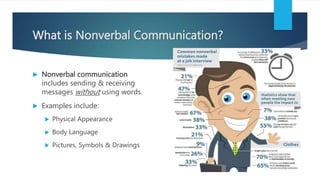
What is Nonverbal Communication?
 Nonverbal communication
includes sending & receiving
messages without using words.
 Examples include:
 Physical Appearance
 Body Language
 Pictures, Symbols & Drawings
First Impressions
 You only have seven seconds to
make a first impression!
 Studies have shown that
nonverbal cues have 4x the
impact on the impression you
make over anything you say.
 What can you do?
 Attitude
 Posture
 Smile
 Eye Contact
 Good handshake
 Lean in (body language)
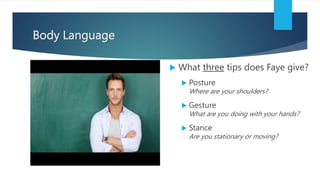
Body Language
 What three tips does Faye give?
 Posture
Where are your shoulders?
 Gesture
What are you doing with your hands?
 Stance
Are you stationary or moving?
Nonverbal Communication in Workplace
Exchanges
 Body language is important when you speak, but it is equally
important as you listen.
 Active listening is the process of giving the sender feedback that
indicates your receipt and understanding of the message.
 Connect – smile, eye contact
 Feedback – lean in, nod, take notes
 Observe –speed, pitch and volume
Your Body Language
Shapes Who You Are
 Social psychologist Amy Cuddy shows how “power posing” can
impact chances for success.
 Consider what you see in the audience. Does your body language at this
moment reflect the attitude that you would like others to perceive?
 List one interesting research statistic about first impressions and / or body
language.
 How do “alphas” display their nonverbal communication in the classroom?
 How is nonverbal communication most commonly expressed by the millennial
generation (technology trends)? Does this societal shift positively or negatively
impact your face-to-face interactions?
Think About It!
 We know that appropriate nonverbal communication is
essential in all workplace exchanges.
 How might a nonverbal message conflict with the
accompanying verbal message?
 What can be the results of such “mixed messages”?
Demonstrate
understanding of
non verbal
communications
CHARADES!
Global Impact
 Standards for communication
vary among different
cultures.
 Culture refers to the
knowledge, habits, beliefs,
skills and morals of a society
in a given time period.
 Cultural aspects that affect
business include:
 Language
 Religion
 Values & Attitudes
 Behaviors
Nonverbal Communication
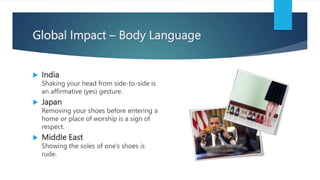
Global Impact – Body Language
 India
Shaking your head from side-to-side is
an affirmative (yes) gesture.
 Japan
Removing your shoes before entering a
home or place of worship is a sign of
respect.
 Middle East
Showing the soles of one’s shoes is
rude.
Think About It!
 In which countries are speakers expected to look at and speak
directly to listeners?
 In which countries should speakers show respect by averting
their eyes, speaking in soft tones and approaching their subject
indirectly?
 Cultural Example
A Canadian will say “no” by simply stating “no,” whereas a Korean
who wants to communicate the same message may say, “That
might be very difficult.”
The Hidden
Language of
Culture
DID YOU KNOW?
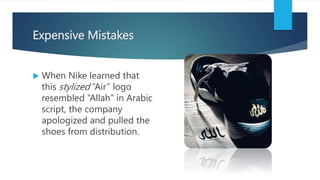
Expensive Mistakes
 When Nike learned that
this stylized “Air” logo
resembled “Allah” in Arabic
script, the company
apologized and pulled the
shoes from distribution.
How can
nonverbal
communication
impact a
company’s public
image?
THINK ABOUT IT!
Group Project!
Cultural
Diversity

4_1 Nonverbal Communication.pptx

  • 1.
    November 29 &30 OBJECTIVES (64) Explain the importance of nonverbal communication in the workplace. TODAY’S AGENDA 1) Nonverbal Communication PowerPoint + Notes. Hidden Language of Culture. Introduce Cultural Project. HOMEWORK NONE CLOSURE What is an example of a variation in nonverbal communication in another culture?
  • 2.
  • 3.
  • 4.
    What is NonverbalCommunication?  Nonverbal communication includes sending & receiving messages without using words.  Examples include:  Physical Appearance  Body Language  Pictures, Symbols & Drawings
  • 5.
    First Impressions  Youonly have seven seconds to make a first impression!  Studies have shown that nonverbal cues have 4x the impact on the impression you make over anything you say.  What can you do?  Attitude  Posture  Smile  Eye Contact  Good handshake  Lean in (body language)
  • 6.
    Body Language  Whatthree tips does Faye give?  Posture Where are your shoulders?  Gesture What are you doing with your hands?  Stance Are you stationary or moving?
  • 7.
    Nonverbal Communication inWorkplace Exchanges  Body language is important when you speak, but it is equally important as you listen.  Active listening is the process of giving the sender feedback that indicates your receipt and understanding of the message.  Connect – smile, eye contact  Feedback – lean in, nod, take notes  Observe –speed, pitch and volume
  • 8.
    Your Body Language ShapesWho You Are  Social psychologist Amy Cuddy shows how “power posing” can impact chances for success.  Consider what you see in the audience. Does your body language at this moment reflect the attitude that you would like others to perceive?  List one interesting research statistic about first impressions and / or body language.  How do “alphas” display their nonverbal communication in the classroom?  How is nonverbal communication most commonly expressed by the millennial generation (technology trends)? Does this societal shift positively or negatively impact your face-to-face interactions?
  • 9.
    Think About It! We know that appropriate nonverbal communication is essential in all workplace exchanges.  How might a nonverbal message conflict with the accompanying verbal message?  What can be the results of such “mixed messages”?
  • 10.
  • 11.
    Global Impact  Standardsfor communication vary among different cultures.  Culture refers to the knowledge, habits, beliefs, skills and morals of a society in a given time period.  Cultural aspects that affect business include:  Language  Religion  Values & Attitudes  Behaviors Nonverbal Communication
  • 12.
    Global Impact –Body Language  India Shaking your head from side-to-side is an affirmative (yes) gesture.  Japan Removing your shoes before entering a home or place of worship is a sign of respect.  Middle East Showing the soles of one’s shoes is rude.
  • 13.
    Think About It! In which countries are speakers expected to look at and speak directly to listeners?  In which countries should speakers show respect by averting their eyes, speaking in soft tones and approaching their subject indirectly?  Cultural Example A Canadian will say “no” by simply stating “no,” whereas a Korean who wants to communicate the same message may say, “That might be very difficult.”
  • 14.
  • 15.
    Expensive Mistakes  WhenNike learned that this stylized “Air” logo resembled “Allah” in Arabic script, the company apologized and pulled the shoes from distribution.
  • 16.
  • 17.

Editor's Notes

  • #4 How can nonverbal communication impact a company’s public image? What is the importance of nonverbal communication in conveying and interpreting a message in the workplace? How might a nonverbal message conflict with the accompanying verbal message? What can be the results of such “mixed messages”?
  • #6 Seven Seconds to Make a First Impression (Forbes) http://www.forbes.com/sites/carolkinseygoman/2011/02/13/seven-seconds-to-make-a-first-impression/
  • #7 Body Language Do’s & Don’ts – Good Manners (2 min, 43 sec) YouTube Link  https://www.youtube.com/watch?v=ZlBQxCzgRLw
  • #9 Video Link  https://www.ted.com/talks/amy_cuddy_your_body_language_shapes_who_you_are?language=en Stop at 6:30 minutes.
  • #12 “Culture” defined -- ways of living transmitted from one generation to anther through social institutions (family, educational, religious and business) Acculturation -- “… adjusting or adapting to a specific culture other than one’s own” … is “one of the keys to success in international operations.”
  • #14 Eye Contact: US, Canada, Australia, Great Britain (English-speaking countries) Avoidance: Asian countries
  • #15 Gallery Walk – Use “Nonverbal Plaques”
  • #18 European: Italy, Germany, England, Spain Asian: China, Japan, Korea, India Central America: Mexico, Puerto Rico, Dominican Republic, Cuba Other: Russia, Australia, Brazil, Egypt, South Africa