Vector
Resolution
ANALYTICAL METHOD
OF VECTOR ADDITION
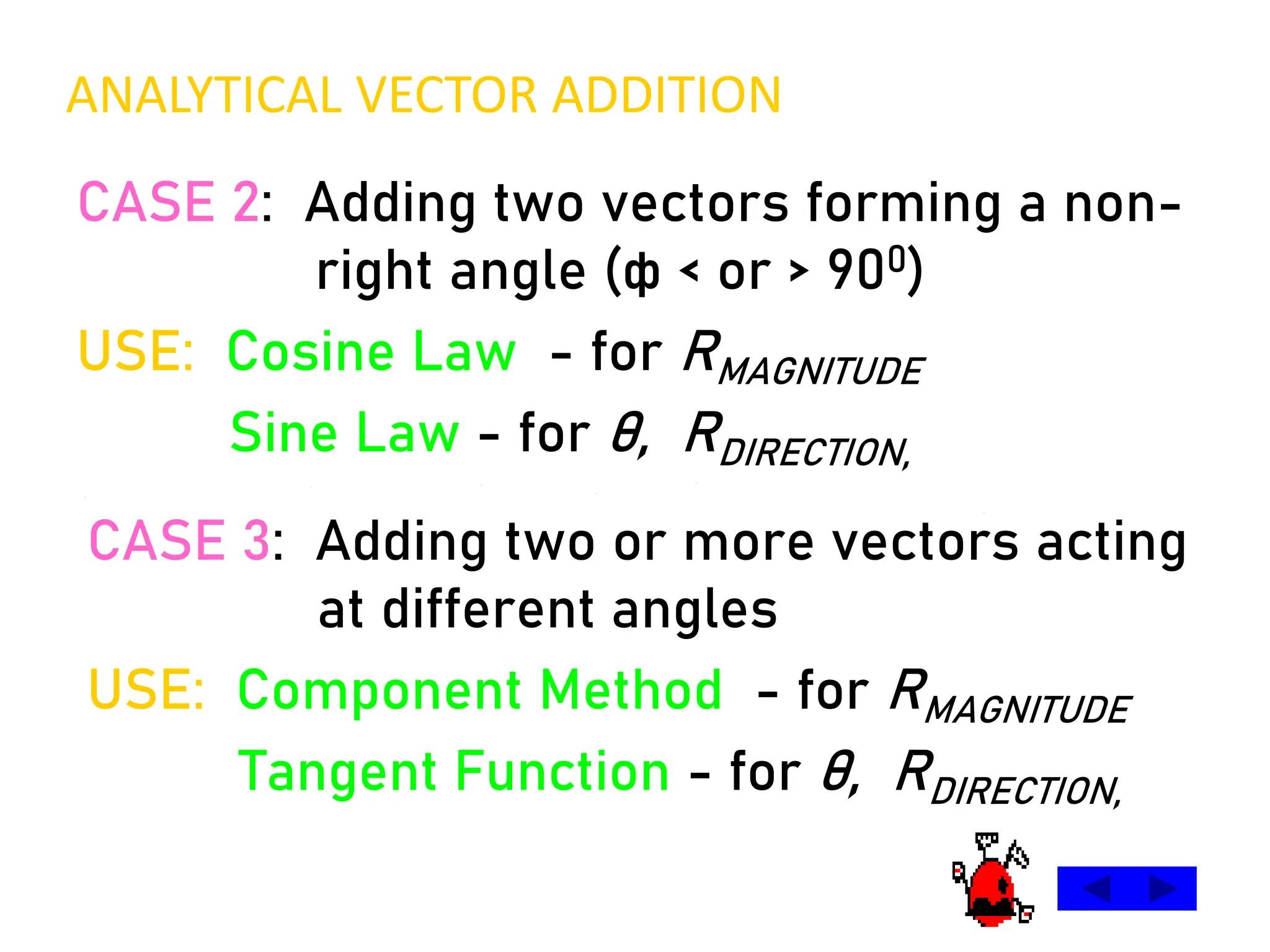
CASE 1: Adding two vectors forming a right
angle (ф = 900)
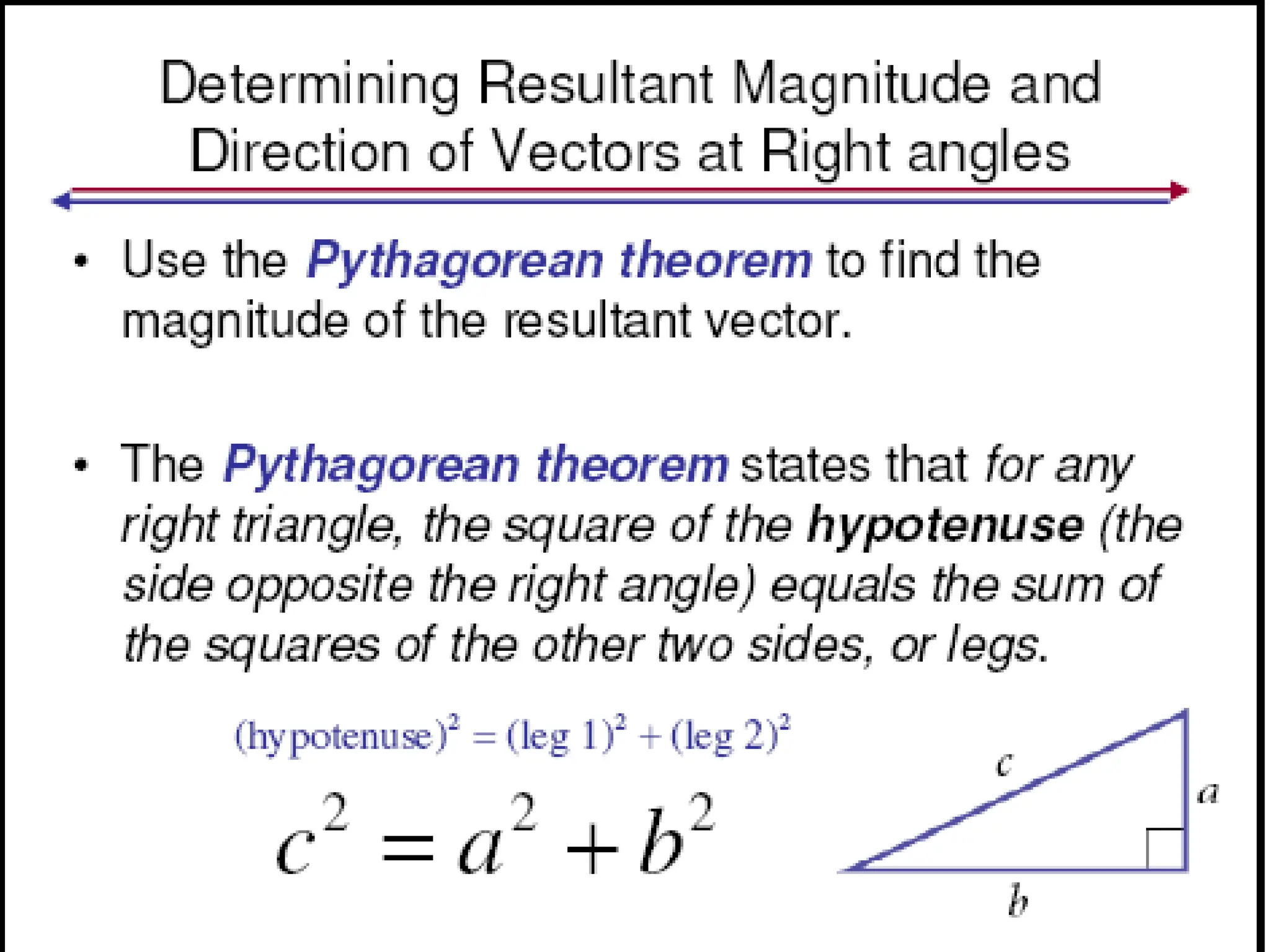
Use: Pythagorean Theorem – for RMAGNITUDE
Tangent Function – for θ, RDIRECTION,
CASE 2: Adding two vectors forming a non-
right angle (ф < or > 900)
USE: Cosine Law - for RMAGNITUDE
Sine Law - for θ, RDIRECTION,
CASE 3: Adding two or more vectors acting
at different angles
USE: Component Method - for RMAGNITUDE
Tangent Function - for θ, RDIRECTION,
ANALYTICAL VECTOR ADDITION
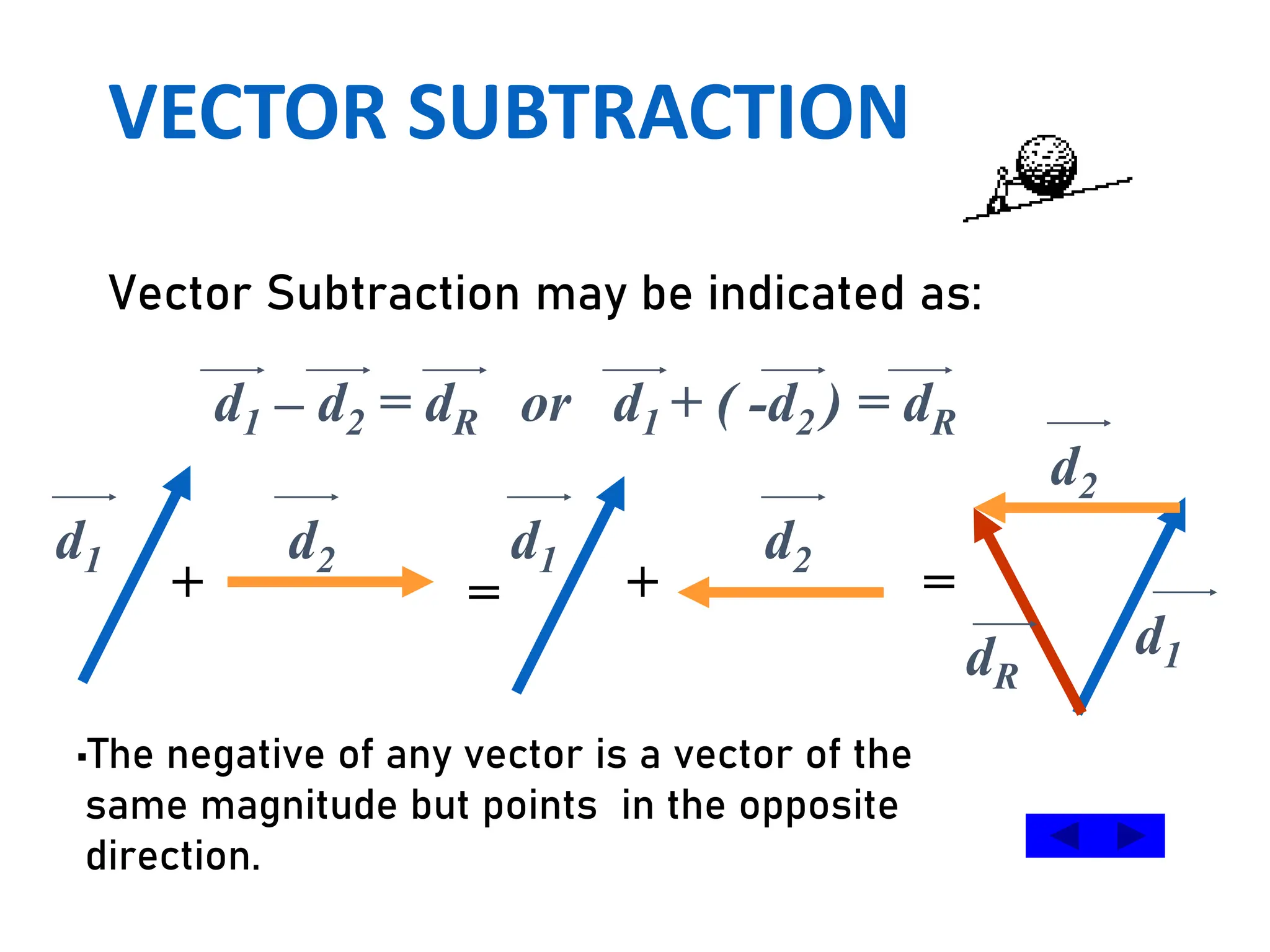
VECTOR SUBTRACTION
Vector Subtraction may be indicated as:
d1 – d2 = dR or d1 + ( -d2 ) = dR
+ = + =
d1 d2 d2
d1
d1
d2
dR
•The negative of any vector is a vector of the
same magnitude but points in the opposite
direction.
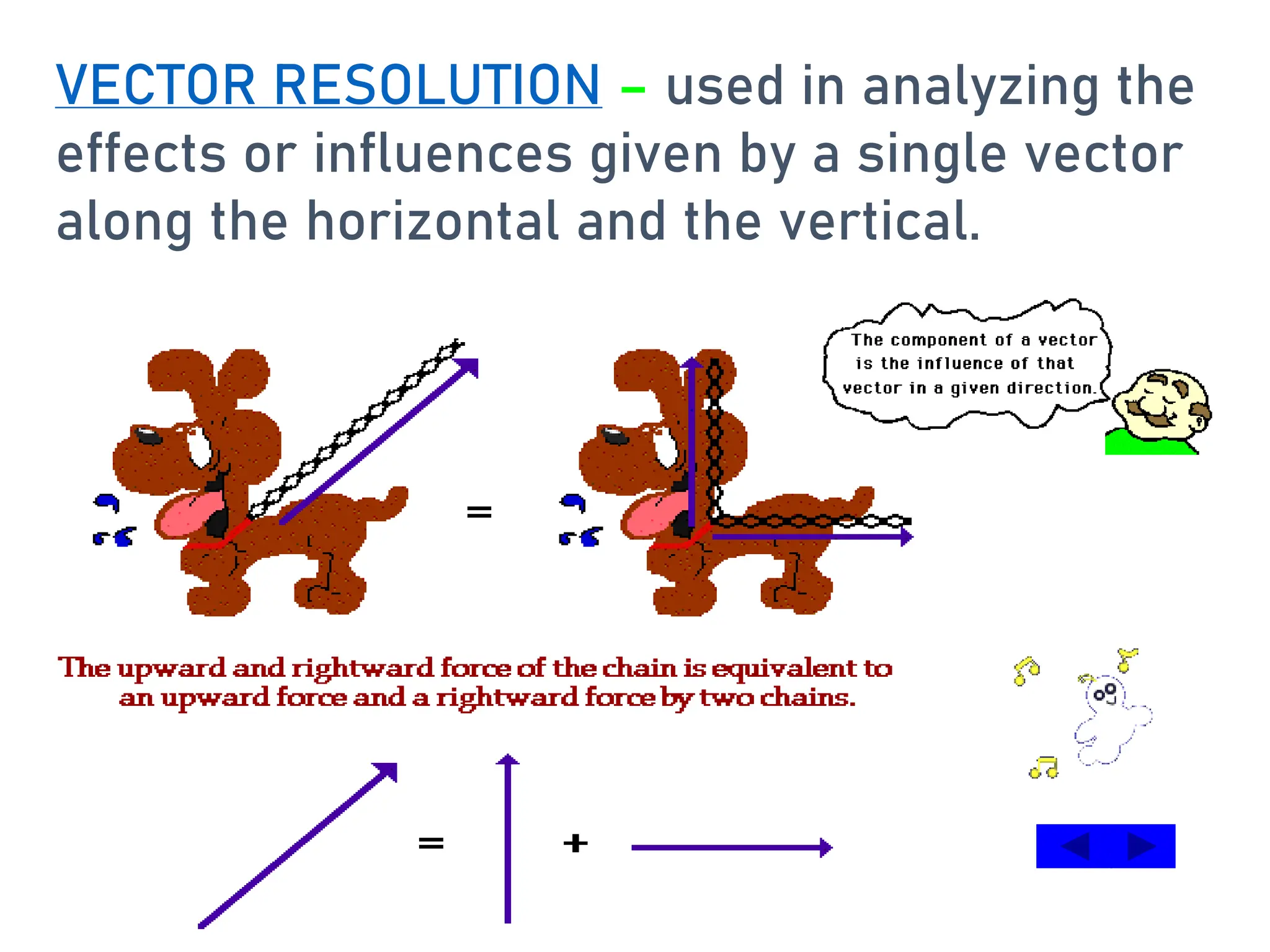
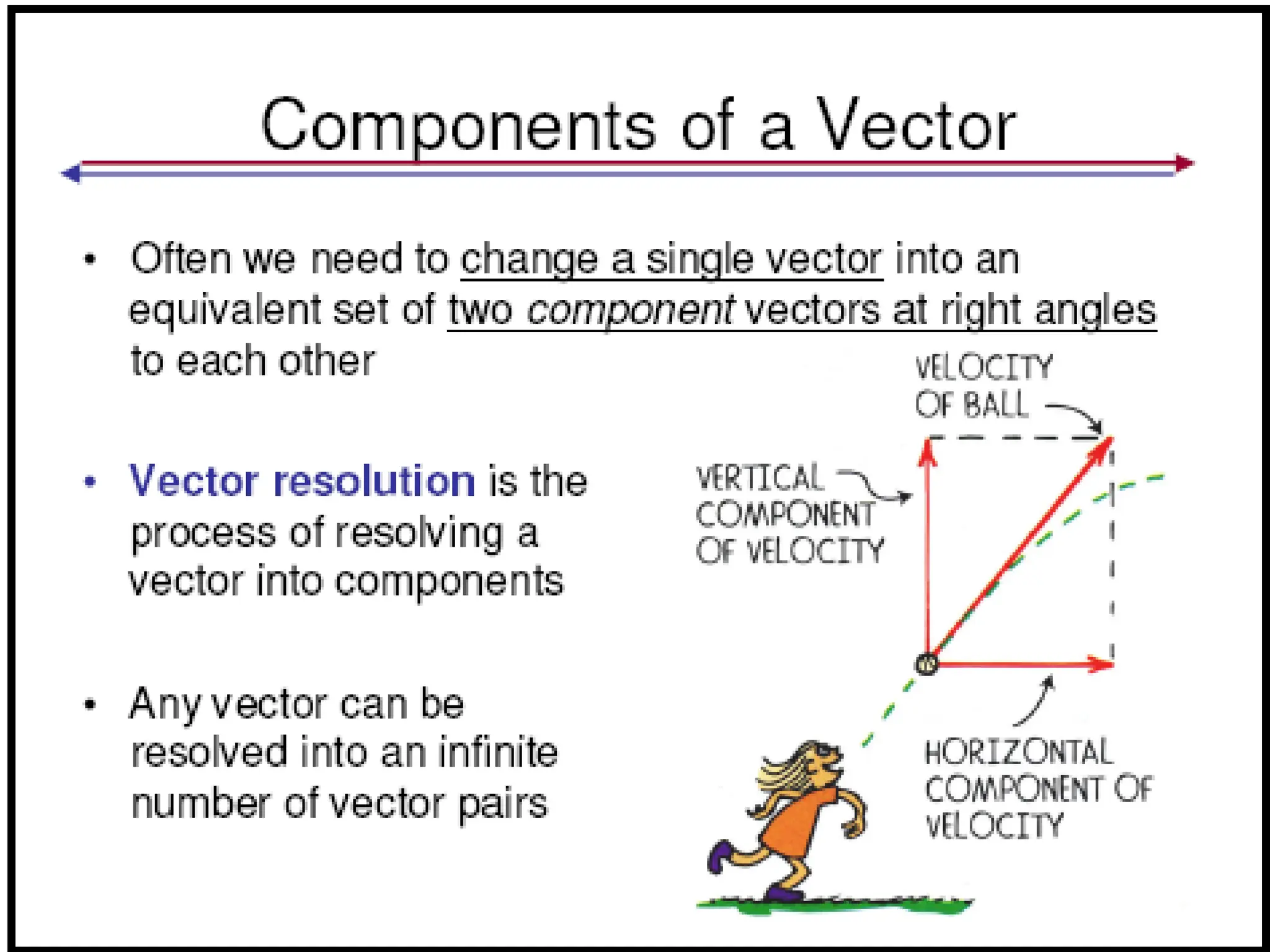
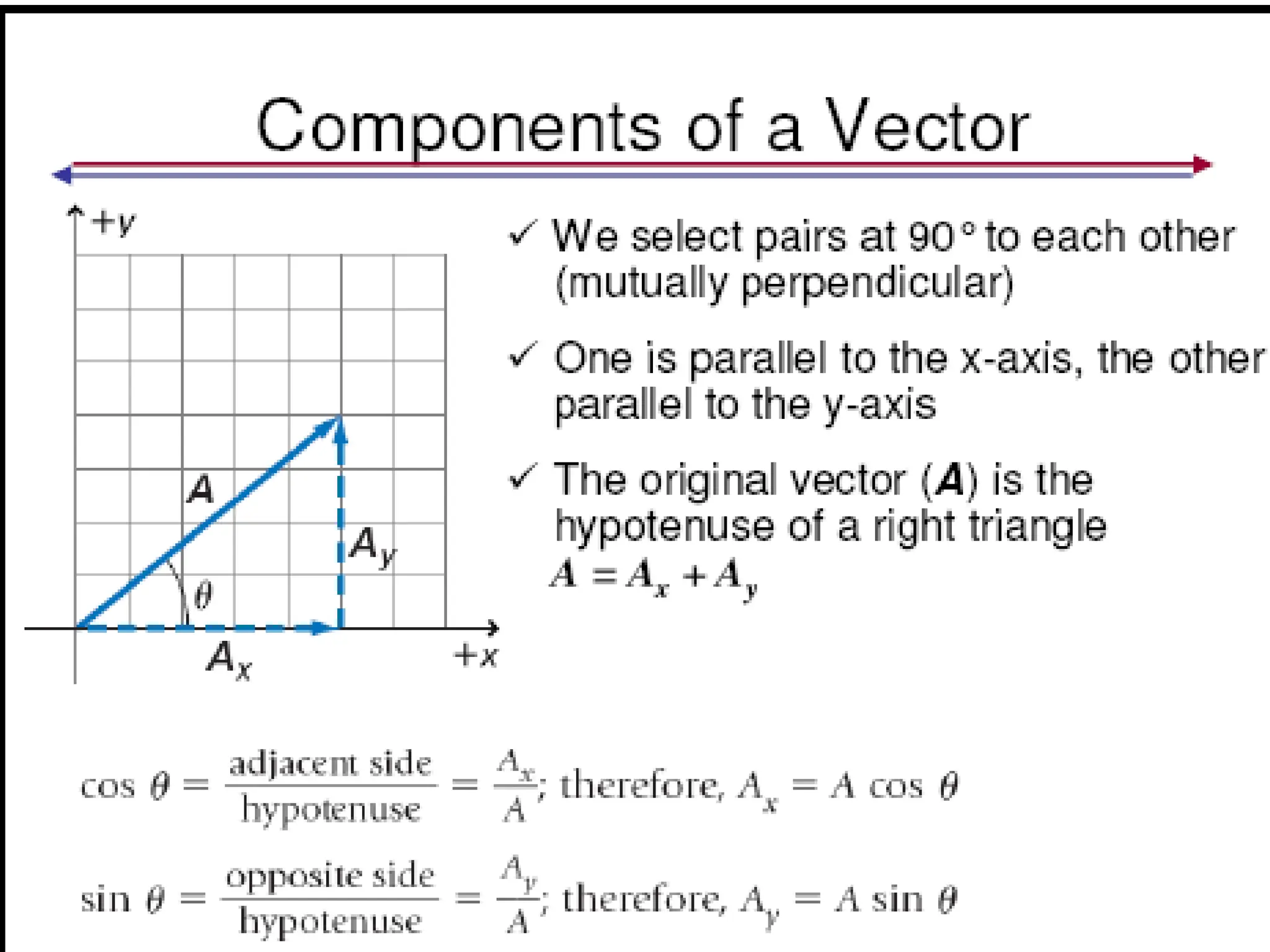
VECTOR RESOLUTION – used in analyzing the
effects or influences given by a single vector
along the horizontal and the vertical.
Vector Resolution – is the process of
breaking down a single vector into its two
components (effects or influence given)
along the x- and the y-axis.
• To resolve a vector is NOT to add nor to
subtract a vector.
• The components of the vector, x- & y-
components, are not vector quantities but are
merely scalar. Although they carry + or –
signs, they just show the direction of the
effectivity of given vector along the horizontal
and vertical respects.
• The components of a vector are symbolized
and drawn with broken lines with arrowheads
to show the direction of the effect given by a
vector along the horizontal and vertical.
• The x- & y-components of a vector are
indicated as the x- and y-subscript of a given
vector.
• By +x-component means the horizontal effect
of the vector is to the right (or →). By –x, it is
the otherwise.
• By +y-component means the vertical effect of
the vector is upward (or ↑) and by –y
component is the the otherwise.
The components of a single vector are:
a. x-component of a vector -i.e., it is the
horizontal effect or horizontal
influence given by a vector in terms
of displacement, velocity or force, etc.
b. y-component of a vector – it is the
vertical effect or influence given by a
vector.
How do you resolve a vector analytically?
1. Sketch the vector appropriately and resolve
using triangulation method wherein the angle
given is included in the triangle.
2. The x-component of the vector is the
projection of the vector along the x-axis, i.e., in
either to the left or to the right of the x-axis as
appropriate.
3. The y-component of the vector is the
projection of the vector along the y-axis, i.e., at
either up or down of the y-axis as appropriate.
4. Label your vector components
correspondingly.
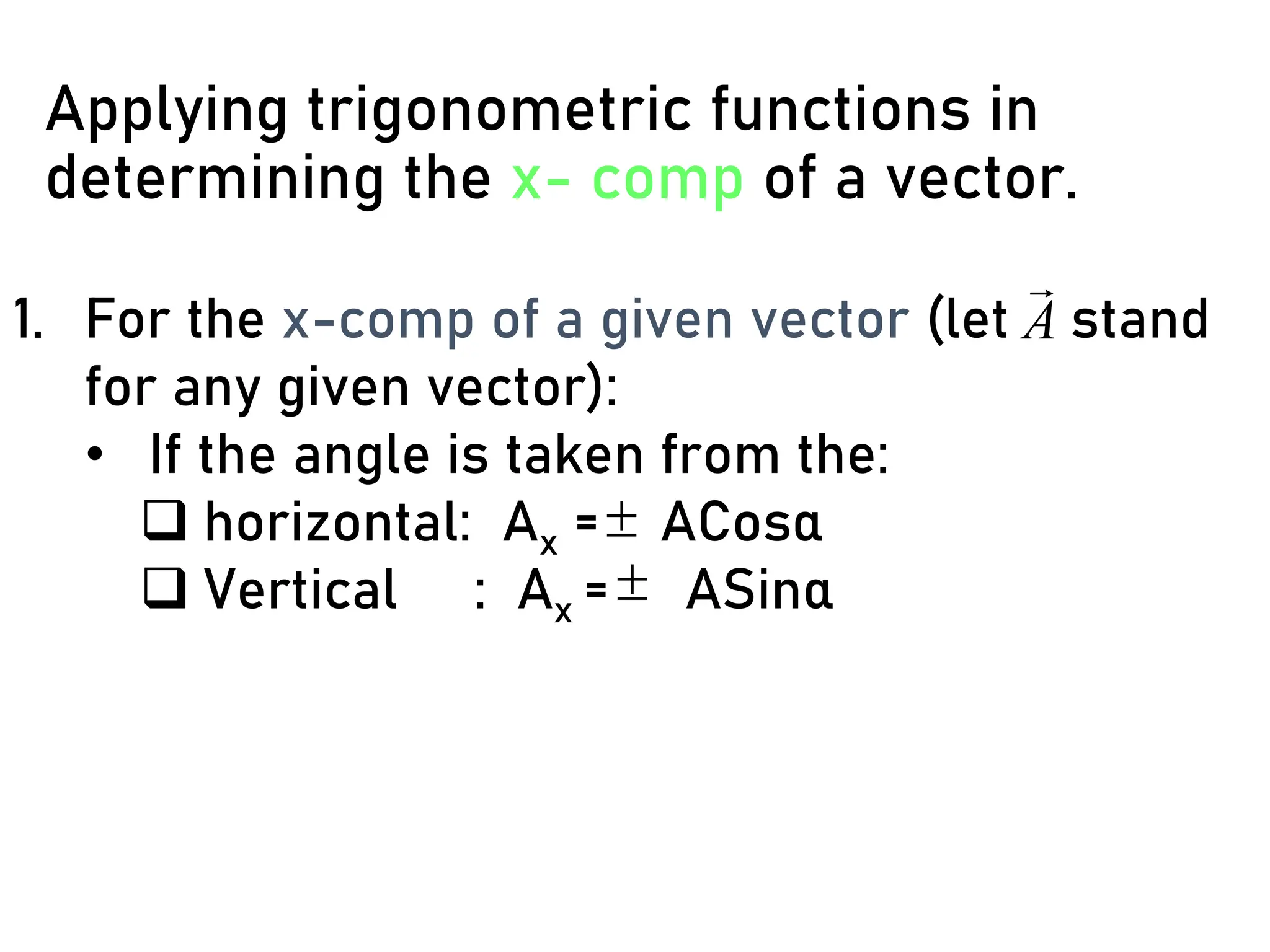
Applying trigonometric functions in
determining the x- comp of a vector.
1. For the x-comp of a given vector (let stand
for any given vector):
• If the angle is taken from the:
❑ horizontal: Ax = ACosα
❑ Vertical : Ax = ASinα
A



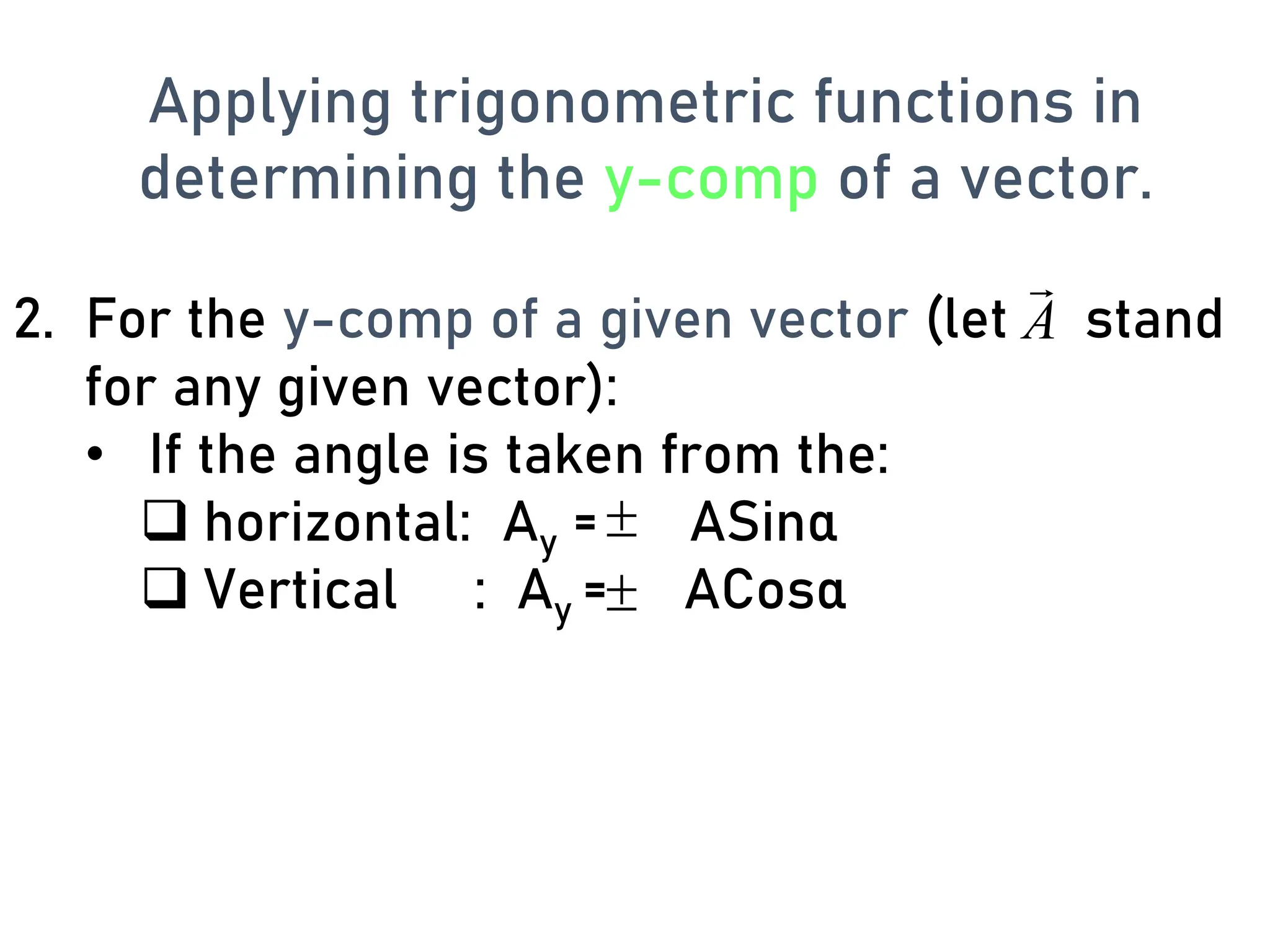
2. For the y-comp of a given vector (let stand
for any given vector):
• If the angle is taken from the:
❑ horizontal: Ay = ASinα
❑ Vertical : Ay = ACosα


A

Applying trigonometric functions in
determining the y-comp of a vector.
What is the effect of the
angle that the vector makes
with the horizontal (or vertical)
in terms of its horizontal &
vertical effects respectively?
The Angle of Vector vs. its horizontal &
vertical effects
Practice drills:
•Show the components of the following vectors by
naming the vector first, showing complete sketch
for the triangulation method and then solve for
the components analytically. Give meanings for
the components derived. (5min)
1. 100km, 400 West of North
2.75km/h, 560 East of South
3.120N, 370 from the
horizontal
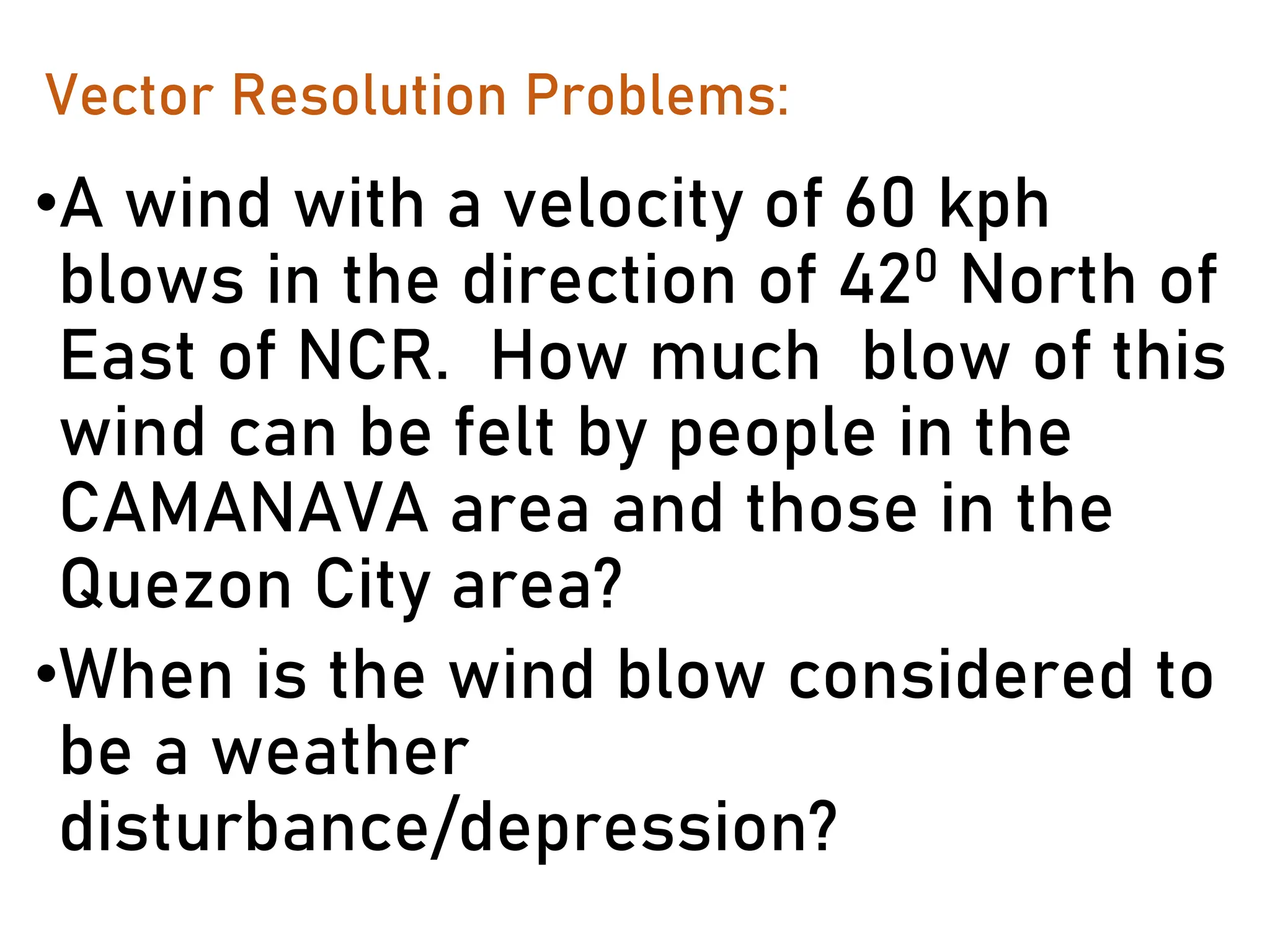
Vector Resolution Problems:
•A wind with a velocity of 60 kph
blows in the direction of 420 North of
East of NCR. How much blow of this
wind can be felt by people in the
CAMANAVA area and those in the
Quezon City area?
•When is the wind blow considered to
be a weather
disturbance/depression?
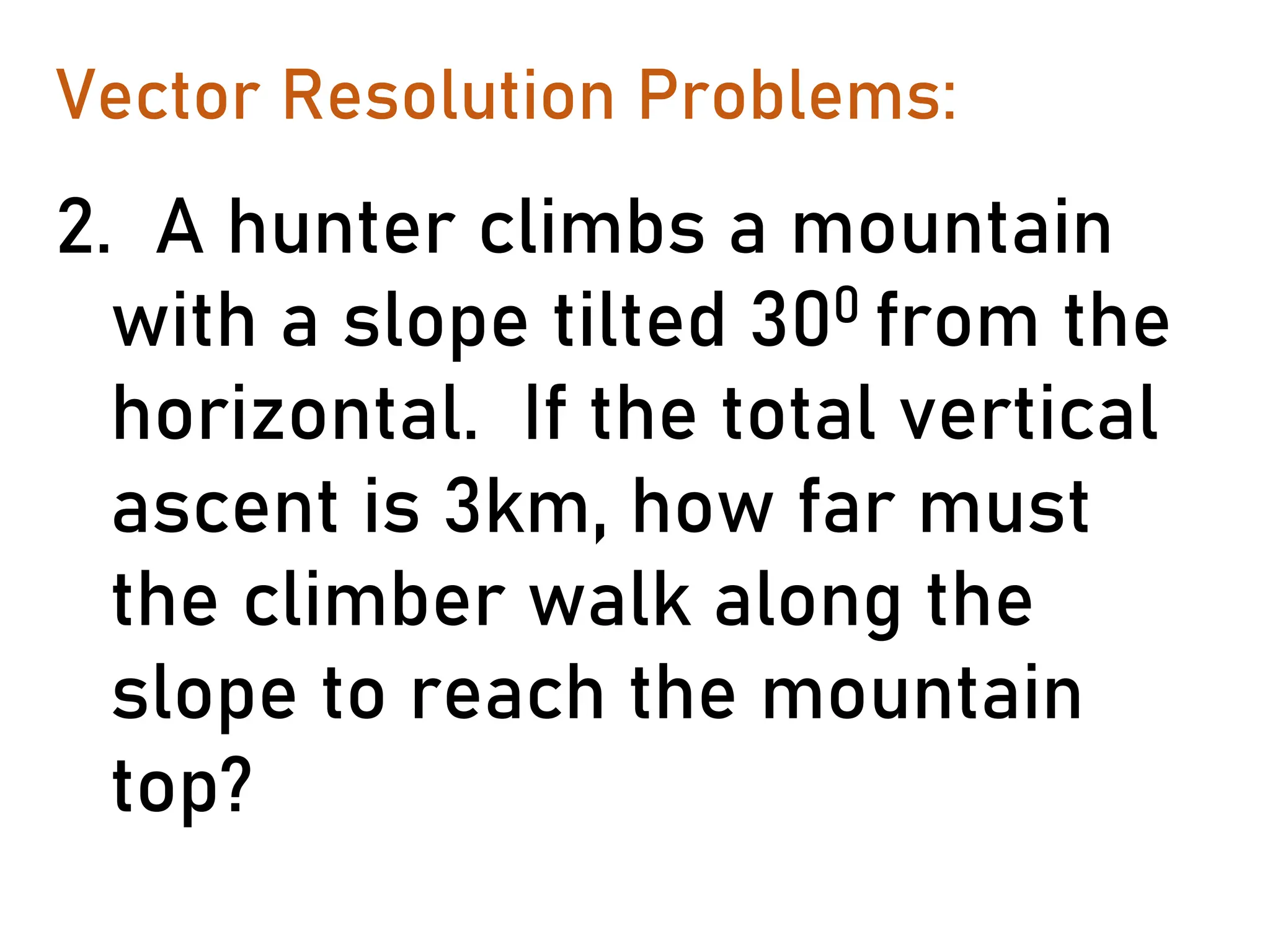
Vector Resolution Problems:
2. A hunter climbs a mountain
with a slope tilted 300 from the
horizontal. If the total vertical
ascent is 3km, how far must
the climber walk along the
slope to reach the mountain
top?
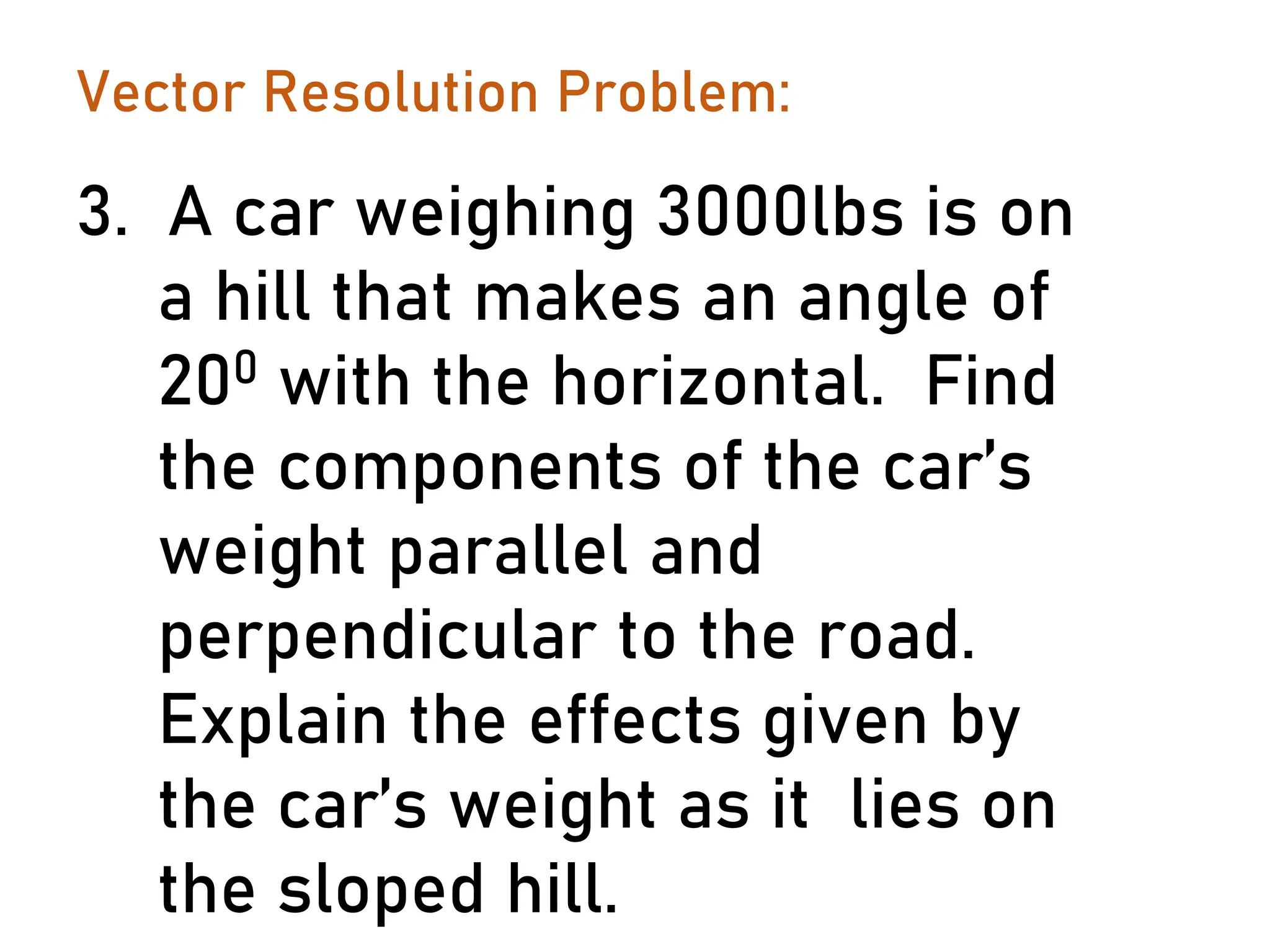
Vector Resolution Problem:
3. A car weighing 3000lbs is on
a hill that makes an angle of
200 with the horizontal. Find
the components of the car’s
weight parallel and
perpendicular to the road.
Explain the effects given by
the car’s weight as it lies on
the sloped hill.
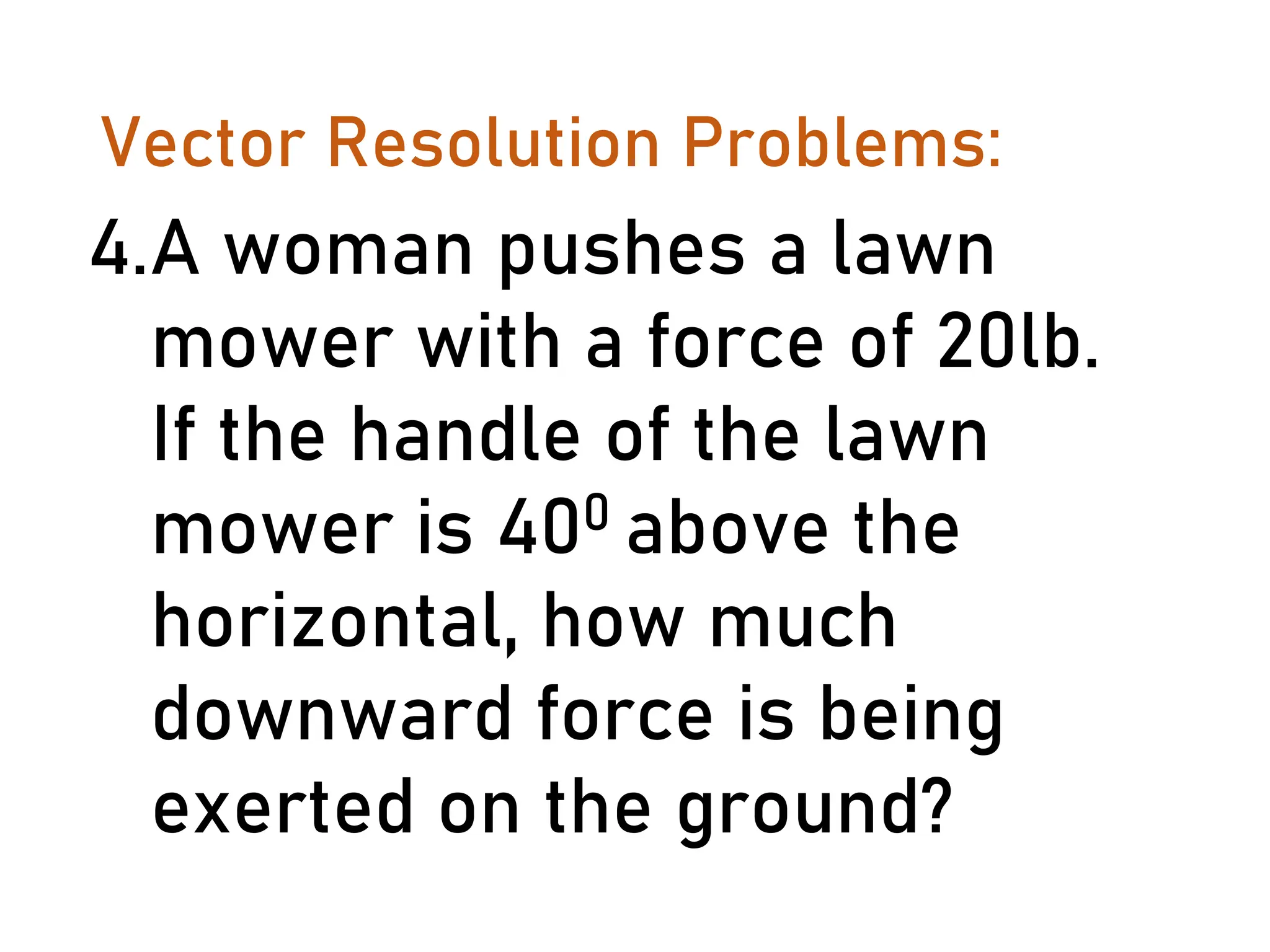
Vector Resolution Problems:
4.A woman pushes a lawn
mower with a force of 20lb.
If the handle of the lawn
mower is 400 above the
horizontal, how much
downward force is being
exerted on the ground?
Vector Resolution Problem:
5. An airplane whose airspeed
is 120 kph has just taken off
from a runway. A car driving
at 100kph on the runway is
able to remain just below the
airplane. At what angle is the
airplane climbing?

4 Vector Analytical Method PPT science .pdf

  • 1.
  • 2.
    ANALYTICAL METHOD OF VECTORADDITION CASE 1: Adding two vectors forming a right angle (ф = 900) Use: Pythagorean Theorem – for RMAGNITUDE Tangent Function – for θ, RDIRECTION,
  • 7.
    CASE 2: Addingtwo vectors forming a non- right angle (ф < or > 900) USE: Cosine Law - for RMAGNITUDE Sine Law - for θ, RDIRECTION, CASE 3: Adding two or more vectors acting at different angles USE: Component Method - for RMAGNITUDE Tangent Function - for θ, RDIRECTION, ANALYTICAL VECTOR ADDITION
  • 8.
    VECTOR SUBTRACTION Vector Subtractionmay be indicated as: d1 – d2 = dR or d1 + ( -d2 ) = dR + = + = d1 d2 d2 d1 d1 d2 dR •The negative of any vector is a vector of the same magnitude but points in the opposite direction.
  • 9.
    VECTOR RESOLUTION –used in analyzing the effects or influences given by a single vector along the horizontal and the vertical.
  • 11.
    Vector Resolution –is the process of breaking down a single vector into its two components (effects or influence given) along the x- and the y-axis. • To resolve a vector is NOT to add nor to subtract a vector. • The components of the vector, x- & y- components, are not vector quantities but are merely scalar. Although they carry + or – signs, they just show the direction of the effectivity of given vector along the horizontal and vertical respects.
  • 12.
    • The componentsof a vector are symbolized and drawn with broken lines with arrowheads to show the direction of the effect given by a vector along the horizontal and vertical. • The x- & y-components of a vector are indicated as the x- and y-subscript of a given vector. • By +x-component means the horizontal effect of the vector is to the right (or →). By –x, it is the otherwise. • By +y-component means the vertical effect of the vector is upward (or ↑) and by –y component is the the otherwise.
  • 13.
    The components ofa single vector are: a. x-component of a vector -i.e., it is the horizontal effect or horizontal influence given by a vector in terms of displacement, velocity or force, etc. b. y-component of a vector – it is the vertical effect or influence given by a vector.
  • 14.
    How do youresolve a vector analytically? 1. Sketch the vector appropriately and resolve using triangulation method wherein the angle given is included in the triangle. 2. The x-component of the vector is the projection of the vector along the x-axis, i.e., in either to the left or to the right of the x-axis as appropriate. 3. The y-component of the vector is the projection of the vector along the y-axis, i.e., at either up or down of the y-axis as appropriate. 4. Label your vector components correspondingly.
  • 16.
    Applying trigonometric functionsin determining the x- comp of a vector. 1. For the x-comp of a given vector (let stand for any given vector): • If the angle is taken from the: ❑ horizontal: Ax = ACosα ❑ Vertical : Ax = ASinα A   
  • 17.
    2. For they-comp of a given vector (let stand for any given vector): • If the angle is taken from the: ❑ horizontal: Ay = ASinα ❑ Vertical : Ay = ACosα   A  Applying trigonometric functions in determining the y-comp of a vector.
  • 19.
    What is theeffect of the angle that the vector makes with the horizontal (or vertical) in terms of its horizontal & vertical effects respectively? The Angle of Vector vs. its horizontal & vertical effects
  • 20.
    Practice drills: •Show thecomponents of the following vectors by naming the vector first, showing complete sketch for the triangulation method and then solve for the components analytically. Give meanings for the components derived. (5min) 1. 100km, 400 West of North 2.75km/h, 560 East of South 3.120N, 370 from the horizontal
  • 21.
    Vector Resolution Problems: •Awind with a velocity of 60 kph blows in the direction of 420 North of East of NCR. How much blow of this wind can be felt by people in the CAMANAVA area and those in the Quezon City area? •When is the wind blow considered to be a weather disturbance/depression?
  • 22.
    Vector Resolution Problems: 2.A hunter climbs a mountain with a slope tilted 300 from the horizontal. If the total vertical ascent is 3km, how far must the climber walk along the slope to reach the mountain top?
  • 23.
    Vector Resolution Problem: 3.A car weighing 3000lbs is on a hill that makes an angle of 200 with the horizontal. Find the components of the car’s weight parallel and perpendicular to the road. Explain the effects given by the car’s weight as it lies on the sloped hill.
  • 24.
    Vector Resolution Problems: 4.Awoman pushes a lawn mower with a force of 20lb. If the handle of the lawn mower is 400 above the horizontal, how much downward force is being exerted on the ground?
  • 25.
    Vector Resolution Problem: 5.An airplane whose airspeed is 120 kph has just taken off from a runway. A car driving at 100kph on the runway is able to remain just below the airplane. At what angle is the airplane climbing?