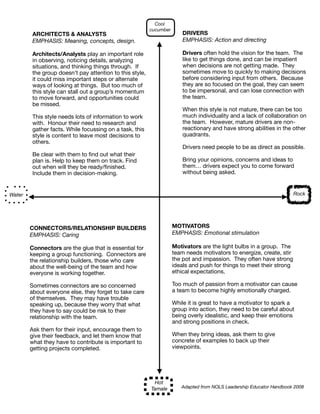
Cool
cucumber
Hot
Tamale
Water Rock
Adapted from NOLS Leadership Educator Handbook 2008
ARCHITECTS & ANALYSTS
EMPHASIS: Meaning, concepts, design.
Architects/Analysts play an important role
in observing, noticing details, analyzing
situations, and thinking things through. If
the group doesn’t pay attention to this style,
it could miss important steps or alternate
ways of looking at things. But too much of
this style can stall out a group’s momentum
to move forward, and opportunities could
be missed.

This style needs lots of information to work
with. Honour their need to research and
gather facts. While focussing on a task, this
style is content to leave most decisions to
others. 

Be clear with them to find out what their
plan is. Help to keep them on track. Find
out when will they be ready/finished.
Include them in decision-making.

DRIVERS
EMPHASIS: Action and directing
Drivers often hold the vision for the team. The
like to get things done, and can be impatient
when decisions are not getting made. They
sometimes move to quickly to making decisions
before considering input from others. Because
they are so focused on the goal, they can seem
to be impersonal, and can lose connection with
the team.

When this style is not mature, there can be too
much individuality and a lack of collaboration on
the team. However, mature drivers are non-
reactionary and have strong abilities in the other
quadrants. 

Drivers need people to be as direct as possible.

Bring your opinions, concerns and ideas to
them… drivers expect you to come forward
without being asked.

CONNECTORS/RELATIONSHIP BUILDERS
EMPHASIS: Caring
Connectors are the glue that is essential for
keeping a group functioning. Connectors are
the relationship builders, those who care
about the well-being of the team and how
everyone is working together. 

Sometimes connectors are so concerned
about everyone else, they forget to take care
of themselves. They may have trouble
speaking up, because they worry that what
they have to say could be risk to their
relationship with the team. 

Ask them for their input, encourage them to
give their feedback, and let them know that
what they have to contribute is important to
getting projects completed.

MOTIVATORS
EMPHASIS: Emotional stimulation
Motivators are the light bulbs in a group. The
team needs motivators to energize, create, stir
the pot and impassion. They often have strong
ideals and push for things to meet their strong
ethical expectations.

Too much of passion from a motivator can cause
a team to become highly emotionally charged. 

While it is great to have a motivator to spark a
group into action, they need to be careful about
being overly idealistic, and keep their emotions
and strong positions in check. 

When they bring ideas, ask them to give
concrete of examples to back up their
viewpoints.

4 Leadership Styles

  • 1.
    Cool cucumber Hot Tamale Water Rock Adapted fromNOLS Leadership Educator Handbook 2008 ARCHITECTS & ANALYSTS EMPHASIS: Meaning, concepts, design. Architects/Analysts play an important role in observing, noticing details, analyzing situations, and thinking things through. If the group doesn’t pay attention to this style, it could miss important steps or alternate ways of looking at things. But too much of this style can stall out a group’s momentum to move forward, and opportunities could be missed. This style needs lots of information to work with. Honour their need to research and gather facts. While focussing on a task, this style is content to leave most decisions to others. Be clear with them to find out what their plan is. Help to keep them on track. Find out when will they be ready/finished. Include them in decision-making. DRIVERS EMPHASIS: Action and directing Drivers often hold the vision for the team. The like to get things done, and can be impatient when decisions are not getting made. They sometimes move to quickly to making decisions before considering input from others. Because they are so focused on the goal, they can seem to be impersonal, and can lose connection with the team. When this style is not mature, there can be too much individuality and a lack of collaboration on the team. However, mature drivers are non- reactionary and have strong abilities in the other quadrants. Drivers need people to be as direct as possible. Bring your opinions, concerns and ideas to them… drivers expect you to come forward without being asked. CONNECTORS/RELATIONSHIP BUILDERS EMPHASIS: Caring Connectors are the glue that is essential for keeping a group functioning. Connectors are the relationship builders, those who care about the well-being of the team and how everyone is working together. Sometimes connectors are so concerned about everyone else, they forget to take care of themselves. They may have trouble speaking up, because they worry that what they have to say could be risk to their relationship with the team. Ask them for their input, encourage them to give their feedback, and let them know that what they have to contribute is important to getting projects completed. MOTIVATORS EMPHASIS: Emotional stimulation Motivators are the light bulbs in a group. The team needs motivators to energize, create, stir the pot and impassion. They often have strong ideals and push for things to meet their strong ethical expectations. Too much of passion from a motivator can cause a team to become highly emotionally charged. While it is great to have a motivator to spark a group into action, they need to be careful about being overly idealistic, and keep their emotions and strong positions in check. When they bring ideas, ask them to give concrete of examples to back up their viewpoints.