Infiltration & Regeneration
Infiltration
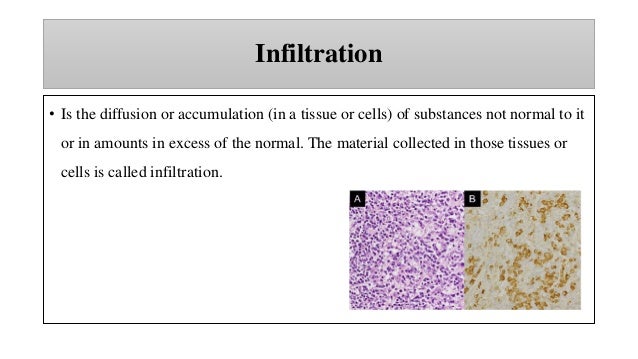
• Is the diffusion or accumulation (in a tissue or cells) of substances not normal to it
or in amounts in excess of the normal. The material collected in those tissues or
cells is called infiltration.
Calcium infiltration or calcification:-
• Calcium infiltration a process in which tissue or noncellular material in the body
becomes hardened as the result of precipitates or larger deposits of insoluble salts
of calcium. Normally occurring only in the formation of bone & teeth.
Types:-
• Dystrophic Calcification
• Metastatic Calcification
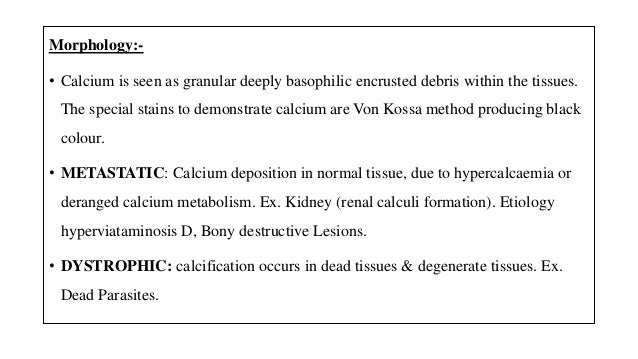
Morphology:-
• Calcium is seen as granular deeply basophilic encrusted debris within the tissues.
The special stains to demonstrate calcium are Von Kossa method producing black
colour.
• METASTATIC: Calcium deposition in normal tissue, due to hypercalcaemia or
deranged calcium metabolism. Ex. Kidney (renal calculi formation). Etiology
hyperviataminosis D, Bony destructive Lesions.
• DYSTROPHIC: calcification occurs in dead tissues & degenerate tissues. Ex.
Dead Parasites.
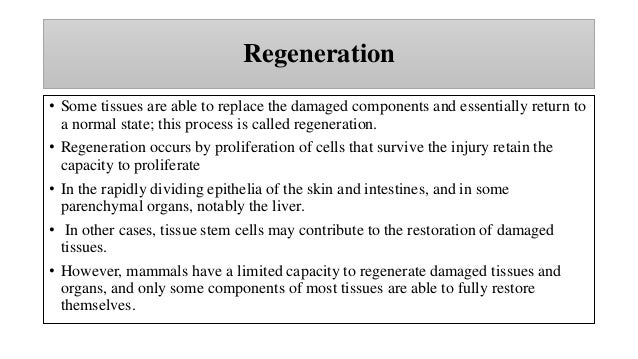
Regeneration
• Some tissues are able to replace the damaged components and essentially return to
a normal state; this process is called regeneration.
• Regeneration occurs by proliferation of cells that survive the injury retain the
capacity to proliferate
• In the rapidly dividing epithelia of the skin and intestines, and in some
parenchymal organs, notably the liver.
• In other cases, tissue stem cells may contribute to the restoration of damaged
tissues.
• However, mammals have a limited capacity to regenerate damaged tissues and
organs, and only some components of most tissues are able to fully restore
themselves.
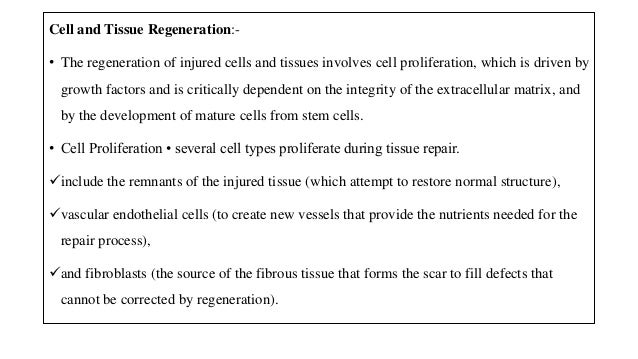
Cell and Tissue Regeneration:-
• The regeneration of injured cells and tissues involves cell proliferation, which is driven by
growth factors and is critically dependent on the integrity of the extracellular matrix, and
by the development of mature cells from stem cells.
• Cell Proliferation • several cell types proliferate during tissue repair.
include the remnants of the injured tissue (which attempt to restore normal structure),
vascular endothelial cells (to create new vessels that provide the nutrients needed for the
repair process),
and fibroblasts (the source of the fibrous tissue that forms the scar to fill defects that
cannot be corrected by regeneration).
References
• Suresh Sharma “Textbook of pharmacology, pathology and genetics for nurses”
volume 1 jaypee publication.
• K.Swaminathan “Textbook of pathology and genetics for nurses”2nd edition
Jaypee publication.
• Navneet Kumari “Pathology for Nurses” Lotus publication
3..infiltration & regeneration

3..infiltration & regeneration

  • 1.
  • 2.
    Infiltration • Is thediffusion or accumulation (in a tissue or cells) of substances not normal to it or in amounts in excess of the normal. The material collected in those tissues or cells is called infiltration.
  • 3.
    Calcium infiltration orcalcification:- • Calcium infiltration a process in which tissue or noncellular material in the body becomes hardened as the result of precipitates or larger deposits of insoluble salts of calcium. Normally occurring only in the formation of bone & teeth.
  • 4.
  • 5.
    Morphology:- • Calcium isseen as granular deeply basophilic encrusted debris within the tissues. The special stains to demonstrate calcium are Von Kossa method producing black colour. • METASTATIC: Calcium deposition in normal tissue, due to hypercalcaemia or deranged calcium metabolism. Ex. Kidney (renal calculi formation). Etiology hyperviataminosis D, Bony destructive Lesions. • DYSTROPHIC: calcification occurs in dead tissues & degenerate tissues. Ex. Dead Parasites.
  • 6.
    Regeneration • Some tissuesare able to replace the damaged components and essentially return to a normal state; this process is called regeneration. • Regeneration occurs by proliferation of cells that survive the injury retain the capacity to proliferate • In the rapidly dividing epithelia of the skin and intestines, and in some parenchymal organs, notably the liver. • In other cases, tissue stem cells may contribute to the restoration of damaged tissues. • However, mammals have a limited capacity to regenerate damaged tissues and organs, and only some components of most tissues are able to fully restore themselves.
  • 7.
    Cell and TissueRegeneration:- • The regeneration of injured cells and tissues involves cell proliferation, which is driven by growth factors and is critically dependent on the integrity of the extracellular matrix, and by the development of mature cells from stem cells. • Cell Proliferation • several cell types proliferate during tissue repair. include the remnants of the injured tissue (which attempt to restore normal structure), vascular endothelial cells (to create new vessels that provide the nutrients needed for the repair process), and fibroblasts (the source of the fibrous tissue that forms the scar to fill defects that cannot be corrected by regeneration).
  • 8.
    References • Suresh Sharma“Textbook of pharmacology, pathology and genetics for nurses” volume 1 jaypee publication. • K.Swaminathan “Textbook of pathology and genetics for nurses”2nd edition Jaypee publication. • Navneet Kumari “Pathology for Nurses” Lotus publication