Downloaded 49 times

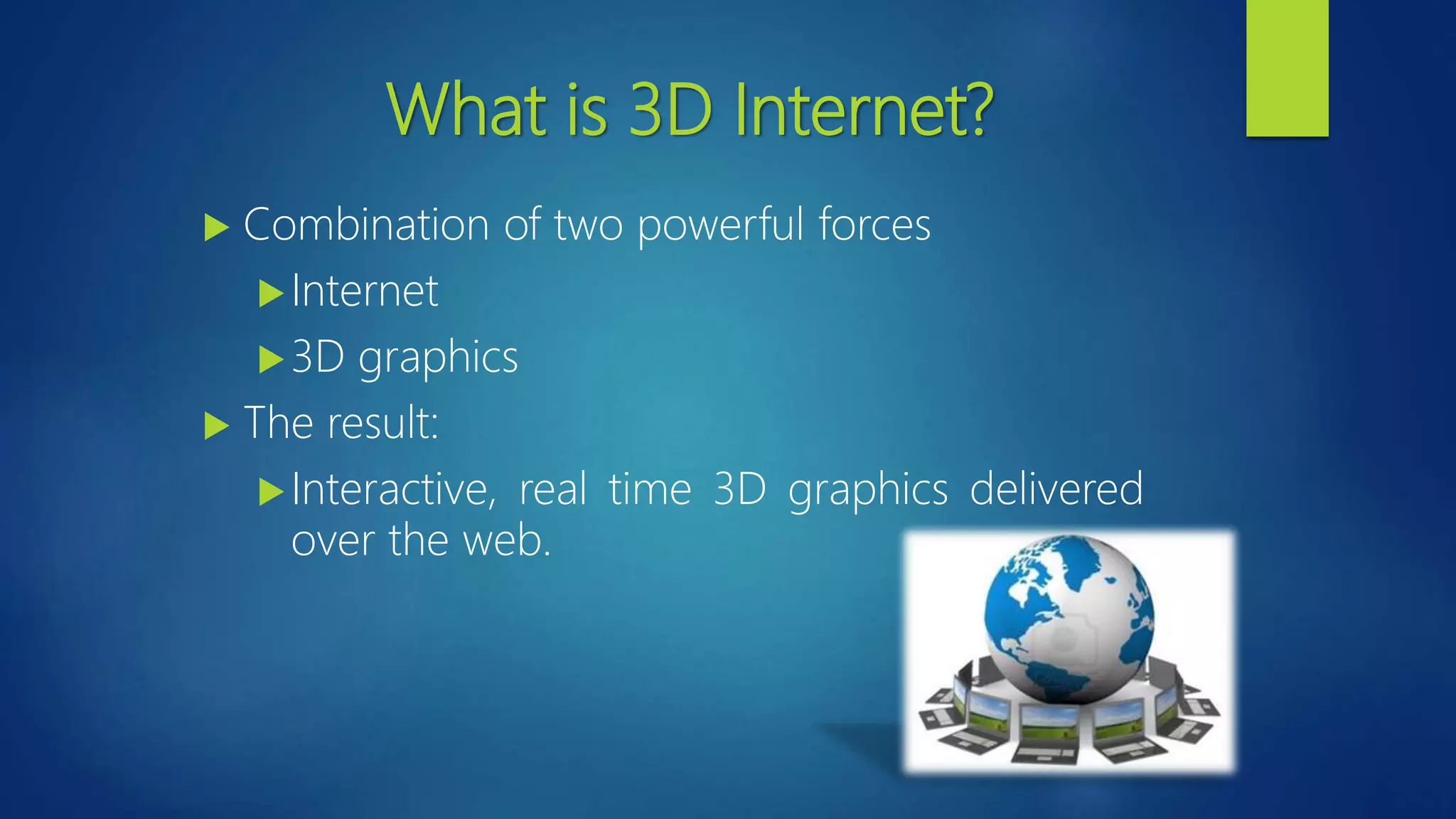

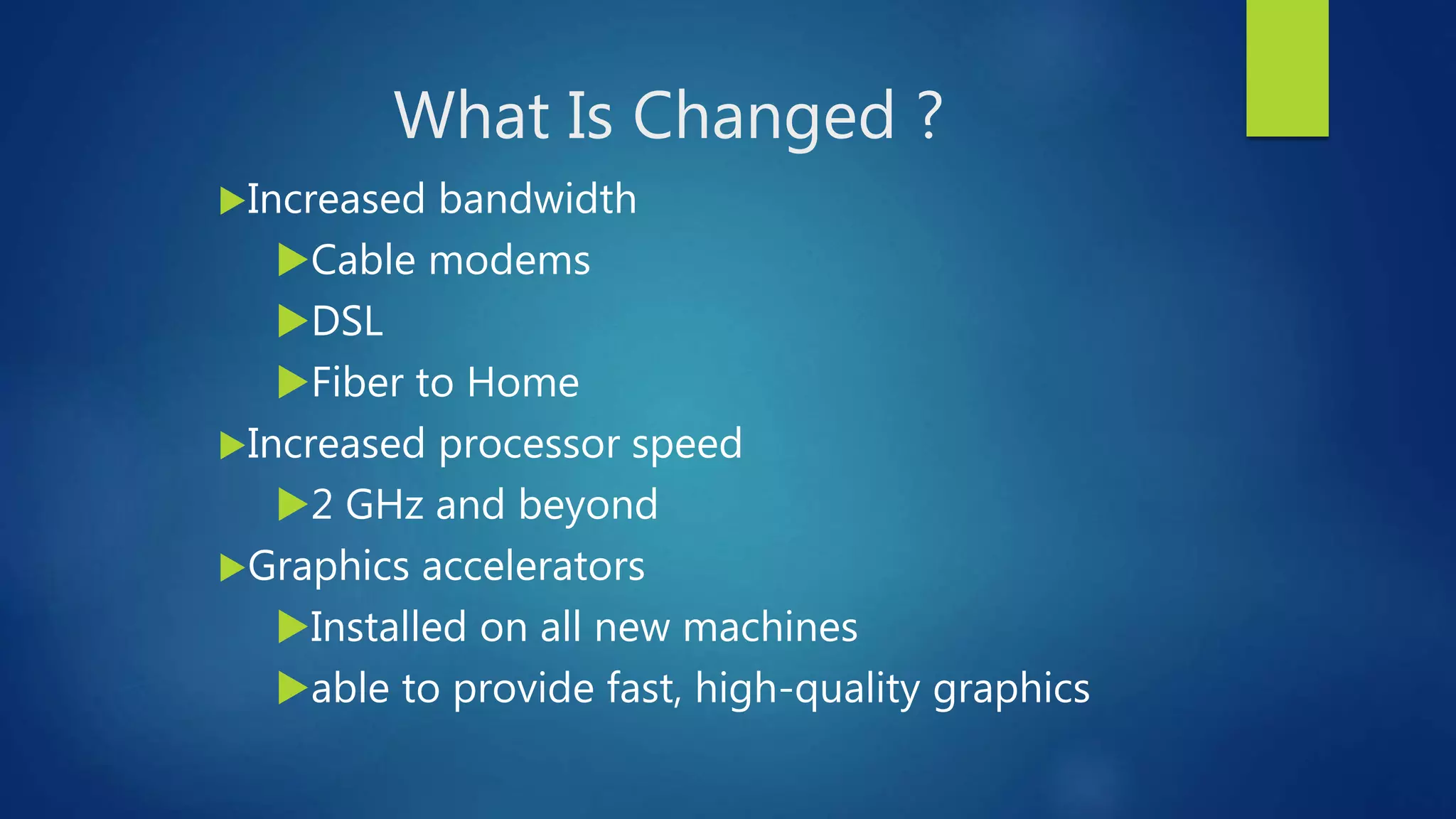
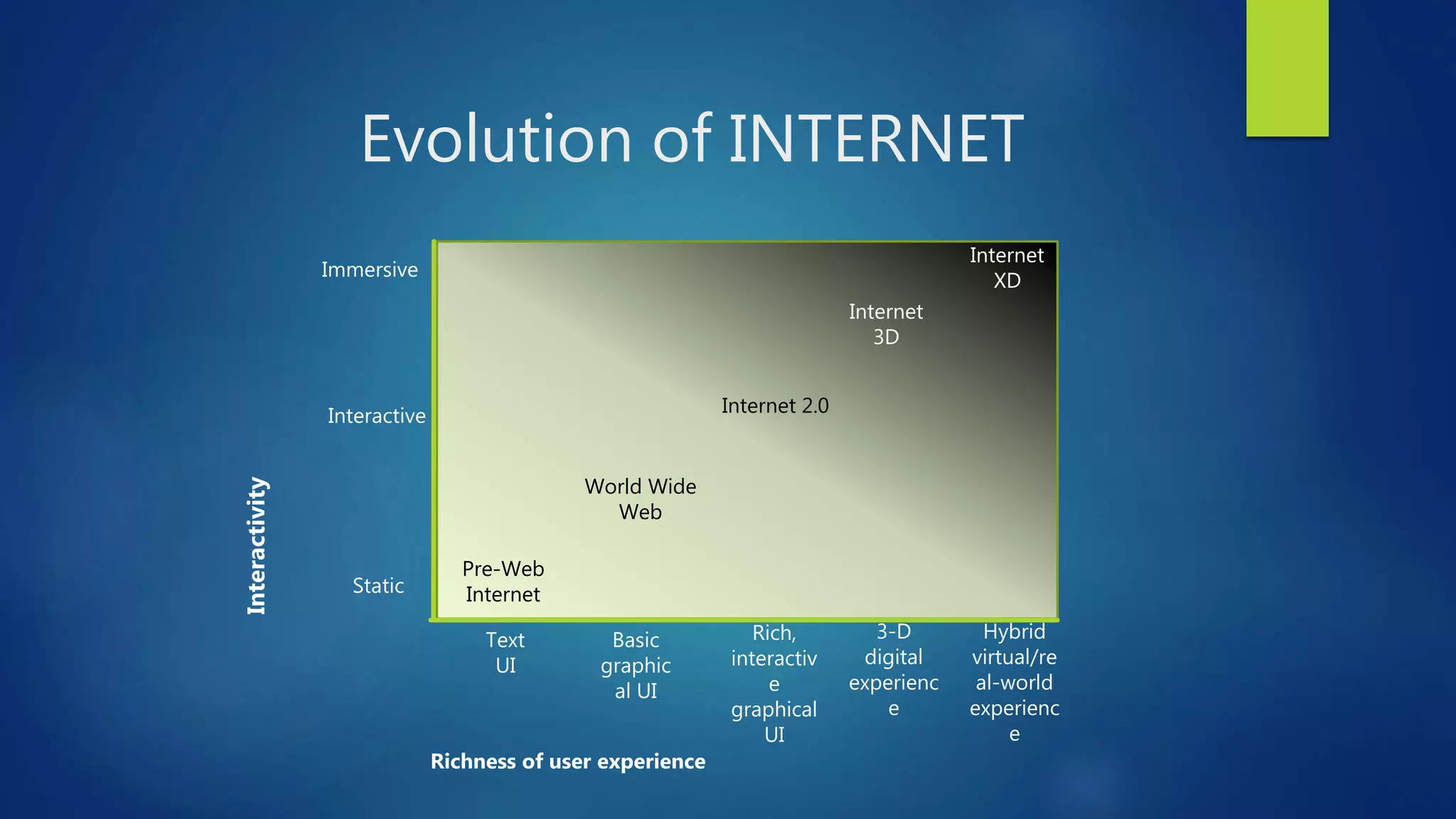


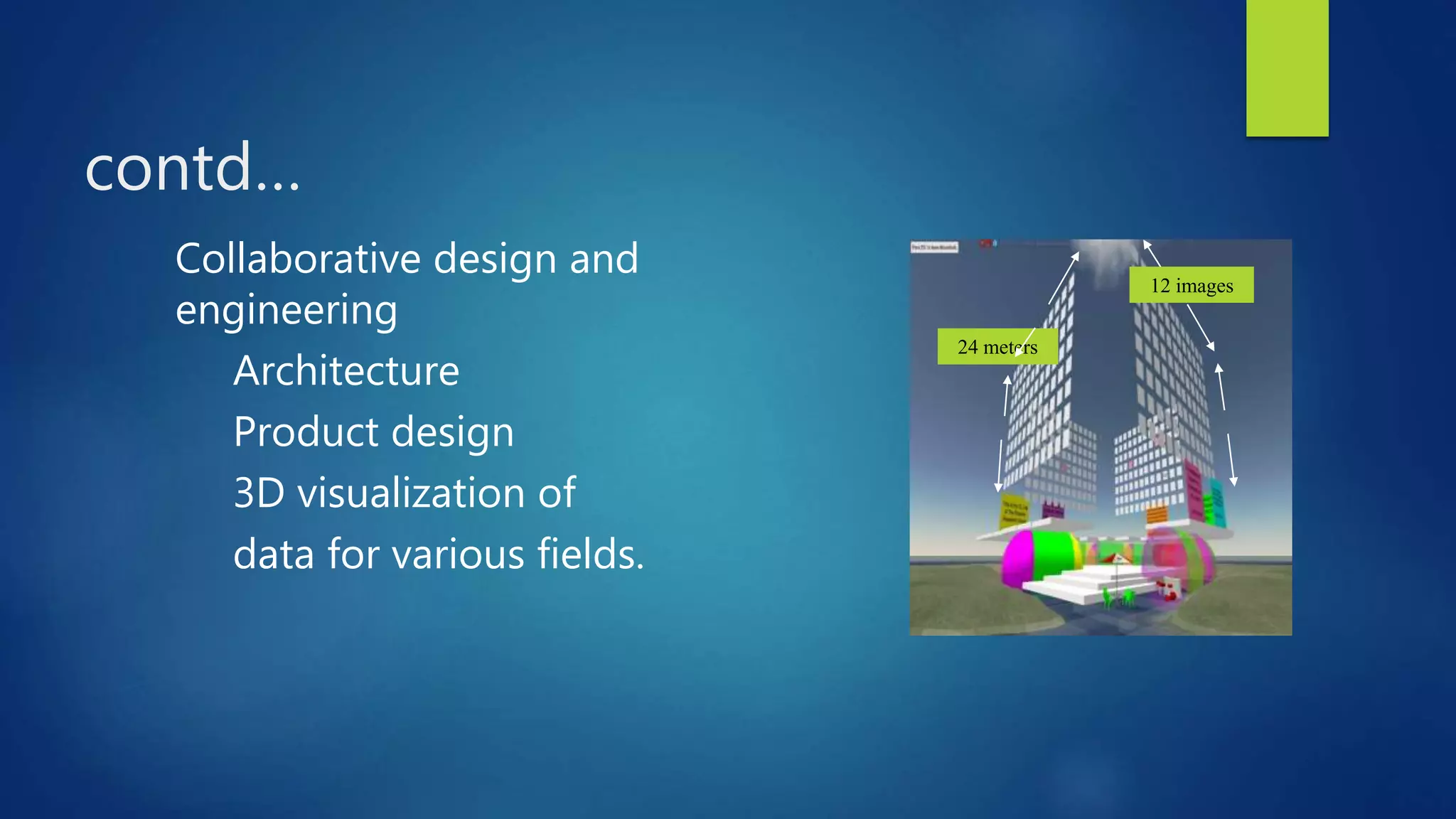
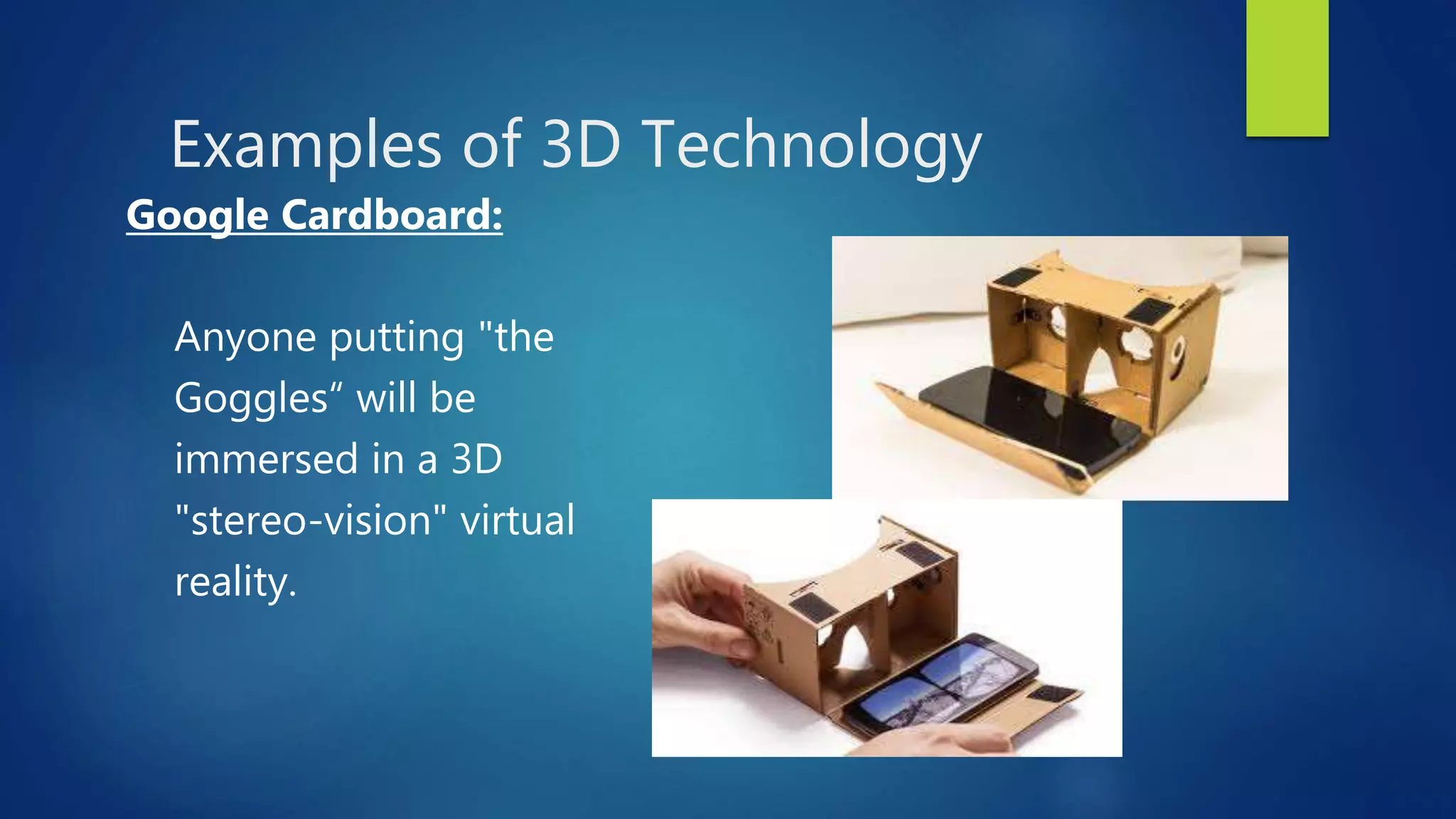








This document discusses the 3D internet, which combines 3D graphics with the internet to allow for interactive, real-time 3D graphics delivered over the web. It has become possible now due to increased bandwidth and processor speeds. The 3D internet will evolve from basic graphical UIs to fully immersive virtual experiences. It enables applications in e-commerce, education, entertainment, collaboration and data visualization. Examples include virtual shopping malls and Google Cardboard. However, the 3D internet faces obstacles such as complexity, slow acceptance rates, and limited bandwidth. In the future, the 3D internet may make controlling and accessing information much easier.


