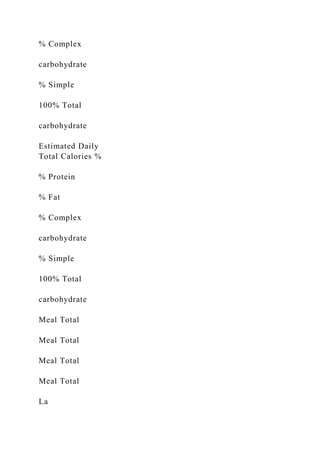
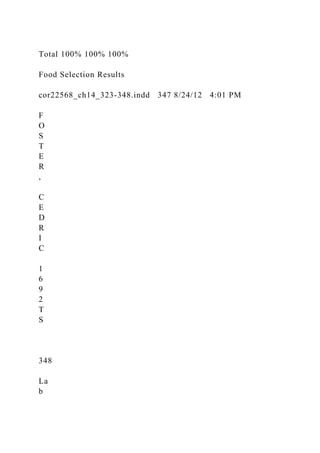
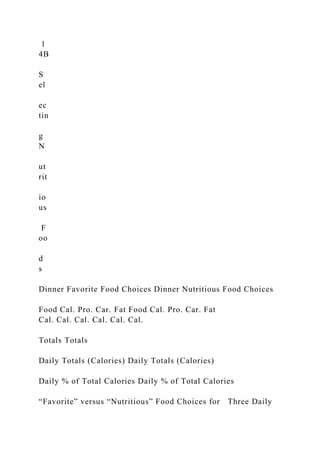
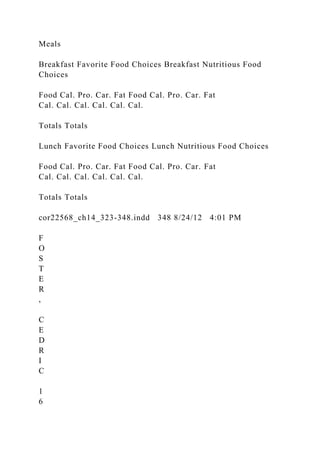
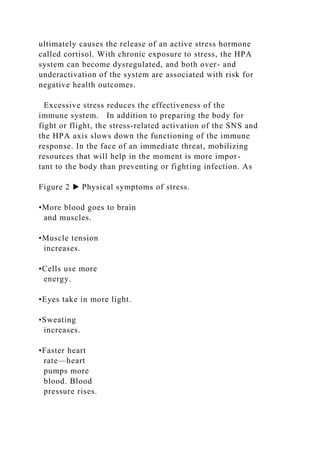
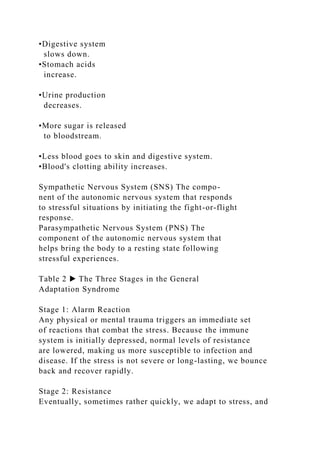
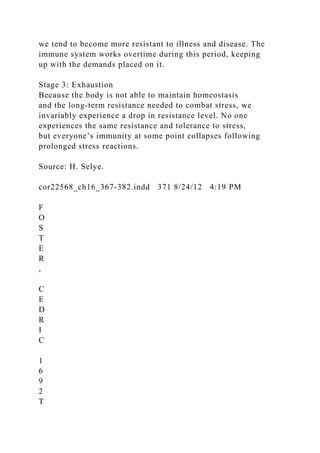
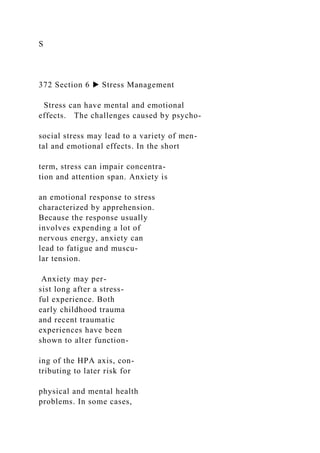
323
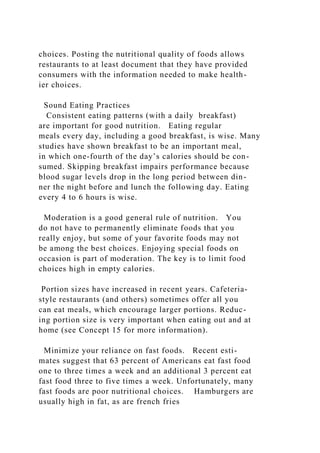
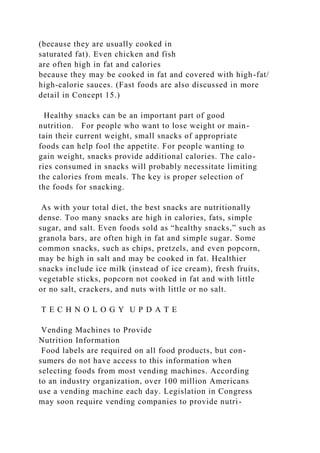
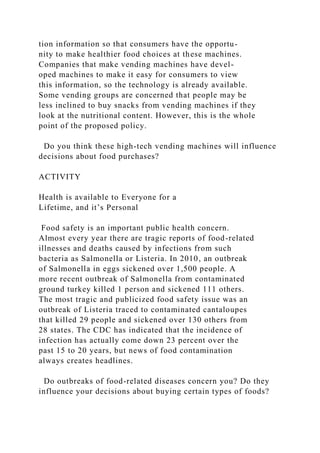
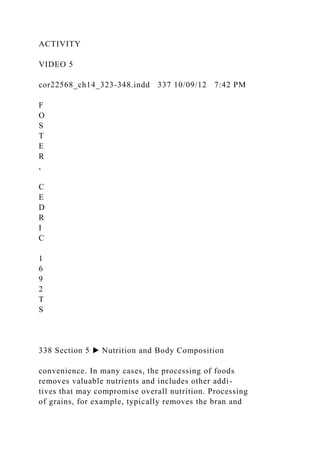
LEARNING OBJECTIVES
After completing the study of this concept, you will be able to:
▶ Apply basic guidelines for healthy eating.
▶ List and apply dietary recommendations for carbohydrates,
fats, proteins, vitamins,
minerals, and water.
▶ Interpret and use food labels to make healthy decisions.
▶ Describe and incorporate sound eating practices.
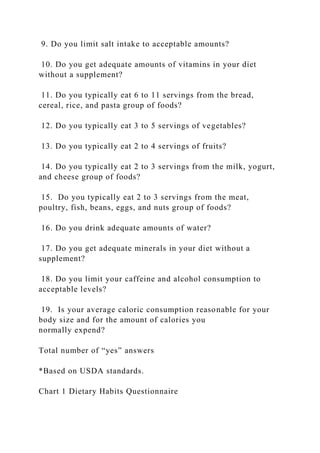
▶ Describe and apply nutrition
guidelines for active people
and those interested in
performance (e.g., sports).
▶ Analyze your diet to
determine nutrient quality.
▶ Compare nutritional quality
of various foods.
Nutrition
C
o
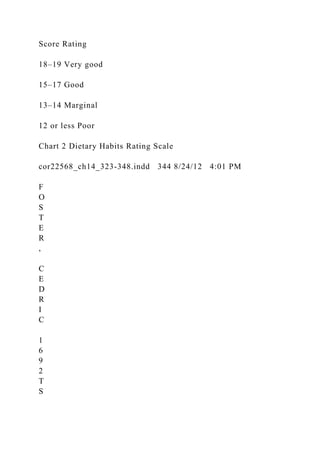
n
c
e
p
t 14
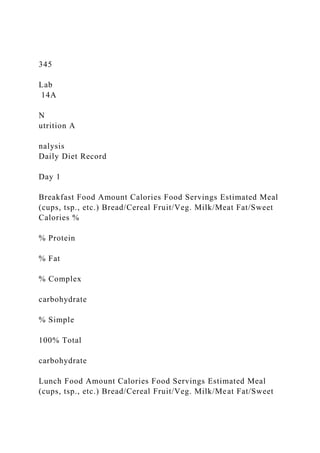
The amount and kinds of food
you eat affect your health
and wellness.
cor22568_ch14_323-348.indd 323 8/24/12 4:00 PM
F
O
S
T
E
R
,
C
E
D
R
I
C
1
6
9
2
T
S
324 Section 5 ▶ Nutrition and Body Composition
T he importance of good nutrition for optimal health is well
established. Eating patterns have been related to
four of the seven leading causes of death, and poor nutri-
tion increases the risks for numerous diseases, includ-
ing heart disease, obesity, stroke, diabetes, hypertension,
osteoporosis, and many cancers (e.g., colon, prostate,
mouth, throat, lung, and stomach). The American Cancer
Society estimates that 35 percent of cancer risks are related
to nutritional factors. In addition to helping avoid these
health risks, proper nutrition can enhance the quality of
life by improving appearance and increasing the ability to
carry out work and leisure-time activity without fatigue.
Most people believe that nutrition is important but
still find it difficult to maintain a healthy diet. One rea-
son for this is that foods are usually developed, marketed,
and advertised for convenience and taste rather than for
health or nutritional quality. Another reason is that many
individuals have misconceptions about what constitutes
a healthy diet. Some of these misconceptions are propa-
gated by commercial interests and so-called experts with
less than impressive credentials. Other misconceptions
are created by the confusing, and often contradictory,
news reports about new nutrition research. In spite of the
fact that nutrition is an advanced science, many questions
remain unanswered. This concept reviews important
national guidelines and recommendations for healthy
eating. The significance of essential dietary nutrients
is also described along with strategies for adopting and
maintaining a healthy diet.
Guidelines for Healthy Eating
National dietary guidelines provide a sound plan
for good nutrition. The U.S. Department of Agriculture
(USDA) and the Department of Health and Human Ser-
vices (DHHS) publishes a definitive report called the
Dietary Guidelines for Americans to help consumers make
healthier food choices. Federal law requires that these
guidelines be updated every 5 years to incorporate new
research findings. The most recent USDA nutrition
guidelines were published in 2010. Many other countries
release similar sets of guidelines specific to their popula-
tion (e.g., Health Canada’s Food Guide ).
The MyPlate model conveys a variety of key nutrition
principles. The U.S. Dietary Guidelines are developed
largely to help promote education about healthy eating.
Many of the key elements of the guidelines are summa-
rized in the MyPlate model (see Figure 1 ) which replaces
the previous MyPyramid model as the primary symbol
or icon of the program. The four colored areas repre-
sent the different food groups (fruits, grains, vegetables,
and proteins) and a glass represents the dairy food group
(including solid dairy products). The pyramid included
the same categories, but the plate helps a person visual-
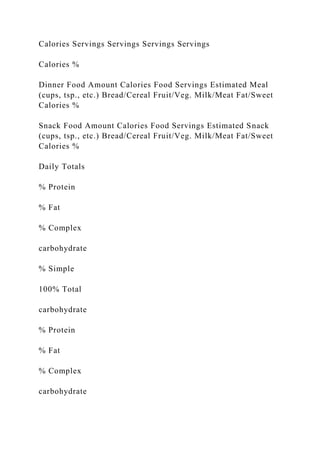
ize the recommended allocations in a typical meal. Fruits
and vegetables are emphasized in the MyPlate model
(representing half of the plate) because they are high
in nutrients and fiber and low in calories. The MyPlate
model also emphasizes healthy food choices in each
category. For example, they recommend low-fat dairy
choices (e.g., shifting to skim milk) and making half of
your grains “whole” (i.e., whole grains). Key principles
highlighted in the MyPlate model are summarized to the
left of Figure 1 . Like the pyramid, the MyPlate image is
widely promoted and displayed to help remind consum-
ers about the key principles of good nutrition. There are
a number of other resources available to help consumers
apply these principles and guidelines at the MyPlate web-
site ( www.choosemyplate.gov ).
National dietary guidelines provide suggestions
for healthy eating. The current version of the national
Dietary Guidelines for Americans emphasizes a “total diet”
approach, which is defined as the “combination of foods
and beverages that provide energy and nutrients, and con-
stitute an individual’s complete dietary intake, on average,
Figure 1 ▶ MyPlate presents a combination of nutrition
guidelines and healthy food choices.
Source: Adapted from the USDA 2010, www.choosemyplate.gov
• Build a healthy plate.
• Cut back on foods high in solid
fats.
• Cut back on foods high in sugars
and salt.
• Eat the right amount of calories
for you.
• Be physically active your way.
• Make half your plate fruits and
vegetables.
• Switch to skim or 1% milk.
• Make at least half of your grains
whole.
• Vary your protein food choices.
• Keep your food safe to eat.
KEY PRINCIPLES WHAT MAKES A HEALTHY PLATE?
cor22568_ch14_323-348.indd 324 8/24/12 4:01 PM
F
O
S
T
E
R
,
C
E
D
R
I
C
1
6
9
2
T
S
Concept 14 ▶ Nutrition 325
over time.” The information at the right of Figure 1
tells how to “build a plate” to meet the “total diet” goal.
The report further describes other key components of a
nutrient-dense total diet:
• Eat the right amount of calories for you. Effective weight
control requires balancing energy intake with energy
expenditure. The new guidelines encourage Americans
to achieve their recommended nutrient intakes by con-
suming foods within a total diet that meets, but does
not exceed, energy needs. This should be done using
personal information such as age, gender, current body
weight, and current physical activity levels. Studies
indicate that Americans underestimate the number of
calories they eat and only about 9 percent regularly
keep track of the calories in the foods they eat.
• Consume nutrient-dense foods. Americans consume less
than 20 percent of the recommended intakes for whole
grains, less than 60 percent for vegetables, less than 50
percent for fruits, and less than 60 percent for milk
and milk products. Consuming nutrient-dense foods
improves the overall quality of the diet. Examples of
nutrient-dense foods include vegetables, fruits, high-
fiber whole grains, fat-free or lowfat milk and milk
products, seafood, lean meat and poultry, eggs, soy
products, nuts, seeds, and oils.
• Reduce solid fats and added sugars (SoFAS). Evidence
indicates that solid fats and added sugars (SoFAS) con-
tribute about 35 percent of total calories, leading to
excessive intake of saturated fat and cholesterol and
insufficient intake of dietary fiber and other nutrients.
The guidelines recommend reducing consumption of
SoFAS as an important diet strategy.
• Reduce sodium intake. Excessive sodium in the diet can
increase blood pressure and lead to health problems.
• Be physically active your way. The USDA nutrition guide-
lines also emphasize the importance of daily physical
activity (60 minutes each day) in energy balance. Most
Americans overestimate the number of calories that
they expend in activity.
Specific Dietary Reference Intakes (DRI) provide a
target zone for healthy eating. About 45 to 50 nutri-
ents in food are believed to be essential for the body’s
growth, maintenance, and repair. These are classified into
six categories: carbohydrates (and fiber), fats, proteins,
vitamins, minerals, and water. The first three provide
energy, which is measured in calories. Specific dietary
recommendations for each of the six nutrients are pre-
sented later in this concept.
In the United States, guidelines specifying the nutri-
ent requirements for good health are developed by the
Food and Nutrition Board of the National Academy of
Science’s Institute of Medicine. Recommended Dietary
Allowance (RDA) historically was used to set recom-
mendations for nutrients, but the complexity of dietary
interactions prompted the board to develop a more
comprehensive and functional set of dietary intake rec-
ommendations. These broader guidelines, referred to as
Dietary Reference Intake (DRI), include RDA values
when adequate scientific information is available and esti-
mated Adequate Intake (AI) values when sufficient data
aren’t available to establish a firm RDA. The DRI values
also include Tolerable Upper Intake Level (UL) , which
reflects the highest level of daily intake a person can
consume without adverse effects on health (see Table 1 ).
The guidelines make it clear that although too little of a
nutrient can be harmful to health, so can too much. The
distinctions are similar to the concept of the target zone
used to prescribe exercise levels. The Recommended
Dietary Allowance (RDA) or Adequate Intake (AI) values
are analogous to the threshold levels (minimal amount
needed to meet guidelines), while the Upper Limit values
represent amounts that should not be exceeded.
A unique aspect of the DRI values is that they are cat-
egorized by function and classification in order to facili-
tate awareness of the different roles that nutrients play
in the diet. Specific guidelines have been developed for
B-complex vitamins; vitamins C and E; bone-building
nutrients, such as calcium and vitamin D; micronutrients,
such as iron and zinc; and the class of macronutrients that
includes carbohydrates, fats, proteins, and fiber. Table 1
includes the DRI values (including the UL values) for
most of these nutrients.
Nutrition recommendations are flexible, but also
highly individualized. A unique aspect of the nutrition
guidelines is that they highlight a variety of dietary pat-
terns. The established DASH-style and Mediterranean-
style dietary patterns were cited as examples of healthy
diets because they have been well-supported in the sci-
entific literature. The guidelines also referenced tra-
ditional Asian dietary patterns and vegetarian diets as
Recommended Dietary Allowance (RDA) Dietary
guideline that specifies the amount of a nutrient
needed for almost all of the healthy individuals in a
specific age and gender group.
Dietary Reference Intake (DRI) Appropriate
amounts of nutrients in the diet (AI, RDA, and UL).
Adequate Intake (AI) Dietary guideline established
experimentally to estimate nutrient needs when suffi-
cient data are not available to establish an RDA value.
Tolerable Upper Intake Level (UL) Maximum
level of a daily nutrient that will not pose a risk of
adverse health effects for most people.
cor22568_ch14_323-348.indd 325 10/09/12 7:42 PM
F
O
S
T
E
R
,
C
E
D
R
I
C
1
6
9
2
T
S
326 Section 5 ▶ Nutrition and Body Composition
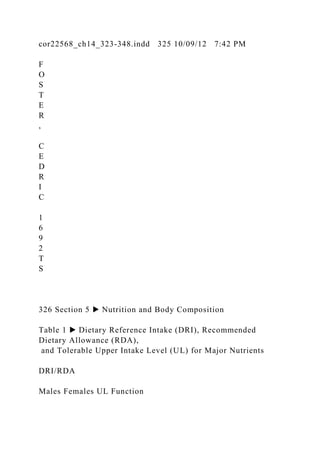
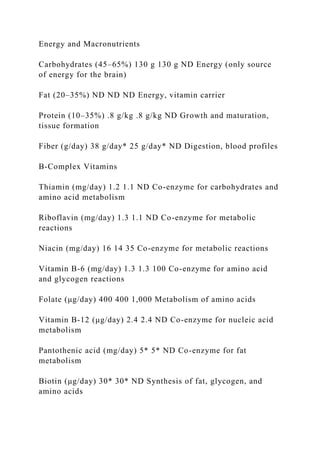
Table 1 ▶ Dietary Reference Intake (DRI), Recommended
Dietary Allowance (RDA),
and Tolerable Upper Intake Level (UL) for Major Nutrients
DRI/RDA
Males Females UL Function
Energy and Macronutrients
Carbohydrates (45–65%) 130 g 130 g ND Energy (only source
of energy for the brain)
Fat (20–35%) ND ND ND Energy, vitamin carrier
Protein (10–35%) .8 g/kg .8 g/kg ND Growth and maturation,
tissue formation
Fiber (g/day) 38 g/day* 25 g/day* ND Digestion, blood profiles
B-Complex Vitamins
Thiamin (mg/day) 1.2 1.1 ND Co-enzyme for carbohydrates and
amino acid metabolism
Riboflavin (mg/day) 1.3 1.1 ND Co-enzyme for metabolic
reactions
Niacin (mg/day) 16 14 35 Co-enzyme for metabolic reactions
Vitamin B-6 (mg/day) 1.3 1.3 100 Co-enzyme for amino acid
and glycogen reactions
Folate (μg/day) 400 400 1,000 Metabolism of amino acids
Vitamin B-12 (μg/day) 2.4 2.4 ND Co-enzyme for nucleic acid
metabolism
Pantothenic acid (mg/day) 5* 5* ND Co-enzyme for fat
metabolism
Biotin (μg/day) 30* 30* ND Synthesis of fat, glycogen, and
amino acids
Choline (mg/day) 550* 425* 3,500 Precursor to acetylcholine
Antioxidants and Related
Nutrients
Vitamin C (mg/day) 90 75 2,000 Co-factor for reactions,
antioxidant
Vitamin E (mg/day) 15 15 1,000 Undetermined, mainly
antioxidant
Selenium (μg/day) 55 55 400 Defense against oxidative stress
Bone-Building Nutrients
Calcium (mg/day) 1,000* 1,000* 2,500 Muscle contraction,
nerve transmission
Phosphorus (mg/day) 700 700 3,000 Maintenance of pH, storage
of energy
Magnesium (mg/day) 400–420 310–320 350 Co-factor for
enzyme reactions
Vitamin D (μg/day) 5* 5* 50 Maintenance of calcium and
phosphorus levels
Fluoride (mg/day) 4* 3* 10 Stimulation of new bone formation
Micronutrients and Other
Trace Elements
Vitamin K (μg/day) 120* 90* ND Blood clotting and bone
metabolism
Vitamin A (μg/day) 900 700 3,000 Vision, immune function
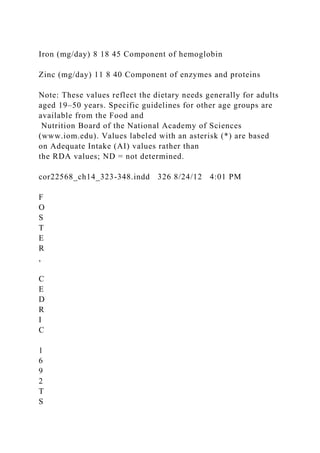
Iron (mg/day) 8 18 45 Component of hemoglobin
Zinc (mg/day) 11 8 40 Component of enzymes and proteins
Note: These values reflect the dietary needs generally for adults
aged 19–50 years. Specific guidelines for other age groups are
available from the Food and
Nutrition Board of the National Academy of Sciences
(www.iom.edu). Values labeled with an asterisk (*) are based
on Adequate Intake (AI) values rather than
the RDA values; ND = not determined.
cor22568_ch14_323-348.indd 326 8/24/12 4:01 PM
F
O
S
T
E
R
,
C
E
D
R
I
C
1
6
9
2
T
S
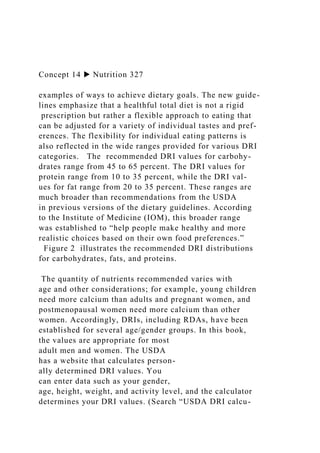
Concept 14 ▶ Nutrition 327
examples of ways to achieve dietary goals. The new guide-
lines emphasize that a healthful total diet is not a rigid
prescription but rather a flexible approach to eating that
can be adjusted for a variety of individual tastes and pref-
erences. The flexibility for individual eating patterns is
also reflected in the wide ranges provided for various DRI
categories. The recommended DRI values for carbohy-
drates range from 45 to 65 percent. The DRI values for
protein range from 10 to 35 percent, while the DRI val-
ues for fat range from 20 to 35 percent. These ranges are
much broader than recommendations from the USDA
in previous versions of the dietary guidelines. According
to the Institute of Medicine (IOM), this broader range
was established to “help people make healthy and more
realistic choices based on their own food preferences.”
Figure 2 illustrates the recommended DRI distributions
for carbohydrates, fats, and proteins.
The quantity of nutrients recommended varies with
age and other considerations; for example, young children
need more calcium than adults and pregnant women, and
postmenopausal women need more calcium than other
women. Accordingly, DRIs, including RDAs, have been
established for several age/gender groups. In this book,
the values are appropriate for most
adult men and women. The USDA
has a website that calculates person-
ally determined DRI values. You
can enter data such as your gender,
age, height, weight, and activity level, and the calculator
determines your DRI values. (Search “USDA DRI calcu-
lator” on the Internet.)
Dietary Recommendations
for Carbohydrates
Complex carbohydrates should be the principal
source of calories in the diet. Carbohydrates have
gotten a bad rap in recent years due to the hype associated
with low-carbohydrate diets. Carbohydrates have been
unfairly implicated as a cause of obesity. The suggestion
that they cause insulin to be released and that insulin, in
turn, causes the body to take up and store excess energy
as fat is overly simplistic and doesn’t take into account
differences in types of carbohydrates. Simple sugars (such
as sucrose, glucose, and fructose) found in candy and soda
lead to quick increases in blood sugar and tend to pro-
mote fat deposition. Complex carbohydrates (e.g., bread,
pasta, rice), on the other hand, are broken down more
slowly and do not cause the same effect on blood sugar.
They contribute valuable nutrients and fiber in the diet
and should constitute the bulk of a person’s diet. Lump-
ing simple and complex carbohydrates together is not
appropriate, since they are processed differently and have
different nutrient values.
A number of low-carb diet books have used an index
known as the glycemic index (GI) as the basis for deter-
mining if foods are appropriate in the diet. Foods with
a high GI value produce rapid increases in blood sugar,
while foods with a low GI value produce slower increases.
While this seems to be a logical way to categorize carbo-
hydrates, it is misleading, since it doesn’t account for the
amount of carbohydrates in different servings of a food.
A more appropriate indicator of the effect of foods on
blood sugar levels is called the glycemic load. Carrots,
for example, are known to have a very high GI value, but
the overall glycemic load is quite low. The carbohydrates
from most fruits and vegetables exhibit similar properties.
Despite the intuitive and logical appeal of this classifica-
tion system, neither the glycemic index nor glycemic load
have been consistently associated with body weight. Evi-
dence also indicates no difference on weight loss between
high glycemic index and low glycemic index diets. There
is some evidence linking glycemic load to a higher risk for
diabetes but no associations with cancer risk.
Additional research is needed, but excess sugar con-
sumption appears to be problematic only if caloric
intake is larger than caloric expenditure. Carbohydrates
are the body’s preferred form of energy for physical
activity, and the body is well equipped for processing
extra carbohydrates. Athletes and other active individu-
als typically have no difficulty burning off extra energy
from carbohydrates. Sugar consumption, among people
with an adequate diet, is also not associated with major
chronic diseases.
Reducing dietary sugar can help reduce risk of
obesity and heart disease. Although sugar consump-
tion has not been viewed as harmful, people who con-
sume high amounts of sugar also tend to consume excess
calories. The new dietary guidelines clearly recommend
decreasing consumption of added sugars to reduce risk of
excess calorie consumption and weight gain. The Amer-
ican Heart Association also endorsed this position in a Figure
2 ▶ Dietary Reference Intake values.
Protein
10–35%
Carbohydrate
45–65%Fat 20–35%
No more than 10%
saturated fat
VIDEO 1
cor22568_ch14_323-348.indd 327 8/24/12 4:01 PM
F
O
S
T
E
R
,
C
E
D
R
I
C
1
6
9
2
T
S
328 Section 5 ▶ Nutrition and Body Composition
scientific statement entitled “Dietary Sugars Intake and
Cardiovascular Health.”
The document notes that excessive consumption of
sugars (sugars added to foods and drinks) contributes
to overconsumption of discretionary calories. Among
Americans, the current average daily sugars consumption
is 355 calories per day (22.2 teaspoons) as opposed to 279
calories in 1970. Soft drinks and sugar-sweetened bever-
ages are the primary sources of added sugars in the Amer-
ican diet. The AHA’s scientific statement recommends no
more than 100 calories of added sugars for most women
and not more than 150 calories for most men. A typi-
cal 12-ounce sweetened soft drink contains 150 calories,
mostly sugar. Reducing consumption of sugar-sweetened
beverages is a simple, but important, diet modification.
Increasing consumption of dietary fiber is important
for overall good nutrition and health. Diets high in
complex carbohydrates and fiber are associated with a
low incidence of coronary heart disease, stroke, and some
forms of cancer. Long-term studies indicate that high-
fiber diets may also be associated with a lower risk for
diabetes mellitus, diverticulosis, hypertension, and gall-
stone formation. It is not known whether these health
benefits are directly attributable to high dietary fiber or
other effects associated with the ingestion of vegetables,
fruits, and cereals.
A position statement from the American Dietetics
Association summarizes the health benefits and impor-
tance of fiber in a healthy diet. It indicates that high-fiber
diets provide bulk, are more satiating, and are linked to
lower body weights. It also points out that a fiber-rich
diet often has a lower fat content, is larger in volume, and
is richer in micronutrients, all of which have beneficial
health effects. Evidence for health benefits has become
strong enough that the FDA has stated that specific bene-
ficial health claims can be made for specific dietary fibers.
The National Cholesterol Education Program also rec-
ommends dietary fiber as part of overall strategies for
treating high cholesterol in adults.
In the past, clear distinctions were made between sol-
uble fiber and insoluble fiber because they appeared to
provide separate effects. Soluble fiber (typically found in
fruits and oat bran) was more frequently associated with
improving blood lipid profiles, while insoluble fiber (typi-
cally found in grains) was mainly thought to help speed up
digestion and reduce risks for colon and rectal cancer. Dif-
ficulties in measuring these compounds in typical mixed
diets led a National Academy of Sciences panel to recom-
mend eliminating distinctions between soluble and insol-
uble fibers and instead to use a broader definition of fiber.
Currently, few Americans consume the recommended
amounts of dietary fiber. The average intake of dietary
fiber is about 15 g/day, which is much lower than the rec-
ommended 25 to 35 g/day. Foods in the typical American
diet contain little, if any, dietary fiber, and servings of
commonly consumed grains, fruits, and vegetables con-
tain only 1 to 3 g of dietary fiber. Therefore, individuals
have to look for ways to ensure that they get sufficient
fiber in their diet. Manufacturers are allowed to declare
a food as a “good source of fiber” if it contains 10 per-
cent of the recommended amount (2.5 g/serving) and
an “excellent source of fiber” if it contains 20 percent of
the recommended amount (5 g/serving). Because fiber
has known health benefits, the new dietary guidelines
encourage consumers to select foods high in dietary fiber,
such as whole-grain breads and cereals, legumes, vegeta-
bles, and fruit, whenever possible.
Fruits and vegetables are essential for good health.
Fruits and vegetables are a valuable source of dietary
fiber, are packed with vitamins and minerals, and con-
tain many additional phytochemicals, which may have
beneficial effects on health. The International Agency
of Research on Cancer (IARC), an affiliate of the World
Health Organization, did a comprehensive review on the
links between dietary intake of fruits and vegetables and
cancer. It concluded that both human studies and animal
experimental studies “indicate that a higher intake of
fruits and vegetables is associated with a lower risk of var-
ious types of cancer.” The clearest evidence of a cancer-
protective effect from eating more fruits is for stomach,
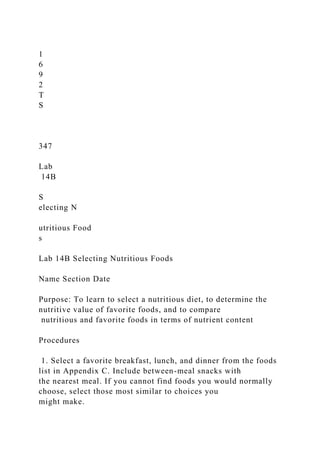
Plan ahead for healthy, low-fat snacks when on the run.
cor22568_ch14_323-348.indd 328 8/24/12 4:01 PM
F
O
S
T
E
R
,
C
E
D
R
I
C
1
6
9
2
T
S
Concept 14 ▶ Nutrition 329
lung, and esophageal cancers. A higher intake of vegeta-
bles is also associated with reduced risks for cancers of the
esophagus and colon-rectum. This evidence—plus the
evidence of the beneficial effects of fruits and vegetables
on other major diseases, such as heart disease—indicates
that individuals should strive to increase their intake of
these foods. Reports from the 2010 Dietary Guidelines
Advisory Committee indicate that beneficial effects on
health appear to be linked to a minimum of five servings
of fruits and vegetables per day. Additional benefits were
noted at even higher consumption levels. These findings
contributed to the increased emphasis being placed on a
plant-based diet in the new dietary guidelines.
Follow the recommendations to assure healthy
amounts of carbohydrates in the diet. The following
list summarizes key strategies to achieve dietary guide-
lines for carbohydrate content in the diet:
• Consume a variety of fiber-rich fruits and vegetables.
• Select whole-grain foods when possible.
• Choose and prepare foods and
beverages with little added sugars
or caloric sweeteners.
Dietary Recommendations
for Fat
Fat is an essential nutrient and an important energy
source. Humans need some fat in their diet because fats
are carriers of vitamins A, D, E, and K. They are a source
of essential linoleic acid, they make food taste better, and
they provide a concentrated form of calories, which serve
as a vital source of energy during moderate to vigorous
exercise. Fats have more than twice the calories per gram
as carbohydrates.
There are several types of dietary fat. Saturated fats
come primarily from animal sources, such as red meat,
dairy products, and eggs, but they are also found in some
vegetable sources, such as coconut and palm oils. There
are two basic types of unsaturated fats: polyunsaturated
and monounsaturated. Polyunsaturated fats are derived
principally from vegetable sources, such as safflower, cot-
tonseed, soybean, sunflower, and corn oils (omega-6 fats),
and cold-water fish sources, such as salmon and mack-
erel (omega-3 fats). Monounsaturated fats are derived
primarily from vegetable sources, including olive, peanut,
and canola oil.
Saturated fat is associated with an increased risk
for disease, but polyunsaturated and monounsatu-
rated fats can be beneficial. Excessive total fat in the
diet (particularly saturated fat) is associated with athero-
sclerotic cardiovascular diseases and breast, prostate, and
colon cancer, as well as obesity. Excess saturated fat in the
diet contributes to increased cholesterol and increased
low-density lipoprotein (LDL) cholesterol in the blood.
For this reason, no more than 10 percent of your total
calories should come from saturated fats.
Unsaturated fats are generally considered to be less
likely to contribute to cardiovascular disease, cancer,
and obesity than saturated fats. Polyunsaturated fats can
Being an informed and educated consumer can help you make
healthier food choices.
Fiber Indigestible bulk in foods that can be either
soluble or insoluble in body fluids.
Saturated Fats Dietary fats that are usually solid at
room temperature and come primarily from animal
sources.
Unsaturated Fats Monounsaturated or polyunsat-
urated fats that are usually liquid at room tempera-
ture and come primarily from vegetable sources.
VIDEO 2
cor22568_ch14_323-348.indd 329 8/24/12 4:01 PM
F
O
S
T
E
R
,
C
E
D
R
I
C
1
6
9
2
T
S
330 Section 5 ▶ Nutrition and Body Composition
reduce total cholesterol and LDL cholesterol, but they
also decrease levels of high-density lipoprotein (HDL)
cholesterol. Omega-3 fatty acids (a special type of poly-
unsaturated fat found in cold-water fish) have received a
lot of attention due to their potential benefits in reduc-
ing the risk of cardiovascular disease. A plant source of
omega-3 fatty acids (alpha-linolenic acid) found in wal-
nuts, flaxseed, and canola oil may have similar benefits.
Monounsaturated fats have been shown to decrease
total cholesterol and LDL cholesterol without an accom-
panying decrease in the desirable HDL cholesterol. Past
dietary guidelines recommended a diet low in saturated
fat and cholesterol but moderate in total fat, making it
clear that excess saturated fat is the main concern and
that some fat is necessary in the diet. Fat should account
for 20 to 35 percent of calories in the diet, with no more
than 10 percent of total calories from saturated fat. The
remaining fat should come from plant-based sources,
especially monounsaturated fats.
Trans fats and hydrogenated vegetable oils should
be minimized in the diet. For decades, the public has
been cautioned to avoid saturated fats and foods with
excessive cholesterol. Many people switched from using
butter to margarine because margarine is made from veg-
etable oils that are unsaturated and contain no choles-
terol. The hydrogenation process used to convert oils into
solids, however, is known to produce trans fats, which
are just as harmful as saturated fats, if not more so. Trans
fats are known to cause increases in LDL cholesterol and
have been shown to contribute to the buildup of athero-
sclerotic plaque. Because of these effects, it is important
to try to minimize consumption of trans fats in your diet.
The FDA requires trans fat content to be listed on
the nutrition facts labels so that consumers can be more
aware of foods high in this fat. The requirement to post
trans fat content on food labels has prompted companies
to look for ways to remove excess trans fats from prod-
ucts. Lay’s uses cottonseed oil instead of sunflower oil to
help eliminate trans fats from Fritos, Tostitos, and Chee-
tos. A number of margarines are also available with little
or no trans fat (e.g., Smart Balance). These changes and
the increased awareness about trans fat appear to have
had a positive effect. The CDC reports that levels of trans
fat have declined in the population by over 58 percent.
These findings provide an effective example of how food
policy (e.g., labeling) has prompted positive changes in

food quality and food access. The Dietary Guidelines
continue to recommend that consumers keep trans fat
consumption as low as possible by limiting solid fats and
foods that contain synthetic sources of trans fats. Foods
that have trace amounts of trans fat (i.e., those containing
less than .5 g of trans fat per serving) may still be listed as
having no trans fat. Therefore, you should also look for
foods that contain little or no hydrogenated vegetable oil.
Fat substitutes and neutraceuticals in food
products may reduce fat consumption and lower
cholesterol. Olestra is a synthetic fat substitute that
passes through the gastrointestinal system without being
digested. Thus, foods prepared with Olestra have fewer
calories. For example, a chocolate chip cookie prepared
in a normal way would have 138 calories, but an Olestra
cookie would have 63. Some consumer groups warn that
the promotion of Olestra-containing products may make
individuals more likely to snack on less energy-dense
snack foods. They also express concern that Olestra
inhibits absorption of many naturally occurring anti-
oxidants that have been shown to have many beneficial
effects on health. Early warnings were required on the
product because of fear that it caused gastric problems.
These warnings were removed by the FDA soon after
Olestra was introduced.
Several other new products offer potential to modify
the amount and effect of dietary fat in our diets. The
first is a naturally occurring compound included in sev-
eral margarines (Benecol and Take Control). The active
ingredient in this compound (sitostanol ester) comes
from pine trees and has been shown to reduce total
and LDL cholesterol in the blood. Several clinical tri-
als have confirmed that these margarines are both safe
and effective in lowering cholesterol levels. The products
must be used regularly to be effective and may be useful
only in individuals who have high levels of cholesterol.
Food products that contain these medically beneficial
compounds are often referred to as neutraceuticals, or
functional foods, because they are a combination of phar-
maceuticals and food.
Follow the recommendations to assure healthy
amounts of fat in the diet. The 2010 Dietary Guide-
lines Advisory Committee emphasized that significant
health benefits can be achieved by making several changes
in consumption of dietary fats and cholesterol.
• Limit saturated fatty acid intake to less than 10 percent
of total calories, with continued gradual reductions
down to 7 percent. Substitute food sources of mono-
or polyunsaturated fatty acids.
• Limit dietary cholesterol to less than 300 mg per day
(200 mg per day for persons with or at high risk for
cardiovascular disease or Type II diabetes).
• Avoid trans fatty acids from processed foods (except
the small amounts that occur naturally from ruminant
sources in animals).
• Limit cholesterol-raising fats (saturated fats exclusive
of stearic acid and trans fatty acids) to less than 5 to 7
percent of energy.
• Consume two servings of sea-
food per week to provide healthy VIDEO 3
cor22568_ch14_323-348.indd 330 8/24/12 4:01 PM
F
O
S
T
E
R
,
C
E
D
R
I
C
1
6
9
2
T
S
Concept 14 ▶ Nutrition 331
amounts of omega-3 fatty acids from marine sources
(e.g., docosahexaenoic acid [DHA] and eicosapentae-
noic acid [EPA]).
Dietary Recommendations
for Proteins
Protein is the basic building block for the body,
but dietary protein constitutes a relatively small
amount of daily caloric intake. Proteins are often
referred to as the building blocks of the body because all
body cells are made of protein. More than 100 proteins
are formed from 20 different amino acids. Eleven of
these amino acids can be synthesized from other nutri-
ents, but 9 essential amino acids must be obtained
directly from the diet. One way to identify amino acids is
the -ine at the end of their name. For example, arginine
and lysine are two of the amino acids. Only 3 of the 20
amino acids do not have the -ine suffix. They are aspartic
acid, glutamic acid, and tryptophan.
Certain foods, called complete proteins, contain all of
the essential amino acids, along with most of the others.
Examples are meat, dairy products, and fish. Incomplete
proteins contain some, but not all, of the essential amino
acids. Examples include beans, nuts, and rice.
Protein should account for at least 10 percent of daily
calorie consumption, which can be met easily with com-
plete (animal) or incomplete (vegetable) sources of pro-
tein. A person consuming a typical 2,000-calorie diet
should consume approximately 200 calories from protein.
Protein provides 4 calories per gram, so minimum daily
protein needs are as low as 50 grams per day. Figure 3
shows the relative protein content of various foods.
To provide more flexibility, dietary guidelines indicate
that protein can account for as much as 35 percent of
calorie intake. Experts, however, agree that there are no
known benefits and some possible risks associated with
consuming excess protein, particularly animal protein.
High-protein diets are damaging to the kidneys, as the
body must process a lot of extra nitrogen. Excessive pro-
tein intake can also lead to urinary calcium loss, which
can weaken bones and lead to osteoporosis.
People who eat a variety of foods, including meat,
dairy, eggs, and plants rich in protein, virtually always
consume more protein than the body needs. Because of
the negative consequences associated with excess intake,
dietary supplements containing extra protein are not rec-
ommended for the general population.
Vegetarian diets provide sufficient protein and may
offer health benefits. Vegetarian diets provide ample
sources of protein as long as a variety of protein-rich
food sources are included in the diet. According to the
American Dietetics Association, well-planned vegetar-
ian diets “are appropriate for all stages of the life cycle,
including during pregnancy, and lactation,” and can “sat-
isfy the nutrient needs of infants, children, and adoles-
cents.” You can get enough protein as long as the variety
and amounts of foods consumed are adequate. Vegans
must supplement the diet with vitamin B-12 because the
only source of this vitamin is food from animal sources.
Lacto-ovo vegetarians do not have the same concerns
because vitamin B-12 can be obtained in dairy products.
There is an increased recognition of the importance of
whole grains, fruits, and vegetables in the diet, but vege-
tarian diets based primarily on plants are still uncommon.
A Harris poll estimates that approximately 3 percent of
Americans are vegetarian (.5 percent vegan). However,
an additional 10 percent of the population indicates they
Figure 3 ▶ Protein content of various foods.
Source: Williams, M.
1 glass milk = 8 grams
1 ounce chicken breast = 7 grams
1 slice bread = 3 grams
1–2
1–2
cup vegetables = 2 grams
cup navy beans = 7 grams
Trans Fats Fats that result when hydrogen is added
to liquid oil to make it more solid. Hydrogenation
transforms unsaturated fats so that they take on the
characteristics of saturated fats, as is the case for mar-
garine and shortening.
Amino Acids The 20 basic building blocks of the
body that make up proteins.
Essential Amino Acids The nine basic amino acids
that the human body cannot produce and that must
be obtained from food sources.
Vegans Strict vegetarians, who exclude not only all
forms of meat from the diet but also dairy products
and eggs.
Lacto-Ovo Vegetarians Vegetarians who include
dairy and eggs in the diet.
cor22568_ch14_323-348.indd 331 8/24/12 4:01 PM
F
O
S
T
E
R
,
C
E
D
R
I
C
1
6
9
2
T
S
332 Section 5 ▶ Nutrition and Body Composition
follow a vegetarian-inclined diet. Research has widely
supported the health benefits associated with vegetarian
diets and trends suggest that it is growing in popularity.
An increasing array of soy foods are available to
provide alternative sources of protein. Soybeans
and soy-based foods are a high-quality source of protein.
They may also have beneficial effects on blood pressure
and cholesterol levels, possibly contributing to reduc-
tions in risk for coronary heart disease. Soy-based foods
contain compounds called isoflavones, a phytoestrogen
that contributes to bone health, immune function, and
maintenance of menopausal health in women. A variety
of soy-based food products are commercially available as
alternatives to traditional meat foods. Common options
include tofu, tempeh, soy milk, or textured vegetable
(soy) protein. Grocery stores carry a variety of other
meatless products based on soy (e.g., veggie burgers). Soy
foods that contain at least 6.25 grams per serving can be
labeled with FDA-approved health claims.
Follow the recommendations to assure healthy
amounts of protein in the diet. The following list sum-
marizes some key dietary recommendations for protein:
• Of the three major nutrients that provide energy,
protein should account for the smallest percentage of
total calories consumed (10 to 35 percent).
• Protein in the diet should meet the RDA of 0.8 gram
per kilogram (2.2 pounds) of a person’s weight (about
54 grams for a 150-pound person).
• People on low-calorie diets need to consume a higher
percentage of protein in the diet. In contrast, people
consuming a lot of calories need a lower percentage.
• Vegetarians must eat a combination of foods to assure
an adequate intake of essential amino acids. Vegans
should supplement their diet with vitamin B-12.
• Excess protein can be harmful to the kidneys. Protein
in the diet should not exceed twice the RDA (1.6 grams
per kilogram of body weight).
• Dietary supplements of protein, such as tablets and
powders, are not recommended.
Dietary Recommendations
for Vitamins
Adequate vitamin intake is necessary for good
health and wellness, but excessive vitamin intake
is not necessary and can be harmful. Vitamins serve
a variety of functions within the body. For example,
they serve as co-enzymes for metabolism of different
nutrients, contribute to the regulation of energy stores,
and assist in immune function. Some vitamins (e.g.,
B-complex vitamins and vitamin C) are water soluble
and are excreted in urine. These vitamins must be con-
sumed on a daily basis. Other vitamins, such as A, D, E,
and K, are fat soluble. These vitamins are stored over
time, so daily doses of these vitamins are not necessary.
Excess consumption of fat-soluble vitamins can actually
build to toxic levels and harm cell function and health.
The specific DRI values (minimal amounts) for some
of the more important vitamins are shown in Table 1 ,
along with the Tolerable Upper Intake Levels (maximum
amounts).
Some vitamins act as antioxidants, but health
benefits may depend on other compounds in foods.
Carotenoid-rich foods, such as carrots and sweet potatoes,
contain high amounts of vitamin A and high amounts of
beta-carotene. Diets high in vitamin C (e.g., citrus fruits)
and vitamin E (e.g., green leafy vegetables) are also asso-
ciated with reduced risk of cancer. Vitamin E has also
been associated with reduced risk of heart disease.
Vitamins A, C, and E (as well as beta-carotene) act as
antioxidants within the body. Antioxidants are substances
that are thought to inactivate free radicals (molecules
Fruits and vegetables contain vitamins as well as health-
promoting
phytochemicals.
cor22568_ch14_323-348.indd 332 8/24/12 4:01 PM
F
O
S
T
E
R
,
C
E
D
R
I
C
1
6
9
2
T
S
Concept 14 ▶ Nutrition 333
that can cause cell damage and health problems). For
this reason, health benefits have been attributed to anti-
oxidant properties. However, several large-scale studies
have shown no benefit (and possible risks) from taking
beta-carotene supplements. Another study of over 20,000
people failed to find health benefits associated with con-
sumption of a daily mixture of vitamin E, vitamin C, and
beta-carotene. These results were difficult for scientists
to interpret, but it is now known that there may be other
beneficial substances in foods that contribute health
benefits.
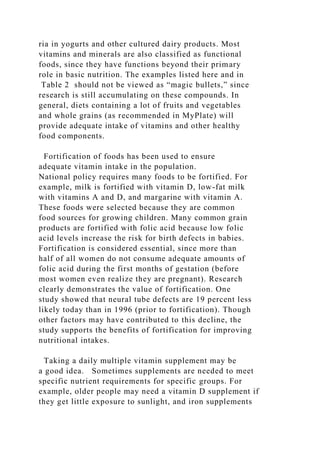
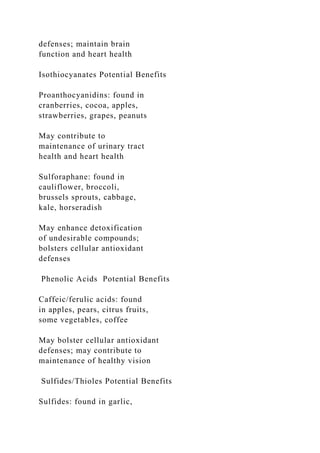
As mentioned earlier, the designation of “ functional
foods” has been coined to refer to foods or dietary com-
ponents that may provide a health benefit beyond basic
nutrition. Fruits and vegetables, for example, are loaded
with a variety of powerful phytochemicals that have been
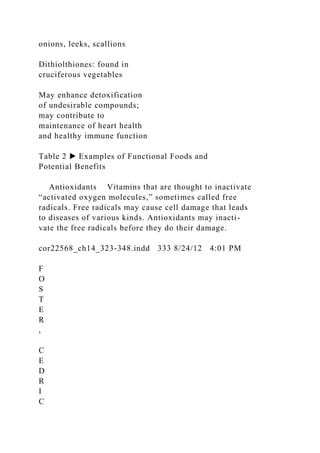
shown to have potential health benefits (see Table 2 ). The
relative importance to health of each compound is diffi-
cult to determine because the compounds may act syner-
gistically with each other (and with antioxidant vitamins)
to promote positive outcomes.
Other examples of functional foods include the ben-
eficial types of fiber and beta glucan in whole grains,
the isoflavones in soy products, the omega-3 fatty acids
in cold-water fish, and the probiotic yeasts and bacte-
ria in yogurts and other cultured dairy products. Most
vitamins and minerals are also classified as functional
foods, since they have functions beyond their primary
role in basic nutrition. The examples listed here and in
Table 2 should not be viewed as “magic bullets,” since
research is still accumulating on these compounds. In
general, diets containing a lot of fruits and vegetables
and whole grains (as recommended in MyPlate) will
provide adequate intake of vitamins and other healthy
food components.
Fortification of foods has been used to ensure
adequate vitamin intake in the population.
National policy requires many foods to be fortified. For
example, milk is fortified with vitamin D, low-fat milk
with vitamins A and D, and margarine with vitamin A.
These foods were selected because they are common
food sources for growing children. Many common grain
products are fortified with folic acid because low folic
acid levels increase the risk for birth defects in babies.
Fortification is considered essential, since more than
half of all women do not consume adequate amounts of
folic acid during the first months of gestation (before
most women even realize they are pregnant). Research
clearly demonstrates the value of fortification. One
study showed that neural tube defects are 19 percent less
likely today than in 1996 (prior to fortification). Though
other factors may have contributed to this decline, the
study supports the benefits of fortification for improving
nutritional intakes.
Taking a daily multiple vitamin supplement may be
a good idea. Sometimes supplements are needed to meet
specific nutrient requirements for specific groups. For
example, older people may need a vitamin D supplement if
they get little exposure to sunlight, and iron supplements
Carotenoids Potential Benefits
Beta-carotene: found in
carrots, pumpkin, sweet
potato, cantaloupe
May bolster cellular
antioxidant defenses
Lutein, zeaxanthin: found in
kale, collards, spinach, corn,
eggs, citrus
May contribute to healthy
vision
Lycopene: Found in
tomatoes, watermelon,
red/pink grapefruit
May contribute to prostate
health
Flavonoids Potential Benefits
Anthocyanins: found in
berries, cherries, red grapes
Flavanones: found in citrus
foods
Flavonols: found in onions,
apples, tea, broccoli
May bolster antioxidant
defenses; maintain brain
function and heart health
Isothiocyanates Potential Benefits
Proanthocyanidins: found in
cranberries, cocoa, apples,
strawberries, grapes, peanuts
May contribute to
maintenance of urinary tract
health and heart health
Sulforaphane: found in
cauliflower, broccoli,
brussels sprouts, cabbage,
kale, horseradish
May enhance detoxification
of undesirable compounds;
bolsters cellular antioxidant
defenses
Phenolic Acids Potential Benefits
Caffeic/ferulic acids: found
in apples, pears, citrus fruits,
some vegetables, coffee
May bolster cellular antioxidant
defenses; may contribute to
maintenance of healthy vision
Sulfides/Thioles Potential Benefits
Sulfides: found in garlic,
onions, leeks, scallions
Dithiolthiones: found in
cruciferous vegetables
May enhance detoxification
of undesirable compounds;
may contribute to
maintenance of heart health
and healthy immune function
Table 2 ▶ Examples of Functional Foods and
Potential Benefits
Antioxidants Vitamins that are thought to inactivate
“activated oxygen molecules,” sometimes called free
radicals. Free radicals may cause cell damage that leads
to diseases of various kinds. Antioxidants may inacti-
vate the free radicals before they do their damage.
cor22568_ch14_323-348.indd 333 8/24/12 4:01 PM
F
O
S
T
E
R
,
C
E
D
R
I
C
1
6
9
2
T
S
334 Section 5 ▶ Nutrition and Body Composition
are often recommended for pregnant women. Vitamin
supplements at or below the RDA are considered safe;
however, excess doses of vitamins can cause health prob-
lems. For example, excessively high amounts of vitamin C
are dangerous for the 10 percent of the population who
inherit a gene related to health problems. Excessively
high amounts of vitamin D are toxic, and mothers who
take too much vitamin A risk birth defects in unborn
children.
In the past some medical groups recommended a daily
multivitamin to insure adequate daily intake. However,
national dietary guidelines specifically note that “For
the general, healthy population, there is no evidence to
support a recommendation for the use of multivitamin/
mineral supplements in the primary prevention of chronic
disease.” In spite of this recommendation, some people
may choose to take a multivitamin/mineral supplement.
(Guidelines are presented in Table 3 .)
Follow the recommendations to assure healthy
amounts of vitamins in the diet. Vitamins in the
amounts equal to the RDAs should be included in the diet
each day. The following guidelines will help you imple-
ment this recommendation:
• Eat a diet containing the recommended servings for
carbohydrates, proteins, and fats.
• Consume extra servings of green and yellow vegeta-
bles, citrus and other fruits, and other nonanimal food
sources high in fiber, vitamins, and minerals.
• People with special needs should seek medical advice
before selecting supplements and should inform medi-
cal personnel as to the amounts and content of all sup-
plements (vitamin and other).
Dietary Recommendations
for Minerals
Adequate mineral intake is necessary for good
health and wellness, but excessive mineral intake
is not necessary and can be harmful. Like vitamins,
minerals have no calories and provide no energy for the
body. They are important in regulating various bodily
functions. Two particularly important minerals are cal-
cium and iron. Calcium is important to bone, muscle,
nerve, and blood development and function and has been
associated with reduced risk for heart disease. Iron is
necessary for the blood to carry adequate oxygen. Other
important minerals are phosphorus, which builds teeth
and bones; sodium, which regulates water in the body;
zinc, which aids in the healing process; and potassium,
which is necessary for proper muscle function.
RDAs are established to determine the amounts of
each mineral necessary for healthy daily functioning. A
sound diet provides all of the RDA for minerals. Evi-
dence indicating that some segments of the population
may be mineral-deficient has led to the establishment of
health goals identifying a need to increase mineral intake
for some people.
A National Institutes of Health (NIH) consensus
statement indicates that a large percentage of Americans
fail to get enough calcium in their diet and emphasizes
the need for increased calcium—particularly for pregnant
women, postmenopausal women, and people over 65,
who need 1,500 mg/day, which is higher than previous
RDA amounts. The NIH has indicated that a total intake
of 2,000 mg/day of calcium is safe and that adequate
vitamin D in the diet is necessary for optimal calcium
absorption to take place. Though getting these amounts
in a calcium-rich diet is best, calcium supplementation
for those not eating properly seems wise. Many multivi-
tamins do not contain enough calcium for some classes of
people, so some may want to consider additional calcium.
Check with your physician or a dietitian before you con-
sider a supplement because individual needs vary.
Another concern is iron deficiency among very young
children and women of childbearing age. Low iron levels
may be a special problem for women taking birth con-
trol pills because the combination of low iron levels and
birth control pills has been associated with depression
and generalized fatigue. Eating the appropriate number
of servings recommended in MyPlate provides all the
minerals necessary for meeting the RDA for minerals.
• Limit the use of supplements unless warranted because of a
health problem or a specific lack of nutrients in the diet.
• If you decide supplementation is necessary, select a
multivitamin/mineral supplement that contains micronutrients
in amounts close to the recommended levels (e.g., “one-a-
day”-type supplements).
• If your diet is deficient in a particular mineral (e.g., calcium
or
iron), it may be necessary to incorporate dietary sources or an
additional mineral supplement as well, since most multivitamins
do not contain the recommended daily amount of minerals.
• Choose supplements that provide between 50 and 100
percent of the AI or RDA, and avoid those that provide
many times the recommended amount. The use of supple-
ments that hype “megadoses” of vitamins and minerals can
increase the risk for some unwanted nutrient interactions and
possible toxic effects.
• Buy supplements from a reputable company and look for
supplements that carry the U.S. Pharmocopoeia (USP)
notation (www.usp.org).
Source: Manore.
Table 3 ▶ Vitamin and Mineral Supplements
cor22568_ch14_323-348.indd 334 8/24/12 4:01 PM
F
O
S
T
E
R
,
C
E
D
R
I
C
1
6
9
2
T
S
Concept 14 ▶ Nutrition 335
Nutrition goals for the nation emphasize the importance
of adequate servings of foods rich in calcium, such as
green, leafy vegetables and milk products; adequate serv-
ings of foods rich in iron, such as beans, peas, spinach,
and meat; and reduced salt in the diet.
Follow the recommendations to assure healthy
amounts of minerals in the diet. The following list
includes basic recommendations for mineral content in
the diet:
• Minerals in amounts equal to the RDAs should be
consumed in the diet each day.
• In general, a calcium dietary supplement is not rec-
ommended for the general population; however, sup-
plements (up to 1,000 mg/day) may be appropriate
for adults who do not eat well. For postmenopausal
women, a calcium supplement is recommended (up to
1,500 mg/day for those who do not eat well). A supple-
ment may also be appropriate for people who restrict
calories, but RDA values should not be exceeded
unless the person consults with a registered dietitian
or a physician.
The following guidelines will help you implement these
recommendations:
• A diet containing the food servings recommended for
carbohydrates, proteins, and fats will more than meet
the RDA standards.
• Extra servings of green and yellow vegetables, citrus
and other fruits, and other nonanimal sources of foods
high in fiber, vitamins, and minerals are recommended
as a substitute for high-fat foods.
Reducing salt in the diet can reduce health risks.
Salt is common in many processed food products and
most Americans consume way too much. Since the 1970s,
salt consumption has gone up 55 percent for men and
60 percent for women. Salt intake increases the risk for
hypertension, which is a major risk factor for heart dis-
ease and stroke. Many people have assumed that salt con-
sumption is not a problem if you are not hypertensive,
but this is not the case. Recent studies have shown that
sodium intake increases risks of stroke independent of
the presence of hypertension. Therefore, reducing salt
consumption is important for everyone.
Reducing salt consumption was emphasized as a key
priority in the latest Dietary Guidelines. The amount
of salt recommended in the diet was reduced from 2.5
grams, slightly less than one teaspoon per day, to 1.5
grams (about half a teaspoon) for both adults and chil-
dren. This is because of the strong link between salt
intake and high blood pressure. The guidelines note it
will take time for most people to reduce salt intake, so it
may be done gradually. Increased potassium in the diet
is recommended because it helps reduce the effects of
sodium on blood pressure.
A prominent report by the Institute of Medicine and
the National Academy of Sciences indicates that reduc-
ing salt intake could prevent 100,000 deaths and save
$18 billion in medical expenses. A principal recommen-
dation in the report is to encourage manufacturers to
reduce salt content in processed foods. Sodium content
is also high in fast foods. A study of 17 fast-food chains
showed that 85 percent of meals served had more than a
full day’s allotment of salt. While changes in food supply
are important, taking responsibility for lowering salt in
the diet is the best way for an individual to make change.
Dietary Recommendations
for Water and Other Fluids
Water is a critical component of a healthy diet.
Though water is not in the MyPlate food groups because
it contains no calories, provides no energy, and provides
no key nutrients, it is crucial to health and survival. Water
is a major component of most of the foods you eat, and
more than half of all body tissues are composed of it.
Regular water intake maintains water balance and is criti-
cal to many bodily functions. Though a variety of fluid-
replacement beverages are available for use during and
following exercise, replacing water is the primary need.
Beverages other than water are a part of many
diets, but some beverages can have an adverse
effect on good health. Coffee, tea, soft drinks, and
alcoholic beverages are often substituted for water. Too
much caffeine consumption has been shown to cause
symptoms such as irregular heartbeat in some people. Tea
has not been shown to have similar effects, though this
may be because tea drinkers typically consume less vol-
ume than coffee drinkers, and tea has less caffeine per cup
than coffee. Many soft drinks also have caffeine, though
drip coffee typically contains two to three times the caf-
feine of a typical cola drink.
Excessive consumption of alcoholic beverages can have
negative health implications because the alcohol often
replaces nutrients. Excessive alcohol consumption is asso-
ciated with increased risk for heart disease, high blood
pressure, stroke, and osteoporosis. Long-term excessive
alcoholic beverage consumption leads to cirrhosis of the
liver and to increased risk for hepatitis and cancer. Alco-
hol consumption during pregnancy can result in low
birth weight, fetal alcoholism, and other damage to the
fetus. While there are clear risks associated with exces-
sive alcohol consumption, the dietary guidelines indicate
that alcohol used in moderation can enhance enjoyment
of meals and reduce risks for coronary heart disease.
cor22568_ch14_323-348.indd 335 8/24/12 4:01 PM
F
O
S
T
E
R
,
C
E
D
R
I
C
1
6
9
2
T
S
336 Section 5 ▶ Nutrition and Body Composition
Follow the recommendations to assure healthy
amounts of water and other fluids in the diet. The
following list includes basic recommendations for water
and other fluids in the diet:
• In addition to foods containing water, the average
adult needs about eight glasses (8 ounces each) of
water every day. Active people and those who exercise
in hot environments require additional water.
• Coffee, tea, and soft drinks should not be substituted
for sources of key nutrients, such as low-fat milk, fruit
juices, or foods rich in calcium.
• Limit daily servings of beverages containing caffeine
to no more than three.
• Limit sugared soft drinks.
• If you are an adult and you choose to drink alcohol, do
so in moderation. The dietary guidelines for Ameri-
cans indicate that moderation means no more than
one drink per day for women and no more than two
drinks per day for men (one drink equals 12 ounces
of regular beer, 5 ounces of wine [small glass], or one
average-size cocktail [1.5 ounces of 80-proof alcohol]).
Making Well-Informed
Food Choices
Well-informed consumers eat better. Most people
underestimate the number of calories they consume daily
and the caloric content of specific foods. Not surpris-
ingly, people who are better informed about the content
of their food are more likely to make wise food choices.
Ways to get better food choice information include accu-
rate food labels on packages and information about food
content on menus or signs in restaurants.
The content of food labels changes from time to time
depending on federal guidelines and policies. The most
recent change is the requirement to post trans fat content
on labels (see Figure 4 ). This action was prompted by the
clear scientific evidence that trans fats are more likely
to cause atherosclerosis and heart disease than are other
types of fat. Trans fats are discussed in a later section.
Reading food labels helps you be more aware of what
you are eating and make healthier choices in your daily
eating. In particular, paying attention to the amounts of
saturated fat, trans fat, and cholesterol posted on food
labels helps you make heart-healthy
food choices. When comparing
similar food products, combine the
grams (g) of saturated fat and trans
fat and look for the lowest combined amount. The listing
of % Daily Value (% DV) can also be useful. Foods low in
saturated fat and cholesterol generally have % DV values
less than 5 percent, while foods high in saturated fat and
cholesterol have values greater than 20 percent.
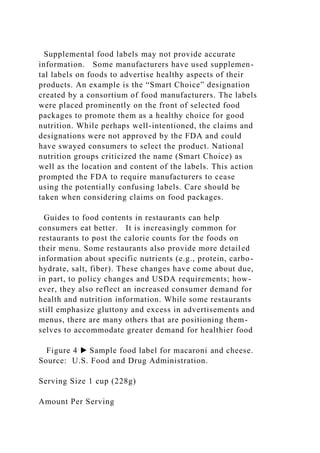
Supplemental food labels may not provide accurate
information. Some manufacturers have used supplemen-
tal labels on foods to advertise healthy aspects of their
products. An example is the “Smart Choice” designation
created by a consortium of food manufacturers. The labels
were placed prominently on the front of selected food
packages to promote them as a healthy choice for good
nutrition. While perhaps well-intentioned, the claims and
designations were not approved by the FDA and could
have swayed consumers to select the product. National
nutrition groups criticized the name (Smart Choice) as
well as the location and content of the labels. This action
prompted the FDA to require manufacturers to cease
using the potentially confusing labels. Care should be
taken when considering claims on food packages.
Guides to food contents in restaurants can help
consumers eat better. It is increasingly common for
restaurants to post the calorie counts for the foods on
their menu. Some restaurants also provide more detailed
information about specific nutrients (e.g., protein, carbo-
hydrate, salt, fiber). These changes have come about due,
in part, to policy changes and USDA requirements; how-
ever, they also reflect an increased consumer demand for
health and nutrition information. While some restaurants
still emphasize gluttony and excess in advertisements and
menus, there are many others that are positioning them-
selves to accommodate greater demand for healthier food
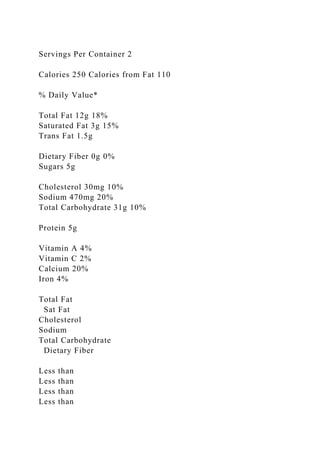
Figure 4 ▶ Sample food label for macaroni and cheese.
Source: U.S. Food and Drug Administration.
Serving Size 1 cup (228g)
Amount Per Serving
Servings Per Container 2
Calories 250 Calories from Fat 110
% Daily Value*
Total Fat 12g 18%
Saturated Fat 3g 15%
Trans Fat 1.5g
Dietary Fiber 0g 0%
Sugars 5g
Cholesterol 30mg 10%
Sodium 470mg 20%
Total Carbohydrate 31g 10%
Protein 5g
Vitamin A 4%
Vitamin C 2%
Calcium 20%
Iron 4%
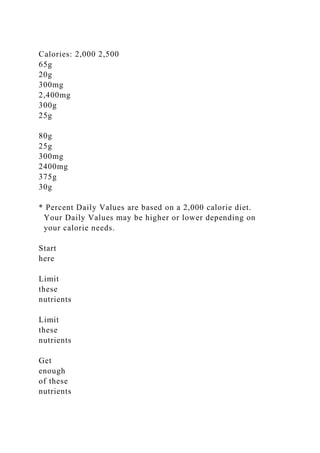
Total Fat
Sat Fat
Cholesterol
Sodium
Total Carbohydrate
Dietary Fiber
Less than
Less than
Less than
Less than
Calories: 2,000 2,500
65g
20g
300mg
2,400mg
300g
25g
80g
25g
300mg
2400mg
375g
30g
* Percent Daily Values are based on a 2,000 calorie diet.
Your Daily Values may be higher or lower depending on
your calorie needs.
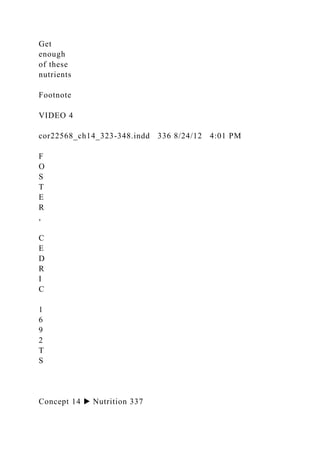
Start
here
Limit
these
nutrients
Limit
these
nutrients
Get
enough
of these
nutrients
Get
enough
of these
nutrients
Footnote
VIDEO 4
cor22568_ch14_323-348.indd 336 8/24/12 4:01 PM
F
O
S
T
E
R
,
C
E
D
R
I
C
1
6
9
2
T
S
Concept 14 ▶ Nutrition 337
choices. Posting the nutritional quality of foods allows
restaurants to at least document that they have provided
consumers with the information needed to make health-
ier choices.
Sound Eating Practices
Consistent eating patterns (with a daily breakfast)
are important for good nutrition. Eating regular
meals every day, including a good breakfast, is wise. Many
studies have shown breakfast to be an important meal,
in which one-fourth of the day’s calories should be con-
sumed. Skipping breakfast impairs performance because
blood sugar levels drop in the long period between din-
ner the night before and lunch the following day. Eating
every 4 to 6 hours is wise.
Moderation is a good general rule of nutrition. You
do not have to permanently eliminate foods that you
really enjoy, but some of your favorite foods may not
be among the best choices. Enjoying special foods on
occasion is part of moderation. The key is to limit food
choices high in empty calories.
Portion sizes have increased in recent years. Cafeteria-
style restaurants (and others) sometimes offer all you
can eat meals, which encourage larger portions. Reduc-
ing portion size is very important when eating out and at
home (see Concept 15 for more information).
Minimize your reliance on fast foods. Recent esti-
mates suggest that 63 percent of Americans eat fast food
one to three times a week and an additional 3 percent eat
fast food three to five times a week. Unfortunately, many
fast foods are poor nutritional choices. Hamburgers are
usually high in fat, as are french fries
(because they are usually cooked in
saturated fat). Even chicken and fish
are often high in fat and calories
because they may be cooked in fat and covered with high-fat/
high-calorie sauces. (Fast foods are also discussed in more
detail in Concept 15.)
Healthy snacks can be an important part of good
nutrition. For people who want to lose weight or main-
tain their current weight, small snacks of appropriate
foods can help fool the appetite. For people wanting to
gain weight, snacks provide additional calories. The calo-
ries consumed in snacks will probably necessitate limiting
the calories from meals. The key is proper selection of
the foods for snacking.
As with your total diet, the best snacks are nutritionally
dense. Too many snacks are high in calories, fats, simple
sugar, and salt. Even foods sold as “healthy snacks,” such as
granola bars, are often high in fat and simple sugar. Some
common snacks, such as chips, pretzels, and even popcorn,
may be high in salt and may be cooked in fat. Healthier
snacks include ice milk (instead of ice cream), fresh fruits,
vegetable sticks, popcorn not cooked in fat and with little
or no salt, crackers, and nuts with little or no salt.
T E C H N O L O G Y U P D A T E
Vending Machines to Provide
Nutrition Information
Food labels are required on all food products, but con-
sumers do not have access to this information when
selecting foods from most vending machines. According
to an industry organization, over 100 million Americans
use a vending machine each day. Legislation in Congress
may soon require vending companies to provide nutri-
tion information so that consumers have the opportu-
nity to make healthier food choices at these machines.
Companies that make vending machines have devel-
oped machines to make it easy for consumers to view
this information, so the technology is already available.
Some vending groups are concerned that people may be
less inclined to buy snacks from vending machines if they
look at the nutritional content. However, this is the whole
point of the proposed policy.
Do you think these high-tech vending machines will influence
decisions about food purchases?
ACTIVITY
Health is available to Everyone for a
Lifetime, and it’s Personal
Food safety is an important public health concern.
Almost every year there are tragic reports of food-related
illnesses and deaths caused by infections from such
bacteria as Salmonella or Listeria. In 2010, an outbreak
of Salmonella in eggs sickened over 1,500 people. A
more recent outbreak of Salmonella from contaminated
ground turkey killed 1 person and sickened 111 others.
The most tragic and publicized food safety issue was an
outbreak of Listeria traced to contaminated cantaloupes
that killed 29 people and sickened over 130 others from
28 states. The CDC has indicated that the incidence of
infection has actually come down 23 percent over the
past 15 to 20 years, but news of food contamination
always creates headlines.
Do outbreaks of food-related diseases concern you? Do they
influence your decisions about buying certain types of foods?
ACTIVITY
VIDEO 5
cor22568_ch14_323-348.indd 337 10/09/12 7:42 PM
F
O
S
T
E
R
,
C
E
D
R
I
C
1
6
9
2
T
S
338 Section 5 ▶ Nutrition and Body Composition
convenience. In many cases, the processing of foods
removes valuable nutrients and includes other addi-
tives that may compromise overall nutrition. Processing
of grains, for example, typically removes the bran and
germ layers, which contain fiber and valuable minerals.
In regard to additives, there has been considerable atten-
tion on the possible negative effects of high fructose
corn syrup, as well as the pervasive use of hydrogenated
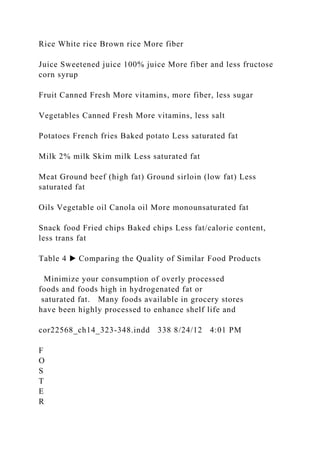
vegetable oils containing trans fatty acids. Table 4 com-
pares food quality in each of the main food categories.
To improve your diet, you should aim to choose foods in
the “more desirable” category instead of those in the “less
desirable” category.
Consider eating organic foods to reduce exposure
to carcinogens. Consumers are often confused about
what “organic” means. Organic food differs from conven-
tionally produced food primarily in the way it is grown,
handled, and processed. Organic food is produced with-
out conventional pesticides and using natural fertilizers.
Organic meat, poultry, eggs, and dairy products come
from animals that are given no antibiotics or growth hor-
mones. Organic foods are typically produced by farmers
who emphasize the use of renewable resources and the
conservation of soil and water. The benefits of organic
farming production have led to initiatives to encourage
farmers to adopt organic practices.
The U.S. Department of Agriculture (USDA) has
recently established a new set of standards for foods
labeled as “organic.” The current labeling requires that
a government-approved certifier inspect the farm where
the food is grown or produced to ensure that the farmer
is following all the rules necessary to meet USDA organic
A CLOSER LOOK
MyPlate “SuperTracker” for Diet and
Activity Monitoring
Self-monitoring is an important behavioral skill for adopt-
ing and maintaining healthy lifestyles. There are many
cell phone apps and resources for monitoring your diet,
but the web-based resources available through MyPlate
provide a free, comprehensive set of tools (called Super-
Tracker). An easy-to-use food database (Food-A-Pedia)
allows you to enter the name of a specific food and get
quick feedback concerning the food’s content. A cus-
tomized tool called the Food Tracker evaluates the nutri-
ent quality of your diet and an accompanying Physical
Activity Tracker evaluates activity levels compared to
the U.S. Physical Activity Guidelines. An integrative tool
(My Weight Manager) combines data on energy intake
and expenditure to facilitate weight management. Com-
panion tools let you set goals, use virtual coaches, and
monitor progress over time. The comprehensive set of
self- monitoring tools can assist consumers in adopting
and maintaining a healthy and active lifestyle.
How would your diet stack up to the 2010 Dietary Guidelines?
Would you benefit from tools designed to evaluate and track the
quality of your diet over time?
MyPlate
A
erTre SupPlate “Supe
ACTIVITY
Food Product Less Desirable Option
More Desirable
Option Benefit of More Desirable Option in Nutrition Quality
Bread White bread Whole wheat bread More fiber
Rice White rice Brown rice More fiber
Juice Sweetened juice 100% juice More fiber and less fructose
corn syrup
Fruit Canned Fresh More vitamins, more fiber, less sugar
Vegetables Canned Fresh More vitamins, less salt
Potatoes French fries Baked potato Less saturated fat
Milk 2% milk Skim milk Less saturated fat
Meat Ground beef (high fat) Ground sirloin (low fat) Less
saturated fat
Oils Vegetable oil Canola oil More monounsaturated fat
Snack food Fried chips Baked chips Less fat/calorie content,
less trans fat
Table 4 ▶ Comparing the Quality of Similar Food Products
Minimize your consumption of overly processed
foods and foods high in hydrogenated fat or
saturated fat. Many foods available in grocery stores
have been highly processed to enhance shelf life and
cor22568_ch14_323-348.indd 338 8/24/12 4:01 PM
F
O
S
T
E
R
,
C
E
D
R
I
C
1
6
9
2
T
S
Concept 14 ▶ Nutrition 339
standards. Companies that handle, process, or sell organic
food must also be certified. The USDA does not imply
that organically produced food is safer or more nutritious
than conventionally produced food, but many health
experts recommend organic foods to reduce exposure
to pesticides and other chemicals and to help support
more sustainable and environmentally friendly agricul-
tural practices. Foods purchased at local farmer’s markets
may claim to be organic but may or may not meet FDA
standards.
Nutrition and Physical
Performance
Some basic dietary guidelines exist for active people.
In general, the nutrition rules described in this concept
apply to all people, whether active or sedentary, but some
additional nutrition facts are important for exercisers
and athletes. Because active people often expend calories
in amounts considerably above normal, they need extra
calories in their diet. To avoid excess fat and protein,
complex carbohydrates should constitute as much as 70
percent of total caloric intake. A higher amount of pro-
tein is generally recommended for active individuals (1.2
grams per kg of body weight) because some protein is
used as an energy source during exercise. Extra protein
is obtained in the additional calories consumed. While
the IOM range of 10 to 35 percent allows a “broader
range” of choice, intake above 15 percent is not typically
necessary.
Carbohydrate loading before exercise and carbo-
hydrate replacement during exercise can enhance
sustained aerobic performances. Athletes and vigor-
ously active people must maintain a high level of readily
available fuel, especially in the muscles. Consumption of
complex carbohydrates is the best way to assure this.
Prior to an activity requiring an extended duration of
physical performance (more than 1 hour in length, such
as a marathon), carbohydrate loading can be useful.
Carbohydrate loading is accomplished by resting 1 or 2
days before the event and eating a higher than normal
amount of complex carbohydrates. This helps build up
maximum levels of stored carbohydrate ( glycogen ) in the
muscles and liver so it can be used during exercise. The
key in carbohydrate loading is not to eat a lot but, rather,
to eat a higher percentage of carbohydrates than normal.
Ingesting carbohydrate beverages during sustained
exercise can also aid performance by preventing or fore-
stalling muscle glycogen depletion. Fluid-replacement
drinks containing 6 to 8 percent carbohydrates and no
more than 6 to 8 percent sugar are very helpful in prevent-
ing dehydration and replacing energy stores. A number
Knowledge Doesn’t Translate to Behavior
Nutrition remains a top priority for most Amer-
icans. A Harris poll found that awareness of
key nutritional facts is high. At least three-quarters of all U.S.
adults place importance on freshness (89 percent), fiber (81
percent), and whole grains (81 percent) when choosing foods.
Consumers also carefully consider the fat content (80 percent),
portion size (79 percent), calorie content (77 percent), and sat-
urated fat (76 percent) when making food and beverage pur-
chases. Over half of U.S. adults (57 percent) report monitoring
or restricting consumption of some foods to improve their diet.
Sugar and salt are the top two restricted items, with 34 percent
and 32 percent restricting salt and sugar, respectively.
While awareness is high, it does not appear to translate into
dietary change for most segments of the population . Fewer
than half of Americans who rated sugar or salt as “important
when managing their diet/weight” actually restrict their sugar
(42 percent) or salt (47 percent) intake. Adherence to diet rec-
ommendations varies across the generations. Respondents
over age 66 were the most likely to pay close attention to
nutritional facts and translate their health consciousness into
behavior. This was attributed to the greater need to follow a
diet with specific restrictions. Overall, the results suggest that
adherence to diet recommendations may be more driven by
necessity than by knowledge.
Does your knowledge and awareness of nutrition directly
impact
your food choices?
K
N
ic
ACTIVITY
In the News
Carbohydrate Loading The extra consumption of
complex carbohydrates in the days prior to sustained
performance.
Glycogen A source of energy stored in the
muscles and liver necessary for sustained physical
activity.
cor22568_ch14_323-348.indd 339 8/24/12 4:01 PM
F
O
S
T
E
R
,
C
E
D
R
I
C
1
6
9
2
T
S
340 Section 5 ▶ Nutrition and Body Composition
of companies also make concentrated carbohydrate gels
that deliver carbohydrates (generally 80 percent complex,
20 percent simple) in a form the body can absorb quickly
for energy. Examples are PowerGel and Gu. Energy bars,
such as Powerbars and Clif bars, are also commonly eaten
during or after exercise to enhance energy stores. The
various carbohydrate supplements have been shown to be
effective for exercise sessions lasting over an hour and are
good for replacing glycogen stores after exercise. Con-
suming carbohydrates 15 to 30 minutes following exercise
can aid in rapid replenishment of muscle glycogen, which
may enhance future performance or training sessions.
These supplements have little benefit for shorter bouts
of exercise. Because they contain considerable calories,
they are not recommended for individuals primarily
interested in weight control.
The timing may be more important than the makeup
of a pre-event meal. If you are racing or doing high-
level exercise early in the morning, eat a small meal prior
to starting. Eat about 3 hours before competition or
heavy exercise to allow time for digestion. Generally, ath-
letes can select foods on the basis of experience, but eas-
ily digested carbohydrates are best. Generally, fat intake
should be minimal because fat digests more slowly; pro-
teins and high-cellulose foods should be kept to a mod-
erate amount prior to prolonged events to avoid urinary
and bowel excretion. Drinking 2 or 3 cups of liquid will
ensure adequate hydration.
Consuming simple carbohydrates (sugar, candy) within
an hour or two of an event is not recommended because it
may cause an insulin response, resulting in weakness and
fatigue, or it may cause stomach distress, cramps, or nausea.
Changes in the frequency and composition of
meals are important to gain muscle mass. To
increase muscle mass, the body requires a greater caloric
intake. The challenge is to provide enough extra calo-
ries for the muscle without excess amounts going to fat.
An increase of 500 to 1,000 calories a day will help most
people gain muscle mass over time. Smaller, more fre-
quent meals are best for weight gain, since they tend to
keep the metabolic rate high. The majority of extra calo-
ries should come from complex carbohydrates. Breads,
pasta, rice, and fruits such as bananas are good sources.
Granola, nuts, juices (grape and cranberry), and milk also
make good high-calorie, healthy snacks.
Diet supplements are not particularly effective unless
used as part of a behaviorally based program. High-fat
diets can result in weight gain but may not be best for
good health, especially if they are high in saturated fat.
If weight gain does not occur over a period of weeks and
months with extra calorie consumption, individuals may
need to seek medical assistance.
Good nutrition is essential for active people.
Strategies for Action
An analysis of your current diet is
a good first step in making future
decisions about what you eat. Many experts recommend
keeping a log of what you eat over an extended period so you
can determine the overall quality of your diet. In Lab 14A, you
will have an opportunity to track your diet over several days. In
addition to computing the amount of carbohydrates, fats, and
proteins, you will also be able to monitor your consumption of
fruits and vegetables. A number of online tools and personal
software programs can make dietary calculations for you
and provide a more comprehensive report of nutrient intake.
Whether you use a Web-based tool or a paper and pencil log
doesn’t really matter—the key is to monitor and evaluate the
quality of your diet.
cor22568_ch14_323-348.indd 340 8/24/12 4:01 PM
F
O
S
T
E
R
,
C
E
D
R
I
C
1
6
9
2
T
S
Concept 14 ▶ Nutrition 341
Suggested Readings
Dunford, M. 2010. Fundamentals of Sport and Exercise
Nutrition.
Champaign, IL: Human Kinetics.
Finkelstein, E. A., and L. Zuckerman. 2008. The Fattening of
America. Hoboken, NJ: John Wiley and Sons.
Gardener, H., et al. 2012. Mediterranean diet and white matter
hyperintensity volume in the Northern Manhattan Study.
Archives of Neurology 69(2):251–256.
Institute of Medicine, Food and Nutrition Board. 2010. Strate-
gies to Reduce Sodium Intake in the United States.
Washington,
DC: National Academies Press.
Johnson, R. K., et al. 2009. Dietary sugars intake and cardio-
vascular health: A scientific statement from the American
Heart Association. Circulation 120(11):1011–1020.
Kessler, D. 2009. The End of Overeating: Taking Control of
the
Insatiable American Appetite. New York: Rodale Press.
Otten, J. J., Helwig, J. P., and L. D. Meyers (Eds.). 2006.
Dietary Referenced Intakes: The Essential Guide to Nutri-
ent Requirements. Washington, DC: Institute of Medicine,
National Academy of Science Press.
Pan, A., et al. 2012. Red meat consumption and mortality:
Results from 2 prospective cohort studies. American Journal
of Public Health 100(2):312–318.
Roberto, C. A., et al. 2010. Evaluating the impact of menu
labeling on food choices and intake. American Journal of
Public Health 100(2):312–318.
Wardlaw, G. M. 2011. Contemporary Nutrition. New York:
McGraw-Hill Higher Education.
Web Resources
American Dietetic Association www.eatright.org
Berkeley Nutrition Services www.nutritionquest.com
Center for Nutrition Policy and Promotion www.usda
.gov/cnpp
Center for Science in the Public Interest www.cspinet.org
FDA Food Website www.fda.gov/Food/default.htm
Food and Drug Administration (FDA) www.fda.gov
Food Safety Database www.foodsafety.gov
Institute of Medicine www.iom.edu
Institute of Medicine—Food and Nutrition www.iom
.edu/Global/Topics/Food-Nutrition.aspx
International Food Information Council Foundation
www.ific.org
MyPlate www.choosemyplate.gov
MyPlate Food-A-Pedia www.choosemyplate
.gov/SuperTracker/foodapedia.aspx
MyPlate SuperTracker www.choosemyplate
.gov/SuperTracker/foodtracker.aspx
National Nutrition Summit Database www.nlm.nih
.gov/pubs/cbm/nutritionsummit.html
Nutrition.gov www.nutrition.gov
Office of Dietary Supplements http://ods.od.nih.gov
Rudd Center for Food Policy and Obesity (Yale University)
www.yaleruddcenter.org
U.S. Department of Agriculture (USDA) www.usda.gov
USDA Food and Nutrition Information Center www
.nal.usda.gov/fnic
USDA MyFoodapedia (calorie calculator) http://fnic
.nal.usda.gov/dietary-guidance/interactive-tools/
calculators-and-counters
Making small changes in diet patterns can have a big
impact. Nutrition experts emphasize the importance of
making small changes in your diet over time rather than try-
ing to make comprehensive changes at one time. Try cutting
back on sweets or soda. Simply adding a bit more fruit and
vegetables to your diet can lead to major changes in overall
diet quality. In Lab 14B, you will be given the opportunity to
compare a “nutritious diet” to a “favorite diet.” Analyzing two
daily meal plans will help you get a more accurate picture as
to whether foods you think are nutritious actually meet current
healthy lifestyle goals.
ACTIVITY
cor22568_ch14_323-348.indd 341 10/09/12 7:42 PM
F
O
S
T
E
R
,
C
E
D
R
I
C
1
6
9
2
T
S
342 Section 5 ▶ Nutrition and Body Composition
Healthy People
ACTIVITY
2020
The objectives listed below are societal goals designed to help
all Americans improve their health between now and the year
2020. They were selected because they relate to the content
of this concept.
• Increase the contribution of fruits in the diet.
• Increase the variety and contribution of vegetables
in the diet.
• Increase the contribution of whole grains in the diet.
• Reduce consumption of saturated fat in the diet.
• Reduce consumption of sodium.
• Increase consumption of calcium.
• Reduce iron deficiency.
A national goal is to increase fruit and vegetables in the diet.
This is
information children learn in elementary school, yet many
Americans
fail to meet the guideline that “half of the plate should be fruits
and
vegetables.” What can be done to change the pattern of eating
so
that more people eat adequate fruits and vegetables?
cor22568_ch14_323-348.indd 342 8/24/12 4:01 PM
F
O
S
T
E
R
,
C
E
D
R
I
C
1
6
9
2
T
S
343
Lab
14A
N
utrition A
nalysis
Lab 14A Nutrition Analysis
Name Section Date
Purpose: To learn to keep a dietary log, to determine the
nutritional quality of your diet, to determine your average
daily caloric intake, and to determine necessary changes in
eating habits
Procedures
1. Record your dietary intake for 2 days using the Daily Diet
Record sheets (see pages 345–346). Record intake for
1 weekday and 1 weekend day. You may wish to make copies of
the record sheet for future use.
2. Include the actual foods eaten and the amount (size of
portion in teaspoons, tablespoons, cups, ounces, or other
standard units of measurement). Be sure to include all drinks
(coffee, tea, soft drinks, etc.). Include all foods eaten,
including sauces, gravies, dressings, toppings, spreads, and so
on. Determine your caloric consumption for each
of the 2 days. Use the calorie guides at the myplate.gov website
to assist in evaluating your diet.
3. List the number of servings from each food group by each
food choice.
4. Estimate the proportion of complex carbohydrate, simple
carbohydrate, protein, and fat in each meal and in
snacks, as well as for the total day.
5. Answer the questions in Chart 1 on page 344, using
information for a typical day based on the Daily Diet Record
sheets. Score 1 point for each “yes” answer. Then use Chart 2 to
rate your dietary habits (circle rating).
6. Complete the Conclusions and Implications sections
Results
Record the number of calories consumed for each of the 2 days.
Weekday calories Weekend calories
Conclusions and Implications: In several sentences, discuss
your diet as recorded in this lab. Explain any changes
in your eating habits that may be necessary. Comment on
whether the days you surveyed are typical of your normal diet.
cor22568_ch14_323-348.indd 343 8/24/12 4:01 PM
F
O
S
T
E
R
,
C
E
D
R
I
C
1
6
9
2
T
S
344
La
b
1
4A
N
ut
rit
io
n
A
na
ly
si
s
Yes No Answer questions based on a typical day (use your
Daily Diet Records to help).
1. Do you eat at least three healthy meals each day?
2. Do you eat a healthy breakfast?
3. Do you eat lunch regularly?
4. Does your diet contain 45 to 65 percent carbohydrates with a
high concentration of fiber?*
5. Are less than one-fourth of the carbohydrates you eat simple
carbohydrates?
6. Does your diet contain 10 to 35 percent protein?*
7. Does your diet contain 20 to 35 percent fat?*
8. Do you limit the amount of saturated fat in your diet (no
more than 10 percent)?
9. Do you limit salt intake to acceptable amounts?
10. Do you get adequate amounts of vitamins in your diet
without a supplement?
11. Do you typically eat 6 to 11 servings from the bread,
cereal, rice, and pasta group of foods?
12. Do you typically eat 3 to 5 servings of vegetables?
13. Do you typically eat 2 to 4 servings of fruits?
14. Do you typically eat 2 to 3 servings from the milk, yogurt,
and cheese group of foods?
15. Do you typically eat 2 to 3 servings from the meat,
poultry, fish, beans, eggs, and nuts group of foods?
16. Do you drink adequate amounts of water?
17. Do you get adequate minerals in your diet without a
supplement?
18. Do you limit your caffeine and alcohol consumption to
acceptable levels?
19. Is your average caloric consumption reasonable for your
body size and for the amount of calories you
normally expend?
Total number of “yes” answers
*Based on USDA standards.
Chart 1 Dietary Habits Questionnaire
Score Rating
18–19 Very good
15–17 Good
13–14 Marginal
12 or less Poor
Chart 2 Dietary Habits Rating Scale
cor22568_ch14_323-348.indd 344 8/24/12 4:01 PM
F
O
S
T
E
R
,
C
E
D
R
I
C
1
6
9
2
T
S
345
Lab
14A
N
utrition A
nalysis
Daily Diet Record
Day 1
Breakfast Food Amount Calories Food Servings Estimated Meal
(cups, tsp., etc.) Bread/Cereal Fruit/Veg. Milk/Meat Fat/Sweet
Calories %
% Protein
% Fat
% Complex
carbohydrate
% Simple
100% Total
carbohydrate
Lunch Food Amount Calories Food Servings Estimated Meal
(cups, tsp., etc.) Bread/Cereal Fruit/Veg. Milk/Meat Fat/Sweet
Calories Servings Servings Servings Servings
Calories %
Dinner Food Amount Calories Food Servings Estimated Meal
(cups, tsp., etc.) Bread/Cereal Fruit/Veg. Milk/Meat Fat/Sweet
Calories %
Snack Food Amount Calories Food Servings Estimated Snack
(cups, tsp., etc.) Bread/Cereal Fruit/Veg. Milk/Meat Fat/Sweet
Calories %
Daily Totals
% Protein
% Fat
% Complex
carbohydrate
% Simple
100% Total
carbohydrate
% Protein
% Fat
% Complex
carbohydrate
% Simple
100% Total
carbohydrate
% Protein
% Fat
% Complex
carbohydrate
% Simple
100% Total
carbohydrate
Estimated Daily
Total Calories %
% Protein
% Fat
% Complex
carbohydrate
% Simple
100% Total
carbohydrate
Meal Total
Meal Total
Meal Total
Meal Total
cor22568_ch14_323-348.indd 345 8/24/12 4:01 PM
F
O
S
T
E
R
,
C
E
D
R
I
C
1
6
9
2
T
S
346
Daily Diet Record
Day 2
Breakfast Food Amount Calories Food Servings Estimated Meal
(cups, tsp., etc.) Bread/Cereal Fruit/Veg. Milk/Meat Fat/Sweet
Calories %
% Protein
% Fat
% Complex
carbohydrate
% Simple
100% Total
carbohydrate
Lunch Food Amount Calories Food Servings Estimated Meal
(cups, tsp., etc.) Bread/Cereal Fruit/Veg. Milk/Meat Fat/Sweet
Calories Servings Servings Servings Servings
Calories %
Dinner Food Amount Calories Food Servings Estimated Meal
(cups, tsp., etc.) Bread/Cereal Fruit/Veg. Milk/Meat Fat/Sweet
Calories %
Snack Food Amount Calories Food Servings Estimated Snack
(cups, tsp., etc.) Bread/Cereal Fruit/Veg. Milk/Meat Fat/Sweet
Calories %
Daily Totals
% Protein
% Fat
% Complex
carbohydrate
% Simple
100% Total
carbohydrate
% Protein
% Fat
% Complex
carbohydrate
% Simple
100% Total
carbohydrate
% Protein
% Fat
% Complex
carbohydrate
% Simple
100% Total
carbohydrate
Estimated Daily
Total Calories %
% Protein
% Fat
% Complex
carbohydrate
% Simple
100% Total
carbohydrate
Meal Total
Meal Total
Meal Total
Meal Total
La
b
1
4A
N
ut
rit
io
n
A
na
ly
si
s
cor22568_ch14_323-348.indd 346 8/24/12 4:01 PM
F
O
S
T
E
R
,
C
E
D
R
I
C
1
6
9
2
T
S
347
Lab
14B
S
electing N
utritious Food
s
Lab 14B Selecting Nutritious Foods
Name Section Date
Purpose: To learn to select a nutritious diet, to determine the
nutritive value of favorite foods, and to compare
nutritious and favorite foods in terms of nutrient content
Procedures
1. Select a favorite breakfast, lunch, and dinner from the foods
list in Appendix C. Include between-meal snacks with
the nearest meal. If you cannot find foods you would normally
choose, select those most similar to choices you
might make.
2. Select a breakfast, lunch, and dinner from foods you feel
would make the most nutritious meals. Include
between-meal snacks with the nearest meal.
3. Record your “favorite foods” and “nutritious foods” on page
348. Record the calories for proteins, carbohydrates,
and fats for each of the foods you choose.
4. Total each column for the “favorite” and the “nutritious”
meals.
5. Determine the percentages of your total calories that are
protein, carbohydrate, and fat by dividing each column
total by the total number of calories consumed.
6. Comment on what you learned in the Conclusions and
Implications section.
Results: Record your results below. Calculate percentage of
calories from each source by dividing total calories into
calories from each food source (protein, carbohydrates, or fat).
Conclusions and Implications: In several sentences, discuss the
differences you found between your nutritious diet
and your favorite diet. Discuss the quality of your nutritious
diet as well as other things you learned from doing this lab.
Favorite Foods Nutritious Foods
Source Calories % of Total Calories Calories % of Total
Calories
Protein
Carbohydrates
Fat
Total 100% 100% 100%
Food Selection Results
cor22568_ch14_323-348.indd 347 8/24/12 4:01 PM
F
O
S
T
E
R
,
C
E
D
R
I
C
1
6
9
2
T
S
348
La
b
1
4B
S
el
ec
tin
g
N
ut
rit
io
us
F
oo
d
s
Dinner Favorite Food Choices Dinner Nutritious Food Choices
Food Cal. Pro. Car. Fat Food Cal. Pro. Car. Fat
Cal. Cal. Cal. Cal. Cal. Cal.
Totals Totals
Daily Totals (Calories) Daily Totals (Calories)
Daily % of Total Calories Daily % of Total Calories
“Favorite” versus “Nutritious” Food Choices for Three Daily
Meals
Breakfast Favorite Food Choices Breakfast Nutritious Food
Choices
Food Cal. Pro. Car. Fat Food Cal. Pro. Car. Fat
Cal. Cal. Cal. Cal. Cal. Cal.
Totals Totals
Lunch Favorite Food Choices Lunch Nutritious Food Choices
Food Cal. Pro. Car. Fat Food Cal. Pro. Car. Fat
Cal. Cal. Cal. Cal. Cal. Cal.
Totals Totals
cor22568_ch14_323-348.indd 348 8/24/12 4:01 PM
F
O
S
T
E
R
,
C
E
D
R
I
C
1
6
9
2
T
S
349
Managing Diet and Activity
for Healthy Body Fatness
LEARNING OBJECTIVES
After completing the study of this concept, you will be able to:
▶ Explain the principles for weight control and the concept of
energy balance.
▶ Identify the features of an obesogenic environment that
influence our behavior.
▶ Outline guidelines for weight loss treatments.
▶ Describe and apply, when appropriate, guidelines for losing
body fat.
▶ Utilize healthy shopping
and eating strategies and
guidelines.
▶ Evaluate fast-food options. C
o
n
c
e
p
t 15
Various management strategies
for eating and performing
physical activity are useful
in achieving and maintaining
optimal body composition.
cor22568_ch15_349-366.indd 349 8/24/12 4:13 PM
F
O
S
T
E
R
,
C
E
D
R
I
C
1
6
9
2
T
S
350 Section 5 ▶ Nutrition and Body Composition
expenditure can be divided into three major components
as well. Basal metabolism accounts for the bulk of daily
energy expenditure (60 percent to 75 percent) and this
refers to the calories expended to maintain basic body
functions while the body is at rest. A second category,
called thermogenesis, captures the energy expended pro-
cessing the food we eat (approximately 10 percent of total
daily energy expenditure). The third and most variable
component of energy expenditure rate is physical activity
(typically accounting for 10 to 30 percent of total energy
expenditure in most people). To maintain a healthy
weight, a person’s overall energy expenditure must offset
energy intake. While it is difficult to
monitor these directly, the body has
built-in regulatory systems that help
in weight regulation. Detailed cov-
erage of these pathways is beyond the scope of the book,
but the most important part of the system is your appe-
tite because it helps prompt and influence eating.
Physical activity contributes to energy balance in a
number of ways. By maintaining an active lifestyle, you
can burn off extra calories, keep your body’s metabolism
high, and prevent the decline in basal metabolic rate that
typically occurs with aging (due to reduced muscle mass).
All types of physical activity from the physical activity
pyramid can be beneficial to weight control. Moderate
physical activity (see Concept 6) is especially effective
because people of all ages and abilities can perform it. It
can be maintained for long periods of time and results in
significant calorie expenditure. Long-term studies show
that 60 or more minutes of moderate activity such as
walking is very effective for long-term weight loss and
maintenance.
Vigorous physical activity (see Concepts 7 and 8) can
also be effective in maintaining or losing weight. For some
people, especially older adults, vigorous activity may be
more difficult to adhere to over a long time. However, for
T he fact that more than 67 percent of adult Americans are
classified as overweight is clear evidence that
weight control is a vexing problem for the majority of
the population. Most recognize the importance of the
problem and want to correct it. In fact, a recent national
survey by the International Food Information Council
(IFIC) reported that nearly two-thirds of Americans were
either very concerned or somewhat concerned about
their weight.
Too often, the focus is on appearance rather than
health and on weight loss rather than fat loss. In attempts
to lose weight, the dietary (energy intake) side of the
energy balance equation is typically emphasized. How-
ever, the energy expenditure side of the equation is just as
important, if not more so. Despite the documented bene-
fits, few people trying to lose weight are physically active.
A state-based survey determined that approximately one-
half of individuals trying to lose weight do not engage
in any physical activity, and only 15 percent report exer-
cising regularly. The challenges many people experi-
ence with weight control may be an indirect reflection
of the challenges people face in trying to be more active.
Although being physically active cannot ensure you will
become as thin as you desire, you may attain a body size
that is appropriate for your genetics and body type.
The focus in this concept is on lifestyle patterns (both
diet and physical activity) that will assist with losing
body fat rather than weight. Guidelines for maintaining
healthy body fat levels over time are also presented.
Factors Influencing Weight
and Fat Control
Long-term weight control requires a balance
between energy intake and energy expenditure.
The relationships governing energy balance are very
simple—the number of calories expended must match the
number consumed. There may be subtle differences on a
daily basis, but if intake exceeds expenditure over a period
of time, a person will store the extra calories as body fat.
The average person gains 1 pound of weight (i.e., fat) for
every year over the age of 25. This may sound like a lot but
it represents a calorie difference of only 10 kcal per day
(approximately the calories found in a cracker or potato
chip). This subtle difference shows the precise regulation
of intake and expenditure that is normally in effect when
a person maintains his or her body weight. The built-in
regulation system is based on our appetite, which guides
us when we might be running low on energy.
Figure 1 shows the hypothetical balance between
energy intake and expenditure. Energy intake comes
from the three major nutrients in our diet (carbohy-
drates, fats, and proteins) as well as from alcohol. Energy
Figure 1 ▶ Components of energy intake must balance
components of energy expenditure for weight maintenance.
Energy
intake
Energy
expenditure
Protein
Fats
Carbohydrates Basal metabolism
Thermogenesis
Physical activity
VIDEO 1
cor22568_ch15_349-366.indd 350 8/24/12 4:13 PM
F
O
S
T
E
R
,
C
E
D
R
I
C
1
6
9
2
T
S
Concept 15 ▶ Managing Diet and Activity for Healthy Body
Fatness 351
those who stick with it, vigorous activity expends more
calories in a shorter time, and for this reason, it can be
a very good way to expend calories. Research shows that
bouts of vigorous physical activity can lead to increases
in basal metabolic rate that persist throughout the day.
Therefore, vigorous activity can contribute to additional
energy expenditure after the workout is done. There is
now considerable evidence showing that muscle fitness
exercise also contributes to maintaining a healthy body
weight (see Concept 9). Muscle fitness exercise expends
calories and increases muscle mass, leading to an increase
in calories expended at rest. Flexibility exercises (see
Concept 10) also expend calories, but are of lower inten-
sity than other types of activities on the pyramid. They
can still contribute to energy expenditure, however.
The accumulation of light physical activity can help
burn extra calories. Most of the emphasis in this book
has been on moderate and vigorous forms of physical activ-
ity. As described in Concept 6, “light” physical activity falls
between rest and moderate physical activity on the energy
expenditure continuum (1.5 to 3 METS). Research indi-
cates that light activities may help reduce risks associated
with excessive time spent being sedentary (e.g., sitting). The
accumulation of light activity can also contribute to weight
control by burning more calories. Researchers coined the
term NEAT (non-exercise activity thermogenesis) to refer
to the accumulation of activity from low-intensity move-
ments throughout the day. Light activity may account for
as little as 15 percent of total daily energy expenditure in
sedentary people and up to 50 percent in people with more
active jobs and lifestyles. The weight maintenance benefits
of light or NEAT activity are greatest when the activities
replace sedentary activities such as sitting (e.g., TV watch-
ing and computer use). To further take advantage of NEAT,
many people have started using active workstations that
allow them to walk slowly on a treadmill or lightly pedal a
bike while working at a computer.
Awareness and dietary restraint are needed to
avoid excess caloric intake. In our modern society, it
is very easy for people to meet their daily energy needs.
In fact, considerable willpower is needed to keep energy
intake at a manageable level. Having an extra cookie or
brownie for a snack may sound like a good idea until you
realize you would need to possibly walk between one and
two miles to burn it off. Foods high in empty calories
are easily available and are frequent selections of college
students, who may be responsible
for their food selection or prepara-
tion for the first time in their lives.
Sugar, especially from soft drinks,
and beer add calories. Learning to make healthy choices
and showing some restraint with food intake are impor-
tant skills for long-term weight control.
Many find it difficult to establish these patterns and
develop unhealthy relationships with food, either restrain-
ing too much or using food as a source of comfort when
feeling sad, anxious, or bored. The latter has been termed
“emotional eating” since the consumption of food is
directly tied to our emotions. The assumption has been
that the food is consumed in response to emotional situ-
ations, but new research shows that consumption of some
foods may actually have reciprocal effects on our emotions.
One study showed that consumption of a high-fat snack
helped people fend off negative emotions more effectively
than a control snack. The biological connection between
food and our brain may have had some evolutionary advan-
tage in the past, but it can be problematic in our present
society where food is abundant. While an occasional binge
may not be a problem, emotional eating can escalate into
a more compulsive habit that is hard to control. To avoid
emotional eating, find other non- food-related methods to
combat stress or help relax.
Confronting an Obesogenic
Environment
An obesogenic environment makes it hard to
maintain a healthy weight. Although traditional
approaches to weight control have emphasized individ-
ual behaviors, public health leaders focus considerable
VIDEO 2
Health is available to Everyone for a
Lifetime, and it’s Personal
A survey by the International Food Information Council
reports that only 9 percent of people in the United States
know the approximate number of calories they should
eat in a day. About 9 percent report actually tracking
their calories on a daily basis. Calorie requirements are
unique to each person and are influenced by your gen-
der, age, body size, and physical activity level. Typical
ranges for a small sedentary woman may be 1,400 to
1,600 or 2,000 to 2,200 for a sedentary man. Our body
has a natural ability to regulate intake (appetite) but
people tend to disregard it or not pay attention to the
cues. Some experts are concerned about the lack of
awareness about calorie requirements. For example, if
you knew your calorie requirement was 1,600 calories a
day you may think twice about eating a burger and fries
that contain 1,200 calories at one meal.
What steps can you take to make sure that you do not exceed
recommended daily calorie requirements for your age, gender,
and activity level?
ACTIVITY
cor22568_ch15_349-366.indd 351 8/24/12 4:13 PM
F
O
S
T
E
R
,
C
E
D
R
I
C
1
6
9
2
T
S
352 Section 5 ▶ Nutrition and Body Composition
energy on combating “obesogenic environments” that pro-
mote excessive eating and inactivity. For example, the
2010 Dietary Guidelines acknowledge that Americans
have to make dietary choices “within the context of an
environment that promotes over-consumption of calories and
discourages physical activity.” A variety of social-ecological
models have been proposed to summarize and study
these environments. A simplified model is depicted in
Figure 2 to show the various sectors and settings that
shape our environment and ultimately our behavior.
The essence of the model is that we are continually
confronted with environments that make it easy to con-
sume large quantities of energy-dense food and limit our
physical activity. On the energy-intake side, we have easy
access to large quantities of low-cost, highly-palatable,
high-calorie foods almost everywhere we go. The conve-
nience and large portion sizes lead to increases in daily
energy intake. On the energy expenditure side, we live
in a world dominated by sedentary (computer-based)
jobs and lifestyles dominated by automobiles and inac-
tive recreation. These factors lead to reductions in daily
energy expenditure. Small increases in energy intake
combined with small decreases in energy expenditure
lead to the storage of fat. While most people are aware
of these general influences, they still find it hard to find
ways to overcome them.
New public/private partnerships offer promise
for promoting healthier environments. As shown in
Figure 2 , aspects of our environment are influenced by
larger societal and economic forces. For example, it is
unrealistic to expect changes in menu choices in a local
fast-food restaurant since they receive their food from the
corporate supply chain, which in turn receives ingredients
Businesses and
stores
Passive
entertainment
Lack of
active
places
Government
(federal/state/local)
Entertainment
industry
Transportation
industry
Insurance
industry
Cities and
roads
Parks
Schools
Homes
Workplaces
Grocery
stores
Fast food
restaurants
Vending
machines
Food
industry
Health
care industry
Advertising
industry
Large
portion sizes
High fat,
empty
calories
Easy
access to
junk
food
Friends and
family
Sedentary
work/play
Individual
Environmental
influences
Settings/places
Societal sectors
Excess
calories
Weight
gain
Low
activity
Figure 2 ▶ Social and environmental components of the
obesogenic environment.
cor22568_ch15_349-366.indd 352 8/24/12 4:13 PM
F
O
S
T
E
R
,
C
E
D
R
I
C
1
6
9
2
T
S
Concept 15 ▶ Managing Diet and Activity for Healthy Body
Fatness 353
from other larger food conglomerates. To reverse the
epidemic of obesity, a coordinated systemwide approach
is needed. Changes in policy and the business supply
chain offer the most promise since they can impact other
aspects of the local environment. A number of large-
scale public/private partnerships have shown potential
for coordinated action. A few particularly prominent
examples are highlighted below:
• Healthy Weight Commitment Foundation ( www
.healthyweightcommit.org ). This large foundation is
a consortium of grocery stores, food and beverage
manufacturers, restaurants, sporting goods stores,
insurance companies, and other health-related orga-
nizations that have joined forces to create healthier
(less obesogenic) environments. This collaboration is
unique because it is led by executives and CEOs of the
various organizations. The group is committed to cre-
ating systematic changes in key segments of society in
order to help reverse the obesity epidemic. The com-
panies in the consortium may be in direct competition
for consumer spending, yet here they are partnering
together to help address a significant public health
problem. For example, the food manufacturing com-
panies in the group have pledged to work together to
help reduce excess calorie consumption in their food
products. They will do this by introducing lower-
calorie options, changing recipes to lower the calorie
content of current products, or by reducing portion
sizes of existing single-serve products. The group has
also launched several innovative social media tools and
challenges to directly facilitate changes in society. One
tool called Together Counts is designed to provide
families with tools and resources to make (and track)
healthy changes in their families. Another tool called
Energy Balance 101 provides educational resources to
teach principles of energy balance in schools.
• Alliance for a Healthier Generation ( www.healthier
generation.org ). This nonprofit organization, formed as
a partnership by the American Heart Association and
the William J. Clinton Foundation, was established to
specifically help to reverse the prevalence of childhood
obesity. In 2006, the Alliance brokered agreements with
beverage providers to limit portion sizes and reduce the
number of beverage calories available to children dur-
ing the school day. The agreement led to an 88 percent
reduction in total beverage calories shipped to schools.
A new agreement with leading food manufacturers,
group purchasing organizations, and technology com-
panies will enable America’s schools to serve healthier
meals at more affordable prices. Through the agree-
ment, more than 30 million students across the country
will have access to healthier school meals, including at
least 14 million students who currently participate in
the free and reduced lunch program. The Alliance also
established a new medically based partnership (Alliance
Healthcare Initiative) that unites national medical
associations, leading insurers, and employers to offer
health benefits for the prevention, assessment, and
treatment of childhood obesity. The agreement enables
health-care providers to play a more active role in obe-
sity treatment by making primary-care visits and vis-
its to registered dietitians (RDs) a part of their health
insurance benefits. The initiative will recruit additional
health insurance companies and employers to partici-
pate so that more overweight American children have
access to this care.
New public policies offer promise for promoting
weight control. Public policy has a strong influence
on behavior, because it has the potential to influence all
segments of the population. Examples of recent public
policy changes that have potential for helping reduce
overweight are described below.
• Posting food values in restaurants. New legislation
requires chain restaurants with 20 or more outlets to
post calorie and other nutrition values for the foods
they serve. The FDA has finalized guidelines for this
legislation and new efforts will extend the labeling
rules to vending machines. Posting food values has
been shown to be effective in reducing calorie con-
sumption in people eating at fast-food restaurants.
• Restricting food commercials that target children. The
food industry adopted self-regulation on foods tar-
geted for children, especially high-sugar, low- nutrient
foods. Studies show that these self-regulations have
made only small changes in advertising. Nutrition
groups have proposed regulation requiring the food
industry to advertise nutritious foods more often and
to reduce advertising of non-nutritious foods during
children’s TV shows.
• Ensuring healthy foods are available in school vending
machines. The USDA mandated that schools set formal
policies for food service and vending machines. The
requirements stipulate the latter must offer a balance
of “healthy” and “unhealthy” food choices. Changes
have also been made to limit soft drink consumption at
schools.
• Requiring more physical activity and physical educa-
tion in schools. Schools provide an infrastructure to
help ensure that children get some regular physical
activity each day. A national health goal is to increase
the number of children who get daily physical edu-
cation. Some states have imposed specific guidelines
requiring schools to document that they are provid-
ing a certain amount of physical activity. Proposed
federal legislation (Healthy Kids Outdoors Act) aims
to increase children’s access to outdoor recreational
activities.
cor22568_ch15_349-366.indd 353 8/24/12 4:13 PM
F
O
S
T
E
R
,
C
E
D
R
I
C
1
6
9
2
T
S
354 Section 5 ▶ Nutrition and Body Composition
Behavioral goals are more effective than outcome
goals. Researchers have shown that setting only outcome
goals, or goals that set a specific amount of weight or fat
loss (or gain), can be discouraging. If a behavioral goal
of eating a reasonable number of calories per day and
expending a reasonable number of calories in exercise is
met, outcome goals will be achieved. Most experts believe
that behavioral goals work better than weight or fat loss
goals, especially in the short term (see Concept 2 for tips
about goal-setting principles and SMART goals).
A combination of physical activity and a healthy,
low-calorie diet is the best approach for long-term
weight control. The most effective diet for fat loss
is a low-calorie diet that you can stick with over time.
Reduced-calorie diets result in meaningful weight loss,
regardless of the composition of the diet (e.g., carbo-
hydrates, fats, proteins). Diets high in grains, fruits, and
vegetables are generally recommended because they are
typically low in calories and easy to maintain over time.
Research also clearly indicates that regular exercise is
crucial to long-term fat loss. Weight loss programs that
do not include physical activity are likely to fail.
A major advantage of emphasizing both physical activ-
ity and dietary changes is that physical activity can help
maintain basal metabolic rate and prevent the decline
that occurs with calorie sparing. Studies have shown that
programs that include both diet and physical activity pro-
mote greater loss of body fat than programs based solely
• Promoting physical activity with incentives for
participation. Many companies provide employees
with free access to employee-sponsored fitness cen-
ters or subsidies to use community fitness centers.
Many also offer financial incentives for participation
and flexible schedules for workouts during the day.
Proposed changes in the Affordable Health Care Act
would provide incentives for companies that adopt
these types of measures.
• Implementing policies and programs to promote active
commuting. Walk to school programs and Walking
School Buses have become increasingly popular meth-
ods for promoting physical activity in youth. Different
approaches are used for worksites but with the same
goal of active commuting in mind. Buses and trains are
often configured with bike racks. Many communities
have also started investing in bike-share programs that
allow individuals to check out a bike and drop it off at
a different location. The systems are in widespread use
in bicycle-friendly European countries and are slowly
gaining momentum and visibility in the U.S.
• Implementing empty calorie tax (also called fat tax).
Some public health experts have proposed a tax on
foods low in nutritional density, such as sweetened
soft drinks, candy, and fast food. Advocates of this type
of tax propose that the proceeds go to campaigns to
improve nutrition and increase activity levels.
Public support is strong for many of these policies.
However, some people argue that policy changes such
as a “fat tax” infringe on personal liberties. Neverthe-
less, changes in public policy have
resulted in major reductions in
smoking and smoking-related
deaths over the past 20 years, and
experts feel that similar policy changes can decrease
obesity in America and reduce associated medical costs.
Guidelines for Losing Body Fat
Following appropriate weight loss guidelines is
important for the best long-term results. There is
considerable misinformation about diet and weight loss
strategies, leading many people to use unsafe or ineffec-
tive weight loss supplements or to follow inappropriate
exercise programs. Fat, weight, and body proportions are
all factors that can be changed, but people often set goals
that are impossible to achieve. Starting with small goals
and aiming for reasonable rates of weight loss (1 to 2
pounds a week) are recommended. Setting unrealistic
goals may result in eating disorders, failure to meet goals,
or failure to maintain weight loss over time. Table 1
provides a summary of weight loss guidelines from the
American College of Sports Medicine (ACSM).
A CLOSER LOOK
Mindless Eating
In his book, Mindless Eating, Dr. Brian Wansink presents
a somewhat different approach to eating. Based on his
research, Dr. Wansink contends that subtle and almost
imperceptible cues and prompts in our day contribute to
a tendency to overeat (“We overeat because of family and
friends, packages and plates, names and numbers, labels
and lights, colors and candles, shapes and smells, dis-
tractions and distances, cupboard and containers”). His
research on labels and containers led to the development
of the 100-calorie snack packages. He also advocates for
eating with smaller plates and drinking from taller glasses
since it tricks our mind into thinking that we ate or drank
more than we did. By better understanding cues that lead
us to eat, we can set habits and environments that help
us to eat less. According to Dr. Wansink, “The best diet is
the one that you don’t know that you are on.”
Would this mental approach to weight control help you better
regulate your weight?
Mindles
A
ngss Eatindless Eatin
ACTIVITY
VIDEO 3
cor22568_ch15_349-366.indd 354 8/24/12 4:13 PM
F
O
S
T
E
R
,
C
E
D
R
I
C
1
6
9
2
T
S
Concept 15 ▶ Managing Diet and Activity for Healthy Body
Fatness 355
on dietary changes. The total weight loss from the pro-
grams may be about the same, but a larger fraction of the
weight comes from fat when physical activity is included.
In contrast, programs based solely on diet result in
greater loss of lean muscle tissue. A healthy diet and reg-
ular physical activity are the keys for long-term weight
control. Small changes, such as eating a few hundred cal-
ories less per day or walking for 30 minutes every day, can
make a big difference over time. The important point is
to strive for permanent changes that can be maintained in
a normal daily lifestyle.
Questions about Weight Loss Recommendations
Who should consider weight
loss?
Individuals with a BMI of >25 or in the marginal or overfat
zone should consider reducing their body
weight—especially if it is accompanied by abdominal obesity.
Individuals with a BMI of >30 are
encouraged to seek weight loss treatment.
What types of goals should be
established?
Overweight and obese individuals should target reducing their
body weight by a minimum of
5 to 10 percent and should aim to maintain this long-term
weight loss.
What about maintenance? Individuals should strive for long-
term weight maintenance and the prevention of weight regain
over
the long term, especially when weight loss is not desired or
when attainment of ideal body weight is
not achievable.
What should be targeted in a
weight loss program?
Weight loss programs should target both eating and exercise
behaviors, as sustained changes in both
behaviors have been associated with significant long-term
weight loss.
How should diet be changed? Overweight and obese individuals
should reduce their current intake by 500–1,000 kcal/day to
achieve
weight loss (<30% of calories from fat). Individualized levels of
caloric intake should be established to
prevent weight regain after initial loss.
How should activity be
changed?
Overweight and obese individuals should progressively increase
to a minimum of 150 minutes of
moderate-intensity physical activity per week for health
benefits. However, for long-term weight loss,
the program should progress to higher amounts of activity (e.g.,
200–300 minutes per week or
>2,000 kcal/week).
What about resistance
exercise?
Resistance exercise should supplement the endurance exercise
program for individuals undertaking
modest reductions in energy intake to lose weight.
What about using drugs for
weight loss?
Pharmocotherapy (medicine/drugs) for weight loss should be
used only by individuals with a BMI >30
or those with excessive body fatness. Weight loss medications
should be used only in combination
with a strong behavioral intervention that focuses on modifying
eating and exercise behaviors.
Source: American College of Sports Medicine.
Table 1 ▶ Guidelines for Weight Loss Treatment
Outcome Goal Statement of intent to achieve a
specific test score or a specific standard associated
with good health or wellness—for example, “I will
lower my body fat level by 3 percent.”
Behavioral Goal Statement of intent to perform a
specific behavior (changing a lifestyle) for a specific
period of time—for example, “I will reduce the calo-
ries in my diet by 200 a day for the next 4 weeks.”
An active, healthy lifestyle is critical for long-term weight
control.
cor22568_ch15_349-366.indd 355 8/24/12 4:13 PM
F
O
S
T
E
R
,
C
E
D
R
I
C
1
6
9
2
T
S
356 Section 5 ▶ Nutrition and Body Composition
Small changes in eating patterns can be effective
in fat loss. Experts suggest that we make over 200 food
decisions in a given day. Making good food choices is gen-
erally easier at home than when eat-
ing at restaurants, work, or special
occasions. Table 2 provides guide-
lines for making good selections
when purchasing and preparing food at home as well as
when you are away from home. Following are some spe-
cific steps you can take to improve your eating habits.
• Make small changes at first. Small restrictions in caloric
intake sustained over time are more effective than
drastic short-term changers.
• Eat breakfast every day. Studies show that breakfast
skipping is associated with an increased risk of obesity.
• Consider eating smaller and more frequent meals in a day.
A common strategy in guided weight loss programs is
to consume healthy, high protein snacks to help curb
hunger and excess consumption at meals.
• Eat less fat. Research shows that reduction of fat in the
diet results not only in fewer calories consumed (fats
have more than twice the calories per gram as carbohy-
drates or proteins) but in greater body fat loss as well.
• Restrict consumption of empty calories. Foods that
pro-
vide little nutrition often account for an excessive pro-
portion of daily caloric intake. Examples of these foods
are candy (often high in simple sugar) and potato chips
(often fried in saturated fat).
• Increase complex carbohydrates. Foods high in fiber, such
as fresh fruits and vegetables, contain few calories for
their volume. They are nutritious and filling, and they
are especially good foods for a fat loss program.
• Learn the difference between craving and hunger. Hunger
is a physiological signal that helps promote an organ-
ism’s drive to eat when energy supply gets low. A crav-
ing is simply a desire to eat something, often a food that
is sweet or high in calories. When you feel the urge to
eat, ask yourself, “Is this real hunger or a craving?”
• Adopt a “mindful” approach to eating. Most people
consume food for enjoyment, but having a mindful
approach to eating helps you learn to view food as
sustenance or energy for healthy living. (See the Web
Resources for more information on mindful eating.)
• Use smaller plates and taller, thinner glasses for meals.
Research has shown that the size of serving dishes is
related to the amount of food consumed. By using
smaller plates and bowls and taller, thinner glasses you
can help trick your mind into eating less.
• Avoid negative self-talk. One type of negative self-talk
occurs when a person self-criticizes for not meeting a goal.
For example, if you are determined not to eat more than
one serving of food at a party but fail to meet this goal,
you might say, “It’s no use stopping now; I’ve already blown
it.” View this as a minor setback rather than a failure. A
more appropriate response is positive self-talk , such as,
“I’m not going to eat anything else tonight; I can do it.”
T E C H N O L O G Y U P D A T E
Lifestyle Monitoring for Weight Control
The BodyMedia FIT system provides individuals with a
comprehensive lifestyle monitoring tool to assist with
weight control efforts. The advanced, multisensor, moni-
tor (worn on the upper arm) tracks physical activity and
energy expenditure while you
go about your normal activities.
Data can be displayed on a wrist
display, linked to free smart-
phone apps, or uploaded to an
online self-monitoring tool (Activ-
ity Manager). The online applica-
tion makes it possible for users
to record foods they eat in order
to provide estimates of calorie
intake, thereby aiding in energy
balance (i.e., calories in minus
calories out). The monitor and
associated applications have
been shown to facilitate weight
loss in several controlled studies.
Motivation to lose weight
may be enough for most people
but a new partnership with a
Web-based social media com-
pany (Earndit.com) allows users
to earn financial rewards for their
self-monitoring efforts. After reg-
istering through Earndit, you can
associate your Bodymedia Fit
monitor with your account. Earndit will then award points
based upon the amount of activity you perform in a day.
Similar to other social media tools (such as Groupon), the
points are redeemable through associated vendors.
Would the extra motivation to monitor your activity help you
maintain your weight loss goals?
ACTIVITY
Empty Calories Calories in foods considered to
have little or no nutritional value.
Negative Self-Talk Self-defeating discussions
with yourself focusing on your failures rather than
your successes.
Positive Self-Talk Telling yourself positive,
encouraging things that help you succeed in accom-
plishing your goals.
VIDEO 4
cor22568_ch15_349-366.indd 356 8/24/12 4:13 PM
F
O
S
T
E
R
,
C
E
D
R
I
C
1
6
9
2
T
S
Concept 15 ▶ Managing Diet and Activity for Healthy Body
Fatness 357
The support of family and friends can be of great
importance in balancing caloric intake and caloric
expenditure. Family and friends can help you adopt and
maintain healthy eating practices and follow shopping
guidelines (see Table 2). Sometimes, friends and family can
“try too hard” to help. This can have the opposite effect
Guidelines for
Shopping
• Shop from a list to avoid purchasing foods that contain empty
calories and other foods that will tempt you
to overeat.
• Shop with a friend to avoid buying unneeded foods. For this
technique to work, the other person must be
sensitive to your goals. In some cases, a friend can have a bad,
rather than a good, influence.
• Shop on a full stomach to avoid the temptations of snacking
on and buying junk food.
• Check labels to avoid foods that are excessively high in fat or
saturated fat.
Guidelines for
How You Eat
• When you eat, do nothing else but eat. If you watch
television, read, or do some other activity while you eat, you
may be unaware of what you have eaten.
• Eat slowly. Taste your food. Pause between bites. Chew
slowly. Do not take the next bite until you have
swallowed what you have in your mouth. Periodically take a
longer pause. Be the last one finished eating.
• Do not eat food you do not want. Some people do not want to
waste food, so they clean their plate even when
they feel full.
• Follow an eating schedule. Eating at regular meal times can
help you avoid snacking. Spacing meals equally
throughout the day can help reduce appetite.
• Leave the table after eating to avoid taking extra, unwanted
bites and servings.
• Eat meals of equal size. Some people try to restrict calories at
one or two meals to save up for a big meal.
• Eating several small meals helps you avoid hunger (fools the
appetite), and this may help prevent overeating.
• Avoid second servings. Limit your intake to one moderate
serving. If second servings are taken, make them
one-half the size of first servings.
• Limit servings of salad dressings and condiments (e.g.,
catsup). These are often high in fat and sugar and can
amount to greater caloric consumption than expected.
Guidelines
for Controlling
the Home
Environment
• Store food out of sight. Avoid containers that allow you to
see food. Limit the accessibility of foods that tempt you
and foods with empty calories. Foods that are out of sight are
out of mouth.
• Do your eating in designated areas only, such as the kitchen
and dining room, so you do not snack elsewhere.
It is especially easy to eat too much while watching television.
• If you snack, eat foods high in complex carbohydrates and low
in fats, such as fresh fruits and carrot sticks.
• Freeze leftovers so that it takes preparation to eat them,
helping you avoid temptation.
Guidelines
for Controlling
the Work
Environment
• Bring food from home rather than eating from vending
machines or catering trucks.
• Do not eat while working and take your lunch as a break. Do
something active during breaks, such as taking
a walk.
• Avoid food provided by co-workers, such as snacks in work
rooms, birthday cakes, or candy.
• Have drinking water or low-calorie drinks available to
substitute for snacks.
Guidelines
for Eating
on Special
Occasions
• Practice ways to refuse food. Knowing exactly what to say
will help you avoid being talked into eating something
you do not want.
• Eat before you go out, so you are not as hungry at parties and
events.
• Do not stand near food sources, and distract yourself if
tempted to eat when you are not really hungry.
• Limit servings of nonbasic parts of the meal, such as alcohol,
soft drinks, appetizers, and desserts.
Guidelines
for Eating
at Restaurants
• Make healthy selections from the menu. Choose chicken
without skin, fish, or lean cuts of meat. Grilled or broiled
options are better than fried. Choose healthier options for
dessert, as many decadent desserts can have more
calories than the whole dinner.
• Ask for the condiments (e.g., butter, mayonnaise, salad
dressings) on the side, allowing you to determine how
much to put on.
• Do not feel compelled to eat everything on your plate. Many
restaurants serve exceptionally large portions to try to
please the customers.
• Ask for a to-go box to divide big portions before eating.
• Order à la carte rather than full meals to avoid multiple
courses and servings.
• Avoid supersizing your meals if eating at fast-food
restaurants, as this can add unwanted calories. Opt for the
child-sized meal if possible.
Table 2 ▶ Guidelines for Healthy Shopping and Eating in a
Variety of Settings
if it is perceived as an attempt to con-
trol your behavior. Encouragement
and support, rather than control of
behavior, are the keys.
Group support can also be beneficial to many indi-
viduals attempting to change their behavior. Commercial
VIDEO 5
cor22568_ch15_349-366.indd 357 8/24/12 4:13 PM
F
O
S
T
E
R
,
C
E
D
R
I
C
1
6
9
2
T
S
358 Section 5 ▶ Nutrition and Body Composition
groups such as Overeaters Anonymous and Weight
Watchers help those who need the support of peers in
attaining and maintaining desirable fat levels for a life-
time. A number of new group-based lifestyle and fit-
ness programs are available to provide social support for
change (e.g., Kosama).
Facts about Fad Diets
and Clinical Approaches
to Weight Loss
Fad diets and extreme diets are not likely to be
effective. Consumers are barraged with products and
advertisements that claim easy weight loss solutions. Var-
ious fad diets capitalize on the consumer’s concern about
weight and a general lack of knowledge about diet and
exercise. Fad diets often take some small fact about nutri-
tion and claim they have uncovered some magic solution
to weight loss that wasn’t previously known. Consumers
often believe the claims because they have a history of
failing with past efforts to control their weight.
A common strategy in some fad diets is to restrict car-
bohydrates. Because water is required to store carbohy-
drates, reductions in carbohydrate
intake leads to reductions in water
storage—and weight. The person
who restricts carbohydrates may
see a reduction in “weight” (not fat!) and assume the
diet worked when it didn’t. Regardless of the approach,
fad diets provide little hope since they typically can’t
Fruits and vegetables are good snack choices to help reduce
total
calorie consumption and improve health.
Diet Soft Drinks
Diet soft drinks are a popular, and seemingly
healthy, choice for people concerned about
excess calories. However, recent studies have reported that
consumption of diet soft drinks may increase risk for Type 2
diabetes and cardiovascular disease. The most prominent
findings have been from a 10-year longitudinal project called
the Northern Manhattan Study. This study had a large sam-
ple of over 2,500 adults report on how much and what kind
of soft drinks they drank. They followed participants for an
average of 9 or more years and monitored risks for vascu-
lar events such as ischemic and hemorrhagic stroke. People
who drank diet soft drinks every day had a 61 percent higher
risk of vascular events than those who reported no soda
drinking, even after controlling for a variety of demographic
(e.g., age, gender, BMI) and lifestyle (smoking, alcohol,
physical activity, calorie consumption) variables. The authors
point out that diet soft drink drinkers should not be alarmed
because the findings do not prove cause and effect. At pres-
ent, there are no clear mechanisms that explain the findings,
so additional work is clearly needed. The results, however,
may lead some calorie-conscious consumers to rethink their
beverage choices.
Do these results influence your thinking about the benefits and
risks
of diet soft drinks?
D
D
h
ACTIVITY
In the News
VIDEO 6
cor22568_ch15_349-366.indd 358 8/24/12 4:13 PM
F
O
S
T
E
R
,
C
E
D
R
I
C
1
6
9
2
T
S
Concept 15 ▶ Managing Diet and Activity for Healthy Body
Fatness 359
be maintained over time. Constant losing and gaining,
known as “yo-yo” dieting, is counterproductive and may
lead to negative changes in the person’s metabolism and
unwanted shifts in sites of fat deposition.
Avoid diets that require severe caloric restriction and
exercise programs that require exceptionally large caloric
expenditure. These plans can be effective in fat loss over
a short period but are seldom maintained for a lifetime.
Studies show that extreme programs for weight control,
designed to “take it off fast,” result in long-term success
rates of less than 5 percent. One reason extremely low
calorie diets are ineffective is that they may promote
“calorie sparing.” When caloric intake is 800 to 1,000 or
less, the body protects itself by reducing basal and rest-
ing metabolism levels (sparing calories). This results in
less fat loss, even though the caloric intake is very low.
When in doubt, avoid programs that promise fast and
easy solutions, extreme diets that favor specific foods or
eating patterns, and any product that makes unreasonable
claims about easy ways to stimulate your metabolism or
“melt away fat.”
Artificial sweeteners and fat substitutes may
help but do not provide a complete weight loss
solution. Artificial sweeteners are frequently used
in soft drinks and food to reduce the calorie content.
Because they have few or no calories, these supplements
were originally expected to help people with weight con-
trol. However, since they were introduced, the general
public has not eaten fewer calories and more people are
now overweight than before. People consuming these
products end up consuming just as many calories per
day as people consuming products with real sugar or
sweeteners.
As described in Concept 14, a variety of artificial fat
substitutes are now used to reduce fat content in foods.
Potato chips and other fried foods cooked in these prod-
ucts as well as baked goods using these products have less
fat and fewer calories. If you eat no more food than usual
and substitute foods made with these products, you will
consume fewer calories and less fat. Experts worry that
consumers will not eat the same amount of foods with
these fake fats but will feel they can eat more because the
fake fats contain fewer calories and less fat.
A variety of appetite suppressants are available but
all of them have limitations. Because long-term weight
control is difficult, many individuals seek simple solu-
tions from various nonprescription weight loss products.
A common additive in dietary supplements has been the
stimulant ephedra (or the herbal equivalent, Ma Huang).
Many negative reactions and multiple deaths have been
attributed to the use of ephedra, and this led the FDA
to ban the sale and use of any products containing this
compound. A concern among public health officials is
that many products still do not accurately label the con-
tents of their supplements. Manufacturers of supplements
have recently started selling “ephedra-free” supplements
that use other stimulants, but these have been shown to
present similar health risks. Consumers should be wary
of dietary supplements, due to the unregulated nature of
the industry.
Four prescription drugs have been approved by the
FDA to help patients curb appetite and lose weight.
Sibutramine (Meridia) acts by inhibiting the reuptake
of the neurotransmitters serotonin and noradrenaline,
which regulate hunger. Orlistat (used in prescription
Xenical and over-the-counter Alli) enhances weight loss
by inhibiting the body’s absorption of fat. Studies have
confirmed that it can help patients lose more weight,
but a limitation is that it also blocks the absorption of
fat-soluble vitamins. Belviq, like Sibutramine, acts to
inhibit the reuptake of neurotransmitters that regulate
hunger. Qsymia (Qnexa), the most recently approved,
suppresses appetite and increases feelings of fullness.
All of the prescription medications are considered to be
adjuncts to lifestyle modification and are designed for use
with only obese patients or overweight adults with other
comorbidities.
Products and procedures claiming to remove fat
cells are not safe or effective. A procedure known as
“lipodissolve” claims that it is possible to remove fat cells
from the body with chemicals. A small amount of a chem-
ical found in lecithin—a food ingredient derived from
soybeans—is injected into fatty areas of the body, such
as the buttocks or thighs. The fat absorbs the substance
(phosphatidylcholine deoxycholate, or PCDC), resulting
in an inflammation, followed by a hardening of the fat
cells in the area. The fat cells are then allegedly elimi-
nated from the body. The FDA has not approved the pro-
cedure, and the safety and effectiveness of the procedure
has not been demonstrated by scientific evidence. How-
ever, there are reports of the procedure being marketed
as a “quick fix” that “burns fat away with an injection.”
Companies promoting the injections have marketed
them as a dietary supplement because the active ingre-
dient (lecithin) has been approved for human consump-
tion by mouth. However, because the PCDC is injected
(rather than consumed by mouth), the FDA views the
product as a drug and has ordered the manufacturer to
stop marketing and distributing the product due to safety
concerns. In addition to unproven effectiveness, the pro-
cedure can cause permanent scarring, skin deformation,
and deep, painful knots under the skin where the lipodis-
solve treatments are given. This highlights why consum-
ers should be wary of unproven procedures they see on
the Internet.
cor22568_ch15_349-366.indd 359 8/24/12 4:14 PM
F
O
S
T
E
R
,
C
E
D
R
I
C
1
6
9
2
T
S
360 Section 5 ▶ Nutrition and Body Composition
Web Resources
Academy of Nutrition and Dietetics www.eatright.org
Berkeley Nutrition Sciences www.nutritionquest.com
Center for Mindful Eating www.tcme.org
Mindless Eating http:// mindlesseating.org
Nutrition Action Health Letter www.cspinet.org/nah
Nutriwatch (consumer website) www.nutriwatch.org
Office of Dietary Supplements http://ods.od.nih.gov
STOP Obesity Alliance www.stopobesityalliance.org
USDA Food and Nutrition Information Center www.
nal.usda.gov/fnic
Suggested Readings
Burke, M. A., et al. 2010. From “Overweight” to “About
Right”:
Evidence of a generational shift in body weight norms.
Obesity 18(6):1226–1234.
Centers for Disease Control and Prevention. 2011. Beverage
Consumption Among High School Students—United
States, MMWR 60(23):778–780.
Chozen Bays, J. 2009. Mindful Eating: A Guide to
Rediscovering
a Healthy and Joyful Relationship with Food. Boston:
Shambhala.
Harris, J. L., et al. 2009. Priming effects of television food
advertising on eating behavior. Health Psychology 28(4):
404–413.
Katz, M. H., and R. Katz. 2010. Food surcharges and subsidies:
Putting your money where your mouth is. Archives of Inter-
nal Medicine 170(5):405–406.
Kessler, D. 2009. The End of Overeating: Taking Control of
the
Insatiable American Appetite. New York: Rodale Press.
King, N. A., Horner, K., and A. P. Hills. 2012. Exercise, appe-
tite and weight management: Understanding the compensa-
tory responses in eating behavior and how they contribute
to variability in exercise-induced weight loss. British Journal
of Sports Medicine 46:315–322.
Lee, I., et al. 2010. Physical activity and weight gain
prevention. Journal of the American Medical Association
303(12):1173–1179.
Lusk, A. C., et al. 2010. Bicycle riding, walking and weight
gain in premenopausal women. Archives of Internal Medicine
170(12):1050–1056.
Lynch, F. L., et al. 2010. Cognitive behavioral guided self-
help
for the treatment of recurrent binge eating. Journal of
Consulting and Clinical Psychology 78(3):312–321.
Lynch, F. L., et al. 2010. Cost-effectiveness of guided self-help
treatment for recurrent binge eating. Journal of Consulting
and Clinical Psychology 78(3):322–333.
Ogden, C. L., et al. 2012. Prevalence of obesity in the United
States (2009–2010). NCHS data brief, no 82. Hyattsville,
MD: National Center for Health Statistics.
Papalazarou, A., et al. 2010. Lifestyle intervention favorably
affects weight loss and maintenance following obesity
surgery. Obesity 18:1348–1353.
Shehzad, A., et al. 2012. Adiponectin: Regulation of its
produc-
tion and its role in human disease. Hormones 11(1):8–20.
Striegel-Moore, R., et al. 2010. Cognitive behavioral guided
self-help for the treatment of recurrent binge eating.
Journal of Consulting and Clinical Psychology 78(3):312–
321.
Van Oudenhove, L., et al. 2011. Fatty acid-induced gut-
brain signaling attenuates neural and behavioral effects
of sad emotion in humans. Journal of Clinical Investigation
121(8):3094–3099.
Wansink, B. 2007. Mindless Eating: Why We Eat More Than
We
Think. New York: Bantam Books.
Wardlaw, G. M. 2011. Contemporary Nutrition. New York:
McGraw-Hill Higher Education.
Westcott, W. 2009. ACSM strength training guidelines: Role in
body composition and health enhancement. ACSM’s Health
and Fitness Journal 13(4):14–22.
Strategies for Action
Knowing about guidelines for
controlling body fat is not as
important as following them. The guidelines in this concept
work only if you use them. In Lab 15A, you will identify guide-
lines that may help you in the future.
Record keeping is important in meeting fat control
goals and making moderation a part of your normal
lifestyle. It is easy to fool yourself when determining the
amount of food you have eaten or the amount of exercise you
have done. Once fat control goals have been set, whether for
weight loss, maintenance, or gain, keeping a diet log and an
exercise log can help you monitor your behavior and main-
tain the lifestyle necessary to meet your goals. A log can also
help you monitor changes in weight and body fat levels. But
remember, avoid too much emphasis on short-term weight
changes. Lab 15B will help you learn about the actual con-
tent of fast foods, so you can learn to make better choices
when eating out.
ACTIVITY
cor22568_ch15_349-366.indd 360 8/24/12 4:14 PM
F
O
S
T
E
R
,
C
E
D
R
I
C
1
6
9
2
T
S
Concept 15 ▶ Managing Diet and Activity for Healthy Body
Fatness 361
Healthy People
ACTIVITY
2020
The objectives listed below are societal goals designed to
help all Americans improve their health between now and the
year 2020. They were selected because they relate to the con-
tent of this concept.
• Increase policies that give retail food outlets incentives for
foods that meet dietary guidelines.
• Increase work sites that offer nutrition and weight
management classes and counseling.
• Increase participation in employee wellness programs.
• Increase BMI measurement by primary care physicians.
• Increase physician counseling on nutrition and weight
management.
• Reduce percentage of adults who do no leisure-time
activity.
• Reduce consumption of calories from solid fats and
added sugars.
• Decrease the consumption of sugar-sweetened beverages.
• Reduce consumption of saturated fat in the diet.
• Increase proportion of adults with healthy weight.
• Reduce childhood overweight and obesity.
A national goal is to reduce the consumption of sugar-
sweetened
beverages. A 12 oz. soft drink contains 10 teaspoons of sugar
and has
no other nutritional values. Substituting consumption of soft
drinks
with water, milk, or 100 percent fruit juice would improve
overall
nutrition quality and reduce calorie consumption. Do you agree
with
proposals that would tax soft drink consumption in order to
reduce
consumption and shift consumer choices to healthier beverages?
cor22568_ch15_349-366.indd 361 8/24/12 4:14 PM
F
O
S
T
E
R
,
C
E
D
R
I
C
1
6
9
2
T
S
cor22568_ch15_349-366.indd 362 8/24/12 4:14 PM
F
O
S
T
E
R
,
C
E
D
R
I
C
1
6
9
2
T
S
363
Lab
15A
S
electing S
trategies for M
anaging E
ating
Lab 15A Selecting Strategies for Managing Eating
Name Section Date
Purpose: To learn to select strategies for managing eating to
control body fatness
Procedures
1. Read the strategies listed in Chart 1.
2. Check the box beside 5 to 10 of the strategies that you think
will be most useful for you.
3. Answer the questions in the Conclusions and Implications
section.
Chart 1 Strategies for Managing Eating to Control Body Fatness
Check 5 to 10 strategies that you might use in
the future.
Shopping Strategies
Shop from a list.
Shop with a friend.
Shop on a full stomach.
Check food labels.
Eat slowly.
Do not eat food you do not want.
Bring your own food to work.
Avoid snack machines.
Follow an eating schedule.
Leave the table after eating.
Avoid second servings.
Limit servings of condiments.
Consider foods that take some time to prepare.
When you eat, do nothing but eat. Don't watch
television or read.
Do your eating in designated areas, such as kitchen
or dining room only.
Choose low-fat foods (e.g., skim milk, low-fat yogurt).
Choose chicken, fish, or lean meat.
Order à la carte.
Keep busy at times when you are at risk of overeating.
Store food out of sight.
Avoid serving food to others between meals.
If you eat desserts, avoid those with sauces or
toppings.
If you snack, choose snacks with complex
carbohydrates, such as carrot sticks or apple slices.
Freeze leftovers to avoid the temptation of eating
them between meals.
Limit servings of nonbasics, such as dessert, breads,
and soft drinks.
Eat several meals of equal size rather than one big
meal and two small ones.
Avoid sharing foods from co-workers, such as
birthday cakes.
Have low-calorie snacks to substitute for office
snacks.
If you eat out, plan your meal ahead of time.
Do not eat while working.
Have activity breaks during the day.
Have water available to substitute for soft drinks.
Methods of Eating
Eating in the Work Environment
Check 5 to 10 strategies that you might use in
the future.
Eating on Special Occasions
Strategies for Eating Out
Eating at Home
Practice ways to refuse food.
Avoid tempting situations.
Eat before you go out.
Don't stand near food sources.
If you feel the urge to eat, find someone to talk to.
Limit deep-fat fried foods.
Ask for information about food content.
Limit use of condiments.
Ask early for a to-go box and divide portions.
cor22568_ch15_349-366.indd 363 8/24/12 4:14 PM
F
O
S
T
E
R
,
C
E
D
R
I
C
1
6
9
2
T
S
364
La
b
1
5A
S
el
ec
tin
g
S
tr
at
eg
ie
s
fo
r
M
an
ag
in
g
E
at
in
g
2. In several sentences, discuss the effectiveness of the
strategies contained in Chart 1. Do you think they can be
effective for people who have a problem controlling their body
fatness?
3. In several sentences, discuss the value of using behavioral
goals versus outcome goals when planning for fat loss.
Conclusions and Implications
1. In several sentences, discuss your need to use strategies for
effective eating. Do you need to use them? Why or
why not?
cor22568_ch15_349-366.indd 364 8/24/12 4:14 PM
F
O
S
T
E
R
,
C
E
D
R
I
C
1
6
9
2
T
S
365
Lab
15B
E
valuating Fast-Food
O
p
tions
Lab 15B Evaluating Fast-Food Options
Name Section Date
Purpose: To learn about the energy and fat content of fast food
and how to make better choices when eating at fast-
food restaurants
Procedures
1. Select a fast-food restaurant and a typical meal
that you might order. Then use an online food
calculator to determine total calories, fat calories,
saturated fat intake, and cholesterol for each
food item.
2. Record the values in Chart 2.
3. Sum the totals for the meal in Chart 2.
4. Record recommended daily values by selecting an
amount from Chart 1. The estimate should be based
on your estimated needs for the day.
5. Compute the percentage of the daily recommended
amounts that you consume in the meal by dividing
recommended amounts (step 4) into meal totals
(step 3). Record percent of recommended daily
amounts in Chart 2.
6. Answer the questions in the Conclusions and
Implications section.
Results
Chart 1 Recommended Daily Amounts of Fat,
Saturated Fat, Cholesterol, and Sodium
2,000 kcal 3,000 kcal
Total fat 65 g 97.5 g
Saturated fat 20 g 30 g
Cholesterol 300 mg 450 mg
Sodium 2,400 mg 3,600 g
Chart 2 Listing of Foods Selected for the Meal
Food Item Total Calories Total Fat (g) Saturated Fat (g)
Cholesterol (mg)
1.
2.
3.
4.
5.
6.
Total for meal
(sum up each column)
Recommended daily amount
(record your values from Chart 1)
% of recommended daily amount
(record your % of recommended)
Consult an online fast food calculator to estimate calorie
content of menu choices (see www.fastfoodnutrition.org).
cor22568_ch15_349-366.indd 365 8/24/12 4:14 PM
F
O
S
T
E
R
,
C
E
D
R
I
C
1
6
9
2
T
S
366
La
b
1
5B
E
va
lu
at
in
g
Fa
st
-F
oo
d
O
p
tio
ns
Conclusions and Implications:
1. Describe how often you eat at fast-food restaurants and
indicate whether you would like to reduce how much fast
food you consume.
3. What could you do differently at fast-food restaurants to
reduce your intake of fat, saturated fat, and cholesterol?
2. Were you surprised at the amount of fat, saturated fat, and
cholesterol in the meal you selected?
cor22568_ch15_349-366.indd 366 8/24/12 4:14 PM
F
O
S
T
E
R
,
C
E
D
R
I
C
1
6
9
2
T
S
367
Stress and Health
LEARNING OBJECTIVES
After completing the study of this concept, you will be able to:
▶ Identify major sources and types of stress.
▶ Explain the major bodily responses to stress.
▶ Describe the stages of the General Adaptation Syndrome.
▶ Identify common physical, emotional, and behavioral
consequences of stress.
▶ Understand individual differences in both physiological
reactivity and appraisals of
stressful events.
▶ Describe personal characteristics that influence
consequences of stress.
▶ Identify personal sources of stress and your approaches for
dealing with stressful
life events.
C
o
n
c
e
p
t 16
Stress Management ▶ Section VI
Stress can motivate us to succeed but
it can also overwhelm us and lead to
physical and emotional health problems.
Understanding personal sources of stress
and your unique stress response can help
facilitate optimal health.
cor22568_ch16_367-382.indd 367 14/09/12 6:46 PM
F
O
S
T
E
R
,
C
E
D
R
I
C
1
6
9
2
T
S
368 Section 6 ▶ Stress Management
Stressors vary in severity. Major stressors create major
emotional turmoil or require tremendous amounts of
adjustment. This category includes personal crises (e.g.,
major health problems or death in the family, divorce/
separation, financial problems, legal problems) and job/
school-related pressures or major age-related transitions
(e.g., college, marriage, career, retirement). Daily hassles
are generally viewed as shorter-term or less severe. This
category includes events such as traffic problems, peer/
work relations, time pressures, and family squabbles. In
school, pressures such as grades, term papers, and oral pre-
sentations would likely fall into this category. Major stress-
ors can alter daily patterns of stress and impair our ability
to handle the minor stressors of life, while daily hassles can
accumulate and create more signifi-
cant problems. It is important to be
aware of both types of stressors.
Negative, ambiguous, and uncontrollable events
are usually the most stressful. Although stress can
come from both positive and negative events, nega-
tive ones generally cause more distress because negative
stressors usually have harsher consequences and little
benefit. Positive stressors, on the other hand, usually have
enough benefit to make them worthwhile. For example,
the stress of starting a new job may be tremendous, but it
is not as bad as the negative stress from losing a job.
S tress affects everyone to some degree. In fact,
approximately 75 percent of adults say they have
experienced moderate to high levels of stress in the past
month, and nearly half report that their level of stress has
increased in the past year. Stressors come in many forms,
and even positive life events can increase our stress levels.
At moderate levels, stress can motivate us to reach our
goals and keep life interesting. However, when stressors
are severe or chronic, our bodies may not be able to adapt
successfully. Stress can compromise immune functioning,
leading to a host of diseases of adaptation . In fact, stress
has been linked to between 50 and 70 percent of all ill-
nesses. Further, stress is associated with negative health
behaviors, such as alcohol and other drug use, and to
psychological problems, such as depression and anxiety.
Although all humans have the same physiological system
for responding to stress, stress reactivity varies across
individuals. In addition, the way we think about or per-
ceive stressful situations has a significant impact on how
our bodies respond. Thus, there are large differences in
individual responses to stress.
This concept reviews the causes and consequences
of stress. First, the sources of stress (stressors), such
as daily hassles and major life events, are described.
Then the physiological responses to stress and the
impact of these effects on physical and mental health
are reviewed. Finally, individual differences in physi-
ological and cognitive responses to
stress and the implications of these
individual differences for health
and wellness are discussed.
Sources of Stress
The first step in managing stress is to recognize
the causes and to be aware of the symptoms. Iden-
tify the factors in your life that make you feel “stressed-
out.” Everything from minor irritations, such as traffic
jams, to major life changes, such as births, deaths, or
job loss, can be a stressor. A stress overload of too many
demands on your time can make you feel that you are no
longer in control. Recognizing the causes and effects of
stress is important for learning how to manage it.
Stress has a variety of sources. There are many
kinds of stressors. Environmental stressors include heat,
noise, overcrowding, pollution, and second-hand smoke.
Physiological stressors are such things as drugs, caffeine,
tobacco, injury, infection or disease, and physical effort.
Emotional stressors are the most frequent and impor-
tant stressors. Some people refer to these as psychosocial
stressors. A national study of daily experiences indicated
that more than 60 percent of all stressful experiences fall
into a few areas (see Table 1 ).
VIDEO 1
Table 1 ▶ Ten Common Stressors in the Lives
of College Students and Middle-Aged Adults
College Students Middle-Aged Adults
1. Troubling thoughts about
the future
1. Concerns about weight
2. Not getting enough sleep 2. Health of a family
member
3. Wasting time 3. Rising prices of
common goods
4. Inconsiderate smokers 4. Home maintenance
(interior)
5. Physical appearance 5. Too many things to do
6. Too many things to do 6. Misplacing or losing
things
7. Misplacing or losing
things
7. Yard work or outside
home maintenance
8. Not enough time to do
the things you need to do
8. Property, investments,
or taxes
9. Concerns about meeting
high standards
9. Crime
10. Being lonely 10. Physical appearance
Source: Kanner, et al.
VIDEO 2
cor22568_ch16_367-382.indd 368 8/24/12 4:19 PM
F
O
S
T
E
R
,
C
E
D
R
I
C
1
6
9
2
T
S
Concept 16 ▶ Stress and Health 369
Ambiguous stressors are harder to accept than
more clearly defined problems. In most cases, if the
cause of a stressor or problem can be identified,
measures can be taken to improve the situation. For
example, if you are stressed about a project at work
or school, you can use specific strategies to complete
the task on time. Stress brought on by a relationship
with friends or co-workers, on the other hand, may be
harder to understand. In some cases, it is not possible
to determine the primary source or cause of the prob-
lem. These situations are more problematic because
fewer clear-cut solutions exist. Another factor that
makes events stressful is a lack of control. Because
little can be done to change the situation, these events
leave us feeling powerless.
Stress in Contemporary Society
Americans report high levels of stress. The Amer-
ican Psychological Association commissions an annual
survey (“Stress in America”) to monitor attitudes and
perceptions of stress in the general public. The results
from the most recent survey (2011) reveal a decline
in overall ratings of stress, continuing a slow decline
compared to peaks in 2007. However, more adults
report that their stress is increasing instead of decreas-
ing. In fact, over 44 percent reported that their stress
increased over the past 5 years while only 27 percent
reported a decrease. Money, work, and the economy
were the three most commonly reported sources
of stress, as they have been for the past 5 years. The
most commonly reported physical symptoms of stress
included irritability/anger, feeling nervous or anxious,
and fatigue.
Although sources and consequences of stress are
similar for men and women, and for younger and older
Americans, the report highlights some important gender
differences. Overall, women seem to be more aware of
the potential negative impact of stress on health than
men. With respect to age, older adults tend to report
lower levels of stress and more successful efforts to man-
age their stress. (See A Closer Look on page 375 for
more details.)
College presents unique challenges and stressors.
For college students, schoolwork can be a full-time job,
and those who have to work outside of school must han-
dle the stresses of both jobs. Although the college years
are often thought of as a break from the stresses of the
real world, college life has its own stressors. Obvious
sources of stress include taking exams, speaking in pub-
lic, and becoming comfortable with talking to profes-
sors. Students are often living independently of family for
the first time while negotiating new relationships—with
roommates, dating partners, and so on. Young people
entering college are also faced with a less structured
environment and with the need to control their own
schedules. Though this environment has a number of
advantages, students are faced with a greater need to
manage their stress effectively.
In addition to the traditional challenges of college,
the new generation of students faces stressors that were
not typical for college students in the past. According
to the American Council on Education, only 40 percent
of today’s college students enroll full-time immediately
after high school. More students now work, and many
go back to school after spending time in the working
world. More of today’s college students are the first in
their family to attend college. Perhaps as a result of some
of these factors and the pressures that they create, rates
of mental health problems among college students have
Daily hassles can contribute to stress.
Stress The nonspecific response (generalized adap-
tation) of the body to any demand made on it in order
to maintain physiological equilibrium. This posi-
tive or negative response results from emotions that
are accompanied by biochemical and physiological
changes directed at adaptation.
Stressors Things that place a greater than routine
demand on the body or evoke a stress reaction.
Adaptation The body’s efforts to restore normalcy.
cor22568_ch16_367-382.indd 369 8/24/12 4:19 PM
F
O
S
T
E
R
,
C
E
D
R
I
C
1
6
9
2
T
S
370 Section 6 ▶ Stress Management
increased dramatically in recent years (see Figure 1 ). In
a 2011 survey of campus counseling center directors, 91
percent of respondents indicated that they believed that
more students today have severe psychological problems.
This impression is substantiated by the increasing per-
centage of students on psychiatric medications (9 percent
in 1994 to 23 percent in 2011). Student surveys paint a
similar picture. For example, a recent study found that
42 percent of students reported feel-
ing “so depressed it was difficult to
function” at some point during the
past year.
Some sources of stress are shared by entire
communities, cultures, or societies. Although the
stresses individuals experience are often unique to their
particular circumstances, there are times when entire
communities, cultures, or even countries have shared
experiences of severe stress. The economic downturn in
the United States has been a shared source of stress for
everyone in this country. A poll developed by Gallup
and Healthways to track the well-being of the U.S. pop-
ulation has documented the effects of shared stressors
on well-being. The poll includes daily surveys of 1,000
Americans beginning in January 2008. As the economic
downturn worsened in the latter half of 2008, dramatic
decreases in well-being were observed, with low levels
persisting through the early months of 2009. Although
the economic crisis is far from over, Americans have
shown themselves to be quite resilient. By June 2009,
levels of well-being had returned to levels first assessed
in January 2008, and levels have stayed relatively stable
since that time.
Experiences of discrimination are a significant
source of stress. In a 2009 meta-analysis of 134 previ-
ous studies, researchers found that higher levels of per-
ceived discrimination were associated with both negative
physical and psychological health outcomes. Perceived
discrimination was also associated with more negative
physiological and psychological stress responses, more
negative health behaviors (e.g., smoking), and fewer
positive health behaviors (e.g., exercise). With respect to
physiological response, a recent study of Caucasian and
African-American women found that higher levels of
perceived discrimination were associated with higher lev-
els of visceral fat, a known risk factor for cardiovascular
disease. Regarding health risk behaviors, a recent study of
college students found that students who reported more
discrimination experiences had more negative moods,
were more likely to drink as a way to cope with nega-
tive emotions, and were more likely to be heavy drinkers.
These findings were consistent across a range of discrim-
ination experiences (e.g., race/ethnicity, gender, weight,
sexual orientation).
Reactions to Stress
All people have a general reaction to stress. In the
early 1900s, Walter Cannon identified the fight-or-flight
response to threat. According to his model, the body
reacts to a threat by preparing either to fight or flee the
situation. The body prepares for either option through
the activation of the sympathetic nervous system (SNS).
When the SNS is activated, epinephrine (adrenaline) and
norepinephrine are released to focus attention on the task
at hand. Heart rate and blood pressure increase to deliver
oxygen to the muscles and essential organs, the eyes take
in more light to increase visual acuity, and more sugar
is released into the bloodstream to increase energy level.
At the same time, nonessential functions like digestion
and urine production are slowed. Figure 2 depicts some
of the many physiological changes that occur during
this process. Once the immediate threat has passed,
’88 ’92 ’94 ’97 ’01 ’05 ’09
56%
68%
76%
82%
90%
’11
91%93%85%
100
75
50
25
0
%
o
f c
ol
le
ge
s
Year
Figure 1 ▶ Colleges reporting increased psychological
problems.
Source: R. Gallagher.
Health is available to Everyone for a
Lifetime, and it’s Personal
Once a year colleges all over the country participate in
a National Stress Out Day where other college students
and professionals provide pre-finals stress relief, edu-
cate about anxiety disorders, and help promote mental
health awareness among college students. Between
classes, finals, jobs, and family responsibilities, college
students today have a lot on their plate.
Which types of stressors do you think have the most impact
on college students?
ACTIVITY
VIDEO 3
cor22568_ch16_367-382.indd 370 8/24/12 4:19 PM
F
O
S
T
E
R
,
C
E
D
R
I
C
1
6
9
2
T
S
Concept 16 ▶ Stress and Health 371
the parasympathetic nervous system (PNS) takes
over in an attempt to restore the body to homeostasis
and conserve resources. The PNS largely reverses the
changes initiated by the SNS (e.g., slows heart rate and
returns blood from the muscles and essential organs to
the periphery).
Sometimes the fight-or-flight, or SNS, response is
essential to survival, but when invoked inappropriately
or excessively it may be more harmful than the effects
of the original stressor. Hans Selye, another prominent
scientist, was the first to recognize the potential nega-
tive consequences of this response. Selye suggested that
this system could be invoked by mental as well as physi-
cal threats and that the short-term benefits might lead to
long-term negative consequences. Based on these ideas,
Selye described the general adaptation syndrome, which
explains how the autonomic nervous system reacts to
stressful situations and the conditions under which the
system may break down ( Table 2 ). The term general high-
lights the similarities in response to stressful situations
across individuals. Selye’s work led him to be referred to
as the “father of stress.”
Although chronic activation of the SNS is still believed
to be important in the development of physical disease,
other systems in the body are also involved. For example,
the hypothalamic-pituitary-adrenal (HPA) axis is activated
during stress, leading to the release of corticotropin-
releasing hormone (CRH) and secondary activation of
the pituitary gland. The pituitary releases a chemical
called adrenocorticotropic hormone (ACTH), which
ultimately causes the release of an active stress hormone
called cortisol. With chronic exposure to stress, the HPA
system can become dysregulated, and both over- and
underactivation of the system are associated with risk for
negative health outcomes.
Excessive stress reduces the effectiveness of the
immune system. In addition to preparing the body for
fight or flight, the stress-related activation of the SNS and
the HPA axis slows down the functioning of the immune
response. In the face of an immediate threat, mobilizing
resources that will help in the moment is more impor-
tant to the body than preventing or fighting infection. As
Figure 2 ▶ Physical symptoms of stress.
•More blood goes to brain
and muscles.
•Muscle tension
increases.
•Cells use more
energy.
•Eyes take in more light.
•Sweating
increases.
•Faster heart
rate—heart
pumps more
blood. Blood
pressure rises.
•Digestive system
slows down.
•Stomach acids
increase.
•Urine production
decreases.
•More sugar is released
to bloodstream.
•Less blood goes to skin and digestive system.
•Blood's clotting ability increases.
Sympathetic Nervous System (SNS) The compo-
nent of the autonomic nervous system that responds
to stressful situations by initiating the fight-or-flight
response.
Parasympathetic Nervous System (PNS) The
component of the autonomic nervous system that
helps bring the body to a resting state following
stressful experiences.
Table 2 ▶ The Three Stages in the General
Adaptation Syndrome
Stage 1: Alarm Reaction
Any physical or mental trauma triggers an immediate set
of reactions that combat the stress. Because the immune
system is initially depressed, normal levels of resistance
are lowered, making us more susceptible to infection and
disease. If the stress is not severe or long-lasting, we bounce
back and recover rapidly.
Stage 2: Resistance
Eventually, sometimes rather quickly, we adapt to stress, and
we tend to become more resistant to illness and disease. The
immune system works overtime during this period, keeping
up with the demands placed on it.
Stage 3: Exhaustion
Because the body is not able to maintain homeostasis
and the long-term resistance needed to combat stress, we
invariably experience a drop in resistance level. No one
experiences the same resistance and tolerance to stress,
but everyone’s immunity at some point collapses following
prolonged stress reactions.
Source: H. Selye.
cor22568_ch16_367-382.indd 371 8/24/12 4:19 PM
F
O
S
T
E
R
,
C
E
D
R
I
C
1
6
9
2
T
S
372 Section 6 ▶ Stress Management
Stress can have mental and emotional
effects. The challenges caused by psycho-
social stress may lead to a variety of men-
tal and emotional effects. In the short
term, stress can impair concentra-
tion and attention span. Anxiety is
an emotional response to stress
characterized by apprehension.
Because the response usually
involves expending a lot of
nervous energy, anxiety can
lead to fatigue and muscu-
lar tension.
Anxiety may per-
sist long after a stress-
ful experience. Both
early childhood trauma
and recent traumatic
experiences have been
shown to alter function-
ing of the HPA axis, con-
tributing to later risk for
physical and mental health
problems. In some cases,
traumatic experiences lead to
posttraumatic stress disorder
(PTSD). Symptoms of PTSD
include flashbacks of the trau-
matic event, avoidance of situations that remind the
person of the event, emotional numbing, and increased
level of arousal.
People who are excessively stressed are also more
likely to be depressed than people who have optimal
amounts of stress in their lives. Although drugs com-
monly prescribed to reduce depression can be effective
in many cases, drugs do not get to the source of the life
stressors that cause depression, and many have negative
side effects.
Stress can alter both positive and negative health
behaviors. In addition to direct effects on health, stress
can contribute to negative health outcomes indirectly,
through increased engagement in negative behaviors,
such as smoking, alcohol use, and overeating. Stress may
also decrease engagement in health-protective behaviors
like exercise. During periods of increased stress, people
may also get insufficient sleep and have sleep difficul-
ties associated with the causes of stress. For example, an
individual experiencing severe stress related to finances
may pick up additional shifts at work, leaving less time for
sleep. The person may also have difficulty sleeping due
to worry associated with the financial situation. Unfor-
tunately, reduced or disrupted sleep may exacerbate the
problem. Studies have consistently found a link between
sleep difficulties and stress-related physical and mental
a result, if the stress response
is chronically activated,
high levels of adrenaline
and cortisol continue to
tell the body to mobilize
resources at the expense of
immune functioning. There
are also normative develop-
mental changes in the function-
ing of the HPA axis. Overall, HPA
axis activity increases with age, and
a recent study found that the HPA
axis becomes more reactive to stress
during adolescence. This increased
reactivity may contribute to higher
rates of negative outcomes during ado-
lescence, including anxiety, depression,
and substance use.
Stress Effects on Health
and Wellness
Chronic or repetitive acute stress
can lead to fatigue and can cause
or exacerbate a variety of health
problems. Some stress persists only as long
as the stressor is present. For example, job-related stress
caused by a challenging project generally subsides once
that project is complete. In contrast, exposure to chronic
stress or repeated exposure to acute stress may lead to a
state of fatigue. Fatigue may result from lack of sleep, emo-
tional strain, pain, disease, or a combination of these factors.
Both physiological fatigue and psychological fatigue
can
result in a state of exhaustion, with resultant physical and
mental health consequences. Chronic stress has been linked
to health maladies that plague individuals on a daily basis,
such as headaches, indigestion, insomnia, and the common
cold. In fact, one study concluded that out-of-control stress
is the leading preventable source of increased health-care
cost in the workforce, roughly equivalent to the costs of
the health problems related to smoking.
The effects of stress on health are not limited to minor
physical complaints. Compelling evidence links psycho-
logical stress to a host of serious health problems, including
cardiovascular disease, cancer, and HIV/AIDS. Stress may
also increase the risk for upper respiratory tract infections,
asthma, herpes, viral infections, autoimmune diseases,
and slow wound healing. Reduced immune function due
to negative emotions and stress appears to be a principal
reason for these health problems. Stress may also increase
the risk of early death. It is theorized that stress accelerates
the aging process by causing a more rapid deterioration of
chromosomes (changes in DNA proteins).
One person’s stress is another’s pleasure.
cor22568_ch16_367-382.indd 372 8/24/12 4:19 PM
F
O
S
T
E
R
,
C
E
D
R
I
C
1
6
9
2
T
S
Concept 16 ▶ Stress and Health 373
health problems, including cardiovascular disease and
depression, and a recent study found a strong link between
stress and sleep disturbances among college students.
Eustress is an optimal amount of stress. We all
need sufficient stress to motivate us to engage in activi-
ties that make our lives meaningful. Otherwise, we
would be in a state of hypostress, which leads to apathy,
boredom, and less than optimal health and wellness. An
example of hypostress is a person working on an assem-
bly line. Because the same task is repeated without varia-
tion, the level of stimulation is quite low and might lead
to a state of boredom and job dissatisfaction. In fact, a
certain level of stress, called eustress, is experienced
positively. In contrast, distress is a level of stress that
compromises performance and well-being. Each of us
possesses a system that allows us to mobilize resources
when necessary and seeks to find a homeostatic level of
arousal (see Figure 3 ). Although we all have an optimal
level of arousal, it varies considerably. What one person
finds stressful another may find exhilarating. For exam-
ple, riding a roller coaster is thrilling for some people,
but stressful and unpleasant for others.
Telehealth
Rates of mental health problems in the military
are increasing dramatically as a consequence
of combat stress associated with deployments in Iraq and
Afghanistan. A 2010 study found that, even using the most
stringent criteria, rates of depression ranged from 5 to 9 per-
cent and rates of PTSD ranged from 6 to 11 percent. Given
the large number of veterans currently in need of services
and the perceived stigma associated with mental health prob-
lems, the Veterans Administration (VA) has embraced telehealth
as an approach to providing mental health services to veterans
in need. This includes use of videoconferencing, anonymous
Internet-based treatment delivery, use of smartphone applica-
tions, and development of a new website dedicated to deliv-
ering wellness resources to veterans and their families (www
.afterdeployment.org).
If you were in need of mental health services, would you favor
these
telehealth applications or would you rather visit with a real
person?
TT
R
a
ACTIVITY
In the News
Physiological Fatigue A deterioration in the
capacity of the neuromuscular system as a result
of physical overwork and strain; also referred to as
true fatigue.
Psychological Fatigue A feeling of fatigue,
usually caused by such things as lack of exercise,
boredom, or mental stress, that results in a lack of
energy and depression; also referred to as subjective
or false fatigue.
Hypostress Insufficient levels of stress leading to
boredom or apathy.
Eustress Positive stress, or stress that is mentally or
physically stimulating.
Distress Negative stress, or stress that contributes
to health problems.
Figure 3 ▶ Stress target zone.
HYPOSTRESS DISTRESS
Too little Optimal
EUSTRESS
Too much
T E C H N O L O G Y U P D A T E
Effect of Smartphones on Stress
A recent Gallup poll found that 78 percent of young adults
(age 18 to 29) own smartphones. Although smartphones
may facilitate organization and time-management, recent
studies suggest that excessive use of smartphones may
negatively impact well-being. According to one study,
the more hours people spent on their smartphones, the
higher their levels of stress. Interestingly, it was time spent
on social networking rather than school- or work-related
activities that produced the most stress. Many respon-
dents said they spend too much time on their phones
(58 percent) and on social networking (about 50 percent).
Are you adding stress to your life through your use of a
mobile phone? How might you better manage your use of this
technology?
ACTIVITY
cor22568_ch16_367-382.indd 373 8/24/12 4:19 PM
F
O
S
T
E
R
,
C
E
D
R
I
C
1
6
9
2
T
S
374 Section 6 ▶ Stress Management
Individual Differences in the
Stress Response
Individuals respond differently to stress. Individ-
uals exposed to high levels of stress are most at risk
for negative health consequences. However, not every-
one exposed to severe or chronic stress will experi-
ence negative outcomes. The events that occurred on
September 11, 2001, provide a vivid example of the
very different reactions that people have to the same
or similar stressors. Everyone who witnessed these
events, in person or on television, was profoundly
impacted. At the same time, individual reactions var-
ied dramatically. Most felt overwhelming sadness,
many felt extreme anger, others felt hopeless or des-
perate, and yet others felt lost or confused. Undoubt-
edly, there were some who were simply too shocked to
process their emotional experience at all. With time,
most Americans began to experience a wave of addi-
tional emotions, such as hope and patriotism. Figure 4
depicts the role that stress appraisals play in mediating
relations between stress and its emotional, physical,
and behavioral consequences.
Reactions to stress depend on one’s appraisal of
both the event and the subsequent physiological
response. Stressors by themselves generally do not
cause problems unless they are perceived as stressful.
As shown in Figure 4 , two specific factors are thought
to influence individual susceptibility to negative stress-
related outcomes: stress appraisal and stress reactivity.
Stress appraisal refers to an individual’s perceptions of
a stressor and the person’s resources for managing stress-
ful situations. Appraisal usually involves consideration of
the consequences of the situation (primary appraisal) and
an evaluation of the resources available to cope with the
situation (secondary appraisal). If one sees a stressor as a
challenge that can be tackled, one is likely to respond in a
more positive manner than if the stressor is viewed as an
obstacle that cannot be overcome. Individual differences
in appraisal are due to inherited predispositions as well as
our unique histories of experiencing and attempting to
cope with stress.
Individual appraisal of the body’s response to a stress-
ful event is also important. Stress reactivity refers to the
extent to which the sympathetic nervous system, or fight-
or-flight system, is activated by a stressor. The degree
of activation influences how one will react emotionally
and behaviorally, but some react more than others. For
example, public speaking is a situation that leads to sig-
nificant autonomic arousal for most people. Those who
handle these situations well probably recognize that
these sensations are normal and may even interpret them
as excitement about the situations. In contrast, those who
experience severe and sometimes debilitating anxiety are
probably interpreting the same sensations as indicators
of fear, panic, and loss of control. The combination of
individual differences in stress reactivity and appraisals
may lead to characteristic ways of responding to stress
that either confer risk or protect against risk for physi-
cal and mental health problems. In fact, several differ-
ent patterns of behavior (or personality styles) have been
clearly identified.
Figure 4 ▶ Reactions to stress.
Depression
Anxiety
Emotional outcomes
Muscle tension
Immune suppression
Diseases of adaptation
Physical outcomes
Inactivity
Alcohol and drug use
Poor diet
Behavioral outcomes
Sympathetic nervous
system (SNS)
Parasympathetic
nervous system (PNS)
Hypothalamic-pituitary-
adrenal (HPA) axis
Physiological response
Cognitive response
Appraisal
Locus-of-control
Self-efficacy
Stressors
Major life events
Daily hassles
Economic
disadvantage
Discrimination
experiences
cor22568_ch16_367-382.indd 374 8/24/12 4:19 PM
F
O
S
T
E
R
,
C
E
D
R
I
C
1
6
9
2
T
S
Concept 16 ▶ Stress and Health 375
Type A and Type D personalities may increase risk
for negative health outcomes. The best-known “per-
sonality” style associated with risk for negative health out-
comes is the Type A behavior pattern. Several decades
ago psychologists Friedman and Rosenman identified a
subgroup of goal-oriented, or “driven,” patients, whom
they believed were at increased risk based on their pat-
tern of behavior. These individuals demonstrated a sense
of time urgency, were highly competitive, and tended to
experience and express anger and hostility under condi-
tions of stress. In contrast, individuals with the Type B
behavior pattern were relatively easygoing and less reac-
tive to stress. Although early research on Type A behav-
ior demonstrated increased risk for heart disease, it now
appears that certain aspects of the Type A behavior pat-
tern pose greater risk than others. In particular, hostility
and anger appear to be consistently associated with risk
for cardiovascular disease. Although most studies have
not found time urgency or competitiveness predictive of
risk for cardiovascular disease, a recent study found that
people who scored high on a measure of impatience were
nearly twice as likely to have high blood pressure relative
to individuals lower on this trait. At the same time, cer-
tain aspects of the Type A behavior pattern (other than
hostility) may lead to higher levels of achievement and an
increased sense of personal accomplishment. Although
the Type A behavior pattern has often been referred to as
Type A personality, it was not the intention of those who
developed the concept to identify a “personality type.”
In contrast, the more recently identified Type D , or
“distressed,” behavior pattern is associated with two well-
defined personality characteristics based on personality the-
ory. Individuals with Type D personality are characterized
by high levels of “negative affectivity,” or negative emotion,
and “social inhibition,” or the tendency not to express nega-
tive emotions in social interactions. The combination of
these characteristics appears to constitute risk for cardio-
vascular disease and other negative health outcomes. Con-
verging evidence from recent research on both Type A and
Type D behaviors has led some to conclude that negative
affectivity, in general, is a more important risk for negative
health outcomes than any emotion in particular. In other
words, anger and hostility (Type A), as well as anxiety and
depressed mood (Type D), pose a health risk. Several other
well-established personality traits,
including neuroticism and novelty
seeking, have also been linked to
morbidity and mortality.
Several personality traits are associated with
resilience in the face of stress. Resilience is not
simply due to an absence of risk factors, but also to
the presence of protective factors that lead to adaptive
functioning. The experience of positive emotion is one
well-established protective factor. Individuals who expe-
rience more positive emotion are more likely to adopt
healthy lifestyles, and their physical responses to stress
are more adaptive than those who experience less posi-
tive emotion. For example, patterns of cortisol response,
heart rate, and blood pressure under stress are all more
favorable among individuals who experience higher lev-
els of positive emotion. Positive emotion may also be an
effective coping mechanism for managing acute stress.
Positive moods have been shown to undo some of the
cardiovascular effects associated with negative emotions.
Individuals who have more positive moods are also more
socially integrated and report higher levels of social sup-
port, both characteristics associated with health benefits.
Optimism is a trait associated with more positive emo-
tional experiences and a more positive outlook on the
future. Extensive research demonstrates that optimistic
individuals have better physical and mental health out-
comes than pessimistic individuals.
A CLOSER LOOK
Gender Differences in Stress
The recent “Stress in America” report from the American
Psychological Association provides insights about pat-
terns and trends in stress. Although sources and conse-
quences of stress are similar for men and women, there
are many key differences in how each gender reports
and perceives stress. Women tend to report higher levels
of stress than men, but they also appear to be follow-
ing better stress management practices than men. The
report suggests that men may be less concerned about
managing stress and feel they are doing enough in this
area. Women, in contrast, tend to place more emphasis
on the need to manage stress, but feel they are not doing
a good enough job of it.
Are you surprised that there are gender differences in ratings
of stress?
Gender
A
encDiffereder Differe
ACTIVITY
Type A Behavior Pattern Characterized by impa-
tience, ambition, and aggression; Type A personali-
ties may be more susceptible to the effects of stress
but may also be more able to cope with stress.
Type D Behavior Pattern Characterized by high
levels of negative emotion and the tendency to with-
hold expression of these emotions.
Resilience Positive outcomes in the face of stress
or disadvantage.
Optimism The tendency to have a positive outlook
on life or a belief that things will work out favorably.
VIDEO 4
cor22568_ch16_367-382.indd 375 8/24/12 4:19 PM
F
O
S
T
E
R
,
C
E
D
R
I
C
1
6
9
2
T
S
376 Section 6 ▶ Stress Management
An individual’s locus of control can also have a sig-
nificant impact on how he or she responds to a stressful
situation. Research has consistently found that having an
internal locus of control is associated with better health
outcomes. People with an internal locus of control are
more likely to take steps to address the problems that
created the stress, rather than avoiding them. Those with
an external locus of control tend to use passive methods
for managing stress. In addition, an external locus of con-
trol is related to higher perceived levels of stress, lower
job satisfaction, and poorer school achievement.
Although an internal locus of control generally pro-
motes health, this is not always the case. This truth is appar-
ent in depressed individuals with a pessimistic explanatory
style. They believe that their failures are due to internal
factors, squarely placing the control of these events within
themselves. Even though they believe stressors are under
their control, they don’t believe in their ability to initiate
change. Thus, for an internal locus of control to be benefi-
cial to well-being, it must be combined with the belief that
one is capable of making changes to prevent future prob-
lems. The belief in one’s ability to reach a desired goal is
often referred to as self-efficacy . Finally, studies have con-
sistently shown health benefits of conscientiousness, the
tendency to be organized, thoughtful, and goal directed.
Highly conscientious individuals are at decreased risk for
a range of negative outcomes, including asthma, stroke,
depression, and panic attacks. It appears that conscientious-
ness contributes to better health outcomes both through
reduced engagement in health risk behaviors like alcohol
use and through more adaptive responses to stressful expe-
riences. For example, individuals higher in conscientious-
ness are more likely to exercise on days that they experience
high levels of stress.
As noted earlier, individuals who possess characteris-
tics that protect them from the negative health conse-
quences of stress are said to be resilient. Hardiness is
one constellation of characteristics associated with resil-
ience. Hardy individuals are strongly committed to their
goals, view difficult situations as
challenges rather than stressors, and
find ways to assume control over
their problems.
Strategies for Action
Self-assessments of stressors in
your life can be useful in managing
stress. As discussed in the text, to effectively manage stress,
you first must identify the sources of stress in your life. In
Lab 16A you will have the opportunity to evaluate your stress
levels using the Life Experience Survey.
Learning to appraise stressful events in a more positive
way can help you respond to stress more effectively. Per-
sonality characteristics have been associated with reactions
to stress. Although overall personality structure has proven
somewhat resistant to change, it is certainly possible to
change your appraisal of stressful events and thereby dimin-
ish the resulting emotional, physical, and behavioral out-
comes. In Lab 16B you can assess your hardiness and locus
of control, characteristics associated with appraising and
coping effectively with stress.
ACTIVITY
Locus of Control The extent to which we believe
the outcomes of events are under our control (inter-
nal locus) or outside our personal control (external
locus).
Self-Efficacy The belief in one’s ability to take
action that will lead to the attainment of a goal.
Conscientiousness Associated with high levels
of organization, thoughtfulness, and goal-directed
activity.
Hardiness A collection of personality traits thought
to make a person more resistant to stress.
Web Resources
American Institute of Stress www.stress.org
APA Stress in America Press Room www.apa.org/news/
press/index.aspx
Gallup-Healthways Well-Being Index www.well-
beingindex.com
National Center for Post Traumatic Stress Disorder
www.ptsd.va.gov
National Mental Health Information Center
www.mentalhealth.samhsa.gov
Ulifeline: The online behavioral support system for young
adults www.ulifeline.org
U.S. Health and Human Services www.womenshealth.gov/
publications/our-publications/fact-sheet/stress-your-
health.cfm
VIDEO 5
cor22568_ch16_367-382.indd 376 10/09/12 8:00 PM
F
O
S
T
E
R
,
C
E
D
R
I
C
1
6
9
2
T
S
Concept 16 ▶ Stress and Health 377
Suggested Readings
American College Counseling Association. 2011. National
Survey
of Counseling Center Directors. Alexandria, VA: The Inter-
national Association of Counseling Services, Inc.
American Psychological Association. 2012. Stress in America.
Washington, DC: American Psychological Association.
Greenberg, J. S. 2011. Comprehensive Stress Management.
12th
ed. New York: McGraw-Hill.
Hatzenbuehler, M. L., Corbin, W. R., and K. Fromme. 2011.
Discrimination and alcohol-related problems among college
students: A prospective examination of mediating effects.
Drug and Alcohol Dependence 115(3):213–220.
Lewis, T. T., et al. 2011. Self-reported experiences of discrimi-
nation and visceral fat in middle-aged African-American
and Caucasian women. American Journal of Epidemiology
173(11):1223–1231.
Lund, H. G., et al. 2010. Sleep patterns and predictors of
disturbed sleep in a large population of college students.
Journal of Adolescence Health 46:124–132.
O’Connor, D. B., et al. 2009. Exploring the benefits of
conscientiousness: An investigation of the role of daily
stressors and health behaviors. Annals of Behavioral
Medicine 37:184–196.
Pascoe, E. A., and L. S. Richman. 2009. Perceived
discrimination
and health: A meta-analytic review. Psychological Bulletin
135 (4):531–554.
Sloan, D. M., Marx, B. P., and T. M. Keane. 2011. Reducing
the burden of mental illness in military veterans: Commen-
tary on Kazdin and Blase. Perspectives on Psychological
Science
6(5):503–506.
Steptoe, A., S. Dockray, and J. Wardle. 2009. Positive affect
and psychobiological processes relevant to health. Journal of
Personality 77:1747–1776.
Healthy People
ACTIVITY
2020
The objectives listed below are societal goals designed to
help all Americans improve their health between now and the
year 2020. They were selected because they relate to the con-
tent of this concept.
• Promote quality of life, healthy development, and healthy
behaviors across all stages of life.
• Increase screening for and treatment of mental health
problems.
• Reduce suicide and suicide attempts.
• Increase availability of work-site stress-reduction programs.
• Reduce rates of depression and disordered eating.
• Increase levels of social support among adults.
• Increase the proportion of primary care facilities that
provide mental health treatment.
A national goal is to improve mental health through prevention
and
by ensuring access to appropriate, quality mental health
services.
What are some of the activities your school offers to address
mental
health issues (e.g., depression, anxiety)? Are adequate facilities
available on your campus for students in need of mental health
services?
cor22568_ch16_367-382.indd 377 8/24/12 4:19 PM
F
O
S
T
E
R
,
C
E
D
R
I
C
1
6
9
2
T
S
cor22568_ch16_367-382.indd 378 8/24/12 4:19 PM
F
O
S
T
E
R
,
C
E
D
R
I
C
1
6
9
2
T
S
379
Lab
16A
E
valuating Your S
tress Level
Lab 16A Evaluating Your Stress Level
Name Section Date
Purpose: To evaluate your stress during the past year and
determine its implications
Procedures
1. Complete the Life Experience Survey (page 380) based on
your experiences during the past year. This survey lists
a number of life events that may be distressful or eustressful.
Read all of the items. If you did not experience an
event, leave the box blank. In the box after each event that you
did experience, write a number ranging from –3 to
+3 using the scale described in the directions. Extra blanks are
provided to write in positive or negative events not
listed. Some items apply only to males or females. Items 48 to
56 are only for current college students.
2. Add all of the negative numbers and record your score
(distress) in the Results section. Add the positive numbers
and record your score (eustress) in the Results section. Use all
of the events in the past year.
3. Find your scores on Chart 1 and record your ratings in the
Results section.
4. Interpret the results by discussing the Conclusions and
Implications in the space provided.
Results
Sum of negative scores (distress) Rating on negative scores
Sum of positive scores (eustress) Rating on positive scores
Chart 1 Scale for Life Experiences and Stress
Sum of
Negative Scores
(Distress)
Sum of
Positive Scores
(Eustress)
May need counseling 14+
Above average 9–13 11+
Average 6–8 9–10
Below average <6 <9
Scoring the Life Experience Survey
1. Add all of the negative scores to arrive at your
own distress score (negative stress).
2. Add all of the positive scores to arrive at a
eustress score (positive stress).
Conclusions and Implications: In several sentences, discuss
your current stress rating and its implications.
cor22568_ch16_367-382.indd 379 11/09/12 3:42 PM
F
O
S
T
E
R
,
C
E
D
R
I
C
1
6
9
2
T
S
380
E
va
lu
at
in
g
Yo
ur
S
tr
es
s
Le
ve
l
La
b
1
6A
Life Experience Survey
Directions: If you did not experience an event, leave the box
next to
the event empty. If you experienced an event, enter a number in
the box
based on how the event impacted your life. Use the following
scale:
Extremely negative impact = –3
Moderately negative impact = –2
Somewhat negative impact = –1
Neither positive nor negative impact = 0
Somewhat positive impact = +1
Moderately positive impact = +2
Extremely positive impact = +3
1. Marriage
2. Detention in jail or comparable institution
3. Death of spouse
4. Major change in sleeping habits (much more or less sleep)
5. Death of close family member:
a. Mother
b. Father
c. Brother
d. Sister
e. Child
f. Grandmother
g. Grandfather
h. Other (specify) ______________________________
6. Major change in eating habits (much more or much less
food intake)
7. Foreclosure on mortgage or loan
8. Death of a close friend
9. Outstanding personal achievement
10. Minor law violation (traffic ticket, disturbing the peace,
etc.)
11. Male: Wife’s/girlfriend’s pregnancy
Female: Pregnancy
12. Changed work situation (different working conditions,
working hours, etc.)
13. New job
14. Serious illness or injury of close family member:
a. Father
b. Mother
c. Sister
d. Brother
e. Grandfather
f. Grandmother
g. Spouse
h. Child
i. Other (specify) ______________________________
15. Sexual difficulties
16. Trouble with employer (in danger of losing job,
being suspended, demoted, etc.)
17. Trouble with in-laws
18. Major change in financial status (a lot better off
or a lot worse off)
19. Major change in closeness of family members
(decreased or increased closeness)
20. Gaining a new family member (through birth, adoption,
family member moving in, etc.)
21. Change of residence
22. Marital separation from mate (due to conflict)
23. Major change in church activities
(increased or decreased attendance)
24. Marital reconciliation with mate
25. Major change in number of arguments with spouse
(a lot more or a lot fewer arguments)
26. Married male: Change in wife’s work outside the home
(beginning work, ceasing work, changing to a new job)
Married female: Change in husband’s work (loss of job,
beginning new job, retirement, etc.)
27. Major change in usual type and/or amount of recreation
28. Borrowing more than $10,000 (buying a home, business,
etc.)
29. Borrowing less than $10,000 (buying car or TV,
getting school loan, etc.)
30. Being fired from job
31. Male: Wife/girlfriend having abortion
Female: Having abortion
32. Major personal illness or injury
33. Major change in social activities, such as parties, movies,
visiting (increased or decreased participation)
34. Major change in living conditions of family (building new
home, remodeling, deterioration of home or neighborhood, etc.)
35. Divorce
36. Serious injury or illness of close friend
37. Retirement from work
38. Son or daughter leaving home (due to marriage, college,
etc.)
39. Ending of formal schooling
40. Separation from spouse (due to work, travel, etc.)
41. Engagement
42. Breaking up with boyfriend/girlfriend
43. Leaving home for the first time
44. Reconciliation with boyfriend/girlfriend
Other recent experiences that have had an impact on your life:
list and rate.
45.
_____________________________________________________
46.
_____________________________________________________
47.
_____________________________________________________
For Students Only
48. Beginning new school experience at a higher academic
level
(college, graduate school, professional school, etc.)
49. Changing to a new school at same academic level
(undergraduate, graduate, etc.)
50. Academic probation
51. Being dismissed from dormitory or other residence
52. Failing an important exam
53. Changing a major
54. Failing a course
55. Dropping a course
56. Joining a fraternity/sorority
Source: Sarason, Johnson, and Siegel.
cor22568_ch16_367-382.indd 380 8/24/12 4:19 PM
F
O
S
T
E
R
,
C
E
D
R
I
C
1
6
9
2
T
S
381
E
valuating Your H
ard
iness and
Locus of C
ontrol
Lab
16B
Hardiness Questionnaire
Not
True
Rarely
True
Sometimes
True
Often
True
Score
1. I look forward to school and work on most days. 1 2 3 4
2. Having too many choices in life makes me nervous. 4 3 2 1
3. I know where my life is going and look forward to
the future.
1 2 3 4
4. I prefer not to get too involved in relationships. 4 3 2 1
Commitment Score, Sum 1–4
5. My efforts at school and work will pay off in the
long run.
1 2 3 4
6. I just have to trust my life to fate to be
successful.
4 3 2 1
7. I believe that I can make a difference in the world. 1 2 3 4
8. Being successful in life takes more luck and good
breaks than effort.
4 3 2 1
Control Score, Sum 5–8
9. I would be willing to work for less money if I could
do something really challenging and interesting.
1 2 3 4
10. I often get frustrated when my daily plans and
schedule get altered.
4 3 2 1
11. Experiencing new situations in life is important
to me.
1 2 3 4
12. I don’t mind being bored. 4 3 2 1
Challenge Score, Sum 9–12
Locus of Control Questionnaire
13. Hard work usually pays off. 1 2 3 4
14. Buying a lottery ticket is not worth the money. 1 2 3 4
15. Even when I fail I keep trying. 1 2 3 4
16. I am usually successful in what I do. 1 2 3 4
17. I am in control of my own life. 1 2 3 4
18. I make plans to be sure I am successful. 1 2 3 4
19. I know where I stand with my friends. 1 2 3 4
Locus of Control, Sum 13–19
Lab 16B Evaluating Your Hardiness and Locus of Control
Name Section Date
Purpose: To evaluate your level of hardiness and locus of
control and to help you identify the ways in which you
appraise and respond to stressful situations
Procedures
1. Complete the Hardiness Questionnaire and the Locus of
Control Questionnaire. Make an X over the circle that best
describes what is true for you personally.
2. Compute the scale scores and record the values in the
Results section.
3. Evaluate your scores using the Rating chart (Chart 1), and
record your ratings in the Results section.
4. Interpret the results by answering the questions in the
Conclusions and Implications section.
cor22568_ch16_367-382.indd 381 8/24/12 4:19 PM
F
O
S
T
E
R
,
C
E
D
R
I
C
1
6
9
2
T
S
382
E
va
lu
at
in
g
Yo
ur
H
ar
d
in
es
s
an
d
L
oc
us
o
f C
on
tr
ol
La
b
1
6B
Chart 1 Rating Chart
Rating
Individual
Hardiness
Scale Scores
Total
Hardiness
Score
Locus of
Control Score
High 14–16 40–48 24–28
Moderate 10–13 30–39 12–23
Low <10 <30 <12
Results
Hardiness
Commitment score Commitment rating
Control score Control rating
Challenge score Challenge rating
Hardiness score Hardiness rating
Locus of Control
Locus of Control score Locus of Control rating
Conclusions and Implications
1. In several sentences, discuss your commitment, control, and
challenge ratings, as well as your overall hardiness
rating. Are they what you expected? Do you think they are true
indications of your hardiness? Explain.
2. In several sentences, discuss your locus of control rating. Is
it what you expected (a high rating indicates an internal
locus of control)? Do you think your rating is a realistic
indicator of your locus of control? Explain.
cor22568_ch16_367-382.indd 382 8/24/12 4:19 PM
F
O
S
T
E
R
,
C
E
D
R
I
C
1
6
9
2
T
S
read (2)read (3)read (4)9780078022562_ch16_367-
382_print9780078022562_ch17_383-404_print

323 LEARNING OBJECTIVES After completing the study .docx

  • 1.
    323 LEARNING OBJECTIVES After completingthe study of this concept, you will be able to: ▶ Apply basic guidelines for healthy eating. ▶ List and apply dietary recommendations for carbohydrates, fats, proteins, vitamins, minerals, and water. ▶ Interpret and use food labels to make healthy decisions. ▶ Describe and incorporate sound eating practices. ▶ Describe and apply nutrition guidelines for active people and those interested in performance (e.g., sports). ▶ Analyze your diet to determine nutrient quality. ▶ Compare nutritional quality of various foods. Nutrition C o n c
  • 2.
    e p t 14 The amountand kinds of food you eat affect your health and wellness. cor22568_ch14_323-348.indd 323 8/24/12 4:00 PM F O S T E R , C E D R I C 1 6 9 2 T S
  • 3.
    324 Section 5▶ Nutrition and Body Composition T he importance of good nutrition for optimal health is well established. Eating patterns have been related to four of the seven leading causes of death, and poor nutri- tion increases the risks for numerous diseases, includ- ing heart disease, obesity, stroke, diabetes, hypertension, osteoporosis, and many cancers (e.g., colon, prostate, mouth, throat, lung, and stomach). The American Cancer Society estimates that 35 percent of cancer risks are related to nutritional factors. In addition to helping avoid these health risks, proper nutrition can enhance the quality of life by improving appearance and increasing the ability to carry out work and leisure-time activity without fatigue. Most people believe that nutrition is important but still find it difficult to maintain a healthy diet. One rea- son for this is that foods are usually developed, marketed, and advertised for convenience and taste rather than for health or nutritional quality. Another reason is that many individuals have misconceptions about what constitutes a healthy diet. Some of these misconceptions are propa- gated by commercial interests and so-called experts with less than impressive credentials. Other misconceptions are created by the confusing, and often contradictory, news reports about new nutrition research. In spite of the fact that nutrition is an advanced science, many questions remain unanswered. This concept reviews important national guidelines and recommendations for healthy eating. The significance of essential dietary nutrients is also described along with strategies for adopting and maintaining a healthy diet. Guidelines for Healthy Eating National dietary guidelines provide a sound plan
  • 4.
    for good nutrition.The U.S. Department of Agriculture (USDA) and the Department of Health and Human Ser- vices (DHHS) publishes a definitive report called the Dietary Guidelines for Americans to help consumers make healthier food choices. Federal law requires that these guidelines be updated every 5 years to incorporate new research findings. The most recent USDA nutrition guidelines were published in 2010. Many other countries release similar sets of guidelines specific to their popula- tion (e.g., Health Canada’s Food Guide ). The MyPlate model conveys a variety of key nutrition principles. The U.S. Dietary Guidelines are developed largely to help promote education about healthy eating. Many of the key elements of the guidelines are summa- rized in the MyPlate model (see Figure 1 ) which replaces the previous MyPyramid model as the primary symbol or icon of the program. The four colored areas repre- sent the different food groups (fruits, grains, vegetables, and proteins) and a glass represents the dairy food group (including solid dairy products). The pyramid included the same categories, but the plate helps a person visual- ize the recommended allocations in a typical meal. Fruits and vegetables are emphasized in the MyPlate model (representing half of the plate) because they are high in nutrients and fiber and low in calories. The MyPlate model also emphasizes healthy food choices in each category. For example, they recommend low-fat dairy choices (e.g., shifting to skim milk) and making half of your grains “whole” (i.e., whole grains). Key principles highlighted in the MyPlate model are summarized to the left of Figure 1 . Like the pyramid, the MyPlate image is widely promoted and displayed to help remind consum- ers about the key principles of good nutrition. There are a number of other resources available to help consumers
  • 5.
    apply these principlesand guidelines at the MyPlate web- site ( www.choosemyplate.gov ). National dietary guidelines provide suggestions for healthy eating. The current version of the national Dietary Guidelines for Americans emphasizes a “total diet” approach, which is defined as the “combination of foods and beverages that provide energy and nutrients, and con- stitute an individual’s complete dietary intake, on average, Figure 1 ▶ MyPlate presents a combination of nutrition guidelines and healthy food choices. Source: Adapted from the USDA 2010, www.choosemyplate.gov • Build a healthy plate. • Cut back on foods high in solid fats. • Cut back on foods high in sugars and salt. • Eat the right amount of calories for you. • Be physically active your way. • Make half your plate fruits and vegetables. • Switch to skim or 1% milk. • Make at least half of your grains whole. • Vary your protein food choices. • Keep your food safe to eat.
  • 6.
    KEY PRINCIPLES WHATMAKES A HEALTHY PLATE? cor22568_ch14_323-348.indd 324 8/24/12 4:01 PM F O S T E R , C E D R I C 1 6 9 2 T S Concept 14 ▶ Nutrition 325 over time.” The information at the right of Figure 1 tells how to “build a plate” to meet the “total diet” goal. The report further describes other key components of a nutrient-dense total diet: • Eat the right amount of calories for you. Effective weight
  • 7.
    control requires balancingenergy intake with energy expenditure. The new guidelines encourage Americans to achieve their recommended nutrient intakes by con- suming foods within a total diet that meets, but does not exceed, energy needs. This should be done using personal information such as age, gender, current body weight, and current physical activity levels. Studies indicate that Americans underestimate the number of calories they eat and only about 9 percent regularly keep track of the calories in the foods they eat. • Consume nutrient-dense foods. Americans consume less than 20 percent of the recommended intakes for whole grains, less than 60 percent for vegetables, less than 50 percent for fruits, and less than 60 percent for milk and milk products. Consuming nutrient-dense foods improves the overall quality of the diet. Examples of nutrient-dense foods include vegetables, fruits, high- fiber whole grains, fat-free or lowfat milk and milk products, seafood, lean meat and poultry, eggs, soy products, nuts, seeds, and oils. • Reduce solid fats and added sugars (SoFAS). Evidence indicates that solid fats and added sugars (SoFAS) con- tribute about 35 percent of total calories, leading to excessive intake of saturated fat and cholesterol and insufficient intake of dietary fiber and other nutrients. The guidelines recommend reducing consumption of SoFAS as an important diet strategy. • Reduce sodium intake. Excessive sodium in the diet can increase blood pressure and lead to health problems. • Be physically active your way. The USDA nutrition guide- lines also emphasize the importance of daily physical activity (60 minutes each day) in energy balance. Most
  • 8.
    Americans overestimate thenumber of calories that they expend in activity. Specific Dietary Reference Intakes (DRI) provide a target zone for healthy eating. About 45 to 50 nutri- ents in food are believed to be essential for the body’s growth, maintenance, and repair. These are classified into six categories: carbohydrates (and fiber), fats, proteins, vitamins, minerals, and water. The first three provide energy, which is measured in calories. Specific dietary recommendations for each of the six nutrients are pre- sented later in this concept. In the United States, guidelines specifying the nutri- ent requirements for good health are developed by the Food and Nutrition Board of the National Academy of Science’s Institute of Medicine. Recommended Dietary Allowance (RDA) historically was used to set recom- mendations for nutrients, but the complexity of dietary interactions prompted the board to develop a more comprehensive and functional set of dietary intake rec- ommendations. These broader guidelines, referred to as Dietary Reference Intake (DRI), include RDA values when adequate scientific information is available and esti- mated Adequate Intake (AI) values when sufficient data aren’t available to establish a firm RDA. The DRI values also include Tolerable Upper Intake Level (UL) , which reflects the highest level of daily intake a person can consume without adverse effects on health (see Table 1 ). The guidelines make it clear that although too little of a nutrient can be harmful to health, so can too much. The distinctions are similar to the concept of the target zone used to prescribe exercise levels. The Recommended Dietary Allowance (RDA) or Adequate Intake (AI) values are analogous to the threshold levels (minimal amount
  • 9.
    needed to meetguidelines), while the Upper Limit values represent amounts that should not be exceeded. A unique aspect of the DRI values is that they are cat- egorized by function and classification in order to facili- tate awareness of the different roles that nutrients play in the diet. Specific guidelines have been developed for B-complex vitamins; vitamins C and E; bone-building nutrients, such as calcium and vitamin D; micronutrients, such as iron and zinc; and the class of macronutrients that includes carbohydrates, fats, proteins, and fiber. Table 1 includes the DRI values (including the UL values) for most of these nutrients. Nutrition recommendations are flexible, but also highly individualized. A unique aspect of the nutrition guidelines is that they highlight a variety of dietary pat- terns. The established DASH-style and Mediterranean- style dietary patterns were cited as examples of healthy diets because they have been well-supported in the sci- entific literature. The guidelines also referenced tra- ditional Asian dietary patterns and vegetarian diets as Recommended Dietary Allowance (RDA) Dietary guideline that specifies the amount of a nutrient needed for almost all of the healthy individuals in a specific age and gender group. Dietary Reference Intake (DRI) Appropriate amounts of nutrients in the diet (AI, RDA, and UL). Adequate Intake (AI) Dietary guideline established experimentally to estimate nutrient needs when suffi- cient data are not available to establish an RDA value. Tolerable Upper Intake Level (UL) Maximum level of a daily nutrient that will not pose a risk of adverse health effects for most people.
  • 10.
    cor22568_ch14_323-348.indd 325 10/09/127:42 PM F O S T E R , C E D R I C 1 6 9 2 T S 326 Section 5 ▶ Nutrition and Body Composition Table 1 ▶ Dietary Reference Intake (DRI), Recommended Dietary Allowance (RDA), and Tolerable Upper Intake Level (UL) for Major Nutrients DRI/RDA Males Females UL Function
  • 11.
    Energy and Macronutrients Carbohydrates(45–65%) 130 g 130 g ND Energy (only source of energy for the brain) Fat (20–35%) ND ND ND Energy, vitamin carrier Protein (10–35%) .8 g/kg .8 g/kg ND Growth and maturation, tissue formation Fiber (g/day) 38 g/day* 25 g/day* ND Digestion, blood profiles B-Complex Vitamins Thiamin (mg/day) 1.2 1.1 ND Co-enzyme for carbohydrates and amino acid metabolism Riboflavin (mg/day) 1.3 1.1 ND Co-enzyme for metabolic reactions Niacin (mg/day) 16 14 35 Co-enzyme for metabolic reactions Vitamin B-6 (mg/day) 1.3 1.3 100 Co-enzyme for amino acid and glycogen reactions Folate (μg/day) 400 400 1,000 Metabolism of amino acids Vitamin B-12 (μg/day) 2.4 2.4 ND Co-enzyme for nucleic acid metabolism Pantothenic acid (mg/day) 5* 5* ND Co-enzyme for fat metabolism Biotin (μg/day) 30* 30* ND Synthesis of fat, glycogen, and amino acids
  • 12.
    Choline (mg/day) 550*425* 3,500 Precursor to acetylcholine Antioxidants and Related Nutrients Vitamin C (mg/day) 90 75 2,000 Co-factor for reactions, antioxidant Vitamin E (mg/day) 15 15 1,000 Undetermined, mainly antioxidant Selenium (μg/day) 55 55 400 Defense against oxidative stress Bone-Building Nutrients Calcium (mg/day) 1,000* 1,000* 2,500 Muscle contraction, nerve transmission Phosphorus (mg/day) 700 700 3,000 Maintenance of pH, storage of energy Magnesium (mg/day) 400–420 310–320 350 Co-factor for enzyme reactions Vitamin D (μg/day) 5* 5* 50 Maintenance of calcium and phosphorus levels Fluoride (mg/day) 4* 3* 10 Stimulation of new bone formation Micronutrients and Other Trace Elements Vitamin K (μg/day) 120* 90* ND Blood clotting and bone metabolism Vitamin A (μg/day) 900 700 3,000 Vision, immune function
  • 13.
    Iron (mg/day) 818 45 Component of hemoglobin Zinc (mg/day) 11 8 40 Component of enzymes and proteins Note: These values reflect the dietary needs generally for adults aged 19–50 years. Specific guidelines for other age groups are available from the Food and Nutrition Board of the National Academy of Sciences (www.iom.edu). Values labeled with an asterisk (*) are based on Adequate Intake (AI) values rather than the RDA values; ND = not determined. cor22568_ch14_323-348.indd 326 8/24/12 4:01 PM F O S T E R , C E D R I C 1 6 9 2 T S
  • 14.
    Concept 14 ▶Nutrition 327 examples of ways to achieve dietary goals. The new guide- lines emphasize that a healthful total diet is not a rigid prescription but rather a flexible approach to eating that can be adjusted for a variety of individual tastes and pref- erences. The flexibility for individual eating patterns is also reflected in the wide ranges provided for various DRI categories. The recommended DRI values for carbohy- drates range from 45 to 65 percent. The DRI values for protein range from 10 to 35 percent, while the DRI val- ues for fat range from 20 to 35 percent. These ranges are much broader than recommendations from the USDA in previous versions of the dietary guidelines. According to the Institute of Medicine (IOM), this broader range was established to “help people make healthy and more realistic choices based on their own food preferences.” Figure 2 illustrates the recommended DRI distributions for carbohydrates, fats, and proteins. The quantity of nutrients recommended varies with age and other considerations; for example, young children need more calcium than adults and pregnant women, and postmenopausal women need more calcium than other women. Accordingly, DRIs, including RDAs, have been established for several age/gender groups. In this book, the values are appropriate for most adult men and women. The USDA has a website that calculates person- ally determined DRI values. You can enter data such as your gender, age, height, weight, and activity level, and the calculator determines your DRI values. (Search “USDA DRI calcu-
  • 15.
    lator” on theInternet.) Dietary Recommendations for Carbohydrates Complex carbohydrates should be the principal source of calories in the diet. Carbohydrates have gotten a bad rap in recent years due to the hype associated with low-carbohydrate diets. Carbohydrates have been unfairly implicated as a cause of obesity. The suggestion that they cause insulin to be released and that insulin, in turn, causes the body to take up and store excess energy as fat is overly simplistic and doesn’t take into account differences in types of carbohydrates. Simple sugars (such as sucrose, glucose, and fructose) found in candy and soda lead to quick increases in blood sugar and tend to pro- mote fat deposition. Complex carbohydrates (e.g., bread, pasta, rice), on the other hand, are broken down more slowly and do not cause the same effect on blood sugar. They contribute valuable nutrients and fiber in the diet and should constitute the bulk of a person’s diet. Lump- ing simple and complex carbohydrates together is not appropriate, since they are processed differently and have different nutrient values. A number of low-carb diet books have used an index known as the glycemic index (GI) as the basis for deter- mining if foods are appropriate in the diet. Foods with a high GI value produce rapid increases in blood sugar, while foods with a low GI value produce slower increases. While this seems to be a logical way to categorize carbo- hydrates, it is misleading, since it doesn’t account for the amount of carbohydrates in different servings of a food. A more appropriate indicator of the effect of foods on blood sugar levels is called the glycemic load. Carrots, for example, are known to have a very high GI value, but
  • 16.
    the overall glycemicload is quite low. The carbohydrates from most fruits and vegetables exhibit similar properties. Despite the intuitive and logical appeal of this classifica- tion system, neither the glycemic index nor glycemic load have been consistently associated with body weight. Evi- dence also indicates no difference on weight loss between high glycemic index and low glycemic index diets. There is some evidence linking glycemic load to a higher risk for diabetes but no associations with cancer risk. Additional research is needed, but excess sugar con- sumption appears to be problematic only if caloric intake is larger than caloric expenditure. Carbohydrates are the body’s preferred form of energy for physical activity, and the body is well equipped for processing extra carbohydrates. Athletes and other active individu- als typically have no difficulty burning off extra energy from carbohydrates. Sugar consumption, among people with an adequate diet, is also not associated with major chronic diseases. Reducing dietary sugar can help reduce risk of obesity and heart disease. Although sugar consump- tion has not been viewed as harmful, people who con- sume high amounts of sugar also tend to consume excess calories. The new dietary guidelines clearly recommend decreasing consumption of added sugars to reduce risk of excess calorie consumption and weight gain. The Amer- ican Heart Association also endorsed this position in a Figure 2 ▶ Dietary Reference Intake values. Protein 10–35% Carbohydrate
  • 17.
    45–65%Fat 20–35% No morethan 10% saturated fat VIDEO 1 cor22568_ch14_323-348.indd 327 8/24/12 4:01 PM F O S T E R , C E D R I C 1 6 9 2 T S 328 Section 5 ▶ Nutrition and Body Composition scientific statement entitled “Dietary Sugars Intake and
  • 18.
    Cardiovascular Health.” The documentnotes that excessive consumption of sugars (sugars added to foods and drinks) contributes to overconsumption of discretionary calories. Among Americans, the current average daily sugars consumption is 355 calories per day (22.2 teaspoons) as opposed to 279 calories in 1970. Soft drinks and sugar-sweetened bever- ages are the primary sources of added sugars in the Amer- ican diet. The AHA’s scientific statement recommends no more than 100 calories of added sugars for most women and not more than 150 calories for most men. A typi- cal 12-ounce sweetened soft drink contains 150 calories, mostly sugar. Reducing consumption of sugar-sweetened beverages is a simple, but important, diet modification. Increasing consumption of dietary fiber is important for overall good nutrition and health. Diets high in complex carbohydrates and fiber are associated with a low incidence of coronary heart disease, stroke, and some forms of cancer. Long-term studies indicate that high- fiber diets may also be associated with a lower risk for diabetes mellitus, diverticulosis, hypertension, and gall- stone formation. It is not known whether these health benefits are directly attributable to high dietary fiber or other effects associated with the ingestion of vegetables, fruits, and cereals. A position statement from the American Dietetics Association summarizes the health benefits and impor- tance of fiber in a healthy diet. It indicates that high-fiber diets provide bulk, are more satiating, and are linked to lower body weights. It also points out that a fiber-rich diet often has a lower fat content, is larger in volume, and is richer in micronutrients, all of which have beneficial health effects. Evidence for health benefits has become
  • 19.
    strong enough thatthe FDA has stated that specific bene- ficial health claims can be made for specific dietary fibers. The National Cholesterol Education Program also rec- ommends dietary fiber as part of overall strategies for treating high cholesterol in adults. In the past, clear distinctions were made between sol- uble fiber and insoluble fiber because they appeared to provide separate effects. Soluble fiber (typically found in fruits and oat bran) was more frequently associated with improving blood lipid profiles, while insoluble fiber (typi- cally found in grains) was mainly thought to help speed up digestion and reduce risks for colon and rectal cancer. Dif- ficulties in measuring these compounds in typical mixed diets led a National Academy of Sciences panel to recom- mend eliminating distinctions between soluble and insol- uble fibers and instead to use a broader definition of fiber. Currently, few Americans consume the recommended amounts of dietary fiber. The average intake of dietary fiber is about 15 g/day, which is much lower than the rec- ommended 25 to 35 g/day. Foods in the typical American diet contain little, if any, dietary fiber, and servings of commonly consumed grains, fruits, and vegetables con- tain only 1 to 3 g of dietary fiber. Therefore, individuals have to look for ways to ensure that they get sufficient fiber in their diet. Manufacturers are allowed to declare a food as a “good source of fiber” if it contains 10 per- cent of the recommended amount (2.5 g/serving) and an “excellent source of fiber” if it contains 20 percent of the recommended amount (5 g/serving). Because fiber has known health benefits, the new dietary guidelines encourage consumers to select foods high in dietary fiber, such as whole-grain breads and cereals, legumes, vegeta- bles, and fruit, whenever possible.
  • 20.
    Fruits and vegetablesare essential for good health. Fruits and vegetables are a valuable source of dietary fiber, are packed with vitamins and minerals, and con- tain many additional phytochemicals, which may have beneficial effects on health. The International Agency of Research on Cancer (IARC), an affiliate of the World Health Organization, did a comprehensive review on the links between dietary intake of fruits and vegetables and cancer. It concluded that both human studies and animal experimental studies “indicate that a higher intake of fruits and vegetables is associated with a lower risk of var- ious types of cancer.” The clearest evidence of a cancer- protective effect from eating more fruits is for stomach, Plan ahead for healthy, low-fat snacks when on the run. cor22568_ch14_323-348.indd 328 8/24/12 4:01 PM F O S T E R , C E D R I C 1 6
  • 21.
    9 2 T S Concept 14 ▶Nutrition 329 lung, and esophageal cancers. A higher intake of vegeta- bles is also associated with reduced risks for cancers of the esophagus and colon-rectum. This evidence—plus the evidence of the beneficial effects of fruits and vegetables on other major diseases, such as heart disease—indicates that individuals should strive to increase their intake of these foods. Reports from the 2010 Dietary Guidelines Advisory Committee indicate that beneficial effects on health appear to be linked to a minimum of five servings of fruits and vegetables per day. Additional benefits were noted at even higher consumption levels. These findings contributed to the increased emphasis being placed on a plant-based diet in the new dietary guidelines. Follow the recommendations to assure healthy amounts of carbohydrates in the diet. The following list summarizes key strategies to achieve dietary guide- lines for carbohydrate content in the diet: • Consume a variety of fiber-rich fruits and vegetables. • Select whole-grain foods when possible. • Choose and prepare foods and beverages with little added sugars or caloric sweeteners. Dietary Recommendations
  • 22.
    for Fat Fat isan essential nutrient and an important energy source. Humans need some fat in their diet because fats are carriers of vitamins A, D, E, and K. They are a source of essential linoleic acid, they make food taste better, and they provide a concentrated form of calories, which serve as a vital source of energy during moderate to vigorous exercise. Fats have more than twice the calories per gram as carbohydrates. There are several types of dietary fat. Saturated fats come primarily from animal sources, such as red meat, dairy products, and eggs, but they are also found in some vegetable sources, such as coconut and palm oils. There are two basic types of unsaturated fats: polyunsaturated and monounsaturated. Polyunsaturated fats are derived principally from vegetable sources, such as safflower, cot- tonseed, soybean, sunflower, and corn oils (omega-6 fats), and cold-water fish sources, such as salmon and mack- erel (omega-3 fats). Monounsaturated fats are derived primarily from vegetable sources, including olive, peanut, and canola oil. Saturated fat is associated with an increased risk for disease, but polyunsaturated and monounsatu- rated fats can be beneficial. Excessive total fat in the diet (particularly saturated fat) is associated with athero- sclerotic cardiovascular diseases and breast, prostate, and colon cancer, as well as obesity. Excess saturated fat in the diet contributes to increased cholesterol and increased low-density lipoprotein (LDL) cholesterol in the blood. For this reason, no more than 10 percent of your total calories should come from saturated fats. Unsaturated fats are generally considered to be less
  • 23.
    likely to contributeto cardiovascular disease, cancer, and obesity than saturated fats. Polyunsaturated fats can Being an informed and educated consumer can help you make healthier food choices. Fiber Indigestible bulk in foods that can be either soluble or insoluble in body fluids. Saturated Fats Dietary fats that are usually solid at room temperature and come primarily from animal sources. Unsaturated Fats Monounsaturated or polyunsat- urated fats that are usually liquid at room tempera- ture and come primarily from vegetable sources. VIDEO 2 cor22568_ch14_323-348.indd 329 8/24/12 4:01 PM F O S T E R , C E D R I C 1 6
  • 24.
    9 2 T S 330 Section 5▶ Nutrition and Body Composition reduce total cholesterol and LDL cholesterol, but they also decrease levels of high-density lipoprotein (HDL) cholesterol. Omega-3 fatty acids (a special type of poly- unsaturated fat found in cold-water fish) have received a lot of attention due to their potential benefits in reduc- ing the risk of cardiovascular disease. A plant source of omega-3 fatty acids (alpha-linolenic acid) found in wal- nuts, flaxseed, and canola oil may have similar benefits. Monounsaturated fats have been shown to decrease total cholesterol and LDL cholesterol without an accom- panying decrease in the desirable HDL cholesterol. Past dietary guidelines recommended a diet low in saturated fat and cholesterol but moderate in total fat, making it clear that excess saturated fat is the main concern and that some fat is necessary in the diet. Fat should account for 20 to 35 percent of calories in the diet, with no more than 10 percent of total calories from saturated fat. The remaining fat should come from plant-based sources, especially monounsaturated fats. Trans fats and hydrogenated vegetable oils should be minimized in the diet. For decades, the public has been cautioned to avoid saturated fats and foods with excessive cholesterol. Many people switched from using butter to margarine because margarine is made from veg- etable oils that are unsaturated and contain no choles-
  • 25.
    terol. The hydrogenationprocess used to convert oils into solids, however, is known to produce trans fats, which are just as harmful as saturated fats, if not more so. Trans fats are known to cause increases in LDL cholesterol and have been shown to contribute to the buildup of athero- sclerotic plaque. Because of these effects, it is important to try to minimize consumption of trans fats in your diet. The FDA requires trans fat content to be listed on the nutrition facts labels so that consumers can be more aware of foods high in this fat. The requirement to post trans fat content on food labels has prompted companies to look for ways to remove excess trans fats from prod- ucts. Lay’s uses cottonseed oil instead of sunflower oil to help eliminate trans fats from Fritos, Tostitos, and Chee- tos. A number of margarines are also available with little or no trans fat (e.g., Smart Balance). These changes and the increased awareness about trans fat appear to have had a positive effect. The CDC reports that levels of trans fat have declined in the population by over 58 percent. These findings provide an effective example of how food policy (e.g., labeling) has prompted positive changes in food quality and food access. The Dietary Guidelines continue to recommend that consumers keep trans fat consumption as low as possible by limiting solid fats and foods that contain synthetic sources of trans fats. Foods that have trace amounts of trans fat (i.e., those containing less than .5 g of trans fat per serving) may still be listed as having no trans fat. Therefore, you should also look for foods that contain little or no hydrogenated vegetable oil. Fat substitutes and neutraceuticals in food products may reduce fat consumption and lower cholesterol. Olestra is a synthetic fat substitute that passes through the gastrointestinal system without being digested. Thus, foods prepared with Olestra have fewer
  • 26.
    calories. For example,a chocolate chip cookie prepared in a normal way would have 138 calories, but an Olestra cookie would have 63. Some consumer groups warn that the promotion of Olestra-containing products may make individuals more likely to snack on less energy-dense snack foods. They also express concern that Olestra inhibits absorption of many naturally occurring anti- oxidants that have been shown to have many beneficial effects on health. Early warnings were required on the product because of fear that it caused gastric problems. These warnings were removed by the FDA soon after Olestra was introduced. Several other new products offer potential to modify the amount and effect of dietary fat in our diets. The first is a naturally occurring compound included in sev- eral margarines (Benecol and Take Control). The active ingredient in this compound (sitostanol ester) comes from pine trees and has been shown to reduce total and LDL cholesterol in the blood. Several clinical tri- als have confirmed that these margarines are both safe and effective in lowering cholesterol levels. The products must be used regularly to be effective and may be useful only in individuals who have high levels of cholesterol. Food products that contain these medically beneficial compounds are often referred to as neutraceuticals, or functional foods, because they are a combination of phar- maceuticals and food. Follow the recommendations to assure healthy amounts of fat in the diet. The 2010 Dietary Guide- lines Advisory Committee emphasized that significant health benefits can be achieved by making several changes in consumption of dietary fats and cholesterol. • Limit saturated fatty acid intake to less than 10 percent
  • 27.
    of total calories,with continued gradual reductions down to 7 percent. Substitute food sources of mono- or polyunsaturated fatty acids. • Limit dietary cholesterol to less than 300 mg per day (200 mg per day for persons with or at high risk for cardiovascular disease or Type II diabetes). • Avoid trans fatty acids from processed foods (except the small amounts that occur naturally from ruminant sources in animals). • Limit cholesterol-raising fats (saturated fats exclusive of stearic acid and trans fatty acids) to less than 5 to 7 percent of energy. • Consume two servings of sea- food per week to provide healthy VIDEO 3 cor22568_ch14_323-348.indd 330 8/24/12 4:01 PM F O S T E R , C E D R I C
  • 28.
    1 6 9 2 T S Concept 14 ▶Nutrition 331 amounts of omega-3 fatty acids from marine sources (e.g., docosahexaenoic acid [DHA] and eicosapentae- noic acid [EPA]). Dietary Recommendations for Proteins Protein is the basic building block for the body, but dietary protein constitutes a relatively small amount of daily caloric intake. Proteins are often referred to as the building blocks of the body because all body cells are made of protein. More than 100 proteins are formed from 20 different amino acids. Eleven of these amino acids can be synthesized from other nutri- ents, but 9 essential amino acids must be obtained directly from the diet. One way to identify amino acids is the -ine at the end of their name. For example, arginine and lysine are two of the amino acids. Only 3 of the 20 amino acids do not have the -ine suffix. They are aspartic acid, glutamic acid, and tryptophan. Certain foods, called complete proteins, contain all of the essential amino acids, along with most of the others. Examples are meat, dairy products, and fish. Incomplete proteins contain some, but not all, of the essential amino acids. Examples include beans, nuts, and rice.
  • 29.
    Protein should accountfor at least 10 percent of daily calorie consumption, which can be met easily with com- plete (animal) or incomplete (vegetable) sources of pro- tein. A person consuming a typical 2,000-calorie diet should consume approximately 200 calories from protein. Protein provides 4 calories per gram, so minimum daily protein needs are as low as 50 grams per day. Figure 3 shows the relative protein content of various foods. To provide more flexibility, dietary guidelines indicate that protein can account for as much as 35 percent of calorie intake. Experts, however, agree that there are no known benefits and some possible risks associated with consuming excess protein, particularly animal protein. High-protein diets are damaging to the kidneys, as the body must process a lot of extra nitrogen. Excessive pro- tein intake can also lead to urinary calcium loss, which can weaken bones and lead to osteoporosis. People who eat a variety of foods, including meat, dairy, eggs, and plants rich in protein, virtually always consume more protein than the body needs. Because of the negative consequences associated with excess intake, dietary supplements containing extra protein are not rec- ommended for the general population. Vegetarian diets provide sufficient protein and may offer health benefits. Vegetarian diets provide ample sources of protein as long as a variety of protein-rich food sources are included in the diet. According to the American Dietetics Association, well-planned vegetar- ian diets “are appropriate for all stages of the life cycle, including during pregnancy, and lactation,” and can “sat- isfy the nutrient needs of infants, children, and adoles- cents.” You can get enough protein as long as the variety
  • 30.
    and amounts offoods consumed are adequate. Vegans must supplement the diet with vitamin B-12 because the only source of this vitamin is food from animal sources. Lacto-ovo vegetarians do not have the same concerns because vitamin B-12 can be obtained in dairy products. There is an increased recognition of the importance of whole grains, fruits, and vegetables in the diet, but vege- tarian diets based primarily on plants are still uncommon. A Harris poll estimates that approximately 3 percent of Americans are vegetarian (.5 percent vegan). However, an additional 10 percent of the population indicates they Figure 3 ▶ Protein content of various foods. Source: Williams, M. 1 glass milk = 8 grams 1 ounce chicken breast = 7 grams 1 slice bread = 3 grams 1–2 1–2 cup vegetables = 2 grams cup navy beans = 7 grams Trans Fats Fats that result when hydrogen is added to liquid oil to make it more solid. Hydrogenation transforms unsaturated fats so that they take on the characteristics of saturated fats, as is the case for mar- garine and shortening. Amino Acids The 20 basic building blocks of the
  • 31.
    body that makeup proteins. Essential Amino Acids The nine basic amino acids that the human body cannot produce and that must be obtained from food sources. Vegans Strict vegetarians, who exclude not only all forms of meat from the diet but also dairy products and eggs. Lacto-Ovo Vegetarians Vegetarians who include dairy and eggs in the diet. cor22568_ch14_323-348.indd 331 8/24/12 4:01 PM F O S T E R , C E D R I C 1 6 9 2 T S
  • 32.
    332 Section 5▶ Nutrition and Body Composition follow a vegetarian-inclined diet. Research has widely supported the health benefits associated with vegetarian diets and trends suggest that it is growing in popularity. An increasing array of soy foods are available to provide alternative sources of protein. Soybeans and soy-based foods are a high-quality source of protein. They may also have beneficial effects on blood pressure and cholesterol levels, possibly contributing to reduc- tions in risk for coronary heart disease. Soy-based foods contain compounds called isoflavones, a phytoestrogen that contributes to bone health, immune function, and maintenance of menopausal health in women. A variety of soy-based food products are commercially available as alternatives to traditional meat foods. Common options include tofu, tempeh, soy milk, or textured vegetable (soy) protein. Grocery stores carry a variety of other meatless products based on soy (e.g., veggie burgers). Soy foods that contain at least 6.25 grams per serving can be labeled with FDA-approved health claims. Follow the recommendations to assure healthy amounts of protein in the diet. The following list sum- marizes some key dietary recommendations for protein: • Of the three major nutrients that provide energy, protein should account for the smallest percentage of total calories consumed (10 to 35 percent). • Protein in the diet should meet the RDA of 0.8 gram per kilogram (2.2 pounds) of a person’s weight (about 54 grams for a 150-pound person). • People on low-calorie diets need to consume a higher
  • 33.
    percentage of proteinin the diet. In contrast, people consuming a lot of calories need a lower percentage. • Vegetarians must eat a combination of foods to assure an adequate intake of essential amino acids. Vegans should supplement their diet with vitamin B-12. • Excess protein can be harmful to the kidneys. Protein in the diet should not exceed twice the RDA (1.6 grams per kilogram of body weight). • Dietary supplements of protein, such as tablets and powders, are not recommended. Dietary Recommendations for Vitamins Adequate vitamin intake is necessary for good health and wellness, but excessive vitamin intake is not necessary and can be harmful. Vitamins serve a variety of functions within the body. For example, they serve as co-enzymes for metabolism of different nutrients, contribute to the regulation of energy stores, and assist in immune function. Some vitamins (e.g., B-complex vitamins and vitamin C) are water soluble and are excreted in urine. These vitamins must be con- sumed on a daily basis. Other vitamins, such as A, D, E, and K, are fat soluble. These vitamins are stored over time, so daily doses of these vitamins are not necessary. Excess consumption of fat-soluble vitamins can actually build to toxic levels and harm cell function and health. The specific DRI values (minimal amounts) for some of the more important vitamins are shown in Table 1 , along with the Tolerable Upper Intake Levels (maximum amounts).
  • 34.
    Some vitamins actas antioxidants, but health benefits may depend on other compounds in foods. Carotenoid-rich foods, such as carrots and sweet potatoes, contain high amounts of vitamin A and high amounts of beta-carotene. Diets high in vitamin C (e.g., citrus fruits) and vitamin E (e.g., green leafy vegetables) are also asso- ciated with reduced risk of cancer. Vitamin E has also been associated with reduced risk of heart disease. Vitamins A, C, and E (as well as beta-carotene) act as antioxidants within the body. Antioxidants are substances that are thought to inactivate free radicals (molecules Fruits and vegetables contain vitamins as well as health- promoting phytochemicals. cor22568_ch14_323-348.indd 332 8/24/12 4:01 PM F O S T E R , C E D R I C 1 6
  • 35.
    9 2 T S Concept 14 ▶Nutrition 333 that can cause cell damage and health problems). For this reason, health benefits have been attributed to anti- oxidant properties. However, several large-scale studies have shown no benefit (and possible risks) from taking beta-carotene supplements. Another study of over 20,000 people failed to find health benefits associated with con- sumption of a daily mixture of vitamin E, vitamin C, and beta-carotene. These results were difficult for scientists to interpret, but it is now known that there may be other beneficial substances in foods that contribute health benefits. As mentioned earlier, the designation of “ functional foods” has been coined to refer to foods or dietary com- ponents that may provide a health benefit beyond basic nutrition. Fruits and vegetables, for example, are loaded with a variety of powerful phytochemicals that have been shown to have potential health benefits (see Table 2 ). The relative importance to health of each compound is diffi- cult to determine because the compounds may act syner- gistically with each other (and with antioxidant vitamins) to promote positive outcomes. Other examples of functional foods include the ben- eficial types of fiber and beta glucan in whole grains, the isoflavones in soy products, the omega-3 fatty acids in cold-water fish, and the probiotic yeasts and bacte-
  • 36.
    ria in yogurtsand other cultured dairy products. Most vitamins and minerals are also classified as functional foods, since they have functions beyond their primary role in basic nutrition. The examples listed here and in Table 2 should not be viewed as “magic bullets,” since research is still accumulating on these compounds. In general, diets containing a lot of fruits and vegetables and whole grains (as recommended in MyPlate) will provide adequate intake of vitamins and other healthy food components. Fortification of foods has been used to ensure adequate vitamin intake in the population. National policy requires many foods to be fortified. For example, milk is fortified with vitamin D, low-fat milk with vitamins A and D, and margarine with vitamin A. These foods were selected because they are common food sources for growing children. Many common grain products are fortified with folic acid because low folic acid levels increase the risk for birth defects in babies. Fortification is considered essential, since more than half of all women do not consume adequate amounts of folic acid during the first months of gestation (before most women even realize they are pregnant). Research clearly demonstrates the value of fortification. One study showed that neural tube defects are 19 percent less likely today than in 1996 (prior to fortification). Though other factors may have contributed to this decline, the study supports the benefits of fortification for improving nutritional intakes. Taking a daily multiple vitamin supplement may be a good idea. Sometimes supplements are needed to meet specific nutrient requirements for specific groups. For example, older people may need a vitamin D supplement if they get little exposure to sunlight, and iron supplements
  • 37.
    Carotenoids Potential Benefits Beta-carotene:found in carrots, pumpkin, sweet potato, cantaloupe May bolster cellular antioxidant defenses Lutein, zeaxanthin: found in kale, collards, spinach, corn, eggs, citrus May contribute to healthy vision Lycopene: Found in tomatoes, watermelon, red/pink grapefruit May contribute to prostate health Flavonoids Potential Benefits Anthocyanins: found in berries, cherries, red grapes Flavanones: found in citrus foods Flavonols: found in onions, apples, tea, broccoli May bolster antioxidant
  • 38.
    defenses; maintain brain functionand heart health Isothiocyanates Potential Benefits Proanthocyanidins: found in cranberries, cocoa, apples, strawberries, grapes, peanuts May contribute to maintenance of urinary tract health and heart health Sulforaphane: found in cauliflower, broccoli, brussels sprouts, cabbage, kale, horseradish May enhance detoxification of undesirable compounds; bolsters cellular antioxidant defenses Phenolic Acids Potential Benefits Caffeic/ferulic acids: found in apples, pears, citrus fruits, some vegetables, coffee May bolster cellular antioxidant defenses; may contribute to maintenance of healthy vision Sulfides/Thioles Potential Benefits Sulfides: found in garlic,
  • 39.
    onions, leeks, scallions Dithiolthiones:found in cruciferous vegetables May enhance detoxification of undesirable compounds; may contribute to maintenance of heart health and healthy immune function Table 2 ▶ Examples of Functional Foods and Potential Benefits Antioxidants Vitamins that are thought to inactivate “activated oxygen molecules,” sometimes called free radicals. Free radicals may cause cell damage that leads to diseases of various kinds. Antioxidants may inacti- vate the free radicals before they do their damage. cor22568_ch14_323-348.indd 333 8/24/12 4:01 PM F O S T E R , C E D R I C
  • 40.
    1 6 9 2 T S 334 Section 5▶ Nutrition and Body Composition are often recommended for pregnant women. Vitamin supplements at or below the RDA are considered safe; however, excess doses of vitamins can cause health prob- lems. For example, excessively high amounts of vitamin C are dangerous for the 10 percent of the population who inherit a gene related to health problems. Excessively high amounts of vitamin D are toxic, and mothers who take too much vitamin A risk birth defects in unborn children. In the past some medical groups recommended a daily multivitamin to insure adequate daily intake. However, national dietary guidelines specifically note that “For the general, healthy population, there is no evidence to support a recommendation for the use of multivitamin/ mineral supplements in the primary prevention of chronic disease.” In spite of this recommendation, some people may choose to take a multivitamin/mineral supplement. (Guidelines are presented in Table 3 .) Follow the recommendations to assure healthy amounts of vitamins in the diet. Vitamins in the amounts equal to the RDAs should be included in the diet each day. The following guidelines will help you imple-
  • 41.
    ment this recommendation: •Eat a diet containing the recommended servings for carbohydrates, proteins, and fats. • Consume extra servings of green and yellow vegeta- bles, citrus and other fruits, and other nonanimal food sources high in fiber, vitamins, and minerals. • People with special needs should seek medical advice before selecting supplements and should inform medi- cal personnel as to the amounts and content of all sup- plements (vitamin and other). Dietary Recommendations for Minerals Adequate mineral intake is necessary for good health and wellness, but excessive mineral intake is not necessary and can be harmful. Like vitamins, minerals have no calories and provide no energy for the body. They are important in regulating various bodily functions. Two particularly important minerals are cal- cium and iron. Calcium is important to bone, muscle, nerve, and blood development and function and has been associated with reduced risk for heart disease. Iron is necessary for the blood to carry adequate oxygen. Other important minerals are phosphorus, which builds teeth and bones; sodium, which regulates water in the body; zinc, which aids in the healing process; and potassium, which is necessary for proper muscle function. RDAs are established to determine the amounts of each mineral necessary for healthy daily functioning. A sound diet provides all of the RDA for minerals. Evi- dence indicating that some segments of the population may be mineral-deficient has led to the establishment of
  • 42.
    health goals identifyinga need to increase mineral intake for some people. A National Institutes of Health (NIH) consensus statement indicates that a large percentage of Americans fail to get enough calcium in their diet and emphasizes the need for increased calcium—particularly for pregnant women, postmenopausal women, and people over 65, who need 1,500 mg/day, which is higher than previous RDA amounts. The NIH has indicated that a total intake of 2,000 mg/day of calcium is safe and that adequate vitamin D in the diet is necessary for optimal calcium absorption to take place. Though getting these amounts in a calcium-rich diet is best, calcium supplementation for those not eating properly seems wise. Many multivi- tamins do not contain enough calcium for some classes of people, so some may want to consider additional calcium. Check with your physician or a dietitian before you con- sider a supplement because individual needs vary. Another concern is iron deficiency among very young children and women of childbearing age. Low iron levels may be a special problem for women taking birth con- trol pills because the combination of low iron levels and birth control pills has been associated with depression and generalized fatigue. Eating the appropriate number of servings recommended in MyPlate provides all the minerals necessary for meeting the RDA for minerals. • Limit the use of supplements unless warranted because of a health problem or a specific lack of nutrients in the diet. • If you decide supplementation is necessary, select a multivitamin/mineral supplement that contains micronutrients in amounts close to the recommended levels (e.g., “one-a- day”-type supplements).
  • 43.
    • If yourdiet is deficient in a particular mineral (e.g., calcium or iron), it may be necessary to incorporate dietary sources or an additional mineral supplement as well, since most multivitamins do not contain the recommended daily amount of minerals. • Choose supplements that provide between 50 and 100 percent of the AI or RDA, and avoid those that provide many times the recommended amount. The use of supple- ments that hype “megadoses” of vitamins and minerals can increase the risk for some unwanted nutrient interactions and possible toxic effects. • Buy supplements from a reputable company and look for supplements that carry the U.S. Pharmocopoeia (USP) notation (www.usp.org). Source: Manore. Table 3 ▶ Vitamin and Mineral Supplements cor22568_ch14_323-348.indd 334 8/24/12 4:01 PM F O S T E R , C E D R
  • 44.
    I C 1 6 9 2 T S Concept 14 ▶Nutrition 335 Nutrition goals for the nation emphasize the importance of adequate servings of foods rich in calcium, such as green, leafy vegetables and milk products; adequate serv- ings of foods rich in iron, such as beans, peas, spinach, and meat; and reduced salt in the diet. Follow the recommendations to assure healthy amounts of minerals in the diet. The following list includes basic recommendations for mineral content in the diet: • Minerals in amounts equal to the RDAs should be consumed in the diet each day. • In general, a calcium dietary supplement is not rec- ommended for the general population; however, sup- plements (up to 1,000 mg/day) may be appropriate for adults who do not eat well. For postmenopausal women, a calcium supplement is recommended (up to 1,500 mg/day for those who do not eat well). A supple- ment may also be appropriate for people who restrict calories, but RDA values should not be exceeded
  • 45.
    unless the personconsults with a registered dietitian or a physician. The following guidelines will help you implement these recommendations: • A diet containing the food servings recommended for carbohydrates, proteins, and fats will more than meet the RDA standards. • Extra servings of green and yellow vegetables, citrus and other fruits, and other nonanimal sources of foods high in fiber, vitamins, and minerals are recommended as a substitute for high-fat foods. Reducing salt in the diet can reduce health risks. Salt is common in many processed food products and most Americans consume way too much. Since the 1970s, salt consumption has gone up 55 percent for men and 60 percent for women. Salt intake increases the risk for hypertension, which is a major risk factor for heart dis- ease and stroke. Many people have assumed that salt con- sumption is not a problem if you are not hypertensive, but this is not the case. Recent studies have shown that sodium intake increases risks of stroke independent of the presence of hypertension. Therefore, reducing salt consumption is important for everyone. Reducing salt consumption was emphasized as a key priority in the latest Dietary Guidelines. The amount of salt recommended in the diet was reduced from 2.5 grams, slightly less than one teaspoon per day, to 1.5 grams (about half a teaspoon) for both adults and chil- dren. This is because of the strong link between salt intake and high blood pressure. The guidelines note it will take time for most people to reduce salt intake, so it
  • 46.
    may be donegradually. Increased potassium in the diet is recommended because it helps reduce the effects of sodium on blood pressure. A prominent report by the Institute of Medicine and the National Academy of Sciences indicates that reduc- ing salt intake could prevent 100,000 deaths and save $18 billion in medical expenses. A principal recommen- dation in the report is to encourage manufacturers to reduce salt content in processed foods. Sodium content is also high in fast foods. A study of 17 fast-food chains showed that 85 percent of meals served had more than a full day’s allotment of salt. While changes in food supply are important, taking responsibility for lowering salt in the diet is the best way for an individual to make change. Dietary Recommendations for Water and Other Fluids Water is a critical component of a healthy diet. Though water is not in the MyPlate food groups because it contains no calories, provides no energy, and provides no key nutrients, it is crucial to health and survival. Water is a major component of most of the foods you eat, and more than half of all body tissues are composed of it. Regular water intake maintains water balance and is criti- cal to many bodily functions. Though a variety of fluid- replacement beverages are available for use during and following exercise, replacing water is the primary need. Beverages other than water are a part of many diets, but some beverages can have an adverse effect on good health. Coffee, tea, soft drinks, and alcoholic beverages are often substituted for water. Too much caffeine consumption has been shown to cause symptoms such as irregular heartbeat in some people. Tea
  • 47.
    has not beenshown to have similar effects, though this may be because tea drinkers typically consume less vol- ume than coffee drinkers, and tea has less caffeine per cup than coffee. Many soft drinks also have caffeine, though drip coffee typically contains two to three times the caf- feine of a typical cola drink. Excessive consumption of alcoholic beverages can have negative health implications because the alcohol often replaces nutrients. Excessive alcohol consumption is asso- ciated with increased risk for heart disease, high blood pressure, stroke, and osteoporosis. Long-term excessive alcoholic beverage consumption leads to cirrhosis of the liver and to increased risk for hepatitis and cancer. Alco- hol consumption during pregnancy can result in low birth weight, fetal alcoholism, and other damage to the fetus. While there are clear risks associated with exces- sive alcohol consumption, the dietary guidelines indicate that alcohol used in moderation can enhance enjoyment of meals and reduce risks for coronary heart disease. cor22568_ch14_323-348.indd 335 8/24/12 4:01 PM F O S T E R , C E D R I
  • 48.
    C 1 6 9 2 T S 336 Section 5▶ Nutrition and Body Composition Follow the recommendations to assure healthy amounts of water and other fluids in the diet. The following list includes basic recommendations for water and other fluids in the diet: • In addition to foods containing water, the average adult needs about eight glasses (8 ounces each) of water every day. Active people and those who exercise in hot environments require additional water. • Coffee, tea, and soft drinks should not be substituted for sources of key nutrients, such as low-fat milk, fruit juices, or foods rich in calcium. • Limit daily servings of beverages containing caffeine to no more than three. • Limit sugared soft drinks. • If you are an adult and you choose to drink alcohol, do so in moderation. The dietary guidelines for Ameri- cans indicate that moderation means no more than one drink per day for women and no more than two
  • 49.
    drinks per dayfor men (one drink equals 12 ounces of regular beer, 5 ounces of wine [small glass], or one average-size cocktail [1.5 ounces of 80-proof alcohol]). Making Well-Informed Food Choices Well-informed consumers eat better. Most people underestimate the number of calories they consume daily and the caloric content of specific foods. Not surpris- ingly, people who are better informed about the content of their food are more likely to make wise food choices. Ways to get better food choice information include accu- rate food labels on packages and information about food content on menus or signs in restaurants. The content of food labels changes from time to time depending on federal guidelines and policies. The most recent change is the requirement to post trans fat content on labels (see Figure 4 ). This action was prompted by the clear scientific evidence that trans fats are more likely to cause atherosclerosis and heart disease than are other types of fat. Trans fats are discussed in a later section. Reading food labels helps you be more aware of what you are eating and make healthier choices in your daily eating. In particular, paying attention to the amounts of saturated fat, trans fat, and cholesterol posted on food labels helps you make heart-healthy food choices. When comparing similar food products, combine the grams (g) of saturated fat and trans fat and look for the lowest combined amount. The listing of % Daily Value (% DV) can also be useful. Foods low in saturated fat and cholesterol generally have % DV values less than 5 percent, while foods high in saturated fat and cholesterol have values greater than 20 percent.
  • 50.
    Supplemental food labelsmay not provide accurate information. Some manufacturers have used supplemen- tal labels on foods to advertise healthy aspects of their products. An example is the “Smart Choice” designation created by a consortium of food manufacturers. The labels were placed prominently on the front of selected food packages to promote them as a healthy choice for good nutrition. While perhaps well-intentioned, the claims and designations were not approved by the FDA and could have swayed consumers to select the product. National nutrition groups criticized the name (Smart Choice) as well as the location and content of the labels. This action prompted the FDA to require manufacturers to cease using the potentially confusing labels. Care should be taken when considering claims on food packages. Guides to food contents in restaurants can help consumers eat better. It is increasingly common for restaurants to post the calorie counts for the foods on their menu. Some restaurants also provide more detailed information about specific nutrients (e.g., protein, carbo- hydrate, salt, fiber). These changes have come about due, in part, to policy changes and USDA requirements; how- ever, they also reflect an increased consumer demand for health and nutrition information. While some restaurants still emphasize gluttony and excess in advertisements and menus, there are many others that are positioning them- selves to accommodate greater demand for healthier food Figure 4 ▶ Sample food label for macaroni and cheese. Source: U.S. Food and Drug Administration. Serving Size 1 cup (228g) Amount Per Serving
  • 51.
    Servings Per Container2 Calories 250 Calories from Fat 110 % Daily Value* Total Fat 12g 18% Saturated Fat 3g 15% Trans Fat 1.5g Dietary Fiber 0g 0% Sugars 5g Cholesterol 30mg 10% Sodium 470mg 20% Total Carbohydrate 31g 10% Protein 5g Vitamin A 4% Vitamin C 2% Calcium 20% Iron 4% Total Fat Sat Fat Cholesterol Sodium Total Carbohydrate Dietary Fiber Less than Less than Less than Less than
  • 52.
    Calories: 2,000 2,500 65g 20g 300mg 2,400mg 300g 25g 80g 25g 300mg 2400mg 375g 30g *Percent Daily Values are based on a 2,000 calorie diet. Your Daily Values may be higher or lower depending on your calorie needs. Start here Limit these nutrients Limit these nutrients Get enough of these nutrients
  • 53.
    Get enough of these nutrients Footnote VIDEO 4 cor22568_ch14_323-348.indd336 8/24/12 4:01 PM F O S T E R , C E D R I C 1 6 9 2 T S Concept 14 ▶ Nutrition 337
  • 54.
    choices. Posting thenutritional quality of foods allows restaurants to at least document that they have provided consumers with the information needed to make health- ier choices. Sound Eating Practices Consistent eating patterns (with a daily breakfast) are important for good nutrition. Eating regular meals every day, including a good breakfast, is wise. Many studies have shown breakfast to be an important meal, in which one-fourth of the day’s calories should be con- sumed. Skipping breakfast impairs performance because blood sugar levels drop in the long period between din- ner the night before and lunch the following day. Eating every 4 to 6 hours is wise. Moderation is a good general rule of nutrition. You do not have to permanently eliminate foods that you really enjoy, but some of your favorite foods may not be among the best choices. Enjoying special foods on occasion is part of moderation. The key is to limit food choices high in empty calories. Portion sizes have increased in recent years. Cafeteria- style restaurants (and others) sometimes offer all you can eat meals, which encourage larger portions. Reduc- ing portion size is very important when eating out and at home (see Concept 15 for more information). Minimize your reliance on fast foods. Recent esti- mates suggest that 63 percent of Americans eat fast food one to three times a week and an additional 3 percent eat fast food three to five times a week. Unfortunately, many fast foods are poor nutritional choices. Hamburgers are usually high in fat, as are french fries
  • 55.
    (because they areusually cooked in saturated fat). Even chicken and fish are often high in fat and calories because they may be cooked in fat and covered with high-fat/ high-calorie sauces. (Fast foods are also discussed in more detail in Concept 15.) Healthy snacks can be an important part of good nutrition. For people who want to lose weight or main- tain their current weight, small snacks of appropriate foods can help fool the appetite. For people wanting to gain weight, snacks provide additional calories. The calo- ries consumed in snacks will probably necessitate limiting the calories from meals. The key is proper selection of the foods for snacking. As with your total diet, the best snacks are nutritionally dense. Too many snacks are high in calories, fats, simple sugar, and salt. Even foods sold as “healthy snacks,” such as granola bars, are often high in fat and simple sugar. Some common snacks, such as chips, pretzels, and even popcorn, may be high in salt and may be cooked in fat. Healthier snacks include ice milk (instead of ice cream), fresh fruits, vegetable sticks, popcorn not cooked in fat and with little or no salt, crackers, and nuts with little or no salt. T E C H N O L O G Y U P D A T E Vending Machines to Provide Nutrition Information Food labels are required on all food products, but con- sumers do not have access to this information when selecting foods from most vending machines. According to an industry organization, over 100 million Americans use a vending machine each day. Legislation in Congress may soon require vending companies to provide nutri-
  • 56.
    tion information sothat consumers have the opportu- nity to make healthier food choices at these machines. Companies that make vending machines have devel- oped machines to make it easy for consumers to view this information, so the technology is already available. Some vending groups are concerned that people may be less inclined to buy snacks from vending machines if they look at the nutritional content. However, this is the whole point of the proposed policy. Do you think these high-tech vending machines will influence decisions about food purchases? ACTIVITY Health is available to Everyone for a Lifetime, and it’s Personal Food safety is an important public health concern. Almost every year there are tragic reports of food-related illnesses and deaths caused by infections from such bacteria as Salmonella or Listeria. In 2010, an outbreak of Salmonella in eggs sickened over 1,500 people. A more recent outbreak of Salmonella from contaminated ground turkey killed 1 person and sickened 111 others. The most tragic and publicized food safety issue was an outbreak of Listeria traced to contaminated cantaloupes that killed 29 people and sickened over 130 others from 28 states. The CDC has indicated that the incidence of infection has actually come down 23 percent over the past 15 to 20 years, but news of food contamination always creates headlines. Do outbreaks of food-related diseases concern you? Do they influence your decisions about buying certain types of foods?
  • 57.
    ACTIVITY VIDEO 5 cor22568_ch14_323-348.indd 33710/09/12 7:42 PM F O S T E R , C E D R I C 1 6 9 2 T S 338 Section 5 ▶ Nutrition and Body Composition convenience. In many cases, the processing of foods removes valuable nutrients and includes other addi- tives that may compromise overall nutrition. Processing of grains, for example, typically removes the bran and
  • 58.
    germ layers, whichcontain fiber and valuable minerals. In regard to additives, there has been considerable atten- tion on the possible negative effects of high fructose corn syrup, as well as the pervasive use of hydrogenated vegetable oils containing trans fatty acids. Table 4 com- pares food quality in each of the main food categories. To improve your diet, you should aim to choose foods in the “more desirable” category instead of those in the “less desirable” category. Consider eating organic foods to reduce exposure to carcinogens. Consumers are often confused about what “organic” means. Organic food differs from conven- tionally produced food primarily in the way it is grown, handled, and processed. Organic food is produced with- out conventional pesticides and using natural fertilizers. Organic meat, poultry, eggs, and dairy products come from animals that are given no antibiotics or growth hor- mones. Organic foods are typically produced by farmers who emphasize the use of renewable resources and the conservation of soil and water. The benefits of organic farming production have led to initiatives to encourage farmers to adopt organic practices. The U.S. Department of Agriculture (USDA) has recently established a new set of standards for foods labeled as “organic.” The current labeling requires that a government-approved certifier inspect the farm where the food is grown or produced to ensure that the farmer is following all the rules necessary to meet USDA organic A CLOSER LOOK MyPlate “SuperTracker” for Diet and Activity Monitoring Self-monitoring is an important behavioral skill for adopt-
  • 59.
    ing and maintaininghealthy lifestyles. There are many cell phone apps and resources for monitoring your diet, but the web-based resources available through MyPlate provide a free, comprehensive set of tools (called Super- Tracker). An easy-to-use food database (Food-A-Pedia) allows you to enter the name of a specific food and get quick feedback concerning the food’s content. A cus- tomized tool called the Food Tracker evaluates the nutri- ent quality of your diet and an accompanying Physical Activity Tracker evaluates activity levels compared to the U.S. Physical Activity Guidelines. An integrative tool (My Weight Manager) combines data on energy intake and expenditure to facilitate weight management. Com- panion tools let you set goals, use virtual coaches, and monitor progress over time. The comprehensive set of self- monitoring tools can assist consumers in adopting and maintaining a healthy and active lifestyle. How would your diet stack up to the 2010 Dietary Guidelines? Would you benefit from tools designed to evaluate and track the quality of your diet over time? MyPlate A erTre SupPlate “Supe ACTIVITY Food Product Less Desirable Option More Desirable Option Benefit of More Desirable Option in Nutrition Quality Bread White bread Whole wheat bread More fiber
  • 60.
    Rice White riceBrown rice More fiber Juice Sweetened juice 100% juice More fiber and less fructose corn syrup Fruit Canned Fresh More vitamins, more fiber, less sugar Vegetables Canned Fresh More vitamins, less salt Potatoes French fries Baked potato Less saturated fat Milk 2% milk Skim milk Less saturated fat Meat Ground beef (high fat) Ground sirloin (low fat) Less saturated fat Oils Vegetable oil Canola oil More monounsaturated fat Snack food Fried chips Baked chips Less fat/calorie content, less trans fat Table 4 ▶ Comparing the Quality of Similar Food Products Minimize your consumption of overly processed foods and foods high in hydrogenated fat or saturated fat. Many foods available in grocery stores have been highly processed to enhance shelf life and cor22568_ch14_323-348.indd 338 8/24/12 4:01 PM F O S T E R
  • 61.
    , C E D R I C 1 6 9 2 T S Concept 14 ▶Nutrition 339 standards. Companies that handle, process, or sell organic food must also be certified. The USDA does not imply that organically produced food is safer or more nutritious than conventionally produced food, but many health experts recommend organic foods to reduce exposure to pesticides and other chemicals and to help support more sustainable and environmentally friendly agricul- tural practices. Foods purchased at local farmer’s markets may claim to be organic but may or may not meet FDA standards. Nutrition and Physical Performance Some basic dietary guidelines exist for active people. In general, the nutrition rules described in this concept apply to all people, whether active or sedentary, but some
  • 62.
    additional nutrition factsare important for exercisers and athletes. Because active people often expend calories in amounts considerably above normal, they need extra calories in their diet. To avoid excess fat and protein, complex carbohydrates should constitute as much as 70 percent of total caloric intake. A higher amount of pro- tein is generally recommended for active individuals (1.2 grams per kg of body weight) because some protein is used as an energy source during exercise. Extra protein is obtained in the additional calories consumed. While the IOM range of 10 to 35 percent allows a “broader range” of choice, intake above 15 percent is not typically necessary. Carbohydrate loading before exercise and carbo- hydrate replacement during exercise can enhance sustained aerobic performances. Athletes and vigor- ously active people must maintain a high level of readily available fuel, especially in the muscles. Consumption of complex carbohydrates is the best way to assure this. Prior to an activity requiring an extended duration of physical performance (more than 1 hour in length, such as a marathon), carbohydrate loading can be useful. Carbohydrate loading is accomplished by resting 1 or 2 days before the event and eating a higher than normal amount of complex carbohydrates. This helps build up maximum levels of stored carbohydrate ( glycogen ) in the muscles and liver so it can be used during exercise. The key in carbohydrate loading is not to eat a lot but, rather, to eat a higher percentage of carbohydrates than normal. Ingesting carbohydrate beverages during sustained exercise can also aid performance by preventing or fore- stalling muscle glycogen depletion. Fluid-replacement drinks containing 6 to 8 percent carbohydrates and no
  • 63.
    more than 6to 8 percent sugar are very helpful in prevent- ing dehydration and replacing energy stores. A number Knowledge Doesn’t Translate to Behavior Nutrition remains a top priority for most Amer- icans. A Harris poll found that awareness of key nutritional facts is high. At least three-quarters of all U.S. adults place importance on freshness (89 percent), fiber (81 percent), and whole grains (81 percent) when choosing foods. Consumers also carefully consider the fat content (80 percent), portion size (79 percent), calorie content (77 percent), and sat- urated fat (76 percent) when making food and beverage pur- chases. Over half of U.S. adults (57 percent) report monitoring or restricting consumption of some foods to improve their diet. Sugar and salt are the top two restricted items, with 34 percent and 32 percent restricting salt and sugar, respectively. While awareness is high, it does not appear to translate into dietary change for most segments of the population . Fewer than half of Americans who rated sugar or salt as “important when managing their diet/weight” actually restrict their sugar (42 percent) or salt (47 percent) intake. Adherence to diet rec- ommendations varies across the generations. Respondents over age 66 were the most likely to pay close attention to nutritional facts and translate their health consciousness into behavior. This was attributed to the greater need to follow a diet with specific restrictions. Overall, the results suggest that adherence to diet recommendations may be more driven by necessity than by knowledge. Does your knowledge and awareness of nutrition directly impact your food choices?
  • 64.
    K N ic ACTIVITY In the News CarbohydrateLoading The extra consumption of complex carbohydrates in the days prior to sustained performance. Glycogen A source of energy stored in the muscles and liver necessary for sustained physical activity. cor22568_ch14_323-348.indd 339 8/24/12 4:01 PM F O S T E R , C E D R I C 1 6 9 2
  • 65.
    T S 340 Section 5▶ Nutrition and Body Composition of companies also make concentrated carbohydrate gels that deliver carbohydrates (generally 80 percent complex, 20 percent simple) in a form the body can absorb quickly for energy. Examples are PowerGel and Gu. Energy bars, such as Powerbars and Clif bars, are also commonly eaten during or after exercise to enhance energy stores. The various carbohydrate supplements have been shown to be effective for exercise sessions lasting over an hour and are good for replacing glycogen stores after exercise. Con- suming carbohydrates 15 to 30 minutes following exercise can aid in rapid replenishment of muscle glycogen, which may enhance future performance or training sessions. These supplements have little benefit for shorter bouts of exercise. Because they contain considerable calories, they are not recommended for individuals primarily interested in weight control. The timing may be more important than the makeup of a pre-event meal. If you are racing or doing high- level exercise early in the morning, eat a small meal prior to starting. Eat about 3 hours before competition or heavy exercise to allow time for digestion. Generally, ath- letes can select foods on the basis of experience, but eas- ily digested carbohydrates are best. Generally, fat intake should be minimal because fat digests more slowly; pro- teins and high-cellulose foods should be kept to a mod- erate amount prior to prolonged events to avoid urinary
  • 66.
    and bowel excretion.Drinking 2 or 3 cups of liquid will ensure adequate hydration. Consuming simple carbohydrates (sugar, candy) within an hour or two of an event is not recommended because it may cause an insulin response, resulting in weakness and fatigue, or it may cause stomach distress, cramps, or nausea. Changes in the frequency and composition of meals are important to gain muscle mass. To increase muscle mass, the body requires a greater caloric intake. The challenge is to provide enough extra calo- ries for the muscle without excess amounts going to fat. An increase of 500 to 1,000 calories a day will help most people gain muscle mass over time. Smaller, more fre- quent meals are best for weight gain, since they tend to keep the metabolic rate high. The majority of extra calo- ries should come from complex carbohydrates. Breads, pasta, rice, and fruits such as bananas are good sources. Granola, nuts, juices (grape and cranberry), and milk also make good high-calorie, healthy snacks. Diet supplements are not particularly effective unless used as part of a behaviorally based program. High-fat diets can result in weight gain but may not be best for good health, especially if they are high in saturated fat. If weight gain does not occur over a period of weeks and months with extra calorie consumption, individuals may need to seek medical assistance. Good nutrition is essential for active people. Strategies for Action An analysis of your current diet is a good first step in making future
  • 67.
    decisions about whatyou eat. Many experts recommend keeping a log of what you eat over an extended period so you can determine the overall quality of your diet. In Lab 14A, you will have an opportunity to track your diet over several days. In addition to computing the amount of carbohydrates, fats, and proteins, you will also be able to monitor your consumption of fruits and vegetables. A number of online tools and personal software programs can make dietary calculations for you and provide a more comprehensive report of nutrient intake. Whether you use a Web-based tool or a paper and pencil log doesn’t really matter—the key is to monitor and evaluate the quality of your diet. cor22568_ch14_323-348.indd 340 8/24/12 4:01 PM F O S T E R , C E D R I C 1 6 9 2
  • 68.
    T S Concept 14 ▶Nutrition 341 Suggested Readings Dunford, M. 2010. Fundamentals of Sport and Exercise Nutrition. Champaign, IL: Human Kinetics. Finkelstein, E. A., and L. Zuckerman. 2008. The Fattening of America. Hoboken, NJ: John Wiley and Sons. Gardener, H., et al. 2012. Mediterranean diet and white matter hyperintensity volume in the Northern Manhattan Study. Archives of Neurology 69(2):251–256. Institute of Medicine, Food and Nutrition Board. 2010. Strate- gies to Reduce Sodium Intake in the United States. Washington, DC: National Academies Press. Johnson, R. K., et al. 2009. Dietary sugars intake and cardio- vascular health: A scientific statement from the American Heart Association. Circulation 120(11):1011–1020. Kessler, D. 2009. The End of Overeating: Taking Control of the Insatiable American Appetite. New York: Rodale Press. Otten, J. J., Helwig, J. P., and L. D. Meyers (Eds.). 2006. Dietary Referenced Intakes: The Essential Guide to Nutri- ent Requirements. Washington, DC: Institute of Medicine,
  • 69.
    National Academy ofScience Press. Pan, A., et al. 2012. Red meat consumption and mortality: Results from 2 prospective cohort studies. American Journal of Public Health 100(2):312–318. Roberto, C. A., et al. 2010. Evaluating the impact of menu labeling on food choices and intake. American Journal of Public Health 100(2):312–318. Wardlaw, G. M. 2011. Contemporary Nutrition. New York: McGraw-Hill Higher Education. Web Resources American Dietetic Association www.eatright.org Berkeley Nutrition Services www.nutritionquest.com Center for Nutrition Policy and Promotion www.usda .gov/cnpp Center for Science in the Public Interest www.cspinet.org FDA Food Website www.fda.gov/Food/default.htm Food and Drug Administration (FDA) www.fda.gov Food Safety Database www.foodsafety.gov Institute of Medicine www.iom.edu Institute of Medicine—Food and Nutrition www.iom .edu/Global/Topics/Food-Nutrition.aspx International Food Information Council Foundation www.ific.org MyPlate www.choosemyplate.gov MyPlate Food-A-Pedia www.choosemyplate .gov/SuperTracker/foodapedia.aspx MyPlate SuperTracker www.choosemyplate
  • 70.
    .gov/SuperTracker/foodtracker.aspx National Nutrition SummitDatabase www.nlm.nih .gov/pubs/cbm/nutritionsummit.html Nutrition.gov www.nutrition.gov Office of Dietary Supplements http://ods.od.nih.gov Rudd Center for Food Policy and Obesity (Yale University) www.yaleruddcenter.org U.S. Department of Agriculture (USDA) www.usda.gov USDA Food and Nutrition Information Center www .nal.usda.gov/fnic USDA MyFoodapedia (calorie calculator) http://fnic .nal.usda.gov/dietary-guidance/interactive-tools/ calculators-and-counters Making small changes in diet patterns can have a big impact. Nutrition experts emphasize the importance of making small changes in your diet over time rather than try- ing to make comprehensive changes at one time. Try cutting back on sweets or soda. Simply adding a bit more fruit and vegetables to your diet can lead to major changes in overall diet quality. In Lab 14B, you will be given the opportunity to compare a “nutritious diet” to a “favorite diet.” Analyzing two daily meal plans will help you get a more accurate picture as to whether foods you think are nutritious actually meet current healthy lifestyle goals. ACTIVITY cor22568_ch14_323-348.indd 341 10/09/12 7:42 PM F
  • 71.
    O S T E R , C E D R I C 1 6 9 2 T S 342 Section 5▶ Nutrition and Body Composition Healthy People ACTIVITY 2020 The objectives listed below are societal goals designed to help all Americans improve their health between now and the year 2020. They were selected because they relate to the content of this concept. • Increase the contribution of fruits in the diet.
  • 72.
    • Increase thevariety and contribution of vegetables in the diet. • Increase the contribution of whole grains in the diet. • Reduce consumption of saturated fat in the diet. • Reduce consumption of sodium. • Increase consumption of calcium. • Reduce iron deficiency. A national goal is to increase fruit and vegetables in the diet. This is information children learn in elementary school, yet many Americans fail to meet the guideline that “half of the plate should be fruits and vegetables.” What can be done to change the pattern of eating so that more people eat adequate fruits and vegetables? cor22568_ch14_323-348.indd 342 8/24/12 4:01 PM F O S T E R , C E
  • 73.
    D R I C 1 6 9 2 T S 343 Lab 14A N utrition A nalysis Lab 14ANutrition Analysis Name Section Date Purpose: To learn to keep a dietary log, to determine the nutritional quality of your diet, to determine your average daily caloric intake, and to determine necessary changes in eating habits Procedures 1. Record your dietary intake for 2 days using the Daily Diet
  • 74.
    Record sheets (seepages 345–346). Record intake for 1 weekday and 1 weekend day. You may wish to make copies of the record sheet for future use. 2. Include the actual foods eaten and the amount (size of portion in teaspoons, tablespoons, cups, ounces, or other standard units of measurement). Be sure to include all drinks (coffee, tea, soft drinks, etc.). Include all foods eaten, including sauces, gravies, dressings, toppings, spreads, and so on. Determine your caloric consumption for each of the 2 days. Use the calorie guides at the myplate.gov website to assist in evaluating your diet. 3. List the number of servings from each food group by each food choice. 4. Estimate the proportion of complex carbohydrate, simple carbohydrate, protein, and fat in each meal and in snacks, as well as for the total day. 5. Answer the questions in Chart 1 on page 344, using information for a typical day based on the Daily Diet Record sheets. Score 1 point for each “yes” answer. Then use Chart 2 to rate your dietary habits (circle rating). 6. Complete the Conclusions and Implications sections Results Record the number of calories consumed for each of the 2 days. Weekday calories Weekend calories Conclusions and Implications: In several sentences, discuss your diet as recorded in this lab. Explain any changes in your eating habits that may be necessary. Comment on whether the days you surveyed are typical of your normal diet.
  • 75.
    cor22568_ch14_323-348.indd 343 8/24/124:01 PM F O S T E R , C E D R I C 1 6 9 2 T S 344 La b 1 4A N
  • 76.
    ut rit io n A na ly si s Yes No Answerquestions based on a typical day (use your Daily Diet Records to help). 1. Do you eat at least three healthy meals each day? 2. Do you eat a healthy breakfast? 3. Do you eat lunch regularly? 4. Does your diet contain 45 to 65 percent carbohydrates with a high concentration of fiber?* 5. Are less than one-fourth of the carbohydrates you eat simple carbohydrates? 6. Does your diet contain 10 to 35 percent protein?* 7. Does your diet contain 20 to 35 percent fat?* 8. Do you limit the amount of saturated fat in your diet (no more than 10 percent)?
  • 77.
    9. Do youlimit salt intake to acceptable amounts? 10. Do you get adequate amounts of vitamins in your diet without a supplement? 11. Do you typically eat 6 to 11 servings from the bread, cereal, rice, and pasta group of foods? 12. Do you typically eat 3 to 5 servings of vegetables? 13. Do you typically eat 2 to 4 servings of fruits? 14. Do you typically eat 2 to 3 servings from the milk, yogurt, and cheese group of foods? 15. Do you typically eat 2 to 3 servings from the meat, poultry, fish, beans, eggs, and nuts group of foods? 16. Do you drink adequate amounts of water? 17. Do you get adequate minerals in your diet without a supplement? 18. Do you limit your caffeine and alcohol consumption to acceptable levels? 19. Is your average caloric consumption reasonable for your body size and for the amount of calories you normally expend? Total number of “yes” answers *Based on USDA standards. Chart 1 Dietary Habits Questionnaire
  • 78.
    Score Rating 18–19 Verygood 15–17 Good 13–14 Marginal 12 or less Poor Chart 2 Dietary Habits Rating Scale cor22568_ch14_323-348.indd 344 8/24/12 4:01 PM F O S T E R , C E D R I C 1 6 9 2 T S
  • 79.
    345 Lab 14A N utrition A nalysis Daily DietRecord Day 1 Breakfast Food Amount Calories Food Servings Estimated Meal (cups, tsp., etc.) Bread/Cereal Fruit/Veg. Milk/Meat Fat/Sweet Calories % % Protein % Fat % Complex carbohydrate % Simple 100% Total carbohydrate Lunch Food Amount Calories Food Servings Estimated Meal (cups, tsp., etc.) Bread/Cereal Fruit/Veg. Milk/Meat Fat/Sweet
  • 80.
    Calories Servings ServingsServings Servings Calories % Dinner Food Amount Calories Food Servings Estimated Meal (cups, tsp., etc.) Bread/Cereal Fruit/Veg. Milk/Meat Fat/Sweet Calories % Snack Food Amount Calories Food Servings Estimated Snack (cups, tsp., etc.) Bread/Cereal Fruit/Veg. Milk/Meat Fat/Sweet Calories % Daily Totals % Protein % Fat % Complex carbohydrate % Simple 100% Total carbohydrate % Protein % Fat % Complex carbohydrate
  • 81.
    % Simple 100% Total carbohydrate %Protein % Fat % Complex carbohydrate % Simple 100% Total carbohydrate Estimated Daily Total Calories % % Protein % Fat % Complex carbohydrate % Simple 100% Total carbohydrate
  • 82.
    Meal Total Meal Total MealTotal Meal Total cor22568_ch14_323-348.indd 345 8/24/12 4:01 PM F O S T E R , C E D R I C 1 6 9 2 T S 346
  • 83.
    Daily Diet Record Day2 Breakfast Food Amount Calories Food Servings Estimated Meal (cups, tsp., etc.) Bread/Cereal Fruit/Veg. Milk/Meat Fat/Sweet Calories % % Protein % Fat % Complex carbohydrate % Simple 100% Total carbohydrate Lunch Food Amount Calories Food Servings Estimated Meal (cups, tsp., etc.) Bread/Cereal Fruit/Veg. Milk/Meat Fat/Sweet Calories Servings Servings Servings Servings Calories % Dinner Food Amount Calories Food Servings Estimated Meal (cups, tsp., etc.) Bread/Cereal Fruit/Veg. Milk/Meat Fat/Sweet Calories % Snack Food Amount Calories Food Servings Estimated Snack (cups, tsp., etc.) Bread/Cereal Fruit/Veg. Milk/Meat Fat/Sweet
  • 84.
    Calories % Daily Totals %Protein % Fat % Complex carbohydrate % Simple 100% Total carbohydrate % Protein % Fat % Complex carbohydrate % Simple 100% Total carbohydrate % Protein % Fat
  • 85.
    % Complex carbohydrate % Simple 100%Total carbohydrate Estimated Daily Total Calories % % Protein % Fat % Complex carbohydrate % Simple 100% Total carbohydrate Meal Total Meal Total Meal Total Meal Total La
  • 86.
  • 87.
    1 6 9 2 T S 347 Lab 14B S electing N utritious Food s Lab14B Selecting Nutritious Foods Name Section Date Purpose: To learn to select a nutritious diet, to determine the nutritive value of favorite foods, and to compare nutritious and favorite foods in terms of nutrient content Procedures 1. Select a favorite breakfast, lunch, and dinner from the foods list in Appendix C. Include between-meal snacks with the nearest meal. If you cannot find foods you would normally choose, select those most similar to choices you might make.
  • 88.
    2. Select abreakfast, lunch, and dinner from foods you feel would make the most nutritious meals. Include between-meal snacks with the nearest meal. 3. Record your “favorite foods” and “nutritious foods” on page 348. Record the calories for proteins, carbohydrates, and fats for each of the foods you choose. 4. Total each column for the “favorite” and the “nutritious” meals. 5. Determine the percentages of your total calories that are protein, carbohydrate, and fat by dividing each column total by the total number of calories consumed. 6. Comment on what you learned in the Conclusions and Implications section. Results: Record your results below. Calculate percentage of calories from each source by dividing total calories into calories from each food source (protein, carbohydrates, or fat). Conclusions and Implications: In several sentences, discuss the differences you found between your nutritious diet and your favorite diet. Discuss the quality of your nutritious diet as well as other things you learned from doing this lab. Favorite Foods Nutritious Foods Source Calories % of Total Calories Calories % of Total Calories Protein Carbohydrates Fat
  • 89.
    Total 100% 100%100% Food Selection Results cor22568_ch14_323-348.indd 347 8/24/12 4:01 PM F O S T E R , C E D R I C 1 6 9 2 T S 348 La b
  • 90.
    1 4B S el ec tin g N ut rit io us F oo d s Dinner Favorite FoodChoices Dinner Nutritious Food Choices Food Cal. Pro. Car. Fat Food Cal. Pro. Car. Fat Cal. Cal. Cal. Cal. Cal. Cal. Totals Totals Daily Totals (Calories) Daily Totals (Calories) Daily % of Total Calories Daily % of Total Calories “Favorite” versus “Nutritious” Food Choices for Three Daily
  • 91.
    Meals Breakfast Favorite FoodChoices Breakfast Nutritious Food Choices Food Cal. Pro. Car. Fat Food Cal. Pro. Car. Fat Cal. Cal. Cal. Cal. Cal. Cal. Totals Totals Lunch Favorite Food Choices Lunch Nutritious Food Choices Food Cal. Pro. Car. Fat Food Cal. Pro. Car. Fat Cal. Cal. Cal. Cal. Cal. Cal. Totals Totals cor22568_ch14_323-348.indd 348 8/24/12 4:01 PM F O S T E R , C E D R I C 1 6
  • 92.
    9 2 T S 349 Managing Diet andActivity for Healthy Body Fatness LEARNING OBJECTIVES After completing the study of this concept, you will be able to: ▶ Explain the principles for weight control and the concept of energy balance. ▶ Identify the features of an obesogenic environment that influence our behavior. ▶ Outline guidelines for weight loss treatments. ▶ Describe and apply, when appropriate, guidelines for losing body fat. ▶ Utilize healthy shopping and eating strategies and guidelines. ▶ Evaluate fast-food options. C o n c e p
  • 93.
    t 15 Various managementstrategies for eating and performing physical activity are useful in achieving and maintaining optimal body composition. cor22568_ch15_349-366.indd 349 8/24/12 4:13 PM F O S T E R , C E D R I C 1 6 9 2 T S 350 Section 5 ▶ Nutrition and Body Composition
  • 94.
    expenditure can bedivided into three major components as well. Basal metabolism accounts for the bulk of daily energy expenditure (60 percent to 75 percent) and this refers to the calories expended to maintain basic body functions while the body is at rest. A second category, called thermogenesis, captures the energy expended pro- cessing the food we eat (approximately 10 percent of total daily energy expenditure). The third and most variable component of energy expenditure rate is physical activity (typically accounting for 10 to 30 percent of total energy expenditure in most people). To maintain a healthy weight, a person’s overall energy expenditure must offset energy intake. While it is difficult to monitor these directly, the body has built-in regulatory systems that help in weight regulation. Detailed cov- erage of these pathways is beyond the scope of the book, but the most important part of the system is your appe- tite because it helps prompt and influence eating. Physical activity contributes to energy balance in a number of ways. By maintaining an active lifestyle, you can burn off extra calories, keep your body’s metabolism high, and prevent the decline in basal metabolic rate that typically occurs with aging (due to reduced muscle mass). All types of physical activity from the physical activity pyramid can be beneficial to weight control. Moderate physical activity (see Concept 6) is especially effective because people of all ages and abilities can perform it. It can be maintained for long periods of time and results in significant calorie expenditure. Long-term studies show that 60 or more minutes of moderate activity such as walking is very effective for long-term weight loss and maintenance.
  • 95.
    Vigorous physical activity(see Concepts 7 and 8) can also be effective in maintaining or losing weight. For some people, especially older adults, vigorous activity may be more difficult to adhere to over a long time. However, for T he fact that more than 67 percent of adult Americans are classified as overweight is clear evidence that weight control is a vexing problem for the majority of the population. Most recognize the importance of the problem and want to correct it. In fact, a recent national survey by the International Food Information Council (IFIC) reported that nearly two-thirds of Americans were either very concerned or somewhat concerned about their weight. Too often, the focus is on appearance rather than health and on weight loss rather than fat loss. In attempts to lose weight, the dietary (energy intake) side of the energy balance equation is typically emphasized. How- ever, the energy expenditure side of the equation is just as important, if not more so. Despite the documented bene- fits, few people trying to lose weight are physically active. A state-based survey determined that approximately one- half of individuals trying to lose weight do not engage in any physical activity, and only 15 percent report exer- cising regularly. The challenges many people experi- ence with weight control may be an indirect reflection of the challenges people face in trying to be more active. Although being physically active cannot ensure you will become as thin as you desire, you may attain a body size that is appropriate for your genetics and body type. The focus in this concept is on lifestyle patterns (both diet and physical activity) that will assist with losing body fat rather than weight. Guidelines for maintaining healthy body fat levels over time are also presented.
  • 96.
    Factors Influencing Weight andFat Control Long-term weight control requires a balance between energy intake and energy expenditure. The relationships governing energy balance are very simple—the number of calories expended must match the number consumed. There may be subtle differences on a daily basis, but if intake exceeds expenditure over a period of time, a person will store the extra calories as body fat. The average person gains 1 pound of weight (i.e., fat) for every year over the age of 25. This may sound like a lot but it represents a calorie difference of only 10 kcal per day (approximately the calories found in a cracker or potato chip). This subtle difference shows the precise regulation of intake and expenditure that is normally in effect when a person maintains his or her body weight. The built-in regulation system is based on our appetite, which guides us when we might be running low on energy. Figure 1 shows the hypothetical balance between energy intake and expenditure. Energy intake comes from the three major nutrients in our diet (carbohy- drates, fats, and proteins) as well as from alcohol. Energy Figure 1 ▶ Components of energy intake must balance components of energy expenditure for weight maintenance. Energy intake Energy expenditure Protein
  • 97.
    Fats Carbohydrates Basal metabolism Thermogenesis Physicalactivity VIDEO 1 cor22568_ch15_349-366.indd 350 8/24/12 4:13 PM F O S T E R , C E D R I C 1 6 9 2 T S
  • 98.
    Concept 15 ▶Managing Diet and Activity for Healthy Body Fatness 351 those who stick with it, vigorous activity expends more calories in a shorter time, and for this reason, it can be a very good way to expend calories. Research shows that bouts of vigorous physical activity can lead to increases in basal metabolic rate that persist throughout the day. Therefore, vigorous activity can contribute to additional energy expenditure after the workout is done. There is now considerable evidence showing that muscle fitness exercise also contributes to maintaining a healthy body weight (see Concept 9). Muscle fitness exercise expends calories and increases muscle mass, leading to an increase in calories expended at rest. Flexibility exercises (see Concept 10) also expend calories, but are of lower inten- sity than other types of activities on the pyramid. They can still contribute to energy expenditure, however. The accumulation of light physical activity can help burn extra calories. Most of the emphasis in this book has been on moderate and vigorous forms of physical activ- ity. As described in Concept 6, “light” physical activity falls between rest and moderate physical activity on the energy expenditure continuum (1.5 to 3 METS). Research indi- cates that light activities may help reduce risks associated with excessive time spent being sedentary (e.g., sitting). The accumulation of light activity can also contribute to weight control by burning more calories. Researchers coined the term NEAT (non-exercise activity thermogenesis) to refer to the accumulation of activity from low-intensity move- ments throughout the day. Light activity may account for as little as 15 percent of total daily energy expenditure in sedentary people and up to 50 percent in people with more active jobs and lifestyles. The weight maintenance benefits
  • 99.
    of light orNEAT activity are greatest when the activities replace sedentary activities such as sitting (e.g., TV watch- ing and computer use). To further take advantage of NEAT, many people have started using active workstations that allow them to walk slowly on a treadmill or lightly pedal a bike while working at a computer. Awareness and dietary restraint are needed to avoid excess caloric intake. In our modern society, it is very easy for people to meet their daily energy needs. In fact, considerable willpower is needed to keep energy intake at a manageable level. Having an extra cookie or brownie for a snack may sound like a good idea until you realize you would need to possibly walk between one and two miles to burn it off. Foods high in empty calories are easily available and are frequent selections of college students, who may be responsible for their food selection or prepara- tion for the first time in their lives. Sugar, especially from soft drinks, and beer add calories. Learning to make healthy choices and showing some restraint with food intake are impor- tant skills for long-term weight control. Many find it difficult to establish these patterns and develop unhealthy relationships with food, either restrain- ing too much or using food as a source of comfort when feeling sad, anxious, or bored. The latter has been termed “emotional eating” since the consumption of food is directly tied to our emotions. The assumption has been that the food is consumed in response to emotional situ- ations, but new research shows that consumption of some foods may actually have reciprocal effects on our emotions. One study showed that consumption of a high-fat snack helped people fend off negative emotions more effectively than a control snack. The biological connection between
  • 100.
    food and ourbrain may have had some evolutionary advan- tage in the past, but it can be problematic in our present society where food is abundant. While an occasional binge may not be a problem, emotional eating can escalate into a more compulsive habit that is hard to control. To avoid emotional eating, find other non- food-related methods to combat stress or help relax. Confronting an Obesogenic Environment An obesogenic environment makes it hard to maintain a healthy weight. Although traditional approaches to weight control have emphasized individ- ual behaviors, public health leaders focus considerable VIDEO 2 Health is available to Everyone for a Lifetime, and it’s Personal A survey by the International Food Information Council reports that only 9 percent of people in the United States know the approximate number of calories they should eat in a day. About 9 percent report actually tracking their calories on a daily basis. Calorie requirements are unique to each person and are influenced by your gen- der, age, body size, and physical activity level. Typical ranges for a small sedentary woman may be 1,400 to 1,600 or 2,000 to 2,200 for a sedentary man. Our body has a natural ability to regulate intake (appetite) but people tend to disregard it or not pay attention to the cues. Some experts are concerned about the lack of awareness about calorie requirements. For example, if you knew your calorie requirement was 1,600 calories a day you may think twice about eating a burger and fries that contain 1,200 calories at one meal.
  • 101.
    What steps canyou take to make sure that you do not exceed recommended daily calorie requirements for your age, gender, and activity level? ACTIVITY cor22568_ch15_349-366.indd 351 8/24/12 4:13 PM F O S T E R , C E D R I C 1 6 9 2 T S 352 Section 5 ▶ Nutrition and Body Composition energy on combating “obesogenic environments” that pro-
  • 102.
    mote excessive eatingand inactivity. For example, the 2010 Dietary Guidelines acknowledge that Americans have to make dietary choices “within the context of an environment that promotes over-consumption of calories and discourages physical activity.” A variety of social-ecological models have been proposed to summarize and study these environments. A simplified model is depicted in Figure 2 to show the various sectors and settings that shape our environment and ultimately our behavior. The essence of the model is that we are continually confronted with environments that make it easy to con- sume large quantities of energy-dense food and limit our physical activity. On the energy-intake side, we have easy access to large quantities of low-cost, highly-palatable, high-calorie foods almost everywhere we go. The conve- nience and large portion sizes lead to increases in daily energy intake. On the energy expenditure side, we live in a world dominated by sedentary (computer-based) jobs and lifestyles dominated by automobiles and inac- tive recreation. These factors lead to reductions in daily energy expenditure. Small increases in energy intake combined with small decreases in energy expenditure lead to the storage of fat. While most people are aware of these general influences, they still find it hard to find ways to overcome them. New public/private partnerships offer promise for promoting healthier environments. As shown in Figure 2 , aspects of our environment are influenced by larger societal and economic forces. For example, it is unrealistic to expect changes in menu choices in a local fast-food restaurant since they receive their food from the corporate supply chain, which in turn receives ingredients Businesses and
  • 103.
  • 104.
    Vending machines Food industry Health care industry Advertising industry Large portion sizes Highfat, empty calories Easy access to junk food Friends and family Sedentary work/play Individual Environmental
  • 105.
    influences Settings/places Societal sectors Excess calories Weight gain Low activity Figure 2▶ Social and environmental components of the obesogenic environment. cor22568_ch15_349-366.indd 352 8/24/12 4:13 PM F O S T E R , C E D R I C 1
  • 106.
    6 9 2 T S Concept 15 ▶Managing Diet and Activity for Healthy Body Fatness 353 from other larger food conglomerates. To reverse the epidemic of obesity, a coordinated systemwide approach is needed. Changes in policy and the business supply chain offer the most promise since they can impact other aspects of the local environment. A number of large- scale public/private partnerships have shown potential for coordinated action. A few particularly prominent examples are highlighted below: • Healthy Weight Commitment Foundation ( www .healthyweightcommit.org ). This large foundation is a consortium of grocery stores, food and beverage manufacturers, restaurants, sporting goods stores, insurance companies, and other health-related orga- nizations that have joined forces to create healthier (less obesogenic) environments. This collaboration is unique because it is led by executives and CEOs of the various organizations. The group is committed to cre- ating systematic changes in key segments of society in order to help reverse the obesity epidemic. The com- panies in the consortium may be in direct competition for consumer spending, yet here they are partnering together to help address a significant public health problem. For example, the food manufacturing com- panies in the group have pledged to work together to
  • 107.
    help reduce excesscalorie consumption in their food products. They will do this by introducing lower- calorie options, changing recipes to lower the calorie content of current products, or by reducing portion sizes of existing single-serve products. The group has also launched several innovative social media tools and challenges to directly facilitate changes in society. One tool called Together Counts is designed to provide families with tools and resources to make (and track) healthy changes in their families. Another tool called Energy Balance 101 provides educational resources to teach principles of energy balance in schools. • Alliance for a Healthier Generation ( www.healthier generation.org ). This nonprofit organization, formed as a partnership by the American Heart Association and the William J. Clinton Foundation, was established to specifically help to reverse the prevalence of childhood obesity. In 2006, the Alliance brokered agreements with beverage providers to limit portion sizes and reduce the number of beverage calories available to children dur- ing the school day. The agreement led to an 88 percent reduction in total beverage calories shipped to schools. A new agreement with leading food manufacturers, group purchasing organizations, and technology com- panies will enable America’s schools to serve healthier meals at more affordable prices. Through the agree- ment, more than 30 million students across the country will have access to healthier school meals, including at least 14 million students who currently participate in the free and reduced lunch program. The Alliance also established a new medically based partnership (Alliance Healthcare Initiative) that unites national medical associations, leading insurers, and employers to offer health benefits for the prevention, assessment, and
  • 108.
    treatment of childhoodobesity. The agreement enables health-care providers to play a more active role in obe- sity treatment by making primary-care visits and vis- its to registered dietitians (RDs) a part of their health insurance benefits. The initiative will recruit additional health insurance companies and employers to partici- pate so that more overweight American children have access to this care. New public policies offer promise for promoting weight control. Public policy has a strong influence on behavior, because it has the potential to influence all segments of the population. Examples of recent public policy changes that have potential for helping reduce overweight are described below. • Posting food values in restaurants. New legislation requires chain restaurants with 20 or more outlets to post calorie and other nutrition values for the foods they serve. The FDA has finalized guidelines for this legislation and new efforts will extend the labeling rules to vending machines. Posting food values has been shown to be effective in reducing calorie con- sumption in people eating at fast-food restaurants. • Restricting food commercials that target children. The food industry adopted self-regulation on foods tar- geted for children, especially high-sugar, low- nutrient foods. Studies show that these self-regulations have made only small changes in advertising. Nutrition groups have proposed regulation requiring the food industry to advertise nutritious foods more often and to reduce advertising of non-nutritious foods during children’s TV shows. • Ensuring healthy foods are available in school vending
  • 109.
    machines. The USDAmandated that schools set formal policies for food service and vending machines. The requirements stipulate the latter must offer a balance of “healthy” and “unhealthy” food choices. Changes have also been made to limit soft drink consumption at schools. • Requiring more physical activity and physical educa- tion in schools. Schools provide an infrastructure to help ensure that children get some regular physical activity each day. A national health goal is to increase the number of children who get daily physical edu- cation. Some states have imposed specific guidelines requiring schools to document that they are provid- ing a certain amount of physical activity. Proposed federal legislation (Healthy Kids Outdoors Act) aims to increase children’s access to outdoor recreational activities. cor22568_ch15_349-366.indd 353 8/24/12 4:13 PM F O S T E R , C E D R I C
  • 110.
    1 6 9 2 T S 354 Section 5▶ Nutrition and Body Composition Behavioral goals are more effective than outcome goals. Researchers have shown that setting only outcome goals, or goals that set a specific amount of weight or fat loss (or gain), can be discouraging. If a behavioral goal of eating a reasonable number of calories per day and expending a reasonable number of calories in exercise is met, outcome goals will be achieved. Most experts believe that behavioral goals work better than weight or fat loss goals, especially in the short term (see Concept 2 for tips about goal-setting principles and SMART goals). A combination of physical activity and a healthy, low-calorie diet is the best approach for long-term weight control. The most effective diet for fat loss is a low-calorie diet that you can stick with over time. Reduced-calorie diets result in meaningful weight loss, regardless of the composition of the diet (e.g., carbo- hydrates, fats, proteins). Diets high in grains, fruits, and vegetables are generally recommended because they are typically low in calories and easy to maintain over time. Research also clearly indicates that regular exercise is crucial to long-term fat loss. Weight loss programs that do not include physical activity are likely to fail. A major advantage of emphasizing both physical activ-
  • 111.
    ity and dietarychanges is that physical activity can help maintain basal metabolic rate and prevent the decline that occurs with calorie sparing. Studies have shown that programs that include both diet and physical activity pro- mote greater loss of body fat than programs based solely • Promoting physical activity with incentives for participation. Many companies provide employees with free access to employee-sponsored fitness cen- ters or subsidies to use community fitness centers. Many also offer financial incentives for participation and flexible schedules for workouts during the day. Proposed changes in the Affordable Health Care Act would provide incentives for companies that adopt these types of measures. • Implementing policies and programs to promote active commuting. Walk to school programs and Walking School Buses have become increasingly popular meth- ods for promoting physical activity in youth. Different approaches are used for worksites but with the same goal of active commuting in mind. Buses and trains are often configured with bike racks. Many communities have also started investing in bike-share programs that allow individuals to check out a bike and drop it off at a different location. The systems are in widespread use in bicycle-friendly European countries and are slowly gaining momentum and visibility in the U.S. • Implementing empty calorie tax (also called fat tax). Some public health experts have proposed a tax on foods low in nutritional density, such as sweetened soft drinks, candy, and fast food. Advocates of this type of tax propose that the proceeds go to campaigns to improve nutrition and increase activity levels.
  • 112.
    Public support isstrong for many of these policies. However, some people argue that policy changes such as a “fat tax” infringe on personal liberties. Neverthe- less, changes in public policy have resulted in major reductions in smoking and smoking-related deaths over the past 20 years, and experts feel that similar policy changes can decrease obesity in America and reduce associated medical costs. Guidelines for Losing Body Fat Following appropriate weight loss guidelines is important for the best long-term results. There is considerable misinformation about diet and weight loss strategies, leading many people to use unsafe or ineffec- tive weight loss supplements or to follow inappropriate exercise programs. Fat, weight, and body proportions are all factors that can be changed, but people often set goals that are impossible to achieve. Starting with small goals and aiming for reasonable rates of weight loss (1 to 2 pounds a week) are recommended. Setting unrealistic goals may result in eating disorders, failure to meet goals, or failure to maintain weight loss over time. Table 1 provides a summary of weight loss guidelines from the American College of Sports Medicine (ACSM). A CLOSER LOOK Mindless Eating In his book, Mindless Eating, Dr. Brian Wansink presents a somewhat different approach to eating. Based on his research, Dr. Wansink contends that subtle and almost imperceptible cues and prompts in our day contribute to a tendency to overeat (“We overeat because of family and friends, packages and plates, names and numbers, labels and lights, colors and candles, shapes and smells, dis-
  • 113.
    tractions and distances,cupboard and containers”). His research on labels and containers led to the development of the 100-calorie snack packages. He also advocates for eating with smaller plates and drinking from taller glasses since it tricks our mind into thinking that we ate or drank more than we did. By better understanding cues that lead us to eat, we can set habits and environments that help us to eat less. According to Dr. Wansink, “The best diet is the one that you don’t know that you are on.” Would this mental approach to weight control help you better regulate your weight? Mindles A ngss Eatindless Eatin ACTIVITY VIDEO 3 cor22568_ch15_349-366.indd 354 8/24/12 4:13 PM F O S T E R , C E D
  • 114.
    R I C 1 6 9 2 T S Concept 15 ▶Managing Diet and Activity for Healthy Body Fatness 355 on dietary changes. The total weight loss from the pro- grams may be about the same, but a larger fraction of the weight comes from fat when physical activity is included. In contrast, programs based solely on diet result in greater loss of lean muscle tissue. A healthy diet and reg- ular physical activity are the keys for long-term weight control. Small changes, such as eating a few hundred cal- ories less per day or walking for 30 minutes every day, can make a big difference over time. The important point is to strive for permanent changes that can be maintained in a normal daily lifestyle. Questions about Weight Loss Recommendations Who should consider weight loss? Individuals with a BMI of >25 or in the marginal or overfat zone should consider reducing their body weight—especially if it is accompanied by abdominal obesity.
  • 115.
    Individuals with aBMI of >30 are encouraged to seek weight loss treatment. What types of goals should be established? Overweight and obese individuals should target reducing their body weight by a minimum of 5 to 10 percent and should aim to maintain this long-term weight loss. What about maintenance? Individuals should strive for long- term weight maintenance and the prevention of weight regain over the long term, especially when weight loss is not desired or when attainment of ideal body weight is not achievable. What should be targeted in a weight loss program? Weight loss programs should target both eating and exercise behaviors, as sustained changes in both behaviors have been associated with significant long-term weight loss. How should diet be changed? Overweight and obese individuals should reduce their current intake by 500–1,000 kcal/day to achieve weight loss (<30% of calories from fat). Individualized levels of caloric intake should be established to prevent weight regain after initial loss. How should activity be changed?
  • 116.
    Overweight and obeseindividuals should progressively increase to a minimum of 150 minutes of moderate-intensity physical activity per week for health benefits. However, for long-term weight loss, the program should progress to higher amounts of activity (e.g., 200–300 minutes per week or >2,000 kcal/week). What about resistance exercise? Resistance exercise should supplement the endurance exercise program for individuals undertaking modest reductions in energy intake to lose weight. What about using drugs for weight loss? Pharmocotherapy (medicine/drugs) for weight loss should be used only by individuals with a BMI >30 or those with excessive body fatness. Weight loss medications should be used only in combination with a strong behavioral intervention that focuses on modifying eating and exercise behaviors. Source: American College of Sports Medicine. Table 1 ▶ Guidelines for Weight Loss Treatment Outcome Goal Statement of intent to achieve a specific test score or a specific standard associated with good health or wellness—for example, “I will lower my body fat level by 3 percent.” Behavioral Goal Statement of intent to perform a specific behavior (changing a lifestyle) for a specific period of time—for example, “I will reduce the calo-
  • 117.
    ries in mydiet by 200 a day for the next 4 weeks.” An active, healthy lifestyle is critical for long-term weight control. cor22568_ch15_349-366.indd 355 8/24/12 4:13 PM F O S T E R , C E D R I C 1 6 9 2 T S 356 Section 5 ▶ Nutrition and Body Composition Small changes in eating patterns can be effective in fat loss. Experts suggest that we make over 200 food decisions in a given day. Making good food choices is gen-
  • 118.
    erally easier athome than when eat- ing at restaurants, work, or special occasions. Table 2 provides guide- lines for making good selections when purchasing and preparing food at home as well as when you are away from home. Following are some spe- cific steps you can take to improve your eating habits. • Make small changes at first. Small restrictions in caloric intake sustained over time are more effective than drastic short-term changers. • Eat breakfast every day. Studies show that breakfast skipping is associated with an increased risk of obesity. • Consider eating smaller and more frequent meals in a day. A common strategy in guided weight loss programs is to consume healthy, high protein snacks to help curb hunger and excess consumption at meals. • Eat less fat. Research shows that reduction of fat in the diet results not only in fewer calories consumed (fats have more than twice the calories per gram as carbohy- drates or proteins) but in greater body fat loss as well. • Restrict consumption of empty calories. Foods that pro- vide little nutrition often account for an excessive pro- portion of daily caloric intake. Examples of these foods are candy (often high in simple sugar) and potato chips (often fried in saturated fat). • Increase complex carbohydrates. Foods high in fiber, such as fresh fruits and vegetables, contain few calories for their volume. They are nutritious and filling, and they are especially good foods for a fat loss program.
  • 119.
    • Learn thedifference between craving and hunger. Hunger is a physiological signal that helps promote an organ- ism’s drive to eat when energy supply gets low. A crav- ing is simply a desire to eat something, often a food that is sweet or high in calories. When you feel the urge to eat, ask yourself, “Is this real hunger or a craving?” • Adopt a “mindful” approach to eating. Most people consume food for enjoyment, but having a mindful approach to eating helps you learn to view food as sustenance or energy for healthy living. (See the Web Resources for more information on mindful eating.) • Use smaller plates and taller, thinner glasses for meals. Research has shown that the size of serving dishes is related to the amount of food consumed. By using smaller plates and bowls and taller, thinner glasses you can help trick your mind into eating less. • Avoid negative self-talk. One type of negative self-talk occurs when a person self-criticizes for not meeting a goal. For example, if you are determined not to eat more than one serving of food at a party but fail to meet this goal, you might say, “It’s no use stopping now; I’ve already blown it.” View this as a minor setback rather than a failure. A more appropriate response is positive self-talk , such as, “I’m not going to eat anything else tonight; I can do it.” T E C H N O L O G Y U P D A T E Lifestyle Monitoring for Weight Control The BodyMedia FIT system provides individuals with a comprehensive lifestyle monitoring tool to assist with weight control efforts. The advanced, multisensor, moni- tor (worn on the upper arm) tracks physical activity and
  • 120.
    energy expenditure whileyou go about your normal activities. Data can be displayed on a wrist display, linked to free smart- phone apps, or uploaded to an online self-monitoring tool (Activ- ity Manager). The online applica- tion makes it possible for users to record foods they eat in order to provide estimates of calorie intake, thereby aiding in energy balance (i.e., calories in minus calories out). The monitor and associated applications have been shown to facilitate weight loss in several controlled studies. Motivation to lose weight may be enough for most people but a new partnership with a Web-based social media com- pany (Earndit.com) allows users to earn financial rewards for their self-monitoring efforts. After reg- istering through Earndit, you can associate your Bodymedia Fit monitor with your account. Earndit will then award points based upon the amount of activity you perform in a day. Similar to other social media tools (such as Groupon), the points are redeemable through associated vendors. Would the extra motivation to monitor your activity help you maintain your weight loss goals? ACTIVITY
  • 121.
    Empty Calories Caloriesin foods considered to have little or no nutritional value. Negative Self-Talk Self-defeating discussions with yourself focusing on your failures rather than your successes. Positive Self-Talk Telling yourself positive, encouraging things that help you succeed in accom- plishing your goals. VIDEO 4 cor22568_ch15_349-366.indd 356 8/24/12 4:13 PM F O S T E R , C E D R I C 1 6 9 2 T S
  • 122.
    Concept 15 ▶Managing Diet and Activity for Healthy Body Fatness 357 The support of family and friends can be of great importance in balancing caloric intake and caloric expenditure. Family and friends can help you adopt and maintain healthy eating practices and follow shopping guidelines (see Table 2). Sometimes, friends and family can “try too hard” to help. This can have the opposite effect Guidelines for Shopping • Shop from a list to avoid purchasing foods that contain empty calories and other foods that will tempt you to overeat. • Shop with a friend to avoid buying unneeded foods. For this technique to work, the other person must be sensitive to your goals. In some cases, a friend can have a bad, rather than a good, influence. • Shop on a full stomach to avoid the temptations of snacking on and buying junk food. • Check labels to avoid foods that are excessively high in fat or saturated fat. Guidelines for How You Eat • When you eat, do nothing else but eat. If you watch television, read, or do some other activity while you eat, you may be unaware of what you have eaten. • Eat slowly. Taste your food. Pause between bites. Chew
  • 123.
    slowly. Do nottake the next bite until you have swallowed what you have in your mouth. Periodically take a longer pause. Be the last one finished eating. • Do not eat food you do not want. Some people do not want to waste food, so they clean their plate even when they feel full. • Follow an eating schedule. Eating at regular meal times can help you avoid snacking. Spacing meals equally throughout the day can help reduce appetite. • Leave the table after eating to avoid taking extra, unwanted bites and servings. • Eat meals of equal size. Some people try to restrict calories at one or two meals to save up for a big meal. • Eating several small meals helps you avoid hunger (fools the appetite), and this may help prevent overeating. • Avoid second servings. Limit your intake to one moderate serving. If second servings are taken, make them one-half the size of first servings. • Limit servings of salad dressings and condiments (e.g., catsup). These are often high in fat and sugar and can amount to greater caloric consumption than expected. Guidelines for Controlling the Home Environment • Store food out of sight. Avoid containers that allow you to see food. Limit the accessibility of foods that tempt you and foods with empty calories. Foods that are out of sight are out of mouth.
  • 124.
    • Do youreating in designated areas only, such as the kitchen and dining room, so you do not snack elsewhere. It is especially easy to eat too much while watching television. • If you snack, eat foods high in complex carbohydrates and low in fats, such as fresh fruits and carrot sticks. • Freeze leftovers so that it takes preparation to eat them, helping you avoid temptation. Guidelines for Controlling the Work Environment • Bring food from home rather than eating from vending machines or catering trucks. • Do not eat while working and take your lunch as a break. Do something active during breaks, such as taking a walk. • Avoid food provided by co-workers, such as snacks in work rooms, birthday cakes, or candy. • Have drinking water or low-calorie drinks available to substitute for snacks. Guidelines for Eating on Special Occasions • Practice ways to refuse food. Knowing exactly what to say will help you avoid being talked into eating something you do not want. • Eat before you go out, so you are not as hungry at parties and
  • 125.
    events. • Do notstand near food sources, and distract yourself if tempted to eat when you are not really hungry. • Limit servings of nonbasic parts of the meal, such as alcohol, soft drinks, appetizers, and desserts. Guidelines for Eating at Restaurants • Make healthy selections from the menu. Choose chicken without skin, fish, or lean cuts of meat. Grilled or broiled options are better than fried. Choose healthier options for dessert, as many decadent desserts can have more calories than the whole dinner. • Ask for the condiments (e.g., butter, mayonnaise, salad dressings) on the side, allowing you to determine how much to put on. • Do not feel compelled to eat everything on your plate. Many restaurants serve exceptionally large portions to try to please the customers. • Ask for a to-go box to divide big portions before eating. • Order à la carte rather than full meals to avoid multiple courses and servings. • Avoid supersizing your meals if eating at fast-food restaurants, as this can add unwanted calories. Opt for the child-sized meal if possible. Table 2 ▶ Guidelines for Healthy Shopping and Eating in a Variety of Settings if it is perceived as an attempt to con-
  • 126.
    trol your behavior.Encouragement and support, rather than control of behavior, are the keys. Group support can also be beneficial to many indi- viduals attempting to change their behavior. Commercial VIDEO 5 cor22568_ch15_349-366.indd 357 8/24/12 4:13 PM F O S T E R , C E D R I C 1 6 9 2 T S 358 Section 5 ▶ Nutrition and Body Composition
  • 127.
    groups such asOvereaters Anonymous and Weight Watchers help those who need the support of peers in attaining and maintaining desirable fat levels for a life- time. A number of new group-based lifestyle and fit- ness programs are available to provide social support for change (e.g., Kosama). Facts about Fad Diets and Clinical Approaches to Weight Loss Fad diets and extreme diets are not likely to be effective. Consumers are barraged with products and advertisements that claim easy weight loss solutions. Var- ious fad diets capitalize on the consumer’s concern about weight and a general lack of knowledge about diet and exercise. Fad diets often take some small fact about nutri- tion and claim they have uncovered some magic solution to weight loss that wasn’t previously known. Consumers often believe the claims because they have a history of failing with past efforts to control their weight. A common strategy in some fad diets is to restrict car- bohydrates. Because water is required to store carbohy- drates, reductions in carbohydrate intake leads to reductions in water storage—and weight. The person who restricts carbohydrates may see a reduction in “weight” (not fat!) and assume the diet worked when it didn’t. Regardless of the approach, fad diets provide little hope since they typically can’t Fruits and vegetables are good snack choices to help reduce total calorie consumption and improve health.
  • 128.
    Diet Soft Drinks Dietsoft drinks are a popular, and seemingly healthy, choice for people concerned about excess calories. However, recent studies have reported that consumption of diet soft drinks may increase risk for Type 2 diabetes and cardiovascular disease. The most prominent findings have been from a 10-year longitudinal project called the Northern Manhattan Study. This study had a large sam- ple of over 2,500 adults report on how much and what kind of soft drinks they drank. They followed participants for an average of 9 or more years and monitored risks for vascu- lar events such as ischemic and hemorrhagic stroke. People who drank diet soft drinks every day had a 61 percent higher risk of vascular events than those who reported no soda drinking, even after controlling for a variety of demographic (e.g., age, gender, BMI) and lifestyle (smoking, alcohol, physical activity, calorie consumption) variables. The authors point out that diet soft drink drinkers should not be alarmed because the findings do not prove cause and effect. At pres- ent, there are no clear mechanisms that explain the findings, so additional work is clearly needed. The results, however, may lead some calorie-conscious consumers to rethink their beverage choices. Do these results influence your thinking about the benefits and risks of diet soft drinks? D D h ACTIVITY
  • 129.
    In the News VIDEO6 cor22568_ch15_349-366.indd 358 8/24/12 4:13 PM F O S T E R , C E D R I C 1 6 9 2 T S Concept 15 ▶ Managing Diet and Activity for Healthy Body Fatness 359 be maintained over time. Constant losing and gaining, known as “yo-yo” dieting, is counterproductive and may lead to negative changes in the person’s metabolism and
  • 130.
    unwanted shifts insites of fat deposition. Avoid diets that require severe caloric restriction and exercise programs that require exceptionally large caloric expenditure. These plans can be effective in fat loss over a short period but are seldom maintained for a lifetime. Studies show that extreme programs for weight control, designed to “take it off fast,” result in long-term success rates of less than 5 percent. One reason extremely low calorie diets are ineffective is that they may promote “calorie sparing.” When caloric intake is 800 to 1,000 or less, the body protects itself by reducing basal and rest- ing metabolism levels (sparing calories). This results in less fat loss, even though the caloric intake is very low. When in doubt, avoid programs that promise fast and easy solutions, extreme diets that favor specific foods or eating patterns, and any product that makes unreasonable claims about easy ways to stimulate your metabolism or “melt away fat.” Artificial sweeteners and fat substitutes may help but do not provide a complete weight loss solution. Artificial sweeteners are frequently used in soft drinks and food to reduce the calorie content. Because they have few or no calories, these supplements were originally expected to help people with weight con- trol. However, since they were introduced, the general public has not eaten fewer calories and more people are now overweight than before. People consuming these products end up consuming just as many calories per day as people consuming products with real sugar or sweeteners. As described in Concept 14, a variety of artificial fat substitutes are now used to reduce fat content in foods. Potato chips and other fried foods cooked in these prod-
  • 131.
    ucts as wellas baked goods using these products have less fat and fewer calories. If you eat no more food than usual and substitute foods made with these products, you will consume fewer calories and less fat. Experts worry that consumers will not eat the same amount of foods with these fake fats but will feel they can eat more because the fake fats contain fewer calories and less fat. A variety of appetite suppressants are available but all of them have limitations. Because long-term weight control is difficult, many individuals seek simple solu- tions from various nonprescription weight loss products. A common additive in dietary supplements has been the stimulant ephedra (or the herbal equivalent, Ma Huang). Many negative reactions and multiple deaths have been attributed to the use of ephedra, and this led the FDA to ban the sale and use of any products containing this compound. A concern among public health officials is that many products still do not accurately label the con- tents of their supplements. Manufacturers of supplements have recently started selling “ephedra-free” supplements that use other stimulants, but these have been shown to present similar health risks. Consumers should be wary of dietary supplements, due to the unregulated nature of the industry. Four prescription drugs have been approved by the FDA to help patients curb appetite and lose weight. Sibutramine (Meridia) acts by inhibiting the reuptake of the neurotransmitters serotonin and noradrenaline, which regulate hunger. Orlistat (used in prescription Xenical and over-the-counter Alli) enhances weight loss by inhibiting the body’s absorption of fat. Studies have confirmed that it can help patients lose more weight, but a limitation is that it also blocks the absorption of
  • 132.
    fat-soluble vitamins. Belviq,like Sibutramine, acts to inhibit the reuptake of neurotransmitters that regulate hunger. Qsymia (Qnexa), the most recently approved, suppresses appetite and increases feelings of fullness. All of the prescription medications are considered to be adjuncts to lifestyle modification and are designed for use with only obese patients or overweight adults with other comorbidities. Products and procedures claiming to remove fat cells are not safe or effective. A procedure known as “lipodissolve” claims that it is possible to remove fat cells from the body with chemicals. A small amount of a chem- ical found in lecithin—a food ingredient derived from soybeans—is injected into fatty areas of the body, such as the buttocks or thighs. The fat absorbs the substance (phosphatidylcholine deoxycholate, or PCDC), resulting in an inflammation, followed by a hardening of the fat cells in the area. The fat cells are then allegedly elimi- nated from the body. The FDA has not approved the pro- cedure, and the safety and effectiveness of the procedure has not been demonstrated by scientific evidence. How- ever, there are reports of the procedure being marketed as a “quick fix” that “burns fat away with an injection.” Companies promoting the injections have marketed them as a dietary supplement because the active ingre- dient (lecithin) has been approved for human consump- tion by mouth. However, because the PCDC is injected (rather than consumed by mouth), the FDA views the product as a drug and has ordered the manufacturer to stop marketing and distributing the product due to safety concerns. In addition to unproven effectiveness, the pro- cedure can cause permanent scarring, skin deformation, and deep, painful knots under the skin where the lipodis- solve treatments are given. This highlights why consum- ers should be wary of unproven procedures they see on
  • 133.
    the Internet. cor22568_ch15_349-366.indd 3598/24/12 4:14 PM F O S T E R , C E D R I C 1 6 9 2 T S 360 Section 5 ▶ Nutrition and Body Composition Web Resources Academy of Nutrition and Dietetics www.eatright.org Berkeley Nutrition Sciences www.nutritionquest.com Center for Mindful Eating www.tcme.org Mindless Eating http:// mindlesseating.org Nutrition Action Health Letter www.cspinet.org/nah
  • 134.
    Nutriwatch (consumer website)www.nutriwatch.org Office of Dietary Supplements http://ods.od.nih.gov STOP Obesity Alliance www.stopobesityalliance.org USDA Food and Nutrition Information Center www. nal.usda.gov/fnic Suggested Readings Burke, M. A., et al. 2010. From “Overweight” to “About Right”: Evidence of a generational shift in body weight norms. Obesity 18(6):1226–1234. Centers for Disease Control and Prevention. 2011. Beverage Consumption Among High School Students—United States, MMWR 60(23):778–780. Chozen Bays, J. 2009. Mindful Eating: A Guide to Rediscovering a Healthy and Joyful Relationship with Food. Boston: Shambhala. Harris, J. L., et al. 2009. Priming effects of television food advertising on eating behavior. Health Psychology 28(4): 404–413. Katz, M. H., and R. Katz. 2010. Food surcharges and subsidies: Putting your money where your mouth is. Archives of Inter- nal Medicine 170(5):405–406. Kessler, D. 2009. The End of Overeating: Taking Control of the Insatiable American Appetite. New York: Rodale Press. King, N. A., Horner, K., and A. P. Hills. 2012. Exercise, appe-
  • 135.
    tite and weightmanagement: Understanding the compensa- tory responses in eating behavior and how they contribute to variability in exercise-induced weight loss. British Journal of Sports Medicine 46:315–322. Lee, I., et al. 2010. Physical activity and weight gain prevention. Journal of the American Medical Association 303(12):1173–1179. Lusk, A. C., et al. 2010. Bicycle riding, walking and weight gain in premenopausal women. Archives of Internal Medicine 170(12):1050–1056. Lynch, F. L., et al. 2010. Cognitive behavioral guided self- help for the treatment of recurrent binge eating. Journal of Consulting and Clinical Psychology 78(3):312–321. Lynch, F. L., et al. 2010. Cost-effectiveness of guided self-help treatment for recurrent binge eating. Journal of Consulting and Clinical Psychology 78(3):322–333. Ogden, C. L., et al. 2012. Prevalence of obesity in the United States (2009–2010). NCHS data brief, no 82. Hyattsville, MD: National Center for Health Statistics. Papalazarou, A., et al. 2010. Lifestyle intervention favorably affects weight loss and maintenance following obesity surgery. Obesity 18:1348–1353. Shehzad, A., et al. 2012. Adiponectin: Regulation of its produc- tion and its role in human disease. Hormones 11(1):8–20. Striegel-Moore, R., et al. 2010. Cognitive behavioral guided
  • 136.
    self-help for thetreatment of recurrent binge eating. Journal of Consulting and Clinical Psychology 78(3):312– 321. Van Oudenhove, L., et al. 2011. Fatty acid-induced gut- brain signaling attenuates neural and behavioral effects of sad emotion in humans. Journal of Clinical Investigation 121(8):3094–3099. Wansink, B. 2007. Mindless Eating: Why We Eat More Than We Think. New York: Bantam Books. Wardlaw, G. M. 2011. Contemporary Nutrition. New York: McGraw-Hill Higher Education. Westcott, W. 2009. ACSM strength training guidelines: Role in body composition and health enhancement. ACSM’s Health and Fitness Journal 13(4):14–22. Strategies for Action Knowing about guidelines for controlling body fat is not as important as following them. The guidelines in this concept work only if you use them. In Lab 15A, you will identify guide- lines that may help you in the future. Record keeping is important in meeting fat control goals and making moderation a part of your normal lifestyle. It is easy to fool yourself when determining the amount of food you have eaten or the amount of exercise you have done. Once fat control goals have been set, whether for weight loss, maintenance, or gain, keeping a diet log and an
  • 137.
    exercise log canhelp you monitor your behavior and main- tain the lifestyle necessary to meet your goals. A log can also help you monitor changes in weight and body fat levels. But remember, avoid too much emphasis on short-term weight changes. Lab 15B will help you learn about the actual con- tent of fast foods, so you can learn to make better choices when eating out. ACTIVITY cor22568_ch15_349-366.indd 360 8/24/12 4:14 PM F O S T E R , C E D R I C 1 6 9 2 T S
  • 138.
    Concept 15 ▶Managing Diet and Activity for Healthy Body Fatness 361 Healthy People ACTIVITY 2020 The objectives listed below are societal goals designed to help all Americans improve their health between now and the year 2020. They were selected because they relate to the con- tent of this concept. • Increase policies that give retail food outlets incentives for foods that meet dietary guidelines. • Increase work sites that offer nutrition and weight management classes and counseling. • Increase participation in employee wellness programs. • Increase BMI measurement by primary care physicians. • Increase physician counseling on nutrition and weight management. • Reduce percentage of adults who do no leisure-time activity. • Reduce consumption of calories from solid fats and added sugars. • Decrease the consumption of sugar-sweetened beverages. • Reduce consumption of saturated fat in the diet.
  • 139.
    • Increase proportionof adults with healthy weight. • Reduce childhood overweight and obesity. A national goal is to reduce the consumption of sugar- sweetened beverages. A 12 oz. soft drink contains 10 teaspoons of sugar and has no other nutritional values. Substituting consumption of soft drinks with water, milk, or 100 percent fruit juice would improve overall nutrition quality and reduce calorie consumption. Do you agree with proposals that would tax soft drink consumption in order to reduce consumption and shift consumer choices to healthier beverages? cor22568_ch15_349-366.indd 361 8/24/12 4:14 PM F O S T E R , C E D R I C 1
  • 140.
    6 9 2 T S cor22568_ch15_349-366.indd 362 8/24/124:14 PM F O S T E R , C E D R I C 1 6 9 2 T S 363
  • 141.
    Lab 15A S electing S trategies forM anaging E ating Lab 15A Selecting Strategies for Managing Eating Name Section Date Purpose: To learn to select strategies for managing eating to control body fatness Procedures 1. Read the strategies listed in Chart 1. 2. Check the box beside 5 to 10 of the strategies that you think will be most useful for you. 3. Answer the questions in the Conclusions and Implications section. Chart 1 Strategies for Managing Eating to Control Body Fatness Check 5 to 10 strategies that you might use in the future. Shopping Strategies Shop from a list. Shop with a friend.
  • 142.
    Shop on afull stomach. Check food labels. Eat slowly. Do not eat food you do not want. Bring your own food to work. Avoid snack machines. Follow an eating schedule. Leave the table after eating. Avoid second servings. Limit servings of condiments. Consider foods that take some time to prepare. When you eat, do nothing but eat. Don't watch television or read. Do your eating in designated areas, such as kitchen or dining room only. Choose low-fat foods (e.g., skim milk, low-fat yogurt). Choose chicken, fish, or lean meat. Order à la carte. Keep busy at times when you are at risk of overeating.
  • 143.
    Store food outof sight. Avoid serving food to others between meals. If you eat desserts, avoid those with sauces or toppings. If you snack, choose snacks with complex carbohydrates, such as carrot sticks or apple slices. Freeze leftovers to avoid the temptation of eating them between meals. Limit servings of nonbasics, such as dessert, breads, and soft drinks. Eat several meals of equal size rather than one big meal and two small ones. Avoid sharing foods from co-workers, such as birthday cakes. Have low-calorie snacks to substitute for office snacks. If you eat out, plan your meal ahead of time. Do not eat while working. Have activity breaks during the day. Have water available to substitute for soft drinks. Methods of Eating
  • 144.
    Eating in theWork Environment Check 5 to 10 strategies that you might use in the future. Eating on Special Occasions Strategies for Eating Out Eating at Home Practice ways to refuse food. Avoid tempting situations. Eat before you go out. Don't stand near food sources. If you feel the urge to eat, find someone to talk to. Limit deep-fat fried foods. Ask for information about food content. Limit use of condiments. Ask early for a to-go box and divide portions. cor22568_ch15_349-366.indd 363 8/24/12 4:14 PM F O S T E
  • 145.
  • 146.
    tr at eg ie s fo r M an ag in g E at in g 2. In severalsentences, discuss the effectiveness of the strategies contained in Chart 1. Do you think they can be effective for people who have a problem controlling their body fatness? 3. In several sentences, discuss the value of using behavioral goals versus outcome goals when planning for fat loss. Conclusions and Implications 1. In several sentences, discuss your need to use strategies for effective eating. Do you need to use them? Why or
  • 147.
    why not? cor22568_ch15_349-366.indd 3648/24/12 4:14 PM F O S T E R , C E D R I C 1 6 9 2 T S 365 Lab 15B E valuating Fast-Food
  • 148.
    O p tions Lab 15B EvaluatingFast-Food Options Name Section Date Purpose: To learn about the energy and fat content of fast food and how to make better choices when eating at fast- food restaurants Procedures 1. Select a fast-food restaurant and a typical meal that you might order. Then use an online food calculator to determine total calories, fat calories, saturated fat intake, and cholesterol for each food item. 2. Record the values in Chart 2. 3. Sum the totals for the meal in Chart 2. 4. Record recommended daily values by selecting an amount from Chart 1. The estimate should be based on your estimated needs for the day. 5. Compute the percentage of the daily recommended amounts that you consume in the meal by dividing recommended amounts (step 4) into meal totals (step 3). Record percent of recommended daily amounts in Chart 2. 6. Answer the questions in the Conclusions and Implications section.
  • 149.
    Results Chart 1 RecommendedDaily Amounts of Fat, Saturated Fat, Cholesterol, and Sodium 2,000 kcal 3,000 kcal Total fat 65 g 97.5 g Saturated fat 20 g 30 g Cholesterol 300 mg 450 mg Sodium 2,400 mg 3,600 g Chart 2 Listing of Foods Selected for the Meal Food Item Total Calories Total Fat (g) Saturated Fat (g) Cholesterol (mg) 1. 2. 3. 4. 5. 6. Total for meal (sum up each column)
  • 150.
    Recommended daily amount (recordyour values from Chart 1) % of recommended daily amount (record your % of recommended) Consult an online fast food calculator to estimate calorie content of menu choices (see www.fastfoodnutrition.org). cor22568_ch15_349-366.indd 365 8/24/12 4:14 PM F O S T E R , C E D R I C 1 6 9 2 T S 366
  • 151.
    La b 1 5B E va lu at in g Fa st -F oo d O p tio ns Conclusions and Implications: 1.Describe how often you eat at fast-food restaurants and indicate whether you would like to reduce how much fast food you consume.
  • 152.
    3. What couldyou do differently at fast-food restaurants to reduce your intake of fat, saturated fat, and cholesterol? 2. Were you surprised at the amount of fat, saturated fat, and cholesterol in the meal you selected? cor22568_ch15_349-366.indd 366 8/24/12 4:14 PM F O S T E R , C E D R I C 1 6 9 2 T S 367 Stress and Health
  • 153.
    LEARNING OBJECTIVES After completingthe study of this concept, you will be able to: ▶ Identify major sources and types of stress. ▶ Explain the major bodily responses to stress. ▶ Describe the stages of the General Adaptation Syndrome. ▶ Identify common physical, emotional, and behavioral consequences of stress. ▶ Understand individual differences in both physiological reactivity and appraisals of stressful events. ▶ Describe personal characteristics that influence consequences of stress. ▶ Identify personal sources of stress and your approaches for dealing with stressful life events. C o n c e p t 16 Stress Management ▶ Section VI Stress can motivate us to succeed but it can also overwhelm us and lead to
  • 154.
    physical and emotionalhealth problems. Understanding personal sources of stress and your unique stress response can help facilitate optimal health. cor22568_ch16_367-382.indd 367 14/09/12 6:46 PM F O S T E R , C E D R I C 1 6 9 2 T S 368 Section 6 ▶ Stress Management Stressors vary in severity. Major stressors create major emotional turmoil or require tremendous amounts of
  • 155.
    adjustment. This categoryincludes personal crises (e.g., major health problems or death in the family, divorce/ separation, financial problems, legal problems) and job/ school-related pressures or major age-related transitions (e.g., college, marriage, career, retirement). Daily hassles are generally viewed as shorter-term or less severe. This category includes events such as traffic problems, peer/ work relations, time pressures, and family squabbles. In school, pressures such as grades, term papers, and oral pre- sentations would likely fall into this category. Major stress- ors can alter daily patterns of stress and impair our ability to handle the minor stressors of life, while daily hassles can accumulate and create more signifi- cant problems. It is important to be aware of both types of stressors. Negative, ambiguous, and uncontrollable events are usually the most stressful. Although stress can come from both positive and negative events, nega- tive ones generally cause more distress because negative stressors usually have harsher consequences and little benefit. Positive stressors, on the other hand, usually have enough benefit to make them worthwhile. For example, the stress of starting a new job may be tremendous, but it is not as bad as the negative stress from losing a job. S tress affects everyone to some degree. In fact, approximately 75 percent of adults say they have experienced moderate to high levels of stress in the past month, and nearly half report that their level of stress has increased in the past year. Stressors come in many forms, and even positive life events can increase our stress levels. At moderate levels, stress can motivate us to reach our goals and keep life interesting. However, when stressors are severe or chronic, our bodies may not be able to adapt
  • 156.
    successfully. Stress cancompromise immune functioning, leading to a host of diseases of adaptation . In fact, stress has been linked to between 50 and 70 percent of all ill- nesses. Further, stress is associated with negative health behaviors, such as alcohol and other drug use, and to psychological problems, such as depression and anxiety. Although all humans have the same physiological system for responding to stress, stress reactivity varies across individuals. In addition, the way we think about or per- ceive stressful situations has a significant impact on how our bodies respond. Thus, there are large differences in individual responses to stress. This concept reviews the causes and consequences of stress. First, the sources of stress (stressors), such as daily hassles and major life events, are described. Then the physiological responses to stress and the impact of these effects on physical and mental health are reviewed. Finally, individual differences in physi- ological and cognitive responses to stress and the implications of these individual differences for health and wellness are discussed. Sources of Stress The first step in managing stress is to recognize the causes and to be aware of the symptoms. Iden- tify the factors in your life that make you feel “stressed- out.” Everything from minor irritations, such as traffic jams, to major life changes, such as births, deaths, or job loss, can be a stressor. A stress overload of too many demands on your time can make you feel that you are no longer in control. Recognizing the causes and effects of stress is important for learning how to manage it. Stress has a variety of sources. There are many
  • 157.
    kinds of stressors.Environmental stressors include heat, noise, overcrowding, pollution, and second-hand smoke. Physiological stressors are such things as drugs, caffeine, tobacco, injury, infection or disease, and physical effort. Emotional stressors are the most frequent and impor- tant stressors. Some people refer to these as psychosocial stressors. A national study of daily experiences indicated that more than 60 percent of all stressful experiences fall into a few areas (see Table 1 ). VIDEO 1 Table 1 ▶ Ten Common Stressors in the Lives of College Students and Middle-Aged Adults College Students Middle-Aged Adults 1. Troubling thoughts about the future 1. Concerns about weight 2. Not getting enough sleep 2. Health of a family member 3. Wasting time 3. Rising prices of common goods 4. Inconsiderate smokers 4. Home maintenance (interior) 5. Physical appearance 5. Too many things to do 6. Too many things to do 6. Misplacing or losing things
  • 158.
    7. Misplacing orlosing things 7. Yard work or outside home maintenance 8. Not enough time to do the things you need to do 8. Property, investments, or taxes 9. Concerns about meeting high standards 9. Crime 10. Being lonely 10. Physical appearance Source: Kanner, et al. VIDEO 2 cor22568_ch16_367-382.indd 368 8/24/12 4:19 PM F O S T E R , C E
  • 159.
    D R I C 1 6 9 2 T S Concept 16 ▶Stress and Health 369 Ambiguous stressors are harder to accept than more clearly defined problems. In most cases, if the cause of a stressor or problem can be identified, measures can be taken to improve the situation. For example, if you are stressed about a project at work or school, you can use specific strategies to complete the task on time. Stress brought on by a relationship with friends or co-workers, on the other hand, may be harder to understand. In some cases, it is not possible to determine the primary source or cause of the prob- lem. These situations are more problematic because fewer clear-cut solutions exist. Another factor that makes events stressful is a lack of control. Because little can be done to change the situation, these events leave us feeling powerless. Stress in Contemporary Society Americans report high levels of stress. The Amer- ican Psychological Association commissions an annual survey (“Stress in America”) to monitor attitudes and
  • 160.
    perceptions of stressin the general public. The results from the most recent survey (2011) reveal a decline in overall ratings of stress, continuing a slow decline compared to peaks in 2007. However, more adults report that their stress is increasing instead of decreas- ing. In fact, over 44 percent reported that their stress increased over the past 5 years while only 27 percent reported a decrease. Money, work, and the economy were the three most commonly reported sources of stress, as they have been for the past 5 years. The most commonly reported physical symptoms of stress included irritability/anger, feeling nervous or anxious, and fatigue. Although sources and consequences of stress are similar for men and women, and for younger and older Americans, the report highlights some important gender differences. Overall, women seem to be more aware of the potential negative impact of stress on health than men. With respect to age, older adults tend to report lower levels of stress and more successful efforts to man- age their stress. (See A Closer Look on page 375 for more details.) College presents unique challenges and stressors. For college students, schoolwork can be a full-time job, and those who have to work outside of school must han- dle the stresses of both jobs. Although the college years are often thought of as a break from the stresses of the real world, college life has its own stressors. Obvious sources of stress include taking exams, speaking in pub- lic, and becoming comfortable with talking to profes- sors. Students are often living independently of family for the first time while negotiating new relationships—with roommates, dating partners, and so on. Young people
  • 161.
    entering college arealso faced with a less structured environment and with the need to control their own schedules. Though this environment has a number of advantages, students are faced with a greater need to manage their stress effectively. In addition to the traditional challenges of college, the new generation of students faces stressors that were not typical for college students in the past. According to the American Council on Education, only 40 percent of today’s college students enroll full-time immediately after high school. More students now work, and many go back to school after spending time in the working world. More of today’s college students are the first in their family to attend college. Perhaps as a result of some of these factors and the pressures that they create, rates of mental health problems among college students have Daily hassles can contribute to stress. Stress The nonspecific response (generalized adap- tation) of the body to any demand made on it in order to maintain physiological equilibrium. This posi- tive or negative response results from emotions that are accompanied by biochemical and physiological changes directed at adaptation. Stressors Things that place a greater than routine demand on the body or evoke a stress reaction. Adaptation The body’s efforts to restore normalcy. cor22568_ch16_367-382.indd 369 8/24/12 4:19 PM F O S T
  • 162.
    E R , C E D R I C 1 6 9 2 T S 370 Section 6▶ Stress Management increased dramatically in recent years (see Figure 1 ). In a 2011 survey of campus counseling center directors, 91 percent of respondents indicated that they believed that more students today have severe psychological problems. This impression is substantiated by the increasing per- centage of students on psychiatric medications (9 percent in 1994 to 23 percent in 2011). Student surveys paint a similar picture. For example, a recent study found that 42 percent of students reported feel- ing “so depressed it was difficult to function” at some point during the past year. Some sources of stress are shared by entire
  • 163.
    communities, cultures, orsocieties. Although the stresses individuals experience are often unique to their particular circumstances, there are times when entire communities, cultures, or even countries have shared experiences of severe stress. The economic downturn in the United States has been a shared source of stress for everyone in this country. A poll developed by Gallup and Healthways to track the well-being of the U.S. pop- ulation has documented the effects of shared stressors on well-being. The poll includes daily surveys of 1,000 Americans beginning in January 2008. As the economic downturn worsened in the latter half of 2008, dramatic decreases in well-being were observed, with low levels persisting through the early months of 2009. Although the economic crisis is far from over, Americans have shown themselves to be quite resilient. By June 2009, levels of well-being had returned to levels first assessed in January 2008, and levels have stayed relatively stable since that time. Experiences of discrimination are a significant source of stress. In a 2009 meta-analysis of 134 previ- ous studies, researchers found that higher levels of per- ceived discrimination were associated with both negative physical and psychological health outcomes. Perceived discrimination was also associated with more negative physiological and psychological stress responses, more negative health behaviors (e.g., smoking), and fewer positive health behaviors (e.g., exercise). With respect to physiological response, a recent study of Caucasian and African-American women found that higher levels of perceived discrimination were associated with higher lev- els of visceral fat, a known risk factor for cardiovascular disease. Regarding health risk behaviors, a recent study of college students found that students who reported more
  • 164.
    discrimination experiences hadmore negative moods, were more likely to drink as a way to cope with nega- tive emotions, and were more likely to be heavy drinkers. These findings were consistent across a range of discrim- ination experiences (e.g., race/ethnicity, gender, weight, sexual orientation). Reactions to Stress All people have a general reaction to stress. In the early 1900s, Walter Cannon identified the fight-or-flight response to threat. According to his model, the body reacts to a threat by preparing either to fight or flee the situation. The body prepares for either option through the activation of the sympathetic nervous system (SNS). When the SNS is activated, epinephrine (adrenaline) and norepinephrine are released to focus attention on the task at hand. Heart rate and blood pressure increase to deliver oxygen to the muscles and essential organs, the eyes take in more light to increase visual acuity, and more sugar is released into the bloodstream to increase energy level. At the same time, nonessential functions like digestion and urine production are slowed. Figure 2 depicts some of the many physiological changes that occur during this process. Once the immediate threat has passed, ’88 ’92 ’94 ’97 ’01 ’05 ’09 56% 68% 76% 82% 90% ’11
  • 165.
    91%93%85% 100 75 50 25 0 % o f c ol le ge s Year Figure 1▶ Colleges reporting increased psychological problems. Source: R. Gallagher. Health is available to Everyone for a Lifetime, and it’s Personal Once a year colleges all over the country participate in a National Stress Out Day where other college students and professionals provide pre-finals stress relief, edu- cate about anxiety disorders, and help promote mental
  • 166.
    health awareness amongcollege students. Between classes, finals, jobs, and family responsibilities, college students today have a lot on their plate. Which types of stressors do you think have the most impact on college students? ACTIVITY VIDEO 3 cor22568_ch16_367-382.indd 370 8/24/12 4:19 PM F O S T E R , C E D R I C 1 6 9 2 T S
  • 167.
    Concept 16 ▶Stress and Health 371 the parasympathetic nervous system (PNS) takes over in an attempt to restore the body to homeostasis and conserve resources. The PNS largely reverses the changes initiated by the SNS (e.g., slows heart rate and returns blood from the muscles and essential organs to the periphery). Sometimes the fight-or-flight, or SNS, response is essential to survival, but when invoked inappropriately or excessively it may be more harmful than the effects of the original stressor. Hans Selye, another prominent scientist, was the first to recognize the potential nega- tive consequences of this response. Selye suggested that this system could be invoked by mental as well as physi- cal threats and that the short-term benefits might lead to long-term negative consequences. Based on these ideas, Selye described the general adaptation syndrome, which explains how the autonomic nervous system reacts to stressful situations and the conditions under which the system may break down ( Table 2 ). The term general high- lights the similarities in response to stressful situations across individuals. Selye’s work led him to be referred to as the “father of stress.” Although chronic activation of the SNS is still believed to be important in the development of physical disease, other systems in the body are also involved. For example, the hypothalamic-pituitary-adrenal (HPA) axis is activated during stress, leading to the release of corticotropin- releasing hormone (CRH) and secondary activation of the pituitary gland. The pituitary releases a chemical called adrenocorticotropic hormone (ACTH), which
  • 168.
    ultimately causes therelease of an active stress hormone called cortisol. With chronic exposure to stress, the HPA system can become dysregulated, and both over- and underactivation of the system are associated with risk for negative health outcomes. Excessive stress reduces the effectiveness of the immune system. In addition to preparing the body for fight or flight, the stress-related activation of the SNS and the HPA axis slows down the functioning of the immune response. In the face of an immediate threat, mobilizing resources that will help in the moment is more impor- tant to the body than preventing or fighting infection. As Figure 2 ▶ Physical symptoms of stress. •More blood goes to brain and muscles. •Muscle tension increases. •Cells use more energy. •Eyes take in more light. •Sweating increases. •Faster heart rate—heart pumps more blood. Blood pressure rises.
  • 169.
    •Digestive system slows down. •Stomachacids increase. •Urine production decreases. •More sugar is released to bloodstream. •Less blood goes to skin and digestive system. •Blood's clotting ability increases. Sympathetic Nervous System (SNS) The compo- nent of the autonomic nervous system that responds to stressful situations by initiating the fight-or-flight response. Parasympathetic Nervous System (PNS) The component of the autonomic nervous system that helps bring the body to a resting state following stressful experiences. Table 2 ▶ The Three Stages in the General Adaptation Syndrome Stage 1: Alarm Reaction Any physical or mental trauma triggers an immediate set of reactions that combat the stress. Because the immune system is initially depressed, normal levels of resistance are lowered, making us more susceptible to infection and disease. If the stress is not severe or long-lasting, we bounce back and recover rapidly. Stage 2: Resistance Eventually, sometimes rather quickly, we adapt to stress, and
  • 170.
    we tend tobecome more resistant to illness and disease. The immune system works overtime during this period, keeping up with the demands placed on it. Stage 3: Exhaustion Because the body is not able to maintain homeostasis and the long-term resistance needed to combat stress, we invariably experience a drop in resistance level. No one experiences the same resistance and tolerance to stress, but everyone’s immunity at some point collapses following prolonged stress reactions. Source: H. Selye. cor22568_ch16_367-382.indd 371 8/24/12 4:19 PM F O S T E R , C E D R I C 1 6 9 2 T
  • 171.
    S 372 Section 6▶ Stress Management Stress can have mental and emotional effects. The challenges caused by psycho- social stress may lead to a variety of men- tal and emotional effects. In the short term, stress can impair concentra- tion and attention span. Anxiety is an emotional response to stress characterized by apprehension. Because the response usually involves expending a lot of nervous energy, anxiety can lead to fatigue and muscu- lar tension. Anxiety may per- sist long after a stress- ful experience. Both early childhood trauma and recent traumatic experiences have been shown to alter function- ing of the HPA axis, con- tributing to later risk for physical and mental health problems. In some cases,
  • 172.
    traumatic experiences leadto posttraumatic stress disorder (PTSD). Symptoms of PTSD include flashbacks of the trau- matic event, avoidance of situations that remind the person of the event, emotional numbing, and increased level of arousal. People who are excessively stressed are also more likely to be depressed than people who have optimal amounts of stress in their lives. Although drugs com- monly prescribed to reduce depression can be effective in many cases, drugs do not get to the source of the life stressors that cause depression, and many have negative side effects. Stress can alter both positive and negative health behaviors. In addition to direct effects on health, stress can contribute to negative health outcomes indirectly, through increased engagement in negative behaviors, such as smoking, alcohol use, and overeating. Stress may also decrease engagement in health-protective behaviors like exercise. During periods of increased stress, people may also get insufficient sleep and have sleep difficul- ties associated with the causes of stress. For example, an individual experiencing severe stress related to finances may pick up additional shifts at work, leaving less time for sleep. The person may also have difficulty sleeping due to worry associated with the financial situation. Unfor- tunately, reduced or disrupted sleep may exacerbate the problem. Studies have consistently found a link between sleep difficulties and stress-related physical and mental a result, if the stress response
  • 173.
    is chronically activated, highlevels of adrenaline and cortisol continue to tell the body to mobilize resources at the expense of immune functioning. There are also normative develop- mental changes in the function- ing of the HPA axis. Overall, HPA axis activity increases with age, and a recent study found that the HPA axis becomes more reactive to stress during adolescence. This increased reactivity may contribute to higher rates of negative outcomes during ado- lescence, including anxiety, depression, and substance use. Stress Effects on Health and Wellness Chronic or repetitive acute stress can lead to fatigue and can cause or exacerbate a variety of health problems. Some stress persists only as long as the stressor is present. For example, job-related stress caused by a challenging project generally subsides once that project is complete. In contrast, exposure to chronic stress or repeated exposure to acute stress may lead to a state of fatigue. Fatigue may result from lack of sleep, emo- tional strain, pain, disease, or a combination of these factors. Both physiological fatigue and psychological fatigue can result in a state of exhaustion, with resultant physical and mental health consequences. Chronic stress has been linked to health maladies that plague individuals on a daily basis, such as headaches, indigestion, insomnia, and the common
  • 174.
    cold. In fact,one study concluded that out-of-control stress is the leading preventable source of increased health-care cost in the workforce, roughly equivalent to the costs of the health problems related to smoking. The effects of stress on health are not limited to minor physical complaints. Compelling evidence links psycho- logical stress to a host of serious health problems, including cardiovascular disease, cancer, and HIV/AIDS. Stress may also increase the risk for upper respiratory tract infections, asthma, herpes, viral infections, autoimmune diseases, and slow wound healing. Reduced immune function due to negative emotions and stress appears to be a principal reason for these health problems. Stress may also increase the risk of early death. It is theorized that stress accelerates the aging process by causing a more rapid deterioration of chromosomes (changes in DNA proteins). One person’s stress is another’s pleasure. cor22568_ch16_367-382.indd 372 8/24/12 4:19 PM F O S T E R , C E D R I C
  • 175.
    1 6 9 2 T S Concept 16 ▶Stress and Health 373 health problems, including cardiovascular disease and depression, and a recent study found a strong link between stress and sleep disturbances among college students. Eustress is an optimal amount of stress. We all need sufficient stress to motivate us to engage in activi- ties that make our lives meaningful. Otherwise, we would be in a state of hypostress, which leads to apathy, boredom, and less than optimal health and wellness. An example of hypostress is a person working on an assem- bly line. Because the same task is repeated without varia- tion, the level of stimulation is quite low and might lead to a state of boredom and job dissatisfaction. In fact, a certain level of stress, called eustress, is experienced positively. In contrast, distress is a level of stress that compromises performance and well-being. Each of us possesses a system that allows us to mobilize resources when necessary and seeks to find a homeostatic level of arousal (see Figure 3 ). Although we all have an optimal level of arousal, it varies considerably. What one person finds stressful another may find exhilarating. For exam- ple, riding a roller coaster is thrilling for some people, but stressful and unpleasant for others.
  • 176.
    Telehealth Rates of mentalhealth problems in the military are increasing dramatically as a consequence of combat stress associated with deployments in Iraq and Afghanistan. A 2010 study found that, even using the most stringent criteria, rates of depression ranged from 5 to 9 per- cent and rates of PTSD ranged from 6 to 11 percent. Given the large number of veterans currently in need of services and the perceived stigma associated with mental health prob- lems, the Veterans Administration (VA) has embraced telehealth as an approach to providing mental health services to veterans in need. This includes use of videoconferencing, anonymous Internet-based treatment delivery, use of smartphone applica- tions, and development of a new website dedicated to deliv- ering wellness resources to veterans and their families (www .afterdeployment.org). If you were in need of mental health services, would you favor these telehealth applications or would you rather visit with a real person? TT R a ACTIVITY In the News Physiological Fatigue A deterioration in the capacity of the neuromuscular system as a result of physical overwork and strain; also referred to as
  • 177.
    true fatigue. Psychological FatigueA feeling of fatigue, usually caused by such things as lack of exercise, boredom, or mental stress, that results in a lack of energy and depression; also referred to as subjective or false fatigue. Hypostress Insufficient levels of stress leading to boredom or apathy. Eustress Positive stress, or stress that is mentally or physically stimulating. Distress Negative stress, or stress that contributes to health problems. Figure 3 ▶ Stress target zone. HYPOSTRESS DISTRESS Too little Optimal EUSTRESS Too much T E C H N O L O G Y U P D A T E Effect of Smartphones on Stress A recent Gallup poll found that 78 percent of young adults (age 18 to 29) own smartphones. Although smartphones may facilitate organization and time-management, recent studies suggest that excessive use of smartphones may negatively impact well-being. According to one study, the more hours people spent on their smartphones, the higher their levels of stress. Interestingly, it was time spent on social networking rather than school- or work-related activities that produced the most stress. Many respon- dents said they spend too much time on their phones
  • 178.
    (58 percent) andon social networking (about 50 percent). Are you adding stress to your life through your use of a mobile phone? How might you better manage your use of this technology? ACTIVITY cor22568_ch16_367-382.indd 373 8/24/12 4:19 PM F O S T E R , C E D R I C 1 6 9 2 T S 374 Section 6 ▶ Stress Management
  • 179.
    Individual Differences inthe Stress Response Individuals respond differently to stress. Individ- uals exposed to high levels of stress are most at risk for negative health consequences. However, not every- one exposed to severe or chronic stress will experi- ence negative outcomes. The events that occurred on September 11, 2001, provide a vivid example of the very different reactions that people have to the same or similar stressors. Everyone who witnessed these events, in person or on television, was profoundly impacted. At the same time, individual reactions var- ied dramatically. Most felt overwhelming sadness, many felt extreme anger, others felt hopeless or des- perate, and yet others felt lost or confused. Undoubt- edly, there were some who were simply too shocked to process their emotional experience at all. With time, most Americans began to experience a wave of addi- tional emotions, such as hope and patriotism. Figure 4 depicts the role that stress appraisals play in mediating relations between stress and its emotional, physical, and behavioral consequences. Reactions to stress depend on one’s appraisal of both the event and the subsequent physiological response. Stressors by themselves generally do not cause problems unless they are perceived as stressful. As shown in Figure 4 , two specific factors are thought to influence individual susceptibility to negative stress- related outcomes: stress appraisal and stress reactivity. Stress appraisal refers to an individual’s perceptions of a stressor and the person’s resources for managing stress- ful situations. Appraisal usually involves consideration of the consequences of the situation (primary appraisal) and an evaluation of the resources available to cope with the
  • 180.
    situation (secondary appraisal).If one sees a stressor as a challenge that can be tackled, one is likely to respond in a more positive manner than if the stressor is viewed as an obstacle that cannot be overcome. Individual differences in appraisal are due to inherited predispositions as well as our unique histories of experiencing and attempting to cope with stress. Individual appraisal of the body’s response to a stress- ful event is also important. Stress reactivity refers to the extent to which the sympathetic nervous system, or fight- or-flight system, is activated by a stressor. The degree of activation influences how one will react emotionally and behaviorally, but some react more than others. For example, public speaking is a situation that leads to sig- nificant autonomic arousal for most people. Those who handle these situations well probably recognize that these sensations are normal and may even interpret them as excitement about the situations. In contrast, those who experience severe and sometimes debilitating anxiety are probably interpreting the same sensations as indicators of fear, panic, and loss of control. The combination of individual differences in stress reactivity and appraisals may lead to characteristic ways of responding to stress that either confer risk or protect against risk for physi- cal and mental health problems. In fact, several differ- ent patterns of behavior (or personality styles) have been clearly identified. Figure 4 ▶ Reactions to stress. Depression Anxiety Emotional outcomes
  • 181.
    Muscle tension Immune suppression Diseasesof adaptation Physical outcomes Inactivity Alcohol and drug use Poor diet Behavioral outcomes Sympathetic nervous system (SNS) Parasympathetic nervous system (PNS) Hypothalamic-pituitary- adrenal (HPA) axis Physiological response Cognitive response Appraisal Locus-of-control Self-efficacy Stressors Major life events Daily hassles Economic disadvantage Discrimination experiences cor22568_ch16_367-382.indd 374 8/24/12 4:19 PM
  • 182.
    F O S T E R , C E D R I C 1 6 9 2 T S Concept 16 ▶Stress and Health 375 Type A and Type D personalities may increase risk for negative health outcomes. The best-known “per- sonality” style associated with risk for negative health out- comes is the Type A behavior pattern. Several decades ago psychologists Friedman and Rosenman identified a subgroup of goal-oriented, or “driven,” patients, whom they believed were at increased risk based on their pat- tern of behavior. These individuals demonstrated a sense of time urgency, were highly competitive, and tended to experience and express anger and hostility under condi-
  • 183.
    tions of stress.In contrast, individuals with the Type B behavior pattern were relatively easygoing and less reac- tive to stress. Although early research on Type A behav- ior demonstrated increased risk for heart disease, it now appears that certain aspects of the Type A behavior pat- tern pose greater risk than others. In particular, hostility and anger appear to be consistently associated with risk for cardiovascular disease. Although most studies have not found time urgency or competitiveness predictive of risk for cardiovascular disease, a recent study found that people who scored high on a measure of impatience were nearly twice as likely to have high blood pressure relative to individuals lower on this trait. At the same time, cer- tain aspects of the Type A behavior pattern (other than hostility) may lead to higher levels of achievement and an increased sense of personal accomplishment. Although the Type A behavior pattern has often been referred to as Type A personality, it was not the intention of those who developed the concept to identify a “personality type.” In contrast, the more recently identified Type D , or “distressed,” behavior pattern is associated with two well- defined personality characteristics based on personality the- ory. Individuals with Type D personality are characterized by high levels of “negative affectivity,” or negative emotion, and “social inhibition,” or the tendency not to express nega- tive emotions in social interactions. The combination of these characteristics appears to constitute risk for cardio- vascular disease and other negative health outcomes. Con- verging evidence from recent research on both Type A and Type D behaviors has led some to conclude that negative affectivity, in general, is a more important risk for negative health outcomes than any emotion in particular. In other words, anger and hostility (Type A), as well as anxiety and depressed mood (Type D), pose a health risk. Several other
  • 184.
    well-established personality traits, includingneuroticism and novelty seeking, have also been linked to morbidity and mortality. Several personality traits are associated with resilience in the face of stress. Resilience is not simply due to an absence of risk factors, but also to the presence of protective factors that lead to adaptive functioning. The experience of positive emotion is one well-established protective factor. Individuals who expe- rience more positive emotion are more likely to adopt healthy lifestyles, and their physical responses to stress are more adaptive than those who experience less posi- tive emotion. For example, patterns of cortisol response, heart rate, and blood pressure under stress are all more favorable among individuals who experience higher lev- els of positive emotion. Positive emotion may also be an effective coping mechanism for managing acute stress. Positive moods have been shown to undo some of the cardiovascular effects associated with negative emotions. Individuals who have more positive moods are also more socially integrated and report higher levels of social sup- port, both characteristics associated with health benefits. Optimism is a trait associated with more positive emo- tional experiences and a more positive outlook on the future. Extensive research demonstrates that optimistic individuals have better physical and mental health out- comes than pessimistic individuals. A CLOSER LOOK Gender Differences in Stress The recent “Stress in America” report from the American Psychological Association provides insights about pat- terns and trends in stress. Although sources and conse-
  • 185.
    quences of stressare similar for men and women, there are many key differences in how each gender reports and perceives stress. Women tend to report higher levels of stress than men, but they also appear to be follow- ing better stress management practices than men. The report suggests that men may be less concerned about managing stress and feel they are doing enough in this area. Women, in contrast, tend to place more emphasis on the need to manage stress, but feel they are not doing a good enough job of it. Are you surprised that there are gender differences in ratings of stress? Gender A encDiffereder Differe ACTIVITY Type A Behavior Pattern Characterized by impa- tience, ambition, and aggression; Type A personali- ties may be more susceptible to the effects of stress but may also be more able to cope with stress. Type D Behavior Pattern Characterized by high levels of negative emotion and the tendency to with- hold expression of these emotions. Resilience Positive outcomes in the face of stress or disadvantage. Optimism The tendency to have a positive outlook on life or a belief that things will work out favorably. VIDEO 4
  • 186.
    cor22568_ch16_367-382.indd 375 8/24/124:19 PM F O S T E R , C E D R I C 1 6 9 2 T S 376 Section 6 ▶ Stress Management An individual’s locus of control can also have a sig- nificant impact on how he or she responds to a stressful situation. Research has consistently found that having an internal locus of control is associated with better health outcomes. People with an internal locus of control are more likely to take steps to address the problems that created the stress, rather than avoiding them. Those with an external locus of control tend to use passive methods
  • 187.
    for managing stress.In addition, an external locus of con- trol is related to higher perceived levels of stress, lower job satisfaction, and poorer school achievement. Although an internal locus of control generally pro- motes health, this is not always the case. This truth is appar- ent in depressed individuals with a pessimistic explanatory style. They believe that their failures are due to internal factors, squarely placing the control of these events within themselves. Even though they believe stressors are under their control, they don’t believe in their ability to initiate change. Thus, for an internal locus of control to be benefi- cial to well-being, it must be combined with the belief that one is capable of making changes to prevent future prob- lems. The belief in one’s ability to reach a desired goal is often referred to as self-efficacy . Finally, studies have con- sistently shown health benefits of conscientiousness, the tendency to be organized, thoughtful, and goal directed. Highly conscientious individuals are at decreased risk for a range of negative outcomes, including asthma, stroke, depression, and panic attacks. It appears that conscientious- ness contributes to better health outcomes both through reduced engagement in health risk behaviors like alcohol use and through more adaptive responses to stressful expe- riences. For example, individuals higher in conscientious- ness are more likely to exercise on days that they experience high levels of stress. As noted earlier, individuals who possess characteris- tics that protect them from the negative health conse- quences of stress are said to be resilient. Hardiness is one constellation of characteristics associated with resil- ience. Hardy individuals are strongly committed to their goals, view difficult situations as challenges rather than stressors, and
  • 188.
    find ways toassume control over their problems. Strategies for Action Self-assessments of stressors in your life can be useful in managing stress. As discussed in the text, to effectively manage stress, you first must identify the sources of stress in your life. In Lab 16A you will have the opportunity to evaluate your stress levels using the Life Experience Survey. Learning to appraise stressful events in a more positive way can help you respond to stress more effectively. Per- sonality characteristics have been associated with reactions to stress. Although overall personality structure has proven somewhat resistant to change, it is certainly possible to change your appraisal of stressful events and thereby dimin- ish the resulting emotional, physical, and behavioral out- comes. In Lab 16B you can assess your hardiness and locus of control, characteristics associated with appraising and coping effectively with stress. ACTIVITY Locus of Control The extent to which we believe the outcomes of events are under our control (inter- nal locus) or outside our personal control (external locus). Self-Efficacy The belief in one’s ability to take action that will lead to the attainment of a goal. Conscientiousness Associated with high levels of organization, thoughtfulness, and goal-directed activity.
  • 189.
    Hardiness A collectionof personality traits thought to make a person more resistant to stress. Web Resources American Institute of Stress www.stress.org APA Stress in America Press Room www.apa.org/news/ press/index.aspx Gallup-Healthways Well-Being Index www.well- beingindex.com National Center for Post Traumatic Stress Disorder www.ptsd.va.gov National Mental Health Information Center www.mentalhealth.samhsa.gov Ulifeline: The online behavioral support system for young adults www.ulifeline.org U.S. Health and Human Services www.womenshealth.gov/ publications/our-publications/fact-sheet/stress-your- health.cfm VIDEO 5 cor22568_ch16_367-382.indd 376 10/09/12 8:00 PM F O S T E R ,
  • 190.
    C E D R I C 1 6 9 2 T S Concept 16 ▶Stress and Health 377 Suggested Readings American College Counseling Association. 2011. National Survey of Counseling Center Directors. Alexandria, VA: The Inter- national Association of Counseling Services, Inc. American Psychological Association. 2012. Stress in America. Washington, DC: American Psychological Association. Greenberg, J. S. 2011. Comprehensive Stress Management. 12th ed. New York: McGraw-Hill. Hatzenbuehler, M. L., Corbin, W. R., and K. Fromme. 2011. Discrimination and alcohol-related problems among college students: A prospective examination of mediating effects.
  • 191.
    Drug and AlcoholDependence 115(3):213–220. Lewis, T. T., et al. 2011. Self-reported experiences of discrimi- nation and visceral fat in middle-aged African-American and Caucasian women. American Journal of Epidemiology 173(11):1223–1231. Lund, H. G., et al. 2010. Sleep patterns and predictors of disturbed sleep in a large population of college students. Journal of Adolescence Health 46:124–132. O’Connor, D. B., et al. 2009. Exploring the benefits of conscientiousness: An investigation of the role of daily stressors and health behaviors. Annals of Behavioral Medicine 37:184–196. Pascoe, E. A., and L. S. Richman. 2009. Perceived discrimination and health: A meta-analytic review. Psychological Bulletin 135 (4):531–554. Sloan, D. M., Marx, B. P., and T. M. Keane. 2011. Reducing the burden of mental illness in military veterans: Commen- tary on Kazdin and Blase. Perspectives on Psychological Science 6(5):503–506. Steptoe, A., S. Dockray, and J. Wardle. 2009. Positive affect and psychobiological processes relevant to health. Journal of Personality 77:1747–1776. Healthy People ACTIVITY 2020
  • 192.
    The objectives listedbelow are societal goals designed to help all Americans improve their health between now and the year 2020. They were selected because they relate to the con- tent of this concept. • Promote quality of life, healthy development, and healthy behaviors across all stages of life. • Increase screening for and treatment of mental health problems. • Reduce suicide and suicide attempts. • Increase availability of work-site stress-reduction programs. • Reduce rates of depression and disordered eating. • Increase levels of social support among adults. • Increase the proportion of primary care facilities that provide mental health treatment. A national goal is to improve mental health through prevention and by ensuring access to appropriate, quality mental health services. What are some of the activities your school offers to address mental health issues (e.g., depression, anxiety)? Are adequate facilities available on your campus for students in need of mental health services? cor22568_ch16_367-382.indd 377 8/24/12 4:19 PM F O
  • 193.
  • 194.
    I C 1 6 9 2 T S 379 Lab 16A E valuating Your S tressLevel Lab 16A Evaluating Your Stress Level Name Section Date Purpose: To evaluate your stress during the past year and determine its implications Procedures 1. Complete the Life Experience Survey (page 380) based on your experiences during the past year. This survey lists a number of life events that may be distressful or eustressful. Read all of the items. If you did not experience an event, leave the box blank. In the box after each event that you
  • 195.
    did experience, writea number ranging from –3 to +3 using the scale described in the directions. Extra blanks are provided to write in positive or negative events not listed. Some items apply only to males or females. Items 48 to 56 are only for current college students. 2. Add all of the negative numbers and record your score (distress) in the Results section. Add the positive numbers and record your score (eustress) in the Results section. Use all of the events in the past year. 3. Find your scores on Chart 1 and record your ratings in the Results section. 4. Interpret the results by discussing the Conclusions and Implications in the space provided. Results Sum of negative scores (distress) Rating on negative scores Sum of positive scores (eustress) Rating on positive scores Chart 1 Scale for Life Experiences and Stress Sum of Negative Scores (Distress) Sum of Positive Scores (Eustress) May need counseling 14+
  • 196.
    Above average 9–1311+ Average 6–8 9–10 Below average <6 <9 Scoring the Life Experience Survey 1. Add all of the negative scores to arrive at your own distress score (negative stress). 2. Add all of the positive scores to arrive at a eustress score (positive stress). Conclusions and Implications: In several sentences, discuss your current stress rating and its implications. cor22568_ch16_367-382.indd 379 11/09/12 3:42 PM F O S T E R , C E D R I C 1 6
  • 197.
  • 198.
    6A Life Experience Survey Directions:If you did not experience an event, leave the box next to the event empty. If you experienced an event, enter a number in the box based on how the event impacted your life. Use the following scale: Extremely negative impact = –3 Moderately negative impact = –2 Somewhat negative impact = –1 Neither positive nor negative impact = 0 Somewhat positive impact = +1 Moderately positive impact = +2 Extremely positive impact = +3 1. Marriage 2. Detention in jail or comparable institution 3. Death of spouse 4. Major change in sleeping habits (much more or less sleep) 5. Death of close family member: a. Mother b. Father c. Brother d. Sister
  • 199.
    e. Child f. Grandmother g.Grandfather h. Other (specify) ______________________________ 6. Major change in eating habits (much more or much less food intake) 7. Foreclosure on mortgage or loan 8. Death of a close friend 9. Outstanding personal achievement 10. Minor law violation (traffic ticket, disturbing the peace, etc.) 11. Male: Wife’s/girlfriend’s pregnancy Female: Pregnancy 12. Changed work situation (different working conditions, working hours, etc.) 13. New job 14. Serious illness or injury of close family member: a. Father b. Mother c. Sister
  • 200.
    d. Brother e. Grandfather f.Grandmother g. Spouse h. Child i. Other (specify) ______________________________ 15. Sexual difficulties 16. Trouble with employer (in danger of losing job, being suspended, demoted, etc.) 17. Trouble with in-laws 18. Major change in financial status (a lot better off or a lot worse off) 19. Major change in closeness of family members (decreased or increased closeness) 20. Gaining a new family member (through birth, adoption, family member moving in, etc.) 21. Change of residence 22. Marital separation from mate (due to conflict) 23. Major change in church activities (increased or decreased attendance)
  • 201.
    24. Marital reconciliationwith mate 25. Major change in number of arguments with spouse (a lot more or a lot fewer arguments) 26. Married male: Change in wife’s work outside the home (beginning work, ceasing work, changing to a new job) Married female: Change in husband’s work (loss of job, beginning new job, retirement, etc.) 27. Major change in usual type and/or amount of recreation 28. Borrowing more than $10,000 (buying a home, business, etc.) 29. Borrowing less than $10,000 (buying car or TV, getting school loan, etc.) 30. Being fired from job 31. Male: Wife/girlfriend having abortion Female: Having abortion 32. Major personal illness or injury 33. Major change in social activities, such as parties, movies, visiting (increased or decreased participation) 34. Major change in living conditions of family (building new home, remodeling, deterioration of home or neighborhood, etc.) 35. Divorce 36. Serious injury or illness of close friend
  • 202.
    37. Retirement fromwork 38. Son or daughter leaving home (due to marriage, college, etc.) 39. Ending of formal schooling 40. Separation from spouse (due to work, travel, etc.) 41. Engagement 42. Breaking up with boyfriend/girlfriend 43. Leaving home for the first time 44. Reconciliation with boyfriend/girlfriend Other recent experiences that have had an impact on your life: list and rate. 45. _____________________________________________________ 46. _____________________________________________________ 47. _____________________________________________________ For Students Only 48. Beginning new school experience at a higher academic level (college, graduate school, professional school, etc.)
  • 203.
    49. Changing toa new school at same academic level (undergraduate, graduate, etc.) 50. Academic probation 51. Being dismissed from dormitory or other residence 52. Failing an important exam 53. Changing a major 54. Failing a course 55. Dropping a course 56. Joining a fraternity/sorority Source: Sarason, Johnson, and Siegel. cor22568_ch16_367-382.indd 380 8/24/12 4:19 PM F O S T E R , C E D R I C
  • 204.
    1 6 9 2 T S 381 E valuating Your H ard inessand Locus of C ontrol Lab 16B Hardiness Questionnaire Not True Rarely True Sometimes True Often True
  • 205.
    Score 1. I lookforward to school and work on most days. 1 2 3 4 2. Having too many choices in life makes me nervous. 4 3 2 1 3. I know where my life is going and look forward to the future. 1 2 3 4 4. I prefer not to get too involved in relationships. 4 3 2 1 Commitment Score, Sum 1–4 5. My efforts at school and work will pay off in the long run. 1 2 3 4 6. I just have to trust my life to fate to be successful. 4 3 2 1 7. I believe that I can make a difference in the world. 1 2 3 4 8. Being successful in life takes more luck and good breaks than effort. 4 3 2 1 Control Score, Sum 5–8 9. I would be willing to work for less money if I could do something really challenging and interesting.
  • 206.
    1 2 34 10. I often get frustrated when my daily plans and schedule get altered. 4 3 2 1 11. Experiencing new situations in life is important to me. 1 2 3 4 12. I don’t mind being bored. 4 3 2 1 Challenge Score, Sum 9–12 Locus of Control Questionnaire 13. Hard work usually pays off. 1 2 3 4 14. Buying a lottery ticket is not worth the money. 1 2 3 4 15. Even when I fail I keep trying. 1 2 3 4 16. I am usually successful in what I do. 1 2 3 4 17. I am in control of my own life. 1 2 3 4 18. I make plans to be sure I am successful. 1 2 3 4 19. I know where I stand with my friends. 1 2 3 4 Locus of Control, Sum 13–19 Lab 16B Evaluating Your Hardiness and Locus of Control
  • 207.
    Name Section Date Purpose:To evaluate your level of hardiness and locus of control and to help you identify the ways in which you appraise and respond to stressful situations Procedures 1. Complete the Hardiness Questionnaire and the Locus of Control Questionnaire. Make an X over the circle that best describes what is true for you personally. 2. Compute the scale scores and record the values in the Results section. 3. Evaluate your scores using the Rating chart (Chart 1), and record your ratings in the Results section. 4. Interpret the results by answering the questions in the Conclusions and Implications section. cor22568_ch16_367-382.indd 381 8/24/12 4:19 PM F O S T E R , C E D R I C
  • 208.
  • 209.
    L oc us o f C on tr ol La b 1 6B Chart 1Rating Chart Rating Individual Hardiness Scale Scores Total Hardiness Score Locus of Control Score High 14–16 40–48 24–28
  • 210.
    Moderate 10–13 30–3912–23 Low <10 <30 <12 Results Hardiness Commitment score Commitment rating Control score Control rating Challenge score Challenge rating Hardiness score Hardiness rating Locus of Control Locus of Control score Locus of Control rating Conclusions and Implications 1. In several sentences, discuss your commitment, control, and challenge ratings, as well as your overall hardiness rating. Are they what you expected? Do you think they are true indications of your hardiness? Explain. 2. In several sentences, discuss your locus of control rating. Is it what you expected (a high rating indicates an internal locus of control)? Do you think your rating is a realistic indicator of your locus of control? Explain. cor22568_ch16_367-382.indd 382 8/24/12 4:19 PM F O S
  • 211.
    T E R , C E D R I C 1 6 9 2 T S read (2)read (3)read(4)9780078022562_ch16_367- 382_print9780078022562_ch17_383-404_print