1
REAL TIME PCR
Wajana L (PhD)
2
OVERVIEW
tissue
extract RNA
copy into cDNA
(reverse transciptase)
do real-time PCR
analyze results
Wajana L (PhD)
3
OVERVIEW
tissue
extract RNA
copy into cDNA
(reverse transciptase)
do real-time PCR
analyze results
Wajana L (PhD)
4
IMPORTANCE OF RNA QUALITY
• Should be free of protein (absorbance
260nm/280nm)
• Should be undegraded (28S/18S ~2:1)
• Should be free of DNA (DNAse treat)
• Should be free of PCR inhibitors
– Purification methods
– Clean-up methods
Wajana L (PhD)
5
OVERVIEW
tissue
extract RNA
copy into cDNA
(reverse transciptase)
do real-time PCR
analyze results
Wajana L (PhD)
6
Importance of reverse
transcriptase primers
• Oligo (dt)
• Random hexamer (NNNNNN)
• Specific, follows the rules of designing
RTPCR primers
• efficiency usually not known
Wajana L (PhD)
7
OVERVIEW
Tissue/Cells
extract RNA
copy into cDNA
(reverse transciptase…RTPCR)
do real-time PCR
analyze results
Wajana L (PhD)
8
Importance of primers in PCR
• specific
• high efficiency
• no primer-dimers
• Ideally should not give a DNA signal
– cross exon/exon boundary
Wajana L (PhD)
9
EXON 1 EXON 2
INTRON 2
DNA
EXON 1 EXON 2
RNA
Wajana L (PhD)
10
How are you going to measure
the PCR product
• Directly
– Sybr green
– Quality of primers critical
• Indirectly
– In addition to primers, add a fluorescently
labeled hybridization probe
Wajana L (PhD)
11
Importance of controls
• negative control (no DNA)
– checks reagents for contamination
• no reverse transcriptase control
– detects if signal from contaminating DNA
• positive control
– checks that reagents and primers work
– especially importance if trying to show
absence of expression of a gene
Wajana L (PhD)
12
Standards
• same copy number in all cells
• expressed in all cells
• reasonably large intron
• no pseudogene
• no alternate splicing in region you want to PCR
Wajana L (PhD)
13
RNA from control
RNA from TGF-b
treated cells
cDNA from control
cDNA from TGF-b treated
cells
? Is there any change in a5-integrin expression ?
Wajana L (PhD)
14
THE REVERSE TRANSCRIPTION REACTIONS
• reactions done as 20µl reactions with oligo (dT) as
primer and 1µg total RNA
• reactions were incubated 1 hr 37C, then diluted to
150µl with water, and incubated in a boiling water
bath for 10 mins
• use 5µL of this diluted cDNA in your reactions
Wajana L (PhD)
15
Standards
• Commonly used standards
– Glyceraldehyde-3-phosphate dehydrogenase
mRNA
– Beta-actin mRNA
– MHC I (major histocompatability complex I) mRNA
– Cyclophilin mRNA
– mRNAs for certain ribosomal proteins
• 28S or 18S rRNA
Wajana L (PhD)
16
• The perfect standard does
not exist
Wajana L (PhD)
17
CYCLE NUMBER AMOUNT OF DNA
0 1
1 2
2 4
3 8
4 16
5 32
6 64
7 128
8 256
9 512
10 1,024
11 2,048
12 4,096
13 8,192
14 16,384
15 32,768
16 65,536
17 131,072
18 262,144
19 524,288
20 1,048,576
21 2,097,152
22 4,194,304
23 8,388,608
24 16,777,216
25 33,554,432
26 67,108,864
27 134,217,728
28 268,435,456
29 536,870,912
30 1,073,741,824
31 1,400,000,000
32 1,500,000,000
33 1,550,000,000
34 1,580,000,000
Wajana L (PhD)
2n times as much DNA
18
0
200000000
400000000
600000000
800000000
1000000000
1200000000
1400000000
1600000000
0 5 10 15 20 25 30 35
PCR CYCLE NUMBER
AMOUNT
OF
DNA
1
10
100
1000
10000
100000
1000000
10000000
100000000
1000000000
10000000000
0 5 10 15 20 25 30 35
PCR CYCLE NUMBER
AMOUNT
OF
DNA
CYCLE NUMBER AMOUNT OF DNA
0 1
1 2
2 4
3 8
4 16
5 32
6 64
7 128
8 256
9 512
10 1,024
11 2,048
12 4,096
13 8,192
14 16,384
15 32,768
16 65,536
17 131,072
18 262,144
19 524,288
20 1,048,576
21 2,097,152
22 4,194,304
23 8,388,608
24 16,777,216
25 33,554,432
26 67,108,864
27 134,217,728
28 268,435,456
29 536,870,912
30 1,073,741,824
31 1,400,000,000
32 1,500,000,000
33 1,550,000,000
34 1,580,000,000
Wajana L (PhD)
TeqMan probe
1. Primer binding
2. Probe
hybridization
3. PCR conditions
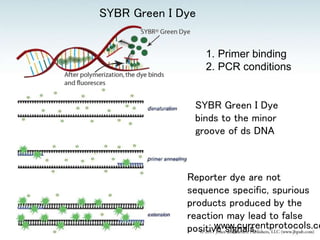
SYBR Green I Dye
www.currentprotocols.co
1. Primer binding
2. PCR conditions
SYBR Green I Dye
binds to the minor
groove of ds DNA
Reporter dye are not
sequence specific, spurious
products produced by the
reaction may lead to false
positive signals.
21
REAL TIME PCR
www.biorad.com
Wajana L (PhD)
22
Wajana L (PhD)
23
Wajana L (PhD)
24
SERIES OF 10-FOLD DILUTIONS
Wajana L (PhD)
25
Wajana L (PhD)
26
Wajana L (PhD)
27
SERIES OF 10-FOLD DILUTIONS
threshold
Ct
Wajana L (PhD)
28
STANDARD CURVE METHOD
Wajana L (PhD)
29
dilutions target DNA
dilutions reference DNA
target
primers
reference
primers
triplicates cDNA
triplicates cDNA
Standard curve method
Wajana L (PhD)
30
4
NORTHERN
target gene
internal control gene
actin, GAPDH, RPLP0 etc
Ratio experimental/
control = fold change in target gene
fold change in reference gene
control expt
fold change in target gene=
copy number experimental
copy number control
Wajana L (PhD)
31
A
B
C
D
E
F
G
H
1 2 3 4 5 6 7 8 9 10 11 12
Date: protocol:
RPLP0
-4
5uL
H2O
5uL
H2O
RPLP0
-5
RPLP0
-6
RPLP0
-7
RPLP0
-8
RPLP0
-9
RPLP0
-10
a5-int
-4
a5-int
-5
a5-int
-6
a5-int
-7
a5-int
-8
a5-int
-9
a5-int
-10
add a5-integrin
master mix to
this row
add RPLP0
master mix to this
row
cDNA
1
cDNA
2
cDNA
1
cDNA
2
Wajana L (PhD)
32 4
NORTHERN
alpha-5 integrin (target gene)
RPLP0 (reference)
Ratio alpha-5 integrin cDNA2 to cDNA1 = fold change in alpha-5 integrin
fold change in RPLP0
cDNA1 cDNA2
Wajana L (PhD)

3. RTPCR.ppt

  • 1.
  • 2.
    2 OVERVIEW tissue extract RNA copy intocDNA (reverse transciptase) do real-time PCR analyze results Wajana L (PhD)
  • 3.
    3 OVERVIEW tissue extract RNA copy intocDNA (reverse transciptase) do real-time PCR analyze results Wajana L (PhD)
  • 4.
    4 IMPORTANCE OF RNAQUALITY • Should be free of protein (absorbance 260nm/280nm) • Should be undegraded (28S/18S ~2:1) • Should be free of DNA (DNAse treat) • Should be free of PCR inhibitors – Purification methods – Clean-up methods Wajana L (PhD)
  • 5.
    5 OVERVIEW tissue extract RNA copy intocDNA (reverse transciptase) do real-time PCR analyze results Wajana L (PhD)
  • 6.
    6 Importance of reverse transcriptaseprimers • Oligo (dt) • Random hexamer (NNNNNN) • Specific, follows the rules of designing RTPCR primers • efficiency usually not known Wajana L (PhD)
  • 7.
    7 OVERVIEW Tissue/Cells extract RNA copy intocDNA (reverse transciptase…RTPCR) do real-time PCR analyze results Wajana L (PhD)
  • 8.
    8 Importance of primersin PCR • specific • high efficiency • no primer-dimers • Ideally should not give a DNA signal – cross exon/exon boundary Wajana L (PhD)
  • 9.
    9 EXON 1 EXON2 INTRON 2 DNA EXON 1 EXON 2 RNA Wajana L (PhD)
  • 10.
    10 How are yougoing to measure the PCR product • Directly – Sybr green – Quality of primers critical • Indirectly – In addition to primers, add a fluorescently labeled hybridization probe Wajana L (PhD)
  • 11.
    11 Importance of controls •negative control (no DNA) – checks reagents for contamination • no reverse transcriptase control – detects if signal from contaminating DNA • positive control – checks that reagents and primers work – especially importance if trying to show absence of expression of a gene Wajana L (PhD)
  • 12.
    12 Standards • same copynumber in all cells • expressed in all cells • reasonably large intron • no pseudogene • no alternate splicing in region you want to PCR Wajana L (PhD)
  • 13.
    13 RNA from control RNAfrom TGF-b treated cells cDNA from control cDNA from TGF-b treated cells ? Is there any change in a5-integrin expression ? Wajana L (PhD)
  • 14.
    14 THE REVERSE TRANSCRIPTIONREACTIONS • reactions done as 20µl reactions with oligo (dT) as primer and 1µg total RNA • reactions were incubated 1 hr 37C, then diluted to 150µl with water, and incubated in a boiling water bath for 10 mins • use 5µL of this diluted cDNA in your reactions Wajana L (PhD)
  • 15.
    15 Standards • Commonly usedstandards – Glyceraldehyde-3-phosphate dehydrogenase mRNA – Beta-actin mRNA – MHC I (major histocompatability complex I) mRNA – Cyclophilin mRNA – mRNAs for certain ribosomal proteins • 28S or 18S rRNA Wajana L (PhD)
  • 16.
    16 • The perfectstandard does not exist Wajana L (PhD)
  • 17.
    17 CYCLE NUMBER AMOUNTOF DNA 0 1 1 2 2 4 3 8 4 16 5 32 6 64 7 128 8 256 9 512 10 1,024 11 2,048 12 4,096 13 8,192 14 16,384 15 32,768 16 65,536 17 131,072 18 262,144 19 524,288 20 1,048,576 21 2,097,152 22 4,194,304 23 8,388,608 24 16,777,216 25 33,554,432 26 67,108,864 27 134,217,728 28 268,435,456 29 536,870,912 30 1,073,741,824 31 1,400,000,000 32 1,500,000,000 33 1,550,000,000 34 1,580,000,000 Wajana L (PhD) 2n times as much DNA
  • 18.
    18 0 200000000 400000000 600000000 800000000 1000000000 1200000000 1400000000 1600000000 0 5 1015 20 25 30 35 PCR CYCLE NUMBER AMOUNT OF DNA 1 10 100 1000 10000 100000 1000000 10000000 100000000 1000000000 10000000000 0 5 10 15 20 25 30 35 PCR CYCLE NUMBER AMOUNT OF DNA CYCLE NUMBER AMOUNT OF DNA 0 1 1 2 2 4 3 8 4 16 5 32 6 64 7 128 8 256 9 512 10 1,024 11 2,048 12 4,096 13 8,192 14 16,384 15 32,768 16 65,536 17 131,072 18 262,144 19 524,288 20 1,048,576 21 2,097,152 22 4,194,304 23 8,388,608 24 16,777,216 25 33,554,432 26 67,108,864 27 134,217,728 28 268,435,456 29 536,870,912 30 1,073,741,824 31 1,400,000,000 32 1,500,000,000 33 1,550,000,000 34 1,580,000,000 Wajana L (PhD)
  • 19.
    TeqMan probe 1. Primerbinding 2. Probe hybridization 3. PCR conditions
  • 20.
    SYBR Green IDye www.currentprotocols.co 1. Primer binding 2. PCR conditions SYBR Green I Dye binds to the minor groove of ds DNA Reporter dye are not sequence specific, spurious products produced by the reaction may lead to false positive signals.
  • 21.
  • 22.
  • 23.
  • 24.
    24 SERIES OF 10-FOLDDILUTIONS Wajana L (PhD)
  • 25.
  • 26.
  • 27.
    27 SERIES OF 10-FOLDDILUTIONS threshold Ct Wajana L (PhD)
  • 28.
  • 29.
    29 dilutions target DNA dilutionsreference DNA target primers reference primers triplicates cDNA triplicates cDNA Standard curve method Wajana L (PhD)
  • 30.
    30 4 NORTHERN target gene internal controlgene actin, GAPDH, RPLP0 etc Ratio experimental/ control = fold change in target gene fold change in reference gene control expt fold change in target gene= copy number experimental copy number control Wajana L (PhD)
  • 31.
    31 A B C D E F G H 1 2 34 5 6 7 8 9 10 11 12 Date: protocol: RPLP0 -4 5uL H2O 5uL H2O RPLP0 -5 RPLP0 -6 RPLP0 -7 RPLP0 -8 RPLP0 -9 RPLP0 -10 a5-int -4 a5-int -5 a5-int -6 a5-int -7 a5-int -8 a5-int -9 a5-int -10 add a5-integrin master mix to this row add RPLP0 master mix to this row cDNA 1 cDNA 2 cDNA 1 cDNA 2 Wajana L (PhD)
  • 32.
    32 4 NORTHERN alpha-5 integrin(target gene) RPLP0 (reference) Ratio alpha-5 integrin cDNA2 to cDNA1 = fold change in alpha-5 integrin fold change in RPLP0 cDNA1 cDNA2 Wajana L (PhD)