“I need a job – can hospitality short courses
help?” A study of international student needs in
Auckland, New Zealand
Hamish Small
Looking Forward
• Background to study
• Part-time work models and policies
• International Student Needs and Motivations
• Hospitality Industry Needs and Compliance
• Hospitality Short Courses
• Research Methodology
• Results
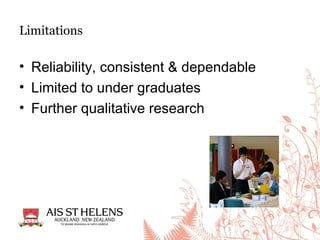
• Limitations
• Recommendations
• Previous study surrounding multi-cultural classroom
• Services for international students
• Employment outcomes
• Courses on offer
• Looking to the future
• Is there demand for hospitality short courses to gain
employment?
Background to Study
• Common occurrence for students to work while studying
• Supplementary income
• Expand on theory
• Options for employment post-study
• Individual legislation
• Definitions and classification
• 20 hours per week (NZ)
• 2012 – 48,104 international students (11.1% of all
tertiary) (MoEdu, 2012)
• Employers want trained and knowledgeable staff
Part-time Work Models and Policies
• Programme content, services and facilities a large
decision making factor
• Employment opportunities
• Needs of different backgrounds and cultures
• “One size fits all”
• Globilisation provides economic benefits to educational
providers
• Points of difference required
• Employment will assist in preparing for new environment
International Student Needs and Motivations
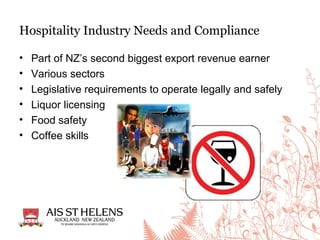
• Part of NZ’s second biggest export revenue earner
• Various sectors
• Legislative requirements to operate legally and safely
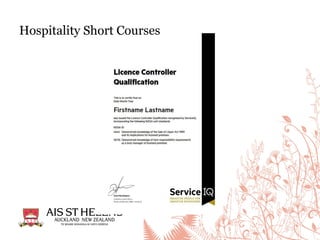
• Liquor licensing
• Food safety
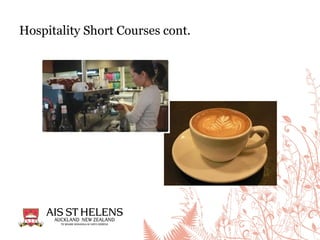
• Coffee skills
Hospitality Industry Needs and Compliance
Hospitality Short Courses
Hospitality Short Courses cont.
Aim – Identify whether International
students feel hospitality short courses
would assist them in gaining employment
opportunities
Quantitative dominated questionnaire
Research Methodology
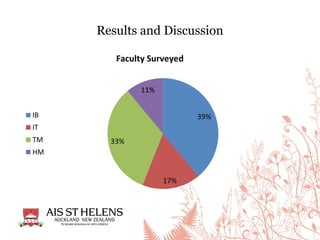
Results and Discussion
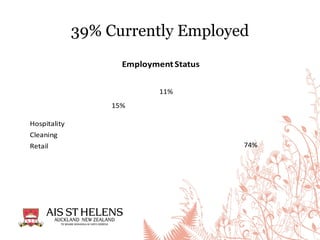
39% Currently Employed
74%
15%
11%
EmploymentStatus
Hospitality
Cleaning
Retail
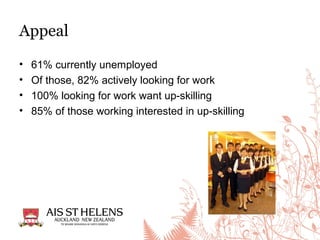
Appeal
• 61% currently unemployed
• Of those, 82% actively looking for work
• 100% looking for work want up-skilling
• 85% of those working interested in up-skilling
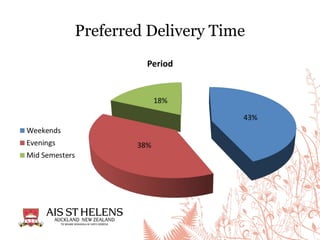
Preferred Delivery Time
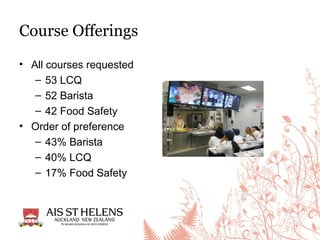
Course Offerings
• All courses requested
– 53 LCQ
– 52 Barista
– 42 Food Safety
• Order of preference
– 43% Barista
– 40% LCQ
– 17% Food Safety
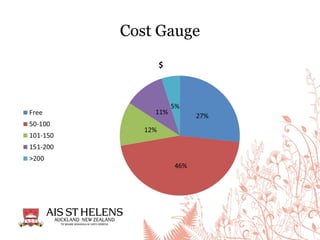
Cost Gauge
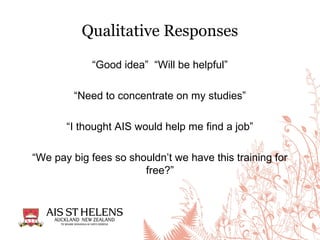
Qualitative Responses
“Good idea” “Will be helpful”
“Need to concentrate on my studies”
“I thought AIS would help me find a job”
“We pay big fees so shouldn’t we have this training for
free?”
• Reliability, consistent & dependable
• Limited to under graduates
• Further qualitative research
Limitations
Recommendations
• Need and demand
• Reciprocal benefits
• Tangible outcomes
• Further investment
• Point of difference
• HE provider of choice
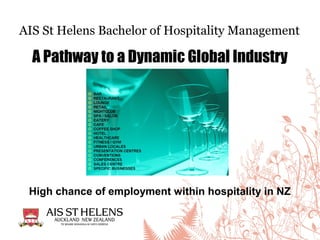
A Pathway to a Dynamic Global Industry
High chance of employment within hospitality in NZ
AIS St Helens Bachelor of Hospitality Management
Thank you for your valuable
time
Questions?

NTLT 2013 - Hamish Small - “I need a job – can hospitality short courses help?” A study of international student needs in Auckland, New Zealand

  • 1.
    “I need ajob – can hospitality short courses help?” A study of international student needs in Auckland, New Zealand Hamish Small
  • 2.
    Looking Forward • Backgroundto study • Part-time work models and policies • International Student Needs and Motivations • Hospitality Industry Needs and Compliance • Hospitality Short Courses • Research Methodology • Results • Limitations • Recommendations
  • 3.
    • Previous studysurrounding multi-cultural classroom • Services for international students • Employment outcomes • Courses on offer • Looking to the future • Is there demand for hospitality short courses to gain employment? Background to Study
  • 4.
    • Common occurrencefor students to work while studying • Supplementary income • Expand on theory • Options for employment post-study • Individual legislation • Definitions and classification • 20 hours per week (NZ) • 2012 – 48,104 international students (11.1% of all tertiary) (MoEdu, 2012) • Employers want trained and knowledgeable staff Part-time Work Models and Policies
  • 5.
    • Programme content,services and facilities a large decision making factor • Employment opportunities • Needs of different backgrounds and cultures • “One size fits all” • Globilisation provides economic benefits to educational providers • Points of difference required • Employment will assist in preparing for new environment International Student Needs and Motivations
  • 6.
    • Part ofNZ’s second biggest export revenue earner • Various sectors • Legislative requirements to operate legally and safely • Liquor licensing • Food safety • Coffee skills Hospitality Industry Needs and Compliance
  • 7.
  • 8.
  • 9.
  • 10.
    Aim – Identifywhether International students feel hospitality short courses would assist them in gaining employment opportunities Quantitative dominated questionnaire Research Methodology
  • 11.
  • 12.
  • 13.
    Appeal • 61% currentlyunemployed • Of those, 82% actively looking for work • 100% looking for work want up-skilling • 85% of those working interested in up-skilling
  • 14.
  • 15.
    Course Offerings • Allcourses requested – 53 LCQ – 52 Barista – 42 Food Safety • Order of preference – 43% Barista – 40% LCQ – 17% Food Safety
  • 16.
  • 17.
    Qualitative Responses “Good idea”“Will be helpful” “Need to concentrate on my studies” “I thought AIS would help me find a job” “We pay big fees so shouldn’t we have this training for free?”
  • 18.
    • Reliability, consistent& dependable • Limited to under graduates • Further qualitative research Limitations
  • 19.
    Recommendations • Need anddemand • Reciprocal benefits • Tangible outcomes • Further investment • Point of difference • HE provider of choice
  • 20.
    A Pathway toa Dynamic Global Industry High chance of employment within hospitality in NZ AIS St Helens Bachelor of Hospitality Management
  • 21.
    Thank you foryour valuable time Questions?