1. The processthat converts
sugar into energy.
A. Cellular respiration
B. Digestion
C. Metabolism
D. Photosynthesis
4.
2. The reactantsof cellular
respiration are?
A. CO2 and H2O
B. glucose and O2
C. O2 and lactic acid
D. H2O and glucose
5.
3. The twomain types of
fermentation are called?
A. Aerobic and anaerobic
B. Alcoholic and lactic acid
C. Alcoholic and Anaerobic
D. lactic acid and anaerobic
6.
4. Which processdoes NOT
release energy from glucose?
A. cellular respiration
B. Fermentation
C. glycolysis
D. Photosynthesis
7.
5. Cellular respirationoccurs in
which cell types?
A. Animal cells only
B. Plant cells only
C. both plant and animal cells
D. all but plant cells.
8.
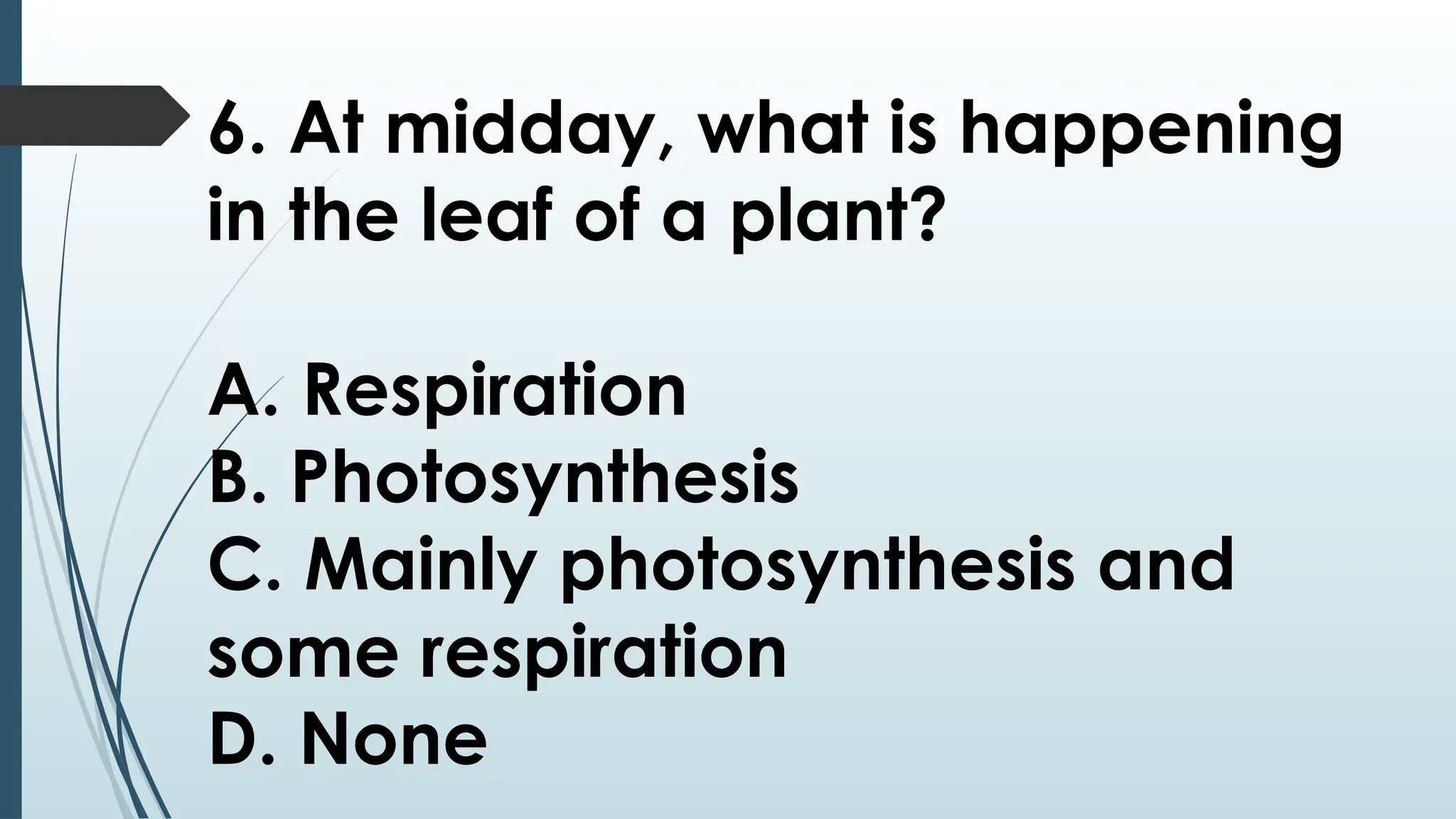
6. At midday,what is happening
in the leaf of a plant?
A. Respiration
B. Photosynthesis
C. Mainly photosynthesis and
some respiration
D. None
9.
7. Which ofthe following
need oxygen to survive?
A. Plants
B. Animals
C. Plants and Animals
D. None
10.
8. What functiondoes ATP carry out in
living things?
A. Aids in protein folding and coiling
B. Used to capture and transfer energy
C. Identifies DNA start sequences for
transcription
D. Helps maintain the fluidity of cell
membranes
11.
9. The correctsequence of events in cellular
respiration?
A. glycolysis fermentation Krebs cycle
B. glycolysis Krebs cycle oxidative
phosphorylation
C. Krebs cycle electron transport
glycolysis
D. Krebs cycle glycolysis oxidative
phosphorylation
12.
10. Cellular respirationuses one
molecule of glucose to produce
A. 2 ATP molecules
B. 34 ATP molecules
C. 36 ATP molecules
D. 38 ATP molecules
Photosynthesis is aprocess of
making food in plants. Plants use
(1)________from the sun, along
with (2)_____ in the soil and a gas
called (3)________ to make
(4)___________. During this
process, (5)_______ is released
into the air.




![Summative Assessment in Science 9 [Autosaved].pptx](https://cdn.slidesharecdn.com/ss_thumbnails/summativeassessmentinscience9autosaved-230413230801-d4e623ed-thumbnail.jpg?width=640&height=640&fit=bounds)


