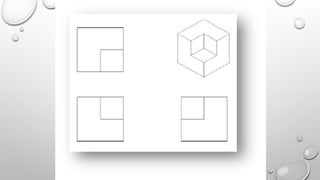
2D
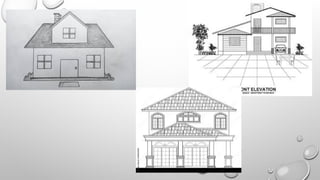
A 2D drawing is a flat representation of
an object or system that uses lines, shapes,
dimensions, and annotations to convey
information. It describes the view that
comes with using height, width and
length. 2D drawings are often created on a
flat surface, such as paper or like.
2 Dimentional Drawing or 2D
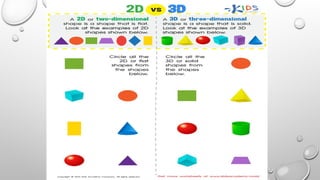
What is 3D art drawing?
Three-dimensional art, more commonly referred to
as 3D art, refers to any art that is created in three
dimensions, rather than two-dimensional like a
drawing. It describes an object that have a height, a width, and
depth dimensions.
This type of three-dimensional art can be made in
many different ways, including sculptures, paintings,
and even photographs.
PROJECTION
In drafting, projection is the process of representing a
three-dimensional object on a two-dimensional surface. It's
used in technical drawings to show an object's three
dimensions and characteristics in detail.
To create a projection, straight lines and curves are
used to project various points on the object's contour onto
the drawing sheet. The image of the object is the figure
formed by joining the points on the plane.
A plane view is a top-down view of an object, while an elevation
view is a side view of an object:
Plan view
A horizontal view that shows the top of an object. In architectural
drawings, a plan view is often used to show the floor plan of a
building.
Elevation view
A vertical view that shows one side of an object. Elevations can be
labeled with compass directions to indicate the direction they are
facing. For example, a front elevation shows the front of an object,
including the main entrance, porch, and garage.
The main differences between PARALLEL and PERSPECTIVE PROJECTION are:
*Parallelism
In parallel projection, parallel lines in 3D space remain parallel in the 2D image. In perspective
projection, projectors meet at a single point, called the center of projection.
*Realistic view
Perspective projection is often considered more realistic than parallel projection because it more
closely resembles human vision and photography.
Scale and shape
Parallel projection preserves the scale and shape of an object. Perspective projection makes
objects appear smaller in the distance, which can create effects like foreshortening and vanishing
points.
Uses
Parallel projection is popular in technical applications because it preserves the parallelism of an
object's lines and faces. Perspective projection is used to create realistic visual effects in a drawing.
Types
There are two types of parallel projections: Orthographic and Oblique. There are three types
of perspective projections: one point, two point, and three point.
Types of Projection Methods Used in
Mechanical Drawing
There are four main types of
projection methods used in mechanical
drawing in order to convey information
such as geometry, dimensions,
tolerances, material, and finish..
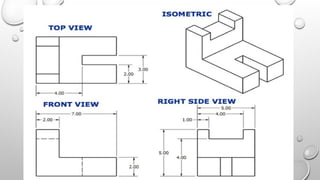
1. Orthographic Projection
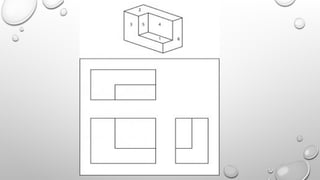
The orthographic projection shows a 3D object in two
dimensions so that you can see three views: the front
view, the side view, and the top view. It is usually positioned
relative to the rules of first-angle or third-angle projection.
The difference between the two is the view. However, it is
not a realistic view of the object, because it requires
multiple views to get all of the information in order to “see”
the design. But more accurate measurements can be
obtained because all views have the same scale.
An orthographic projection can also include a section
view, which is when a portion of the object is cross-
sectioned along the specified plane, and the information
about that section is displayed. It’s used to show internal
2. Axonometric Projection
Axonometric is another type of orthographic
projection. It is considered complex because only one
image is drawn on the paper’s plane. There are three
types of classifications. The most common is isometric,
where the angles between the three axes are equal. The
second is diametric. Only two of the angles between the
axes are equal in this type. Trimetric is the third type. It
can have three axes with different angles between
them. It is the most common type. Axonometric
projection is good for rectangular or square objects
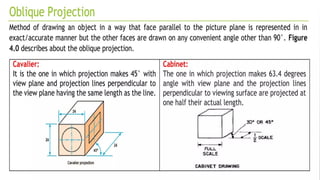
3. Oblique Projection
Oblique is a simple type of projection that only
requires one image. It can be drawn with traditional
tools because it’s not complex. It depicts a 2D image of
a 3D object. The object is drawn from the front view,
and then the other areas are added in relation to it. It
can be divided into two types based on the scaling of
the object: cavalier projection, which uses a 1:1 scale,
and cabinet projection, which uses a 2:1 scale. It uses
parallel lines to produce the source of the object in the
image.
4. Perspective Projection
Of the four methods, perspective projection is not
based on parallel lines. It is an approximate
representation of the object as it would be seen by the
eye with respect to depth perception. The projection
lines emerge from a single point, showing the closer
part larger than the more distant part. The object can
feel more realistic with this projection, but it does
require a good imagination.
ISOMETRIC PROJECTION is a method
for visually representing three-
dimensional objects in two dimensions
in technical and engineering drawings. It
is an axonometric projection in which
the three coordinate axes appear equally
foreshortened and the angle between
any two of them is 120 degrees
2Dimensional vs 3Dimensional Projection.pptx

2Dimensional vs 3Dimensional Projection.pptx

  • 1.
  • 2.
    A 2D drawingis a flat representation of an object or system that uses lines, shapes, dimensions, and annotations to convey information. It describes the view that comes with using height, width and length. 2D drawings are often created on a flat surface, such as paper or like. 2 Dimentional Drawing or 2D
  • 6.
    What is 3Dart drawing? Three-dimensional art, more commonly referred to as 3D art, refers to any art that is created in three dimensions, rather than two-dimensional like a drawing. It describes an object that have a height, a width, and depth dimensions. This type of three-dimensional art can be made in many different ways, including sculptures, paintings, and even photographs.
  • 11.
  • 12.
    In drafting, projectionis the process of representing a three-dimensional object on a two-dimensional surface. It's used in technical drawings to show an object's three dimensions and characteristics in detail. To create a projection, straight lines and curves are used to project various points on the object's contour onto the drawing sheet. The image of the object is the figure formed by joining the points on the plane.
  • 14.
    A plane viewis a top-down view of an object, while an elevation view is a side view of an object: Plan view A horizontal view that shows the top of an object. In architectural drawings, a plan view is often used to show the floor plan of a building. Elevation view A vertical view that shows one side of an object. Elevations can be labeled with compass directions to indicate the direction they are facing. For example, a front elevation shows the front of an object, including the main entrance, porch, and garage.
  • 15.
    The main differencesbetween PARALLEL and PERSPECTIVE PROJECTION are: *Parallelism In parallel projection, parallel lines in 3D space remain parallel in the 2D image. In perspective projection, projectors meet at a single point, called the center of projection. *Realistic view Perspective projection is often considered more realistic than parallel projection because it more closely resembles human vision and photography. Scale and shape Parallel projection preserves the scale and shape of an object. Perspective projection makes objects appear smaller in the distance, which can create effects like foreshortening and vanishing points. Uses Parallel projection is popular in technical applications because it preserves the parallelism of an object's lines and faces. Perspective projection is used to create realistic visual effects in a drawing. Types There are two types of parallel projections: Orthographic and Oblique. There are three types of perspective projections: one point, two point, and three point.
  • 16.
    Types of ProjectionMethods Used in Mechanical Drawing There are four main types of projection methods used in mechanical drawing in order to convey information such as geometry, dimensions, tolerances, material, and finish..
  • 18.
    1. Orthographic Projection Theorthographic projection shows a 3D object in two dimensions so that you can see three views: the front view, the side view, and the top view. It is usually positioned relative to the rules of first-angle or third-angle projection. The difference between the two is the view. However, it is not a realistic view of the object, because it requires multiple views to get all of the information in order to “see” the design. But more accurate measurements can be obtained because all views have the same scale. An orthographic projection can also include a section view, which is when a portion of the object is cross- sectioned along the specified plane, and the information about that section is displayed. It’s used to show internal
  • 19.
    2. Axonometric Projection Axonometricis another type of orthographic projection. It is considered complex because only one image is drawn on the paper’s plane. There are three types of classifications. The most common is isometric, where the angles between the three axes are equal. The second is diametric. Only two of the angles between the axes are equal in this type. Trimetric is the third type. It can have three axes with different angles between them. It is the most common type. Axonometric projection is good for rectangular or square objects
  • 20.
    3. Oblique Projection Obliqueis a simple type of projection that only requires one image. It can be drawn with traditional tools because it’s not complex. It depicts a 2D image of a 3D object. The object is drawn from the front view, and then the other areas are added in relation to it. It can be divided into two types based on the scaling of the object: cavalier projection, which uses a 1:1 scale, and cabinet projection, which uses a 2:1 scale. It uses parallel lines to produce the source of the object in the image.
  • 21.
    4. Perspective Projection Ofthe four methods, perspective projection is not based on parallel lines. It is an approximate representation of the object as it would be seen by the eye with respect to depth perception. The projection lines emerge from a single point, showing the closer part larger than the more distant part. The object can feel more realistic with this projection, but it does require a good imagination.
  • 22.
    ISOMETRIC PROJECTION isa method for visually representing three- dimensional objects in two dimensions in technical and engineering drawings. It is an axonometric projection in which the three coordinate axes appear equally foreshortened and the angle between any two of them is 120 degrees