MOLECULAR BIOLOGY
Contents
• Regulation of gene expression
• Recombinant DNA Technology
• Polymerase Chain Reaction
Regulation of gene expression
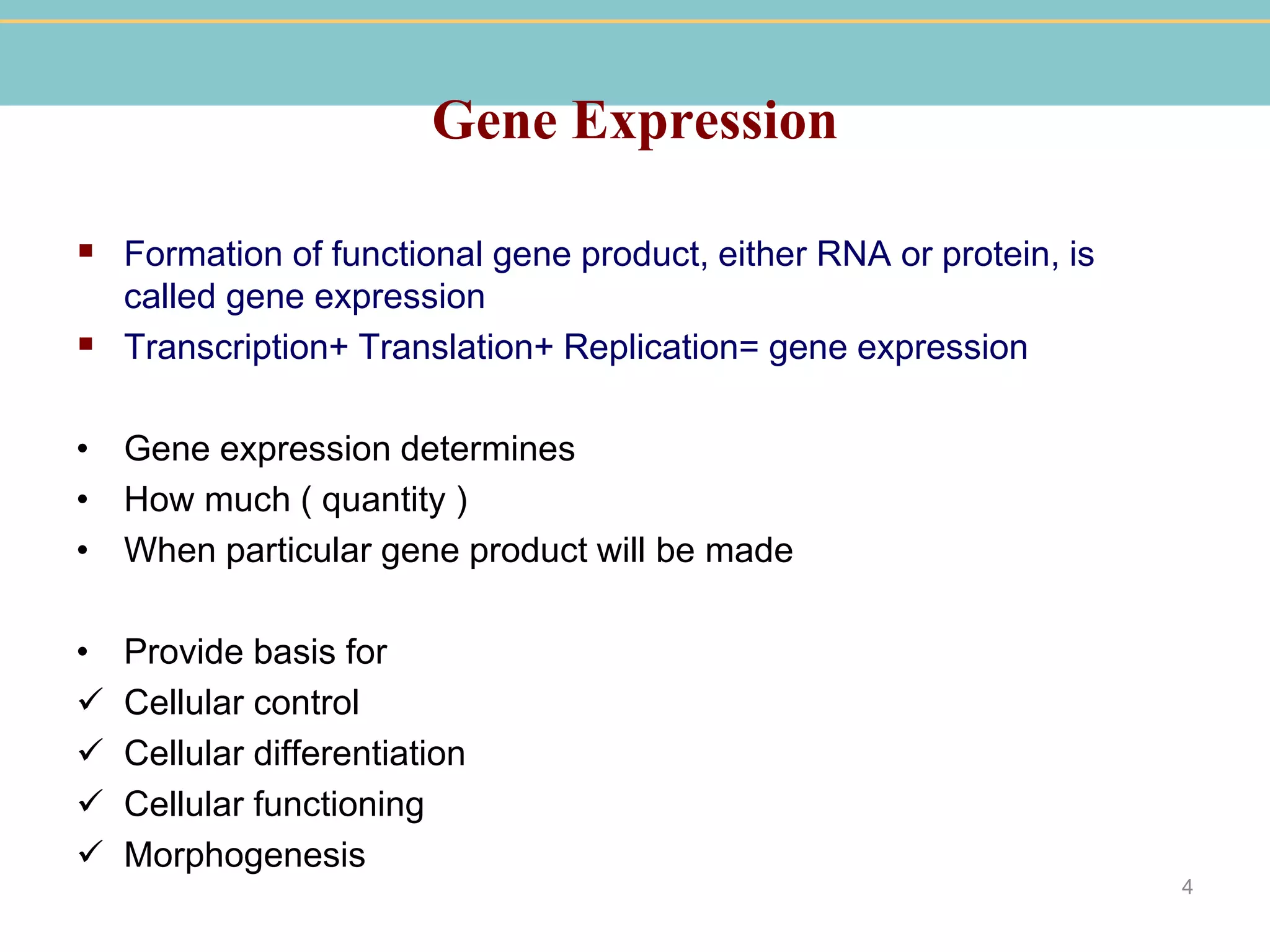
Gene Expression
 Formation of functional gene product, either RNA or protein, is
called gene expression
 Transcription+ Translation+ Replication= gene expression
• Gene expression determines
• How much ( quantity )
• When particular gene product will be made
• Provide basis for
 Cellular control
 Cellular differentiation
 Cellular functioning
 Morphogenesis
4
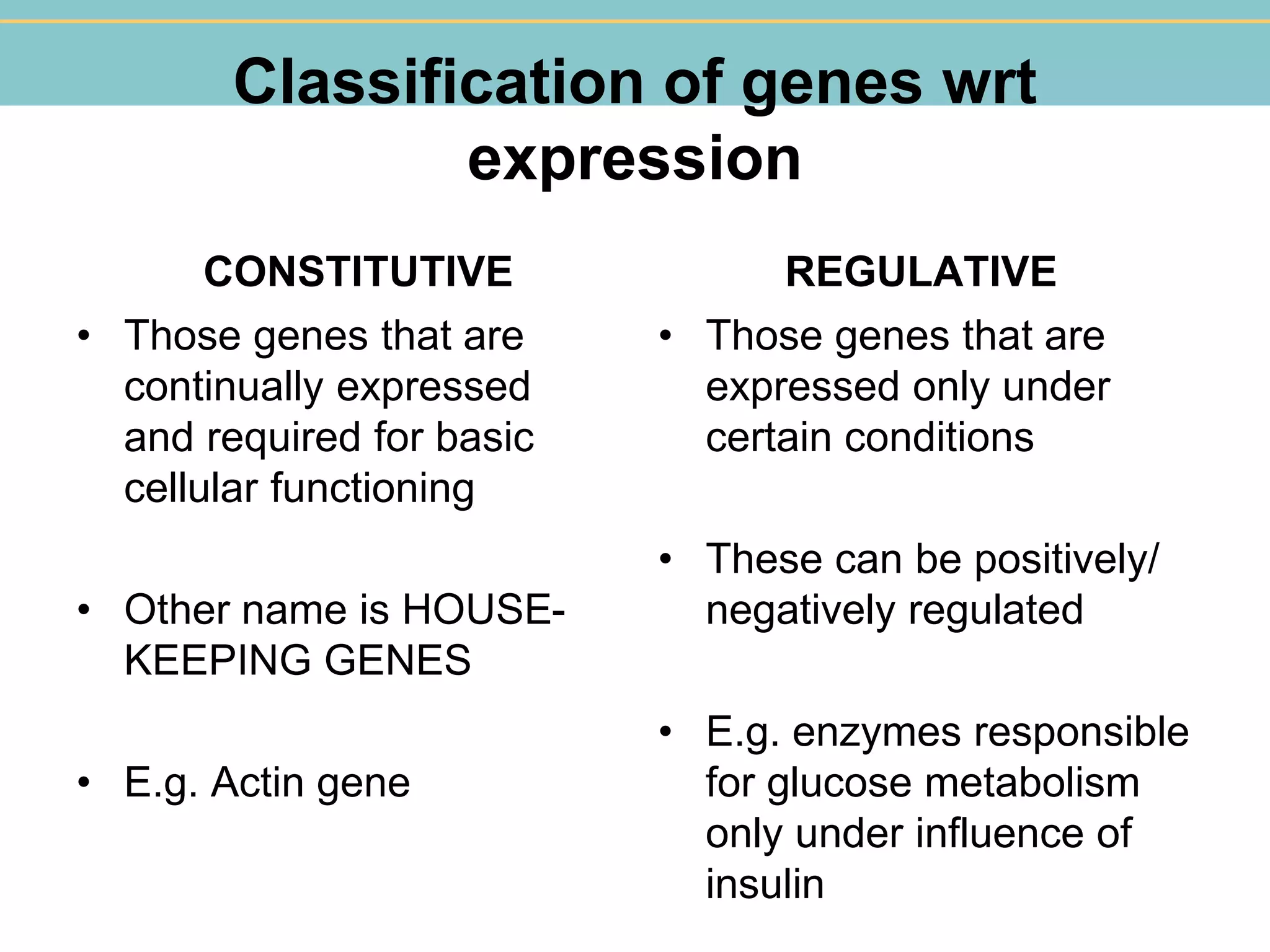
Classification of genes wrt
expression
CONSTITUTIVE
• Those genes that are
continually expressed
and required for basic
cellular functioning
• Other name is HOUSE-
KEEPING GENES
• E.g. Actin gene
REGULATIVE
• Those genes that are
expressed only under
certain conditions
• These can be positively/
negatively regulated
• E.g. enzymes responsible
for glucose metabolism
only under influence of
insulin
Control of Gene Expression in
PROKARYOTES
Transcription
 Synthesis of RNA that is complementary to one of
the strands of DNA.
Translation
 Ribosomes read a messenger RNA and make protein
according to its instruction.
6
Control of Gene Expression in
EUKARYOTES
 Transcription
 Post transcription
 Translation
 Post-translation
7
Gene Structure of Eukaryotes
 Eukaryotic gene structure: Most eukaryotic genes in
contrast to typical bacterial genes, the coding
sequences (exons) are interrupted by noncoding DNA
(introns).
 On average, 7-10 exons spread over 10-16 kb of
DNA.
8
9
21.. gene expression.ppt

21.. gene expression.ppt

  • 1.
  • 2.
    Contents • Regulation ofgene expression • Recombinant DNA Technology • Polymerase Chain Reaction
  • 3.
  • 4.
    Gene Expression  Formationof functional gene product, either RNA or protein, is called gene expression  Transcription+ Translation+ Replication= gene expression • Gene expression determines • How much ( quantity ) • When particular gene product will be made • Provide basis for  Cellular control  Cellular differentiation  Cellular functioning  Morphogenesis 4
  • 5.
    Classification of geneswrt expression CONSTITUTIVE • Those genes that are continually expressed and required for basic cellular functioning • Other name is HOUSE- KEEPING GENES • E.g. Actin gene REGULATIVE • Those genes that are expressed only under certain conditions • These can be positively/ negatively regulated • E.g. enzymes responsible for glucose metabolism only under influence of insulin
  • 6.
    Control of GeneExpression in PROKARYOTES Transcription  Synthesis of RNA that is complementary to one of the strands of DNA. Translation  Ribosomes read a messenger RNA and make protein according to its instruction. 6
  • 7.
    Control of GeneExpression in EUKARYOTES  Transcription  Post transcription  Translation  Post-translation 7
  • 8.
    Gene Structure ofEukaryotes  Eukaryotic gene structure: Most eukaryotic genes in contrast to typical bacterial genes, the coding sequences (exons) are interrupted by noncoding DNA (introns).  On average, 7-10 exons spread over 10-16 kb of DNA. 8
  • 9.