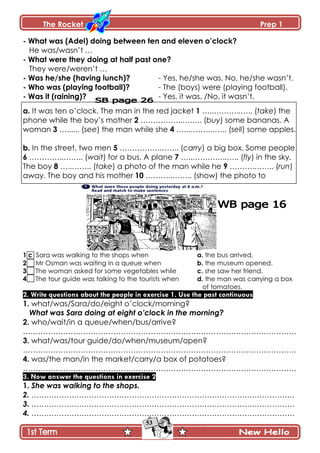
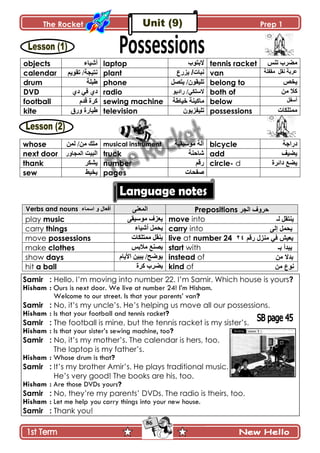
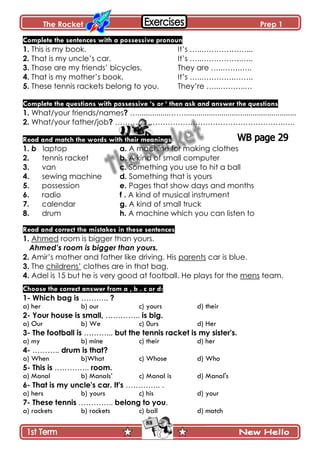
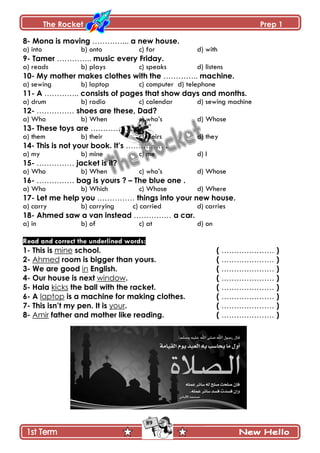
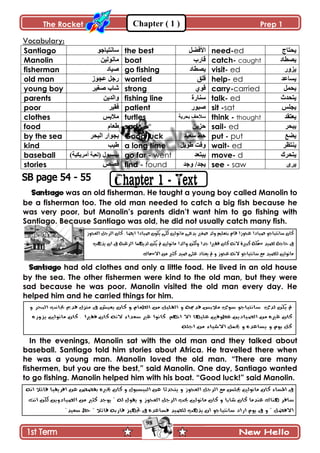
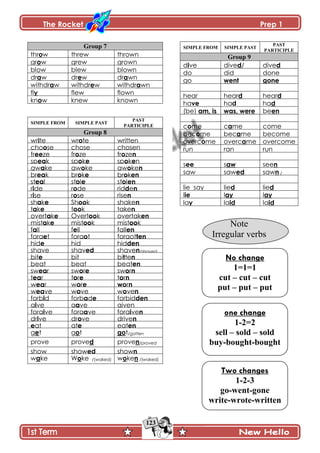
The Rocket Prep 1
1
‫هذه‬ٌ‫شعبا‬ ‫يحًد‬ ‫نًستز‬ ‫انًذكزة‬
‫أرجى‬‫رفعها‬ ‫أو‬ ‫انزوابط‬ ‫تغييز‬ ‫عدو‬
‫باس‬ ‫آخز‬ ‫يىقع‬ ‫أي‬ ‫عهى‬‫سييم‬ ‫أي‬ ‫ى‬
‫َسأنكى‬‫اندعاء‬
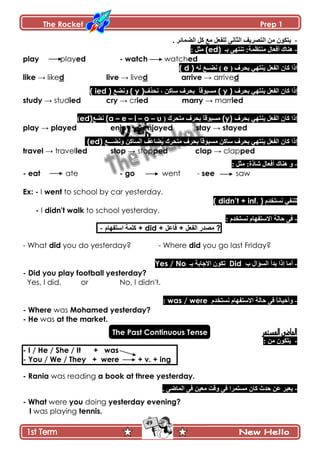
The Rocket Prep 1
2
‫ج٪ٿڃٌج‬ :‫جپڃطٳٌٶْڅ‬ ‫ڂڅ‬ ‫ضٛركٌج‬ ‫أڄ‬ ِ‫ٲ‬ ‫ضٍٮرٌڄ‬ ‫َڅ‬‫ڂ‬ ‫ّح‬ ‫جأل٪ُجء‬ ‫أذنحؤچح‬‫ئيج‬ ‫جهلل‬ ‫ٖحء‬ ‫ئڄ‬ ٌٌْٓ‫ڂ‬ ‫ْيٽ‬ ‫جپطٳٌٴ‬ ‫٢ٍّٵ‬ َ‫ڄ‬‫أ‬
ِ‫جٓض‬ َ‫٪ٿ‬ ‫قٍٚطځ‬:
‫حعبىل‬ ‫ببهلل‬ ‫انصهت‬ ‫حسه‬ :
ً
‫أَال‬:
‫جپىٌجْس‬ ٍْ‫ًٮ‬ ‫جپىٌجْس‬ ‫أغنحء‬َ‫ض٫حپ‬ ‫جهلل‬ ‫ڂڅ‬ ‫٪ٌڄ‬ ِ‫ٲي‬َ‫ڄ‬‫أل‬ ‫ًجپطٳٌٴ؛‬ ٌ‫جالْطًٺح‬ ‫قٓڅ‬ َ‫٪ٿ‬ ‫پنح‬
‫جهلل‬ َ‫ئپ‬ ‫َخ‬ٍ‫ضٷ‬ ‫ڂڅ‬‫ًح‬٪‫يٌج‬ ‫ئپْو‬ ‫جهلل‬ ‫َخ‬ٍ‫ضٷ‬ ‫ًج‬ٍ‫ٖر‬.
ٔ.‫ال‬ ‫ٲاچو‬ ،‫ًٮٍْه‬ ٌ‫جالْطًٺح‬ ‫ذٓرد‬ ‫ضأنٍْىح‬ ‫ً٪ىڀ‬ ‫أًٶحضيح‬ َ‫٪ٿ‬ ‫ذحپٛالز‬ِ‫ٲ‬ ‫جهلل‬ ‫ذحٌٸ‬ٍ‫ٽ‬‫٪ڃ‬
َُّ‫٪ٿ‬ ‫جإلٶرحټ‬ ‫قٓڅ‬ ِ‫ٲ‬ ‫ًح‬‫ر‬‫ْر‬ ‫جپٛالز‬ ‫ْطٻٌڄ‬ ‫ذٽ‬ ،‫جپٛالز‬ ‫٪څ‬ ِ‫ٿي‬‫ٲْيح‬ ‫پڃح‬ ‫جپڃًجٺٍز‬‫ڂڅ‬
‫ذىچْس‬ ‫ًقٍٺس‬ ‫چٳْٓس‬ ‫ٌجقس‬.
ٕ‫ذٷٍجءز‬ ‫جپڃًجٺٍز‬ ‫جذىأ‬ .‫جپٷٍآڄ‬ ‫ڂڅ‬ ٍْٓ‫ض‬ ‫ڂح‬.
ٖ‫أغنحء‬ ‫ڂٗٻٿس‬ ً‫أ‬ ٍ‫أڂ‬ ‫٪ٿْٹ‬ ‫ُد‬٫ٚ ‫ئيج‬ ً‫ال‬ً‫أ‬ َ‫ض٫حپ‬ ‫جهلل‬ َ‫ئپ‬ ‫جپطٌؾو‬ .ٌ‫جالْطًٺح‬"‫جْط٫نص‬ ‫ًئيج‬ ،‫جهلل‬ ‫ٲحْأټ‬ ‫ْأپص‬ ‫ئيج‬
ْ‫ٲح‬‫ذحهلل‬ ‫ط٫څ‬.،‫يپٹ‬ ‫ٖحذو‬ ‫ڂح‬ ً‫أ‬ ‫ڂُجؼ‬ ‫پٹ‬ ّْ‫پ‬ ً‫أ‬ ‫جپڃًجٺٍز‬ ِ‫ٲ‬ ‫جپٍٮرس‬ ‫ذ٫ىڀ‬ َ‫ش‬ٍ٫ٖ ‫ئيج‬‫جپْٗ٣حڄ‬ ‫ڂڅ‬ ‫ذحهلل‬ ً٫‫ٲحْط‬
،‫جپٍؾْځ‬َ‫ٹ‬ِ‫ذ‬ ُ‫ي‬ٌُ٪َ‫أ‬ ِ‫خ‬ٌَ ْ‫ٽ‬ُ‫ٶ‬ًَ﴿(ِ‫څ‬ِْ٢‫َح‬َْٗ‫جپ‬ ِ‫ش‬‫َج‬َُ‫ڃ‬َ‫ى‬ ْ‫څ‬ِ‫ڂ‬79( ِ‫ڄ‬ًٍُُْٟ‫ك‬َّ ْ‫ڄ‬َ‫أ‬ ِ‫خ‬ٌَ َ‫ٹ‬ِ‫ذ‬ ُ‫ي‬ٌُ٪َ‫أ‬ًَ )79(﴾(‫جپڃإڂنٌڄ‬ :‫ٌٌْز‬.
‫جالٮ‬ ً‫أ‬ ‫جپٌٌٞء‬ ‫ّڃٻنٹ‬ ‫غځ‬‫جپكحؾس‬ ‫ٚالز‬ ‫ًو٪حء‬ ‫ٌٺ٫طْڅ‬ ‫ًٚالز‬ ‫طٓحټ‬‫چٳٓٹ‬ ‫ض٣ڃثڅ‬ َ‫قط‬ ‫جهلل‬ ٍ‫يٺ‬ ً‫أ‬ ‫ٶٍآڄ‬ ‫ٶٍجءز‬ ً‫أ‬
‫ىنحٸ‬ ‫ٺحڄ‬ ‫ًئڄ‬ ‫جپڃًجٺٍز‬ ‫ض٫حًو‬ ‫غځ‬ ،‫ًضيىأ‬‫قٿيح‬ ‫٪څ‬ ‫جپركع‬ ‫ٲكحًټ‬ ٌِ‫و‬ ً‫أ‬ ‫ڂحوز‬ ِ‫س‬‫ٺٛ٫ٌذ‬ ٌ‫ف‬ٞ‫ًج‬ ٌ‫د‬‫ْر‬.
ٗ..‫٢ح٪طيڃح‬ ً ‫جپٌجپىّڅ‬ ٍ‫ذ‬
ِ٘‫ٴ‬ً‫ٚنى‬ ِ‫ٲ‬ ‫پٻځ‬ ٍْٓ‫ض‬ ‫ڂح‬ َٝ٫‫ذ‬ ِٛ‫جپٗه‬ ‫ڂًٍٛٲٻځ‬ ‫ڂڅ‬ ‫ًئنٌضٹ‬ ‫أچص‬ ٩ٞ .‫ج‬‫ذ٫ى‬ ‫غځ‬ ‫جهلل‬ َ‫ئپ‬ ‫ًح‬‫ذ‬ٍُ‫ضٷ‬ ‫ذحپڃنُټ‬ ‫پٛىٶحش‬
ًُ‫جپ‬ ‫جپڃحټ‬ ‫ىًج‬ ‫ڂڅ‬ َ٣٫ُّ ‫أڄ‬ ‫ّڃٻڅ‬ ‫ڂىز‬‫ڂٓٻْڅ‬ ً‫أ‬ ٍٍْ‫پٳٷ‬ ٩‫ُڃ‬‫ؾ‬.
ٙ‫جپٌجپىّڅ‬ ٩‫ڂ‬ ٍ‫جپٗي‬ ِ‫ٲ‬ ‫ٌّڀ‬ ‫ْٚحڀ‬ ..
9‫ًجپڃًجٺٍز‬ ‫جپڃىٌْس‬ ‫ڂڅ‬ ‫ًجپ٫ٌوز‬ ِ‫خ‬‫جپًىح‬ ِ‫ش‬‫أًٶح‬ ِ‫ٲ‬ ‫جهلل‬ ٍ‫يٺ‬ .‫ًجپنٌڀ‬ ‫ًجألٺٽ‬ ‫ًجالڂطكحڄ‬.
9.ٛ‫ًض‬ ‫أ٪ڃحپٹ‬ ِ‫ٲ‬ َ‫ض٫حپ‬ ‫جهلل‬ ‫ڂٍجٶرس‬‫ٍٲحضٹ‬.
7.‫ج‬ٍْ‫ذٻػ‬ ّْ‫پ‬ ‫ًپٻڅ‬ ‫ڂنٹ‬ ٍ‫أٺػ‬ ‫ُّّڅ‬ْ‫جپڃطڃ‬ ‫ڂڅ‬ ١‫ٲٷ‬ ‫ٚىّٷْڅ‬ ً‫أ‬ ‫ٚىّٵ‬ ‫٪څ‬ ‫جذكع‬ : ‫جپٌٶص‬ ‫ًٶطٿس‬ ‫جپٌٓء‬ ‫ٌٲٷحء‬ ًٌ‫ق‬
. ٠‫ذحإلقرح‬ ‫ضٛحخ‬ ‫ال‬ َ‫قط‬
‫االسخركبز‬ ‫حسه‬ :‫ب‬
ً
‫ثبوي‬:
ٌٔ‫ًپ‬ ‫ٲحٲ٫ٽ‬ ‫ٍٖقو‬ ‫ٶرٽ‬ ٌِ‫جپى‬ ٍِٟ‫ضك‬ ‫أڄ‬ ‫جْط٣٫ص‬ ‫ئيج‬ .٘‫وٶحتٵ‬.
ٕ‫ًج‬‫ى‬ْ‫ؾ‬ ٌِ‫جپى‬ ‫ٍٖـ‬ ‫أغنحء‬ ُْ‫جپطٍٺ‬ ..
ٖ‫جپ‬ .‫جپٍٗـ‬ ‫ذ٫ى‬ ‫ض٫ٍٲو‬ ‫ال‬ ‫َح‬‫ڃ‬٪ ‫ٓإجټ‬.
ٌٗ‫(جالْطًٺح‬ ‫ذْڅ‬ ‫ًج‬‫ى‬ْ‫ؾ‬ ‫جپٌٶص‬ ‫ضن٧ځ‬ ‫جپڃنُټ‬ َ‫ئپ‬ ‫جپ٫ٌوز‬ ‫ذ٫ى‬ ./‫جپ٫رحوز‬/‫ًج‬ٍ‫ڂرٻ‬ ‫جپنٌڀ‬ ٩‫ڂ‬ )‫جپٍجقس‬‫ًج‬ٍ‫ڂرٻ‬ ٤‫جالْطْٷح‬ ً.
٘.‫ًجپٌٟء‬ ‫جپيىًء‬ ِ‫ز‬‫ڂٍج٪ح‬ ٩‫ڂ‬ ‫پٿڃًجٺٍز‬ ٍ٘‫نح‬ ٍ‫ڄ‬‫ڂٻح‬ ‫ضكىّى‬.
ٙ‫جپى٪حء‬ ‫غځ‬ ‫ذحپٷٍآڄ‬ ‫جپرىء‬ ‫ذ٫ى‬ .َ‫ض‬ َ‫ٹ‬َْْ‫ٿ‬َ٪ ‫َح‬‫ن‬َ‫ذ‬ٌَ﴿‫َح‬‫ن‬ْ‫ٿ‬َ‫ٺ‬ٌَ،﴾ٍَُِْٛ‫ڃ‬ْ‫پ‬‫ج‬ َ‫ٹ‬َْْ‫پ‬ِ‫ئ‬ًَ ‫َح‬‫ن‬ْ‫ر‬َ‫چ‬َ‫أ‬ َ‫ٹ‬َْْ‫پ‬ِ‫ئ‬ًَ)‫جّٓس‬ ‫ڂڅ‬ ‫جپڃڃطكنس‬ٗ(،ْ‫ـ‬ٍَْٖ‫ج‬ ِ‫خ‬ٌَ﴿
ِِ‫پ‬( ٌُِْ‫ى‬َٕٚ٘﴾ٍُِْ‫ڂ‬َ‫أ‬ ِِ‫پ‬ ًٍََِّْٓ ))‫ڂًجٺٍضيح‬ ‫جپڃٍجو‬ ‫جپڃٌجو‬ ‫أْڃحء‬ ‫ٺطحذس‬ ‫ّؿد‬ ‫جپڃًجٺٍز‬ ِ‫ٲ‬ ‫جپرىء‬ ‫ٶرٽ‬ )‫٢و‬ ‫ٌٌْز‬
‫قٽ‬ ً‫أ‬‫ڂحو‬ ّ‫ضن‬ ‫ال‬ َ‫قط‬ ‫ًح‬ْ‫ٌّڂ‬ ‫جپرْص‬ ‫ٺٍجْس‬ ِ‫ٲ‬ ‫أْثٿطيح‬‫غالغس‬ ً‫أ‬ ‫ٌّڂْڅ‬ ‫ذ٫ى‬ ‫ڂ٣ٿٌذس‬ ‫ز‬ً‫ال‬‫ڂػ‬.
9‫جپڃًجٺٍز‬ ِ‫ٲ‬ ٩ْ٣‫ضٓط‬ ‫ڂح‬ ٌ‫ٶى‬ ‫چٳٓٹ‬ َ‫٪ٿ‬ ‫ج٪طڃى‬ ..
9‫ًجپن٧ٍّحش‬ ‫ًجپٛٯٍْز‬ ‫جپٻرٍْز‬ ‫جپ٫نحًّڅ‬ ٥‫قٳ‬ ‫ڂڅ‬ ‫جپڃيځ‬ ‫ضكص‬ ‫ًح‬٣‫ن‬ ٩ٞ .‫جإلؾحذس‬ ‫غځ‬ ‫ًج‬‫ى‬ْ‫ؾ‬ ٌِ‫جپى‬ ‫ًٲيځ‬ ،‫ًجپٌٍْڀ‬
ُ‫أ‬ ‫ضأؾْٽ‬ ‫ً٪ىڀ‬ ٌِ‫جپى‬ ِ‫ضٿ‬ ِ‫جپط‬ ‫جألْثٿس‬ ‫٪څ‬‫يپٹ‬ ‫قىظ‬ ٌ‫ًپ‬ ٨‫جپڃٓط٣ح‬ ٌِ‫ذٷى‬ ٍ‫ز‬‫ڂحو‬‫جپ٫٣ٿس‬ ‫ٌّڀ‬ ‫ٲحضٹ‬ ‫ڂح‬ ٌِٜ٫‫ٲ‬.
7َ‫٪ٿ‬ ‫جپڃٌجو‬ ِ‫ٽ‬‫پٻ‬ ٍ‫ټ‬ً‫ؾى‬ ‫٪ڃٽ‬ ‫ُٳٟٽ‬ّ ‫جالڂطكحڄ‬ ‫ٶرٽ‬ ‫پٿڃٍجؾ٫س‬ ‫ذحپنٓرس‬ .‫ضطٍٸ‬ ‫ًال‬ ‫ضٳْٛٿْس‬ ‫ڂًجٺٍز‬ ‫ْرٷيح‬ ‫ٶى‬ ‫ّٻٌڄ‬ ‫أڄ‬
‫أغنحء‬ ٍ‫ًّجٺ‬ ‫أڄ‬ َ‫٪ٿ‬ ٍ‫ز‬ٍ‫ڂًجٺ‬ ‫وًڄ‬ ‫ًح‬ٌْ‫و‬‫ڂًجٺٍضيح‬ ‫ْرٵ‬ ِ‫جپط‬ ًٌِ‫جپى‬ ‫ڂڅ‬ ‫أٶٽ‬ ‫ضٻٌڄ‬ ‫ضٍٺُْه‬ ‫چٓرس‬ َ‫ڄ‬‫ٲا‬ ‫جپڃٍجؾ٫س‬.
‫جألقرحء‬ ‫أذنحؤچح‬:‫ضٓط٣ْ٫ٌڄ‬ ‫ڂح‬ ‫ضرًپٌج‬ ‫أڄ‬ ‫ذ٫ى‬‫ضٌٺٿٌج‬ ‫جپڃًجٺٍز‬ ِ‫ٲ‬ ‫ؾيى‬ ‫ڂڅ‬‫أقٓڅ‬ ‫ڂڅ‬ ٍ‫أؾ‬ ٩ّْٟ ‫ال‬ ‫جهلل‬ ‫ٲاڄ‬ ‫جهلل‬ َ‫٪ٿ‬
‫ًال‬ ،ً‫ال‬‫٪ڃ‬‫جپ٧څ‬ ‫ًأقٓنٌج‬ ‫جهلل‬ ‫ًجضٷٌج‬ ،‫جالڂطكحڄ‬ ‫ڂڅ‬ ‫ضٷٿٷٌج‬.
((( ً‫ح‬‫َؾ‬ٍْ‫ه‬َ‫ڂ‬ ُ‫و‬َ‫پ‬ ْ‫ٽ‬َ٫ْ‫ؿ‬َّ َ‫و‬َ‫ٿ‬‫جپ‬ ِ‫ٵ‬َ‫ط‬َّ ْ‫څ‬َ‫ڂ‬ًَ( ً‫ح‬‫َؾ‬ٍْ‫ه‬َ‫ڂ‬ ُ‫و‬َ‫پ‬ ْ‫ٽ‬َ٫ْ‫ؿ‬َّ َ‫و‬َ‫ٿ‬‫جپ‬ ِ‫ٵ‬َ‫ط‬َّ ْ‫څ‬َ‫ڂ‬ًٌَََٕٕ‫ط‬َّ ْ‫څ‬َ‫ڂ‬ًَ ُ‫د‬َِٓ‫ط‬ْ‫ك‬َّ ‫ال‬ ُ‫ع‬َْْ‫ق‬ ْ‫څ‬ِ‫ڂ‬ ُ‫و‬ْ‫ٶ‬ًٍَََُّْ )ٌََ‫ط‬َّ ْ‫څ‬َ‫ڂ‬ًَ ُ‫د‬َِٓ‫ط‬ْ‫ك‬َّ ‫ال‬ ُ‫ع‬َْْ‫ق‬ ْ‫څ‬ِ‫ڂ‬ ُ‫و‬ْ‫ٶ‬ًٍَََُّْ )َ‫ڄ‬ِ‫ئ‬ ُ‫و‬ُ‫ر‬َْٓ‫ق‬ ٌَُ‫ي‬َ‫ٲ‬ ِ‫و‬َ‫ٿ‬‫جپ‬ ََ‫ٿ‬َ٪ ْ‫ٽ‬َ‫ٺ‬َ‫ڄ‬ِ‫ئ‬ ُ‫و‬ُ‫ر‬َْٓ‫ق‬ ٌَُ‫ي‬َ‫ٲ‬ ِ‫و‬َ‫ٿ‬‫جپ‬ ََ‫ٿ‬َ٪ ْ‫ٽ‬َ‫ٺ‬
‫ٌْج‬‫ى‬َ‫ٶ‬ ٍ‫ء‬َِْٖ ِ‫ٽ‬ُ‫ٻ‬ِ‫پ‬ ُ‫و‬َ‫ٿ‬‫جپ‬ َ‫ٽ‬َ٫َ‫ؾ‬ ْ‫ى‬َ‫ٶ‬ ِ‫ه‬ٍِْ‫ڂ‬َ‫أ‬ ُ‫٭‬ِ‫پ‬‫َح‬‫ذ‬ َ‫و‬َ‫ٿ‬‫جپ‬‫ٌْج‬‫ى‬َ‫ٶ‬ ٍ‫ء‬َِْٖ ِ‫ٽ‬ُ‫ٻ‬ِ‫پ‬ ُ‫و‬َ‫ٿ‬‫جپ‬ َ‫ٽ‬َ٫َ‫ؾ‬ ْ‫ى‬َ‫ٶ‬ ِ‫ه‬ٍِْ‫ڂ‬َ‫أ‬ ُ‫٭‬ِ‫پ‬‫َح‬‫ذ‬ َ‫و‬َ‫ٿ‬‫جپ‬))
The Rocket Prep 1
3
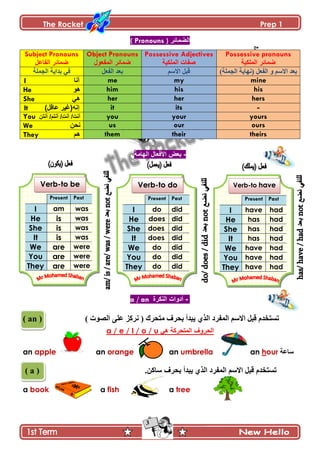
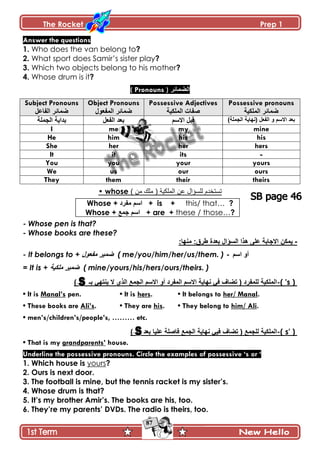
( Pronouns ) ‫اٌنّائش‬
‫ؾؽ‬
Subject Pronouns
ً‫اٌفاػ‬ ‫مّائش‬
Object Pronouns
‫اٌّفؼٛي‬ ‫مّائش‬
Possessive Adjectives
‫اٌٍّى١ح‬ ‫ففاخ‬
Possessive pronouns
‫اٌٍّى١ح‬ ‫مّائش‬
ِ‫ٲ‬‫جپؿڃٿس‬ ‫ذىجّس‬ ‫جپٳ٫ٽ‬ ‫ذ٫ى‬ ‫جالْځ‬ ‫ٶرٽ‬ )‫جپؿڃٿس‬ ‫(چيحّس‬ ‫جپٳ٫ٽ‬ ً ‫جالْځ‬ ‫ذ٫ى‬
I ‫أٔا‬ me my mine
He ٛ٘ him his his
She ٟ٘ her her hers
It ‫ػال‬ ‫إٔٗ(غ١ش‬)ً it its -
You ُ‫أٔر‬ /ِ‫د‬ٔ‫أ‬ /‫أٔد‬ٓ‫أٔر‬ / you your yours
We ٓ‫ٔذ‬ us our ours
They ُ٘ them their theirs
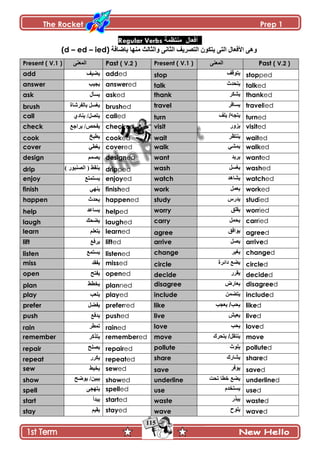
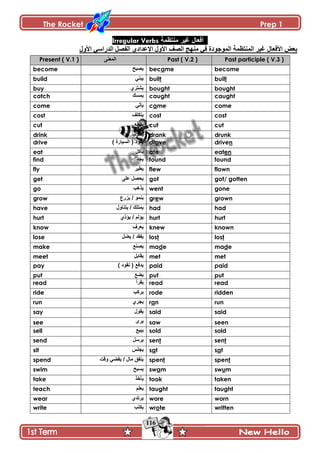
‫انهامت‬ ‫األفعال‬ ‫بعض‬ -
-‫أدوا‬‫اننكرة‬ ‫ث‬a / an
( an ) ) ‫جپٌٛش‬ َ‫٪ٿ‬ ُ‫چٍٺ‬ ( ‫ڂطكٍٸ‬ ٍٰ‫ذك‬ ‫ّرىأ‬ ًُ‫جپ‬ ‫جپڃٳٍو‬ ‫جالْځ‬ ‫ٶرٽ‬ ‫ضٓطهىڀ‬
ٟ٘ ‫اٌّرذشوح‬ ‫اٌذشٚف‬a / e / I / o / u
an apple an orange an umbrella an hour ‫عاػح‬
( a ) ‫جالْځ‬ ‫ٶرٽ‬ ‫ضٓطهىڀ‬ٍٰ‫ذك‬ ‫ّرىأ‬ ًُ‫جپ‬ ‫جپڃٳٍو‬.‫ْحٺڅ‬
a book a fish a tree
Present Past
I have had
He has had
She has had
It has had
We have had
You have had
They have had
Verb-to have
Present Past
I do did
He does did
She does did
It does did
We do did
You do did
They do did
Verb-to do
Present Past
I am was
He is was
She is was
It is was
We are were
You are were
They are were
Verb-to be
The Rocket Prep 1
4
1- Wh- Question
How to form a question?
‫السؤال‬ ‫تكوين‬ ‫كيفية‬ ‫مراجعة‬
‫ج‬ ‫ڂڅ‬ ‫چٌ٪حڄ‬ ‫ىنحٸ‬:‫ألْثٿس‬
Wh- Question Yes - No Question
‫جْطٳيحڀ‬ ‫٪الڂس‬+‫ضٻڃٿس‬+‫ٲ٫ٽ‬+‫ٲح٪ٽ‬+‫ڂٓح٪ى‬ ‫ٲ٫ٽ‬+‫أوجز‬‫جْطٳيحڀ‬
ٔ-:‫جالْطٳيحڀ‬ ‫ٺٿڃحش‬
What ‫ڂحيج‬ / ‫ڂح‬ How ‫ٺْٱ‬ How often ‫ڂٍز‬ ‫ٺځ‬
Who ‫ڂڅ‬ How many ‫٪ىو‬ ‫ٺځ‬ How heavy ‫ًَڄ‬ ‫ڂح‬
Whose ‫ڂڅ‬ ‫ڂٿٹ‬ How much ِ‫جپٻڃ‬ ‫ٺځ‬ / ‫غڃڅ‬ ‫ٺځ‬ How fast ‫ٍْ٪س‬ ‫ڂح‬
When َ‫ڂط‬ How old ٍ‫٪ڃ‬ ‫ٺځ‬ How tall ‫٢ٌټ‬ ‫ڂح‬
Where ‫أّڅ‬ How high ٨‫جٌضٳح‬ ‫ٺځ‬ How wide ٍٜ٪ ‫ڂح‬
Which ُ‫أ‬ How long ‫٢ٌټ‬ ‫ڂح‬ / ‫جپڃىز‬ ‫ڂح‬ How deep ‫٪ڃٵ‬ ‫ڂح‬
Why ‫پڃحيج‬ How far ٫‫ذ‬ ‫ٺځ‬ٓ‫جپڃ‬ ‫ى‬‫حٲس‬ How good ‫ئؾحوز‬ ٍ‫ڂى‬ ‫ڂح‬
ٕ-:‫جپڃٓح٪ىز‬ ‫جألٲ٫حټ‬were–are / was–is–am
do – does – did / has – have – had / can – could
may – might / will – would / shall – should / must …
Examples:
1- My teacher's name is Mr. Mohamed. ( What )
What is your teacher's name?
2- He was eleven years old last year. ( How old )
How old was he last year?
3- I go to school by bus. ( How )
How do you go to school?
4- I played football at school yesterday. ( Where )
Where did you play football yesterday?
:‫ڂٿكٌ٦س‬
‫چكٌټ‬Iَ‫ئپ‬you
‫چكٌټ‬Weَ‫ئپ‬you
‫چكٌټ‬myَ‫ئپ‬your
ٌ‫چك‬‫ټ‬ourَ‫ئپ‬your
‫چكٌټ‬I’mَ‫ئپ‬are you
‫چكٌټ‬I wasَ‫ئپ‬were you
The Rocket Prep 1
5
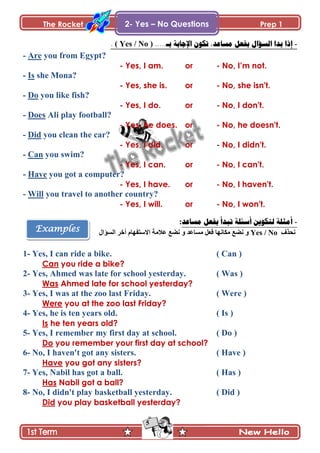
Examples
2- Yes – No Questions
-.....‫بـ‬ ‫اإلجببت‬ ‫حكُن‬ ,‫مسبعد‬ ‫بفعم‬ ‫انسؤال‬ ‫بدا‬ ‫إذا‬( Yes / No ).
- Are you from Egypt?
- Yes, I am. or - No, I‟m not.
- Is she Mona?
- Yes, she is. or - No, she isn't.
- Do you like fish?
- Yes, I do. or - No, I don't.
- Does Ali play football?
- Yes, he does. or - No, he doesn't.
- Did you clean the car?
- Yes, I did. or - No, I didn't.
- Can you swim?
- Yes, I can. or - No, I can't.
- Have you got a computer?
- Yes, I have. or - No, I haven't.
- Will you travel to another country?
- Yes, I will. or - No, I won't.
-‫مسبعد‬ ‫بفعم‬ ‫حبدأ‬ ‫أسئهت‬ ‫نخكُيه‬ ‫أمثهت‬:
ًٰ‫چك‬Yes / No‫ڂٓح٪ى‬ ‫ٲ٫ٽ‬ ‫ڂٻحچيح‬ ٩ٟ‫چ‬ ً‫جپٓإجټ‬ ٍ‫أن‬ ‫جالْطٳيحڀ‬ ‫٪الڂس‬ ٩ٟ‫چ‬ ً
1- Yes, I can ride a bike. ( Can )
Can you ride a bike?
2- Yes, Ahmed was late for school yesterday. ( Was )
Was Ahmed late for school yesterday?
3- Yes, I was at the zoo last Friday. ( Were )
Were you at the zoo last Friday?
4- Yes, he is ten years old. ( Is )
Is he ten years old?
5- Yes, I remember my first day at school. ( Do )
Do you remember your first day at school?
6- No, I haven't got any sisters. ( Have )
Have you got any sisters?
7- Yes, Nabil has got a ball. ( Has )
Has Nabil got a ball?
8- No, I didn't play basketball yesterday. ( Did )
Did you play basketball yesterday?
The Rocket Prep 1
6
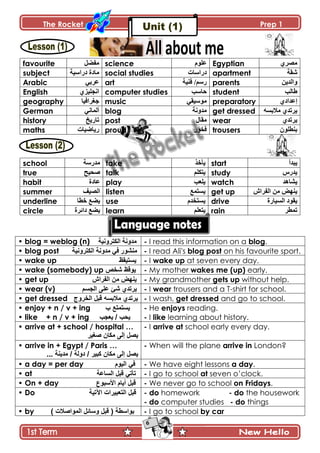
favourite ‫ڂٳٟٽ‬ science ‫٪ٿٌڀ‬ Egyptian ٍُٛ‫ڂ‬
subject ‫وٌجْْس‬ ‫ڂحوز‬ social studies ‫وٌجْحش‬ apartment ‫ٖٷس‬
Arabic ِ‫٪ٍذ‬ art ‫ٲنْس‬ /‫ٌْځ‬ parents ‫ًجپىّڅ‬
English ُُْ‫جچؿٿ‬ computer studies ‫قحْد‬ student ‫٢حپد‬
geography ‫ؾٯٍجٲْح‬ music ِ‫ڂٌْْٷ‬ preparatory ‫ئ‬ُ‫٪ىجو‬
German ِ‫أپڃحچ‬ blog ‫ڂىًچس‬ get dressed ‫ڂالذٓو‬ ُ‫ٍّضى‬
history ‫ضحٌّم‬ post ‫ڂٷحټ‬ wear ُ‫ٍّضى‬
maths ‫ٌّحْٞحش‬ proud ٌٌ‫ٲه‬ trousers ‫ذن٣ٿٌڄ‬
school ‫ڂىٌْس‬ take ً‫ّأن‬ start ‫ّرىأ‬
true ‫ٚكْف‬ talk ‫ّطٻٿځ‬ study ٌِ‫ّى‬
habit ‫٪حوز‬ play ‫ّٿ٫د‬ watch ‫ّٗحىى‬
summer ٛ‫جپ‬‫ْٱ‬ listen ٩‫ّٓطڃ‬ get up ٔ‫جپٳٍج‬ ‫ڂڅ‬ ٝ‫ّني‬
underline ‫ن٣ح‬ ٩ّٟ use ‫ّٓطهىڀ‬ drive ‫جپْٓحٌز‬ ‫ّٷٌو‬
circle ‫وجتٍز‬ ٩ّٟ learn ‫ّط٫ٿځ‬ rain ٍ٣‫ضڃ‬
• blog = weblog (n) ‫ڂىًچس‬‫جپٻطًٍچْس‬ - I read this information on a blog.
• blog post ‫جپٻطًٍچْس‬ ‫ڂىًچس‬ ِ‫ٲ‬ ٌٌٗ‫ڂن‬ - I read Ali's blog post on his favourite sport.
• wake up ‫٠غر١مظ‬ - I wake up at seven every day.
• wake (somebody) up ‫٠ٛلظ‬‫ؽخـ‬ - My mother wakes me (up) early.
• get up ‫اٌفشاػ‬ ِٓ ‫٠ٕٙل‬ - My grandmother gets up without help.
• wear (v) ُ‫اٌجغ‬ ٍٝ‫ػ‬ ‫ؽئ‬ ٞ‫٠شذذ‬ - I wear trousers and a T-shirt for school.
• get dressed ‫اٌخشٚج‬ ً‫لث‬ ٗ‫ِالتغ‬ ٞ‫٠شذذ‬ - I wash, get dressed and go to school.
• enjoy + n / v + ing ‫ب‬ ‫٠غرّرغ‬
• like + n / v + ing ‫٠ؼجة‬ / ‫٠ذ‬‫ة‬
- He enjoys reading.
- I like learning about history.
• arrive at + school / hospital …
‫فغ١ش‬ ْ‫ِىا‬ ٌٝ‫إ‬ ً‫٠ق‬
- I arrive at school early every day.
• arrive in + Egypt / Paris …
‫وث١ش‬ ْ‫ِىا‬ ٌٝ‫إ‬ ً‫٠ق‬... ‫ِذ٠ٕح‬ / ‫دٌٚح‬ /
- When will the plane arrive in London?
• a day = per day َٛ١ٌ‫ا‬ ٟ‫ف‬ - We have eight lessons a day.
• at ‫اٌغاػح‬ ً‫لث‬ ٟ‫ذأذ‬ - I go to school at seven o’clock.
• On + day ‫األعثٛع‬ َ‫أ٠ا‬ ً‫لث‬ - We never go to school on Fridays.
• Do ‫اٌرؼ‬ ً‫لث‬‫ا٢ذ١ح‬ ‫ث١شاخ‬ - do homework - do the housework
- do computer studies - do things
• by ) ‫اٌّٛافالخ‬ ً‫ٚعائ‬ ً‫لث‬ ( ‫تٛاعطح‬ - I go to school by car
The Rocket Prep 1
7
- Answer the following questions :
1. What‟s your name? My name’s ……………………….........
2. Have you got any brothers and sisters? ..................................................................
3. What is your favourite subject? ..................................................................
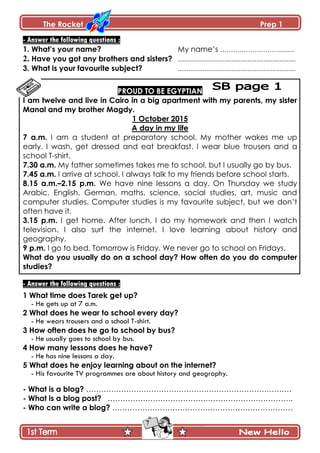
PROUD TO BE EGYPTIAN
I am twelve and live in Cairo in a big apartment with my parents, my sister
Manal and my brother Magdy.
1 October 2015
A day in my life
7 a.m. I am a student at preparatory school. My mother wakes me up
early. I wash, get dressed and eat breakfast. I wear blue trousers and a
school T-shirt.
7.30 a.m. My father sometimes takes me to school, but I usually go by bus.
7.45 a.m. I arrive at school. I always talk to my friends before school starts.
8.15 a.m.–2.15 p.m. We have nine lessons a day. On Thursday we study
Arabic, English, German, maths, science, social studies, art, music and
computer studies. Computer studies is my favourite subject, but we don’t
often have it.
3.15 p.m. I get home. After lunch, I do my homework and then I watch
television. I also surf the internet. I love learning about history and
geography.
9 p.m. I go to bed. Tomorrow is Friday. We never go to school on Fridays.
What do you usually do on a school day? How often do you do computer
studies?
- Answer the following questions :
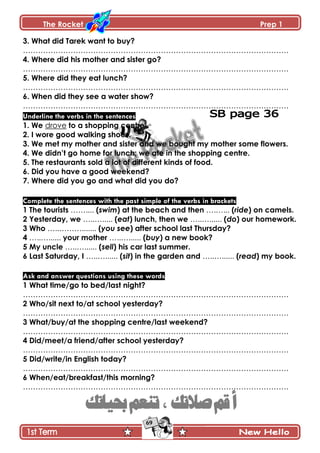
1 What time does Tarek get up?
- He gets up at 7 a.m.
2 What does he wear to school every day?
- He wears trousers and a school T-shirt.
3 How often does he go to school by bus?
- He usually goes to school by bus.
4 How many lessons does he have?
- He has nine lessons a day.
5 What does he enjoy learning about on the internet?
- His favourite TV programmes are about history and geography.
- What is a blog? ……………………………………………………………………….
- What is a blog post? ………………………………………………………………..
- Who can write a blog? ………………………………………………………………
The Rocket Prep 1
8
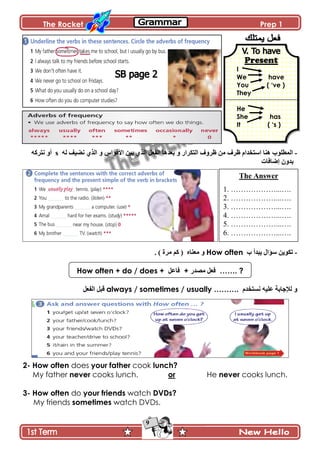
The Present Simple Tense
٩‫ڂ‬ ‫جألًټ‬ ‫جپطٍّٛٱ‬ ِ‫ٲ‬ ‫جپٳ٫ٽ‬ ٩ٌّٞThey)–We–You–(I.٩‫جپؿڃ‬ ً
Ex: - I go to school by car every day.
- We learn English at school.
‫ڂػٽ‬ ‫ٮحتد‬ ‫ڂٳٍو‬ ‫جپؿڃٿس‬ ‫ٲح٪ٽ‬ ‫ٺحڄ‬ ‫ئيج‬-Ahmed …)–It–She–( Heٰ‫ّٟح‬( s ). ‫پٿٳ٫ٽ‬
Ex: - He drinks tea every morning.
ٰ‫ّٟح‬ ً‫أ‬( es )...... ‫جٓضْس‬ ًٍٰ‫ذحپك‬ ِ‫ضنطي‬ ِ‫جپط‬ ‫جپٻٿڃحش‬ ٩‫ڂ‬ ‫پٿٳ٫ٽ‬.x )–sh–ch–s–( o
go goes cross crosses
wash washes watch watches
Ex: - Sara goes to school by bus.
ٍٰ‫ذك‬ ‫جپٳ٫ٽ‬ َ‫جچطي‬ ‫جيج‬)y(‫چ‬ ‫ڂطكٍٸ‬ ٍٰ‫ق‬ ‫ٶرٿو‬ ًٍٰ‫ق‬ ًٰ‫ك‬)y(‫چْٟٱ‬ ًies.
carry carries
study studies
-:‫جالْطهىجڀ‬
‫قٷحتٵ‬ ‫٪څ‬ ٍ‫ّ٫ر‬ ِ‫پٻ‬ ٨ٌ‫جپڃٟح‬ ‫جپٳ٫ٽ‬ ‫ّٓطهىڀ‬( facts ).
Ex: - The sun rises in the east. - The earth goes round the sun.
٩‫ڂ‬ ‫ّٓطهىڀ‬ ً ‫٪حوجش‬ ‫٪څ‬ ٍ‫ّ٫ر‬ٌ‫جپطٻٍج‬ ًٍٰ٦:‫جٓضْس‬‫ض‬ ً‫ٓطهىڀ‬‫جپٳ٫ٽ‬ ‫ٶرٽ‬‫پٻڅ‬ ً‫ذ٫ى‬am /is / are
always
‫دائما‬
usually
‫ػادة‬
Often
‫غالبا‬
sometimes
‫أحياوا‬
occasionally
‫أحياوا‬
never
‫أبذا‬
Ex: - I usually go to school on foot.
- He always drinks tea at 5 o'clock.
- She is never late for school.
‫چٓطهىڀ‬does )–do(ِ‫ٲ‬ً ‫جپٓإجټ‬ِ‫جپنٳ‬ٌ‫جپڃٛى‬ ‫جپٳ٫ٽ‬ ‫ذ٫ىىڃح‬ ً.
- I / You / We / They do / don't + ٌ‫ڂٛى‬ ‫ٲ٫ٽ‬
- He / She / it does / doesn't + ٌ‫ڂٛى‬ ‫ٲ٫ٽ‬
- Do you like football? Yes, I do or No, I don’t.
- Does he like tennis? Yes, he does. or No, he doesn't.
- I live in Mansoura. - I don‟t live in Cairo.
- She lives in Mansoura. - She doesn‟t live in Cairo.
The Rocket Prep 1
9
-‫جألٶ‬ ‫ذْڅ‬ ًُ‫جپ‬ ‫جپٳ٫ٽ‬ ‫ذ٫ىىح‬ ً ٌ‫جپطٻٍج‬ ًٍٰ٦ ‫ڂڅ‬ ٍٰ٦ ‫جْطهىجڀ‬ ‫ىنح‬ ‫جپڃ٣ٿٌخ‬‫پو‬ ‫چْٟٱ‬ ًُ‫جپ‬ ً ِ‫ٌج‬s‫چطٍٺو‬ ً‫أ‬
‫ئٞحٲحش‬ ‫ذىًڄ‬
-‫خ‬ ‫ّرىأ‬ ‫ْإجټ‬ ‫ضٻٌّڅ‬How often. ) ‫ڂٍز‬ ‫ٺځ‬ ( ‫ڂ٫نحه‬ ً
How often + do / does + ‫ٲح٪ٽ‬ + ٌ‫ڂٛى‬ ‫ٲ٫ٽ‬ ……. ?
ً‫چٓطهىڀ‬ ‫٪ٿْو‬ ‫پإلؾحذس‬always / sometimes / usually ……….‫جپٳ٫ٽ‬ ‫ٶرٽ‬
2- How often does your father cook lunch?
My father never cooks lunch. or He never cooks lunch.
3- How often do your friends watch DVDs?
My friends sometimes watch DVDs.
The Answer
1. ………………...….
2. ………………...….
3. ………………...….
4. ………………...….
5. ………………...….
6. ………………...….
Present
I
We have
You ( „ve )
They
He
She has
It ( „s )
The Rocket Prep 1
10
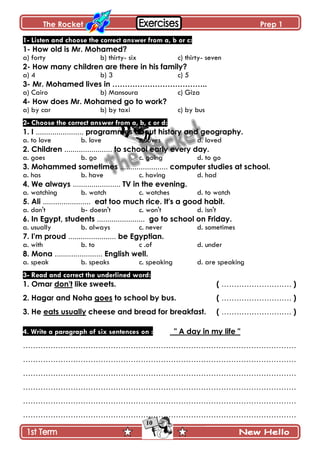
1- Listen and choose the correct answer from a, b or c:
1- How old is Mr. Mohamed?
a) forty b) thirty- six c) thirty- seven
2- How many children are there in his family?
a) 4 b) 3 c) 5
3- Mr. Mohamed lives in ………………………………..
a) Cairo b) Mansoura c) Giza
4- How does Mr. Mohamed go to work?
a) by car b) by taxi c) by bus
2- Choose the correct answer from a, b, c or d:
1. I ....................... programmes about history and geography.
a. to love b. love c. loves d. loved
2. Children ....................... to school early every day.
a. goes b. go c. going d. to go
3. Mohammed sometimes ....................... computer studies at school.
a. has b. have c. having d. had
4. We always ....................... TV in the evening.
a. watching b. watch c. watches d. to watch
5. Ali ....................... eat too much rice. It's a good habit.
a. don't b- doesn't c. won't d. isn't
6. In Egypt, students ....................... go to school on Friday.
a. usually b. always c. never d. sometimes
7. I'm proud ....................... be Egyptian.
a. with b. to c .of d. under
8. Mona ....................... English well.
a. speak b. speaks c. speaking d. are speaking
3- Read and correct the underlined word:
1. Omar don't like sweets. ( ………………………. )
2. Hagar and Noha goes to school by bus. ( ………………………. )
3. He eats usually cheese and bread for breakfast. ( ………………………. )
4. Write a paragraph of six sentences on : " A day in my life "
……………………………………………………………………………………………….
……………………………………………………………………………………………….
……………………………………………………………………………………………….
……………………………………………………………………………………………….
……………………………………………………………………………………………….
……………………………………………………………………………………………….
The Rocket Prep 1
11
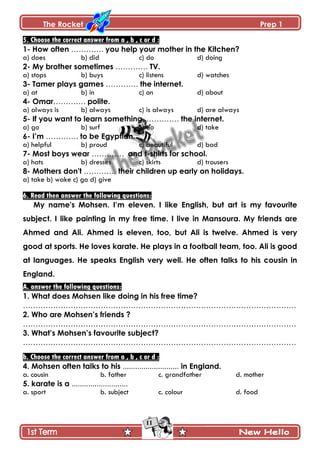
5. Choose the correct answer from a , b , c or d :
1- How often …………. you help your mother in the Kitchen?
a) does b) did c) do d) doing
2- My brother sometimes …………. TV.
a) stops b) buys c) listens d) watches
3- Tamer plays games …………. the internet.
a) at b) in c) on d) about
4- Omar…………. polite.
a) always is b) always c) is always d) are always
5- If you want to learn something, …………. the internet.
a) go b) surf c) do d) take
6- I‟m …………. to be Egyptian.
a) helpful b) proud c) beautiful d) bad
7- Most boys wear …………. and t-shirts for school.
a) hats b) dresses c) skirts d) trousers
8- Mothers don't …………. their children up early on holidays.
a) take b) wake c) go d) give
6. Read then answer the following questions:
My name's Mohsen. I‟m eleven. I like English, but art is my favourite
subject. I like painting in my free time. I live in Mansoura. My friends are
Ahmed and Ali. Ahmed is eleven, too, but Ali is twelve. Ahmed is very
good at sports. He loves karate. He plays in a football team, too. Ali is good
at languages. He speaks English very well. He often talks to his cousin in
England.
A. answer the following questions:
1. What does Mohsen like doing in his free time?
……………………………………………………………………………………………….
2. Who are Mohsen‟s friends ?
……………………………………………………………………………………………….
3. What‟s Mohsen‟s favourite subject?
……………………………………………………………………………………………….
b. Choose the correct answer from a , b , c or d :
4. Mohsen often talks to his ........................... in England.
a. cousin b. father c. grandfather d. mother
5. karate is a ...........................
a. sport b. subject c. colour d. food
The Rocket Prep 1
12
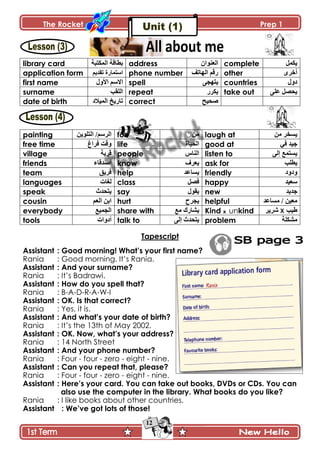
library card ‫جپڃٻطرس‬ ‫ذ٣حٶس‬ address ‫جپ٫نٌجڄ‬ complete ‫ّٻڃٽ‬
application form ٌ‫جْطڃح‬‫ز‬‫ضٷىّځ‬ phone number ‫جپيحضٱ‬ ‫ٌٶځ‬ other ٍٍ‫أن‬
first name ‫جألًټ‬ ‫جالْځ‬ spell َ‫ّطيؿ‬ countries ‫وًټ‬
surname ‫جپٿٷد‬ repeat ٌٍ‫ّٻ‬ take out َّ‫٪ٿ‬ ‫كٛٽ‬
date of birth ‫جپڃْالو‬ ‫ضحٌّم‬ correct ‫ٚكْف‬
painting ‫جپطٿٌّڅ‬ /‫جپٍْځ‬ for ‫ڂڅ‬ laugh at ‫ڂڅ‬ ٍ‫ّٓه‬
free time ٬‫ٲٍج‬ ‫ًٶص‬ life ‫جپكْحز‬ good at ِ‫ٲ‬ ‫ؾْى‬
village ‫ٶٍّس‬ people ِ‫جپنح‬ listen to َ‫ئپ‬ ٩‫ّٓطڃ‬
friends ‫أٚىٶحء‬ know ٍٰ٫ّ ask for ‫ّ٣ٿد‬
team ‫ٲٍّٵ‬ help ‫ّٓح٪ى‬ friendly ‫ًوًو‬
languages ‫پٯحش‬ class ‫ٲٛٽ‬ happy ‫ْ٫ْى‬
speak ‫ّطكىظ‬ say ‫ّٷٌټ‬ new ‫ؾىّى‬
cousin ‫جپ٫ځ‬ ‫جذڅ‬ hurt ‫ّؿٍـ‬ helpful ‫ڂٓح٪ى‬ / ‫ڂ٫ْڅ‬
everybody ٩ْ‫جپؿڃ‬ share with ٩‫ڂ‬ ‫ّٗحٌٸ‬ Kind x unkind ‫٢ْد‬Xٍٍّٖ
tools ‫أوًجش‬ talk to َ‫ئپ‬ ‫ّطكىظ‬ problem ‫ڂٗٻٿس‬
Tapescript
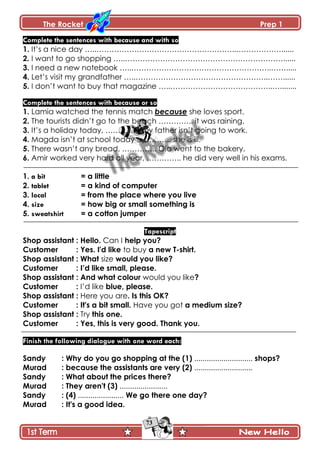
Assistant : Good morning! What‟s your first name?
Rania : Good morning. It’s Rania.
Assistant : And your surname?
Rania : It’s Badrawi.
Assistant : How do you spell that?
Rania : B-A-D-R-A-W-I
Assistant : OK. Is that correct?
Rania : Yes, it is.
Assistant : And what‟s your date of birth?
Rania : It’s the 13th of May 2002.
Assistant : OK. Now, what‟s your address?
Rania : 14 North Street
Assistant : And your phone number?
Rania : Four - four - zero - eight - nine.
Assistant : Can you repeat that, please?
Rania : Four - four - zero - eight - nine.
Assistant : Here‟s your card. You can take out books, DVDs or CDs. You can
also use the computer in the library. What books do you like?
Rania : I like books about other countries.
Assistant : We‟ve got lots of those!
The Rocket Prep 1
13
Answer the following questions:
1. What is your favourite subject?
.......................................................................................................................................................
2. What do you like doing?
.......................................................................................................................................................
3. Who are your friends?
.......................................................................................................................................................
4. What are they good at?
.......................................................................................................................................................
5. What do they often do?
.......................................................................................................................................................
Put ( always ) or ( never ):
1 We are …..…….......... kind to new students.
2 We …..…….......... laugh at each other.
3 We …..…….......... share things with each other.
4 We …..…….......... say unkind things.
5 We …..…….......... listen to each other.
6 We are …..…….......... helpful.
7 We …..…….......... hurt people.
8 We …..…….......... ask the teacher for help.
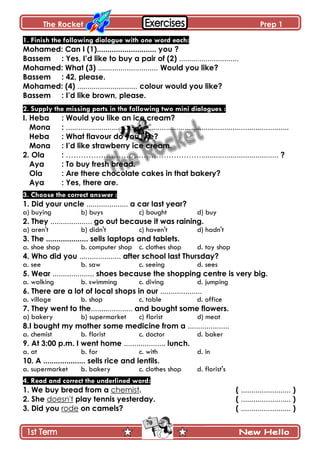
1. Finish the following dialogue with these words:
sports - phone - spell - surname - birth
Man : What’s your 1. surname ?
Boy : It’s Badrawi.
Man : Can you 2. ………………… that, please?
Boy : B-A-D-R-A-W-I
Man : Thank you. What’s your date of 3. ………………… ?
Boy : It’s 7 September 2003.
Man : And what’s your 4. ………………… number?
Boy : It’s 02-20023856.
Man : What 5. ………………… do you like?
Boy : I like football.
2. Supply the missing parts in the following mini-dialogues:
1. a : What is your favourite subject?
b : …………………………..………………………………..…….…………………
2. a : ………………………..………………………………..…………………………?
b : My best friends are Omar and Hamza.
3. a : ………………………………..………………………..…………………………?
b : Omar is very good at sports. Hamza is good at languages.
The Rocket Prep 1
14
‫جپطٍٶْځ‬ ‫٪الڂحش‬
‫في‬ ‫الكبيزة‬ ‫الحزوف‬ ‫وستخذم‬‫جپؿڃٿس‬ ِ‫ٲ‬ َ‫جألًپ‬ ‫جپٻٿڃس‬ ‫ذىجّس‬
‫في‬ ‫الكبيزة‬ ‫الحزوف‬ ‫وستخذم‬٘‫جألٖهح‬ ‫جْڃحء‬ ‫ذىجّس‬
‫في‬ ‫الكبيزة‬ ‫الحزوف‬ ‫وستخذم‬٨ٌ‫جألْر‬ ‫جّحڀ‬ ‫ذىجّس‬
‫في‬ ‫الكبيزة‬ ‫الحزوف‬ ‫وستخذم‬ٌٌ‫جپٗي‬ ‫ذىجّس‬
‫في‬ ‫الكبيزة‬ ‫الحزوف‬ ‫وستخذم‬‫جپڃىڄ‬ ً ‫جپىًټ‬ ‫ذىجّس‬
3. Complete the sentences with the correct verbs
ask - hurt - laugh - listen - say - share
1 We never laugh at other students.
2 We always ………………. things with each other.
3 We never ………………. unkind things to other students.
4 We always ………………. to each other.
5 We never ………………. people.
6 We always ………………. the teacher for help.
1. Punctuate the following sentences
1 my father is from alexandria.
My father is from Alexandria.
2 heba’s favourite subject is arabic.
.......................................................................................................................................................
3 khaled’s english pen friend lives in london.
.......................................................................................................................................................
4 fawzi lives at 103 ahmed mahfouz street.
.......................................................................................................................................................
5 what is your favourite city in egypt?
.......................................................................................................................................................
2. Write questions using the words in brackets
1 My first name is Eman. (What?)
What is your first name?
2 My surname is Al-Alfy. (What?)
.......................................................................................................................................................
3 We never go to school on Fridays. (How often?)
.......................................................................................................................................................
4 My friends are Jana and Ritaj. (Who?)
.......................................................................................................................................................
5 I have nine lessons every day. (How many?)
.......................................................................................................................................................
The Rocket Prep 1
15
1. Choose the correct answer from a, b, c or d:
1. I like ……………… in my free time.
a. painting b. to painting c. paint d. painted
2. Amal is ……………… she doesn't know any students in her class.
d. proud b. new c. old d. big
3. We never laugh ……………… each other.
a. to b. at c. for d. of
4. My ……………… of birth is Mansoura.
a. place b. weight c. date d. age
5. A sales assistant ……………… clothes and other things.
a. sells b. sell c. selling d. are selling
6. My father never ……………… food.
a. cook b. cooks c. cooking d. is cooking
7. My brother is good ……………… languages.
a. in b. on c. for d. at
8. Fill in this ……………… , please.
a. for a. form c. from d. far
9. My father sometimes ……………… me to the zoo.
a) takes b) take c) took d) give
10. I ……………… to bed at ten every day.
a) goes b) go c) went d) do
11. His favourite subject ……………… maths and music.
a) am b) is c) are d) were
12. What time ……………… Tarek get up?
a) does b) do c) is d) was
13. How many lessons does he ……………… ?
a) has b) had c) have d) make
14. You shouldn‟t laugh ……………. people.
a) at b) on c) in d) with
15. How …………… do you go to the cinema? Once a month.
a) old b) often c) long d) many
2. Write a paragraph of six sentences on : " My favourite subject "
( these words may help you)
computer studies – lessons – internet – blog – good
My favourite subject
My favourite subject is computer studies. I have 3 lessons a week. My
teacher teaches us how to use computers and the internet. He helps me to
make my own blog. He is a good teacher. I love my school.
The Rocket Prep 1
16
1- Listen and choose the correct answer from a, b or c:
1. What's Magda‟s favourite subject ?
a) English b) maths c) football
2. What sport does Magda like ?
a) tennis b) football c) karate
3. How old is Magda ?
a) eleven b) ten c) twelve
4. Magda goes to a ……… school.
a) primary b) preparatory c) secondary
2- Finish the following dialogue with one word each:
Assistant : What's your ....(l) …………….…… name?
Jana : Mohamed.
assistant : What's your date of ....(2) …………………… ?
Jana : it's 28th of October 2003.
assistant : What's your....(3) …………………… number?
Jana : it's 01224316509.
assistant : What's your ....(4) …………….……… subjects?
Jana : history and English.
3- Supply the missing parts in the following two mini dialogues :
Mona : What is your favourite sport?
Ali : …………………………………………………………..……….………. .
Hany : ……………………………………………………………..…………….. ?
Aya : I sometimes watch TV.
4- Read the following, then answer the questions:
Every day, Hossam gets up at 7 o'clock. Then he washes. He has
breakfast at 7.30 and then he gets dressed and goes to school. At 1:00 in
the afternoon, Hossam comes back home, has lunch, and does his
homework. At 5 o'clock he plays tennis with his friends and after that, he
eats dinner with his family at home. Hossam watches television in the
evening. He drinks a glass of milk. before he goes to bed at 9:30.
A. Answer the following questions:
1- When does Hossam watch television?
……………………………………………………………………………………………….
2- What does he do before going to bed?
……………………………………………………………………………………………….
B. Choose the correct answer from a , b , c or d :
3- Hossam …………………. gets up early
a) never b) always c) sometimes d) doesn't
4- Hossam has dinner with his ………………….
a) brothers b) teachers c) friends d) family
5- Hossam sleeps after ………………….
a) playing tennis b) drinking milk c) eating dinner d) studying
Good Luck
The Rocket Prep 1
17
5) The Reader
a) Choose the correct answer from a, b, c or d:
1- Santiago was a ……………….
a. fisherman b. salesman c. baker d. doctor
2- Santiago talked to Manolin about the …………….
a. Africa b. Europe c. America d. Asia
b) Answer the following questions:
1. What was Santiago‟s job?
……………………………………………………………………………………………….
2. Why did Manolin love the old man?
……………………………………………………………………………………………….
6. Choose the correct answer :
1- We don‟t go to school …………. Friday.
a. on b. in c. at d. of
2- My favourite school subject …………. computer studies.
a. are b. has c. is d. have
3- Fill …………. this application form , please.
a. in b. on c. of d. at
4- German is a beautiful school ………….
a. game b. subject c. toy d. sport
5- How do you …………. your name?
a. spell b. speak c. eat d. drink
6- We never …………. other people
a. help b. hurt c. hear d. play
7- I like …………. in my free time.
a. painting b. painted c. to painting d. paints
8- I go to school ………. seven o‟clock.
a. on b. in c. at d. of
7. Read and correct the underlined word:
1- I am good on English. ( …………………… )
2- She don't like fish. ( …………………… )
3- What's your favor subject? ( …………………… )
8. Write a paragraph of six sentences on : " A day in my life "
……………………………………………………………………………………………….
……………………………………………………………………………………………….
……………………………………………………………………………………………….
……………………………………………………………………………………………….
……………………………………………………………………………………………….
……………………………………………………………………………………………….
The Rocket Prep 1
18
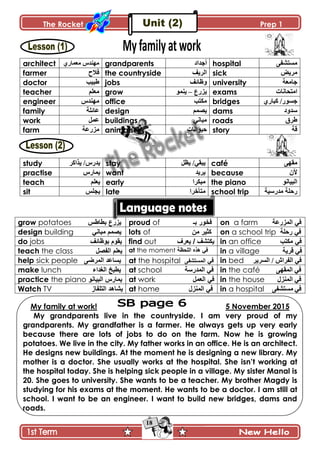
architect ٌُ‫ڂ٫ڃح‬ ِ‫ڂينى‬ grandparents ‫أؾىجو‬ hospital َ‫ڂٓطٗٳ‬
farmer ‫ٲالـ‬ the countryside ‫جپٍّٱ‬ sick ٍّٝ‫ڂ‬
doctor ‫٢رْد‬ jobs ‫ً٦حتٱ‬ university ‫ؾحڂ٫س‬
teacher ‫ڂ٫ٿځ‬ grow ٨ٌُّ–ٌ‫ّنڃ‬ exams ‫جڂطكحچحش‬
engineer ِ‫ڂينى‬ office ‫ڂٻطد‬ bridges ٌُ‫ٺرح‬ /ٌٌٓ‫ؾ‬
family ‫٪حتٿس‬ design ‫ّٛڃځ‬ dams ‫ْىًو‬
work ‫٪ڃٽ‬ buildings ِ‫ڂرحچ‬ roads ‫٢ٍٴ‬
farm ‫ڂٌُ٪س‬ animals ‫قٌْجچحش‬ story ‫ٶس‬
study ٍ‫ًّجٺ‬ /ٌِ‫ّى‬ stay ‫ّ٧ٽ‬ /ِ‫ّرٷ‬ café ‫ڂٷي‬َ
practise ٌِ‫ّڃح‬ want ‫ٍّّى‬ because ‫ألڄ‬
teach ‫ّ٫ٿځ‬ early ‫ڂرٻٍج‬ the piano ٌ‫جپرْحچ‬
sit ّ‫ّؿٿ‬ late ‫ڂطأنٍج‬ school trip ‫ڂىٌْْس‬ ‫ٌقٿس‬
grow potatoes ‫تطاطظ‬ ‫٠ضسع‬ proud of ‫تـ‬ ‫فخٛس‬ on a farm ‫اٌّضسػح‬ ٟ‫ف‬
design building ٟٔ‫ِثا‬ ُّ‫٠ق‬ lots of ِٓ ‫وث١ش‬ on a school trip ‫سدٍح‬ ٟ‫ف‬
do jobs ‫تٛظائف‬ َٛ‫٠م‬ find out ‫٠ؼشف‬ / ‫٠ىرؾف‬ in an office ‫ِىرة‬ ٟ‫ف‬
teach the class ً‫اٌفق‬ ٍُ‫٠ؼ‬ at the moment ‫اٌٍذظح‬ ٖ‫٘ز‬ ٟ‫ف‬ in a village ‫ٶٍّس‬ ِ‫ٲ‬
help sick people ٝ‫اٌّشم‬ ‫٠غاػذ‬ at the hospital ٟ‫ف‬ٝ‫اٌّغرؾف‬ in bed ٍٍّٓ‫جپ‬ / ٔ‫جپٳٍج‬ ِ‫ٲ‬
make lunch ‫اٌغذاء‬ ‫٠طثخ‬ at school ‫اٌّذسعح‬ ٟ‫ف‬ in the café َ‫جپڃٷي‬ ِ‫ٲ‬
practice the piano ‫٠ّاس‬‫ط‬ٛٔ‫اٌث١ا‬ at work ًّ‫اٌؼ‬ ٟ‫ف‬ in the house ‫جپڃنُټ‬ ِ‫ٲ‬
Watch TV ‫اٌرٍفاص‬ ‫٠ؾا٘ذ‬ at home ‫إٌّضي‬ ٟ‫ف‬ in a hospital ِ‫ٲ‬َ‫ڂٓطٗٳ‬
My family at work! 5 November 2015
My grandparents live in the countryside. I am very proud of my
grandparents. My grandfather is a farmer. He always gets up very early
because there are lots of jobs to do on the farm. Now he is growing
potatoes. We live in the city. My father works in an office. He is an architect.
He designs new buildings. At the moment he is designing a new library. My
mother is a doctor. She usually works at the hospital. She isn‟t working at
the hospital today. She is helping sick people in a village. My sister Manal is
20. She goes to university. She wants to be a teacher. My brother Magdy is
studying for his exams at the moment. He wants to be a doctor. I am still at
school. I want to be an engineer. I want to build new bridges, dams and
roads.
The Rocket Prep 1
19
Answer the following:
1. Who wants to be a doctor? …………………………………
2. Who wants to be a teacher? …………………………………
3. Who wants to be an engineer? …………………………………
4. Why does Tarek‟s grandfather get up early?
……………………………………………………………………………………………….
5. What is Tarek‟s father doing at the moment?
……………………………………………………………………………………………….
6. Where does Tarek‟s mother usually work?
……………………………………………………………………………………………….
7. Where is she working today?
……………………………………………………………………………………………….
8. What is Magdy doing now?
……………………………………………………………………………………………….
9. What does Tarek want to build?
……………………………………………………………………………………………….
The Present Continuous Tense
: ‫جپٷح٪ىز‬
- I ……………………. am
- He / She / It ……… is + verb + ing.
- We / You / They … are
Ex: - I am playing football now.
- She is reading a book at the moment.
- Look, they are playing basketball.
:‫جالْطهىجڀ‬
‫ذ٫ى‬ ‫ّنطو‬ ‫پځ‬ ‫جپكىًظ‬ ِ‫ٲ‬ ٍ‫ڂٓطڃ‬ ً ‫جٓڄ‬ ‫ّكىظ‬ ‫قىظ‬ ‫٪څ‬ ٍ‫ّ٫ر‬ٖ ً‫أ‬‫ة‬‫ڂإٶص‬‫ّأ‬ ً ,ِ‫ض‬:‫جٓضْس‬ ‫جپٻٿڃحش‬ ٩‫ڂ‬
Look ‫اوظز‬at the moment ‫اللحظت‬ ‫هذه‬ ‫في‬now ‫اآلن‬
at the present time ‫الحاضز‬ ‫الىقت‬ ‫في‬Listen ‫استمغ‬
‫چٓطهىڀ‬ َ‫جپنٳ‬ َ‫ٲ‬not‫ذ٫ى‬are–is–am
Ex: - He isn't working today.
.‫جپڃٓطٷرٽ‬ ِ‫ٲ‬ ‫پو‬ ١٣‫ڂه‬ ‫قىظ‬ ‫٪څ‬ ٍ‫ّ٫ر‬
Ex: - I am traveling to England next week.
َ‫ضأض‬ ‫ال‬ ‫جألٲ٫حټ‬ ‫ىًه‬ ‫أڄ‬ ٥‫الق‬ِ‫ٲ‬٨ٌ‫جپڃٟح‬ ‫َڂڅ‬ٍ‫جپڃٓطڃ‬‫پٻڅ‬ ،ِ‫ٲ‬:١ْٓ‫جپر‬ ٨ٌ‫جپڃٟح‬
like – dislike – love – hate – want – know – prefer – understand – hear…
Ex: - Mona wants to leave now.
The Rocket Prep 1
20
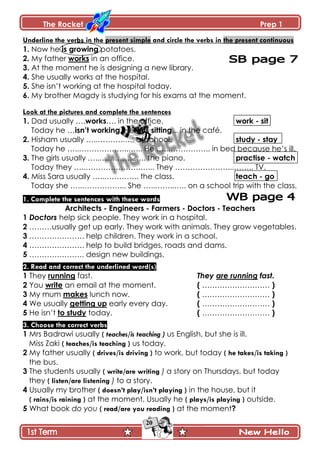
Underline the verbs in the present simple and circle the verbs in the present continuous
1. Now he is growing potatoes.
2. My father works in an office.
3. At the moment he is designing a new library.
4. She usually works at the hospital.
5. She isn’t working at the hospital today.
6. My brother Magdy is studying for his exams at the moment.
Look at the pictures and complete the sentences
1. Dad usually ….works…. in the office. work - sit
Today he …isn‟t working. He …is sitting... in the café.
2. Hisham usually …..……….….. at school. study - stay
Today he …..………………..…... He …..…………….. in bed because he’s ill.
3. The girls usually …..…………..….. the piano. practise - watch
Today they …..………………….…... They …………………...…….. TV.
4. Miss Sara usually …..………….. the class. teach - go
Today she …..……………... She …..……..….. on a school trip with the class.
1. Complete the sentences with these words
Architects - Engineers - Farmers - Doctors - Teachers
1 Doctors help sick people. They work in a hospital.
2 ………usually get up early. They work with animals. They grow vegetables.
3 …………………. help children. They work in a school.
4 …………………. help to build bridges, roads and dams.
5 …………………. design new buildings.
2. Read and correct the underlined word(s)
1 They running fast. They are running fast.
2 You write an email at the moment. ( ……………………… )
3 My mum makes lunch now. ( ……………………… )
4 We usually getting up early every day. ( ……………………… )
5 He isn’t to study today. ( ……………………… )
3. Choose the correct verbs
1 Mrs Badrawi usually ( teaches/is teaching ) us English, but she is ill.
Miss Zaki ( teaches/is teaching ) us today.
2 My father usually ( drives/is driving ) to work, but today ( he takes/is taking )
the bus.
3 The students usually ( write/are writing ) a story on Thursdays, but today
they ( listen/are listening ) to a story.
4 Usually my brother ( doesn‟t play/isn‟t playing ) in the house, but it
( rains/is raining ) at the moment. Usually he ( plays/is playing ) outside.
5 What book do you ( read/are you reading ) at the moment?
The Rocket Prep 1
21
1- Finish the following dialogue with one word each:
Nada : What's your uncle's (1) ..............................?
Eman : he is a (2) .............................. .
Nada : Where does he (3) ..............................?
Eman : at a preparatory school.
Nada : What does he (4) ..............................?
Eman : maths.
2- Supply the missing parts in the following two mini dialogue
1. Shahd : What does the architect do?
Reem : …….....................…….................……...............................................
2. Abdo : …….....................……..........,,,,..……...............................................?
Yasser : Because I want to build new bridges, dams and roads.
3- Choose the correct answer from a, b, c or d:
1. We see animals and fields in the ……………… .
a. city b. countryside c. university d. capital
2. An architect ………….. buildings.
a. practises b. grows c. designs d. works
3. Farmers usually live in …………..
a. the ground b. the city c. the countryside d. the town
4. What time does school ………….. every day ?
a. starting b. starts c. start d. started
5. They are………….. to music now.
a. talking b. listening c. going d. speaking
6. Nihal's father is not ………….. today.
a) works b) working c) work d) worked
7. My grandparents………….. in the countryside.
a. leave b. live c. have d. dive
8. The high ………….. in Aswan is a great project. ْ‫أعٛا‬ ٟ‫ف‬ ٌٟ‫اٌؼا‬ ‫اٌغذ‬
a. ¢anal b. dam c. bridge d. river
9. My sister, Manal is 20. She goes to the …………..
a. kindergarten b. university c. primary school d. prep school
10. Look! the boy………….. the ball. ‫اٌىشج‬ ً‫٠شو‬ ‫اٌٌٛذ‬
a. kick b. is kicking c. kicks d. kicked
4- Read and correct the underlined word(s)
1. My mum makes lunch now. ( ……………… )
2. He isn't to study today. ( ……………… )
3. Noura practises the piano at the moment. ( ……………… )
4. Listen! She sings a beautiful song . ( ……………… )
5. Nada is liking sweets. ( ……………… )
The Rocket Prep 1
22
family tree ‫جپ٫حتٿس‬ ‫ٖؿٍز‬ aunt ‫نحپس‬ /‫٪ڃس‬ man ‫ٌؾٽ‬
picture ‫ٌٌٚز‬ uncle ‫نحټ‬ /‫٪ځ‬ woman ‫جڂٍأز‬
father ‫أخ‬ wife ‫ًَؾس‬ son ‫جذڅ‬
mother ‫أڀ‬ husband ‫ًَؼ‬ daughter ‫جذنس‬
sister ‫أنص‬ parents ‫ًجپىّڅ‬ is called َ٪‫ّى‬ /َ‫ّٓڃ‬
brother ‫أل‬ grandparents ‫أؾىجو‬ next to ‫ذؿحچد‬
mechanic ِ‫ڂْٻحچْٻ‬ laboratory ‫ڂ٫ڃٽ‬ cut ٣‫ّٷ‬٩
barber ‫قالٴ‬ restaurant ‫ڂ٣٫ځ‬ work ‫ّ٫ڃٽ‬
accountant ‫ڂكحْد‬ hair ٍ٫ٖ cook ‫ّ٣رم‬
chef ‫٢رحل‬ famous ٌٌ‫ڂٗي‬ show ٍُُّ / ‫ّرْڅ‬
tour guide ِ‫ْْحق‬ ‫ڂٍٖى‬ places ‫أڂحٺڅ‬ repair ‫ّٛٿف‬
scientist ‫ِځ‬‫پ‬‫٪ح‬ money ‫چٷٌو‬ plan ١٣‫ّه‬
interview ‫ڂٷحذٿس‬ person ٙ‫ٖه‬ older than ‫أٺ‬‫ڂڅ‬ ‫٪ڃٍج‬ ٍ‫ر‬
partner ‫َڂْٽ‬ topics ‫ڂٌٌٞ٪حش‬ younger than ‫ڂڅ‬ ‫أٚٯٍ٪ڃٍج‬
-‫جپٓإجټ‬‫٪څ‬‫جپٌ٦ْٳس‬
- What does a (person) do?
- What does your father do? - He is a doctor. ‫ٚاٌذن؟‬ ًّ‫٠ؼ‬ ‫ِارا‬
- What's (person)'s job?
- What's your father's job? - He is a teacher
-‫جپٓإجټ‬‫٪څ‬‫ڂٻحڄ‬‫جپ٫ڃٽ‬
- Where does a (person ‫)ؽخـ‬ work?
- Where does a teacher work? - He works in a school. ‫اٌّؼٍُ؟‬ ًّ‫٠ؼ‬ ٓ٠‫أ‬
- Where does the farmer work? - He works in the field.
- Where does the mechanic work? - He works in a garage/ a workshop.
-‫جپٓإجټ‬‫٪څ‬‫٢رْ٫س‬‫جپ٫ڃٽ‬
- What does a (job ‫)ٚظ١فح‬ do?
- What does a teacher do? - He teaches students)
- What does an architect do? - He designs new buildings.
- What does a doctor do? - He examines patients.
- What does the mechanic do? - He repairs cars.
The Rocket Prep 1
23
-‫أخٛج؟‬ ‫ٌذ٠ه‬ ً٘
- Have you got brothers? - Yes, I have got two brothers
-‫جپٓإجټ‬‫٪څ‬) ‫؟‬ ..... َ‫ّٓڃ‬ ً‫أ‬ َ٪‫ّى‬ ‫ڂحيج‬ ( ٙ‫ٖه‬ ‫جْځ‬
- What is ( your brother/sister/ father ……. ) called?
- What‟s your sister‟s called? - She is called Nancy
- Are you married or single? - I‟m single. ‫أػضب؟‬ َ‫أ‬ ‫ِرضٚج‬ ‫أٔد‬ ً٘
- What do you want to be one day? - I want to be a doctor. ‫ِا؟‬ ‫٠ِٛا‬ ْٛ‫ذى‬ ْ‫أ‬ ‫ذش٠ذ‬ ‫ِارا‬
( 's ) ‫اٌٍّى١ح‬
-‫إمافح‬ ‫ػٕذ‬(( 'sْٛ‫٠ى‬ ُ‫االع‬ ‫ٔٙا٠ح‬ ٟ‫ف‬.ٌٗ ‫ٍِىا‬ ُ‫االع‬ ‫تؼذ‬ ٞ‫اٌز‬ ‫اٌؾئ‬
- Ali's book . ٍٟ‫ػ‬ ‫وراب‬
- Mohamed's house .‫ِذّذ‬ ‫ِٕضي‬
Possessive Adjectives ‫اٌٍّى١ح‬ ‫ففاخ‬
-‫ذناف‬.ُ‫االع‬ ً‫لث‬ ‫اٌٍّى١ح‬ ‫ففاخ‬
Subject Pronoun Possessive Adjectives Examples
I my This is my father. ٞ‫ٚاٌذ‬ ‫٘زا‬
He his His name is Mohamed. .‫ِذّذ‬ ّٗ‫اع‬
She her Her name is Mona. .ِٕٝ ‫اعّٙا‬
It its This is a cat. Its tail is long. ... ‫ر٠ٍٙا‬
You your What's your name? ‫اعّه؟‬ ‫ِا‬
We our This is our school. ‫ِذسعرٕا‬ ٖ‫٘ز‬
They their This is their house. .ٌُٙ‫ِٕض‬ ‫٘زا‬
Asking and answering about the family
- What is your (father‟s) name? - (His) name is ………………...
- What are your (brothers‟) names? - Their names are ………………...
- Who is your (aunt)? - (Riham) is my aunt.
- How many (cousins) have you got? - I‟ve got ………………...
- How old is your (grandfather)? - (He‟s) ………………...
Read and match
2
1. A mechanic ( ) a. cuts hair.
2. A barber ( ) b. works in a laboratory.
3. An accountant ( ) c. cooks in a restaurant.
4. A chef ( ) d. shows people famous places.
5. A tour guide ( ) e. repairs cars.
6. A scientist ( ) f . works with money.
The Rocket Prep 1
24
Tapescript
Ola : Is this a picture of your family tree, Salma?
Salma : Yes, it is! These are my grandparents. My grandfather‟s name is
Sherif, and my grandmother‟s name is Zeinab.
Ola : What are your parents‟ names?
Salma : My father is Youssef, and my mother is Warda.
Ola : What are your parents‟ jobs?
Salma : My father is a doctor and my mother works in an office.
Ola : Who is your aunt? Is it this woman?
Salma : Yes, that‟s my aunt Heba. She‟s my father‟s sister. And that‟s her
husband Tamer next to her.
Ola : And where are you in the family tree?
Salma : That‟s me there!
Ola : Who‟s the girl next to you – Dina?
Salma : Oh, Dina‟s my sister!
Ola : How old is she?
Salma : She‟s 8. My brother, Ali, is 6.
Ola : How many cousins have you got?
Salma : I‟ve got two cousins, Hana and Omar.
- Now complete the sentences:
aunt - brother - cousins - father - grandfather - wife
grandmother - mother - sister - uncle - husband
1. Salma’s …grandfather.. is called Sherif.
2. Salma’s …..…………….. is called Zeinab.
3. Salma’s …..…………….. is Youssef and her …..…….. is Warda.
4. Heba is Salma’s …..…………...…...
5. Tamer is Heba’s …..………………...
6. Hana and Omar are Salma, Ali and Dina’s …..………..…...
7. Salma has got one …………….……... Her name’s Dina.
8. Salma’s …..………….. is called Ali.
‫ذىال‬ ‫جالنطٛحٌجش‬ ‫چٓطهىڀ‬
‫ٺحڂٿس‬ ‫جپٻٿڃس‬ ‫ٺطحذس‬ ‫ڂڅ‬
I am = I'm
is = 's
are = 're
have = 've
has = 's
is not = isn't
are not = aren't
do not = don't
does not = doesn't
have not = haven't
has not = hasn't
They are = They're
The Rocket Prep 1
25
1- Rewrite the sentences using short forms and apostrophes
1. I have got a sister, but I have not got any brothers.
I’ve got a sister, but I haven’t got any brothers.
2. What is your favourite subject?
……………………………………………………………………………………………….
3. Nihal’s father is not working today. He has got a headache.
……………………………………………………………………………………………….
4. You are good at English. I am better at maths.
……………………………………………………………………………………………….
5. Hamad is studying to be a doctor. He is at university.
……………………………………………………………………………………………….
2- Finish the following dialogue with one word each:
Nada : What does your father (1) ..............................?
Eman : He is a (2) .............................. .
Nada : Does he (3) .............................. sick people?
Eman : Yes, he helps sick people.
Nada : Where does he work?
Eman : He works in a (4) .............................. .
3- Supply the missing parts in the following two mini dialogue
1. Jana : What does a barber do?
Reem :…….....................…….................……...............................................
2. Ali : …….....................……..........,,,,..……...............................................?
Yasser : Because I want to build new bridges, dams and roads.
4- Choose the correct answer from a, b, c or d:
1. Farmers usually work ………….. animals.
a. in b. with c. at d. to
2. The cat is sleeping ………….. to the tree.
a. behind b. next c. between d. opposite
3. An architect………….. buildings.
a. builds b. designs c. makes d. grows
4. A chef ………….. food in a restaurant.
a) repairs b) shows c) cooks d) cuts
5. A⁄ An………….. works with money.
a) scientist b) accountant c) barber d) doctor
6. Your sister is your father and mother's …………..
a) son b) brother c) grandfather d) daughter
7. What is your ………….. job?
a) aunt b) aunts c) aunt's d) cousin
8. I've got one sister, ………….. name's Mervat.
a) his b) their c) my d) her
The Rocket Prep 1
26
1- Listen and choose the correct answer from a, b or c:
1. Arwa is ………….. years old.
a) 3 b) 13 c) 30
2. Arwa's father is a/ an …………… .
a) teacher b) doctor c) accountant
3. Arwa has …………. Brothers.
a) four b) two c) three
4. Arwa lives in a village near …………… .
a) Mansoura b) Tanta c) Cairo
2- Finish the following dialogue with one word each:
Judy : What's your father's (l) …………….……?
Ahmed : He is a mechanic.
Judy : What does he repair?
Ahmed : He repairs (2) …………………… .
Judy : Do you want to (3) …………………… a mechanic?
Ahmed : No, I want to be a (4) ……………………. to work in a hospital.
3- Supply the missing parts in the following two mini dialogues :
Mona : What does a teacher do?
Ali : …………………………………………………………..……….………. .
Hany : ……………………………………………………………..…………….. ?
Aya : My grandfather is 75 years old.
4- Read the following, then answer the questions:
A village is a quiet place to live in. You can see beautiful things and
colours. You will be away from the noise of the city. You will see famers
growing many vegetables and fruit. They use animals to help them. I'd like
to go and live in a village.
A. Answer the following questions:
1- Where does the writer live?
……………………………………………………………………………………………….
2- How can life in a village be good for us?
……………………………………………………………………………………………….
3- Where do farmers work?
……………………………………………………………………………………………….
B. Choose the correct answer from a , b , c or d :
4- The writer talks about life in the ………………. .
a) city b) countryside c) sea d) capital
5- The underlined word "They" refers to …………. . ٌٝ‫إ‬ ‫ذؾ١ش‬ ‫خط‬ ‫ذذرٙا‬ ٟ‫اٌر‬ ‫اٌىٍّح‬
a) the animals b) the fruit c) the colours d) the farmers
Good Luck
The Rocket Prep 1
27
5) The Reader
a) Choose the correct answer from a, b, c or d:
1- Santiago taught Manolin to be a/ an ……………….
a. fisherman b. salesman c. baker d. doctor
2- Santiago wanted to catch a big fish because he was very …………….
a. poor b. rich c. hungry d. clever
b) Answer the following questions:
1. Who was Manolin?
……………………………………………………………………………………………….
2. What did Santiago and Manolin talk about in the evening?
……………………………………………………………………………………………….
6- Choose the correct answer :
1. Salma's grandfather is ............... Sherif.
a. done b. called c. made d. said
2- What is your ............... name?
a) father's b) fathers c) father d) fathers'
3- This is my cousin. ............... name is Mohamed.
A) He B) His c) Him d) Her
4- Yasser is ............... than me.
a) young b) younger c) youngest d) the youngest
5- Salah ............... a baby girl called Mona.
a) has b) have c) having d) is
6- My name is Mustafa. ............... father is called Ahmed.
a) I b) My c) Me d) Mine
7- Fatima is………………to spend the next weekend in Alexandria.
a) pushing b) playing c) planning d) putting
8- I have a daughter. They are .............. Jana and Judy.
a) call b) called c) calling d) calls
7- Read and correct the underlined word:
1. Your husband is the father of your mother or father. ( ……………… )
2. My brother isn't work today. ( ……………… )
3. Your mother or father’s brother is your grandfather. ( ……………… )
8- Write a paragraph of six sentences on : " Your dad "
……………………………………………………………………………………………….
……………………………………………………………………………………………….
……………………………………………………………………………………………….
……………………………………………………………………………………………….
……………………………………………………………………………………………….
……………………………………………………………………………………………….
The Rocket Prep 1
28
bread ُ‫نر‬ tomato sauce ‫٢ڃح٢ځ‬ ‫ٚٿٛس‬ vegetable soup ٌ‫نٟح‬ ‫ٌٌٖذس‬
dates ‫ذٿف‬ /ٍ‫ضڃ‬ email ِ‫جپْٻطًٍچ‬ ‫ذٍّى‬ healthy ِ‫ٚك‬
fish ‫ْڃٹ‬ /‫ْڃٻس‬ Egyptian ٍُٛ‫ڂ‬ dish ‫٢رٵ‬
lamb )ِ‫ٞحچ‬ ‫(پكځ‬ ‫قڃٽ‬ famous for ‫ذـ‬ ٌٌ‫ڂٗي‬ main ِْٓ‫ٌت‬
lentils ِ‫٪ى‬ many ٍْ‫ٺػ‬ ingredients ‫ڂٻٌچحش‬
nuts ‫ذنىٴ‬ things ‫أْٖحء‬ on the top ‫جپٷڃس‬ َ‫٪ٿ‬
pasta ‫ڂٻًٍچس‬ include ‫ضطٟڃڅ‬ visit ًٌُّ
rice ٌَ‫أ‬ delicious ًًّ‫پ‬ fresh ‫٢حَؼ‬
salad ‫ْٿ٣س‬ favourite ‫ڂٳٟٽ‬ sweets ٌٍ‫قٿ‬
soup ‫قٓحء‬ /‫ٌٌٖذس‬ popular ٩‫ٖحت‬ /ِ‫ٖ٫ر‬ dear ُُُّ٪
meat ‫پكځ‬ a kind of ‫ڂڅ‬ ٨ٌ‫چ‬
countable ‫ڂ٫ىًو‬ uncountable ‫ڂ٫ىًو‬ ٍْ‫ٮ‬ nouns ‫أْڃحء‬
chicken ‫وؾحؼ‬ apples ‫ضٳحـ‬ kitchen ‫ڂ٣رم‬
market ‫ٌْٴ‬ menu ‫٢٫حڀ‬ ‫ٶحتڃس‬ cheese ‫ؾرڅ‬
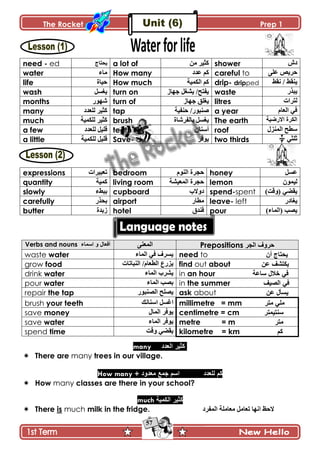
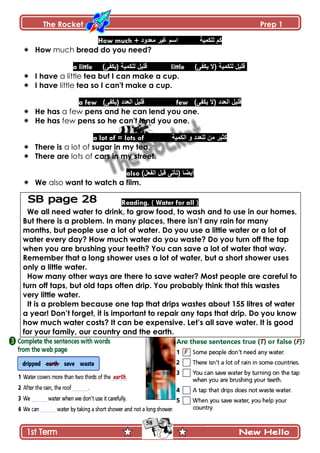
Words & opposites ‫ػىغٙا‬ ٚ ‫وٍّاخ‬ Prepositions ‫اٌجش‬ ‫دشٚف‬
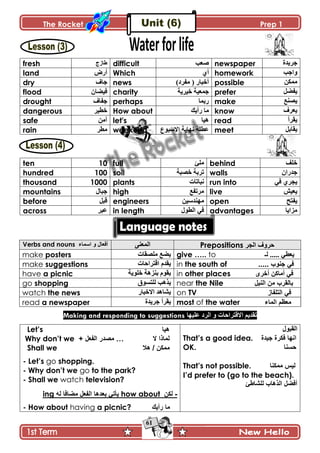
many # few )‫(٪ىو‬ ‫ٶٿْٽ‬ # ٍْ‫ٺػ‬ on the menu َ‫اٌطؼا‬ ‫لائّح‬ ٟ‫ف‬
healthy # unhealthy ِ‫ٚك‬ ٍْ‫ٮ‬ # ِ‫ٚك‬ at the market ‫اٌغٛق‬ ٟ‫ف‬
good for # bad for ‫پـ‬ ٌ‫ٞح‬ # ‫پـ‬ ‫ڂٳْى‬ with salad ‫اٌغٍطح‬ ‫ِغ‬
much # a little )‫(ٺڃْس‬ ‫ٶٿْٽ‬ # ٍْ‫ٺػ‬ good for ‫ڂٳْى‬‫پـ‬
top # bottom ٨‫ٶح‬ # ‫ٶڃس‬ good at ٟ‫ف‬ ‫ج١ذ‬
more # less ‫أٶٽ‬ # ٍ‫أٺػ‬
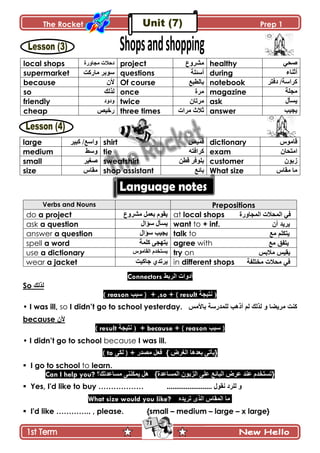
1- Countable & uncountable: ‫تعد‬ ‫ال‬ ً‫انت‬ ‫األسماء‬ ‫و‬ ‫تعد‬ ً‫انت‬ ‫األسماء‬
ٔ-‫ض٫ى‬ ِ‫جپط‬ ‫جألْڃحء‬‫جألْڃح‬ ِ‫ى‬ :ِ‫جپط‬ ‫ء‬ً ٩‫ُؿڃ‬‫ض‬( ‫ضٷرٽ‬s٩‫جپؿڃ‬ )٩‫جپؿڃ‬ ‫ڂ٫حڂٿس‬ ‫ض٫حڂٽ‬ ً ‫جپ٫ىو‬ ‫ضٷرٽ‬ ً٩ٟ‫چ‬ ًa / an
‫ڂنيح‬ ‫جپڃٳٍو‬ ‫ٶرٽ‬.‫چٓطهىڀ‬ ًThere is‫جپڃٳٍو‬ ٩‫ڂ‬ًThere are.٩‫جپؿڃ‬ ٩‫ڂ‬
- an apple – apples - a potato – potatoes - a man – men
- an ox – oxen - a loaf – loaves - a date – dates
Ex. - There is an apple on the table.
There are nine dates in the dish.
The Rocket Prep 1
29
ٕ-‫ض٫ى‬ ‫ال‬ ِ‫جپط‬ ‫جألْڃحء‬( ‫ضٷرٽ‬ ‫ال‬ :٩‫ضؿڃ‬ ‫ال‬ ِ‫جپط‬ ‫جألْڃحء‬ ِ‫ى‬ :s‫جپڃٳٍو‬ ‫ڂ٫حڂٿس‬ ‫ض٫حڂٽ‬ ً ‫جپ٫ىو‬ ‫ضٷرٽ‬ ‫ال‬ ً ٩‫جپؿڃ‬ ).
- time - water - furniture - money - salt
- sugar - advice - news - rubbish - information
- bread - work - soup - kofta - oil
- lamb - koshari - molokhia - pasta - meat
Ex. - There is some meat in the kitchen.
2- Some & Any: ‫أي‬ – ‫بعض‬
ٔ-( ‫چٓطهىڀ‬some‫جپؿڃ‬ ِ‫ٲ‬ )‫جپهرٍّس‬ ‫ٿس‬) ‫جالغرحش‬ (:‫جپ٣ٿد‬ ً
ٙ‫چحٶ‬ ‫ذٳ٫ٽ‬ ‫ضرىأ‬ ‫ڂح‬ ‫جپ٣ٿرْو‬ ‫جپؿڃٿس‬( ِ‫ى‬ ً:can, could, shall, should, will, would, may)
.ٌ‫پالْطٳٓح‬ ّْ‫پ‬ ً ٙ‫ٖه‬ َ‫٪ٿ‬ ‫ِٖء‬ ٍٜ٪ ً‫أ‬ ٙ‫ٖه‬ ‫ڂڅ‬ ‫ِٖء‬ ‫٢ٿد‬ َ‫٪ٿ‬ ‫ضىټ‬ ‫ڂح‬ ‫جپ٣ٿرْو‬ ‫جپؿڃٿس‬
- I have got some books in my bag.
- I want some sugar in it.
- Would you like some coffee?
- Can I ask you some questions?
ٕ-( ‫چٓطهىڀ‬any:‫ڂٓح٪ى‬ ‫ذٳ٫ٽ‬ ‫جپٓإجټ‬ ‫ؾڃٿس‬ ً ‫جپڃنٳْس‬ ‫جپؿڃٿس‬ ِ‫ٲ‬ )
( ‫هي‬ ‫:و‬ ‫املساعدة‬ ‫األفعال‬am, is, are, was, were, do, does, did, have, has, had)
- I haven't got any books in my bag.
- I don't want any sugar.
- Do you have any money ?
3- There is / are: ‫انجمع‬ ‫و‬ ‫نهمفرد‬ ‫ٌىجد‬
There is ) ‫جپڃ٫ىًز‬ ٍْ‫ٮ‬ ‫پالْڃحء‬ / ‫پٿڃٳٍو‬ ( ‫ٌّؾى‬ There are ) ٩‫پٿؿڃ‬ ( ‫ٌّؾى‬
- There is some water. - There are some lentils.
Is there …/ Are there … any…?: ‫؟‬ ٩‫پٿؿڃ‬ / ‫پٿڃٳٍو‬ ‫ٌّؾى‬ ‫ىٽ‬
1- Are there any lentils in the kitchen?
- Yes, there are. - No, there aren't.
2- Is there any water in the bottle?
- Yes, there is. - No, there isn't
The Rocket Prep 1
30
TO: jane@example.com
SUBJECT: Egyptian food
Dear Jane, ٓ١‫ج‬ ٟ‫ػض٠ضذ‬
Egypt is famous for many things, including its delicious food! Do you like
soup? My favourite soup is molokhia. It‟s a kind of vegetable soup and it‟s
very healthy. Koshari is a very popular dish. There isn‟t any meat in it, but
there are lentils. The other main ingredients are rice and pasta. There aren‟t
any tomatoes in this dish, but it is delicious with some tomato sauce on the
top. I love meat. My favourite food is lamb. I like to eat it with some salad
and some bread.
There is a lot of good fish in Egypt. When we visit my family in Alexandria,
my aunt always cooks fresh fish. There are lots of sweets, too. Many have
got nuts and dates in them. They are delicious!
Best wishes, ‫اٌرّٕ١اخ‬ ‫أط١ة‬
Salma
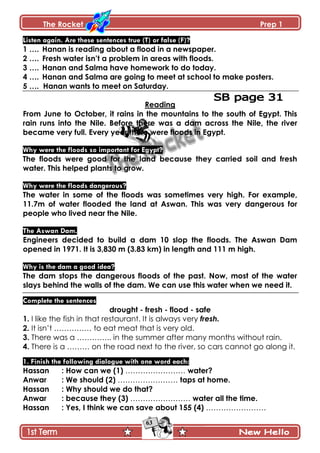
Are these sentences true (T) or false (F)?
1. There aren’t any vegetables in molokhia soup. ( )
2. Molokhia soup is good for you. ( )
3. Many people like koshari. ( )
4. There are tomatoes in koshari. ( )
5. Salma doesn’t like nuts and dates. ( )
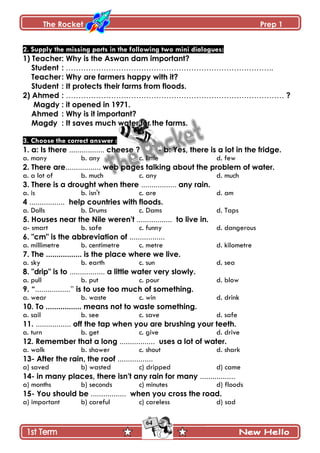
1- Choose the correct answer from a, b, c or d:
1. Koshari is a very ……………… dish for the Egyptian people.
a) bad b) dirty c) popular d) sweet
2. Egypt is……………… for its delicious food.
a) unkind b) kind c) ordinary d) famous
3. Rice and pasta are the main ……………… of koshari.
a) spoons b) ingredients c) dishes d) lists
4. My favourite ……………… soup is molokhia.
a) fruit b) vegetable c) meat d) sauce
5. Koshari is ……………… with some tomato sauce on the top.
a) unhealthy b) bad c) delicious d) dirty
6. "Lamb" is the meat of a young ………………
a) chicken b) sheep c) camel d) cow
7. Molokhia is good for you because it is …………….. .
a) unhealthy b) sauce c) healthy d) soap
8. I like a lot of tomato ……………… on the top of koshari.
a) soap b) pasta c) soup d) sauce
The Rocket Prep 1
31
1- Choose the correct answer from a, b, c or d:
1. Koshari is delicious with ……………… tomato sauce on the top.
a) few b) some c) any d) many
2. There ……………… any apples in the fridge.
a) am not b) wasn't c) aren't d) isn't
3. Would you like ……………… coffee?
a) many b) any c) no d) some
4. Have you got ……………… money?
a) few b) any c) no d) some
5. ……………… there any oranges?
a) Was b) Am c) Are d) Is
6. There isn't ……………… milk in the jug. I'll buy some.
a) few b) no c) some d) any
7. ……………… there any rice in this dish?
a) Am b) Is c) Are d) Were
8. Has it got ……………… cheese in this dish?
a) many b) any c) some d) no
9. Vegetable soup is good ……………… you.
a) in b) with c) for d) at
10. Egypt is famous for many things ……………… its delicious food.
a) including b) answering c) playing d) calling
11. Molokhia is a very ……………… soup.
a) bad b) unhealthy c) healthy d) dirty
12. The waiter ‫إٌادي‬ brought us the ……………… to order the food.
a) notebook b) timetable c) file d) menu
13. Eating too much ……………… makes you fat ‫عّ١ٕا‬ / ‫تذ٠ٕا‬ ‫.٠جؼٍه‬
a) fruit b) vegetable c) salt d) rice
14. There isn't any……………… in koshari.
a) rice b) meat c) lentils d) pasta
15. Many sweets have got ……………… and dates in them.
a) rice b) beans c) nuts d) lentils
2- Read and correct the underlined word (s):
1. Can I have any juice? ( ………………… )
2. Has it got some soup in it? ( ………………… )
3. There isn't any books in the bag. ( ………………… )
4. Tomato sauce is put in the top of koshari. ( ………………… )
5. Tomato is the man ingredient in green salad. ( ………………… )
6. There are any lentils. ( ………………… )
7. Vegetable soup is very health. ( ………………… )
8. Koshari is a very popular plate. ( ………………… )
9. Molokhia soap is delicious. ( ………………… )
The Rocket Prep 1
32
orange juice ‫ذٍضٷحټ‬ ٍْٛ٪ would like ‫ٍّّى‬ please ‫ٲٟٿٹ‬ ‫ڂڅ‬
restaurant ‫ڂ٣٫ځ‬ help ‫ّٓح٪ى‬ cup ‫ٲنؿحڄ‬
eat ‫ّأٺٽ‬ lunch ‫ٮىجء‬ tea ُ‫ٖح‬
drink ٍّٗ‫خ‬ have lunch ‫جپٯىجء‬ ‫ّطنحًټ‬ falafel ‫ٲالٲٽ‬
areas ‫ڂنح٢ٵ‬ supermarket ‫ڂحٌٺص‬ ٍ‫ٌْذ‬ night ‫پْٽ‬
call َ‫ّٓڃ‬ spice mixture ‫ضٌجذٽ‬ ‫نٿ٣س‬ enjoyed ٩‫جْطڃط‬
little ٍْ‫ٚٯ‬ Broad beans ‫ٲٌټ‬ٍٟ‫أن‬ breakfast ٌ‫جٲ٣ح‬
buy ٍُ‫ّٗط‬ long ‫٢ٌّٽ‬ first ‫أًټ‬
such as ‫ڂػٽ‬ pharaohs ‫جپٳٍج٪نس‬ still ‫ڂحَجټ‬
shops ‫ڂكالش‬ ancient ‫ٶىّځ‬ recipe ‫٢٫حڀ‬ ‫ًٚٳس‬
find ‫ّؿى‬ century ( ‫ٶٍڄ‬ٔٓٓ)‫٪حڀ‬ ful medames ّ‫ڂىڂ‬ ‫ٲٌټ‬
also ‫أّٟح‬ pots ِ‫أًجچ‬ dukkah ) ‫ضٌجذٽ‬ ( ‫وٶس‬
herbs ‫أ٪ٗحخ‬ yoghurt ُ‫َذحو‬ onions ‫ذٛٽ‬
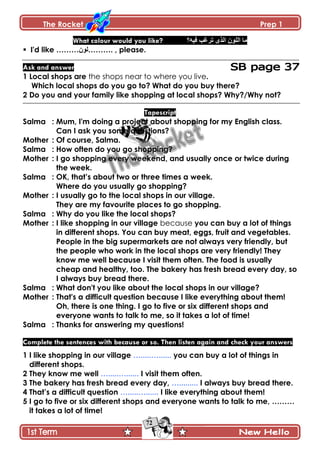
:‫پٿطنحًټ‬ ‫جپڃطحقس‬ ‫جأل٢٫ڃس‬ ‫٪څ‬ ‫جپٓإجټ‬
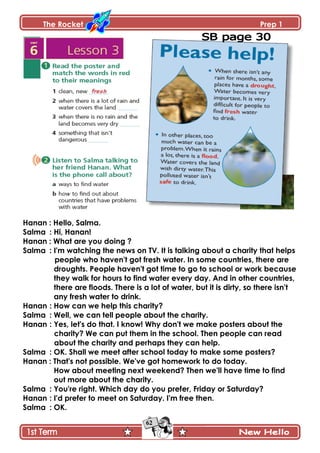
1. What have you got? ‫پىّٹ؟‬ ‫ڂحيج‬ - Chicken and rice.
2. What about salad? ‫جپٓٿ٣س؟‬ ‫٪څ‬ ‫ڂحيج‬ - We have green salad.
3. Have you got any lentils? ‫پىّٹ‬ ‫ىٽ‬ِ‫٪ى‬‫...؟‬ - Yes, we have got some
4. Can I have some chicken soup?
‫وؾحؼ؟‬ ‫ٌٌٖذس‬ ‫ضنحًټ‬ ِ‫ّڃٻنن‬ ‫ىٽ‬
- Yes, of course.
:‫ذحپڃ٣٫ځ‬ ‫جپڃطحقس‬ ‫جپڃًٍٗذحش‬ ً ‫ذحأل٢٫ڃس‬ ٍٜ٫‫جپ‬
1. What would you like to eat? ‫؟‬ ‫ضطنحًټ‬ ‫أڄ‬ ‫ضٍّى‬ ‫ڂحيج‬ - I'd like fish and rice.
2. What would you like to drink? ‫ضٍٗخ؟‬ ‫أڄ‬ ‫ضٍّى‬ ‫ڂحيج‬ - Orange juice, please.
3. Would you like some soup? ‫جپكٓحء؟‬ ٝ٫‫ذ‬ ‫ضٍّى‬ ‫ىٽ‬ - No, thanks / Yes, please.
Answer:
1. How often do you go to a restaurant?
……………………………………………………………………………………………….
2. What do you like to eat and drink at a restaurant?
……………………………………………………………………………………………….
3. What‟s your favourite food?
……………………………………………………………………………………………….
The Rocket Prep 1
33
Tapescript
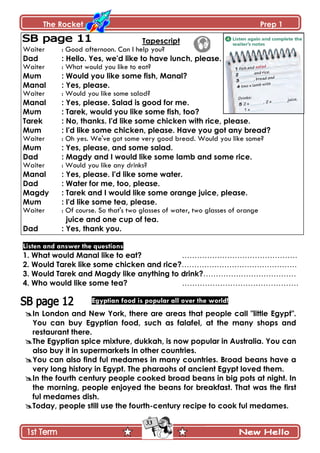
Waiter : Good afternoon. Can I help you?
Dad : Hello. Yes, we'd like to have lunch, please.
Waiter : What would you like to eat?
Mum : Would you like some fish, Manal?
Manal : Yes, please.
Waiter : Would you like some salad?
Manal : Yes, please. Salad is good for me.
Mum : Tarek, would you like some fish, too?
Tarek : No, thanks. I'd like some chicken with rice, please.
Mum : I'd like some chicken, please. Have you got any bread?
Waiter : Oh yes. We've got some very good bread. Would you like some?
Mum : Yes, please, and some salad.
Dad : Magdy and I would like some lamb and some rice.
Waiter : Would you like any drinks?
Manal : Yes, please. I'd like some water.
Dad : Water for me, too, please.
Magdy : Tarek and I would like some orange juice, please.
Mum : I'd like some tea, please.
Waiter : Of course. So that's two glasses of water, two glasses of orange
juice and one cup of tea.
Dad : Yes, thank you.
Listen and answer the questions
1. What would Manal like to eat? ……………………………………….
2. Would Tarek like some chicken and rice?……………………………………….
3. Would Tarek and Magdy like anything to drink?……………………………….
4. Who would like some tea? ……………………………………….
Egyptian food is popular all over the world!
In London and New York, there are areas that people call "little Egypt".
You can buy Egyptian food, such as falafel, at the many shops and
restaurant there.
The Egyptian spice mixture, dukkah, is now popular in Australia. You can
also buy it in supermarkets in other countries.
You can also find ful medames in many countries. Broad beans have a
very long history in Egypt. The pharaohs of ancient Egypt loved them.
In the fourth century people cooked broad beans in big pots at night. In
the morning, people enjoyed the beans for breakfast. That was the first
ful medames dish.
Today, people still use the fourth-century recipe to cook ful medames.
The Rocket Prep 1
34
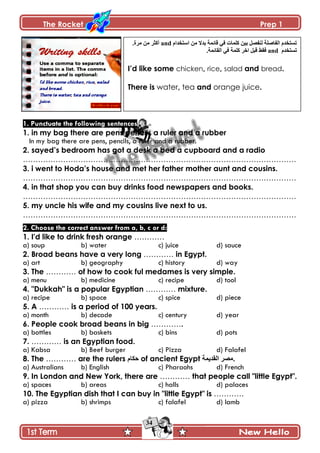
1. Punctuate the following sentences
1. in my bag there are pens pencils a ruler and a rubber
In my bag there are pens, pencils, a ruler and a rubber.
2. sayed‟s bedroom has got a desk a bed a cupboard and a radio
……………………………………………………………………………………………….
3. i went to Hoda‟s house and met her father mother aunt and cousins.
……………………………………………………………………………………………….
4. in that shop you can buy drinks food newspapers and books.
……………………………………………………………………………………………….
5. my uncle his wife and my cousins live next to us.
……………………………………………………………………………………………….
2. Choose the correct answer from a, b, c or d:
1. I'd like to drink fresh orange …………
a) soup b) water c) juice d) sauce
2. Broad beans have a very long ………… in Egypt.
a) art b) geography c) history d) way
3. The ………… of how to cook ful medames is very simple.
a) menu b) medicine c) recipe d) tool
4. "Dukkah" is a popular Egyptian ………… mixture.
a) recipe b) space c) spice d) piece
5. A ………… is a period of 100 years.
a) month b) decade c) century d) year
6. People cook broad beans in big ………….
a) bottles b) baskets c) bins d) pots
7. ………… is an Egyptian food.
a) Kabsa b) Beef burger c) Pizza d) Falafel
8. The ………… are the rulers ‫قٻحڀ‬ of ancient Egypt ‫جپٷىّڃس‬ ٍٛ‫.ڂ‬
a) Australians b) English c) Pharaohs d) French
9. In London and New York, there are ………… that people call "little Egypt".
a) spaces b) areas c) halls d) palaces
10. The Egyptian dish that I can buy in "little Egypt" is …………
a) pizza b) shrimps c) falafel d) lamb
‫جْطهىجڀ‬ ‫ڂڅ‬ ‫ذىال‬ ‫ٶحتڃس‬ ِ‫ٲ‬ ‫ٺٿڃحش‬ ‫ذْڅ‬ ‫پنٳٛٽ‬ ‫جپٳحٚٿس‬ ‫ضٓطهىڀ‬and.‫ڂٍز‬ ‫ڂڅ‬ ٍ‫أٺػ‬
‫ضٓطهىڀ‬and.‫جپٷحتڃس‬ ِ‫ٲ‬ ‫ٺٿڃس‬ ٍ‫جن‬ ‫ٶرٽ‬ ١‫ٲٷ‬
I‟d like some chicken, rice, salad and bread.
There is water, tea and orange juice.
The Rocket Prep 1
35
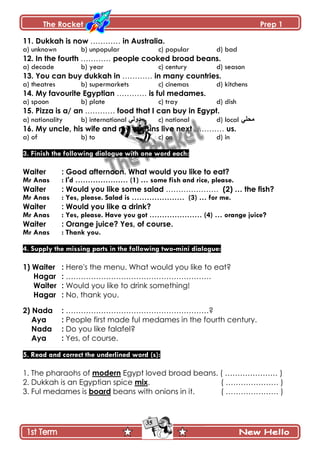
11. Dukkah is now ………… in Australia.
a) unknown b) unpopular c) popular d) bad
12. In the fourth ………… people cooked broad beans.
a) decade b) year c) century d) season
13. You can buy dukkah in ………… in many countries.
a) theatres b) supermarkets c) cinemas d) kitchens
14. My favourite Egyptian ………… is ful medames.
a) spoon b) plate c) tray d) dish
15. Pizza is a/ an ………… food that I can buy in Egypt.
a) nationality b) international ِ‫وًپ‬ c) national d) local ِ‫ڂكٿ‬
16. My uncle, his wife and my cousins live next ………… us.
a) of b) to c) on d) in
3. Finish the following dialogue with one word each:
Waiter : Good afternoon. What would you like to eat?
Mr Anas : I'd ………………… (1) … some fish and rice, please.
Waiter : Would you like some salad ………………… (2) … the fish?
Mr Anas : Yes, please. Salad is ………………… (3) … for me.
Waiter : Would you like a drink?
Mr Anas : Yes, please. Have you got ………………… (4) … orange juice?
Waiter : Orange juice? Yes, of course.
Mr Anas : Thank you.
4. Supply the missing parts in the following two-mini dialogue:
1) Waiter : Here's the menu. What would you like to eat?
Hagar : ………………………………………………….
Waiter : Would you like to drink something!
Hagar : No, thank you.
2) Nada : …………………………………………………?
Aya : People first made ful medames in the fourth century.
Nada : Do you like falafel?
Aya : Yes, of course.
5. Read and correct the underlined word (s):
1. The pharaohs of modern Egypt loved broad beans. ( ………………… )
2. Dukkah is an Egyptian spice mix. ( ………………… )
3. Ful medames is board beans with onions in it. ( ………………… )
The Rocket Prep 1
36
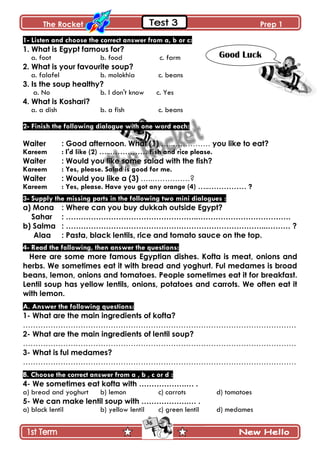
1- Listen and choose the correct answer from a, b or c:
1. What is Egypt famous for?
a. foot b. food c. farm
2. What is your favourite soup?
a. falafel b. molokhia c. beans
3. Is the soup healthy?
a. No b. I don't know c. Yes
4. What is Koshari?
a. a dish b. a fish c. beans
2- Finish the following dialogue with one word each:
Waiter : Good afternoon. What (1) …..…………… you like to eat?
Kareem : I'd like (2) …..…………… fish and rice please.
Waiter : Would you like some salad with the fish?
Kareem : Yes, please. Salad is good for me.
Waiter : Would you like a (3) …..……………?
Kareem : Yes, please. Have you got any orange (4) …..…………… ?
3- Supply the missing parts in the following two mini dialogues :
a) Mona : Where can you buy dukkah outside Egypt?
Sahar : ……………………………………………..……………………………….
b) Salma : ……………………………………………………………………...……… ?
Alaa : Pasta, black lentils, rice and tomato sauce on the top.
4- Read the following, then answer the questions:
Here are some more famous Egyptian dishes. Kofta is meat, onions and
herbs. We sometimes eat it with bread and yoghurt. Ful medames is broad
beans, lemon, onions and tomatoes. People sometimes eat it for breakfast.
Lentil soup has yellow lentils, onions, potatoes and carrots. We often eat it
with lemon.
A. Answer the following questions:
1- What are the main ingredients of kofta?
……………………………………………………………………………………………….
2- What are the main ingredients of lentil soup?
……………………………………………………………………………………………….
3- What is ful medames?
……………………………………………………………………………………………….
B. Choose the correct answer from a , b , c or d :
4- We sometimes eat kofta with ……………….… .
a) bread and yoghurt b) lemon c) carrots d) tomatoes
5- We can make lentil soup with ……………….… .
a) black lentil b) yellow lentil c) green lentil d) medames
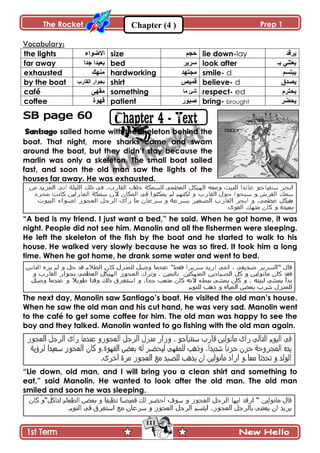
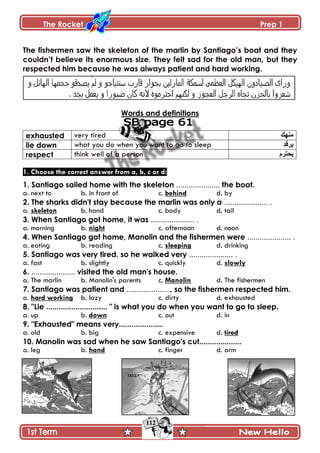
Good Luck
The Rocket Prep 1
37
5) The Reader
a) Choose the correct answer from a, b, c or d:
1- Manolin‟s parents didn‟t want him to go fishing with ……………….
a. fishermen b. the old man c. any one d. some men
2- ……………. had old clothes and only a little food.
a. the fishermen b. Santiago c. Manolin d. Manolin’s parents
b) Answer the following questions:
1. Why didn‟t Manolin‟s parents want him to go fishing with Santiago?
……………………………………………………………………………………………….
2. What did the fishermen feel about Santiago?
……………………………………………………………………………………………….
6- Choose the correct answer :
1- You can ……………….… ful medames in many countries.
a) finds b) find c) found d) finding
2- ……………….… there any meat in lentil soup?
a) Are b) Do c) Is d) does
3- Orange juice? OK. Let‟s ……………….… it.
a) try b) eat c) use d) smell
4- There aren‟t ……………….… tomatoes at the market.
a) a b) any c) some d) an
5- Why are some parts of New York and London ……….……… "Little Egypt"?
a) call b) calls c) called d) calling
6- I like falafel, ……………….… I don‟t like soup.
a) but b) and c) so d) because
7- The Egyptian spice …………….… dukkah, is now popular in Australia.
a) areas b) herbs c) mixture d) recipe
8- Pasta, lentils and rice are main ingredients of ……………….… .
a) kofta b) koshari c) falafel d) medames
7- Read and correct the underlined word:
1. There are some bread on the table. ( ……………… )
2. Can I have any water, please? ( ……………… )
3. Hany wood like to have falafel. ( ……………… )
8- Write a paragraph of six sentences on : " Koshari "
……………………………………………………………………………………………….
……………………………………………………………………………………………….
……………………………………………………………………………………………….
……………………………………………………………………………………………….
……………………………………………………………………………………………….
The Rocket Prep 1
38
get around ‫ؾٌپس‬ ِ‫ٲ‬ ‫ًّىد‬ streets ٨ٌ‫ٌٖج‬ system ‫چ٧حڀ‬
around ‫قٌټ‬ busy ‫ڂٗٯٌټ‬ train ٌ‫ٶ٣ح‬
metro ًٍ‫ڂط‬ worry ‫ّٷٿٵ‬ run from ‫ڂڅ‬ ٍّْٓ
check ٙ‫ّٳك‬ ways ‫٢ٍٴ‬ tickets ٍ‫ضًجٺ‬
welcome to ِ‫ٲ‬ ‫ڂٍقرح‬ miss ‫ّٳٷى‬ cost ‫ّطٻٿٱ‬
thousands ٰ‫آال‬ catch the bus ٘‫جپرح‬ ‫ٍّٺد‬ passengers ‫ٌٺحخ‬
tourists ‫ْحتكْڅ‬ by taxi ِٓ‫ذحپطحٺ‬ grow ٌ‫ّنڃ‬
museum ‫ڂطكٱ‬ travel ٍ‫ّٓحٲ‬ big ٍْ‫ٺر‬
interesting ‫ْٖٵ‬ on the Nile ‫جپنْٽ‬ َ‫٪ٿ‬ easy ‫ْيٽ‬
amazing ‫ڂًىٽ‬ /ٕ‫ڂىى‬ by boat ‫ذحپٷحٌخ‬ quick ٩ٍّْ
past ‫جپ‬ِٞ‫ڃح‬ special ٘‫نح‬ cheap ْٙ‫ٌن‬
full of ‫ذـ‬ ‫ڂٿة‬ ticket office ٍ‫جپطًجٺ‬ ‫ڂٻطد‬ advice ‫چْٛكس‬
buy ٍُ‫ّٗط‬ instructions ‫ض٫ٿْڃحش‬ walk through ‫نالټ‬ ٍ‫ّڃ‬
put ٩ّٟ machine ‫آپس‬ stop ‫ّطٌٶٱ‬
wait ٍ٧‫ّنط‬ gate ‫ذٌجذس‬ turn right ‫ذڃْنح‬ ‫ّطؿو‬
cross ٍ‫ّ٫ر‬ go straight ‫پألڂحڀ‬ ٍّْٓ turn left ‫ّٓحٌج‬ ‫ّطؿو‬
Words & opposites ‫ػىغٙا‬ ٚ ‫وٍّاخ‬ Prepositions ‫اٌجش‬ ‫دشٚف‬
cheap # expensive ِ‫ٮحپ‬ # ْٙ‫ٌن‬ at night ‫ٌ١ال‬
easy # difficult- hard ‫ٚ٫د‬ # ‫ْيٽ‬ come to ٌٝ‫أ‬ ٟ‫٠أذ‬
busy # free ِٞ‫ٲح‬ # ‫ڂٗٯٌټ‬ learn about ٓ‫ػ‬ ٍُ‫٠رؼ‬
near # far ‫ذ٫ْى‬ # ‫ٶٍّد‬ In the morning ‫اٌقثاح‬ ٟ‫ف‬
Welcome to Egypt
Come to Cairo, the biggest city in Africa. About 9.000.000 people live here,
and thousands of tourists visit every day. There are lots of things to see and do.
See the Egyptian Museum, one of the most interesting places in Cairo. It is full
of amazing things - don‟t miss it! Visit the beautiful buildings in Old Cairo and
learn about Egypt‟s past.
Cairo‟s streets are always busy, but don‟t worry, there are lots of ways to get
around. Catch a bus, go by taxi or travel on the Nile by boat! The metro is the
quickest and easiest way to travel round the city. It‟s cheap and easy.
The Rocket Prep 1
39
The Cairo Metro: Facts.
- The Cairo metro is special. It is the first metro system in Africa!
- The trains run from 5.30 in the morning to 12.30 at night.
- The tickets cost one pound each.
- The metro carries about 3 .000.000 passengers every day.
- It is growing! By 2020, about 5.000.000 people will use it every day!
Answer these questions
1 Why do thousands of tourists visit Cairo?
……………………………………………………………………………………………….
2 What can you do in Old Cairo?
……………………………………………………………………………………………….
3 Why is the Cairo metro special?
……………………………………………………………………………………………….
4 What time do the trains stop at night?
……………………………………………………………………………………………….
5 How many people will the metro carry in 2020?
……………………………………………………………………………………………….
Imperative ‫األمر‬
-‫ذىًڄ‬ ٌ‫ڂٛى‬ ‫ذٳ٫ٽ‬ ‫جألڂٍّس‬ ‫جپؿڃٿس‬ ‫ضرىأ‬to.
- Open the door. - Help you mum.
ٔ-‫جأل‬ ‫ْٚٯس‬ ‫چٓطهىڀ‬:‫ڂح‬ ً‫ح‬‫ْٖث‬ ‫ذٳ٫ٽ‬ ٙ‫ٖه‬ ٍ‫چهر‬ ‫أڄ‬ ‫چٍّى‬ ‫٪نىڂح‬ ٍ‫ڂ‬
- Open the door, please. - Give me your pen, please.
ٕ-:‫جپنْٛكس‬ ً‫أ‬ ‫جپط٫ٿْڃحش‬ ‫إل٪٣حء‬ ٍ‫جألڂ‬ ‫ْٚٯس‬ ‫چٓطهىڀ‬
- Revise for your exams. - Wait in a queue for the bus.
ٖ-‫چٓطهىڀ‬Don't٫‫ذ‬ ِ‫ّأض‬ ً ِ‫جپڃنٳ‬ ٍ‫جألڂ‬ ‫ْٚٯس‬ ِ‫ٲ‬.‫ڂح‬ ‫ِٖء‬ ‫ٲ٫ٽ‬ ‫٪څ‬ ِ‫پٿني‬ ٌ‫جپڃٛى‬ ‫ىىح‬
- Don't play in the street.
- Don't waste your time.
Comparatives 2 ‫بٍن‬ ‫مقارنت‬
‫ٶٍْٛز‬ ‫ٚٳس‬ + er + than
Ali is taller than Ahmed. ‫أقڃى‬ ‫ڂڅ‬ ‫أ٢ٌټ‬ ِ‫٪ٿ‬
more + ‫٢ٌّٿس‬ ‫ٚٳس‬ + than
The plane is more expensive than the train.
Superlatives ‫ِجّٛػح‬ ٚ ‫ؽخـ‬ ‫بٍن‬ ‫مقارنت‬
the + ‫ٶٍْٛز‬ ‫ٚٳس‬ + est
Ali is the tallest boy in the class.
the most + ‫٢ٌّٿس‬ ‫ٚٳس‬
See the Egyptian Museum, one of the most interesting places in Cairo.
The Rocket Prep 1
40
1- Choose the correct answer from a, b, c or d:
1. Cairo is the biggest ……………… in Africa.
a) town b) village c) city d) country
2. The Egyptian ……………… is one of the most interesting places in Cairo.
a) Food b) Book c) Square d) Museum
3. The Cairo Metro is the first metro ……………… in Africa.
a) group b) team c) system d) train
4. The metro carries about 3,000,000 ……………… every day.
a) nurses b) passengers c) doctors d) teachers
5. The tickets ……………… one pound each.
a) feed b) run c) cost d) carry
6. The number of people in Egypt is ……………… every year.
a) climbing b) going c) growing d) carrying
7. Cairo's streets are always busy, so take the metro to ……………… around.
a) eat b) look c) give d) get
8. In old Cairo, you can learn about Egypt's ………………
a) tomorrow b) future c) past d) present
9. It's ……………… to visit the Egyptian Museum.
a) dirty b) amazing c) bad d) unkind
10. The metro is ……………… and easy.
a) slow b) difficult c) bad d) cheap
11. There are a lot of beautiful ……………… in Old Cairo.
a) planes b) writings c) buildings d) ships
12. Don't ……………… visiting beautiful buildings in Old Cairo.
a) leave b) catch c) miss d) learn
13. Thousands of ……………… visit Egypt every year.
a) passengers b) guides c) tourists d) animals
14. Cairo is ……………… of amazing things.
a) thirsty b) full c) afraid d) happy
15. It's interesting to get ……………… Cairo.
a) between b) around c) in d) on
16. A ……………… is a person who travels on a bus, a car, a train or plans.
a) patient b) passenger c) customer d) tourist
17. ……………… to the ticket office to buy a ticket.
a) To go b) Goes c) Go d) Going
18. Don't go out now. ……………… here.
a) Waits b) Wait c) Waiting d) Waited
19. ……………… lose your ticket in the machine.
a) Do b) Didn't c) Doesn't d) Don't
20. ……………… your ticket in the machine to let you go through.
a) Putting b) To put c) Put d) Puts
21. The sign says, "………………here".
a) Stops b) Stopped c) Stop d) Stopping
The Rocket Prep 1
41
22. The sign says, " ……………… walk here".
a) Doesn't b) Isn't c) Don't d) Can't
23. The science lab isn't here. ……………… with me.
a) Coming b) Came c) Comes d) Come
24. ……………… take out your book.
a) Isn't b) Doesn't c) Don't d) Didn't
25. The metro is the ……………… way to travel in Cairo.
a) easy b) easiest c) easier d) more easy
2- Read and correct the underlined word (s):
1.It is hot. Opening the window, please. (…………………)
2.Please, sat down. (…………………)
3.Not go to the ticket office. (…………………)
4.Learn on Egypt's past. It's amazing. (…………………)
5.I can't walk on Cairo's streets as they are quiet. (…………………)
6.If you are late, you can go in taxi. (…………………)
1. Choose the correct answer from a, b or c
1 If something is amazing, it is ………………
a. really good. b. your favourite. c. far away.
2 How you get around a town is how you ………………
a. understand it. b. travel in it. c. like it.
3 A metro is a train system that is usually ………………
a. under the ground. b. over the ground. c. old and expensive.
4 A passenger is a person who travels ………………
a. every day. b. without paying. c. on a train, bus, etc.
2. Complete the sentences and match them to the signs
cycle - Cross - drink - Turn – use
1 (b) Don’t use a mobile phone.
2 ( ) ……………………….. left
3 ( ) ……………………….. the road here.
4 ( ) Don’t ……………………….. here.
5 ( ) Don’t ……………………….. the water.
The Rocket Prep 1
42
map ‫نٍّ٣س‬ each ‫ًجقى‬ ‫پٻٽ‬ pound ‫ؾنْو‬
line ١‫ن‬ take ً‫ّأن‬ bookshop ‫جپٻطد‬ ٩ْ‫پر‬ ‫ڂٻطرس‬
station ‫ڂك٣س‬ opposite ‫ڂٷحذٽ‬ park ‫ڂٌٶٱ‬ / ‫قىّٷس‬
change ٍْ‫ّٯ‬ Excuse me ‫ْڃكص‬ ٌ‫پ‬ between ‫ذْڅ‬
corner ‫ٌٺڅ‬ get to َ‫ئپ‬ ‫ّٛٽ‬ library ‫ڂٻطرس‬
clothes shop ّ‫ڂالذ‬ ‫ڂكٽ‬ market ‫ٌْٴ‬ queue ‫ٚٱ‬
north ‫ٖڃحټ‬ cafe َ‫ڂٷي‬ push ٩‫ّىٲ‬
south ‫ؾنٌخ‬ post office ‫ذٍّى‬ ‫ڂٻطد‬ polite ‫ڂإوخ‬
east ‫ٍٖٴ‬ bank ‫ذنٹ‬ seat ‫ڂٷ٫ى‬
west ‫ٮٍخ‬ Go along ‫ذ٣ٌټ‬ ‫جضؿو‬ elderly people ‫جپٓڅ‬ ٌ‫ٺرح‬
Prepositions ‫اٌجش‬ ‫دشٚف‬
Go straight on ‫پألڂحڀ‬ ‫ّطؿو‬ polite to ‫پـ‬ / ٩‫ڂ‬ ‫ڂإوخ‬ on the right ٓ١ّ١ٌ‫ا‬ ٍٝ‫ػ‬
get on ‫٠قؼذ‬‫اٌثاؿ‬ ٌٝ‫إ‬... wait for ٍ٧‫ّنط‬ on the left ٌ‫جپْٓح‬ َ‫٪ٿ‬
get to ٌٝ‫إ‬ ً‫٠ق‬ thank …. For َ‫٪ٿ‬ ... ٍ‫ّٗٻ‬ on the corner ‫اٌضاٚ٠ح‬ /ٓ‫اٌشو‬ ٍٝ‫ػ‬
get from .. to .. ‫ئ‬ ‫ڂڅ‬ ‫ّٛٽ‬َ‫پ‬ change lines at ًٍ‫جپڃط‬ ١‫ن‬ ٍْ‫ّٯ‬ on the metro/ train ....ٚ‫تاٌّرش‬
next to ‫تجأة‬ by bus/ taxi … in a taxi / car ........... ٟ‫تاٌراوغ‬
1-:‫األماكن‬ ‫و‬ ‫املواقع‬ ‫عن‬ ‫السؤال‬
--- Excuse me. How do I get to the bus station? ‫ڂكٛس‬ َ‫ئپ‬ ‫أٚٽ‬ ‫ٺْٱ‬ ‫ْڃكص‬ ٌ‫پ‬‫جالضٌذّْ؟‬
- Where is the bus station?
2-:‫األنفاق‬ ‫مرتو‬ ‫استخدام‬
--- Excuse me. How do I get to Ataba on the metro?
- First, take line one. Then, change at Al Shohadaa. Ataba is on line two.
3-:‫بيعها‬ ‫مكان‬ ‫و‬ ‫التذكرة‬ ‫سعر‬ ‫عن‬ ‫السؤال‬
--- How much are the tickets? - They‟re one pound each.
--- Where can I buy tickets? - At the tickets office.
Tapescript
Conversation 1
A : Excuse me. Where’s the metro station, please?
B : Turn left, then go straight on. It’s on the corner opposite the hospital.
The Rocket Prep 1
43
Conversation 2
A : Excuse me. How do we get to Ataba on the metro?
B : first, take line one. Then, change at Al Shohadaa. Ataba is on line two.
A : How much are the tickets?
B : They’re one pound each. Buy them from the ticket office over there.
A : Thank you for your help.
B : You are welcome. ‫العفو‬
Reading
Conversation 1
Ahmed : How do I get from the bookshop to the park?
Eslam : Go along West Street. Cross North Street and turn right. It's on the
left. Between the library and the school.
Conversation 2
Asmaa : How do I get from the hospital to the school?
Ayah : Cross the road. Go straight on along North Street. It's next to the
park, opposite the post office.
Now complete these sentences with an imperative
Be - Don‟t - Give - Say - Wait
1 …Wait... in a queue for the bus.
2 …..…….. push.
3 …..…….. polite to other passengers.
4 …..…….. please and thank you when you buy a ticket.
5 …..…….. your seat to elderly people.
Finish the following dialogue with one word each:
Tourist : Excuse me. How do we (1) …..………… to Ataba on the metro?
Hatem : First, take line one. Then change at Al Shohadaa.
Ataba is on line two.
Tourist : (2) …..…………… much are the tickets?
Hatem : They‟re one pound (3) …….…... Buy them from the tickets office
over there.
Tourist : Thank you for your (4) …..…………….
Hatem : You‟re welcome.
The Rocket Prep 1
44
1- Choose the correct answer from a, b, c or d:
1.A ……………… shows you the directions.
a) top b) map c) mop d) plan
2.Cairo Metro consists of three ………………
a) circles b) triangles c) lines d) squares
3.Al Shohadaa is one of the biggest metro ……………… at Ramsis square.
a) parks b) tickets c) lines d) stations
4.You can ……………… lines at Ataba station.
a) travel b) buy c) turn d) change
5.How do I ……………… to Road El-Farag on the metro?
a) arrive b) change c) take d) get
6.……………… left, then go straight on.
a) Give b) Sell c) Buy d) Turn
7.The tickets are one pound ……………… .
a) every b) each c) a kilo d) all
8.Thank you ……………… your help.
a) at b) for c) to d) by
9.……………… your seat to elderly people.
a) Buy b) Give c) Take d) Wait
10. You should be polite ……………… other passengers.
a) with b) to c) for d) from
11. ……………… please and thank you when you buy a ticket.
a) Give b) Say c) Talk d) Walk
12. When you buy a ticket, don't ……………… other passengers.
a) take b) pull c) put d) push
13. To get to Kobri El-Kobba station, go ……………… West Street.
a) longest b) long c) along d) a long
14. The park is ……………… the post office.
a) in front b) between c) next d) opposite
15. The bank is ……………… the bookshop and the school.
a) behind b) between c) next d) in front
16. Wait in a ……………… for the bus.
a) circle b) corner c) queue d) square
2- Read and correct the underlined word (s):
1. On which stations can you change lines? ( ………………… )
2. What's the bank? - It's on your left. ( ………………… )
3. How do I get by Saad Zaghloul on the metro? ( ………………… )
4. We arrived at London in the morning. ( ………………… )
5. The bank is in the corner. ( ………………… )
6. To go to Abbasia, take queue three. ( ………………… )
7. Be polite at elderly people. ( ………………… )
8. I go to school by my father’s car. ( ………………… )
The Rocket Prep 1
45
1- Listen and choose the correct answer from a, b or c:
1- Khaled always goes to school on the ……………………………
a) bus b) taxi c) metro
2- Khaled's school is ……………. the hospital.
a) near b) between c) next to
3- At which station can you change lines?
a) Sadat b) El-Shohadaa c) Ataba
4- What is Al Shohadaa?
a. A metro station b. A bus station c. A train station
2- Finish the following dialogue with one word each:
Tourist : Excuse me, how do I get to the museum?
Man : Go (1) ….................... along this street. Take the first turn on your
right. The museum is opposite the bank.
Tourist : Should I take a taxi or is it (2) ….................... from here ?
Man : No, you shouldn‟t. You can (3) ….................... .
Tourist : Thank you, sir for your help.
Man : You are (4) ….................... .
3- Supply the missing parts in the following two mini dialogues :
a) Hala : At which station can you change lines?
Manar : ……………………………………………………………………...……… .
b) Amany : ………………………………………………………………...…………… ?
Esraa : This dress is 200 pounds.
4- Read the following, then answer the questions:
Ali is from Tanta. He goes to Cairo to visit his cousin in El-Demerdash
hospital in Cairo. He wants to know the way to the hospital, so he asks
Basel about the way. Basel tells him to go along West Street, then to cross
North Street and turn right. It‟s on the left between the park and the school.
Ali thanks Basel very much and goes there.
A. Answer the following questions:
1- Where‟s Ali from?
……………………………………………………………………………………………….
2- Where's Ali's cousin?
……………………………………………………………………………………………….
3- Is Basel helpful?
……………………………………………………………………………………………….
B. Choose the correct answer from a , b , c or d :
4- The hospital is between the ……………….. .
a) park and the school b) bank and the café c) post office and the bookshop
5- The hospital is in ………………..
a) Tanta b) Alexandria c) Cairo d) Minia
Good Luck
The Rocket Prep 1
46
5) The Reader
a) Choose the correct answer from a, b, c or d:
1. Santiago was ..................... and he was a good fisherman.
a. weak b. cheap c. strong d. funny
2."Fish, I'll stay with you until the end," said ......................
a. the marlin b. Santiago c. Manolin d. Manolin's parents
b) Answer the following questions:
1. Why wasn't Santiago afraid of the fish?
……………………………………………………………………………………………….
2. Do you think it is easier to be a fisherman?
……………………………………………………………………………………………….
6- Choose the correct answer :
1- The museum is full of amazing things. …………… miss it!
a) Don’t b) doesn’t c) didn’t d) isn’t
2- Go …………… on and turn right at the corner.
a) street b) straight c) between d) tall
3- The hospital is …………… the bank.
a) near b) next c) straight d) in
4- The metro carries about 3,000,000 ……………
a) passengers b) tickets c) pounds d) houses
5- The bank is …………… to the station.
a) next b) in front c) behind d) at
6- It is the first metro …………… in Africa.
a) season b) system c) museum d) row
7- …………… people will the metro carry in 2020?
a) What time b) How many c) Which station d) How
8- In the metro, …………… your ticket at the gate.
a) shows b) show c) showing d) finding
7- Read and correct the underlined word:
1- The bakery is next the post office. ( ……………… )
2- Go along this street, then turns left. ( ……………… )
3- Hesham turned write at the corner. ( ……………… )
8- Write a paragraph of six sentences on : " The Cairo Metro "
……………………………………………………………………………………………….
……………………………………………………………………………………………….
……………………………………………………………………………………………….
……………………………………………………………………………………………….
……………………………………………………………………………………………….
……………………………………………………………………………………………….
The Rocket Prep 1
47
clean ‫چ٧ْٱ‬ weather ّ‫٢ٷ‬ agreed ‫جضٳٵ‬
country ‫وًپس‬ summer ‫ْٚٱ‬ decided to ‫أڄ‬ ٌٍ‫ٶ‬
important ‫ىحڀ‬ /‫ڂيځ‬ move-d ‫ّنطٷٽ‬-‫ّطكٍٸ‬ journalist ِ‫ٚكٳ‬
problem ‫ڂٗٻٿس‬ local ِ‫ڂكٿ‬ designed ‫ٚڃځ‬
rubbish ‫ٶڃحڂس‬ picnic ‫چُىس‬ posters ‫ڂٿٛٷحش‬
become ‫ّٛرف‬ near ‫ٶٍّد‬ pollution ‫ضٿٌظ‬
polluted ‫ڂٿٌظ‬ While ‫ذْنڃح‬ trucks ‫ٖحقنحش‬
ugly ‫ٶرْف‬ animals ‫قٌْجچحش‬ happen-ed ‫ّكىظ‬/‫حذث‬
dirty ‫ڂطٓم‬ get sick ٍٜ‫ّڃ‬ beautiful ‫ؾڃْٽ‬
text message ‫چْٛس‬ ‫ٌْحتٽ‬ garden ‫جپڃنُټ‬ ‫قىّٷس‬ flower ‫ًٌوز‬
send - sent ‫ٍّْٽ‬/‫أرسل‬ pay- paid ٩‫ّىٲ‬/‫چٷٌو‬‫دفغ‬ tree ‫ٖؿٍز‬
Verbs and nouns ‫اعّاء‬ ٚ ‫أفؼاي‬ َ‫جپڃ٫ن‬ Prepositions ‫اٌجش‬ ‫دشٚف‬
become polluted ‫ڂٿٌظ‬ ‫ّٛرف‬ walk into a tree ‫تؾجشج‬ َ‫٠قطذ‬
get dirty and unhealthy ِ‫ٚك‬ ٍْ‫ٮ‬ ً ‫ڂطٓهح‬ ‫ّٛرف‬ by the river ‫إٌٙش‬ ‫تجٛاس‬
have a picnic ‫چُىس‬ ِ‫ٲ‬ ‫ًّىد‬ go through ‫خالي‬ ‫٠ّش‬
collect money ‫أڂٌجټ‬ ٩‫ّؿڃ‬ for drinking ‫ٌٍؾشب‬
do a six kilometre walk ِٗ‫ّڃ‬ٙ‫ٺځ‬ talk about ٓ‫ػ‬ ‫٠رذذز‬
printed tickets ٍ‫ضًجٺ‬ ٩‫٢ر‬ call her for ً‫أج‬ ِٓ ‫تٙا‬ ً‫٠رق‬
paid us money ‫جپڃحټ‬ ‫پنح‬ ٩‫وٲ‬ between five and seven ..... ٓ١‫ت‬
design posters ‫جپڃٿٛٷحش‬ ‫ٚڃځ‬ agree to ٍٝ‫ػ‬ ‫٠رفك‬
stop pollution ‫جپطٿٌظ‬ ‫ٌّٶٱ‬ help (obj) + v. )or( to + v. ‫٠غاػذ‬
Reading. A dirty canal
- The canals of the Nile are very important. We use the canals to get clean
water for drinking and for farms.
- In 2013, there was a problem in the Abou El Menagga canal. There was
rubbish in the water and the canal was becoming polluted and ugly. The
weather was very hot that summer and the water was not moving. It was
getting dirty and unhealthy.
- Some students from a local school learned about the problem when they
having a picnic near the canal. While they were eating, they talked about
the problem. They don‟t want people and animals to get sick. They wanted
the canal to be healthy place again.
The Rocket Prep 1
48
- They agreed to collect money to help clean the canal. They decided to
do a six kilometre walk.
- A student told our journalist, "Before the walk, we designed posters about
the problem of pollution. When people looked at the posters, they all
wanted to help us. We collected a lot of money, and 70 trucks helped us
clean the area."
- "Why did we do it? Because we love our country and we want to stop
pollution, " said the students.
Read a magazine article about a canal. What do these words describe? ‫اٌىٍّاخ‬ ٖ‫٘ز‬ ‫ذقف‬ ‫ِارا‬
1. hot …..……...................................................
2. unhealthy …..……………………………………..…..
3. beautiful …..………………………….………….…..
Answer these questions
1. Why is it important for the canals to be clean?
……………………………………………………………………………………………….
2. What was making the Abou El Menagga canal polluted?
……………………………………………………………………………………………….
3. What were students doing when they were at the canal?
……………………………………………………………………………………………….
4. How did they collect money?
……………………………………………………………………………………………….
5. What happened when people looked at the posters?
……………………………………………………………………………………………….
Choose the correct words
1. Look at all those flowers! They are very ( good / beautiful ).
2. Ahmed’s shirt is ( dirty/polluted ) because he played football today.
3. It is ( healthy/unhealthy ) to eat a lot of sweets.
4. Don’t drink water from the canal because it is ( clean/polluted ).
5. I don’t like those tall buildings. They are very ( ugly/amazing ).
The Past Simple Tense
‫٪څ‬ ٍ‫ّ٫ر‬‫ذىأ‬ ‫ٖة‬َٞ‫جپڃح‬ َ‫ٲ‬ َ‫ئچطي‬ ً:‫جٓضْس‬ ‫جپٻٿڃحش‬ ٩‫ڂ‬ ‫ّٓطهىڀ‬ ً
Yesterday
ّ‫أڂ‬
In the past
َٞ‫جپڃح‬ َ‫ٲ‬
last week
َٞ‫جپڃح‬ ٨ٌ‫جالْر‬
last month
َٞ‫جپٗيٍجپڃح‬
last year
َٞ‫جپڃح‬ ‫جپ٫حڀ‬
a week ago
٨ٌ‫أْر‬ ً‫ڂن‬
a month ago
ٍ‫ٖي‬ ً‫ڂن‬
a year ago
‫٪حڀ‬ ً‫ڂن‬
-‫ٲ‬ ‫جألٲ٫حټ‬ ‫پطٍّٛٱ‬ ‫ؾىًټ‬ ‫ٌّؾى‬ :‫ڂٿكٌ٦س‬.‫جپڃًٺٍز‬ ‫چيحّس‬ ِ
The Rocket Prep 1
49
-ٍّ‫جپٟڃحت‬ ‫ٺٽ‬ ٩‫ڂ‬ ‫پٿٳ٫ٽ‬ َ‫جپػحچ‬ ‫جپطٍّٛٱ‬ ‫ڂڅ‬ ‫طٻٌڄ‬.
-‫ذـ‬ َ‫ضنطي‬ :‫ڂنط٧ڃس‬ ‫أٲ٫حټ‬ ‫ىنحٸ‬(ed): ‫ڂػٽ‬
play played - watch watched
( ٍٰ‫ذك‬ ِ‫ّنطي‬ ‫جپٳ٫ٽ‬ ‫ٺحڄ‬ ‫جيج‬e‫پو‬ ٩‫چٟــ‬ )( d )
darrivearrive →dlivelive →dlikelike →
‫ئ‬ٍٰ‫ذك‬ ِ‫ّنطي‬ ‫جپٳ٫ٽ‬ ‫ٺحڄ‬ ‫يج‬( y )ً‫ح‬‫ڂٓرٌٶ‬ًٰ‫چك‬ ، ‫ْحٺڅ‬ ٍٰ‫ذك‬( y )٩ٟ‫ًچ‬( ied )
study → studied cry → cried marry → married
‫ئ‬ٍٰ‫ذك‬ ِ‫ّنطي‬ ‫جپٳ٫ٽ‬ ‫ٺحڄ‬ ‫يج‬(y)ً‫ح‬‫ڂٓرٌٶ‬( ‫ڂطكٍٸ‬ ٍٰ‫ذك‬u–o–i–e–(a٩ٟ‫چ‬ed))
play → played enjoy → enjoyed stay → stayed
‫ئ‬٩‫ًچٟـــ‬ ‫جپٓحٺڅ‬ ‫َٱ‬٪‫ُٟح‬ّ ‫ڂطكٍٸ‬ ٍٰ‫ذك‬ ً‫ح‬‫ڂٓرٌٶ‬ ‫ْحٺڅ‬ ٍٰ‫ذك‬ ِ‫ّنطي‬ ‫جپٳ٫ٽ‬ ‫ٺحڄ‬ ‫يج‬(ed)
travel → travelled stop → stopped clap → clapped
-: ‫ڂػٽ‬ :‫ٖحيز‬ ‫أٲ٫حټ‬ ‫ىنحٸ‬ ً
- eat ate - go went - see saw
Ex: - I went to school by car yesterday.
‫چٓطهىڀ‬ ِ‫پٿنٳ‬( didn‟t + inf. )
- I didn't walk to school yesterday.
-: ‫چٓطهىڀ‬ ‫جالْطٳيحڀ‬ ‫قحپس‬ َ‫ٲ‬
- ‫جْطٳيحڀ‬ ‫ٺٿڃس‬ + did + ‫ٲح٪ٽ‬ + ‫جپٳ٫ٽ‬ ٌ‫ڂٛى‬ ?
- What did you do yesterday? - Where did you go last Friday?
-‫خ‬ ‫جپٓإجټ‬ ‫ذىأ‬ ‫ئيج‬ ‫أڂح‬Did‫ذـ‬ ‫جالؾحذس‬ ‫ضٻٌڄ‬Yes / No
- Did you play football yesterday?
Yes, I did. or No, I didn't.
-ً‫ح‬‫ًأقْحچ‬‫چٓطهىڀ‬ ‫جالْطٳيحڀ‬ ‫قحپس‬ َ‫ٲ‬was / were:
- Where was Mohamed yesterday?
- He was at the market.
The Past Continuous Tense
-ّ: ‫ڂڅ‬ ‫طٻٌڄ‬
- I / He / She / It + was
- You / We / They + were + v. + ing
- Rania was reading a book at three yesterday.
-ٞ‫جپڃح‬ َ‫ٲ‬ ‫ڂ٫ْڅ‬ ‫ًٶص‬ َ‫ٲ‬ ‫ڂٓطڃٍج‬ ‫ٺحڄ‬ ‫قىظ‬ ‫٪څ‬ ٍ‫ّ٫ر‬. َ
- What were you doing yesterday evening?
I was playing tennis.
The Rocket Prep 1
50
-‫ًجپكىظ‬ ٍ‫ڂٓطڃ‬ َٞ‫ڂح‬ ‫ّٻٌڄ‬ ٍ‫جپڃٓطڃ‬ ‫جپكىظ‬ ‫ٲاڄ‬ ٍ‫آن‬ ٍْٛ‫ٶ‬ ‫قىظ‬ ‫ٶ٣٫و‬ ً َٞ‫جپڃح‬ َ‫ٲ‬ ٍ‫ڂٓطڃ‬ ‫قىظ‬ ‫ىنحٸ‬ ‫ٺحڄ‬ ‫ئيج‬
. ١ْٓ‫ذ‬ َٞ‫ڂح‬ ‫ّٻٌڄ‬ ٍْٛ‫جپٷ‬
- While / As + ٍ‫ڂٓطڃ‬ َٞ‫ڂح‬ + ١ْٓ‫ذ‬ َٞ‫ڂح‬
- While I was playing football, I fell on the ground.
- I fell on the ground while I was playing football.
- When + ١ْٓ‫ذ‬ َٞ‫ڂح‬ + ٍ‫ڂٓطڃ‬ َٞ‫ڂح‬
- When I fell on the ground, I was playing football.
- I was playing football when I fell on the ground.
Underline the verbs in the past simple and circle the verbs in the past continuous
1. There was rubbish in the water and the canal was becoming polluted
and ugly.
2. The weather was very hot that summer and the water was not moving.
3. Some students from a local school learned about the problem when
they were having a picnic near the canal.
4. While they were eating, they talked about the problem.
Complete the sentences with the past simple or the past continuous form of the verbs in brackets
1 The boy …..............…….. (send) a text message when he …..…..….. (walk)
into a tree!
2 While Amina ………..…….. (play) in the garden, her mother …..…….. (call)
her for lunch.
3 “ What …..……………….. (you do) when I ………..….….. (phone) you
yesterday afternoon?”
- “I …..……………….. (do) my homework.”
4 …..……………….….. (Sara watch) television yesterday between five and
seven o‟clock?
1- Finish the following dialogue with one word each:
Heba : (1) .......................... were you yesterday afternoon?
Rania : We were in the street.
Heba : What did you (2) ............................. to the polluted street?
Rania : We cleaned it.
Heba : did you (3) ............................. the rubbish from it?
Rania : Yes, and we (4) .......................... it to the car.
The Rocket Prep 1
51
2- Supply the missing parts in the following two mini dialogues :
1. Rasha : How can we clean the school ?
Mona : .................................................................................
2. Nabil :.............................................................................. ?
Hoda :fie arrived there before ten o'clock.
3. Choose the correct answer :
1- These flowers are very ……………
a) beautiful b) healthy c) unhealthy d) polluted
2- The students designed …………… about the problem.
a) posters b) trucks c) canals d) ways
3- Ahmed agreed …………… help me with my problem.
a) at b) to c) of d) in
4- The ……………is very hot this summer.
a) weather b) poster c) pollution d) sky
5- While she ……….. in the garden, her mother called her for lunch.
a) playing b) is playing c) was playing d) played
6- What were you doing when I …………. you yesterday.
a) phone b) phoned c) phones d) phoning
7- …………… she television yesterday between five and seven?
a) Was b) Did c) Is d) were
8- Mum was cooking ……………. she hurt herself.
a) as b) while c) when d) because
9- Was it ………… when the game started?
a) rain b) raining c) rains d) rained
10- What ………… you doing yesterday morning?
a) is b) was c) were d) are
11- Mum went …………….. at the market yesterday.
a) swimming b) shopping c) fishing d) running
12- At two o'clock yesterday, I ……………… to the radio.
a. listened b. am listening c. was listening d. listens
13- They decided ……………… do a six-kilometre walk.
a. for b. at c. to d. of
14- I was reading the newspaper while my mother …………
a. was cooking b. cooking c. is cooking d. cooks
4. Read and correct the underlined word:
1- We do a three-kilogram walk every day. ( ……………… )
2- The boys were playing on the peach. ( ……………… )
3- Be careful or you will get into the tree. ( ……………… )
4- We learned on pollution yesterday. ( ……………… )
5- While they were collect money, it rained. ( ……………… )
6- If water is dirty, it becomes healthy.
The Rocket Prep 1
52
Phone- d ّ‫طٛٽ‬/‫اتصل‬ Wednesday ‫جالٌذ٫حء‬ finish- ed /ِ‫ّنطي‬ً‫اوته‬
Saturday ‫جپٓرص‬ Thursday ّْ‫جپهڃ‬ remember- ed /ٍ‫ّطًٺ‬‫تذكز‬
Sunday ‫جالقى‬ Friday ‫جپؿڃ٫س‬ cover- ed /ِ٣‫ّٯ‬ً‫غط‬
Monday ‫جالغنْڅ‬ What time ‫جپٌٶص‬ ‫ڂح‬ fly - flew /ٍْ٣ّ‫طار‬
Tuesday ‫جپػالغحء‬ rubbish bags ‫ٲڃحڂس‬ ِ‫أٺْح‬ windy ‫٪حٚٱ‬
jacket ‫ؾحٺْص‬ see - saw /ٍٍّ‫رأي‬ seasons ‫جپٓنس‬ ‫ٲٌٛټ‬
The police )٩‫(ؾڃ‬ ‫جپٍٗ٢س‬ buy - bought / ٍُ‫ّٗط‬‫اشتزي‬ winter ‫جپٗطحء‬
run away- ran ‫ّيٍخ‬ sell - sold / ٩ّْ‫باع‬ spring ٩ْ‫جپٍذ‬
shopping ‫ضٌٓٴ‬ show- ed / ‫ّرْڅ‬‫بيه‬ summer ‫جپْٛٱ‬
The sky ‫جپٓڃحء‬ wave- d ٌ‫ّٿ‬/ ‫ـ‬‫لىح‬ autumn ‫جپهٍّٱ‬
queue ) ِ‫٢ٌپ‬ ( ‫ٚٱ‬ row ) ٍِٞ٪ ( ‫ٚٱ‬ cold ‫ذحٌو‬
Verbs and nouns َ‫جپڃ٫ن‬ Prepositions ‫اٌجش‬ ‫دشٚف‬
buy apples ‫جپطٳحـ‬ ٍُ‫ّٗط‬ look at ٌٝ‫إ‬ ‫٠ٕظش‬
sell apples ‫جپطٳحـ‬ ٩ْ‫ّر‬ the man in the red jacket .... ٞ‫٠شذذ‬ ٞ‫اٌز‬ ً‫اٌشج‬
have lunch ‫جپٯىجء‬ ‫ّطنحًټ‬ from ….. to …. ..... ٌٝ‫إ‬ .... ِٓ
collect the rubbish ‫جپٷڃحڂس‬ ٩‫ّؿڃ‬ at half past twelve ‫إٌقف‬ ٚ ‫ػؾش‬ ‫اٌثأ١ح‬ ‫اٌغاػح‬ ٟ‫ف‬
clean the park ‫جپكىّٷس‬ ‫ّن٧ٱ‬ in the morning ‫اٌقثاح‬ ٟ‫ف‬
take a photo ‫ٌٌٚز‬ ١‫ّٿطٷ‬ In the evening ‫اٌّغاء‬ ٟ‫ف‬
show a photo ‫ٌٌٚز‬ ٍٜ٫ّ on Friday ‫اٌجّؼح‬ َٛ٠
Tapescript
Tarek : Hello, Adel! I phoned you on Saturday, but you weren't at home.
Adel : No, we were cleaning the park, Tarek!
Tarek : Why were you doing that?
Adel : Because it was so dirty. On Friday, there were a lot of people at the
park. They were having picnics. But in the evening, there was rubbish
everywhere! So the next day, we decided to clean the park.
Tarek : What time did you arrive at the park?
Adel : We arrived there before ten o‟clock. From ten to half past twelve,
we were collecting all the rubbish.
Tarek : Were you working at half past twelve?
Adel : No, we weren't. We were having lunch then!
Tarek : What were you doing in the afternoon?
Adel : We were carrying the rubbish bags to the car. When we finished
work, the park was beautiful and clean!
The Rocket Prep 1
53
- What was (Adel) doing between ten and eleven o‟clock?
He was/wasn’t …
- What were they doing at half past one?
They were/weren’t …
- Was he/she (having lunch)? - Yes, he/she was. No, he/she wasn’t.
- Who was (playing football)? - The (boys) were (playing football).
- Was it (raining)? - Yes, it was. /No, it wasn’t.
a. It was ten o’clock. The man in the red jacket 1 …..………..….. (take) the
phone while the boy’s mother 2 ……………..…….. (buy) some bananas. A
woman 3 …...... (see) the man while she 4 …..………..….. (sell) some apples.
b. In the street, two men 5 …………….…….. (carry) a big box. Some people
6 …………..…….. (wait) for a bus. A plane 7 …..…………..….. (fly) in the sky.
The boy 8 …..…….. (take) a photo of the man while he 9 ……….…….. (run)
away. The boy and his mother 10 ………..…….. (show) the photo to
1 c Sara was walking to the shops when a. the bus arrived.
2 Mr Osman was waiting in a queue when b. the museum opened.
3 The woman asked for some vegetables while c. she saw her friend.
4 The tour guide was talking to the tourists when d. the man was carrying a box
of tomatoes.
2. Write questions about the people in exercise 1. Use the past continuous
1. what/was/Sara/do/eight o’clock/morning?
What was Sara doing at eight o’clock in the morning?
2. who/wait/in a queue/when/bus/arrive?
……………………………………………………………………………………………….
3. what/was/tour guide/do/when/museum/open?
……………………………………………………………………………………………….
4. was/the man/in the market/carry/a box of potatoes?
……………………………………………………………………………………………….
3. Now answer the questions in exercise 2
1. She was walking to the shops.
2. ……………………………………………………………………………………………
3. ……………………………………………………………………………………………
4. ……………………………………………………………………………………………
The Rocket Prep 1
54
1. Finish the following dialogue with one word each:
Waleed : What were you (1) .......................... at 7 o'clock yesterday?
Mahmoud: I was (2) .......................... a film
Waleed : Was it a (3) .......................... film?
Mahmoud: Yes, it was interesting.
Waleed : I‟m free now. (4) .......................... go to the zoo.
Mahmoud: it's ok.
2- Supply the missing parts in the following two mini dialogues :
1) Samy : Were you having lunch when I phoned you?
Ashraf : …………………………………………………………….…………………
Samy : What were you eating?
Ashraf : I was eating chicken and potatoes.
2) karim : ……………………………………….……………………………………..?
Hassan : I was watching a film yesterday evening.
2. Choose the correct answer :
1. The man ………… blue jacket is my uncle.
a) on b) under c) for d) in
2. Sarah ………… to the shops when she saw her friend.
a) walked b) was walking c) were walking d) is walking
3. While my brother was smiling, I ………… a picture.
a) took b) was taking c) takes d) taking
4. Hamid‟s shirt is ………… because he played football today.
a. cold b. clean c. dirty d. beautiful
5. It is ………… to eat a lot of sweets.
a. healthy b. unhealthy c. good d. funny
6. Don‟t drink water from the canal because it is …………
a. polluted b. clean c. beautiful d. good
7. Look at all those flowers! They are very …………
a. lazy b. beautiful c. important d. helpful
8. The boys were collecting the rubbish from the ………… .
a. glass b. grass c. glasses d. shirt
9. The plane was ………… in the sky when I saw it.
a. flying b. crying c. buying d. trying
10. People were ………… for the bus.
a. selling b. carrying c. waiting d. buying
3. Read and correct the underlined word:
1. The man by the blue jacket is called Ramy. ( ........................ )
2. Please, wait of me. ( ........................ )
3. From two to four at the afternoon, I was sleeping. ( ........................ )
4. It is healthy to drink water from canals. ( ........................ )
5- In the morning, we were correcting rubbish in the park. ( ........................ )
The Rocket Prep 1
55
1- Listen and choose the correct answer from a, b or c:
1- Where did Mahmoud and Magdy have lunch?
a) at the cinema b) at the park c) at a restaurant
2- The restaurant was near their …………………
a) houses b) school c) park
3- Magdy wanted to ………………
a) play tennis b) watch a film c) go home
4- They went to the ……………… to watch a film.
a) cinema b) club c) school
2- Finish the following dialogue with one word each:
Ali : What were you (1) ….................... at 9 o'clock yesterday ?
Basel : I (2) ….................... playing football at the club .
Ali : (3) ….................... was playing with you ?
Basel : My brother .
Ali : When (4) ….................... you come back home ?
Basel : At 11 o'clock .
3- Supply the missing parts in the following two mini dialogues :
Hala : What happened when you saw the rubbish?
Manar : ……………………………………………………………………...……… .
b) Amany : ………………………………………………………………...…………… ?
Esraa : We arrived at the museum before ten o'clock.
4- Read the following, then answer the questions:
Last Friday, I went shopping with my mother at the market. While we were
buying some fruit, a man in a blue jacket took my mother's phone and ran
away. A man was waiting for the bus with his wife. He took a photo of the
thief while he was running away.
A. Answer the following questions:
1- Where did the writer ‫إٌـ‬ ‫واذة‬ go last Friday?
……………………………………………………………………………………………….
2- What were the man and his wife doing?
……………………………………………………………………………………………….
3- What were the writer and his mother buying?
……………………………………………………………………………………………….
B. Choose the correct answer from a , b , c or d :
4- The thief was wearing a blue …………… .
a) jumper b) jacket c) t-shirt d) trousers
5- The thief took the …………… and ran away.
a) mobile phone b) bag c) fruit d) mother
Good Luck
The Rocket Prep 1
56
5) The Reader
a) Choose the correct answer from a, b, c or d:
1. It was ………….. and Santiago was sleeping.
a. day b. morning c. night d. dark
2. Santiago used his ...................... to kill the fish.
a. line b. harpoon c. boat d. tail
b) Answer the following questions:
1. How was Santiago‟s hand cut?
……………………………………………………………………………………………….
2. Why was the old man sad for the fish when it was dead?
……………………………………………………………………………………………….
6- Choose the correct answer :
1- Alaa ate …………… so she was sick.
a) healthy b) unhealthy c) clean d) strong
2- The man …………… the red jacket is my father.
a) at b) by c) between d) in
3- She was washing the ………………. yesterday evening.
a) dishes b) canals c) museum d) water
4- A …………….. was flying in the sky .
a) train b) bus c) plane d) tractor
5- Egypt is a ………….. .
a) town b) country c) language d) city
6- She starts work …………… eight o‟clock.
a) in b) at c) on d) under
7- In the street, two men were ………….… some shopping bags.
a) carrying b) running away c) flying d) smell
8- Did you ……………….… Sara yesterday?
a) phone b) phoned c) phones d) phoning
7- Read and correct the underlined word:
1- There was a lot of people in the park. ( ……………… )
2- Some people were waiting to the bus. ( ……………… )
3- Were have lunch when I phoned you? ( ……………… )
8- Write a paragraph of six sentences on : " A clean park "
……………………………………………………………………………………………….
……………………………………………………………………………………………….
……………………………………………………………………………………………….
……………………………………………………………………………………………….
……………………………………………………………………………………………….
……………………………………………………………………………………………….
The Rocket Prep 1
57
need - ed ‫ّكطحؼ‬ a lot of ‫ڂڅ‬ ٍْ‫ٺػ‬ shower ٔ‫و‬
water ‫ڂحء‬ How many ‫٪ىو‬ ‫ٺځ‬ careful to َ‫٪ٿ‬ ٍّٙ‫ق‬
life ‫قْحز‬ How much ‫جپٻڃْس‬ ‫ٺځ‬ drip- dripped ١‫ّنٷ‬١‫چٷ‬ /
wash ‫ّٯٓٽ‬ turn on َ‫ؾيح‬ ‫ّٗٯٽ‬ /‫ّٳطف‬ waste ًٌ‫ّر‬
months ٌٌ‫ٖي‬ turn of َ‫ؾيح‬ ‫ّٯٿٵ‬ litres ‫پطٍجش‬
many ‫پٿ٫ىو‬ ٍْ‫ٺػ‬ tap ‫قنٳْس‬ /ٌٌ‫ٚنر‬ a year ‫جپ٫حڀ‬ ِ‫ٲ‬
much ْ‫ٺػ‬‫پٿٻڃْس‬ ٍ brush ‫ذحپٳٍٖحز‬ ‫ّٯٓٽ‬ The earth ‫جالٌْٞس‬ ‫جپٻٍز‬
a few ‫پٿ٫ىو‬ ‫ٶٿْٽ‬ teeth ‫أْنحڄ‬ roof ‫جپڃنُټ‬ ‫ْ٣ف‬
a little ‫پٿٻڃْس‬ ‫ٶٿْٽ‬ Save- d ٍ‫ٌّٲ‬ two thirds ِ‫غٿػ‬
expressions ‫ض٫رٍْجش‬ bedroom ‫جپنٌڀ‬ ‫قؿٍز‬ honey ‫٪ٓٽ‬
quantity ‫ٺڃْس‬ living room ‫جپڃ٫ْٗس‬ ‫قؿٍز‬ lemon ْ‫پ‬‫ڃٌڄ‬
slowly ‫ذر١ء‬ cupboard ‫وًالخ‬ spend-spent )‫(ًٶص‬ ِٟ‫ّٷ‬
carefully ًٌ‫ذك‬ airport ٌ‫ڂ٣ح‬ leave- left ٌ‫ّٯحو‬
butter ‫َذىز‬ hotel ‫ٲنىٴ‬ pour )‫(جپڃحء‬ ‫ّٛد‬
Verbs and nouns ‫اعّاء‬ ٚ ‫أفؼاي‬ َ‫جپڃ٫ن‬ Prepositions ‫اٌجش‬ ‫دشٚف‬
waste water ‫جپڃحء‬ ِ‫ٲ‬ ٍّٰٓ need to ‫أڄ‬ ‫ّكطحؼ‬
grow food ‫جپ٣٫حڀ‬ ٨ٌُّ‫جپنرحضحش‬ / find out about ٓ‫ػ‬ ‫٠ىرؾف‬
drink water ‫جپڃحء‬ ‫ٍّٗخ‬ in an hour ‫عاػح‬ ‫خالي‬ ٟ‫ف‬
pour water ‫جپڃحء‬ ‫ذٛد‬ in the summer ‫اٌق١ف‬ ٟ‫ف‬
repair the tap ٌٌ‫جپٛنر‬ ‫ّٛٿف‬ ask about ٓ‫ػ‬ ‫٠غأي‬
brush your teeth ‫جْنحچٹ‬ ‫جٮٓٽ‬ millimetre = mm ‫ِرش‬ ٍِٟ
save money ‫جپڃحټ‬ ٍ‫ٌّٲ‬ centimetre = cm ‫عٕر١ّرش‬
save water ‫جپڃحء‬ ٍ‫ٌّٲ‬ metre = m ‫ِرش‬
spend time ‫ًٶص‬ ِٟ‫ّٷ‬ kilometre = km ُ‫و‬
many ‫انعدد‬ ‫كثٍر‬
 There are many trees in our village.
How many + ‫معدود‬ ‫جمع‬ ‫اسم‬ ‫نهعدد‬ ‫كم‬
 How many classes are there in your school?
much ‫انكمٍت‬ ‫كثٍر‬
 There is much milk in the fridge. ‫ج‬ ‫ڂ٫حڂٿس‬ ‫ض٫حڂٽ‬ ‫جچيح‬ ٥‫الق‬‫پڃٳٍو‬
The Rocket Prep 1
58
How much + ‫معدود‬ ‫غٍر‬ ‫اسم‬ ‫نهكمٍت‬ ‫كم‬
 How much bread do you need?
a little )‫(ٌكفى‬ ‫نهكمٍت‬ ‫قهٍم‬ little )‫ٌكفى‬ ‫(ال‬ ‫نهكمٍت‬ ‫قهٍم‬
 I have a little tea but I can make a cup.
 I have little tea so I can't make a cup.
a few )‫(ٌكفى‬ ‫انعدد‬ ‫قهٍم‬ few )‫ٌكفى‬ ‫(ال‬ ‫انعدد‬ ‫قهٍم‬
 He has a few pens and he can lend you one.
 He has few pens so he can't lend you one.
a lot of = lots of ‫انكمٍت‬ ‫و‬ ‫نهعدد‬ ‫من‬ ‫كثٍر‬
 There is a lot of sugar in my tea.
 There are lots of cars in my street.
also )‫انفعم‬ ‫قبم‬ ‫(تأتى‬ ‫أٌضا‬
 We also want to watch a film.
Reading. ( Water for all )
We all need water to drink, to grow food, to wash and to use in our homes.
But there is a problem. In many places, there isn‟t any rain for many
months, but people use a lot of water. Do you use a little water or a lot of
water every day? How much water do you waste? Do you turn off the tap
when you are brushing your teeth? You can save a lot of water that way.
Remember that a long shower uses a lot of water, but a short shower uses
only a little water.
How many other ways are there to save water? Most people are careful to
turn off taps, but old taps often drip. You probably think that this wastes
very little water.
It is a problem because one tap that drips wastes about 155 litres of water
a year! Don‟t forget, it is important to repair any taps that drip. Do you know
how much water costs? It can be expensive. Let‟s all save water. It is good
for your family, our country and the earth.
The Rocket Prep 1
59
Complete the questions and answers with much, many and an expression of quantity.
1. “How many.. CDs have you got?” “I‟ve got …a lot of.. CDs.
I buy one every month!”
2. “How ……..…….. time do you spend doing homework every day?”
“I spend ……..…….. time. Homework is important.”
3. “How ……..…….. books have you got in your bedroom?”
“There are ……..…….. We keep all our books in the living room.”
4. “How ……..…….. water do you drink in the summer?”
“I always drink ……..…….. water when it‟s hot.”
5. “How ……..…….. rice is in the cupboard?”
“There is ……..…….., but we need to buy some more.”
1. Read and match the words with their meanings
1 d earth a. use too much of something
2 drip b. pour a little water very slowly
3 save c. not to waste something
4 waste d. where we all live
2. Read and correct the mistakes in these sentences
1. I like little sugar in my tea. ( ....a little…. )
2. There isn‟t any canals near that town. ( ……………. )
3. How much hours did you spend in the airport? ( ……………. )
4. There is a lot of rooms in that new hotel. ( ……………. )
5. Ali’s bus leaves in an hour, so he has a lot of times to buy his ticket.
( ……………. )
3. Choose the correct words
Manal : I need to make a cake. How 1. much/ many eggs are in the fridge?
Nihal : There are 2. a lot of/little eggs. We bought some yesterday.
How 3. much/many butter do you need?
Manal : I only need 4. a little/a lot butter. I also need lemons.
How many 5. lemon/lemons do we have?
Nihal : There aren’t 6. some/any lemons. We can buy some.
Manal : 7. Is/Are there any honey?
Nihal : No, there isn’t 8. some/any honey.
Manal: OK, so we can buy lemons and 9 some/any honey.
4. Supply the missing parts in the following two mini dialogues:
a) Noha : How many CDs have you got?
Sara : …………………………………………………….….………………. .
b) Wael : ……………………….……………………………………….………. ?
Karam : It means pour a little water very slowly.
The Rocket Prep 1
60
5. Finish the following dialogue with one word each :
Mona : I need to make a cake. How (1) …………… eggs are in the fridge?
Nihal : There are some eggs. We bought some yesterday.
How much butter do you need?
Mona : I only need (2) …………. butter. I also need lemons.
How many do we have?
Nihal : There aren‟t any lemons. We can buy (3) …………………. .
Mona : (4) …………………. there any honey?
Nihal : No, there isn't any honey.
Mona : OK, so we can buy lemons and some honey.
6. Choose the correct answer :
1- How …………. water do you use every day?
a) many b) any c) much d) some
2- There aren't …………. canals near the town.
a) some b) any c) much d) a little
3- It is still 6 o'clock. We have …………. time.
a) many b) a lot of c) any d) very
4- How …………. time do you spend doing your homework every day?
a) some b) a lot of c) many d) much
5- There are a …………. of rooms in that new hotel.
a) many b) lot c) lots d) much
6- How …………. rice is there in the cupboard?
a) many b) a lot c) often d) much
7- I'm busy. I don't have …………. time.
a. many b. any c. some d. a lot
8- There is …………. cheese in the fridge.
a. any b. some c. many d. few
7. Read and correct the mistakes in these sentences
1- Are there some boys in the street? ( ……………. )
2- Mum wants any potatoes from the market. ( ……………. )
3- How much books have you got? ( ……………. )
4- I've got a lot with CDs. ( ……………. )
5- Don‟t forget to repair the top that drips. ( ……………. )
6- before going to bed, you should wash your teeth. ( ……………. )
The Rocket Prep 1
61
fresh ‫٢حَؼ‬ difficult ‫ٚ٫د‬ newspaper ‫ؾٍّىز‬
land ٌٜ‫أ‬ Which ُ‫أ‬ homework ‫ًجؾد‬
dry ٰ‫ؾح‬ news )‫ڂٳٍو‬ ( ٌ‫أنرح‬ possible ‫ڂڃٻڅ‬
flood ‫ٲْٟحڄ‬ charity ‫نٍّْس‬ ‫ؾڃ٫ْس‬ prefer ‫ّٳٟٽ‬
drought ٰ‫ؾٳح‬ perhaps ‫ٌذڃح‬ make ٩‫ّٛن‬
dangerous ٍْ٣‫ن‬ How about ‫ٌأّٹ‬ ‫ڂح‬ know ٍٰ٫ّ
safe ‫آڂڅ‬ let's ‫ىْح‬ read ‫ّٷٍأ‬
rain ٍ٣‫ڂ‬ weekend ٨ٌ‫جالْر‬ ‫چيحّس‬ ‫٪٣ٿس‬ meet ‫ّٷحذٽ‬
ten 10 full ‫ڂٿة‬ behind ‫نٿٱ‬
hundred 100 soil ‫نٛرس‬ ‫ضٍذس‬ walls ‫ؾىٌجڄ‬
thousand 1000 plants ‫چرحضحش‬ run into ِ‫ٲ‬ ٍُ‫ّؿ‬
mountains ‫ؾرحټ‬ high ٩‫ڂٍضٳ‬ live ْٕ٫ّ
before ‫ٶرٽ‬ engineers ‫ڂينىْْڅ‬ open ‫ّٳطف‬
across ٍ‫٪ر‬ in length ‫جپ٣ٌټ‬ ِ‫ٲ‬ advantages ‫ڂُجّح‬
Verbs and nouns ‫اعّاء‬ ٚ ‫أفؼاي‬ َ‫جپڃ٫ن‬ Prepositions ‫اٌجش‬ ‫دشٚف‬
make posters ّٟ‫ڂٿٛٷحش‬ ٩ give ….. to ‫پـ‬ ..... ِ٣٫ّ
make suggestions ‫جٶطٍجقحش‬ ‫ّٷىڀ‬ in the south of ٕٛ‫ج‬ ٟ‫ف‬..... ‫ب‬
have a picnic ‫نٿٌّس‬ ‫ذنُىس‬ ‫ّٷٌڀ‬ in other places ٜ‫أخش‬ ٓ‫أِاو‬ ٟ‫ف‬
go shopping ‫پٿطٌٓٴ‬ ‫ًّىد‬ near the Nile ً١ٌٕ‫ا‬ ِٓ ‫تاٌمشب‬
watch the news ٌ‫جالنرح‬ ‫ّٗحىى‬ on TV ‫اٌرٍفاص‬ ٟ‫ف‬
read a newspaper ‫ؾٍّىز‬ ‫ّٷٍأ‬ most of the water ‫اٌّاء‬ ُ‫ِؼظ‬
Making and responding to suggestions ‫٪ٿْيح‬ ‫جپٍو‬ ً ‫جالٶطٍجقحش‬ ‫ضٷىّځ‬
Let‟s ‫٘١ا‬
Why don‟t we + ً‫اٌفؼ‬ ‫ِقذس‬ … ‫ال‬ ‫ٌّارا‬
Shall we ‫٘ال‬ / ٓ‫ِّى‬
- Let‟s go shopping.
- Why don‟t we go to the park?
- Shall we watch television?
-ٓ‫ٌى‬how aboutٌٗ ‫ِنافا‬ ً‫اٌفؼ‬ ‫تؼذ٘ا‬ ٟ‫٠أذ‬ing
- How about having a picnic? ‫سأ٠ه‬ ‫ِا‬
‫اٌمثٛي‬
That‟s a good idea. ‫ج١ذج‬ ‫فىشج‬ ‫أٙا‬
OK. ‫دغٕا‬
That‟s not possible. ‫ِّىٕا‬ ‫ٌ١ظ‬
I‟d prefer to (go to the beach).
‫ٌٍؾاطئ‬ ‫اٌز٘اب‬ ً‫أفن‬
The Rocket Prep 1
62
Hanan : Hello, Salma.
Salma : Hi, Hanan!
Hanan : What are you doing ?
Salma : I'm watching the news on TV. It is talking about a charity that helps
people who haven't got fresh water. In some countries, there are
droughts. People haven't got time to go to school or work because
they walk for hours to find water every day. And in other countries,
there are floods. There is a lot of water, but it is dirty, so there isn't
any fresh water to drink.
Hanan : How can we help this charity?
Salma : Well, we can tell people about the charity.
Hanan : Yes, let's do that. I know! Why don't we make posters about the
charity? We can put them in the school. Then people can read
about the charity and perhaps they can help.
Salma : OK. Shall we meet after school today to make some posters?
Hanan : That's not possible. We've got homework to do today.
How about meeting next weekend? Then we'll have time to find
out more about the charity.
Salma : You're right. Which day do you prefer, Friday or Saturday?
Hanan : I'd prefer to meet on Saturday. I'm free then.
Salma : OK.
The Rocket Prep 1
63
Listen again. Are these sentences true (T) or false (F)?
1 …. Hanan is reading about a flood in a newspaper.
2 …. Fresh water isn‟t a problem in areas with floods.
3 …. Hanan and Salma have homework to do today.
4 …. Hanan and Salma are going to meet at school to make posters.
5 …. Hanan wants to meet on Saturday.
Reading
From June to October, it rains in the mountains to the south of Egypt. This
rain runs into the Nile. Before there was a dam across the Nile, the river
became very full. Every year there were floods in Egypt.
Why were the floods so important for Egypt?
The floods were good for the land because they carried soil and fresh
water. This helped plants to grow.
Why were the floods dangerous?
The water in some of the floods was sometimes very high. For example,
11.7m of water flooded the land at Aswan. This was very dangerous for
people who lived near the Nile.
The Aswan Dam.
Engineers decided to build a dam 10 slop the floods. The Aswan Dam
opened in 1971. It is 3,830 m (3.83 km) in length and 111 m high.
Why is the dam a good idea?
The dam stops the dangerous floods of the past. Now, most of the water
slays behind the walls of the dam. We can use this water when we need it.
Complete the sentences
drought - fresh - flood - safe
1. I like the fish in that restaurant. It is always very fresh.
2. It isn’t …………… to eat meat that is very old.
3. There was a ………….. in the summer after many months without rain.
4. There is a ……… on the road next to the river, so cars cannot go along it.
1. Finish the following dialogue with one word each:
Hassan : How can we (1) …………………… water?
Anwar : We should (2) …………………… taps at home.
Hassan : Why should we do that?
Anwar : because they (3) …………………… water all the time.
Hassan : Yes, I think we can save about 155 (4) ……………………
The Rocket Prep 1
64
2. Supply the missing parts in the following two mini dialogues:
1) Teacher: Why is the Aswan dam important?
Student : ………………………………………………………………………..
Teacher: Why are farmers happy with it?
Student : It protects their farms from floods.
2) Ahmed : …………………………………………………………………………… ?
Magdy : it opened in 1971.
Ahmed : Why is it important?
Magdy : It saves much water for the farms.
3. Choose the correct answer :
1. a: Is there ................. cheese ? - b: Yes, there is a lot in the fridge.
a. many b. any c. little d. few
2. There are................. web pages talking about the problem of water.
a. a lot of b. much c. any d. much
3. There is a drought when there ................. any rain.
a. is b. isn't c. are d. am
4 ................. help countries with floods.
a. Dolls b. Drums c. Dams d. Taps
5. Houses near the Nile weren't ................. to live in.
a- smart b. safe c. funny d. dangerous
6. "cm" is the abbreviation of .................
a. millimetre b. centimetre c. metre d. kilometre
7. The ................. is the place where we live.
a. sky b. earth c. sun d. sea
8. "drip" is to ................. a little water very slowly.
a. pull b. put c. pour d. blow
9. “.................” is to use too much of something.
a. wear b. waste c. win d. drink
10. To ................. means not to waste something.
a. sail b. see c. save d. safe
11. ................. off the tap when you are brushing your teeth.
a. turn b. get c. give d. drive
12. Remember that a long ................. uses a lot of water.
a. walk b. shower c. shout d. shark
13- After the rain, the roof .................
a) saved b) wasted c) dripped d) came
14- in many places, there isn't any rain for many .................
a) months b) seconds c) minutes d) floods
15- You should be ................. when you cross the road.
a) important b) careful c) careless d) sad
The Rocket Prep 1
65
1- Listen and choose the correct answer from a, b or c:
1- It‟s important to ……….………. water
a) waste b) west c) save
2- We should turn off ……….………. when we brush our teeth.
a) tape b) taps c) tips
3- We can save water if we take short ……….………. .
a) towers b) powers c) showers.
4- What should we do? ................................... taps
a. Repair b. Break c. Burn
2- Finish the following dialogue with one word each:
Rawan : Shall we help (1) ………….......... the house today ?
Nada : Yes, Mum would like that. Why don't we clean the (2) ………... first?
Rawan : Mum is cooking in the kitchen. We (3) ……… start in the living room?
Nada : That's a good (4) …….…. .Then we can clean the living room floor.
Rawan : OK. Let's clean the living room windows.
3- Supply the missing parts in the following two mini dialogues :
a) Naglaa : How many eggs do you need to make a cake ?
Manar : ………………….……………………….……………………………… .
b) Amal : ………………….………………………………….…………………… ?
Esraa : Yes, there is honey in the kitchen cupboard?
4- Read the following, then answer the questions:
We all need water to drink, grow food, wash and use it in our homes. In
many places there is not any rain for months but people use a lot of water.
Do you turn off the tap when you are brushing your teeth? You can save a
lot of water that way. A long shower uses a lot of water. Old taps often drip.
One tap that drips wastes 155 litres of water. So repair taps that drip. You
can save a lot of money when you save water.
A) Answer the following questions:
1- How can you save water?
…………………………………………………………………………….…………………
2- Why do we need water?
…………………………………………………………………………….…………………
3- How many liters does a tap that drips waste?
…………………………………………………………………………….…………………
B) Choose the correct answer from a, b, c or d:
4- We should turn ………………… the tap after brushing our teeth.
a) off b) on c) of d) in
5- The underlined word it refers to ……….. .
a) food b) drink c) water d) tap
Good Luck
The Rocket Prep 1
66
5) The Reader
a) Choose the correct answer from a, b, c or d:
1. The marlin was a .............. fish, so Santiago was sad for it.
a. young b. wonderful c terrible d. bad
2. The fish was too ..................... to put in the boat.
a. big b. small c. tiny d. near
b) Answer the following questions:
1. How many sharks did the old man kill?
……………………………………………………………………………………………….
2. Are you happy that Santiago killed the sharks? Why? Why not?
……………………………………………………………………………………………….
6- Choose the correct answer :
1- How ………………. rain does Egypt get every year?
a) many b) often c) much d) long
2- How ………………. cups of coffee do you drink a day?
a) many b) often c) much d) long
3- ………………. there any cheese?
a) Does b) Has c) Is d) were
4- It is very hot ………………. summer.
a) these b) this c) those d) it
5- Let's play a ………………. .
a) game b) football c) gym d) tap
6- I help mum ………………. the house.
a) in b) out c) on d) to
7- What is ………………. to the water near Aswan now?
a) happening b) happen c) happens d) happened
8- Pupils like to ………………. posters.
a) make b) do c) bake d) cook
7- Read and correct the underlined word:
1- We needs water for life. ( ……………… )
2- Is there some water in the bath? ( ……………… )
3- She decided save water in the shower. ( ……………… )
8- Write a paragraph of six sentences on : " Water for all "
…………………………………………………………………………….…………………
…………………………………………………………………………….…………………
…………………………………………………………………………….…………………
…………………………………………………………………………….…………………
…………………………………………………………………………….…………………
…………………………………………………………………………….…………………
…………………………………………………………………………….…………………
The Rocket Prep 1
67
supermarket ‫ڂحٌٺص‬ ٍ‫ٌْذ‬ side ‫ؾحچد‬ wear- wore ُ‫ٍّضى‬
chemist َ‫ْٚىپ‬ tablets ِ‫پٌق‬ َ‫ؾيح‬ Go - went ‫ًّىد‬
florist ٌٌ‫َى‬ ٩‫ذحت‬ laptop ‫الذطٌخ‬ drive- drove ‫ّٷٌو‬
shoe shop ‫أقًّو‬ ‫ڂكٽ‬ medicine ‫وًجء‬ buy- bought ٍُ‫ّٗط‬
clothes shop ّ‫ڂالذ‬ ‫ڂكٽ‬ kinds ٨‫أچٌج‬ sell- sold ٩ْ‫ّر‬
bakery ‫ڂ‬ُ‫هر‬ water show ٍٜ٪ِ‫ڂحت‬ eat- ate ‫ّأٺٽ‬
computer shop ٍ‫ٺڃرٌْض‬ ‫ڂكٽ‬ lights ‫ئٞحءز‬ have- had ‫ّڃطٿٹ‬
shopping centre ‫ضٌٓٴ‬ ُ‫ڂٍٺ‬ music َ‫ڂٌْْٷ‬ see-saw ٍُّ
activities ‫جچٗ٣و‬ walking shoes ِٗ‫ڂ‬ ‫قًجء‬ do- did ‫ّٳ٫ٽ‬
camels ‫ؾڃحټ‬ sit- sat ّ‫ّؿٿ‬ swim- swam ‫ّٓرف‬
write- wrote ‫ّٻطد‬ read- read ‫ّٷٍأ‬ ride- rode ‫ٍّٺد‬
Verbs and nouns ‫اعّاء‬ ٚ ‫أفؼاي‬ َ‫جپڃ٫ن‬ Prepositions ‫اٌجش‬ ‫دشٚف‬
see a show ً‫ح‬ٍٞ٪ ‫ّٗحىى‬ on the other side ٍ‫جألن‬ ‫جپؿحچد‬ َ‫٪ٿ‬
do the shopping ‫ذحپطٌٓٴ‬ ‫ّٷٌڀ‬ ride on camels ‫اٌجّاي‬ ‫٠شوة‬
do activities ‫أچٗ٣و‬ ‫ذ٫ڃٽ‬ ‫ّٷٌڀ‬ drive to ٌٝ‫إ‬ ‫٠مٛد‬
go home ‫پٿڃنُټ‬ ‫ًّىد‬ look at ٌٟ‫إ‬ ‫٠ٕظش‬
have a weekend ٨ٌ‫جألْر‬ ‫چيحّس‬ ‫٪٣ٿس‬ ِٟ‫ّٷ‬ at the beach ‫اٌثالج‬ ٟ‫ف‬
wear walking shoes َٗ‫جپڃ‬ ‫قًجء‬ ٍ‫ٍّضى‬ in the sea ‫اٌثذش‬ ٟ‫ف‬
buy something for ‫أؾٽ‬ ‫ڂڅ‬ ‫ٖة‬ ٍُ‫ّٗط‬ in English ٗ٠‫تاالٔجٍ١ض‬
for lunch ‫ٌٍغذاء‬
with lights ٖ‫إماء‬ ٗ‫ت‬
The Past Simple Tense
‫٪څ‬ ٍ‫ّ٫ر‬َٞ‫جپڃح‬ َ‫ٲ‬ َ‫ئچطي‬ ً ‫ذىأ‬ ‫ٖة‬:‫جٓضْس‬ ‫جپٻٿڃحش‬ ٩‫ڂ‬ ‫ّٓطهىڀ‬ ً
Yesterday
ّ‫أڂ‬
In the past
َٞ‫جپڃح‬ َ‫ٲ‬
last week
َٞ‫جپڃح‬ ٨ٌ‫جالْر‬
last month
َٞ‫جپٗيٍجپڃح‬
last year
َٞ‫جپڃح‬ ‫جپ٫حڀ‬
a week ago
٨ٌ‫أْر‬ ً‫ڂن‬
a month ago
ٍ‫ٖي‬ ً‫ڂن‬
a year ago
‫٪حڀ‬ ً‫ڂن‬
-‫ذحپڃًٺٍز‬ ‫ٍٖقو‬ ‫ْرٵ‬.‫جپهحڂٓس‬ ‫جپٌقىز‬ ِ‫ٲ‬
-.‫جپڃًٺٍز‬ ‫چيحّس‬ ِ‫ٲ‬ ‫جألٲ٫حټ‬ ‫پطٍّٛٱ‬ ‫ؾىًټ‬ ‫ٌّؾى‬ :‫ڂٿكٌ٦س‬
-ٍّ‫جپٟڃحت‬ ‫ٺٽ‬ ٩‫ڂ‬ ‫پٿٳ٫ٽ‬ َ‫جپػحچ‬ ‫جپطٍّٛٱ‬ ‫ڂڅ‬ ‫طٻٌڄ‬.
Ex: - I went to school by car yesterday.
The Rocket Prep 1
68
‫چٓطهىڀ‬ ِ‫پٿنٳ‬( didn‟t + inf. )
- I didn't walk to school yesterday.
-‫چٓط‬ ‫جالْطٳيحڀ‬ ‫قحپس‬ َ‫ٲ‬: ‫هىڀ‬
- ‫جْطٳيحڀ‬ ‫ٺٿڃس‬ + did + ‫ٲح٪ٽ‬ + ‫جپٳ٫ٽ‬ ٌ‫ڂٛى‬ ?
- What did you do yesterday? - Where did you go last Friday?
-‫خ‬ ‫جپٓإجټ‬ ‫ذىأ‬ ‫ئيج‬ ‫أڂح‬Did‫ذـ‬ ‫جالؾحذس‬ ‫ضٻٌڄ‬Yes / No
- Did you play football yesterday?
Yes, I did. or No, I didn't.
-ً‫ح‬‫ًأقْحچ‬‫قحپس‬ َ‫ٲ‬‫چٓطهىڀ‬ ‫جالْطٳيحڀ‬was / were:
- Where was Mohamed yesterday?
- He was at the market.
supermarket - chemist - florist - shoe shop - clothes shop - bakery - computer shop
Read and complete the email with shops from exercise 1
TO: Basel@example.com
SUBJECT: shopping
Hi Basel,
Last weekend we went shopping. We drove to a shopping centre on the
other side of Cairo. A lot of people go to the shopping centre because you
can do all your shopping in one place. There are more than 600 shops, a
big supermarket and three hotels! I wore good walking shoes because the
shopping centre is very big. I needed a new T-shirt, so my mother and I
went to a lot of 1. …................…......... My mother and sister then went to the
2. …..…………...... to buy food. My father, my brother and I looked at tablets
and laptops in a 3. …..…....... We bought a cake from a 4 …..…...... and
some medicine from a 5. …..…....... We met my mother and sister and we
bought my mother some flowers from the 6. …..…....... We didn‟t go home
for lunch; we ate in the shopping centre. The restaurants sold a lot of
different kinds of food. In the evening, we saw a beautiful water show with
lights and music. Did you have a good weekend? Where did you go and
what did you do?
Best wishes,
Tarek
Answer the questions
1. What did Tarek do last weekend?
…………………………………………………………………………………………….
2. Why did he wear good walking shoes?
…………………………………………………………………………………………….
The Rocket Prep 1
69
3. What did Tarek want to buy?
…………………………………………………………………………………………….
4. Where did his mother and sister go?
…………………………………………………………………………………………….
5. Where did they eat lunch?
…………………………………………………………………………………………….
6. When did they see a water show?
…………………………………………………………………………………………….
Underline the verbs in the sentences
1. We drove to a shopping centre.
2. I wore good walking shoes.
3. We met my mother and sister and we bought my mother some flowers.
4. We didn‟t go home for lunch; we ate in the shopping centre.
5. The restaurants sold a lot of different kinds of food.
6. Did you have a good weekend?
7. Where did you go and what did you do?
Complete the sentences with the past simple of the verbs in brackets
1 The tourists …….... (swim) at the beach and then ….…... (ride) on camels.
2 Yesterday, we …..…..... (eat) lunch, then we …..…...... (do) our homework.
3 Who …..………....... (you see) after school last Thursday?
4 …..…...... your mother …..…...... (buy) a new book?
5 My uncle …..…...... (sell) his car last summer.
6 Last Saturday, I …..…...... (sit) in the garden and …..…...... (read) my book.
Ask and answer questions using these words
1 What time/go to bed/last night?
…………………………………………………………………………………………….
2 Who/sit next to/at school yesterday?
…………………………………………………………………………………………….
3 What/buy/at the shopping centre/last weekend?
…………………………………………………………………………………………….
4 Did/meet/a friend/after school yesterday?
…………………………………………………………………………………………….
5 Did/write/in English today?
…………………………………………………………………………………………….
6 When/eat/breakfast/this morning?
…………………………………………………………………………………………….
36
The Rocket Prep 1
70
1. Finish the following dialogue with one word each:
Mohamed: Can I (1)............................ you ?
Bassem : Yes, I‟d like to buy a pair of (2) .............................
Mohamed: What (3) ............................. Would you like?
Bassem : 42, please.
Mohamed: (4) ............................. colour would you like?
Bassem : I‟d like brown, please.
2. Supply the missing parts in the following two mini dialogues :
I. Heba : Would you like an ice cream?
Mona : ...........................................................................................................
Heba : What flavour do you like?
Mona : I‟d like strawberry ice cream.
2. Ola : ………………………………………………..................................... ?
Aya : To buy fresh bread.
Ola : Are there chocolate cakes in that bakery?
Aya : Yes, there are.
3. Choose the correct answer :
1. Did your uncle .................... a car last year?
a) buying b) buys c) bought d) buy
2. They .................... go out because it was raining.
a) aren't b) didn't c) haven't d) hadn't
3. The .................... sells laptops and tablets.
a. shoe shop b. computer shop c. clothes shop d. toy shop
4. Who did you .................... after school last Thursday?
a. see b. saw c. seeing d. sees
5. Wear .................... shoes because the shopping centre is very big.
a. walking b. swimming c. diving d. jumping
6. There are a lot of local shops in our ....................
a. village b. shop c. table d. office
7. They went to the.................... and bought some flowers.
a) bakery b) supermarket c) florist d) meat
8.I bought my mother some medicine from a ....................
a. chemist b. florist c. doctor d. baker
9. At 3:00 p.m. I went home .................... lunch.
a. at b. for c. with d. in
10. A .................... sells rice and lentils.
a. supermarket b. bakery c. clothes shop d. florist's
4. Read and correct the underlined word:
1. We buy bread from a chemist. ( ........................ )
2. She doesn't play tennis yesterday. ( ........................ )
3. Did you rode on camels? ( ........................ )
The Rocket Prep 1
71
local shops ‫ڂؿحًٌز‬ ‫وقالش‬ project ٨ًٍٗ‫ڂ‬ healthy ِ‫ٚك‬
supermarket ‫ڂحٌٺص‬ ٍ‫ٌْذ‬ questions ‫أْثٿس‬ during ‫أغنحء‬
because ‫ألڄ‬ Of course ٩‫ذحپ٣ر‬ notebook ٍ‫وٲط‬ /‫ٺٍجْس‬
so ‫پًپٹ‬ once ‫ڂٍز‬ magazine ‫ڂؿٿس‬
friendly ‫ًوًو‬ twice ‫ڂٍضحڄ‬ ask ‫ّٓأټ‬
cheap ْٙ‫ٌن‬ three times ‫ڂٍجش‬ ‫غالظ‬ answer ‫ّؿْد‬
large ٍْ‫ٺر‬ /٩ْ‫ًج‬ shirt ْٙ‫ٶڃ‬ dictionary ٌِ‫ٶحڂ‬
medium ١ًْ tie ‫ٺٍجٲطو‬ exam ‫جڂطكحڄ‬
small ٍْ‫ٚٯ‬ sweatshirt ‫ٶ٣څ‬ ٍ‫ذٿٌٲ‬ customer ‫َذٌڄ‬
size ِ‫ڂٷح‬ shop assistant ٩‫ذحت‬ What size ِ‫ڂٷح‬ ‫ڂح‬
Verbs and Nouns Prepositions
do a project ٗ‫ڂ‬ ‫ذ٫ڃٽ‬ ‫ّٷٌڀ‬٨ًٍ at local shops ‫جپڃؿحًٌز‬ ‫جپڃكالش‬ ِ‫ٲ‬
ask a question ‫ْإجټ‬ ‫ّٓأټ‬ want to + inf. ْ‫أ‬ ‫٠ش٠ذ‬
answer a question ‫ْإجټ‬ ‫ّؿْد‬ talk to ‫ِغ‬ ٍُ‫٠رى‬
spell a word ‫ٺٿڃس‬ َ‫ّطيؿ‬ agree with ‫ِغ‬ ‫٠رفك‬
use a dictionary ٌِ‫جپٷحڂ‬ ‫ّٓطهىڀ‬ try on ‫ِالتظ‬ ‫٠م١ظ‬
wear a jacket ‫ؾحٺْص‬ ُ‫ٍّضى‬ in different shops ‫ِخرٍفح‬ ‫ِذالخ‬ ٟ‫ف‬
Connectors ١‫جپٍذ‬ ‫أوًجش‬
So ‫ٌزٌه‬
( reason ‫ْرد‬ ) + ,so + ( result ‫چطْؿس‬ (
• I was ill, so I didn‟t go to school yesterday. ‫تاألِظ‬ ‫ٌٍّذسعح‬ ‫أر٘ة‬ ٌُ ‫ٌزٌه‬ ٚ ‫ِش٠نا‬ ‫وٕد‬
because ‫ألڄ‬
( result ‫چطْؿس‬ ( + because + ( reason ‫ْرد‬ )
• I didn‟t go to school because I was ill.
( to َ‫پٻ‬ ) + ٌ‫ڂٛى‬ ‫ٲ٫ٽ‬ { ٍٜ‫جپٯ‬ ‫ذ٫ىىح‬ َ‫}ّأض‬
 I go to school to learn.
Can I help you? ‫ڂٓح٪ىضٹ؟‬ َ‫ّڃٻنن‬ ‫ىٽ‬ {‫جپڃٓح٪ىز‬ ‫جپُذٌڄ‬ َ‫٪ٿ‬ ٩‫جپرحت‬ ٍٜ٪ ‫٪نى‬ ‫}ضٓطهىڀ‬
 Yes, I'd like to buy ……………… ........................ ‫چٷٌټ‬ ‫پٿٍو‬ ً
What size would you like? ‫ضٍّىه‬ ًٍ‫جپ‬ ِ‫جپڃٷح‬ ‫ڂح‬
 I'd like ………….. , please. {small – medium – large – x large}
The Rocket Prep 1
72
What colour would you like? ‫ٲْو؟‬ ‫ضٍٮد‬ ًٍ‫جپ‬ ‫جپٿٌڄ‬ ‫ڂح‬
 I'd like ………‫.………پٌڄ‬ , please.
Ask and answer
1 Local shops are the shops near to where you live.
Which local shops do you go to? What do you buy there?
2 Do you and your family like shopping at local shops? Why?/Why not?
Tapescript
Salma : Mum, I'm doing a project about shopping for my English class.
Can I ask you some questions?
Mother : Of course, Salma.
Salma : How often do you go shopping?
Mother : I go shopping every weekend, and usually once or twice during
the week.
Salma : OK, that‟s about two or three times a week.
Where do you usually go shopping?
Mother : I usually go to the local shops in our village.
They are my favourite places to go shopping.
Salma : Why do you like the local shops?
Mother : I like shopping in our village because you can buy a lot of things
in different shops. You can buy meat, eggs, fruit and vegetables.
People in the big supermarkets are not always very friendly, but
the people who work in the local shops are very friendly! They
know me well because I visit them often. The food is usually
cheap and healthy, too. The bakery has fresh bread every day, so
I always buy bread there.
Salma : What don't you like about the local shops in our village?
Mother : That's a difficult question because I like everything about them!
Oh, there is one thing. I go to five or six different shops and
everyone wants to talk to me, so it takes a lot of time!
Salma : Thanks for answering my questions!
Complete the sentences with because or so. Then listen again and check your answers
1 I like shopping in our village ….....…...... you can buy a lot of things in
different shops.
2 They know me well ….....…...... I visit them often.
3 The bakery has fresh bread every day, …......... I always buy bread there.
4 That‟s a difficult question ….....…...... I like everything about them!
5 I go to five or six different shops and everyone wants to talk to me, ………
it takes a lot of time!
The Rocket Prep 1
73
Complete the sentences with because and with so
1. It’s a nice day …..………………………………………………..………………......
2. I want to go shopping …..………………………………………………………......
3. I need a new notebook …..………………………………………………..…….....
4. Let’s visit my grandfather …..……………………………………………..……......
5. I don’t want to buy that magazine …..…………………………………..…........
Complete the sentences with because or so
1. Lamia watched the tennis match because she loves sport.
2. The tourists didn’t go to the beach ………….. it was raining.
3. It’s a holiday today, ………….. my father isn’t going to work.
4. Magda isn’t at school today ………….. she is ill.
5. There wasn’t any bread, ………….. Ola went to the bakery.
6. Amir worked very hard all year, ………….. he did very well in his exams.
1. a bit = a little
2. tablet = a kind of computer
3. local = from the place where you live
4. size = how big or small something is
5. sweatshirt = a cotton jumper
Tapescript
Shop assistant : Hello. Can I help you?
Customer : Yes. I'd like to buy a new T-shirt.
Shop assistant : What size would you like?
Customer : I‟d like small, please.
Shop assistant : And what colour would you like?
Customer : I’d like blue, please.
Shop assistant : Here you are. Is this OK?
Customer : It's a bit small. Have you got a medium size?
Shop assistant : Try this one.
Customer : Yes, this is very good. Thank you.
Finish the following dialogue with one word each:
Sandy : Why do you go shopping at the (1) ............................ shops?
Murad : because the assistants are very (2) ............................
Sandy : What about the prices there?
Murad : They aren't (3) .......................
Sandy : (4) ...................... We go there one day?
Murad : It's a good idea.
The Rocket Prep 1
74
1. Choose the correct answer :
1. Here are some sweatshirts. What .................... would you like?
a. time b. name c. size d. age
2. They know me well .................... I visit them often.
a. because b. so c. and d. to
3. He wears a shirt .................... it is hot today.
a. because b. so c. to d. for
4. What .................... would you like? - Red, please.
a) size b)food c) number d) colour
5. This t-shirt is small. have you got a .................... size?
a) middle b) medium c) medal d) more
6. My mother wanted some bread .................... I went to the bakery.
a) because b) but c) so d) to
7. Last weekend we ………..….. shopping .
a) go b) went c) goes d) going
8. We ………..….. to the shopping centre yesterday .
a) drive b) driving c) drove d) drives
9. I ………..….. any trousers but I needed a T-shirt .
a) don't need b) didn't need c) needed d) doesn’t need
10. I wore good walking shoes ………..….. the centre is big .
a) so b) because c) to d) for
11. The centre is big ………..….. I wore good walking shoes.
a) so b) because c) to d) for
12. The shop assistant says! Hello. Can I ………..….. you ?
a) get b) make c) help d) like
13. What ………..….. would you like ? - I'd like medium, please.
a) size b) number c) big d) colour
14. What colour would you ………..….. ? - I'd like black, please.
a) have b) be c) like d) want
15. It's ………..….. large. Have you got a medium?
a) much b) bit c) a bit d) big
16. In the clothes shop, we sometimes ………..….. clothes.
a) try b) let c) what d) play
2. Read and correct the underlined word:
1. I like Yasser so he is kind. ( .............................. )
2. My uncle sell his car last summer. ( .............................. )
3. He is nice because I like him. ( .............................. )
4. Last weekend I go shopping with my mother. ( .............................. )
5. Did you had a good weekend? ( .............................. )
6. There are three hotel. ( .............................. )
7. My cousin wants a shirt, so we go to the chemistry. ( .............................. )
8. I don‟t went to buy this magazine. ( .............................. )
The Rocket Prep 1
75
1- Listen and choose the correct answer from a, b or c:
1- When did they go shopping? - Last ……….……….
a) week b) month c) year
2- How did they go? By ……….……….
a) taxi b) car c) bus
3- Where did they go? To The shopping ……….………. .
a) tower b) castle c) centre.
4- What are there? A lot of ...................................
a. rivers b. Shops c. cars
2- Finish the following dialogue with one word each:
Ali : Where (1) …………….. you go last weekend?
Hazem : I went to the (2) …………….. shop .
Ali : Why did you go there?
Hazem : (3) …………….. I wanted to buy a laptop.
Ali : How much did it cost?
Hazem : It cost me 3 (4) …………….. pounds
3- Supply the missing parts in the following two mini dialogues :
a) Judy : What time did you go to bed last night ?
Jana : ………………….……………………….……………………………… .
b) Abdo : ………………….………………………………….…………………… ?
Mido : This restaurant sold a lot of different kinds of food.
4- Read the following, then answer the questions:
My name‟s Mona. My family went shopping yesterday. We drove to a
shopping centre on the other side of new Cairo. There, you can buy all
what you need in one place. There are more than 600 shops, a big
supermarket and three hotels in the area; I wore good walking shoes
because the shopping centre is very big. I bought a new t-shirt from the
clothes shop. My sister Noha bought a tablet from the computer shop. My
father and mother bought some groceries ‫.تماٌح‬ We had lunch in the
shopping centre. Before leaving, we saw a beautiful water show.
A. Answer the following questions:
1. Where did Mona‟s family go yesterday?
…………………………………………………………………………….…………………
2. How did you go shopping?
…………………………………………………………………………….…………………
3. What did the writer's sister buy?
…………………………………………………………………………….…………………
B. Choose the correct answer from a , b , c or d :
4. They ate their lunch in the ……………..
a. supermarket b. Shopping centre c. Computer shop d. Library
5. The shopping centre was big, so the writer wore good ………………..
a. walking shoes b. driving shoes c. diving shoes d. socks
Good Luck
The Rocket Prep 1
76
5) The Reader
a) Choose the correct answer from a, b, c or d:
1. A marlin is a big ................... .
a. rock b. fish c. boat d. bird
2. Santiago could sell the marlin for a lot of ................. .
a. fish b. rice c. water d. money
b) Answer the following questions:
1. Why did Santiago need to catch the marlin?
……………………………………………………………………………………………….
2. Would you enjoy being a fisherman? Why or why not?
……………………………………………………………………………………………….
6- Choose the correct answer :
1- We can buy …………... at the chemist's.
a) bread b) T-shirt c) medicine d) cooker
2- We can buy flowers at the …………... .
a) florist's b) bakery c) shoe shop d) clinic
3- How …………... you travel to Luxor last year?
a) does b) do c) did d) are
4- Who did Hassan see in the park …………... Tuesday?
a) at b) on c) in d) by
5- This is a/ an …………... question, so I can‟t answer it.
a) easy b) difficult c) little d) good
6- I like shopping …………... our village .
a) in b) out c) on d) to
7- The …………... has fresh bread every day.
a) bakery b) clothes shop c) computer shop d) clinic
8- I'd …………... to buy a sweatshirt, please.
a) want b) like c) need d) go
7- Read and correct the underlined word:
1- What you did do? ( ……………… )
2- My mother buy me new trousers yesterday. ( ……………… )
3- We didn‟t drove to the shopping center. ( ……………… )
8- Write a paragraph of six sentences on : " A day at the shops "
……………………………………………………………………………………………….
……………………………………………………………………………………………….
……………………………………………………………………………………………….
……………………………………………………………………………………………….
……………………………………………………………………………………………….
……………………………………………………………………………………………….
……………………………………………………………………………………………….
The Rocket Prep 1
77
city ‫ڂىّنس‬ exciting ‫ِث١ش‬ fields ‫قٷٌټ‬
country ‫وًپس‬ quiet ‫٘ادئ‬ population ‫ْٻحڄ‬
the countryside ‫جپٍّٱ‬ noisy ‫ڂُ٪ؽ‬ curtains ٍ‫ْطحت‬
comment ‫ض٫ٿْٵ‬ happy ‫ْ٫ْى‬ on a farm ‫ڂٌُ٪س‬ ِ‫ٲ‬
ideas ٌ‫أٲٻح‬ big ‫جپكؿځ‬ ٍْ‫ٺر‬ agree with ٙ‫ٖه‬ ٩‫ڂ‬ ‫ّطٳٵ‬
air ‫ىٌجء‬ slow ‫ذ٣ة‬ agree to ٖ َ‫٪ٿ‬ ‫ّطٳٵ‬‫ة‬
enough ٰ‫ٺح‬ beautiful ‫ؾڃْٽ‬ think ٍ‫ّٳٻ‬ /‫ّ٫طٷى‬
too ‫ؾىج‬ friendly ‫ًوًو‬ return home ‫پٿڃنُټ‬ ‫ّ٫ٌو‬
That‟s why= so ‫جپٓرد‬ ‫پيًج‬ relaxing ‫ڂٍّف‬ lift ٩‫ٍّٲ‬
high ٩‫ڂٍضٳ‬ old ‫ٶىّځ‬ /ٌَ‫٪ؿ‬ strong ٌُ‫ٶ‬
low ٝ‫ڂنهٳ‬ young ‫جپٓڅ‬ ٍْ‫ٚٯ‬ light ‫ڂٟة‬
tall ‫٢ٌّٽ‬ modern ‫قىّع‬ dark ٧‫ڂ‬‫ٿځ‬
(not) enough and too
• enough ‫واف‬ / )not( enough ‫واف‬ ‫-غ١ش‬ ُ‫االع‬ ً‫لث‬ ٚ ‫اٌقفح‬ ‫تؼذ‬ َ‫ذغرخذ‬
- This dress is small enough for the baby.
- He is not strong enough to lift the bag.
- There are enough books for all the students.
- There is not enough water.
• too ‫اٌّطٍٛب‬ ٓ‫ػ‬ ‫ص٠ادج‬ / ‫-جذا‬ ‫اٌقفح‬ ً‫لث‬ َ‫ذغرخذ‬
- It‟s too quiet. = It isn‟t noisy enough.
- This tea is too cold. = The tea isn‟t hot enough.
Comparatives 2 ‫بٍن‬ ‫مقارنت‬
‫ٶٍْٛز‬ ‫ٚٳس‬ + er + than
- Cairo is noisier than the countryside
more + ‫٢ٌّٿس‬ ‫ٚٳس‬ + than
- The village is more relaxing than the city.
Superlatives ‫ِجّٛػح‬ ٚ ‫ؽخـ‬ ‫بٍن‬ ‫مقارنت‬
the + ‫ٶٍْٛز‬ ‫ٚٳس‬ + est
- Ali is the tallest boy in the class.
the most + ‫٢ٌّٿس‬ ‫ٚٳس‬
- See the Egyptian Museum, one of the most interesting places in Cairo.
The Rocket Prep 1
78
PROUD TO BE EGYPTIAN
I am twelve and live in Cairo in a big apartment with my parents, my sister
Manal and my brother Magdy.
What do you like about where you live?
I live in Cairo and I love city life! Some people think that cities are too
noisy. I agree! Cairo is noisier than the countryside and the roads are too
busy. There are too many cars and the air is too polluted. But I prefer city life
because it‟s always exciting! There‟s a lot to do and see here. My
grandparents live on a farm. When I visit them, I think the countryside is too
quiet. Their village isn‟t exciting enough, but they say, “We‟re too old for the
big city now!”
Salma
I live in a village. I agree with Tarek: the countryside is quieter and that‟s
why I like it! I visited Cairo last year, but I was happy to return home. The
city is too big. In Cairo, there are more than 18 million people. In the village,
life is slower. People are friendlier and everything is more beautiful. There
aren‟t enough green areas in the city, but there are a lot of fields and trees
around my village. The air is cleaner. My village is quiet and there aren‟t
enough shops, but it‟s more relaxing than the city.
1. Why does Tarek like living in the city?
2. What does he think about his grandparents’ village?
3. Why don’t his grandparents want to live in the city?
4. Why does Salma like living in the countryside?
5. What does Salma not like about her village?
Underline the examples of enough/too and the words they describe
1. Some people think that cities are too noisy.
2. Cairo is noisier than the countryside and the roads are too busy.
3. I think the countryside is too quiet.
4. Their village isn‟t exciting enough.
5. There aren‟t enough green areas in the city.
6. My village is quiet and there aren‟t enough shops.
Choose the correct words
1 Nadia can’t open that window.
It’s too high/too low and she’s not tall enough/short enough.
2 Medhat is 14. He can’t drive a car because he’s too old/not old enough.
3 Hatem would like the large jacket. He can’t wear the medium size jacket
because it’s too big/not big enough.
4 Please open the curtains. The room is too dark/not dark enough.
The Rocket Prep 1
79
Complete these sentences with too or enough
1. Ali does not like living near the airport. It is too noisy.
2. You can all sit down because there are …………… chairs for all of you.
3. The train leaves in a minute. We don’t have.……..time to go to the shops.
4. Mr Zaki cannot carry the bag because it is ……………heavy.
5. Leila’s brother is not old ……………… to remember the year 1999.
6. I cannot drink this tea. It is ………………… hot.
1. Supply the missing parts in the following two mini-dialogues:
a) Nabil : Why do not you like living in the city?
Ali : ……………………….…………………………………..………………. .
b) Hoda : ……………………………….….…..…………………………………… ?
Eman : I like the village because it is quiet .
2. Choose the correct answer from a, b, c or d:
1- I live in Cairo and I love ………………. life.
a) village b) city c) the countryside d) the
2- Some people think that cities are ………………. noisy .
a) enough b) too c) to d) the
3- Cairo is ………………. than the countryside.
a) noisy b) noisiest c) noisier d) noise
4- The roads are ………………. busy.
a) to b) too c) two d) the
5- There are ………………. many cars.
a) enough b) not enough c) too d) to
6- The air is too ………………. .
a) pollute b) polluted c) pollutes d) pollution
7- I prefer city life because it is always ………………. .
a) excited b) excites c) exciting d) the exciting
8- There is a ………………. to do and see here.
a) lots b) lot of c) lot d) the
9- My grandparents live on a ……………….. .
a. farm b. city c. village d. car
10- When I visit grandparents, I think the countryside is too ……………….. .
a. quite b . quit c. quite d. careful
11- Their village is not exciting ……………….. .
a. too b. enough c. to d. two
12- Grandparents say they are ……………….. old for the big city now .
a. enough b. to c. too d. two
13- Salma lives ……………….. a village .
a. on b. in c. with d. at
14- I agree ……………….. Tarek
a. without b. with c. what d. on
The Rocket Prep 1
80
15- The countryside is ……………….. than the city .
a. quiet b. quite c. quieter d. calm
16- That is ……………….. I like the country.
a. where b. why c. which d. are
3- Read the following, then answer the questions:
Some people like living in the countryside. Life is quieter there. There are
enough green areas like fields and trees everywhere. The air is clean and
fresh. People there are also friendly. For me, I like living in the city because
life here is exciting. You can do a lot of things. You can also spend your
time in different ways.
A. Answer the following questions:
1. What are the people in the countryside like?
……………………………………………………………………………………………….
2. Why does the writer like living in the city?
……………………………………………………………………………………………….
B. Choose the correct answer from a , b, c or d :
3. Life in the countryside is ..........................
a. quiet b. noisy c. exciting d. dirty
4. The underlined word "here" refers to.......................
a. the countryside b. the city c. the town d. school
5."quiet" is the opposite of ……………………………………….
a. clean b. fresh c. noisy d. ugly
4- Read and correct the underlined words :
1- I agree to you. ( ………………. )
2- I was happy to return house. ( ………………. )
3- The countryside is quieter and that is what I like it. ( ………………. )
4- The city is too bag. ( ………………. )
5- The village is to exciting. ( ………………. )
6- I go to the cinema alone last week. ( ………………. )
7- There is too many rubbish in that bin. ( ………………. )








The Rocket Prep 1
81
quiz ٌ‫جنطرح‬ٍْٛ‫ٶ‬ right ‫فذ١خ‬ free ِ‫ڂؿحچ‬
compare ‫ّٷحٌڄ‬ test ٍ‫ّهطر‬ opinion ُ‫ٌأ‬
group ‫ڂؿڃٌ٪س‬ holidays ‫أؾحَجش‬ better ‫أٲٟٽ‬
above َ‫أ٪ٿ‬ running ٍُ‫جپؿ‬ place ‫ڂٻحڄ‬
sentence ‫ؾڃٿس‬ swimming ‫جپٓرحقس‬ quicker ٨ٍْ‫أ‬
disagree ‫ٌّجٲٵ‬ going for a walk َٗ‫ّطڃ‬ easier ‫أْيٽ‬
railway line ‫قىّى‬ ‫ْٻس‬ ١‫ن‬ lake ‫ذكٍْز‬ skyscraper ‫ْكحخ‬ ‫چح٢كس‬
railway station ‫ْٻس‬ ‫ڂك٣س‬‫قىّى‬ hill ‫ضٽ‬ sports club ِٞ‫ٌّح‬ ُ‫چحو‬
give example ‫ڂػحټ‬ ِ٣٫ّ tower ‫ذٍؼ‬ survey ُ‫ٌأ‬ ٨‫جْط٣ال‬
note ‫ڂٿكٌ٦س‬ traffic ًٌٍ‫ڂ‬ enjoyable ٩‫ڂڃط‬
just a minute ‫وٶْٷس‬ ٍ٧‫جچط‬ partner ‫ٍّٖٹ‬ forest ‫ٮحذس‬
Verbs and nouns ‫اعّاء‬ ٚ ‫أفؼاي‬ َ‫جپڃ٫ن‬ Prepositions ‫اٌجش‬ ‫دشٚف‬
make a note ‫ڂٿكٌ٦س‬ ‫ّٓؿٽ‬ at the end of ‫چيحّس‬ ِ‫ٲ‬
make friends ‫ٚىجٶحش‬ ‫ّٻٌڄ‬ go for a walk ‫ٌٍرّؾ١ح‬ ‫٠ز٘ة‬
do survey ‫ذحْطرْحڄ‬ ‫ّٷٌڀ‬ What do you think about? ٟ‫ف‬ ‫سأ٠ه‬ ‫ِا‬
do a quiz ٍْٛ‫ٶ‬ ‫جڂطكحڄ‬ ‫ّكٽ‬ on his way home ‫ٌٍّٕضي‬ ٗ‫طش٠م‬ ٟ‫ف‬
give opinion ‫ٌأّو‬ ِ٣٫ّ
Asking for and giving opinions Agreeing and disagreeing
Do you agree (that) …? ْ‫أ‬ ‫ذرفك‬ ً٘
What do you think about …? ٟ‫ف‬ ‫سأ٠ه‬ ‫ِا‬
What‟s your opinion about …?ٟ‫ف‬ ‫سأ٠ه‬ ‫ِا‬
Do you think …? ‫ذؼرمذ‬ ً٘
I think …/I don‟t think … ‫أػرمذ‬
I agree (with you/that).
You‟re right.
I disagree (with you/that.)
I don‟t agree (with you/that).
That‟s (not) true.
The Rocket Prep 1
82
Tapescript
Girl 1 : Let's do this quiz.
Sentence 1: do you agree that exams are too easy?
Girl 2: No, I disagree with that.
Girl 1 : I disagree with that, too. I don't think exams are too difficult, but they aren't too
easy. They are just right. They test what you know.
Girl 2: Yes, that's true.
Girl 1 : Sentence 2: the summer holidays aren't long enough. What do you think about that?
Girl 2: I disagree with that! I think they're long enough. At the end of the
holidays, I want to go back to school and learn interesting things!
Girl 1: I agree. Sentence 3: it's too expensive to do a lot of different sports. I don't agree
with that. Running, swimming and going for a walk are free!
Girl 2: You're right.
Girl 1 : Sentence 4 is about shopping centres. What's your opinion about the size of
shopping centres? Do you think shopping centres are too big?
Girl 2: No, I don't. I think it's better to have lots of shops in one place. That
makes shopping quicker and easier.
Girl 1 : I agree with you. Sentence 5: people in cities aren't friendly enough.
Girl 2: That's not true. I live in a city and people are very friendly here!
Girl 1 : I agree with you. There are lots of friendly people in lots of different places!
Match the places with their meanings
field - forest - hill - railway line - skyscraper
1 Trains travel on this. railway line
2 Farmers use this land for animals or for growing plants. …………………..
3 This is an area of high land. …………………..
4 This is a very tall building in a city. …………………..
5 This is a big area of land that has many trees. …………………..
1- Finish the following dialogue with one word each:
Samah : Do you like to live in the (1), ............................ ?
Menna : No, life there is very (2), ............................ .
Samah : Then, where do you like to live?
Menna : I like to live in the (3), ............................ .
Samah : Why do you prefer it?
Menna : Because people there are very (4), ............................ .
2- Supply the missing parts in the following two mini dialogues :
1. Nada : What's your opinion about travelling by car ?
Dina : ……………………………………………………………………………
Nada : I agree with you. Trains are faster than cars.
2. Alaa : .........................................................................................................?
Nihal : Yes, I think tablets are more useful than computers.
The Rocket Prep 1
83
3. Choose the correct answer from a , b, c or d :
1. The countryside is quiet ......................... to live in.
a. too b. enough c. to d. so
2. In a city, you can join a ......................... club.
a. tablet b. games c. computer d. sports
3. Farmers usually ....................... in fields.
a. works b. worked c. work d. working
4. The .......................... in big cities are too busy.
a. roads b. fields c rooms d. houses
5. This t-shirt is not .......................... enough to wear.
a. big b. bigger c biggest d. the biggest
6. Some people think tablets are .......................... , others don't.
a. usual b. useful c. ordinary d. unusual
7. America has a lot of.......................... skyscrapers.
a) old b) modern c) low d) slow
8. I saw my friend on his ………….. home.
a) way b) farm c) flat d) away
9. What‟s your ………….. about city life?
a) name b) look c) opinion d) order
10. We need more ………. because books are too expensive.
a) libraries b) skyscrapers c) forests d) fields
11. A ……….. is a big area full of trees.
a) library b) skyscraper c) forest d) club
12. I like to go for a ………… to lose some weight.
a) walk b) talk c) book d) door
13. You don‟t have to pay. It‟s …………. .
a) free b) fat c) money d) good
14. Don‟t make too ……….. noise.
a) many b) much c) few d) lot
15. I am hungry, but there isn‟t ……………… bread.
a) too b) many c) enough d) a lot
4- Read and correct the underlined words:-
1- I made a survey for our class project. ( ………………. )
2- It‟s good to do friends ( ………………. )
3- City streets have many traffic. ( ………………. )
4- It is much relaxing than the city. ( ………………. )
5- Village streets have more traffic. ( ………………. )
The Rocket Prep 1
84
1- Listen and choose the correct answer from a, b or c:
1- When did they go shopping? - Last ……….……….
a) week b) month c) year
2- How did they go? By ……….……….
a) taxi b) car c) bus
3- Where did they go? To The shopping ……….………. .
a) tower b) castle c) centre.
4- What are there? A lot of ...................................
a. rivers b. Shops c. cars
2- Finish the following dialogue with one word each:
Amira : What do you think about (1) …………….. life?
Bosy : The city has more (2) ……….... and more dangerous than the country.
Amira : Is it cheaper than the city?
Bosy : Yes, it is cheaper to (3) …………….. in the countryside .
Amira : What about friends?
Bosy : It is too difficult to (4) …………….. lots of friends in the city.
3- Supply the missing parts in the following two mini dialogues :
a) Judy : Which is noisier the country or the city?
Jana : ………………….……………………….……………………………… .
b) Abdo : ………………….………………………………….…………………… ?
Mido : No , there are not enough green areas in the city.
4- Read the following, then answer the questions:
Egypt is in Africa. It has the longest river in the world. It has a lot of
beautiful cities but Cairo is the biggest city in Egypt. Cairo is the capital of
Egypt. Cairo has a lot of historical places such as the Egyptian Museum.
Cairo has a lot of population so it is very crowded. The metro runs through
Cairo.
A. Answer the following questions:
1. What is the capital of Egypt?
…………………………………………………………………………….…………………
2. Why is Cairo crowded?
…………………………………………………………………………….…………………
3. Where is the Egyptian Museum?
…………………………………………………………………………….…………………
B. Choose the correct answer from a , b , c or d :
4- No city is ………….. than Cairo.
a )big b) bigger c) biggest d) small
5- The ………….. runs through Cairo
a) bus b) plane c) car d) bike
Good Luck
The Rocket Prep 1
85
5) The Reader
a) Choose the correct answer from a, b, c or d:
1. Manolin went to the cafe to get some ........... for Santiago.
a. tea b. coffee c. water d. orange juice
2. All the fishermen ................. the old man "Santiago".
a. respected b. hated c. left d. drove
b) Answer the following questions:
1. Why did Santiago walk slowly?
……………………………………………………………………………………………….
2. Why was Manolin sad when he saw the old man?
……………………………………………………………………………………………….
6- Choose the correct answer :
1- I am twelve and I live ………… Cairo.
a ) into b) in c) on d) by
2- I live in a big apartment ………… my parents.
a ) with b) at c) from d) in
3- Hazem's parents are ………… old for the big city.
a) to b) too c) two d) for
4- Their village is not exciting ………… .
a) too b) enough c) not enough d) by
5- I was happy to return ………… .
a) house b) to home c) home d) town
6- The city is ………… big.
a) too b) enough c) to d) two
7- In Cairo there are more than 8 ………… people.
a) millions b) million c) thousand d) hundred
8- In the village life is ………… .
a) slowly b) slower c) slow d) blow
7- Read and correct the underlined word:
1- TV programmes learn us interesting things. ( ……………… )
2- It is better to travel on car. ( ……………… )
3- Buses is not cheap enough. ( ……………… )
8- Write a paragraph of six sentences on : " A day in the country "
………………………………………………………………...…………………………….
………………………………………………………………...…………………………….
………………………………………………………………...…………………………….
………………………………………………………………...…………………………….
………………………………………………………………...…………………………….
The Rocket Prep 1
86
objects ‫أْٖحء‬ laptop ‫الترٛب‬ tennis racket ّ‫ضن‬ ‫ڂٍٟخ‬
calendar ‫ضٷٌّځ‬ /‫چطْؿس‬ plant ‫٠ضسع‬ /‫ٔثاخ‬ van ‫چٷٽ‬ ‫٪ٍذس‬‫ڂٷٳٿس‬
drum ‫٢رٿس‬ phone ‫ّطٛٽ‬ /‫ضٿْٷٌڄ‬ belong to ٙ‫ّه‬
DVD ُ‫و‬ ِ‫ٲ‬ ُ‫و‬ radio ِ‫الْٿٻ‬ٌّ‫ٌجو‬ / both of ‫ڂڅ‬ ‫ٺال‬
football ‫ٶىڀ‬ ‫ٺٍز‬ sewing machine ‫نْح٢س‬ ‫ڂحٺْنس‬ below ‫أْٳٽ‬
kite ‫ًٌٴ‬ ‫٢ْحٌز‬ television ‫ضٿْٳٌُّڄ‬ possessions ‫ڂڃطٿٻحش‬
whose ‫پڃڅ‬ /‫ڂڅ‬ ‫ڂٿٹ‬ musical instrument ‫ڂٌْْٷْس‬ ‫آپس‬ bicycle ‫وٌجؾس‬
next door ‫جپرْص‬ًٌ‫جپڃؿح‬ truck ‫ٖحقنس‬ add ‫ّْٟٱ‬
thank ٍ‫ّٗٻ‬ number ‫ٌٶځ‬ circle- d ‫وجتٍز‬ ٩ّٟ
sew ١ْ‫ّه‬ pages ‫ٚٳكحش‬
Verbs and nouns ‫اعّاء‬ ٚ ‫أفؼاي‬ َ‫جپڃ٫ن‬ Prepositions ‫اٌجش‬ ‫دشٚف‬
play music َ‫ڂٌْْٷ‬ ُٰ٫ّ move into ‫پـ‬ ‫ّنطٷٽ‬
carry things ‫أْٖحء‬ ‫ّكڃٽ‬ carry into ‫إ‬ ًّ‫٠ذ‬ٌٝ
move possessions ‫ڂڃطٿٻحش‬ ‫ّنٷٽ‬ live at number 24 ٟ‫ف‬ ‫٠ؼ١ؼ‬‫ِٕضي‬ُ‫سل‬42
make clothes ّ‫ڂالذ‬ ٩‫ّٛن‬ start with ‫تـ‬ ‫٠ثذأ‬
show days ‫جألّحڀ‬ ‫ّرْڅ‬ /‫ٌّٞف‬ instead of ِٓ ‫تذال‬
hit a ball ‫ٺٍز‬ ‫ٍّٟخ‬ kind of ِٓ ‫ٔٛع‬
Samir : Hello. I’m moving into number 22. I’m Samir. Which house is yours?
Hisham : Ours is next door. We live at number 24! I’m Hisham.
Welcome to our street. Is that your parents’ van?
Samir : No, it’s my uncle’s. He’s helping us move all our possessions.
Hisham : Is that your football and tennis racket?
Samir : The football is mine, but the tennis racket is my sister’s.
Hisham : Is that your sister’s sewing machine, too?
Samir : No, it’s my mother’s. The calendar is hers, too.
The laptop is my father’s.
Hisham : Whose drum is that?
Samir : It’s my brother Amir’s. He plays traditional music.
He’s very good! The books are his, too.
Hisham : Are those DVDs yours?
Samir : No, they’re my parents’ DVDs. The radio is theirs, too.
Hisham : Let me help you carry things into your new house.
Samir : Thank you!
The Rocket Prep 1
87
Answer the questions
1. Who does the van belong to?
2. What sport does Samir’s sister play?
3. Which two objects belong to his mother?
4. Whose drum is it?
( Pronouns ) ‫اٌنّائش‬
Subject Pronouns
ً‫اٌفاػ‬ ‫مّائش‬
Object Pronouns
‫اٌّفؼٛي‬ ‫مّائش‬
Possessive Adjectives
‫اٌٍّى١ح‬ ‫ففاخ‬
Possessive pronouns
‫اٌٍّى١ح‬ ‫مّائش‬
‫اٌجٍّح‬ ‫تذا٠ح‬ ً‫اٌفؼ‬ ‫تؼذ‬ ُ‫االع‬ ً‫لث‬ )‫اٌجٍّح‬ ‫(ٔٙا٠ح‬ ً‫اٌفؼ‬ ٚ ُ‫االع‬ ‫تؼذ‬
I me my mine
He him his his
She her her hers
It it its -
You you your yours
We us our ours
They them their theirs
• whose ) ٍ‫ي‬ ‫يهك‬ ( ‫انًهكيت‬ ٍ‫ع‬ ‫نهسؤال‬ ‫تستخدو‬
Whose + ُ‫اع‬‫ِفشد‬ + is + this/ that… ?
Whose + ‫جّغ‬ ُ‫اع‬ + are + these / those…?
- Whose pen is that?
- Whose books are these?
-‫طشق‬ ‫تؼذج‬ ‫اٌغؤاي‬ ‫٘زا‬ ٍٝ‫ػ‬ ‫االجاتح‬ ٓ‫٠ّى‬‫ِٕٙا‬ ::
- It belongs to + ‫ِفؼٛي‬ ‫مّ١ش‬ ( me/you/him/her/us/them. ) - ُ‫اع‬ ٚ‫أ‬
= It is + ‫ٍِى١ح‬ ‫مّ١ش‬ ( mine/yours/his/hers/ours/theirs. )
( 's )-٠ ‫ال‬ ٞ‫اٌز‬ ‫اٌجّغ‬ ُ‫االع‬ ٚ‫أ‬ ‫اٌّفشد‬ ُ‫االع‬ ‫ٔٙا٠ح‬ ٟ‫ف‬ ‫ذناف‬ ( ‫ٌٍّفشد‬ ‫اٌٍّى١ح‬‫ت‬ ٟٙ‫ٕر‬‫ـ‬)
• It is Manal‟s pen. • It is hers. • It belongs to her/ Manal.
• These books are Ali‟s. • They are his. • They belong to him/ Ali.
• men‟s/children‟s/people‟s, ……… etc.
)'( s-‫اٌٍّى١ح‬‫ٌٍجّغ‬‫ٔٙا٠ح‬ ٟ١‫ف‬ ‫ذناف‬ (‫اٌجّغ‬‫تؼ‬ ‫ػٍ١ا‬ ‫فافٍح‬‫ذ‬)
• That is my grandparents‟ house.
Underline the possessive pronouns. Circle the examples of possessive „s or „
1. Which house is yours?
2. Ours is next door.
3. The football is mine, but the tennis racket is my sister‟s.
4. Whose drum is that?
5. It‟s my brother Amir‟s. The books are his, too.
6. They‟re my parents‟ DVDs. The radio is theirs, too.
The Rocket Prep 1
88
Complete the sentences with a possessive pronoun
1. This is my book. It’s …..………………...
2. That is my uncle’s car. It’s …..…………….…..
3. Those are my friends’ bicycles. They are …..…….…..
4. That is my mother’s book. It’s …..………….……..
5. These tennis rackets belong to you. They’re …..………..…
Complete the questions with possessive „s or „ then ask and answer the questions
1. What/your friends/names? …...............……......................................................
2. What/your father/job? ………………………………………………………….…..
Read and match the words with their meanings
1. b laptop a. A machine for making clothes
2. tennis racket b. A kind of small computer
3. van c. Something you use to hit a ball
4. sewing machine d. Something that is yours
5. possession e. Pages that show days and months
6. radio f . A kind of musical instrument
7. calendar g. A kind of small truck
8. drum h. A machine which you can listen to
Read and correct the mistakes in these sentences
1. Ahmed room is bigger than yours.
Ahmed’s room is bigger than yours.
2. Amir’s mother and father like driving. His parents car is blue.
3. The childrens’ clothes are in that bag.
4. Adel is 15 but he is very good at football. He plays for the mens team.
Choose the correct answer from a , b . c or d:
1- Which bag is ……….. ?
a) her b) our c) yours d) their
2- Your house is small, ………….. is big.
a) Our b) We c) 0urs d) Her
3- The football is ……….., but the tennis racket is my sister's.
a) my b) mine c) their d) her
4- ……….. drum is that?
a) When b)What c) Whose d) Who
5- This is ………….. room.
a) Manal b) Manals’ c) Manal is d) Manal's
6- That is my uncle's car. It's ………….. .
a) hers b) yours c) his d) your
7- These tennis ………….. belong to you.
a) rackets b) rockets c) ball d) match
The Rocket Prep 1
89
8- Mona is moving …………... a new house.
a) into b) onto c) for d) with
9- Tamer ………….. music every Friday.
a) reads b) plays c) speaks d) listens
10- My mother makes clothes with the ………….. machine.
a) sewing b) laptop c) computer d) telephone
11- A ………….. consists of pages that show days and months.
a) drum b) radio c) calendar d) sewing machine
12- …………… shoes are these, Dad?
a) Who b) When c) who’s d) Whose
13- These toys are …………… .
a) them b) their c) theirs d) they
14- This is not your book. It‟s …………… .
a) my b) mine c) me d) I
15- …………… jacket is it?
a) Who b) When c) who’s d) Whose
16- …………… bag is yours ? – The blue one .
a) Who b) Which c) Whose d) Where
17- Let me help you …………… things into your new house.
a) carry b) carrying c) carried d) carries
18- Ahmed saw a van instead …………… a car.
a) in b) of c) at d) on
Read and correct the underlined words:
1- This is mine school. ( ………………… )
2- Ahmed room is bigger than yours. ( ………………… )
3- We are good in English. ( ………………… )
4- Our house is next window. ( ………………… )
5- Hala kicks the ball with the racket. ( ………………… )
6- A laptop is a machine for making clothes. ( ………………… )
7- This isn‟t my pen. It is your. ( ………………… )
8- Amir father and mother like reading. ( ………………… )
The Rocket Prep 1
90
the clarinet )ٌ‫(ڂُڂح‬ ‫ٺالٌچْص‬ the oud ‫اٌؼٛد‬ instrument ‫آپس‬
the drum ‫جپ٣رٿس‬ the trumpet ‫اٌثٛق‬ prefer ‫ّٳٟٽ‬
the flute ُ‫جپنح‬ the violin ‫جپٻڃحڄ‬ really ‫قٷح‬
the guitar ٌ‫جپؿْطح‬ music َ‫ڂٌْْٷ‬ mind ٩‫ّڃحچ‬
the piano ٌ‫جپرْحچ‬ song ‫أٮنْس‬ hear ٩‫ّٓڃ‬
popular ٩‫ٖحت‬ traditional music ‫ضٷٿْىّس‬ َ‫ڂٌْْٷ‬ wedding ٰ‫َٲح‬ ‫قٳٽ‬
Part of ‫ؾُء‬‫ڂڅ‬ traditions ‫ضٷحپْى‬ include ‫ّطٟڃڅ‬
ago ً‫ڂن‬ desert ‫ٚكٍجء‬ special ٘‫نح‬
still ‫ڂحَجټ‬ similar to ‫پـ‬ ‫ڂٗحذو‬ celebrations ‫جقطٳحالش‬
the same ‫جپٗة‬ ّ‫چٳ‬ Upper Egypt ٍٛ‫ڂ‬ ‫ٚ٫ْى‬ description ‫ًٚٱ‬
Verbs and nouns ‫اعّاء‬ ٚ ‫أفؼاي‬ َ‫جپڃ٫ن‬ Prepositions ‫اٌجش‬ ‫دشٚف‬
hear music َ‫ڂٌْْٷ‬ ٩‫ّٓڃ‬ part of ‫ڂڅ‬ ‫ؾُء‬
play the + ‫ِٛع١م١ح‬ ٌٗ‫أ‬ ....... ُٰ٫ّ north of ‫ؽّاي‬
put a tick ‫ٚف‬ ‫٪الڂس‬ ٩ّٟ similar to ‫ٌـ‬ ٗ‫ِؾات‬
do sport ‫ٌّحٞس‬ ‫ّٿ٫د‬ remember to ْ‫أ‬ ‫٠رزوش‬
play sport ‫ٌّحٞس‬ ‫ّٿ٫د‬ at weddings ‫اٌضفاف‬ ‫دفالخ‬ ٟ‫ف‬
like + (v.+ing) reading ‫جپٷٍجءز‬ .... ‫ّكد‬ different from ٓ‫ػ‬ ‫ِخرٍف‬
‫ضكريح‬ ‫ال‬ ِ‫جپط‬ ‫جألْٖحء‬ ً ‫ضكريح‬ ِ‫جپط‬ ‫جألْٖحء‬ ‫٪څ‬ ‫جپكىّع‬
-‫جپ٫ٌو‬ ‫أقد‬
-ُ‫جپنح‬ ِ‫ّ٫ؿرن‬
-)ٍ‫أٺػ‬ ٌ‫جپرْحچ‬ ِ‫(ّ٫ؿرن‬ ٌ‫جپرْحچ‬ ‫أٲٟٽ‬ ِ‫پٻن‬ ُ‫جپنح‬ ِ‫ّ٫ؿرن‬
-‫پٿرٌٴ‬ ٩‫ڂحچ‬ ُ‫پى‬ ّْ‫پ‬
-‫جپ٣رٿس‬ ِ‫ّ٫ؿرن‬ ‫ال‬
-) ‫جپٻالٌچْص‬ ( ِ‫ّ٫ؿرن‬ ‫ال‬ ‫قٷح‬
The Rocket Prep 1
91
Tapescript
Salma : Hello, Dad. This is nice music. Is this CD yours?
Salma’s father : No, it’s your uncle’s. This song is Egyptian. The instrument is the oud.
Salma : I love the oud. It's my favourite instrument.
I like the guitar, too. What do you think about the guitar, Dad?
Salma’s father : I like the guitar, but I prefer the oud. Do you like the drum?
Salma : No, I don't like the drum.
Salma’s father : I like it. I also like the violin.
Salma : Yes, I like the violin. It is better than the clarinet.
I really don‟t like the clarinet!
Salma’s father : I disagree! I think clarinet music is very beautiful.
But I really don't like the trumpet. It's too noisy.
Salma : I don't mind the trumpet, but I love the flute.
Salma’s father : I like the flute, but I prefer the piano. It's my favourite instrument.
Salma : I don‟t mind the piano, but the oud is my favourite instrument.
The piano is yours!
Reading
Music was an important part of life in Egypt long ago, and it is still important
today. Different parts of the country have different musical traditions and
instruments.
• Sawahli ٍٟ‫عٛاد‬ music comes from the north of Egypt. A favourite instrument
in this kind of music is the simsimiya ‫اٌغّغّ١ح‬ . It is similar to a guitar.
• In the deserts of Sinai, many people play the shabbaba ‫شبابت‬, a kind of flute.
• People from Upper Egypt often play traditional music called Saidi. This
music is very popular at weddings and special celebrations.
• Traditional instruments in Saidi ٞ‫فؼ١ذ‬ music include the rebaba ‫,ستاتح‬ a kind
of violin, and a drum called tabla baladi ‫بلذي‬ ‫.طبلت‬
Are these sentences true (T) or false (F)?
1. Music is the same in all parts of Egypt. ( )
2. You won‟t hear Sawahli music in the north of Egypt. ( )
3. You often hear the shabbaba in Upper Egypt. ( )
4. Many people play a kind of drum in Saidi music. ( )
ْٙٛ‫جپطن‬ ‫٪الڂحش‬ ‫چٓطهىڀ‬“ ”‫ٺالڀ‬ ّ‫چٷطر‬ ‫٪نىڂح‬
.‫جپ٫الڂحش‬ ً‫أ‬ ِ‫جالٶٌج‬ ‫ىًه‬ ‫ذْڅ‬ ‫ٺالڂو‬ ٩ٟ‫چ‬ ، ٙ‫ٖه‬
“I love the piano.” Dina said.
The Rocket Prep 1
92
1- Finish the following dialogue with one word each:
Soha : I like tennis, but my (1) ……………… sport is basketball. I love it.
What about you?
Nada : I (2) ……………….… mind basketball, but I prefer football.
Soha : I (3) …………….… don‟t like football ! Swimming is more interesting.
Nada : I don‟t like (4) ……………….… .
2- Supply the missing parts in the following two mini-dialogues:
a) Manar : What‟s your favourite kind of music ?
Nadia : ……………………………….…………………………………..……… .
a) Amir : ……………………………….…………………………………..………?
Nader : I love the piano.
3- Choose the correct answer:
1- Your house is small, ……………….. is big.
a) Our b) We c) ours d) Her
2- That is my mother's car. It's ………….. .
a) hers b) yours c) his d) your
3- ………….… your favourite kind of music? - Slow music.
a) Where's b) What’s c) Who's d) Who
4- The phone is ………….… .
a) Fareeda b) Fareedas' c) Fareeda's d) your
5- I really don‟t like the ………….… . The violin is more interesting.
a) oud b) football c) basketball d) car
6- When and where can you ………….… traditional music today?
a) hearing b) hear c) heard d) her
7- Tabla baladi is a ………….… drum.
a) kind off b) kind of c) kind on d) harp ‫ل١ثاسج‬
8- I really don‟t like basketball. It‟s very ………….… .
a) interesting b) exciting c) boring d) good
9- Salad is very ………….… for you.
a) healthy b) healthier c) health d) bad
10- The simsimya is ………….… the guitar.
a) the same b) similar to c) similar for d) same
11- …………… I have the sweets , please ?
a) Am b) Have c) Can d) Are
12- Whose cakes are …………… ?
a) that b) it c) those d) this
13- …………… flat is near some big shops.
a) We b) Our c) Ours d) I
14- Excuse me, Sally. Those pencils aren‟t …………… .
a) yours b) your c) you’re d) you
The Rocket Prep 1
93
15- What did Hesham …………… for Salma ?
a) brings b) bringing c) bring d) brought
16- These sweets are …………… and those ones are mine .
a) you b) yours c) your d) you
4- Read and correct the underlined words :
1- Who’s camera is that ? ( …………………… )
2- These shoes aren‟t my. ( …………………… )
3- Where is you‟re father‟s jacket? ( …………………… )
4- The books belongs to me. It‟s my . ( …………………… )
5- Violin is Ahmad's favourite tool. ( …………………… )
6- Which two objects belongs to his mother? ( …………………… )
7- What do the van belong to? ( …………………… )
6- Simsimya is similar at the guitar. ( …………………… )
7- This is mine school. ( …………………… )
8- Ahmed room is bigger than yours. ( …………………… )
5- Read the following, then answer the questions:
Some people come to Cairo and visit some special places in old Cairo,
for example. Khan El-khalili and El-Hussein. In these places, they like to
hear some kinds of music. In old Cairo, people hear the oud, it is a musical
instrument like the violin. In other places, they can hear the Simsimiya, a
musical instrument similar to the guitar.
A. Answer the following questions;
1. Why do some people come to visit Cairo?
…………………………………………………………………………….…………………
2. Where can you hear special kinds of music?
…………………………………………………………………………….…………………
3. What is the oud?
…………………………………………………………………………….…………………
B. Choose the correct answer from a , b , c or d:
4. Khan El-khalili and El-Hussein are in ...................................... Cairo.
A. Old b. New c. Modern d. Bad
5. The underlined word "these" refers to......................
A. Cairo b. Old Cairo c. Khan al-khalili and El-Hussien d. Aswan
The Rocket Prep 1
94
1- Listen and choose the correct answer from a, b or c:
1- Who play traditional music? People from ……….……….
a) upper Egypt b) lower Egypt c) Sudan
2- What is it called? ……….……….
a) Sawahily b) Saidi c) Baladi
3- When is it popular? In ……….………. .
a) Weddings b) Presents c) War.
4- What are there? ...................................
a. Water b. Tools c. Instruments
2- Finish the following dialogue with one word each:
Amir : Hello. I'm moving into number 24 .
Fareed : Ours is next door. We live at number 26. You‟re welcome.
Is that your (1) ……………… van?
Amir : No, it‟s (2) ………………… uncle's.
Fareed : Are the football and tennis racket yours?
Amir : The football is (3) ………………, but the tennis racket is my sister's.
Fareed : Let me help you (4) ………………… things into your new house.
Amir : Thank you!
3- Supply the missing parts in the following two mini dialogues :
a) Judy : Are those DVDs yours?
Jana : ………………….……………………….……………………………… .
b) Abdo : ………………….………………………………….…………………… ?
Mido : A machine for making clothes.
4- Read the following, then answer the questions:
My name is Hassan. I'm eleven years old. I had a music class yesterday.
After school I talked to my family about the musical instruments. My father
likes the piano but he doesn't like the drum. My mother doesn't like the
clarinet. She thinks that clarinet music isn't beautiful. My brother Ali likes the
trumpet, but my sister Fareeda thinks it's noisy. Her favourite instrument is
the violin. I like the shabbaba. It‟s a kind of flute.
A. Answer the following questions;
1- How old is Hassan?
…………………………………………………………………………….…………………
2- What did the family talk about yesterday?
…………………………………………………………………………….…………………
3- Who likes the shabbaba?
…………………………………………………………………………….…………………
B. Choose the correct answer from a , b , c or d:
4- Fareeda likes the ………………….
a) trumpet b) violin c) drum d) guitar
5- The shabbaba Is a kind of ………………….
a) drum b) flute c) oud d) piano
Good Luck
The Rocket Prep 1
95
5- The Reader
a) Choose the correct answer from a, b, c or d:
1. The old man killed the marlin with a ………….. .
a. gun b. knife c. harpoon d. line
2. Santiago left the skeleton of the fish and …... to his house.
a. ran b. sailed c. walked d. bought
b) Answer the following questions:
1. Who ate the marlin?
……………………………………………………………………………………………….
2. “A bed is my friend,“ said Santiago. How do you think he felt when he said this?
……………………………………………………………………………………………….
6- Choose the correct answer :
1- The football belongs to the students. It‟s ………………. .
a) they b) their c) theirs d) them
2- The classroom is for me and my classmates. It‟s ………………. .
a) our b) ours c) us d) we
3- What‟s your friend's ………………. ? - He is called Hassan.
a) name b) address c) job d) tool
4- He plays ………….. music.
a) tradition b) traditional c) traditions d) trade
5- I'm moving ………………. house number 24.
a) in b) into c) at d) on
6- Is that your ………………. car ?
a) parents' b) parent's c) parents d) present
7- Is that your sister's ………………. machine?
a) sowing b) sawing c) sewing d) tool
8- The shabbaba is a kind of ………………. .
a) flat b) flute c) flower d) tool
7- Read and correct the underlined word:
1- Is that your tennis rocket? ( ……………… )
2- Who house is yours? ( ……………… )
3- Cairo is a small city. ( ……………… )
8- Write a paragraph of six sentences on : " Egyptian music "
………………………………………………………………...…………………………….
………………………………………………………………...…………………………….
………………………………………………………………...…………………………….
……………………………………………………………………………………………….
……………………………………………………………………………………………….
………………………………………………………………...…………………………….
………………………………………………………………...…………………………….
The Rocket Prep 1
96
Ernest Hemingway is one of the
greatest American authors of the
twentieth century. After he left
school, Hemingway drove an
ambulance in Italy in 1918. He had
an exciting life and travelled to a
lot of different countries. He
worked as a journalist in France
and liked the outdoor life. He loved
the desert, the sea and flying
planes. Hemingway often wrote
about his life and the people he
knew. Between 1925 and 1929 he
wrote some of his most important
books: “The Sun Also Rises” and “A
Farewell to Arms”. In 1953, he won the
Pulitzer Prize for his last book, “The
Old Man and the Sea”, and a year
later he won the Nobel Prize.
‫البحر‬ ‫و‬ ‫العجوز‬
About the Author: ‫جپڃإپٱ‬ ‫٪څ‬
Ernest Hemingway (1899–1961)
1. Can you name two countries that Hemingway lived in? ٞ‫٘١ّٕجٛا‬ ‫تّٙا‬ ‫ػاػ‬ ٓ١‫دٌٚر‬ ُ‫اع‬
America, France or Italy.
2. Which prizes did he win for his books? ‫تٙا؟‬ ‫فاص‬ ‫اٌرئ‬ ‫اٌجٛائض‬ ٝ٘ ‫ِا‬
The Pulitzer Prize; The Nobel Prize.
1. What did he do in Italy?
He drove an ambulance.
2. Which of his books won the Pulitzer Prize? ‫تٌٛرضس؟‬ ‫جائضج‬ ٍٝ‫ػ‬ ً‫دق‬ ٞ‫اٌز‬ ٗ‫ورات‬ ‫اروش‬
The Old Man and the Sea won the Pulitzer Prize.
3. When did he win the Nobel Prize? ‫ٔٛت‬ ‫تجائضج‬ ‫فاص‬ ٝ‫ِر‬‫ً؟‬
He won the Nobel Prize in 1954.
1. Why was life for some fishermen in Cuba hard? ‫وٛتا؟‬ ٟ‫ف‬ ‫فؼثح‬ ٓ٠‫اٌق١اد‬ ‫تؼل‬ ‫د١اج‬ ‫وأد‬ ‫ٌّارا‬
Some fishermen had small boats and so couldn’t catch a lot of fish.
These people were poor although they worked very hard.
2. Why was it dangerous to catch a marlin in a small boat? ‫افظ١اد‬ ‫اٌخطشج‬ ِٓ ْ‫وا‬ ‫ٌّارا‬
Because it is a very big, strong fish and it could make the boat turn over. ‫فغ١ش؟‬ ‫تفاسب‬ ٓ١ٌ‫اٌّاس‬
The Rocket Prep 1
97
Characters
1- Santiago: ٌ‫ْحچطْحؾ‬
•An old but clever fisherman. .
•He taught Manolin to be a fisherman.
•He was very poor.
•He lived in an old house, had old clothes and only a little food.
2- Manolin: ‫ڂحچٌپْڅ‬
•A young boy.
•He loved Santiago very much.
•His parents didn't want him to go fishing with Santiago.
3- Manolin‟s parents: ‫ڂحچٌپْڅ‬ ‫ًجپىج‬
•They didn't want him to go fishing with Santiago as he was
old and didn't usually catch many fish.
4- Other fishermen:
•They were kind to the old man, but they were sad because he was poor.
•They respected him because he was always patient and hard working.
Life in Cuba
The Old Man and the Sea is about an old fisherman and the day he catches
a wonderful fish called a marlin. The fisherman lives in Cuba. Cuba is
famous for the many fish in its sea.
The marlin is one of the biggest and fastest fish and it is very difficult to
catch. It can be about five metres long and it lives far out in the ocean.
Hemingway loved fishing for marlin in Cuba. He went fishing there many
times. He knew a lot about the fishermen and the marlin.
Life for many fishermen at that time was hard. They had small boats and
they didn‟t have much money. It was dangerous to catch a big fish like a
marlin with a small boat.
Are these sentences
true (T) or false (F)?
1. Hemingway liked visiting Cuba. ( )
2. Hemingway didn‟t like fishing for marlin. ( )
3. Fishermen in Cuba had an easy life. ( )
4. Fishing for marlin can be difficult. ( )
The Rocket Prep 1
98
Chapter ( 1 )
Vocabulary:
Santiago ٌ‫ْحچطْحؾ‬ the best ‫جألٲٟٽ‬ need-ed ‫ّكطحؼ‬
Manolin ‫ڂحچٌپْڅ‬ boat ‫ٶحٌخ‬ catch- caught ‫ّٛ٣حو‬
fisherman ‫ْٚحو‬ go fishing ‫ّٛ٣حو‬ visit- ed ًٌُّ
old man ٌَ‫٪ؿ‬ ‫ٌؾٽ‬ worried ‫ٶٿٵ‬ help- ed ‫ّٓح٪ى‬
young boy ٍْ‫ٚٯ‬ ‫ٖحخ‬ strong ٌُ‫ٶ‬ carry-carried ‫ّكڃٽ‬
parents ‫ًجپىّڅ‬ fishing line ‫ْنحٌز‬ talk- ed ‫ّطكىظ‬
poor ٍْ‫ٲٷ‬ patient ٌٌ‫ٚر‬ sit -sat ّ‫ّؿٿ‬
clothes ّ‫ڂالذ‬ turtles ‫ذكٍّس‬ ‫ْالقٱ‬ think - thought ‫ّ٫طٷى‬
food ‫٢٫حڀ‬ sad ‫قُّڅ‬ sail- ed ٍ‫ّرك‬
by the sea ٍ‫جپرك‬ ٌ‫ذؿٌج‬ Good luck ‫ْ٫ْى‬ ٥‫ق‬ put - put ٩ّٟ
kind ‫٢ْد‬ a long time ‫٢ٌّٽ‬ ‫ًٶص‬ wait- ed ٍ٧‫ّنط‬
baseball ‫ذْٓرٌټ‬(‫پ٫رس‬)‫أڂٍّٻْس‬ go far - went ‫ّرط٫ى‬ move- d ‫ّطكٍٸ‬
stories ٙٛ‫ٶ‬ find - found ‫ًؾى‬ /‫ّؿى‬ see - saw ٍٍّ
Santiago was an old fisherman. He taught a young boy called Manolin to
be a fisherman too. The old man needed to catch a big fish because he
was very poor, but Manolin‟s parents didn‟t want him to go fishing with
Santiago. Because Santiago was old, he did not usually catch many fish.
Santiago had old clothes and only a little food. He lived in an old house
by the sea. The other fishermen were kind to the old man, but they were
sad because he was poor. Manolin visited the old man every day. He
helped him and he carried things for him.
In the evenings, Manolin sat with the old man and they talked about
baseball. Santiago told him stories about Africa. He travelled there when
he was a young man. Manolin loved the old man. “There are many
fishermen, but you are the best,” said Manolin. One day, Santiago wanted
to go fishing. Manolin helped him with his boat. “Good luck!” said Manolin.
The Rocket Prep 1
99
The old man sailed out to sea. He went far because he thought he could
find a big fish. Manolin looked for Santiago from his boat while he was
fishing with another man. He was worried about Santiago, but the old man
was strong and he was a good fisherman. Santiago loved the sea and he
knew the sea was his friend. He wasn‟t afraid and he sailed for a long time.
When he was far at sea, he put his fishing line in the water.
Santiago knew that it was important to be patient to catch fish. While he
was waiting, he watched the birds. The birds showed him where to find the
fish. He thought of the beautiful turtles he often saw when he was fishing. He
loved the turtles. He watched his fishing line and he waited for a big fish. It
was very hot. He waited for a long time and then he saw his fishing line
move. He knew that there was a very big fish on his fishing line.
author this person writes books. ‫هؤلف‬
outdoor not in a house. ً‫خارج‬
ambulance a van that takes people to and from hospital. ‫اسعاف‬ ‫سٍارة‬
go fishing catch fish. ‫سوك‬ ‫ٌصطاد‬
baseball an American sport. ‫بٍسبول‬
Good luck do well. ‫سعٍذ‬ ‫حظ‬
far not near ‫قرٌب‬ ‫لٍس‬
afraid to feel worried ‫خائف‬
fishing line you use this to catch fish. ‫سنارة‬
patient able to wait for a long time ‫ص‬‫بور‬
The Rocket Prep 1
100
1. Choose the correct answer from a, b, c or d:
1 - Santiago taught Manolin to be a/an ……………. .
a) sailor b) fisherman c) engineer d) author
2- The old man needed to catch a big fish because he was very ………… .
a) poor b) rich c) hungry d) clever
3- Manolin's parents didn't want him to go fishing with ……………. .
a) the fishermen b) the old man c) any one d) some persons
4- Because Santiago was old, he did not usually……………. many fish.
a) catch b) eat c) buy d) sell
5. ……………. had old clothes and only a little food.
a) Manolin b) the fishermen c) Santiago d) Manolin's parents
6- Santiago lived in an old house……………. the sea.
a) under b) over c) by d) behind
7" The fishermen were ……………. because Santiago was very poor.
a) happy b) sad c) good d) famous
8- Santiago told Manolin stories about ……………. .
a) Africa b) Asia c) Egypt d) Cuba
9- Manolin looked for Santiago while he was……………. with another man.
a) speaking b) fishing c) playing d) eating
10- Santiago knew that it was important to be……………. to catch fish,
a) lazy b) young c) famous d) patient
11- The birds showed Santiago where to ……………. the fish.
a) find b) sell c) eat d) buy
12- When Santiago saw the fishing ……………. move, he knew that there
was a very big fish.
a) boat b) line c) man d) knife
I- Who was Santiago? ٌ‫ْحچطْحؾ‬ ‫ٺحڄ‬ ‫ڂڅ‬‫؟‬
- An old and poor fisherman.
2- Who was Manolin? ‫ڂحچٌپْڅ؟‬ ‫ٺحڄ‬ ‫ڂڅ‬
- A young boy who helped Santiago.
3- What did Santiago teach Manolin? ‫پڃحچٌپْڅ؟‬ ٌ‫ْحچطْحؾ‬ ‫ّ٫ٿڃو‬ ‫ٺحڄ‬ ًُ‫جپ‬ ‫ڂح‬
- He taught him to be a fisherman.
4- Why do you think Manolin's parents didn't want him to go fishing with the old man?
‫جپ٫ؿٌَ؟‬ ٩‫ڂ‬ ‫پٿْٛى‬ ‫ًّىد‬ ‫أڄ‬ ‫ٍّّىجچو‬ ‫ڂحچٌپْڅ‬ ‫ًجپىج‬ ‫ّٻڅ‬ ‫پځ‬ ‫پڃحيج‬
- Because Santiago was old and he did not usually catch fish.
5- What did the fishermen feel about Santiago? ْ‫ْحچط‬ ‫ضؿحه‬ ‫جپْٛحوًڄ‬ ٍ٫ّٗ ‫ٺحڄ‬ ‫ذڃحيج‬‫حؾٌ؟‬
- They were kind to him but They were sad because he was poor.
6- Manolin loved Santiago. How do you know? ‫يپٹ؟‬ ‫ٺْٱ‬ .ٌ‫ْحچطْحؾ‬ ‫ّكد‬ ‫ڂحچٌپْڅ‬ ‫ٺحڄ‬
- He helped him and carried things for him.
The Rocket Prep 1
101
7- What did Santiago and Manolin talk about in the evenings?
‫جپڃٓحء؟‬ ِ‫ٲ‬ ‫ڂحچٌپْڅ‬ ً ٌ‫ْحچطْحؾ‬ ‫ّطكىظ‬ ‫ٺحڄ‬ ‫ڂحيج‬ ‫٪څ‬
- About baseball and Africa.
8- Why did the old man sail his boat far out to sea? ‫جپركٍ؟‬ ِ‫ٲ‬ ‫ذ٫ْىج‬ ٌَ‫جپ٫ؿ‬ ٍ‫أذك‬ ‫پڃحيج‬
- To find a big fish.
9- How could Santiago know where to find the fish? ‫جألْڃحٸ؟‬ ‫ّؿى‬ ‫أڄ‬ ٌ‫ْحچطْحؾ‬ ٍٰ٪ ‫ٺْٱ‬
- Birds showed him where to find the fish.
10- What animals did the old man see when he went fishing? ٌَ‫جپ٫ؿ‬ ‫ٌآىح‬ ِ‫جپط‬ ‫جپكٌْجچحش‬ ‫ڂح‬
- He saw beautiful turtles.
11- What did Santiago know when the fishing line moved? ‫جپٓنحٌز؟‬ ‫ضكٍٺص‬ ‫٪نىڂح‬ ٌ‫ْحچطْحؾ‬ ‫ٲيځ‬ ‫ڂحيج‬
- There was a very big fish.
1- Why did Manolin love the old man?
Because he told him stories and he talked to him about baseball.
2- Why wasn't the old man afraid when he sailed?
Because he knew the sea was his friend and so believed it wouldn't hurt him.
3- Why is it important to help old people?
Helping them shows respect for them.
Sometimes they cannot do things for themselves as they get older and so they need help.
4. Why do you think the old man wasn't afraid of the sea ?
I think that because he was a clever fisherman and he knew much about the sea.
5. Do you think Manolin was a good boy ? Why ?
Yes, I think so. He often helped the old man and always visited him every day.
6. Do you think birds are friends to fishermen ? why ?
Yes, I think so. Birds show fishermen where fish are.
1. Choose the correct answer from a, b, c or d:
1- Manolin's parents didn't want him to go ……………. with Santiago.
a) swimming b) fishing c) boxing d) shopping
2- Santiago was an old …………….
a) fisherman b) teacher c) doctor d) mechanic
3- The old man was very poor, so Manolin's ……………. didn't want him to
go fishing with Santiago.
a) sister b) mother c) father d) parents
4- Santiago loved the sea and he knew the sea was his …………….
a) son b) brother c) friend d) wife
5- Santiago was old and poor, but he was a ……………. fisherman.
a) good b) bad c) lazy d) worse
6- There were many fishermen, but Santiago was the …………….
a) worst b) best c) weakest d) bad
The Rocket Prep 1
102
7- Manolin was worried about Santiago, but Santiago was …………….
a) young b) active c) weak d) strong
8- While Santiago was waiting, the fishing line …………….
a) walked b) waved c) moved d) waited
9- Manolin's parents didn't want Manolin to go ……………. with Santiago.
a. fishing b. climbing c. shopping d. running
10- The fishermen were sad because Santiago was …………….
a. rich b. lazy c. poor d. kind
11- Santiago told Manolin stories about …………….
a. Europe b. Africa c. Asia d. Egypt
12- The other fishermen were ……………. to Santiago.
a. kind b. unkind c. bad d. sad
2- Answer the following questions:
1- Who was Santiago?
……………………………………………………………………………………………….
2- How often did Manolin visit the old man?
……………………………………………………………………………………………….
3- How were the birds helpful to Santiago?
……………………………………………………………………………………………….
4- What did Santiago often see when he was fishing?
……………………………………………………………………………………………….
5- How was the weather while fishing?
……………………………………………………………………………………………….
6- Manolin was a good young boy. How do you know?
……………………………………………………………………………………………….
7- When did Santiago travel to Africa?
……………………………………………………………………………………………….
8- What do you think of Manolin?
……………………………………………………………………………………………….
9- What did the old man and Manolin talk about?
……………………………………………………………………………………………….
10- Why did Manolin love the old man?
……………………………………………………………………………………………….
11- Why did the fishing line move?
……………………………………………………………………………………………….
The Rocket Prep 1
103
Chapter ( 2 )
carefully ٍ٘‫ذك‬ softly ‫ىحوب‬ ‫ٌّٛش‬ hope- d ‫ّأڂٽ‬
marlin ‫جپڃحٌپْڅ‬ ‫ْڃٻس‬ wonderful ٩‫ٌجت‬ hold - held ‫ّڃٓٹ‬
difficult ‫ٚ٫د‬ night ‫پْٽ‬ hurt - hurt ‫ّؿٍـ‬
afraid ‫نحتٱ‬ day ٌ‫چيح‬ try - tried ‫ّكحًټ‬
good prize ‫ؾْىز‬ ‫ؾحتُز‬ pull- ed /‫ّٓكد‬‫ّٗى‬ stay- ed َ‫ّرٷ‬ / ‫ّٷْځ‬
hungry ٩‫ؾحت‬ swim - swam ‫ّٓرف‬ talk- ed ‫ّطٻٿځ‬
until the end ‫جپنيحّس‬ َ‫قط‬ sell - sold ٩ْ‫ّر‬ feel - felt ٍ٫ّٗ
Santiago carefully held the fishing line and he
knew there was a very big fish there. He thought
that it was a marlin, which was one of the biggest
fish in the sea. He was an old man and he knew
that it would be difficult to catch this fish and take
it home. But he was strong, he was a good
fisherman and he needed this fish.
The marlin was very strong. The fish was on the fishing line, but the old man
could not pull the fish onto the boat. The fish swam fast and pulled the boat
far out to sea.
‫انسمكت‬ ‫قبمج‬ ‫نرا‬ .‫نهقبزة‬ ‫سحبٍب‬ ‫يسخطع‬ ‫مل‬ ً‫إو‬ ‫إال‬ ‫ببنسىبزة‬ ‫معهقت‬ ‫كبوج‬ ‫انسمكت‬ ‫أن‬ ‫مه‬ ‫انسغم‬ ‫عهى‬ َ ‫ا‬
ً
‫جد‬ ‫قُيت‬ ‫كبوج‬ ‫املبزنني‬ ‫مسكت‬ ‫إن‬
.‫انبحس‬ ‫داخم‬ ‫ا‬
ً
‫بعيد‬ ‫انقبزة‬ ‫سحبج‬ َ ‫بسسعت‬ ‫ببنسببحت‬
Santiago wasn‟t afraid. He knew the fish was a good prize and he could sell
it for a lot of money. That night, he didn‟t sleep. He thought about Manolin
and he thought about the big fish on the fishing line.
“Fish,” he said softly, “I‟ll stay with you until the end.”
‫يسخطيع‬ ً‫إو‬ َ ‫جيدة‬ ‫جبئصة‬ ‫سخكُن‬ ‫انسمكت‬ ‫أن‬ ‫عهم‬ َ .‫ب‬
ً
‫خبئف‬ ُ‫سبوخيبج‬ ‫يكه‬ ‫مل‬‫يىم‬ ‫مل‬ ‫انهيهت‬ ‫ٌري‬ ‫يف‬ َ.‫املبل‬ ‫مه‬ ‫كبري‬ ‫مببهغ‬ ‫يبيعٍب‬ ‫أن‬
".‫انىٍبيت‬ ‫حىت‬ ‫معكي‬ ‫سأظم‬ ‫مسكت‬ ‫"يب‬ ‫ٌبدا‬ ‫بصُث‬ ‫قبل‬ . ‫انكبرية‬ ‫انسمكت‬ َ ‫مبوُنني‬ ‫يف‬ ‫يفكس‬ ‫كهه‬ َ .ُ‫سبوخيبج‬
The fish swam for a long time and pulled the boat a long way. Santiago
held the fishing line with one hand and he hoped the fish would become
tired. The next day, the old man was very hungry and his hand hurt. A small
bird rested on his boat and he talked to it. He was sad that Manolin wasn‟t
with him.
The Rocket Prep 1
104
Suddenly, the fish jumped high out of the water and the old man saw it. It
was bigger than his small boat! The old man knew that this was a wonderful
fish. It was strong like him and it wasn‟t afraid. The old man was now very
tired, but he felt strong and he had enough food and water.
“How do you feel, fish?” he asked. “I feel good. I have food for a night and
a day.” Soon it was the second night and again Santiago didn‟t sleep. He
thought about when he was a young man. He was stronger and faster then.
“Pull the boat, fish,” he said. “One of us must stop. It will not be me!”
1. Choose the correct answer from a, b, c or d:
1. The marlin was one of the ...................... fish in the sea.
a. shortest b. thinnest c. smallest d. biggest
2. The marlin was too ...................... for Santiago to catch.
a. strong b. small c. easy d. high
3. Santiago knew the marlin was a good ...................... .
a. health b. prize c. boat d. cloth
4. The fish swam fast and ...................... the boat far out to sea.
a. pulled b. pushed c. smashed d. trapped
5. Santiago hoped the marlin became ...................... .
a. big b. small c. tired d. afraid
6. Santiago was ...................... that Manolin wasn't with him.
a. glad b. happy c. tired d. sad
7. The marlin was ...................... than the old man's boat.
a. bigger b. smaller c. higher d. weaker
8. The marlin was strong like Santiago, but he wasn't ...................... .
a. big b. weak c. strong d. afraid
9. Santiago was stronger and ...................... when he was young,
a. faster b. happier c. older d. sadder
10. Santiago could sell the fish ...................... money.
a. a lot of b. little c. no d. less
11. The fish/Santiago pulled the boat.
12. The fish was strong and it wasn‟t/was afraid.
13. The fish didn‟t become tired/strong.
14. It was a young/wonderful fish.
The Rocket Prep 1
105
1. What's a marlin? ‫جپڃحٌپْڅ؟‬ ِ‫ى‬ ‫ڂح‬
- It's one of the biggest fish in the sea.
2. Why did Santiago hold the fishing line carefully ? ‫ذ٫نحّس؟‬ ‫جپٓنحٌز‬ ٌ‫ْحچطْحؾ‬ ‫أڂٓٹ‬ ‫پڃحيج‬
- Because he knew there was a very big fish there.
3. Why was it difficult to catch the marlin ? ‫جپڃحٌپْڅ‬ ‫جٚ٣ْحو‬ ‫جپٛ٫د‬ ‫ڂڅ‬ ‫ٺحڄ‬ ‫پڃحيج‬‫؟‬
- Because it was big and strong. Also, he was an old man.
4. What did the marlin do to the boat? ‫ذحپٷحٌخ؟‬ ‫جپڃحٌپْڅ‬ ‫ٲ٫ٿص‬ ‫ڂحيج‬
- It swam fast and pulled the boat far out to sea.
5. Why was Santiago keen to catch the fish ? ‫جپڃحٌپْڅ؟‬ ‫ذحٚ٣ْحو‬ ٌ‫ْحچطْحؾ‬ ‫ئىطځ‬ ‫پڃحيج‬
- Because he knew it was a good prize and he could sell it for a lot of money.
6. Why wasn't Santiago able to sleep that night ? ‫جپٿْٿس؟‬ ‫ضٿٹ‬ ‫جپنٌڀ‬ ٌ‫ْحچطْحؾ‬ ٩٣‫ّٓط‬ ‫پځ‬ ‫پڃحيج‬
- Because he thought about Manolin and the big fish.
7. What did Santiago hope ? ‫ْحچطْحؾٌ؟‬ ‫أڂٽ‬ ‫ٺحڄ‬ ‫ڂحيج‬
- He hoped the fish would become tired.
8. How was Santiago the next day ? ‫جپطحپِ؟‬ ‫جپٌْڀ‬ ِ‫ٲ‬ ٌ‫ْحچطْحؾ‬ ‫ٺحڄ‬ ‫ٺْٱ‬
- He was very hungry and his hand hurt.
9. Why was Santiago sad when the small bird rested on his boat ?
‫ٶحٌذو؟‬ َ‫٪ٿ‬ ٍ‫جپ٣حت‬ ‫ًٶٱ‬ ‫٪نىڂح‬ ‫قُّنح‬ ٌ‫ْحچطْحؾ‬ ‫ٺحڄ‬ ‫پڃحيج‬
- Because Manolin wasn't with him. .
10. When did Santiago know that the big fish was bigger than his boat ?
- When it jumped out of the water. ‫ٶحٌذو؟‬ ‫ڂڅ‬ ٍ‫أٺر‬ ‫جپٓڃٻس‬ ‫أڄ‬ ٌ‫ْحچطْحؾ‬ ٍٰ٪ َ‫ڂط‬
1. Why do you think Santiago wasn't afraid of the fish ?
I think so because he was a clever fisherman and still strong.
Also the sea was his friend and would never hurt him.
2. Do you want Santiago to catch the marlin ?
Yes. Because I feel sorry for him as he was poor and old.
I want him to make money and not to be poor anymore.
3. If the old man thought the fish was wonderful, why do you think he
wanted to catch it ?
I think he was poor and he needed to catch it to make much money.
4. Do you think Santiago was in need of Manolin? Why?
Yes. He thought about Manolin because he was feeling sad and lonely without him.
5. Do you think a fisherman's life is easy ? Why / Why not ?
No, because he has to catch fish in all kinds of weather and it is often dangerous.
Also, he has to work very long hours.
The Rocket Prep 1
106
1. Choose the correct answer from a, b, c or d:
1. Santiago was .................... and he was a good fisherman.
a. weak b. cheap c. strong d. funny
2. "Fish, I'll stay with you until the end/said .................... .
a. the marlin b. Manolin c. Santiago d. Manolin’s parents
3. Santiago could sell the fish for a lot of .................... .
a. silver b. money c. food d. notes
4. A small .................... rested on Santiago's boat and he talked to it.
a. fish b. shark c. bird d. octopus
5. The fish swam for a long time and pulled the boat a .................... way.
a. wide b. high c. long d. short
6. Santiago didn't steep for two .................... .
a. hours b. weeks c. nights d. months
7. Santiago wasn't .................... . He needed the fish.
a. afraid b. old c. sad d. wild
8. Santiago knew the size of the fish when it..................... out of the sea.
a. drove b. dived c. jumped d. said
2. Answer the following questions:
1. Why wasn't Santiago afraid of the fish ?
……………………………………………………………………………………………….
2. Why did Santiago hold the fishing line carefully?
……………………………………………………………………………………………….
3. What did he think the fish was?
……………………………………………………………………………………………….
4. What is a martin?
……………………………………………………………………………………………….
5. Why did he need the fish ?
……………………………………………………………………………………………….
6. Was the marlin weak and small ?
……………………………………………………………………………………………….
7. Where did the fish pull the boat?
……………………………………………………………………………………………….
8. What did the old man think about during the first and the second night?
……………………………………………………………………………………………….
9. When did Santiago see the fish?
……………………………………………………………………………………………….
10. Why was the old man very tired?
……………………………………………………………………………………………….
The Rocket Prep 1
107
Chapter ( 3 )
Vocabulary:
suddenly ‫ٲؿأه‬ towards ‫جضؿحه‬ ِ‫ٲ‬ wake up - woke ٥‫ّٓطْٷ‬
harder ‫ٖىه‬ ٍ‫أٺػ‬ as big as ‫قؿځ‬ ّ‫چٳ‬ ِ‫ٲ‬ cut - cut ‫ؾٍـ‬
badly ‫ذٌٓء‬ later ‫ذ٫ى‬ ‫ٲْڃح‬ rest- ed ‫ّٓطٍّف‬
around ‫قٌټ‬ half ‫چٛٱ‬ wait- ed ٍ٧‫ّنط‬
tail ‫يّٽ‬ many others ‫ٺػًٍْڄ‬ ‫آنٍّڅ‬ come out- came ٍ‫ض٧ي‬
slowly ‫ذر١ء‬ skeleton ‫ىْٻٽ‬ِ‫٪٧ڃ‬ kill- ed ‫ّٷطٽ‬
harpoon ‫جپكْطحڄ‬ ‫ْٚى‬ ‫ٌڂف‬ only ١‫ٲٷ‬ sail- ed ٍ‫ّرك‬
enormous ‫ٞهځ‬ body ‫ؾٓځ‬ attack- ed ‫ّيحؾځ‬
behind ‫نٿٱ‬ quickly ‫ذٍٓ٪و‬ ruin- ed ‫ّك٣ځ‬
shark ٍٔ‫ٶ‬ ‫ْڃٻس‬
It was night and Santiago was sleeping. Suddenly, he woke up. The fish was
swimming fast and jumping out of the water. The old man pulled the fishing
line, but the fish pulled harder. The fishing line cut the old man‟s hand and it
hurt badly. He ate some food and rested and then he felt a little stronger.
The old man couldn‟t rest for long. He knew that the big fish was becoming
tired because now it was swimming around the boat. The old man held the
fishing line and he waited. Suddenly, he saw the fish‟s tail come out of the
water. The old man waited for the fish to come nearer to the boat and he
slowly took his harpoon. When the fish was near the boat, he used the
harpoon to kill the enormous fish.
The fish was too big to put in the boat. So the old man started to sail home
and pulled the fish behind the boat. He was happy because he knew he
could sell the fish for a lot of money. But he felt sad for the fish, too.
‫سعي‬ ‫انعجُش‬ ‫كبن‬ . ‫انقبزة‬ ‫خهف‬ ً‫انسمك‬
ً
‫جبذبب‬ ً‫ملىصن‬
ً
‫عبئدا‬ ‫اإلحببز‬ ‫يف‬ ‫انعجُش‬ ‫بدأ‬ ‫نرا‬ .‫انقبزة‬ ‫يف‬ ‫يضعٍب‬ ‫نكي‬
ً
‫جدا‬ ‫كبريي‬ ‫انسمكت‬ ‫كبوج‬‫عسف‬ ً‫ألو‬
ً
‫دا‬
ً
‫أيضب‬ ً‫انسمك‬ ‫جتبي‬ ‫ببحلصن‬ ‫شعس‬ ً‫أو‬ ‫إال‬ ‫املبل‬ ‫مه‬ ‫كبري‬ ‫مبهغ‬ ‫مقببم‬ ً‫انسمك‬ ‫بيع‬ ً‫بئمكبو‬ ‫أن‬0
While he was sailing home, an enormous shark started swimming towards
the boat. The shark was as big as the marlin and wanted to eat it. The old
man took his harpoon and he killed the shark, but later more sharks came.
The sharks attacked the boat and quickly started eating the marlin. The old
man wasn‟t afraid and he killed seven more sharks with his harpoon.
The Rocket Prep 1
108
After he killed the sharks, he talked to the fish. “You are now half a fish,” he
said. “Fish that you were, I‟m sorry that I went too far out. I ruined us both.
But we have killed many sharks, you and I, and ruined many others.” In the
night, more sharks attacked the boat and ate all of the fish. The fish was
now only a skeleton. The old man was tired and his body hurt. He looked at
the skeleton and he felt very sad.
Words and definitions
around (move) in a circle ‫حول‬
attack try to hurt a person, animal or a place ‫على‬ ‫ٌهجن‬
enormous very big ‫ضخن‬
harpoon you can use this to catch a big fish ‫الحٍتاى‬ ‫لصٍذ‬ ‫رهح‬ /‫حربه‬
kill end a life ‫ٌقتل‬
ruined made bad ‫دهر‬
1. Choose the correct answer from a, b, c or d:
1. The fish was swimming around the boat. It was becoming ...................... .
a. big b. cheap c. tired d. strong
2. The fish pulled the ...................... very hard.
a. fishing line b. old man c. shark d. harpoon
3. The fishing line cut the old man's ...................... and it hurt badly.
a. arm b. fingers c. hand d. body
4. The old man saw the fish's ...................... come out of the water.
a. body b. mouth c. tail d. head
5. The old man used the ...................... to kill the enormous fish.
a. harpoon b. gun c. pin d. knife
6. The shark was as big as the ...................... .
a. marlin b. whale c. house d. school
7. Santiago killed ...................... sharks with his harpoon.
a. seven b. eight c. nine d. ten
8. Santiago couldn‟t put the fish in the boat because it was .......................
a. big b. small c. light d. tiny
The Rocket Prep 1
109
1. Why did the old man wake up ? ‫جپ٫ؿٌَ؟‬ ٥‫جْطْٷ‬ ‫پڃحيج‬
Because the fish was swimming fast and jumping out of water.
2. How was the old man's hand cut ? ‫جپ٫ؿٌَ؟‬ ‫ّى‬ ‫ؾٍقص‬ ‫ٺْٱ‬
The fishing line cut his hand (because the fish was pulling it hard).
3. How did Santiago know the fish was getting tired ?‫ڂط٫رس؟‬ ‫أٚركص‬ ‫جپٓڃٻس‬ ‫أڄ‬ ٌ‫ْحچطْحؾ‬ ‫٪ٿځ‬ ‫ٺْٱ‬
When it was swimming around the boat.
4. Why did the old man pull the fish behind the boat ? ‫پڃ‬‫جپٷحٌخ؟‬ ‫نٿٱ‬ ‫جپٓڃٻس‬ ٌَ‫جپ٫ؿ‬ ‫ْكد‬ ‫حيج‬
Because it was too big to put in the boat.
5. What part of the fish did Santiago see? ‫جپٓڃٻس؟‬ ‫ڂڅ‬ ٍ‫٦ي‬ ًُ‫جپ‬ ‫جپؿُأ‬ ‫ڂح‬
Its tail.
6. When did the first shark swim towards the boat ? ‫جپٷحٌخ؟‬ ‫ذحضؿحه‬ ٍٔ‫ٶ‬ ‫أًټ‬ ‫ْرف‬ َ‫ڂط‬
While Santiago was sailing home.
7. Why was Santiago happy after killing the big fish ? ‫جپٓڃٻس؟‬ ‫ٶطٽ‬ ‫ذ٫ى‬ ‫ْ٫ْىج‬ ٌ‫ْحچطْحؾ‬ ‫ٺحڄ‬ ‫پڃحيج‬
Because he could sell it for a lot of money.
8. Why did the shark attack the boat? ‫ىح‬ ‫پڃحيج‬‫جپٷحٌخ؟‬ ٍٔ‫جپٷ‬ ‫ؾځ‬
To eat the marlin.
9. How did Santiago kill the shark? ‫جپٷٍٔ؟‬ ٌ‫ْحچطْحؾ‬ ‫ٶطٽ‬ ‫ٺْٱ‬
With his harpoon.
10. How many sharks did the old man kill ? ‫جپ٫ؿٌَ؟‬ ‫ٶطٿيح‬ ِ‫جپط‬ ٍٔ‫جپٷ‬ ‫أْڃحٸ‬ ‫٪ىو‬ ‫ٺځ‬
8 sharks.
11. How did the old man feel on seeing the skeleton of the fish ?‫جپٓڃٻس؟‬ ‫ىْٻٽ‬ ‫پٍؤّطو‬ ٌَ‫جپ٫ؿ‬ ٌٌ٫ٖ ‫ڂح‬
He felt very sad.
12. What remains of the fish ? ‫جپٓڃٻس؟‬ ‫ڂڅ‬ َ‫ضرٷ‬ ًُ‫جپ‬ ‫ڂح‬
Its skeleton.
1. Why do you think that the old man was sad about the fish ?
I think it had become like a friend to him.
2. Are you happy that the old man killed the sharks ? Why / why not ?
Yes, because they were eating his fish which he wanted to sell to get money.
3. Do you think the old man was a good fisherman ? Why/Why not ?
Yes, I think so as he could catch the marlin.
(Or) I think so as he sailed far out at sea alone although he was old.
No, I don't think so as he sailed far out at sea and it was dangerous.
4. Do you think the old man will stop fishing ? Why / Why not ?
Yes, he might stop fishing because he is very tired and old.
No. He might not stop fishing because he doesn't like losing.
The Rocket Prep 1
110
1. Choose the correct answer from a, b, c or d:
1. The marlin was a ...................... fish, so Santiago was sad for it.
a. small b. wonderful c. terrible d. bad
2. The fish was too ...................... to put in the boat.
a. big b. small c. tiny d. hear
3. The fish was only a ...................... after more sharks attacked the boat.
a. skeleton b. marltn c. half d. harpoon
4. Santiago felt ...................... when he saw the marlin just a skeleton.
a. kind b. unkind c. bad d. sad
5. After Santiago killed the sharks, he ...................... to the fish.
a. walked b. talked c. took d. woke
6. The old man ...................... the fish and himself.
a. played b. trapped c. ruined d. attacked
7. Santiago used a ...................... to kill the big fish.
a. cutter b. knife c. line d. harpoon
8. More sharks attacked the boat and ...................... all of the fish.
a. slept b. ate c. drank d. left
2. Answer the following questions:
1. Why did Santiago wake up?
……………………………………………………………………………………………….
2. Why was the old man happy while sailing home?
……………………………………………………………………………………………….
3. What part of the marlin did Santiago see coming out of water?
……………………………………………………………………………………………….
4. How many sharks did the old man kill ?
……………………………………………………………………………………………….
5. What did the fishing line cut?
……………………………………………………………………………………………….
6. How did the old man cut his hand ?
……………………………………………………………………………………………….
7. What happened to the old man after eating some food?
……………………………………………………………………………………………….
8. What did the sharks do to the fish?
……………………………………………………………………………………………….
9. Was the old man sad for killing the fish?
……………………………………………………………………………………………….
10. When did he use his harpoon to kill the fish?
……………………………………………………………………………………………….
The Rocket Prep 1
111
Chapter (4 )
Vocabulary:
the lights ‫جالٌٞجء‬ size ‫قؿځ‬ lie down-lay ‫ٍّٶى‬
far away ‫ؾىج‬ ‫ذ٫ْىج‬ bed ٍٍّْ look after ‫ذـ‬ ِ‫ّ٫طن‬
exhausted ‫ڂنيٹ‬ hardworking ‫ڂؿطيى‬ smile- d ‫ّرطٓځ‬
by the boat ‫جپٷ‬ ٌ‫ذؿٌج‬‫حٌخ‬ shirt ْٙ‫ٶڃ‬ believe- d ‫ّٛىٴ‬
café َ‫ڂٷي‬ something ‫ڂح‬ ‫ٖة‬ respect- ed ‫ّكطٍڀ‬
coffee ‫ٶيٌز‬ patient ٌٌ‫ٚر‬ bring- brought ٍٟ‫ّك‬
Santiago sailed home with the skeleton behind the
boat. That night, more sharks came and swam
around the boat, but they didn‟t stay because the
marlin was only a skeleton. The small boat sailed
fast, and soon the old man saw the lights of the
houses far away. He was exhausted.
“A bed is my friend. I just want a bed,” he said. When he got home, it was
night. People did not see him. Manolin and all the fishermen were sleeping.
He left the skeleton of the fish by the boat and he started to walk to his
house. He walked very slowly because he was so tired. It took him a long
time. When he got home, he drank some water and went to bed.
The next day, Manolin saw Santiago‟s boat. He visited the old man‟s house.
When he saw the old man and his cut hand, he was very sad. Manolin went
to the café to get some coffee for him. The old man was happy to see the
boy and they talked. Manolin wanted to go fishing with the old man again.
“Lie down, old man, and I will bring you a clean shirt and something to
eat,” said Manolin. He wanted to look after the old man. The old man
smiled and soon he was sleeping.
The Rocket Prep 1
112
The fishermen saw the skeleton of the marlin by Santiago‟s boat and they
couldn‟t believe its enormous size. They felt sad for the old man, but they
respected him because he was always patient and hard working.
Words and definitions
exhausted very tired ‫هنهك‬
lie down what you do when you want to go to sleep ‫ٌرقذ‬
respect think well of a person ‫ٌحترم‬
1. Choose the correct answer from a, b, c or d:
1. Santiago sailed home with the skeleton ..................... the boat.
a. next to b. in front of c. behind d. by
2. The sharks didn't stay because the marlin was only a ..................... .
a. skeleton b. hand c. body d. tail
3. When Santiago got home, it was ..................... .
a. morning b. night c. afternoon d. noon
4. When Santiago got home, Manolin and the fishermen were ..................... .
a. eating b. reading c. sleeping d. drinking
5. Santiago was very tired, so he walked very ..................... .
a. fast b. slightly c. quickly d. slowly
6. ..................... visited the old man's house.
a. The marlin b. Manolin's parents c. Manolin d. The fishermen
7. Santiago was patient and ....................., so the fishermen respected him.
a. hard working b. lazy c. dirty d. exhausted
8. "Lie ............................. " is what you do when you want to go to sleep.
a. up b. down c. out d. in
9. "Exhausted" means very.....................
a. old b. big c. expensive d. tired
10. Manolin was sad when he saw Santiago's cut....................
a. leg b. hand c. finger d. arm
The Rocket Prep 1
113
1- The sharks came to the boat, but they didn't stay. Why ?
Because the marlin was only a skeleton.
2- How was the old man when he got home
He was exhausted.
3- Why didn't the people see him ?
They were sleeping.
4- Why did he walk slowly?
Because he was very tired.
5- What did he do when he got home?
He drank some water and slept.
6- Why did the fishermen respect Santiago ?
Because he was always patient and hard working.
7- What couldn’t the fishermen believe?
They couldn't believe the marlin's enormous size.
8- Where did the old man leave the skeleton of the fish ?
He left it by the boat.
9- Why was Manolin sad when he saw the old man ?
Because he had a cut hand.
10- Who came to the old man's house the next day ?
Manolin.
1. Why do you think Santiago said "A bed is my friend,"?
I think he meant that he was too tired and wanted to relax.
2. Why do you think the small boat sailed home fast?
Because the fish was only a skeleton.
3. Do you respect the old man (Santiago)? Why or why not?
Yes. He is patient, brave and hard working.
4. Why do you think the fishermen felt sad for the old man?
Because he caught a big fish, but it became a skeleton.
5. Do you admire the character of Manolin? Why or why not?
I admire Manolin as I think he was kind to the old man and he wanted to go fishing with
him again. He wanted to look after the old man.
6. Do you think the old man and Manolin will go fishing again?
Yes, I do.
The Rocket Prep 1
114
1. Choose the correct answer from a, b, c or d:
1. Manolin went to the café to get some .................... for Santiago.
a. tea b. coffee c. water d. orange juice
2. All the fishermen .................... Santiago".
a. respected b. hated c. left d. disliked
3. Santiago was .................... when he saw Manolin.
a. bad b. sad c. happy d. dirty
4. Manolin wanted to .................... the old man.
a. look out b. look after c. look for d. look up
5. It took Santiago a .................... time to get home.
a. short b. long c. tall d. high
6. The old man saw the .................... of the houses far away.
a. doors b. floors c lights d. roofs
2. Answer the following questions:
1. Why did Santiago walk slowly?
……………………………………………………………………………………………….
2. Why was the old man exhausted?
……………………………………………………………………………………………….
3. Why was Manolin sad when he saw the old man?
……………………………………………………………………………………………….
4. Where did the old man leave the skeleton of the fish?
……………………………………………………………………………………………….
5. Do you think that Manolin will go fishing with Santiago again ?
……………………………………………………………………………………………….
6. What did Manolin bring the old man?
……………………………………………………………………………………………….
7. What did the people doing when Santiago came back home?
……………………………………………………………………………………………….
8. Did it take Santiago a short time to go home?
……………………………………………………………………………………………….
9. Why did Manolin go to a café?
……………………………………………………………………………………………….
10. Do you respect the old man?
……………………………………………………………………………………………….
The Rocket Prep 1
115
Regular Verbs ‫منتظمت‬ ‫أفعال‬
(d – ed – ied) َ‫جپط‬ ‫جألٲ٫حټ‬ َ‫ًى‬‫ّط‬‫ٻ‬‫ًجپػحپع‬ َ‫جپػحچ‬ ‫جپطٍّٛٱ‬ ‫ٌڄ‬‫ڂنيح‬‫ذحٞحٲ‬‫س‬
Present ( V.1 ) َ‫جپڃ٫ن‬ Past ( V.2 ) Present ( V.1 ) َ‫جپڃ٫ن‬ Past ( V.2 )
add ‫ّْٟٱ‬ added stop ‫٠رٛلف‬ stopped
answer ‫ّؿْد‬ answered talk ‫٠رذذز‬ talked
ask ‫ّٓأټ‬ asked thank ‫٠ؾىش‬ thanked
brush ‫ذحپٳٍٖحز‬ ‫ّٯٓٽ‬ brushed travel ‫٠غافش‬ travelled
call ُ‫ّنحو‬ /‫ّطٛٽ‬ called turn ‫٠ٍف‬ /ٗ‫٠رج‬ turned
check ٩‫ٍّجؾ‬ /ٙ‫ّٳك‬ checked visit ‫٠ضٚس‬ visited
cook ‫ّ٣رم‬ cooked wait ‫٠ٕرظش‬ waited
cover ِ٣‫ّٯ‬ covered walk ٟ‫٠ّؾ‬ walked
design ‫ّٛڃځ‬ designed want ‫٠ش٠ذ‬ wanted
drip ) ٌٌ‫جپٛنر‬ ( ١‫ّنٷ‬ dripped wash ً‫٠غغ‬ washed
enjoy ٩‫ّٓطڃط‬ enjoyed watch ‫٠ؾا٘ذ‬ watched
finish ِ‫ّني‬ finished work ًّ‫٠ؼ‬ worked
happen ‫ّكىظ‬ happened study ‫٠ذسط‬ studied
help ‫ّٓح٪ى‬ helped worry ‫٠مٍك‬ worried
laugh ‫ّٟكٹ‬ laughed carry ًّ‫٠ذ‬ carried
learn ‫ّط٫ٿځ‬ learned agree ‫٠ٛافك‬ agreed
lift ٩‫ٍّٲ‬ lifted arrive ً‫٠ق‬ arrived
listen ٩‫ّٓطڃ‬ listened change ‫٠غ١ش‬ changed
miss ‫ّٳٷى‬ missed circle ‫دائشج‬ ‫٠نغ‬ circled
open ‫ّٳطف‬ opened decide ‫٠مشس‬ decided
plan ١٣‫ّه‬ planned disagree ‫٠ؼاسك‬ disagreed
play ‫ّٿ٫د‬ played include ّٓ‫٠رن‬ included
prefer ‫ّٳٟٽ‬ preferred like ‫٠ؼجة‬ /‫٠ذة‬ liked
push ٩‫ّىٲ‬ pushed live ‫٠ؼ١ؼ‬ lived
rain ٍ٣‫ضڃ‬ rained love ‫٠ذة‬ loved
remember ٍ‫ّطًٺ‬ remembered move ‫٠رذ‬ /ً‫٠ٕرم‬‫شن‬ move
repair ‫ّٛٿف‬ repaired pollute ‫٠ٍٛز‬ polluted
repeat ٌٍ‫ّٻ‬ repeated share ‫٠ؾاسن‬ shared
sew ١ْ‫ّه‬ sewed save ‫٠ٛفش‬ saved
show ‫ٌّٞف‬ /‫ّرْڅ‬ showed underline ‫ذذد‬ ‫خطا‬ ‫٠نغ‬ underlined
spell َ‫ّطيؿ‬ spelled use َ‫٠غرخذ‬ used
start ‫ّرىأ‬ started waste ‫٠ثزس‬ wasted
stay ‫ّٷْځ‬ stayed wave ‫٠ٍٛح‬ waved
The Rocket Prep 1
116
Irregular Verbs ‫منتظمت‬ ‫غٍر‬ ‫أفعال‬
‫جألًټ‬ ِْ‫جپىٌج‬ ‫جپٳٛٽ‬ ُ‫جإل٪ىجو‬ ‫جألًټ‬ ‫جپٛٱ‬ ‫ڂنيؽ‬ ِ‫ٲ‬ ‫جپڃٌؾٌوز‬ ‫جپڃنط٧ڃس‬ ٍْ‫ٮ‬ ‫جألٲ٫حټ‬ ٝ٫‫ذ‬
Present ( V.1 ) ٕٝ‫اٌّؼ‬ Past ( V.2 ) Past participle ( V.3 )
become ‫٠قثخ‬ became become
build ٟٕ‫٠ث‬ built built
buy ٍُ‫ّٗط‬ bought bought
catch ‫٠ّغه‬ caught caught
come ٟ‫٠أذ‬ came come
cost ‫٠رىٍف‬ cost cost
cut ‫٠مطغ‬ cut cut
drink ‫ٍّٗخ‬ drank drunk
drive ) ‫اٌغ١اسج‬ ( ‫٠مٛد‬ drove driven
eat ‫ّأٺٽ‬ ate eaten
find ‫٠جذ‬ found found
fly ‫٠ط١ش‬ flew flown
get ‫٠ذق‬ٍٝ‫ػ‬ ً got got/ gotten
go ‫٠ز٘ة‬ went gone
grow ‫٠ضسع‬ / ّٕٛ٠ grew grown
have ‫٠رٕاٚي‬ / ‫٠ّرٍه‬ had had
hurt ٞ‫٠ؤر‬ / ٌُ‫٠ؤ‬ hurt hurt
know ‫٠ؼشف‬ knew known
lose ً‫٠ن‬ / ‫٠فمذ‬ lost lost
make ‫٠قٕغ‬ made made
meet ً‫٠مات‬ met met
pay ) ‫ٔمٛد‬ ( ‫٠ذفغ‬ paid paid
put ّ٩ٟ put put
read ‫٠مشأ‬ read read
ride ‫٠شوة‬ rode ridden
run ٞ‫٠جش‬ ran run
say ‫٠مٛي‬ said said
see ٜ‫٠ش‬ saw seen
sell ‫٠ث١غ‬ sold sold
send ً‫٠شع‬ sent sent
sit ‫٠جٍظ‬ sat sat
spend ‫ٚلد‬ ٟ‫٠من‬ / ‫ِاي‬ ‫٠ٕفك‬ spent spent
swim ‫٠غثخ‬ swam swum
take ‫٠أخز‬ took taken
teach ٍُ‫٠ؼ‬ taught taught
wear ٞ‫٠شذذ‬ wore worn
write ‫٠ىرة‬ wrote written
The Rocket Prep 1
117
Test 1. Listening
My name’s Magda. I’m twelve years old. I live in Cairo. I go to a
preparatory school. My favourite subject is English. I like tennis.
Test 2. Listening
My name’s Arwa. I’m thirteen years old. I live with my family in a village
near Mansoura. My father is an accountant. My mother is a teacher. I have
two brothers and one sister.
Test 3. Listening
Egypt is famous for its delicious food! Do you like soup? My favourite soup
is Molokhia. It’s very healthy. Koshari is a very popular dish.
Test 4. Listening
Hi! I'm Khalid. I always go to school on the metro. My school is in Ataba
near the general hospital. So I can change lines in El-Shohadaa .
Test 5. Listening
Mahmoud invited Magdy for lunch. They went to a nice restaurant near
their houses. After lunch Magdy wanted to watch a film in the cinema, so
Mahmoud went with him.
Test 6. Listening
Water is very important, so we shouldn’t waste it. To save water, we
should take short showers. Also, when we brush our teeth, we should turn
off taps and repair old taps.
Test 7. Listening
Last weekend I went shopping with my mother. We drove to the shopping
centre near the river. We always go to this shopping center because there
are a lot of shops in one place.
Test 8. Listening
Last weekend I visited my uncle's farm in the village by car. The country is
quiet. There is no pollution. We spent a good time.
Test 9. Listening
People from Upper Egypt often play traditional music called Saidi. This
music is very popular at weddings and special celebrations. There are
many Traditional instruments.
The Rocket Prep 1
118
A day in my life
I am a student at prep school. My mother wakes me up early. I wash,
get dressed and eat breakfast. My father sometimes takes me to school.
We have many lessons a day. We study Arabic , English, German , maths ,
science, social studies, art, music and computer studies. Computer studies
is my favourite subject.
An architect
My uncle is an architect. He designs new buildings. He works in an office.
He is helpful. He likes his job very much. He works hard.
A doctor
My mother is a doctor. She is 40 years old. She works in a hospital. She is
helpful. She likes her job very much. She works hard.
A farmer
My grandfather is a farmer. He is 60 years old He works on a farm. He is
helpful. He likes his job very much. He works hard.
A chef
My uncle is a chef. He is 40 years old. He works in a restaurant. He cooks
delicious food. He is helpful. He likes his job very much. He works hard.
A mechanic
My uncle is a mechanic. He repairs cars. He works in a garage. He is
helpful. He a hard working person. He likes his job very much. He works
hard.
An accountant
My uncle is an accountant. He works with money. He works in a bank.
He is helpful and kind. He likes his job very much. He works hard.
A tour guide
My uncle is a tour guide. He shows people famous places. He speaks
English well. He is helpful. He likes his job very much. He works hard.
A scientist
My uncle is a scientist. He is 40 years old. He does experiments. He works
in a lab. He is helpful. He likes his job very much. He works hard.
An engineer
My uncle is an engineer. He is 35 years old. He works in a company. He
builds new bridges, dams and roads. He is helpful. He likes his job very
much. He works hard.
The Rocket Prep 1
119
A teacher
My father is a teacher. He is 40 years old. He works in a school. He
teaches English. He is helpful. He likes his job very much. He works hard.
"Barber's job"
This is my uncle Samy. He is a barber. He cuts people's hair. He uses a
comb and scissors. He is helpful. He likes his job very much. He makes new
cuts every year.
The City life
I live in a city. Cities are too noisy. The roads are too busy. There are too
many cars. The air is too polluted. It's very fast. But there's a lot to do and
see there.
The country life
I live in the countryside. It's quieter than the city. It's less polluted. There
are a lot of green areas. Life is slow. It's relaxing. It has clean air.
'Tabla baladi"
I like musical instruments. Tabla baladi is a kind of drum. It comes from
Upper Egypt. It's an Egyptian musical instrument. It's my favourite . It's very
popular. It's used in weddings and special celebrations.
" The Shabbaba "
I like shabbaba. It is a kind of flute. Many people play the shabbaba in
the deserts of Sinai. It is used at weddings in Sinai. It's an Egyptian musical
instrument. It's my favourite musical instruments.
The Simsimiya
I like simsimiya. It's played in the north of EGYPT. It's an Egyptian musical
instrument. It's my favourite musical instruments . It's very popular. It's used
in weddings and special celebrations.
Our day in Cairo
Last summer, we went to Cairo for the first time. We went there by bus.
We went to the shopping centre. we bought some new clothes. we went to
Khan EL khalili. We listened to some Egyptian music.
My favourite hobby
My favourite hobby is drawing. I like painting in my free time. My father
helps me a lot. He buys me what I need. I like painting at school. I like my
teacher of art very much.
The Rocket Prep 1
120
Social studies or Geography lesson
Social studies is my favourite subject. It's very interesting. In the
geography lesson, we read about cities and countries. We read about
rivers, seas and lakes. We learn about our country, Egypt. We also learn
about the weather.
Ful medames
Ful medames is broad beans, lemon, onions and tomatoes .It is a
famous Egyptian dish. It's delicious. It's very healthy. You can find it in many
countries. I like it very much. It's popular. I eat it every day.
Kofta
Kofta is meat, onions and herbs. It is a famous Egyptian dish. It's
delicious. It's very healthy. You can find it in many countries. I like it very
much. It's popular all over the world. I eat it every Friday.
Koshari
Koshari is a very popular dish. There isn't any meat in it. The main
ingredients are lentils, rice and pasta. It is a famous Egyptian dish. It's
delicious. It's very healthy. I like it very much. I eat it on Mondays.
Lentil soup
Lentil soup has yellow lentils, onions, potatoes and carrots. It is a famous
Egyptian dish. It's delicious. It's very healthy. I like it very much. It's popular .
I eat it in winter.
The Egyptian Museum"
The Egyptian Museum is one of the most important places in Cairo. It is
full of amazing things. Visit it to learn about Egypt's history. It is in Tahrir
Square. You can go by metro. You will be very happy there.
"The Cairo Metro"
The Cairo metro is the first metro system in Africa. It is so special. It has
three lines. It‟s the quickest and the easiest way to travel around the city.
It's cheap and easy. The tickets cost one pound each.
A clean park"
Yesterday, we were cleaning the park. There was rubbish everywhere.
We were carrying the rubbish bags to the car. When we finished cleaning,
the park was beautiful and clean. We were very happy. We should keep
the park clean.
The Rocket Prep 1
121
"Canals"
Canals of the Nile are very important. We use the canals to get clean
water for drinking and for farms. But when canals become polluted and
ugly, water becomes dirty and unhealthy. People get sick when they drink
it. We shouldn‟t throw rubbish in canals. We should clean them for our health.
"The high dam"
The high dam is one of Egypt‟s great projects. It stores a lot of water
behind its walls. The high dam stops the dangerous floods of the past. We
also use it to make electricity. it also helps us to grow more crops.
"Water"
Water is important for our life. We waste water when we don't use it
carefully. We can save water by taking a short shower. fie should repair old
taps. We can save a lot of money when we save water.
“floods"
The floods were good for the land because they carried soil and fresh
water. This helped plants to grow. Dams stop the dangerous floods. Most of
the water stays behind the walls of the dam to use it when we need. The
Aswan dam opened in 1971 to stop dangerous floods of the past.
"Shopping Centres"
Last weekend we went shopping. Fie drove to a shopping centre on the
other side of Cairo. I like shopping centres because 1 can do all my
shopping in one place. I wore good walking shoes because the shopping
centre is very big. It's my favourite place to go shopping.
"Shopping in a supermarket"
You can buy many things in a supermarket. You can buy different kinds
of vegetables and fruit. Yesterday 1 went to the supermarket with a big
shopping bag. 1 bought two kilos of tomatoes, a kilo of carrots and a
watermelon. I also bought some spices.
The Rocket Prep 1
122
PAST
PARTICIPLE
SIMPLE
PAST
SIMPLE FROM
Group1
rungrangring
sungsangsing
sunksanksink
drunkdrankdrink
shrunkshrankshrink
swumswamswim
begunbeganbegin
Group 2
fedfeddefe
ledleddale
bredbreddebre
readreadread
dlosdloslels
dlotdlotlelt
slidslideslid
ldehldehldoh
PAST
PARTICIPLE
SIMPLE PASTSIMPLE FROM
Group 5
bentbentbend
sentsentsend
lentlentlend
spentspentspend
builtbuiltbuild
sleptsleptsleep
keptkeptkeep
creptcreptcreep
weptweptweep
sweptsweptsweep
leapt/(leaped)leapt/(leaped)leap
feltfeltfeel
meantmeantmean
dreamt/(dreamed)dreamt/(dreamed)dream
metmetmeet
leftleftleave
lostlostlose
burnt /(burned)burnt /(burned)burn
Group 3
hithithit
fitfitfit
Spit / (spat)Spit / (spat)spit
knit /(knitted)knit /(knitted)knit
quitquitquit
letletlet
setsetset
upsetupsetupset
shutshutshut
cutcutcut
putputput
costcostcost
spreadspreadspread
broadcastbroadcastbroadcast
Group 4
boughtboughtbuy
foughtfoughtfight
soughtsoughtseek
thoughtthoughtthink
broughtbroughtbring
taughttaughtteach
caughtcaughtcatch
Group 6
hunghunghang
hangedhangedhang (to kill)
dugdugdig
shotshotshoot
stoodstoodstand
understoodunderstoodunderstand
stuckstuckstick
satsatsit
wonwonwin
mademademake
paidpaidPay
LaidLaidlay
SaidSaidsay
lit/lightedlit/lightedlight
foundfoundfind
foundedfoundedfound
IRREGULAR VERBS: A REFERENCE LIST
Mnemonic Rhyming Groups
Mr. Mohamed Shaban
The Rocket Prep 1
123
PAST
PARTICIPLE
SIMPLE PASTSIMPLE FROM
Group 9
ddive/ddive
veod
veid
donediddo
gonewentgo
dheardhearhear
dhahadhave
enbewas, weream, is(be)
,are
comemeaccome
becomemeabecbecome
overcomemeaovercovercome
runranrun
nseeawssee
/nsaw
(sawed)
edsawsaw
dliedlielie say
false aylayllie
idlaidlalay
Note
Irregular verbs
Group 7
thrownthrewthrow
growngrewgrow
blownblewblow
drawndrewdraw
withdrawnwithdrewwithdraw
flownflewfly
knownknewknow
PAST
PARTICIPLE
SIMPLE PASTSIMPLE FROM
Group 8
writtenteowrteiwr
chosenchoseseocho
nzeofrzeofrzeeefr
nekospekospkeasp
nkeowakeoawkeaaw
enkobrekobrkeabr
enlostelostleast
nedriddeordeir
nriseseorseir
nshakekooShekash
ntakekootekat
enovertakkooOvertekaovert
koomistkoomistekamist
enfallllefllaf
tenforgottoforgteforg
denhidhidehid
ed/shavnshaveedshavshave
ntetbibitebit
enbeatbeatbeat
nrosweroswreasw
nroterotreat
nrwoerowreaw
nveowveowveeaw
denforbidedaforbdiforb
givenveagveig
nveiforgveaforgveiforg
ndriveveodrveidr
eneateatate
/gottentgotogteg
ed/provnprovedproveprove
nshowedshowshow
/(waked)nkeow/(waked)keoWkeaw
No change
1=1=1
cut – cut – cut
put – put – put
one change
1-2=2
sell – sold – sold
buy-bought-bought
Two changes
1-2-3
go-went-gone
write-wrote-written

مذكرة انجليزي + القصة للصف الأول الإعدادي الترم الأول 2017 - موقع ملزمتي

  • 1.
    The Rocket Prep1 1 ‫هذه‬ٌ‫شعبا‬ ‫يحًد‬ ‫نًستز‬ ‫انًذكزة‬ ‫أرجى‬‫رفعها‬ ‫أو‬ ‫انزوابط‬ ‫تغييز‬ ‫عدو‬ ‫باس‬ ‫آخز‬ ‫يىقع‬ ‫أي‬ ‫عهى‬‫سييم‬ ‫أي‬ ‫ى‬ ‫َسأنكى‬‫اندعاء‬
  • 2.
    The Rocket Prep1 2 ‫ج٪ٿڃٌج‬ :‫جپڃطٳٌٶْڅ‬ ‫ڂڅ‬ ‫ضٛركٌج‬ ‫أڄ‬ ِ‫ٲ‬ ‫ضٍٮرٌڄ‬ ‫َڅ‬‫ڂ‬ ‫ّح‬ ‫جأل٪ُجء‬ ‫أذنحؤچح‬‫ئيج‬ ‫جهلل‬ ‫ٖحء‬ ‫ئڄ‬ ٌٌْٓ‫ڂ‬ ‫ْيٽ‬ ‫جپطٳٌٴ‬ ‫٢ٍّٵ‬ َ‫ڄ‬‫أ‬ ِ‫جٓض‬ َ‫٪ٿ‬ ‫قٍٚطځ‬: ‫حعبىل‬ ‫ببهلل‬ ‫انصهت‬ ‫حسه‬ : ً ‫أَال‬: ‫جپىٌجْس‬ ٍْ‫ًٮ‬ ‫جپىٌجْس‬ ‫أغنحء‬َ‫ض٫حپ‬ ‫جهلل‬ ‫ڂڅ‬ ‫٪ٌڄ‬ ِ‫ٲي‬َ‫ڄ‬‫أل‬ ‫ًجپطٳٌٴ؛‬ ٌ‫جالْطًٺح‬ ‫قٓڅ‬ َ‫٪ٿ‬ ‫پنح‬ ‫جهلل‬ َ‫ئپ‬ ‫َخ‬ٍ‫ضٷ‬ ‫ڂڅ‬‫ًح‬٪‫يٌج‬ ‫ئپْو‬ ‫جهلل‬ ‫َخ‬ٍ‫ضٷ‬ ‫ًج‬ٍ‫ٖر‬. ٔ.‫ال‬ ‫ٲاچو‬ ،‫ًٮٍْه‬ ٌ‫جالْطًٺح‬ ‫ذٓرد‬ ‫ضأنٍْىح‬ ‫ً٪ىڀ‬ ‫أًٶحضيح‬ َ‫٪ٿ‬ ‫ذحپٛالز‬ِ‫ٲ‬ ‫جهلل‬ ‫ذحٌٸ‬ٍ‫ٽ‬‫٪ڃ‬ َُّ‫٪ٿ‬ ‫جإلٶرحټ‬ ‫قٓڅ‬ ِ‫ٲ‬ ‫ًح‬‫ر‬‫ْر‬ ‫جپٛالز‬ ‫ْطٻٌڄ‬ ‫ذٽ‬ ،‫جپٛالز‬ ‫٪څ‬ ِ‫ٿي‬‫ٲْيح‬ ‫پڃح‬ ‫جپڃًجٺٍز‬‫ڂڅ‬ ‫ذىچْس‬ ‫ًقٍٺس‬ ‫چٳْٓس‬ ‫ٌجقس‬. ٕ‫ذٷٍجءز‬ ‫جپڃًجٺٍز‬ ‫جذىأ‬ .‫جپٷٍآڄ‬ ‫ڂڅ‬ ٍْٓ‫ض‬ ‫ڂح‬. ٖ‫أغنحء‬ ‫ڂٗٻٿس‬ ً‫أ‬ ٍ‫أڂ‬ ‫٪ٿْٹ‬ ‫ُد‬٫ٚ ‫ئيج‬ ً‫ال‬ً‫أ‬ َ‫ض٫حپ‬ ‫جهلل‬ َ‫ئپ‬ ‫جپطٌؾو‬ .ٌ‫جالْطًٺح‬"‫جْط٫نص‬ ‫ًئيج‬ ،‫جهلل‬ ‫ٲحْأټ‬ ‫ْأپص‬ ‫ئيج‬ ْ‫ٲح‬‫ذحهلل‬ ‫ط٫څ‬.،‫يپٹ‬ ‫ٖحذو‬ ‫ڂح‬ ً‫أ‬ ‫ڂُجؼ‬ ‫پٹ‬ ّْ‫پ‬ ً‫أ‬ ‫جپڃًجٺٍز‬ ِ‫ٲ‬ ‫جپٍٮرس‬ ‫ذ٫ىڀ‬ َ‫ش‬ٍ٫ٖ ‫ئيج‬‫جپْٗ٣حڄ‬ ‫ڂڅ‬ ‫ذحهلل‬ ً٫‫ٲحْط‬ ،‫جپٍؾْځ‬َ‫ٹ‬ِ‫ذ‬ ُ‫ي‬ٌُ٪َ‫أ‬ ِ‫خ‬ٌَ ْ‫ٽ‬ُ‫ٶ‬ًَ﴿(ِ‫څ‬ِْ٢‫َح‬َْٗ‫جپ‬ ِ‫ش‬‫َج‬َُ‫ڃ‬َ‫ى‬ ْ‫څ‬ِ‫ڂ‬79( ِ‫ڄ‬ًٍُُْٟ‫ك‬َّ ْ‫ڄ‬َ‫أ‬ ِ‫خ‬ٌَ َ‫ٹ‬ِ‫ذ‬ ُ‫ي‬ٌُ٪َ‫أ‬ًَ )79(﴾(‫جپڃإڂنٌڄ‬ :‫ٌٌْز‬. ‫جالٮ‬ ً‫أ‬ ‫جپٌٌٞء‬ ‫ّڃٻنٹ‬ ‫غځ‬‫جپكحؾس‬ ‫ٚالز‬ ‫ًو٪حء‬ ‫ٌٺ٫طْڅ‬ ‫ًٚالز‬ ‫طٓحټ‬‫چٳٓٹ‬ ‫ض٣ڃثڅ‬ َ‫قط‬ ‫جهلل‬ ٍ‫يٺ‬ ً‫أ‬ ‫ٶٍآڄ‬ ‫ٶٍجءز‬ ً‫أ‬ ‫ىنحٸ‬ ‫ٺحڄ‬ ‫ًئڄ‬ ‫جپڃًجٺٍز‬ ‫ض٫حًو‬ ‫غځ‬ ،‫ًضيىأ‬‫قٿيح‬ ‫٪څ‬ ‫جپركع‬ ‫ٲكحًټ‬ ٌِ‫و‬ ً‫أ‬ ‫ڂحوز‬ ِ‫س‬‫ٺٛ٫ٌذ‬ ٌ‫ف‬ٞ‫ًج‬ ٌ‫د‬‫ْر‬. ٗ..‫٢ح٪طيڃح‬ ً ‫جپٌجپىّڅ‬ ٍ‫ذ‬ ِ٘‫ٴ‬ً‫ٚنى‬ ِ‫ٲ‬ ‫پٻځ‬ ٍْٓ‫ض‬ ‫ڂح‬ َٝ٫‫ذ‬ ِٛ‫جپٗه‬ ‫ڂًٍٛٲٻځ‬ ‫ڂڅ‬ ‫ًئنٌضٹ‬ ‫أچص‬ ٩ٞ .‫ج‬‫ذ٫ى‬ ‫غځ‬ ‫جهلل‬ َ‫ئپ‬ ‫ًح‬‫ذ‬ٍُ‫ضٷ‬ ‫ذحپڃنُټ‬ ‫پٛىٶحش‬ ًُ‫جپ‬ ‫جپڃحټ‬ ‫ىًج‬ ‫ڂڅ‬ َ٣٫ُّ ‫أڄ‬ ‫ّڃٻڅ‬ ‫ڂىز‬‫ڂٓٻْڅ‬ ً‫أ‬ ٍٍْ‫پٳٷ‬ ٩‫ُڃ‬‫ؾ‬. ٙ‫جپٌجپىّڅ‬ ٩‫ڂ‬ ٍ‫جپٗي‬ ِ‫ٲ‬ ‫ٌّڀ‬ ‫ْٚحڀ‬ .. 9‫ًجپڃًجٺٍز‬ ‫جپڃىٌْس‬ ‫ڂڅ‬ ‫ًجپ٫ٌوز‬ ِ‫خ‬‫جپًىح‬ ِ‫ش‬‫أًٶح‬ ِ‫ٲ‬ ‫جهلل‬ ٍ‫يٺ‬ .‫ًجپنٌڀ‬ ‫ًجألٺٽ‬ ‫ًجالڂطكحڄ‬. 9.ٛ‫ًض‬ ‫أ٪ڃحپٹ‬ ِ‫ٲ‬ َ‫ض٫حپ‬ ‫جهلل‬ ‫ڂٍجٶرس‬‫ٍٲحضٹ‬. 7.‫ج‬ٍْ‫ذٻػ‬ ّْ‫پ‬ ‫ًپٻڅ‬ ‫ڂنٹ‬ ٍ‫أٺػ‬ ‫ُّّڅ‬ْ‫جپڃطڃ‬ ‫ڂڅ‬ ١‫ٲٷ‬ ‫ٚىّٷْڅ‬ ً‫أ‬ ‫ٚىّٵ‬ ‫٪څ‬ ‫جذكع‬ : ‫جپٌٶص‬ ‫ًٶطٿس‬ ‫جپٌٓء‬ ‫ٌٲٷحء‬ ًٌ‫ق‬ . ٠‫ذحإلقرح‬ ‫ضٛحخ‬ ‫ال‬ َ‫قط‬ ‫االسخركبز‬ ‫حسه‬ :‫ب‬ ً ‫ثبوي‬: ٌٔ‫ًپ‬ ‫ٲحٲ٫ٽ‬ ‫ٍٖقو‬ ‫ٶرٽ‬ ٌِ‫جپى‬ ٍِٟ‫ضك‬ ‫أڄ‬ ‫جْط٣٫ص‬ ‫ئيج‬ .٘‫وٶحتٵ‬. ٕ‫ًج‬‫ى‬ْ‫ؾ‬ ٌِ‫جپى‬ ‫ٍٖـ‬ ‫أغنحء‬ ُْ‫جپطٍٺ‬ .. ٖ‫جپ‬ .‫جپٍٗـ‬ ‫ذ٫ى‬ ‫ض٫ٍٲو‬ ‫ال‬ ‫َح‬‫ڃ‬٪ ‫ٓإجټ‬. ٌٗ‫(جالْطًٺح‬ ‫ذْڅ‬ ‫ًج‬‫ى‬ْ‫ؾ‬ ‫جپٌٶص‬ ‫ضن٧ځ‬ ‫جپڃنُټ‬ َ‫ئپ‬ ‫جپ٫ٌوز‬ ‫ذ٫ى‬ ./‫جپ٫رحوز‬/‫ًج‬ٍ‫ڂرٻ‬ ‫جپنٌڀ‬ ٩‫ڂ‬ )‫جپٍجقس‬‫ًج‬ٍ‫ڂرٻ‬ ٤‫جالْطْٷح‬ ً. ٘.‫ًجپٌٟء‬ ‫جپيىًء‬ ِ‫ز‬‫ڂٍج٪ح‬ ٩‫ڂ‬ ‫پٿڃًجٺٍز‬ ٍ٘‫نح‬ ٍ‫ڄ‬‫ڂٻح‬ ‫ضكىّى‬. ٙ‫جپى٪حء‬ ‫غځ‬ ‫ذحپٷٍآڄ‬ ‫جپرىء‬ ‫ذ٫ى‬ .َ‫ض‬ َ‫ٹ‬َْْ‫ٿ‬َ٪ ‫َح‬‫ن‬َ‫ذ‬ٌَ﴿‫َح‬‫ن‬ْ‫ٿ‬َ‫ٺ‬ٌَ،﴾ٍَُِْٛ‫ڃ‬ْ‫پ‬‫ج‬ َ‫ٹ‬َْْ‫پ‬ِ‫ئ‬ًَ ‫َح‬‫ن‬ْ‫ر‬َ‫چ‬َ‫أ‬ َ‫ٹ‬َْْ‫پ‬ِ‫ئ‬ًَ)‫جّٓس‬ ‫ڂڅ‬ ‫جپڃڃطكنس‬ٗ(،ْ‫ـ‬ٍَْٖ‫ج‬ ِ‫خ‬ٌَ﴿ ِِ‫پ‬( ٌُِْ‫ى‬َٕٚ٘﴾ٍُِْ‫ڂ‬َ‫أ‬ ِِ‫پ‬ ًٍََِّْٓ ))‫ڂًجٺٍضيح‬ ‫جپڃٍجو‬ ‫جپڃٌجو‬ ‫أْڃحء‬ ‫ٺطحذس‬ ‫ّؿد‬ ‫جپڃًجٺٍز‬ ِ‫ٲ‬ ‫جپرىء‬ ‫ٶرٽ‬ )‫٢و‬ ‫ٌٌْز‬ ‫قٽ‬ ً‫أ‬‫ڂحو‬ ّ‫ضن‬ ‫ال‬ َ‫قط‬ ‫ًح‬ْ‫ٌّڂ‬ ‫جپرْص‬ ‫ٺٍجْس‬ ِ‫ٲ‬ ‫أْثٿطيح‬‫غالغس‬ ً‫أ‬ ‫ٌّڂْڅ‬ ‫ذ٫ى‬ ‫ڂ٣ٿٌذس‬ ‫ز‬ً‫ال‬‫ڂػ‬. 9‫جپڃًجٺٍز‬ ِ‫ٲ‬ ٩ْ٣‫ضٓط‬ ‫ڂح‬ ٌ‫ٶى‬ ‫چٳٓٹ‬ َ‫٪ٿ‬ ‫ج٪طڃى‬ .. 9‫ًجپن٧ٍّحش‬ ‫ًجپٛٯٍْز‬ ‫جپٻرٍْز‬ ‫جپ٫نحًّڅ‬ ٥‫قٳ‬ ‫ڂڅ‬ ‫جپڃيځ‬ ‫ضكص‬ ‫ًح‬٣‫ن‬ ٩ٞ .‫جإلؾحذس‬ ‫غځ‬ ‫ًج‬‫ى‬ْ‫ؾ‬ ٌِ‫جپى‬ ‫ًٲيځ‬ ،‫ًجپٌٍْڀ‬ ُ‫أ‬ ‫ضأؾْٽ‬ ‫ً٪ىڀ‬ ٌِ‫جپى‬ ِ‫ضٿ‬ ِ‫جپط‬ ‫جألْثٿس‬ ‫٪څ‬‫يپٹ‬ ‫قىظ‬ ٌ‫ًپ‬ ٨‫جپڃٓط٣ح‬ ٌِ‫ذٷى‬ ٍ‫ز‬‫ڂحو‬‫جپ٫٣ٿس‬ ‫ٌّڀ‬ ‫ٲحضٹ‬ ‫ڂح‬ ٌِٜ٫‫ٲ‬. 7َ‫٪ٿ‬ ‫جپڃٌجو‬ ِ‫ٽ‬‫پٻ‬ ٍ‫ټ‬ً‫ؾى‬ ‫٪ڃٽ‬ ‫ُٳٟٽ‬ّ ‫جالڂطكحڄ‬ ‫ٶرٽ‬ ‫پٿڃٍجؾ٫س‬ ‫ذحپنٓرس‬ .‫ضطٍٸ‬ ‫ًال‬ ‫ضٳْٛٿْس‬ ‫ڂًجٺٍز‬ ‫ْرٷيح‬ ‫ٶى‬ ‫ّٻٌڄ‬ ‫أڄ‬ ‫أغنحء‬ ٍ‫ًّجٺ‬ ‫أڄ‬ َ‫٪ٿ‬ ٍ‫ز‬ٍ‫ڂًجٺ‬ ‫وًڄ‬ ‫ًح‬ٌْ‫و‬‫ڂًجٺٍضيح‬ ‫ْرٵ‬ ِ‫جپط‬ ًٌِ‫جپى‬ ‫ڂڅ‬ ‫أٶٽ‬ ‫ضٻٌڄ‬ ‫ضٍٺُْه‬ ‫چٓرس‬ َ‫ڄ‬‫ٲا‬ ‫جپڃٍجؾ٫س‬. ‫جألقرحء‬ ‫أذنحؤچح‬:‫ضٓط٣ْ٫ٌڄ‬ ‫ڂح‬ ‫ضرًپٌج‬ ‫أڄ‬ ‫ذ٫ى‬‫ضٌٺٿٌج‬ ‫جپڃًجٺٍز‬ ِ‫ٲ‬ ‫ؾيى‬ ‫ڂڅ‬‫أقٓڅ‬ ‫ڂڅ‬ ٍ‫أؾ‬ ٩ّْٟ ‫ال‬ ‫جهلل‬ ‫ٲاڄ‬ ‫جهلل‬ َ‫٪ٿ‬ ‫ًال‬ ،ً‫ال‬‫٪ڃ‬‫جپ٧څ‬ ‫ًأقٓنٌج‬ ‫جهلل‬ ‫ًجضٷٌج‬ ،‫جالڂطكحڄ‬ ‫ڂڅ‬ ‫ضٷٿٷٌج‬. ((( ً‫ح‬‫َؾ‬ٍْ‫ه‬َ‫ڂ‬ ُ‫و‬َ‫پ‬ ْ‫ٽ‬َ٫ْ‫ؿ‬َّ َ‫و‬َ‫ٿ‬‫جپ‬ ِ‫ٵ‬َ‫ط‬َّ ْ‫څ‬َ‫ڂ‬ًَ( ً‫ح‬‫َؾ‬ٍْ‫ه‬َ‫ڂ‬ ُ‫و‬َ‫پ‬ ْ‫ٽ‬َ٫ْ‫ؿ‬َّ َ‫و‬َ‫ٿ‬‫جپ‬ ِ‫ٵ‬َ‫ط‬َّ ْ‫څ‬َ‫ڂ‬ًٌَََٕٕ‫ط‬َّ ْ‫څ‬َ‫ڂ‬ًَ ُ‫د‬َِٓ‫ط‬ْ‫ك‬َّ ‫ال‬ ُ‫ع‬َْْ‫ق‬ ْ‫څ‬ِ‫ڂ‬ ُ‫و‬ْ‫ٶ‬ًٍَََُّْ )ٌََ‫ط‬َّ ْ‫څ‬َ‫ڂ‬ًَ ُ‫د‬َِٓ‫ط‬ْ‫ك‬َّ ‫ال‬ ُ‫ع‬َْْ‫ق‬ ْ‫څ‬ِ‫ڂ‬ ُ‫و‬ْ‫ٶ‬ًٍَََُّْ )َ‫ڄ‬ِ‫ئ‬ ُ‫و‬ُ‫ر‬َْٓ‫ق‬ ٌَُ‫ي‬َ‫ٲ‬ ِ‫و‬َ‫ٿ‬‫جپ‬ ََ‫ٿ‬َ٪ ْ‫ٽ‬َ‫ٺ‬َ‫ڄ‬ِ‫ئ‬ ُ‫و‬ُ‫ر‬َْٓ‫ق‬ ٌَُ‫ي‬َ‫ٲ‬ ِ‫و‬َ‫ٿ‬‫جپ‬ ََ‫ٿ‬َ٪ ْ‫ٽ‬َ‫ٺ‬ ‫ٌْج‬‫ى‬َ‫ٶ‬ ٍ‫ء‬َِْٖ ِ‫ٽ‬ُ‫ٻ‬ِ‫پ‬ ُ‫و‬َ‫ٿ‬‫جپ‬ َ‫ٽ‬َ٫َ‫ؾ‬ ْ‫ى‬َ‫ٶ‬ ِ‫ه‬ٍِْ‫ڂ‬َ‫أ‬ ُ‫٭‬ِ‫پ‬‫َح‬‫ذ‬ َ‫و‬َ‫ٿ‬‫جپ‬‫ٌْج‬‫ى‬َ‫ٶ‬ ٍ‫ء‬َِْٖ ِ‫ٽ‬ُ‫ٻ‬ِ‫پ‬ ُ‫و‬َ‫ٿ‬‫جپ‬ َ‫ٽ‬َ٫َ‫ؾ‬ ْ‫ى‬َ‫ٶ‬ ِ‫ه‬ٍِْ‫ڂ‬َ‫أ‬ ُ‫٭‬ِ‫پ‬‫َح‬‫ذ‬ َ‫و‬َ‫ٿ‬‫جپ‬))
  • 3.
    The Rocket Prep1 3 ( Pronouns ) ‫اٌنّائش‬ ‫ؾؽ‬ Subject Pronouns ً‫اٌفاػ‬ ‫مّائش‬ Object Pronouns ‫اٌّفؼٛي‬ ‫مّائش‬ Possessive Adjectives ‫اٌٍّى١ح‬ ‫ففاخ‬ Possessive pronouns ‫اٌٍّى١ح‬ ‫مّائش‬ ِ‫ٲ‬‫جپؿڃٿس‬ ‫ذىجّس‬ ‫جپٳ٫ٽ‬ ‫ذ٫ى‬ ‫جالْځ‬ ‫ٶرٽ‬ )‫جپؿڃٿس‬ ‫(چيحّس‬ ‫جپٳ٫ٽ‬ ً ‫جالْځ‬ ‫ذ٫ى‬ I ‫أٔا‬ me my mine He ٛ٘ him his his She ٟ٘ her her hers It ‫ػال‬ ‫إٔٗ(غ١ش‬)ً it its - You ُ‫أٔر‬ /ِ‫د‬ٔ‫أ‬ /‫أٔد‬ٓ‫أٔر‬ / you your yours We ٓ‫ٔذ‬ us our ours They ُ٘ them their theirs ‫انهامت‬ ‫األفعال‬ ‫بعض‬ - -‫أدوا‬‫اننكرة‬ ‫ث‬a / an ( an ) ) ‫جپٌٛش‬ َ‫٪ٿ‬ ُ‫چٍٺ‬ ( ‫ڂطكٍٸ‬ ٍٰ‫ذك‬ ‫ّرىأ‬ ًُ‫جپ‬ ‫جپڃٳٍو‬ ‫جالْځ‬ ‫ٶرٽ‬ ‫ضٓطهىڀ‬ ٟ٘ ‫اٌّرذشوح‬ ‫اٌذشٚف‬a / e / I / o / u an apple an orange an umbrella an hour ‫عاػح‬ ( a ) ‫جالْځ‬ ‫ٶرٽ‬ ‫ضٓطهىڀ‬ٍٰ‫ذك‬ ‫ّرىأ‬ ًُ‫جپ‬ ‫جپڃٳٍو‬.‫ْحٺڅ‬ a book a fish a tree Present Past I have had He has had She has had It has had We have had You have had They have had Verb-to have Present Past I do did He does did She does did It does did We do did You do did They do did Verb-to do Present Past I am was He is was She is was It is was We are were You are were They are were Verb-to be
  • 4.
    The Rocket Prep1 4 1- Wh- Question How to form a question? ‫السؤال‬ ‫تكوين‬ ‫كيفية‬ ‫مراجعة‬ ‫ج‬ ‫ڂڅ‬ ‫چٌ٪حڄ‬ ‫ىنحٸ‬:‫ألْثٿس‬ Wh- Question Yes - No Question ‫جْطٳيحڀ‬ ‫٪الڂس‬+‫ضٻڃٿس‬+‫ٲ٫ٽ‬+‫ٲح٪ٽ‬+‫ڂٓح٪ى‬ ‫ٲ٫ٽ‬+‫أوجز‬‫جْطٳيحڀ‬ ٔ-:‫جالْطٳيحڀ‬ ‫ٺٿڃحش‬ What ‫ڂحيج‬ / ‫ڂح‬ How ‫ٺْٱ‬ How often ‫ڂٍز‬ ‫ٺځ‬ Who ‫ڂڅ‬ How many ‫٪ىو‬ ‫ٺځ‬ How heavy ‫ًَڄ‬ ‫ڂح‬ Whose ‫ڂڅ‬ ‫ڂٿٹ‬ How much ِ‫جپٻڃ‬ ‫ٺځ‬ / ‫غڃڅ‬ ‫ٺځ‬ How fast ‫ٍْ٪س‬ ‫ڂح‬ When َ‫ڂط‬ How old ٍ‫٪ڃ‬ ‫ٺځ‬ How tall ‫٢ٌټ‬ ‫ڂح‬ Where ‫أّڅ‬ How high ٨‫جٌضٳح‬ ‫ٺځ‬ How wide ٍٜ٪ ‫ڂح‬ Which ُ‫أ‬ How long ‫٢ٌټ‬ ‫ڂح‬ / ‫جپڃىز‬ ‫ڂح‬ How deep ‫٪ڃٵ‬ ‫ڂح‬ Why ‫پڃحيج‬ How far ٫‫ذ‬ ‫ٺځ‬ٓ‫جپڃ‬ ‫ى‬‫حٲس‬ How good ‫ئؾحوز‬ ٍ‫ڂى‬ ‫ڂح‬ ٕ-:‫جپڃٓح٪ىز‬ ‫جألٲ٫حټ‬were–are / was–is–am do – does – did / has – have – had / can – could may – might / will – would / shall – should / must … Examples: 1- My teacher's name is Mr. Mohamed. ( What ) What is your teacher's name? 2- He was eleven years old last year. ( How old ) How old was he last year? 3- I go to school by bus. ( How ) How do you go to school? 4- I played football at school yesterday. ( Where ) Where did you play football yesterday? :‫ڂٿكٌ٦س‬ ‫چكٌټ‬Iَ‫ئپ‬you ‫چكٌټ‬Weَ‫ئپ‬you ‫چكٌټ‬myَ‫ئپ‬your ٌ‫چك‬‫ټ‬ourَ‫ئپ‬your ‫چكٌټ‬I’mَ‫ئپ‬are you ‫چكٌټ‬I wasَ‫ئپ‬were you
  • 5.
    The Rocket Prep1 5 Examples 2- Yes – No Questions -.....‫بـ‬ ‫اإلجببت‬ ‫حكُن‬ ,‫مسبعد‬ ‫بفعم‬ ‫انسؤال‬ ‫بدا‬ ‫إذا‬( Yes / No ). - Are you from Egypt? - Yes, I am. or - No, I‟m not. - Is she Mona? - Yes, she is. or - No, she isn't. - Do you like fish? - Yes, I do. or - No, I don't. - Does Ali play football? - Yes, he does. or - No, he doesn't. - Did you clean the car? - Yes, I did. or - No, I didn't. - Can you swim? - Yes, I can. or - No, I can't. - Have you got a computer? - Yes, I have. or - No, I haven't. - Will you travel to another country? - Yes, I will. or - No, I won't. -‫مسبعد‬ ‫بفعم‬ ‫حبدأ‬ ‫أسئهت‬ ‫نخكُيه‬ ‫أمثهت‬: ًٰ‫چك‬Yes / No‫ڂٓح٪ى‬ ‫ٲ٫ٽ‬ ‫ڂٻحچيح‬ ٩ٟ‫چ‬ ً‫جپٓإجټ‬ ٍ‫أن‬ ‫جالْطٳيحڀ‬ ‫٪الڂس‬ ٩ٟ‫چ‬ ً 1- Yes, I can ride a bike. ( Can ) Can you ride a bike? 2- Yes, Ahmed was late for school yesterday. ( Was ) Was Ahmed late for school yesterday? 3- Yes, I was at the zoo last Friday. ( Were ) Were you at the zoo last Friday? 4- Yes, he is ten years old. ( Is ) Is he ten years old? 5- Yes, I remember my first day at school. ( Do ) Do you remember your first day at school? 6- No, I haven't got any sisters. ( Have ) Have you got any sisters? 7- Yes, Nabil has got a ball. ( Has ) Has Nabil got a ball? 8- No, I didn't play basketball yesterday. ( Did ) Did you play basketball yesterday?
  • 6.
    The Rocket Prep1 6 favourite ‫ڂٳٟٽ‬ science ‫٪ٿٌڀ‬ Egyptian ٍُٛ‫ڂ‬ subject ‫وٌجْْس‬ ‫ڂحوز‬ social studies ‫وٌجْحش‬ apartment ‫ٖٷس‬ Arabic ِ‫٪ٍذ‬ art ‫ٲنْس‬ /‫ٌْځ‬ parents ‫ًجپىّڅ‬ English ُُْ‫جچؿٿ‬ computer studies ‫قحْد‬ student ‫٢حپد‬ geography ‫ؾٯٍجٲْح‬ music ِ‫ڂٌْْٷ‬ preparatory ‫ئ‬ُ‫٪ىجو‬ German ِ‫أپڃحچ‬ blog ‫ڂىًچس‬ get dressed ‫ڂالذٓو‬ ُ‫ٍّضى‬ history ‫ضحٌّم‬ post ‫ڂٷحټ‬ wear ُ‫ٍّضى‬ maths ‫ٌّحْٞحش‬ proud ٌٌ‫ٲه‬ trousers ‫ذن٣ٿٌڄ‬ school ‫ڂىٌْس‬ take ً‫ّأن‬ start ‫ّرىأ‬ true ‫ٚكْف‬ talk ‫ّطٻٿځ‬ study ٌِ‫ّى‬ habit ‫٪حوز‬ play ‫ّٿ٫د‬ watch ‫ّٗحىى‬ summer ٛ‫جپ‬‫ْٱ‬ listen ٩‫ّٓطڃ‬ get up ٔ‫جپٳٍج‬ ‫ڂڅ‬ ٝ‫ّني‬ underline ‫ن٣ح‬ ٩ّٟ use ‫ّٓطهىڀ‬ drive ‫جپْٓحٌز‬ ‫ّٷٌو‬ circle ‫وجتٍز‬ ٩ّٟ learn ‫ّط٫ٿځ‬ rain ٍ٣‫ضڃ‬ • blog = weblog (n) ‫ڂىًچس‬‫جپٻطًٍچْس‬ - I read this information on a blog. • blog post ‫جپٻطًٍچْس‬ ‫ڂىًچس‬ ِ‫ٲ‬ ٌٌٗ‫ڂن‬ - I read Ali's blog post on his favourite sport. • wake up ‫٠غر١مظ‬ - I wake up at seven every day. • wake (somebody) up ‫٠ٛلظ‬‫ؽخـ‬ - My mother wakes me (up) early. • get up ‫اٌفشاػ‬ ِٓ ‫٠ٕٙل‬ - My grandmother gets up without help. • wear (v) ُ‫اٌجغ‬ ٍٝ‫ػ‬ ‫ؽئ‬ ٞ‫٠شذذ‬ - I wear trousers and a T-shirt for school. • get dressed ‫اٌخشٚج‬ ً‫لث‬ ٗ‫ِالتغ‬ ٞ‫٠شذذ‬ - I wash, get dressed and go to school. • enjoy + n / v + ing ‫ب‬ ‫٠غرّرغ‬ • like + n / v + ing ‫٠ؼجة‬ / ‫٠ذ‬‫ة‬ - He enjoys reading. - I like learning about history. • arrive at + school / hospital … ‫فغ١ش‬ ْ‫ِىا‬ ٌٝ‫إ‬ ً‫٠ق‬ - I arrive at school early every day. • arrive in + Egypt / Paris … ‫وث١ش‬ ْ‫ِىا‬ ٌٝ‫إ‬ ً‫٠ق‬... ‫ِذ٠ٕح‬ / ‫دٌٚح‬ / - When will the plane arrive in London? • a day = per day َٛ١ٌ‫ا‬ ٟ‫ف‬ - We have eight lessons a day. • at ‫اٌغاػح‬ ً‫لث‬ ٟ‫ذأذ‬ - I go to school at seven o’clock. • On + day ‫األعثٛع‬ َ‫أ٠ا‬ ً‫لث‬ - We never go to school on Fridays. • Do ‫اٌرؼ‬ ً‫لث‬‫ا٢ذ١ح‬ ‫ث١شاخ‬ - do homework - do the housework - do computer studies - do things • by ) ‫اٌّٛافالخ‬ ً‫ٚعائ‬ ً‫لث‬ ( ‫تٛاعطح‬ - I go to school by car
  • 7.
    The Rocket Prep1 7 - Answer the following questions : 1. What‟s your name? My name’s ………………………......... 2. Have you got any brothers and sisters? .................................................................. 3. What is your favourite subject? .................................................................. PROUD TO BE EGYPTIAN I am twelve and live in Cairo in a big apartment with my parents, my sister Manal and my brother Magdy. 1 October 2015 A day in my life 7 a.m. I am a student at preparatory school. My mother wakes me up early. I wash, get dressed and eat breakfast. I wear blue trousers and a school T-shirt. 7.30 a.m. My father sometimes takes me to school, but I usually go by bus. 7.45 a.m. I arrive at school. I always talk to my friends before school starts. 8.15 a.m.–2.15 p.m. We have nine lessons a day. On Thursday we study Arabic, English, German, maths, science, social studies, art, music and computer studies. Computer studies is my favourite subject, but we don’t often have it. 3.15 p.m. I get home. After lunch, I do my homework and then I watch television. I also surf the internet. I love learning about history and geography. 9 p.m. I go to bed. Tomorrow is Friday. We never go to school on Fridays. What do you usually do on a school day? How often do you do computer studies? - Answer the following questions : 1 What time does Tarek get up? - He gets up at 7 a.m. 2 What does he wear to school every day? - He wears trousers and a school T-shirt. 3 How often does he go to school by bus? - He usually goes to school by bus. 4 How many lessons does he have? - He has nine lessons a day. 5 What does he enjoy learning about on the internet? - His favourite TV programmes are about history and geography. - What is a blog? ………………………………………………………………………. - What is a blog post? ……………………………………………………………….. - Who can write a blog? ………………………………………………………………
  • 8.
    The Rocket Prep1 8 The Present Simple Tense ٩‫ڂ‬ ‫جألًټ‬ ‫جپطٍّٛٱ‬ ِ‫ٲ‬ ‫جپٳ٫ٽ‬ ٩ٌّٞThey)–We–You–(I.٩‫جپؿڃ‬ ً Ex: - I go to school by car every day. - We learn English at school. ‫ڂػٽ‬ ‫ٮحتد‬ ‫ڂٳٍو‬ ‫جپؿڃٿس‬ ‫ٲح٪ٽ‬ ‫ٺحڄ‬ ‫ئيج‬-Ahmed …)–It–She–( Heٰ‫ّٟح‬( s ). ‫پٿٳ٫ٽ‬ Ex: - He drinks tea every morning. ٰ‫ّٟح‬ ً‫أ‬( es )...... ‫جٓضْس‬ ًٍٰ‫ذحپك‬ ِ‫ضنطي‬ ِ‫جپط‬ ‫جپٻٿڃحش‬ ٩‫ڂ‬ ‫پٿٳ٫ٽ‬.x )–sh–ch–s–( o go goes cross crosses wash washes watch watches Ex: - Sara goes to school by bus. ٍٰ‫ذك‬ ‫جپٳ٫ٽ‬ َ‫جچطي‬ ‫جيج‬)y(‫چ‬ ‫ڂطكٍٸ‬ ٍٰ‫ق‬ ‫ٶرٿو‬ ًٍٰ‫ق‬ ًٰ‫ك‬)y(‫چْٟٱ‬ ًies. carry carries study studies -:‫جالْطهىجڀ‬ ‫قٷحتٵ‬ ‫٪څ‬ ٍ‫ّ٫ر‬ ِ‫پٻ‬ ٨ٌ‫جپڃٟح‬ ‫جپٳ٫ٽ‬ ‫ّٓطهىڀ‬( facts ). Ex: - The sun rises in the east. - The earth goes round the sun. ٩‫ڂ‬ ‫ّٓطهىڀ‬ ً ‫٪حوجش‬ ‫٪څ‬ ٍ‫ّ٫ر‬ٌ‫جپطٻٍج‬ ًٍٰ٦:‫جٓضْس‬‫ض‬ ً‫ٓطهىڀ‬‫جپٳ٫ٽ‬ ‫ٶرٽ‬‫پٻڅ‬ ً‫ذ٫ى‬am /is / are always ‫دائما‬ usually ‫ػادة‬ Often ‫غالبا‬ sometimes ‫أحياوا‬ occasionally ‫أحياوا‬ never ‫أبذا‬ Ex: - I usually go to school on foot. - He always drinks tea at 5 o'clock. - She is never late for school. ‫چٓطهىڀ‬does )–do(ِ‫ٲ‬ً ‫جپٓإجټ‬ِ‫جپنٳ‬ٌ‫جپڃٛى‬ ‫جپٳ٫ٽ‬ ‫ذ٫ىىڃح‬ ً. - I / You / We / They do / don't + ٌ‫ڂٛى‬ ‫ٲ٫ٽ‬ - He / She / it does / doesn't + ٌ‫ڂٛى‬ ‫ٲ٫ٽ‬ - Do you like football? Yes, I do or No, I don’t. - Does he like tennis? Yes, he does. or No, he doesn't. - I live in Mansoura. - I don‟t live in Cairo. - She lives in Mansoura. - She doesn‟t live in Cairo.
  • 9.
    The Rocket Prep1 9 -‫جألٶ‬ ‫ذْڅ‬ ًُ‫جپ‬ ‫جپٳ٫ٽ‬ ‫ذ٫ىىح‬ ً ٌ‫جپطٻٍج‬ ًٍٰ٦ ‫ڂڅ‬ ٍٰ٦ ‫جْطهىجڀ‬ ‫ىنح‬ ‫جپڃ٣ٿٌخ‬‫پو‬ ‫چْٟٱ‬ ًُ‫جپ‬ ً ِ‫ٌج‬s‫چطٍٺو‬ ً‫أ‬ ‫ئٞحٲحش‬ ‫ذىًڄ‬ -‫خ‬ ‫ّرىأ‬ ‫ْإجټ‬ ‫ضٻٌّڅ‬How often. ) ‫ڂٍز‬ ‫ٺځ‬ ( ‫ڂ٫نحه‬ ً How often + do / does + ‫ٲح٪ٽ‬ + ٌ‫ڂٛى‬ ‫ٲ٫ٽ‬ ……. ? ً‫چٓطهىڀ‬ ‫٪ٿْو‬ ‫پإلؾحذس‬always / sometimes / usually ……….‫جپٳ٫ٽ‬ ‫ٶرٽ‬ 2- How often does your father cook lunch? My father never cooks lunch. or He never cooks lunch. 3- How often do your friends watch DVDs? My friends sometimes watch DVDs. The Answer 1. ………………...…. 2. ………………...…. 3. ………………...…. 4. ………………...…. 5. ………………...…. 6. ………………...…. Present I We have You ( „ve ) They He She has It ( „s )
  • 10.
    The Rocket Prep1 10 1- Listen and choose the correct answer from a, b or c: 1- How old is Mr. Mohamed? a) forty b) thirty- six c) thirty- seven 2- How many children are there in his family? a) 4 b) 3 c) 5 3- Mr. Mohamed lives in ……………………………….. a) Cairo b) Mansoura c) Giza 4- How does Mr. Mohamed go to work? a) by car b) by taxi c) by bus 2- Choose the correct answer from a, b, c or d: 1. I ....................... programmes about history and geography. a. to love b. love c. loves d. loved 2. Children ....................... to school early every day. a. goes b. go c. going d. to go 3. Mohammed sometimes ....................... computer studies at school. a. has b. have c. having d. had 4. We always ....................... TV in the evening. a. watching b. watch c. watches d. to watch 5. Ali ....................... eat too much rice. It's a good habit. a. don't b- doesn't c. won't d. isn't 6. In Egypt, students ....................... go to school on Friday. a. usually b. always c. never d. sometimes 7. I'm proud ....................... be Egyptian. a. with b. to c .of d. under 8. Mona ....................... English well. a. speak b. speaks c. speaking d. are speaking 3- Read and correct the underlined word: 1. Omar don't like sweets. ( ………………………. ) 2. Hagar and Noha goes to school by bus. ( ………………………. ) 3. He eats usually cheese and bread for breakfast. ( ………………………. ) 4. Write a paragraph of six sentences on : " A day in my life " ………………………………………………………………………………………………. ………………………………………………………………………………………………. ………………………………………………………………………………………………. ………………………………………………………………………………………………. ………………………………………………………………………………………………. ……………………………………………………………………………………………….
  • 11.
    The Rocket Prep1 11 5. Choose the correct answer from a , b , c or d : 1- How often …………. you help your mother in the Kitchen? a) does b) did c) do d) doing 2- My brother sometimes …………. TV. a) stops b) buys c) listens d) watches 3- Tamer plays games …………. the internet. a) at b) in c) on d) about 4- Omar…………. polite. a) always is b) always c) is always d) are always 5- If you want to learn something, …………. the internet. a) go b) surf c) do d) take 6- I‟m …………. to be Egyptian. a) helpful b) proud c) beautiful d) bad 7- Most boys wear …………. and t-shirts for school. a) hats b) dresses c) skirts d) trousers 8- Mothers don't …………. their children up early on holidays. a) take b) wake c) go d) give 6. Read then answer the following questions: My name's Mohsen. I‟m eleven. I like English, but art is my favourite subject. I like painting in my free time. I live in Mansoura. My friends are Ahmed and Ali. Ahmed is eleven, too, but Ali is twelve. Ahmed is very good at sports. He loves karate. He plays in a football team, too. Ali is good at languages. He speaks English very well. He often talks to his cousin in England. A. answer the following questions: 1. What does Mohsen like doing in his free time? ………………………………………………………………………………………………. 2. Who are Mohsen‟s friends ? ………………………………………………………………………………………………. 3. What‟s Mohsen‟s favourite subject? ………………………………………………………………………………………………. b. Choose the correct answer from a , b , c or d : 4. Mohsen often talks to his ........................... in England. a. cousin b. father c. grandfather d. mother 5. karate is a ........................... a. sport b. subject c. colour d. food
  • 12.
    The Rocket Prep1 12 library card ‫جپڃٻطرس‬ ‫ذ٣حٶس‬ address ‫جپ٫نٌجڄ‬ complete ‫ّٻڃٽ‬ application form ٌ‫جْطڃح‬‫ز‬‫ضٷىّځ‬ phone number ‫جپيحضٱ‬ ‫ٌٶځ‬ other ٍٍ‫أن‬ first name ‫جألًټ‬ ‫جالْځ‬ spell َ‫ّطيؿ‬ countries ‫وًټ‬ surname ‫جپٿٷد‬ repeat ٌٍ‫ّٻ‬ take out َّ‫٪ٿ‬ ‫كٛٽ‬ date of birth ‫جپڃْالو‬ ‫ضحٌّم‬ correct ‫ٚكْف‬ painting ‫جپطٿٌّڅ‬ /‫جپٍْځ‬ for ‫ڂڅ‬ laugh at ‫ڂڅ‬ ٍ‫ّٓه‬ free time ٬‫ٲٍج‬ ‫ًٶص‬ life ‫جپكْحز‬ good at ِ‫ٲ‬ ‫ؾْى‬ village ‫ٶٍّس‬ people ِ‫جپنح‬ listen to َ‫ئپ‬ ٩‫ّٓطڃ‬ friends ‫أٚىٶحء‬ know ٍٰ٫ّ ask for ‫ّ٣ٿد‬ team ‫ٲٍّٵ‬ help ‫ّٓح٪ى‬ friendly ‫ًوًو‬ languages ‫پٯحش‬ class ‫ٲٛٽ‬ happy ‫ْ٫ْى‬ speak ‫ّطكىظ‬ say ‫ّٷٌټ‬ new ‫ؾىّى‬ cousin ‫جپ٫ځ‬ ‫جذڅ‬ hurt ‫ّؿٍـ‬ helpful ‫ڂٓح٪ى‬ / ‫ڂ٫ْڅ‬ everybody ٩ْ‫جپؿڃ‬ share with ٩‫ڂ‬ ‫ّٗحٌٸ‬ Kind x unkind ‫٢ْد‬Xٍٍّٖ tools ‫أوًجش‬ talk to َ‫ئپ‬ ‫ّطكىظ‬ problem ‫ڂٗٻٿس‬ Tapescript Assistant : Good morning! What‟s your first name? Rania : Good morning. It’s Rania. Assistant : And your surname? Rania : It’s Badrawi. Assistant : How do you spell that? Rania : B-A-D-R-A-W-I Assistant : OK. Is that correct? Rania : Yes, it is. Assistant : And what‟s your date of birth? Rania : It’s the 13th of May 2002. Assistant : OK. Now, what‟s your address? Rania : 14 North Street Assistant : And your phone number? Rania : Four - four - zero - eight - nine. Assistant : Can you repeat that, please? Rania : Four - four - zero - eight - nine. Assistant : Here‟s your card. You can take out books, DVDs or CDs. You can also use the computer in the library. What books do you like? Rania : I like books about other countries. Assistant : We‟ve got lots of those!
  • 13.
    The Rocket Prep1 13 Answer the following questions: 1. What is your favourite subject? ....................................................................................................................................................... 2. What do you like doing? ....................................................................................................................................................... 3. Who are your friends? ....................................................................................................................................................... 4. What are they good at? ....................................................................................................................................................... 5. What do they often do? ....................................................................................................................................................... Put ( always ) or ( never ): 1 We are …..…….......... kind to new students. 2 We …..…….......... laugh at each other. 3 We …..…….......... share things with each other. 4 We …..…….......... say unkind things. 5 We …..…….......... listen to each other. 6 We are …..…….......... helpful. 7 We …..…….......... hurt people. 8 We …..…….......... ask the teacher for help. 1. Finish the following dialogue with these words: sports - phone - spell - surname - birth Man : What’s your 1. surname ? Boy : It’s Badrawi. Man : Can you 2. ………………… that, please? Boy : B-A-D-R-A-W-I Man : Thank you. What’s your date of 3. ………………… ? Boy : It’s 7 September 2003. Man : And what’s your 4. ………………… number? Boy : It’s 02-20023856. Man : What 5. ………………… do you like? Boy : I like football. 2. Supply the missing parts in the following mini-dialogues: 1. a : What is your favourite subject? b : …………………………..………………………………..…….………………… 2. a : ………………………..………………………………..…………………………? b : My best friends are Omar and Hamza. 3. a : ………………………………..………………………..…………………………? b : Omar is very good at sports. Hamza is good at languages.
  • 14.
    The Rocket Prep1 14 ‫جپطٍٶْځ‬ ‫٪الڂحش‬ ‫في‬ ‫الكبيزة‬ ‫الحزوف‬ ‫وستخذم‬‫جپؿڃٿس‬ ِ‫ٲ‬ َ‫جألًپ‬ ‫جپٻٿڃس‬ ‫ذىجّس‬ ‫في‬ ‫الكبيزة‬ ‫الحزوف‬ ‫وستخذم‬٘‫جألٖهح‬ ‫جْڃحء‬ ‫ذىجّس‬ ‫في‬ ‫الكبيزة‬ ‫الحزوف‬ ‫وستخذم‬٨ٌ‫جألْر‬ ‫جّحڀ‬ ‫ذىجّس‬ ‫في‬ ‫الكبيزة‬ ‫الحزوف‬ ‫وستخذم‬ٌٌ‫جپٗي‬ ‫ذىجّس‬ ‫في‬ ‫الكبيزة‬ ‫الحزوف‬ ‫وستخذم‬‫جپڃىڄ‬ ً ‫جپىًټ‬ ‫ذىجّس‬ 3. Complete the sentences with the correct verbs ask - hurt - laugh - listen - say - share 1 We never laugh at other students. 2 We always ………………. things with each other. 3 We never ………………. unkind things to other students. 4 We always ………………. to each other. 5 We never ………………. people. 6 We always ………………. the teacher for help. 1. Punctuate the following sentences 1 my father is from alexandria. My father is from Alexandria. 2 heba’s favourite subject is arabic. ....................................................................................................................................................... 3 khaled’s english pen friend lives in london. ....................................................................................................................................................... 4 fawzi lives at 103 ahmed mahfouz street. ....................................................................................................................................................... 5 what is your favourite city in egypt? ....................................................................................................................................................... 2. Write questions using the words in brackets 1 My first name is Eman. (What?) What is your first name? 2 My surname is Al-Alfy. (What?) ....................................................................................................................................................... 3 We never go to school on Fridays. (How often?) ....................................................................................................................................................... 4 My friends are Jana and Ritaj. (Who?) ....................................................................................................................................................... 5 I have nine lessons every day. (How many?) .......................................................................................................................................................
  • 15.
    The Rocket Prep1 15 1. Choose the correct answer from a, b, c or d: 1. I like ……………… in my free time. a. painting b. to painting c. paint d. painted 2. Amal is ……………… she doesn't know any students in her class. d. proud b. new c. old d. big 3. We never laugh ……………… each other. a. to b. at c. for d. of 4. My ……………… of birth is Mansoura. a. place b. weight c. date d. age 5. A sales assistant ……………… clothes and other things. a. sells b. sell c. selling d. are selling 6. My father never ……………… food. a. cook b. cooks c. cooking d. is cooking 7. My brother is good ……………… languages. a. in b. on c. for d. at 8. Fill in this ……………… , please. a. for a. form c. from d. far 9. My father sometimes ……………… me to the zoo. a) takes b) take c) took d) give 10. I ……………… to bed at ten every day. a) goes b) go c) went d) do 11. His favourite subject ……………… maths and music. a) am b) is c) are d) were 12. What time ……………… Tarek get up? a) does b) do c) is d) was 13. How many lessons does he ……………… ? a) has b) had c) have d) make 14. You shouldn‟t laugh ……………. people. a) at b) on c) in d) with 15. How …………… do you go to the cinema? Once a month. a) old b) often c) long d) many 2. Write a paragraph of six sentences on : " My favourite subject " ( these words may help you) computer studies – lessons – internet – blog – good My favourite subject My favourite subject is computer studies. I have 3 lessons a week. My teacher teaches us how to use computers and the internet. He helps me to make my own blog. He is a good teacher. I love my school.
  • 16.
    The Rocket Prep1 16 1- Listen and choose the correct answer from a, b or c: 1. What's Magda‟s favourite subject ? a) English b) maths c) football 2. What sport does Magda like ? a) tennis b) football c) karate 3. How old is Magda ? a) eleven b) ten c) twelve 4. Magda goes to a ……… school. a) primary b) preparatory c) secondary 2- Finish the following dialogue with one word each: Assistant : What's your ....(l) …………….…… name? Jana : Mohamed. assistant : What's your date of ....(2) …………………… ? Jana : it's 28th of October 2003. assistant : What's your....(3) …………………… number? Jana : it's 01224316509. assistant : What's your ....(4) …………….……… subjects? Jana : history and English. 3- Supply the missing parts in the following two mini dialogues : Mona : What is your favourite sport? Ali : …………………………………………………………..……….………. . Hany : ……………………………………………………………..…………….. ? Aya : I sometimes watch TV. 4- Read the following, then answer the questions: Every day, Hossam gets up at 7 o'clock. Then he washes. He has breakfast at 7.30 and then he gets dressed and goes to school. At 1:00 in the afternoon, Hossam comes back home, has lunch, and does his homework. At 5 o'clock he plays tennis with his friends and after that, he eats dinner with his family at home. Hossam watches television in the evening. He drinks a glass of milk. before he goes to bed at 9:30. A. Answer the following questions: 1- When does Hossam watch television? ………………………………………………………………………………………………. 2- What does he do before going to bed? ………………………………………………………………………………………………. B. Choose the correct answer from a , b , c or d : 3- Hossam …………………. gets up early a) never b) always c) sometimes d) doesn't 4- Hossam has dinner with his …………………. a) brothers b) teachers c) friends d) family 5- Hossam sleeps after …………………. a) playing tennis b) drinking milk c) eating dinner d) studying Good Luck
  • 17.
    The Rocket Prep1 17 5) The Reader a) Choose the correct answer from a, b, c or d: 1- Santiago was a ………………. a. fisherman b. salesman c. baker d. doctor 2- Santiago talked to Manolin about the ……………. a. Africa b. Europe c. America d. Asia b) Answer the following questions: 1. What was Santiago‟s job? ………………………………………………………………………………………………. 2. Why did Manolin love the old man? ………………………………………………………………………………………………. 6. Choose the correct answer : 1- We don‟t go to school …………. Friday. a. on b. in c. at d. of 2- My favourite school subject …………. computer studies. a. are b. has c. is d. have 3- Fill …………. this application form , please. a. in b. on c. of d. at 4- German is a beautiful school …………. a. game b. subject c. toy d. sport 5- How do you …………. your name? a. spell b. speak c. eat d. drink 6- We never …………. other people a. help b. hurt c. hear d. play 7- I like …………. in my free time. a. painting b. painted c. to painting d. paints 8- I go to school ………. seven o‟clock. a. on b. in c. at d. of 7. Read and correct the underlined word: 1- I am good on English. ( …………………… ) 2- She don't like fish. ( …………………… ) 3- What's your favor subject? ( …………………… ) 8. Write a paragraph of six sentences on : " A day in my life " ………………………………………………………………………………………………. ………………………………………………………………………………………………. ………………………………………………………………………………………………. ………………………………………………………………………………………………. ………………………………………………………………………………………………. ……………………………………………………………………………………………….
  • 18.
    The Rocket Prep1 18 architect ٌُ‫ڂ٫ڃح‬ ِ‫ڂينى‬ grandparents ‫أؾىجو‬ hospital َ‫ڂٓطٗٳ‬ farmer ‫ٲالـ‬ the countryside ‫جپٍّٱ‬ sick ٍّٝ‫ڂ‬ doctor ‫٢رْد‬ jobs ‫ً٦حتٱ‬ university ‫ؾحڂ٫س‬ teacher ‫ڂ٫ٿځ‬ grow ٨ٌُّ–ٌ‫ّنڃ‬ exams ‫جڂطكحچحش‬ engineer ِ‫ڂينى‬ office ‫ڂٻطد‬ bridges ٌُ‫ٺرح‬ /ٌٌٓ‫ؾ‬ family ‫٪حتٿس‬ design ‫ّٛڃځ‬ dams ‫ْىًو‬ work ‫٪ڃٽ‬ buildings ِ‫ڂرحچ‬ roads ‫٢ٍٴ‬ farm ‫ڂٌُ٪س‬ animals ‫قٌْجچحش‬ story ‫ٶس‬ study ٍ‫ًّجٺ‬ /ٌِ‫ّى‬ stay ‫ّ٧ٽ‬ /ِ‫ّرٷ‬ café ‫ڂٷي‬َ practise ٌِ‫ّڃح‬ want ‫ٍّّى‬ because ‫ألڄ‬ teach ‫ّ٫ٿځ‬ early ‫ڂرٻٍج‬ the piano ٌ‫جپرْحچ‬ sit ّ‫ّؿٿ‬ late ‫ڂطأنٍج‬ school trip ‫ڂىٌْْس‬ ‫ٌقٿس‬ grow potatoes ‫تطاطظ‬ ‫٠ضسع‬ proud of ‫تـ‬ ‫فخٛس‬ on a farm ‫اٌّضسػح‬ ٟ‫ف‬ design building ٟٔ‫ِثا‬ ُّ‫٠ق‬ lots of ِٓ ‫وث١ش‬ on a school trip ‫سدٍح‬ ٟ‫ف‬ do jobs ‫تٛظائف‬ َٛ‫٠م‬ find out ‫٠ؼشف‬ / ‫٠ىرؾف‬ in an office ‫ِىرة‬ ٟ‫ف‬ teach the class ً‫اٌفق‬ ٍُ‫٠ؼ‬ at the moment ‫اٌٍذظح‬ ٖ‫٘ز‬ ٟ‫ف‬ in a village ‫ٶٍّس‬ ِ‫ٲ‬ help sick people ٝ‫اٌّشم‬ ‫٠غاػذ‬ at the hospital ٟ‫ف‬ٝ‫اٌّغرؾف‬ in bed ٍٍّٓ‫جپ‬ / ٔ‫جپٳٍج‬ ِ‫ٲ‬ make lunch ‫اٌغذاء‬ ‫٠طثخ‬ at school ‫اٌّذسعح‬ ٟ‫ف‬ in the café َ‫جپڃٷي‬ ِ‫ٲ‬ practice the piano ‫٠ّاس‬‫ط‬ٛٔ‫اٌث١ا‬ at work ًّ‫اٌؼ‬ ٟ‫ف‬ in the house ‫جپڃنُټ‬ ِ‫ٲ‬ Watch TV ‫اٌرٍفاص‬ ‫٠ؾا٘ذ‬ at home ‫إٌّضي‬ ٟ‫ف‬ in a hospital ِ‫ٲ‬َ‫ڂٓطٗٳ‬ My family at work! 5 November 2015 My grandparents live in the countryside. I am very proud of my grandparents. My grandfather is a farmer. He always gets up very early because there are lots of jobs to do on the farm. Now he is growing potatoes. We live in the city. My father works in an office. He is an architect. He designs new buildings. At the moment he is designing a new library. My mother is a doctor. She usually works at the hospital. She isn‟t working at the hospital today. She is helping sick people in a village. My sister Manal is 20. She goes to university. She wants to be a teacher. My brother Magdy is studying for his exams at the moment. He wants to be a doctor. I am still at school. I want to be an engineer. I want to build new bridges, dams and roads.
  • 19.
    The Rocket Prep1 19 Answer the following: 1. Who wants to be a doctor? ………………………………… 2. Who wants to be a teacher? ………………………………… 3. Who wants to be an engineer? ………………………………… 4. Why does Tarek‟s grandfather get up early? ………………………………………………………………………………………………. 5. What is Tarek‟s father doing at the moment? ………………………………………………………………………………………………. 6. Where does Tarek‟s mother usually work? ………………………………………………………………………………………………. 7. Where is she working today? ………………………………………………………………………………………………. 8. What is Magdy doing now? ………………………………………………………………………………………………. 9. What does Tarek want to build? ………………………………………………………………………………………………. The Present Continuous Tense : ‫جپٷح٪ىز‬ - I ……………………. am - He / She / It ……… is + verb + ing. - We / You / They … are Ex: - I am playing football now. - She is reading a book at the moment. - Look, they are playing basketball. :‫جالْطهىجڀ‬ ‫ذ٫ى‬ ‫ّنطو‬ ‫پځ‬ ‫جپكىًظ‬ ِ‫ٲ‬ ٍ‫ڂٓطڃ‬ ً ‫جٓڄ‬ ‫ّكىظ‬ ‫قىظ‬ ‫٪څ‬ ٍ‫ّ٫ر‬ٖ ً‫أ‬‫ة‬‫ڂإٶص‬‫ّأ‬ ً ,ِ‫ض‬:‫جٓضْس‬ ‫جپٻٿڃحش‬ ٩‫ڂ‬ Look ‫اوظز‬at the moment ‫اللحظت‬ ‫هذه‬ ‫في‬now ‫اآلن‬ at the present time ‫الحاضز‬ ‫الىقت‬ ‫في‬Listen ‫استمغ‬ ‫چٓطهىڀ‬ َ‫جپنٳ‬ َ‫ٲ‬not‫ذ٫ى‬are–is–am Ex: - He isn't working today. .‫جپڃٓطٷرٽ‬ ِ‫ٲ‬ ‫پو‬ ١٣‫ڂه‬ ‫قىظ‬ ‫٪څ‬ ٍ‫ّ٫ر‬ Ex: - I am traveling to England next week. َ‫ضأض‬ ‫ال‬ ‫جألٲ٫حټ‬ ‫ىًه‬ ‫أڄ‬ ٥‫الق‬ِ‫ٲ‬٨ٌ‫جپڃٟح‬ ‫َڂڅ‬ٍ‫جپڃٓطڃ‬‫پٻڅ‬ ،ِ‫ٲ‬:١ْٓ‫جپر‬ ٨ٌ‫جپڃٟح‬ like – dislike – love – hate – want – know – prefer – understand – hear… Ex: - Mona wants to leave now.
  • 20.
    The Rocket Prep1 20 Underline the verbs in the present simple and circle the verbs in the present continuous 1. Now he is growing potatoes. 2. My father works in an office. 3. At the moment he is designing a new library. 4. She usually works at the hospital. 5. She isn’t working at the hospital today. 6. My brother Magdy is studying for his exams at the moment. Look at the pictures and complete the sentences 1. Dad usually ….works…. in the office. work - sit Today he …isn‟t working. He …is sitting... in the café. 2. Hisham usually …..……….….. at school. study - stay Today he …..………………..…... He …..…………….. in bed because he’s ill. 3. The girls usually …..…………..….. the piano. practise - watch Today they …..………………….…... They …………………...…….. TV. 4. Miss Sara usually …..………….. the class. teach - go Today she …..……………... She …..……..….. on a school trip with the class. 1. Complete the sentences with these words Architects - Engineers - Farmers - Doctors - Teachers 1 Doctors help sick people. They work in a hospital. 2 ………usually get up early. They work with animals. They grow vegetables. 3 …………………. help children. They work in a school. 4 …………………. help to build bridges, roads and dams. 5 …………………. design new buildings. 2. Read and correct the underlined word(s) 1 They running fast. They are running fast. 2 You write an email at the moment. ( ……………………… ) 3 My mum makes lunch now. ( ……………………… ) 4 We usually getting up early every day. ( ……………………… ) 5 He isn’t to study today. ( ……………………… ) 3. Choose the correct verbs 1 Mrs Badrawi usually ( teaches/is teaching ) us English, but she is ill. Miss Zaki ( teaches/is teaching ) us today. 2 My father usually ( drives/is driving ) to work, but today ( he takes/is taking ) the bus. 3 The students usually ( write/are writing ) a story on Thursdays, but today they ( listen/are listening ) to a story. 4 Usually my brother ( doesn‟t play/isn‟t playing ) in the house, but it ( rains/is raining ) at the moment. Usually he ( plays/is playing ) outside. 5 What book do you ( read/are you reading ) at the moment?
  • 21.
    The Rocket Prep1 21 1- Finish the following dialogue with one word each: Nada : What's your uncle's (1) ..............................? Eman : he is a (2) .............................. . Nada : Where does he (3) ..............................? Eman : at a preparatory school. Nada : What does he (4) ..............................? Eman : maths. 2- Supply the missing parts in the following two mini dialogue 1. Shahd : What does the architect do? Reem : …….....................…….................……............................................... 2. Abdo : …….....................……..........,,,,..……...............................................? Yasser : Because I want to build new bridges, dams and roads. 3- Choose the correct answer from a, b, c or d: 1. We see animals and fields in the ……………… . a. city b. countryside c. university d. capital 2. An architect ………….. buildings. a. practises b. grows c. designs d. works 3. Farmers usually live in ………….. a. the ground b. the city c. the countryside d. the town 4. What time does school ………….. every day ? a. starting b. starts c. start d. started 5. They are………….. to music now. a. talking b. listening c. going d. speaking 6. Nihal's father is not ………….. today. a) works b) working c) work d) worked 7. My grandparents………….. in the countryside. a. leave b. live c. have d. dive 8. The high ………….. in Aswan is a great project. ْ‫أعٛا‬ ٟ‫ف‬ ٌٟ‫اٌؼا‬ ‫اٌغذ‬ a. ¢anal b. dam c. bridge d. river 9. My sister, Manal is 20. She goes to the ………….. a. kindergarten b. university c. primary school d. prep school 10. Look! the boy………….. the ball. ‫اٌىشج‬ ً‫٠شو‬ ‫اٌٌٛذ‬ a. kick b. is kicking c. kicks d. kicked 4- Read and correct the underlined word(s) 1. My mum makes lunch now. ( ……………… ) 2. He isn't to study today. ( ……………… ) 3. Noura practises the piano at the moment. ( ……………… ) 4. Listen! She sings a beautiful song . ( ……………… ) 5. Nada is liking sweets. ( ……………… )
  • 22.
    The Rocket Prep1 22 family tree ‫جپ٫حتٿس‬ ‫ٖؿٍز‬ aunt ‫نحپس‬ /‫٪ڃس‬ man ‫ٌؾٽ‬ picture ‫ٌٌٚز‬ uncle ‫نحټ‬ /‫٪ځ‬ woman ‫جڂٍأز‬ father ‫أخ‬ wife ‫ًَؾس‬ son ‫جذڅ‬ mother ‫أڀ‬ husband ‫ًَؼ‬ daughter ‫جذنس‬ sister ‫أنص‬ parents ‫ًجپىّڅ‬ is called َ٪‫ّى‬ /َ‫ّٓڃ‬ brother ‫أل‬ grandparents ‫أؾىجو‬ next to ‫ذؿحچد‬ mechanic ِ‫ڂْٻحچْٻ‬ laboratory ‫ڂ٫ڃٽ‬ cut ٣‫ّٷ‬٩ barber ‫قالٴ‬ restaurant ‫ڂ٣٫ځ‬ work ‫ّ٫ڃٽ‬ accountant ‫ڂكحْد‬ hair ٍ٫ٖ cook ‫ّ٣رم‬ chef ‫٢رحل‬ famous ٌٌ‫ڂٗي‬ show ٍُُّ / ‫ّرْڅ‬ tour guide ِ‫ْْحق‬ ‫ڂٍٖى‬ places ‫أڂحٺڅ‬ repair ‫ّٛٿف‬ scientist ‫ِځ‬‫پ‬‫٪ح‬ money ‫چٷٌو‬ plan ١٣‫ّه‬ interview ‫ڂٷحذٿس‬ person ٙ‫ٖه‬ older than ‫أٺ‬‫ڂڅ‬ ‫٪ڃٍج‬ ٍ‫ر‬ partner ‫َڂْٽ‬ topics ‫ڂٌٌٞ٪حش‬ younger than ‫ڂڅ‬ ‫أٚٯٍ٪ڃٍج‬ -‫جپٓإجټ‬‫٪څ‬‫جپٌ٦ْٳس‬ - What does a (person) do? - What does your father do? - He is a doctor. ‫ٚاٌذن؟‬ ًّ‫٠ؼ‬ ‫ِارا‬ - What's (person)'s job? - What's your father's job? - He is a teacher -‫جپٓإجټ‬‫٪څ‬‫ڂٻحڄ‬‫جپ٫ڃٽ‬ - Where does a (person ‫)ؽخـ‬ work? - Where does a teacher work? - He works in a school. ‫اٌّؼٍُ؟‬ ًّ‫٠ؼ‬ ٓ٠‫أ‬ - Where does the farmer work? - He works in the field. - Where does the mechanic work? - He works in a garage/ a workshop. -‫جپٓإجټ‬‫٪څ‬‫٢رْ٫س‬‫جپ٫ڃٽ‬ - What does a (job ‫)ٚظ١فح‬ do? - What does a teacher do? - He teaches students) - What does an architect do? - He designs new buildings. - What does a doctor do? - He examines patients. - What does the mechanic do? - He repairs cars.
  • 23.
    The Rocket Prep1 23 -‫أخٛج؟‬ ‫ٌذ٠ه‬ ً٘ - Have you got brothers? - Yes, I have got two brothers -‫جپٓإجټ‬‫٪څ‬) ‫؟‬ ..... َ‫ّٓڃ‬ ً‫أ‬ َ٪‫ّى‬ ‫ڂحيج‬ ( ٙ‫ٖه‬ ‫جْځ‬ - What is ( your brother/sister/ father ……. ) called? - What‟s your sister‟s called? - She is called Nancy - Are you married or single? - I‟m single. ‫أػضب؟‬ َ‫أ‬ ‫ِرضٚج‬ ‫أٔد‬ ً٘ - What do you want to be one day? - I want to be a doctor. ‫ِا؟‬ ‫٠ِٛا‬ ْٛ‫ذى‬ ْ‫أ‬ ‫ذش٠ذ‬ ‫ِارا‬ ( 's ) ‫اٌٍّى١ح‬ -‫إمافح‬ ‫ػٕذ‬(( 'sْٛ‫٠ى‬ ُ‫االع‬ ‫ٔٙا٠ح‬ ٟ‫ف‬.ٌٗ ‫ٍِىا‬ ُ‫االع‬ ‫تؼذ‬ ٞ‫اٌز‬ ‫اٌؾئ‬ - Ali's book . ٍٟ‫ػ‬ ‫وراب‬ - Mohamed's house .‫ِذّذ‬ ‫ِٕضي‬ Possessive Adjectives ‫اٌٍّى١ح‬ ‫ففاخ‬ -‫ذناف‬.ُ‫االع‬ ً‫لث‬ ‫اٌٍّى١ح‬ ‫ففاخ‬ Subject Pronoun Possessive Adjectives Examples I my This is my father. ٞ‫ٚاٌذ‬ ‫٘زا‬ He his His name is Mohamed. .‫ِذّذ‬ ّٗ‫اع‬ She her Her name is Mona. .ِٕٝ ‫اعّٙا‬ It its This is a cat. Its tail is long. ... ‫ر٠ٍٙا‬ You your What's your name? ‫اعّه؟‬ ‫ِا‬ We our This is our school. ‫ِذسعرٕا‬ ٖ‫٘ز‬ They their This is their house. .ٌُٙ‫ِٕض‬ ‫٘زا‬ Asking and answering about the family - What is your (father‟s) name? - (His) name is ………………... - What are your (brothers‟) names? - Their names are ………………... - Who is your (aunt)? - (Riham) is my aunt. - How many (cousins) have you got? - I‟ve got ………………... - How old is your (grandfather)? - (He‟s) ………………... Read and match 2 1. A mechanic ( ) a. cuts hair. 2. A barber ( ) b. works in a laboratory. 3. An accountant ( ) c. cooks in a restaurant. 4. A chef ( ) d. shows people famous places. 5. A tour guide ( ) e. repairs cars. 6. A scientist ( ) f . works with money.
  • 24.
    The Rocket Prep1 24 Tapescript Ola : Is this a picture of your family tree, Salma? Salma : Yes, it is! These are my grandparents. My grandfather‟s name is Sherif, and my grandmother‟s name is Zeinab. Ola : What are your parents‟ names? Salma : My father is Youssef, and my mother is Warda. Ola : What are your parents‟ jobs? Salma : My father is a doctor and my mother works in an office. Ola : Who is your aunt? Is it this woman? Salma : Yes, that‟s my aunt Heba. She‟s my father‟s sister. And that‟s her husband Tamer next to her. Ola : And where are you in the family tree? Salma : That‟s me there! Ola : Who‟s the girl next to you – Dina? Salma : Oh, Dina‟s my sister! Ola : How old is she? Salma : She‟s 8. My brother, Ali, is 6. Ola : How many cousins have you got? Salma : I‟ve got two cousins, Hana and Omar. - Now complete the sentences: aunt - brother - cousins - father - grandfather - wife grandmother - mother - sister - uncle - husband 1. Salma’s …grandfather.. is called Sherif. 2. Salma’s …..…………….. is called Zeinab. 3. Salma’s …..…………….. is Youssef and her …..…….. is Warda. 4. Heba is Salma’s …..…………...…... 5. Tamer is Heba’s …..………………... 6. Hana and Omar are Salma, Ali and Dina’s …..………..…... 7. Salma has got one …………….……... Her name’s Dina. 8. Salma’s …..………….. is called Ali. ‫ذىال‬ ‫جالنطٛحٌجش‬ ‫چٓطهىڀ‬ ‫ٺحڂٿس‬ ‫جپٻٿڃس‬ ‫ٺطحذس‬ ‫ڂڅ‬ I am = I'm is = 's are = 're have = 've has = 's is not = isn't are not = aren't do not = don't does not = doesn't have not = haven't has not = hasn't They are = They're
  • 25.
    The Rocket Prep1 25 1- Rewrite the sentences using short forms and apostrophes 1. I have got a sister, but I have not got any brothers. I’ve got a sister, but I haven’t got any brothers. 2. What is your favourite subject? ………………………………………………………………………………………………. 3. Nihal’s father is not working today. He has got a headache. ………………………………………………………………………………………………. 4. You are good at English. I am better at maths. ………………………………………………………………………………………………. 5. Hamad is studying to be a doctor. He is at university. ………………………………………………………………………………………………. 2- Finish the following dialogue with one word each: Nada : What does your father (1) ..............................? Eman : He is a (2) .............................. . Nada : Does he (3) .............................. sick people? Eman : Yes, he helps sick people. Nada : Where does he work? Eman : He works in a (4) .............................. . 3- Supply the missing parts in the following two mini dialogue 1. Jana : What does a barber do? Reem :…….....................…….................……............................................... 2. Ali : …….....................……..........,,,,..……...............................................? Yasser : Because I want to build new bridges, dams and roads. 4- Choose the correct answer from a, b, c or d: 1. Farmers usually work ………….. animals. a. in b. with c. at d. to 2. The cat is sleeping ………….. to the tree. a. behind b. next c. between d. opposite 3. An architect………….. buildings. a. builds b. designs c. makes d. grows 4. A chef ………….. food in a restaurant. a) repairs b) shows c) cooks d) cuts 5. A⁄ An………….. works with money. a) scientist b) accountant c) barber d) doctor 6. Your sister is your father and mother's ………….. a) son b) brother c) grandfather d) daughter 7. What is your ………….. job? a) aunt b) aunts c) aunt's d) cousin 8. I've got one sister, ………….. name's Mervat. a) his b) their c) my d) her
  • 26.
    The Rocket Prep1 26 1- Listen and choose the correct answer from a, b or c: 1. Arwa is ………….. years old. a) 3 b) 13 c) 30 2. Arwa's father is a/ an …………… . a) teacher b) doctor c) accountant 3. Arwa has …………. Brothers. a) four b) two c) three 4. Arwa lives in a village near …………… . a) Mansoura b) Tanta c) Cairo 2- Finish the following dialogue with one word each: Judy : What's your father's (l) …………….……? Ahmed : He is a mechanic. Judy : What does he repair? Ahmed : He repairs (2) …………………… . Judy : Do you want to (3) …………………… a mechanic? Ahmed : No, I want to be a (4) ……………………. to work in a hospital. 3- Supply the missing parts in the following two mini dialogues : Mona : What does a teacher do? Ali : …………………………………………………………..……….………. . Hany : ……………………………………………………………..…………….. ? Aya : My grandfather is 75 years old. 4- Read the following, then answer the questions: A village is a quiet place to live in. You can see beautiful things and colours. You will be away from the noise of the city. You will see famers growing many vegetables and fruit. They use animals to help them. I'd like to go and live in a village. A. Answer the following questions: 1- Where does the writer live? ………………………………………………………………………………………………. 2- How can life in a village be good for us? ………………………………………………………………………………………………. 3- Where do farmers work? ………………………………………………………………………………………………. B. Choose the correct answer from a , b , c or d : 4- The writer talks about life in the ………………. . a) city b) countryside c) sea d) capital 5- The underlined word "They" refers to …………. . ٌٝ‫إ‬ ‫ذؾ١ش‬ ‫خط‬ ‫ذذرٙا‬ ٟ‫اٌر‬ ‫اٌىٍّح‬ a) the animals b) the fruit c) the colours d) the farmers Good Luck
  • 27.
    The Rocket Prep1 27 5) The Reader a) Choose the correct answer from a, b, c or d: 1- Santiago taught Manolin to be a/ an ………………. a. fisherman b. salesman c. baker d. doctor 2- Santiago wanted to catch a big fish because he was very ……………. a. poor b. rich c. hungry d. clever b) Answer the following questions: 1. Who was Manolin? ………………………………………………………………………………………………. 2. What did Santiago and Manolin talk about in the evening? ………………………………………………………………………………………………. 6- Choose the correct answer : 1. Salma's grandfather is ............... Sherif. a. done b. called c. made d. said 2- What is your ............... name? a) father's b) fathers c) father d) fathers' 3- This is my cousin. ............... name is Mohamed. A) He B) His c) Him d) Her 4- Yasser is ............... than me. a) young b) younger c) youngest d) the youngest 5- Salah ............... a baby girl called Mona. a) has b) have c) having d) is 6- My name is Mustafa. ............... father is called Ahmed. a) I b) My c) Me d) Mine 7- Fatima is………………to spend the next weekend in Alexandria. a) pushing b) playing c) planning d) putting 8- I have a daughter. They are .............. Jana and Judy. a) call b) called c) calling d) calls 7- Read and correct the underlined word: 1. Your husband is the father of your mother or father. ( ……………… ) 2. My brother isn't work today. ( ……………… ) 3. Your mother or father’s brother is your grandfather. ( ……………… ) 8- Write a paragraph of six sentences on : " Your dad " ………………………………………………………………………………………………. ………………………………………………………………………………………………. ………………………………………………………………………………………………. ………………………………………………………………………………………………. ………………………………………………………………………………………………. ……………………………………………………………………………………………….
  • 28.
    The Rocket Prep1 28 bread ُ‫نر‬ tomato sauce ‫٢ڃح٢ځ‬ ‫ٚٿٛس‬ vegetable soup ٌ‫نٟح‬ ‫ٌٌٖذس‬ dates ‫ذٿف‬ /ٍ‫ضڃ‬ email ِ‫جپْٻطًٍچ‬ ‫ذٍّى‬ healthy ِ‫ٚك‬ fish ‫ْڃٹ‬ /‫ْڃٻس‬ Egyptian ٍُٛ‫ڂ‬ dish ‫٢رٵ‬ lamb )ِ‫ٞحچ‬ ‫(پكځ‬ ‫قڃٽ‬ famous for ‫ذـ‬ ٌٌ‫ڂٗي‬ main ِْٓ‫ٌت‬ lentils ِ‫٪ى‬ many ٍْ‫ٺػ‬ ingredients ‫ڂٻٌچحش‬ nuts ‫ذنىٴ‬ things ‫أْٖحء‬ on the top ‫جپٷڃس‬ َ‫٪ٿ‬ pasta ‫ڂٻًٍچس‬ include ‫ضطٟڃڅ‬ visit ًٌُّ rice ٌَ‫أ‬ delicious ًًّ‫پ‬ fresh ‫٢حَؼ‬ salad ‫ْٿ٣س‬ favourite ‫ڂٳٟٽ‬ sweets ٌٍ‫قٿ‬ soup ‫قٓحء‬ /‫ٌٌٖذس‬ popular ٩‫ٖحت‬ /ِ‫ٖ٫ر‬ dear ُُُّ٪ meat ‫پكځ‬ a kind of ‫ڂڅ‬ ٨ٌ‫چ‬ countable ‫ڂ٫ىًو‬ uncountable ‫ڂ٫ىًو‬ ٍْ‫ٮ‬ nouns ‫أْڃحء‬ chicken ‫وؾحؼ‬ apples ‫ضٳحـ‬ kitchen ‫ڂ٣رم‬ market ‫ٌْٴ‬ menu ‫٢٫حڀ‬ ‫ٶحتڃس‬ cheese ‫ؾرڅ‬ Words & opposites ‫ػىغٙا‬ ٚ ‫وٍّاخ‬ Prepositions ‫اٌجش‬ ‫دشٚف‬ many # few )‫(٪ىو‬ ‫ٶٿْٽ‬ # ٍْ‫ٺػ‬ on the menu َ‫اٌطؼا‬ ‫لائّح‬ ٟ‫ف‬ healthy # unhealthy ِ‫ٚك‬ ٍْ‫ٮ‬ # ِ‫ٚك‬ at the market ‫اٌغٛق‬ ٟ‫ف‬ good for # bad for ‫پـ‬ ٌ‫ٞح‬ # ‫پـ‬ ‫ڂٳْى‬ with salad ‫اٌغٍطح‬ ‫ِغ‬ much # a little )‫(ٺڃْس‬ ‫ٶٿْٽ‬ # ٍْ‫ٺػ‬ good for ‫ڂٳْى‬‫پـ‬ top # bottom ٨‫ٶح‬ # ‫ٶڃس‬ good at ٟ‫ف‬ ‫ج١ذ‬ more # less ‫أٶٽ‬ # ٍ‫أٺػ‬ 1- Countable & uncountable: ‫تعد‬ ‫ال‬ ً‫انت‬ ‫األسماء‬ ‫و‬ ‫تعد‬ ً‫انت‬ ‫األسماء‬ ٔ-‫ض٫ى‬ ِ‫جپط‬ ‫جألْڃحء‬‫جألْڃح‬ ِ‫ى‬ :ِ‫جپط‬ ‫ء‬ً ٩‫ُؿڃ‬‫ض‬( ‫ضٷرٽ‬s٩‫جپؿڃ‬ )٩‫جپؿڃ‬ ‫ڂ٫حڂٿس‬ ‫ض٫حڂٽ‬ ً ‫جپ٫ىو‬ ‫ضٷرٽ‬ ً٩ٟ‫چ‬ ًa / an ‫ڂنيح‬ ‫جپڃٳٍو‬ ‫ٶرٽ‬.‫چٓطهىڀ‬ ًThere is‫جپڃٳٍو‬ ٩‫ڂ‬ًThere are.٩‫جپؿڃ‬ ٩‫ڂ‬ - an apple – apples - a potato – potatoes - a man – men - an ox – oxen - a loaf – loaves - a date – dates Ex. - There is an apple on the table. There are nine dates in the dish.
  • 29.
    The Rocket Prep1 29 ٕ-‫ض٫ى‬ ‫ال‬ ِ‫جپط‬ ‫جألْڃحء‬( ‫ضٷرٽ‬ ‫ال‬ :٩‫ضؿڃ‬ ‫ال‬ ِ‫جپط‬ ‫جألْڃحء‬ ِ‫ى‬ :s‫جپڃٳٍو‬ ‫ڂ٫حڂٿس‬ ‫ض٫حڂٽ‬ ً ‫جپ٫ىو‬ ‫ضٷرٽ‬ ‫ال‬ ً ٩‫جپؿڃ‬ ). - time - water - furniture - money - salt - sugar - advice - news - rubbish - information - bread - work - soup - kofta - oil - lamb - koshari - molokhia - pasta - meat Ex. - There is some meat in the kitchen. 2- Some & Any: ‫أي‬ – ‫بعض‬ ٔ-( ‫چٓطهىڀ‬some‫جپؿڃ‬ ِ‫ٲ‬ )‫جپهرٍّس‬ ‫ٿس‬) ‫جالغرحش‬ (:‫جپ٣ٿد‬ ً ٙ‫چحٶ‬ ‫ذٳ٫ٽ‬ ‫ضرىأ‬ ‫ڂح‬ ‫جپ٣ٿرْو‬ ‫جپؿڃٿس‬( ِ‫ى‬ ً:can, could, shall, should, will, would, may) .ٌ‫پالْطٳٓح‬ ّْ‫پ‬ ً ٙ‫ٖه‬ َ‫٪ٿ‬ ‫ِٖء‬ ٍٜ٪ ً‫أ‬ ٙ‫ٖه‬ ‫ڂڅ‬ ‫ِٖء‬ ‫٢ٿد‬ َ‫٪ٿ‬ ‫ضىټ‬ ‫ڂح‬ ‫جپ٣ٿرْو‬ ‫جپؿڃٿس‬ - I have got some books in my bag. - I want some sugar in it. - Would you like some coffee? - Can I ask you some questions? ٕ-( ‫چٓطهىڀ‬any:‫ڂٓح٪ى‬ ‫ذٳ٫ٽ‬ ‫جپٓإجټ‬ ‫ؾڃٿس‬ ً ‫جپڃنٳْس‬ ‫جپؿڃٿس‬ ِ‫ٲ‬ ) ( ‫هي‬ ‫:و‬ ‫املساعدة‬ ‫األفعال‬am, is, are, was, were, do, does, did, have, has, had) - I haven't got any books in my bag. - I don't want any sugar. - Do you have any money ? 3- There is / are: ‫انجمع‬ ‫و‬ ‫نهمفرد‬ ‫ٌىجد‬ There is ) ‫جپڃ٫ىًز‬ ٍْ‫ٮ‬ ‫پالْڃحء‬ / ‫پٿڃٳٍو‬ ( ‫ٌّؾى‬ There are ) ٩‫پٿؿڃ‬ ( ‫ٌّؾى‬ - There is some water. - There are some lentils. Is there …/ Are there … any…?: ‫؟‬ ٩‫پٿؿڃ‬ / ‫پٿڃٳٍو‬ ‫ٌّؾى‬ ‫ىٽ‬ 1- Are there any lentils in the kitchen? - Yes, there are. - No, there aren't. 2- Is there any water in the bottle? - Yes, there is. - No, there isn't
  • 30.
    The Rocket Prep1 30 TO: jane@example.com SUBJECT: Egyptian food Dear Jane, ٓ١‫ج‬ ٟ‫ػض٠ضذ‬ Egypt is famous for many things, including its delicious food! Do you like soup? My favourite soup is molokhia. It‟s a kind of vegetable soup and it‟s very healthy. Koshari is a very popular dish. There isn‟t any meat in it, but there are lentils. The other main ingredients are rice and pasta. There aren‟t any tomatoes in this dish, but it is delicious with some tomato sauce on the top. I love meat. My favourite food is lamb. I like to eat it with some salad and some bread. There is a lot of good fish in Egypt. When we visit my family in Alexandria, my aunt always cooks fresh fish. There are lots of sweets, too. Many have got nuts and dates in them. They are delicious! Best wishes, ‫اٌرّٕ١اخ‬ ‫أط١ة‬ Salma Are these sentences true (T) or false (F)? 1. There aren’t any vegetables in molokhia soup. ( ) 2. Molokhia soup is good for you. ( ) 3. Many people like koshari. ( ) 4. There are tomatoes in koshari. ( ) 5. Salma doesn’t like nuts and dates. ( ) 1- Choose the correct answer from a, b, c or d: 1. Koshari is a very ……………… dish for the Egyptian people. a) bad b) dirty c) popular d) sweet 2. Egypt is……………… for its delicious food. a) unkind b) kind c) ordinary d) famous 3. Rice and pasta are the main ……………… of koshari. a) spoons b) ingredients c) dishes d) lists 4. My favourite ……………… soup is molokhia. a) fruit b) vegetable c) meat d) sauce 5. Koshari is ……………… with some tomato sauce on the top. a) unhealthy b) bad c) delicious d) dirty 6. "Lamb" is the meat of a young ……………… a) chicken b) sheep c) camel d) cow 7. Molokhia is good for you because it is …………….. . a) unhealthy b) sauce c) healthy d) soap 8. I like a lot of tomato ……………… on the top of koshari. a) soap b) pasta c) soup d) sauce
  • 31.
    The Rocket Prep1 31 1- Choose the correct answer from a, b, c or d: 1. Koshari is delicious with ……………… tomato sauce on the top. a) few b) some c) any d) many 2. There ……………… any apples in the fridge. a) am not b) wasn't c) aren't d) isn't 3. Would you like ……………… coffee? a) many b) any c) no d) some 4. Have you got ……………… money? a) few b) any c) no d) some 5. ……………… there any oranges? a) Was b) Am c) Are d) Is 6. There isn't ……………… milk in the jug. I'll buy some. a) few b) no c) some d) any 7. ……………… there any rice in this dish? a) Am b) Is c) Are d) Were 8. Has it got ……………… cheese in this dish? a) many b) any c) some d) no 9. Vegetable soup is good ……………… you. a) in b) with c) for d) at 10. Egypt is famous for many things ……………… its delicious food. a) including b) answering c) playing d) calling 11. Molokhia is a very ……………… soup. a) bad b) unhealthy c) healthy d) dirty 12. The waiter ‫إٌادي‬ brought us the ……………… to order the food. a) notebook b) timetable c) file d) menu 13. Eating too much ……………… makes you fat ‫عّ١ٕا‬ / ‫تذ٠ٕا‬ ‫.٠جؼٍه‬ a) fruit b) vegetable c) salt d) rice 14. There isn't any……………… in koshari. a) rice b) meat c) lentils d) pasta 15. Many sweets have got ……………… and dates in them. a) rice b) beans c) nuts d) lentils 2- Read and correct the underlined word (s): 1. Can I have any juice? ( ………………… ) 2. Has it got some soup in it? ( ………………… ) 3. There isn't any books in the bag. ( ………………… ) 4. Tomato sauce is put in the top of koshari. ( ………………… ) 5. Tomato is the man ingredient in green salad. ( ………………… ) 6. There are any lentils. ( ………………… ) 7. Vegetable soup is very health. ( ………………… ) 8. Koshari is a very popular plate. ( ………………… ) 9. Molokhia soap is delicious. ( ………………… )
  • 32.
    The Rocket Prep1 32 orange juice ‫ذٍضٷحټ‬ ٍْٛ٪ would like ‫ٍّّى‬ please ‫ٲٟٿٹ‬ ‫ڂڅ‬ restaurant ‫ڂ٣٫ځ‬ help ‫ّٓح٪ى‬ cup ‫ٲنؿحڄ‬ eat ‫ّأٺٽ‬ lunch ‫ٮىجء‬ tea ُ‫ٖح‬ drink ٍّٗ‫خ‬ have lunch ‫جپٯىجء‬ ‫ّطنحًټ‬ falafel ‫ٲالٲٽ‬ areas ‫ڂنح٢ٵ‬ supermarket ‫ڂحٌٺص‬ ٍ‫ٌْذ‬ night ‫پْٽ‬ call َ‫ّٓڃ‬ spice mixture ‫ضٌجذٽ‬ ‫نٿ٣س‬ enjoyed ٩‫جْطڃط‬ little ٍْ‫ٚٯ‬ Broad beans ‫ٲٌټ‬ٍٟ‫أن‬ breakfast ٌ‫جٲ٣ح‬ buy ٍُ‫ّٗط‬ long ‫٢ٌّٽ‬ first ‫أًټ‬ such as ‫ڂػٽ‬ pharaohs ‫جپٳٍج٪نس‬ still ‫ڂحَجټ‬ shops ‫ڂكالش‬ ancient ‫ٶىّځ‬ recipe ‫٢٫حڀ‬ ‫ًٚٳس‬ find ‫ّؿى‬ century ( ‫ٶٍڄ‬ٔٓٓ)‫٪حڀ‬ ful medames ّ‫ڂىڂ‬ ‫ٲٌټ‬ also ‫أّٟح‬ pots ِ‫أًجچ‬ dukkah ) ‫ضٌجذٽ‬ ( ‫وٶس‬ herbs ‫أ٪ٗحخ‬ yoghurt ُ‫َذحو‬ onions ‫ذٛٽ‬ :‫پٿطنحًټ‬ ‫جپڃطحقس‬ ‫جأل٢٫ڃس‬ ‫٪څ‬ ‫جپٓإجټ‬ 1. What have you got? ‫پىّٹ؟‬ ‫ڂحيج‬ - Chicken and rice. 2. What about salad? ‫جپٓٿ٣س؟‬ ‫٪څ‬ ‫ڂحيج‬ - We have green salad. 3. Have you got any lentils? ‫پىّٹ‬ ‫ىٽ‬ِ‫٪ى‬‫...؟‬ - Yes, we have got some 4. Can I have some chicken soup? ‫وؾحؼ؟‬ ‫ٌٌٖذس‬ ‫ضنحًټ‬ ِ‫ّڃٻنن‬ ‫ىٽ‬ - Yes, of course. :‫ذحپڃ٣٫ځ‬ ‫جپڃطحقس‬ ‫جپڃًٍٗذحش‬ ً ‫ذحأل٢٫ڃس‬ ٍٜ٫‫جپ‬ 1. What would you like to eat? ‫؟‬ ‫ضطنحًټ‬ ‫أڄ‬ ‫ضٍّى‬ ‫ڂحيج‬ - I'd like fish and rice. 2. What would you like to drink? ‫ضٍٗخ؟‬ ‫أڄ‬ ‫ضٍّى‬ ‫ڂحيج‬ - Orange juice, please. 3. Would you like some soup? ‫جپكٓحء؟‬ ٝ٫‫ذ‬ ‫ضٍّى‬ ‫ىٽ‬ - No, thanks / Yes, please. Answer: 1. How often do you go to a restaurant? ………………………………………………………………………………………………. 2. What do you like to eat and drink at a restaurant? ………………………………………………………………………………………………. 3. What‟s your favourite food? ……………………………………………………………………………………………….
  • 33.
    The Rocket Prep1 33 Tapescript Waiter : Good afternoon. Can I help you? Dad : Hello. Yes, we'd like to have lunch, please. Waiter : What would you like to eat? Mum : Would you like some fish, Manal? Manal : Yes, please. Waiter : Would you like some salad? Manal : Yes, please. Salad is good for me. Mum : Tarek, would you like some fish, too? Tarek : No, thanks. I'd like some chicken with rice, please. Mum : I'd like some chicken, please. Have you got any bread? Waiter : Oh yes. We've got some very good bread. Would you like some? Mum : Yes, please, and some salad. Dad : Magdy and I would like some lamb and some rice. Waiter : Would you like any drinks? Manal : Yes, please. I'd like some water. Dad : Water for me, too, please. Magdy : Tarek and I would like some orange juice, please. Mum : I'd like some tea, please. Waiter : Of course. So that's two glasses of water, two glasses of orange juice and one cup of tea. Dad : Yes, thank you. Listen and answer the questions 1. What would Manal like to eat? ………………………………………. 2. Would Tarek like some chicken and rice?………………………………………. 3. Would Tarek and Magdy like anything to drink?………………………………. 4. Who would like some tea? ………………………………………. Egyptian food is popular all over the world! In London and New York, there are areas that people call "little Egypt". You can buy Egyptian food, such as falafel, at the many shops and restaurant there. The Egyptian spice mixture, dukkah, is now popular in Australia. You can also buy it in supermarkets in other countries. You can also find ful medames in many countries. Broad beans have a very long history in Egypt. The pharaohs of ancient Egypt loved them. In the fourth century people cooked broad beans in big pots at night. In the morning, people enjoyed the beans for breakfast. That was the first ful medames dish. Today, people still use the fourth-century recipe to cook ful medames.
  • 34.
    The Rocket Prep1 34 1. Punctuate the following sentences 1. in my bag there are pens pencils a ruler and a rubber In my bag there are pens, pencils, a ruler and a rubber. 2. sayed‟s bedroom has got a desk a bed a cupboard and a radio ………………………………………………………………………………………………. 3. i went to Hoda‟s house and met her father mother aunt and cousins. ………………………………………………………………………………………………. 4. in that shop you can buy drinks food newspapers and books. ………………………………………………………………………………………………. 5. my uncle his wife and my cousins live next to us. ………………………………………………………………………………………………. 2. Choose the correct answer from a, b, c or d: 1. I'd like to drink fresh orange ………… a) soup b) water c) juice d) sauce 2. Broad beans have a very long ………… in Egypt. a) art b) geography c) history d) way 3. The ………… of how to cook ful medames is very simple. a) menu b) medicine c) recipe d) tool 4. "Dukkah" is a popular Egyptian ………… mixture. a) recipe b) space c) spice d) piece 5. A ………… is a period of 100 years. a) month b) decade c) century d) year 6. People cook broad beans in big …………. a) bottles b) baskets c) bins d) pots 7. ………… is an Egyptian food. a) Kabsa b) Beef burger c) Pizza d) Falafel 8. The ………… are the rulers ‫قٻحڀ‬ of ancient Egypt ‫جپٷىّڃس‬ ٍٛ‫.ڂ‬ a) Australians b) English c) Pharaohs d) French 9. In London and New York, there are ………… that people call "little Egypt". a) spaces b) areas c) halls d) palaces 10. The Egyptian dish that I can buy in "little Egypt" is ………… a) pizza b) shrimps c) falafel d) lamb ‫جْطهىجڀ‬ ‫ڂڅ‬ ‫ذىال‬ ‫ٶحتڃس‬ ِ‫ٲ‬ ‫ٺٿڃحش‬ ‫ذْڅ‬ ‫پنٳٛٽ‬ ‫جپٳحٚٿس‬ ‫ضٓطهىڀ‬and.‫ڂٍز‬ ‫ڂڅ‬ ٍ‫أٺػ‬ ‫ضٓطهىڀ‬and.‫جپٷحتڃس‬ ِ‫ٲ‬ ‫ٺٿڃس‬ ٍ‫جن‬ ‫ٶرٽ‬ ١‫ٲٷ‬ I‟d like some chicken, rice, salad and bread. There is water, tea and orange juice.
  • 35.
    The Rocket Prep1 35 11. Dukkah is now ………… in Australia. a) unknown b) unpopular c) popular d) bad 12. In the fourth ………… people cooked broad beans. a) decade b) year c) century d) season 13. You can buy dukkah in ………… in many countries. a) theatres b) supermarkets c) cinemas d) kitchens 14. My favourite Egyptian ………… is ful medames. a) spoon b) plate c) tray d) dish 15. Pizza is a/ an ………… food that I can buy in Egypt. a) nationality b) international ِ‫وًپ‬ c) national d) local ِ‫ڂكٿ‬ 16. My uncle, his wife and my cousins live next ………… us. a) of b) to c) on d) in 3. Finish the following dialogue with one word each: Waiter : Good afternoon. What would you like to eat? Mr Anas : I'd ………………… (1) … some fish and rice, please. Waiter : Would you like some salad ………………… (2) … the fish? Mr Anas : Yes, please. Salad is ………………… (3) … for me. Waiter : Would you like a drink? Mr Anas : Yes, please. Have you got ………………… (4) … orange juice? Waiter : Orange juice? Yes, of course. Mr Anas : Thank you. 4. Supply the missing parts in the following two-mini dialogue: 1) Waiter : Here's the menu. What would you like to eat? Hagar : …………………………………………………. Waiter : Would you like to drink something! Hagar : No, thank you. 2) Nada : …………………………………………………? Aya : People first made ful medames in the fourth century. Nada : Do you like falafel? Aya : Yes, of course. 5. Read and correct the underlined word (s): 1. The pharaohs of modern Egypt loved broad beans. ( ………………… ) 2. Dukkah is an Egyptian spice mix. ( ………………… ) 3. Ful medames is board beans with onions in it. ( ………………… )
  • 36.
    The Rocket Prep1 36 1- Listen and choose the correct answer from a, b or c: 1. What is Egypt famous for? a. foot b. food c. farm 2. What is your favourite soup? a. falafel b. molokhia c. beans 3. Is the soup healthy? a. No b. I don't know c. Yes 4. What is Koshari? a. a dish b. a fish c. beans 2- Finish the following dialogue with one word each: Waiter : Good afternoon. What (1) …..…………… you like to eat? Kareem : I'd like (2) …..…………… fish and rice please. Waiter : Would you like some salad with the fish? Kareem : Yes, please. Salad is good for me. Waiter : Would you like a (3) …..……………? Kareem : Yes, please. Have you got any orange (4) …..…………… ? 3- Supply the missing parts in the following two mini dialogues : a) Mona : Where can you buy dukkah outside Egypt? Sahar : ……………………………………………..………………………………. b) Salma : ……………………………………………………………………...……… ? Alaa : Pasta, black lentils, rice and tomato sauce on the top. 4- Read the following, then answer the questions: Here are some more famous Egyptian dishes. Kofta is meat, onions and herbs. We sometimes eat it with bread and yoghurt. Ful medames is broad beans, lemon, onions and tomatoes. People sometimes eat it for breakfast. Lentil soup has yellow lentils, onions, potatoes and carrots. We often eat it with lemon. A. Answer the following questions: 1- What are the main ingredients of kofta? ………………………………………………………………………………………………. 2- What are the main ingredients of lentil soup? ………………………………………………………………………………………………. 3- What is ful medames? ………………………………………………………………………………………………. B. Choose the correct answer from a , b , c or d : 4- We sometimes eat kofta with ……………….… . a) bread and yoghurt b) lemon c) carrots d) tomatoes 5- We can make lentil soup with ……………….… . a) black lentil b) yellow lentil c) green lentil d) medames Good Luck
  • 37.
    The Rocket Prep1 37 5) The Reader a) Choose the correct answer from a, b, c or d: 1- Manolin‟s parents didn‟t want him to go fishing with ………………. a. fishermen b. the old man c. any one d. some men 2- ……………. had old clothes and only a little food. a. the fishermen b. Santiago c. Manolin d. Manolin’s parents b) Answer the following questions: 1. Why didn‟t Manolin‟s parents want him to go fishing with Santiago? ………………………………………………………………………………………………. 2. What did the fishermen feel about Santiago? ………………………………………………………………………………………………. 6- Choose the correct answer : 1- You can ……………….… ful medames in many countries. a) finds b) find c) found d) finding 2- ……………….… there any meat in lentil soup? a) Are b) Do c) Is d) does 3- Orange juice? OK. Let‟s ……………….… it. a) try b) eat c) use d) smell 4- There aren‟t ……………….… tomatoes at the market. a) a b) any c) some d) an 5- Why are some parts of New York and London ……….……… "Little Egypt"? a) call b) calls c) called d) calling 6- I like falafel, ……………….… I don‟t like soup. a) but b) and c) so d) because 7- The Egyptian spice …………….… dukkah, is now popular in Australia. a) areas b) herbs c) mixture d) recipe 8- Pasta, lentils and rice are main ingredients of ……………….… . a) kofta b) koshari c) falafel d) medames 7- Read and correct the underlined word: 1. There are some bread on the table. ( ……………… ) 2. Can I have any water, please? ( ……………… ) 3. Hany wood like to have falafel. ( ……………… ) 8- Write a paragraph of six sentences on : " Koshari " ………………………………………………………………………………………………. ………………………………………………………………………………………………. ………………………………………………………………………………………………. ………………………………………………………………………………………………. ……………………………………………………………………………………………….
  • 38.
    The Rocket Prep1 38 get around ‫ؾٌپس‬ ِ‫ٲ‬ ‫ًّىد‬ streets ٨ٌ‫ٌٖج‬ system ‫چ٧حڀ‬ around ‫قٌټ‬ busy ‫ڂٗٯٌټ‬ train ٌ‫ٶ٣ح‬ metro ًٍ‫ڂط‬ worry ‫ّٷٿٵ‬ run from ‫ڂڅ‬ ٍّْٓ check ٙ‫ّٳك‬ ways ‫٢ٍٴ‬ tickets ٍ‫ضًجٺ‬ welcome to ِ‫ٲ‬ ‫ڂٍقرح‬ miss ‫ّٳٷى‬ cost ‫ّطٻٿٱ‬ thousands ٰ‫آال‬ catch the bus ٘‫جپرح‬ ‫ٍّٺد‬ passengers ‫ٌٺحخ‬ tourists ‫ْحتكْڅ‬ by taxi ِٓ‫ذحپطحٺ‬ grow ٌ‫ّنڃ‬ museum ‫ڂطكٱ‬ travel ٍ‫ّٓحٲ‬ big ٍْ‫ٺر‬ interesting ‫ْٖٵ‬ on the Nile ‫جپنْٽ‬ َ‫٪ٿ‬ easy ‫ْيٽ‬ amazing ‫ڂًىٽ‬ /ٕ‫ڂىى‬ by boat ‫ذحپٷحٌخ‬ quick ٩ٍّْ past ‫جپ‬ِٞ‫ڃح‬ special ٘‫نح‬ cheap ْٙ‫ٌن‬ full of ‫ذـ‬ ‫ڂٿة‬ ticket office ٍ‫جپطًجٺ‬ ‫ڂٻطد‬ advice ‫چْٛكس‬ buy ٍُ‫ّٗط‬ instructions ‫ض٫ٿْڃحش‬ walk through ‫نالټ‬ ٍ‫ّڃ‬ put ٩ّٟ machine ‫آپس‬ stop ‫ّطٌٶٱ‬ wait ٍ٧‫ّنط‬ gate ‫ذٌجذس‬ turn right ‫ذڃْنح‬ ‫ّطؿو‬ cross ٍ‫ّ٫ر‬ go straight ‫پألڂحڀ‬ ٍّْٓ turn left ‫ّٓحٌج‬ ‫ّطؿو‬ Words & opposites ‫ػىغٙا‬ ٚ ‫وٍّاخ‬ Prepositions ‫اٌجش‬ ‫دشٚف‬ cheap # expensive ِ‫ٮحپ‬ # ْٙ‫ٌن‬ at night ‫ٌ١ال‬ easy # difficult- hard ‫ٚ٫د‬ # ‫ْيٽ‬ come to ٌٝ‫أ‬ ٟ‫٠أذ‬ busy # free ِٞ‫ٲح‬ # ‫ڂٗٯٌټ‬ learn about ٓ‫ػ‬ ٍُ‫٠رؼ‬ near # far ‫ذ٫ْى‬ # ‫ٶٍّد‬ In the morning ‫اٌقثاح‬ ٟ‫ف‬ Welcome to Egypt Come to Cairo, the biggest city in Africa. About 9.000.000 people live here, and thousands of tourists visit every day. There are lots of things to see and do. See the Egyptian Museum, one of the most interesting places in Cairo. It is full of amazing things - don‟t miss it! Visit the beautiful buildings in Old Cairo and learn about Egypt‟s past. Cairo‟s streets are always busy, but don‟t worry, there are lots of ways to get around. Catch a bus, go by taxi or travel on the Nile by boat! The metro is the quickest and easiest way to travel round the city. It‟s cheap and easy.
  • 39.
    The Rocket Prep1 39 The Cairo Metro: Facts. - The Cairo metro is special. It is the first metro system in Africa! - The trains run from 5.30 in the morning to 12.30 at night. - The tickets cost one pound each. - The metro carries about 3 .000.000 passengers every day. - It is growing! By 2020, about 5.000.000 people will use it every day! Answer these questions 1 Why do thousands of tourists visit Cairo? ………………………………………………………………………………………………. 2 What can you do in Old Cairo? ………………………………………………………………………………………………. 3 Why is the Cairo metro special? ………………………………………………………………………………………………. 4 What time do the trains stop at night? ………………………………………………………………………………………………. 5 How many people will the metro carry in 2020? ………………………………………………………………………………………………. Imperative ‫األمر‬ -‫ذىًڄ‬ ٌ‫ڂٛى‬ ‫ذٳ٫ٽ‬ ‫جألڂٍّس‬ ‫جپؿڃٿس‬ ‫ضرىأ‬to. - Open the door. - Help you mum. ٔ-‫جأل‬ ‫ْٚٯس‬ ‫چٓطهىڀ‬:‫ڂح‬ ً‫ح‬‫ْٖث‬ ‫ذٳ٫ٽ‬ ٙ‫ٖه‬ ٍ‫چهر‬ ‫أڄ‬ ‫چٍّى‬ ‫٪نىڂح‬ ٍ‫ڂ‬ - Open the door, please. - Give me your pen, please. ٕ-:‫جپنْٛكس‬ ً‫أ‬ ‫جپط٫ٿْڃحش‬ ‫إل٪٣حء‬ ٍ‫جألڂ‬ ‫ْٚٯس‬ ‫چٓطهىڀ‬ - Revise for your exams. - Wait in a queue for the bus. ٖ-‫چٓطهىڀ‬Don't٫‫ذ‬ ِ‫ّأض‬ ً ِ‫جپڃنٳ‬ ٍ‫جألڂ‬ ‫ْٚٯس‬ ِ‫ٲ‬.‫ڂح‬ ‫ِٖء‬ ‫ٲ٫ٽ‬ ‫٪څ‬ ِ‫پٿني‬ ٌ‫جپڃٛى‬ ‫ىىح‬ - Don't play in the street. - Don't waste your time. Comparatives 2 ‫بٍن‬ ‫مقارنت‬ ‫ٶٍْٛز‬ ‫ٚٳس‬ + er + than Ali is taller than Ahmed. ‫أقڃى‬ ‫ڂڅ‬ ‫أ٢ٌټ‬ ِ‫٪ٿ‬ more + ‫٢ٌّٿس‬ ‫ٚٳس‬ + than The plane is more expensive than the train. Superlatives ‫ِجّٛػح‬ ٚ ‫ؽخـ‬ ‫بٍن‬ ‫مقارنت‬ the + ‫ٶٍْٛز‬ ‫ٚٳس‬ + est Ali is the tallest boy in the class. the most + ‫٢ٌّٿس‬ ‫ٚٳس‬ See the Egyptian Museum, one of the most interesting places in Cairo.
  • 40.
    The Rocket Prep1 40 1- Choose the correct answer from a, b, c or d: 1. Cairo is the biggest ……………… in Africa. a) town b) village c) city d) country 2. The Egyptian ……………… is one of the most interesting places in Cairo. a) Food b) Book c) Square d) Museum 3. The Cairo Metro is the first metro ……………… in Africa. a) group b) team c) system d) train 4. The metro carries about 3,000,000 ……………… every day. a) nurses b) passengers c) doctors d) teachers 5. The tickets ……………… one pound each. a) feed b) run c) cost d) carry 6. The number of people in Egypt is ……………… every year. a) climbing b) going c) growing d) carrying 7. Cairo's streets are always busy, so take the metro to ……………… around. a) eat b) look c) give d) get 8. In old Cairo, you can learn about Egypt's ……………… a) tomorrow b) future c) past d) present 9. It's ……………… to visit the Egyptian Museum. a) dirty b) amazing c) bad d) unkind 10. The metro is ……………… and easy. a) slow b) difficult c) bad d) cheap 11. There are a lot of beautiful ……………… in Old Cairo. a) planes b) writings c) buildings d) ships 12. Don't ……………… visiting beautiful buildings in Old Cairo. a) leave b) catch c) miss d) learn 13. Thousands of ……………… visit Egypt every year. a) passengers b) guides c) tourists d) animals 14. Cairo is ……………… of amazing things. a) thirsty b) full c) afraid d) happy 15. It's interesting to get ……………… Cairo. a) between b) around c) in d) on 16. A ……………… is a person who travels on a bus, a car, a train or plans. a) patient b) passenger c) customer d) tourist 17. ……………… to the ticket office to buy a ticket. a) To go b) Goes c) Go d) Going 18. Don't go out now. ……………… here. a) Waits b) Wait c) Waiting d) Waited 19. ……………… lose your ticket in the machine. a) Do b) Didn't c) Doesn't d) Don't 20. ……………… your ticket in the machine to let you go through. a) Putting b) To put c) Put d) Puts 21. The sign says, "………………here". a) Stops b) Stopped c) Stop d) Stopping
  • 41.
    The Rocket Prep1 41 22. The sign says, " ……………… walk here". a) Doesn't b) Isn't c) Don't d) Can't 23. The science lab isn't here. ……………… with me. a) Coming b) Came c) Comes d) Come 24. ……………… take out your book. a) Isn't b) Doesn't c) Don't d) Didn't 25. The metro is the ……………… way to travel in Cairo. a) easy b) easiest c) easier d) more easy 2- Read and correct the underlined word (s): 1.It is hot. Opening the window, please. (…………………) 2.Please, sat down. (…………………) 3.Not go to the ticket office. (…………………) 4.Learn on Egypt's past. It's amazing. (…………………) 5.I can't walk on Cairo's streets as they are quiet. (…………………) 6.If you are late, you can go in taxi. (…………………) 1. Choose the correct answer from a, b or c 1 If something is amazing, it is ……………… a. really good. b. your favourite. c. far away. 2 How you get around a town is how you ……………… a. understand it. b. travel in it. c. like it. 3 A metro is a train system that is usually ……………… a. under the ground. b. over the ground. c. old and expensive. 4 A passenger is a person who travels ……………… a. every day. b. without paying. c. on a train, bus, etc. 2. Complete the sentences and match them to the signs cycle - Cross - drink - Turn – use 1 (b) Don’t use a mobile phone. 2 ( ) ……………………….. left 3 ( ) ……………………….. the road here. 4 ( ) Don’t ……………………….. here. 5 ( ) Don’t ……………………….. the water.
  • 42.
    The Rocket Prep1 42 map ‫نٍّ٣س‬ each ‫ًجقى‬ ‫پٻٽ‬ pound ‫ؾنْو‬ line ١‫ن‬ take ً‫ّأن‬ bookshop ‫جپٻطد‬ ٩ْ‫پر‬ ‫ڂٻطرس‬ station ‫ڂك٣س‬ opposite ‫ڂٷحذٽ‬ park ‫ڂٌٶٱ‬ / ‫قىّٷس‬ change ٍْ‫ّٯ‬ Excuse me ‫ْڃكص‬ ٌ‫پ‬ between ‫ذْڅ‬ corner ‫ٌٺڅ‬ get to َ‫ئپ‬ ‫ّٛٽ‬ library ‫ڂٻطرس‬ clothes shop ّ‫ڂالذ‬ ‫ڂكٽ‬ market ‫ٌْٴ‬ queue ‫ٚٱ‬ north ‫ٖڃحټ‬ cafe َ‫ڂٷي‬ push ٩‫ّىٲ‬ south ‫ؾنٌخ‬ post office ‫ذٍّى‬ ‫ڂٻطد‬ polite ‫ڂإوخ‬ east ‫ٍٖٴ‬ bank ‫ذنٹ‬ seat ‫ڂٷ٫ى‬ west ‫ٮٍخ‬ Go along ‫ذ٣ٌټ‬ ‫جضؿو‬ elderly people ‫جپٓڅ‬ ٌ‫ٺرح‬ Prepositions ‫اٌجش‬ ‫دشٚف‬ Go straight on ‫پألڂحڀ‬ ‫ّطؿو‬ polite to ‫پـ‬ / ٩‫ڂ‬ ‫ڂإوخ‬ on the right ٓ١ّ١ٌ‫ا‬ ٍٝ‫ػ‬ get on ‫٠قؼذ‬‫اٌثاؿ‬ ٌٝ‫إ‬... wait for ٍ٧‫ّنط‬ on the left ٌ‫جپْٓح‬ َ‫٪ٿ‬ get to ٌٝ‫إ‬ ً‫٠ق‬ thank …. For َ‫٪ٿ‬ ... ٍ‫ّٗٻ‬ on the corner ‫اٌضاٚ٠ح‬ /ٓ‫اٌشو‬ ٍٝ‫ػ‬ get from .. to .. ‫ئ‬ ‫ڂڅ‬ ‫ّٛٽ‬َ‫پ‬ change lines at ًٍ‫جپڃط‬ ١‫ن‬ ٍْ‫ّٯ‬ on the metro/ train ....ٚ‫تاٌّرش‬ next to ‫تجأة‬ by bus/ taxi … in a taxi / car ........... ٟ‫تاٌراوغ‬ 1-:‫األماكن‬ ‫و‬ ‫املواقع‬ ‫عن‬ ‫السؤال‬ --- Excuse me. How do I get to the bus station? ‫ڂكٛس‬ َ‫ئپ‬ ‫أٚٽ‬ ‫ٺْٱ‬ ‫ْڃكص‬ ٌ‫پ‬‫جالضٌذّْ؟‬ - Where is the bus station? 2-:‫األنفاق‬ ‫مرتو‬ ‫استخدام‬ --- Excuse me. How do I get to Ataba on the metro? - First, take line one. Then, change at Al Shohadaa. Ataba is on line two. 3-:‫بيعها‬ ‫مكان‬ ‫و‬ ‫التذكرة‬ ‫سعر‬ ‫عن‬ ‫السؤال‬ --- How much are the tickets? - They‟re one pound each. --- Where can I buy tickets? - At the tickets office. Tapescript Conversation 1 A : Excuse me. Where’s the metro station, please? B : Turn left, then go straight on. It’s on the corner opposite the hospital.
  • 43.
    The Rocket Prep1 43 Conversation 2 A : Excuse me. How do we get to Ataba on the metro? B : first, take line one. Then, change at Al Shohadaa. Ataba is on line two. A : How much are the tickets? B : They’re one pound each. Buy them from the ticket office over there. A : Thank you for your help. B : You are welcome. ‫العفو‬ Reading Conversation 1 Ahmed : How do I get from the bookshop to the park? Eslam : Go along West Street. Cross North Street and turn right. It's on the left. Between the library and the school. Conversation 2 Asmaa : How do I get from the hospital to the school? Ayah : Cross the road. Go straight on along North Street. It's next to the park, opposite the post office. Now complete these sentences with an imperative Be - Don‟t - Give - Say - Wait 1 …Wait... in a queue for the bus. 2 …..…….. push. 3 …..…….. polite to other passengers. 4 …..…….. please and thank you when you buy a ticket. 5 …..…….. your seat to elderly people. Finish the following dialogue with one word each: Tourist : Excuse me. How do we (1) …..………… to Ataba on the metro? Hatem : First, take line one. Then change at Al Shohadaa. Ataba is on line two. Tourist : (2) …..…………… much are the tickets? Hatem : They‟re one pound (3) …….…... Buy them from the tickets office over there. Tourist : Thank you for your (4) …..……………. Hatem : You‟re welcome.
  • 44.
    The Rocket Prep1 44 1- Choose the correct answer from a, b, c or d: 1.A ……………… shows you the directions. a) top b) map c) mop d) plan 2.Cairo Metro consists of three ……………… a) circles b) triangles c) lines d) squares 3.Al Shohadaa is one of the biggest metro ……………… at Ramsis square. a) parks b) tickets c) lines d) stations 4.You can ……………… lines at Ataba station. a) travel b) buy c) turn d) change 5.How do I ……………… to Road El-Farag on the metro? a) arrive b) change c) take d) get 6.……………… left, then go straight on. a) Give b) Sell c) Buy d) Turn 7.The tickets are one pound ……………… . a) every b) each c) a kilo d) all 8.Thank you ……………… your help. a) at b) for c) to d) by 9.……………… your seat to elderly people. a) Buy b) Give c) Take d) Wait 10. You should be polite ……………… other passengers. a) with b) to c) for d) from 11. ……………… please and thank you when you buy a ticket. a) Give b) Say c) Talk d) Walk 12. When you buy a ticket, don't ……………… other passengers. a) take b) pull c) put d) push 13. To get to Kobri El-Kobba station, go ……………… West Street. a) longest b) long c) along d) a long 14. The park is ……………… the post office. a) in front b) between c) next d) opposite 15. The bank is ……………… the bookshop and the school. a) behind b) between c) next d) in front 16. Wait in a ……………… for the bus. a) circle b) corner c) queue d) square 2- Read and correct the underlined word (s): 1. On which stations can you change lines? ( ………………… ) 2. What's the bank? - It's on your left. ( ………………… ) 3. How do I get by Saad Zaghloul on the metro? ( ………………… ) 4. We arrived at London in the morning. ( ………………… ) 5. The bank is in the corner. ( ………………… ) 6. To go to Abbasia, take queue three. ( ………………… ) 7. Be polite at elderly people. ( ………………… ) 8. I go to school by my father’s car. ( ………………… )
  • 45.
    The Rocket Prep1 45 1- Listen and choose the correct answer from a, b or c: 1- Khaled always goes to school on the …………………………… a) bus b) taxi c) metro 2- Khaled's school is ……………. the hospital. a) near b) between c) next to 3- At which station can you change lines? a) Sadat b) El-Shohadaa c) Ataba 4- What is Al Shohadaa? a. A metro station b. A bus station c. A train station 2- Finish the following dialogue with one word each: Tourist : Excuse me, how do I get to the museum? Man : Go (1) ….................... along this street. Take the first turn on your right. The museum is opposite the bank. Tourist : Should I take a taxi or is it (2) ….................... from here ? Man : No, you shouldn‟t. You can (3) ….................... . Tourist : Thank you, sir for your help. Man : You are (4) ….................... . 3- Supply the missing parts in the following two mini dialogues : a) Hala : At which station can you change lines? Manar : ……………………………………………………………………...……… . b) Amany : ………………………………………………………………...…………… ? Esraa : This dress is 200 pounds. 4- Read the following, then answer the questions: Ali is from Tanta. He goes to Cairo to visit his cousin in El-Demerdash hospital in Cairo. He wants to know the way to the hospital, so he asks Basel about the way. Basel tells him to go along West Street, then to cross North Street and turn right. It‟s on the left between the park and the school. Ali thanks Basel very much and goes there. A. Answer the following questions: 1- Where‟s Ali from? ………………………………………………………………………………………………. 2- Where's Ali's cousin? ………………………………………………………………………………………………. 3- Is Basel helpful? ………………………………………………………………………………………………. B. Choose the correct answer from a , b , c or d : 4- The hospital is between the ……………….. . a) park and the school b) bank and the café c) post office and the bookshop 5- The hospital is in ……………….. a) Tanta b) Alexandria c) Cairo d) Minia Good Luck
  • 46.
    The Rocket Prep1 46 5) The Reader a) Choose the correct answer from a, b, c or d: 1. Santiago was ..................... and he was a good fisherman. a. weak b. cheap c. strong d. funny 2."Fish, I'll stay with you until the end," said ...................... a. the marlin b. Santiago c. Manolin d. Manolin's parents b) Answer the following questions: 1. Why wasn't Santiago afraid of the fish? ………………………………………………………………………………………………. 2. Do you think it is easier to be a fisherman? ………………………………………………………………………………………………. 6- Choose the correct answer : 1- The museum is full of amazing things. …………… miss it! a) Don’t b) doesn’t c) didn’t d) isn’t 2- Go …………… on and turn right at the corner. a) street b) straight c) between d) tall 3- The hospital is …………… the bank. a) near b) next c) straight d) in 4- The metro carries about 3,000,000 …………… a) passengers b) tickets c) pounds d) houses 5- The bank is …………… to the station. a) next b) in front c) behind d) at 6- It is the first metro …………… in Africa. a) season b) system c) museum d) row 7- …………… people will the metro carry in 2020? a) What time b) How many c) Which station d) How 8- In the metro, …………… your ticket at the gate. a) shows b) show c) showing d) finding 7- Read and correct the underlined word: 1- The bakery is next the post office. ( ……………… ) 2- Go along this street, then turns left. ( ……………… ) 3- Hesham turned write at the corner. ( ……………… ) 8- Write a paragraph of six sentences on : " The Cairo Metro " ………………………………………………………………………………………………. ………………………………………………………………………………………………. ………………………………………………………………………………………………. ………………………………………………………………………………………………. ………………………………………………………………………………………………. ……………………………………………………………………………………………….
  • 47.
    The Rocket Prep1 47 clean ‫چ٧ْٱ‬ weather ّ‫٢ٷ‬ agreed ‫جضٳٵ‬ country ‫وًپس‬ summer ‫ْٚٱ‬ decided to ‫أڄ‬ ٌٍ‫ٶ‬ important ‫ىحڀ‬ /‫ڂيځ‬ move-d ‫ّنطٷٽ‬-‫ّطكٍٸ‬ journalist ِ‫ٚكٳ‬ problem ‫ڂٗٻٿس‬ local ِ‫ڂكٿ‬ designed ‫ٚڃځ‬ rubbish ‫ٶڃحڂس‬ picnic ‫چُىس‬ posters ‫ڂٿٛٷحش‬ become ‫ّٛرف‬ near ‫ٶٍّد‬ pollution ‫ضٿٌظ‬ polluted ‫ڂٿٌظ‬ While ‫ذْنڃح‬ trucks ‫ٖحقنحش‬ ugly ‫ٶرْف‬ animals ‫قٌْجچحش‬ happen-ed ‫ّكىظ‬/‫حذث‬ dirty ‫ڂطٓم‬ get sick ٍٜ‫ّڃ‬ beautiful ‫ؾڃْٽ‬ text message ‫چْٛس‬ ‫ٌْحتٽ‬ garden ‫جپڃنُټ‬ ‫قىّٷس‬ flower ‫ًٌوز‬ send - sent ‫ٍّْٽ‬/‫أرسل‬ pay- paid ٩‫ّىٲ‬/‫چٷٌو‬‫دفغ‬ tree ‫ٖؿٍز‬ Verbs and nouns ‫اعّاء‬ ٚ ‫أفؼاي‬ َ‫جپڃ٫ن‬ Prepositions ‫اٌجش‬ ‫دشٚف‬ become polluted ‫ڂٿٌظ‬ ‫ّٛرف‬ walk into a tree ‫تؾجشج‬ َ‫٠قطذ‬ get dirty and unhealthy ِ‫ٚك‬ ٍْ‫ٮ‬ ً ‫ڂطٓهح‬ ‫ّٛرف‬ by the river ‫إٌٙش‬ ‫تجٛاس‬ have a picnic ‫چُىس‬ ِ‫ٲ‬ ‫ًّىد‬ go through ‫خالي‬ ‫٠ّش‬ collect money ‫أڂٌجټ‬ ٩‫ّؿڃ‬ for drinking ‫ٌٍؾشب‬ do a six kilometre walk ِٗ‫ّڃ‬ٙ‫ٺځ‬ talk about ٓ‫ػ‬ ‫٠رذذز‬ printed tickets ٍ‫ضًجٺ‬ ٩‫٢ر‬ call her for ً‫أج‬ ِٓ ‫تٙا‬ ً‫٠رق‬ paid us money ‫جپڃحټ‬ ‫پنح‬ ٩‫وٲ‬ between five and seven ..... ٓ١‫ت‬ design posters ‫جپڃٿٛٷحش‬ ‫ٚڃځ‬ agree to ٍٝ‫ػ‬ ‫٠رفك‬ stop pollution ‫جپطٿٌظ‬ ‫ٌّٶٱ‬ help (obj) + v. )or( to + v. ‫٠غاػذ‬ Reading. A dirty canal - The canals of the Nile are very important. We use the canals to get clean water for drinking and for farms. - In 2013, there was a problem in the Abou El Menagga canal. There was rubbish in the water and the canal was becoming polluted and ugly. The weather was very hot that summer and the water was not moving. It was getting dirty and unhealthy. - Some students from a local school learned about the problem when they having a picnic near the canal. While they were eating, they talked about the problem. They don‟t want people and animals to get sick. They wanted the canal to be healthy place again.
  • 48.
    The Rocket Prep1 48 - They agreed to collect money to help clean the canal. They decided to do a six kilometre walk. - A student told our journalist, "Before the walk, we designed posters about the problem of pollution. When people looked at the posters, they all wanted to help us. We collected a lot of money, and 70 trucks helped us clean the area." - "Why did we do it? Because we love our country and we want to stop pollution, " said the students. Read a magazine article about a canal. What do these words describe? ‫اٌىٍّاخ‬ ٖ‫٘ز‬ ‫ذقف‬ ‫ِارا‬ 1. hot …..……................................................... 2. unhealthy …..……………………………………..….. 3. beautiful …..………………………….………….….. Answer these questions 1. Why is it important for the canals to be clean? ………………………………………………………………………………………………. 2. What was making the Abou El Menagga canal polluted? ………………………………………………………………………………………………. 3. What were students doing when they were at the canal? ………………………………………………………………………………………………. 4. How did they collect money? ………………………………………………………………………………………………. 5. What happened when people looked at the posters? ………………………………………………………………………………………………. Choose the correct words 1. Look at all those flowers! They are very ( good / beautiful ). 2. Ahmed’s shirt is ( dirty/polluted ) because he played football today. 3. It is ( healthy/unhealthy ) to eat a lot of sweets. 4. Don’t drink water from the canal because it is ( clean/polluted ). 5. I don’t like those tall buildings. They are very ( ugly/amazing ). The Past Simple Tense ‫٪څ‬ ٍ‫ّ٫ر‬‫ذىأ‬ ‫ٖة‬َٞ‫جپڃح‬ َ‫ٲ‬ َ‫ئچطي‬ ً:‫جٓضْس‬ ‫جپٻٿڃحش‬ ٩‫ڂ‬ ‫ّٓطهىڀ‬ ً Yesterday ّ‫أڂ‬ In the past َٞ‫جپڃح‬ َ‫ٲ‬ last week َٞ‫جپڃح‬ ٨ٌ‫جالْر‬ last month َٞ‫جپٗيٍجپڃح‬ last year َٞ‫جپڃح‬ ‫جپ٫حڀ‬ a week ago ٨ٌ‫أْر‬ ً‫ڂن‬ a month ago ٍ‫ٖي‬ ً‫ڂن‬ a year ago ‫٪حڀ‬ ً‫ڂن‬ -‫ٲ‬ ‫جألٲ٫حټ‬ ‫پطٍّٛٱ‬ ‫ؾىًټ‬ ‫ٌّؾى‬ :‫ڂٿكٌ٦س‬.‫جپڃًٺٍز‬ ‫چيحّس‬ ِ
  • 49.
    The Rocket Prep1 49 -ٍّ‫جپٟڃحت‬ ‫ٺٽ‬ ٩‫ڂ‬ ‫پٿٳ٫ٽ‬ َ‫جپػحچ‬ ‫جپطٍّٛٱ‬ ‫ڂڅ‬ ‫طٻٌڄ‬. -‫ذـ‬ َ‫ضنطي‬ :‫ڂنط٧ڃس‬ ‫أٲ٫حټ‬ ‫ىنحٸ‬(ed): ‫ڂػٽ‬ play played - watch watched ( ٍٰ‫ذك‬ ِ‫ّنطي‬ ‫جپٳ٫ٽ‬ ‫ٺحڄ‬ ‫جيج‬e‫پو‬ ٩‫چٟــ‬ )( d ) darrivearrive →dlivelive →dlikelike → ‫ئ‬ٍٰ‫ذك‬ ِ‫ّنطي‬ ‫جپٳ٫ٽ‬ ‫ٺحڄ‬ ‫يج‬( y )ً‫ح‬‫ڂٓرٌٶ‬ًٰ‫چك‬ ، ‫ْحٺڅ‬ ٍٰ‫ذك‬( y )٩ٟ‫ًچ‬( ied ) study → studied cry → cried marry → married ‫ئ‬ٍٰ‫ذك‬ ِ‫ّنطي‬ ‫جپٳ٫ٽ‬ ‫ٺحڄ‬ ‫يج‬(y)ً‫ح‬‫ڂٓرٌٶ‬( ‫ڂطكٍٸ‬ ٍٰ‫ذك‬u–o–i–e–(a٩ٟ‫چ‬ed)) play → played enjoy → enjoyed stay → stayed ‫ئ‬٩‫ًچٟـــ‬ ‫جپٓحٺڅ‬ ‫َٱ‬٪‫ُٟح‬ّ ‫ڂطكٍٸ‬ ٍٰ‫ذك‬ ً‫ح‬‫ڂٓرٌٶ‬ ‫ْحٺڅ‬ ٍٰ‫ذك‬ ِ‫ّنطي‬ ‫جپٳ٫ٽ‬ ‫ٺحڄ‬ ‫يج‬(ed) travel → travelled stop → stopped clap → clapped -: ‫ڂػٽ‬ :‫ٖحيز‬ ‫أٲ٫حټ‬ ‫ىنحٸ‬ ً - eat ate - go went - see saw Ex: - I went to school by car yesterday. ‫چٓطهىڀ‬ ِ‫پٿنٳ‬( didn‟t + inf. ) - I didn't walk to school yesterday. -: ‫چٓطهىڀ‬ ‫جالْطٳيحڀ‬ ‫قحپس‬ َ‫ٲ‬ - ‫جْطٳيحڀ‬ ‫ٺٿڃس‬ + did + ‫ٲح٪ٽ‬ + ‫جپٳ٫ٽ‬ ٌ‫ڂٛى‬ ? - What did you do yesterday? - Where did you go last Friday? -‫خ‬ ‫جپٓإجټ‬ ‫ذىأ‬ ‫ئيج‬ ‫أڂح‬Did‫ذـ‬ ‫جالؾحذس‬ ‫ضٻٌڄ‬Yes / No - Did you play football yesterday? Yes, I did. or No, I didn't. -ً‫ح‬‫ًأقْحچ‬‫چٓطهىڀ‬ ‫جالْطٳيحڀ‬ ‫قحپس‬ َ‫ٲ‬was / were: - Where was Mohamed yesterday? - He was at the market. The Past Continuous Tense -ّ: ‫ڂڅ‬ ‫طٻٌڄ‬ - I / He / She / It + was - You / We / They + were + v. + ing - Rania was reading a book at three yesterday. -ٞ‫جپڃح‬ َ‫ٲ‬ ‫ڂ٫ْڅ‬ ‫ًٶص‬ َ‫ٲ‬ ‫ڂٓطڃٍج‬ ‫ٺحڄ‬ ‫قىظ‬ ‫٪څ‬ ٍ‫ّ٫ر‬. َ - What were you doing yesterday evening? I was playing tennis.
  • 50.
    The Rocket Prep1 50 -‫ًجپكىظ‬ ٍ‫ڂٓطڃ‬ َٞ‫ڂح‬ ‫ّٻٌڄ‬ ٍ‫جپڃٓطڃ‬ ‫جپكىظ‬ ‫ٲاڄ‬ ٍ‫آن‬ ٍْٛ‫ٶ‬ ‫قىظ‬ ‫ٶ٣٫و‬ ً َٞ‫جپڃح‬ َ‫ٲ‬ ٍ‫ڂٓطڃ‬ ‫قىظ‬ ‫ىنحٸ‬ ‫ٺحڄ‬ ‫ئيج‬ . ١ْٓ‫ذ‬ َٞ‫ڂح‬ ‫ّٻٌڄ‬ ٍْٛ‫جپٷ‬ - While / As + ٍ‫ڂٓطڃ‬ َٞ‫ڂح‬ + ١ْٓ‫ذ‬ َٞ‫ڂح‬ - While I was playing football, I fell on the ground. - I fell on the ground while I was playing football. - When + ١ْٓ‫ذ‬ َٞ‫ڂح‬ + ٍ‫ڂٓطڃ‬ َٞ‫ڂح‬ - When I fell on the ground, I was playing football. - I was playing football when I fell on the ground. Underline the verbs in the past simple and circle the verbs in the past continuous 1. There was rubbish in the water and the canal was becoming polluted and ugly. 2. The weather was very hot that summer and the water was not moving. 3. Some students from a local school learned about the problem when they were having a picnic near the canal. 4. While they were eating, they talked about the problem. Complete the sentences with the past simple or the past continuous form of the verbs in brackets 1 The boy …..............…….. (send) a text message when he …..…..….. (walk) into a tree! 2 While Amina ………..…….. (play) in the garden, her mother …..…….. (call) her for lunch. 3 “ What …..……………….. (you do) when I ………..….….. (phone) you yesterday afternoon?” - “I …..……………….. (do) my homework.” 4 …..……………….….. (Sara watch) television yesterday between five and seven o‟clock? 1- Finish the following dialogue with one word each: Heba : (1) .......................... were you yesterday afternoon? Rania : We were in the street. Heba : What did you (2) ............................. to the polluted street? Rania : We cleaned it. Heba : did you (3) ............................. the rubbish from it? Rania : Yes, and we (4) .......................... it to the car.
  • 51.
    The Rocket Prep1 51 2- Supply the missing parts in the following two mini dialogues : 1. Rasha : How can we clean the school ? Mona : ................................................................................. 2. Nabil :.............................................................................. ? Hoda :fie arrived there before ten o'clock. 3. Choose the correct answer : 1- These flowers are very …………… a) beautiful b) healthy c) unhealthy d) polluted 2- The students designed …………… about the problem. a) posters b) trucks c) canals d) ways 3- Ahmed agreed …………… help me with my problem. a) at b) to c) of d) in 4- The ……………is very hot this summer. a) weather b) poster c) pollution d) sky 5- While she ……….. in the garden, her mother called her for lunch. a) playing b) is playing c) was playing d) played 6- What were you doing when I …………. you yesterday. a) phone b) phoned c) phones d) phoning 7- …………… she television yesterday between five and seven? a) Was b) Did c) Is d) were 8- Mum was cooking ……………. she hurt herself. a) as b) while c) when d) because 9- Was it ………… when the game started? a) rain b) raining c) rains d) rained 10- What ………… you doing yesterday morning? a) is b) was c) were d) are 11- Mum went …………….. at the market yesterday. a) swimming b) shopping c) fishing d) running 12- At two o'clock yesterday, I ……………… to the radio. a. listened b. am listening c. was listening d. listens 13- They decided ……………… do a six-kilometre walk. a. for b. at c. to d. of 14- I was reading the newspaper while my mother ………… a. was cooking b. cooking c. is cooking d. cooks 4. Read and correct the underlined word: 1- We do a three-kilogram walk every day. ( ……………… ) 2- The boys were playing on the peach. ( ……………… ) 3- Be careful or you will get into the tree. ( ……………… ) 4- We learned on pollution yesterday. ( ……………… ) 5- While they were collect money, it rained. ( ……………… ) 6- If water is dirty, it becomes healthy.
  • 52.
    The Rocket Prep1 52 Phone- d ّ‫طٛٽ‬/‫اتصل‬ Wednesday ‫جالٌذ٫حء‬ finish- ed /ِ‫ّنطي‬ً‫اوته‬ Saturday ‫جپٓرص‬ Thursday ّْ‫جپهڃ‬ remember- ed /ٍ‫ّطًٺ‬‫تذكز‬ Sunday ‫جالقى‬ Friday ‫جپؿڃ٫س‬ cover- ed /ِ٣‫ّٯ‬ً‫غط‬ Monday ‫جالغنْڅ‬ What time ‫جپٌٶص‬ ‫ڂح‬ fly - flew /ٍْ٣ّ‫طار‬ Tuesday ‫جپػالغحء‬ rubbish bags ‫ٲڃحڂس‬ ِ‫أٺْح‬ windy ‫٪حٚٱ‬ jacket ‫ؾحٺْص‬ see - saw /ٍٍّ‫رأي‬ seasons ‫جپٓنس‬ ‫ٲٌٛټ‬ The police )٩‫(ؾڃ‬ ‫جپٍٗ٢س‬ buy - bought / ٍُ‫ّٗط‬‫اشتزي‬ winter ‫جپٗطحء‬ run away- ran ‫ّيٍخ‬ sell - sold / ٩ّْ‫باع‬ spring ٩ْ‫جپٍذ‬ shopping ‫ضٌٓٴ‬ show- ed / ‫ّرْڅ‬‫بيه‬ summer ‫جپْٛٱ‬ The sky ‫جپٓڃحء‬ wave- d ٌ‫ّٿ‬/ ‫ـ‬‫لىح‬ autumn ‫جپهٍّٱ‬ queue ) ِ‫٢ٌپ‬ ( ‫ٚٱ‬ row ) ٍِٞ٪ ( ‫ٚٱ‬ cold ‫ذحٌو‬ Verbs and nouns َ‫جپڃ٫ن‬ Prepositions ‫اٌجش‬ ‫دشٚف‬ buy apples ‫جپطٳحـ‬ ٍُ‫ّٗط‬ look at ٌٝ‫إ‬ ‫٠ٕظش‬ sell apples ‫جپطٳحـ‬ ٩ْ‫ّر‬ the man in the red jacket .... ٞ‫٠شذذ‬ ٞ‫اٌز‬ ً‫اٌشج‬ have lunch ‫جپٯىجء‬ ‫ّطنحًټ‬ from ….. to …. ..... ٌٝ‫إ‬ .... ِٓ collect the rubbish ‫جپٷڃحڂس‬ ٩‫ّؿڃ‬ at half past twelve ‫إٌقف‬ ٚ ‫ػؾش‬ ‫اٌثأ١ح‬ ‫اٌغاػح‬ ٟ‫ف‬ clean the park ‫جپكىّٷس‬ ‫ّن٧ٱ‬ in the morning ‫اٌقثاح‬ ٟ‫ف‬ take a photo ‫ٌٌٚز‬ ١‫ّٿطٷ‬ In the evening ‫اٌّغاء‬ ٟ‫ف‬ show a photo ‫ٌٌٚز‬ ٍٜ٫ّ on Friday ‫اٌجّؼح‬ َٛ٠ Tapescript Tarek : Hello, Adel! I phoned you on Saturday, but you weren't at home. Adel : No, we were cleaning the park, Tarek! Tarek : Why were you doing that? Adel : Because it was so dirty. On Friday, there were a lot of people at the park. They were having picnics. But in the evening, there was rubbish everywhere! So the next day, we decided to clean the park. Tarek : What time did you arrive at the park? Adel : We arrived there before ten o‟clock. From ten to half past twelve, we were collecting all the rubbish. Tarek : Were you working at half past twelve? Adel : No, we weren't. We were having lunch then! Tarek : What were you doing in the afternoon? Adel : We were carrying the rubbish bags to the car. When we finished work, the park was beautiful and clean!
  • 53.
    The Rocket Prep1 53 - What was (Adel) doing between ten and eleven o‟clock? He was/wasn’t … - What were they doing at half past one? They were/weren’t … - Was he/she (having lunch)? - Yes, he/she was. No, he/she wasn’t. - Who was (playing football)? - The (boys) were (playing football). - Was it (raining)? - Yes, it was. /No, it wasn’t. a. It was ten o’clock. The man in the red jacket 1 …..………..….. (take) the phone while the boy’s mother 2 ……………..…….. (buy) some bananas. A woman 3 …...... (see) the man while she 4 …..………..….. (sell) some apples. b. In the street, two men 5 …………….…….. (carry) a big box. Some people 6 …………..…….. (wait) for a bus. A plane 7 …..…………..….. (fly) in the sky. The boy 8 …..…….. (take) a photo of the man while he 9 ……….…….. (run) away. The boy and his mother 10 ………..…….. (show) the photo to 1 c Sara was walking to the shops when a. the bus arrived. 2 Mr Osman was waiting in a queue when b. the museum opened. 3 The woman asked for some vegetables while c. she saw her friend. 4 The tour guide was talking to the tourists when d. the man was carrying a box of tomatoes. 2. Write questions about the people in exercise 1. Use the past continuous 1. what/was/Sara/do/eight o’clock/morning? What was Sara doing at eight o’clock in the morning? 2. who/wait/in a queue/when/bus/arrive? ………………………………………………………………………………………………. 3. what/was/tour guide/do/when/museum/open? ………………………………………………………………………………………………. 4. was/the man/in the market/carry/a box of potatoes? ………………………………………………………………………………………………. 3. Now answer the questions in exercise 2 1. She was walking to the shops. 2. …………………………………………………………………………………………… 3. …………………………………………………………………………………………… 4. ……………………………………………………………………………………………
  • 54.
    The Rocket Prep1 54 1. Finish the following dialogue with one word each: Waleed : What were you (1) .......................... at 7 o'clock yesterday? Mahmoud: I was (2) .......................... a film Waleed : Was it a (3) .......................... film? Mahmoud: Yes, it was interesting. Waleed : I‟m free now. (4) .......................... go to the zoo. Mahmoud: it's ok. 2- Supply the missing parts in the following two mini dialogues : 1) Samy : Were you having lunch when I phoned you? Ashraf : …………………………………………………………….………………… Samy : What were you eating? Ashraf : I was eating chicken and potatoes. 2) karim : ……………………………………….……………………………………..? Hassan : I was watching a film yesterday evening. 2. Choose the correct answer : 1. The man ………… blue jacket is my uncle. a) on b) under c) for d) in 2. Sarah ………… to the shops when she saw her friend. a) walked b) was walking c) were walking d) is walking 3. While my brother was smiling, I ………… a picture. a) took b) was taking c) takes d) taking 4. Hamid‟s shirt is ………… because he played football today. a. cold b. clean c. dirty d. beautiful 5. It is ………… to eat a lot of sweets. a. healthy b. unhealthy c. good d. funny 6. Don‟t drink water from the canal because it is ………… a. polluted b. clean c. beautiful d. good 7. Look at all those flowers! They are very ………… a. lazy b. beautiful c. important d. helpful 8. The boys were collecting the rubbish from the ………… . a. glass b. grass c. glasses d. shirt 9. The plane was ………… in the sky when I saw it. a. flying b. crying c. buying d. trying 10. People were ………… for the bus. a. selling b. carrying c. waiting d. buying 3. Read and correct the underlined word: 1. The man by the blue jacket is called Ramy. ( ........................ ) 2. Please, wait of me. ( ........................ ) 3. From two to four at the afternoon, I was sleeping. ( ........................ ) 4. It is healthy to drink water from canals. ( ........................ ) 5- In the morning, we were correcting rubbish in the park. ( ........................ )
  • 55.
    The Rocket Prep1 55 1- Listen and choose the correct answer from a, b or c: 1- Where did Mahmoud and Magdy have lunch? a) at the cinema b) at the park c) at a restaurant 2- The restaurant was near their ………………… a) houses b) school c) park 3- Magdy wanted to ……………… a) play tennis b) watch a film c) go home 4- They went to the ……………… to watch a film. a) cinema b) club c) school 2- Finish the following dialogue with one word each: Ali : What were you (1) ….................... at 9 o'clock yesterday ? Basel : I (2) ….................... playing football at the club . Ali : (3) ….................... was playing with you ? Basel : My brother . Ali : When (4) ….................... you come back home ? Basel : At 11 o'clock . 3- Supply the missing parts in the following two mini dialogues : Hala : What happened when you saw the rubbish? Manar : ……………………………………………………………………...……… . b) Amany : ………………………………………………………………...…………… ? Esraa : We arrived at the museum before ten o'clock. 4- Read the following, then answer the questions: Last Friday, I went shopping with my mother at the market. While we were buying some fruit, a man in a blue jacket took my mother's phone and ran away. A man was waiting for the bus with his wife. He took a photo of the thief while he was running away. A. Answer the following questions: 1- Where did the writer ‫إٌـ‬ ‫واذة‬ go last Friday? ………………………………………………………………………………………………. 2- What were the man and his wife doing? ………………………………………………………………………………………………. 3- What were the writer and his mother buying? ………………………………………………………………………………………………. B. Choose the correct answer from a , b , c or d : 4- The thief was wearing a blue …………… . a) jumper b) jacket c) t-shirt d) trousers 5- The thief took the …………… and ran away. a) mobile phone b) bag c) fruit d) mother Good Luck
  • 56.
    The Rocket Prep1 56 5) The Reader a) Choose the correct answer from a, b, c or d: 1. It was ………….. and Santiago was sleeping. a. day b. morning c. night d. dark 2. Santiago used his ...................... to kill the fish. a. line b. harpoon c. boat d. tail b) Answer the following questions: 1. How was Santiago‟s hand cut? ………………………………………………………………………………………………. 2. Why was the old man sad for the fish when it was dead? ………………………………………………………………………………………………. 6- Choose the correct answer : 1- Alaa ate …………… so she was sick. a) healthy b) unhealthy c) clean d) strong 2- The man …………… the red jacket is my father. a) at b) by c) between d) in 3- She was washing the ………………. yesterday evening. a) dishes b) canals c) museum d) water 4- A …………….. was flying in the sky . a) train b) bus c) plane d) tractor 5- Egypt is a ………….. . a) town b) country c) language d) city 6- She starts work …………… eight o‟clock. a) in b) at c) on d) under 7- In the street, two men were ………….… some shopping bags. a) carrying b) running away c) flying d) smell 8- Did you ……………….… Sara yesterday? a) phone b) phoned c) phones d) phoning 7- Read and correct the underlined word: 1- There was a lot of people in the park. ( ……………… ) 2- Some people were waiting to the bus. ( ……………… ) 3- Were have lunch when I phoned you? ( ……………… ) 8- Write a paragraph of six sentences on : " A clean park " ………………………………………………………………………………………………. ………………………………………………………………………………………………. ………………………………………………………………………………………………. ………………………………………………………………………………………………. ………………………………………………………………………………………………. ……………………………………………………………………………………………….
  • 57.
    The Rocket Prep1 57 need - ed ‫ّكطحؼ‬ a lot of ‫ڂڅ‬ ٍْ‫ٺػ‬ shower ٔ‫و‬ water ‫ڂحء‬ How many ‫٪ىو‬ ‫ٺځ‬ careful to َ‫٪ٿ‬ ٍّٙ‫ق‬ life ‫قْحز‬ How much ‫جپٻڃْس‬ ‫ٺځ‬ drip- dripped ١‫ّنٷ‬١‫چٷ‬ / wash ‫ّٯٓٽ‬ turn on َ‫ؾيح‬ ‫ّٗٯٽ‬ /‫ّٳطف‬ waste ًٌ‫ّر‬ months ٌٌ‫ٖي‬ turn of َ‫ؾيح‬ ‫ّٯٿٵ‬ litres ‫پطٍجش‬ many ‫پٿ٫ىو‬ ٍْ‫ٺػ‬ tap ‫قنٳْس‬ /ٌٌ‫ٚنر‬ a year ‫جپ٫حڀ‬ ِ‫ٲ‬ much ْ‫ٺػ‬‫پٿٻڃْس‬ ٍ brush ‫ذحپٳٍٖحز‬ ‫ّٯٓٽ‬ The earth ‫جالٌْٞس‬ ‫جپٻٍز‬ a few ‫پٿ٫ىو‬ ‫ٶٿْٽ‬ teeth ‫أْنحڄ‬ roof ‫جپڃنُټ‬ ‫ْ٣ف‬ a little ‫پٿٻڃْس‬ ‫ٶٿْٽ‬ Save- d ٍ‫ٌّٲ‬ two thirds ِ‫غٿػ‬ expressions ‫ض٫رٍْجش‬ bedroom ‫جپنٌڀ‬ ‫قؿٍز‬ honey ‫٪ٓٽ‬ quantity ‫ٺڃْس‬ living room ‫جپڃ٫ْٗس‬ ‫قؿٍز‬ lemon ْ‫پ‬‫ڃٌڄ‬ slowly ‫ذر١ء‬ cupboard ‫وًالخ‬ spend-spent )‫(ًٶص‬ ِٟ‫ّٷ‬ carefully ًٌ‫ذك‬ airport ٌ‫ڂ٣ح‬ leave- left ٌ‫ّٯحو‬ butter ‫َذىز‬ hotel ‫ٲنىٴ‬ pour )‫(جپڃحء‬ ‫ّٛد‬ Verbs and nouns ‫اعّاء‬ ٚ ‫أفؼاي‬ َ‫جپڃ٫ن‬ Prepositions ‫اٌجش‬ ‫دشٚف‬ waste water ‫جپڃحء‬ ِ‫ٲ‬ ٍّٰٓ need to ‫أڄ‬ ‫ّكطحؼ‬ grow food ‫جپ٣٫حڀ‬ ٨ٌُّ‫جپنرحضحش‬ / find out about ٓ‫ػ‬ ‫٠ىرؾف‬ drink water ‫جپڃحء‬ ‫ٍّٗخ‬ in an hour ‫عاػح‬ ‫خالي‬ ٟ‫ف‬ pour water ‫جپڃحء‬ ‫ذٛد‬ in the summer ‫اٌق١ف‬ ٟ‫ف‬ repair the tap ٌٌ‫جپٛنر‬ ‫ّٛٿف‬ ask about ٓ‫ػ‬ ‫٠غأي‬ brush your teeth ‫جْنحچٹ‬ ‫جٮٓٽ‬ millimetre = mm ‫ِرش‬ ٍِٟ save money ‫جپڃحټ‬ ٍ‫ٌّٲ‬ centimetre = cm ‫عٕر١ّرش‬ save water ‫جپڃحء‬ ٍ‫ٌّٲ‬ metre = m ‫ِرش‬ spend time ‫ًٶص‬ ِٟ‫ّٷ‬ kilometre = km ُ‫و‬ many ‫انعدد‬ ‫كثٍر‬  There are many trees in our village. How many + ‫معدود‬ ‫جمع‬ ‫اسم‬ ‫نهعدد‬ ‫كم‬  How many classes are there in your school? much ‫انكمٍت‬ ‫كثٍر‬  There is much milk in the fridge. ‫ج‬ ‫ڂ٫حڂٿس‬ ‫ض٫حڂٽ‬ ‫جچيح‬ ٥‫الق‬‫پڃٳٍو‬
  • 58.
    The Rocket Prep1 58 How much + ‫معدود‬ ‫غٍر‬ ‫اسم‬ ‫نهكمٍت‬ ‫كم‬  How much bread do you need? a little )‫(ٌكفى‬ ‫نهكمٍت‬ ‫قهٍم‬ little )‫ٌكفى‬ ‫(ال‬ ‫نهكمٍت‬ ‫قهٍم‬  I have a little tea but I can make a cup.  I have little tea so I can't make a cup. a few )‫(ٌكفى‬ ‫انعدد‬ ‫قهٍم‬ few )‫ٌكفى‬ ‫(ال‬ ‫انعدد‬ ‫قهٍم‬  He has a few pens and he can lend you one.  He has few pens so he can't lend you one. a lot of = lots of ‫انكمٍت‬ ‫و‬ ‫نهعدد‬ ‫من‬ ‫كثٍر‬  There is a lot of sugar in my tea.  There are lots of cars in my street. also )‫انفعم‬ ‫قبم‬ ‫(تأتى‬ ‫أٌضا‬  We also want to watch a film. Reading. ( Water for all ) We all need water to drink, to grow food, to wash and to use in our homes. But there is a problem. In many places, there isn‟t any rain for many months, but people use a lot of water. Do you use a little water or a lot of water every day? How much water do you waste? Do you turn off the tap when you are brushing your teeth? You can save a lot of water that way. Remember that a long shower uses a lot of water, but a short shower uses only a little water. How many other ways are there to save water? Most people are careful to turn off taps, but old taps often drip. You probably think that this wastes very little water. It is a problem because one tap that drips wastes about 155 litres of water a year! Don‟t forget, it is important to repair any taps that drip. Do you know how much water costs? It can be expensive. Let‟s all save water. It is good for your family, our country and the earth.
  • 59.
    The Rocket Prep1 59 Complete the questions and answers with much, many and an expression of quantity. 1. “How many.. CDs have you got?” “I‟ve got …a lot of.. CDs. I buy one every month!” 2. “How ……..…….. time do you spend doing homework every day?” “I spend ……..…….. time. Homework is important.” 3. “How ……..…….. books have you got in your bedroom?” “There are ……..…….. We keep all our books in the living room.” 4. “How ……..…….. water do you drink in the summer?” “I always drink ……..…….. water when it‟s hot.” 5. “How ……..…….. rice is in the cupboard?” “There is ……..…….., but we need to buy some more.” 1. Read and match the words with their meanings 1 d earth a. use too much of something 2 drip b. pour a little water very slowly 3 save c. not to waste something 4 waste d. where we all live 2. Read and correct the mistakes in these sentences 1. I like little sugar in my tea. ( ....a little…. ) 2. There isn‟t any canals near that town. ( ……………. ) 3. How much hours did you spend in the airport? ( ……………. ) 4. There is a lot of rooms in that new hotel. ( ……………. ) 5. Ali’s bus leaves in an hour, so he has a lot of times to buy his ticket. ( ……………. ) 3. Choose the correct words Manal : I need to make a cake. How 1. much/ many eggs are in the fridge? Nihal : There are 2. a lot of/little eggs. We bought some yesterday. How 3. much/many butter do you need? Manal : I only need 4. a little/a lot butter. I also need lemons. How many 5. lemon/lemons do we have? Nihal : There aren’t 6. some/any lemons. We can buy some. Manal : 7. Is/Are there any honey? Nihal : No, there isn’t 8. some/any honey. Manal: OK, so we can buy lemons and 9 some/any honey. 4. Supply the missing parts in the following two mini dialogues: a) Noha : How many CDs have you got? Sara : …………………………………………………….….………………. . b) Wael : ……………………….……………………………………….………. ? Karam : It means pour a little water very slowly.
  • 60.
    The Rocket Prep1 60 5. Finish the following dialogue with one word each : Mona : I need to make a cake. How (1) …………… eggs are in the fridge? Nihal : There are some eggs. We bought some yesterday. How much butter do you need? Mona : I only need (2) …………. butter. I also need lemons. How many do we have? Nihal : There aren‟t any lemons. We can buy (3) …………………. . Mona : (4) …………………. there any honey? Nihal : No, there isn't any honey. Mona : OK, so we can buy lemons and some honey. 6. Choose the correct answer : 1- How …………. water do you use every day? a) many b) any c) much d) some 2- There aren't …………. canals near the town. a) some b) any c) much d) a little 3- It is still 6 o'clock. We have …………. time. a) many b) a lot of c) any d) very 4- How …………. time do you spend doing your homework every day? a) some b) a lot of c) many d) much 5- There are a …………. of rooms in that new hotel. a) many b) lot c) lots d) much 6- How …………. rice is there in the cupboard? a) many b) a lot c) often d) much 7- I'm busy. I don't have …………. time. a. many b. any c. some d. a lot 8- There is …………. cheese in the fridge. a. any b. some c. many d. few 7. Read and correct the mistakes in these sentences 1- Are there some boys in the street? ( ……………. ) 2- Mum wants any potatoes from the market. ( ……………. ) 3- How much books have you got? ( ……………. ) 4- I've got a lot with CDs. ( ……………. ) 5- Don‟t forget to repair the top that drips. ( ……………. ) 6- before going to bed, you should wash your teeth. ( ……………. )
  • 61.
    The Rocket Prep1 61 fresh ‫٢حَؼ‬ difficult ‫ٚ٫د‬ newspaper ‫ؾٍّىز‬ land ٌٜ‫أ‬ Which ُ‫أ‬ homework ‫ًجؾد‬ dry ٰ‫ؾح‬ news )‫ڂٳٍو‬ ( ٌ‫أنرح‬ possible ‫ڂڃٻڅ‬ flood ‫ٲْٟحڄ‬ charity ‫نٍّْس‬ ‫ؾڃ٫ْس‬ prefer ‫ّٳٟٽ‬ drought ٰ‫ؾٳح‬ perhaps ‫ٌذڃح‬ make ٩‫ّٛن‬ dangerous ٍْ٣‫ن‬ How about ‫ٌأّٹ‬ ‫ڂح‬ know ٍٰ٫ّ safe ‫آڂڅ‬ let's ‫ىْح‬ read ‫ّٷٍأ‬ rain ٍ٣‫ڂ‬ weekend ٨ٌ‫جالْر‬ ‫چيحّس‬ ‫٪٣ٿس‬ meet ‫ّٷحذٽ‬ ten 10 full ‫ڂٿة‬ behind ‫نٿٱ‬ hundred 100 soil ‫نٛرس‬ ‫ضٍذس‬ walls ‫ؾىٌجڄ‬ thousand 1000 plants ‫چرحضحش‬ run into ِ‫ٲ‬ ٍُ‫ّؿ‬ mountains ‫ؾرحټ‬ high ٩‫ڂٍضٳ‬ live ْٕ٫ّ before ‫ٶرٽ‬ engineers ‫ڂينىْْڅ‬ open ‫ّٳطف‬ across ٍ‫٪ر‬ in length ‫جپ٣ٌټ‬ ِ‫ٲ‬ advantages ‫ڂُجّح‬ Verbs and nouns ‫اعّاء‬ ٚ ‫أفؼاي‬ َ‫جپڃ٫ن‬ Prepositions ‫اٌجش‬ ‫دشٚف‬ make posters ّٟ‫ڂٿٛٷحش‬ ٩ give ….. to ‫پـ‬ ..... ِ٣٫ّ make suggestions ‫جٶطٍجقحش‬ ‫ّٷىڀ‬ in the south of ٕٛ‫ج‬ ٟ‫ف‬..... ‫ب‬ have a picnic ‫نٿٌّس‬ ‫ذنُىس‬ ‫ّٷٌڀ‬ in other places ٜ‫أخش‬ ٓ‫أِاو‬ ٟ‫ف‬ go shopping ‫پٿطٌٓٴ‬ ‫ًّىد‬ near the Nile ً١ٌٕ‫ا‬ ِٓ ‫تاٌمشب‬ watch the news ٌ‫جالنرح‬ ‫ّٗحىى‬ on TV ‫اٌرٍفاص‬ ٟ‫ف‬ read a newspaper ‫ؾٍّىز‬ ‫ّٷٍأ‬ most of the water ‫اٌّاء‬ ُ‫ِؼظ‬ Making and responding to suggestions ‫٪ٿْيح‬ ‫جپٍو‬ ً ‫جالٶطٍجقحش‬ ‫ضٷىّځ‬ Let‟s ‫٘١ا‬ Why don‟t we + ً‫اٌفؼ‬ ‫ِقذس‬ … ‫ال‬ ‫ٌّارا‬ Shall we ‫٘ال‬ / ٓ‫ِّى‬ - Let‟s go shopping. - Why don‟t we go to the park? - Shall we watch television? -ٓ‫ٌى‬how aboutٌٗ ‫ِنافا‬ ً‫اٌفؼ‬ ‫تؼذ٘ا‬ ٟ‫٠أذ‬ing - How about having a picnic? ‫سأ٠ه‬ ‫ِا‬ ‫اٌمثٛي‬ That‟s a good idea. ‫ج١ذج‬ ‫فىشج‬ ‫أٙا‬ OK. ‫دغٕا‬ That‟s not possible. ‫ِّىٕا‬ ‫ٌ١ظ‬ I‟d prefer to (go to the beach). ‫ٌٍؾاطئ‬ ‫اٌز٘اب‬ ً‫أفن‬
  • 62.
    The Rocket Prep1 62 Hanan : Hello, Salma. Salma : Hi, Hanan! Hanan : What are you doing ? Salma : I'm watching the news on TV. It is talking about a charity that helps people who haven't got fresh water. In some countries, there are droughts. People haven't got time to go to school or work because they walk for hours to find water every day. And in other countries, there are floods. There is a lot of water, but it is dirty, so there isn't any fresh water to drink. Hanan : How can we help this charity? Salma : Well, we can tell people about the charity. Hanan : Yes, let's do that. I know! Why don't we make posters about the charity? We can put them in the school. Then people can read about the charity and perhaps they can help. Salma : OK. Shall we meet after school today to make some posters? Hanan : That's not possible. We've got homework to do today. How about meeting next weekend? Then we'll have time to find out more about the charity. Salma : You're right. Which day do you prefer, Friday or Saturday? Hanan : I'd prefer to meet on Saturday. I'm free then. Salma : OK.
  • 63.
    The Rocket Prep1 63 Listen again. Are these sentences true (T) or false (F)? 1 …. Hanan is reading about a flood in a newspaper. 2 …. Fresh water isn‟t a problem in areas with floods. 3 …. Hanan and Salma have homework to do today. 4 …. Hanan and Salma are going to meet at school to make posters. 5 …. Hanan wants to meet on Saturday. Reading From June to October, it rains in the mountains to the south of Egypt. This rain runs into the Nile. Before there was a dam across the Nile, the river became very full. Every year there were floods in Egypt. Why were the floods so important for Egypt? The floods were good for the land because they carried soil and fresh water. This helped plants to grow. Why were the floods dangerous? The water in some of the floods was sometimes very high. For example, 11.7m of water flooded the land at Aswan. This was very dangerous for people who lived near the Nile. The Aswan Dam. Engineers decided to build a dam 10 slop the floods. The Aswan Dam opened in 1971. It is 3,830 m (3.83 km) in length and 111 m high. Why is the dam a good idea? The dam stops the dangerous floods of the past. Now, most of the water slays behind the walls of the dam. We can use this water when we need it. Complete the sentences drought - fresh - flood - safe 1. I like the fish in that restaurant. It is always very fresh. 2. It isn’t …………… to eat meat that is very old. 3. There was a ………….. in the summer after many months without rain. 4. There is a ……… on the road next to the river, so cars cannot go along it. 1. Finish the following dialogue with one word each: Hassan : How can we (1) …………………… water? Anwar : We should (2) …………………… taps at home. Hassan : Why should we do that? Anwar : because they (3) …………………… water all the time. Hassan : Yes, I think we can save about 155 (4) ……………………
  • 64.
    The Rocket Prep1 64 2. Supply the missing parts in the following two mini dialogues: 1) Teacher: Why is the Aswan dam important? Student : ……………………………………………………………………….. Teacher: Why are farmers happy with it? Student : It protects their farms from floods. 2) Ahmed : …………………………………………………………………………… ? Magdy : it opened in 1971. Ahmed : Why is it important? Magdy : It saves much water for the farms. 3. Choose the correct answer : 1. a: Is there ................. cheese ? - b: Yes, there is a lot in the fridge. a. many b. any c. little d. few 2. There are................. web pages talking about the problem of water. a. a lot of b. much c. any d. much 3. There is a drought when there ................. any rain. a. is b. isn't c. are d. am 4 ................. help countries with floods. a. Dolls b. Drums c. Dams d. Taps 5. Houses near the Nile weren't ................. to live in. a- smart b. safe c. funny d. dangerous 6. "cm" is the abbreviation of ................. a. millimetre b. centimetre c. metre d. kilometre 7. The ................. is the place where we live. a. sky b. earth c. sun d. sea 8. "drip" is to ................. a little water very slowly. a. pull b. put c. pour d. blow 9. “.................” is to use too much of something. a. wear b. waste c. win d. drink 10. To ................. means not to waste something. a. sail b. see c. save d. safe 11. ................. off the tap when you are brushing your teeth. a. turn b. get c. give d. drive 12. Remember that a long ................. uses a lot of water. a. walk b. shower c. shout d. shark 13- After the rain, the roof ................. a) saved b) wasted c) dripped d) came 14- in many places, there isn't any rain for many ................. a) months b) seconds c) minutes d) floods 15- You should be ................. when you cross the road. a) important b) careful c) careless d) sad
  • 65.
    The Rocket Prep1 65 1- Listen and choose the correct answer from a, b or c: 1- It‟s important to ……….………. water a) waste b) west c) save 2- We should turn off ……….………. when we brush our teeth. a) tape b) taps c) tips 3- We can save water if we take short ……….………. . a) towers b) powers c) showers. 4- What should we do? ................................... taps a. Repair b. Break c. Burn 2- Finish the following dialogue with one word each: Rawan : Shall we help (1) ………….......... the house today ? Nada : Yes, Mum would like that. Why don't we clean the (2) ………... first? Rawan : Mum is cooking in the kitchen. We (3) ……… start in the living room? Nada : That's a good (4) …….…. .Then we can clean the living room floor. Rawan : OK. Let's clean the living room windows. 3- Supply the missing parts in the following two mini dialogues : a) Naglaa : How many eggs do you need to make a cake ? Manar : ………………….……………………….……………………………… . b) Amal : ………………….………………………………….…………………… ? Esraa : Yes, there is honey in the kitchen cupboard? 4- Read the following, then answer the questions: We all need water to drink, grow food, wash and use it in our homes. In many places there is not any rain for months but people use a lot of water. Do you turn off the tap when you are brushing your teeth? You can save a lot of water that way. A long shower uses a lot of water. Old taps often drip. One tap that drips wastes 155 litres of water. So repair taps that drip. You can save a lot of money when you save water. A) Answer the following questions: 1- How can you save water? …………………………………………………………………………….………………… 2- Why do we need water? …………………………………………………………………………….………………… 3- How many liters does a tap that drips waste? …………………………………………………………………………….………………… B) Choose the correct answer from a, b, c or d: 4- We should turn ………………… the tap after brushing our teeth. a) off b) on c) of d) in 5- The underlined word it refers to ……….. . a) food b) drink c) water d) tap Good Luck
  • 66.
    The Rocket Prep1 66 5) The Reader a) Choose the correct answer from a, b, c or d: 1. The marlin was a .............. fish, so Santiago was sad for it. a. young b. wonderful c terrible d. bad 2. The fish was too ..................... to put in the boat. a. big b. small c. tiny d. near b) Answer the following questions: 1. How many sharks did the old man kill? ………………………………………………………………………………………………. 2. Are you happy that Santiago killed the sharks? Why? Why not? ………………………………………………………………………………………………. 6- Choose the correct answer : 1- How ………………. rain does Egypt get every year? a) many b) often c) much d) long 2- How ………………. cups of coffee do you drink a day? a) many b) often c) much d) long 3- ………………. there any cheese? a) Does b) Has c) Is d) were 4- It is very hot ………………. summer. a) these b) this c) those d) it 5- Let's play a ………………. . a) game b) football c) gym d) tap 6- I help mum ………………. the house. a) in b) out c) on d) to 7- What is ………………. to the water near Aswan now? a) happening b) happen c) happens d) happened 8- Pupils like to ………………. posters. a) make b) do c) bake d) cook 7- Read and correct the underlined word: 1- We needs water for life. ( ……………… ) 2- Is there some water in the bath? ( ……………… ) 3- She decided save water in the shower. ( ……………… ) 8- Write a paragraph of six sentences on : " Water for all " …………………………………………………………………………….………………… …………………………………………………………………………….………………… …………………………………………………………………………….………………… …………………………………………………………………………….………………… …………………………………………………………………………….………………… …………………………………………………………………………….………………… …………………………………………………………………………….…………………
  • 67.
    The Rocket Prep1 67 supermarket ‫ڂحٌٺص‬ ٍ‫ٌْذ‬ side ‫ؾحچد‬ wear- wore ُ‫ٍّضى‬ chemist َ‫ْٚىپ‬ tablets ِ‫پٌق‬ َ‫ؾيح‬ Go - went ‫ًّىد‬ florist ٌٌ‫َى‬ ٩‫ذحت‬ laptop ‫الذطٌخ‬ drive- drove ‫ّٷٌو‬ shoe shop ‫أقًّو‬ ‫ڂكٽ‬ medicine ‫وًجء‬ buy- bought ٍُ‫ّٗط‬ clothes shop ّ‫ڂالذ‬ ‫ڂكٽ‬ kinds ٨‫أچٌج‬ sell- sold ٩ْ‫ّر‬ bakery ‫ڂ‬ُ‫هر‬ water show ٍٜ٪ِ‫ڂحت‬ eat- ate ‫ّأٺٽ‬ computer shop ٍ‫ٺڃرٌْض‬ ‫ڂكٽ‬ lights ‫ئٞحءز‬ have- had ‫ّڃطٿٹ‬ shopping centre ‫ضٌٓٴ‬ ُ‫ڂٍٺ‬ music َ‫ڂٌْْٷ‬ see-saw ٍُّ activities ‫جچٗ٣و‬ walking shoes ِٗ‫ڂ‬ ‫قًجء‬ do- did ‫ّٳ٫ٽ‬ camels ‫ؾڃحټ‬ sit- sat ّ‫ّؿٿ‬ swim- swam ‫ّٓرف‬ write- wrote ‫ّٻطد‬ read- read ‫ّٷٍأ‬ ride- rode ‫ٍّٺد‬ Verbs and nouns ‫اعّاء‬ ٚ ‫أفؼاي‬ َ‫جپڃ٫ن‬ Prepositions ‫اٌجش‬ ‫دشٚف‬ see a show ً‫ح‬ٍٞ٪ ‫ّٗحىى‬ on the other side ٍ‫جألن‬ ‫جپؿحچد‬ َ‫٪ٿ‬ do the shopping ‫ذحپطٌٓٴ‬ ‫ّٷٌڀ‬ ride on camels ‫اٌجّاي‬ ‫٠شوة‬ do activities ‫أچٗ٣و‬ ‫ذ٫ڃٽ‬ ‫ّٷٌڀ‬ drive to ٌٝ‫إ‬ ‫٠مٛد‬ go home ‫پٿڃنُټ‬ ‫ًّىد‬ look at ٌٟ‫إ‬ ‫٠ٕظش‬ have a weekend ٨ٌ‫جألْر‬ ‫چيحّس‬ ‫٪٣ٿس‬ ِٟ‫ّٷ‬ at the beach ‫اٌثالج‬ ٟ‫ف‬ wear walking shoes َٗ‫جپڃ‬ ‫قًجء‬ ٍ‫ٍّضى‬ in the sea ‫اٌثذش‬ ٟ‫ف‬ buy something for ‫أؾٽ‬ ‫ڂڅ‬ ‫ٖة‬ ٍُ‫ّٗط‬ in English ٗ٠‫تاالٔجٍ١ض‬ for lunch ‫ٌٍغذاء‬ with lights ٖ‫إماء‬ ٗ‫ت‬ The Past Simple Tense ‫٪څ‬ ٍ‫ّ٫ر‬َٞ‫جپڃح‬ َ‫ٲ‬ َ‫ئچطي‬ ً ‫ذىأ‬ ‫ٖة‬:‫جٓضْس‬ ‫جپٻٿڃحش‬ ٩‫ڂ‬ ‫ّٓطهىڀ‬ ً Yesterday ّ‫أڂ‬ In the past َٞ‫جپڃح‬ َ‫ٲ‬ last week َٞ‫جپڃح‬ ٨ٌ‫جالْر‬ last month َٞ‫جپٗيٍجپڃح‬ last year َٞ‫جپڃح‬ ‫جپ٫حڀ‬ a week ago ٨ٌ‫أْر‬ ً‫ڂن‬ a month ago ٍ‫ٖي‬ ً‫ڂن‬ a year ago ‫٪حڀ‬ ً‫ڂن‬ -‫ذحپڃًٺٍز‬ ‫ٍٖقو‬ ‫ْرٵ‬.‫جپهحڂٓس‬ ‫جپٌقىز‬ ِ‫ٲ‬ -.‫جپڃًٺٍز‬ ‫چيحّس‬ ِ‫ٲ‬ ‫جألٲ٫حټ‬ ‫پطٍّٛٱ‬ ‫ؾىًټ‬ ‫ٌّؾى‬ :‫ڂٿكٌ٦س‬ -ٍّ‫جپٟڃحت‬ ‫ٺٽ‬ ٩‫ڂ‬ ‫پٿٳ٫ٽ‬ َ‫جپػحچ‬ ‫جپطٍّٛٱ‬ ‫ڂڅ‬ ‫طٻٌڄ‬. Ex: - I went to school by car yesterday.
  • 68.
    The Rocket Prep1 68 ‫چٓطهىڀ‬ ِ‫پٿنٳ‬( didn‟t + inf. ) - I didn't walk to school yesterday. -‫چٓط‬ ‫جالْطٳيحڀ‬ ‫قحپس‬ َ‫ٲ‬: ‫هىڀ‬ - ‫جْطٳيحڀ‬ ‫ٺٿڃس‬ + did + ‫ٲح٪ٽ‬ + ‫جپٳ٫ٽ‬ ٌ‫ڂٛى‬ ? - What did you do yesterday? - Where did you go last Friday? -‫خ‬ ‫جپٓإجټ‬ ‫ذىأ‬ ‫ئيج‬ ‫أڂح‬Did‫ذـ‬ ‫جالؾحذس‬ ‫ضٻٌڄ‬Yes / No - Did you play football yesterday? Yes, I did. or No, I didn't. -ً‫ح‬‫ًأقْحچ‬‫قحپس‬ َ‫ٲ‬‫چٓطهىڀ‬ ‫جالْطٳيحڀ‬was / were: - Where was Mohamed yesterday? - He was at the market. supermarket - chemist - florist - shoe shop - clothes shop - bakery - computer shop Read and complete the email with shops from exercise 1 TO: Basel@example.com SUBJECT: shopping Hi Basel, Last weekend we went shopping. We drove to a shopping centre on the other side of Cairo. A lot of people go to the shopping centre because you can do all your shopping in one place. There are more than 600 shops, a big supermarket and three hotels! I wore good walking shoes because the shopping centre is very big. I needed a new T-shirt, so my mother and I went to a lot of 1. …................…......... My mother and sister then went to the 2. …..…………...... to buy food. My father, my brother and I looked at tablets and laptops in a 3. …..…....... We bought a cake from a 4 …..…...... and some medicine from a 5. …..…....... We met my mother and sister and we bought my mother some flowers from the 6. …..…....... We didn‟t go home for lunch; we ate in the shopping centre. The restaurants sold a lot of different kinds of food. In the evening, we saw a beautiful water show with lights and music. Did you have a good weekend? Where did you go and what did you do? Best wishes, Tarek Answer the questions 1. What did Tarek do last weekend? ……………………………………………………………………………………………. 2. Why did he wear good walking shoes? …………………………………………………………………………………………….
  • 69.
    The Rocket Prep1 69 3. What did Tarek want to buy? ……………………………………………………………………………………………. 4. Where did his mother and sister go? ……………………………………………………………………………………………. 5. Where did they eat lunch? ……………………………………………………………………………………………. 6. When did they see a water show? ……………………………………………………………………………………………. Underline the verbs in the sentences 1. We drove to a shopping centre. 2. I wore good walking shoes. 3. We met my mother and sister and we bought my mother some flowers. 4. We didn‟t go home for lunch; we ate in the shopping centre. 5. The restaurants sold a lot of different kinds of food. 6. Did you have a good weekend? 7. Where did you go and what did you do? Complete the sentences with the past simple of the verbs in brackets 1 The tourists …….... (swim) at the beach and then ….…... (ride) on camels. 2 Yesterday, we …..…..... (eat) lunch, then we …..…...... (do) our homework. 3 Who …..………....... (you see) after school last Thursday? 4 …..…...... your mother …..…...... (buy) a new book? 5 My uncle …..…...... (sell) his car last summer. 6 Last Saturday, I …..…...... (sit) in the garden and …..…...... (read) my book. Ask and answer questions using these words 1 What time/go to bed/last night? ……………………………………………………………………………………………. 2 Who/sit next to/at school yesterday? ……………………………………………………………………………………………. 3 What/buy/at the shopping centre/last weekend? ……………………………………………………………………………………………. 4 Did/meet/a friend/after school yesterday? ……………………………………………………………………………………………. 5 Did/write/in English today? ……………………………………………………………………………………………. 6 When/eat/breakfast/this morning? ……………………………………………………………………………………………. 36
  • 70.
    The Rocket Prep1 70 1. Finish the following dialogue with one word each: Mohamed: Can I (1)............................ you ? Bassem : Yes, I‟d like to buy a pair of (2) ............................. Mohamed: What (3) ............................. Would you like? Bassem : 42, please. Mohamed: (4) ............................. colour would you like? Bassem : I‟d like brown, please. 2. Supply the missing parts in the following two mini dialogues : I. Heba : Would you like an ice cream? Mona : ........................................................................................................... Heba : What flavour do you like? Mona : I‟d like strawberry ice cream. 2. Ola : ………………………………………………..................................... ? Aya : To buy fresh bread. Ola : Are there chocolate cakes in that bakery? Aya : Yes, there are. 3. Choose the correct answer : 1. Did your uncle .................... a car last year? a) buying b) buys c) bought d) buy 2. They .................... go out because it was raining. a) aren't b) didn't c) haven't d) hadn't 3. The .................... sells laptops and tablets. a. shoe shop b. computer shop c. clothes shop d. toy shop 4. Who did you .................... after school last Thursday? a. see b. saw c. seeing d. sees 5. Wear .................... shoes because the shopping centre is very big. a. walking b. swimming c. diving d. jumping 6. There are a lot of local shops in our .................... a. village b. shop c. table d. office 7. They went to the.................... and bought some flowers. a) bakery b) supermarket c) florist d) meat 8.I bought my mother some medicine from a .................... a. chemist b. florist c. doctor d. baker 9. At 3:00 p.m. I went home .................... lunch. a. at b. for c. with d. in 10. A .................... sells rice and lentils. a. supermarket b. bakery c. clothes shop d. florist's 4. Read and correct the underlined word: 1. We buy bread from a chemist. ( ........................ ) 2. She doesn't play tennis yesterday. ( ........................ ) 3. Did you rode on camels? ( ........................ )
  • 71.
    The Rocket Prep1 71 local shops ‫ڂؿحًٌز‬ ‫وقالش‬ project ٨ًٍٗ‫ڂ‬ healthy ِ‫ٚك‬ supermarket ‫ڂحٌٺص‬ ٍ‫ٌْذ‬ questions ‫أْثٿس‬ during ‫أغنحء‬ because ‫ألڄ‬ Of course ٩‫ذحپ٣ر‬ notebook ٍ‫وٲط‬ /‫ٺٍجْس‬ so ‫پًپٹ‬ once ‫ڂٍز‬ magazine ‫ڂؿٿس‬ friendly ‫ًوًو‬ twice ‫ڂٍضحڄ‬ ask ‫ّٓأټ‬ cheap ْٙ‫ٌن‬ three times ‫ڂٍجش‬ ‫غالظ‬ answer ‫ّؿْد‬ large ٍْ‫ٺر‬ /٩ْ‫ًج‬ shirt ْٙ‫ٶڃ‬ dictionary ٌِ‫ٶحڂ‬ medium ١ًْ tie ‫ٺٍجٲطو‬ exam ‫جڂطكحڄ‬ small ٍْ‫ٚٯ‬ sweatshirt ‫ٶ٣څ‬ ٍ‫ذٿٌٲ‬ customer ‫َذٌڄ‬ size ِ‫ڂٷح‬ shop assistant ٩‫ذحت‬ What size ِ‫ڂٷح‬ ‫ڂح‬ Verbs and Nouns Prepositions do a project ٗ‫ڂ‬ ‫ذ٫ڃٽ‬ ‫ّٷٌڀ‬٨ًٍ at local shops ‫جپڃؿحًٌز‬ ‫جپڃكالش‬ ِ‫ٲ‬ ask a question ‫ْإجټ‬ ‫ّٓأټ‬ want to + inf. ْ‫أ‬ ‫٠ش٠ذ‬ answer a question ‫ْإجټ‬ ‫ّؿْد‬ talk to ‫ِغ‬ ٍُ‫٠رى‬ spell a word ‫ٺٿڃس‬ َ‫ّطيؿ‬ agree with ‫ِغ‬ ‫٠رفك‬ use a dictionary ٌِ‫جپٷحڂ‬ ‫ّٓطهىڀ‬ try on ‫ِالتظ‬ ‫٠م١ظ‬ wear a jacket ‫ؾحٺْص‬ ُ‫ٍّضى‬ in different shops ‫ِخرٍفح‬ ‫ِذالخ‬ ٟ‫ف‬ Connectors ١‫جپٍذ‬ ‫أوًجش‬ So ‫ٌزٌه‬ ( reason ‫ْرد‬ ) + ,so + ( result ‫چطْؿس‬ ( • I was ill, so I didn‟t go to school yesterday. ‫تاألِظ‬ ‫ٌٍّذسعح‬ ‫أر٘ة‬ ٌُ ‫ٌزٌه‬ ٚ ‫ِش٠نا‬ ‫وٕد‬ because ‫ألڄ‬ ( result ‫چطْؿس‬ ( + because + ( reason ‫ْرد‬ ) • I didn‟t go to school because I was ill. ( to َ‫پٻ‬ ) + ٌ‫ڂٛى‬ ‫ٲ٫ٽ‬ { ٍٜ‫جپٯ‬ ‫ذ٫ىىح‬ َ‫}ّأض‬  I go to school to learn. Can I help you? ‫ڂٓح٪ىضٹ؟‬ َ‫ّڃٻنن‬ ‫ىٽ‬ {‫جپڃٓح٪ىز‬ ‫جپُذٌڄ‬ َ‫٪ٿ‬ ٩‫جپرحت‬ ٍٜ٪ ‫٪نى‬ ‫}ضٓطهىڀ‬  Yes, I'd like to buy ……………… ........................ ‫چٷٌټ‬ ‫پٿٍو‬ ً What size would you like? ‫ضٍّىه‬ ًٍ‫جپ‬ ِ‫جپڃٷح‬ ‫ڂح‬  I'd like ………….. , please. {small – medium – large – x large}
  • 72.
    The Rocket Prep1 72 What colour would you like? ‫ٲْو؟‬ ‫ضٍٮد‬ ًٍ‫جپ‬ ‫جپٿٌڄ‬ ‫ڂح‬  I'd like ………‫.………پٌڄ‬ , please. Ask and answer 1 Local shops are the shops near to where you live. Which local shops do you go to? What do you buy there? 2 Do you and your family like shopping at local shops? Why?/Why not? Tapescript Salma : Mum, I'm doing a project about shopping for my English class. Can I ask you some questions? Mother : Of course, Salma. Salma : How often do you go shopping? Mother : I go shopping every weekend, and usually once or twice during the week. Salma : OK, that‟s about two or three times a week. Where do you usually go shopping? Mother : I usually go to the local shops in our village. They are my favourite places to go shopping. Salma : Why do you like the local shops? Mother : I like shopping in our village because you can buy a lot of things in different shops. You can buy meat, eggs, fruit and vegetables. People in the big supermarkets are not always very friendly, but the people who work in the local shops are very friendly! They know me well because I visit them often. The food is usually cheap and healthy, too. The bakery has fresh bread every day, so I always buy bread there. Salma : What don't you like about the local shops in our village? Mother : That's a difficult question because I like everything about them! Oh, there is one thing. I go to five or six different shops and everyone wants to talk to me, so it takes a lot of time! Salma : Thanks for answering my questions! Complete the sentences with because or so. Then listen again and check your answers 1 I like shopping in our village ….....…...... you can buy a lot of things in different shops. 2 They know me well ….....…...... I visit them often. 3 The bakery has fresh bread every day, …......... I always buy bread there. 4 That‟s a difficult question ….....…...... I like everything about them! 5 I go to five or six different shops and everyone wants to talk to me, ……… it takes a lot of time!
  • 73.
    The Rocket Prep1 73 Complete the sentences with because and with so 1. It’s a nice day …..………………………………………………..………………...... 2. I want to go shopping …..………………………………………………………...... 3. I need a new notebook …..………………………………………………..……..... 4. Let’s visit my grandfather …..……………………………………………..……...... 5. I don’t want to buy that magazine …..…………………………………..…........ Complete the sentences with because or so 1. Lamia watched the tennis match because she loves sport. 2. The tourists didn’t go to the beach ………….. it was raining. 3. It’s a holiday today, ………….. my father isn’t going to work. 4. Magda isn’t at school today ………….. she is ill. 5. There wasn’t any bread, ………….. Ola went to the bakery. 6. Amir worked very hard all year, ………….. he did very well in his exams. 1. a bit = a little 2. tablet = a kind of computer 3. local = from the place where you live 4. size = how big or small something is 5. sweatshirt = a cotton jumper Tapescript Shop assistant : Hello. Can I help you? Customer : Yes. I'd like to buy a new T-shirt. Shop assistant : What size would you like? Customer : I‟d like small, please. Shop assistant : And what colour would you like? Customer : I’d like blue, please. Shop assistant : Here you are. Is this OK? Customer : It's a bit small. Have you got a medium size? Shop assistant : Try this one. Customer : Yes, this is very good. Thank you. Finish the following dialogue with one word each: Sandy : Why do you go shopping at the (1) ............................ shops? Murad : because the assistants are very (2) ............................ Sandy : What about the prices there? Murad : They aren't (3) ....................... Sandy : (4) ...................... We go there one day? Murad : It's a good idea.
  • 74.
    The Rocket Prep1 74 1. Choose the correct answer : 1. Here are some sweatshirts. What .................... would you like? a. time b. name c. size d. age 2. They know me well .................... I visit them often. a. because b. so c. and d. to 3. He wears a shirt .................... it is hot today. a. because b. so c. to d. for 4. What .................... would you like? - Red, please. a) size b)food c) number d) colour 5. This t-shirt is small. have you got a .................... size? a) middle b) medium c) medal d) more 6. My mother wanted some bread .................... I went to the bakery. a) because b) but c) so d) to 7. Last weekend we ………..….. shopping . a) go b) went c) goes d) going 8. We ………..….. to the shopping centre yesterday . a) drive b) driving c) drove d) drives 9. I ………..….. any trousers but I needed a T-shirt . a) don't need b) didn't need c) needed d) doesn’t need 10. I wore good walking shoes ………..….. the centre is big . a) so b) because c) to d) for 11. The centre is big ………..….. I wore good walking shoes. a) so b) because c) to d) for 12. The shop assistant says! Hello. Can I ………..….. you ? a) get b) make c) help d) like 13. What ………..….. would you like ? - I'd like medium, please. a) size b) number c) big d) colour 14. What colour would you ………..….. ? - I'd like black, please. a) have b) be c) like d) want 15. It's ………..….. large. Have you got a medium? a) much b) bit c) a bit d) big 16. In the clothes shop, we sometimes ………..….. clothes. a) try b) let c) what d) play 2. Read and correct the underlined word: 1. I like Yasser so he is kind. ( .............................. ) 2. My uncle sell his car last summer. ( .............................. ) 3. He is nice because I like him. ( .............................. ) 4. Last weekend I go shopping with my mother. ( .............................. ) 5. Did you had a good weekend? ( .............................. ) 6. There are three hotel. ( .............................. ) 7. My cousin wants a shirt, so we go to the chemistry. ( .............................. ) 8. I don‟t went to buy this magazine. ( .............................. )
  • 75.
    The Rocket Prep1 75 1- Listen and choose the correct answer from a, b or c: 1- When did they go shopping? - Last ……….………. a) week b) month c) year 2- How did they go? By ……….………. a) taxi b) car c) bus 3- Where did they go? To The shopping ……….………. . a) tower b) castle c) centre. 4- What are there? A lot of ................................... a. rivers b. Shops c. cars 2- Finish the following dialogue with one word each: Ali : Where (1) …………….. you go last weekend? Hazem : I went to the (2) …………….. shop . Ali : Why did you go there? Hazem : (3) …………….. I wanted to buy a laptop. Ali : How much did it cost? Hazem : It cost me 3 (4) …………….. pounds 3- Supply the missing parts in the following two mini dialogues : a) Judy : What time did you go to bed last night ? Jana : ………………….……………………….……………………………… . b) Abdo : ………………….………………………………….…………………… ? Mido : This restaurant sold a lot of different kinds of food. 4- Read the following, then answer the questions: My name‟s Mona. My family went shopping yesterday. We drove to a shopping centre on the other side of new Cairo. There, you can buy all what you need in one place. There are more than 600 shops, a big supermarket and three hotels in the area; I wore good walking shoes because the shopping centre is very big. I bought a new t-shirt from the clothes shop. My sister Noha bought a tablet from the computer shop. My father and mother bought some groceries ‫.تماٌح‬ We had lunch in the shopping centre. Before leaving, we saw a beautiful water show. A. Answer the following questions: 1. Where did Mona‟s family go yesterday? …………………………………………………………………………….………………… 2. How did you go shopping? …………………………………………………………………………….………………… 3. What did the writer's sister buy? …………………………………………………………………………….………………… B. Choose the correct answer from a , b , c or d : 4. They ate their lunch in the …………….. a. supermarket b. Shopping centre c. Computer shop d. Library 5. The shopping centre was big, so the writer wore good ……………….. a. walking shoes b. driving shoes c. diving shoes d. socks Good Luck
  • 76.
    The Rocket Prep1 76 5) The Reader a) Choose the correct answer from a, b, c or d: 1. A marlin is a big ................... . a. rock b. fish c. boat d. bird 2. Santiago could sell the marlin for a lot of ................. . a. fish b. rice c. water d. money b) Answer the following questions: 1. Why did Santiago need to catch the marlin? ………………………………………………………………………………………………. 2. Would you enjoy being a fisherman? Why or why not? ………………………………………………………………………………………………. 6- Choose the correct answer : 1- We can buy …………... at the chemist's. a) bread b) T-shirt c) medicine d) cooker 2- We can buy flowers at the …………... . a) florist's b) bakery c) shoe shop d) clinic 3- How …………... you travel to Luxor last year? a) does b) do c) did d) are 4- Who did Hassan see in the park …………... Tuesday? a) at b) on c) in d) by 5- This is a/ an …………... question, so I can‟t answer it. a) easy b) difficult c) little d) good 6- I like shopping …………... our village . a) in b) out c) on d) to 7- The …………... has fresh bread every day. a) bakery b) clothes shop c) computer shop d) clinic 8- I'd …………... to buy a sweatshirt, please. a) want b) like c) need d) go 7- Read and correct the underlined word: 1- What you did do? ( ……………… ) 2- My mother buy me new trousers yesterday. ( ……………… ) 3- We didn‟t drove to the shopping center. ( ……………… ) 8- Write a paragraph of six sentences on : " A day at the shops " ………………………………………………………………………………………………. ………………………………………………………………………………………………. ………………………………………………………………………………………………. ………………………………………………………………………………………………. ………………………………………………………………………………………………. ………………………………………………………………………………………………. ……………………………………………………………………………………………….
  • 77.
    The Rocket Prep1 77 city ‫ڂىّنس‬ exciting ‫ِث١ش‬ fields ‫قٷٌټ‬ country ‫وًپس‬ quiet ‫٘ادئ‬ population ‫ْٻحڄ‬ the countryside ‫جپٍّٱ‬ noisy ‫ڂُ٪ؽ‬ curtains ٍ‫ْطحت‬ comment ‫ض٫ٿْٵ‬ happy ‫ْ٫ْى‬ on a farm ‫ڂٌُ٪س‬ ِ‫ٲ‬ ideas ٌ‫أٲٻح‬ big ‫جپكؿځ‬ ٍْ‫ٺر‬ agree with ٙ‫ٖه‬ ٩‫ڂ‬ ‫ّطٳٵ‬ air ‫ىٌجء‬ slow ‫ذ٣ة‬ agree to ٖ َ‫٪ٿ‬ ‫ّطٳٵ‬‫ة‬ enough ٰ‫ٺح‬ beautiful ‫ؾڃْٽ‬ think ٍ‫ّٳٻ‬ /‫ّ٫طٷى‬ too ‫ؾىج‬ friendly ‫ًوًو‬ return home ‫پٿڃنُټ‬ ‫ّ٫ٌو‬ That‟s why= so ‫جپٓرد‬ ‫پيًج‬ relaxing ‫ڂٍّف‬ lift ٩‫ٍّٲ‬ high ٩‫ڂٍضٳ‬ old ‫ٶىّځ‬ /ٌَ‫٪ؿ‬ strong ٌُ‫ٶ‬ low ٝ‫ڂنهٳ‬ young ‫جپٓڅ‬ ٍْ‫ٚٯ‬ light ‫ڂٟة‬ tall ‫٢ٌّٽ‬ modern ‫قىّع‬ dark ٧‫ڂ‬‫ٿځ‬ (not) enough and too • enough ‫واف‬ / )not( enough ‫واف‬ ‫-غ١ش‬ ُ‫االع‬ ً‫لث‬ ٚ ‫اٌقفح‬ ‫تؼذ‬ َ‫ذغرخذ‬ - This dress is small enough for the baby. - He is not strong enough to lift the bag. - There are enough books for all the students. - There is not enough water. • too ‫اٌّطٍٛب‬ ٓ‫ػ‬ ‫ص٠ادج‬ / ‫-جذا‬ ‫اٌقفح‬ ً‫لث‬ َ‫ذغرخذ‬ - It‟s too quiet. = It isn‟t noisy enough. - This tea is too cold. = The tea isn‟t hot enough. Comparatives 2 ‫بٍن‬ ‫مقارنت‬ ‫ٶٍْٛز‬ ‫ٚٳس‬ + er + than - Cairo is noisier than the countryside more + ‫٢ٌّٿس‬ ‫ٚٳس‬ + than - The village is more relaxing than the city. Superlatives ‫ِجّٛػح‬ ٚ ‫ؽخـ‬ ‫بٍن‬ ‫مقارنت‬ the + ‫ٶٍْٛز‬ ‫ٚٳس‬ + est - Ali is the tallest boy in the class. the most + ‫٢ٌّٿس‬ ‫ٚٳس‬ - See the Egyptian Museum, one of the most interesting places in Cairo.
  • 78.
    The Rocket Prep1 78 PROUD TO BE EGYPTIAN I am twelve and live in Cairo in a big apartment with my parents, my sister Manal and my brother Magdy. What do you like about where you live? I live in Cairo and I love city life! Some people think that cities are too noisy. I agree! Cairo is noisier than the countryside and the roads are too busy. There are too many cars and the air is too polluted. But I prefer city life because it‟s always exciting! There‟s a lot to do and see here. My grandparents live on a farm. When I visit them, I think the countryside is too quiet. Their village isn‟t exciting enough, but they say, “We‟re too old for the big city now!” Salma I live in a village. I agree with Tarek: the countryside is quieter and that‟s why I like it! I visited Cairo last year, but I was happy to return home. The city is too big. In Cairo, there are more than 18 million people. In the village, life is slower. People are friendlier and everything is more beautiful. There aren‟t enough green areas in the city, but there are a lot of fields and trees around my village. The air is cleaner. My village is quiet and there aren‟t enough shops, but it‟s more relaxing than the city. 1. Why does Tarek like living in the city? 2. What does he think about his grandparents’ village? 3. Why don’t his grandparents want to live in the city? 4. Why does Salma like living in the countryside? 5. What does Salma not like about her village? Underline the examples of enough/too and the words they describe 1. Some people think that cities are too noisy. 2. Cairo is noisier than the countryside and the roads are too busy. 3. I think the countryside is too quiet. 4. Their village isn‟t exciting enough. 5. There aren‟t enough green areas in the city. 6. My village is quiet and there aren‟t enough shops. Choose the correct words 1 Nadia can’t open that window. It’s too high/too low and she’s not tall enough/short enough. 2 Medhat is 14. He can’t drive a car because he’s too old/not old enough. 3 Hatem would like the large jacket. He can’t wear the medium size jacket because it’s too big/not big enough. 4 Please open the curtains. The room is too dark/not dark enough.
  • 79.
    The Rocket Prep1 79 Complete these sentences with too or enough 1. Ali does not like living near the airport. It is too noisy. 2. You can all sit down because there are …………… chairs for all of you. 3. The train leaves in a minute. We don’t have.……..time to go to the shops. 4. Mr Zaki cannot carry the bag because it is ……………heavy. 5. Leila’s brother is not old ……………… to remember the year 1999. 6. I cannot drink this tea. It is ………………… hot. 1. Supply the missing parts in the following two mini-dialogues: a) Nabil : Why do not you like living in the city? Ali : ……………………….…………………………………..………………. . b) Hoda : ……………………………….….…..…………………………………… ? Eman : I like the village because it is quiet . 2. Choose the correct answer from a, b, c or d: 1- I live in Cairo and I love ………………. life. a) village b) city c) the countryside d) the 2- Some people think that cities are ………………. noisy . a) enough b) too c) to d) the 3- Cairo is ………………. than the countryside. a) noisy b) noisiest c) noisier d) noise 4- The roads are ………………. busy. a) to b) too c) two d) the 5- There are ………………. many cars. a) enough b) not enough c) too d) to 6- The air is too ………………. . a) pollute b) polluted c) pollutes d) pollution 7- I prefer city life because it is always ………………. . a) excited b) excites c) exciting d) the exciting 8- There is a ………………. to do and see here. a) lots b) lot of c) lot d) the 9- My grandparents live on a ……………….. . a. farm b. city c. village d. car 10- When I visit grandparents, I think the countryside is too ……………….. . a. quite b . quit c. quite d. careful 11- Their village is not exciting ……………….. . a. too b. enough c. to d. two 12- Grandparents say they are ……………….. old for the big city now . a. enough b. to c. too d. two 13- Salma lives ……………….. a village . a. on b. in c. with d. at 14- I agree ……………….. Tarek a. without b. with c. what d. on
  • 80.
    The Rocket Prep1 80 15- The countryside is ……………….. than the city . a. quiet b. quite c. quieter d. calm 16- That is ……………….. I like the country. a. where b. why c. which d. are 3- Read the following, then answer the questions: Some people like living in the countryside. Life is quieter there. There are enough green areas like fields and trees everywhere. The air is clean and fresh. People there are also friendly. For me, I like living in the city because life here is exciting. You can do a lot of things. You can also spend your time in different ways. A. Answer the following questions: 1. What are the people in the countryside like? ………………………………………………………………………………………………. 2. Why does the writer like living in the city? ………………………………………………………………………………………………. B. Choose the correct answer from a , b, c or d : 3. Life in the countryside is .......................... a. quiet b. noisy c. exciting d. dirty 4. The underlined word "here" refers to....................... a. the countryside b. the city c. the town d. school 5."quiet" is the opposite of ………………………………………. a. clean b. fresh c. noisy d. ugly 4- Read and correct the underlined words : 1- I agree to you. ( ………………. ) 2- I was happy to return house. ( ………………. ) 3- The countryside is quieter and that is what I like it. ( ………………. ) 4- The city is too bag. ( ………………. ) 5- The village is to exciting. ( ………………. ) 6- I go to the cinema alone last week. ( ………………. ) 7- There is too many rubbish in that bin. ( ………………. )        
  • 81.
    The Rocket Prep1 81 quiz ٌ‫جنطرح‬ٍْٛ‫ٶ‬ right ‫فذ١خ‬ free ِ‫ڂؿحچ‬ compare ‫ّٷحٌڄ‬ test ٍ‫ّهطر‬ opinion ُ‫ٌأ‬ group ‫ڂؿڃٌ٪س‬ holidays ‫أؾحَجش‬ better ‫أٲٟٽ‬ above َ‫أ٪ٿ‬ running ٍُ‫جپؿ‬ place ‫ڂٻحڄ‬ sentence ‫ؾڃٿس‬ swimming ‫جپٓرحقس‬ quicker ٨ٍْ‫أ‬ disagree ‫ٌّجٲٵ‬ going for a walk َٗ‫ّطڃ‬ easier ‫أْيٽ‬ railway line ‫قىّى‬ ‫ْٻس‬ ١‫ن‬ lake ‫ذكٍْز‬ skyscraper ‫ْكحخ‬ ‫چح٢كس‬ railway station ‫ْٻس‬ ‫ڂك٣س‬‫قىّى‬ hill ‫ضٽ‬ sports club ِٞ‫ٌّح‬ ُ‫چحو‬ give example ‫ڂػحټ‬ ِ٣٫ّ tower ‫ذٍؼ‬ survey ُ‫ٌأ‬ ٨‫جْط٣ال‬ note ‫ڂٿكٌ٦س‬ traffic ًٌٍ‫ڂ‬ enjoyable ٩‫ڂڃط‬ just a minute ‫وٶْٷس‬ ٍ٧‫جچط‬ partner ‫ٍّٖٹ‬ forest ‫ٮحذس‬ Verbs and nouns ‫اعّاء‬ ٚ ‫أفؼاي‬ َ‫جپڃ٫ن‬ Prepositions ‫اٌجش‬ ‫دشٚف‬ make a note ‫ڂٿكٌ٦س‬ ‫ّٓؿٽ‬ at the end of ‫چيحّس‬ ِ‫ٲ‬ make friends ‫ٚىجٶحش‬ ‫ّٻٌڄ‬ go for a walk ‫ٌٍرّؾ١ح‬ ‫٠ز٘ة‬ do survey ‫ذحْطرْحڄ‬ ‫ّٷٌڀ‬ What do you think about? ٟ‫ف‬ ‫سأ٠ه‬ ‫ِا‬ do a quiz ٍْٛ‫ٶ‬ ‫جڂطكحڄ‬ ‫ّكٽ‬ on his way home ‫ٌٍّٕضي‬ ٗ‫طش٠م‬ ٟ‫ف‬ give opinion ‫ٌأّو‬ ِ٣٫ّ Asking for and giving opinions Agreeing and disagreeing Do you agree (that) …? ْ‫أ‬ ‫ذرفك‬ ً٘ What do you think about …? ٟ‫ف‬ ‫سأ٠ه‬ ‫ِا‬ What‟s your opinion about …?ٟ‫ف‬ ‫سأ٠ه‬ ‫ِا‬ Do you think …? ‫ذؼرمذ‬ ً٘ I think …/I don‟t think … ‫أػرمذ‬ I agree (with you/that). You‟re right. I disagree (with you/that.) I don‟t agree (with you/that). That‟s (not) true.
  • 82.
    The Rocket Prep1 82 Tapescript Girl 1 : Let's do this quiz. Sentence 1: do you agree that exams are too easy? Girl 2: No, I disagree with that. Girl 1 : I disagree with that, too. I don't think exams are too difficult, but they aren't too easy. They are just right. They test what you know. Girl 2: Yes, that's true. Girl 1 : Sentence 2: the summer holidays aren't long enough. What do you think about that? Girl 2: I disagree with that! I think they're long enough. At the end of the holidays, I want to go back to school and learn interesting things! Girl 1: I agree. Sentence 3: it's too expensive to do a lot of different sports. I don't agree with that. Running, swimming and going for a walk are free! Girl 2: You're right. Girl 1 : Sentence 4 is about shopping centres. What's your opinion about the size of shopping centres? Do you think shopping centres are too big? Girl 2: No, I don't. I think it's better to have lots of shops in one place. That makes shopping quicker and easier. Girl 1 : I agree with you. Sentence 5: people in cities aren't friendly enough. Girl 2: That's not true. I live in a city and people are very friendly here! Girl 1 : I agree with you. There are lots of friendly people in lots of different places! Match the places with their meanings field - forest - hill - railway line - skyscraper 1 Trains travel on this. railway line 2 Farmers use this land for animals or for growing plants. ………………….. 3 This is an area of high land. ………………….. 4 This is a very tall building in a city. ………………….. 5 This is a big area of land that has many trees. ………………….. 1- Finish the following dialogue with one word each: Samah : Do you like to live in the (1), ............................ ? Menna : No, life there is very (2), ............................ . Samah : Then, where do you like to live? Menna : I like to live in the (3), ............................ . Samah : Why do you prefer it? Menna : Because people there are very (4), ............................ . 2- Supply the missing parts in the following two mini dialogues : 1. Nada : What's your opinion about travelling by car ? Dina : …………………………………………………………………………… Nada : I agree with you. Trains are faster than cars. 2. Alaa : .........................................................................................................? Nihal : Yes, I think tablets are more useful than computers.
  • 83.
    The Rocket Prep1 83 3. Choose the correct answer from a , b, c or d : 1. The countryside is quiet ......................... to live in. a. too b. enough c. to d. so 2. In a city, you can join a ......................... club. a. tablet b. games c. computer d. sports 3. Farmers usually ....................... in fields. a. works b. worked c. work d. working 4. The .......................... in big cities are too busy. a. roads b. fields c rooms d. houses 5. This t-shirt is not .......................... enough to wear. a. big b. bigger c biggest d. the biggest 6. Some people think tablets are .......................... , others don't. a. usual b. useful c. ordinary d. unusual 7. America has a lot of.......................... skyscrapers. a) old b) modern c) low d) slow 8. I saw my friend on his ………….. home. a) way b) farm c) flat d) away 9. What‟s your ………….. about city life? a) name b) look c) opinion d) order 10. We need more ………. because books are too expensive. a) libraries b) skyscrapers c) forests d) fields 11. A ……….. is a big area full of trees. a) library b) skyscraper c) forest d) club 12. I like to go for a ………… to lose some weight. a) walk b) talk c) book d) door 13. You don‟t have to pay. It‟s …………. . a) free b) fat c) money d) good 14. Don‟t make too ……….. noise. a) many b) much c) few d) lot 15. I am hungry, but there isn‟t ……………… bread. a) too b) many c) enough d) a lot 4- Read and correct the underlined words:- 1- I made a survey for our class project. ( ………………. ) 2- It‟s good to do friends ( ………………. ) 3- City streets have many traffic. ( ………………. ) 4- It is much relaxing than the city. ( ………………. ) 5- Village streets have more traffic. ( ………………. )
  • 84.
    The Rocket Prep1 84 1- Listen and choose the correct answer from a, b or c: 1- When did they go shopping? - Last ……….………. a) week b) month c) year 2- How did they go? By ……….………. a) taxi b) car c) bus 3- Where did they go? To The shopping ……….………. . a) tower b) castle c) centre. 4- What are there? A lot of ................................... a. rivers b. Shops c. cars 2- Finish the following dialogue with one word each: Amira : What do you think about (1) …………….. life? Bosy : The city has more (2) ……….... and more dangerous than the country. Amira : Is it cheaper than the city? Bosy : Yes, it is cheaper to (3) …………….. in the countryside . Amira : What about friends? Bosy : It is too difficult to (4) …………….. lots of friends in the city. 3- Supply the missing parts in the following two mini dialogues : a) Judy : Which is noisier the country or the city? Jana : ………………….……………………….……………………………… . b) Abdo : ………………….………………………………….…………………… ? Mido : No , there are not enough green areas in the city. 4- Read the following, then answer the questions: Egypt is in Africa. It has the longest river in the world. It has a lot of beautiful cities but Cairo is the biggest city in Egypt. Cairo is the capital of Egypt. Cairo has a lot of historical places such as the Egyptian Museum. Cairo has a lot of population so it is very crowded. The metro runs through Cairo. A. Answer the following questions: 1. What is the capital of Egypt? …………………………………………………………………………….………………… 2. Why is Cairo crowded? …………………………………………………………………………….………………… 3. Where is the Egyptian Museum? …………………………………………………………………………….………………… B. Choose the correct answer from a , b , c or d : 4- No city is ………….. than Cairo. a )big b) bigger c) biggest d) small 5- The ………….. runs through Cairo a) bus b) plane c) car d) bike Good Luck
  • 85.
    The Rocket Prep1 85 5) The Reader a) Choose the correct answer from a, b, c or d: 1. Manolin went to the cafe to get some ........... for Santiago. a. tea b. coffee c. water d. orange juice 2. All the fishermen ................. the old man "Santiago". a. respected b. hated c. left d. drove b) Answer the following questions: 1. Why did Santiago walk slowly? ………………………………………………………………………………………………. 2. Why was Manolin sad when he saw the old man? ………………………………………………………………………………………………. 6- Choose the correct answer : 1- I am twelve and I live ………… Cairo. a ) into b) in c) on d) by 2- I live in a big apartment ………… my parents. a ) with b) at c) from d) in 3- Hazem's parents are ………… old for the big city. a) to b) too c) two d) for 4- Their village is not exciting ………… . a) too b) enough c) not enough d) by 5- I was happy to return ………… . a) house b) to home c) home d) town 6- The city is ………… big. a) too b) enough c) to d) two 7- In Cairo there are more than 8 ………… people. a) millions b) million c) thousand d) hundred 8- In the village life is ………… . a) slowly b) slower c) slow d) blow 7- Read and correct the underlined word: 1- TV programmes learn us interesting things. ( ……………… ) 2- It is better to travel on car. ( ……………… ) 3- Buses is not cheap enough. ( ……………… ) 8- Write a paragraph of six sentences on : " A day in the country " ………………………………………………………………...……………………………. ………………………………………………………………...……………………………. ………………………………………………………………...……………………………. ………………………………………………………………...……………………………. ………………………………………………………………...…………………………….
  • 86.
    The Rocket Prep1 86 objects ‫أْٖحء‬ laptop ‫الترٛب‬ tennis racket ّ‫ضن‬ ‫ڂٍٟخ‬ calendar ‫ضٷٌّځ‬ /‫چطْؿس‬ plant ‫٠ضسع‬ /‫ٔثاخ‬ van ‫چٷٽ‬ ‫٪ٍذس‬‫ڂٷٳٿس‬ drum ‫٢رٿس‬ phone ‫ّطٛٽ‬ /‫ضٿْٷٌڄ‬ belong to ٙ‫ّه‬ DVD ُ‫و‬ ِ‫ٲ‬ ُ‫و‬ radio ِ‫الْٿٻ‬ٌّ‫ٌجو‬ / both of ‫ڂڅ‬ ‫ٺال‬ football ‫ٶىڀ‬ ‫ٺٍز‬ sewing machine ‫نْح٢س‬ ‫ڂحٺْنس‬ below ‫أْٳٽ‬ kite ‫ًٌٴ‬ ‫٢ْحٌز‬ television ‫ضٿْٳٌُّڄ‬ possessions ‫ڂڃطٿٻحش‬ whose ‫پڃڅ‬ /‫ڂڅ‬ ‫ڂٿٹ‬ musical instrument ‫ڂٌْْٷْس‬ ‫آپس‬ bicycle ‫وٌجؾس‬ next door ‫جپرْص‬ًٌ‫جپڃؿح‬ truck ‫ٖحقنس‬ add ‫ّْٟٱ‬ thank ٍ‫ّٗٻ‬ number ‫ٌٶځ‬ circle- d ‫وجتٍز‬ ٩ّٟ sew ١ْ‫ّه‬ pages ‫ٚٳكحش‬ Verbs and nouns ‫اعّاء‬ ٚ ‫أفؼاي‬ َ‫جپڃ٫ن‬ Prepositions ‫اٌجش‬ ‫دشٚف‬ play music َ‫ڂٌْْٷ‬ ُٰ٫ّ move into ‫پـ‬ ‫ّنطٷٽ‬ carry things ‫أْٖحء‬ ‫ّكڃٽ‬ carry into ‫إ‬ ًّ‫٠ذ‬ٌٝ move possessions ‫ڂڃطٿٻحش‬ ‫ّنٷٽ‬ live at number 24 ٟ‫ف‬ ‫٠ؼ١ؼ‬‫ِٕضي‬ُ‫سل‬42 make clothes ّ‫ڂالذ‬ ٩‫ّٛن‬ start with ‫تـ‬ ‫٠ثذأ‬ show days ‫جألّحڀ‬ ‫ّرْڅ‬ /‫ٌّٞف‬ instead of ِٓ ‫تذال‬ hit a ball ‫ٺٍز‬ ‫ٍّٟخ‬ kind of ِٓ ‫ٔٛع‬ Samir : Hello. I’m moving into number 22. I’m Samir. Which house is yours? Hisham : Ours is next door. We live at number 24! I’m Hisham. Welcome to our street. Is that your parents’ van? Samir : No, it’s my uncle’s. He’s helping us move all our possessions. Hisham : Is that your football and tennis racket? Samir : The football is mine, but the tennis racket is my sister’s. Hisham : Is that your sister’s sewing machine, too? Samir : No, it’s my mother’s. The calendar is hers, too. The laptop is my father’s. Hisham : Whose drum is that? Samir : It’s my brother Amir’s. He plays traditional music. He’s very good! The books are his, too. Hisham : Are those DVDs yours? Samir : No, they’re my parents’ DVDs. The radio is theirs, too. Hisham : Let me help you carry things into your new house. Samir : Thank you!
  • 87.
    The Rocket Prep1 87 Answer the questions 1. Who does the van belong to? 2. What sport does Samir’s sister play? 3. Which two objects belong to his mother? 4. Whose drum is it? ( Pronouns ) ‫اٌنّائش‬ Subject Pronouns ً‫اٌفاػ‬ ‫مّائش‬ Object Pronouns ‫اٌّفؼٛي‬ ‫مّائش‬ Possessive Adjectives ‫اٌٍّى١ح‬ ‫ففاخ‬ Possessive pronouns ‫اٌٍّى١ح‬ ‫مّائش‬ ‫اٌجٍّح‬ ‫تذا٠ح‬ ً‫اٌفؼ‬ ‫تؼذ‬ ُ‫االع‬ ً‫لث‬ )‫اٌجٍّح‬ ‫(ٔٙا٠ح‬ ً‫اٌفؼ‬ ٚ ُ‫االع‬ ‫تؼذ‬ I me my mine He him his his She her her hers It it its - You you your yours We us our ours They them their theirs • whose ) ٍ‫ي‬ ‫يهك‬ ( ‫انًهكيت‬ ٍ‫ع‬ ‫نهسؤال‬ ‫تستخدو‬ Whose + ُ‫اع‬‫ِفشد‬ + is + this/ that… ? Whose + ‫جّغ‬ ُ‫اع‬ + are + these / those…? - Whose pen is that? - Whose books are these? -‫طشق‬ ‫تؼذج‬ ‫اٌغؤاي‬ ‫٘زا‬ ٍٝ‫ػ‬ ‫االجاتح‬ ٓ‫٠ّى‬‫ِٕٙا‬ :: - It belongs to + ‫ِفؼٛي‬ ‫مّ١ش‬ ( me/you/him/her/us/them. ) - ُ‫اع‬ ٚ‫أ‬ = It is + ‫ٍِى١ح‬ ‫مّ١ش‬ ( mine/yours/his/hers/ours/theirs. ) ( 's )-٠ ‫ال‬ ٞ‫اٌز‬ ‫اٌجّغ‬ ُ‫االع‬ ٚ‫أ‬ ‫اٌّفشد‬ ُ‫االع‬ ‫ٔٙا٠ح‬ ٟ‫ف‬ ‫ذناف‬ ( ‫ٌٍّفشد‬ ‫اٌٍّى١ح‬‫ت‬ ٟٙ‫ٕر‬‫ـ‬) • It is Manal‟s pen. • It is hers. • It belongs to her/ Manal. • These books are Ali‟s. • They are his. • They belong to him/ Ali. • men‟s/children‟s/people‟s, ……… etc. )'( s-‫اٌٍّى١ح‬‫ٌٍجّغ‬‫ٔٙا٠ح‬ ٟ١‫ف‬ ‫ذناف‬ (‫اٌجّغ‬‫تؼ‬ ‫ػٍ١ا‬ ‫فافٍح‬‫ذ‬) • That is my grandparents‟ house. Underline the possessive pronouns. Circle the examples of possessive „s or „ 1. Which house is yours? 2. Ours is next door. 3. The football is mine, but the tennis racket is my sister‟s. 4. Whose drum is that? 5. It‟s my brother Amir‟s. The books are his, too. 6. They‟re my parents‟ DVDs. The radio is theirs, too.
  • 88.
    The Rocket Prep1 88 Complete the sentences with a possessive pronoun 1. This is my book. It’s …..………………... 2. That is my uncle’s car. It’s …..…………….….. 3. Those are my friends’ bicycles. They are …..…….….. 4. That is my mother’s book. It’s …..………….…….. 5. These tennis rackets belong to you. They’re …..………..… Complete the questions with possessive „s or „ then ask and answer the questions 1. What/your friends/names? …...............……...................................................... 2. What/your father/job? ………………………………………………………….….. Read and match the words with their meanings 1. b laptop a. A machine for making clothes 2. tennis racket b. A kind of small computer 3. van c. Something you use to hit a ball 4. sewing machine d. Something that is yours 5. possession e. Pages that show days and months 6. radio f . A kind of musical instrument 7. calendar g. A kind of small truck 8. drum h. A machine which you can listen to Read and correct the mistakes in these sentences 1. Ahmed room is bigger than yours. Ahmed’s room is bigger than yours. 2. Amir’s mother and father like driving. His parents car is blue. 3. The childrens’ clothes are in that bag. 4. Adel is 15 but he is very good at football. He plays for the mens team. Choose the correct answer from a , b . c or d: 1- Which bag is ……….. ? a) her b) our c) yours d) their 2- Your house is small, ………….. is big. a) Our b) We c) 0urs d) Her 3- The football is ……….., but the tennis racket is my sister's. a) my b) mine c) their d) her 4- ……….. drum is that? a) When b)What c) Whose d) Who 5- This is ………….. room. a) Manal b) Manals’ c) Manal is d) Manal's 6- That is my uncle's car. It's ………….. . a) hers b) yours c) his d) your 7- These tennis ………….. belong to you. a) rackets b) rockets c) ball d) match
  • 89.
    The Rocket Prep1 89 8- Mona is moving …………... a new house. a) into b) onto c) for d) with 9- Tamer ………….. music every Friday. a) reads b) plays c) speaks d) listens 10- My mother makes clothes with the ………….. machine. a) sewing b) laptop c) computer d) telephone 11- A ………….. consists of pages that show days and months. a) drum b) radio c) calendar d) sewing machine 12- …………… shoes are these, Dad? a) Who b) When c) who’s d) Whose 13- These toys are …………… . a) them b) their c) theirs d) they 14- This is not your book. It‟s …………… . a) my b) mine c) me d) I 15- …………… jacket is it? a) Who b) When c) who’s d) Whose 16- …………… bag is yours ? – The blue one . a) Who b) Which c) Whose d) Where 17- Let me help you …………… things into your new house. a) carry b) carrying c) carried d) carries 18- Ahmed saw a van instead …………… a car. a) in b) of c) at d) on Read and correct the underlined words: 1- This is mine school. ( ………………… ) 2- Ahmed room is bigger than yours. ( ………………… ) 3- We are good in English. ( ………………… ) 4- Our house is next window. ( ………………… ) 5- Hala kicks the ball with the racket. ( ………………… ) 6- A laptop is a machine for making clothes. ( ………………… ) 7- This isn‟t my pen. It is your. ( ………………… ) 8- Amir father and mother like reading. ( ………………… )
  • 90.
    The Rocket Prep1 90 the clarinet )ٌ‫(ڂُڂح‬ ‫ٺالٌچْص‬ the oud ‫اٌؼٛد‬ instrument ‫آپس‬ the drum ‫جپ٣رٿس‬ the trumpet ‫اٌثٛق‬ prefer ‫ّٳٟٽ‬ the flute ُ‫جپنح‬ the violin ‫جپٻڃحڄ‬ really ‫قٷح‬ the guitar ٌ‫جپؿْطح‬ music َ‫ڂٌْْٷ‬ mind ٩‫ّڃحچ‬ the piano ٌ‫جپرْحچ‬ song ‫أٮنْس‬ hear ٩‫ّٓڃ‬ popular ٩‫ٖحت‬ traditional music ‫ضٷٿْىّس‬ َ‫ڂٌْْٷ‬ wedding ٰ‫َٲح‬ ‫قٳٽ‬ Part of ‫ؾُء‬‫ڂڅ‬ traditions ‫ضٷحپْى‬ include ‫ّطٟڃڅ‬ ago ً‫ڂن‬ desert ‫ٚكٍجء‬ special ٘‫نح‬ still ‫ڂحَجټ‬ similar to ‫پـ‬ ‫ڂٗحذو‬ celebrations ‫جقطٳحالش‬ the same ‫جپٗة‬ ّ‫چٳ‬ Upper Egypt ٍٛ‫ڂ‬ ‫ٚ٫ْى‬ description ‫ًٚٱ‬ Verbs and nouns ‫اعّاء‬ ٚ ‫أفؼاي‬ َ‫جپڃ٫ن‬ Prepositions ‫اٌجش‬ ‫دشٚف‬ hear music َ‫ڂٌْْٷ‬ ٩‫ّٓڃ‬ part of ‫ڂڅ‬ ‫ؾُء‬ play the + ‫ِٛع١م١ح‬ ٌٗ‫أ‬ ....... ُٰ٫ّ north of ‫ؽّاي‬ put a tick ‫ٚف‬ ‫٪الڂس‬ ٩ّٟ similar to ‫ٌـ‬ ٗ‫ِؾات‬ do sport ‫ٌّحٞس‬ ‫ّٿ٫د‬ remember to ْ‫أ‬ ‫٠رزوش‬ play sport ‫ٌّحٞس‬ ‫ّٿ٫د‬ at weddings ‫اٌضفاف‬ ‫دفالخ‬ ٟ‫ف‬ like + (v.+ing) reading ‫جپٷٍجءز‬ .... ‫ّكد‬ different from ٓ‫ػ‬ ‫ِخرٍف‬ ‫ضكريح‬ ‫ال‬ ِ‫جپط‬ ‫جألْٖحء‬ ً ‫ضكريح‬ ِ‫جپط‬ ‫جألْٖحء‬ ‫٪څ‬ ‫جپكىّع‬ -‫جپ٫ٌو‬ ‫أقد‬ -ُ‫جپنح‬ ِ‫ّ٫ؿرن‬ -)ٍ‫أٺػ‬ ٌ‫جپرْحچ‬ ِ‫(ّ٫ؿرن‬ ٌ‫جپرْحچ‬ ‫أٲٟٽ‬ ِ‫پٻن‬ ُ‫جپنح‬ ِ‫ّ٫ؿرن‬ -‫پٿرٌٴ‬ ٩‫ڂحچ‬ ُ‫پى‬ ّْ‫پ‬ -‫جپ٣رٿس‬ ِ‫ّ٫ؿرن‬ ‫ال‬ -) ‫جپٻالٌچْص‬ ( ِ‫ّ٫ؿرن‬ ‫ال‬ ‫قٷح‬
  • 91.
    The Rocket Prep1 91 Tapescript Salma : Hello, Dad. This is nice music. Is this CD yours? Salma’s father : No, it’s your uncle’s. This song is Egyptian. The instrument is the oud. Salma : I love the oud. It's my favourite instrument. I like the guitar, too. What do you think about the guitar, Dad? Salma’s father : I like the guitar, but I prefer the oud. Do you like the drum? Salma : No, I don't like the drum. Salma’s father : I like it. I also like the violin. Salma : Yes, I like the violin. It is better than the clarinet. I really don‟t like the clarinet! Salma’s father : I disagree! I think clarinet music is very beautiful. But I really don't like the trumpet. It's too noisy. Salma : I don't mind the trumpet, but I love the flute. Salma’s father : I like the flute, but I prefer the piano. It's my favourite instrument. Salma : I don‟t mind the piano, but the oud is my favourite instrument. The piano is yours! Reading Music was an important part of life in Egypt long ago, and it is still important today. Different parts of the country have different musical traditions and instruments. • Sawahli ٍٟ‫عٛاد‬ music comes from the north of Egypt. A favourite instrument in this kind of music is the simsimiya ‫اٌغّغّ١ح‬ . It is similar to a guitar. • In the deserts of Sinai, many people play the shabbaba ‫شبابت‬, a kind of flute. • People from Upper Egypt often play traditional music called Saidi. This music is very popular at weddings and special celebrations. • Traditional instruments in Saidi ٞ‫فؼ١ذ‬ music include the rebaba ‫,ستاتح‬ a kind of violin, and a drum called tabla baladi ‫بلذي‬ ‫.طبلت‬ Are these sentences true (T) or false (F)? 1. Music is the same in all parts of Egypt. ( ) 2. You won‟t hear Sawahli music in the north of Egypt. ( ) 3. You often hear the shabbaba in Upper Egypt. ( ) 4. Many people play a kind of drum in Saidi music. ( ) ْٙٛ‫جپطن‬ ‫٪الڂحش‬ ‫چٓطهىڀ‬“ ”‫ٺالڀ‬ ّ‫چٷطر‬ ‫٪نىڂح‬ .‫جپ٫الڂحش‬ ً‫أ‬ ِ‫جالٶٌج‬ ‫ىًه‬ ‫ذْڅ‬ ‫ٺالڂو‬ ٩ٟ‫چ‬ ، ٙ‫ٖه‬ “I love the piano.” Dina said.
  • 92.
    The Rocket Prep1 92 1- Finish the following dialogue with one word each: Soha : I like tennis, but my (1) ……………… sport is basketball. I love it. What about you? Nada : I (2) ……………….… mind basketball, but I prefer football. Soha : I (3) …………….… don‟t like football ! Swimming is more interesting. Nada : I don‟t like (4) ……………….… . 2- Supply the missing parts in the following two mini-dialogues: a) Manar : What‟s your favourite kind of music ? Nadia : ……………………………….…………………………………..……… . a) Amir : ……………………………….…………………………………..………? Nader : I love the piano. 3- Choose the correct answer: 1- Your house is small, ……………….. is big. a) Our b) We c) ours d) Her 2- That is my mother's car. It's ………….. . a) hers b) yours c) his d) your 3- ………….… your favourite kind of music? - Slow music. a) Where's b) What’s c) Who's d) Who 4- The phone is ………….… . a) Fareeda b) Fareedas' c) Fareeda's d) your 5- I really don‟t like the ………….… . The violin is more interesting. a) oud b) football c) basketball d) car 6- When and where can you ………….… traditional music today? a) hearing b) hear c) heard d) her 7- Tabla baladi is a ………….… drum. a) kind off b) kind of c) kind on d) harp ‫ل١ثاسج‬ 8- I really don‟t like basketball. It‟s very ………….… . a) interesting b) exciting c) boring d) good 9- Salad is very ………….… for you. a) healthy b) healthier c) health d) bad 10- The simsimya is ………….… the guitar. a) the same b) similar to c) similar for d) same 11- …………… I have the sweets , please ? a) Am b) Have c) Can d) Are 12- Whose cakes are …………… ? a) that b) it c) those d) this 13- …………… flat is near some big shops. a) We b) Our c) Ours d) I 14- Excuse me, Sally. Those pencils aren‟t …………… . a) yours b) your c) you’re d) you
  • 93.
    The Rocket Prep1 93 15- What did Hesham …………… for Salma ? a) brings b) bringing c) bring d) brought 16- These sweets are …………… and those ones are mine . a) you b) yours c) your d) you 4- Read and correct the underlined words : 1- Who’s camera is that ? ( …………………… ) 2- These shoes aren‟t my. ( …………………… ) 3- Where is you‟re father‟s jacket? ( …………………… ) 4- The books belongs to me. It‟s my . ( …………………… ) 5- Violin is Ahmad's favourite tool. ( …………………… ) 6- Which two objects belongs to his mother? ( …………………… ) 7- What do the van belong to? ( …………………… ) 6- Simsimya is similar at the guitar. ( …………………… ) 7- This is mine school. ( …………………… ) 8- Ahmed room is bigger than yours. ( …………………… ) 5- Read the following, then answer the questions: Some people come to Cairo and visit some special places in old Cairo, for example. Khan El-khalili and El-Hussein. In these places, they like to hear some kinds of music. In old Cairo, people hear the oud, it is a musical instrument like the violin. In other places, they can hear the Simsimiya, a musical instrument similar to the guitar. A. Answer the following questions; 1. Why do some people come to visit Cairo? …………………………………………………………………………….………………… 2. Where can you hear special kinds of music? …………………………………………………………………………….………………… 3. What is the oud? …………………………………………………………………………….………………… B. Choose the correct answer from a , b , c or d: 4. Khan El-khalili and El-Hussein are in ...................................... Cairo. A. Old b. New c. Modern d. Bad 5. The underlined word "these" refers to...................... A. Cairo b. Old Cairo c. Khan al-khalili and El-Hussien d. Aswan
  • 94.
    The Rocket Prep1 94 1- Listen and choose the correct answer from a, b or c: 1- Who play traditional music? People from ……….………. a) upper Egypt b) lower Egypt c) Sudan 2- What is it called? ……….………. a) Sawahily b) Saidi c) Baladi 3- When is it popular? In ……….………. . a) Weddings b) Presents c) War. 4- What are there? ................................... a. Water b. Tools c. Instruments 2- Finish the following dialogue with one word each: Amir : Hello. I'm moving into number 24 . Fareed : Ours is next door. We live at number 26. You‟re welcome. Is that your (1) ……………… van? Amir : No, it‟s (2) ………………… uncle's. Fareed : Are the football and tennis racket yours? Amir : The football is (3) ………………, but the tennis racket is my sister's. Fareed : Let me help you (4) ………………… things into your new house. Amir : Thank you! 3- Supply the missing parts in the following two mini dialogues : a) Judy : Are those DVDs yours? Jana : ………………….……………………….……………………………… . b) Abdo : ………………….………………………………….…………………… ? Mido : A machine for making clothes. 4- Read the following, then answer the questions: My name is Hassan. I'm eleven years old. I had a music class yesterday. After school I talked to my family about the musical instruments. My father likes the piano but he doesn't like the drum. My mother doesn't like the clarinet. She thinks that clarinet music isn't beautiful. My brother Ali likes the trumpet, but my sister Fareeda thinks it's noisy. Her favourite instrument is the violin. I like the shabbaba. It‟s a kind of flute. A. Answer the following questions; 1- How old is Hassan? …………………………………………………………………………….………………… 2- What did the family talk about yesterday? …………………………………………………………………………….………………… 3- Who likes the shabbaba? …………………………………………………………………………….………………… B. Choose the correct answer from a , b , c or d: 4- Fareeda likes the …………………. a) trumpet b) violin c) drum d) guitar 5- The shabbaba Is a kind of …………………. a) drum b) flute c) oud d) piano Good Luck
  • 95.
    The Rocket Prep1 95 5- The Reader a) Choose the correct answer from a, b, c or d: 1. The old man killed the marlin with a ………….. . a. gun b. knife c. harpoon d. line 2. Santiago left the skeleton of the fish and …... to his house. a. ran b. sailed c. walked d. bought b) Answer the following questions: 1. Who ate the marlin? ………………………………………………………………………………………………. 2. “A bed is my friend,“ said Santiago. How do you think he felt when he said this? ………………………………………………………………………………………………. 6- Choose the correct answer : 1- The football belongs to the students. It‟s ………………. . a) they b) their c) theirs d) them 2- The classroom is for me and my classmates. It‟s ………………. . a) our b) ours c) us d) we 3- What‟s your friend's ………………. ? - He is called Hassan. a) name b) address c) job d) tool 4- He plays ………….. music. a) tradition b) traditional c) traditions d) trade 5- I'm moving ………………. house number 24. a) in b) into c) at d) on 6- Is that your ………………. car ? a) parents' b) parent's c) parents d) present 7- Is that your sister's ………………. machine? a) sowing b) sawing c) sewing d) tool 8- The shabbaba is a kind of ………………. . a) flat b) flute c) flower d) tool 7- Read and correct the underlined word: 1- Is that your tennis rocket? ( ……………… ) 2- Who house is yours? ( ……………… ) 3- Cairo is a small city. ( ……………… ) 8- Write a paragraph of six sentences on : " Egyptian music " ………………………………………………………………...……………………………. ………………………………………………………………...……………………………. ………………………………………………………………...……………………………. ………………………………………………………………………………………………. ………………………………………………………………………………………………. ………………………………………………………………...……………………………. ………………………………………………………………...…………………………….
  • 96.
    The Rocket Prep1 96 Ernest Hemingway is one of the greatest American authors of the twentieth century. After he left school, Hemingway drove an ambulance in Italy in 1918. He had an exciting life and travelled to a lot of different countries. He worked as a journalist in France and liked the outdoor life. He loved the desert, the sea and flying planes. Hemingway often wrote about his life and the people he knew. Between 1925 and 1929 he wrote some of his most important books: “The Sun Also Rises” and “A Farewell to Arms”. In 1953, he won the Pulitzer Prize for his last book, “The Old Man and the Sea”, and a year later he won the Nobel Prize. ‫البحر‬ ‫و‬ ‫العجوز‬ About the Author: ‫جپڃإپٱ‬ ‫٪څ‬ Ernest Hemingway (1899–1961) 1. Can you name two countries that Hemingway lived in? ٞ‫٘١ّٕجٛا‬ ‫تّٙا‬ ‫ػاػ‬ ٓ١‫دٌٚر‬ ُ‫اع‬ America, France or Italy. 2. Which prizes did he win for his books? ‫تٙا؟‬ ‫فاص‬ ‫اٌرئ‬ ‫اٌجٛائض‬ ٝ٘ ‫ِا‬ The Pulitzer Prize; The Nobel Prize. 1. What did he do in Italy? He drove an ambulance. 2. Which of his books won the Pulitzer Prize? ‫تٌٛرضس؟‬ ‫جائضج‬ ٍٝ‫ػ‬ ً‫دق‬ ٞ‫اٌز‬ ٗ‫ورات‬ ‫اروش‬ The Old Man and the Sea won the Pulitzer Prize. 3. When did he win the Nobel Prize? ‫ٔٛت‬ ‫تجائضج‬ ‫فاص‬ ٝ‫ِر‬‫ً؟‬ He won the Nobel Prize in 1954. 1. Why was life for some fishermen in Cuba hard? ‫وٛتا؟‬ ٟ‫ف‬ ‫فؼثح‬ ٓ٠‫اٌق١اد‬ ‫تؼل‬ ‫د١اج‬ ‫وأد‬ ‫ٌّارا‬ Some fishermen had small boats and so couldn’t catch a lot of fish. These people were poor although they worked very hard. 2. Why was it dangerous to catch a marlin in a small boat? ‫افظ١اد‬ ‫اٌخطشج‬ ِٓ ْ‫وا‬ ‫ٌّارا‬ Because it is a very big, strong fish and it could make the boat turn over. ‫فغ١ش؟‬ ‫تفاسب‬ ٓ١ٌ‫اٌّاس‬
  • 97.
    The Rocket Prep1 97 Characters 1- Santiago: ٌ‫ْحچطْحؾ‬ •An old but clever fisherman. . •He taught Manolin to be a fisherman. •He was very poor. •He lived in an old house, had old clothes and only a little food. 2- Manolin: ‫ڂحچٌپْڅ‬ •A young boy. •He loved Santiago very much. •His parents didn't want him to go fishing with Santiago. 3- Manolin‟s parents: ‫ڂحچٌپْڅ‬ ‫ًجپىج‬ •They didn't want him to go fishing with Santiago as he was old and didn't usually catch many fish. 4- Other fishermen: •They were kind to the old man, but they were sad because he was poor. •They respected him because he was always patient and hard working. Life in Cuba The Old Man and the Sea is about an old fisherman and the day he catches a wonderful fish called a marlin. The fisherman lives in Cuba. Cuba is famous for the many fish in its sea. The marlin is one of the biggest and fastest fish and it is very difficult to catch. It can be about five metres long and it lives far out in the ocean. Hemingway loved fishing for marlin in Cuba. He went fishing there many times. He knew a lot about the fishermen and the marlin. Life for many fishermen at that time was hard. They had small boats and they didn‟t have much money. It was dangerous to catch a big fish like a marlin with a small boat. Are these sentences true (T) or false (F)? 1. Hemingway liked visiting Cuba. ( ) 2. Hemingway didn‟t like fishing for marlin. ( ) 3. Fishermen in Cuba had an easy life. ( ) 4. Fishing for marlin can be difficult. ( )
  • 98.
    The Rocket Prep1 98 Chapter ( 1 ) Vocabulary: Santiago ٌ‫ْحچطْحؾ‬ the best ‫جألٲٟٽ‬ need-ed ‫ّكطحؼ‬ Manolin ‫ڂحچٌپْڅ‬ boat ‫ٶحٌخ‬ catch- caught ‫ّٛ٣حو‬ fisherman ‫ْٚحو‬ go fishing ‫ّٛ٣حو‬ visit- ed ًٌُّ old man ٌَ‫٪ؿ‬ ‫ٌؾٽ‬ worried ‫ٶٿٵ‬ help- ed ‫ّٓح٪ى‬ young boy ٍْ‫ٚٯ‬ ‫ٖحخ‬ strong ٌُ‫ٶ‬ carry-carried ‫ّكڃٽ‬ parents ‫ًجپىّڅ‬ fishing line ‫ْنحٌز‬ talk- ed ‫ّطكىظ‬ poor ٍْ‫ٲٷ‬ patient ٌٌ‫ٚر‬ sit -sat ّ‫ّؿٿ‬ clothes ّ‫ڂالذ‬ turtles ‫ذكٍّس‬ ‫ْالقٱ‬ think - thought ‫ّ٫طٷى‬ food ‫٢٫حڀ‬ sad ‫قُّڅ‬ sail- ed ٍ‫ّرك‬ by the sea ٍ‫جپرك‬ ٌ‫ذؿٌج‬ Good luck ‫ْ٫ْى‬ ٥‫ق‬ put - put ٩ّٟ kind ‫٢ْد‬ a long time ‫٢ٌّٽ‬ ‫ًٶص‬ wait- ed ٍ٧‫ّنط‬ baseball ‫ذْٓرٌټ‬(‫پ٫رس‬)‫أڂٍّٻْس‬ go far - went ‫ّرط٫ى‬ move- d ‫ّطكٍٸ‬ stories ٙٛ‫ٶ‬ find - found ‫ًؾى‬ /‫ّؿى‬ see - saw ٍٍّ Santiago was an old fisherman. He taught a young boy called Manolin to be a fisherman too. The old man needed to catch a big fish because he was very poor, but Manolin‟s parents didn‟t want him to go fishing with Santiago. Because Santiago was old, he did not usually catch many fish. Santiago had old clothes and only a little food. He lived in an old house by the sea. The other fishermen were kind to the old man, but they were sad because he was poor. Manolin visited the old man every day. He helped him and he carried things for him. In the evenings, Manolin sat with the old man and they talked about baseball. Santiago told him stories about Africa. He travelled there when he was a young man. Manolin loved the old man. “There are many fishermen, but you are the best,” said Manolin. One day, Santiago wanted to go fishing. Manolin helped him with his boat. “Good luck!” said Manolin.
  • 99.
    The Rocket Prep1 99 The old man sailed out to sea. He went far because he thought he could find a big fish. Manolin looked for Santiago from his boat while he was fishing with another man. He was worried about Santiago, but the old man was strong and he was a good fisherman. Santiago loved the sea and he knew the sea was his friend. He wasn‟t afraid and he sailed for a long time. When he was far at sea, he put his fishing line in the water. Santiago knew that it was important to be patient to catch fish. While he was waiting, he watched the birds. The birds showed him where to find the fish. He thought of the beautiful turtles he often saw when he was fishing. He loved the turtles. He watched his fishing line and he waited for a big fish. It was very hot. He waited for a long time and then he saw his fishing line move. He knew that there was a very big fish on his fishing line. author this person writes books. ‫هؤلف‬ outdoor not in a house. ً‫خارج‬ ambulance a van that takes people to and from hospital. ‫اسعاف‬ ‫سٍارة‬ go fishing catch fish. ‫سوك‬ ‫ٌصطاد‬ baseball an American sport. ‫بٍسبول‬ Good luck do well. ‫سعٍذ‬ ‫حظ‬ far not near ‫قرٌب‬ ‫لٍس‬ afraid to feel worried ‫خائف‬ fishing line you use this to catch fish. ‫سنارة‬ patient able to wait for a long time ‫ص‬‫بور‬
  • 100.
    The Rocket Prep1 100 1. Choose the correct answer from a, b, c or d: 1 - Santiago taught Manolin to be a/an ……………. . a) sailor b) fisherman c) engineer d) author 2- The old man needed to catch a big fish because he was very ………… . a) poor b) rich c) hungry d) clever 3- Manolin's parents didn't want him to go fishing with ……………. . a) the fishermen b) the old man c) any one d) some persons 4- Because Santiago was old, he did not usually……………. many fish. a) catch b) eat c) buy d) sell 5. ……………. had old clothes and only a little food. a) Manolin b) the fishermen c) Santiago d) Manolin's parents 6- Santiago lived in an old house……………. the sea. a) under b) over c) by d) behind 7" The fishermen were ……………. because Santiago was very poor. a) happy b) sad c) good d) famous 8- Santiago told Manolin stories about ……………. . a) Africa b) Asia c) Egypt d) Cuba 9- Manolin looked for Santiago while he was……………. with another man. a) speaking b) fishing c) playing d) eating 10- Santiago knew that it was important to be……………. to catch fish, a) lazy b) young c) famous d) patient 11- The birds showed Santiago where to ……………. the fish. a) find b) sell c) eat d) buy 12- When Santiago saw the fishing ……………. move, he knew that there was a very big fish. a) boat b) line c) man d) knife I- Who was Santiago? ٌ‫ْحچطْحؾ‬ ‫ٺحڄ‬ ‫ڂڅ‬‫؟‬ - An old and poor fisherman. 2- Who was Manolin? ‫ڂحچٌپْڅ؟‬ ‫ٺحڄ‬ ‫ڂڅ‬ - A young boy who helped Santiago. 3- What did Santiago teach Manolin? ‫پڃحچٌپْڅ؟‬ ٌ‫ْحچطْحؾ‬ ‫ّ٫ٿڃو‬ ‫ٺحڄ‬ ًُ‫جپ‬ ‫ڂح‬ - He taught him to be a fisherman. 4- Why do you think Manolin's parents didn't want him to go fishing with the old man? ‫جپ٫ؿٌَ؟‬ ٩‫ڂ‬ ‫پٿْٛى‬ ‫ًّىد‬ ‫أڄ‬ ‫ٍّّىجچو‬ ‫ڂحچٌپْڅ‬ ‫ًجپىج‬ ‫ّٻڅ‬ ‫پځ‬ ‫پڃحيج‬ - Because Santiago was old and he did not usually catch fish. 5- What did the fishermen feel about Santiago? ْ‫ْحچط‬ ‫ضؿحه‬ ‫جپْٛحوًڄ‬ ٍ٫ّٗ ‫ٺحڄ‬ ‫ذڃحيج‬‫حؾٌ؟‬ - They were kind to him but They were sad because he was poor. 6- Manolin loved Santiago. How do you know? ‫يپٹ؟‬ ‫ٺْٱ‬ .ٌ‫ْحچطْحؾ‬ ‫ّكد‬ ‫ڂحچٌپْڅ‬ ‫ٺحڄ‬ - He helped him and carried things for him.
  • 101.
    The Rocket Prep1 101 7- What did Santiago and Manolin talk about in the evenings? ‫جپڃٓحء؟‬ ِ‫ٲ‬ ‫ڂحچٌپْڅ‬ ً ٌ‫ْحچطْحؾ‬ ‫ّطكىظ‬ ‫ٺحڄ‬ ‫ڂحيج‬ ‫٪څ‬ - About baseball and Africa. 8- Why did the old man sail his boat far out to sea? ‫جپركٍ؟‬ ِ‫ٲ‬ ‫ذ٫ْىج‬ ٌَ‫جپ٫ؿ‬ ٍ‫أذك‬ ‫پڃحيج‬ - To find a big fish. 9- How could Santiago know where to find the fish? ‫جألْڃحٸ؟‬ ‫ّؿى‬ ‫أڄ‬ ٌ‫ْحچطْحؾ‬ ٍٰ٪ ‫ٺْٱ‬ - Birds showed him where to find the fish. 10- What animals did the old man see when he went fishing? ٌَ‫جپ٫ؿ‬ ‫ٌآىح‬ ِ‫جپط‬ ‫جپكٌْجچحش‬ ‫ڂح‬ - He saw beautiful turtles. 11- What did Santiago know when the fishing line moved? ‫جپٓنحٌز؟‬ ‫ضكٍٺص‬ ‫٪نىڂح‬ ٌ‫ْحچطْحؾ‬ ‫ٲيځ‬ ‫ڂحيج‬ - There was a very big fish. 1- Why did Manolin love the old man? Because he told him stories and he talked to him about baseball. 2- Why wasn't the old man afraid when he sailed? Because he knew the sea was his friend and so believed it wouldn't hurt him. 3- Why is it important to help old people? Helping them shows respect for them. Sometimes they cannot do things for themselves as they get older and so they need help. 4. Why do you think the old man wasn't afraid of the sea ? I think that because he was a clever fisherman and he knew much about the sea. 5. Do you think Manolin was a good boy ? Why ? Yes, I think so. He often helped the old man and always visited him every day. 6. Do you think birds are friends to fishermen ? why ? Yes, I think so. Birds show fishermen where fish are. 1. Choose the correct answer from a, b, c or d: 1- Manolin's parents didn't want him to go ……………. with Santiago. a) swimming b) fishing c) boxing d) shopping 2- Santiago was an old ……………. a) fisherman b) teacher c) doctor d) mechanic 3- The old man was very poor, so Manolin's ……………. didn't want him to go fishing with Santiago. a) sister b) mother c) father d) parents 4- Santiago loved the sea and he knew the sea was his ……………. a) son b) brother c) friend d) wife 5- Santiago was old and poor, but he was a ……………. fisherman. a) good b) bad c) lazy d) worse 6- There were many fishermen, but Santiago was the ……………. a) worst b) best c) weakest d) bad
  • 102.
    The Rocket Prep1 102 7- Manolin was worried about Santiago, but Santiago was ……………. a) young b) active c) weak d) strong 8- While Santiago was waiting, the fishing line ……………. a) walked b) waved c) moved d) waited 9- Manolin's parents didn't want Manolin to go ……………. with Santiago. a. fishing b. climbing c. shopping d. running 10- The fishermen were sad because Santiago was ……………. a. rich b. lazy c. poor d. kind 11- Santiago told Manolin stories about ……………. a. Europe b. Africa c. Asia d. Egypt 12- The other fishermen were ……………. to Santiago. a. kind b. unkind c. bad d. sad 2- Answer the following questions: 1- Who was Santiago? ………………………………………………………………………………………………. 2- How often did Manolin visit the old man? ………………………………………………………………………………………………. 3- How were the birds helpful to Santiago? ………………………………………………………………………………………………. 4- What did Santiago often see when he was fishing? ………………………………………………………………………………………………. 5- How was the weather while fishing? ………………………………………………………………………………………………. 6- Manolin was a good young boy. How do you know? ………………………………………………………………………………………………. 7- When did Santiago travel to Africa? ………………………………………………………………………………………………. 8- What do you think of Manolin? ………………………………………………………………………………………………. 9- What did the old man and Manolin talk about? ………………………………………………………………………………………………. 10- Why did Manolin love the old man? ………………………………………………………………………………………………. 11- Why did the fishing line move? ……………………………………………………………………………………………….
  • 103.
    The Rocket Prep1 103 Chapter ( 2 ) carefully ٍ٘‫ذك‬ softly ‫ىحوب‬ ‫ٌّٛش‬ hope- d ‫ّأڂٽ‬ marlin ‫جپڃحٌپْڅ‬ ‫ْڃٻس‬ wonderful ٩‫ٌجت‬ hold - held ‫ّڃٓٹ‬ difficult ‫ٚ٫د‬ night ‫پْٽ‬ hurt - hurt ‫ّؿٍـ‬ afraid ‫نحتٱ‬ day ٌ‫چيح‬ try - tried ‫ّكحًټ‬ good prize ‫ؾْىز‬ ‫ؾحتُز‬ pull- ed /‫ّٓكد‬‫ّٗى‬ stay- ed َ‫ّرٷ‬ / ‫ّٷْځ‬ hungry ٩‫ؾحت‬ swim - swam ‫ّٓرف‬ talk- ed ‫ّطٻٿځ‬ until the end ‫جپنيحّس‬ َ‫قط‬ sell - sold ٩ْ‫ّر‬ feel - felt ٍ٫ّٗ Santiago carefully held the fishing line and he knew there was a very big fish there. He thought that it was a marlin, which was one of the biggest fish in the sea. He was an old man and he knew that it would be difficult to catch this fish and take it home. But he was strong, he was a good fisherman and he needed this fish. The marlin was very strong. The fish was on the fishing line, but the old man could not pull the fish onto the boat. The fish swam fast and pulled the boat far out to sea. ‫انسمكت‬ ‫قبمج‬ ‫نرا‬ .‫نهقبزة‬ ‫سحبٍب‬ ‫يسخطع‬ ‫مل‬ ً‫إو‬ ‫إال‬ ‫ببنسىبزة‬ ‫معهقت‬ ‫كبوج‬ ‫انسمكت‬ ‫أن‬ ‫مه‬ ‫انسغم‬ ‫عهى‬ َ ‫ا‬ ً ‫جد‬ ‫قُيت‬ ‫كبوج‬ ‫املبزنني‬ ‫مسكت‬ ‫إن‬ .‫انبحس‬ ‫داخم‬ ‫ا‬ ً ‫بعيد‬ ‫انقبزة‬ ‫سحبج‬ َ ‫بسسعت‬ ‫ببنسببحت‬ Santiago wasn‟t afraid. He knew the fish was a good prize and he could sell it for a lot of money. That night, he didn‟t sleep. He thought about Manolin and he thought about the big fish on the fishing line. “Fish,” he said softly, “I‟ll stay with you until the end.” ‫يسخطيع‬ ً‫إو‬ َ ‫جيدة‬ ‫جبئصة‬ ‫سخكُن‬ ‫انسمكت‬ ‫أن‬ ‫عهم‬ َ .‫ب‬ ً ‫خبئف‬ ُ‫سبوخيبج‬ ‫يكه‬ ‫مل‬‫يىم‬ ‫مل‬ ‫انهيهت‬ ‫ٌري‬ ‫يف‬ َ.‫املبل‬ ‫مه‬ ‫كبري‬ ‫مببهغ‬ ‫يبيعٍب‬ ‫أن‬ ".‫انىٍبيت‬ ‫حىت‬ ‫معكي‬ ‫سأظم‬ ‫مسكت‬ ‫"يب‬ ‫ٌبدا‬ ‫بصُث‬ ‫قبل‬ . ‫انكبرية‬ ‫انسمكت‬ َ ‫مبوُنني‬ ‫يف‬ ‫يفكس‬ ‫كهه‬ َ .ُ‫سبوخيبج‬ The fish swam for a long time and pulled the boat a long way. Santiago held the fishing line with one hand and he hoped the fish would become tired. The next day, the old man was very hungry and his hand hurt. A small bird rested on his boat and he talked to it. He was sad that Manolin wasn‟t with him.
  • 104.
    The Rocket Prep1 104 Suddenly, the fish jumped high out of the water and the old man saw it. It was bigger than his small boat! The old man knew that this was a wonderful fish. It was strong like him and it wasn‟t afraid. The old man was now very tired, but he felt strong and he had enough food and water. “How do you feel, fish?” he asked. “I feel good. I have food for a night and a day.” Soon it was the second night and again Santiago didn‟t sleep. He thought about when he was a young man. He was stronger and faster then. “Pull the boat, fish,” he said. “One of us must stop. It will not be me!” 1. Choose the correct answer from a, b, c or d: 1. The marlin was one of the ...................... fish in the sea. a. shortest b. thinnest c. smallest d. biggest 2. The marlin was too ...................... for Santiago to catch. a. strong b. small c. easy d. high 3. Santiago knew the marlin was a good ...................... . a. health b. prize c. boat d. cloth 4. The fish swam fast and ...................... the boat far out to sea. a. pulled b. pushed c. smashed d. trapped 5. Santiago hoped the marlin became ...................... . a. big b. small c. tired d. afraid 6. Santiago was ...................... that Manolin wasn't with him. a. glad b. happy c. tired d. sad 7. The marlin was ...................... than the old man's boat. a. bigger b. smaller c. higher d. weaker 8. The marlin was strong like Santiago, but he wasn't ...................... . a. big b. weak c. strong d. afraid 9. Santiago was stronger and ...................... when he was young, a. faster b. happier c. older d. sadder 10. Santiago could sell the fish ...................... money. a. a lot of b. little c. no d. less 11. The fish/Santiago pulled the boat. 12. The fish was strong and it wasn‟t/was afraid. 13. The fish didn‟t become tired/strong. 14. It was a young/wonderful fish.
  • 105.
    The Rocket Prep1 105 1. What's a marlin? ‫جپڃحٌپْڅ؟‬ ِ‫ى‬ ‫ڂح‬ - It's one of the biggest fish in the sea. 2. Why did Santiago hold the fishing line carefully ? ‫ذ٫نحّس؟‬ ‫جپٓنحٌز‬ ٌ‫ْحچطْحؾ‬ ‫أڂٓٹ‬ ‫پڃحيج‬ - Because he knew there was a very big fish there. 3. Why was it difficult to catch the marlin ? ‫جپڃحٌپْڅ‬ ‫جٚ٣ْحو‬ ‫جپٛ٫د‬ ‫ڂڅ‬ ‫ٺحڄ‬ ‫پڃحيج‬‫؟‬ - Because it was big and strong. Also, he was an old man. 4. What did the marlin do to the boat? ‫ذحپٷحٌخ؟‬ ‫جپڃحٌپْڅ‬ ‫ٲ٫ٿص‬ ‫ڂحيج‬ - It swam fast and pulled the boat far out to sea. 5. Why was Santiago keen to catch the fish ? ‫جپڃحٌپْڅ؟‬ ‫ذحٚ٣ْحو‬ ٌ‫ْحچطْحؾ‬ ‫ئىطځ‬ ‫پڃحيج‬ - Because he knew it was a good prize and he could sell it for a lot of money. 6. Why wasn't Santiago able to sleep that night ? ‫جپٿْٿس؟‬ ‫ضٿٹ‬ ‫جپنٌڀ‬ ٌ‫ْحچطْحؾ‬ ٩٣‫ّٓط‬ ‫پځ‬ ‫پڃحيج‬ - Because he thought about Manolin and the big fish. 7. What did Santiago hope ? ‫ْحچطْحؾٌ؟‬ ‫أڂٽ‬ ‫ٺحڄ‬ ‫ڂحيج‬ - He hoped the fish would become tired. 8. How was Santiago the next day ? ‫جپطحپِ؟‬ ‫جپٌْڀ‬ ِ‫ٲ‬ ٌ‫ْحچطْحؾ‬ ‫ٺحڄ‬ ‫ٺْٱ‬ - He was very hungry and his hand hurt. 9. Why was Santiago sad when the small bird rested on his boat ? ‫ٶحٌذو؟‬ َ‫٪ٿ‬ ٍ‫جپ٣حت‬ ‫ًٶٱ‬ ‫٪نىڂح‬ ‫قُّنح‬ ٌ‫ْحچطْحؾ‬ ‫ٺحڄ‬ ‫پڃحيج‬ - Because Manolin wasn't with him. . 10. When did Santiago know that the big fish was bigger than his boat ? - When it jumped out of the water. ‫ٶحٌذو؟‬ ‫ڂڅ‬ ٍ‫أٺر‬ ‫جپٓڃٻس‬ ‫أڄ‬ ٌ‫ْحچطْحؾ‬ ٍٰ٪ َ‫ڂط‬ 1. Why do you think Santiago wasn't afraid of the fish ? I think so because he was a clever fisherman and still strong. Also the sea was his friend and would never hurt him. 2. Do you want Santiago to catch the marlin ? Yes. Because I feel sorry for him as he was poor and old. I want him to make money and not to be poor anymore. 3. If the old man thought the fish was wonderful, why do you think he wanted to catch it ? I think he was poor and he needed to catch it to make much money. 4. Do you think Santiago was in need of Manolin? Why? Yes. He thought about Manolin because he was feeling sad and lonely without him. 5. Do you think a fisherman's life is easy ? Why / Why not ? No, because he has to catch fish in all kinds of weather and it is often dangerous. Also, he has to work very long hours.
  • 106.
    The Rocket Prep1 106 1. Choose the correct answer from a, b, c or d: 1. Santiago was .................... and he was a good fisherman. a. weak b. cheap c. strong d. funny 2. "Fish, I'll stay with you until the end/said .................... . a. the marlin b. Manolin c. Santiago d. Manolin’s parents 3. Santiago could sell the fish for a lot of .................... . a. silver b. money c. food d. notes 4. A small .................... rested on Santiago's boat and he talked to it. a. fish b. shark c. bird d. octopus 5. The fish swam for a long time and pulled the boat a .................... way. a. wide b. high c. long d. short 6. Santiago didn't steep for two .................... . a. hours b. weeks c. nights d. months 7. Santiago wasn't .................... . He needed the fish. a. afraid b. old c. sad d. wild 8. Santiago knew the size of the fish when it..................... out of the sea. a. drove b. dived c. jumped d. said 2. Answer the following questions: 1. Why wasn't Santiago afraid of the fish ? ………………………………………………………………………………………………. 2. Why did Santiago hold the fishing line carefully? ………………………………………………………………………………………………. 3. What did he think the fish was? ………………………………………………………………………………………………. 4. What is a martin? ………………………………………………………………………………………………. 5. Why did he need the fish ? ………………………………………………………………………………………………. 6. Was the marlin weak and small ? ………………………………………………………………………………………………. 7. Where did the fish pull the boat? ………………………………………………………………………………………………. 8. What did the old man think about during the first and the second night? ………………………………………………………………………………………………. 9. When did Santiago see the fish? ………………………………………………………………………………………………. 10. Why was the old man very tired? ……………………………………………………………………………………………….
  • 107.
    The Rocket Prep1 107 Chapter ( 3 ) Vocabulary: suddenly ‫ٲؿأه‬ towards ‫جضؿحه‬ ِ‫ٲ‬ wake up - woke ٥‫ّٓطْٷ‬ harder ‫ٖىه‬ ٍ‫أٺػ‬ as big as ‫قؿځ‬ ّ‫چٳ‬ ِ‫ٲ‬ cut - cut ‫ؾٍـ‬ badly ‫ذٌٓء‬ later ‫ذ٫ى‬ ‫ٲْڃح‬ rest- ed ‫ّٓطٍّف‬ around ‫قٌټ‬ half ‫چٛٱ‬ wait- ed ٍ٧‫ّنط‬ tail ‫يّٽ‬ many others ‫ٺػًٍْڄ‬ ‫آنٍّڅ‬ come out- came ٍ‫ض٧ي‬ slowly ‫ذر١ء‬ skeleton ‫ىْٻٽ‬ِ‫٪٧ڃ‬ kill- ed ‫ّٷطٽ‬ harpoon ‫جپكْطحڄ‬ ‫ْٚى‬ ‫ٌڂف‬ only ١‫ٲٷ‬ sail- ed ٍ‫ّرك‬ enormous ‫ٞهځ‬ body ‫ؾٓځ‬ attack- ed ‫ّيحؾځ‬ behind ‫نٿٱ‬ quickly ‫ذٍٓ٪و‬ ruin- ed ‫ّك٣ځ‬ shark ٍٔ‫ٶ‬ ‫ْڃٻس‬ It was night and Santiago was sleeping. Suddenly, he woke up. The fish was swimming fast and jumping out of the water. The old man pulled the fishing line, but the fish pulled harder. The fishing line cut the old man‟s hand and it hurt badly. He ate some food and rested and then he felt a little stronger. The old man couldn‟t rest for long. He knew that the big fish was becoming tired because now it was swimming around the boat. The old man held the fishing line and he waited. Suddenly, he saw the fish‟s tail come out of the water. The old man waited for the fish to come nearer to the boat and he slowly took his harpoon. When the fish was near the boat, he used the harpoon to kill the enormous fish. The fish was too big to put in the boat. So the old man started to sail home and pulled the fish behind the boat. He was happy because he knew he could sell the fish for a lot of money. But he felt sad for the fish, too. ‫سعي‬ ‫انعجُش‬ ‫كبن‬ . ‫انقبزة‬ ‫خهف‬ ً‫انسمك‬ ً ‫جبذبب‬ ً‫ملىصن‬ ً ‫عبئدا‬ ‫اإلحببز‬ ‫يف‬ ‫انعجُش‬ ‫بدأ‬ ‫نرا‬ .‫انقبزة‬ ‫يف‬ ‫يضعٍب‬ ‫نكي‬ ً ‫جدا‬ ‫كبريي‬ ‫انسمكت‬ ‫كبوج‬‫عسف‬ ً‫ألو‬ ً ‫دا‬ ً ‫أيضب‬ ً‫انسمك‬ ‫جتبي‬ ‫ببحلصن‬ ‫شعس‬ ً‫أو‬ ‫إال‬ ‫املبل‬ ‫مه‬ ‫كبري‬ ‫مبهغ‬ ‫مقببم‬ ً‫انسمك‬ ‫بيع‬ ً‫بئمكبو‬ ‫أن‬0 While he was sailing home, an enormous shark started swimming towards the boat. The shark was as big as the marlin and wanted to eat it. The old man took his harpoon and he killed the shark, but later more sharks came. The sharks attacked the boat and quickly started eating the marlin. The old man wasn‟t afraid and he killed seven more sharks with his harpoon.
  • 108.
    The Rocket Prep1 108 After he killed the sharks, he talked to the fish. “You are now half a fish,” he said. “Fish that you were, I‟m sorry that I went too far out. I ruined us both. But we have killed many sharks, you and I, and ruined many others.” In the night, more sharks attacked the boat and ate all of the fish. The fish was now only a skeleton. The old man was tired and his body hurt. He looked at the skeleton and he felt very sad. Words and definitions around (move) in a circle ‫حول‬ attack try to hurt a person, animal or a place ‫على‬ ‫ٌهجن‬ enormous very big ‫ضخن‬ harpoon you can use this to catch a big fish ‫الحٍتاى‬ ‫لصٍذ‬ ‫رهح‬ /‫حربه‬ kill end a life ‫ٌقتل‬ ruined made bad ‫دهر‬ 1. Choose the correct answer from a, b, c or d: 1. The fish was swimming around the boat. It was becoming ...................... . a. big b. cheap c. tired d. strong 2. The fish pulled the ...................... very hard. a. fishing line b. old man c. shark d. harpoon 3. The fishing line cut the old man's ...................... and it hurt badly. a. arm b. fingers c. hand d. body 4. The old man saw the fish's ...................... come out of the water. a. body b. mouth c. tail d. head 5. The old man used the ...................... to kill the enormous fish. a. harpoon b. gun c. pin d. knife 6. The shark was as big as the ...................... . a. marlin b. whale c. house d. school 7. Santiago killed ...................... sharks with his harpoon. a. seven b. eight c. nine d. ten 8. Santiago couldn‟t put the fish in the boat because it was ....................... a. big b. small c. light d. tiny
  • 109.
    The Rocket Prep1 109 1. Why did the old man wake up ? ‫جپ٫ؿٌَ؟‬ ٥‫جْطْٷ‬ ‫پڃحيج‬ Because the fish was swimming fast and jumping out of water. 2. How was the old man's hand cut ? ‫جپ٫ؿٌَ؟‬ ‫ّى‬ ‫ؾٍقص‬ ‫ٺْٱ‬ The fishing line cut his hand (because the fish was pulling it hard). 3. How did Santiago know the fish was getting tired ?‫ڂط٫رس؟‬ ‫أٚركص‬ ‫جپٓڃٻس‬ ‫أڄ‬ ٌ‫ْحچطْحؾ‬ ‫٪ٿځ‬ ‫ٺْٱ‬ When it was swimming around the boat. 4. Why did the old man pull the fish behind the boat ? ‫پڃ‬‫جپٷحٌخ؟‬ ‫نٿٱ‬ ‫جپٓڃٻس‬ ٌَ‫جپ٫ؿ‬ ‫ْكد‬ ‫حيج‬ Because it was too big to put in the boat. 5. What part of the fish did Santiago see? ‫جپٓڃٻس؟‬ ‫ڂڅ‬ ٍ‫٦ي‬ ًُ‫جپ‬ ‫جپؿُأ‬ ‫ڂح‬ Its tail. 6. When did the first shark swim towards the boat ? ‫جپٷحٌخ؟‬ ‫ذحضؿحه‬ ٍٔ‫ٶ‬ ‫أًټ‬ ‫ْرف‬ َ‫ڂط‬ While Santiago was sailing home. 7. Why was Santiago happy after killing the big fish ? ‫جپٓڃٻس؟‬ ‫ٶطٽ‬ ‫ذ٫ى‬ ‫ْ٫ْىج‬ ٌ‫ْحچطْحؾ‬ ‫ٺحڄ‬ ‫پڃحيج‬ Because he could sell it for a lot of money. 8. Why did the shark attack the boat? ‫ىح‬ ‫پڃحيج‬‫جپٷحٌخ؟‬ ٍٔ‫جپٷ‬ ‫ؾځ‬ To eat the marlin. 9. How did Santiago kill the shark? ‫جپٷٍٔ؟‬ ٌ‫ْحچطْحؾ‬ ‫ٶطٽ‬ ‫ٺْٱ‬ With his harpoon. 10. How many sharks did the old man kill ? ‫جپ٫ؿٌَ؟‬ ‫ٶطٿيح‬ ِ‫جپط‬ ٍٔ‫جپٷ‬ ‫أْڃحٸ‬ ‫٪ىو‬ ‫ٺځ‬ 8 sharks. 11. How did the old man feel on seeing the skeleton of the fish ?‫جپٓڃٻس؟‬ ‫ىْٻٽ‬ ‫پٍؤّطو‬ ٌَ‫جپ٫ؿ‬ ٌٌ٫ٖ ‫ڂح‬ He felt very sad. 12. What remains of the fish ? ‫جپٓڃٻس؟‬ ‫ڂڅ‬ َ‫ضرٷ‬ ًُ‫جپ‬ ‫ڂح‬ Its skeleton. 1. Why do you think that the old man was sad about the fish ? I think it had become like a friend to him. 2. Are you happy that the old man killed the sharks ? Why / why not ? Yes, because they were eating his fish which he wanted to sell to get money. 3. Do you think the old man was a good fisherman ? Why/Why not ? Yes, I think so as he could catch the marlin. (Or) I think so as he sailed far out at sea alone although he was old. No, I don't think so as he sailed far out at sea and it was dangerous. 4. Do you think the old man will stop fishing ? Why / Why not ? Yes, he might stop fishing because he is very tired and old. No. He might not stop fishing because he doesn't like losing.
  • 110.
    The Rocket Prep1 110 1. Choose the correct answer from a, b, c or d: 1. The marlin was a ...................... fish, so Santiago was sad for it. a. small b. wonderful c. terrible d. bad 2. The fish was too ...................... to put in the boat. a. big b. small c. tiny d. hear 3. The fish was only a ...................... after more sharks attacked the boat. a. skeleton b. marltn c. half d. harpoon 4. Santiago felt ...................... when he saw the marlin just a skeleton. a. kind b. unkind c. bad d. sad 5. After Santiago killed the sharks, he ...................... to the fish. a. walked b. talked c. took d. woke 6. The old man ...................... the fish and himself. a. played b. trapped c. ruined d. attacked 7. Santiago used a ...................... to kill the big fish. a. cutter b. knife c. line d. harpoon 8. More sharks attacked the boat and ...................... all of the fish. a. slept b. ate c. drank d. left 2. Answer the following questions: 1. Why did Santiago wake up? ………………………………………………………………………………………………. 2. Why was the old man happy while sailing home? ………………………………………………………………………………………………. 3. What part of the marlin did Santiago see coming out of water? ………………………………………………………………………………………………. 4. How many sharks did the old man kill ? ………………………………………………………………………………………………. 5. What did the fishing line cut? ………………………………………………………………………………………………. 6. How did the old man cut his hand ? ………………………………………………………………………………………………. 7. What happened to the old man after eating some food? ………………………………………………………………………………………………. 8. What did the sharks do to the fish? ………………………………………………………………………………………………. 9. Was the old man sad for killing the fish? ………………………………………………………………………………………………. 10. When did he use his harpoon to kill the fish? ……………………………………………………………………………………………….
  • 111.
    The Rocket Prep1 111 Chapter (4 ) Vocabulary: the lights ‫جالٌٞجء‬ size ‫قؿځ‬ lie down-lay ‫ٍّٶى‬ far away ‫ؾىج‬ ‫ذ٫ْىج‬ bed ٍٍّْ look after ‫ذـ‬ ِ‫ّ٫طن‬ exhausted ‫ڂنيٹ‬ hardworking ‫ڂؿطيى‬ smile- d ‫ّرطٓځ‬ by the boat ‫جپٷ‬ ٌ‫ذؿٌج‬‫حٌخ‬ shirt ْٙ‫ٶڃ‬ believe- d ‫ّٛىٴ‬ café َ‫ڂٷي‬ something ‫ڂح‬ ‫ٖة‬ respect- ed ‫ّكطٍڀ‬ coffee ‫ٶيٌز‬ patient ٌٌ‫ٚر‬ bring- brought ٍٟ‫ّك‬ Santiago sailed home with the skeleton behind the boat. That night, more sharks came and swam around the boat, but they didn‟t stay because the marlin was only a skeleton. The small boat sailed fast, and soon the old man saw the lights of the houses far away. He was exhausted. “A bed is my friend. I just want a bed,” he said. When he got home, it was night. People did not see him. Manolin and all the fishermen were sleeping. He left the skeleton of the fish by the boat and he started to walk to his house. He walked very slowly because he was so tired. It took him a long time. When he got home, he drank some water and went to bed. The next day, Manolin saw Santiago‟s boat. He visited the old man‟s house. When he saw the old man and his cut hand, he was very sad. Manolin went to the café to get some coffee for him. The old man was happy to see the boy and they talked. Manolin wanted to go fishing with the old man again. “Lie down, old man, and I will bring you a clean shirt and something to eat,” said Manolin. He wanted to look after the old man. The old man smiled and soon he was sleeping.
  • 112.
    The Rocket Prep1 112 The fishermen saw the skeleton of the marlin by Santiago‟s boat and they couldn‟t believe its enormous size. They felt sad for the old man, but they respected him because he was always patient and hard working. Words and definitions exhausted very tired ‫هنهك‬ lie down what you do when you want to go to sleep ‫ٌرقذ‬ respect think well of a person ‫ٌحترم‬ 1. Choose the correct answer from a, b, c or d: 1. Santiago sailed home with the skeleton ..................... the boat. a. next to b. in front of c. behind d. by 2. The sharks didn't stay because the marlin was only a ..................... . a. skeleton b. hand c. body d. tail 3. When Santiago got home, it was ..................... . a. morning b. night c. afternoon d. noon 4. When Santiago got home, Manolin and the fishermen were ..................... . a. eating b. reading c. sleeping d. drinking 5. Santiago was very tired, so he walked very ..................... . a. fast b. slightly c. quickly d. slowly 6. ..................... visited the old man's house. a. The marlin b. Manolin's parents c. Manolin d. The fishermen 7. Santiago was patient and ....................., so the fishermen respected him. a. hard working b. lazy c. dirty d. exhausted 8. "Lie ............................. " is what you do when you want to go to sleep. a. up b. down c. out d. in 9. "Exhausted" means very..................... a. old b. big c. expensive d. tired 10. Manolin was sad when he saw Santiago's cut.................... a. leg b. hand c. finger d. arm
  • 113.
    The Rocket Prep1 113 1- The sharks came to the boat, but they didn't stay. Why ? Because the marlin was only a skeleton. 2- How was the old man when he got home He was exhausted. 3- Why didn't the people see him ? They were sleeping. 4- Why did he walk slowly? Because he was very tired. 5- What did he do when he got home? He drank some water and slept. 6- Why did the fishermen respect Santiago ? Because he was always patient and hard working. 7- What couldn’t the fishermen believe? They couldn't believe the marlin's enormous size. 8- Where did the old man leave the skeleton of the fish ? He left it by the boat. 9- Why was Manolin sad when he saw the old man ? Because he had a cut hand. 10- Who came to the old man's house the next day ? Manolin. 1. Why do you think Santiago said "A bed is my friend,"? I think he meant that he was too tired and wanted to relax. 2. Why do you think the small boat sailed home fast? Because the fish was only a skeleton. 3. Do you respect the old man (Santiago)? Why or why not? Yes. He is patient, brave and hard working. 4. Why do you think the fishermen felt sad for the old man? Because he caught a big fish, but it became a skeleton. 5. Do you admire the character of Manolin? Why or why not? I admire Manolin as I think he was kind to the old man and he wanted to go fishing with him again. He wanted to look after the old man. 6. Do you think the old man and Manolin will go fishing again? Yes, I do.
  • 114.
    The Rocket Prep1 114 1. Choose the correct answer from a, b, c or d: 1. Manolin went to the café to get some .................... for Santiago. a. tea b. coffee c. water d. orange juice 2. All the fishermen .................... Santiago". a. respected b. hated c. left d. disliked 3. Santiago was .................... when he saw Manolin. a. bad b. sad c. happy d. dirty 4. Manolin wanted to .................... the old man. a. look out b. look after c. look for d. look up 5. It took Santiago a .................... time to get home. a. short b. long c. tall d. high 6. The old man saw the .................... of the houses far away. a. doors b. floors c lights d. roofs 2. Answer the following questions: 1. Why did Santiago walk slowly? ………………………………………………………………………………………………. 2. Why was the old man exhausted? ………………………………………………………………………………………………. 3. Why was Manolin sad when he saw the old man? ………………………………………………………………………………………………. 4. Where did the old man leave the skeleton of the fish? ………………………………………………………………………………………………. 5. Do you think that Manolin will go fishing with Santiago again ? ………………………………………………………………………………………………. 6. What did Manolin bring the old man? ………………………………………………………………………………………………. 7. What did the people doing when Santiago came back home? ………………………………………………………………………………………………. 8. Did it take Santiago a short time to go home? ………………………………………………………………………………………………. 9. Why did Manolin go to a café? ………………………………………………………………………………………………. 10. Do you respect the old man? ……………………………………………………………………………………………….
  • 115.
    The Rocket Prep1 115 Regular Verbs ‫منتظمت‬ ‫أفعال‬ (d – ed – ied) َ‫جپط‬ ‫جألٲ٫حټ‬ َ‫ًى‬‫ّط‬‫ٻ‬‫ًجپػحپع‬ َ‫جپػحچ‬ ‫جپطٍّٛٱ‬ ‫ٌڄ‬‫ڂنيح‬‫ذحٞحٲ‬‫س‬ Present ( V.1 ) َ‫جپڃ٫ن‬ Past ( V.2 ) Present ( V.1 ) َ‫جپڃ٫ن‬ Past ( V.2 ) add ‫ّْٟٱ‬ added stop ‫٠رٛلف‬ stopped answer ‫ّؿْد‬ answered talk ‫٠رذذز‬ talked ask ‫ّٓأټ‬ asked thank ‫٠ؾىش‬ thanked brush ‫ذحپٳٍٖحز‬ ‫ّٯٓٽ‬ brushed travel ‫٠غافش‬ travelled call ُ‫ّنحو‬ /‫ّطٛٽ‬ called turn ‫٠ٍف‬ /ٗ‫٠رج‬ turned check ٩‫ٍّجؾ‬ /ٙ‫ّٳك‬ checked visit ‫٠ضٚس‬ visited cook ‫ّ٣رم‬ cooked wait ‫٠ٕرظش‬ waited cover ِ٣‫ّٯ‬ covered walk ٟ‫٠ّؾ‬ walked design ‫ّٛڃځ‬ designed want ‫٠ش٠ذ‬ wanted drip ) ٌٌ‫جپٛنر‬ ( ١‫ّنٷ‬ dripped wash ً‫٠غغ‬ washed enjoy ٩‫ّٓطڃط‬ enjoyed watch ‫٠ؾا٘ذ‬ watched finish ِ‫ّني‬ finished work ًّ‫٠ؼ‬ worked happen ‫ّكىظ‬ happened study ‫٠ذسط‬ studied help ‫ّٓح٪ى‬ helped worry ‫٠مٍك‬ worried laugh ‫ّٟكٹ‬ laughed carry ًّ‫٠ذ‬ carried learn ‫ّط٫ٿځ‬ learned agree ‫٠ٛافك‬ agreed lift ٩‫ٍّٲ‬ lifted arrive ً‫٠ق‬ arrived listen ٩‫ّٓطڃ‬ listened change ‫٠غ١ش‬ changed miss ‫ّٳٷى‬ missed circle ‫دائشج‬ ‫٠نغ‬ circled open ‫ّٳطف‬ opened decide ‫٠مشس‬ decided plan ١٣‫ّه‬ planned disagree ‫٠ؼاسك‬ disagreed play ‫ّٿ٫د‬ played include ّٓ‫٠رن‬ included prefer ‫ّٳٟٽ‬ preferred like ‫٠ؼجة‬ /‫٠ذة‬ liked push ٩‫ّىٲ‬ pushed live ‫٠ؼ١ؼ‬ lived rain ٍ٣‫ضڃ‬ rained love ‫٠ذة‬ loved remember ٍ‫ّطًٺ‬ remembered move ‫٠رذ‬ /ً‫٠ٕرم‬‫شن‬ move repair ‫ّٛٿف‬ repaired pollute ‫٠ٍٛز‬ polluted repeat ٌٍ‫ّٻ‬ repeated share ‫٠ؾاسن‬ shared sew ١ْ‫ّه‬ sewed save ‫٠ٛفش‬ saved show ‫ٌّٞف‬ /‫ّرْڅ‬ showed underline ‫ذذد‬ ‫خطا‬ ‫٠نغ‬ underlined spell َ‫ّطيؿ‬ spelled use َ‫٠غرخذ‬ used start ‫ّرىأ‬ started waste ‫٠ثزس‬ wasted stay ‫ّٷْځ‬ stayed wave ‫٠ٍٛح‬ waved
  • 116.
    The Rocket Prep1 116 Irregular Verbs ‫منتظمت‬ ‫غٍر‬ ‫أفعال‬ ‫جألًټ‬ ِْ‫جپىٌج‬ ‫جپٳٛٽ‬ ُ‫جإل٪ىجو‬ ‫جألًټ‬ ‫جپٛٱ‬ ‫ڂنيؽ‬ ِ‫ٲ‬ ‫جپڃٌؾٌوز‬ ‫جپڃنط٧ڃس‬ ٍْ‫ٮ‬ ‫جألٲ٫حټ‬ ٝ٫‫ذ‬ Present ( V.1 ) ٕٝ‫اٌّؼ‬ Past ( V.2 ) Past participle ( V.3 ) become ‫٠قثخ‬ became become build ٟٕ‫٠ث‬ built built buy ٍُ‫ّٗط‬ bought bought catch ‫٠ّغه‬ caught caught come ٟ‫٠أذ‬ came come cost ‫٠رىٍف‬ cost cost cut ‫٠مطغ‬ cut cut drink ‫ٍّٗخ‬ drank drunk drive ) ‫اٌغ١اسج‬ ( ‫٠مٛد‬ drove driven eat ‫ّأٺٽ‬ ate eaten find ‫٠جذ‬ found found fly ‫٠ط١ش‬ flew flown get ‫٠ذق‬ٍٝ‫ػ‬ ً got got/ gotten go ‫٠ز٘ة‬ went gone grow ‫٠ضسع‬ / ّٕٛ٠ grew grown have ‫٠رٕاٚي‬ / ‫٠ّرٍه‬ had had hurt ٞ‫٠ؤر‬ / ٌُ‫٠ؤ‬ hurt hurt know ‫٠ؼشف‬ knew known lose ً‫٠ن‬ / ‫٠فمذ‬ lost lost make ‫٠قٕغ‬ made made meet ً‫٠مات‬ met met pay ) ‫ٔمٛد‬ ( ‫٠ذفغ‬ paid paid put ّ٩ٟ put put read ‫٠مشأ‬ read read ride ‫٠شوة‬ rode ridden run ٞ‫٠جش‬ ran run say ‫٠مٛي‬ said said see ٜ‫٠ش‬ saw seen sell ‫٠ث١غ‬ sold sold send ً‫٠شع‬ sent sent sit ‫٠جٍظ‬ sat sat spend ‫ٚلد‬ ٟ‫٠من‬ / ‫ِاي‬ ‫٠ٕفك‬ spent spent swim ‫٠غثخ‬ swam swum take ‫٠أخز‬ took taken teach ٍُ‫٠ؼ‬ taught taught wear ٞ‫٠شذذ‬ wore worn write ‫٠ىرة‬ wrote written
  • 117.
    The Rocket Prep1 117 Test 1. Listening My name’s Magda. I’m twelve years old. I live in Cairo. I go to a preparatory school. My favourite subject is English. I like tennis. Test 2. Listening My name’s Arwa. I’m thirteen years old. I live with my family in a village near Mansoura. My father is an accountant. My mother is a teacher. I have two brothers and one sister. Test 3. Listening Egypt is famous for its delicious food! Do you like soup? My favourite soup is Molokhia. It’s very healthy. Koshari is a very popular dish. Test 4. Listening Hi! I'm Khalid. I always go to school on the metro. My school is in Ataba near the general hospital. So I can change lines in El-Shohadaa . Test 5. Listening Mahmoud invited Magdy for lunch. They went to a nice restaurant near their houses. After lunch Magdy wanted to watch a film in the cinema, so Mahmoud went with him. Test 6. Listening Water is very important, so we shouldn’t waste it. To save water, we should take short showers. Also, when we brush our teeth, we should turn off taps and repair old taps. Test 7. Listening Last weekend I went shopping with my mother. We drove to the shopping centre near the river. We always go to this shopping center because there are a lot of shops in one place. Test 8. Listening Last weekend I visited my uncle's farm in the village by car. The country is quiet. There is no pollution. We spent a good time. Test 9. Listening People from Upper Egypt often play traditional music called Saidi. This music is very popular at weddings and special celebrations. There are many Traditional instruments.
  • 118.
    The Rocket Prep1 118 A day in my life I am a student at prep school. My mother wakes me up early. I wash, get dressed and eat breakfast. My father sometimes takes me to school. We have many lessons a day. We study Arabic , English, German , maths , science, social studies, art, music and computer studies. Computer studies is my favourite subject. An architect My uncle is an architect. He designs new buildings. He works in an office. He is helpful. He likes his job very much. He works hard. A doctor My mother is a doctor. She is 40 years old. She works in a hospital. She is helpful. She likes her job very much. She works hard. A farmer My grandfather is a farmer. He is 60 years old He works on a farm. He is helpful. He likes his job very much. He works hard. A chef My uncle is a chef. He is 40 years old. He works in a restaurant. He cooks delicious food. He is helpful. He likes his job very much. He works hard. A mechanic My uncle is a mechanic. He repairs cars. He works in a garage. He is helpful. He a hard working person. He likes his job very much. He works hard. An accountant My uncle is an accountant. He works with money. He works in a bank. He is helpful and kind. He likes his job very much. He works hard. A tour guide My uncle is a tour guide. He shows people famous places. He speaks English well. He is helpful. He likes his job very much. He works hard. A scientist My uncle is a scientist. He is 40 years old. He does experiments. He works in a lab. He is helpful. He likes his job very much. He works hard. An engineer My uncle is an engineer. He is 35 years old. He works in a company. He builds new bridges, dams and roads. He is helpful. He likes his job very much. He works hard.
  • 119.
    The Rocket Prep1 119 A teacher My father is a teacher. He is 40 years old. He works in a school. He teaches English. He is helpful. He likes his job very much. He works hard. "Barber's job" This is my uncle Samy. He is a barber. He cuts people's hair. He uses a comb and scissors. He is helpful. He likes his job very much. He makes new cuts every year. The City life I live in a city. Cities are too noisy. The roads are too busy. There are too many cars. The air is too polluted. It's very fast. But there's a lot to do and see there. The country life I live in the countryside. It's quieter than the city. It's less polluted. There are a lot of green areas. Life is slow. It's relaxing. It has clean air. 'Tabla baladi" I like musical instruments. Tabla baladi is a kind of drum. It comes from Upper Egypt. It's an Egyptian musical instrument. It's my favourite . It's very popular. It's used in weddings and special celebrations. " The Shabbaba " I like shabbaba. It is a kind of flute. Many people play the shabbaba in the deserts of Sinai. It is used at weddings in Sinai. It's an Egyptian musical instrument. It's my favourite musical instruments. The Simsimiya I like simsimiya. It's played in the north of EGYPT. It's an Egyptian musical instrument. It's my favourite musical instruments . It's very popular. It's used in weddings and special celebrations. Our day in Cairo Last summer, we went to Cairo for the first time. We went there by bus. We went to the shopping centre. we bought some new clothes. we went to Khan EL khalili. We listened to some Egyptian music. My favourite hobby My favourite hobby is drawing. I like painting in my free time. My father helps me a lot. He buys me what I need. I like painting at school. I like my teacher of art very much.
  • 120.
    The Rocket Prep1 120 Social studies or Geography lesson Social studies is my favourite subject. It's very interesting. In the geography lesson, we read about cities and countries. We read about rivers, seas and lakes. We learn about our country, Egypt. We also learn about the weather. Ful medames Ful medames is broad beans, lemon, onions and tomatoes .It is a famous Egyptian dish. It's delicious. It's very healthy. You can find it in many countries. I like it very much. It's popular. I eat it every day. Kofta Kofta is meat, onions and herbs. It is a famous Egyptian dish. It's delicious. It's very healthy. You can find it in many countries. I like it very much. It's popular all over the world. I eat it every Friday. Koshari Koshari is a very popular dish. There isn't any meat in it. The main ingredients are lentils, rice and pasta. It is a famous Egyptian dish. It's delicious. It's very healthy. I like it very much. I eat it on Mondays. Lentil soup Lentil soup has yellow lentils, onions, potatoes and carrots. It is a famous Egyptian dish. It's delicious. It's very healthy. I like it very much. It's popular . I eat it in winter. The Egyptian Museum" The Egyptian Museum is one of the most important places in Cairo. It is full of amazing things. Visit it to learn about Egypt's history. It is in Tahrir Square. You can go by metro. You will be very happy there. "The Cairo Metro" The Cairo metro is the first metro system in Africa. It is so special. It has three lines. It‟s the quickest and the easiest way to travel around the city. It's cheap and easy. The tickets cost one pound each. A clean park" Yesterday, we were cleaning the park. There was rubbish everywhere. We were carrying the rubbish bags to the car. When we finished cleaning, the park was beautiful and clean. We were very happy. We should keep the park clean.
  • 121.
    The Rocket Prep1 121 "Canals" Canals of the Nile are very important. We use the canals to get clean water for drinking and for farms. But when canals become polluted and ugly, water becomes dirty and unhealthy. People get sick when they drink it. We shouldn‟t throw rubbish in canals. We should clean them for our health. "The high dam" The high dam is one of Egypt‟s great projects. It stores a lot of water behind its walls. The high dam stops the dangerous floods of the past. We also use it to make electricity. it also helps us to grow more crops. "Water" Water is important for our life. We waste water when we don't use it carefully. We can save water by taking a short shower. fie should repair old taps. We can save a lot of money when we save water. “floods" The floods were good for the land because they carried soil and fresh water. This helped plants to grow. Dams stop the dangerous floods. Most of the water stays behind the walls of the dam to use it when we need. The Aswan dam opened in 1971 to stop dangerous floods of the past. "Shopping Centres" Last weekend we went shopping. Fie drove to a shopping centre on the other side of Cairo. I like shopping centres because 1 can do all my shopping in one place. I wore good walking shoes because the shopping centre is very big. It's my favourite place to go shopping. "Shopping in a supermarket" You can buy many things in a supermarket. You can buy different kinds of vegetables and fruit. Yesterday 1 went to the supermarket with a big shopping bag. 1 bought two kilos of tomatoes, a kilo of carrots and a watermelon. I also bought some spices.
  • 122.
    The Rocket Prep1 122 PAST PARTICIPLE SIMPLE PAST SIMPLE FROM Group1 rungrangring sungsangsing sunksanksink drunkdrankdrink shrunkshrankshrink swumswamswim begunbeganbegin Group 2 fedfeddefe ledleddale bredbreddebre readreadread dlosdloslels dlotdlotlelt slidslideslid ldehldehldoh PAST PARTICIPLE SIMPLE PASTSIMPLE FROM Group 5 bentbentbend sentsentsend lentlentlend spentspentspend builtbuiltbuild sleptsleptsleep keptkeptkeep creptcreptcreep weptweptweep sweptsweptsweep leapt/(leaped)leapt/(leaped)leap feltfeltfeel meantmeantmean dreamt/(dreamed)dreamt/(dreamed)dream metmetmeet leftleftleave lostlostlose burnt /(burned)burnt /(burned)burn Group 3 hithithit fitfitfit Spit / (spat)Spit / (spat)spit knit /(knitted)knit /(knitted)knit quitquitquit letletlet setsetset upsetupsetupset shutshutshut cutcutcut putputput costcostcost spreadspreadspread broadcastbroadcastbroadcast Group 4 boughtboughtbuy foughtfoughtfight soughtsoughtseek thoughtthoughtthink broughtbroughtbring taughttaughtteach caughtcaughtcatch Group 6 hunghunghang hangedhangedhang (to kill) dugdugdig shotshotshoot stoodstoodstand understoodunderstoodunderstand stuckstuckstick satsatsit wonwonwin mademademake paidpaidPay LaidLaidlay SaidSaidsay lit/lightedlit/lightedlight foundfoundfind foundedfoundedfound IRREGULAR VERBS: A REFERENCE LIST Mnemonic Rhyming Groups Mr. Mohamed Shaban
  • 123.
    The Rocket Prep1 123 PAST PARTICIPLE SIMPLE PASTSIMPLE FROM Group 9 ddive/ddive veod veid donediddo gonewentgo dheardhearhear dhahadhave enbewas, weream, is(be) ,are comemeaccome becomemeabecbecome overcomemeaovercovercome runranrun nseeawssee /nsaw (sawed) edsawsaw dliedlielie say false aylayllie idlaidlalay Note Irregular verbs Group 7 thrownthrewthrow growngrewgrow blownblewblow drawndrewdraw withdrawnwithdrewwithdraw flownflewfly knownknewknow PAST PARTICIPLE SIMPLE PASTSIMPLE FROM Group 8 writtenteowrteiwr chosenchoseseocho nzeofrzeofrzeeefr nekospekospkeasp nkeowakeoawkeaaw enkobrekobrkeabr enlostelostleast nedriddeordeir nriseseorseir nshakekooShekash ntakekootekat enovertakkooOvertekaovert koomistkoomistekamist enfallllefllaf tenforgottoforgteforg denhidhidehid ed/shavnshaveedshavshave ntetbibitebit enbeatbeatbeat nrosweroswreasw nroterotreat nrwoerowreaw nveowveowveeaw denforbidedaforbdiforb givenveagveig nveiforgveaforgveiforg ndriveveodrveidr eneateatate /gottentgotogteg ed/provnprovedproveprove nshowedshowshow /(waked)nkeow/(waked)keoWkeaw No change 1=1=1 cut – cut – cut put – put – put one change 1-2=2 sell – sold – sold buy-bought-bought Two changes 1-2-3 go-went-gone write-wrote-written