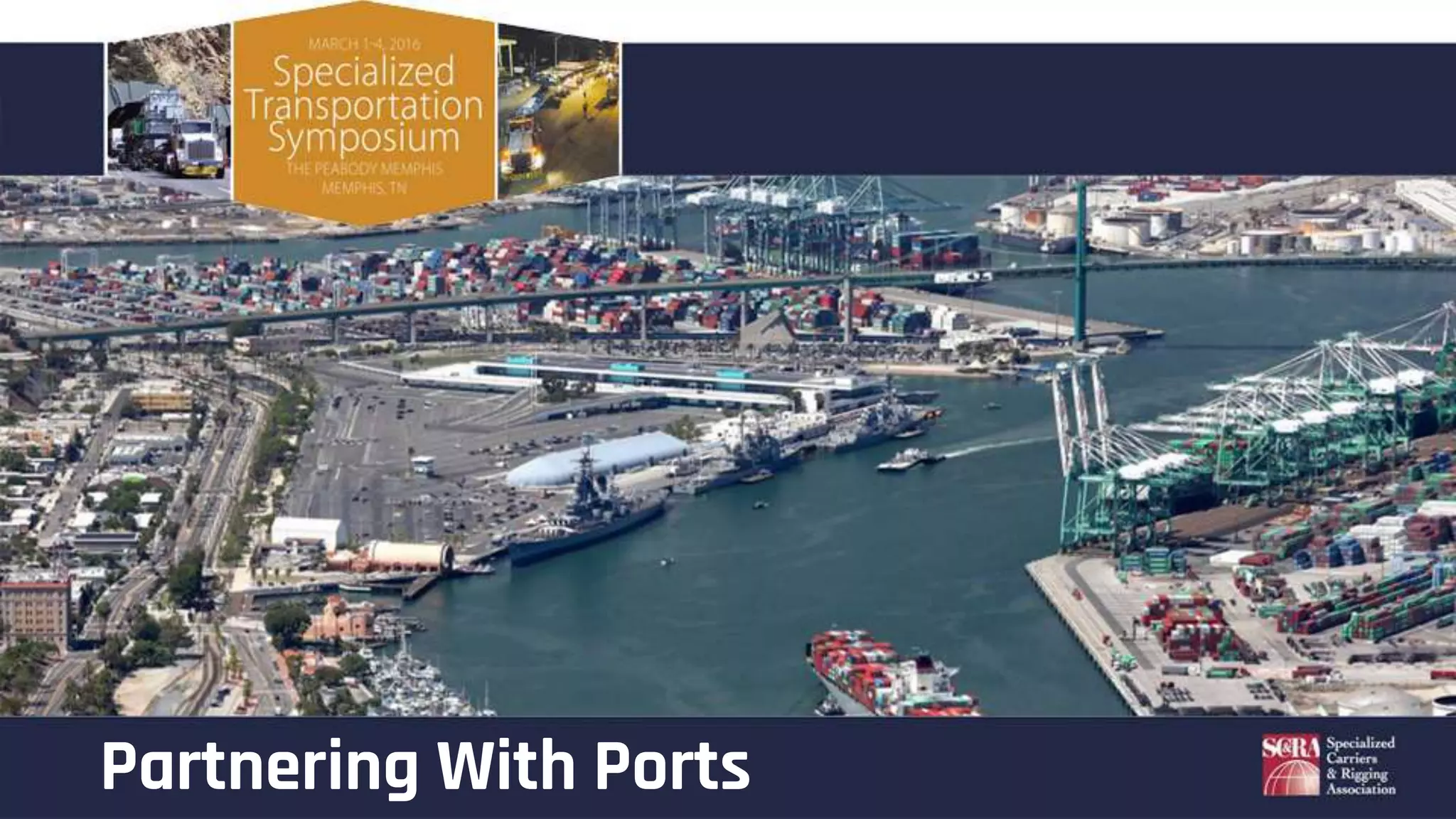
Partnering With Ports
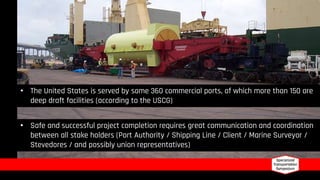
• The United States is served by some 360 commercial ports, of which more than 150 are
deep draft facilities (according to the USCG)
• Safe and successful project completion requires great communication and coordination
between all stake holders (Port Authority / Shipping Line / Client / Marine Surveyor /
Stevedores / and possibly union representatives)
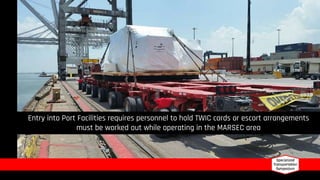
Entry into Port Facilities requires personnel to hold TWIC cards or escort arrangements
must be worked out while operating in the MARSEC area
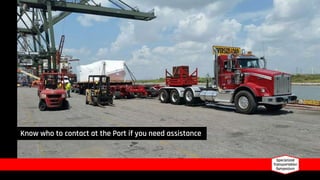
Know who to contact at the Port if you need assistance
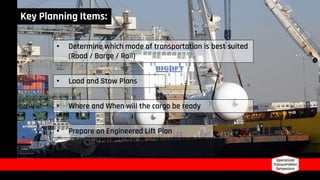
Key Planning Items:
• Determine which mode of transportation is best suited
(Road / Barge / Rail)
• Load and Stow Plans
• Where and When will the cargo be ready
• Prepare an Engineered Lift Plan
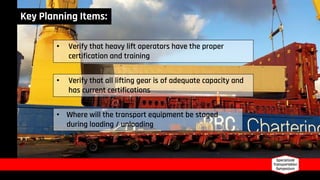
• Verify that heavy lift operators have the proper
certification and training
• Verify that all lifting gear is of adequate capacity and
has current certifications
• Where will the transport equipment be staged
during loading / unloading
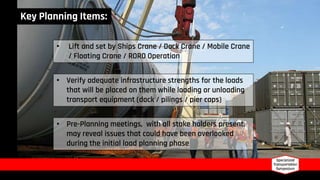
Key Planning Items:
• Lift and set by Ships Crane / Dock Crane / Mobile Crane
/ Floating Crane / RORO Operation
• Verify adequate infrastructure strengths for the loads
that will be placed on them while loading or unloading
transport equipment (dock / pilings / pier caps)
• Pre-Planning meetings, with all stake holders present,
may reveal issues that could have been overlooked
during the initial load planning phase
Key Planning Items:
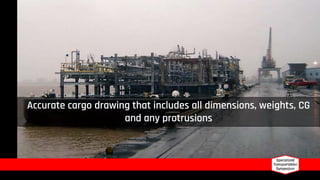
Accurate cargo drawing that includes all dimensions, weights, CG
and any protrusions
Plan for the unexpected and have a back-up plan
Challenges
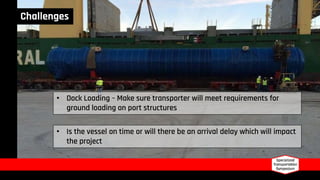
• Dock Loading – Make sure transporter will meet requirements for
ground loading on port structures
• Is the vessel on time or will there be an arrival delay which will impact
the project
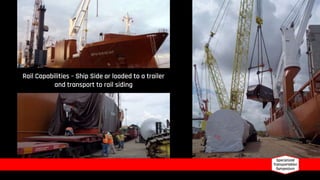
Rail Capabilities – Ship Side or loaded to a trailer
and transport to rail siding
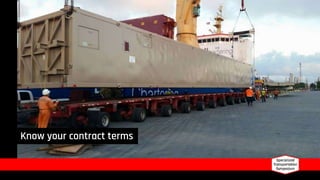
Know your contract terms
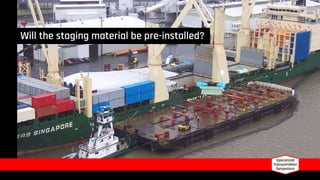
Will the staging material be pre-installed?
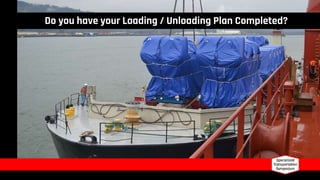
Do you have your Loading / Unloading Plan Completed?
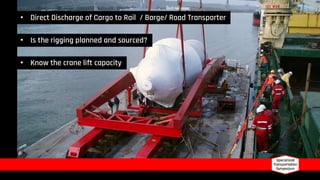
• Direct Discharge of Cargo to Rail / Barge/ Road Transporter
• Know the crane lift capacity
• Is the rigging planned and sourced?
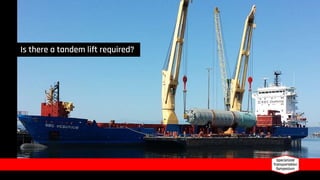
Is there a tandem lift required?
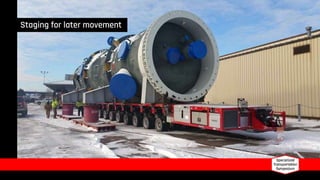
Staging for later movement
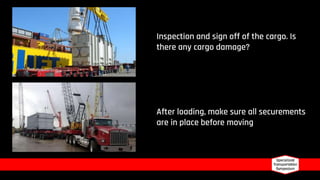
After loading, make sure all securements
are in place before moving
Inspection and sign off of the cargo. Is
there any cargo damage?
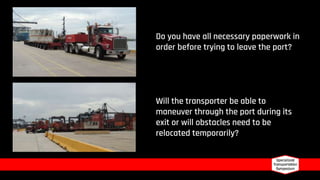
Will the transporter be able to
maneuver through the port during its
exit or will obstacles need to be
relocated temporarily?
Do you have all necessary paperwork in
order before trying to leave the port?
Thorough Planning leads to successful projects while
working at Ports
Thank You

2016 STS - Roy Emmert: Partnering with Ports

  • 1.
  • 2.
    • The UnitedStates is served by some 360 commercial ports, of which more than 150 are deep draft facilities (according to the USCG) • Safe and successful project completion requires great communication and coordination between all stake holders (Port Authority / Shipping Line / Client / Marine Surveyor / Stevedores / and possibly union representatives)
  • 3.
    Entry into PortFacilities requires personnel to hold TWIC cards or escort arrangements must be worked out while operating in the MARSEC area
  • 4.
    Know who tocontact at the Port if you need assistance
  • 5.
    Key Planning Items: •Determine which mode of transportation is best suited (Road / Barge / Rail) • Load and Stow Plans • Where and When will the cargo be ready • Prepare an Engineered Lift Plan
  • 6.
    • Verify thatheavy lift operators have the proper certification and training • Verify that all lifting gear is of adequate capacity and has current certifications • Where will the transport equipment be staged during loading / unloading Key Planning Items:
  • 7.
    • Lift andset by Ships Crane / Dock Crane / Mobile Crane / Floating Crane / RORO Operation • Verify adequate infrastructure strengths for the loads that will be placed on them while loading or unloading transport equipment (dock / pilings / pier caps) • Pre-Planning meetings, with all stake holders present, may reveal issues that could have been overlooked during the initial load planning phase Key Planning Items:
  • 8.
    Accurate cargo drawingthat includes all dimensions, weights, CG and any protrusions
  • 9.
    Plan for theunexpected and have a back-up plan
  • 10.
    Challenges • Dock Loading– Make sure transporter will meet requirements for ground loading on port structures • Is the vessel on time or will there be an arrival delay which will impact the project
  • 11.
    Rail Capabilities –Ship Side or loaded to a trailer and transport to rail siding
  • 12.
  • 13.
    Will the stagingmaterial be pre-installed?
  • 14.
    Do you haveyour Loading / Unloading Plan Completed?
  • 15.
    • Direct Dischargeof Cargo to Rail / Barge/ Road Transporter • Know the crane lift capacity • Is the rigging planned and sourced?
  • 16.
    Is there atandem lift required?
  • 17.
  • 18.
    After loading, makesure all securements are in place before moving Inspection and sign off of the cargo. Is there any cargo damage?
  • 19.
    Will the transporterbe able to maneuver through the port during its exit or will obstacles need to be relocated temporarily? Do you have all necessary paperwork in order before trying to leave the port?
  • 20.
    Thorough Planning leadsto successful projects while working at Ports
  • 21.