Living 
Home: India 
Creating New 
Furnishing Solutions 
for the Living 
Environment 
Art Center College of Design 
Designmatters 
USA 
Project Team: Mariana Amatullo, David Mocarski, 
Cory Grosser, Arden Stern
Promoters. 
Designmatters at Art 
Center College of 
Design, Ashoka 
Innovators for the 
Public 
Funder. 
Ashoka Innovators for 
the Public 
Acknowledgements. 
Vishnu Swaminathan, Sunish Jauhari, Marissa Schwartz, Adlai Wertman, Abby Fifer 
Mandell, Marisa Cohn
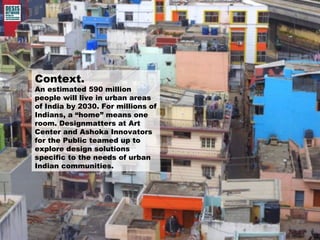
Context. 
An estimated 590 million 
people will live in urban areas 
of India by 2030. For millions of 
Indians, a “home” means one 
room. Designmatters at Art 
Center and Ashoka Innovators 
for the Public teamed up to 
explore design solutions 
specific to the needs of urban 
Indian communities.
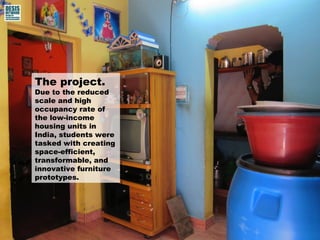
The project. 
Due to the reduced 
scale and high 
occupancy rate of 
the low-income 
housing units in 
India, students were 
tasked with creating 
space-efficient, 
transformable, and 
innovative furniture 
prototypes.
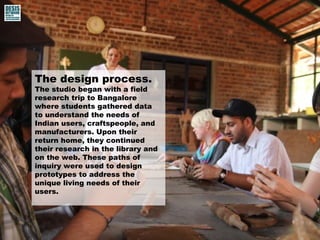
The design process. 
The studio began with a field 
research trip to Bangalore 
where students gathered data 
to understand the needs of 
Indian users, craftspeople, and 
manufacturers. Upon their 
return home, they continued 
their research in the library and 
on the web. These paths of 
inquiry were used to design 
prototypes to address the 
unique living needs of their 
users.
Governance and Policy Making 
Rapid Population Growth 
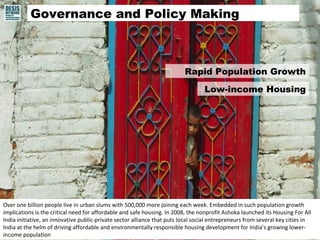
Over one billion people live in urban slums with 500,000 more joining each week. Embedded in such population growth 
implications is the critical need for affordable and safe housing. In 2008, the nonprofit Ashoka launched its Housing For All 
India initiative, an innovative public-private sector alliance that puts local social entrepreneurs from several key cities in 
India at the helm of driving affordable and environmentally responsible housing development for India’s growing lower-income 
population 
Low-income Housing
Activism and Civic Participation 
Local Partnerships 
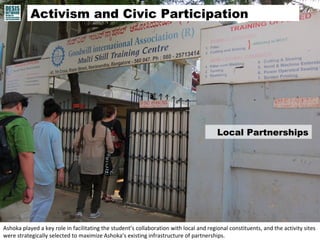
Ashoka played a key role in facilitating the student’s collaboration with local and regional constituents, and the activity sites 
were strategically selected to maximize Ashoka’s existing infrastructure of partnerships.
Social Interactions and Relations 
Cultural Immersion 
Ethnographic Research 
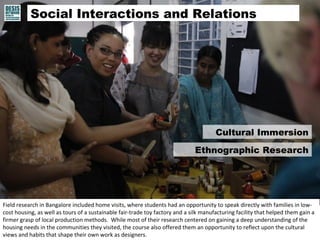
Field research in Bangalore included home visits, where students had an opportunity to speak directly with families in low-cost 
housing, as well as tours of a sustainable fair-trade toy factory and a silk manufacturing facility that helped them gain a 
firmer grasp of local production methods. While most of their research centered on gaining a deep understanding of the 
housing needs in the communities they visited, the course also offered them an opportunity to reflect upon the cultural 
views and habits that shape their own work as designers.
City and Environmental Planning 
Safe and affordable 
housing solutions for a 
growing urban population 
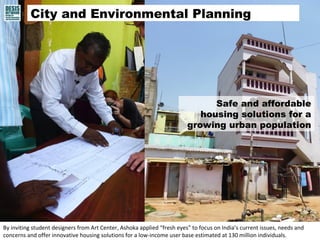
By inviting student designers from Art Center, Ashoka applied “fresh eyes” to focus on India’s current issues, needs and 
concerns and offer innovative housing solutions for a low-income user base estimated at 130 million individuals.
Production, Distribution and Consumption 
Sustainable materials 
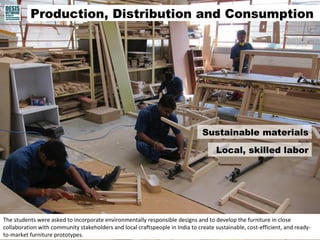
The students were asked to incorporate environmentally responsible designs and to develop the furniture in close 
collaboration with community stakeholders and local craftspeople in India to create sustainable, cost-efficient, and ready-to- 
market furniture prototypes. 
Local, skilled labor
Skill Training and Design Education 
Design thinking 
Knowledge exchange 
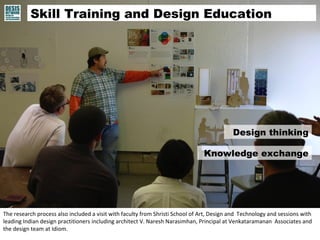
The research process also included a visit with faculty from Shristi School of Art, Design and Technology and sessions with 
leading Indian design practitioners including architect V. Naresh Narasimhan, Principal at Venkataramanan Associates and 
the design team at Idiom.
Fair-trade standards 
Social entrepreneurship 
Job Creation 
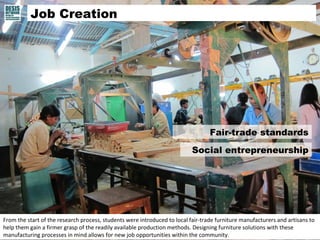
From the start of the research process, students were introduced to local fair-trade furniture manufacturers and artisans to 
help them gain a firmer grasp of the readily available production methods. Designing furniture solutions with these 
manufacturing processes in mind allows for new job opportunities within the community.
Storytelling and Visualisation 
In-home co-design sessions 
Multi-use furniture 
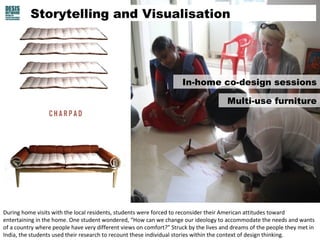
During home visits with the local residents, students were forced to reconsider their American attitudes toward 
entertaining in the home. One student wondered, “How can we change our ideology to accommodate the needs and wants 
of a country where people have very different views on comfort?” Struck by the lives and dreams of the people they met in 
India, the students used their research to recount these individual stories within the context of design thinking.
www.designmattersatartcenter.or 
g/proj/living-home-india-creating-new- 
furnishing-solutions-for-the-living- 
environment/ 
Elisa.Ruffino@artcenter.edu 
Mariana.Amatullo@artcenter.edu 
Art Center College of Design 
Designmatters 
USA

2014 Designmatters living home: India

  • 1.
    Living Home: India Creating New Furnishing Solutions for the Living Environment Art Center College of Design Designmatters USA Project Team: Mariana Amatullo, David Mocarski, Cory Grosser, Arden Stern
  • 2.
    Promoters. Designmatters atArt Center College of Design, Ashoka Innovators for the Public Funder. Ashoka Innovators for the Public Acknowledgements. Vishnu Swaminathan, Sunish Jauhari, Marissa Schwartz, Adlai Wertman, Abby Fifer Mandell, Marisa Cohn
  • 3.
    Context. An estimated590 million people will live in urban areas of India by 2030. For millions of Indians, a “home” means one room. Designmatters at Art Center and Ashoka Innovators for the Public teamed up to explore design solutions specific to the needs of urban Indian communities.
  • 4.
    The project. Dueto the reduced scale and high occupancy rate of the low-income housing units in India, students were tasked with creating space-efficient, transformable, and innovative furniture prototypes.
  • 5.
    The design process. The studio began with a field research trip to Bangalore where students gathered data to understand the needs of Indian users, craftspeople, and manufacturers. Upon their return home, they continued their research in the library and on the web. These paths of inquiry were used to design prototypes to address the unique living needs of their users.
  • 6.
    Governance and PolicyMaking Rapid Population Growth Over one billion people live in urban slums with 500,000 more joining each week. Embedded in such population growth implications is the critical need for affordable and safe housing. In 2008, the nonprofit Ashoka launched its Housing For All India initiative, an innovative public-private sector alliance that puts local social entrepreneurs from several key cities in India at the helm of driving affordable and environmentally responsible housing development for India’s growing lower-income population Low-income Housing
  • 7.
    Activism and CivicParticipation Local Partnerships Ashoka played a key role in facilitating the student’s collaboration with local and regional constituents, and the activity sites were strategically selected to maximize Ashoka’s existing infrastructure of partnerships.
  • 8.
    Social Interactions andRelations Cultural Immersion Ethnographic Research Field research in Bangalore included home visits, where students had an opportunity to speak directly with families in low-cost housing, as well as tours of a sustainable fair-trade toy factory and a silk manufacturing facility that helped them gain a firmer grasp of local production methods. While most of their research centered on gaining a deep understanding of the housing needs in the communities they visited, the course also offered them an opportunity to reflect upon the cultural views and habits that shape their own work as designers.
  • 9.
    City and EnvironmentalPlanning Safe and affordable housing solutions for a growing urban population By inviting student designers from Art Center, Ashoka applied “fresh eyes” to focus on India’s current issues, needs and concerns and offer innovative housing solutions for a low-income user base estimated at 130 million individuals.
  • 10.
    Production, Distribution andConsumption Sustainable materials The students were asked to incorporate environmentally responsible designs and to develop the furniture in close collaboration with community stakeholders and local craftspeople in India to create sustainable, cost-efficient, and ready-to- market furniture prototypes. Local, skilled labor
  • 11.
    Skill Training andDesign Education Design thinking Knowledge exchange The research process also included a visit with faculty from Shristi School of Art, Design and Technology and sessions with leading Indian design practitioners including architect V. Naresh Narasimhan, Principal at Venkataramanan Associates and the design team at Idiom.
  • 12.
    Fair-trade standards Socialentrepreneurship Job Creation From the start of the research process, students were introduced to local fair-trade furniture manufacturers and artisans to help them gain a firmer grasp of the readily available production methods. Designing furniture solutions with these manufacturing processes in mind allows for new job opportunities within the community.
  • 13.
    Storytelling and Visualisation In-home co-design sessions Multi-use furniture During home visits with the local residents, students were forced to reconsider their American attitudes toward entertaining in the home. One student wondered, “How can we change our ideology to accommodate the needs and wants of a country where people have very different views on comfort?” Struck by the lives and dreams of the people they met in India, the students used their research to recount these individual stories within the context of design thinking.
  • 14.
    www.designmattersatartcenter.or g/proj/living-home-india-creating-new- furnishing-solutions-for-the-living- environment/ Elisa.Ruffino@artcenter.edu Mariana.Amatullo@artcenter.edu Art Center College of Design Designmatters USA