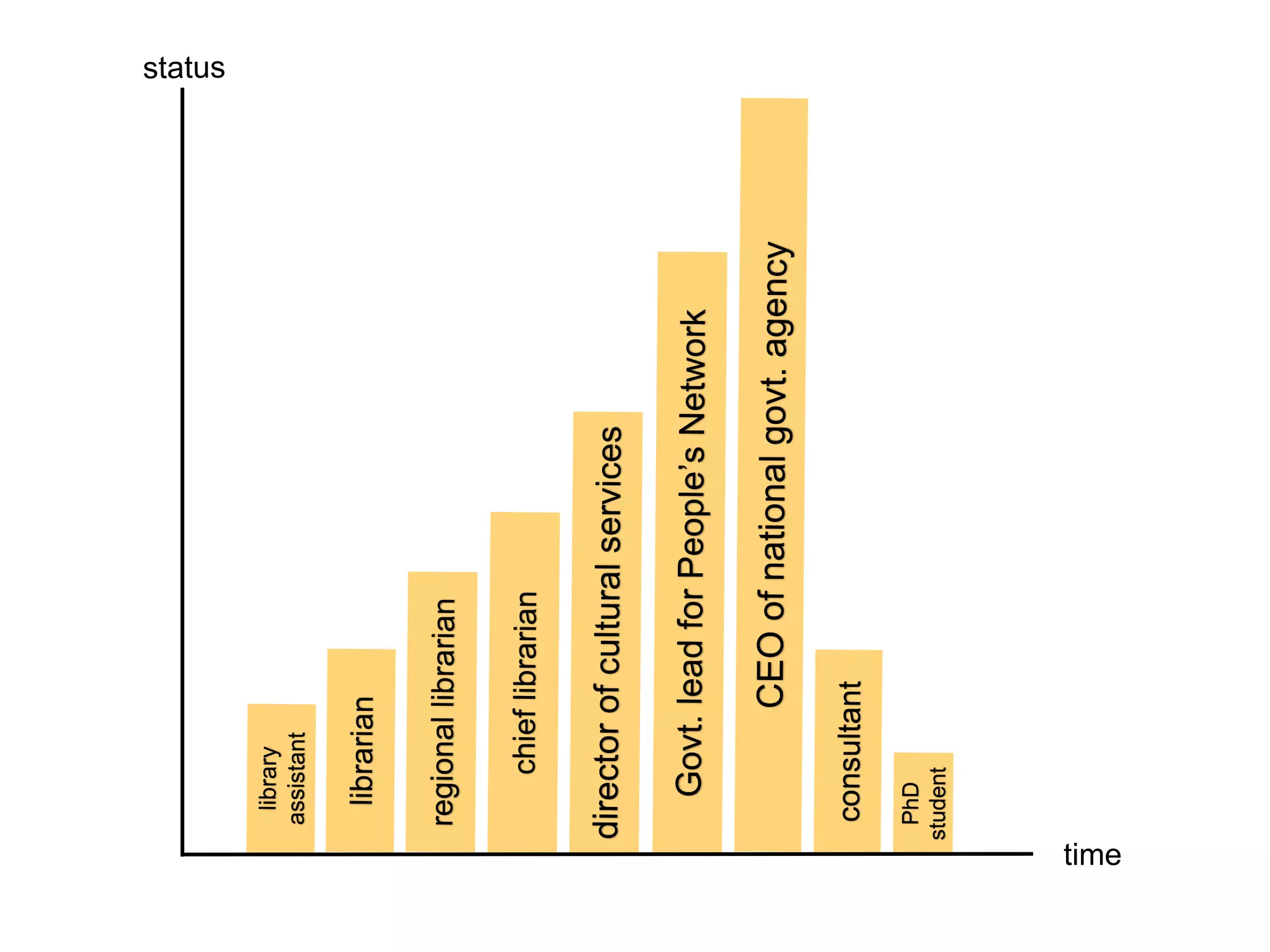
Who was I?
PUBLIC KNOWLEDGE COLLECTIONS
IN THE NETWORK SOCIETY
What Today Can Tell Us About the Future
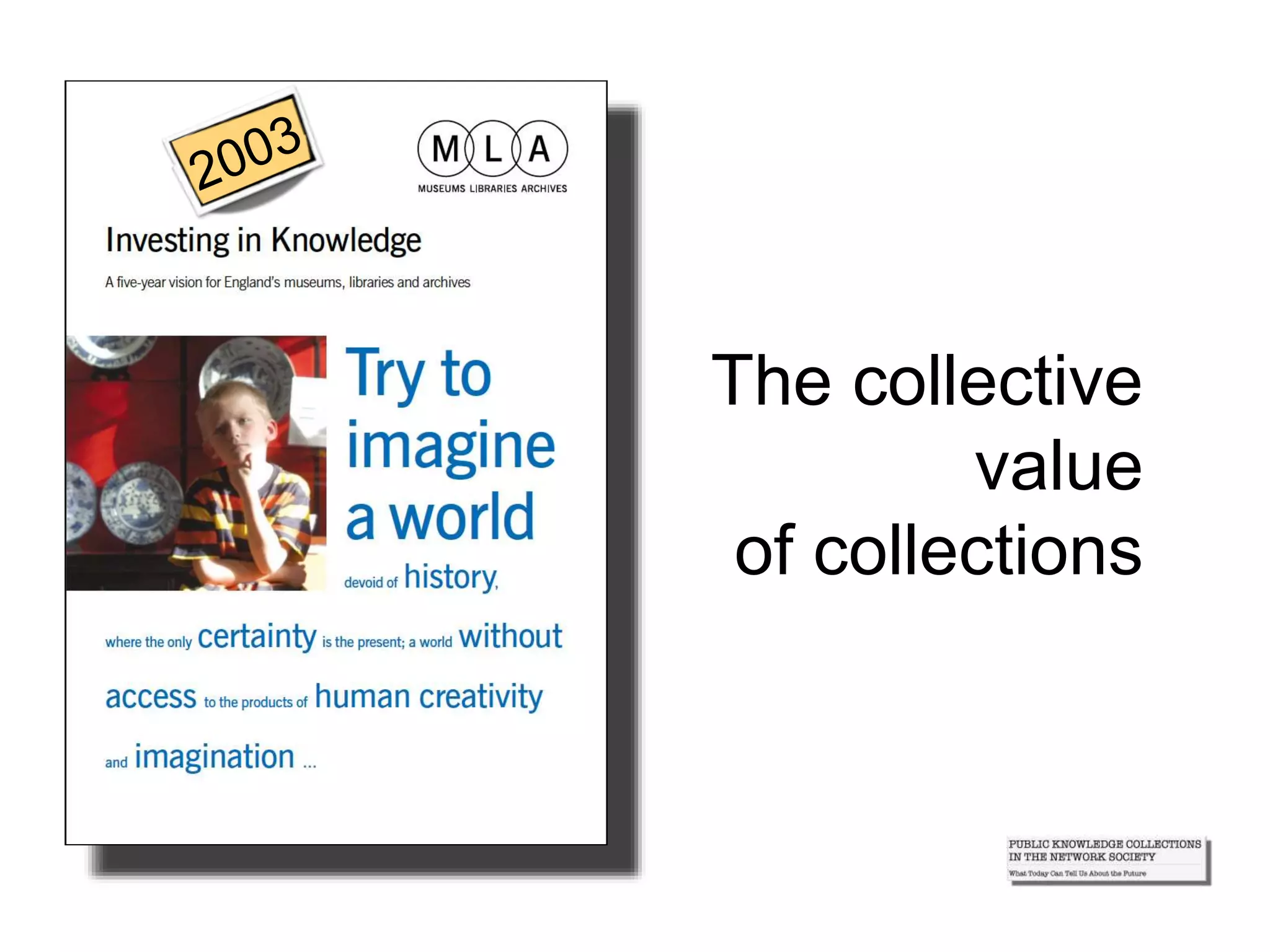
The collective
value
of collections
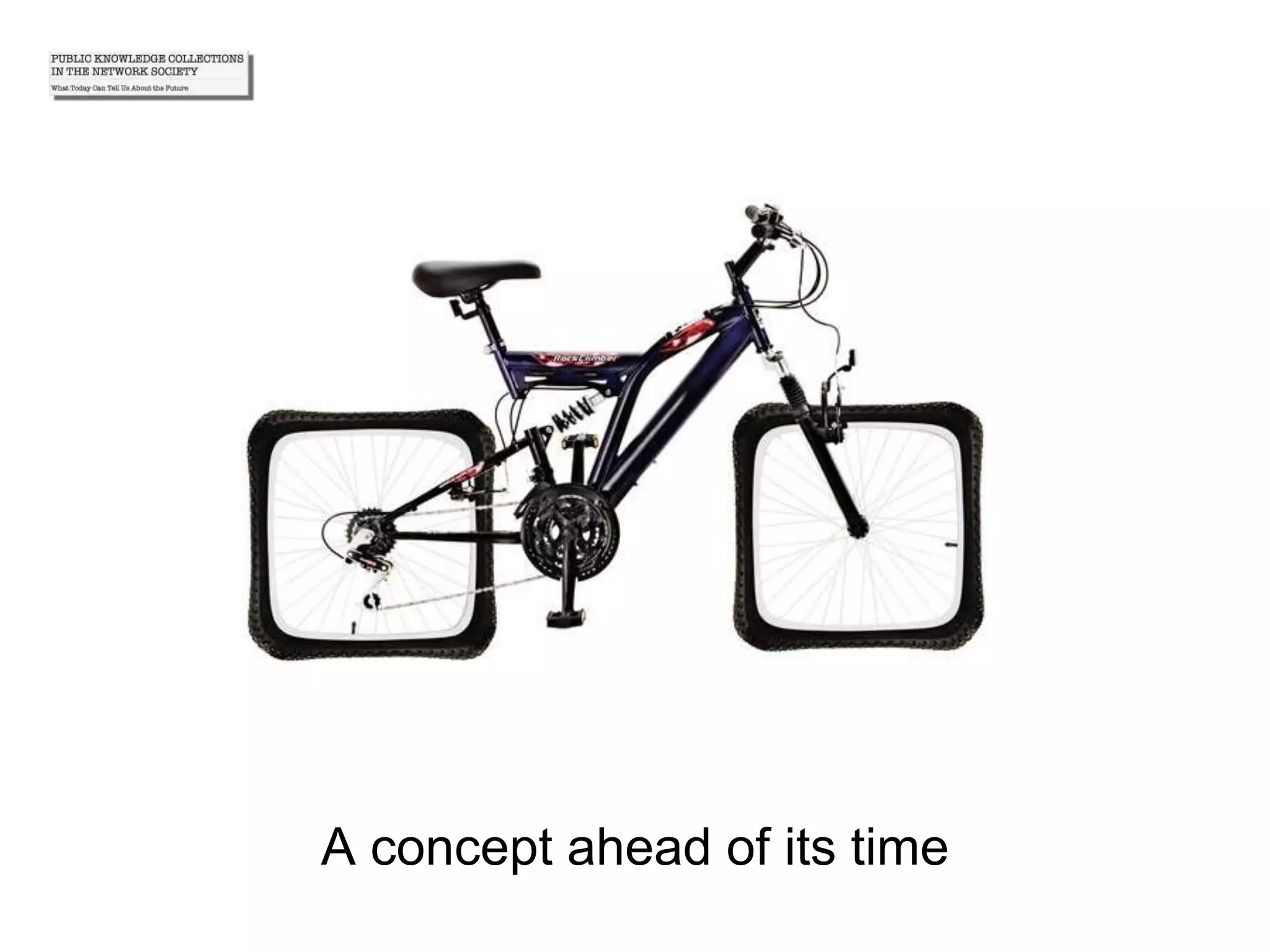
A concept ahead of its time
Research
Hypothesis
The traditional paradigm(s) of collecting
institutions, rooted in the requirement to
provide public value from physical collections in
fixed locations, will not accommodate
successfully the development of online service
offers that are distinctive in form and maximise
public value through alignment with trends in
user needs and behaviours.
The existing paradigm(s) of collecting
institutions, rooted in the requirement to
provide public value from physical collections in
fixed locations, will not accommodate
successfully the development of online service
offers that are distinctive in form and maximise
public value through alignment with trends in
user needs and behaviours.
The existing paradigm(s) of collecting
institutions, rooted in the requirement to
provide public value from physical collections in
fixed locations, will not accommodate
successfully the development of online service
offers that are distinctive in form and maximise
public value through alignment with trends in
user needs and behaviours.
The existing paradigm(s) of collecting
institutions, rooted in the requirement to
provide public value from physical collections in
fixed locations, will not accommodate
successfully the development of online service
offers that are distinctive in form and maximise
public value through alignment with trends in
user needs and behaviours.
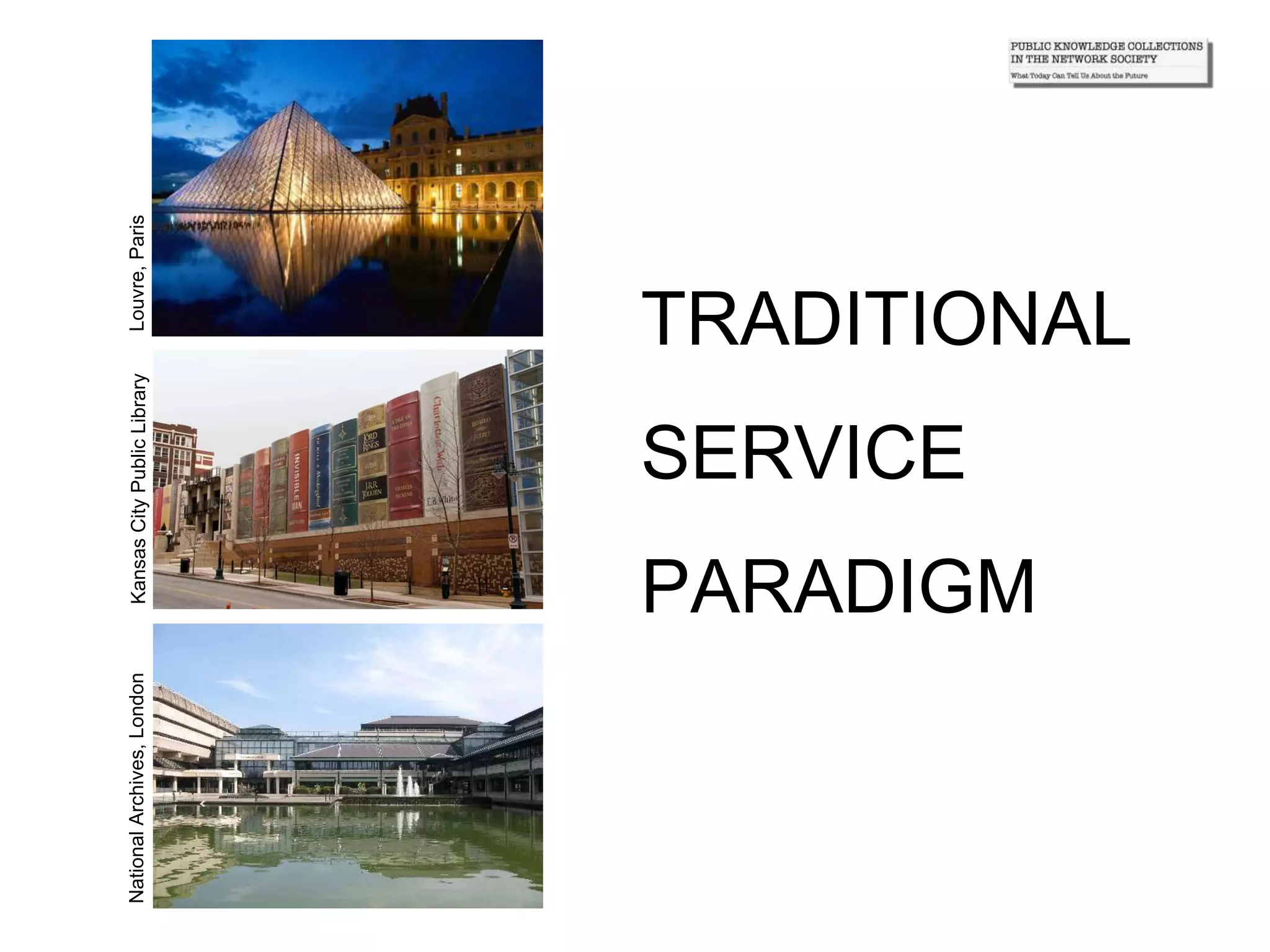
TRADITIONAL
SERVICE
PARADIGM
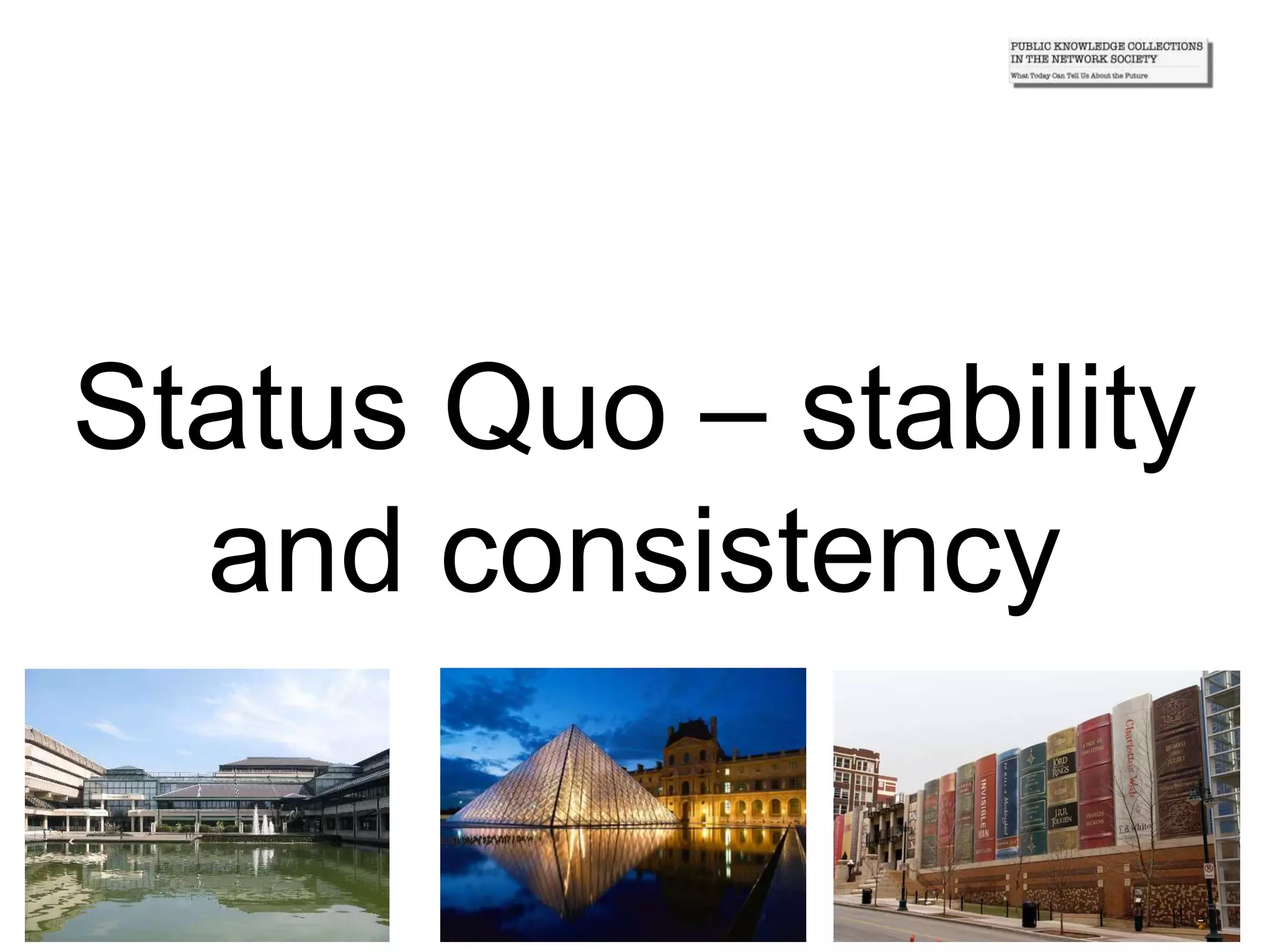
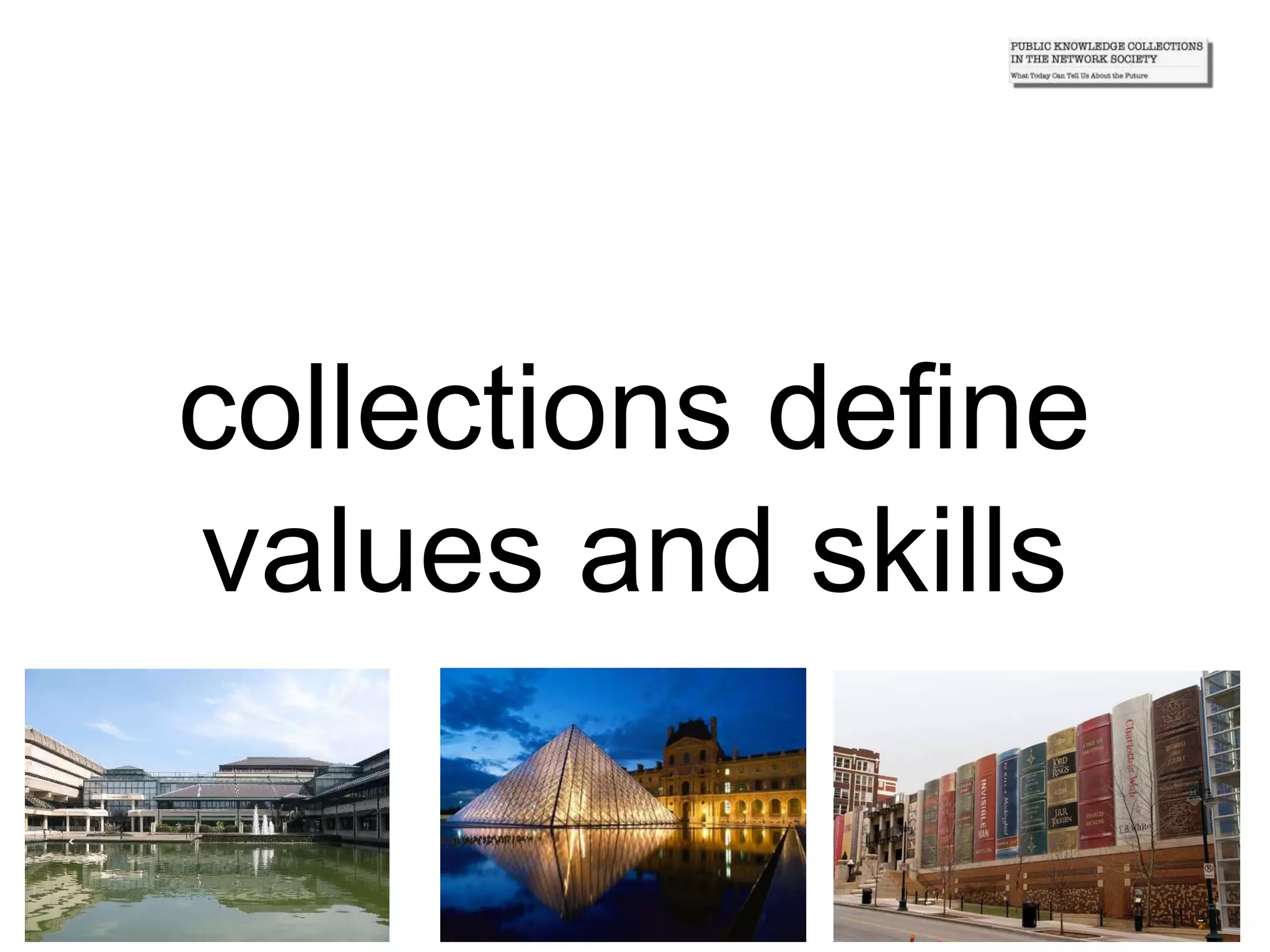
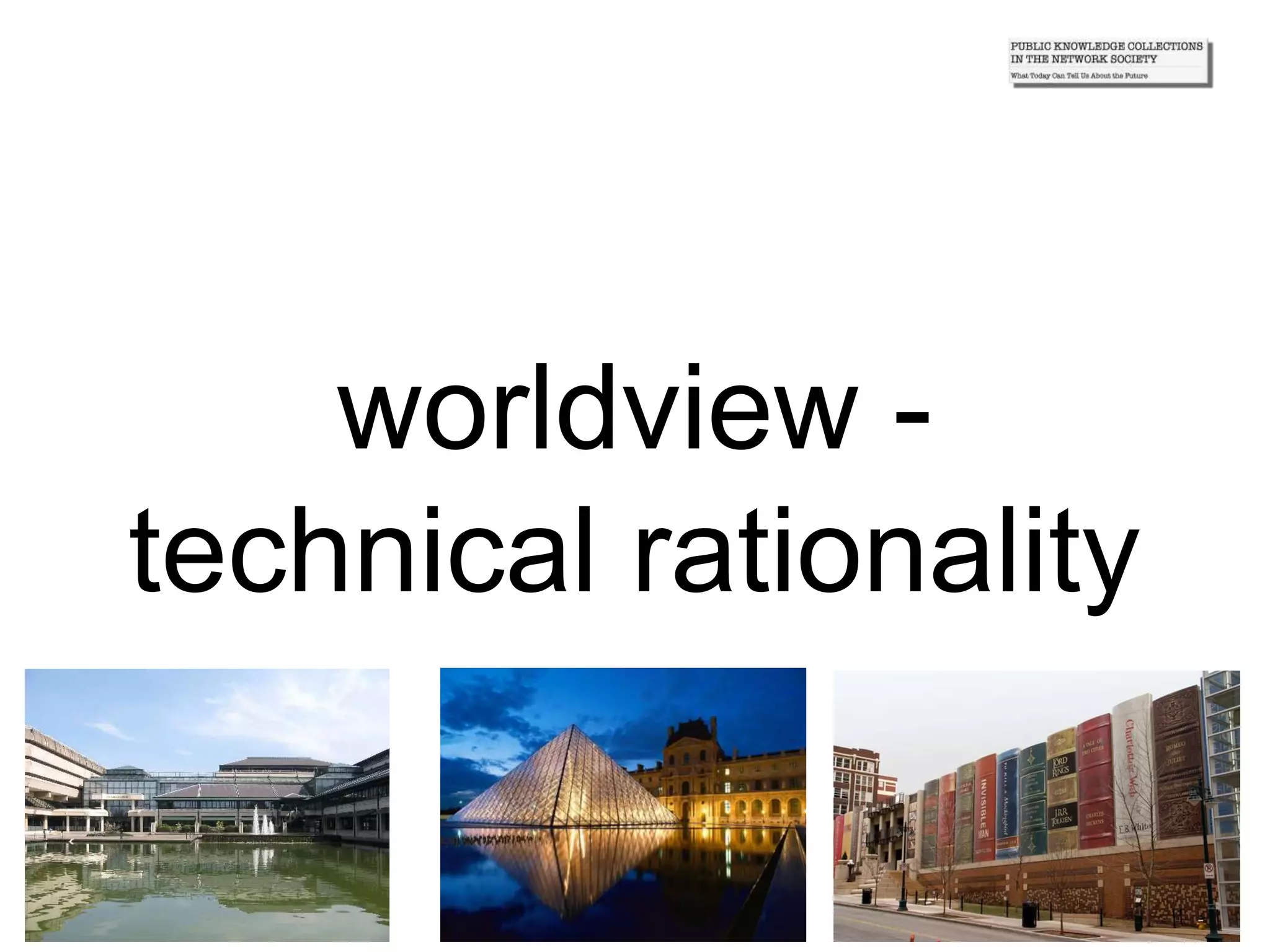
Louvre,ParisKansasCityPublicLibraryNationalArchives,London
destinations
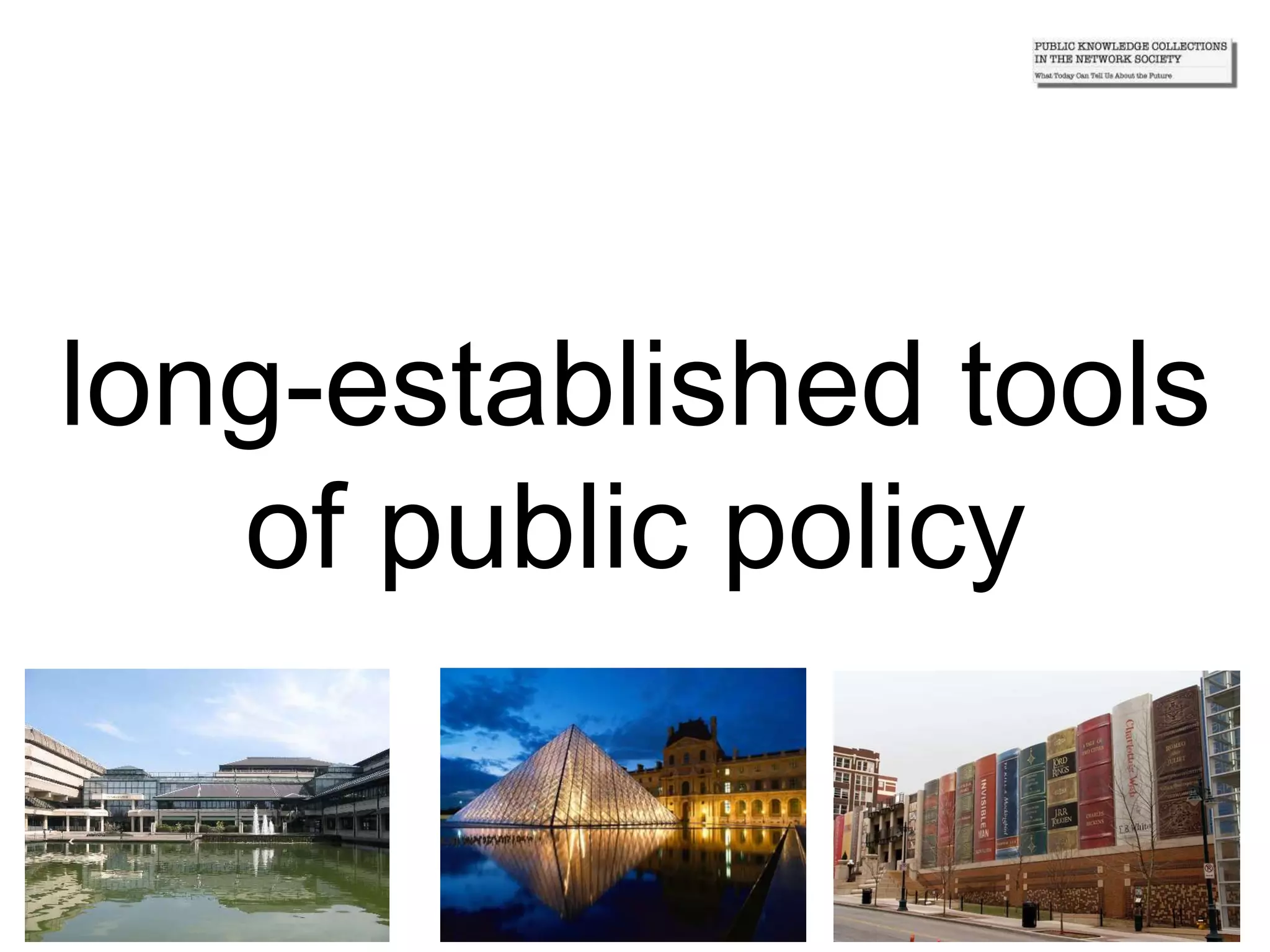
long-established tools
of public policy
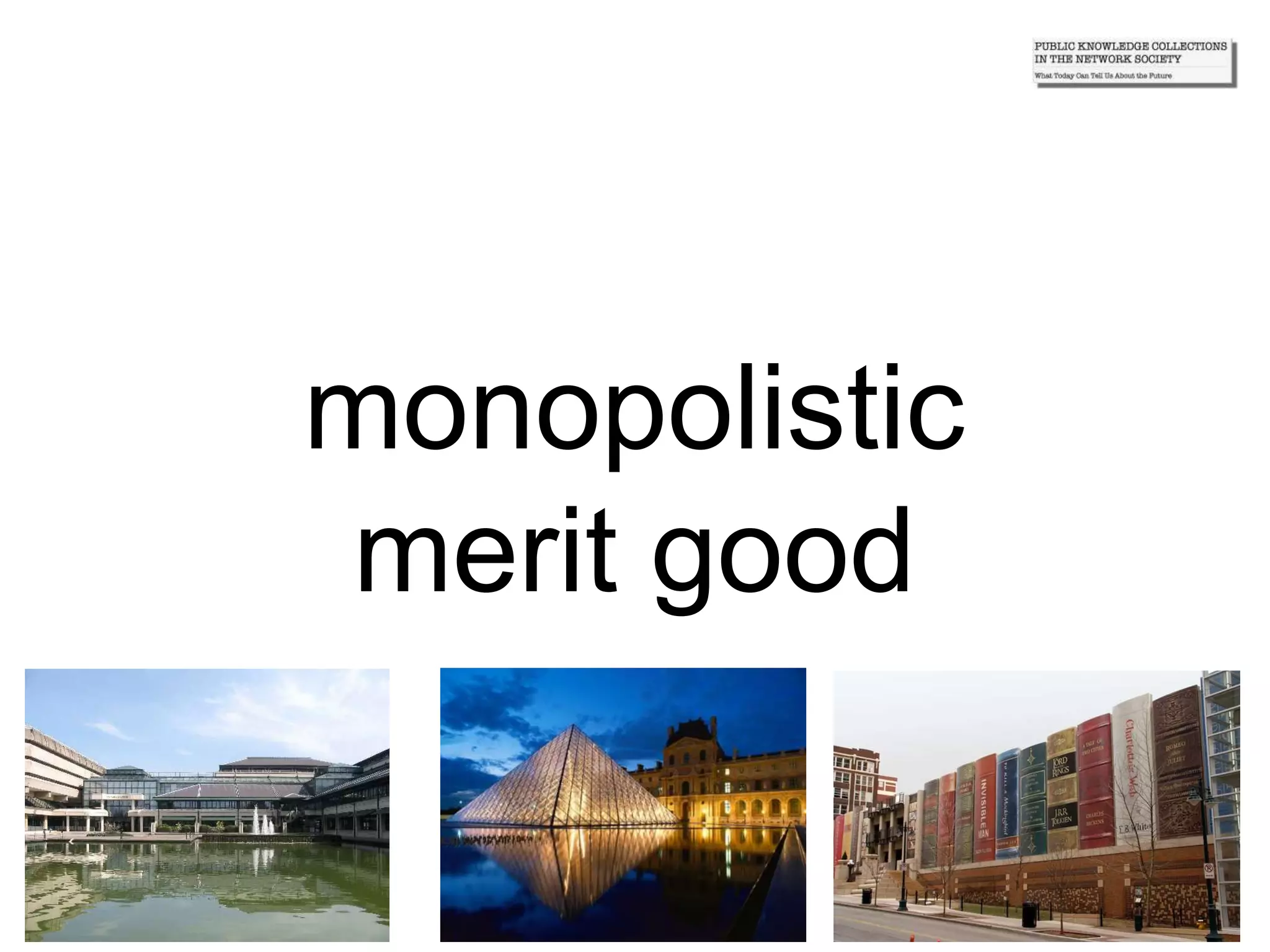
monopolistic
merit good
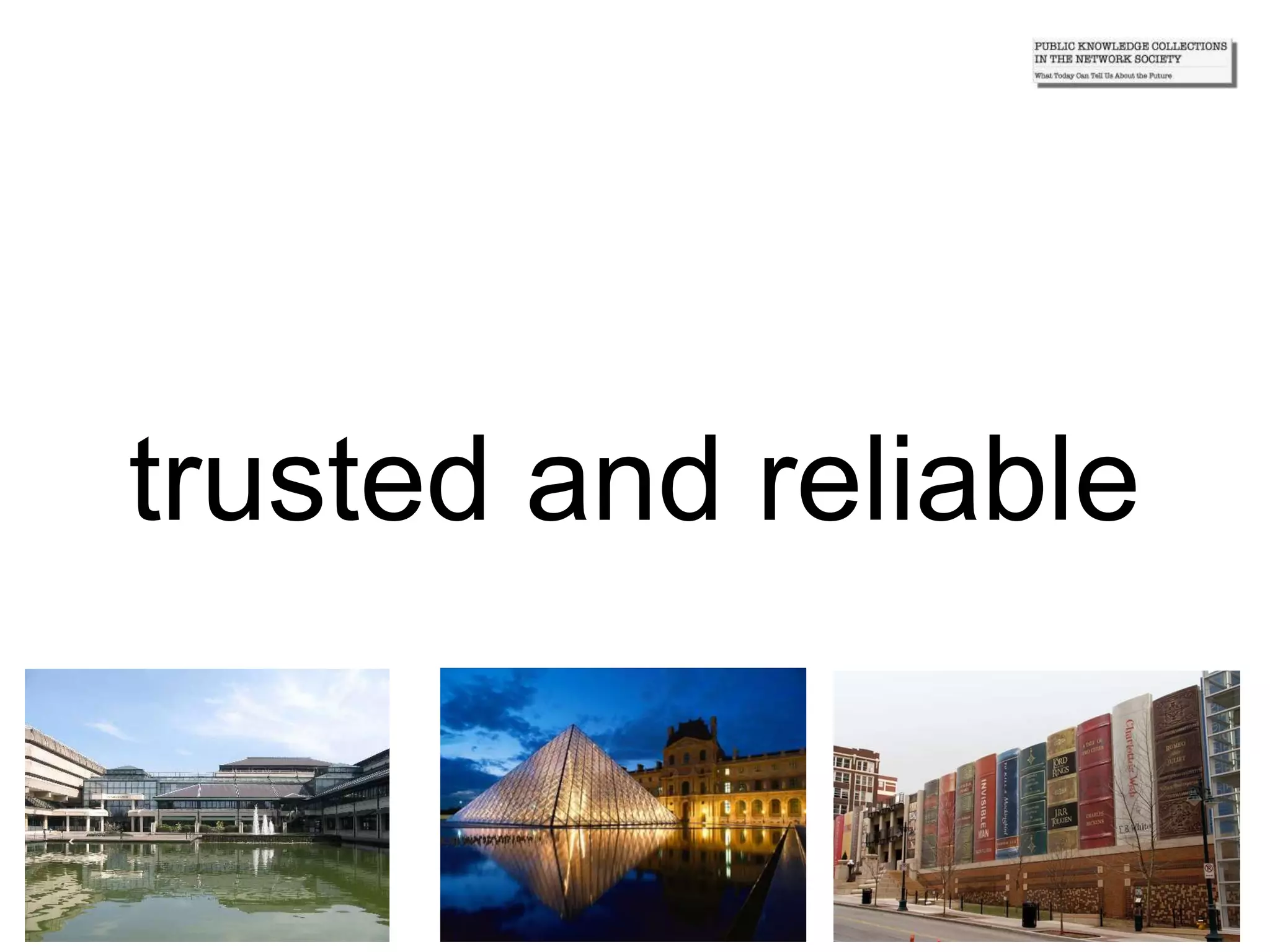
trusted and reliable
Status Quo – stability
and consistency
collections define
values and skills
worldview -
technical rationality
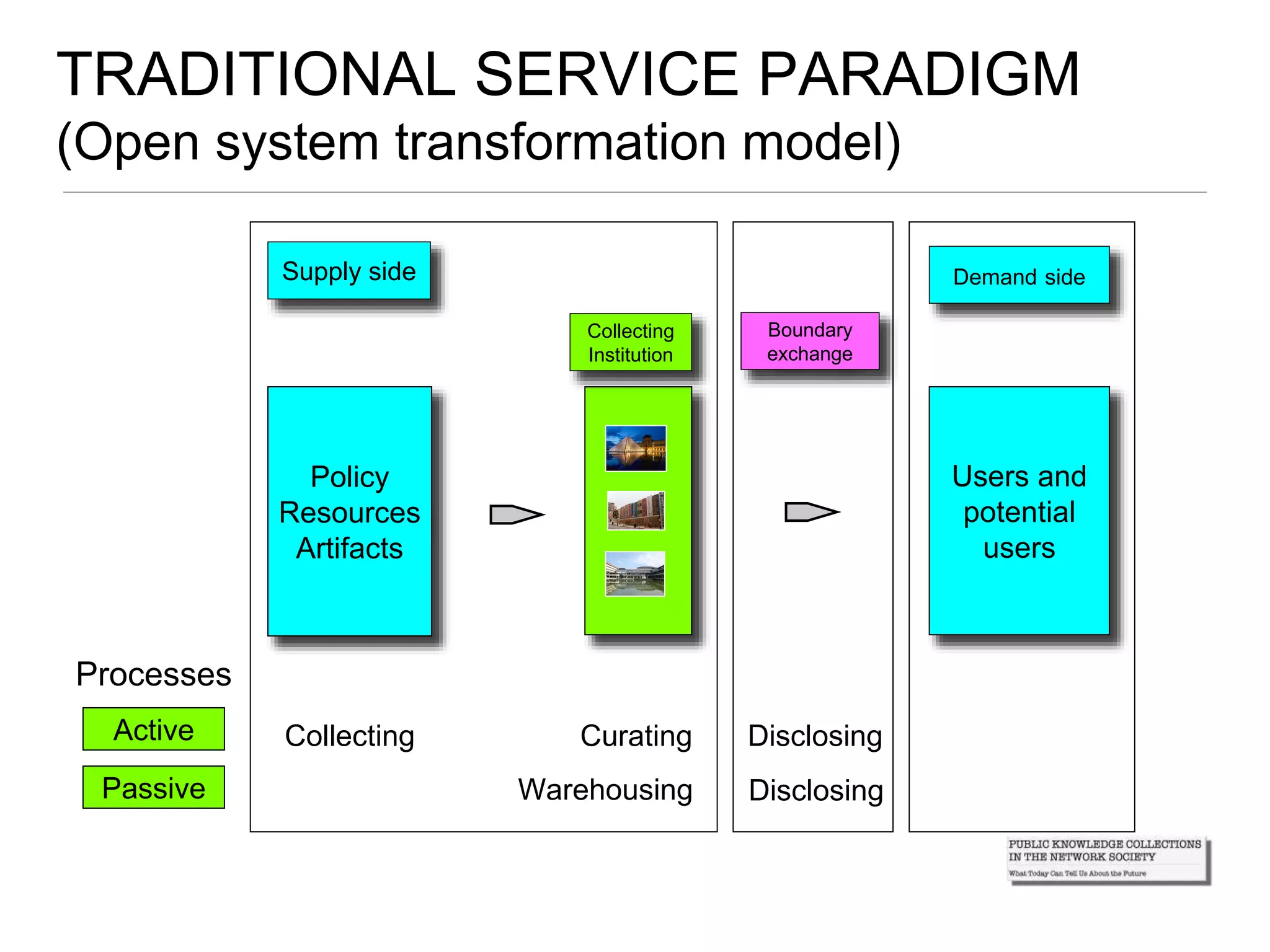
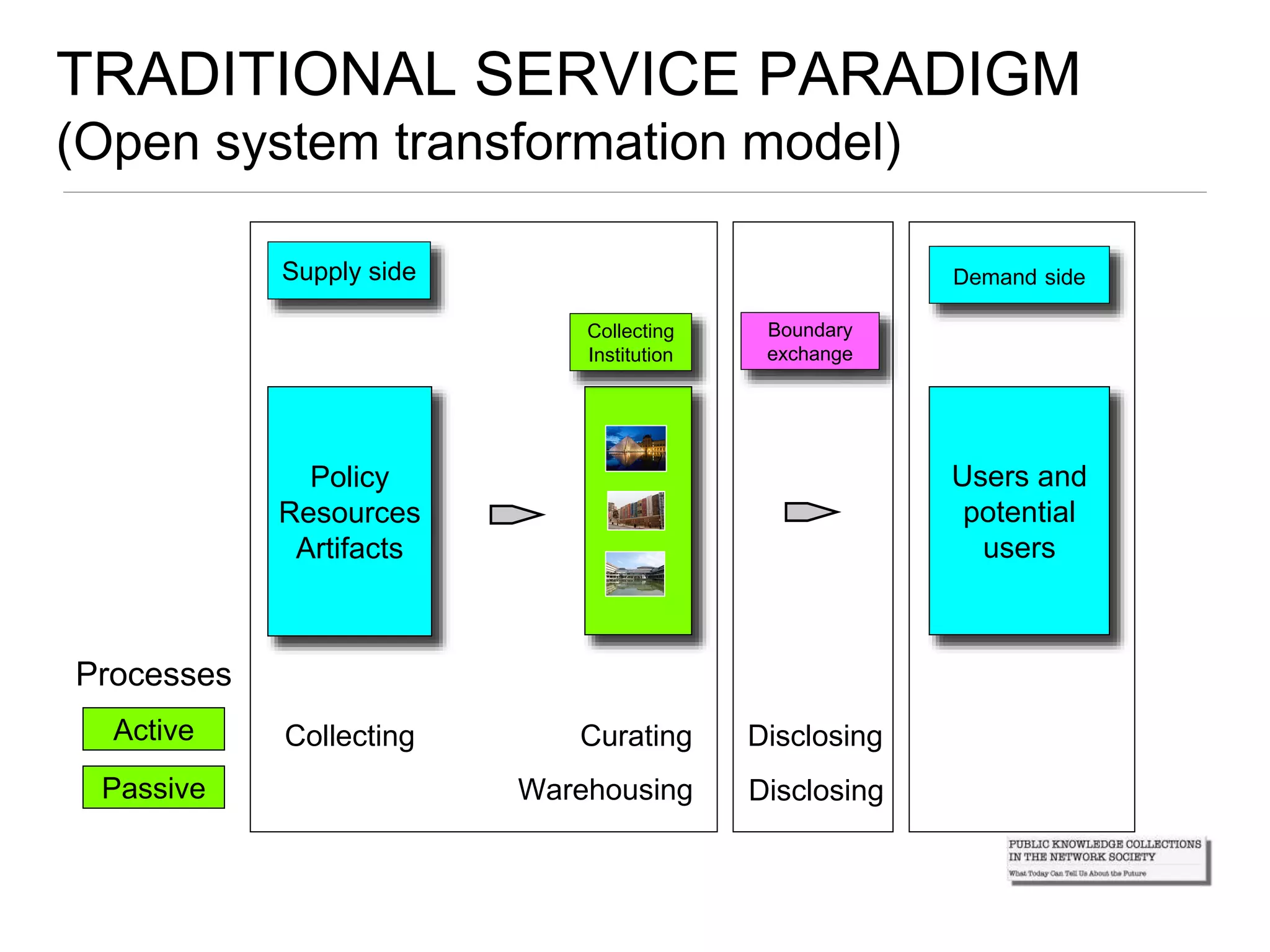
TRADITIONAL SERVICE PARADIGM
(Open system transformation model)
Policy
Resources
Artifacts
Users and
potential
users
Demand sideSupply side
Collecting
Institution
Processes
Active
Passive
Collecting Curating Disclosing
Warehousing
Boundary
exchange
Disclosing
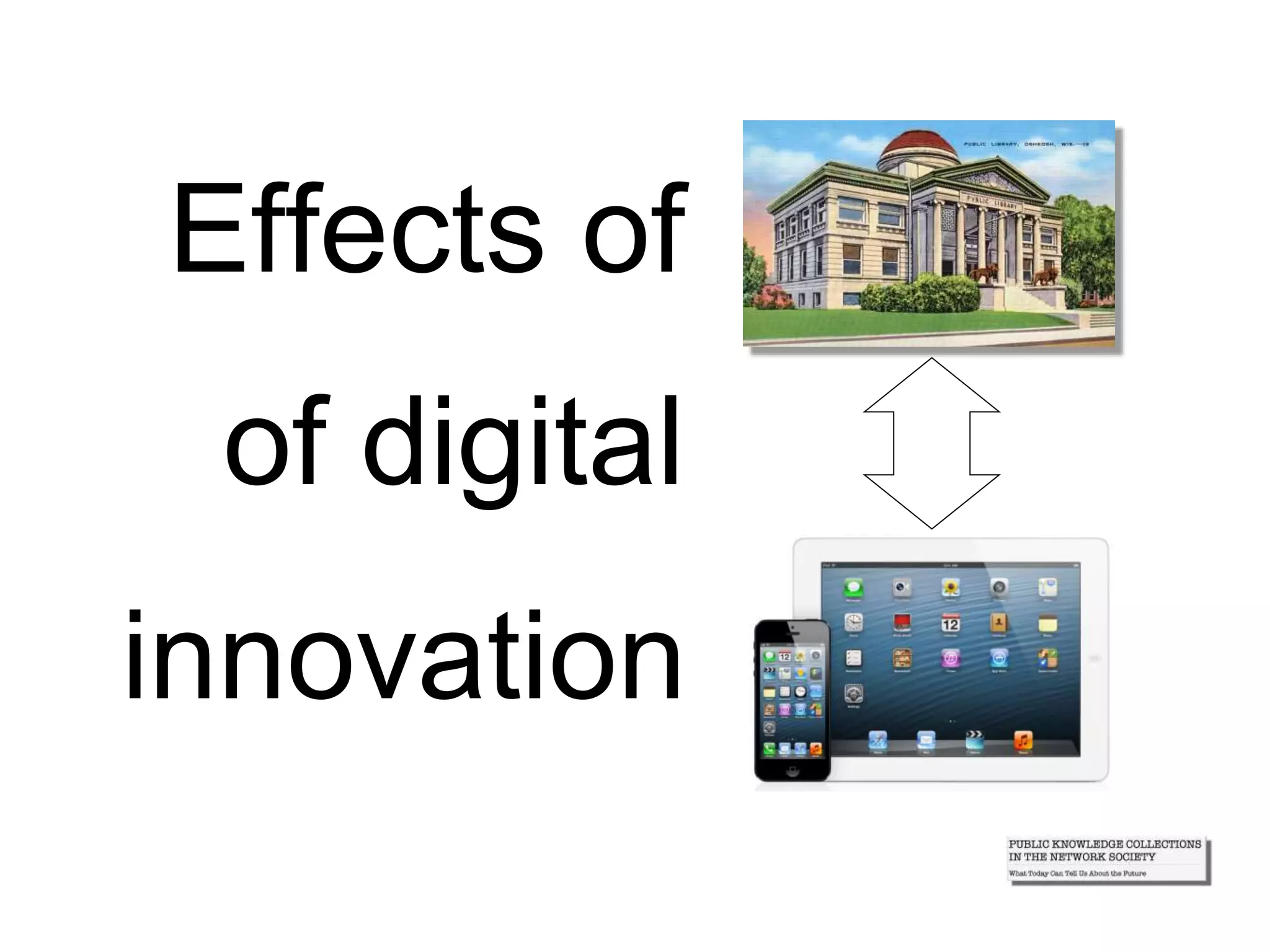
Effects of
innovation
of digital
The impact of
socio-technical change
“Networks have become the
predominant organisational
form of every domain of
human activity... The space of
flows has taken over the logic
of the space of places…”
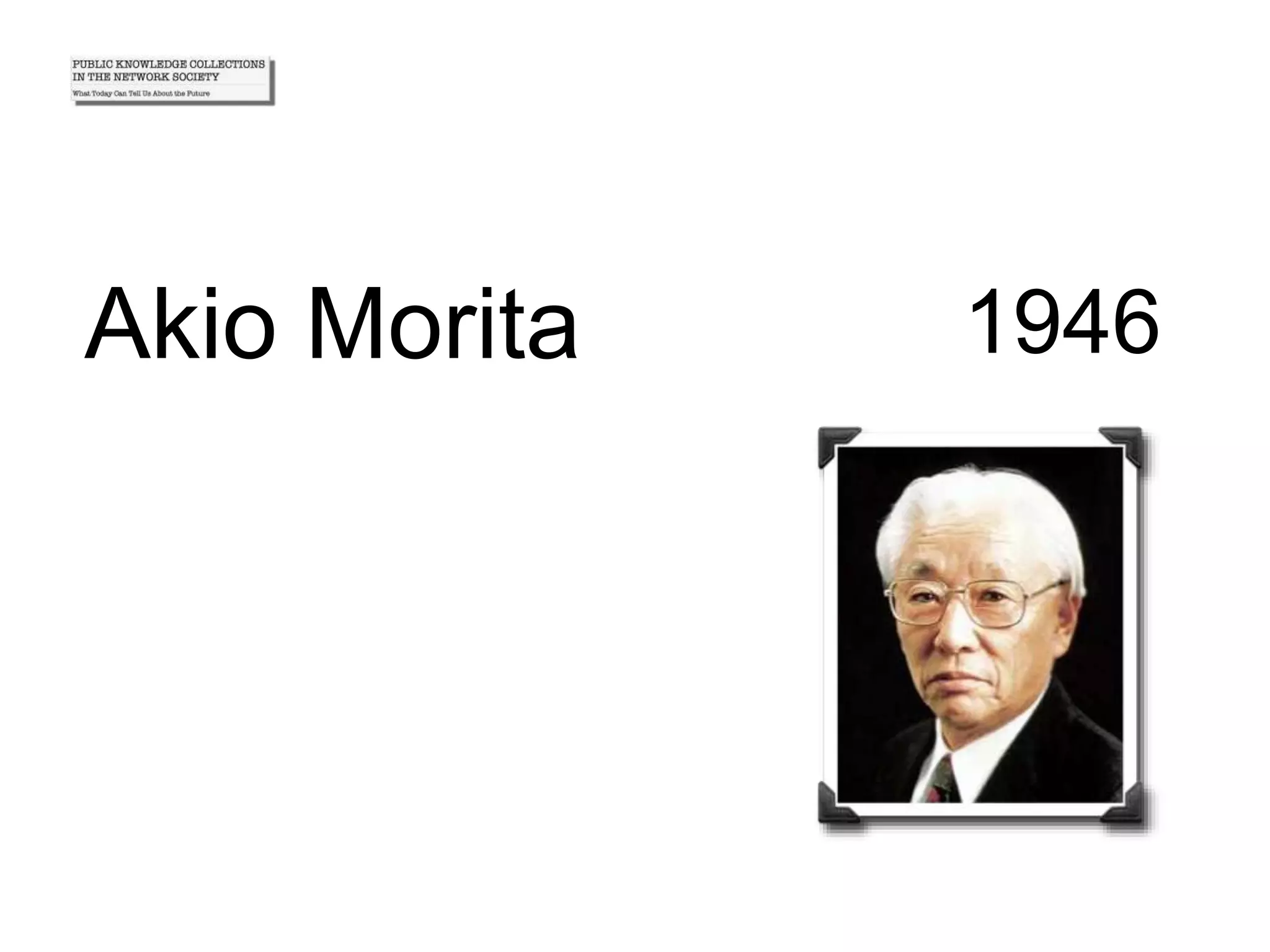
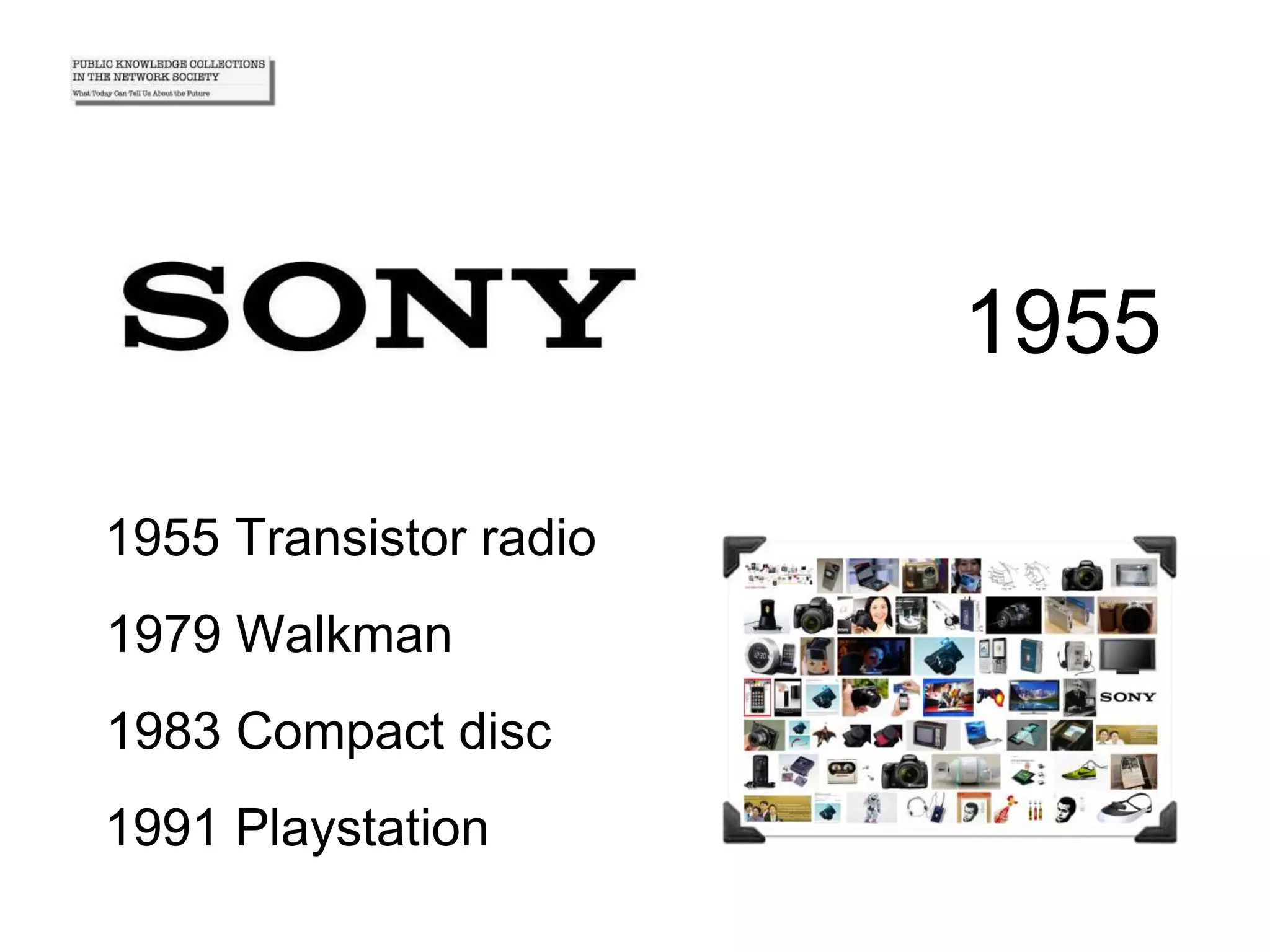
Akio Morita 1946
1983 Compact disc
1955 Transistor radio
1979 Walkman
1991 Playstation
1955
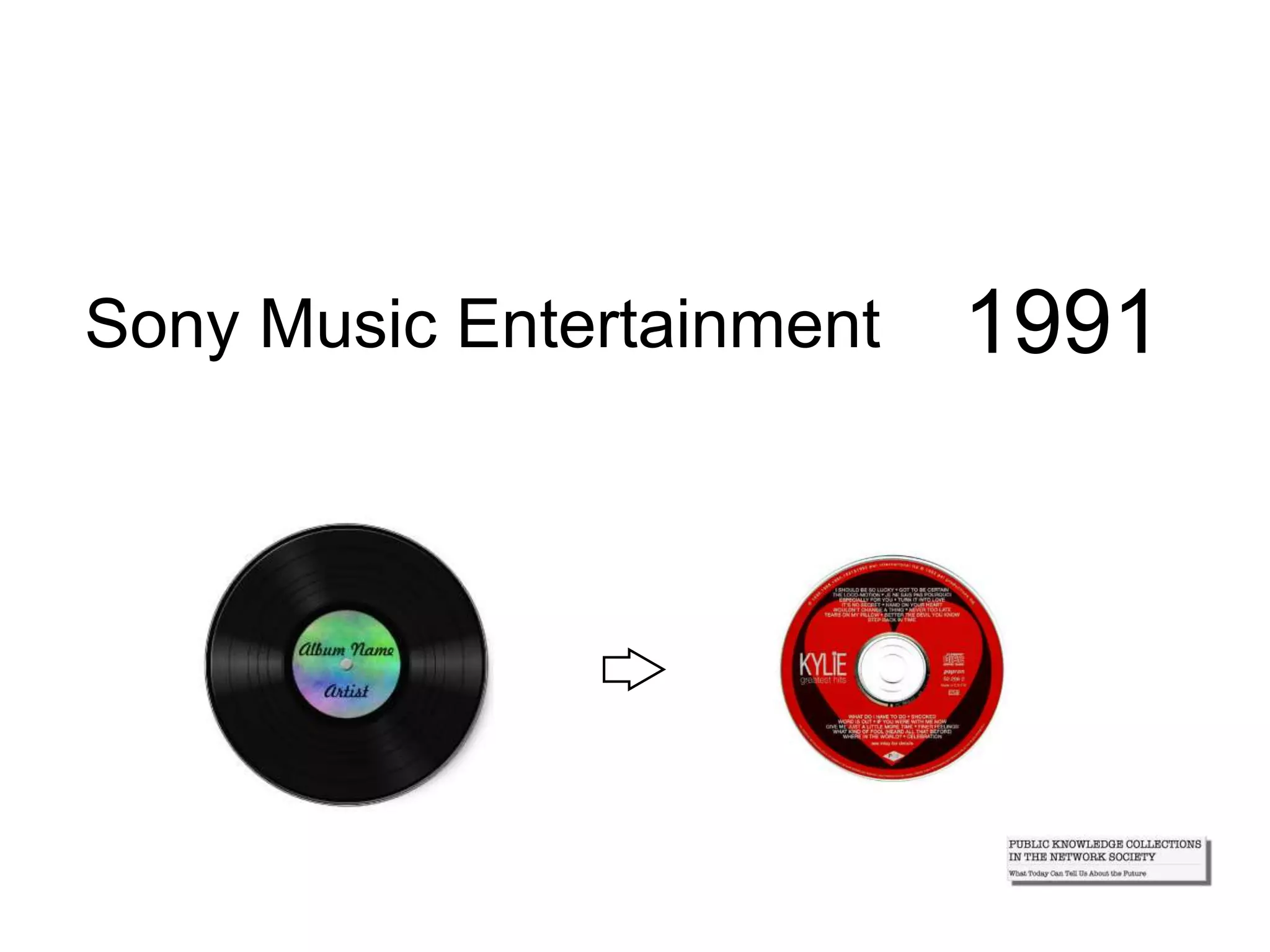
1991Sony Music Entertainment
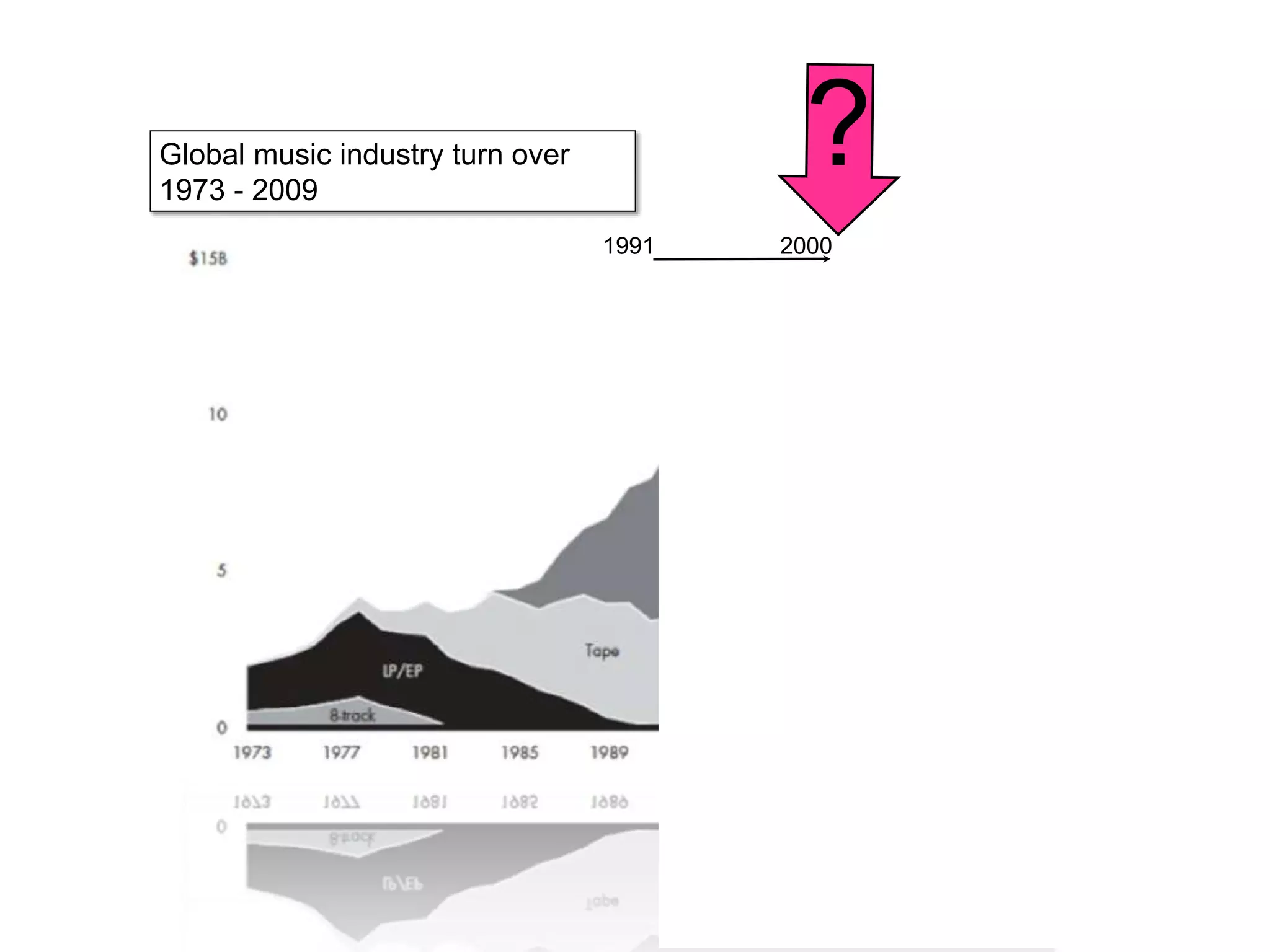
?
1991 2000
Global music industry turn over
1973 - 2009
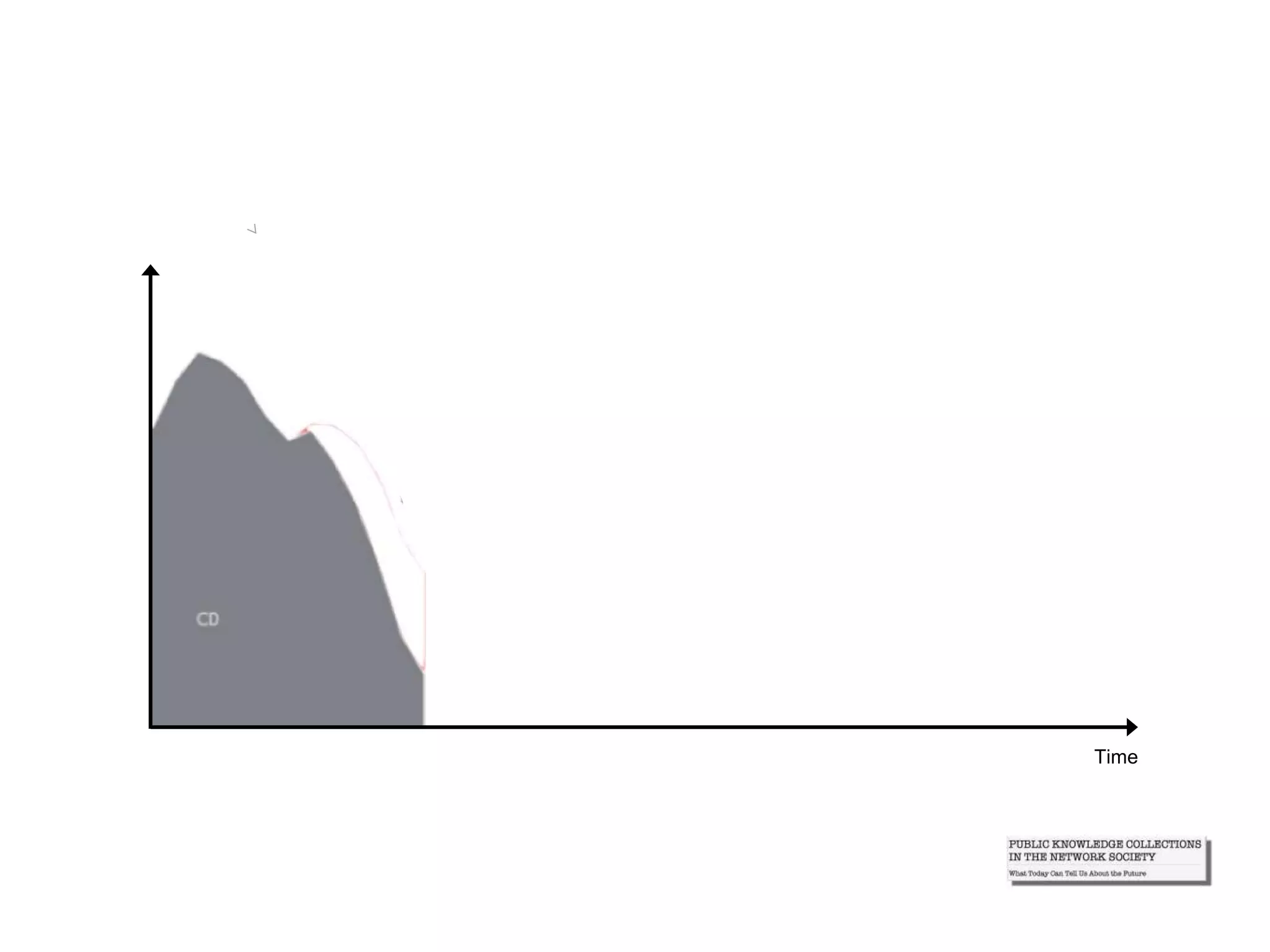
Time
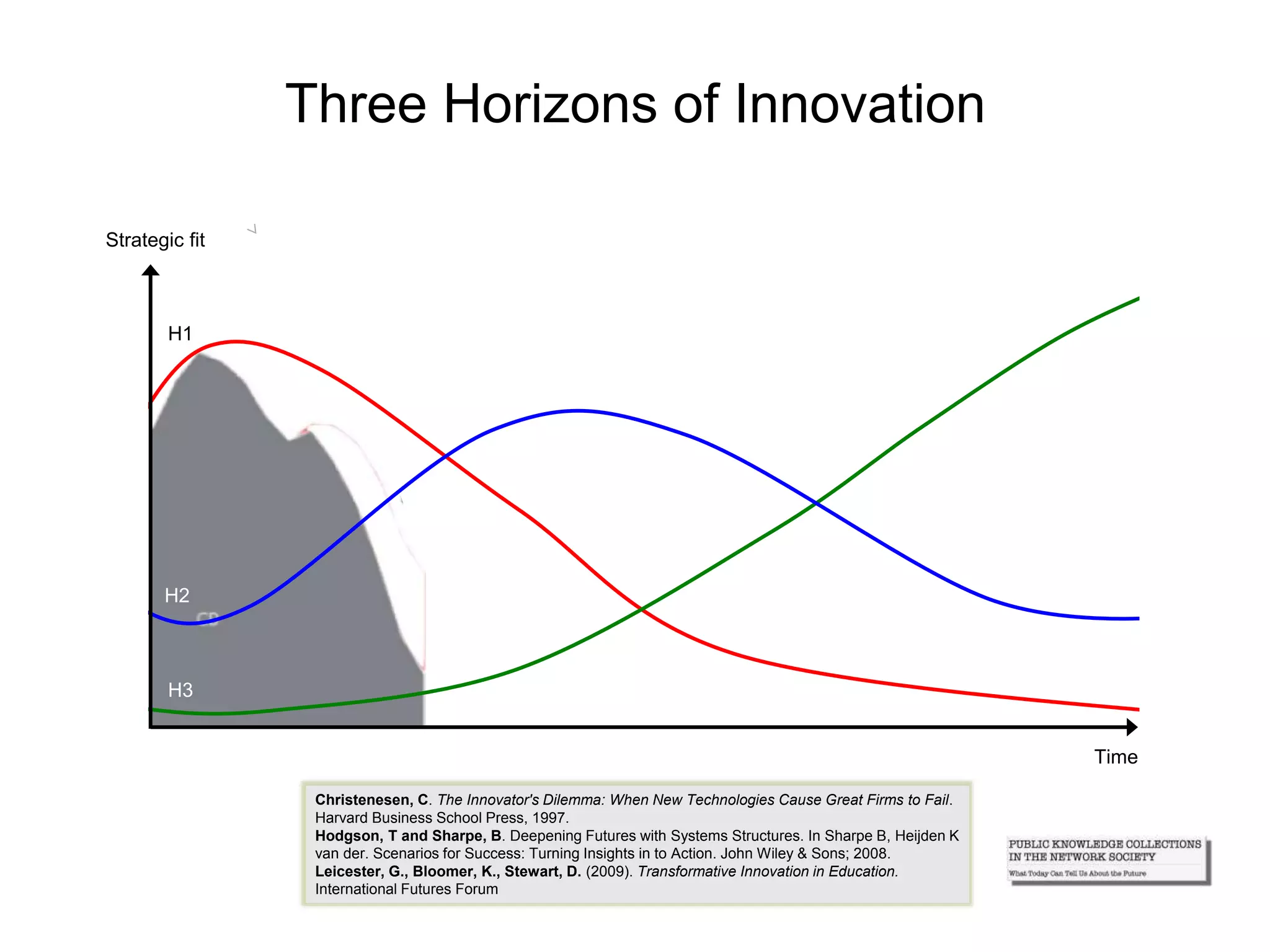
Strategic fit
Time
H1
H2
H3
Three Horizons of Innovation
Christenesen, C. The Innovator's Dilemma: When New Technologies Cause Great Firms to Fail.
Harvard Business School Press, 1997.
Hodgson, T and Sharpe, B. Deepening Futures with Systems Structures. In Sharpe B, Heijden K
van der. Scenarios for Success: Turning Insights in to Action. John Wiley & Sons; 2008.
Leicester, G., Bloomer, K., Stewart, D. (2009). Transformative Innovation in Education.
International Futures Forum
Strategic fit
Time
H1
H2
H3
Three Horizons of Innovation
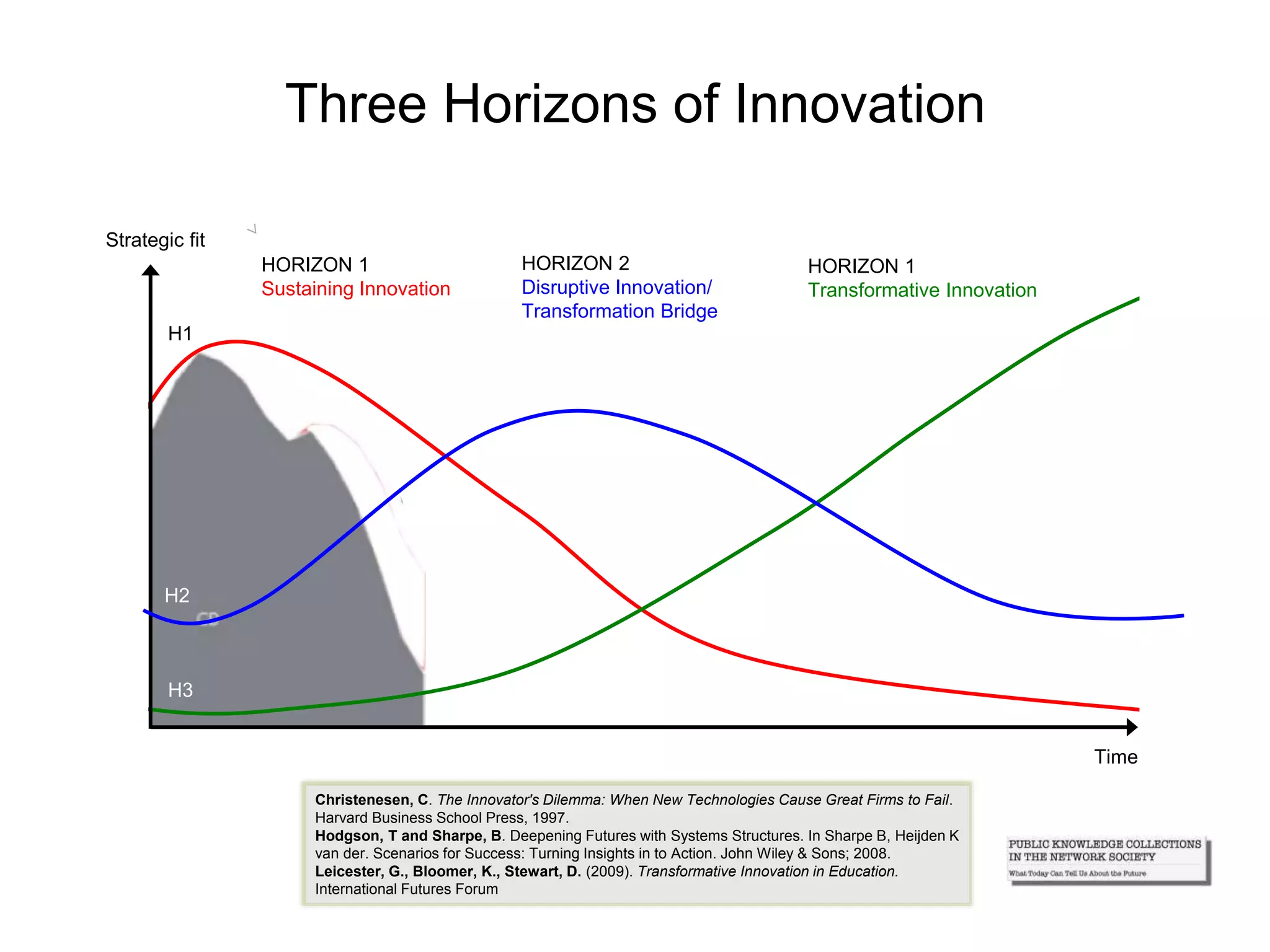
HORIZON 1
Sustaining Innovation
HORIZON 2
Disruptive Innovation/
Transformation Bridge
HORIZON 1
Transformative Innovation
Christenesen, C. The Innovator's Dilemma: When New Technologies Cause Great Firms to Fail.
Harvard Business School Press, 1997.
Hodgson, T and Sharpe, B. Deepening Futures with Systems Structures. In Sharpe B, Heijden K
van der. Scenarios for Success: Turning Insights in to Action. John Wiley & Sons; 2008.
Leicester, G., Bloomer, K., Stewart, D. (2009). Transformative Innovation in Education.
International Futures Forum
Strategic fit
Time
H1
H2
H3
Three Horizons of Innovation
HORIZON 1
Sustaining Innovation
HORIZON 2
Disruptive Innovation/
Transformation Bridge
HORIZON 1
Transformative Innovation
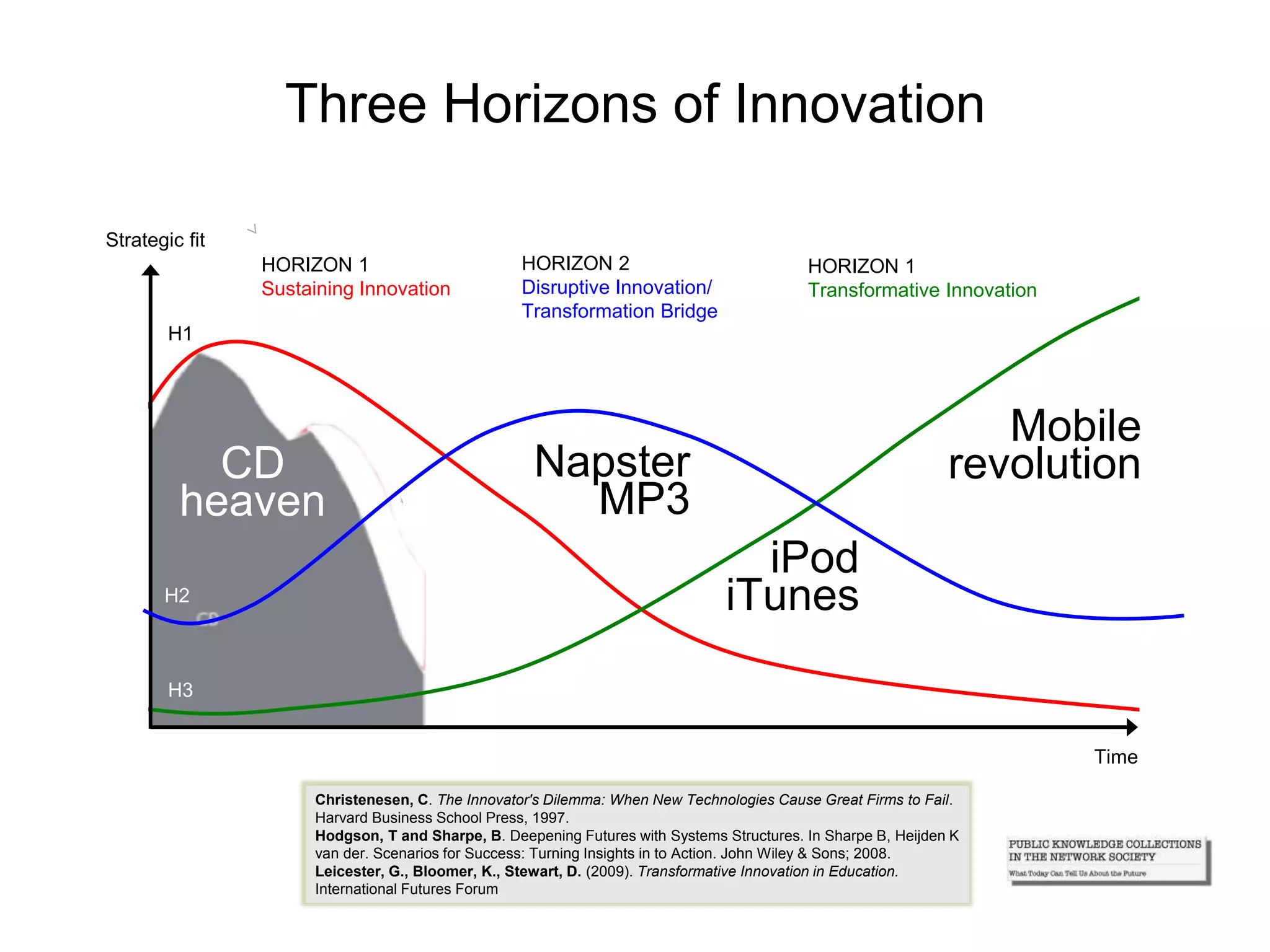
CD
heaven
Napster
MP3
iPod
iTunes
Mobile
revolution
Christenesen, C. The Innovator's Dilemma: When New Technologies Cause Great Firms to Fail.
Harvard Business School Press, 1997.
Hodgson, T and Sharpe, B. Deepening Futures with Systems Structures. In Sharpe B, Heijden K
van der. Scenarios for Success: Turning Insights in to Action. John Wiley & Sons; 2008.
Leicester, G., Bloomer, K., Stewart, D. (2009). Transformative Innovation in Education.
International Futures Forum
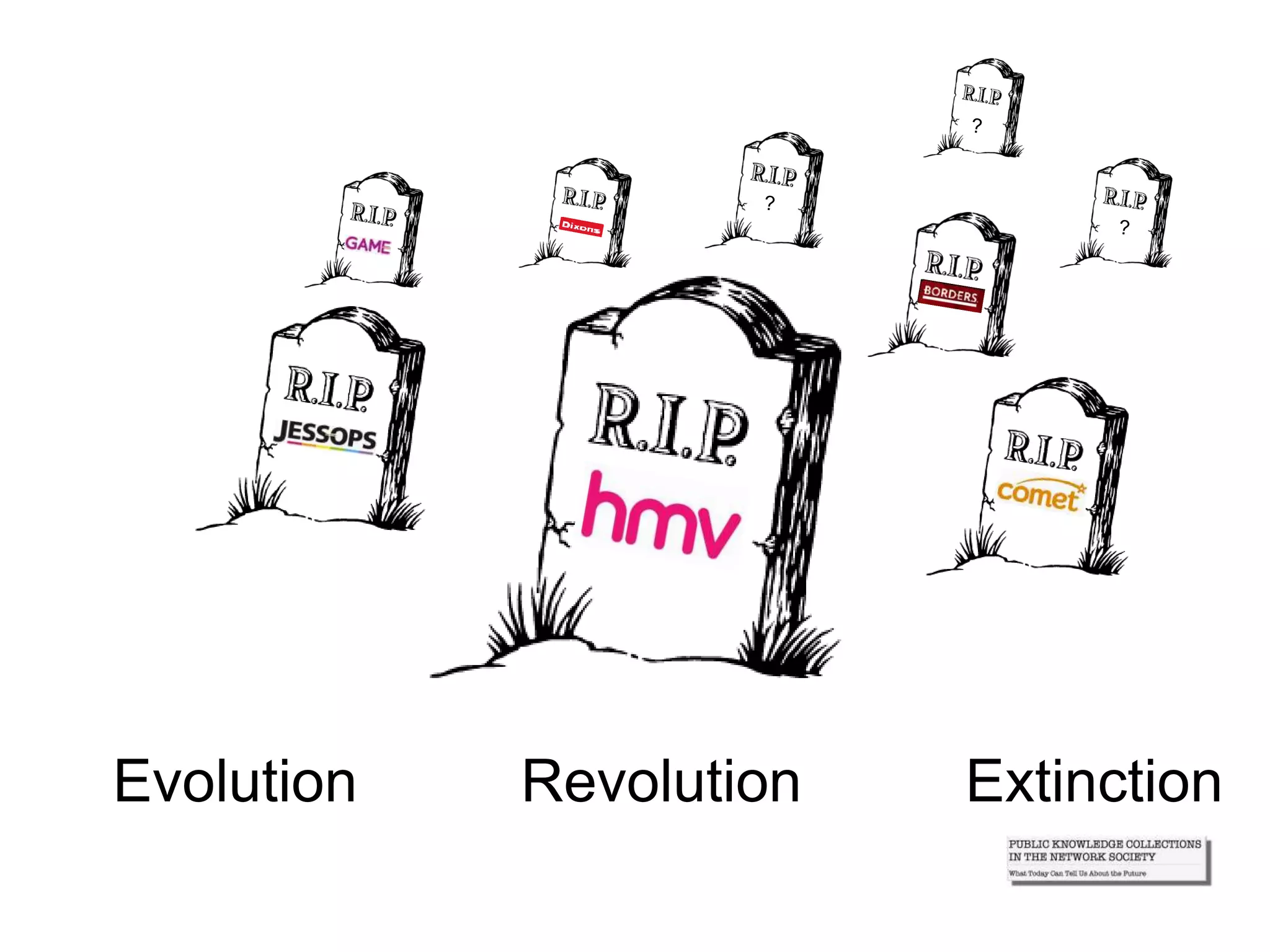
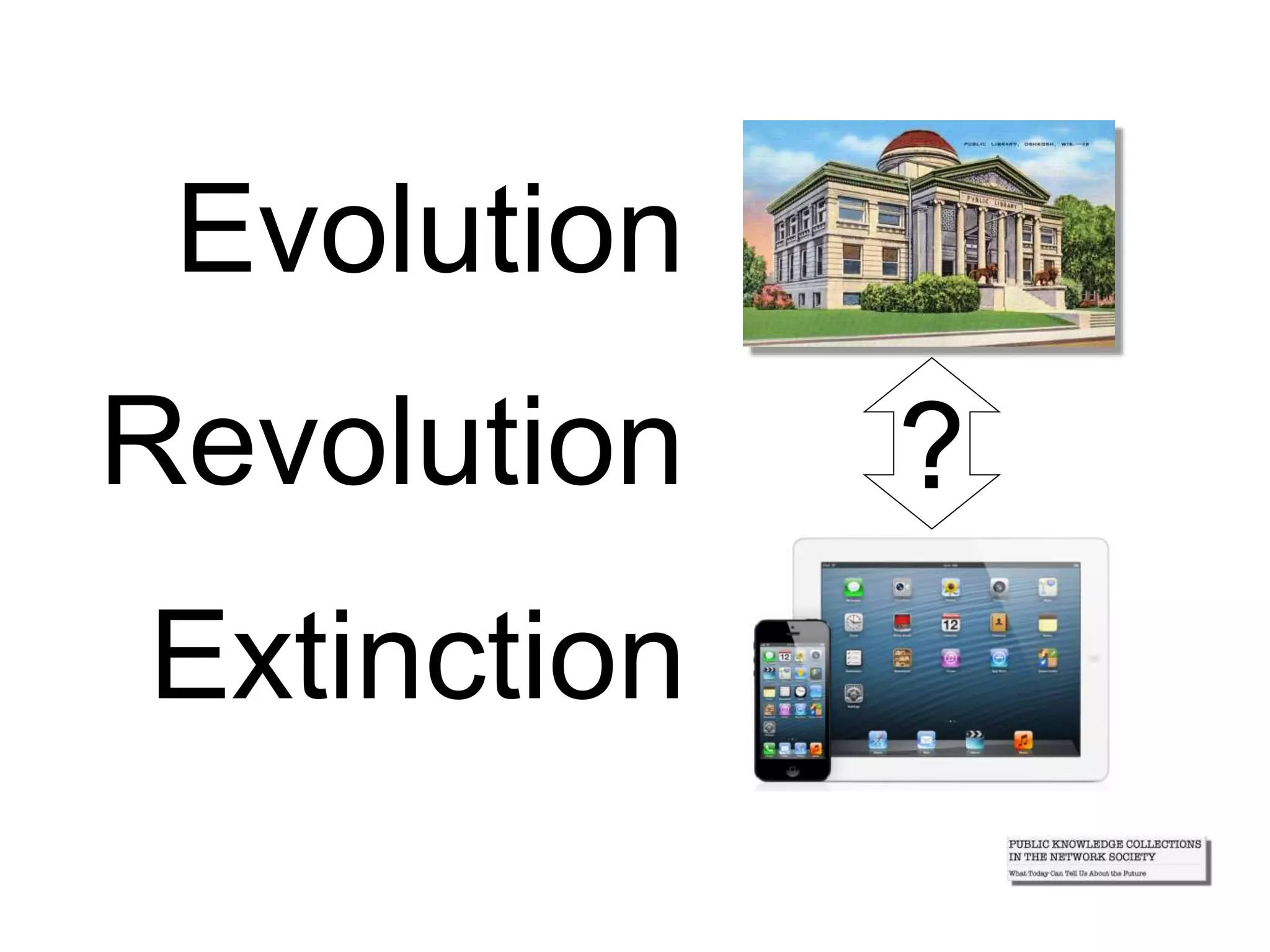
Evolution Revolution Extinction
“The Internet has
become a vital part of
our lives and our
society”
Dutton, W. and Blank, G. Next Generation Users: The
Internet in Britain. Oxford Internet Institute, 2011.
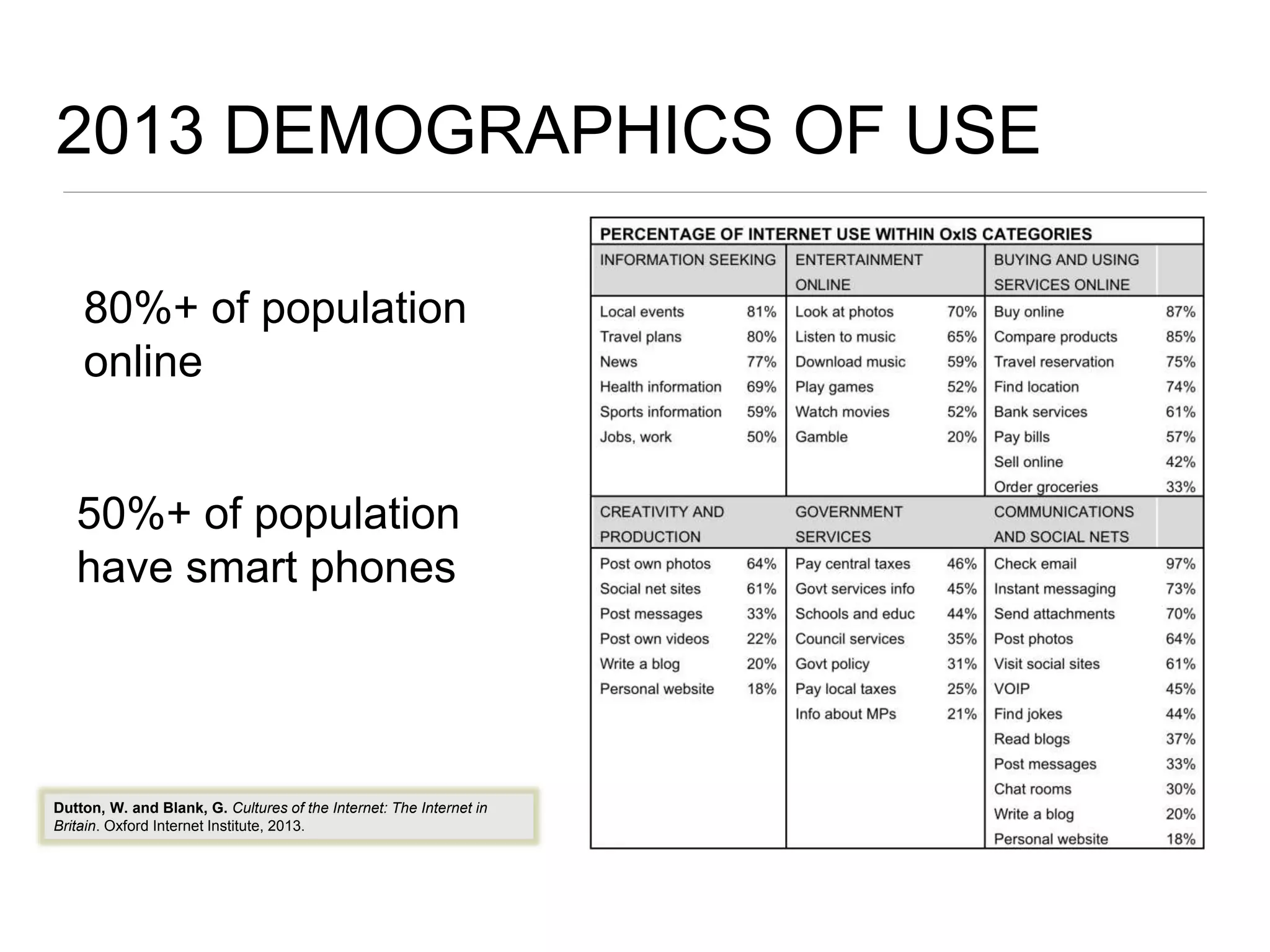
2013 DEMOGRAPHICS OF USE
80%+ of population
online
50%+ of population
have smart phones
Dutton, W. and Blank, G. Cultures of the Internet: The Internet in
Britain. Oxford Internet Institute, 2013.
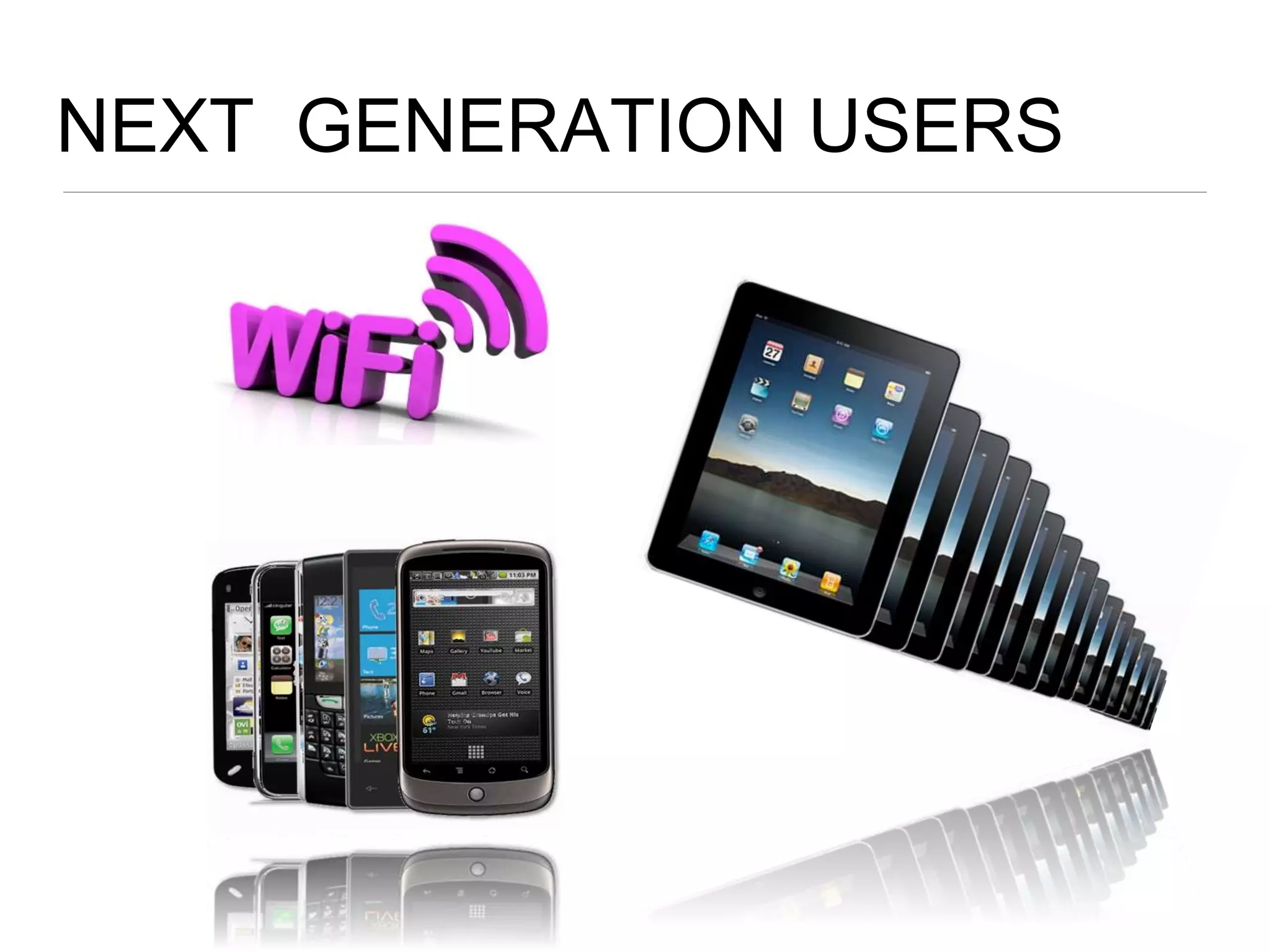
NEXT GENERATION USERS
EMERGENT EXPECTATIONS
24/7
usability
EMERGENT EXPECTATIONS
personalisation
EMERGENT EXPECTATIONS
engagement
EMERGENT EXPECTATIONS
work, shop, play
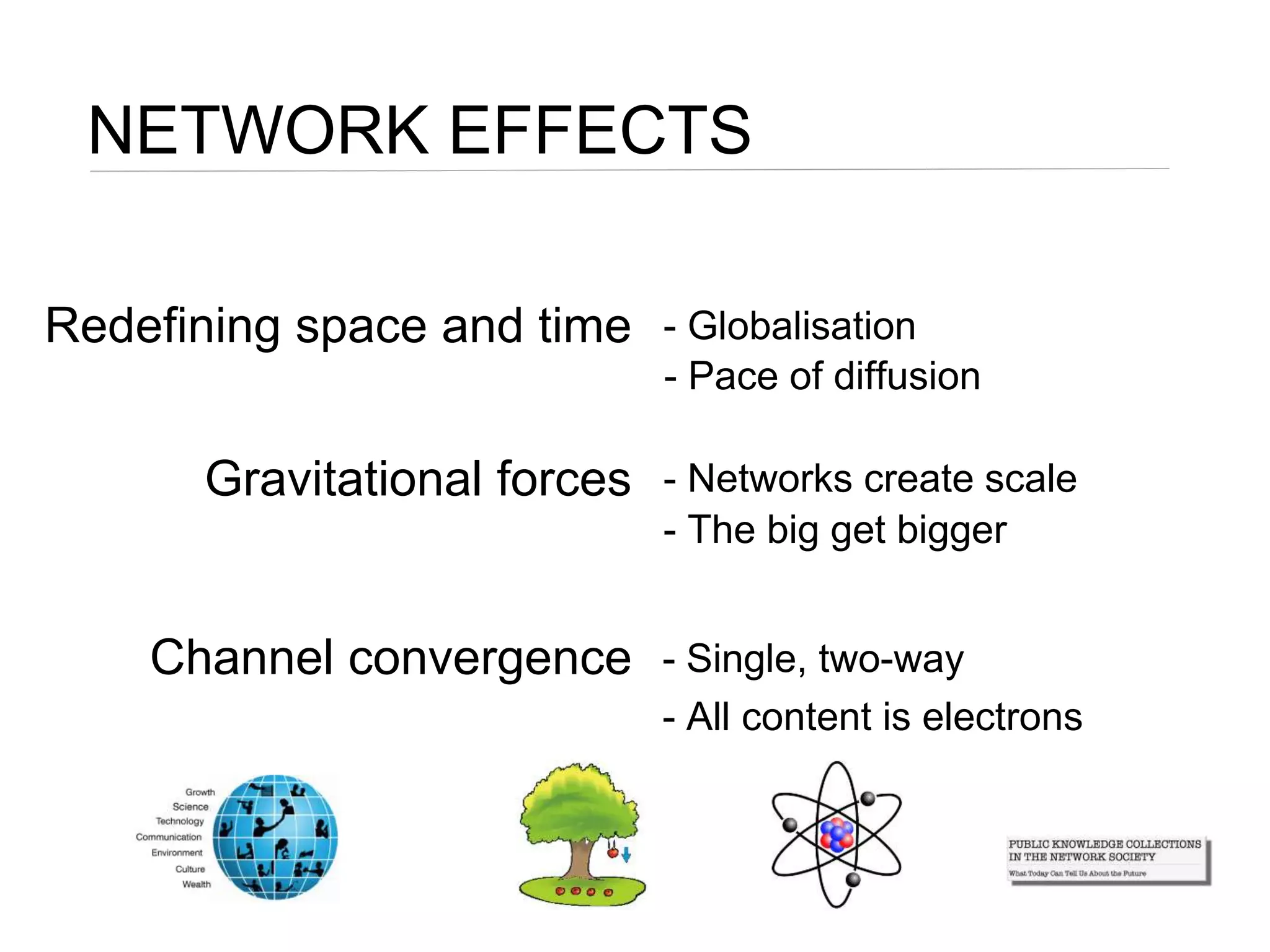
NETWORK EFFECTS
Redefining space and time - Globalisation
- Pace of diffusion
Gravitational forces - Networks create scale
- The big get bigger
Channel convergence - Single, two-way
- All content is electrons
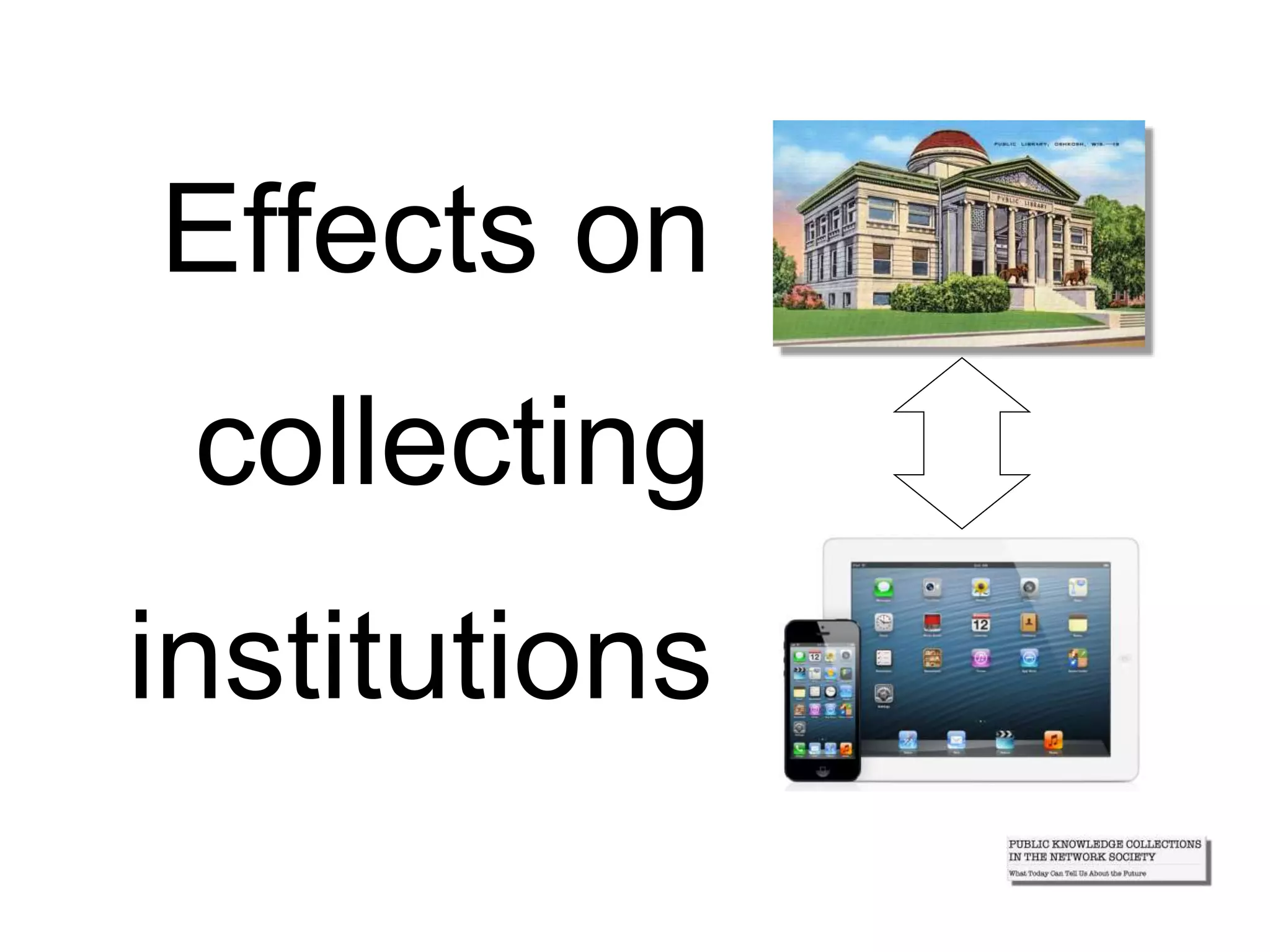
Effects on
institutions
collecting
Competition
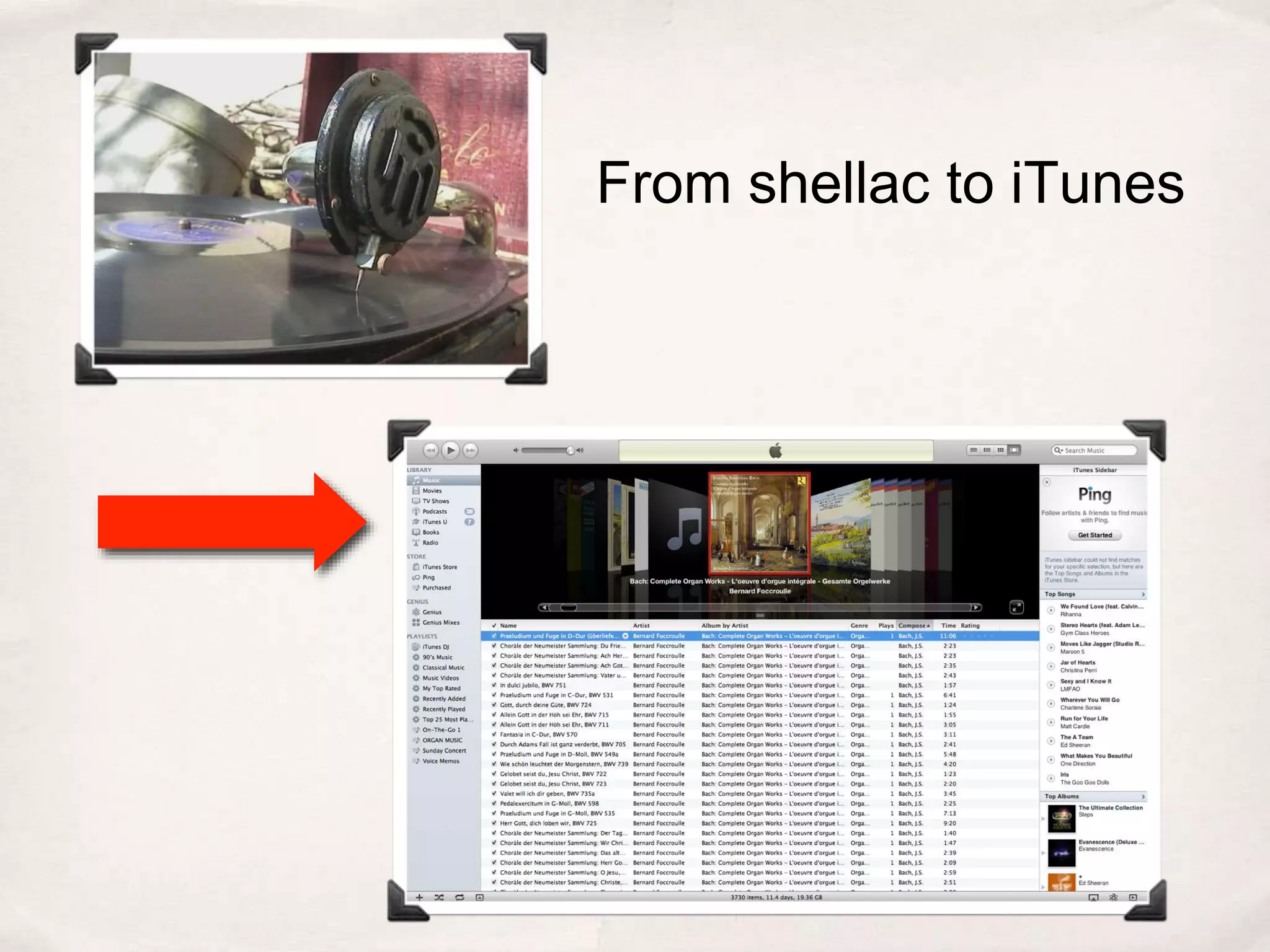
From shellac to iTunes
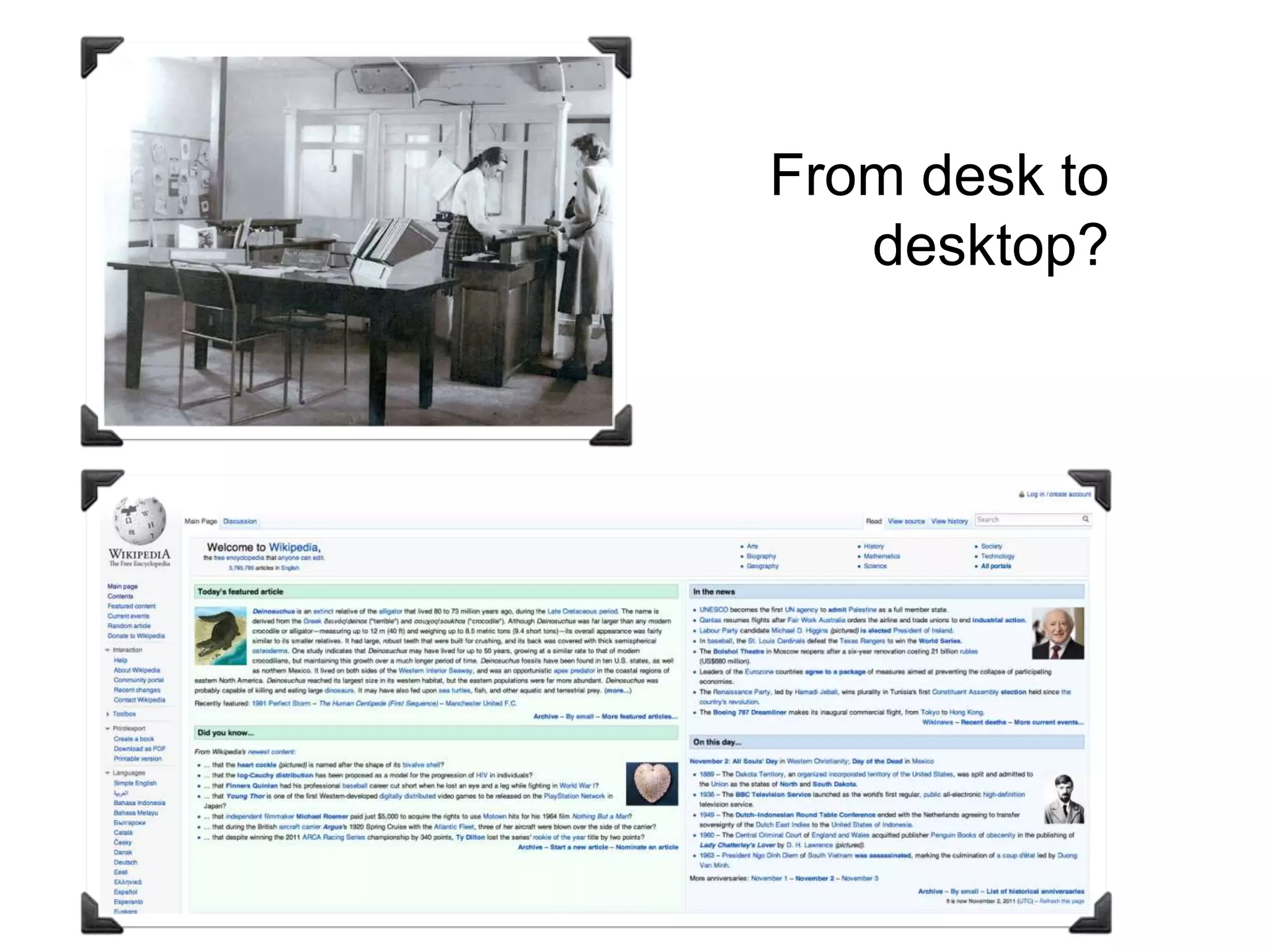
From desk to
desktop?
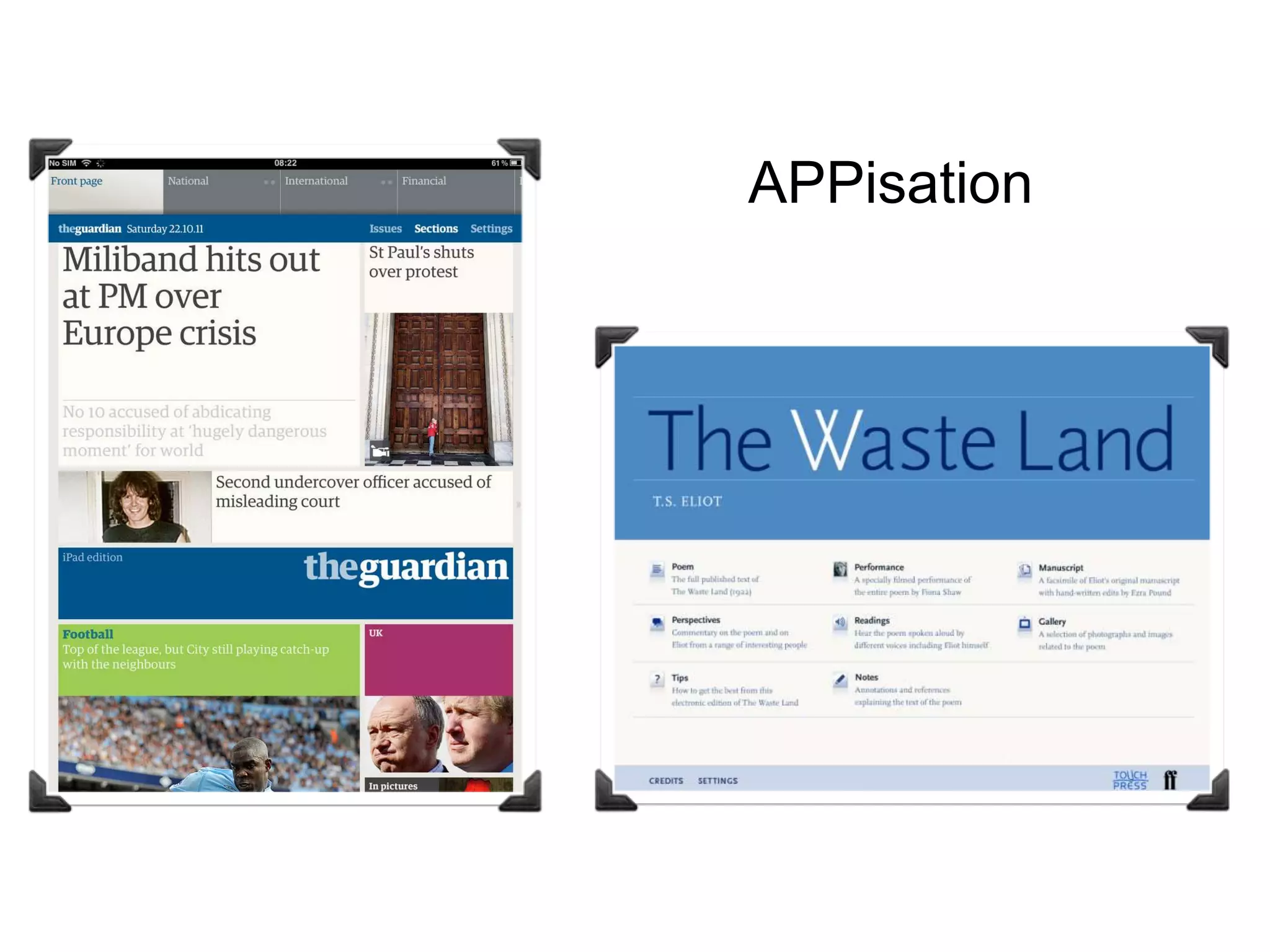
APPisation
Digital content
is the same
and different
“The objects of culture are no longer
secured behind glass cases or tied to
the walls of museums and galleries or
constrained by the control over
publishing and broadcasting, but are
created and recreated in the social
process.”
Tredinnick, L. Digital Information Culture: The Individual and Society in the Digital Age,
Oxford: Chandos, 2008.
Fragmentation
Disintermediation
Loss of Authenticity
Evolution
Extinction
Revolution
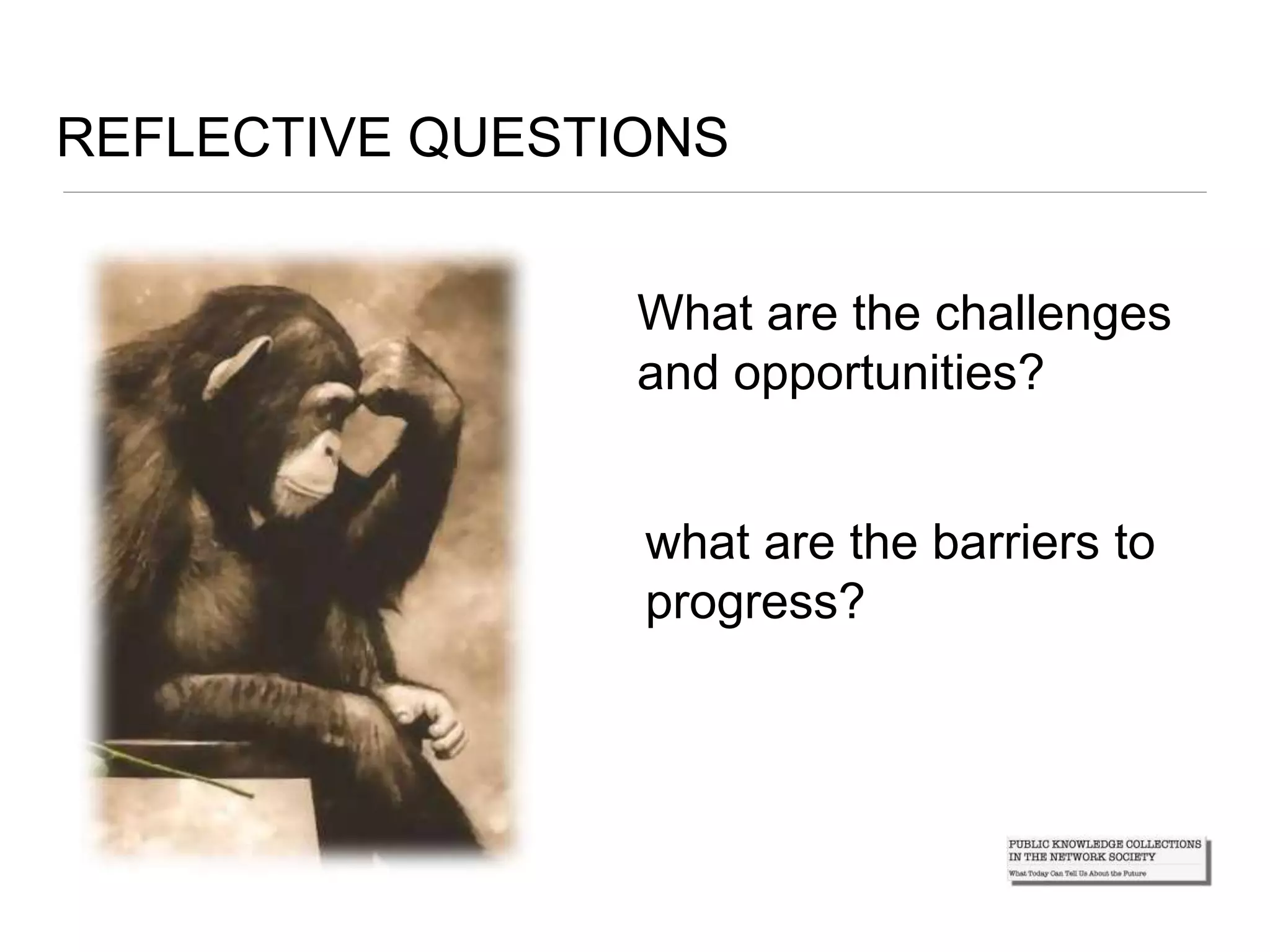
What are the challenges
and opportunities?
what are the barriers to
progress?
REFLECTIVE QUESTIONS
New Paradigm for Old?
Compare the consonance/dissonance
between the collecting institutions and the
emerging Network Society
TRADITIONAL SERVICE PARADIGM
(Open system transformation model)
Policy
Resources
Artifacts
Users and
potential
users
Demand sideSupply side
Collecting
Institution
Processes
Active
Passive
Collecting Curating Disclosing
Warehousing
Boundary
exchange
Disclosing
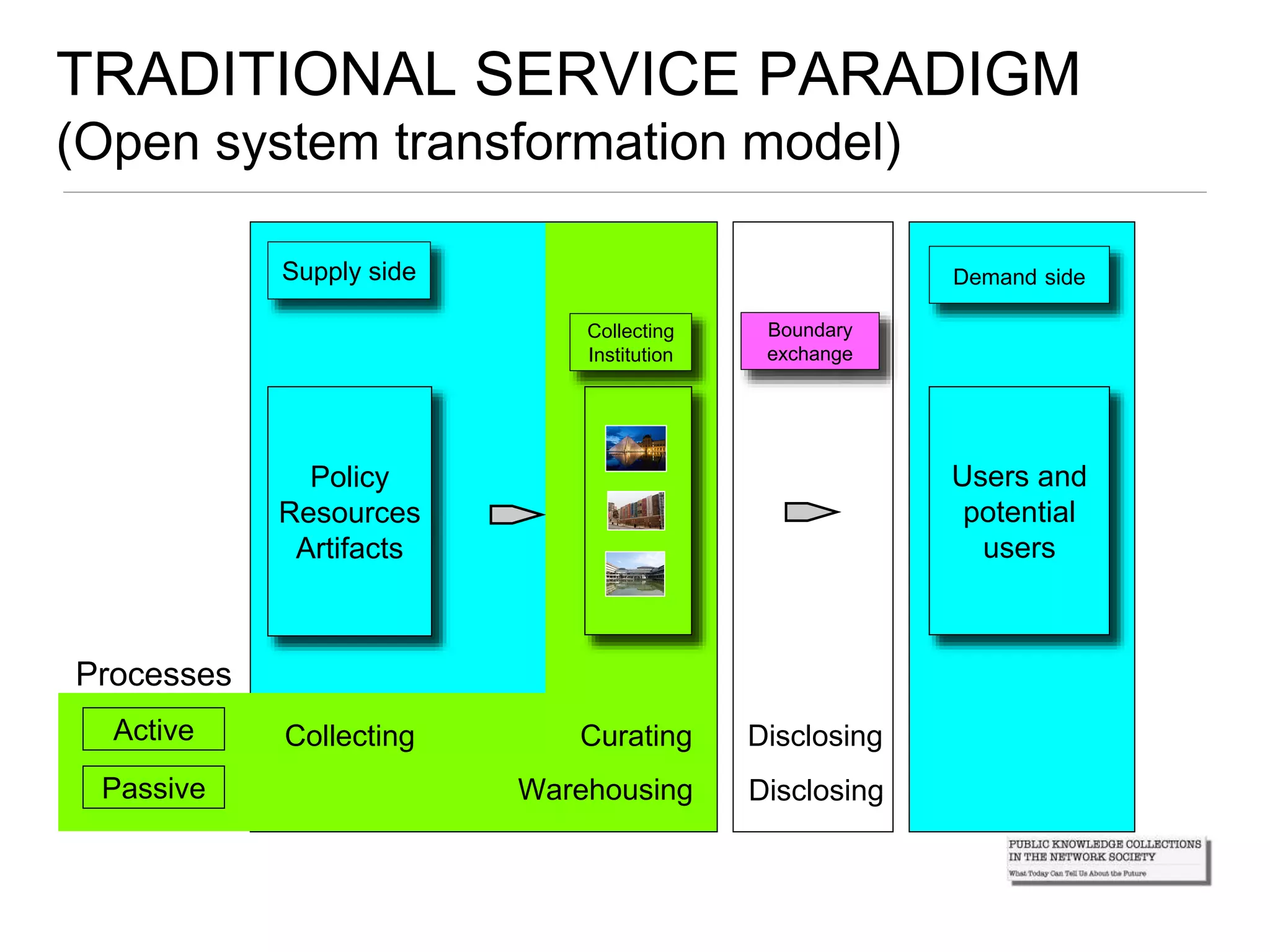
TRADITIONAL SERVICE PARADIGM
(Open system transformation model)
Policy
Resources
Artifacts
Users and
potential
users
Demand sideSupply side
Collecting
Institution
Processes
Active
Passive
Collecting Curating Disclosing
Warehousing
Boundary
exchange
Disclosing
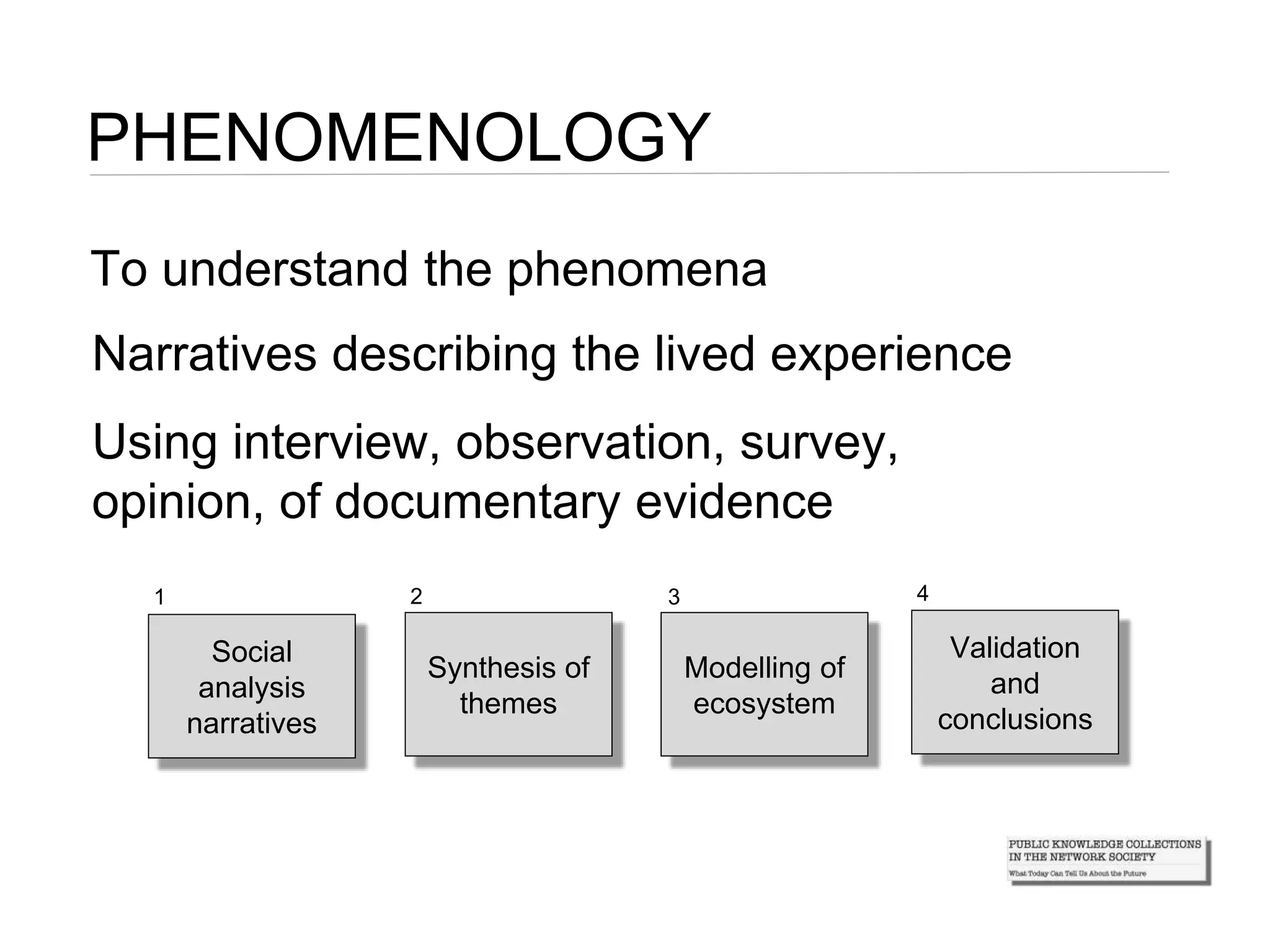
PHENOMENOLOGY
To understand the phenomena
Narratives describing the lived experience
Using interview, observation, survey,
opinion, of documentary evidence
Social
analysis
narratives
Synthesis of
themes
Modelling of
ecosystem
Validation
and
conclusions
1 2 3 4
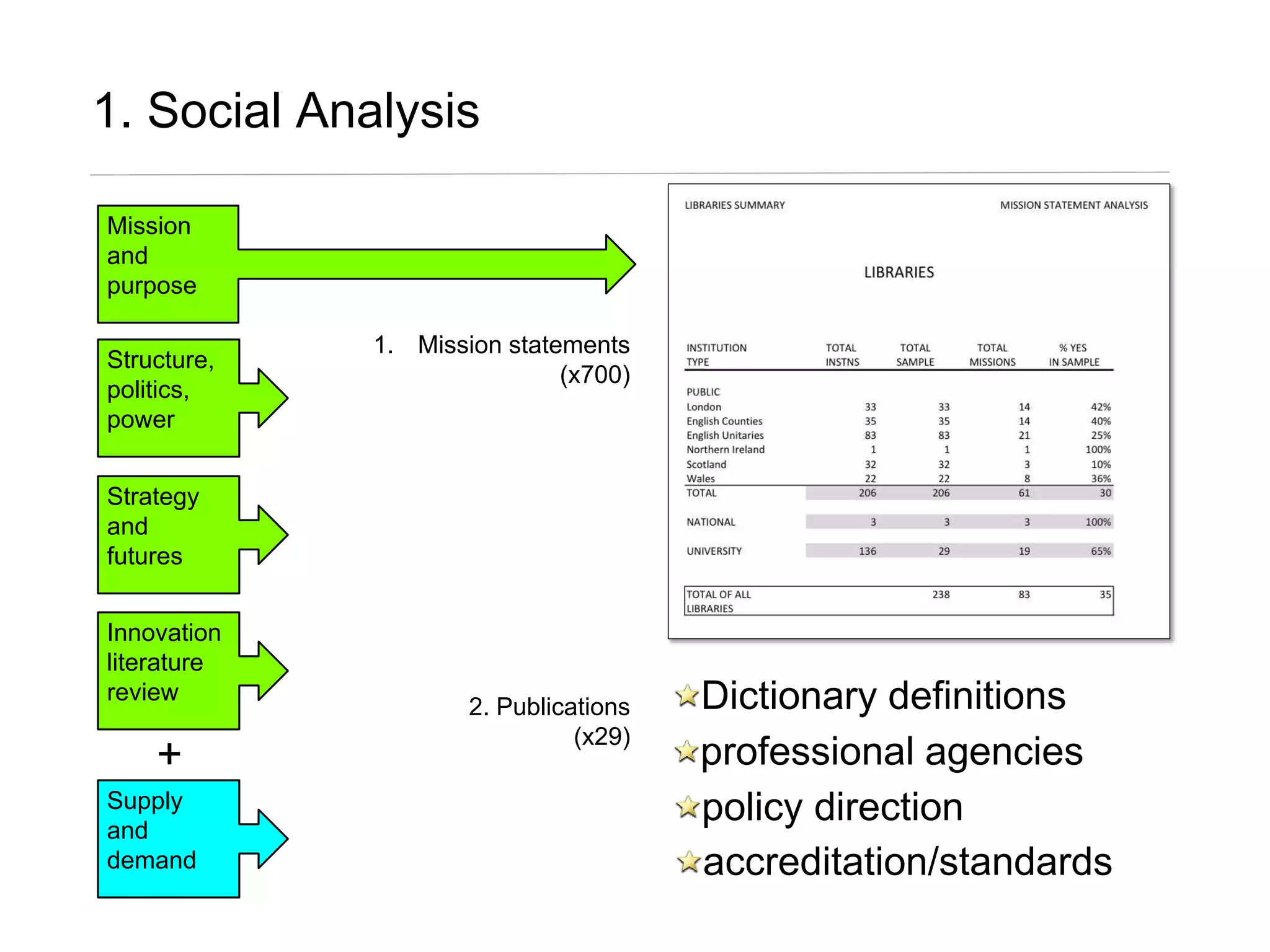
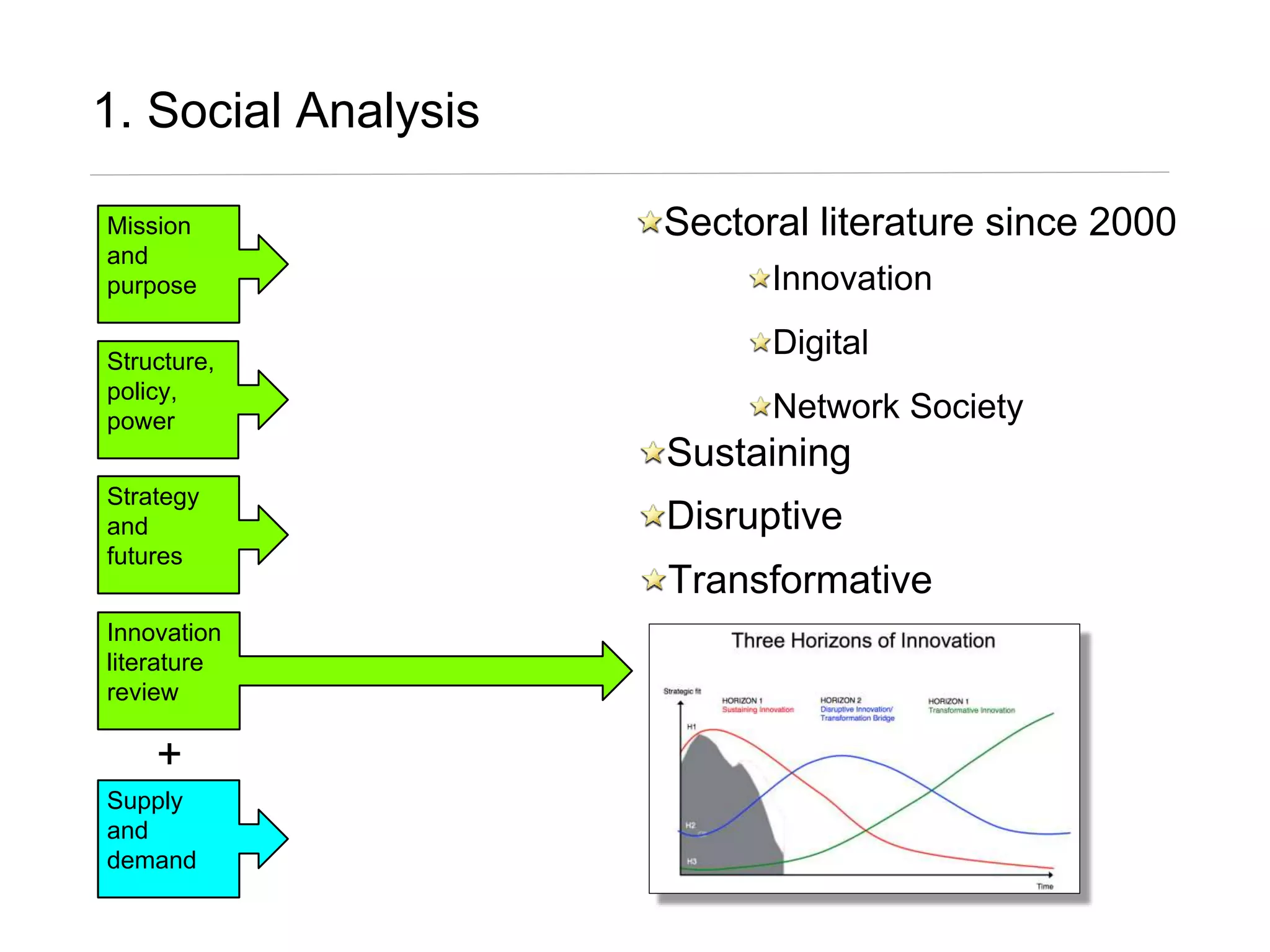
1. Social Analysis
Mission
and
purpose
Structure,
politics,
power
Strategy
and
futures
Innovation
literature
review
+
Supply
and
demand
Dictionary definitions
professional agencies
policy direction
accreditation/standards
1. Mission statements
(x700)
2. Publications
(x29)
Strategy
and
futures
Innovation
literature
review
+
Structure,
politics,
power
Supply
and
demand
0
50
100
150
200
250
300
350
400
450
500
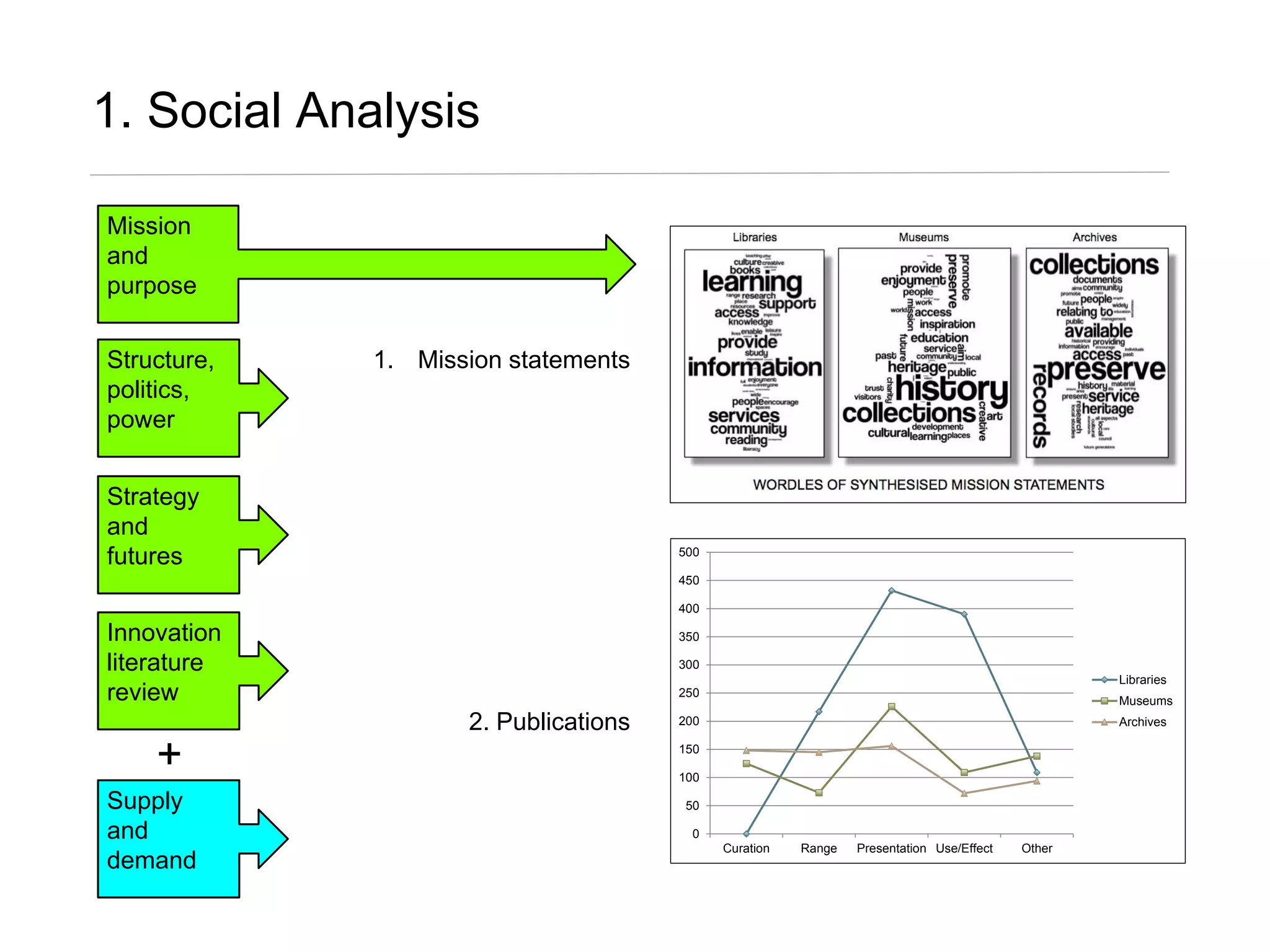
Curation Range Presentation Use/Effect Other
Libraries
Museums
Archives
1. Mission statements
2. Publications
Mission
and
purpose
1. Social Analysis
Mission
and
purpose
Strategy
and
futures
Innovation
literature
review
+
Structure,
policy,
power
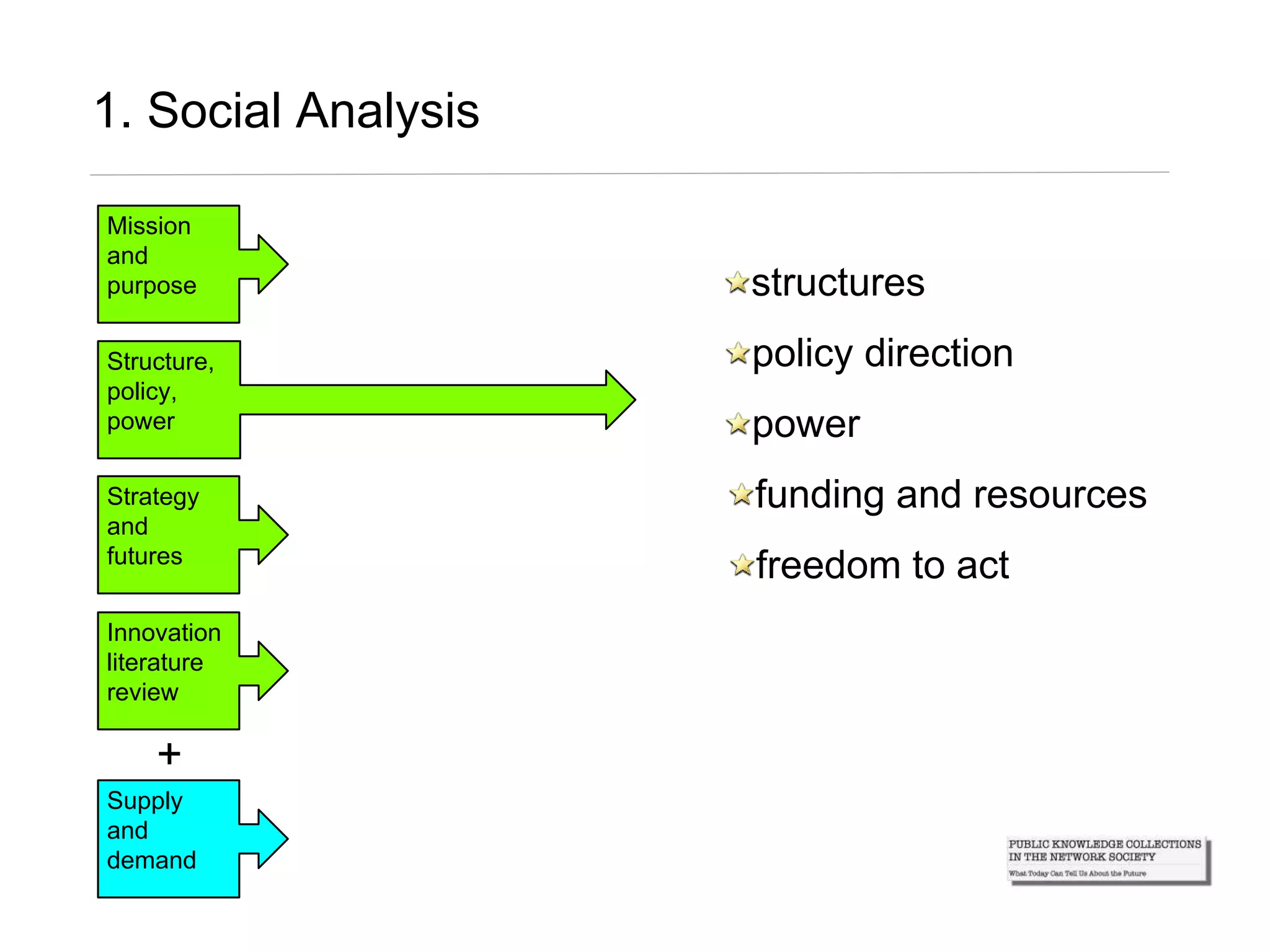
structures
policy direction
power
funding and resources
freedom to act
Supply
and
demand
1. Social Analysis
Mission
and
purpose
Strategy
and
futures
Innovation
literature
review
+
Structure,
policy,
power Published strategies since
2000 (22)
Scope and clarity
Power to implement
Scope and reach
Consideration of long-term
futures
Supply
and
demand
1. Social Analysis
Mission
and
purpose
Strategy
and
futures
Innovation
literature
review
+
Structure,
policy,
power
Supply
and
demand
Sustaining
Disruptive
Transformative
Sectoral literature since 2000
Innovation
Digital
Network Society
1. Social Analysis
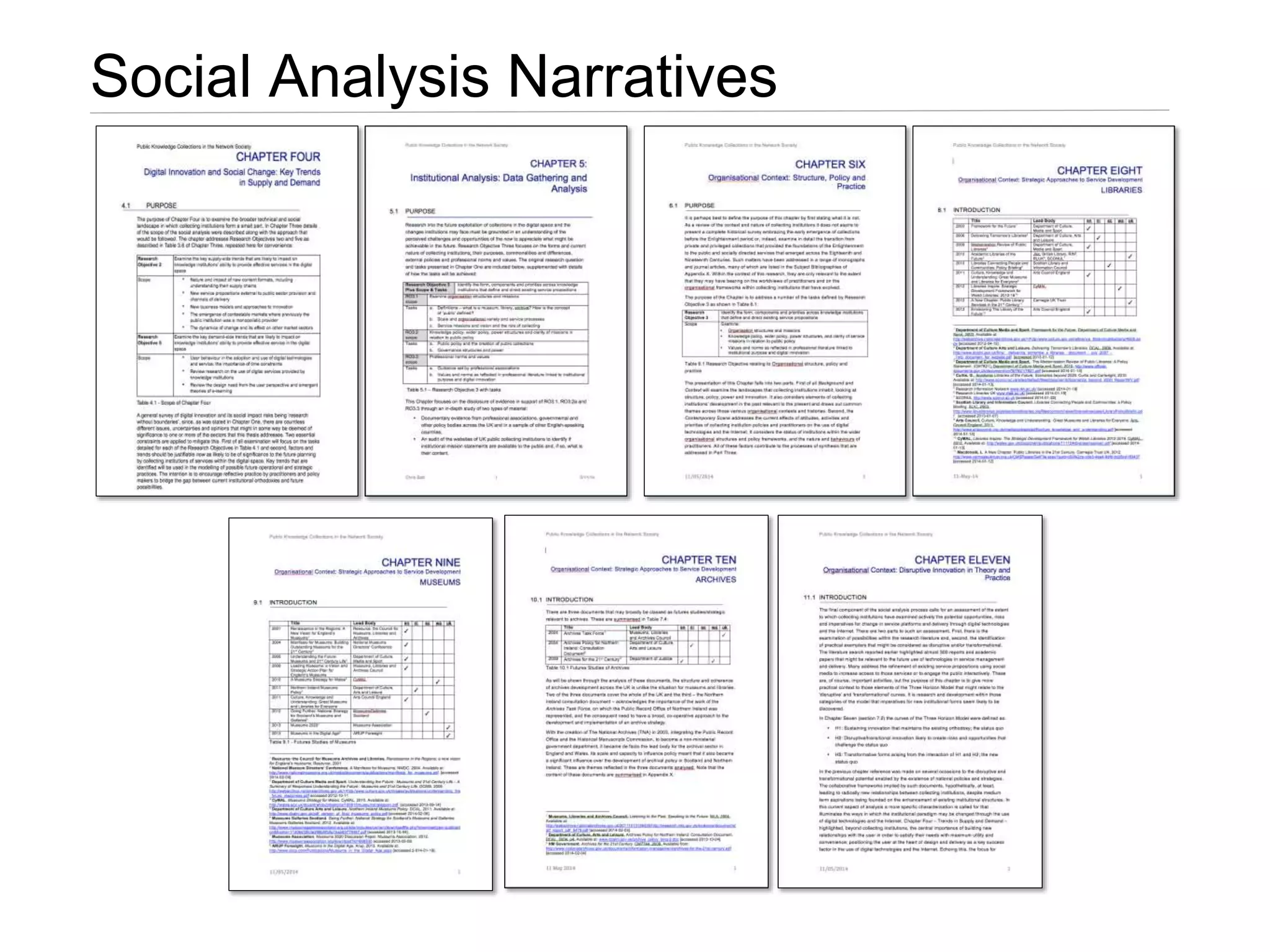
Social Analysis Narratives
2. Synthesis of the evidence
and the creation of
A meta-narrative
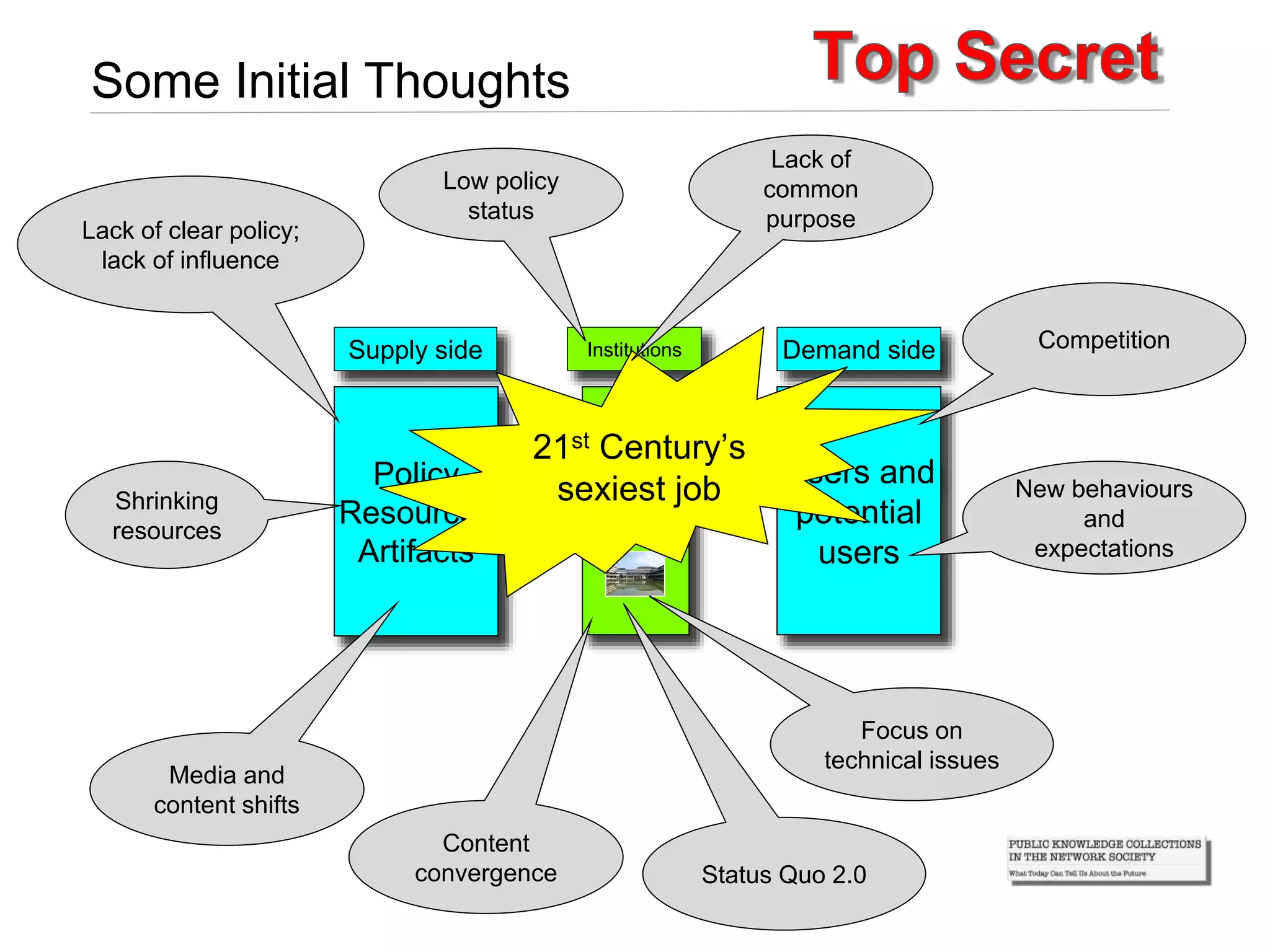
Policy
Resources
Artifacts
Users and
potential
users
Demand sideSupply side Institutions
Lack of clear policy;
lack of influence
Shrinking
resources
Content
convergence
Media and
content shifts
Focus on
technical issues
Status Quo 2.0
Competition
New behaviours
and
expectations
Some Initial Thoughts
21st Century’s
sexiest job
Low policy
status
Lack of
common
purpose
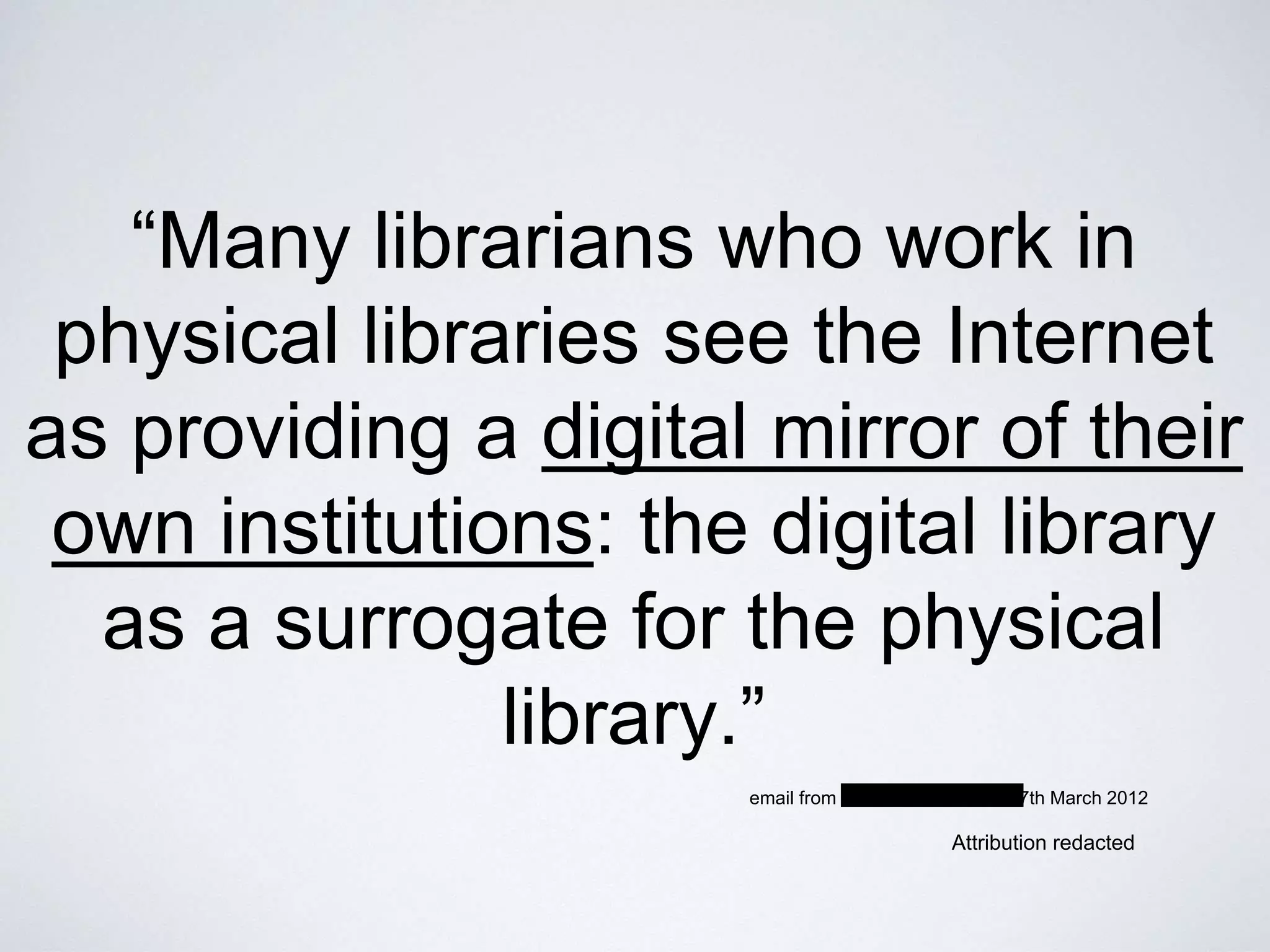
“Many librarians who work in
physical libraries see the Internet
as providing a digital mirror of their
own institutions: the digital library
as a surrogate for the physical
library.”
Attribution redacted
email from xxxxxxxxxxxxxxxxxx, 7th March 2012
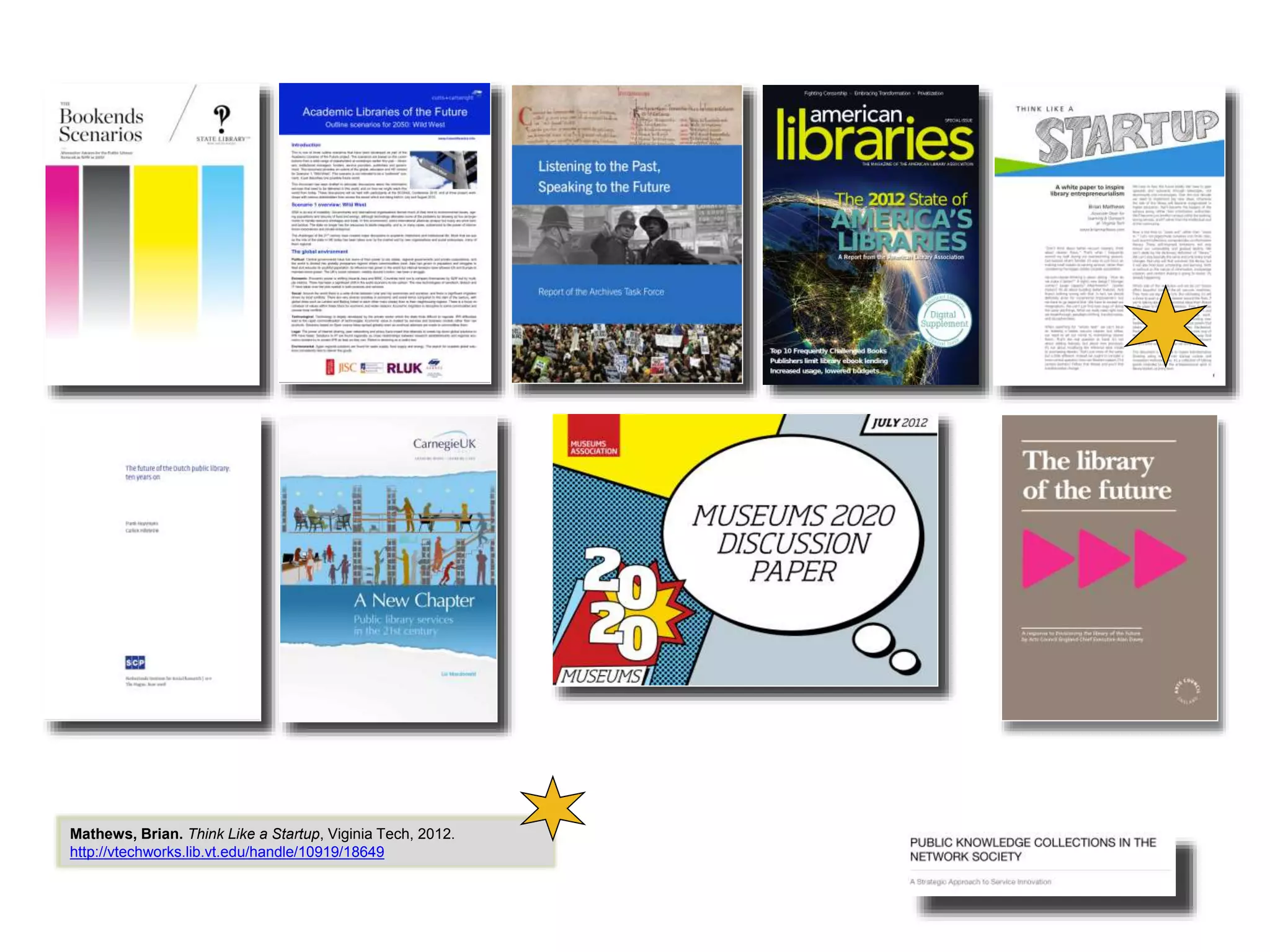
Mathews, Brian. Think Like a Startup, Viginia Tech, 2012.
http://vtechworks.lib.vt.edu/handle/10919/18649
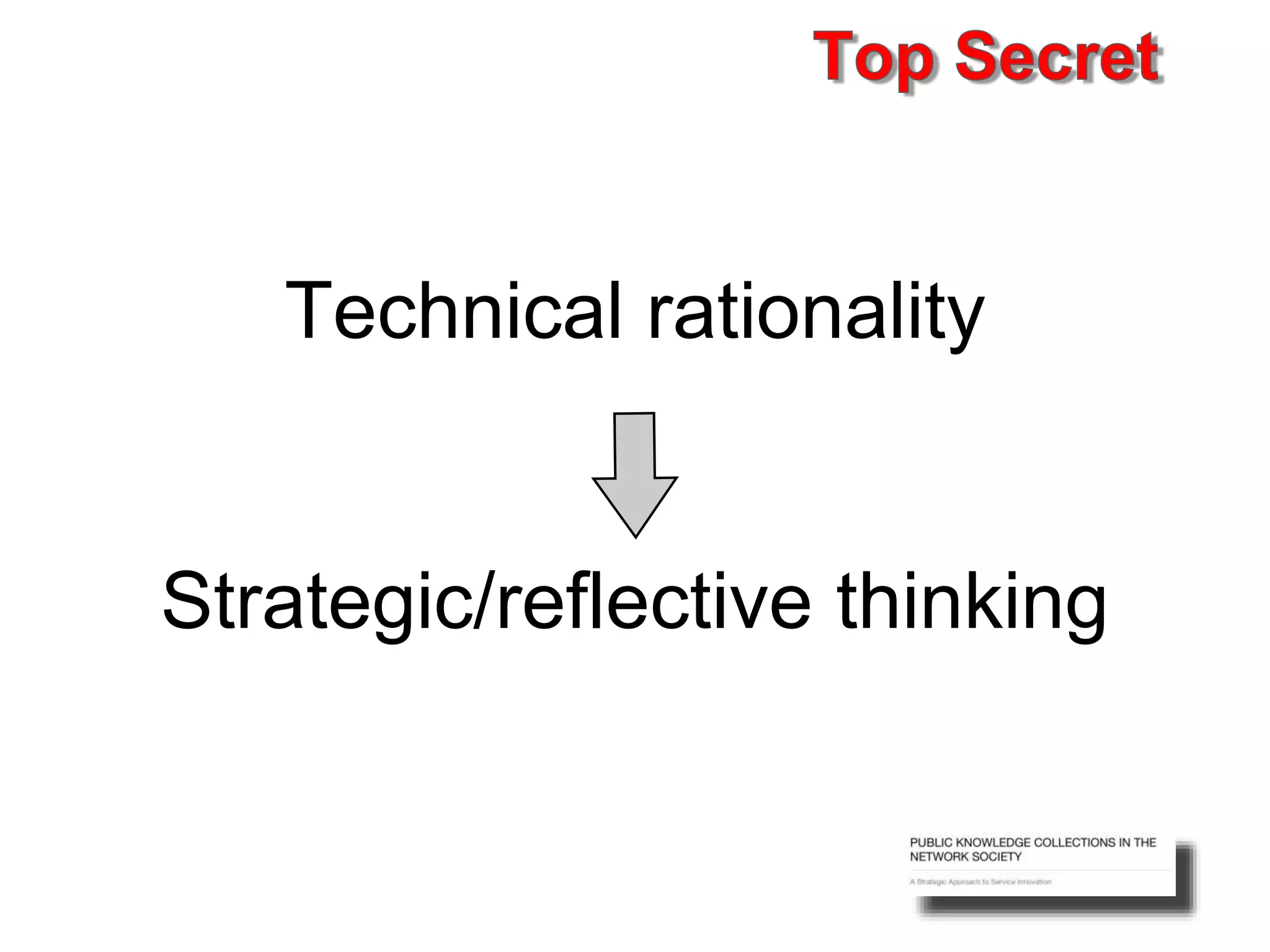
Technical rationality
Strategic/reflective thinking
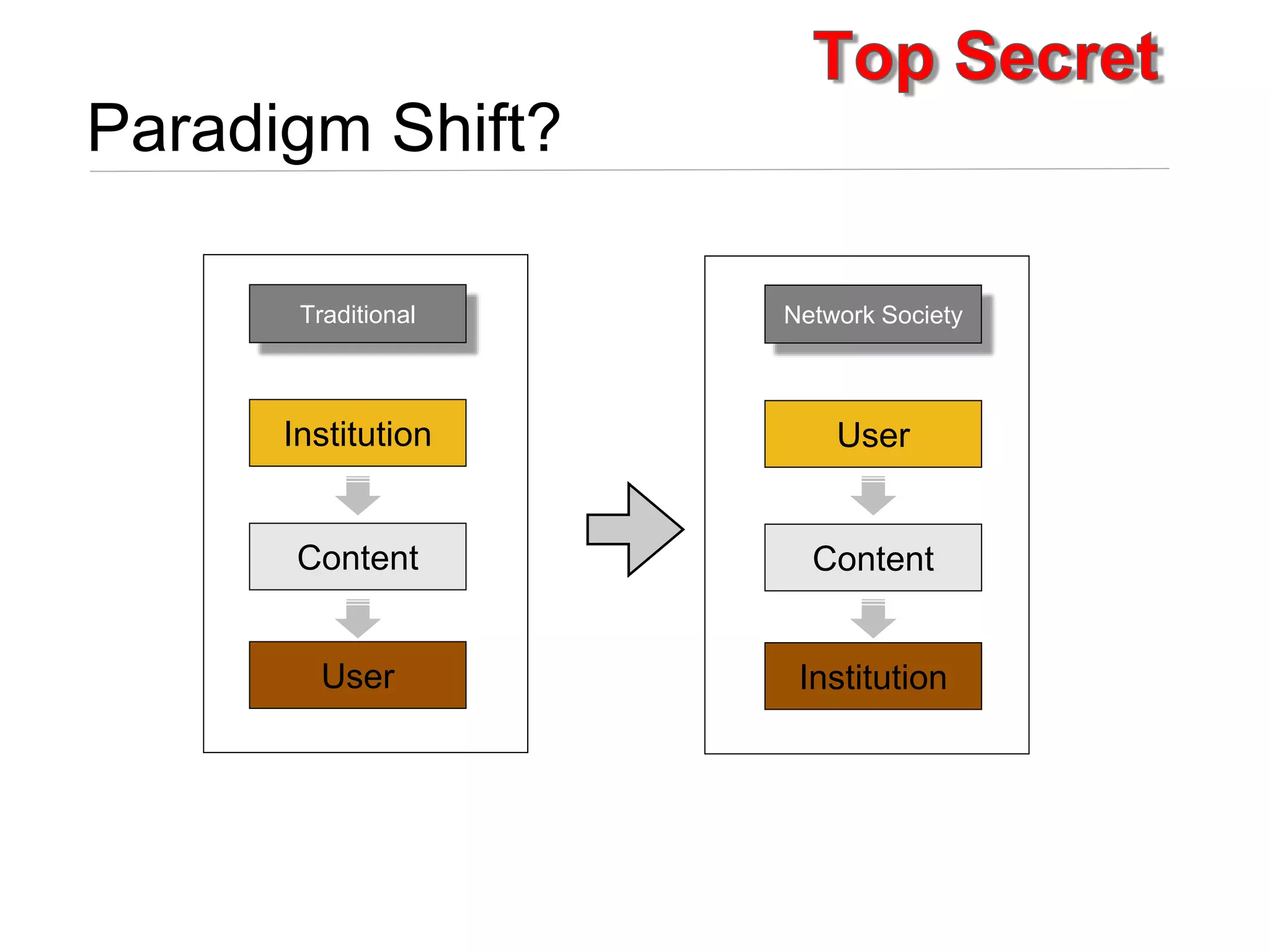
Institution
Content
User
User
Content
Institution
Paradigm Shift?
Traditional Network Society
Thanks for listening
cbatt@mac.com
chrisbatt/wordpress.com
tw. chrisbatt
www.digital-futures.org
http://www.slideshare.net/Chris_Batt/
http://uk.linkedin.com/in/chrisbatt

2014 05-23 unc talk final version