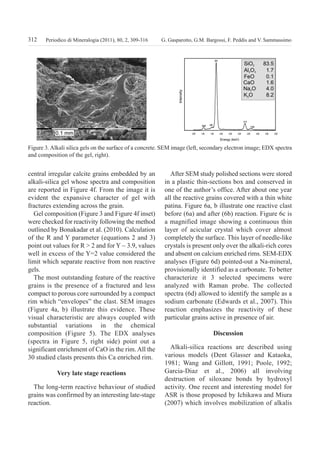
This document presents a case study of alkali-silica reactions (ASR) that damaged a concrete flooring in Bologna, Italy. A petrographic investigation found that:
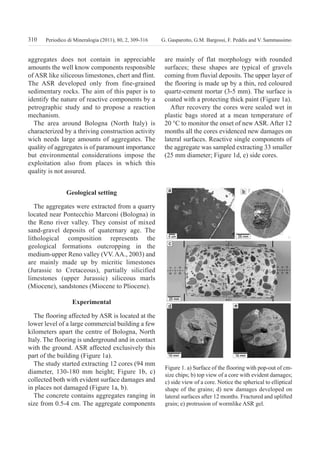
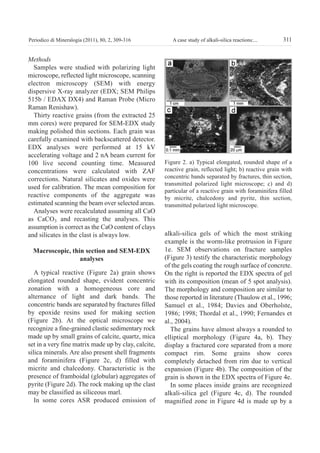
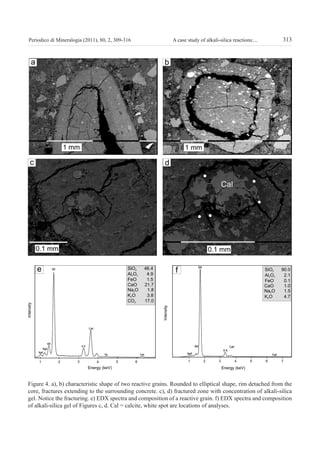
1) Fine-grained siliceous marls in the aggregate reacted with alkali ions in the cement, producing expansive alkali-silica gels that cracked the concrete.
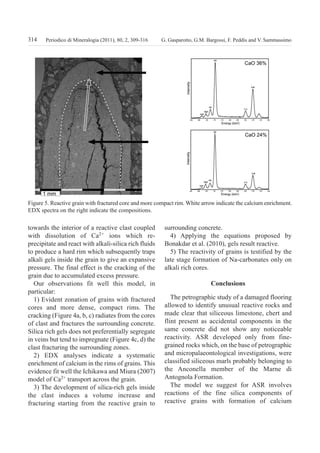
2) The reactive marl grains showed a fractured porous core surrounded by a more compact calcium-enriched rim, indicating mobilization of alkalis and calcium between the core and rim during ASR.
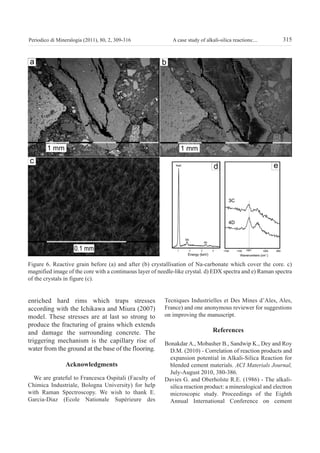
3) Late-stage reactions formed sodium carbonate on the surfaces of the reactive marl grains, providing further evidence