TRAUMA NURSING-
CLINICAL PEARLS
BY
REVATHY S NAIR
TRAUMA NURSE COORDINATOR
JPNATC, AIIMS NEW DELHI
TRAUMA
 A harmful event that results from the release of specific form of energy.
 Penetrating- Stab, gunshots
 Blunt- MVCs, falls
 Thermal injuries
TRAUMA NURSING
 Trauma nursing, as a discipline, refers to the varied roles nurses
assume when caring for a trauma patient.
 Skillful and competent, pace
 Leadership
 Critical thinking
 Communication
 coordination
TRIAGE • RED, YELLOW, GREEN AND BLACK
PRIMARY SURVEY • RESUSCITATION (ABCDE)
SECONDARY
SURVEY • NCCT, CECT TORSO
STABILIZATION
TRANSFER FOR
DEFINITIVE CARE
OVERVIEW OF TRAUMA MANAGEMENT
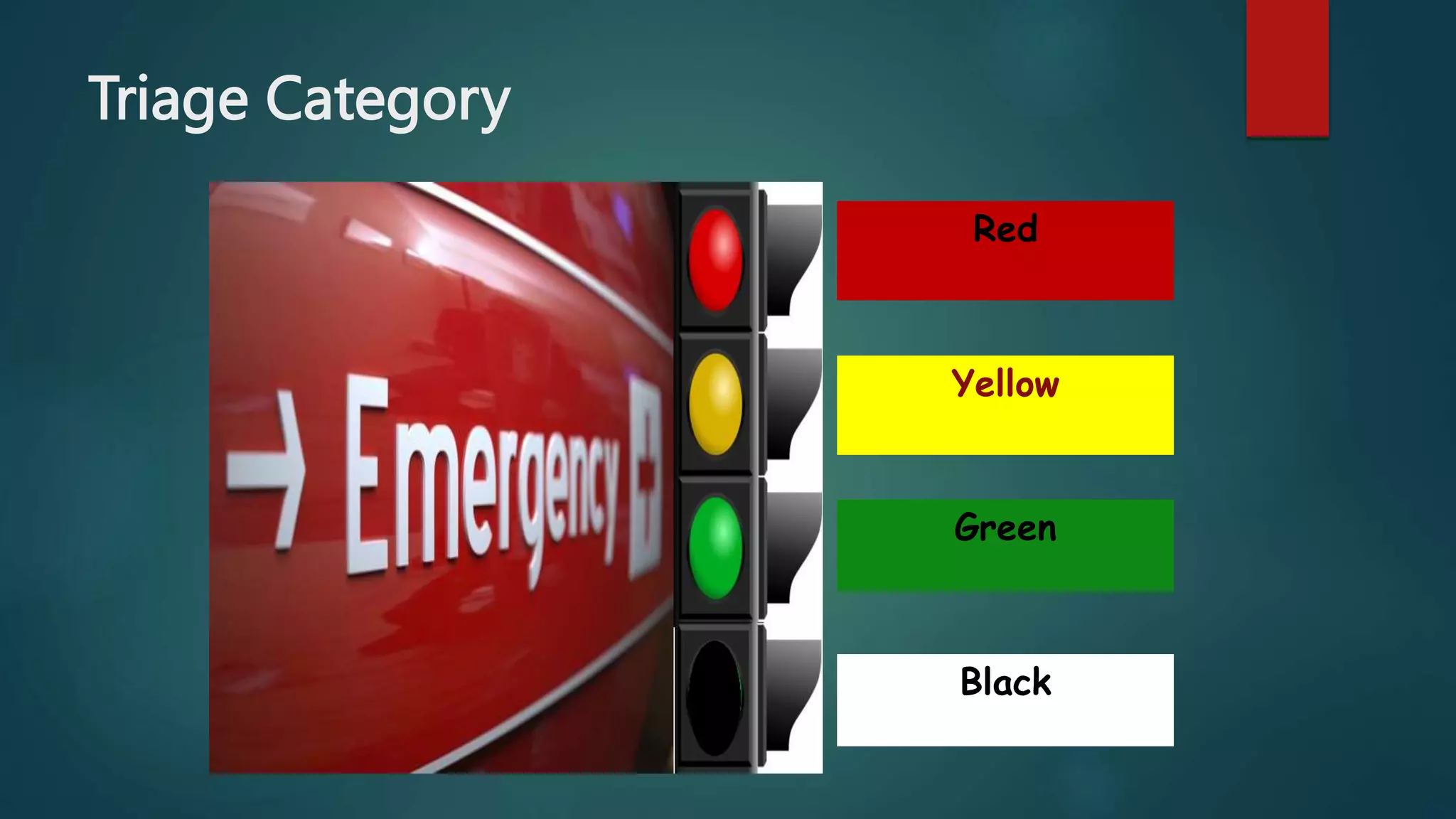
Triage Category
Green
Yellow
Red
STOP
GO
Black
Goal of Triage
PLACE THE
RIGHT PATIENT
IN RIGHT PLACE
AT RIGHT TIME
FOR RIGHT
REASON
TRIAGE
AIIMS TRAIGE PROTOCOL
Physiological parameters
• BP, HR, SPO2, GLASCOW COMA SCALE
Injuries identified
• Seat belt sign
• Steering wheel inury, open fracture, vascular injury
Mechanism of injury
• Co passenger dead, overturn or turnover
• Pedestrian hit with car
TRIAGING DONE BY NURSES
( TRIAGE OFFICER)
Pelvic compression test Chest compression test
TRIAGE FORM
RED AREA
INITIAL ASSESSMENT AND
MANAGEMENT
 PRIMARY SURVEY
 AIRWAY
 BREATHING
 CIRCULATION
 DISABILITY
 EXPOSURE
 SECONDARY SURVEY
PRIMARY SURVEY
1. CERVICAL COLLAR APPLICATION
2. PATIENT SHIFTED TO RED AREA RESUSCITATION TROLLEY
3. CALL GIVEN TO RADIOLOGIST FOR POCUS ( POINT OF CARE
ULTRASOUND- FAST )
AIRWAY MANAGEMENT
 Are you okay?
 Complete sentence spoken by patient-
 Airway is patent
 Breathing is intact
 Cerebral circulation in good
AIRWAY MANAGEMENT
 Airway patency
 Suctioning of secretions
 Chin lift/ jaw thrust
 Oropharyngeal airway
 Airway support
 Non rebreather mask oxygen administration
 Definitive airway ( GCS< 8) - head injury, facial burns
 Endotracheal intubation
 Surgical cricothyroidotomy
BREATHING MANAGEMENT
 INSPECTION
Tracheal deviation
Accessory muscle use
Retractions
Paradoxical chest wall movement
 AUSCULTATION
 Diminished or absent
breath sounds
 PALPATION
 Broken ribs
 Injuries to chest wall
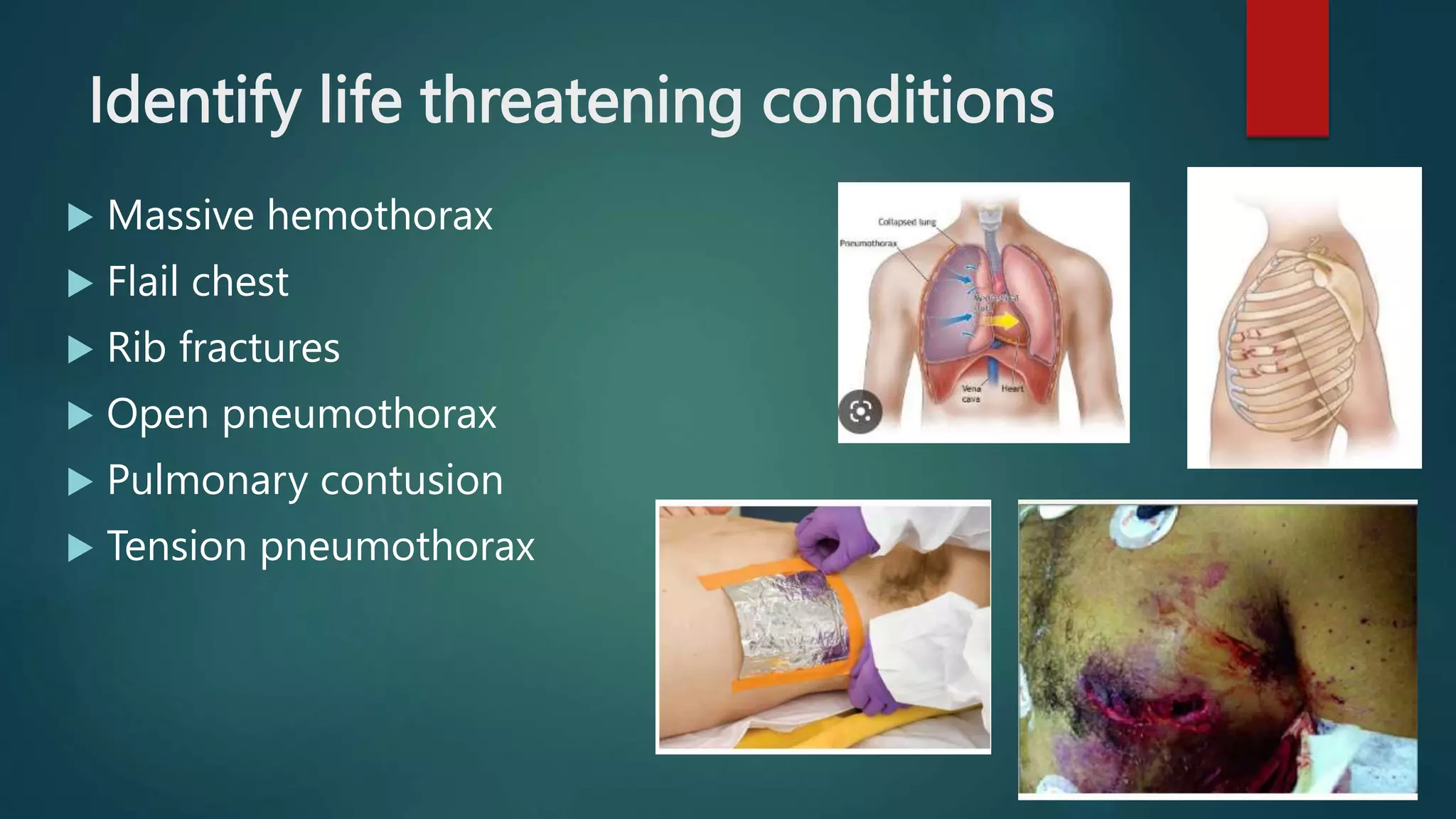
Identify life threatening conditions
 Massive hemothorax
 Flail chest
 Rib fractures
 Open pneumothorax
 Pulmonary contusion
 Tension pneumothorax
CIRCULATION WITH HEMORRHAGE CONTROL
 Bleeding control
 Apply pressure bandage
 Vascular access- 2 large bore peripheral IV cannulas
/ IO access/ CVP/ venous cut down
 2 point R/L I/V stat- 1 litre ( warm fluids)
 Blood samples withdrawn for investigation
 Blood arranged – 4-4-4
 Pregnancy test for female< 45 years of age
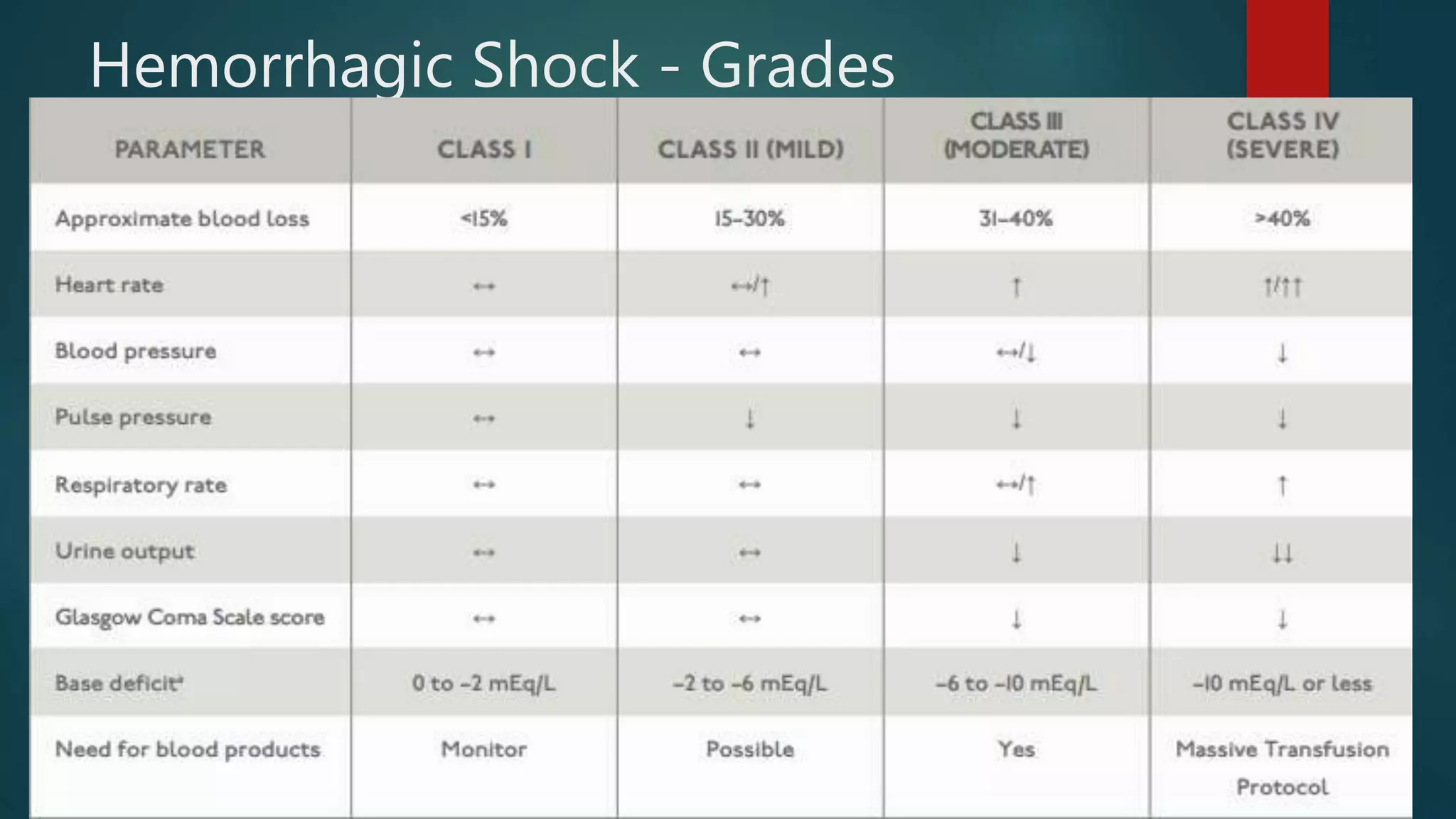
 ABG and lactate levels ( to understand the grade of shock)
 Indwelling Foleys catheter insertion
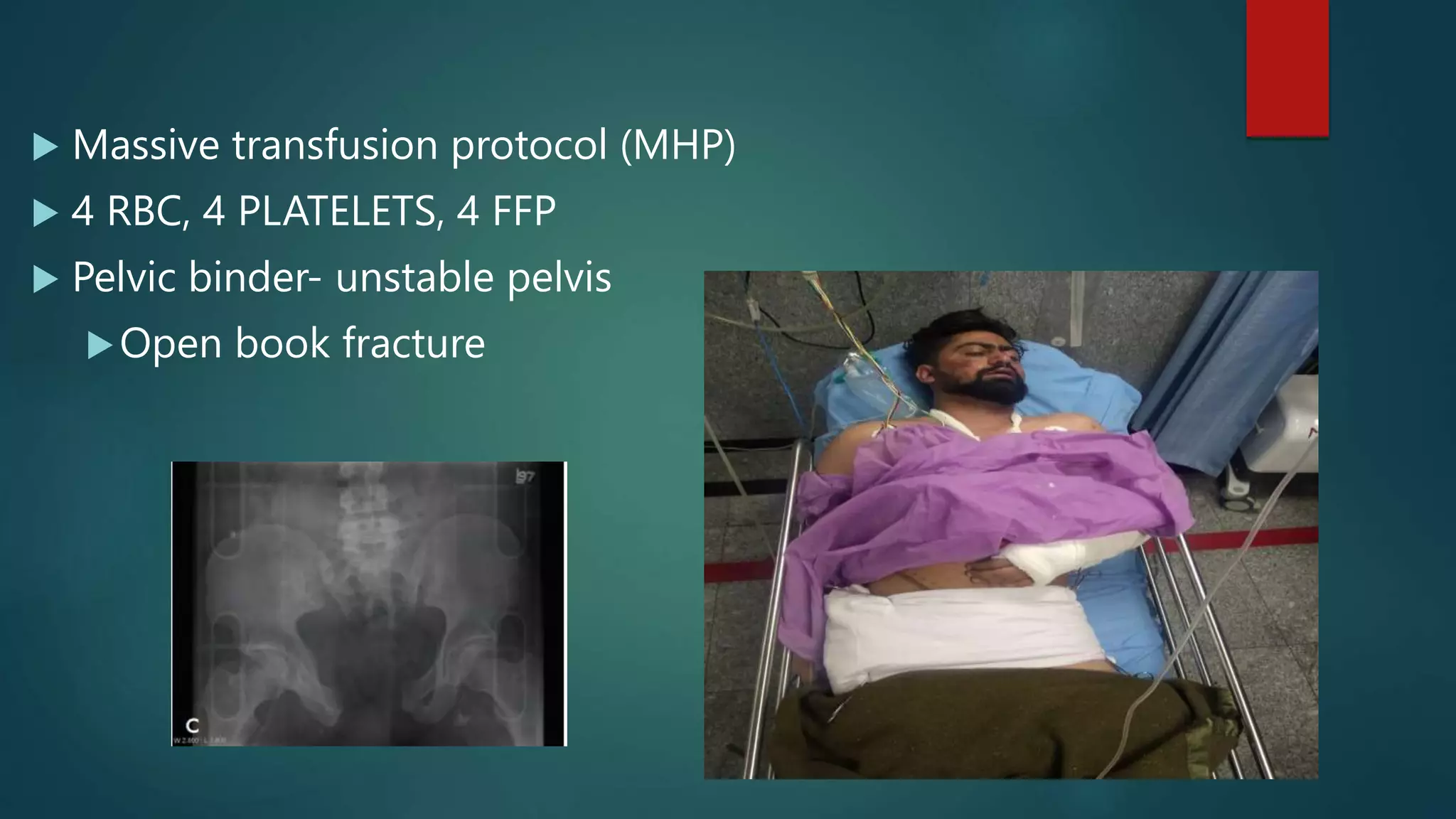
 Massive transfusion protocol (MHP)
 4 RBC, 4 PLATELETS, 4 FFP
 Pelvic binder- unstable pelvis
Open book fracture
Hemorrhagic Shock - Grades
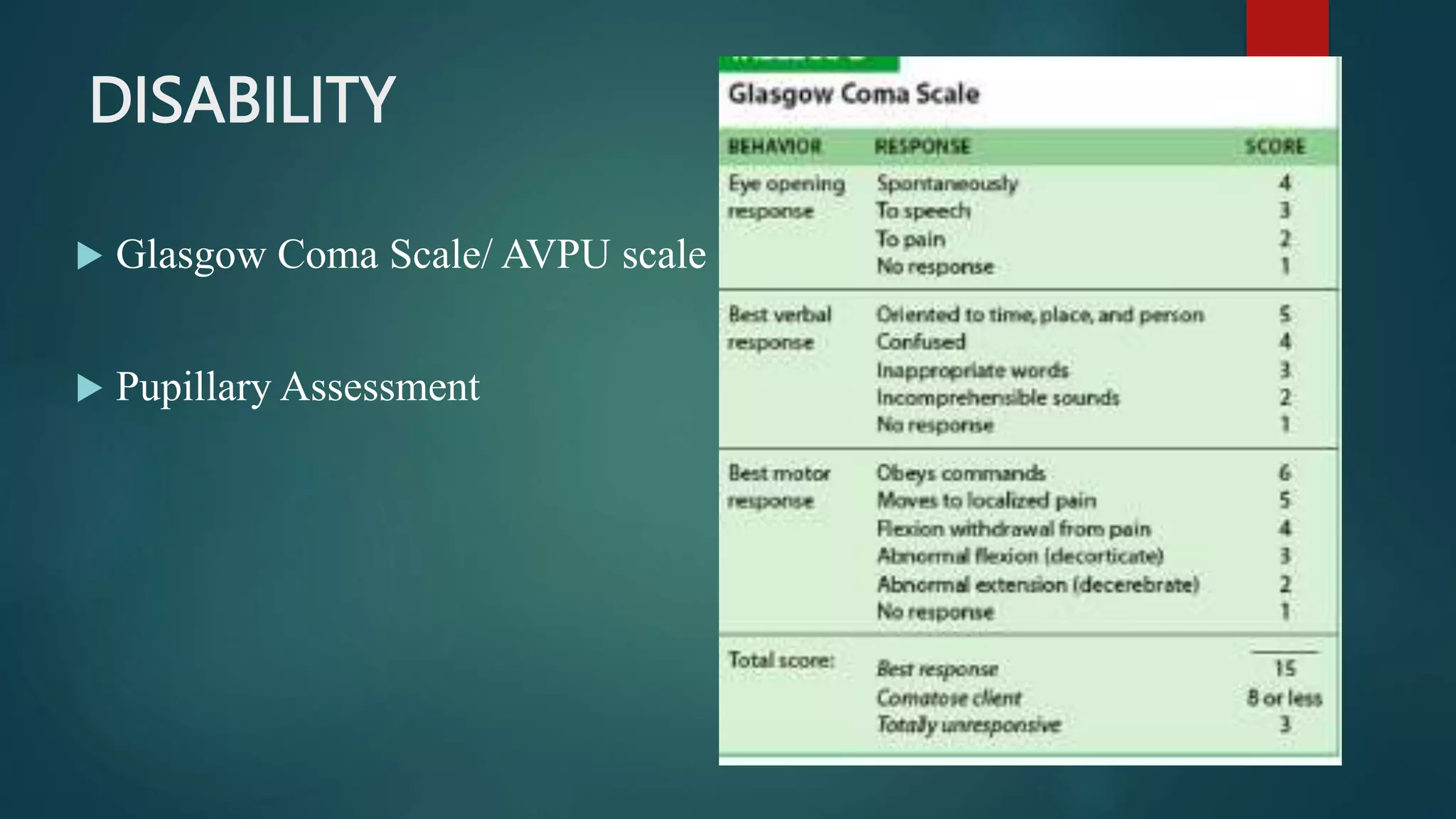
DISABILITY
 Glasgow Coma Scale/ AVPU scale
 Pupillary Assessment
Neurological trauma
Exposure
 Expose the patient
 Prevent hypothermia- blankets, Bair Hugger
warming unit
 Log roll the patient to examine back
Minimum 4 people required
Palpate thoracic and lumbar spine
Anal tone
Adjuncts to Primary Survey
 Chest X ray/ Pelvic X ray
 E- FAST
 ECG monitoring
 ABG
 Pulse oximetry
FAST:
Focused Assessment Sonography in Trauma
 Pericardium ( sub-xiphoid view)
 Peritoneal cavity
 Supra pubic
 E- FAST ( hemothorax, pneumothorax)
SECONDARY SURVEY
 Head to toe evaluation of trauma patient- Log roll
 Complete history (AMPLE)
 Reassessment of all vital signs
CECT TORSO, NCCT HEAD AND C SPINE
CT Angio
RGU
Red Area Report Book
Red area report book
YELLOW AREA
Yellow Area Patient Process Flow
Triage done by Triage Nurse
Initial assessment done by Junior Resident on duty
Initial treatment done by N2
Patient sent for hospital investigations
Patient received after investigation by N3, Reassesses and
informs N1
N1 coordinates and facilitates pts reviews from concerned departments, admission and discharge
Pain Management in ED
 Pain assessment- Visual Analogue Scale, Wong Baker Pain Scale
 Pain medications
 Opioid analgesics: Inj Fentanyl, Inj Tramadol
 NSAIDS ( Ketorolac, Inj Diclofenac )
 Inj Perfalgan
 Inj Ketamine
 Nerve blocks- Femoral Nerve Block, Intercostal Nerve Block
CONCLUSION
 Nurses play a vital role in management of trauma patient
 Trauma nurses must have adequate expertise in the field for better
management of the patient
 Regular CNE programs to be arranged
 SIMULATIONS AND MOCK DRILLS
REFERENCES
 1. ATLS 10TH EDITION
 https://www.ncbi.nlm.nih.gov/books/NBK555913/
 https://www.ncbi.nlm.nih.gov/books/NBK430854/
2. Revathi Nair.pptx

2. Revathi Nair.pptx

  • 1.
    TRAUMA NURSING- CLINICAL PEARLS BY REVATHYS NAIR TRAUMA NURSE COORDINATOR JPNATC, AIIMS NEW DELHI
  • 2.
    TRAUMA  A harmfulevent that results from the release of specific form of energy.  Penetrating- Stab, gunshots  Blunt- MVCs, falls  Thermal injuries
  • 3.
    TRAUMA NURSING  Traumanursing, as a discipline, refers to the varied roles nurses assume when caring for a trauma patient.  Skillful and competent, pace  Leadership  Critical thinking  Communication  coordination
  • 4.
    TRIAGE • RED,YELLOW, GREEN AND BLACK PRIMARY SURVEY • RESUSCITATION (ABCDE) SECONDARY SURVEY • NCCT, CECT TORSO STABILIZATION TRANSFER FOR DEFINITIVE CARE OVERVIEW OF TRAUMA MANAGEMENT
  • 5.
  • 6.
    Goal of Triage PLACETHE RIGHT PATIENT IN RIGHT PLACE AT RIGHT TIME FOR RIGHT REASON TRIAGE
  • 7.
    AIIMS TRAIGE PROTOCOL Physiologicalparameters • BP, HR, SPO2, GLASCOW COMA SCALE Injuries identified • Seat belt sign • Steering wheel inury, open fracture, vascular injury Mechanism of injury • Co passenger dead, overturn or turnover • Pedestrian hit with car
  • 8.
    TRIAGING DONE BYNURSES ( TRIAGE OFFICER) Pelvic compression test Chest compression test
  • 9.
  • 10.
  • 13.
    INITIAL ASSESSMENT AND MANAGEMENT PRIMARY SURVEY  AIRWAY  BREATHING  CIRCULATION  DISABILITY  EXPOSURE  SECONDARY SURVEY
  • 14.
    PRIMARY SURVEY 1. CERVICALCOLLAR APPLICATION 2. PATIENT SHIFTED TO RED AREA RESUSCITATION TROLLEY 3. CALL GIVEN TO RADIOLOGIST FOR POCUS ( POINT OF CARE ULTRASOUND- FAST )
  • 15.
    AIRWAY MANAGEMENT  Areyou okay?  Complete sentence spoken by patient-  Airway is patent  Breathing is intact  Cerebral circulation in good
  • 16.
    AIRWAY MANAGEMENT  Airwaypatency  Suctioning of secretions  Chin lift/ jaw thrust  Oropharyngeal airway  Airway support  Non rebreather mask oxygen administration  Definitive airway ( GCS< 8) - head injury, facial burns  Endotracheal intubation  Surgical cricothyroidotomy
  • 17.
    BREATHING MANAGEMENT  INSPECTION Trachealdeviation Accessory muscle use Retractions Paradoxical chest wall movement  AUSCULTATION  Diminished or absent breath sounds  PALPATION  Broken ribs  Injuries to chest wall
  • 18.
    Identify life threateningconditions  Massive hemothorax  Flail chest  Rib fractures  Open pneumothorax  Pulmonary contusion  Tension pneumothorax
  • 19.
    CIRCULATION WITH HEMORRHAGECONTROL  Bleeding control  Apply pressure bandage  Vascular access- 2 large bore peripheral IV cannulas / IO access/ CVP/ venous cut down  2 point R/L I/V stat- 1 litre ( warm fluids)  Blood samples withdrawn for investigation  Blood arranged – 4-4-4  Pregnancy test for female< 45 years of age  ABG and lactate levels ( to understand the grade of shock)  Indwelling Foleys catheter insertion
  • 20.
     Massive transfusionprotocol (MHP)  4 RBC, 4 PLATELETS, 4 FFP  Pelvic binder- unstable pelvis Open book fracture
  • 21.
  • 22.
    DISABILITY  Glasgow ComaScale/ AVPU scale  Pupillary Assessment
  • 23.
  • 24.
    Exposure  Expose thepatient  Prevent hypothermia- blankets, Bair Hugger warming unit  Log roll the patient to examine back Minimum 4 people required Palpate thoracic and lumbar spine Anal tone
  • 25.
    Adjuncts to PrimarySurvey  Chest X ray/ Pelvic X ray  E- FAST  ECG monitoring  ABG  Pulse oximetry
  • 26.
    FAST: Focused Assessment Sonographyin Trauma  Pericardium ( sub-xiphoid view)  Peritoneal cavity  Supra pubic  E- FAST ( hemothorax, pneumothorax)
  • 27.
    SECONDARY SURVEY  Headto toe evaluation of trauma patient- Log roll  Complete history (AMPLE)  Reassessment of all vital signs CECT TORSO, NCCT HEAD AND C SPINE CT Angio RGU
  • 28.
  • 29.
  • 30.
  • 31.
    Yellow Area PatientProcess Flow Triage done by Triage Nurse Initial assessment done by Junior Resident on duty Initial treatment done by N2 Patient sent for hospital investigations Patient received after investigation by N3, Reassesses and informs N1 N1 coordinates and facilitates pts reviews from concerned departments, admission and discharge
  • 32.
    Pain Management inED  Pain assessment- Visual Analogue Scale, Wong Baker Pain Scale  Pain medications  Opioid analgesics: Inj Fentanyl, Inj Tramadol  NSAIDS ( Ketorolac, Inj Diclofenac )  Inj Perfalgan  Inj Ketamine  Nerve blocks- Femoral Nerve Block, Intercostal Nerve Block
  • 33.
    CONCLUSION  Nurses playa vital role in management of trauma patient  Trauma nurses must have adequate expertise in the field for better management of the patient  Regular CNE programs to be arranged  SIMULATIONS AND MOCK DRILLS
  • 34.
    REFERENCES  1. ATLS10TH EDITION  https://www.ncbi.nlm.nih.gov/books/NBK555913/  https://www.ncbi.nlm.nih.gov/books/NBK430854/