Grid Computing:
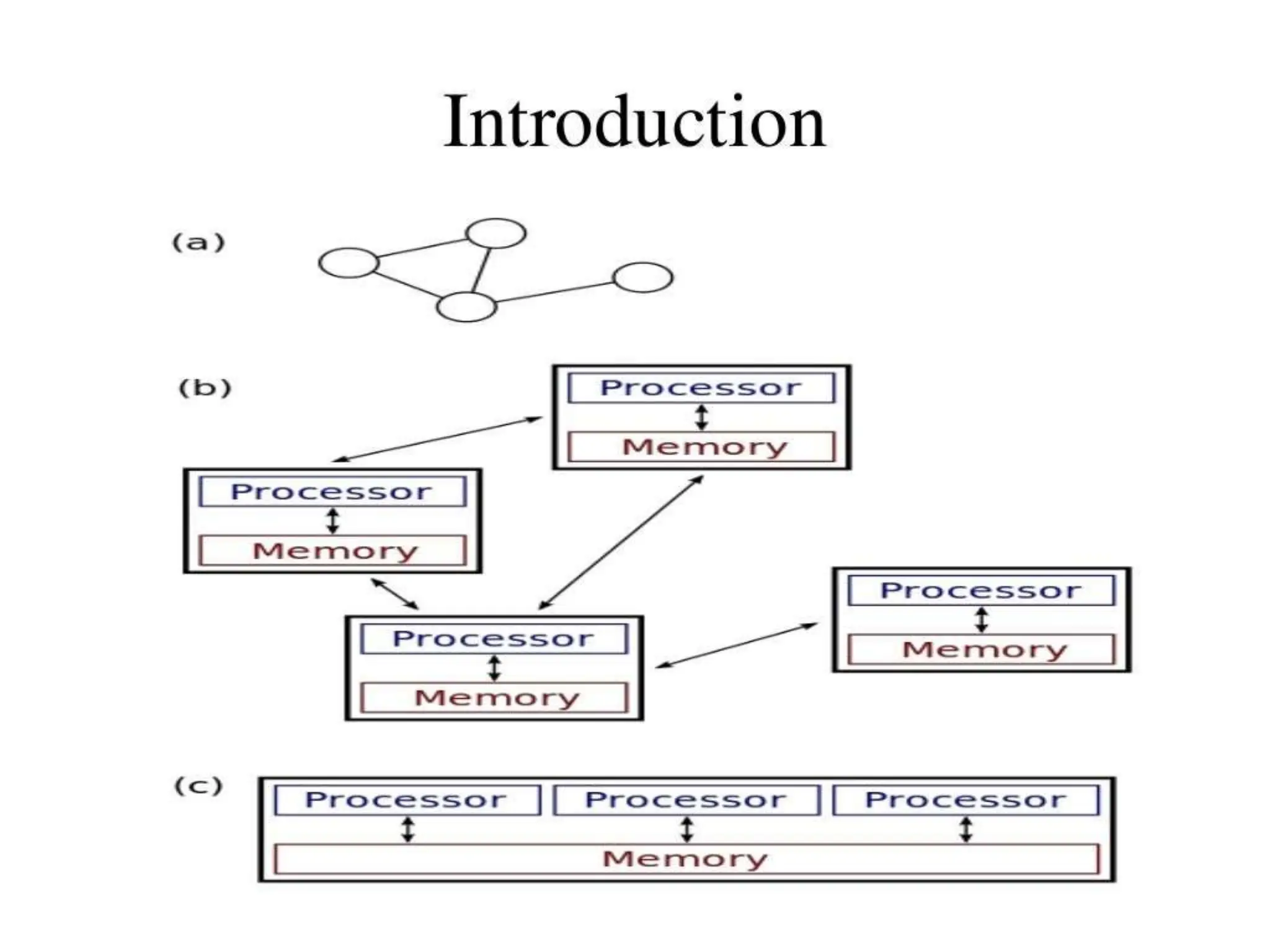
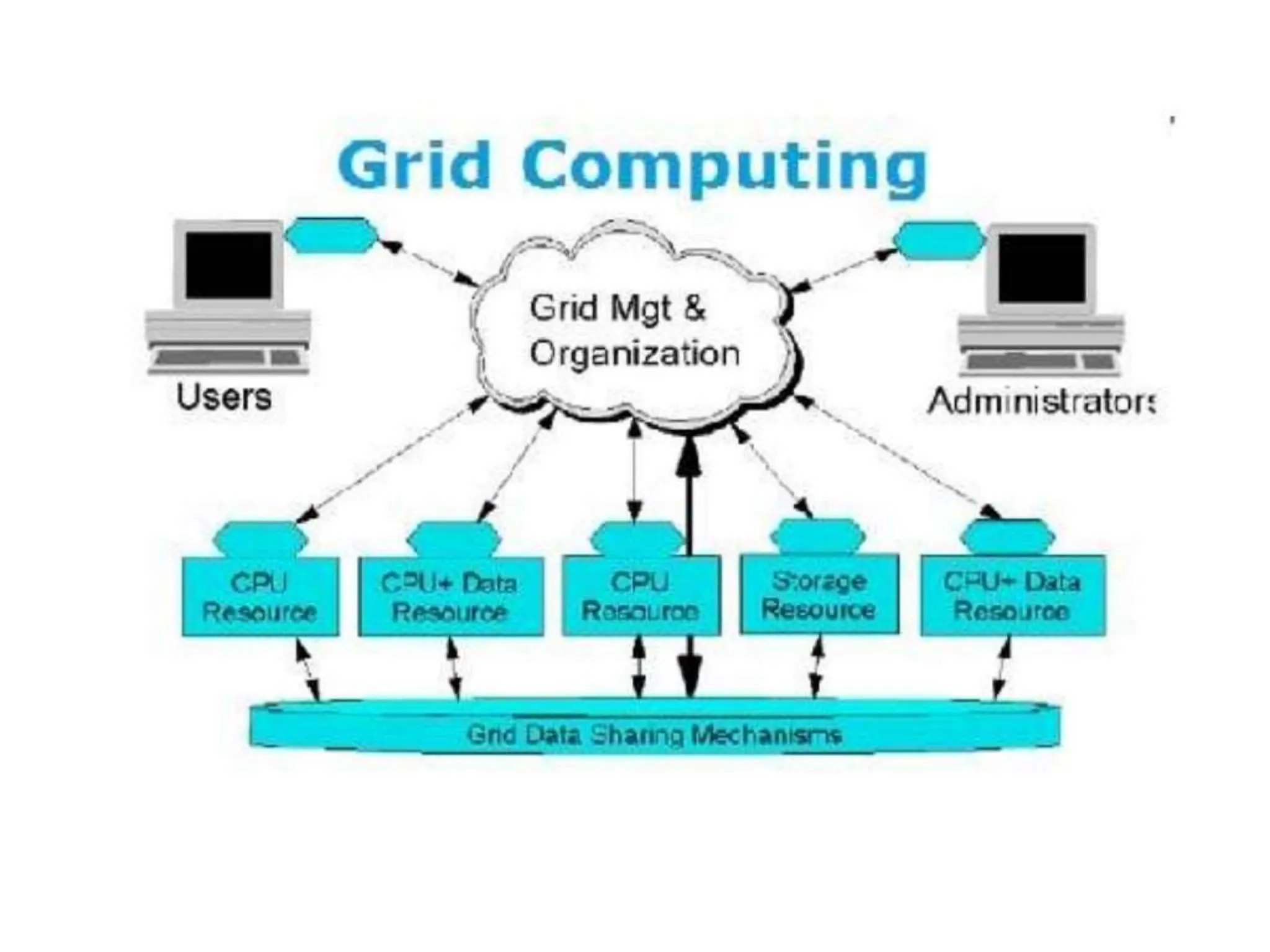
Grid Computing can be defined as a
network of homogeneous or
heterogeneous computers working
together over a long distance to
perform a task that would rather be
difficult for a single machine.
Cluster Computing:
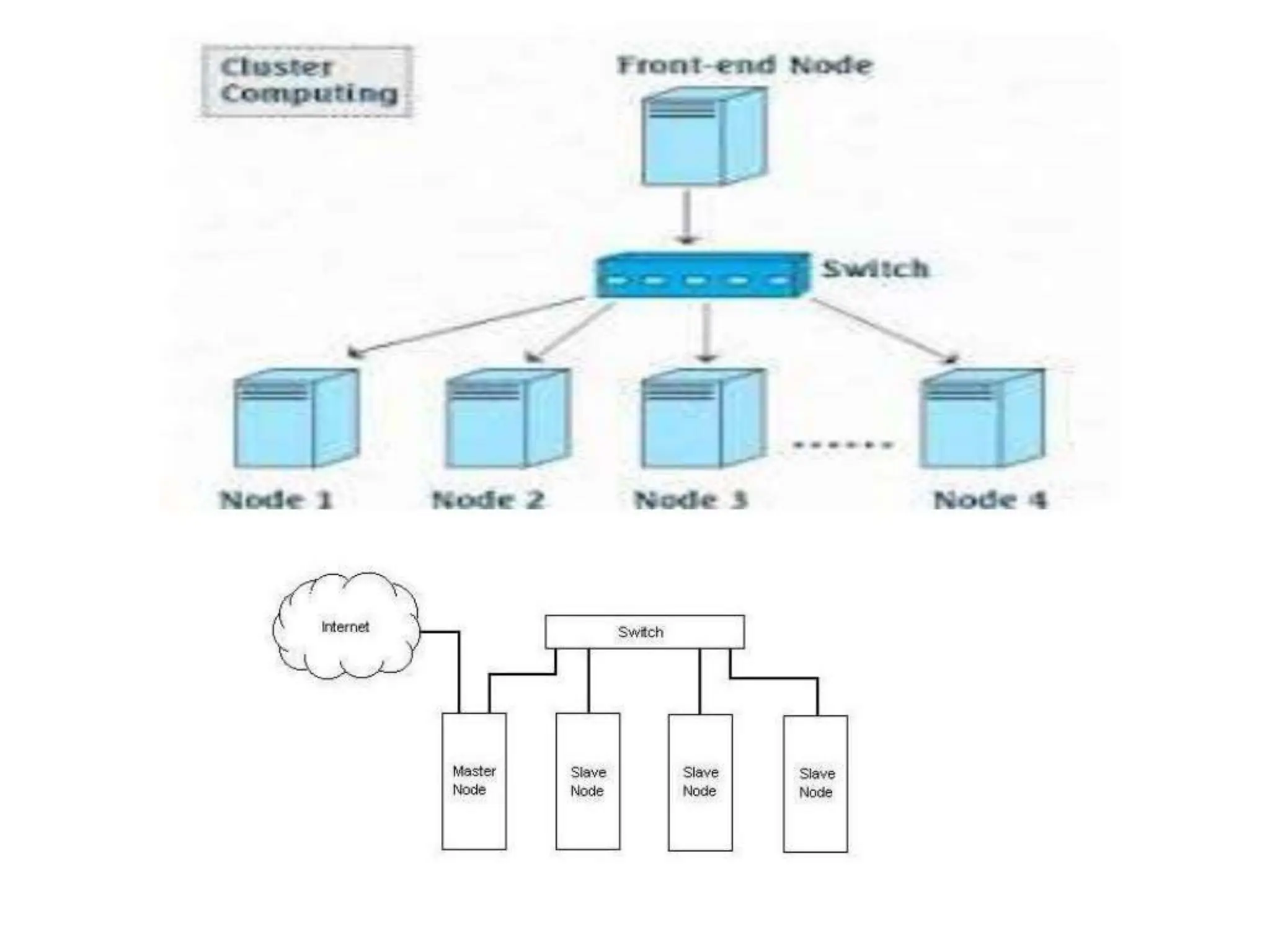
A Computer Cluster is a local
network of two or more
homogeneous computers.
A computation process on such a
computer network i.e. cluster is
called Cluster Computing.
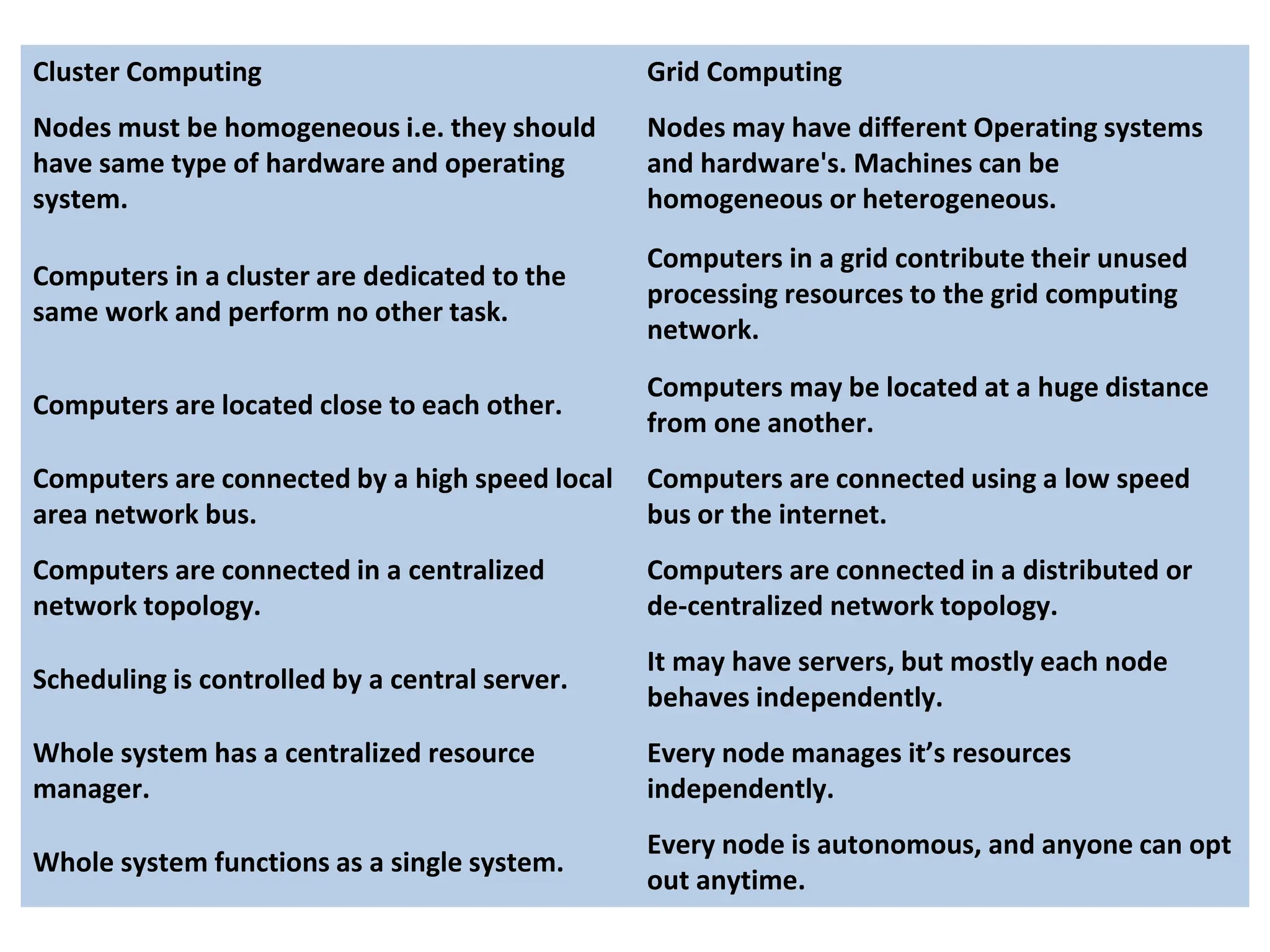
Cluster Computing Grid Computing
Nodes must be homogeneous i.e. they should
have same type of hardware and operating
system.
Nodes may have different Operating systems
and hardware's. Machines can be
homogeneous or heterogeneous.
Computers in a cluster are dedicated to the
same work and perform no other task.
Computers in a grid contribute their unused
processing resources to the grid computing
network.
Computers are located close to each other.
Computers may be located at a huge distance
from one another.
Computers are connected by a high speed local
area network bus.
Computers are connected using a low speed
bus or the internet.
Computers are connected in a centralized
network topology.
Computers are connected in a distributed or
de-centralized network topology.
Scheduling is controlled by a central server.
It may have servers, but mostly each node
behaves independently.
Whole system has a centralized resource
manager.
Every node manages it’s resources
independently.
Whole system functions as a single system.
Every node is autonomous, and anyone can opt
out anytime.
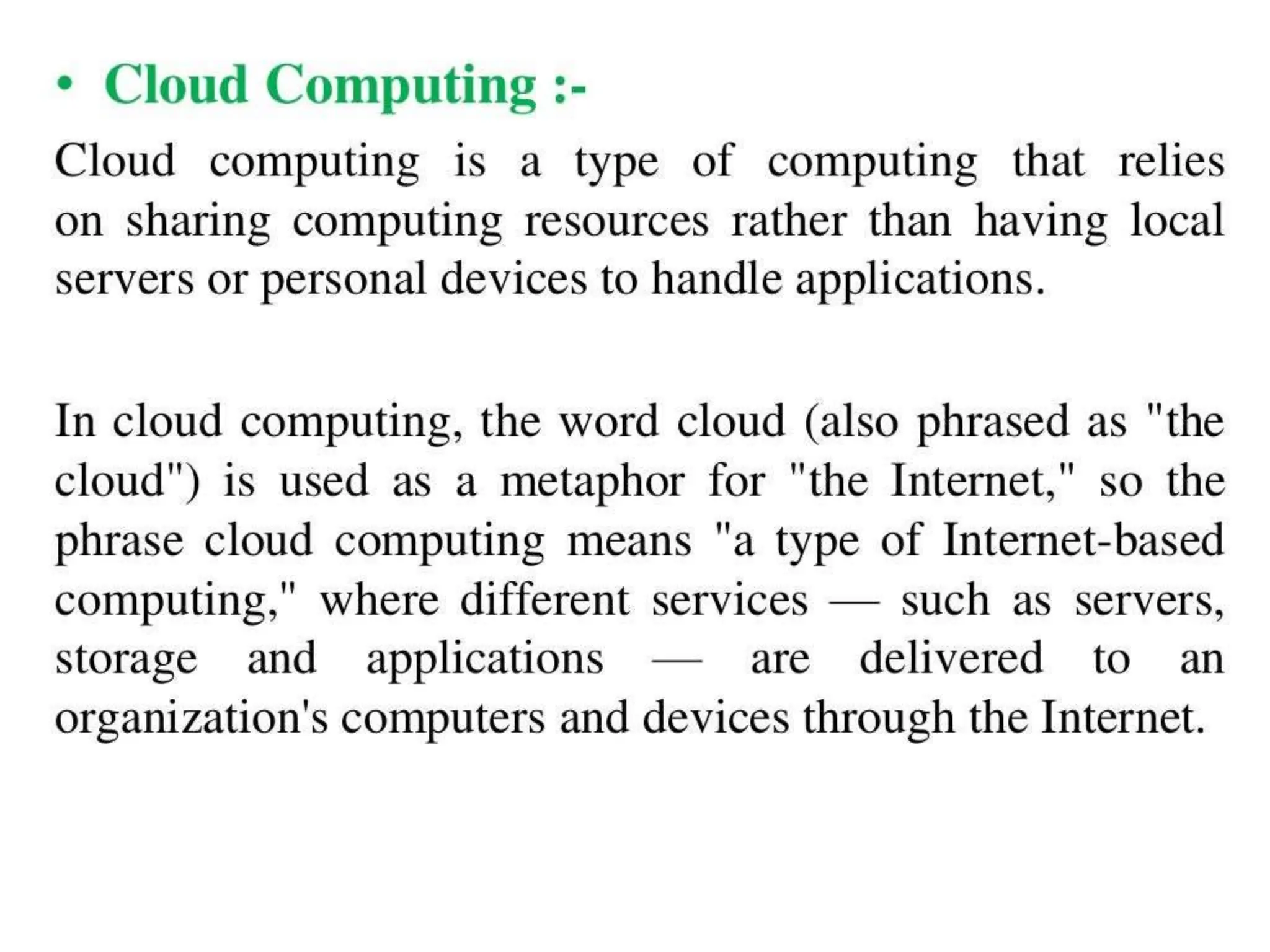
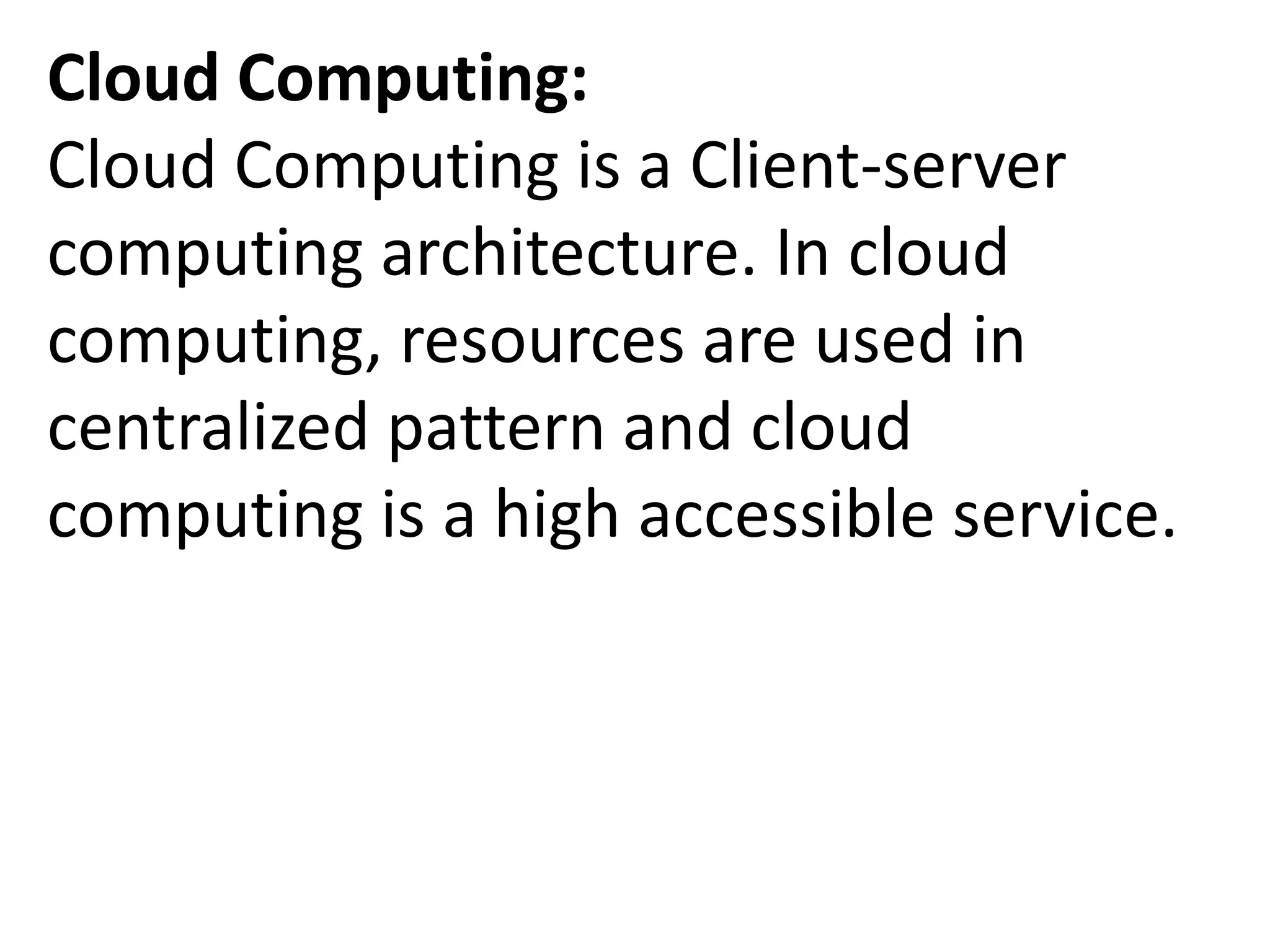
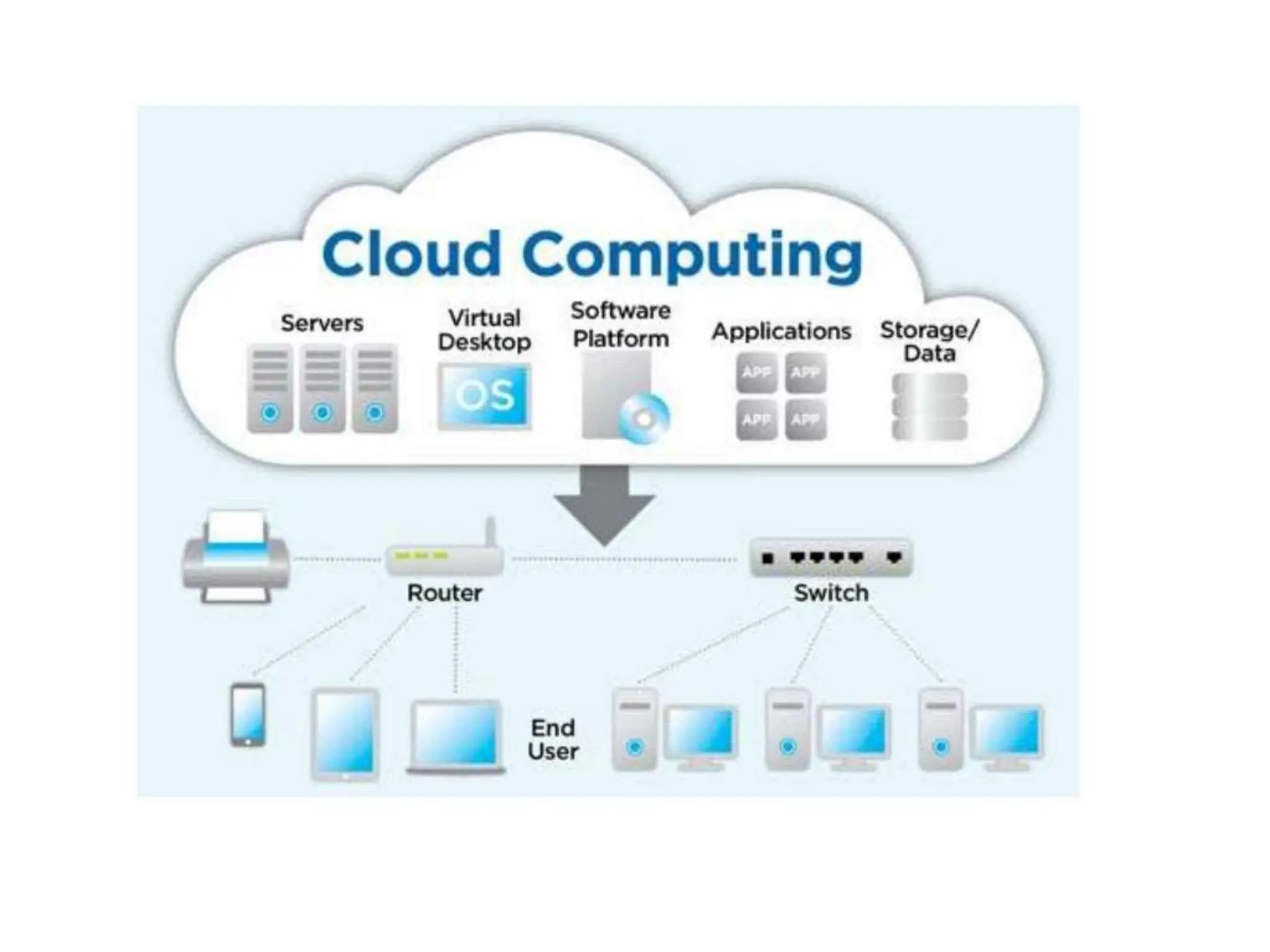
Cloud Computing:
Cloud Computing is a Client-server
computing architecture. In cloud
computing, resources are used in
centralized pattern and cloud
computing is a high accessible service.
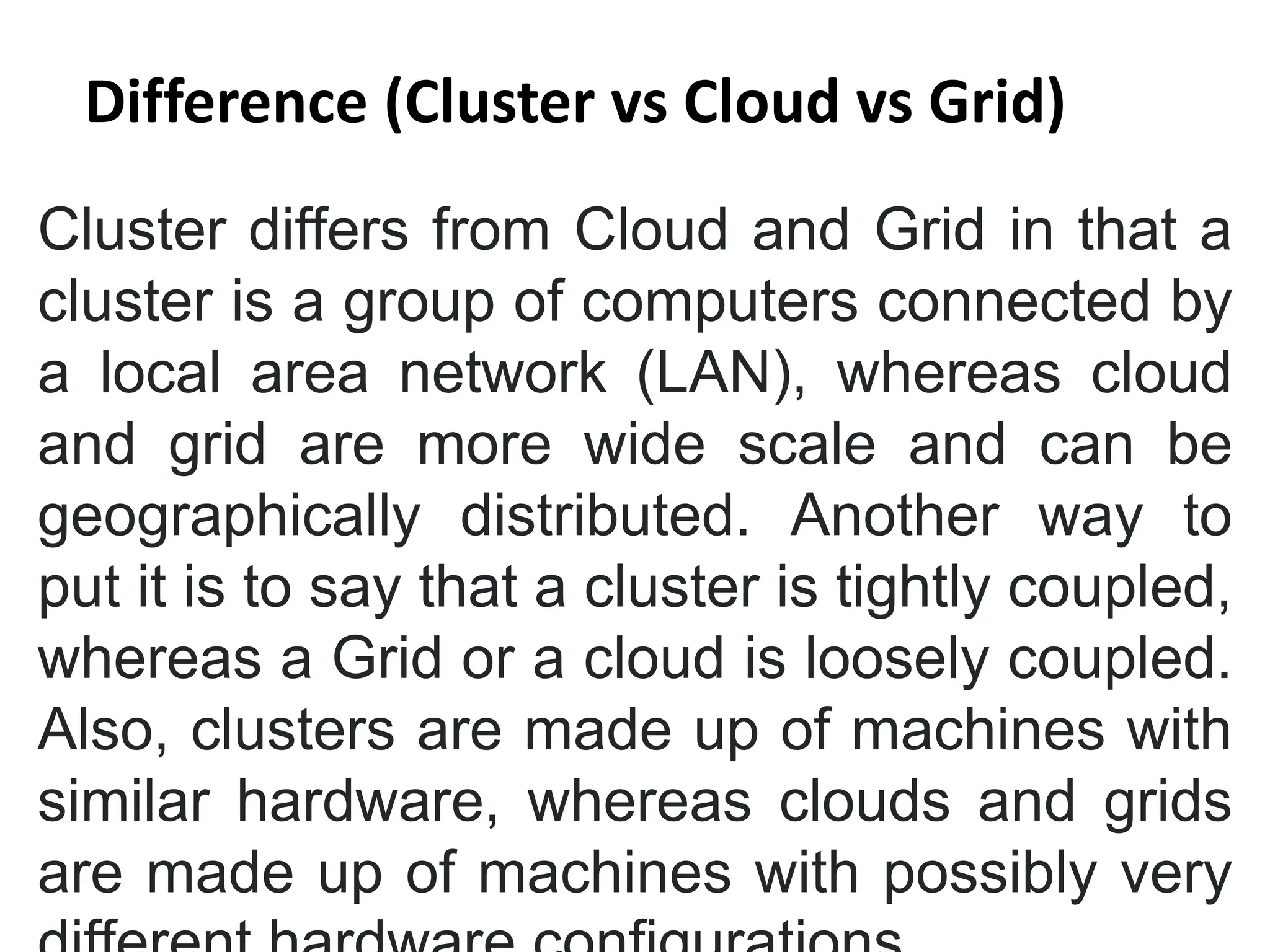
Cluster differs from Cloud and Grid in that a
cluster is a group of computers connected by
a local area network (LAN), whereas cloud
and grid are more wide scale and can be
geographically distributed. Another way to
put it is to say that a cluster is tightly coupled,
whereas a Grid or a cloud is loosely coupled.
Also, clusters are made up of machines with
similar hardware, whereas clouds and grids
are made up of machines with possibly very
Difference (Cluster vs Cloud vs Grid)
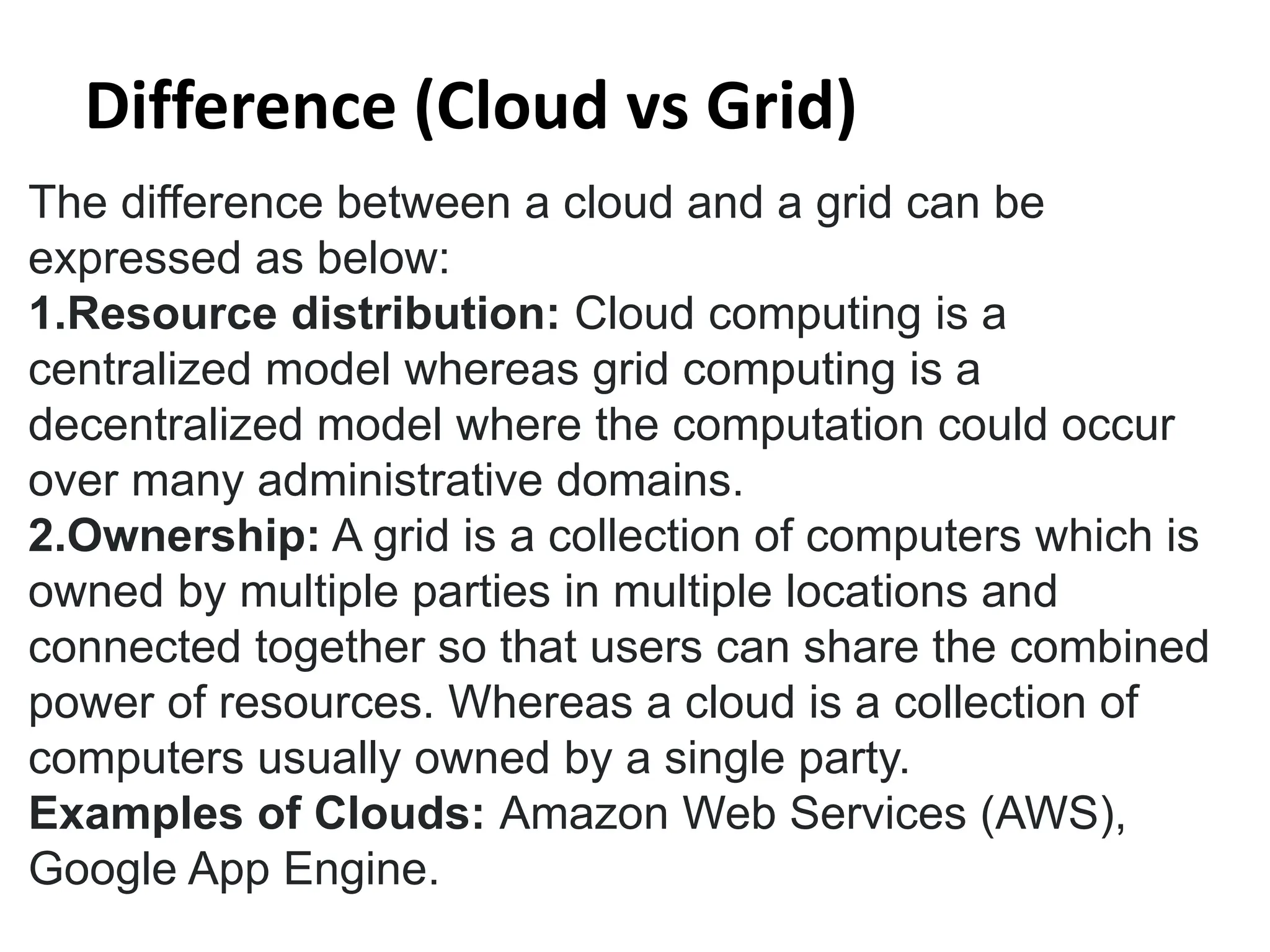
The difference between a cloud and a grid can be
expressed as below:
1.Resource distribution: Cloud computing is a
centralized model whereas grid computing is a
decentralized model where the computation could occur
over many administrative domains.
2.Ownership: A grid is a collection of computers which is
owned by multiple parties in multiple locations and
connected together so that users can share the combined
power of resources. Whereas a cloud is a collection of
computers usually owned by a single party.
Examples of Clouds: Amazon Web Services (AWS),
Google App Engine.
Difference (Cloud vs Grid)
1-Overview of Distributed Computing.pptx

1-Overview of Distributed Computing.pptx

  • 12.
    Grid Computing: Grid Computingcan be defined as a network of homogeneous or heterogeneous computers working together over a long distance to perform a task that would rather be difficult for a single machine.
  • 15.
    Cluster Computing: A ComputerCluster is a local network of two or more homogeneous computers. A computation process on such a computer network i.e. cluster is called Cluster Computing.
  • 17.
    Cluster Computing GridComputing Nodes must be homogeneous i.e. they should have same type of hardware and operating system. Nodes may have different Operating systems and hardware's. Machines can be homogeneous or heterogeneous. Computers in a cluster are dedicated to the same work and perform no other task. Computers in a grid contribute their unused processing resources to the grid computing network. Computers are located close to each other. Computers may be located at a huge distance from one another. Computers are connected by a high speed local area network bus. Computers are connected using a low speed bus or the internet. Computers are connected in a centralized network topology. Computers are connected in a distributed or de-centralized network topology. Scheduling is controlled by a central server. It may have servers, but mostly each node behaves independently. Whole system has a centralized resource manager. Every node manages it’s resources independently. Whole system functions as a single system. Every node is autonomous, and anyone can opt out anytime.
  • 19.
    Cloud Computing: Cloud Computingis a Client-server computing architecture. In cloud computing, resources are used in centralized pattern and cloud computing is a high accessible service.
  • 21.
    Cluster differs fromCloud and Grid in that a cluster is a group of computers connected by a local area network (LAN), whereas cloud and grid are more wide scale and can be geographically distributed. Another way to put it is to say that a cluster is tightly coupled, whereas a Grid or a cloud is loosely coupled. Also, clusters are made up of machines with similar hardware, whereas clouds and grids are made up of machines with possibly very Difference (Cluster vs Cloud vs Grid)
  • 22.
    The difference betweena cloud and a grid can be expressed as below: 1.Resource distribution: Cloud computing is a centralized model whereas grid computing is a decentralized model where the computation could occur over many administrative domains. 2.Ownership: A grid is a collection of computers which is owned by multiple parties in multiple locations and connected together so that users can share the combined power of resources. Whereas a cloud is a collection of computers usually owned by a single party. Examples of Clouds: Amazon Web Services (AWS), Google App Engine. Difference (Cloud vs Grid)