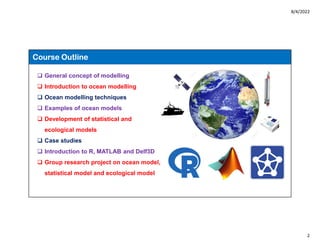
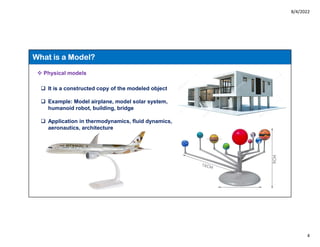
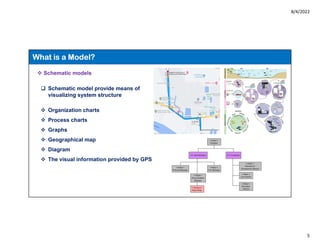
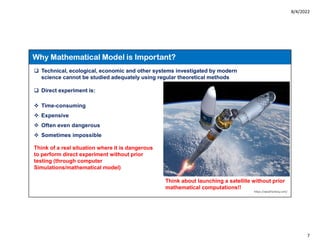
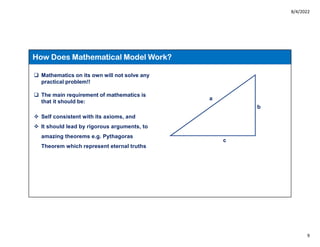
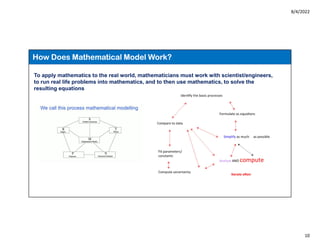
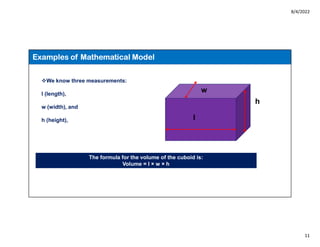
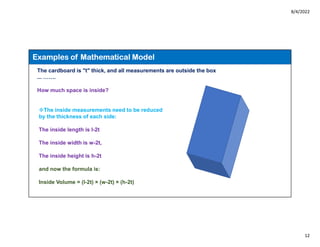
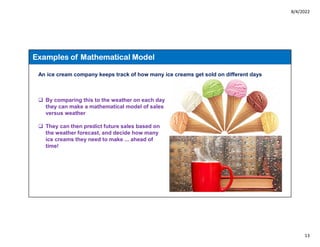
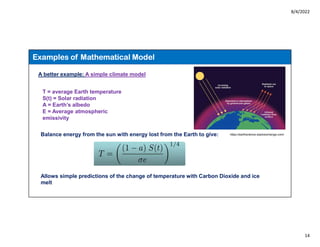
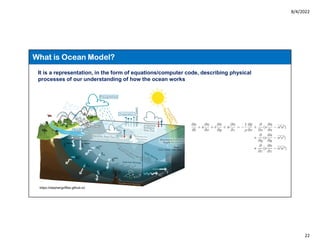
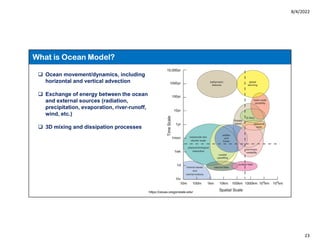
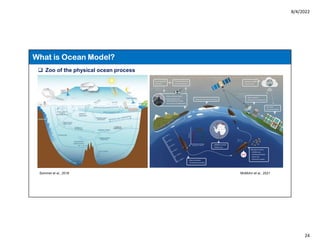
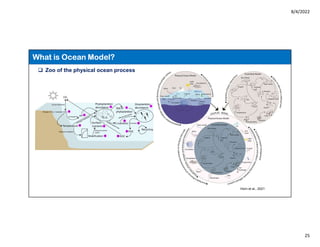
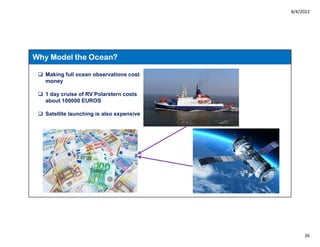
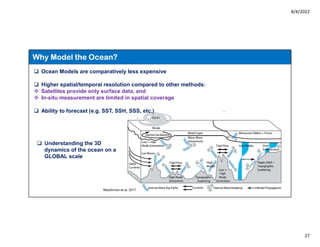
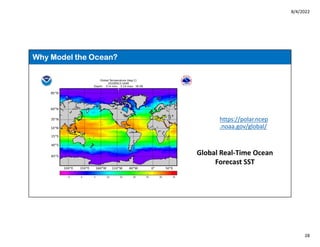
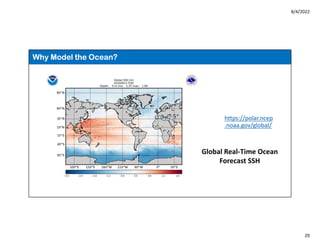
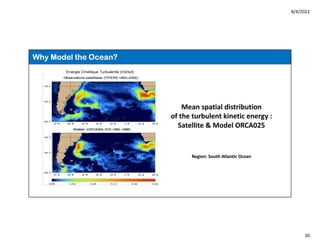
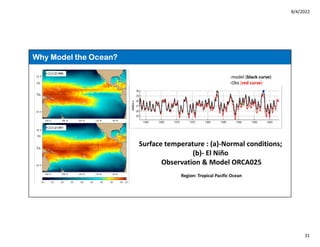
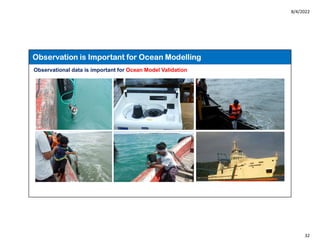
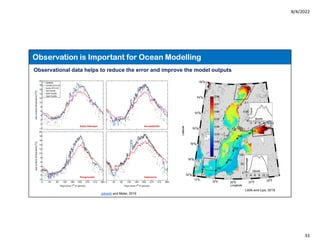
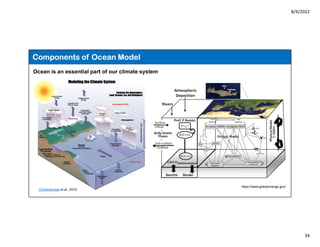
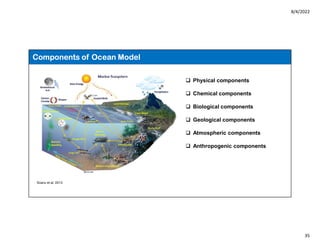
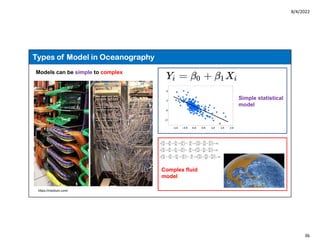
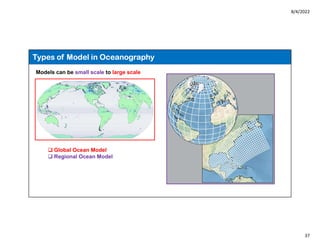
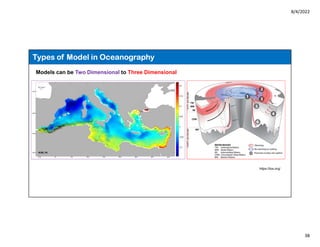
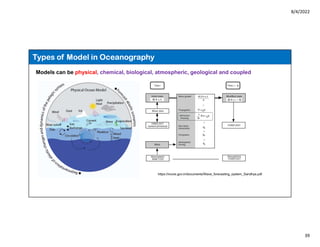
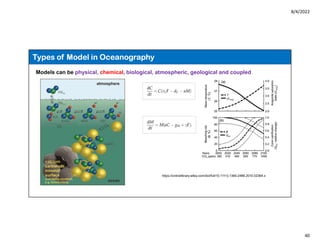
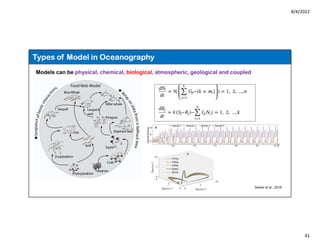
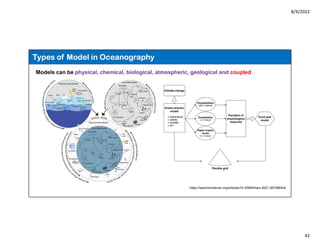
This document outlines the course for Ocean Modelling. It begins with definitions of models, including physical, schematic, and mathematical models. It discusses how mathematical models work by representing real-world phenomena using equations and allowing analysis, predictions, and insights. Examples are provided of common mathematical models. Ocean models are introduced as representations of physical ocean processes using equations. The importance of ocean models is that they allow studying the ocean at higher resolutions than observations alone. Components of ocean models can include physical, chemical, biological, atmospheric and other factors. Different types of ocean models are distinguished by their scales, dimensions, topics modeled, and whether they are coupled or not. Observation data is also emphasized as important for validating and improving ocean models.






![OVERVIEW OF THE OIL & GAS EXPLORATION AND [Autosaved]](https://cdn.slidesharecdn.com/ss_thumbnails/f980b2ed-b37b-4c91-b049-14cec3820fe3-150826222206-lva1-app6891-thumbnail.jpg?width=640&height=640&fit=bounds)


