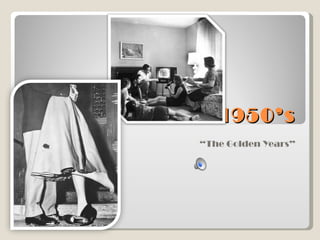
1950 ’s “ The Golden Years”
Eisenhower as President Promised a “middle course” Helped to make a time of growth and prosperity Ike kept most new deal programs created the Depts. of Health, Education, and Welfare increased minimum wage expanded social security
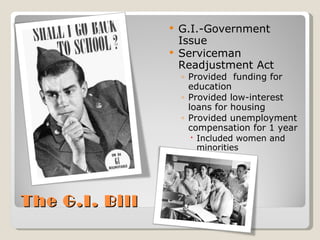
The G.I. Bill G.I.-Government Issue Serviceman Readjustment Act Provided  funding for education Provided low-interest loans for housing Provided unemployment compensation for 1 year Included women and minorities
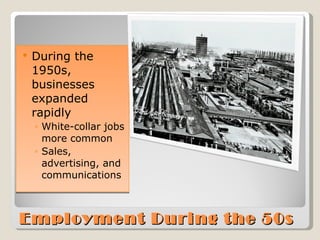
Employment During the 50s During the 1950s, businesses expanded rapidly White-collar jobs more common Sales, advertising, and communications
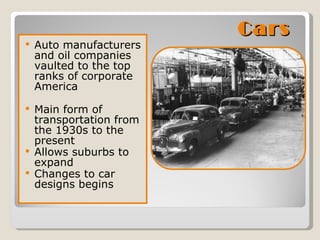
Cars   Auto manufacturers and oil companies vaulted to the top ranks of corporate America  Main form of transportation from the 1930s to the present Allows suburbs to expand Changes to car designs begins
Interstate Highway Act of 1956 Largest public works project in American history Cost $32 billion. 41,000 mi les of new highways built
Interstate Highway Act of 1956
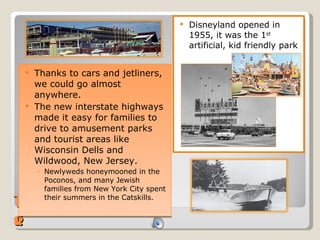
Traveling Disneyland opened in 1955, it was the 1 st  artificial, kid friendly park Thanks to cars and jetliners, we could go almost anywhere.  The new interstate highways made it easy for families to drive to amusement parks and tourist areas like Wisconsin Dells and Wildwood, New Jersey.  Newlyweds honeymooned in the Poconos, and many Jewish families from New York City spent their summers in the Catskills.
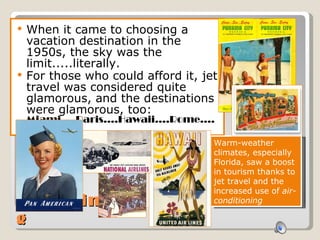
Traveling When it came to choosing a vacation destination in the 1950s, the sky was the limit.....literally.  For those who could afford it, jet travel was considered quite glamorous, and the destinations were glamorous, too:  Miami....Paris....Hawaii....Rome....Havana Warm-weather climates, especially Florida, saw a boost in tourism thanks to jet travel and the increased use of  air-conditioning
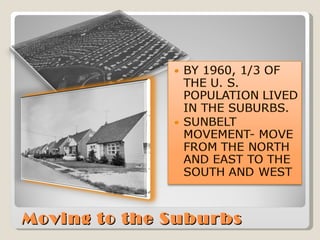
Moving to the Suburbs
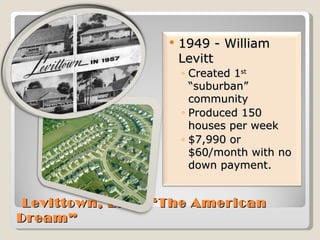
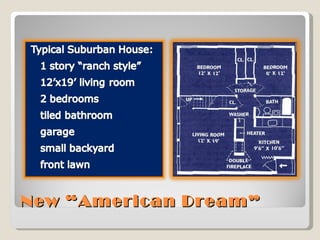
  Levittown, L. I.: “The American Dream” 1949 - William Levitt  Created 1 st  “suburban” community Produced 150 houses per week $7,990 or $60/month with no down payment.
New “American Dream”
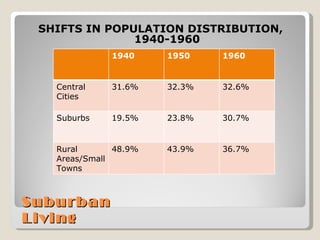
Suburban Living SHIFTS IN POPULATION DISTRIBUTION,  1940-1960 1940 1950 1960 Central Cities 31.6% 32.3% 32.6% Suburbs 19.5% 23.8% 30.7% Rural Areas/Small Towns 48.9% 43.9% 36.7%
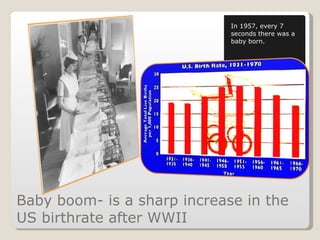
Baby boom- is a sharp increase in the US birthrate after WWII In 1957, every 7 seconds there was a baby born.
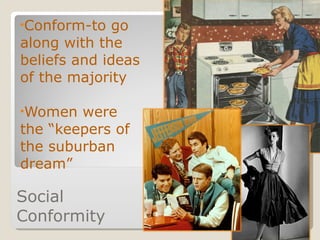
Social Conformity Conform-to go along with the beliefs and ideas of the majority Women were the “keepers of the suburban dream”
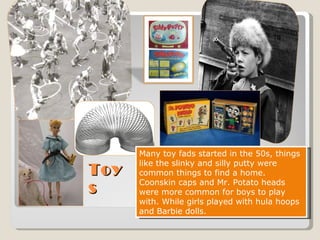
Toys Many toy fads started in the 50s, things like the slinky and silly putty were common things to find a home. Coonskin caps and Mr. Potato heads were more common for boys to play with. While girls played with hula hoops and Barbie dolls.
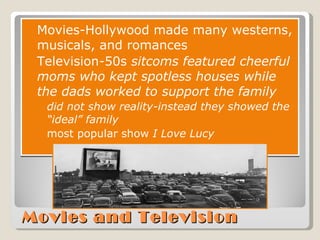
Movies and Television Movies-Hollywood made many westerns, musicals, and romances Television - 50s  sitcoms featured cheerful moms who kept spotless houses while the dads worked to support the family did not show reality-instead they showed the “ideal” family most popular show  I Love Lucy
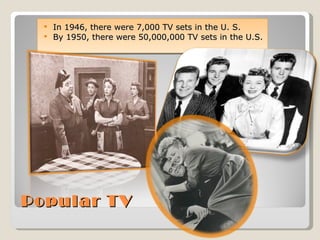
Popular TV In 1946, there were 7,000 TV sets in the U. S. By 1950, there were 50,000,000 TV sets in the U.S.
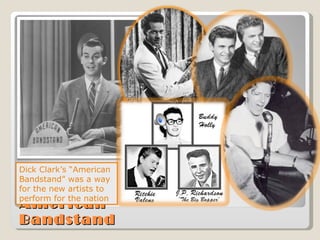
American Bandstand Dick Clark’s “American Bandstand” was a way for the new artists to perform for the nation
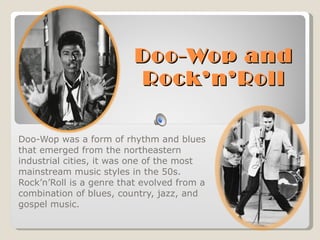
Doo-Wop and Rock’n’Roll Doo-Wop was a form of rhythm and blues that emerged from the northeastern industrial cities, it was one of the most mainstream music styles in the 50s. Rock’n’Roll is a genre that evolved from a combination of blues, country, jazz, and gospel music.
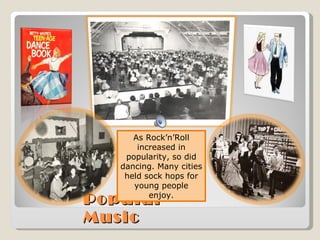
Popular Music  As Rock’n’Roll increased in popularity, so did dancing. Many cities held sock hops for young people enjoy.
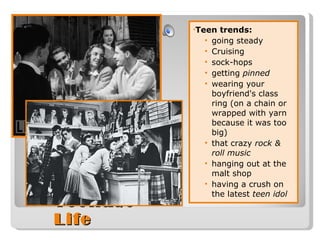
Teenage Life  Teen trends: going steady Cruising sock-hops getting  pinned wearing your boyfriend's class ring (on a chain or wrapped with yarn because it was too big) that crazy  rock & roll music hanging out at the malt shop having a crush on the latest  teen idol
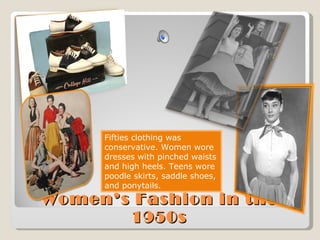
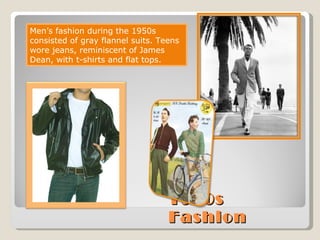
Women’s Fashion in the 1950s Fifties clothing was conservative. Women wore dresses with pinched waists and high heels. Teens wore poodle skirts, saddle shoes, and ponytails.
1950s Fashion Men’s fashion during the 1950s consisted of gray flannel suits. Teens wore jeans, reminiscent of James Dean, with t-shirts and flat tops.
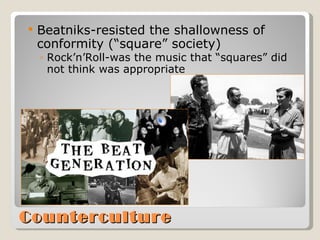
Counterculture Beatniks-resisted the shallowness of conformity (“square” society) Rock’n’Roll-was the music that “squares” did not think was appropriate
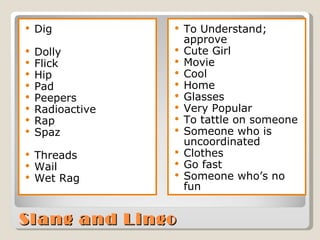
Slang and Lingo Dig Dolly Flick Hip Pad Peepers Radioactive Rap Spaz Threads Wail Wet Rag To Understand; approve Cute Girl Movie Cool Home Glasses Very Popular To tattle on someone Someone who is uncoordinated Clothes Go fast Someone who’s no fun
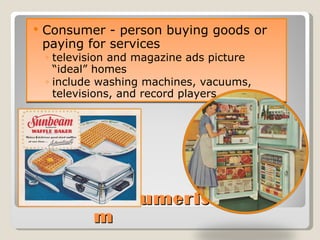
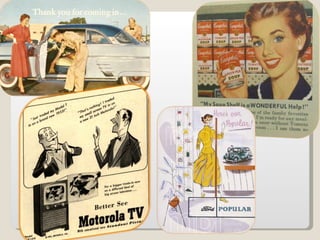
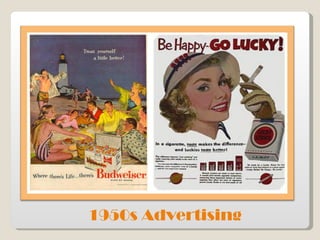
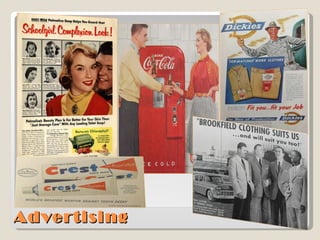
Consumerism Consumer - person buying goods or paying for services television and magazine ads picture “ideal” homes include washing machines, vacuums, televisions, and record players
 
1950s Advertising
1950s Advertising

1950s popculture

  • 1.
    1950 ’s “The Golden Years”
  • 2.
    Eisenhower as PresidentPromised a “middle course” Helped to make a time of growth and prosperity Ike kept most new deal programs created the Depts. of Health, Education, and Welfare increased minimum wage expanded social security
  • 3.
    The G.I. BillG.I.-Government Issue Serviceman Readjustment Act Provided funding for education Provided low-interest loans for housing Provided unemployment compensation for 1 year Included women and minorities
  • 4.
    Employment During the50s During the 1950s, businesses expanded rapidly White-collar jobs more common Sales, advertising, and communications
  • 5.
    Cars Auto manufacturers and oil companies vaulted to the top ranks of corporate America Main form of transportation from the 1930s to the present Allows suburbs to expand Changes to car designs begins
  • 6.
    Interstate Highway Actof 1956 Largest public works project in American history Cost $32 billion. 41,000 mi les of new highways built
  • 7.
  • 8.
    Traveling Disneyland openedin 1955, it was the 1 st artificial, kid friendly park Thanks to cars and jetliners, we could go almost anywhere. The new interstate highways made it easy for families to drive to amusement parks and tourist areas like Wisconsin Dells and Wildwood, New Jersey. Newlyweds honeymooned in the Poconos, and many Jewish families from New York City spent their summers in the Catskills.
  • 9.
    Traveling When itcame to choosing a vacation destination in the 1950s, the sky was the limit.....literally. For those who could afford it, jet travel was considered quite glamorous, and the destinations were glamorous, too: Miami....Paris....Hawaii....Rome....Havana Warm-weather climates, especially Florida, saw a boost in tourism thanks to jet travel and the increased use of air-conditioning
  • 10.
  • 11.
    Levittown,L. I.: “The American Dream” 1949 - William Levitt Created 1 st “suburban” community Produced 150 houses per week $7,990 or $60/month with no down payment.
  • 12.
  • 13.
    Suburban Living SHIFTSIN POPULATION DISTRIBUTION, 1940-1960 1940 1950 1960 Central Cities 31.6% 32.3% 32.6% Suburbs 19.5% 23.8% 30.7% Rural Areas/Small Towns 48.9% 43.9% 36.7%
  • 14.
    Baby boom- isa sharp increase in the US birthrate after WWII In 1957, every 7 seconds there was a baby born.
  • 15.
    Social Conformity Conform-togo along with the beliefs and ideas of the majority Women were the “keepers of the suburban dream”
  • 16.
    Toys Many toyfads started in the 50s, things like the slinky and silly putty were common things to find a home. Coonskin caps and Mr. Potato heads were more common for boys to play with. While girls played with hula hoops and Barbie dolls.
  • 17.
    Movies and TelevisionMovies-Hollywood made many westerns, musicals, and romances Television - 50s sitcoms featured cheerful moms who kept spotless houses while the dads worked to support the family did not show reality-instead they showed the “ideal” family most popular show I Love Lucy
  • 18.
    Popular TV In1946, there were 7,000 TV sets in the U. S. By 1950, there were 50,000,000 TV sets in the U.S.
  • 19.
    American Bandstand DickClark’s “American Bandstand” was a way for the new artists to perform for the nation
  • 20.
    Doo-Wop and Rock’n’RollDoo-Wop was a form of rhythm and blues that emerged from the northeastern industrial cities, it was one of the most mainstream music styles in the 50s. Rock’n’Roll is a genre that evolved from a combination of blues, country, jazz, and gospel music.
  • 21.
    Popular Music As Rock’n’Roll increased in popularity, so did dancing. Many cities held sock hops for young people enjoy.
  • 22.
    Teenage Life Teen trends: going steady Cruising sock-hops getting pinned wearing your boyfriend's class ring (on a chain or wrapped with yarn because it was too big) that crazy rock & roll music hanging out at the malt shop having a crush on the latest teen idol
  • 23.
    Women’s Fashion inthe 1950s Fifties clothing was conservative. Women wore dresses with pinched waists and high heels. Teens wore poodle skirts, saddle shoes, and ponytails.
  • 24.
    1950s Fashion Men’sfashion during the 1950s consisted of gray flannel suits. Teens wore jeans, reminiscent of James Dean, with t-shirts and flat tops.
  • 25.
    Counterculture Beatniks-resisted theshallowness of conformity (“square” society) Rock’n’Roll-was the music that “squares” did not think was appropriate
  • 26.
    Slang and LingoDig Dolly Flick Hip Pad Peepers Radioactive Rap Spaz Threads Wail Wet Rag To Understand; approve Cute Girl Movie Cool Home Glasses Very Popular To tattle on someone Someone who is uncoordinated Clothes Go fast Someone who’s no fun
  • 27.
    Consumerism Consumer -person buying goods or paying for services television and magazine ads picture “ideal” homes include washing machines, vacuums, televisions, and record players
  • 28.
  • 29.
  • 30.