Group members:
Cressida Hugo
Elsa Priscilla
Mohammad Rahmat
Vanessa Dumpang@William
KBSM FORM 2 ENGLISH TEXTBOOK

Chapter 10: Food for Thought (Pg. 135)
Let’s Tune In
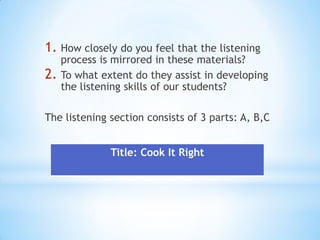
1. How closely do you feel that the listening

2.

process is mirrored in these materials?
To what extent do they assist in developing
the listening skills of our students?

The listening section consists of 3 parts: A, B,C
Title: Cook It Right
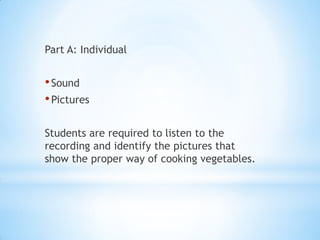
Part A: Individual

• Sound
• Pictures
Students are required to listen to the
recording and identify the pictures that
show the proper way of cooking vegetables.
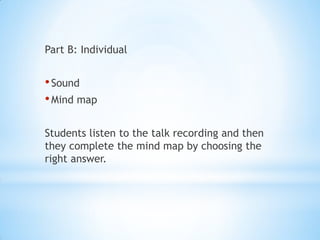
Part B: Individual

• Sound
• Mind map
Students listen to the talk recording and then
they complete the mind map by choosing the
right answer.
Part C: Group Work

• Graphic
Students are required to list down several
vegetables together with their nutritional value
and then share the information with their
friends.
What listening process occurred?
The lower level processes; Bottom-up processing

Deriving the meaning of the message based on the
incoming language data, from sounds, to words, to
grammatical relationships, to meaning.

Stress, rhythm, and intonation.
• The listening task is relevant and is given a
purpose to attract students’ interest.

• Aunthentic material is used; short talk and

comprehensive for beginning level, the vocabulary
is concrete and preliminary, include visual
elements (colorful, and authentic pictures and
graphics) and different level of difficulty.

• Give confidence in accurate hearing and

comprehension of the components of the
language (sounds, words, intonation,
grammatical structures).
• The students are involved in a nonreciprocal
listening-only listen to monologues, no
interaction with speaker

• Listen for gist, specific info and make

inferences based on what they hear and
understand

• Does not focus principally on linguistic skills

but more to experiential content of material
How far does it helps to develop
students’ listening skill?

• Gives confidence in accurate hearing and
comprehension of the components of the
language (sounds, words, intonation,
grammatical structures).

• The language used is too formal. Students

need exposure to the kind of informal English
spoken in the real world.
• Does not acquaint the students with different

cultures except for some ‘words’ that need to
be localised-olive oil (not all students know
what is olive oil, can change it with ‘minyak
saji’..) or can bring realia if possible to show
them what is olive oil.

• The recording and the language used in the

task itself was not very difficult linguistically
and the students were capable of
understanding it.
Thank You 
DON’T DO THIS NOW. YOUR STUDENTS MIGHT DO THIS
TO YOU LATER.

DEVELOPING LISTENING MATERIAL

  • 1.
    Group members: Cressida Hugo ElsaPriscilla Mohammad Rahmat Vanessa Dumpang@William
  • 2.
    KBSM FORM 2ENGLISH TEXTBOOK Chapter 10: Food for Thought (Pg. 135) Let’s Tune In
  • 3.
    1. How closelydo you feel that the listening 2. process is mirrored in these materials? To what extent do they assist in developing the listening skills of our students? The listening section consists of 3 parts: A, B,C Title: Cook It Right
  • 4.
    Part A: Individual •Sound • Pictures Students are required to listen to the recording and identify the pictures that show the proper way of cooking vegetables.
  • 5.
    Part B: Individual •Sound • Mind map Students listen to the talk recording and then they complete the mind map by choosing the right answer.
  • 6.
    Part C: GroupWork • Graphic Students are required to list down several vegetables together with their nutritional value and then share the information with their friends.
  • 7.
    What listening processoccurred? The lower level processes; Bottom-up processing Deriving the meaning of the message based on the incoming language data, from sounds, to words, to grammatical relationships, to meaning. Stress, rhythm, and intonation.
  • 8.
    • The listeningtask is relevant and is given a purpose to attract students’ interest. • Aunthentic material is used; short talk and comprehensive for beginning level, the vocabulary is concrete and preliminary, include visual elements (colorful, and authentic pictures and graphics) and different level of difficulty. • Give confidence in accurate hearing and comprehension of the components of the language (sounds, words, intonation, grammatical structures).
  • 9.
    • The studentsare involved in a nonreciprocal listening-only listen to monologues, no interaction with speaker • Listen for gist, specific info and make inferences based on what they hear and understand • Does not focus principally on linguistic skills but more to experiential content of material
  • 10.
    How far doesit helps to develop students’ listening skill? • Gives confidence in accurate hearing and comprehension of the components of the language (sounds, words, intonation, grammatical structures). • The language used is too formal. Students need exposure to the kind of informal English spoken in the real world.
  • 11.
    • Does notacquaint the students with different cultures except for some ‘words’ that need to be localised-olive oil (not all students know what is olive oil, can change it with ‘minyak saji’..) or can bring realia if possible to show them what is olive oil. • The recording and the language used in the task itself was not very difficult linguistically and the students were capable of understanding it.
  • 12.
    Thank You  DON’TDO THIS NOW. YOUR STUDENTS MIGHT DO THIS TO YOU LATER.