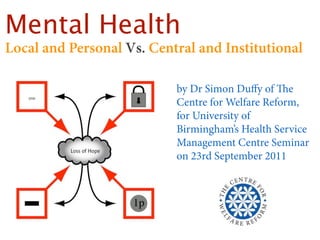
Mental Health
Local and Personal Vs. Central and Institutional

                           by Dr Simon Duffy of e
                           Centre for Welfare Reform,
                           for University of
                           Birmingham’s Health Service
                           Management Centre Seminar
                           on 23rd September 2011
my perspective
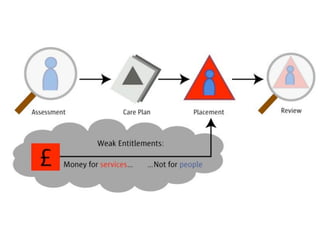
• Funding for mental health services is currently
   invested in the wrong things
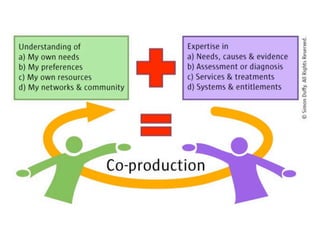
• Improving mental health has more to do with
   citizenship and community than with services
• Current systems of funding and commissioning
   have made no difference
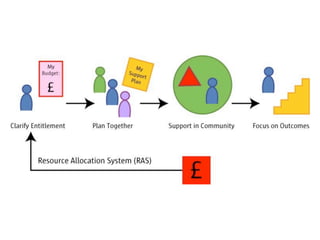
• Personalisation and greater community-focus
   could change that
ese findings [better long-term outcomes for schizophrenia in developing
countries] still generate some professional contention and disbelief, as they challenge
outdated assumptions that generally people do not recover from schizophrenia and
that outcomes for western treatments and rehabilitation must be superior. However,
these results have proven to be remarkably robust, on the basis of international
replications and 15-25 year follow-up studies. Explanations for this phenomenon are
still at the hypothesis level, but include:
1. greater inclusion or retained social integration in the community in developing
countries, so that the person retains a role or status in the society
2. involvement in traditional healing rituals, reaffirming community inclusion and
solidarity
3. availability of a valued work role that can be adapted to a lower level of functioning
4. availability of an extended kinship or communal network, so that family tension
and burden are diffused, and there is oen less negatively 'expressed emotion' in the
family
Dr Alan Rosen from Destigmatising day-to-day practices: What Can Developed
Countries learn from Developing Countries? World Psychiatry 2006, 5: 21-24
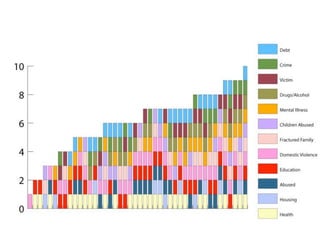
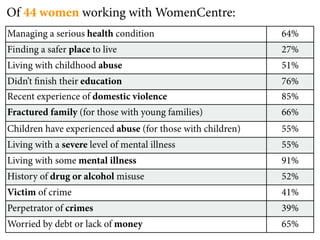
Of 44 women working with WomenCentre:
Managing a serious health condition                         64%
Finding a safer place to live                               27%
Living with childhood abuse                                 51%
Didn’t finish their education                                76%
Recent experience of domestic violence                      85%
Fractured family (for those with young families)            66%
Children have experienced abuse (for those with children)   55%
Living with a severe level of mental illness                55%
Living with some mental illness                             91%
History of drug or alcohol misuse                           52%
Victim of crime                                             41%
Perpetrator of crimes                                       39%
Worried by debt or lack of money                            65%
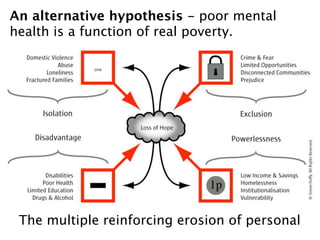
An alternative hypothesis - poor mental
health is a function of real poverty.


 The multiple reinforcing erosion of personal
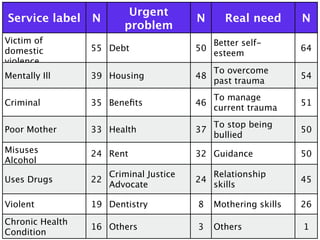
Urgent
Service label    N                     N     Real need        N
                        problem
Victim of                                 Better self-
domestic         55 Debt               50                     64
                                          esteem
violence
                                          To overcome
Mentally Ill     39 Housing            48                     54
                                          past trauma
                                          To manage
Criminal         35 Benefits            46                     51
                                          current trauma
                                          To stop being
Poor Mother      33 Health             37                     50
                                          bullied
Misuses          24 Rent               32 Guidance            50
Alcohol
                    Criminal Justice      Relationship
Uses Drugs       22                    24                     45
                    Advocate              skills

Violent          19 Dentistry          8   Mothering skills   26
Chronic Health
                 16 Others             3   Others             1
Condition
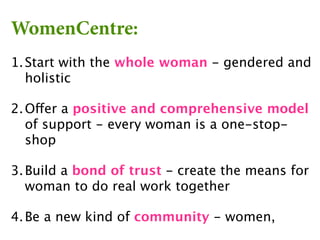
WomenCentre:
1. Start with the whole woman - gendered and
   holistic

2. Offer a positive and comprehensive model
   of support - every woman is a one-stop-
   shop

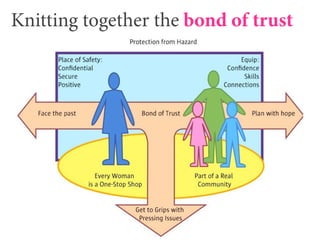
3. Build a bond of trust - create the means for
   woman to do real work together

4. Be a new kind of community - women,
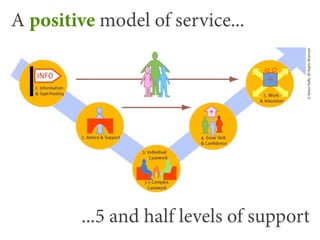
A positive model of service...


         ...5 and half levels of support
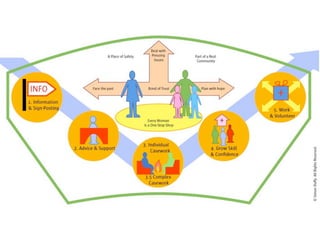
Knitting together the bond of trust
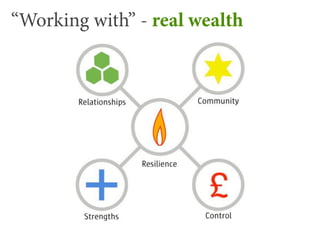
“Working with” - real wealth
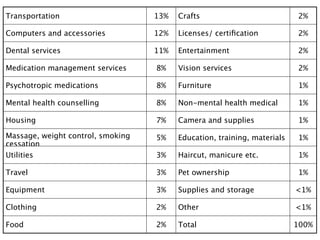
Transportation                     13%   Crafts                           2%

Computers and accessories          12%   Licenses/ certification           2%

Dental services                    11%   Entertainment                    2%

Medication management services     8%    Vision services                  2%

Psychotropic medications           8%    Furniture                        1%

Mental health counselling          8%    Non-mental health medical        1%

Housing                            7%    Camera and supplies              1%

Massage, weight control, smoking   5%    Education, training, materials   1%
cessation
Utilities                          3%    Haircut, manicure etc.           1%

Travel                             3%    Pet ownership                    1%

Equipment                          3%    Supplies and storage             <1%

Clothing                           2%    Other                            <1%

Food                               2%    Total                            100%
I used to work in the fashion design industry as a product developer until I became ill. is was a
hard time in my life. I was diagnosed with paranoid schizophrenia and spent a year in hospital. When
I came out of hospital, I moved into supported living and had some help from the Mental Health
Recovery Team who were fantastic at supporting me to have the skills I need to be well. I now live in
my own place.
I was offered a personal budget and had support to write a plan that said what I was going to spend
my budget on to help me meet my assessed needs. At first I used my budget to purchase some support
from an agency, which helped me to regain some of my confidence.I’ve now had a personal budget for
a few years. It helps me to feel happy again and gives me some confidence to keep moving forwards. It
feels different because previously I had services organised for me.
As I am now on the road to recovery my budget has reduced. I have updated my plan myself and this
has given me the opportunity to talk about what I want for the future. e opportunity to be creative
is very important to me and is something that keeps me well. I now receive a little support and a one
off payment which I use to help me to buy equipment to make jewellery. I hope that I will eventually
be able to teach other people how to make jewellery to give something back. My goal is to start up my
own jewellery business and be financially self-supporting, and the recovery team is helping me with
this.
Without the support that I have I would still be wondering where my life is going, but now I have
hopes for the future. I would definitely recommend considering a personal budget. You can really
make it work for you in a way that I didn’t know was possible. I feel lucky that I have been able to get
back some of the life I have lost.
From Health Efficiency by Alakeson & Duffy
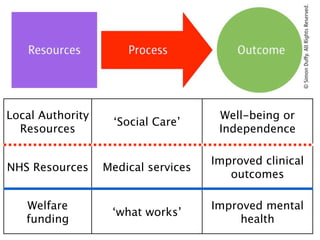
Local Authority                       Well-being or
                   ‘Social Care’
  Resources                           Independence

                                     Improved clinical
NHS Resources     Medical services
                                        outcomes

   Welfare                           Improved mental
                   ‘what works’
   funding                                health
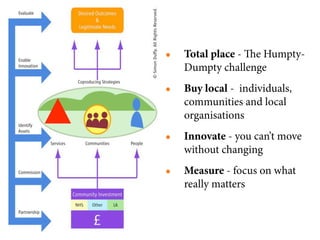
• Total place - e Humpty-
   Dumpty challenge
• Buy local - individuals,
   communities and local
   organisations
• Innovate - you can’t move
   without changing
• Measure - focus on what
   really matters
The Centre for Welfare Reform
The Quadrant, 99 Parkway Avenue,
Parkway Business Park
Sheffield, S9 4WG
T +44 114 251 1790 | M +44
7729 7729 41
admin@centreforwelfarereform.org
Get a free subscription at:


© Simon Duffy. Rights Reserved. Full copyright details at www.centreforwelfarereform.org

(181) mh & primary care (september 2011)

  • 1.
    Mental Health Local andPersonal Vs. Central and Institutional by Dr Simon Duffy of e Centre for Welfare Reform, for University of Birmingham’s Health Service Management Centre Seminar on 23rd September 2011
  • 2.
    my perspective • Fundingfor mental health services is currently invested in the wrong things • Improving mental health has more to do with citizenship and community than with services • Current systems of funding and commissioning have made no difference • Personalisation and greater community-focus could change that
  • 5.
    ese findings [betterlong-term outcomes for schizophrenia in developing countries] still generate some professional contention and disbelief, as they challenge outdated assumptions that generally people do not recover from schizophrenia and that outcomes for western treatments and rehabilitation must be superior. However, these results have proven to be remarkably robust, on the basis of international replications and 15-25 year follow-up studies. Explanations for this phenomenon are still at the hypothesis level, but include: 1. greater inclusion or retained social integration in the community in developing countries, so that the person retains a role or status in the society 2. involvement in traditional healing rituals, reaffirming community inclusion and solidarity 3. availability of a valued work role that can be adapted to a lower level of functioning 4. availability of an extended kinship or communal network, so that family tension and burden are diffused, and there is oen less negatively 'expressed emotion' in the family Dr Alan Rosen from Destigmatising day-to-day practices: What Can Developed Countries learn from Developing Countries? World Psychiatry 2006, 5: 21-24
  • 8.
    Of 44 womenworking with WomenCentre: Managing a serious health condition 64% Finding a safer place to live 27% Living with childhood abuse 51% Didn’t finish their education 76% Recent experience of domestic violence 85% Fractured family (for those with young families) 66% Children have experienced abuse (for those with children) 55% Living with a severe level of mental illness 55% Living with some mental illness 91% History of drug or alcohol misuse 52% Victim of crime 41% Perpetrator of crimes 39% Worried by debt or lack of money 65%
  • 9.
    An alternative hypothesis- poor mental health is a function of real poverty. The multiple reinforcing erosion of personal
  • 11.
    Urgent Service label N N Real need N problem Victim of Better self- domestic 55 Debt 50 64 esteem violence To overcome Mentally Ill 39 Housing 48 54 past trauma To manage Criminal 35 Benefits 46 51 current trauma To stop being Poor Mother 33 Health 37 50 bullied Misuses 24 Rent 32 Guidance 50 Alcohol Criminal Justice Relationship Uses Drugs 22 24 45 Advocate skills Violent 19 Dentistry 8 Mothering skills 26 Chronic Health 16 Others 3 Others 1 Condition
  • 12.
    WomenCentre: 1. Start withthe whole woman - gendered and holistic 2. Offer a positive and comprehensive model of support - every woman is a one-stop- shop 3. Build a bond of trust - create the means for woman to do real work together 4. Be a new kind of community - women,
  • 14.
    A positive modelof service... ...5 and half levels of support
  • 15.
    Knitting together thebond of trust
  • 16.
  • 21.
    Transportation 13% Crafts 2% Computers and accessories 12% Licenses/ certification 2% Dental services 11% Entertainment 2% Medication management services 8% Vision services 2% Psychotropic medications 8% Furniture 1% Mental health counselling 8% Non-mental health medical 1% Housing 7% Camera and supplies 1% Massage, weight control, smoking 5% Education, training, materials 1% cessation Utilities 3% Haircut, manicure etc. 1% Travel 3% Pet ownership 1% Equipment 3% Supplies and storage <1% Clothing 2% Other <1% Food 2% Total 100%
  • 28.
    I used towork in the fashion design industry as a product developer until I became ill. is was a hard time in my life. I was diagnosed with paranoid schizophrenia and spent a year in hospital. When I came out of hospital, I moved into supported living and had some help from the Mental Health Recovery Team who were fantastic at supporting me to have the skills I need to be well. I now live in my own place. I was offered a personal budget and had support to write a plan that said what I was going to spend my budget on to help me meet my assessed needs. At first I used my budget to purchase some support from an agency, which helped me to regain some of my confidence.I’ve now had a personal budget for a few years. It helps me to feel happy again and gives me some confidence to keep moving forwards. It feels different because previously I had services organised for me. As I am now on the road to recovery my budget has reduced. I have updated my plan myself and this has given me the opportunity to talk about what I want for the future. e opportunity to be creative is very important to me and is something that keeps me well. I now receive a little support and a one off payment which I use to help me to buy equipment to make jewellery. I hope that I will eventually be able to teach other people how to make jewellery to give something back. My goal is to start up my own jewellery business and be financially self-supporting, and the recovery team is helping me with this. Without the support that I have I would still be wondering where my life is going, but now I have hopes for the future. I would definitely recommend considering a personal budget. You can really make it work for you in a way that I didn’t know was possible. I feel lucky that I have been able to get back some of the life I have lost. From Health Efficiency by Alakeson & Duffy
  • 31.
    Local Authority Well-being or ‘Social Care’ Resources Independence Improved clinical NHS Resources Medical services outcomes Welfare Improved mental ‘what works’ funding health
  • 32.
    • Total place- e Humpty- Dumpty challenge • Buy local - individuals, communities and local organisations • Innovate - you can’t move without changing • Measure - focus on what really matters
  • 35.
    The Centre forWelfare Reform The Quadrant, 99 Parkway Avenue, Parkway Business Park Sheffield, S9 4WG T +44 114 251 1790 | M +44 7729 7729 41 admin@centreforwelfarereform.org Get a free subscription at: © Simon Duffy. Rights Reserved. Full copyright details at www.centreforwelfarereform.org