Team-Based Innovation: A
Collaborative Approach to Visioning
CHRISTINE PERFETTI PERFETTI MEDIA @CPERFETTI
The Product Visioning Workshop
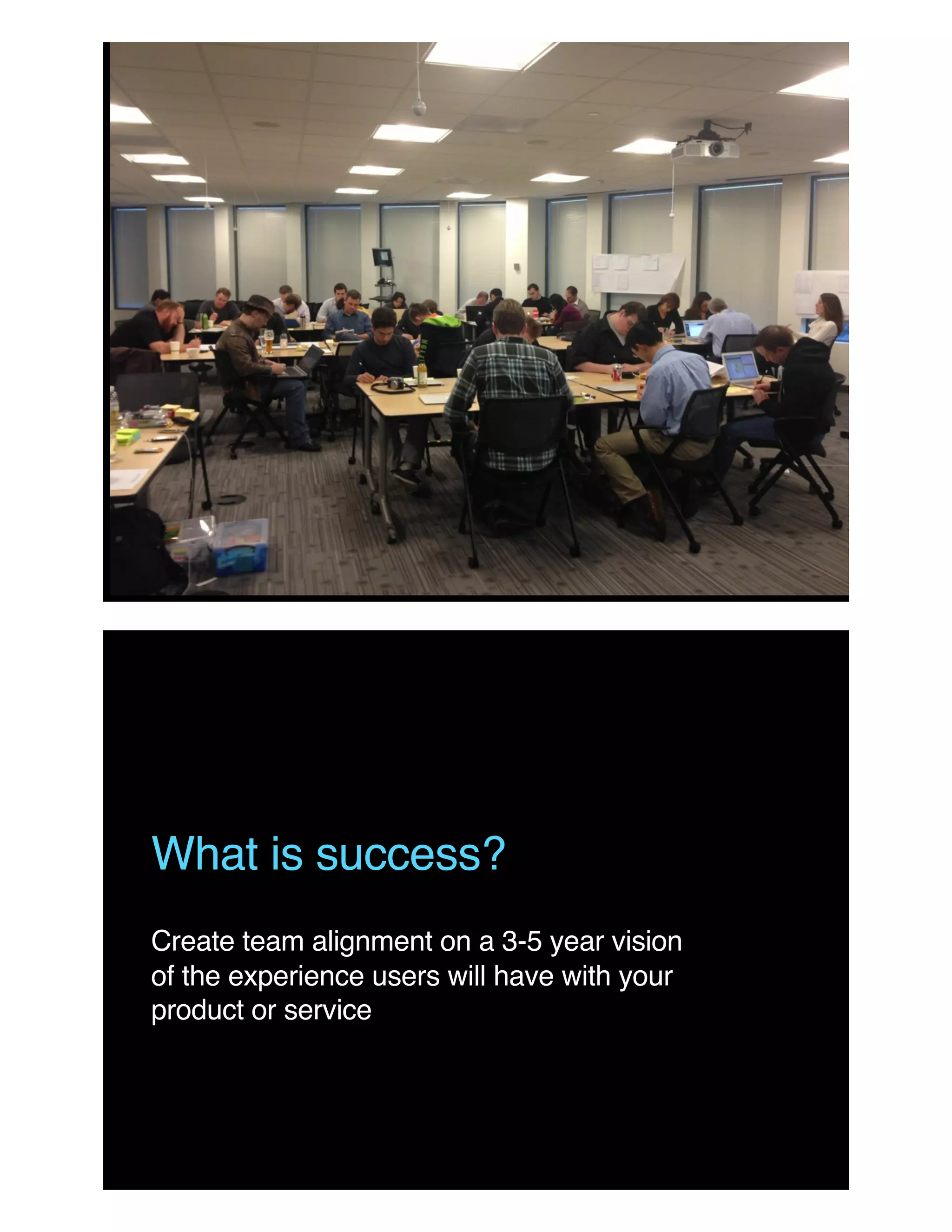
What is success?
Create team alignment on a 3-5 year vision 

of the experience users will have with your 

product or service
The Importance of a Vision
• Drives product decisions

• Provides a destination for the team
• Gets the entire team on the same page
• Inspires and motivates
THE USER RESEARCH AND PRODUCTVISIONING
PROCESS
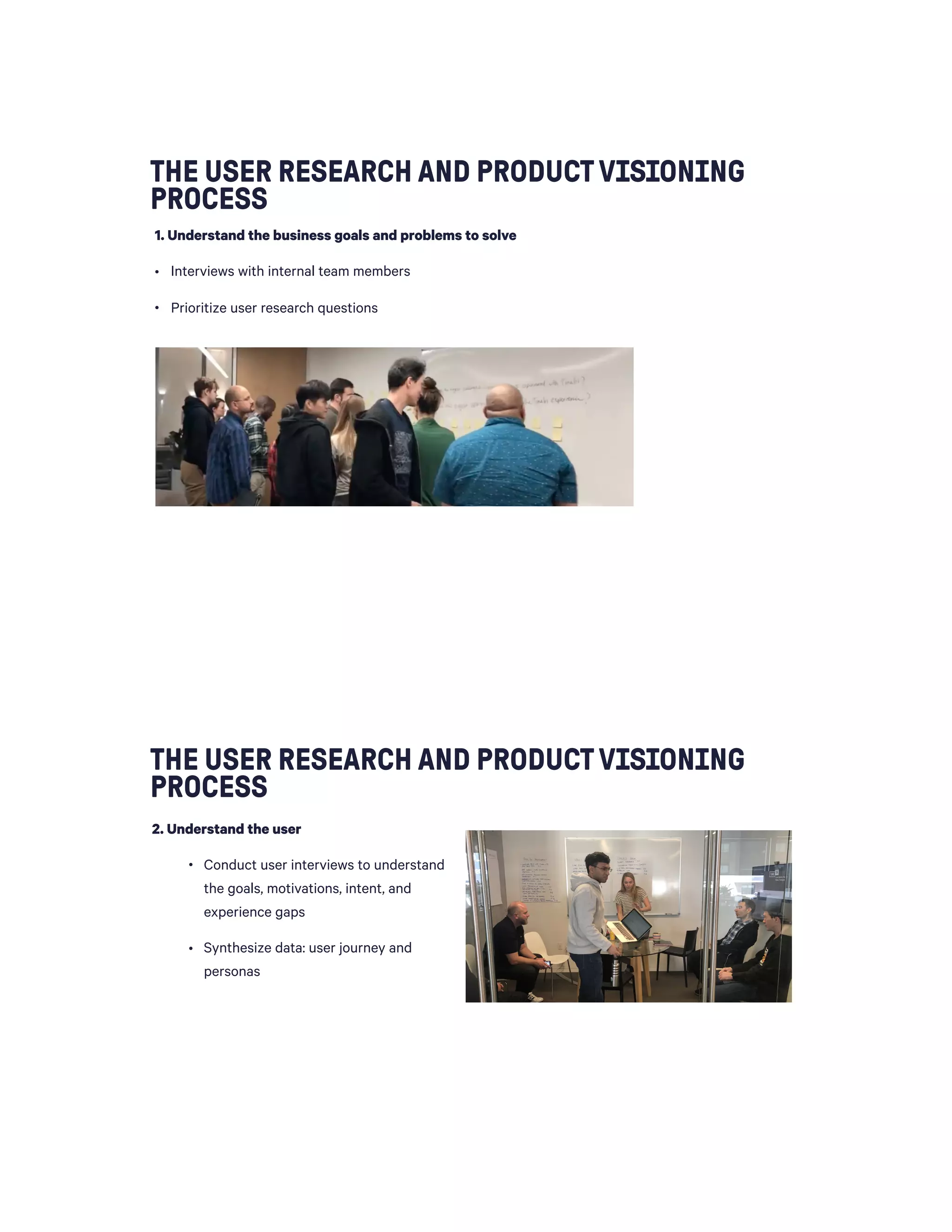
1. Understand the business goals and problems to solve
• Interviews with internal team members
• Prioritize user research questions

THE USER RESEARCH AND PRODUCTVISIONING
PROCESS
2. Understand the user
• Conduct user interviews to understand
the goals, motivations, intent, and
experience gaps
• Synthesize data: user journey and
personas
THE USER RESEARCH AND PRODUCTVISIONING
PROCESS
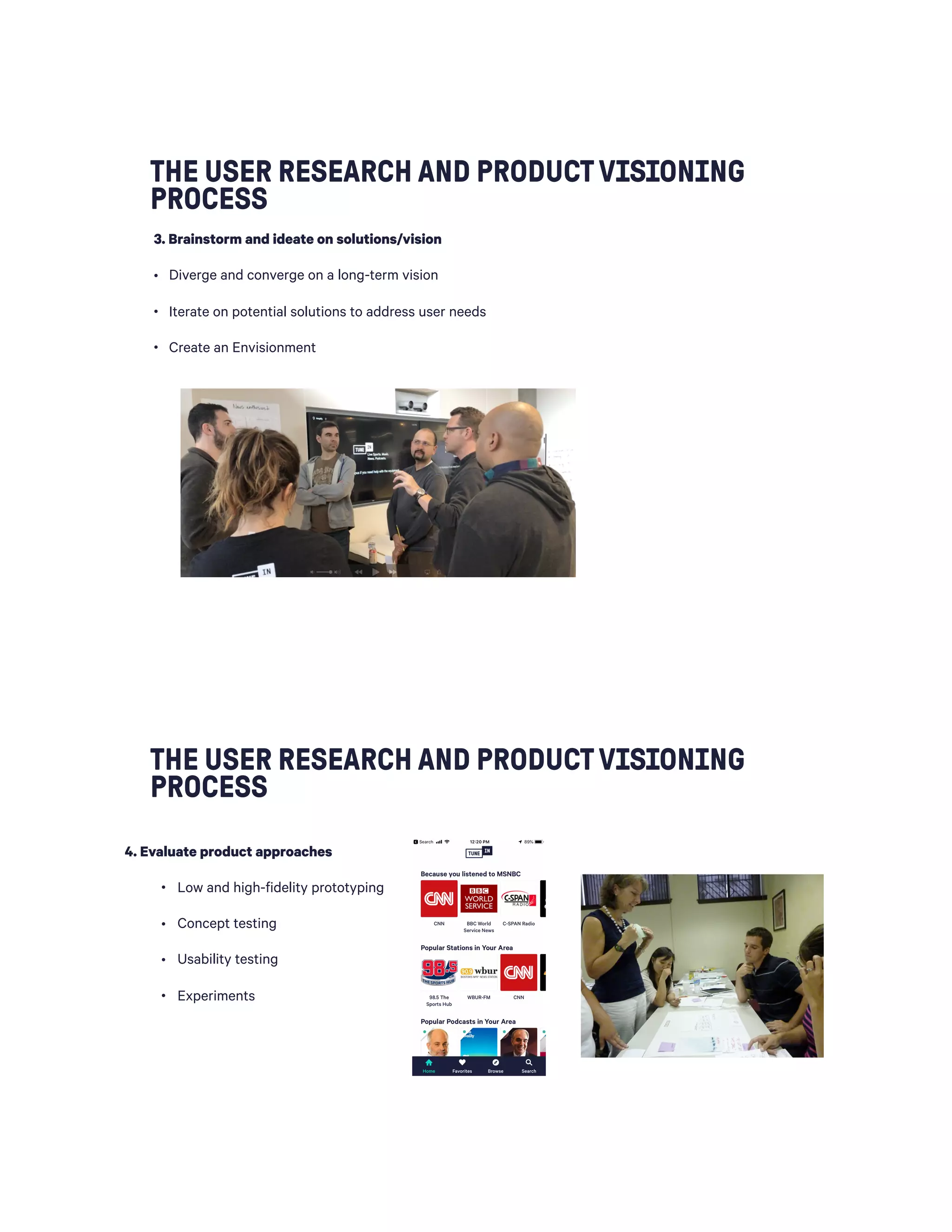
3. Brainstorm and ideate on solutions/vision
• Diverge and converge on a long-term vision
• Iterate on potential solutions to address user needs
• Create an Envisionment
THE USER RESEARCH AND PRODUCTVISIONING
PROCESS


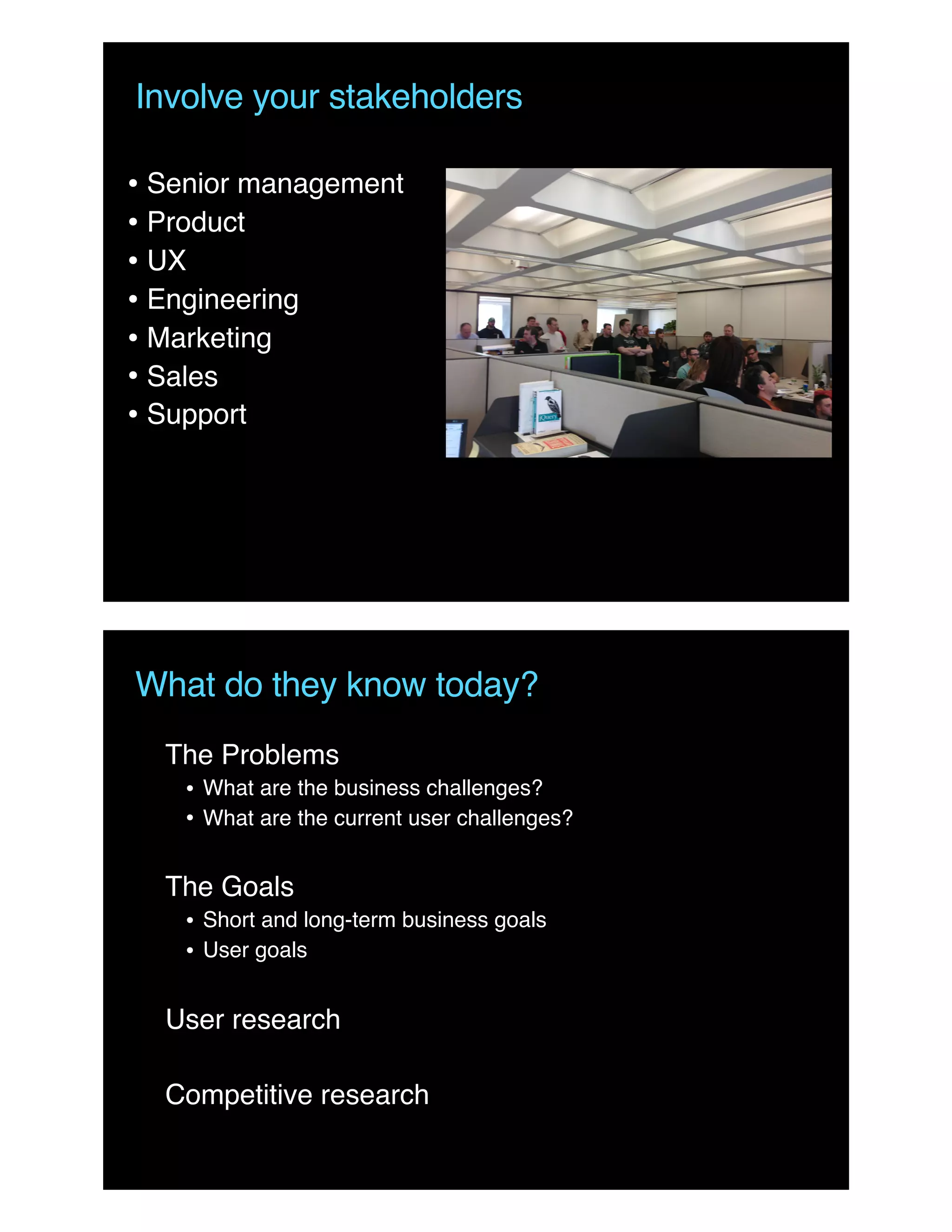
4. Evaluate product approaches
• Low and high-fidelity prototyping
• Concept testing
• Usability testing
• Experiments
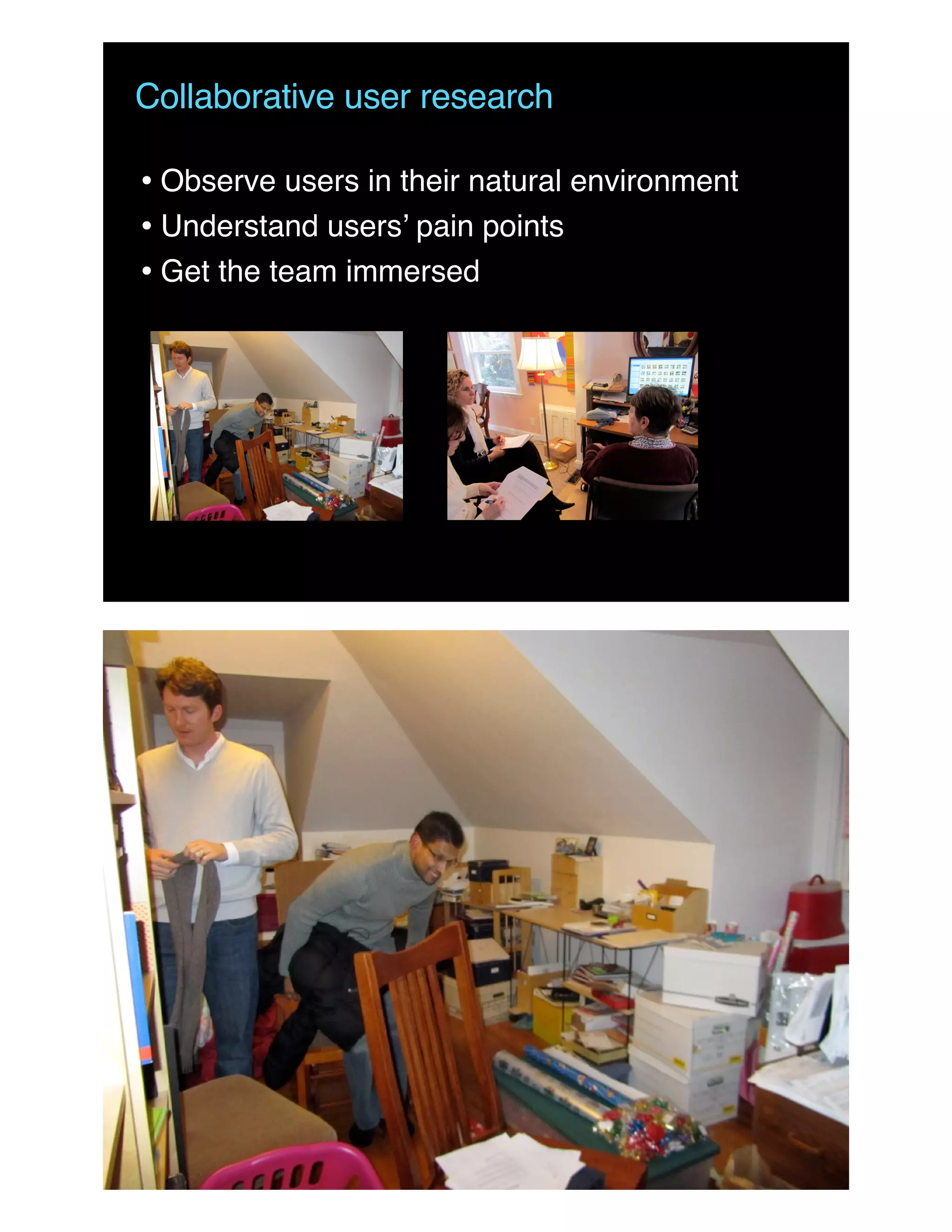
Involve your stakeholders
• Senior management
• Product
• UX
• Engineering
• Marketing
• Sales
• Support
What do they know today?
The Problems
• What are the business challenges?
• What are the current user challenges?
The Goals
• Short and long-term business goals
• User goals
User research
Competitive research
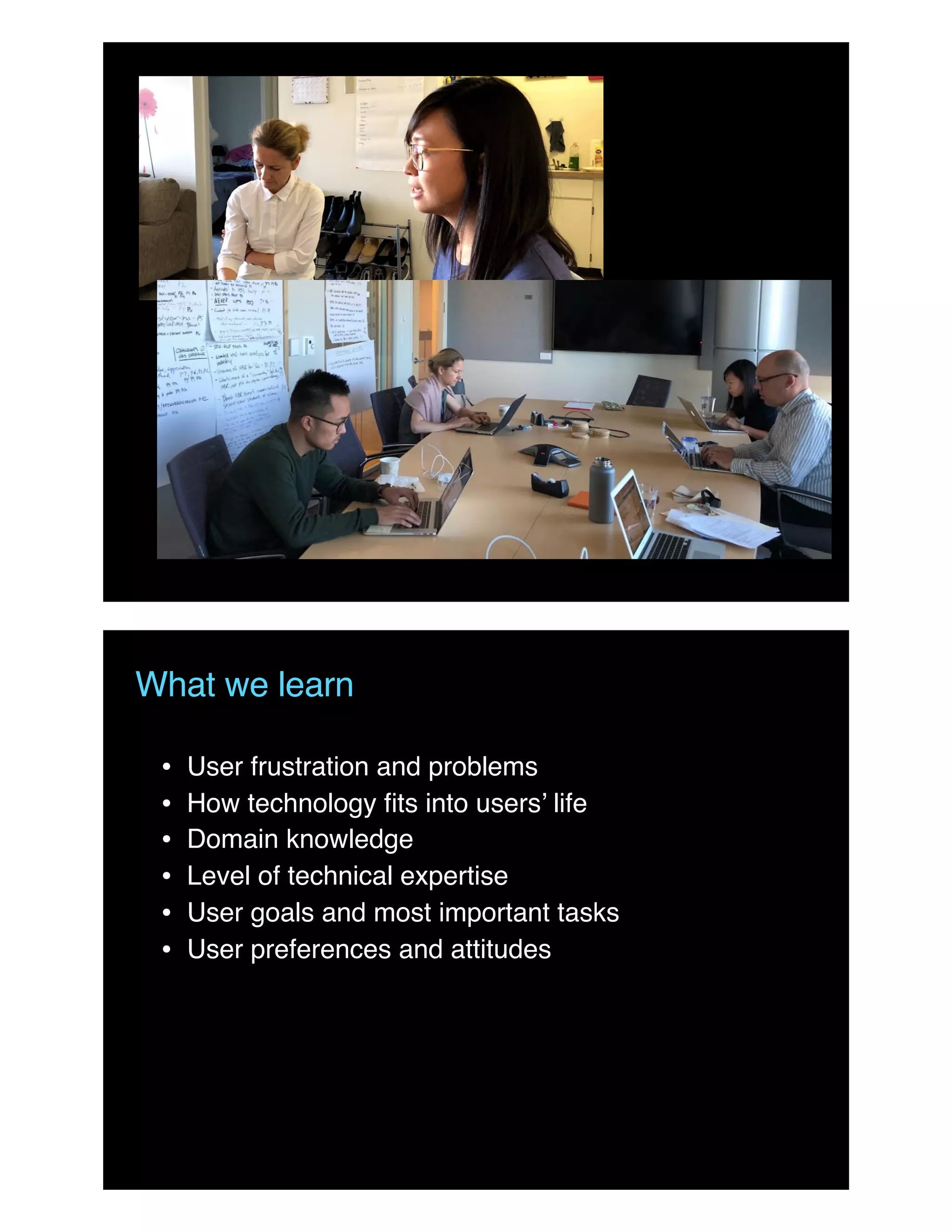
Collaborative user research
• Observe users in their natural environment
• Understand users’ pain points
• Get the team immersed
What we learn
• User frustration and problems
• How technology fits into users’ life
• Domain knowledge
• Level of technical expertise
• User goals and most important tasks
• User preferences and attitudes
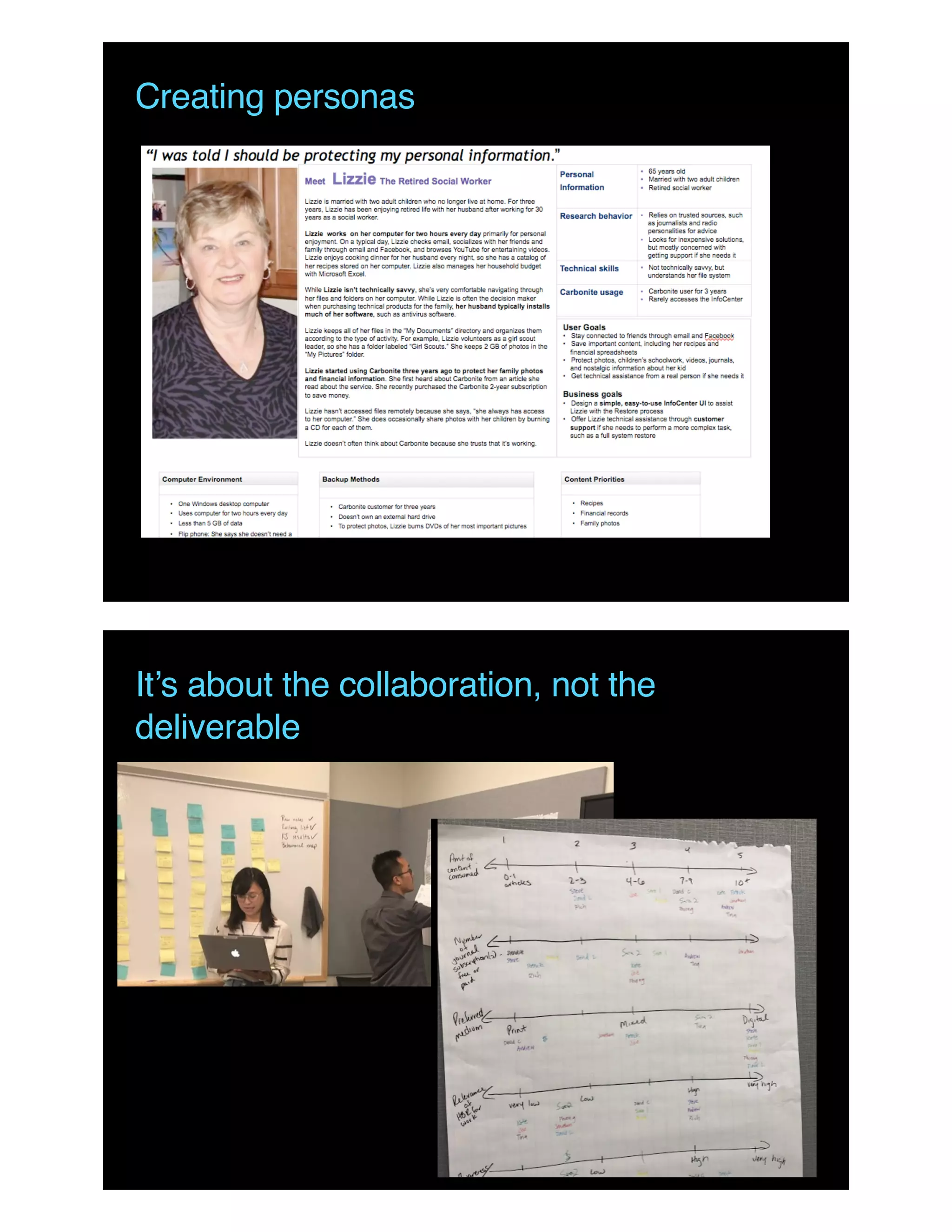
Creating personas
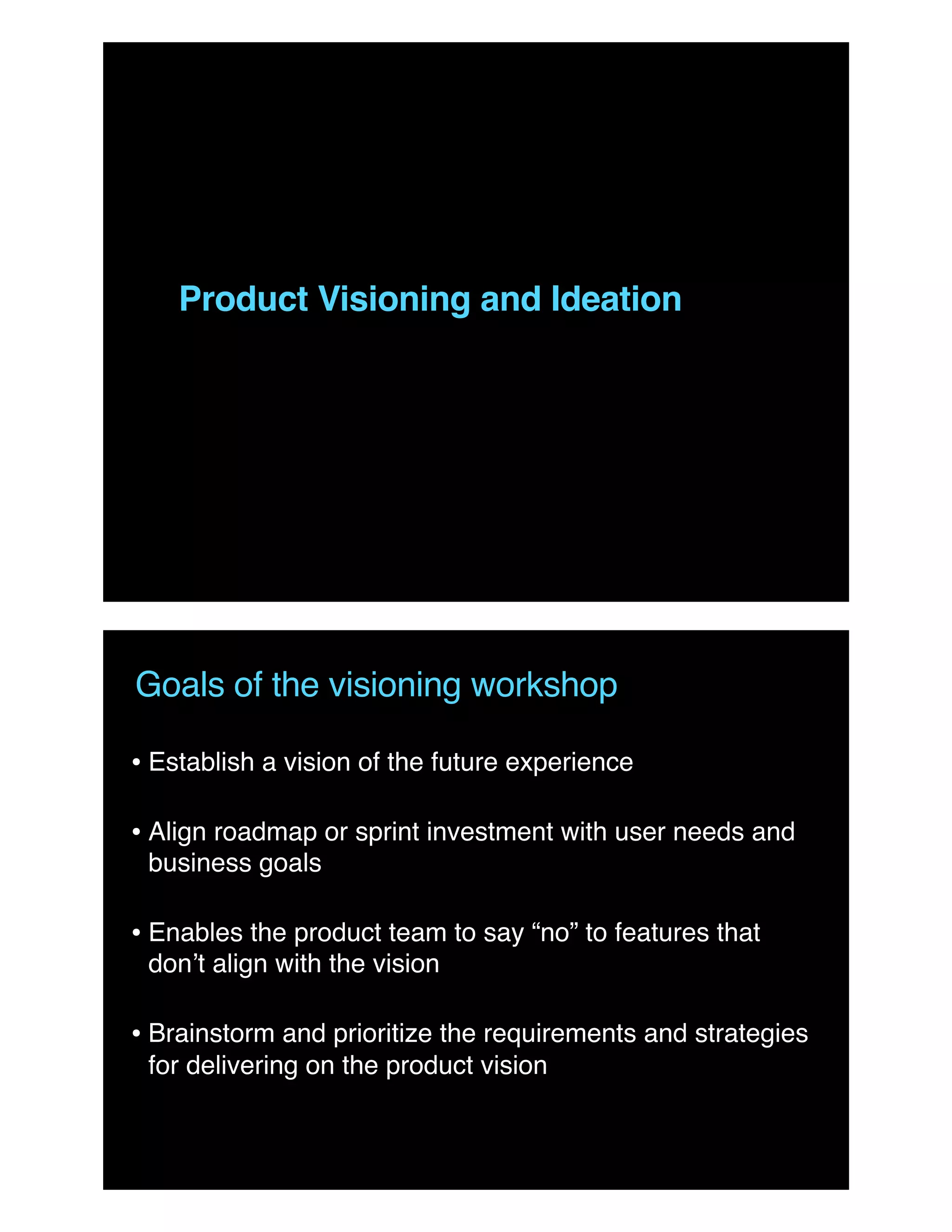
It’s about the collaboration, not the
deliverable
Product Visioning and Ideation
Goals of the visioning workshop
• Establish a vision of the future experience
• Align roadmap or sprint investment with user needs and
business goals
• Enables the product team to say “no” to features that
don’t align with the vision
• Brainstorm and prioritize the requirements and strategies
for delivering on the product vision
The logistics
• Invite all product stakeholders
• Schedule a minimum of one day to conduct the workshop
• Set expectations for workshop attendees
• Assign homework
• What are the business goals?
• What do you currently know about the target audience?
• What are the pain points with the product?
The workshop agenda
Set the context
Establish the product vision
Identify opportunities to achieve the vision
Set the context
• Review 3-5 year strategic objectives
• Present the competitive landscape
• Summarize the user research
Establish the vision
• Converge on a 3-year product vision
• Prioritize opportunities to improve the user 

experience
Ideating on a product vision
Brainstorming technique modeled after the design
studio methodology
Teams ideate in short time boxes to generate a product
vision with rapid rounds of sketching and critique
• Sketch
• Present
• Critique
• Iterate
The instructions
• Break group into cross-
functional teams of 5-6
people
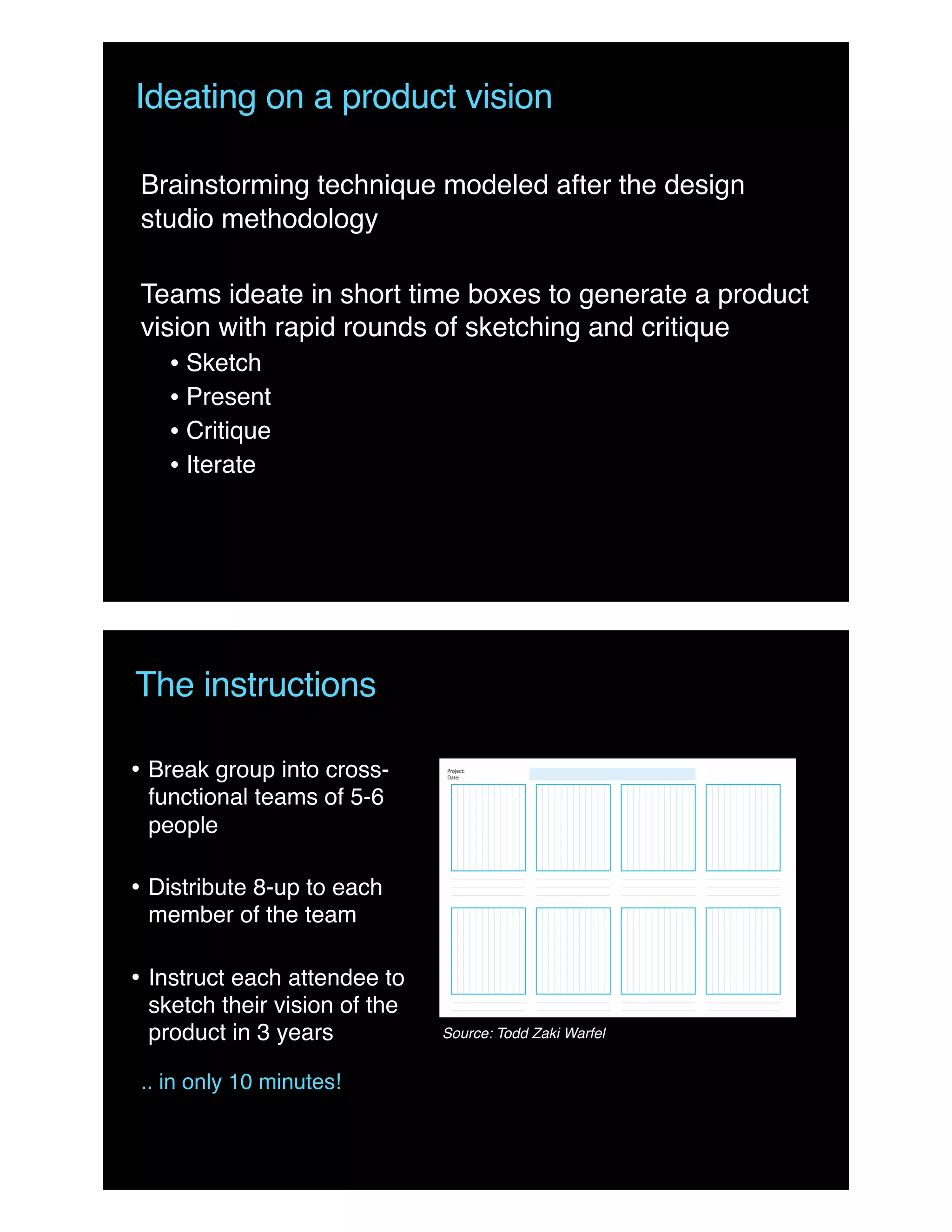
• Distribute 8-up to each
member of the team
• Instruct each attendee to
sketch their vision of the
product in 3 years Source: Todd Zaki Warfel
.. in only 10 minutes!
Pitch and critique
• Each member of the
team has 3 minutes to
present their vision with
no interruptions
• Team critiques for 2
minutes
• What do you like?
• What would you like to see
improved?
Iterate
The Result: Convergence of teams
Team-based product visioning
• Aligns the team around a shared vision
• Gains consensus on user needs and goals for the
product
• Prioritizes the requirements for delivering on the product
vision
• Aligns the product priorities with the vision for the ideal
user experience
QUESTIONS?
perfettimedia.com/training

177 - Team-Based Innovation

  • 1.
    Team-Based Innovation: A CollaborativeApproach to Visioning CHRISTINE PERFETTI PERFETTI MEDIA @CPERFETTI
  • 2.
    The Product VisioningWorkshop What is success? Create team alignment on a 3-5 year vision 
 of the experience users will have with your 
 product or service
  • 3.
    The Importance ofa Vision • Drives product decisions
 • Provides a destination for the team • Gets the entire team on the same page • Inspires and motivates
  • 4.
    THE USER RESEARCHAND PRODUCTVISIONING PROCESS 1. Understand the business goals and problems to solve • Interviews with internal team members • Prioritize user research questions
 THE USER RESEARCH AND PRODUCTVISIONING PROCESS 2. Understand the user • Conduct user interviews to understand the goals, motivations, intent, and experience gaps • Synthesize data: user journey and personas
  • 5.
    THE USER RESEARCHAND PRODUCTVISIONING PROCESS 3. Brainstorm and ideate on solutions/vision • Diverge and converge on a long-term vision • Iterate on potential solutions to address user needs • Create an Envisionment THE USER RESEARCH AND PRODUCTVISIONING PROCESS 
 4. Evaluate product approaches • Low and high-fidelity prototyping • Concept testing • Usability testing • Experiments
  • 6.
    Involve your stakeholders •Senior management • Product • UX • Engineering • Marketing • Sales • Support What do they know today? The Problems • What are the business challenges? • What are the current user challenges? The Goals • Short and long-term business goals • User goals User research Competitive research
  • 7.
    Collaborative user research •Observe users in their natural environment • Understand users’ pain points • Get the team immersed
  • 8.
    What we learn •User frustration and problems • How technology fits into users’ life • Domain knowledge • Level of technical expertise • User goals and most important tasks • User preferences and attitudes
  • 9.
    Creating personas It’s aboutthe collaboration, not the deliverable
  • 10.
    Product Visioning andIdeation Goals of the visioning workshop • Establish a vision of the future experience • Align roadmap or sprint investment with user needs and business goals • Enables the product team to say “no” to features that don’t align with the vision • Brainstorm and prioritize the requirements and strategies for delivering on the product vision
  • 11.
    The logistics • Inviteall product stakeholders • Schedule a minimum of one day to conduct the workshop • Set expectations for workshop attendees • Assign homework • What are the business goals? • What do you currently know about the target audience? • What are the pain points with the product? The workshop agenda Set the context Establish the product vision Identify opportunities to achieve the vision
  • 12.
    Set the context •Review 3-5 year strategic objectives • Present the competitive landscape • Summarize the user research Establish the vision • Converge on a 3-year product vision • Prioritize opportunities to improve the user 
 experience
  • 13.
    Ideating on aproduct vision Brainstorming technique modeled after the design studio methodology Teams ideate in short time boxes to generate a product vision with rapid rounds of sketching and critique • Sketch • Present • Critique • Iterate The instructions • Break group into cross- functional teams of 5-6 people • Distribute 8-up to each member of the team • Instruct each attendee to sketch their vision of the product in 3 years Source: Todd Zaki Warfel .. in only 10 minutes!
  • 14.
    Pitch and critique •Each member of the team has 3 minutes to present their vision with no interruptions • Team critiques for 2 minutes • What do you like? • What would you like to see improved? Iterate
  • 15.
    The Result: Convergenceof teams Team-based product visioning • Aligns the team around a shared vision • Gains consensus on user needs and goals for the product • Prioritizes the requirements for delivering on the product vision • Aligns the product priorities with the vision for the ideal user experience
  • 16.
  • 17.