Professor, Lawyer & EntrepreneurProfessor, Lawyer & Entrepreneur
Puttu Guru PrasadPuttu Guru Prasad
Centre of ExcellenceCentre of Excellence
S&H Dept, VVITS&H Dept, VVIT
93 94 96 98 98 / 9885 96 36 3693 94 96 98 98 / 9885 96 36 36
Porter’s Generic StrategiesPorter’s Generic Strategies
Competitive AdvantageCompetitive Advantage
CompetitiveCompetitive
AdvantageAdvantage
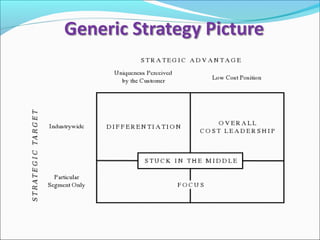
Porter’s Generic StrategiesPorter’s Generic Strategies
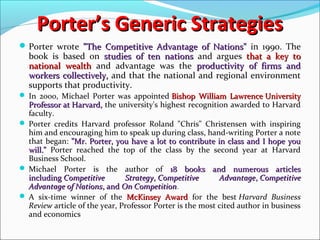
Porter wrote "The Competitive Advantage of Nations""The Competitive Advantage of Nations" in 1990. The
book is based on studies of ten nationsstudies of ten nations and argues that a key tothat a key to
national wealthnational wealth and advantage was the productivity of firms andproductivity of firms and
workers collectively,workers collectively, and that the national and regional environment
supports that productivity.
 In 2000, Michael Porter was appointed Bishop William Lawrence UniversityBishop William Lawrence University
Professor at Harvard,Professor at Harvard, the university's highest recognition awarded to Harvard
faculty.
 Porter credits Harvard professor Roland "Chris" Christensen with inspiring
him and encouraging him to speak up during class, hand-writing Porter a note
that began: "Mr. Porter, you have a lot to contribute in class and I hope you"Mr. Porter, you have a lot to contribute in class and I hope you
will."will." Porter reached the top of the class by the second year at Harvard
Business School.
 Michael Porter is the author of 18 books and numerous articles18 books and numerous articles
includingincluding Competitive StrategyCompetitive Strategy,, Competitive AdvantageCompetitive Advantage,, CompetitiveCompetitive
Advantage of NationsAdvantage of Nations, and, and On CompetitionOn Competition.
 A six-time winner of the McKinsey AwardMcKinsey Award for the best Harvard Business
Review article of the year, Professor Porter is the most cited author in business
and economics
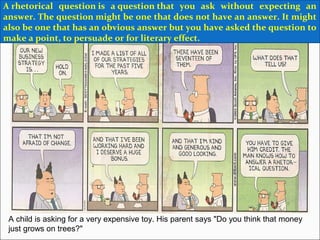
A child is asking for a very expensive toy. His parent says "Do you think that money
just grows on trees?"
A rhetorical question is a question that you ask without expecting an
answer. The question might be one that does not have an answer. It might
also be one that has an obvious answer but you have asked the question to
make a point, to persuade or for literary effect.
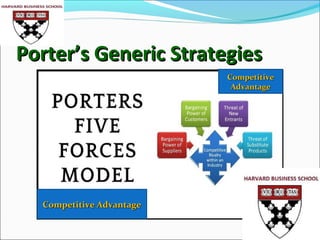
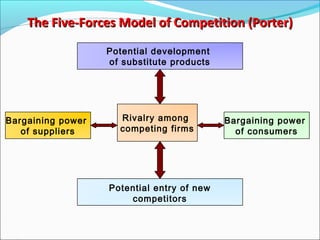
The Five-Forces Model of Competition (Porter)The Five-Forces Model of Competition (Porter)
Potential development
of substitute products
Rivalry among
competing firms
Bargaining power
of suppliers
Potential entry of new
competitors
Bargaining power
of consumers
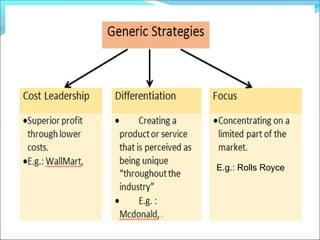
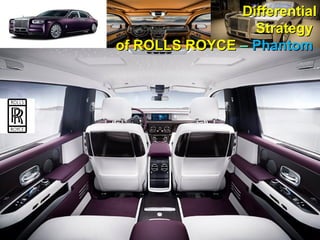
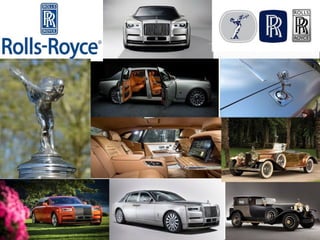
E.g.: Rolls Royce
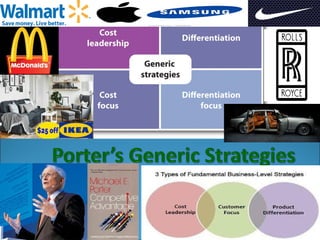
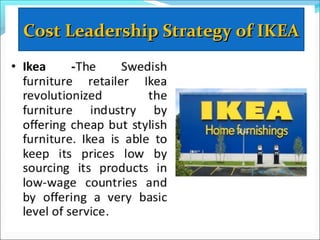
Cost Leadership Strategy of IKEACost Leadership Strategy of IKEA
DifferentialDifferential
StrategyStrategy
of ROLLS ROYCEof ROLLS ROYCE –– PhantomPhantom
Spirit of EcstasySpirit of Ecstasy
The Spirit of Ecstasy is
the bonnet ornament
on Rolls-Royce cars. It is
in the form of a woman
leaning forwards with her
arms outstretched behind
and above her. Billowing
cloth runs from her arms
to her back, resembling
wings.
Differential Strategy
Differentiation is about setting your company,
product, or service apart. It distinguishes your brand
from all others. Your differentiation strategy is an
integrated set of action designed to produce or deliver
goods or services that customers perceive as being
different in ways that are important to them.
Approach under which a firm aims to develop and
market unique products for different customer
segments. Usually employed where a firm has clear
competitive advantages, and can sustain an expensive
advertising campaign. Ex- Rolls RoyceRolls Royce
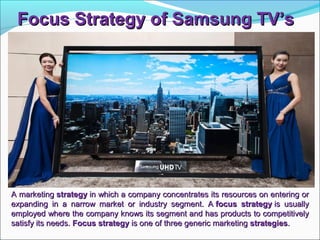
Focus Strategy of Samsung TV’sFocus Strategy of Samsung TV’s
A marketingA marketing strategystrategy in which a company concentrates its resources on entering orin which a company concentrates its resources on entering or
expanding in a narrow market or industry segment. Aexpanding in a narrow market or industry segment. A focus strategyfocus strategy is usuallyis usually
employed where the company knows its segment and has products to competitivelyemployed where the company knows its segment and has products to competitively
satisfy its needs.satisfy its needs. Focus strategyFocus strategy is one of three generic marketingis one of three generic marketing strategiesstrategies..
Cost Leadership StrategyCost Leadership Strategy
Firms that succeed in cost leadership often have the
following internal strengthsinternal strengths:
Access to the Additional capital required.
Skill in designing products for efficient &
Unique manufacturing
High level of expertise in process
engineering.
Efficient distribution channels of
Production
Cost Leadership StrategyCost Leadership Strategy
RisksRisks
For example, other firms may be able to
lower their costs as well.
As technology improves, the competition
may be able to leapfrog the production
capabilities.
 Additionally, several firms following a
focus strategy and targeting various
narrow markets. Ex- IKEAIKEA
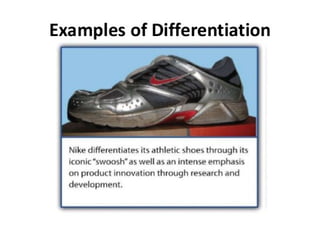
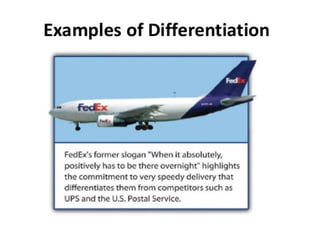
Differentiation StrategyDifferentiation Strategy
Firms that succeed in a differentiation strategy
often have the following internal strengths:internal strengths:
Access to leading scientific research.
Highly skilled and creative product development team.
Strong sales team with the ability to successfully
communicate the perceived strengths of the product.
Corporate reputation for quality and innovation.
RisksRisks
include imitation by competitorsimitation by competitors and changes in
customer tastes.
Additionally, various firms pursuing focus strategies
may be able to achieve even greater differentiationeven greater differentiation
in their market segments.
Focus StrategyFocus Strategy
Concentrates on a narrow segmentnarrow segment
and within that segmentwithin that segment attempts to
achieve either a cost advantage orcost advantage or
differentiation.differentiation.
The premisepremise is that the needs of the
group can be better serviced by focusing
entirely on it.
A firm using a focus strategy often enjoys a
high degree of customer loyaltycustomer loyalty, and this
entrenched loyalty discourages other firms
from competing directly. Ex- SamsungSamsung
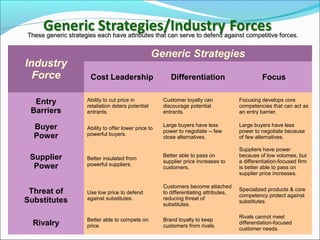
These generic strategies each have attributes that can serve to defend against competitive forces.These generic strategies each have attributes that can serve to defend against competitive forces.
Industry
Force
Generic Strategies
Cost Leadership Differentiation Focus
Entry
Barriers
Ability to cut price in
retaliation deters potential
entrants.
Customer loyalty can
discourage potential
entrants.
Focusing develops core
competencies that can act as
an entry barrier.
Buyer
Power
Ability to offer lower price to
powerful buyers.
Large buyers have less
power to negotiate -- few
close alternatives.
Large buyers have less
power to negotiate because
of few alternatives.
Supplier
Power
Better insulated from
powerful suppliers.
Better able to pass on
supplier price increases to
customers.
Suppliers have power
because of low volumes, but
a differentiation-focused firm
is better able to pass on
supplier price increases.
Threat of
Substitutes
Use low price to defend
against substitutes.
Customers become attached
to differentiating attributes,
reducing threat of
substitutes.
Specialized products & core
competency protect against
substitutes.
Rivalry Better able to compete on
price.
Brand loyalty to keep
customers from rivals.
Rivals cannot meet
differentiation-focused
customer needs.
ReferencesReferences
Michael E Porter, Competitive Strategy, Free Press, 1980
Philip Kotler, Marketing Management, Analysis, Planning,
and Control, Prentice Hall, 1975(3rd edition) - This was a
textbook that went through 6 editions and was used in
MBA courses for 20 years. It talks about all three of these
strategies.
Treacy, M. and Wiesema, F. (1993) "Customer intimacy
and other Value Disciplines", Harvard Business Review
Jan/Feb 1993.
Wendell R Smith, Product Differentiation and Market
Segmentation as Alternative Marketing Strategies. Journal
of Marketing, July 1966 - This is probably the first in depth
description of these two strategies.
Millar, D. (1992) "The Generic Strategy Trap", Journal of
Business Strategy vol 13, no 1, Jan-Feb, 1992.
Baden-Fullen, C. and Stopford, J. (1992) Rejuvenating the
Mature Business, Harvard Business School Press, Boston,
1992.

17. porter generic strategies

  • 1.
    Professor, Lawyer &EntrepreneurProfessor, Lawyer & Entrepreneur Puttu Guru PrasadPuttu Guru Prasad Centre of ExcellenceCentre of Excellence S&H Dept, VVITS&H Dept, VVIT 93 94 96 98 98 / 9885 96 36 3693 94 96 98 98 / 9885 96 36 36
  • 3.
    Porter’s Generic StrategiesPorter’sGeneric Strategies Competitive AdvantageCompetitive Advantage CompetitiveCompetitive AdvantageAdvantage
  • 4.
    Porter’s Generic StrategiesPorter’sGeneric Strategies Porter wrote "The Competitive Advantage of Nations""The Competitive Advantage of Nations" in 1990. The book is based on studies of ten nationsstudies of ten nations and argues that a key tothat a key to national wealthnational wealth and advantage was the productivity of firms andproductivity of firms and workers collectively,workers collectively, and that the national and regional environment supports that productivity.  In 2000, Michael Porter was appointed Bishop William Lawrence UniversityBishop William Lawrence University Professor at Harvard,Professor at Harvard, the university's highest recognition awarded to Harvard faculty.  Porter credits Harvard professor Roland "Chris" Christensen with inspiring him and encouraging him to speak up during class, hand-writing Porter a note that began: "Mr. Porter, you have a lot to contribute in class and I hope you"Mr. Porter, you have a lot to contribute in class and I hope you will."will." Porter reached the top of the class by the second year at Harvard Business School.  Michael Porter is the author of 18 books and numerous articles18 books and numerous articles includingincluding Competitive StrategyCompetitive Strategy,, Competitive AdvantageCompetitive Advantage,, CompetitiveCompetitive Advantage of NationsAdvantage of Nations, and, and On CompetitionOn Competition.  A six-time winner of the McKinsey AwardMcKinsey Award for the best Harvard Business Review article of the year, Professor Porter is the most cited author in business and economics
  • 6.
    A child isasking for a very expensive toy. His parent says "Do you think that money just grows on trees?" A rhetorical question is a question that you ask without expecting an answer. The question might be one that does not have an answer. It might also be one that has an obvious answer but you have asked the question to make a point, to persuade or for literary effect.
  • 7.
    The Five-Forces Modelof Competition (Porter)The Five-Forces Model of Competition (Porter) Potential development of substitute products Rivalry among competing firms Bargaining power of suppliers Potential entry of new competitors Bargaining power of consumers
  • 8.
  • 9.
    Cost Leadership Strategyof IKEACost Leadership Strategy of IKEA
  • 10.
  • 14.
    Spirit of EcstasySpiritof Ecstasy The Spirit of Ecstasy is the bonnet ornament on Rolls-Royce cars. It is in the form of a woman leaning forwards with her arms outstretched behind and above her. Billowing cloth runs from her arms to her back, resembling wings.
  • 15.
    Differential Strategy Differentiation isabout setting your company, product, or service apart. It distinguishes your brand from all others. Your differentiation strategy is an integrated set of action designed to produce or deliver goods or services that customers perceive as being different in ways that are important to them. Approach under which a firm aims to develop and market unique products for different customer segments. Usually employed where a firm has clear competitive advantages, and can sustain an expensive advertising campaign. Ex- Rolls RoyceRolls Royce
  • 16.
    Focus Strategy ofSamsung TV’sFocus Strategy of Samsung TV’s A marketingA marketing strategystrategy in which a company concentrates its resources on entering orin which a company concentrates its resources on entering or expanding in a narrow market or industry segment. Aexpanding in a narrow market or industry segment. A focus strategyfocus strategy is usuallyis usually employed where the company knows its segment and has products to competitivelyemployed where the company knows its segment and has products to competitively satisfy its needs.satisfy its needs. Focus strategyFocus strategy is one of three generic marketingis one of three generic marketing strategiesstrategies..
  • 18.
    Cost Leadership StrategyCostLeadership Strategy Firms that succeed in cost leadership often have the following internal strengthsinternal strengths: Access to the Additional capital required. Skill in designing products for efficient & Unique manufacturing High level of expertise in process engineering. Efficient distribution channels of Production
  • 19.
    Cost Leadership StrategyCostLeadership Strategy RisksRisks For example, other firms may be able to lower their costs as well. As technology improves, the competition may be able to leapfrog the production capabilities.  Additionally, several firms following a focus strategy and targeting various narrow markets. Ex- IKEAIKEA
  • 20.
    Differentiation StrategyDifferentiation Strategy Firmsthat succeed in a differentiation strategy often have the following internal strengths:internal strengths: Access to leading scientific research. Highly skilled and creative product development team. Strong sales team with the ability to successfully communicate the perceived strengths of the product. Corporate reputation for quality and innovation. RisksRisks include imitation by competitorsimitation by competitors and changes in customer tastes. Additionally, various firms pursuing focus strategies may be able to achieve even greater differentiationeven greater differentiation in their market segments.
  • 21.
    Focus StrategyFocus Strategy Concentrateson a narrow segmentnarrow segment and within that segmentwithin that segment attempts to achieve either a cost advantage orcost advantage or differentiation.differentiation. The premisepremise is that the needs of the group can be better serviced by focusing entirely on it. A firm using a focus strategy often enjoys a high degree of customer loyaltycustomer loyalty, and this entrenched loyalty discourages other firms from competing directly. Ex- SamsungSamsung
  • 22.
    These generic strategieseach have attributes that can serve to defend against competitive forces.These generic strategies each have attributes that can serve to defend against competitive forces. Industry Force Generic Strategies Cost Leadership Differentiation Focus Entry Barriers Ability to cut price in retaliation deters potential entrants. Customer loyalty can discourage potential entrants. Focusing develops core competencies that can act as an entry barrier. Buyer Power Ability to offer lower price to powerful buyers. Large buyers have less power to negotiate -- few close alternatives. Large buyers have less power to negotiate because of few alternatives. Supplier Power Better insulated from powerful suppliers. Better able to pass on supplier price increases to customers. Suppliers have power because of low volumes, but a differentiation-focused firm is better able to pass on supplier price increases. Threat of Substitutes Use low price to defend against substitutes. Customers become attached to differentiating attributes, reducing threat of substitutes. Specialized products & core competency protect against substitutes. Rivalry Better able to compete on price. Brand loyalty to keep customers from rivals. Rivals cannot meet differentiation-focused customer needs.
  • 23.
    ReferencesReferences Michael E Porter,Competitive Strategy, Free Press, 1980 Philip Kotler, Marketing Management, Analysis, Planning, and Control, Prentice Hall, 1975(3rd edition) - This was a textbook that went through 6 editions and was used in MBA courses for 20 years. It talks about all three of these strategies. Treacy, M. and Wiesema, F. (1993) "Customer intimacy and other Value Disciplines", Harvard Business Review Jan/Feb 1993. Wendell R Smith, Product Differentiation and Market Segmentation as Alternative Marketing Strategies. Journal of Marketing, July 1966 - This is probably the first in depth description of these two strategies. Millar, D. (1992) "The Generic Strategy Trap", Journal of Business Strategy vol 13, no 1, Jan-Feb, 1992. Baden-Fullen, C. and Stopford, J. (1992) Rejuvenating the Mature Business, Harvard Business School Press, Boston, 1992.

Editor's Notes

  • #19 Firms that succeed in cost leadership often have the following internal strengths: Access to the capital required to make a significant investment in production assets; this investment represents a barrier to entry that many firms may not overcome. Skill in designing products for efficient manufacturing, for example, having a small component count to shorten the assembly process. High level of expertise in manufacturing process engineering. Efficient distribution channels.
  • #20 Risks For example, other firms may be able to lower their costs as well. As technology improves, the competition may be able to leapfrog the production capabilities, thus eliminating the competitive advantage. Additionally, several firms following a focus strategy and targeting various narrow markets may be able to achieve an even lower cost within their segments and as a group gain significant market share.