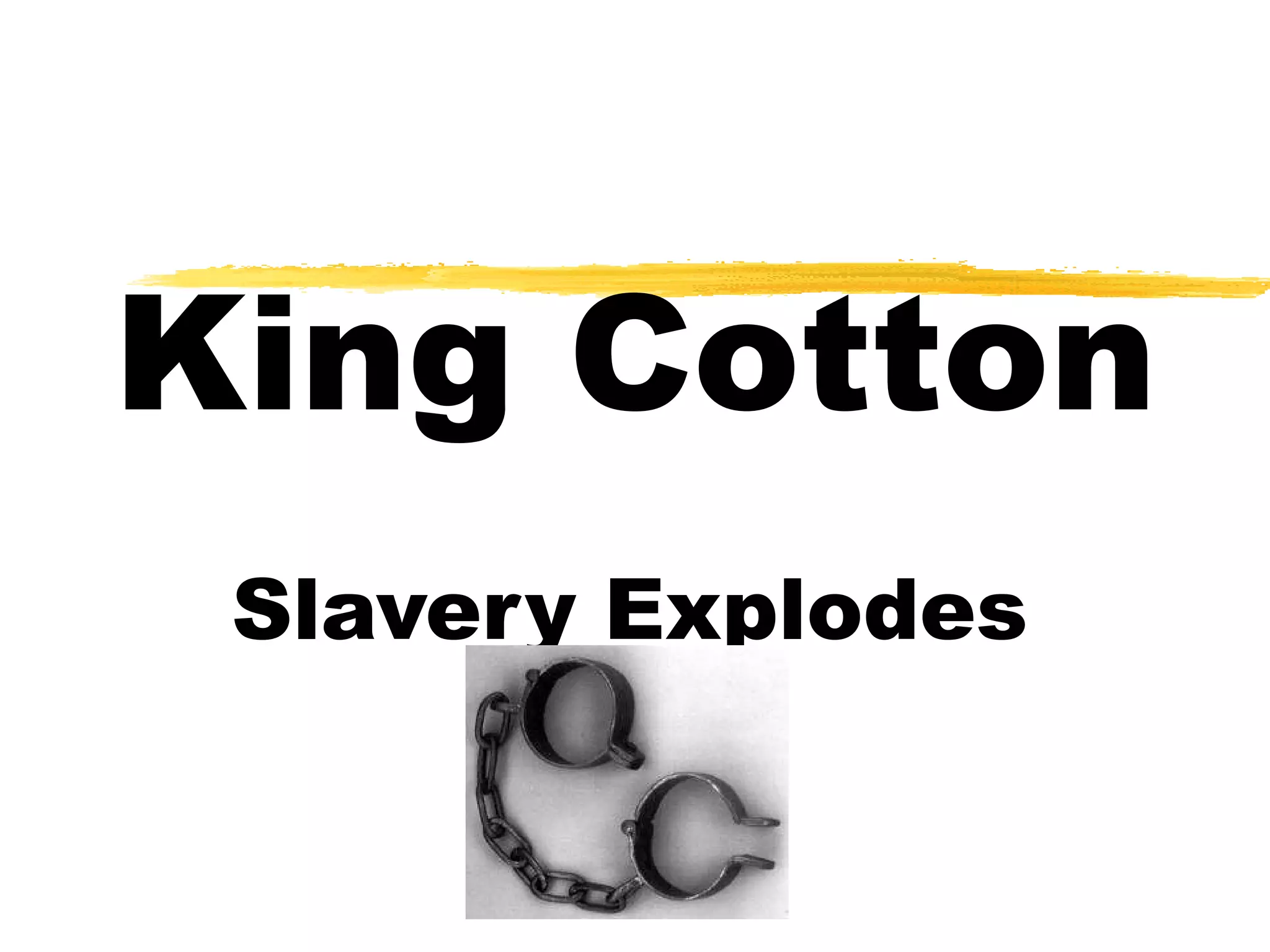
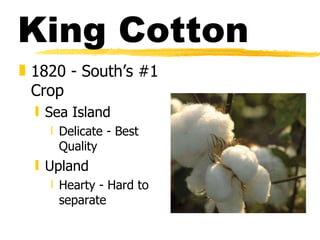
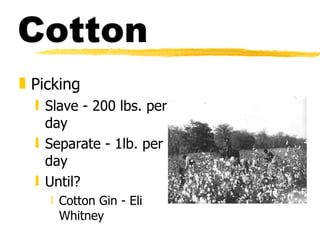
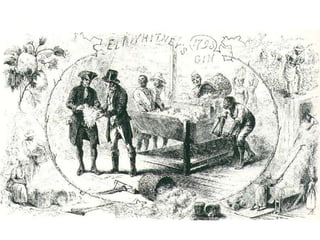
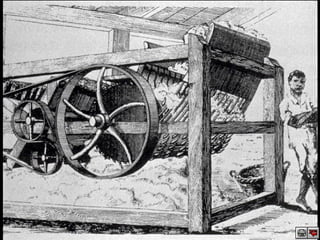
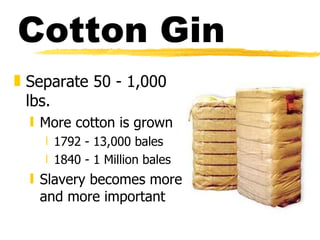
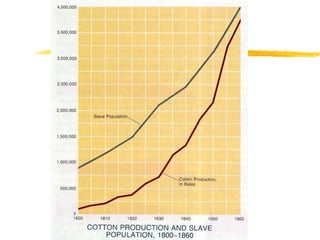
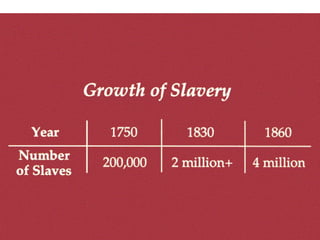
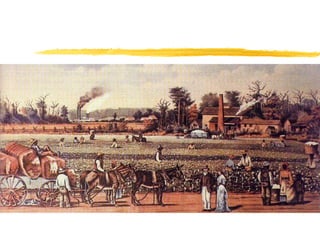
The cotton gin led to a massive expansion of slavery in the American South. Eli Whitney's invention in 1793 automated the labor-intensive process of separating cotton fibers from seeds, vastly increasing production. Cotton production grew from 13,000 bales in 1792 to over 1 million bales by 1840. The demand for slave labor to cultivate and pick cotton grew tremendously, reversing the expectation that slavery would die out, and the South became increasingly dependent on the institution of slavery to maintain its economy. By 1860 over 4 million slaves, making up over 1/3 of the population in the Southern states, were kept as human property to support the cotton industry.






























![Vs4 review, 2008[1]](https://cdn.slidesharecdn.com/ss_thumbnails/vs4review20081-100827110147-phpapp02-thumbnail.jpg?width=640&height=640&fit=bounds)


![Vs3 review, 2008[1]](https://cdn.slidesharecdn.com/ss_thumbnails/vs3review20081-100827105901-phpapp01-thumbnail.jpg?width=640&height=640&fit=bounds)


