Maintrac®
A tool for monitoring therapy success in solid tumors:
circulating epithelial tumor cells
Based on the presentation of Prof. Dr. med Katharina Pachmann MD
Transfusion Medicine Center Bayreuth TZB, Germany
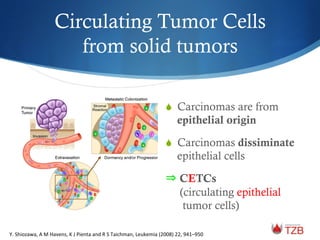
Circulating Tumor Cells
from solid tumors
S  Carcinomas are from
epithelial origin
S  Carcinomas dissiminate
epithelial cells
⇒ CETCs
(circulating epithelial
tumor cells)
Y.	
  Shiozawa,	
  A	
  M	
  Havens,	
  K	
  J	
  Pienta	
  and	
  R	
  S	
  Taichman,	
  Leukemia	
  (2008)	
  22,	
  941–950	
  
Testing
Microscope based
semi-automated image
evaluation
Recording of
S  any solid tumor
S  not for lymphoma
or leukemia
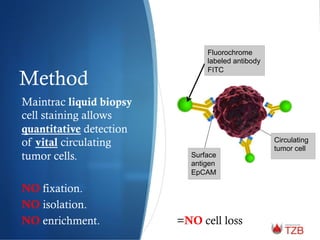
Method
Maintrac liquid biopsy
cell staining allows
quantitative detection
of vital circulating
tumor cells.
NO fixation.
NO isolation.
NO enrichment.
Fluorochrome
labeled antibody
FITC
Circulating
tumor cell
Surface
antigen
EpCAM
=NO cell loss
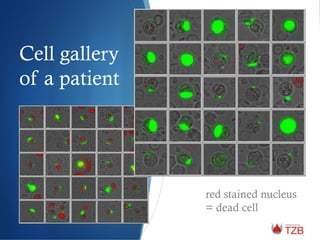
Cell gallery
of a patient
red stained nucleus
= dead cell
Monitoring therapy success
using Circulating Tumor Cells
monitor response to treatment with a particular therapeutic
product for the purpose of adjusting treatment to achieve
improved safety or effectiveness.
(‚Companoin Diagnostics‘: FDA)
Monitoring
Monitoring the Response of Circulating Epithelial Tumor
Cells to Adjuvant Chemotherapy in Breast Cancer Allows
Detection of Patients at Risk of Early Relapse
Katharina Pachmann, Oumar Camara, Andreas Kavallaris, Sabine Krauspe, Nele Malarski,
Mieczyslaw Gajda, Torsten Kroll, Cornelia Jo¨rke, Ulrike Hammer, Annelore Altendorf-Hofmann,
Carola Rabenstein, Ulrich Pachmann, Ingo Runnebaum, and Klaus Ho¨ffken
From the Clinic for Internal Medicine II,
Institution for Pathology, and Women’s
Hospital, Friedrich Schiller University;
Tumorzentrum, Jena; and Transfu-
sionsmedizinisches Zentrum, Bayreuth,
Germany.
Submitted July 25, 2007; accepted
November 2, 2007.
Authors’ disclosures of potential con-
flicts of interest and author contribu-
tions are found at the end of this
article.
Corresponding author: Katharina Pach-
mann, MD, PhD, Department of Experi-
mental Hematology and Oncology,
Clinic for Internal Medicine II, Friedrich
Schiller Universita¨t Jena, Erlanger Allee
101, D-07747, Jena, Germany; e-mail:
katharina.pachmann@med.uni-jena.de.
© 2008 by American Society of Clinical
Oncology
0732-183X/08/2608-1208/$20.00
DOI: 10.1200/JCO.2007.13.6523
A B S T R A C T
Purpose
To demonstrate that it is possible to monitor the response to adjuvant therapy by repeated analysis
of circulating epithelial tumor cells (CETCs) and to detect patients early who are at risk of relapse.
Patients and Methods
In 91 nonmetastatic primary breast cancer patients, CETCs were quantified using laser scanning
cytometry of anti–epithelial cell adhesion molecule–stained epithelial cells from whole unsepa-
rated blood before and during adjuvant chemotherapy.
Results
Numbers of CETCs were analyzed before therapy, before each new cycle, and at the end of
chemotherapy. The following three typical patterns of response were observed: (1) decrease in
cell numbers (Ͼ 10-fold); (2) marginal changes in cell numbers (Ͻ 10-fold); and (3) an (sometimes
saw-toothed) increase or an initial decrease with subsequent reincrease (Ͼ 10-fold) in numbers of
CETCs. Twenty relapses (22%) were observed within the accrual time of 40 months, including one
of 28 patients from response group 1, five of 30 patients from response group 2, and 14 of 33
patients from response group 3. The difference in relapse-free survival was highly significant for
CETC (hazard ratio ϭ 4.407; 95% CI, 1.739 to 9.418; P Ͻ .001) between patients with decreasing
cell numbers and those with marginal changes and between patients with marginal changes and
those with an increase of more than 10-fold (linear Cox regression model).
Conclusion
These results show that peripherally circulating tumor cells are influenced by systemic chemotherapy
and that an increase (even after initial response to therapy) of 10-fold or more at the end of therapy is
a strong predictor of relapse and a surrogate marker for the aggressiveness of the tumor cells.
J Clin Oncol 26:1208-1215. © 2008 by American Society of Clinical Oncology
INTRODUCTION
Solid malignant tumors of the breast are the most
frequent cause of death in women in the devel-
oped world. Although early detection, precise sur-
gery with wide margins, and adjuvant therapy
have improved results,1
relapse is not infrequent.
In premenopausal women, a first narrow peak
occurs approximately 8 to 10 months after mas-
tectomy, and a second peak occurs at 28 to 30
months. Postmenopausal patients display a peak
at approximately 18 to 20 months.2
After diagno-
sis of metastatic disease, the outcome is fatal. To
date, there is no tool to monitor the effect of
adjuvant treatment apart from statistical analy-
ses3
; however, prediction for the individual pa-
tient is restricted.
Solid tumors can seed tumor cells into the pe-
ripheral blood, which may, even after complete re-
section of the tumor, eventually grow into
metastases.Detectionofsuchcirculatingtumorcells
has been reported in patients with primary4-6
and
metastatic7
breast cancer, with a shorter survival in
patients with cells in bone marrow8
or in patients
with metastatic disease with higher cell numbers in
blood.7
In metastatic disease, the clinical conse-
quence of this result is questionable because there is
no indication that treatment will lead to improved
survivalinpatientswithpoorprognosis.9
Inpatients
with primary tumor, only 40% of patients carrying
isolated tumor cells in bone marrow experience
recurrence,6
indicating that a portion of the circu-
lating epithelial tumor cells (CETCs) may be bio-
logically irrelevant and tumor cells may differ in
JOURNAL OF CLINICAL ONCOLOGY O R I G I N A L R E P O R T
VOLUME 26 ⅐ NUMBER 8 ⅐ MARCH 10 2008
1208
Copyright © 2008 by the American Society of Clinical Oncology. All rights reserved.
Information downloaded from jco.ascopubs.org and provided by F Delbanco on March 9, 2008 from 141.35.226.179.
J Clin Oncol 2008, 26 (8):
1208-1215
Monitoring the Response of
Circulating Epithelial Tumor
Cells (CETC) to Adjuvant
Chemotherapy in Breast
Cancer Allows Detection of
Patients at Risk of Early
Relapse
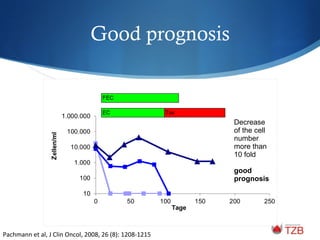
Good prognosis
Pachmann	
  et	
  al,	
  J	
  Clin	
  Oncol,	
  2008,	
  26	
  (8):	
  1208-­‐1215	
  
Decrease
of the cell
number
more than
10 fold
good
prognosis
c)
Pachmann	
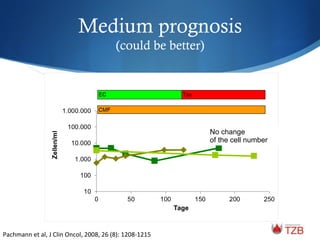
  et	
  al,	
  J	
  Clin	
  Oncol,	
  2008,	
  26	
  (8):	
  1208-­‐1215	
  
No change
of the cell number
Medium prognosis
(could be better)
Pachmann	
  et	
  al,	
  J	
  Clin	
  Oncol,	
  2008,	
  26	
  (8):	
  1208-­‐1215	
  
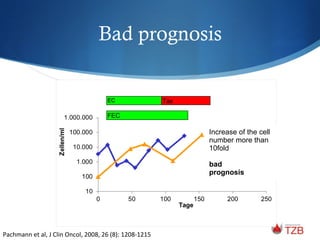
Increase of the cell
number more than
10fold
bad
prognosis
Bad prognosis
150012009006003000
days
1,0
0,8
0,6
0,4
0,2
0,0
cum.survival
marginal change-
censored
increase>10fold-
censored
decrease>10fold-
censored
marginal change
increase>10fold
decrease>10fold
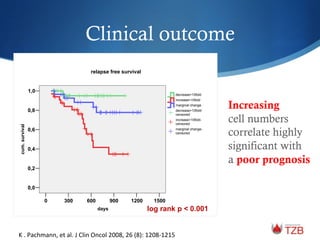
relapse free survival
Clinical outcome
Increasing
cell numbers
correlate highly
significant with
a poor prognosis
log rank p < 0.001
	
  K	
  .	
  Pachmann,	
  et	
  al.	
  J	
  Clin	
  Oncol	
  2008,	
  26	
  (8):	
  1208-­‐1215	
  
Increasing cell numbers
What can you do?
Chemo-
sensitivity
identify patients who are
most likely to benefit
from a particular
therapeutic product
(‚Companoin Diagnostics‘: FDA)
Chemo-
sensitivity
J Cancer Therapy 2013,
4:597-605
Chemosensitivity Testing of
Circulating Epithelial Tumor
Cells (CETC) in Vitro:
Correlation to in Vivo
Sensitivity and Clinical
Outcome.
Chemo-
sensitivity
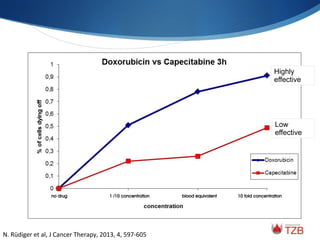
•  Exposing the blood sample
to different drugs and
concentrations
•  Determin the rate of dying
circulating epithelial tumor
cells to identify the most
effective drug for the patient
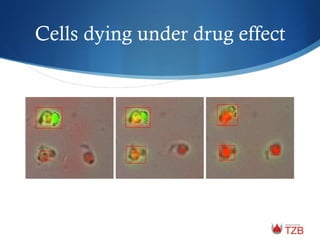
Typical pictures
Epithelial cells
(green staining),
with red nucleus
as marker for
beginning
cell death.
Cells dying under drug effect
Highly
effective
Low
effective
N.	
  Rüdiger	
  et	
  al,	
  J	
  Cancer	
  Therapy,	
  2013,	
  4,	
  597-­‐605	
  	
  
no drug 
 
 1 /10 concentration 
 blood equivalent 
 10 fold concentration
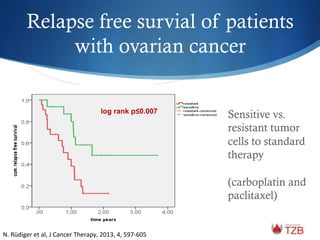
Relapse free survial of patients
with ovarian cancer
N.	
  Rüdiger	
  et	
  al,	
  J	
  Cancer	
  Therapy,	
  2013,	
  4,	
  597-­‐605	
  	
  
log rank p≤0.007
Sensitive vs.
resistant tumor
cells to standard
therapy
(carboplatin and
paclitaxel)
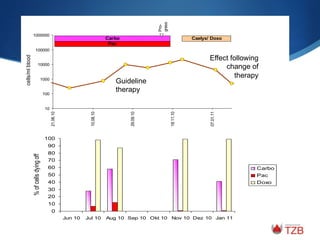
10
100
1000
10000
100000
1000000
21.06.10
10.08.10
29.09.10
18.11.10
07.01.11
cells/mlblood
Carbo
Pac
Caelyx/ Doxo
Pro-
gress
0
10
20
30
40
50
60
70
80
90
100
Jun 10 Jul 10 Aug 10 Sep 10 Okt 10 Nov 10 Dez 10 Jan 11
%ofcellsdyingoff
Carbo
Pac
Doxo
Guideline
therapy
Effect following
change of
therapy
Diagnosis
Surgery
maintrac
cell counting
1. cycle guidelines
2. cycle guidelines
maintrac
cell counting
Increase in cell numbers
maintrac chemosensitivity
3. cycle adapted
4. cycle adapted
maintrac
cell couning
5. cycle adapted
6. cycle adapted
maintrac
cell counting
Decrease in cell numbers
3. cycle guidelines
4. cycle guidelines
maintrac
cell counting
Increase in cell numbers
maintrac chemosensitivity
5. cycle adapted
6. cycle adapted
maintrac
cell counting
Decrease in cell numbers
5. cycle guidelines
6. cycle guidelines
maintrac
cell counting
OPTIONAL:
maintrac chemosensitivity
D-ML-13345-01-00-
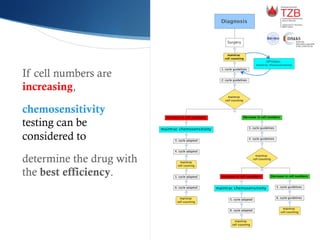
If cell numbers are
increasing,
chemosensitivity
testing can be
considered to
determine the drug with
the best efficiency.
Maintenance therapy
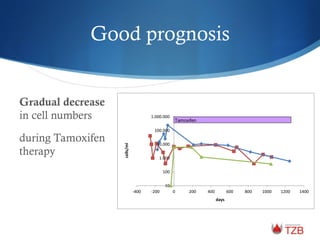
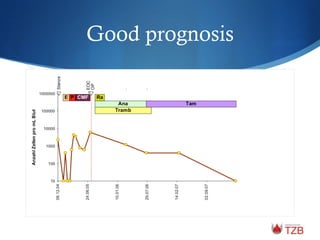
Good prognosis
Gradual decrease
in cell numbers
during Tamoxifen
therapy
10
100
1.000
10.000
100.000
1.000.000
-­‐400 -­‐200 0 200 400 600 800 1000 1200 1400
cells/ml
days
Tamoxifen
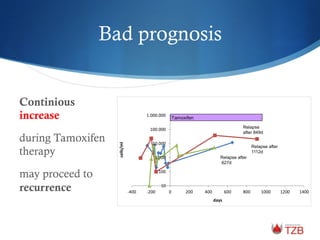
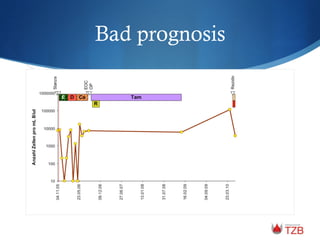
Bad prognosis
Continious
increase
during Tamoxifen
therapy
may proceed to
recurrence 10
100
1.000
10.000
100.000
1.000.000
-­‐400 -­‐200 0 200 400 600 800 1000 1200 1400
cells/ml
days
Tamoxifen
Relapse
after 849d
Relapse after
1112d
Relapse after
627d
K.	
  Pachmann	
  et	
  al,	
  J	
  Cancer	
  Res	
  Clin	
  Oncol	
  2011,	
  137:821-­‐828	
  	
  
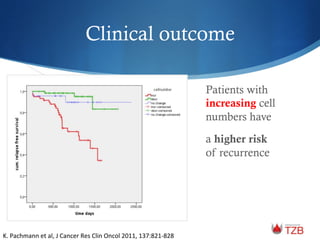
Patients with
increasing cell
numbers have
a higher risk
of recurrence
Clinical outcome
maintenance
therapy
maintrac
cell counting
every 3 month
Increase
in cell numbers
take
change of therapy
into consideration
maintrac
cell counting
every 3 month
Decrease
in cell numbers
go on with therapy
maintrac
cell counting
every 3 month
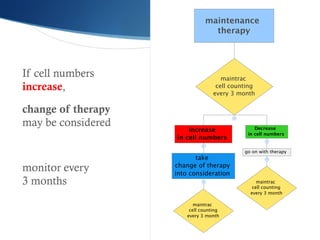
If cell numbers
increase,
change of therapy
may be considered
monitor every
3 months
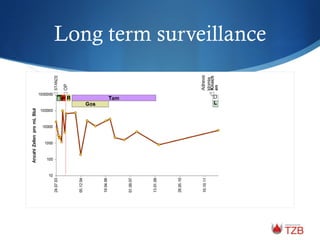
Long term
surveillance
Good prognosis
Bad prognosis
Long term surveillance
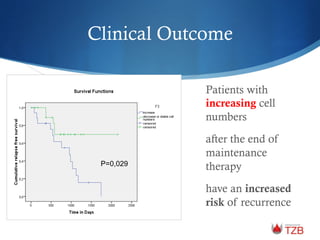
Clinical Outcome
P=0,029
Patients with
increasing cell
numbers
after the end of
maintenance
therapy
have an increased
risk of recurrence
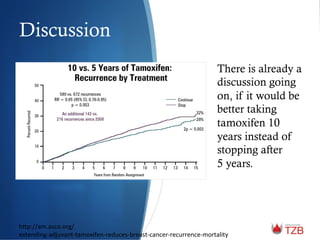
Discussion
There is already a
discussion going
on, if it would be
better taking
tamoxifen 10
years instead of
stopping after
5 years.
hWp://am.asco.org/	
  
extending-­‐adjuvant-­‐tamoxifen-­‐reduces-­‐breast-­‐cancer-­‐recurrence-­‐mortality	
  
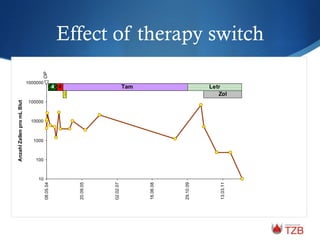
Effect of therapy switch
10
100
1000
10000
100000
1000000
08.05.04
20.09.05
02.02.07
16.06.08
29.10.09
13.03.11
AnzahlZellenpromLBlut
4 4
R
Tam Letr
Zol
OP
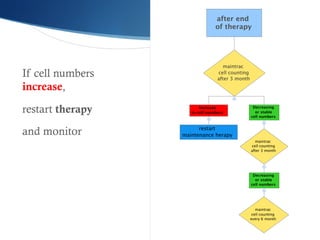
after end
of therapy
maintrac
cell counting
after 3 month
Increase
in cell numbers
restart
maintenance herapy
Decreasing
or stable
cell numbers
maintrac
cell counting
after 3 month
Decreasing
or stable
cell numbers
maintrac
cell counting
every 6 month
If cell numbers
increase,
restart therapy
and monitor
Thank you
for your attention
Association Transfusion Medicine Center in Bayreuth - TZB
SIMFO Specialized Immunology Science + Development GmbH &
Laboratory Dr. Ulrich Pachmann
Peter Pachmann Laboratory Dr. Pachmann
Kattjahren 8 Kurpromenade 2
22359 Hamburg 95448 Bayreuth
Germany Germany
www.maintrac.de

Staining of Circulating Tumor Cells - as easy as a blood picture

  • 1.
    Maintrac® A tool formonitoring therapy success in solid tumors: circulating epithelial tumor cells Based on the presentation of Prof. Dr. med Katharina Pachmann MD Transfusion Medicine Center Bayreuth TZB, Germany
  • 2.
    Circulating Tumor Cells fromsolid tumors S  Carcinomas are from epithelial origin S  Carcinomas dissiminate epithelial cells ⇒ CETCs (circulating epithelial tumor cells) Y.  Shiozawa,  A  M  Havens,  K  J  Pienta  and  R  S  Taichman,  Leukemia  (2008)  22,  941–950  
  • 3.
    Testing Microscope based semi-automated image evaluation Recordingof S  any solid tumor S  not for lymphoma or leukemia
  • 4.
    Method Maintrac liquid biopsy cellstaining allows quantitative detection of vital circulating tumor cells. NO fixation. NO isolation. NO enrichment. Fluorochrome labeled antibody FITC Circulating tumor cell Surface antigen EpCAM =NO cell loss
  • 5.
    Cell gallery of apatient red stained nucleus = dead cell
  • 6.
    Monitoring therapy success usingCirculating Tumor Cells monitor response to treatment with a particular therapeutic product for the purpose of adjusting treatment to achieve improved safety or effectiveness. (‚Companoin Diagnostics‘: FDA)
  • 7.
    Monitoring Monitoring the Responseof Circulating Epithelial Tumor Cells to Adjuvant Chemotherapy in Breast Cancer Allows Detection of Patients at Risk of Early Relapse Katharina Pachmann, Oumar Camara, Andreas Kavallaris, Sabine Krauspe, Nele Malarski, Mieczyslaw Gajda, Torsten Kroll, Cornelia Jo¨rke, Ulrike Hammer, Annelore Altendorf-Hofmann, Carola Rabenstein, Ulrich Pachmann, Ingo Runnebaum, and Klaus Ho¨ffken From the Clinic for Internal Medicine II, Institution for Pathology, and Women’s Hospital, Friedrich Schiller University; Tumorzentrum, Jena; and Transfu- sionsmedizinisches Zentrum, Bayreuth, Germany. Submitted July 25, 2007; accepted November 2, 2007. Authors’ disclosures of potential con- flicts of interest and author contribu- tions are found at the end of this article. Corresponding author: Katharina Pach- mann, MD, PhD, Department of Experi- mental Hematology and Oncology, Clinic for Internal Medicine II, Friedrich Schiller Universita¨t Jena, Erlanger Allee 101, D-07747, Jena, Germany; e-mail: katharina.pachmann@med.uni-jena.de. © 2008 by American Society of Clinical Oncology 0732-183X/08/2608-1208/$20.00 DOI: 10.1200/JCO.2007.13.6523 A B S T R A C T Purpose To demonstrate that it is possible to monitor the response to adjuvant therapy by repeated analysis of circulating epithelial tumor cells (CETCs) and to detect patients early who are at risk of relapse. Patients and Methods In 91 nonmetastatic primary breast cancer patients, CETCs were quantified using laser scanning cytometry of anti–epithelial cell adhesion molecule–stained epithelial cells from whole unsepa- rated blood before and during adjuvant chemotherapy. Results Numbers of CETCs were analyzed before therapy, before each new cycle, and at the end of chemotherapy. The following three typical patterns of response were observed: (1) decrease in cell numbers (Ͼ 10-fold); (2) marginal changes in cell numbers (Ͻ 10-fold); and (3) an (sometimes saw-toothed) increase or an initial decrease with subsequent reincrease (Ͼ 10-fold) in numbers of CETCs. Twenty relapses (22%) were observed within the accrual time of 40 months, including one of 28 patients from response group 1, five of 30 patients from response group 2, and 14 of 33 patients from response group 3. The difference in relapse-free survival was highly significant for CETC (hazard ratio ϭ 4.407; 95% CI, 1.739 to 9.418; P Ͻ .001) between patients with decreasing cell numbers and those with marginal changes and between patients with marginal changes and those with an increase of more than 10-fold (linear Cox regression model). Conclusion These results show that peripherally circulating tumor cells are influenced by systemic chemotherapy and that an increase (even after initial response to therapy) of 10-fold or more at the end of therapy is a strong predictor of relapse and a surrogate marker for the aggressiveness of the tumor cells. J Clin Oncol 26:1208-1215. © 2008 by American Society of Clinical Oncology INTRODUCTION Solid malignant tumors of the breast are the most frequent cause of death in women in the devel- oped world. Although early detection, precise sur- gery with wide margins, and adjuvant therapy have improved results,1 relapse is not infrequent. In premenopausal women, a first narrow peak occurs approximately 8 to 10 months after mas- tectomy, and a second peak occurs at 28 to 30 months. Postmenopausal patients display a peak at approximately 18 to 20 months.2 After diagno- sis of metastatic disease, the outcome is fatal. To date, there is no tool to monitor the effect of adjuvant treatment apart from statistical analy- ses3 ; however, prediction for the individual pa- tient is restricted. Solid tumors can seed tumor cells into the pe- ripheral blood, which may, even after complete re- section of the tumor, eventually grow into metastases.Detectionofsuchcirculatingtumorcells has been reported in patients with primary4-6 and metastatic7 breast cancer, with a shorter survival in patients with cells in bone marrow8 or in patients with metastatic disease with higher cell numbers in blood.7 In metastatic disease, the clinical conse- quence of this result is questionable because there is no indication that treatment will lead to improved survivalinpatientswithpoorprognosis.9 Inpatients with primary tumor, only 40% of patients carrying isolated tumor cells in bone marrow experience recurrence,6 indicating that a portion of the circu- lating epithelial tumor cells (CETCs) may be bio- logically irrelevant and tumor cells may differ in JOURNAL OF CLINICAL ONCOLOGY O R I G I N A L R E P O R T VOLUME 26 ⅐ NUMBER 8 ⅐ MARCH 10 2008 1208 Copyright © 2008 by the American Society of Clinical Oncology. All rights reserved. Information downloaded from jco.ascopubs.org and provided by F Delbanco on March 9, 2008 from 141.35.226.179. J Clin Oncol 2008, 26 (8): 1208-1215 Monitoring the Response of Circulating Epithelial Tumor Cells (CETC) to Adjuvant Chemotherapy in Breast Cancer Allows Detection of Patients at Risk of Early Relapse
  • 8.
    Good prognosis Pachmann  et  al,  J  Clin  Oncol,  2008,  26  (8):  1208-­‐1215   Decrease of the cell number more than 10 fold good prognosis
  • 9.
    c) Pachmann  et  al,  J  Clin  Oncol,  2008,  26  (8):  1208-­‐1215   No change of the cell number Medium prognosis (could be better)
  • 10.
    Pachmann  et  al,  J  Clin  Oncol,  2008,  26  (8):  1208-­‐1215   Increase of the cell number more than 10fold bad prognosis Bad prognosis
  • 11.
    150012009006003000 days 1,0 0,8 0,6 0,4 0,2 0,0 cum.survival marginal change- censored increase>10fold- censored decrease>10fold- censored marginal change increase>10fold decrease>10fold relapsefree survival Clinical outcome Increasing cell numbers correlate highly significant with a poor prognosis log rank p < 0.001  K  .  Pachmann,  et  al.  J  Clin  Oncol  2008,  26  (8):  1208-­‐1215  
  • 12.
  • 13.
    Chemo- sensitivity identify patients whoare most likely to benefit from a particular therapeutic product (‚Companoin Diagnostics‘: FDA)
  • 14.
    Chemo- sensitivity J Cancer Therapy2013, 4:597-605 Chemosensitivity Testing of Circulating Epithelial Tumor Cells (CETC) in Vitro: Correlation to in Vivo Sensitivity and Clinical Outcome.
  • 15.
    Chemo- sensitivity •  Exposing theblood sample to different drugs and concentrations •  Determin the rate of dying circulating epithelial tumor cells to identify the most effective drug for the patient
  • 16.
    Typical pictures Epithelial cells (greenstaining), with red nucleus as marker for beginning cell death.
  • 17.
    Cells dying underdrug effect
  • 18.
    Highly effective Low effective N.  Rüdiger  et  al,  J  Cancer  Therapy,  2013,  4,  597-­‐605     no drug 1 /10 concentration blood equivalent 10 fold concentration
  • 19.
    Relapse free survialof patients with ovarian cancer N.  Rüdiger  et  al,  J  Cancer  Therapy,  2013,  4,  597-­‐605     log rank p≤0.007 Sensitive vs. resistant tumor cells to standard therapy (carboplatin and paclitaxel)
  • 20.
    10 100 1000 10000 100000 1000000 21.06.10 10.08.10 29.09.10 18.11.10 07.01.11 cells/mlblood Carbo Pac Caelyx/ Doxo Pro- gress 0 10 20 30 40 50 60 70 80 90 100 Jun 10Jul 10 Aug 10 Sep 10 Okt 10 Nov 10 Dez 10 Jan 11 %ofcellsdyingoff Carbo Pac Doxo Guideline therapy Effect following change of therapy
  • 21.
    Diagnosis Surgery maintrac cell counting 1. cycleguidelines 2. cycle guidelines maintrac cell counting Increase in cell numbers maintrac chemosensitivity 3. cycle adapted 4. cycle adapted maintrac cell couning 5. cycle adapted 6. cycle adapted maintrac cell counting Decrease in cell numbers 3. cycle guidelines 4. cycle guidelines maintrac cell counting Increase in cell numbers maintrac chemosensitivity 5. cycle adapted 6. cycle adapted maintrac cell counting Decrease in cell numbers 5. cycle guidelines 6. cycle guidelines maintrac cell counting OPTIONAL: maintrac chemosensitivity D-ML-13345-01-00- If cell numbers are increasing, chemosensitivity testing can be considered to determine the drug with the best efficiency.
  • 22.
  • 23.
    Good prognosis Gradual decrease incell numbers during Tamoxifen therapy 10 100 1.000 10.000 100.000 1.000.000 -­‐400 -­‐200 0 200 400 600 800 1000 1200 1400 cells/ml days Tamoxifen
  • 24.
    Bad prognosis Continious increase during Tamoxifen therapy mayproceed to recurrence 10 100 1.000 10.000 100.000 1.000.000 -­‐400 -­‐200 0 200 400 600 800 1000 1200 1400 cells/ml days Tamoxifen Relapse after 849d Relapse after 1112d Relapse after 627d
  • 25.
    K.  Pachmann  et  al,  J  Cancer  Res  Clin  Oncol  2011,  137:821-­‐828     Patients with increasing cell numbers have a higher risk of recurrence Clinical outcome
  • 26.
    maintenance therapy maintrac cell counting every 3month Increase in cell numbers take change of therapy into consideration maintrac cell counting every 3 month Decrease in cell numbers go on with therapy maintrac cell counting every 3 month If cell numbers increase, change of therapy may be considered monitor every 3 months
  • 27.
  • 28.
  • 29.
  • 30.
  • 31.
    Clinical Outcome P=0,029 Patients with increasingcell numbers after the end of maintenance therapy have an increased risk of recurrence
  • 32.
    Discussion There is alreadya discussion going on, if it would be better taking tamoxifen 10 years instead of stopping after 5 years. hWp://am.asco.org/   extending-­‐adjuvant-­‐tamoxifen-­‐reduces-­‐breast-­‐cancer-­‐recurrence-­‐mortality  
  • 33.
    Effect of therapyswitch 10 100 1000 10000 100000 1000000 08.05.04 20.09.05 02.02.07 16.06.08 29.10.09 13.03.11 AnzahlZellenpromLBlut 4 4 R Tam Letr Zol OP
  • 34.
    after end of therapy maintrac cellcounting after 3 month Increase in cell numbers restart maintenance herapy Decreasing or stable cell numbers maintrac cell counting after 3 month Decreasing or stable cell numbers maintrac cell counting every 6 month If cell numbers increase, restart therapy and monitor
  • 35.
  • 36.
    Association Transfusion MedicineCenter in Bayreuth - TZB SIMFO Specialized Immunology Science + Development GmbH & Laboratory Dr. Ulrich Pachmann Peter Pachmann Laboratory Dr. Pachmann Kattjahren 8 Kurpromenade 2 22359 Hamburg 95448 Bayreuth Germany Germany www.maintrac.de