Change Management
Your Way To Success
1- Change Management
2
Purpose
• Survival
• Evolution
2020
pmhouse.org
It is about moving from one position of stability to another, whether this is an individual learning
something or a large organization restructuring.
2. Learning & Individual
3
2020
pmhouse.org
Learning is the process of
acquiring knowledge
through experience which
leads to an enduring
change in behavior”
We are learning to do
something different,
something new and we
can’t do it as well.
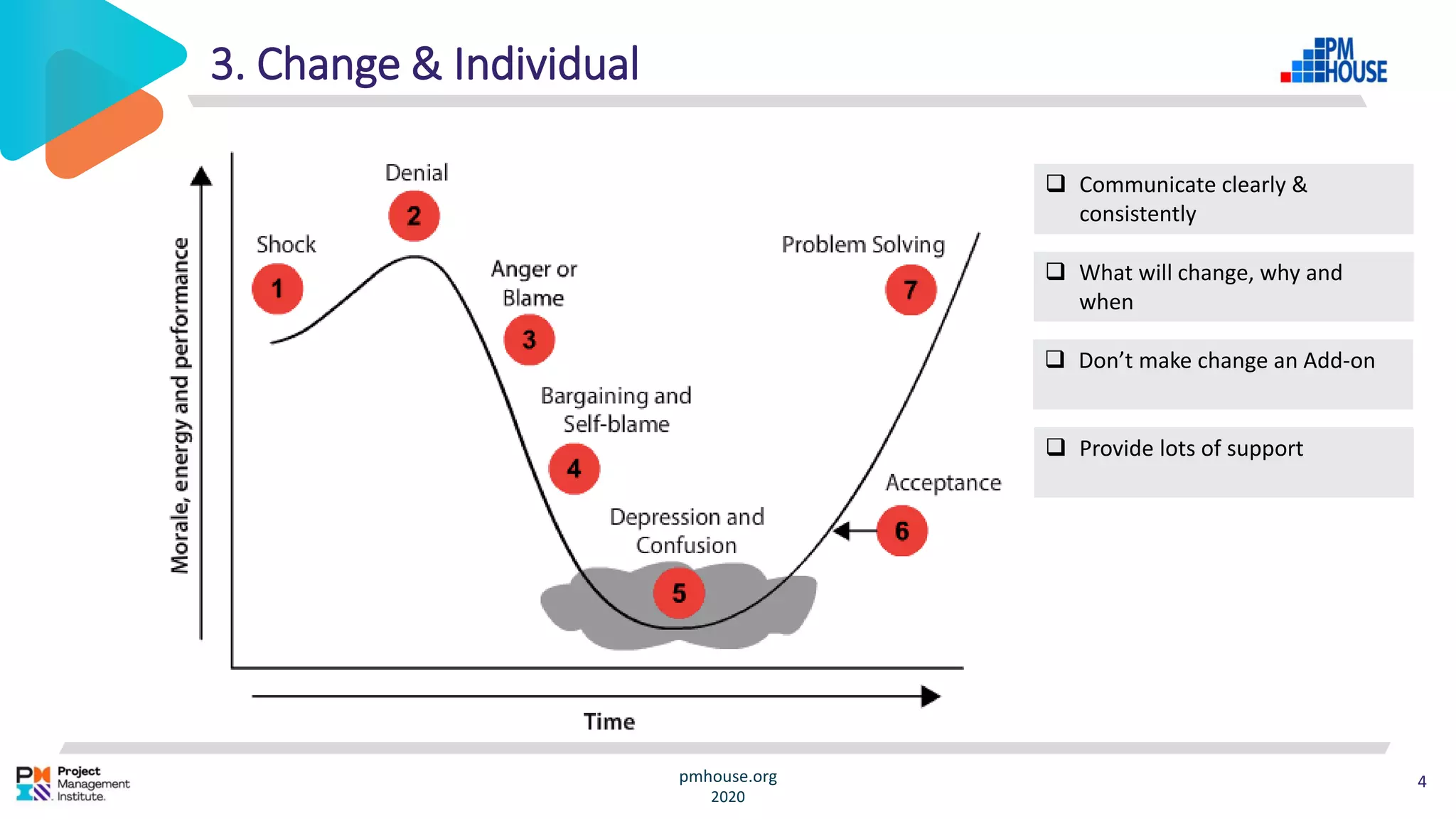
3. Change & Individual
pmhouse.org 4
2020
❑ Communicate clearly &
consistently
❑ What will change, why and
when
❑ Don’t make change an Add-on
❑ Provide lots of support
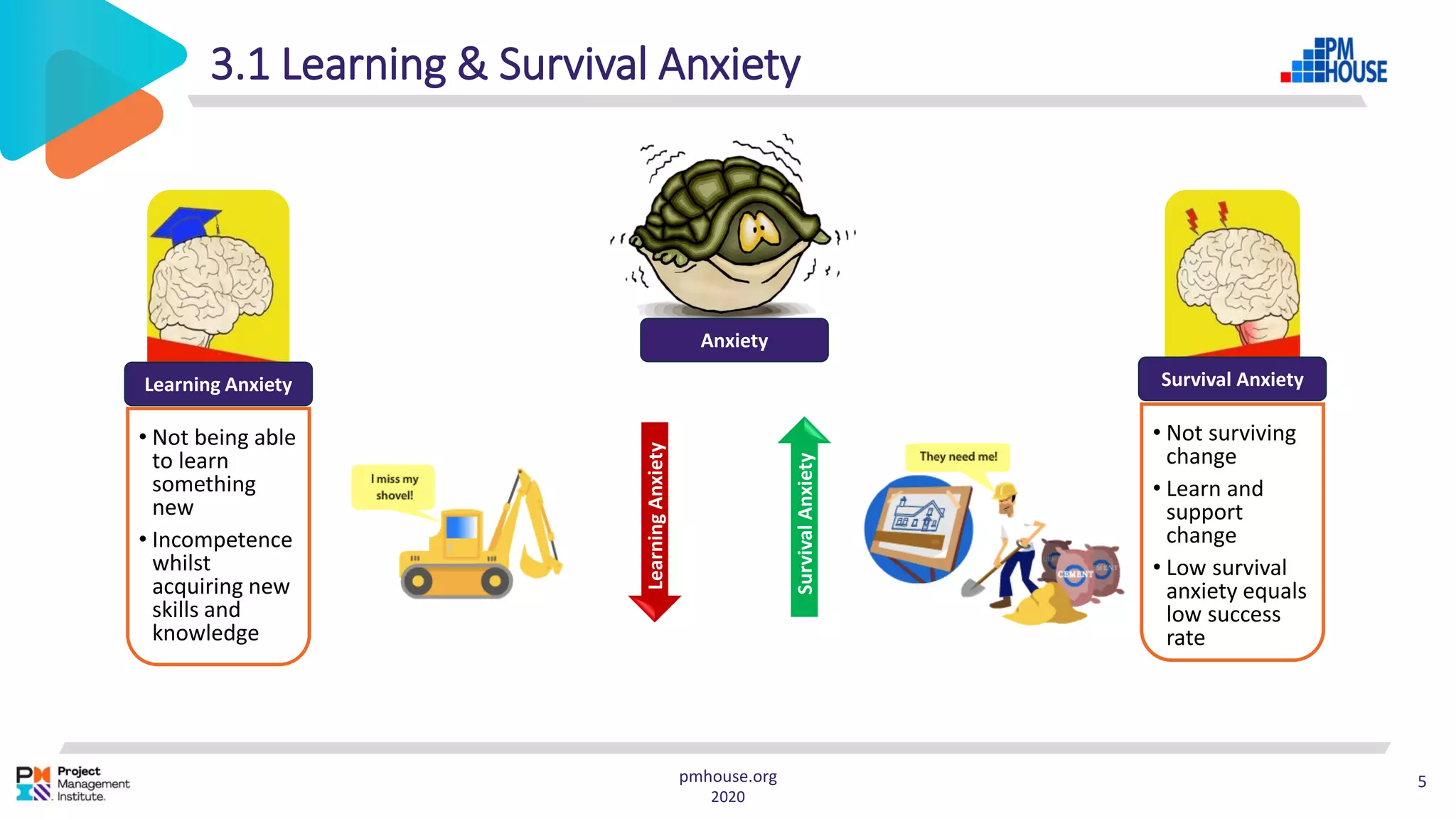
3.1 Learning & Survival Anxiety
pmhouse.org 5
2020
Anxiety
Learning Anxiety
• Not being able
to learn
something
new
• Incompetence
whilst
acquiring new
skills and
knowledge
Survival Anxiety
• Not surviving
change
• Learn and
support
change
• Low survival
anxiety equals
low success
rate
Learning
Anxiety
Survival
Anxiety
Organizational Culture 2
pmhouse.org 6
2020
Deeper
Surface
Deepest
• Norms & Values
• Basic Assumptions
• Artifacts & Products
• How they behave
• Commonly experienced at
office level
Trompenaars and Hampden-Turner
Visible
Organizational
Culture
• Norms & Values
• Dress codes,
• Punctuality and
• Security rules
• Use of first names
Formal
Informal
Organizational Culture 3
pmhouse.org 7
2020
Deeper
Surface
Deepest
• Norms & Values
• Basic Assumptions
• Artifacts & Products
Trompenaars and Hampden-Turner
'We are here for public
health, but in order to
invest in public health
we need to make a
profit'
'We need to
be profitable
• All staff are equal
• Greed is good
• We value individuals
Models of the Change Process – Intro.
pmhouse.org 8
2020
Kotter's model
Road map for change based on commen
errors
Lewin's Model
Break down collective mind-set to
enable change
Senge's model
links change to learning and how
learning promotes change
Models - Lewin Overview
pmhouse.org 9
2020
01 - Unfreeze 02 - Change 03 - Refreeze
1. Recognize the need for
change
2. Determine what needs
to change
3. Encourage the
replacement of old
behaviors & attitudes
4. Ensure there is strong
support from upper
management
5. Manage & understand
the doubts & concerns
1. Communicate often
2. Dispel rumors
3. Empower action
4. Implement the changes
5. involve people in the
process
6. Help employees to
learn new concept or
points of view
1. Changes are reinforced
2. develop ways to sustain
the change
3. Provide support &
training
4. Celebrate success
Inertia is overcome,
and existing habits &
mindsets are broken
down….
A period of confusion,
challenge & clarification
New mindsets &
habits formed &
establish.
Model - John Kotter's Eight Step Method
pmhouse.org 10
2020
Form a powerful
coalition
2
Create a vision for
change
3
Create a climate for change
Implementing Sustaining for
change
Engaging & enabling the
organization
Build on the change
7
Empower Action
5
8
Make it part of the
culture
Create quick wins
6
● Need for change and
its positioning
● Sufficient authority
or political power
4
Communicate
change vision
• Agreed a clear end
point
● Generate interest &
willingness
● Delegating appropriate
authority to others
● Stakeholder engagement
● Changes are
implemented
● Benefits are measured
& confirmed
Create Urgency
1
Learning
Anxiety
Idea-Generator
Key Roles in Organizational Change
pmhouse.org 11
2020
Sponsor
Line Managers
Targets/Implementers
Advocate
Implement change in
away that does not
stop Business as usual
Executive Leadership
Change Proposal
Stakeholders engagement 1
pmhouse.org 12
2020
● Delivered Capability & not changed
the way the organization works
Sudhanshu Palsule
Change
Low
High
High
High
Capacity
High
Capacity
Capacity for Change
Understanding
of
the
Change
High
Capacity
Experienced
Little
Experienced
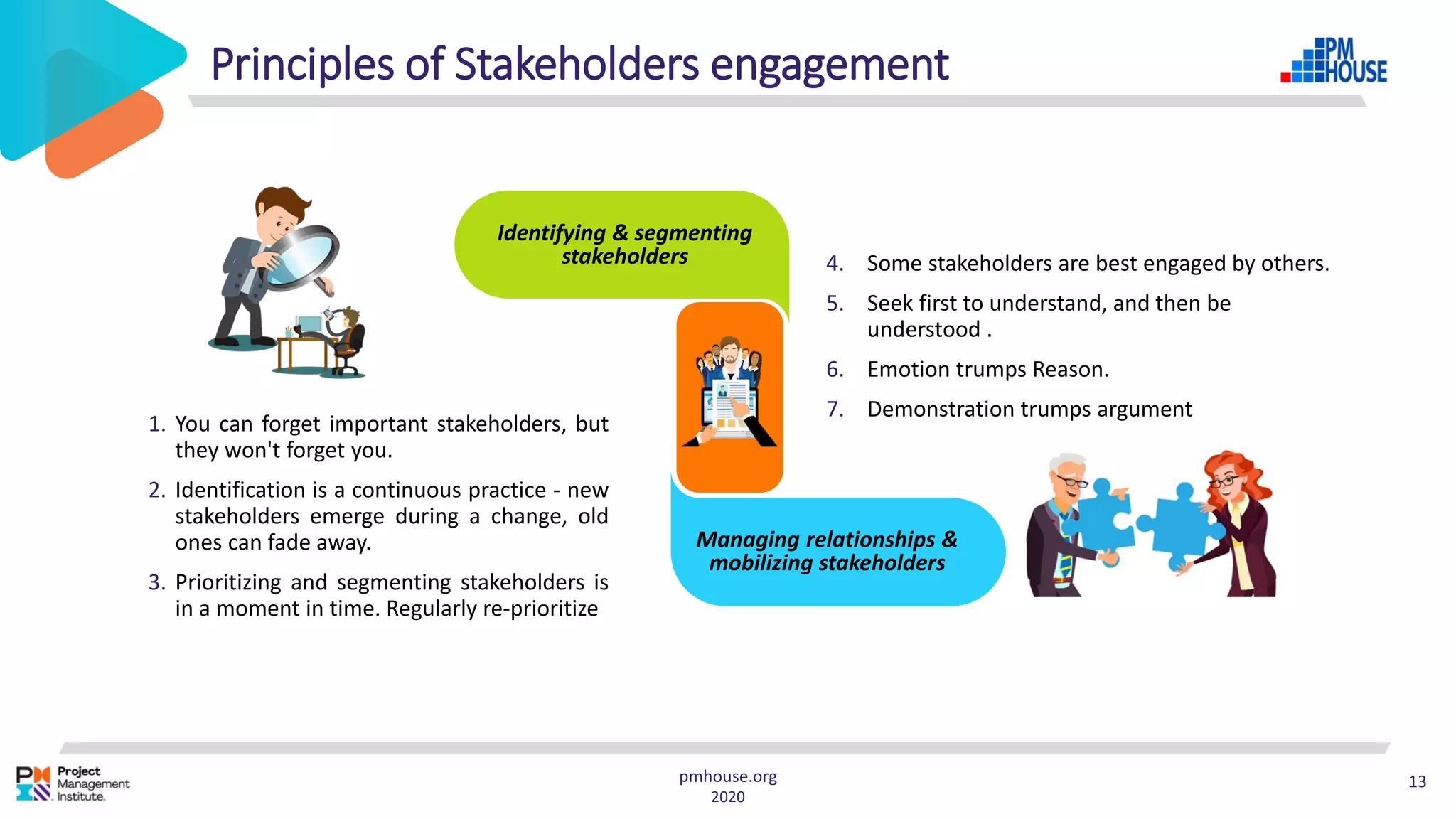
Principles of Stakeholders engagement
pmhouse.org 13
2020
Identifying & segmenting
stakeholders
Managing relationships &
mobilizing stakeholders
1. You can forget important stakeholders, but
they won't forget you.
2. Identification is a continuous practice - new
stakeholders emerge during a change, old
ones can fade away.
3. Prioritizing and segmenting stakeholders is
in a moment in time. Regularly re-prioritize
4. Some stakeholders are best engaged by others.
5. Seek first to understand, and then be
understood .
6. Emotion trumps Reason.
7. Demonstration trumps argument
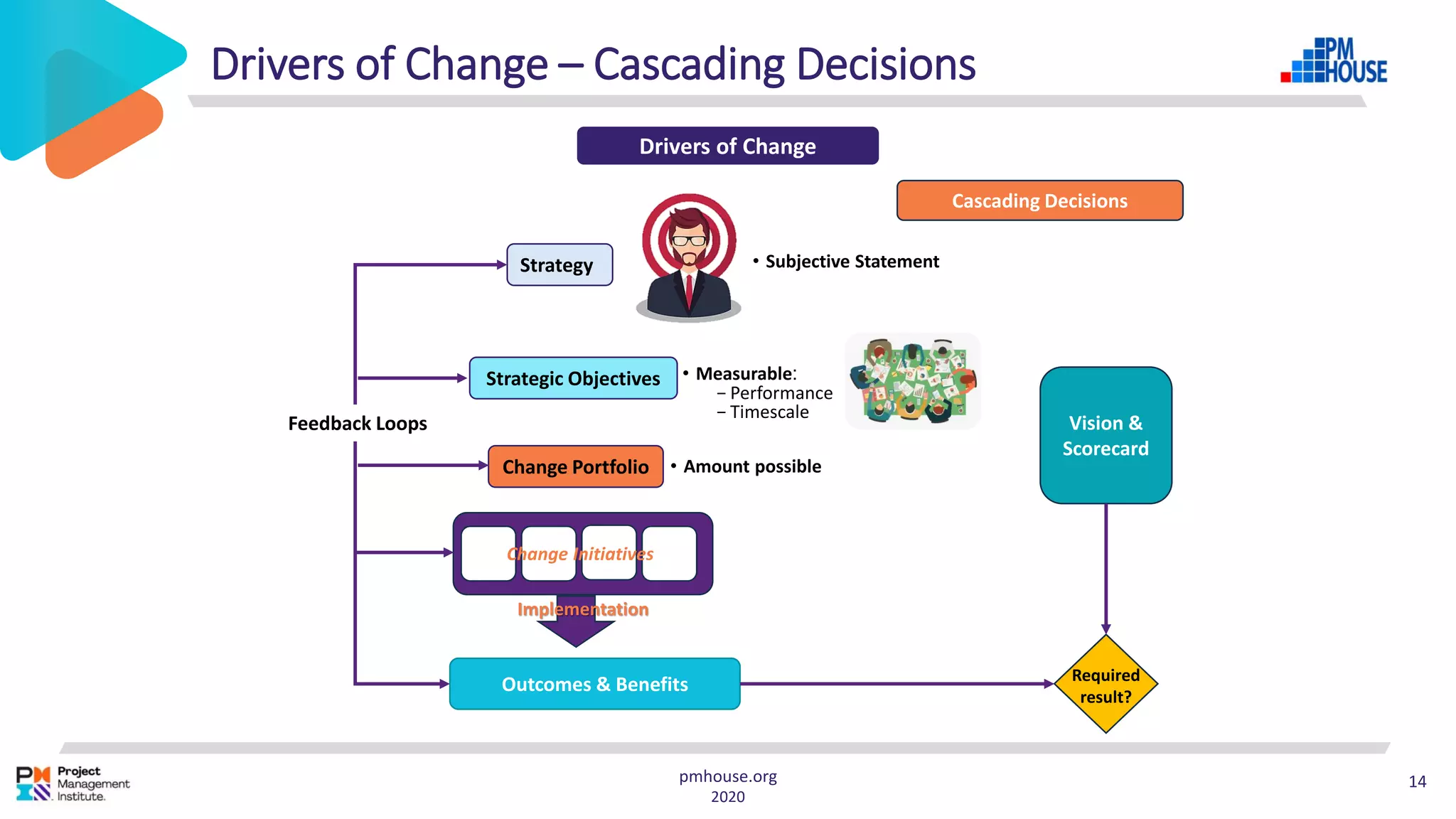
Drivers of Change – Cascading Decisions
pmhouse.org 14
2020
Drivers of Change
Strategic Objectives
Strategy
Change Portfolio
Outcomes & Benefits
• Amount possible
Change Initiatives
Implementation
• Measurable:
− Performance
− Timescale
• Subjective Statement
Vision &
Scorecard
Required
result?
Feedback Loops
Cascading Decisions
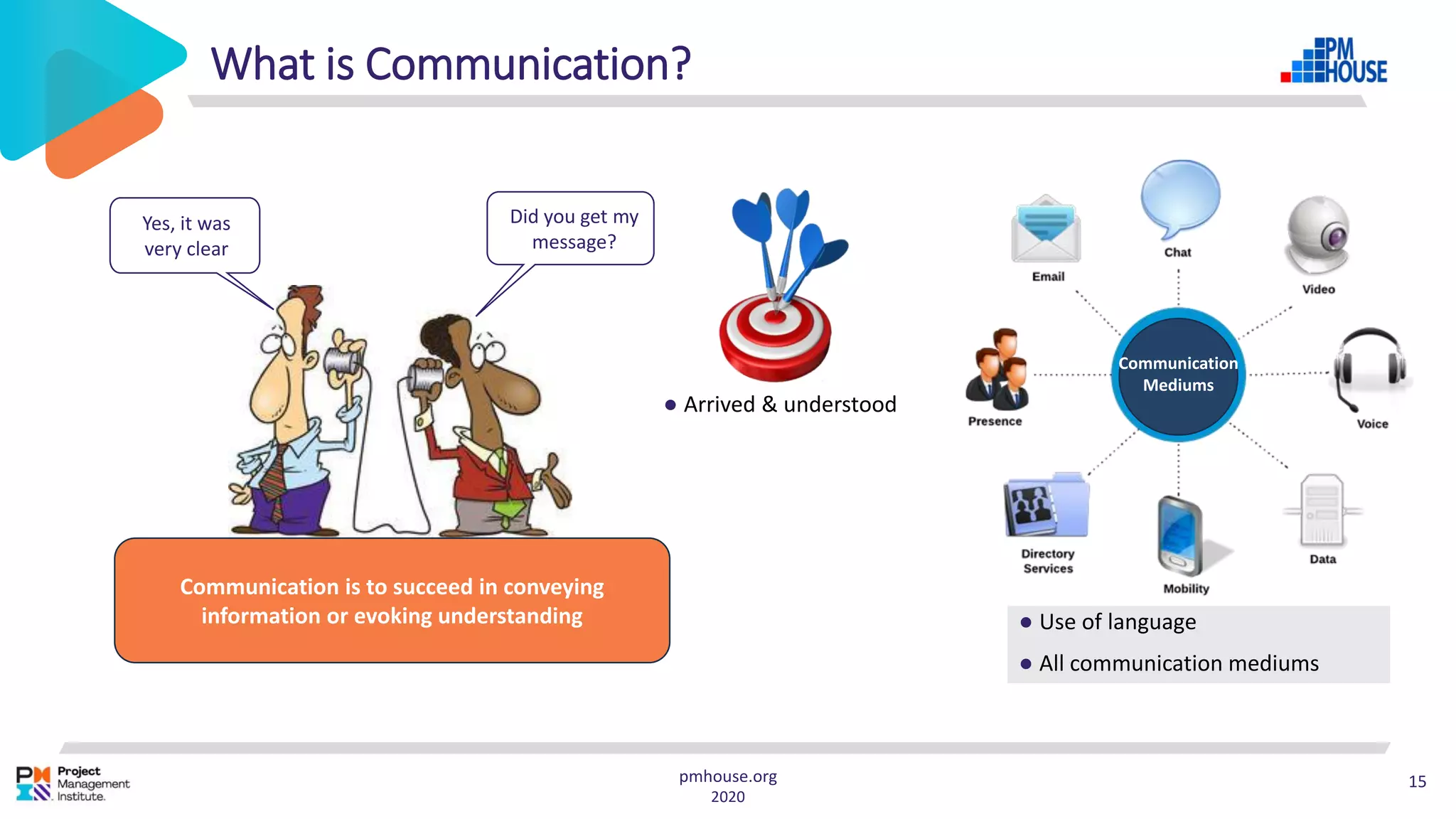
What is Communication?
pmhouse.org 15
2020
Did you get my
message?
Yes, it was
very clear
Communication is to succeed in conveying
information or evoking understanding
● Arrived & understood
● Use of language
● All communication mediums
Communication
Mediums
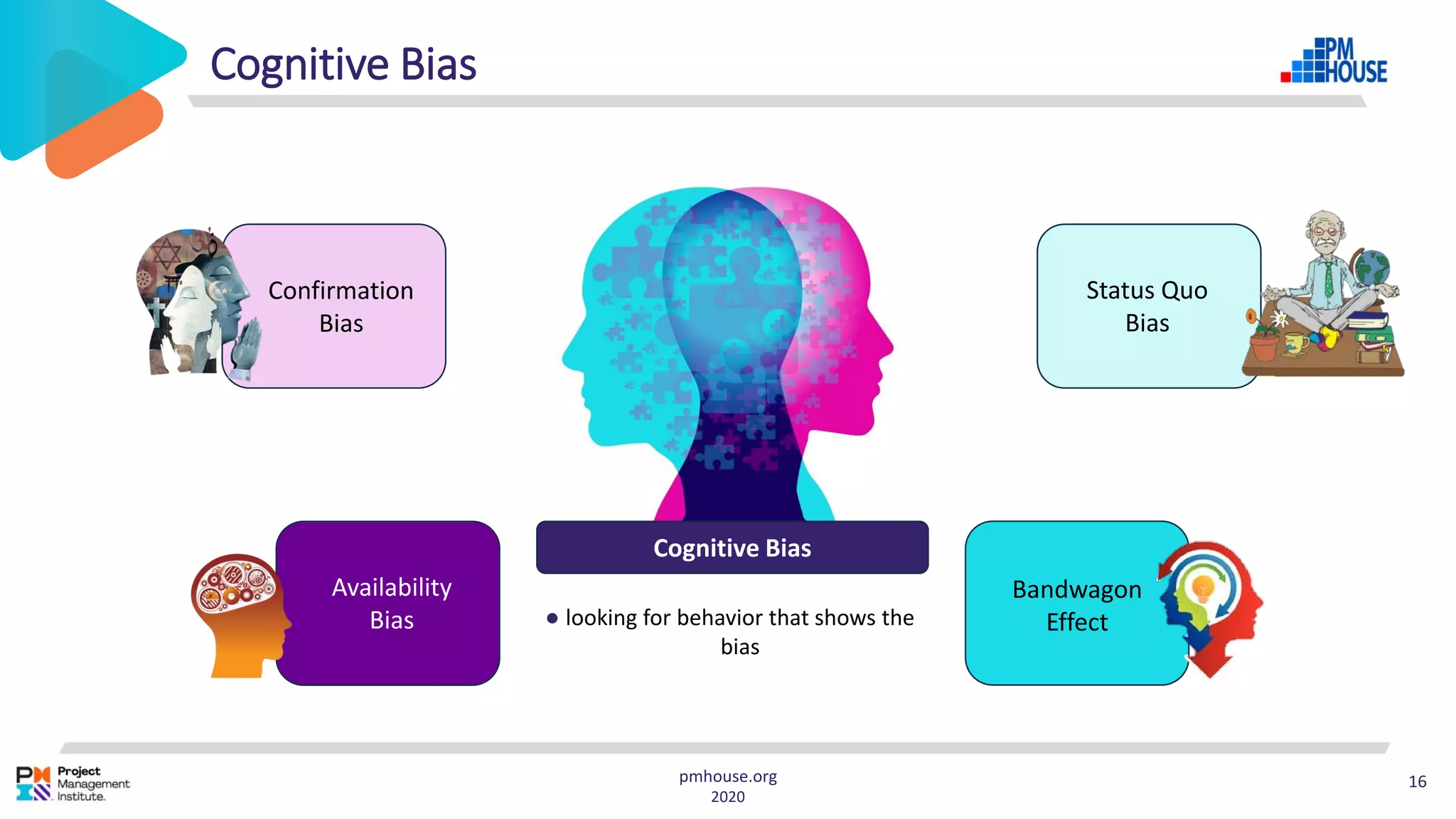
Cognitive Bias
pmhouse.org 16
2020
Cognitive Bias
Confirmation
Bias
Status Quo
Bias
Availability
Bias
Bandwagon
Effect
● looking for behavior that shows the
bias
Social Media
pmhouse.org 17
2020
Put best practice guidelines in place
about what is acceptable and what is not
3
Link social media objectives clearly to the
communications strategy for change
1
Best Practice Guidelines
5
Have dedicated resource to generate
content and interaction, to help build
momentum
2
Train people in social media use so they
are comfortable using it
4
Establish governance to monitor
adherence to a clear social media policy
6
Seek commitment from all levels of
management for use of social media
7
Put monitoring systems and processes in
place to measure its effectiveness
● Wider levels of
collaboration
● Build communities
● Deliver results.
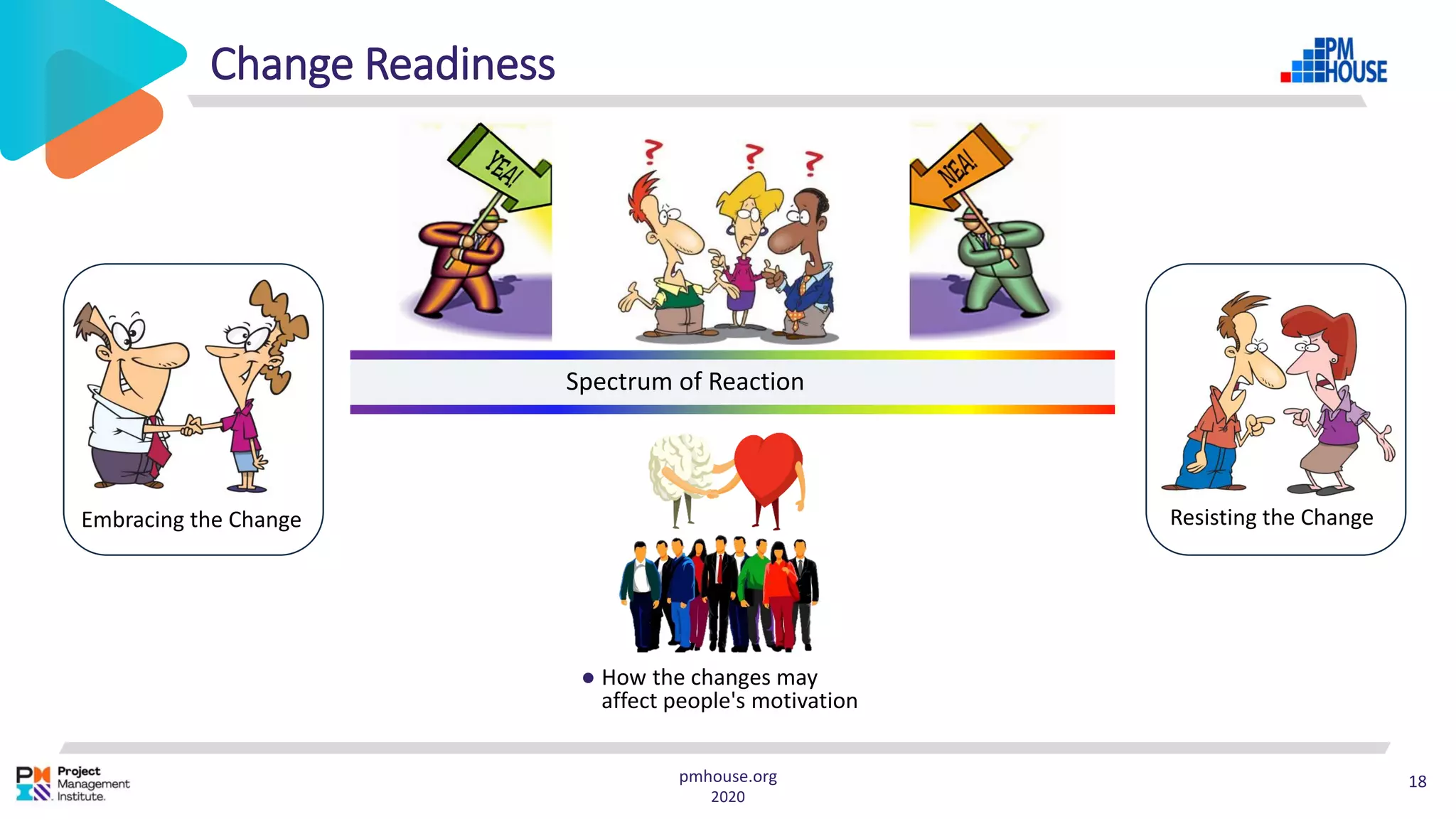
Change Readiness
pmhouse.org 18
2020
Spectrum of Reaction
● How the changes may
affect people's motivation
Embracing the Change Resisting the Change
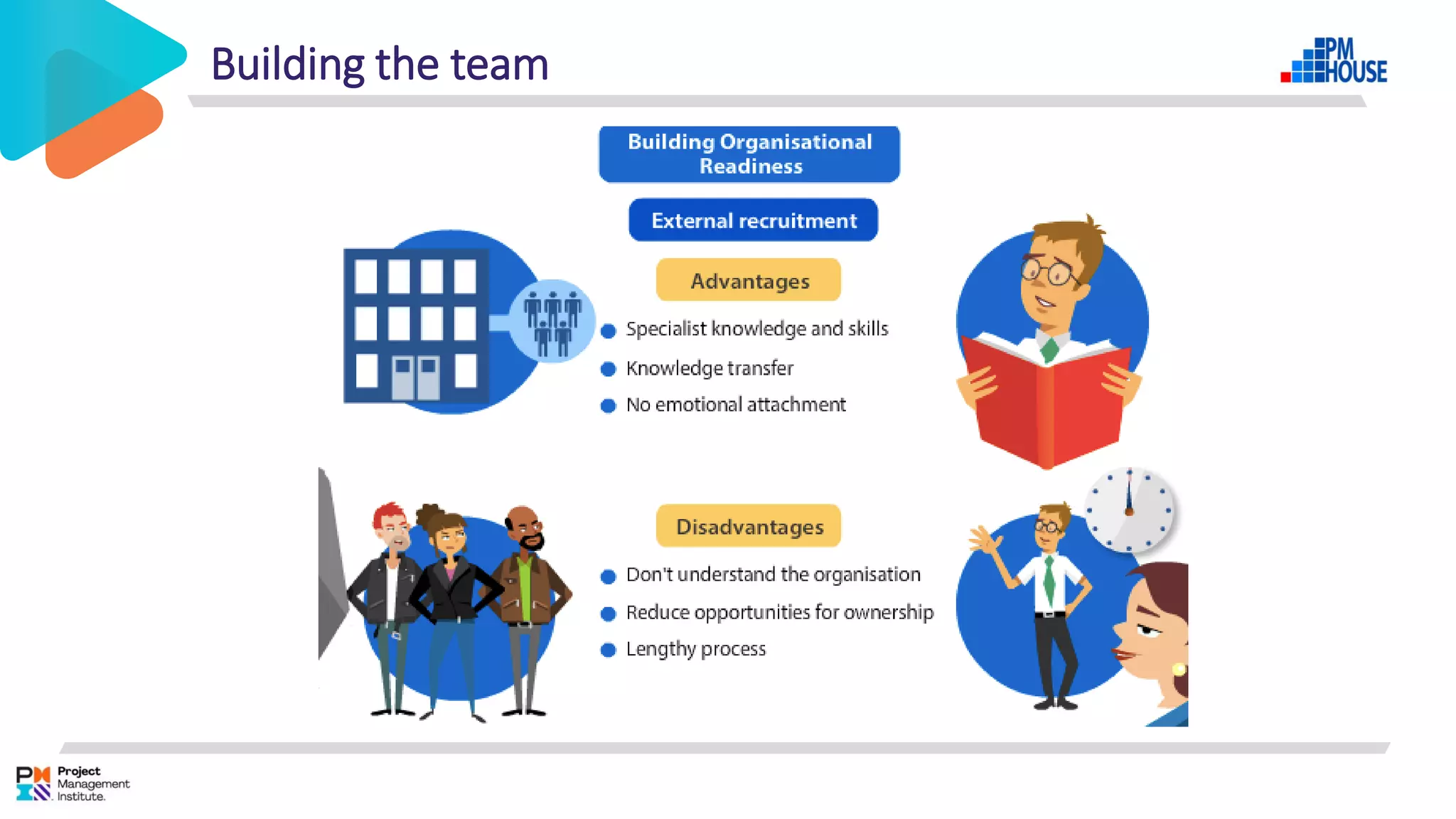
Building the team
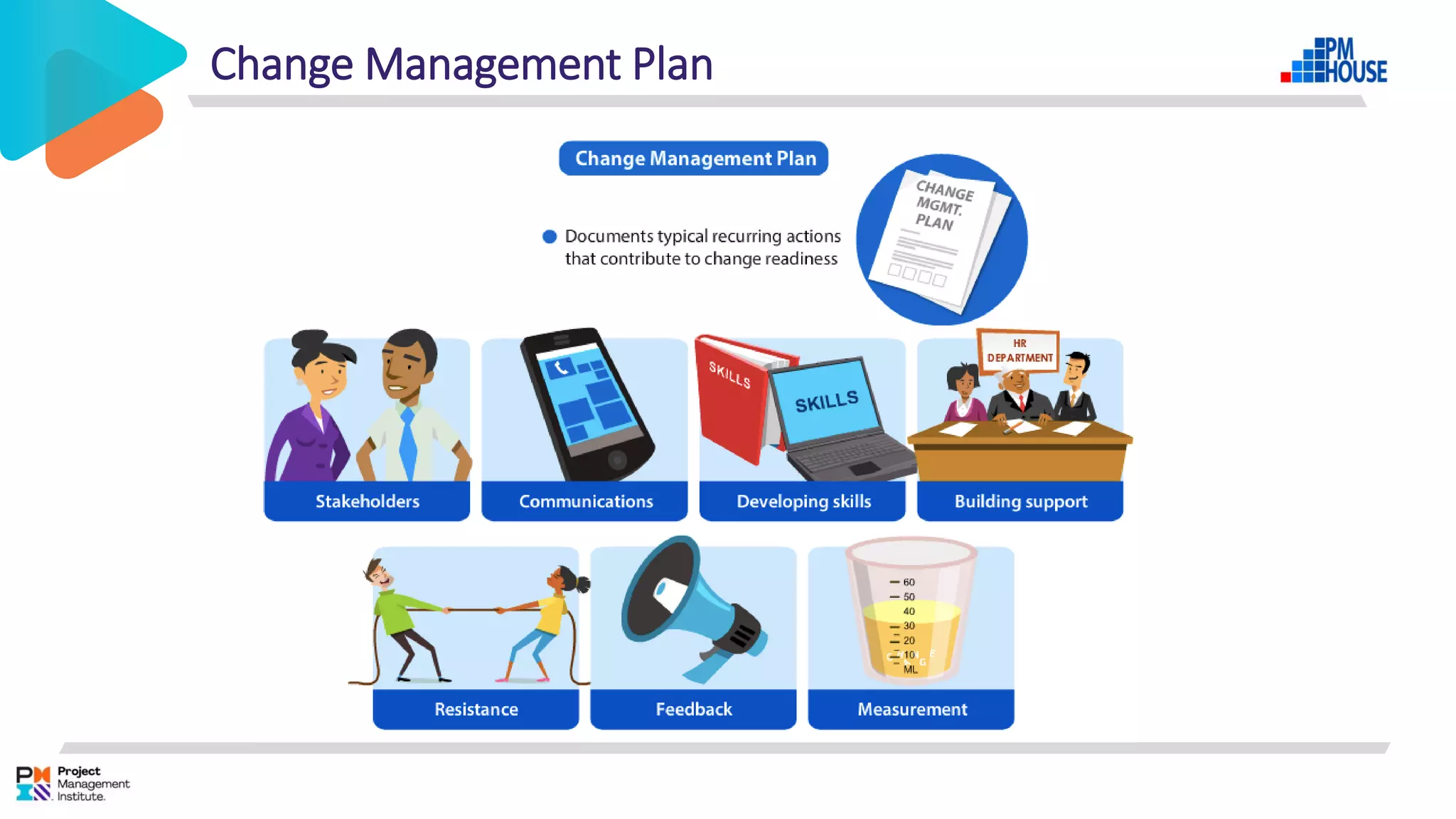
Change Management Plan
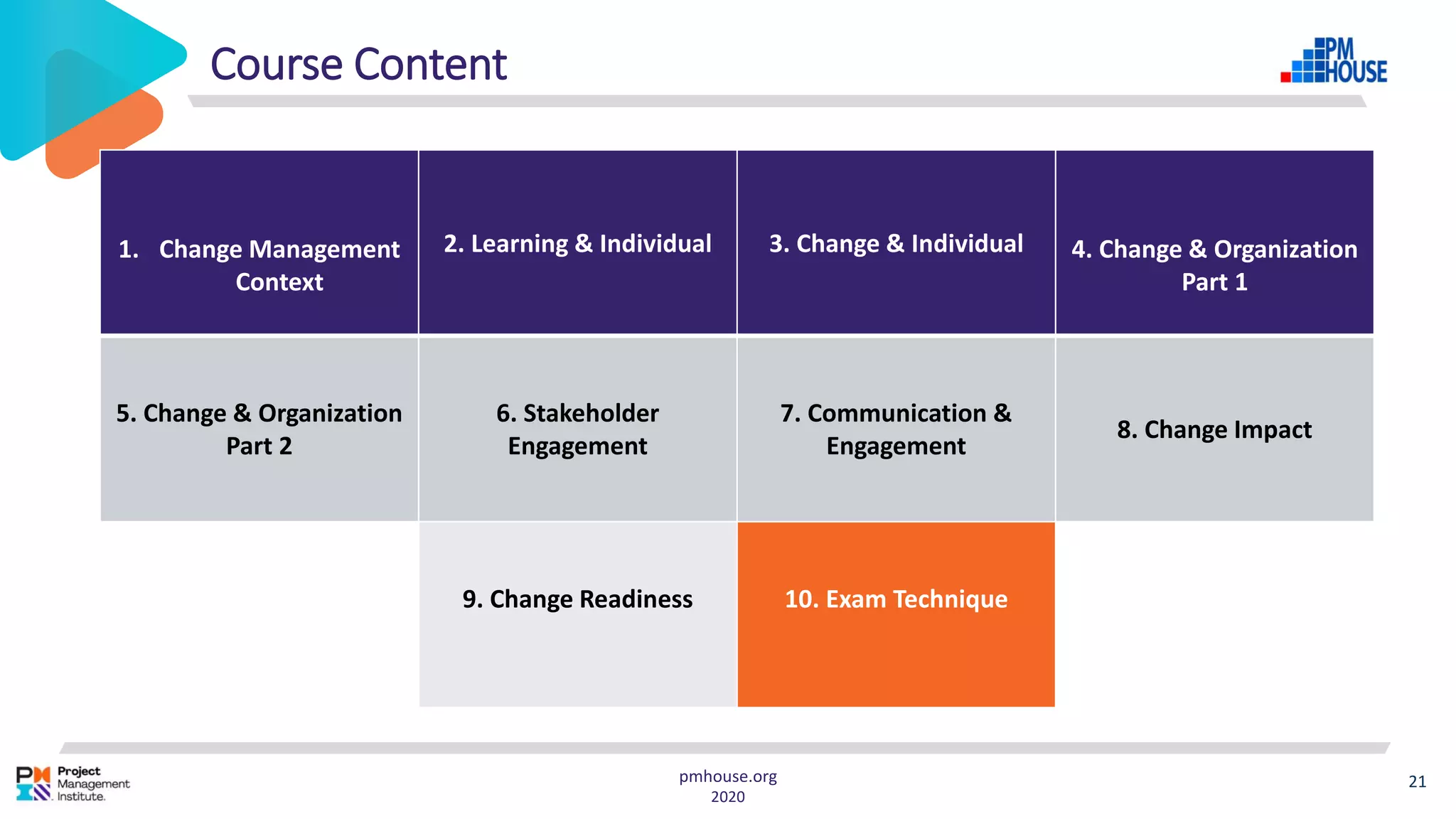
Course Content
1. Change Management
Context
2. Learning & Individual 3. Change & Individual 4. Change & Organization
Part 1
5. Change & Organization
Part 2
6. Stakeholder
Engagement
7. Communication &
Engagement
8. Change Impact
9. Change Readiness 10. Exam Technique
21
2020
pmhouse.org
140 مبادرة #تواصل_تطوير المحاضرة ال 140 من المبادرة مهندس / أكرم النجار استشاري إدارة المشاريع بعنوان * Change Management إدارة التغيير"

140 مبادرة #تواصل_تطوير المحاضرة ال 140 من المبادرة مهندس / أكرم النجار استشاري إدارة المشاريع بعنوان * Change Management إدارة التغيير"

  • 2.
  • 3.
    1- Change Management 2 Purpose •Survival • Evolution 2020 pmhouse.org It is about moving from one position of stability to another, whether this is an individual learning something or a large organization restructuring.
  • 4.
    2. Learning &Individual 3 2020 pmhouse.org Learning is the process of acquiring knowledge through experience which leads to an enduring change in behavior” We are learning to do something different, something new and we can’t do it as well.
  • 5.
    3. Change &Individual pmhouse.org 4 2020 ❑ Communicate clearly & consistently ❑ What will change, why and when ❑ Don’t make change an Add-on ❑ Provide lots of support
  • 6.
    3.1 Learning &Survival Anxiety pmhouse.org 5 2020 Anxiety Learning Anxiety • Not being able to learn something new • Incompetence whilst acquiring new skills and knowledge Survival Anxiety • Not surviving change • Learn and support change • Low survival anxiety equals low success rate Learning Anxiety Survival Anxiety
  • 7.
    Organizational Culture 2 pmhouse.org6 2020 Deeper Surface Deepest • Norms & Values • Basic Assumptions • Artifacts & Products • How they behave • Commonly experienced at office level Trompenaars and Hampden-Turner Visible Organizational Culture • Norms & Values • Dress codes, • Punctuality and • Security rules • Use of first names Formal Informal
  • 8.
    Organizational Culture 3 pmhouse.org7 2020 Deeper Surface Deepest • Norms & Values • Basic Assumptions • Artifacts & Products Trompenaars and Hampden-Turner 'We are here for public health, but in order to invest in public health we need to make a profit' 'We need to be profitable • All staff are equal • Greed is good • We value individuals
  • 9.
    Models of theChange Process – Intro. pmhouse.org 8 2020 Kotter's model Road map for change based on commen errors Lewin's Model Break down collective mind-set to enable change Senge's model links change to learning and how learning promotes change
  • 10.
    Models - LewinOverview pmhouse.org 9 2020 01 - Unfreeze 02 - Change 03 - Refreeze 1. Recognize the need for change 2. Determine what needs to change 3. Encourage the replacement of old behaviors & attitudes 4. Ensure there is strong support from upper management 5. Manage & understand the doubts & concerns 1. Communicate often 2. Dispel rumors 3. Empower action 4. Implement the changes 5. involve people in the process 6. Help employees to learn new concept or points of view 1. Changes are reinforced 2. develop ways to sustain the change 3. Provide support & training 4. Celebrate success Inertia is overcome, and existing habits & mindsets are broken down…. A period of confusion, challenge & clarification New mindsets & habits formed & establish.
  • 11.
    Model - JohnKotter's Eight Step Method pmhouse.org 10 2020 Form a powerful coalition 2 Create a vision for change 3 Create a climate for change Implementing Sustaining for change Engaging & enabling the organization Build on the change 7 Empower Action 5 8 Make it part of the culture Create quick wins 6 ● Need for change and its positioning ● Sufficient authority or political power 4 Communicate change vision • Agreed a clear end point ● Generate interest & willingness ● Delegating appropriate authority to others ● Stakeholder engagement ● Changes are implemented ● Benefits are measured & confirmed Create Urgency 1 Learning Anxiety
  • 12.
    Idea-Generator Key Roles inOrganizational Change pmhouse.org 11 2020 Sponsor Line Managers Targets/Implementers Advocate Implement change in away that does not stop Business as usual Executive Leadership Change Proposal
  • 13.
    Stakeholders engagement 1 pmhouse.org12 2020 ● Delivered Capability & not changed the way the organization works Sudhanshu Palsule Change Low High High High Capacity High Capacity Capacity for Change Understanding of the Change High Capacity Experienced Little Experienced
  • 14.
    Principles of Stakeholdersengagement pmhouse.org 13 2020 Identifying & segmenting stakeholders Managing relationships & mobilizing stakeholders 1. You can forget important stakeholders, but they won't forget you. 2. Identification is a continuous practice - new stakeholders emerge during a change, old ones can fade away. 3. Prioritizing and segmenting stakeholders is in a moment in time. Regularly re-prioritize 4. Some stakeholders are best engaged by others. 5. Seek first to understand, and then be understood . 6. Emotion trumps Reason. 7. Demonstration trumps argument
  • 15.
    Drivers of Change– Cascading Decisions pmhouse.org 14 2020 Drivers of Change Strategic Objectives Strategy Change Portfolio Outcomes & Benefits • Amount possible Change Initiatives Implementation • Measurable: − Performance − Timescale • Subjective Statement Vision & Scorecard Required result? Feedback Loops Cascading Decisions
  • 16.
    What is Communication? pmhouse.org15 2020 Did you get my message? Yes, it was very clear Communication is to succeed in conveying information or evoking understanding ● Arrived & understood ● Use of language ● All communication mediums Communication Mediums
  • 17.
    Cognitive Bias pmhouse.org 16 2020 CognitiveBias Confirmation Bias Status Quo Bias Availability Bias Bandwagon Effect ● looking for behavior that shows the bias
  • 18.
    Social Media pmhouse.org 17 2020 Putbest practice guidelines in place about what is acceptable and what is not 3 Link social media objectives clearly to the communications strategy for change 1 Best Practice Guidelines 5 Have dedicated resource to generate content and interaction, to help build momentum 2 Train people in social media use so they are comfortable using it 4 Establish governance to monitor adherence to a clear social media policy 6 Seek commitment from all levels of management for use of social media 7 Put monitoring systems and processes in place to measure its effectiveness ● Wider levels of collaboration ● Build communities ● Deliver results.
  • 19.
    Change Readiness pmhouse.org 18 2020 Spectrumof Reaction ● How the changes may affect people's motivation Embracing the Change Resisting the Change
  • 20.
  • 21.
  • 22.
    Course Content 1. ChangeManagement Context 2. Learning & Individual 3. Change & Individual 4. Change & Organization Part 1 5. Change & Organization Part 2 6. Stakeholder Engagement 7. Communication & Engagement 8. Change Impact 9. Change Readiness 10. Exam Technique 21 2020 pmhouse.org