Essentials of Human Anatomy & Physiology
Copyright © 2003 Pearson Education, Inc. publishing as Benjamin Cummings
Seventh Edition
Elaine N. Marieb
Chapter 12
The Lymphatic System
and Body Defenses
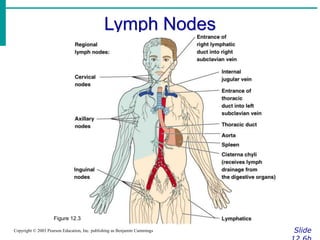
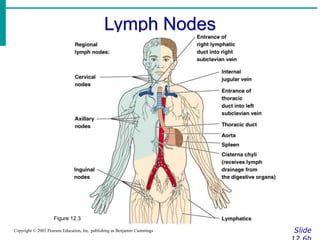
Lymph Nodes
Slide
Copyright © 2003 Pearson Education, Inc. publishing as Benjamin Cummings
Figure 12.3
The Lymphatic System
Slide 12.1
Copyright © 2003 Pearson Education, Inc. publishing as Benjamin Cummings
 Two parts
Lymphatic vessels
Lymphoid tissues and organs
 Lymphatic system functions
Transport fluids back to the blood
Play essential roles in body defense and
resistance to disease
 Absorb digested fat at the intestinal villi
Lymphatic Characteristics
Slide 12.2
Copyright © 2003 Pearson Education, Inc. publishing as Benjamin Cummings
 Lymph – excess tissue fluid carried by
lymphatic vessels
 Properties of lymphatic vessels
One way system toward the heart
No pump
Lymph moves toward the heart
Milking action of skeletal muscle
Rhythmic contraction of smooth muscle
in vessel walls
Lymphatic Vessels
Slide
Copyright © 2003 Pearson Education, Inc. publishing as Benjamin Cummings
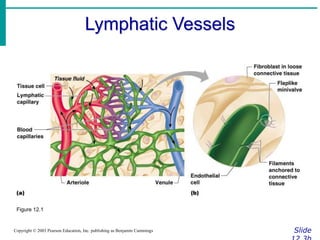
Figure 12.1
Lymphatic Vessels
Slide
Copyright © 2003 Pearson Education, Inc. publishing as Benjamin Cummings
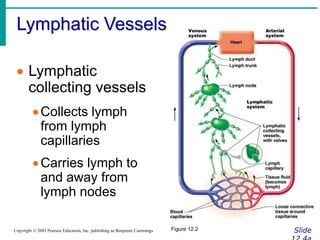
 Lymphatic
collecting vessels
Collects lymph
from lymph
capillaries
Carries lymph to
and away from
lymph nodes
Figure 12.2
Lymphatic Vessels
Slide
Copyright © 2003 Pearson Education, Inc. publishing as Benjamin Cummings
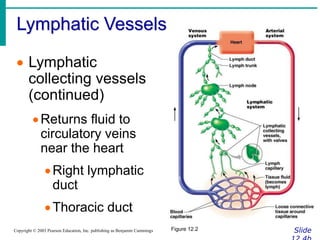
 Lymphatic
collecting vessels
(continued)
Returns fluid to
circulatory veins
near the heart
Right lymphatic
duct
Thoracic duct
Figure 12.2
Lymph
Slide
Copyright © 2003 Pearson Education, Inc. publishing as Benjamin Cummings
 Materials returned to the blood
Water
Blood cells
Proteins
Lymph
Slide
Copyright © 2003 Pearson Education, Inc. publishing as Benjamin Cummings
 Harmful materials that enter lymph
vessels
Bacteria
Viruses
Cancer cells
Cell debris
Lymph Nodes
Slide
Copyright © 2003 Pearson Education, Inc. publishing as Benjamin Cummings
 Filter lymph before it is returned to the
blood
 Defense cells within lymph nodes
Macrophages – engulf and destroy foreign
substances
Lymphocytes – provide immune response to
antigens
Lymph Nodes
Slide
Copyright © 2003 Pearson Education, Inc. publishing as Benjamin Cummings
Figure 12.3
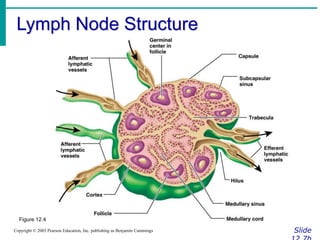
Lymph Node Structure
Slide
Copyright © 2003 Pearson Education, Inc. publishing as Benjamin Cummings
Figure 12.4
Other Lymphoid Organs
Slide 12.9
Copyright © 2003 Pearson Education, Inc. publishing as Benjamin Cummings
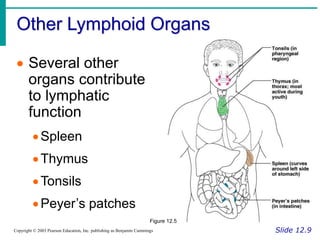
 Several other
organs contribute
to lymphatic
function
Spleen
Thymus
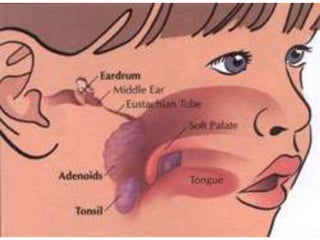
Tonsils
Peyer’s patches
Figure 12.5
The Spleen
Slide
Copyright © 2003 Pearson Education, Inc. publishing as Benjamin Cummings
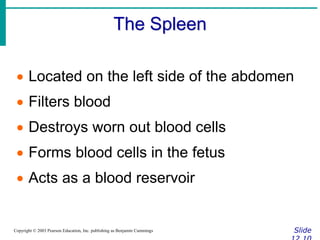
 Located on the left side of the abdomen
 Filters blood
 Destroys worn out blood cells
 Forms blood cells in the fetus
 Acts as a blood reservoir
The Thymus
Slide
Copyright © 2003 Pearson Education, Inc. publishing as Benjamin Cummings
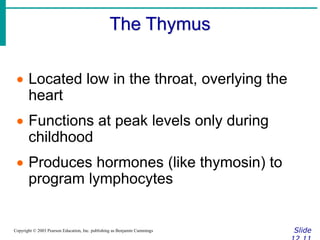
 Located low in the throat, overlying the
heart
 Functions at peak levels only during
childhood
 Produces hormones (like thymosin) to
program lymphocytes
Tonsils
Slide
Copyright © 2003 Pearson Education, Inc. publishing as Benjamin Cummings
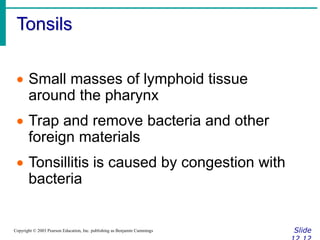
 Small masses of lymphoid tissue
around the pharynx
 Trap and remove bacteria and other
foreign materials
 Tonsillitis is caused by congestion with
bacteria
Peyer’s Patches
Slide
Copyright © 2003 Pearson Education, Inc. publishing as Benjamin Cummings
 Found in the wall of the small intestine
 Resemble tonsils in structure
 Capture and destroy bacteria in the
intestine
Mucosa-Associated Lymphatic
Tissue (MALT)
Slide
Copyright © 2003 Pearson Education, Inc. publishing as Benjamin Cummings
 Includes:
Peyer’s patches
Tonsils
Other small accumulations of lymphoid
tissue
 Acts as a guard to protect respiratory
and digestive tracts
Body Defenses
Slide
Copyright © 2003 Pearson Education, Inc. publishing as Benjamin Cummings
 The body is constantly in contact with
bacteria, fungi, and viruses (pathogens)
 The body has two defense systems for
foreign materials
Nonspecific defense system
Mechanisms protect against a variety of
invaders
Responds immediately to protect body
from foreign materials
Body Defenses
Slide
Copyright © 2003 Pearson Education, Inc. publishing as Benjamin Cummings
Specific defense system
Specific defense is required for each type
of invader
Also known as the immune system
Nonspecific Body Defenses
Slide
Copyright © 2003 Pearson Education, Inc. publishing as Benjamin Cummings
 Body surface coverings
Intact skin
Mucous membranes
 Specialized human cells
 Chemicals produced by the body
Surface Membrane Barriers –
First Line of Defense
Slide
Copyright © 2003 Pearson Education, Inc. publishing as Benjamin Cummings
 The skin
Physical barrier to foreign materials
pH of the skin is acidic to inhibit bacterial
growth
Sebum is toxic to bacteria
Vaginal secretions are very acidic
Surface Membrane Barriers –
First Line of Defense
Slide
Copyright © 2003 Pearson Education, Inc. publishing as Benjamin Cummings
 Stomach mucosa
Secretes hydrochloric acid
Has protein-digesting enzymes
 Saliva and lacrimal fluid contain
lysozyme
 Mucus traps microogranisms in
digestive and respiratory pathways
Defensive Cells
Slide
Copyright © 2003 Pearson Education, Inc. publishing as Benjamin Cummings
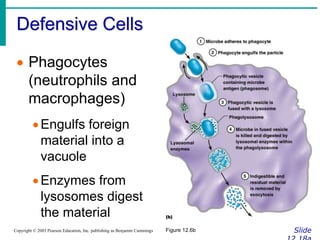
 Phagocytes
(neutrophils and
macrophages)
Engulfs foreign
material into a
vacuole
Enzymes from
lysosomes digest
the material
Figure 12.6b
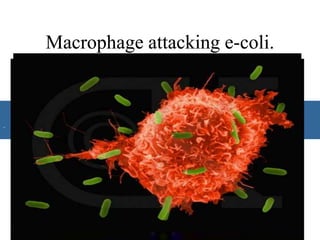
Macrophage attacking e-coli.
•
Macrophage attacking e-coli.
•
Defensive Cells
Slide
Copyright © 2003 Pearson Education, Inc. publishing as Benjamin Cummings
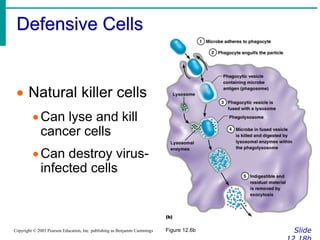
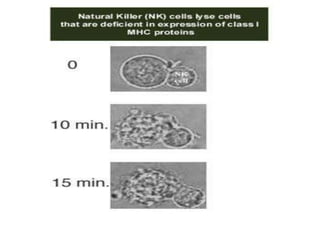
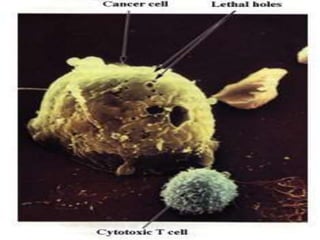
 Natural killer cells
Can lyse and kill
cancer cells
Can destroy virus-
infected cells
Figure 12.6b
Inflammatory Response -
Second Line of Defense
Slide
Copyright © 2003 Pearson Education, Inc. publishing as Benjamin Cummings
 Triggered when body tissues are injured
 Produces four cardinal signs
Redness
Heat
Swelling
Pain
 Results in a chain of events leading to
protection and healing
Functions of the Inflammatory
Response
Slide
Copyright © 2003 Pearson Education, Inc. publishing as Benjamin Cummings
 Prevents spread of damaging agents
 Disposes of cell debris and pathogens
 Sets the stage for repair
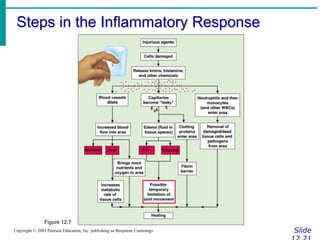
Steps in the Inflammatory Response
Slide
Copyright © 2003 Pearson Education, Inc. publishing as Benjamin Cummings
Figure 12.7
Antimicrobial Chemicals
Slide
Copyright © 2003 Pearson Education, Inc. publishing as Benjamin Cummings
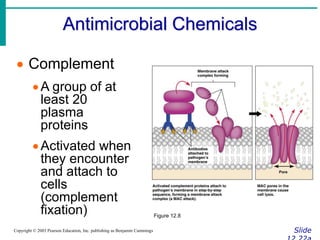
 Complement
A group of at
least 20
plasma
proteins
Activated when
they encounter
and attach to
cells
(complement
fixation) Figure 12.8
Antimicrobial Chemicals
Slide
Copyright © 2003 Pearson Education, Inc. publishing as Benjamin Cummings
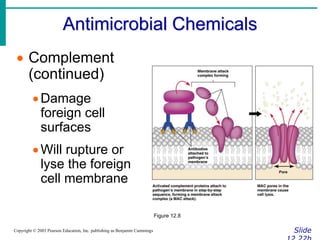
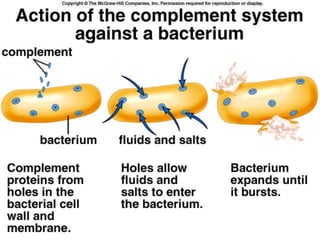
 Complement
(continued)
Damage
foreign cell
surfaces
Will rupture or
lyse the foreign
cell membrane
Figure 12.8
Antimicrobial Chemicals
Slide
Copyright © 2003 Pearson Education, Inc. publishing as Benjamin Cummings
 Interferon
Secreted proteins of virus-infected cells
Bind to healthy cell surfaces to inhibit viruses
binding
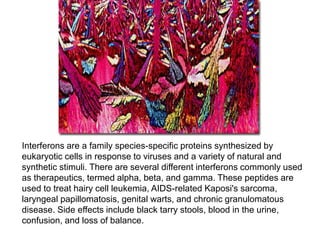
Interferons are a family species-specific proteins synthesized by
eukaryotic cells in response to viruses and a variety of natural and
synthetic stimuli. There are several different interferons commonly used
as therapeutics, termed alpha, beta, and gamma. These peptides are
used to treat hairy cell leukemia, AIDS-related Kaposi's sarcoma,
laryngeal papillomatosis, genital warts, and chronic granulomatous
disease. Side effects include black tarry stools, blood in the urine,
confusion, and loss of balance.
Fever
Slide
Copyright © 2003 Pearson Education, Inc. publishing as Benjamin Cummings
 Abnormally high body temperature
 Hypothalmus heat regulation can be
reset by pyrogens (secreted by white
blood cells)
 High temperatures inhibit the release of
iron and zinc from liver and spleen
needed by bacteria
 Fever also increases the speed of
tissue repair
Specific Defense: The Immune
System – Third Line of Defense
Slide
Copyright © 2003 Pearson Education, Inc. publishing as Benjamin Cummings
 Antigen specific – recognizes and acts
against particular foreign substances
 Systemic – not restricted to the initial
infection site
 Has memory – recognizes and mounts
a stronger attack on previously
encountered pathogens
Types of Immunity
Slide
Copyright © 2003 Pearson Education, Inc. publishing as Benjamin Cummings
 Humoral immunity
Antibody-mediated immunity
Cells produce chemicals for defense
 Cellular immunity
Cell-mediated immunity
Cells target virus infected cells
Antigens (Nonself)
Slide
Copyright © 2003 Pearson Education, Inc. publishing as Benjamin Cummings
 Any substance capable of exciting the
immune system and provoking an immune
response
 Examples of common antigens
 Foreign proteins
 Nucleic acids
 Large carbohydrates
 Some lipids
 Pollen grains
 Microorganisms
Self-Antigens
Slide
Copyright © 2003 Pearson Education, Inc. publishing as Benjamin Cummings
 Human cells have many surface
proteins
 Our immune cells do not attack our own
proteins
 Our cells in another person’s body can
trigger an immune response because
they are foreign
Restricts donors for transplants
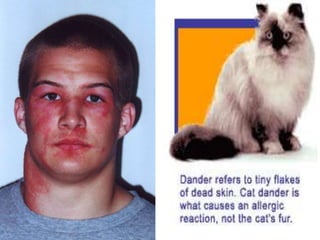
Allergies
Slide
Copyright © 2003 Pearson Education, Inc. publishing as Benjamin Cummings
 Many small molecules (called haptens
or incomplete antigens) are not
antigenic, but link up with our own
proteins
 The immune system may recognize and
respond to a protein-hapten
combination
 The immune response is harmful rather
than protective because it attacks our
own cells
Cells of the Immune System
Slide
Copyright © 2003 Pearson Education, Inc. publishing as Benjamin Cummings
 Lymphocytes
 Originate from hemocytoblasts in the red bone
marrow
 B lymphocytes become immunocompetent in
the bone marrow
 T lymphocytes become immunocompetent in
the thymus
 Macrophages
 Arise from monocytes
 Become widely distributed in lymphoid organs
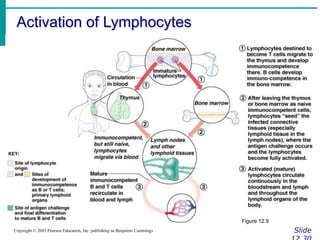
Activation of Lymphocytes
Slide
Copyright © 2003 Pearson Education, Inc. publishing as Benjamin Cummings
Figure 12.9
Humoral (Antibody-Mediated)
Immune Response
Slide
Copyright © 2003 Pearson Education, Inc. publishing as Benjamin Cummings
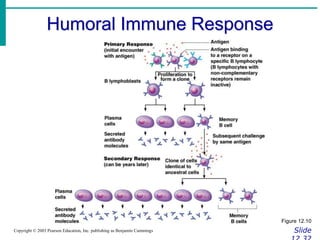
 B lymphocytes with specific receptors
bind to a specific antigen
 The binding event activates the
lymphocyte to undergo clonal selection
 A large number of clones are produced
(primary humoral response)
Humoral (Antibody Mediated)
Immune Response
Slide
Copyright © 2003 Pearson Education, Inc. publishing as Benjamin Cummings
 Most B cells become plasma cells
Produce antibodies to destroy antigens
Activity lasts for four or five days
 Some B cells become long-lived memory
cells (secondary humoral response)
Humoral Immune Response
Slide
Copyright © 2003 Pearson Education, Inc. publishing as Benjamin Cummings
Figure 12.10
Active Immunity
Slide
Copyright © 2003 Pearson Education, Inc. publishing as Benjamin Cummings
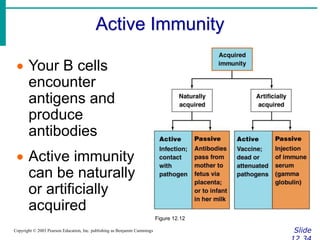
 Your B cells
encounter
antigens and
produce
antibodies
 Active immunity
can be naturally
or artificially
acquired
Figure 12.12
Passive Immunity
Slide
Copyright © 2003 Pearson Education, Inc. publishing as Benjamin Cummings
 Antibodies are obtained from someone
else
Conferred naturally from a mother to her
fetus
Conferred artificially from immune serum or
gamma globulin
 Immunological memory does not occur
 Protection provided by “borrowed
antibodies”
Antibodies (Immunoglobulins) (Igs)
Slide
Copyright © 2003 Pearson Education, Inc. publishing as Benjamin Cummings
 Soluble proteins secreted by B cells
(plasma cells)
 Carried in blood plasma
 Capable of binding specifically to an
antigen
Antibody Classes
Slide
Copyright © 2003 Pearson Education, Inc. publishing as Benjamin Cummings
 Antibodies of each class have slightly
different roles
 Five major immunoglobulin classes –
(Do Not Need to know!)
IgM – can fix complement
IgA – found mainly in mucus
IgD – important in activation of B cell
IgG – can cross the placental barrier
IgE – involved in allergies
Cellular (Cell-Mediated) Immune
Response
Slide
Copyright © 2003 Pearson Education, Inc. publishing as Benjamin Cummings
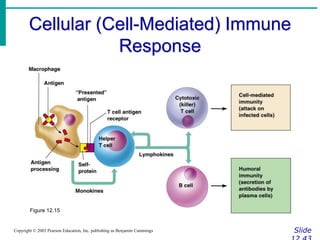
 Antigens must be presented by
macrophages to an immunocompetent
T cell (antigen presentation)
 T cells must recognize nonself and self
(double recognition)
 After antigen binding, clones form as
with B cells, but different classes of cells
are produced
Cellular (Cell-Mediated) Immune
Response
Slide
Copyright © 2003 Pearson Education, Inc. publishing as Benjamin Cummings
Figure 12.15
T Cell Clones
Slide
Copyright © 2003 Pearson Education, Inc. publishing as Benjamin Cummings
 Cytotoxic T cells
Specialize in killing infected cells
Insert a toxic chemical (perforin)
 Helper T cells
Recruit other cells to fight the invaders
Interact directly with B cells
T Cell Clones
Slide
Copyright © 2003 Pearson Education, Inc. publishing as Benjamin Cummings
 Suppressor T cells
Release chemicals to suppress the activity
of T and B cells
Stop the immune response to prevent
uncontrolled activity
 A few members of each clone are
memory cells
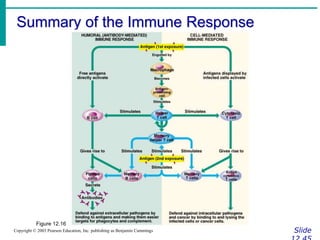
Summary of the Immune Response
Slide
Copyright © 2003 Pearson Education, Inc. publishing as Benjamin Cummings
Figure 12.16
Organ Transplants and Rejection
Slide
Copyright © 2003 Pearson Education, Inc. publishing as Benjamin Cummings
 Major types of grafts
Autografts – tissue transplanted from one
site to another on the same person
Isografts – tissue grafts from an identical
person (identical twin)
Allografts – tissue taken from an unrelated
person
Xenografts – tissue taken from a different
animal species
Organ Transplants and Rejection
Slide
Copyright © 2003 Pearson Education, Inc. publishing as Benjamin Cummings
 Autografts and isografts are ideal
donors
 Xenografts are never successful
 Allografts are more successful with a
closer tissue match
Disorders of Immunity:
Immunodeficiencies
Slide
Copyright © 2003 Pearson Education, Inc. publishing as Benjamin Cummings
 Production or function of immune cells
or complement is abnormal
 May be congenital or acquired
 Includes AIDS – Acquired Immune
Deficiency Syndrome
Disorders of Immunity:
Autoimmune Diseases
Slide
Copyright © 2003 Pearson Education, Inc. publishing as Benjamin Cummings
 The immune system does not
distinguish between self and nonself
 The body produces antibodies and
sensitized T lymphocytes that attack its
own tissues
Disorders of Immunity:
Autoimmune Diseases
Slide
Copyright © 2003 Pearson Education, Inc. publishing as Benjamin Cummings
 Examples of autoimmune diseases
Multiple sclerosis – white matter of brain
and spinal cord are destroyed
Myasthenia gravis – impairs
communication between nerves and
skeletal muscles
Juvenile diabetes – destroys pancreatic
beta cells that produce insulin
Rheumatoid arthritis – destroys joints
Disorders of Immunity:
Autoimmune Diseases
Slide
Copyright © 2003 Pearson Education, Inc. publishing as Benjamin Cummings
 Examples of autoimmune diseases
(continued)
Systemic lupus erythematosus (SLE) –
affects kidney, heart, lung and skin
Glomerulonephritis – impairment of renal
function
• HIV targets cells
• Retrovirus attaches to CD4 receptors of
T helper cells
– Transmission: Body fluids, i.e., blood, semen,
breast milk, vaginal secretions
Immune Deficiency: AIDS
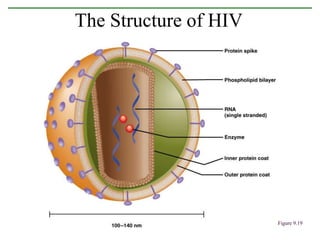
The Structure of HIV
Figure 9.19
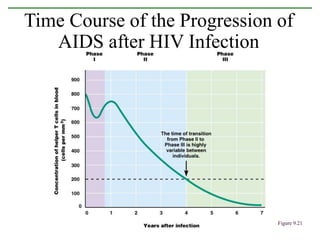
Time Course of the Progression of
AIDS after HIV Infection
Figure 9.21
•AIDS progression:
–Phase I: few weeks to a few years; flu like symptoms, swollen
lymph nodes, chills, fever, fatigue, body aches. Virus is
multiplying, antibodies are made but ineffective for complete
virus removal
–Phase II: within six months to 10 years; opportunistic
infections present, Helper T cells affected, 5% may not
progress to next phase
–Phase III: Helper T cells fall below 200 per cubic millimeter
of blood AND the person has an opportunistic infection or type
of cancer. Person is now termed as having “AIDS” May
include pneumonia, meningitis, tuberculosis, encephalitis,
Kaposi’s sarcoma, and non-Hodgkin’s lumphoma….
• More than 36 million infected with HIV
worldwide
• Most infections in sub-Sahara of Africa
• Increasing spread in Asia and India
• Most often spread by heterosexual contact
outside U.S.
AIDS Pandemic

lymphatic_immune.ppt

  • 1.
    Essentials of HumanAnatomy & Physiology Copyright © 2003 Pearson Education, Inc. publishing as Benjamin Cummings Seventh Edition Elaine N. Marieb Chapter 12 The Lymphatic System and Body Defenses
  • 2.
    Lymph Nodes Slide Copyright ©2003 Pearson Education, Inc. publishing as Benjamin Cummings Figure 12.3
  • 3.
    The Lymphatic System Slide12.1 Copyright © 2003 Pearson Education, Inc. publishing as Benjamin Cummings  Two parts Lymphatic vessels Lymphoid tissues and organs  Lymphatic system functions Transport fluids back to the blood Play essential roles in body defense and resistance to disease  Absorb digested fat at the intestinal villi
  • 4.
    Lymphatic Characteristics Slide 12.2 Copyright© 2003 Pearson Education, Inc. publishing as Benjamin Cummings  Lymph – excess tissue fluid carried by lymphatic vessels  Properties of lymphatic vessels One way system toward the heart No pump Lymph moves toward the heart Milking action of skeletal muscle Rhythmic contraction of smooth muscle in vessel walls
  • 5.
    Lymphatic Vessels Slide Copyright ©2003 Pearson Education, Inc. publishing as Benjamin Cummings Figure 12.1
  • 6.
    Lymphatic Vessels Slide Copyright ©2003 Pearson Education, Inc. publishing as Benjamin Cummings  Lymphatic collecting vessels Collects lymph from lymph capillaries Carries lymph to and away from lymph nodes Figure 12.2
  • 7.
    Lymphatic Vessels Slide Copyright ©2003 Pearson Education, Inc. publishing as Benjamin Cummings  Lymphatic collecting vessels (continued) Returns fluid to circulatory veins near the heart Right lymphatic duct Thoracic duct Figure 12.2
  • 8.
    Lymph Slide Copyright © 2003Pearson Education, Inc. publishing as Benjamin Cummings  Materials returned to the blood Water Blood cells Proteins
  • 9.
    Lymph Slide Copyright © 2003Pearson Education, Inc. publishing as Benjamin Cummings  Harmful materials that enter lymph vessels Bacteria Viruses Cancer cells Cell debris
  • 10.
    Lymph Nodes Slide Copyright ©2003 Pearson Education, Inc. publishing as Benjamin Cummings  Filter lymph before it is returned to the blood  Defense cells within lymph nodes Macrophages – engulf and destroy foreign substances Lymphocytes – provide immune response to antigens
  • 11.
    Lymph Nodes Slide Copyright ©2003 Pearson Education, Inc. publishing as Benjamin Cummings Figure 12.3
  • 12.
    Lymph Node Structure Slide Copyright© 2003 Pearson Education, Inc. publishing as Benjamin Cummings Figure 12.4
  • 13.
    Other Lymphoid Organs Slide12.9 Copyright © 2003 Pearson Education, Inc. publishing as Benjamin Cummings  Several other organs contribute to lymphatic function Spleen Thymus Tonsils Peyer’s patches Figure 12.5
  • 14.
    The Spleen Slide Copyright ©2003 Pearson Education, Inc. publishing as Benjamin Cummings  Located on the left side of the abdomen  Filters blood  Destroys worn out blood cells  Forms blood cells in the fetus  Acts as a blood reservoir
  • 15.
    The Thymus Slide Copyright ©2003 Pearson Education, Inc. publishing as Benjamin Cummings  Located low in the throat, overlying the heart  Functions at peak levels only during childhood  Produces hormones (like thymosin) to program lymphocytes
  • 16.
    Tonsils Slide Copyright © 2003Pearson Education, Inc. publishing as Benjamin Cummings  Small masses of lymphoid tissue around the pharynx  Trap and remove bacteria and other foreign materials  Tonsillitis is caused by congestion with bacteria
  • 18.
    Peyer’s Patches Slide Copyright ©2003 Pearson Education, Inc. publishing as Benjamin Cummings  Found in the wall of the small intestine  Resemble tonsils in structure  Capture and destroy bacteria in the intestine
  • 19.
    Mucosa-Associated Lymphatic Tissue (MALT) Slide Copyright© 2003 Pearson Education, Inc. publishing as Benjamin Cummings  Includes: Peyer’s patches Tonsils Other small accumulations of lymphoid tissue  Acts as a guard to protect respiratory and digestive tracts
  • 20.
    Body Defenses Slide Copyright ©2003 Pearson Education, Inc. publishing as Benjamin Cummings  The body is constantly in contact with bacteria, fungi, and viruses (pathogens)  The body has two defense systems for foreign materials Nonspecific defense system Mechanisms protect against a variety of invaders Responds immediately to protect body from foreign materials
  • 21.
    Body Defenses Slide Copyright ©2003 Pearson Education, Inc. publishing as Benjamin Cummings Specific defense system Specific defense is required for each type of invader Also known as the immune system
  • 22.
    Nonspecific Body Defenses Slide Copyright© 2003 Pearson Education, Inc. publishing as Benjamin Cummings  Body surface coverings Intact skin Mucous membranes  Specialized human cells  Chemicals produced by the body
  • 23.
    Surface Membrane Barriers– First Line of Defense Slide Copyright © 2003 Pearson Education, Inc. publishing as Benjamin Cummings  The skin Physical barrier to foreign materials pH of the skin is acidic to inhibit bacterial growth Sebum is toxic to bacteria Vaginal secretions are very acidic
  • 24.
    Surface Membrane Barriers– First Line of Defense Slide Copyright © 2003 Pearson Education, Inc. publishing as Benjamin Cummings  Stomach mucosa Secretes hydrochloric acid Has protein-digesting enzymes  Saliva and lacrimal fluid contain lysozyme  Mucus traps microogranisms in digestive and respiratory pathways
  • 25.
    Defensive Cells Slide Copyright ©2003 Pearson Education, Inc. publishing as Benjamin Cummings  Phagocytes (neutrophils and macrophages) Engulfs foreign material into a vacuole Enzymes from lysosomes digest the material Figure 12.6b
  • 26.
  • 27.
    Defensive Cells Slide Copyright ©2003 Pearson Education, Inc. publishing as Benjamin Cummings  Natural killer cells Can lyse and kill cancer cells Can destroy virus- infected cells Figure 12.6b
  • 29.
    Inflammatory Response - SecondLine of Defense Slide Copyright © 2003 Pearson Education, Inc. publishing as Benjamin Cummings  Triggered when body tissues are injured  Produces four cardinal signs Redness Heat Swelling Pain  Results in a chain of events leading to protection and healing
  • 30.
    Functions of theInflammatory Response Slide Copyright © 2003 Pearson Education, Inc. publishing as Benjamin Cummings  Prevents spread of damaging agents  Disposes of cell debris and pathogens  Sets the stage for repair
  • 31.
    Steps in theInflammatory Response Slide Copyright © 2003 Pearson Education, Inc. publishing as Benjamin Cummings Figure 12.7
  • 32.
    Antimicrobial Chemicals Slide Copyright ©2003 Pearson Education, Inc. publishing as Benjamin Cummings  Complement A group of at least 20 plasma proteins Activated when they encounter and attach to cells (complement fixation) Figure 12.8
  • 33.
    Antimicrobial Chemicals Slide Copyright ©2003 Pearson Education, Inc. publishing as Benjamin Cummings  Complement (continued) Damage foreign cell surfaces Will rupture or lyse the foreign cell membrane Figure 12.8
  • 35.
    Antimicrobial Chemicals Slide Copyright ©2003 Pearson Education, Inc. publishing as Benjamin Cummings  Interferon Secreted proteins of virus-infected cells Bind to healthy cell surfaces to inhibit viruses binding
  • 36.
    Interferons are afamily species-specific proteins synthesized by eukaryotic cells in response to viruses and a variety of natural and synthetic stimuli. There are several different interferons commonly used as therapeutics, termed alpha, beta, and gamma. These peptides are used to treat hairy cell leukemia, AIDS-related Kaposi's sarcoma, laryngeal papillomatosis, genital warts, and chronic granulomatous disease. Side effects include black tarry stools, blood in the urine, confusion, and loss of balance.
  • 37.
    Fever Slide Copyright © 2003Pearson Education, Inc. publishing as Benjamin Cummings  Abnormally high body temperature  Hypothalmus heat regulation can be reset by pyrogens (secreted by white blood cells)  High temperatures inhibit the release of iron and zinc from liver and spleen needed by bacteria  Fever also increases the speed of tissue repair
  • 38.
    Specific Defense: TheImmune System – Third Line of Defense Slide Copyright © 2003 Pearson Education, Inc. publishing as Benjamin Cummings  Antigen specific – recognizes and acts against particular foreign substances  Systemic – not restricted to the initial infection site  Has memory – recognizes and mounts a stronger attack on previously encountered pathogens
  • 39.
    Types of Immunity Slide Copyright© 2003 Pearson Education, Inc. publishing as Benjamin Cummings  Humoral immunity Antibody-mediated immunity Cells produce chemicals for defense  Cellular immunity Cell-mediated immunity Cells target virus infected cells
  • 40.
    Antigens (Nonself) Slide Copyright ©2003 Pearson Education, Inc. publishing as Benjamin Cummings  Any substance capable of exciting the immune system and provoking an immune response  Examples of common antigens  Foreign proteins  Nucleic acids  Large carbohydrates  Some lipids  Pollen grains  Microorganisms
  • 41.
    Self-Antigens Slide Copyright © 2003Pearson Education, Inc. publishing as Benjamin Cummings  Human cells have many surface proteins  Our immune cells do not attack our own proteins  Our cells in another person’s body can trigger an immune response because they are foreign Restricts donors for transplants
  • 42.
    Allergies Slide Copyright © 2003Pearson Education, Inc. publishing as Benjamin Cummings  Many small molecules (called haptens or incomplete antigens) are not antigenic, but link up with our own proteins  The immune system may recognize and respond to a protein-hapten combination  The immune response is harmful rather than protective because it attacks our own cells
  • 45.
    Cells of theImmune System Slide Copyright © 2003 Pearson Education, Inc. publishing as Benjamin Cummings  Lymphocytes  Originate from hemocytoblasts in the red bone marrow  B lymphocytes become immunocompetent in the bone marrow  T lymphocytes become immunocompetent in the thymus  Macrophages  Arise from monocytes  Become widely distributed in lymphoid organs
  • 46.
    Activation of Lymphocytes Slide Copyright© 2003 Pearson Education, Inc. publishing as Benjamin Cummings Figure 12.9
  • 47.
    Humoral (Antibody-Mediated) Immune Response Slide Copyright© 2003 Pearson Education, Inc. publishing as Benjamin Cummings  B lymphocytes with specific receptors bind to a specific antigen  The binding event activates the lymphocyte to undergo clonal selection  A large number of clones are produced (primary humoral response)
  • 48.
    Humoral (Antibody Mediated) ImmuneResponse Slide Copyright © 2003 Pearson Education, Inc. publishing as Benjamin Cummings  Most B cells become plasma cells Produce antibodies to destroy antigens Activity lasts for four or five days  Some B cells become long-lived memory cells (secondary humoral response)
  • 49.
    Humoral Immune Response Slide Copyright© 2003 Pearson Education, Inc. publishing as Benjamin Cummings Figure 12.10
  • 50.
    Active Immunity Slide Copyright ©2003 Pearson Education, Inc. publishing as Benjamin Cummings  Your B cells encounter antigens and produce antibodies  Active immunity can be naturally or artificially acquired Figure 12.12
  • 51.
    Passive Immunity Slide Copyright ©2003 Pearson Education, Inc. publishing as Benjamin Cummings  Antibodies are obtained from someone else Conferred naturally from a mother to her fetus Conferred artificially from immune serum or gamma globulin  Immunological memory does not occur  Protection provided by “borrowed antibodies”
  • 52.
    Antibodies (Immunoglobulins) (Igs) Slide Copyright© 2003 Pearson Education, Inc. publishing as Benjamin Cummings  Soluble proteins secreted by B cells (plasma cells)  Carried in blood plasma  Capable of binding specifically to an antigen
  • 53.
    Antibody Classes Slide Copyright ©2003 Pearson Education, Inc. publishing as Benjamin Cummings  Antibodies of each class have slightly different roles  Five major immunoglobulin classes – (Do Not Need to know!) IgM – can fix complement IgA – found mainly in mucus IgD – important in activation of B cell IgG – can cross the placental barrier IgE – involved in allergies
  • 54.
    Cellular (Cell-Mediated) Immune Response Slide Copyright© 2003 Pearson Education, Inc. publishing as Benjamin Cummings  Antigens must be presented by macrophages to an immunocompetent T cell (antigen presentation)  T cells must recognize nonself and self (double recognition)  After antigen binding, clones form as with B cells, but different classes of cells are produced
  • 55.
    Cellular (Cell-Mediated) Immune Response Slide Copyright© 2003 Pearson Education, Inc. publishing as Benjamin Cummings Figure 12.15
  • 56.
    T Cell Clones Slide Copyright© 2003 Pearson Education, Inc. publishing as Benjamin Cummings  Cytotoxic T cells Specialize in killing infected cells Insert a toxic chemical (perforin)  Helper T cells Recruit other cells to fight the invaders Interact directly with B cells
  • 58.
    T Cell Clones Slide Copyright© 2003 Pearson Education, Inc. publishing as Benjamin Cummings  Suppressor T cells Release chemicals to suppress the activity of T and B cells Stop the immune response to prevent uncontrolled activity  A few members of each clone are memory cells
  • 59.
    Summary of theImmune Response Slide Copyright © 2003 Pearson Education, Inc. publishing as Benjamin Cummings Figure 12.16
  • 60.
    Organ Transplants andRejection Slide Copyright © 2003 Pearson Education, Inc. publishing as Benjamin Cummings  Major types of grafts Autografts – tissue transplanted from one site to another on the same person Isografts – tissue grafts from an identical person (identical twin) Allografts – tissue taken from an unrelated person Xenografts – tissue taken from a different animal species
  • 61.
    Organ Transplants andRejection Slide Copyright © 2003 Pearson Education, Inc. publishing as Benjamin Cummings  Autografts and isografts are ideal donors  Xenografts are never successful  Allografts are more successful with a closer tissue match
  • 62.
    Disorders of Immunity: Immunodeficiencies Slide Copyright© 2003 Pearson Education, Inc. publishing as Benjamin Cummings  Production or function of immune cells or complement is abnormal  May be congenital or acquired  Includes AIDS – Acquired Immune Deficiency Syndrome
  • 63.
    Disorders of Immunity: AutoimmuneDiseases Slide Copyright © 2003 Pearson Education, Inc. publishing as Benjamin Cummings  The immune system does not distinguish between self and nonself  The body produces antibodies and sensitized T lymphocytes that attack its own tissues
  • 64.
    Disorders of Immunity: AutoimmuneDiseases Slide Copyright © 2003 Pearson Education, Inc. publishing as Benjamin Cummings  Examples of autoimmune diseases Multiple sclerosis – white matter of brain and spinal cord are destroyed Myasthenia gravis – impairs communication between nerves and skeletal muscles Juvenile diabetes – destroys pancreatic beta cells that produce insulin Rheumatoid arthritis – destroys joints
  • 65.
    Disorders of Immunity: AutoimmuneDiseases Slide Copyright © 2003 Pearson Education, Inc. publishing as Benjamin Cummings  Examples of autoimmune diseases (continued) Systemic lupus erythematosus (SLE) – affects kidney, heart, lung and skin Glomerulonephritis – impairment of renal function
  • 66.
    • HIV targetscells • Retrovirus attaches to CD4 receptors of T helper cells – Transmission: Body fluids, i.e., blood, semen, breast milk, vaginal secretions Immune Deficiency: AIDS
  • 67.
    The Structure ofHIV Figure 9.19
  • 68.
    Time Course ofthe Progression of AIDS after HIV Infection Figure 9.21
  • 69.
    •AIDS progression: –Phase I:few weeks to a few years; flu like symptoms, swollen lymph nodes, chills, fever, fatigue, body aches. Virus is multiplying, antibodies are made but ineffective for complete virus removal –Phase II: within six months to 10 years; opportunistic infections present, Helper T cells affected, 5% may not progress to next phase –Phase III: Helper T cells fall below 200 per cubic millimeter of blood AND the person has an opportunistic infection or type of cancer. Person is now termed as having “AIDS” May include pneumonia, meningitis, tuberculosis, encephalitis, Kaposi’s sarcoma, and non-Hodgkin’s lumphoma….
  • 70.
    • More than36 million infected with HIV worldwide • Most infections in sub-Sahara of Africa • Increasing spread in Asia and India • Most often spread by heterosexual contact outside U.S. AIDS Pandemic