Logistical Coordination Ensuring a well planned, smooth, uninterrupted and quick flow of materials in the value chain How is this done? Smooth flow of information Smooth flow of inventory Realization is the result Coordination takes place when logistical plans take into account  Strategic customer service objectives Constraints to meet the above
Net work Analysis (or Location Analysis) What is a network? Location of facilities and routes or links What is network analysis? Study of the locations & links for minimizing logistical costs and or maximizing customer service
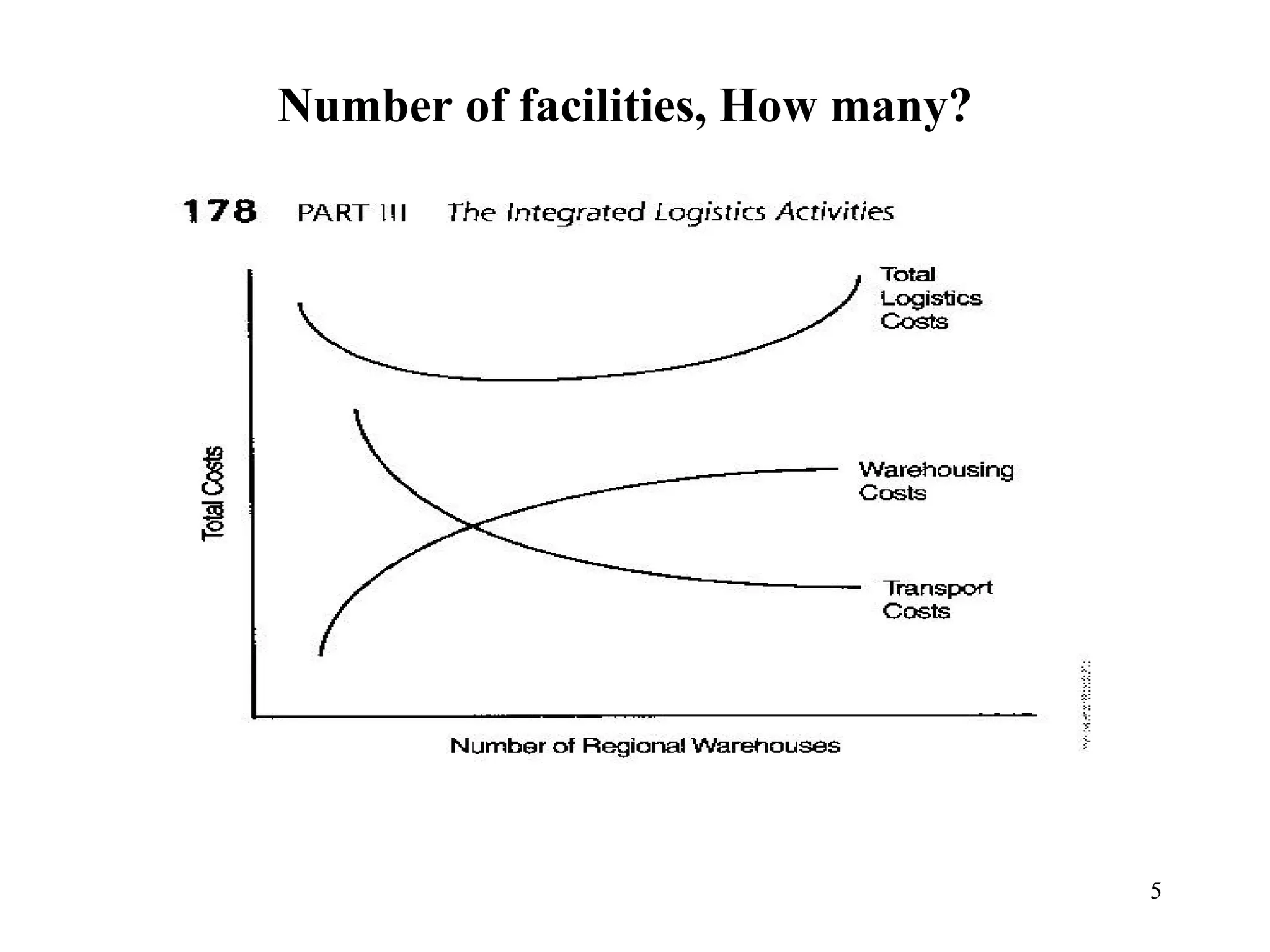
Some salient features of network design (What decisions are taken in network design?) Number of facilities [factories and warehouses]  Their locations Communication systems Activities performed in these facilities, what item (SKU)? Storage? Break bulk?  Type of the facility (Who should operate these facilities?) Size of the facility, how big?
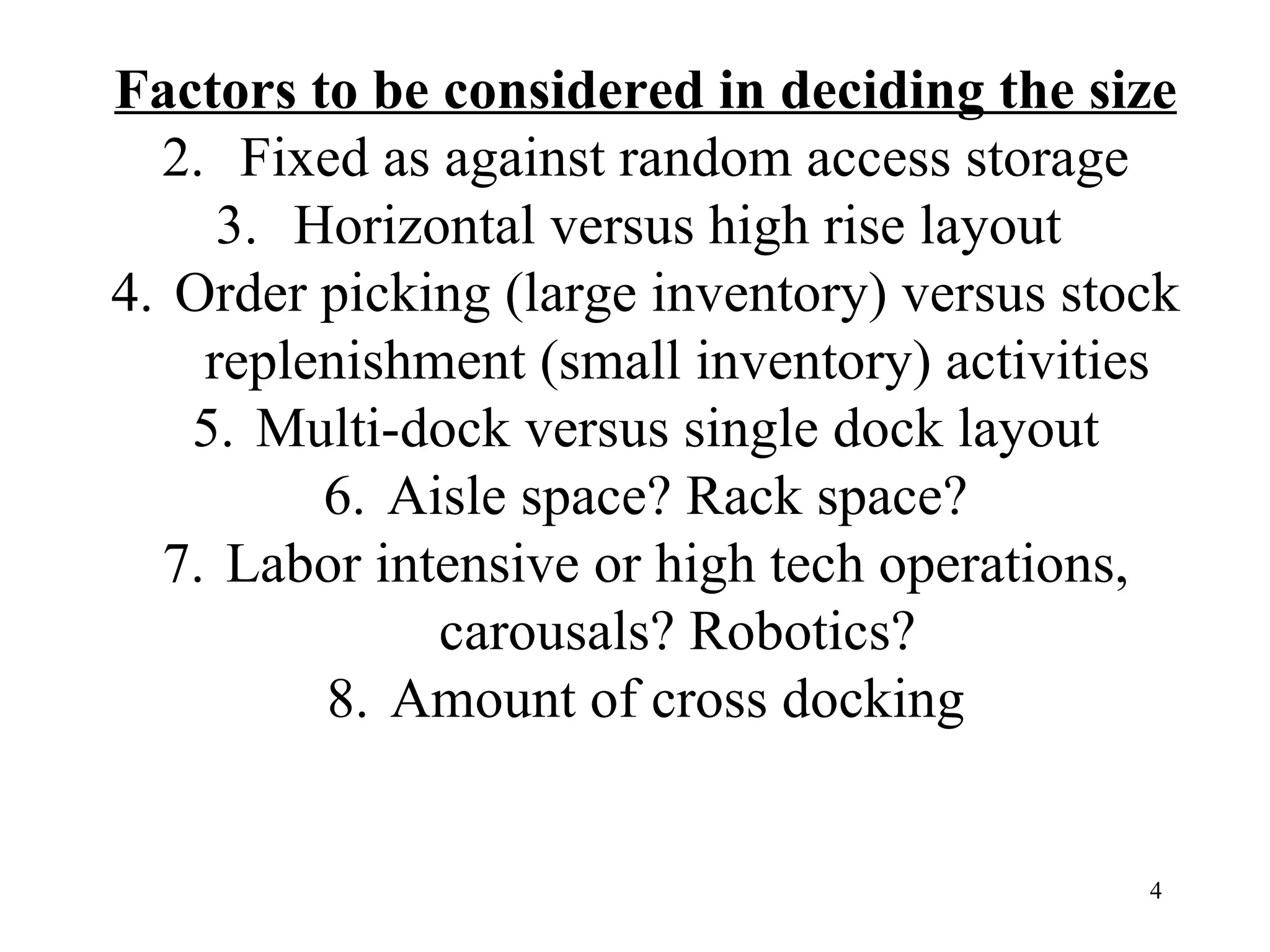
Factors to be considered in deciding the size Fixed as against random access storage Horizontal versus high rise layout  Order picking (large inventory) versus stock replenishment (small inventory) activities Multi-dock versus single dock layout Aisle space? Rack space? Labor intensive or high tech operations, carousals? Robotics? Amount of cross docking
Number of facilities, How many?
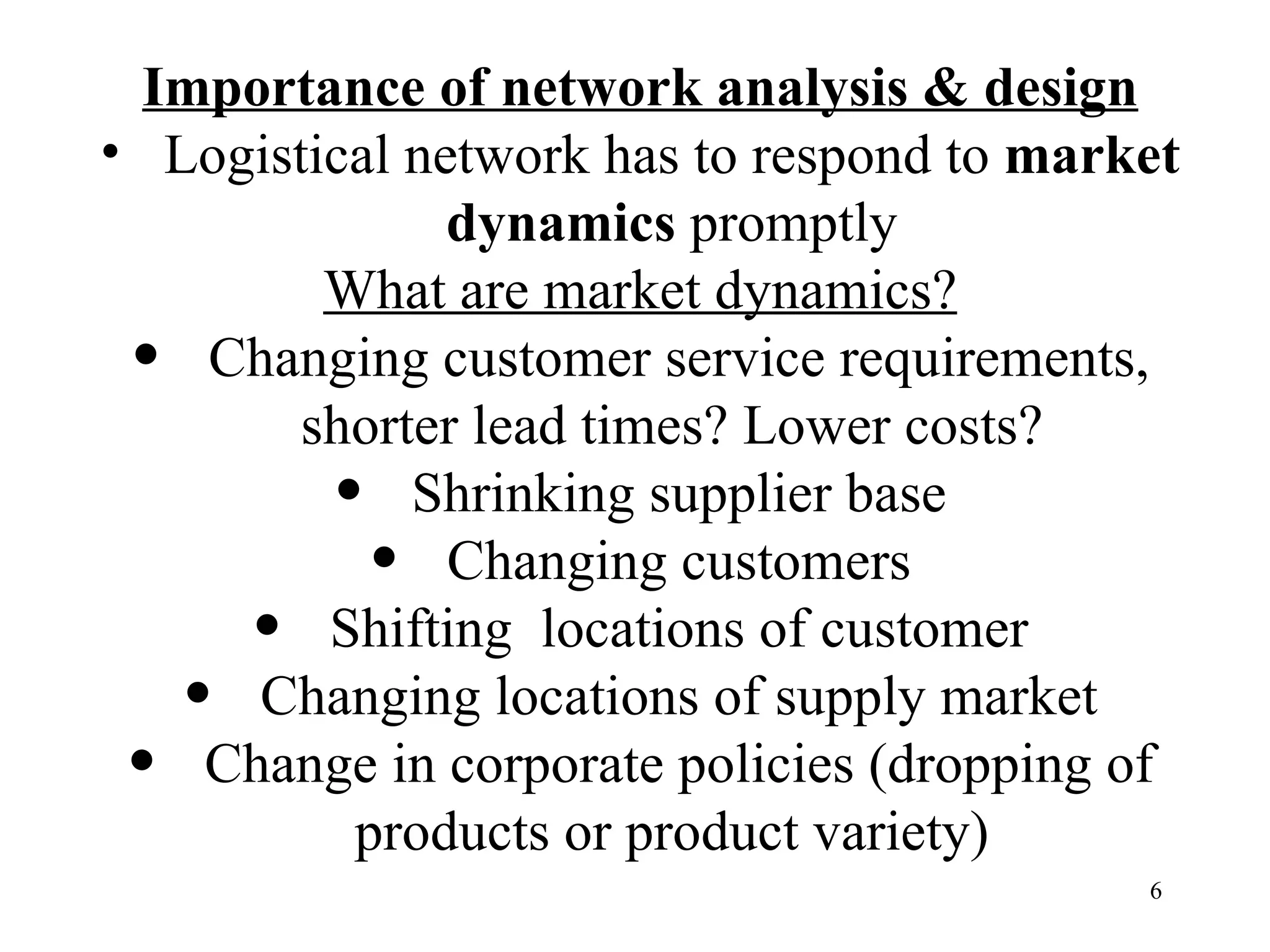
Importance of network analysis & design Logistical network has to respond to  market dynamics  promptly What are market dynamics? Changing customer service requirements, shorter lead times? Lower costs? Shrinking supplier base Changing customers Shifting  locations of customer Changing locations of  supply market Change in corporate policies (dropping of products or product variety)
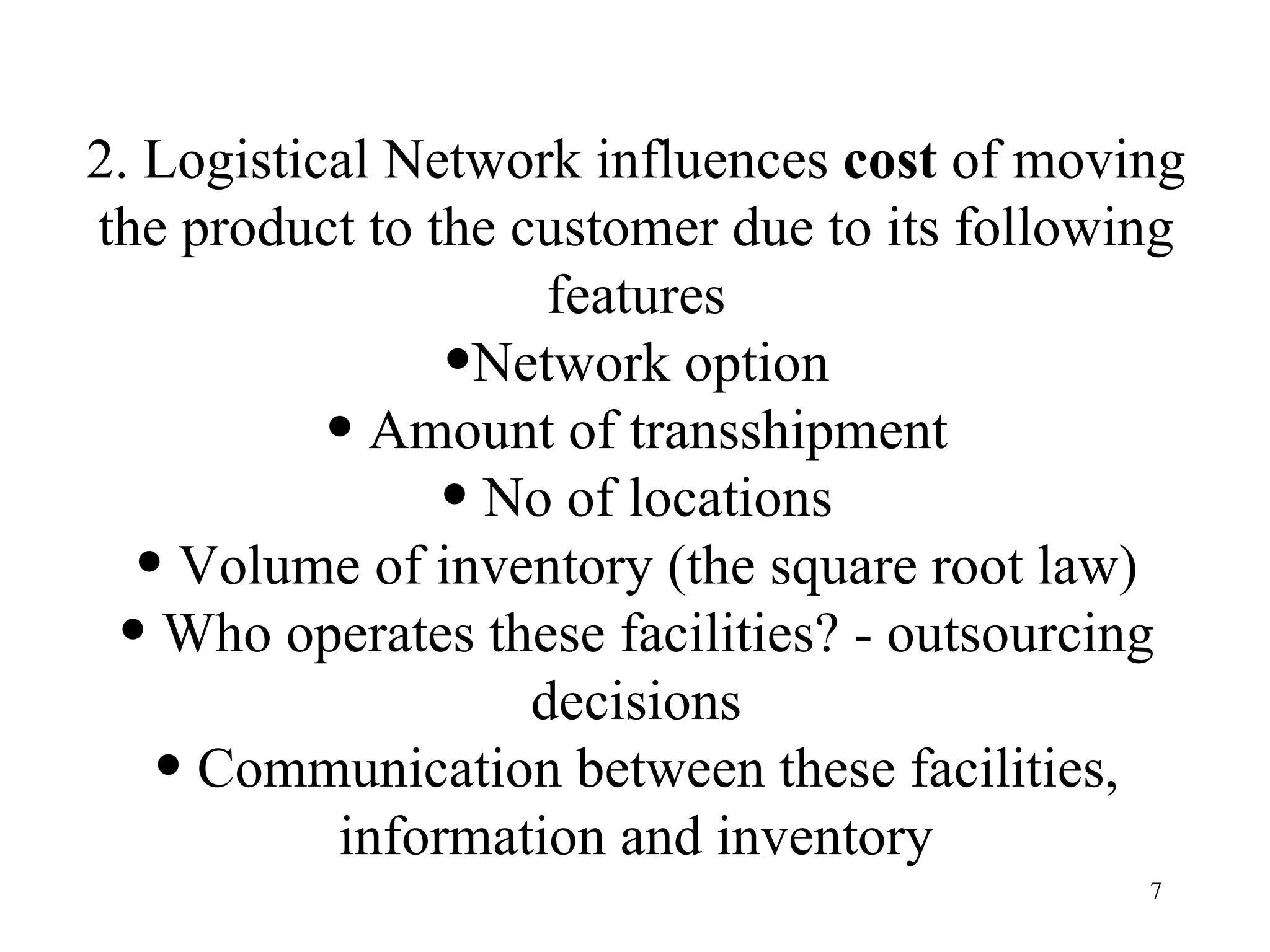
2. Logistical Network influences  cost  of moving the product to the customer due to its following features Network option Amount of transshipment No of locations Volume of inventory (the square root law) Who operates these facilities? - outsourcing decisions Communication between these facilities, information and inventory
3. L/N influences the  Customer service   Response time Lead-time Response to competitive action 5. L/N  has to accommodate   corporate organizational changes such as  down sizing  and  reengineering & globalization
Some models for facility location Gravity model Analytical models Ton-mile center

13. logistical coord & network design

  • 1.
    Logistical Coordination Ensuringa well planned, smooth, uninterrupted and quick flow of materials in the value chain How is this done? Smooth flow of information Smooth flow of inventory Realization is the result Coordination takes place when logistical plans take into account Strategic customer service objectives Constraints to meet the above
  • 2.
    Net work Analysis(or Location Analysis) What is a network? Location of facilities and routes or links What is network analysis? Study of the locations & links for minimizing logistical costs and or maximizing customer service
  • 3.
    Some salient featuresof network design (What decisions are taken in network design?) Number of facilities [factories and warehouses] Their locations Communication systems Activities performed in these facilities, what item (SKU)? Storage? Break bulk? Type of the facility (Who should operate these facilities?) Size of the facility, how big?
  • 4.
    Factors to beconsidered in deciding the size Fixed as against random access storage Horizontal versus high rise layout Order picking (large inventory) versus stock replenishment (small inventory) activities Multi-dock versus single dock layout Aisle space? Rack space? Labor intensive or high tech operations, carousals? Robotics? Amount of cross docking
  • 5.
  • 6.
    Importance of networkanalysis & design Logistical network has to respond to market dynamics promptly What are market dynamics? Changing customer service requirements, shorter lead times? Lower costs? Shrinking supplier base Changing customers Shifting locations of customer Changing locations of supply market Change in corporate policies (dropping of products or product variety)
  • 7.
    2. Logistical Networkinfluences cost of moving the product to the customer due to its following features Network option Amount of transshipment No of locations Volume of inventory (the square root law) Who operates these facilities? - outsourcing decisions Communication between these facilities, information and inventory
  • 8.
    3. L/N influencesthe Customer service Response time Lead-time Response to competitive action 5. L/N has to accommodate corporate organizational changes such as down sizing and reengineering & globalization
  • 9.
    Some models forfacility location Gravity model Analytical models Ton-mile center