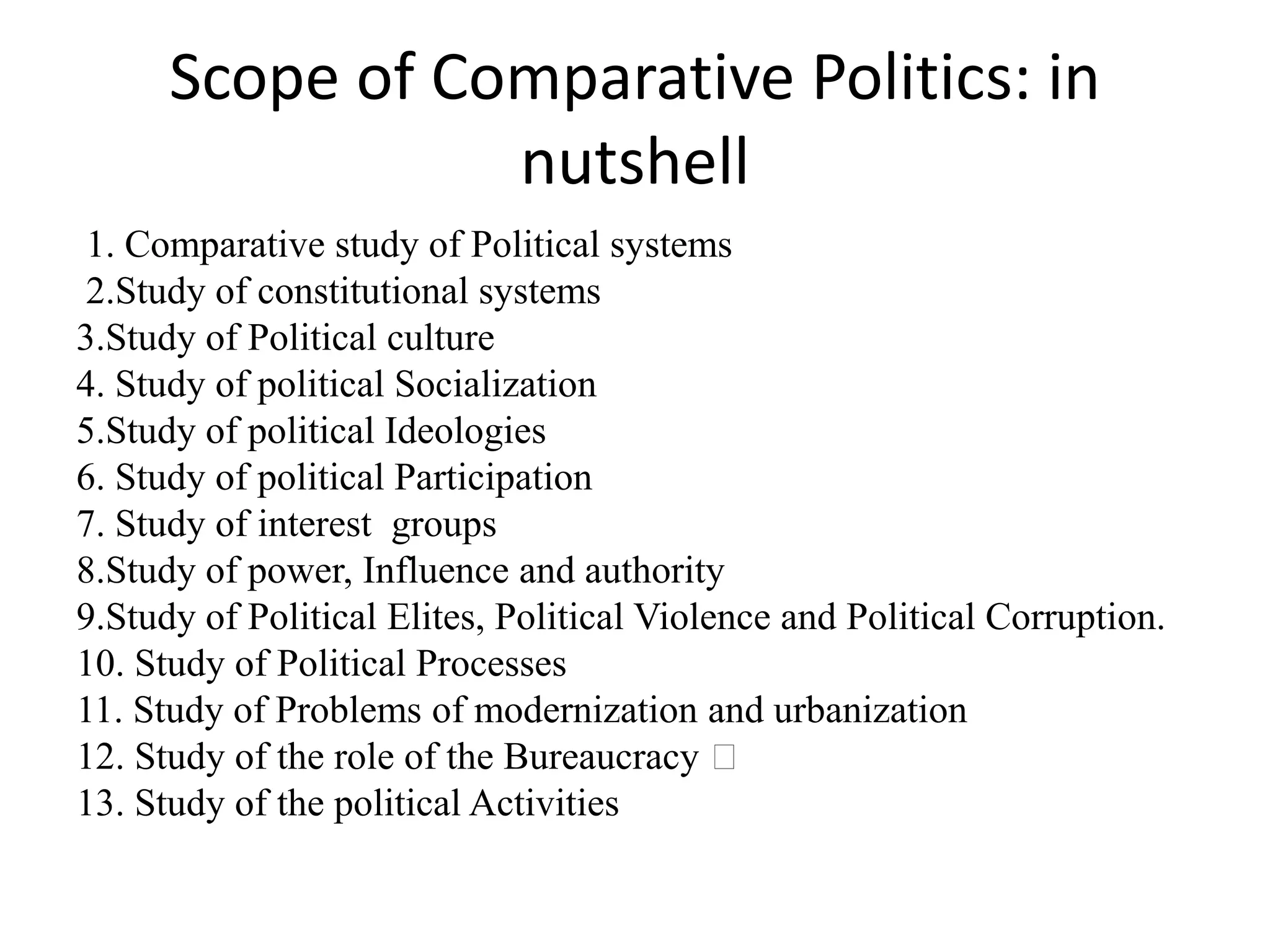
1. Comparative politics studies political systems, institutions, and behaviors across countries by making comparisons. It examines a broader range of political issues than just governments.
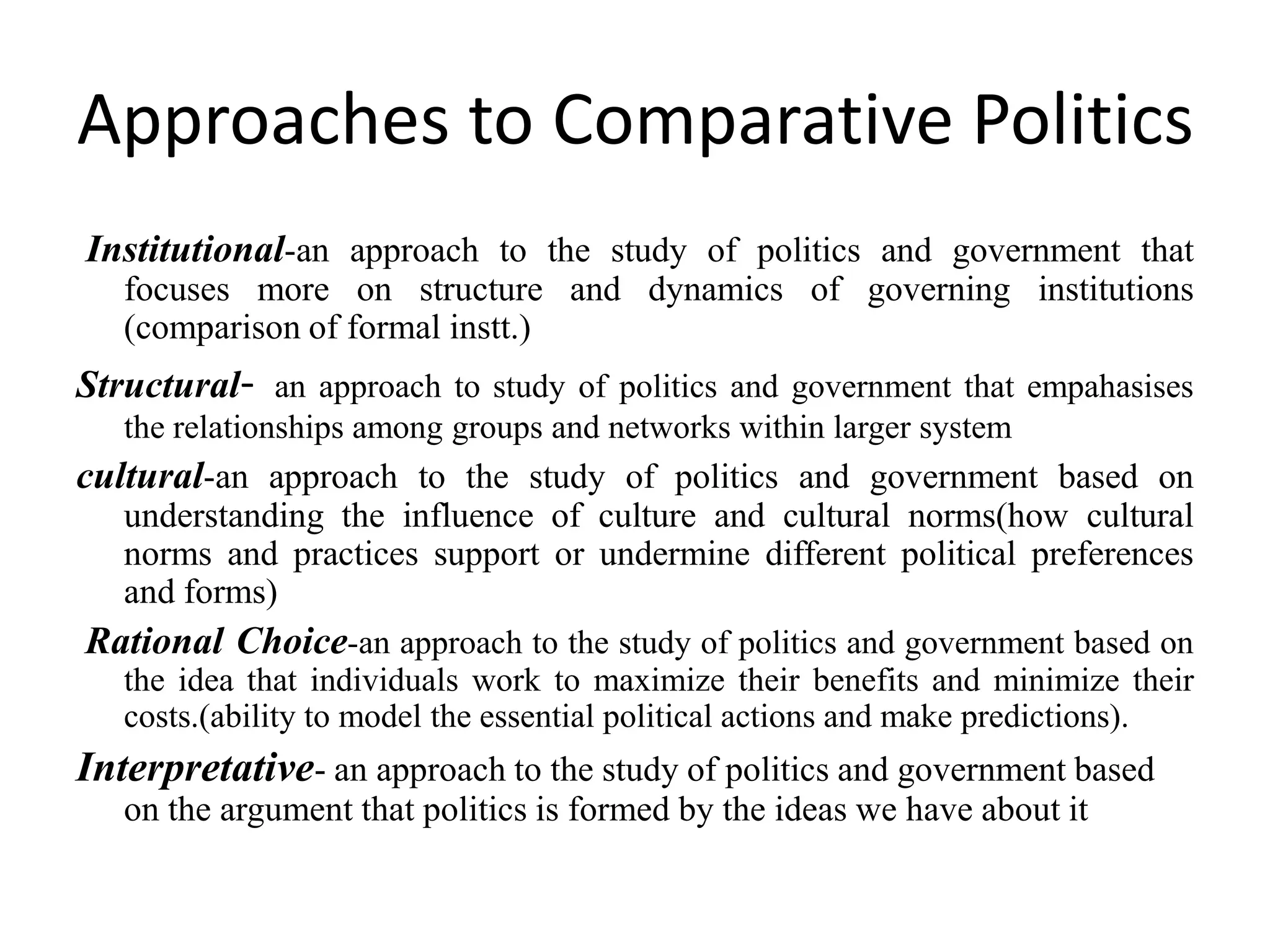
2. The study of comparative politics began with Aristotle, who analyzed 158 constitutions. It has since developed through different theoretical approaches like cultural, developmental, and political economy theories.
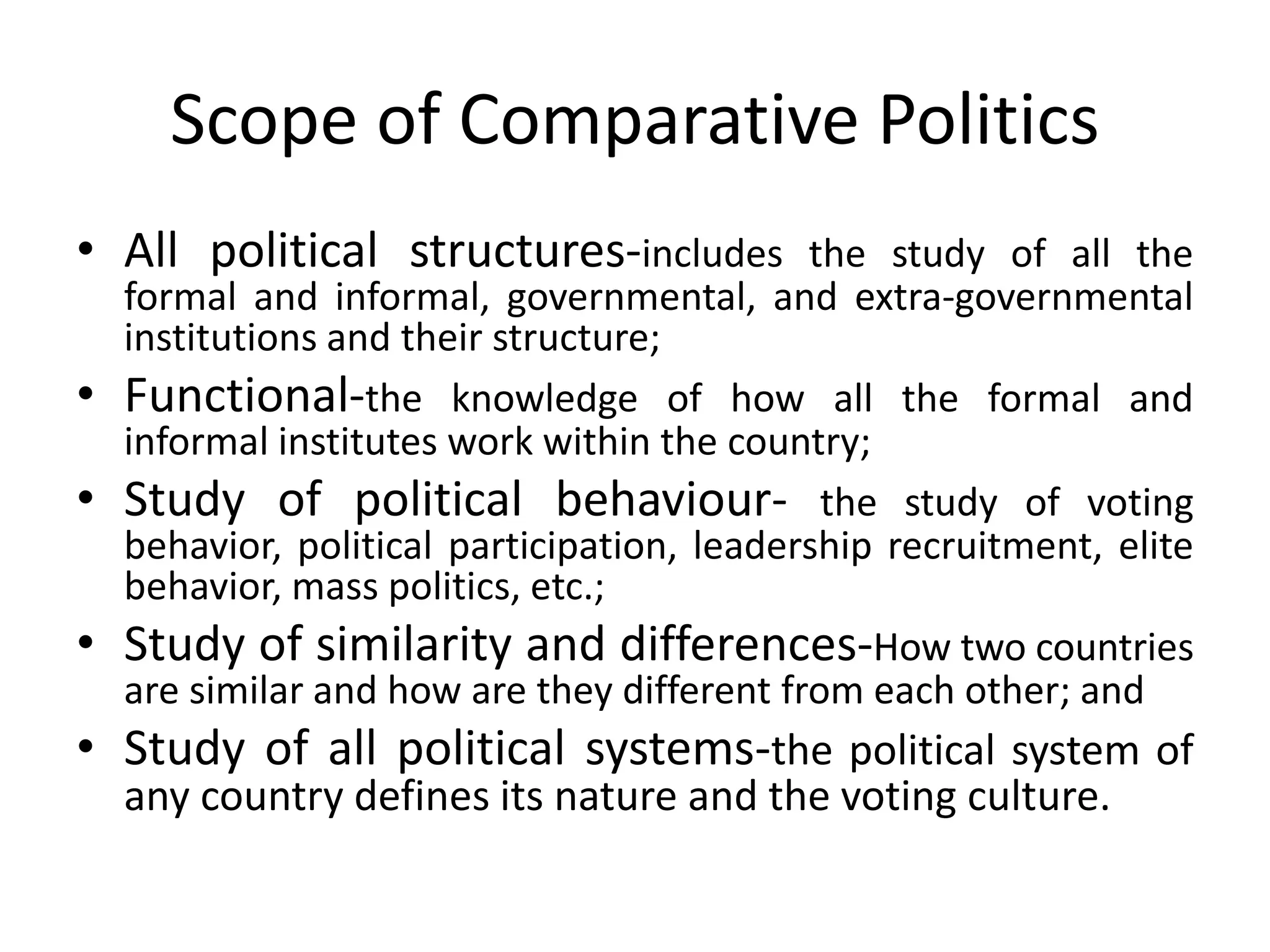
3. Comparative politics involves descriptive studies of formal and informal political structures and seeks to understand similarities and differences between countries. It aims to build political theories through horizontal and vertical comparisons.