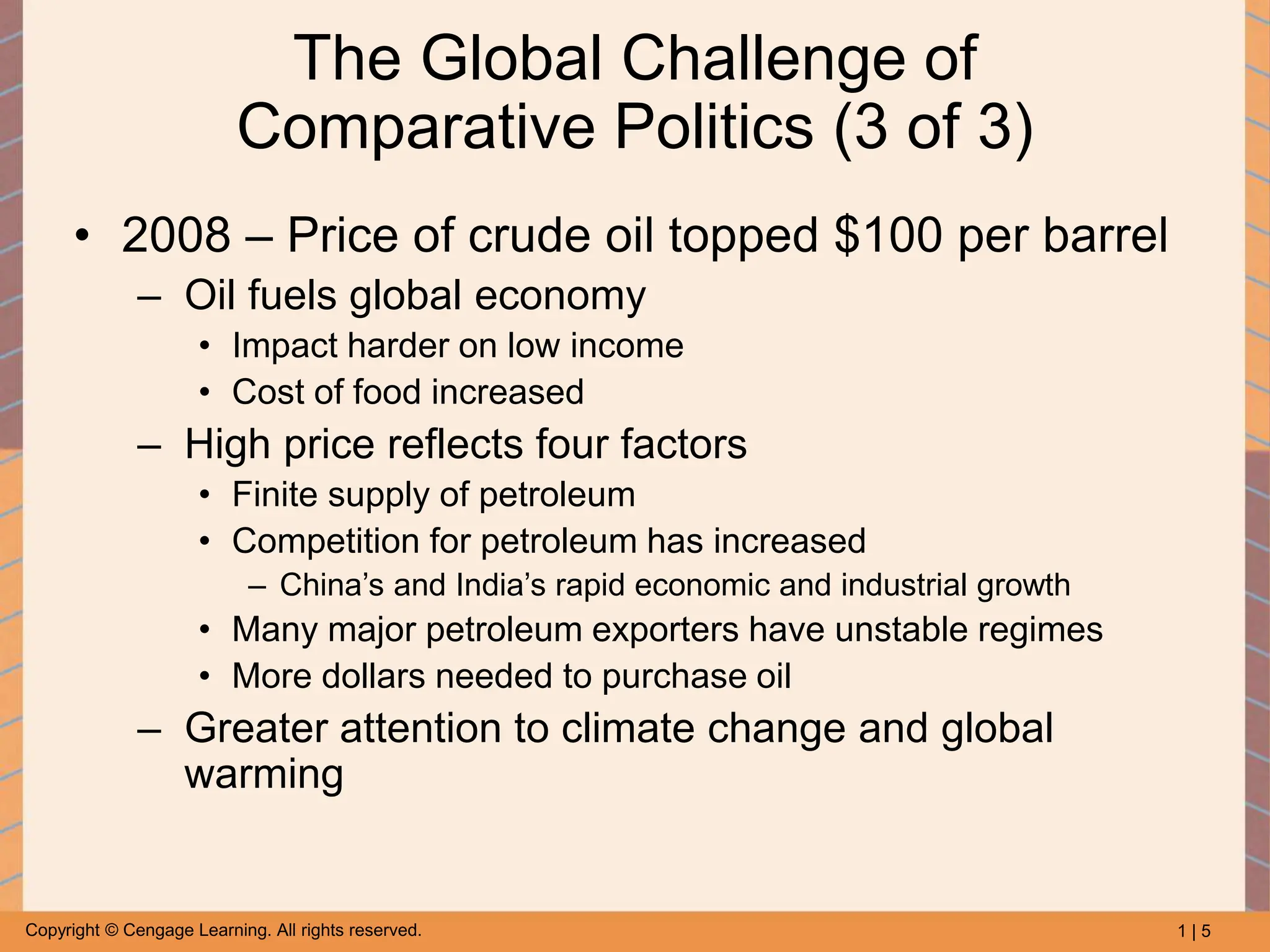
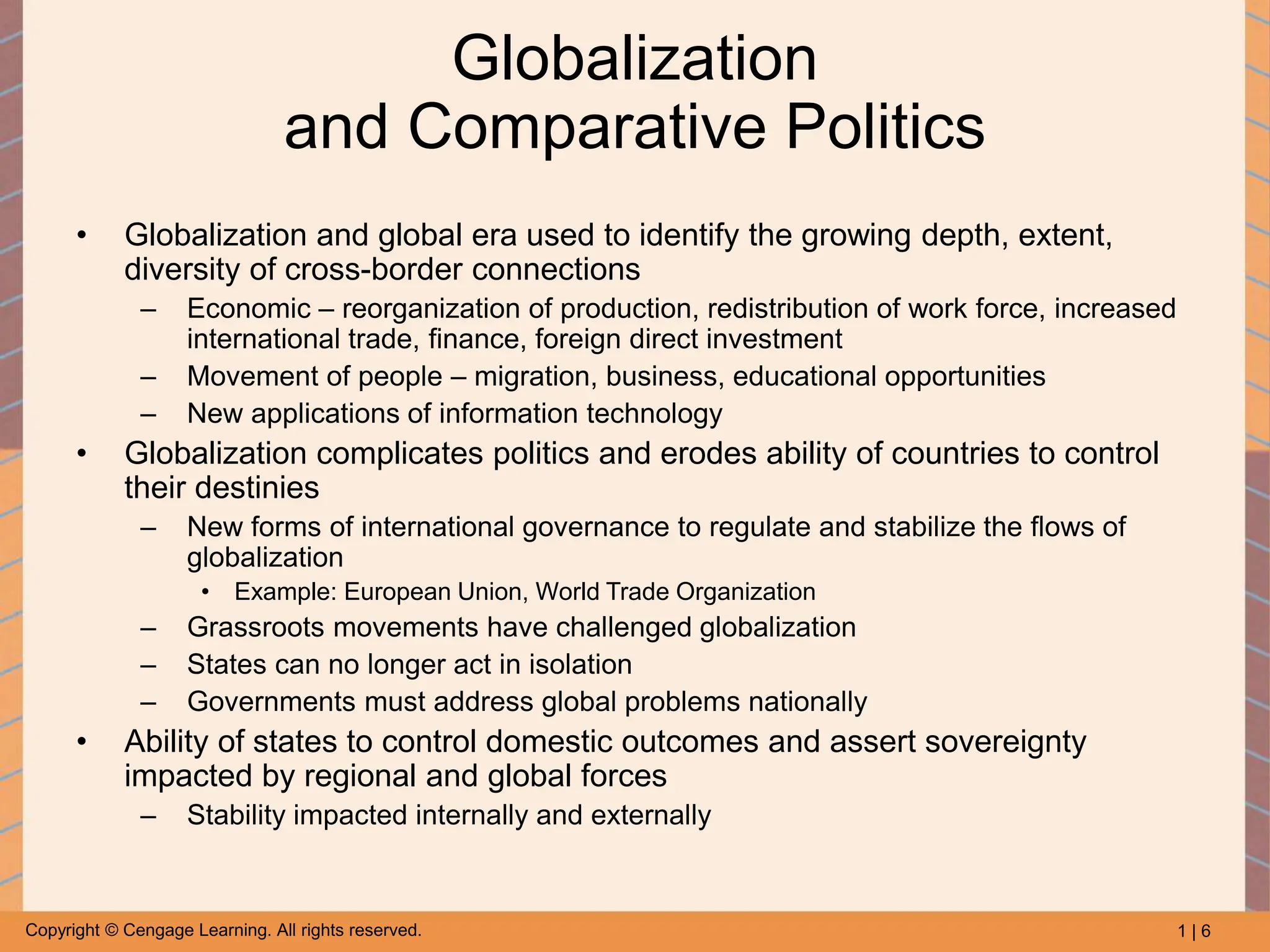
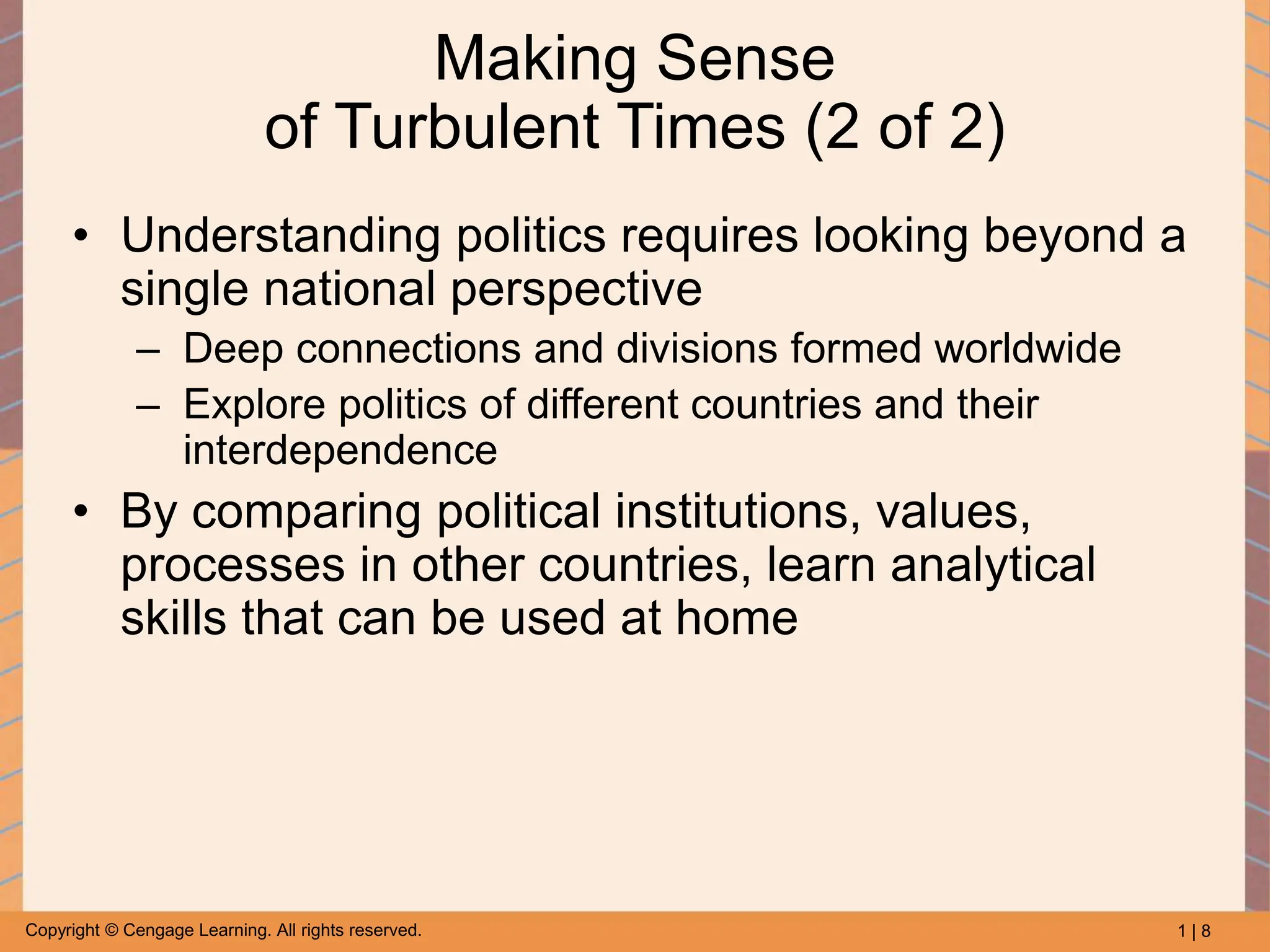
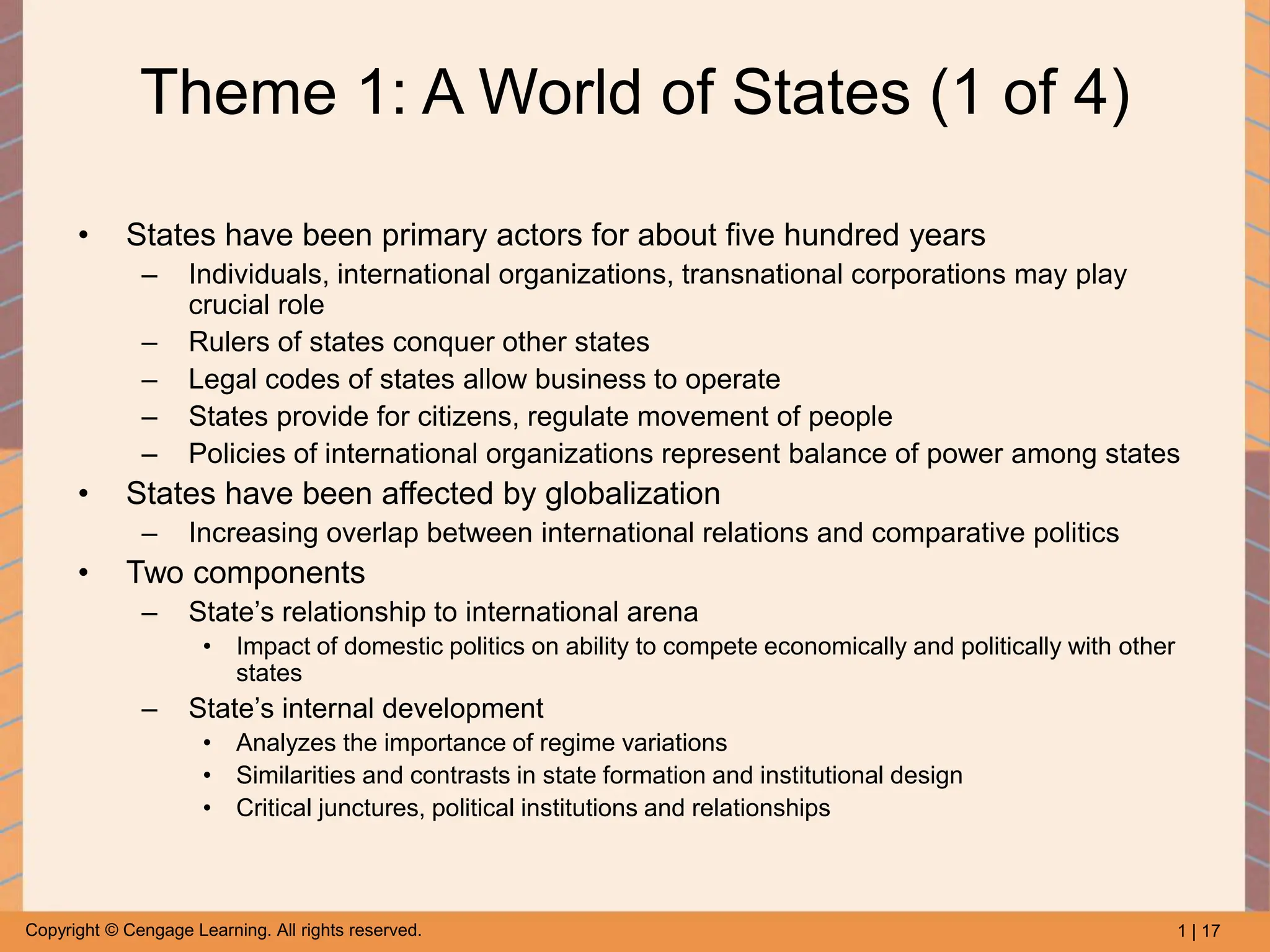
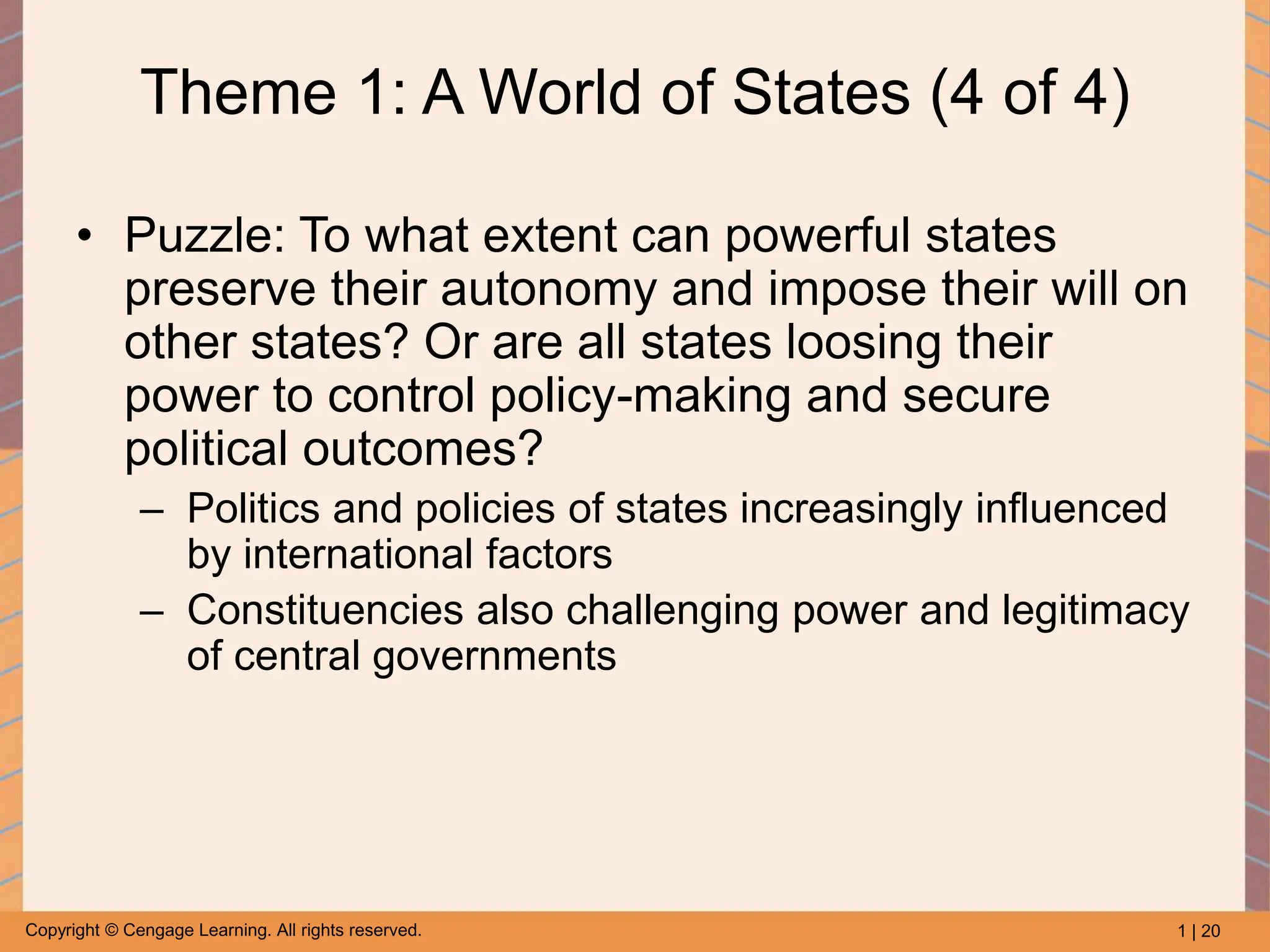
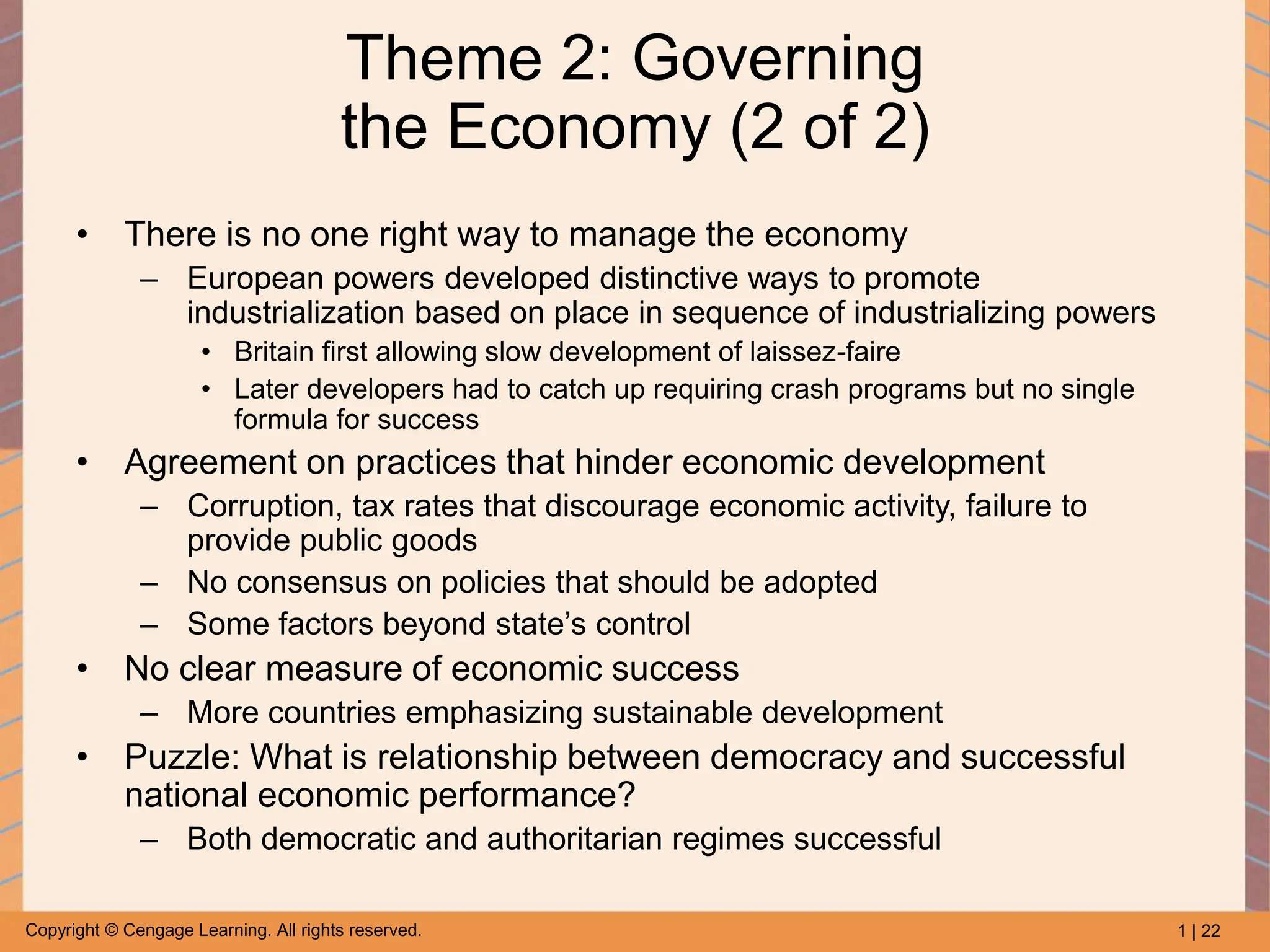
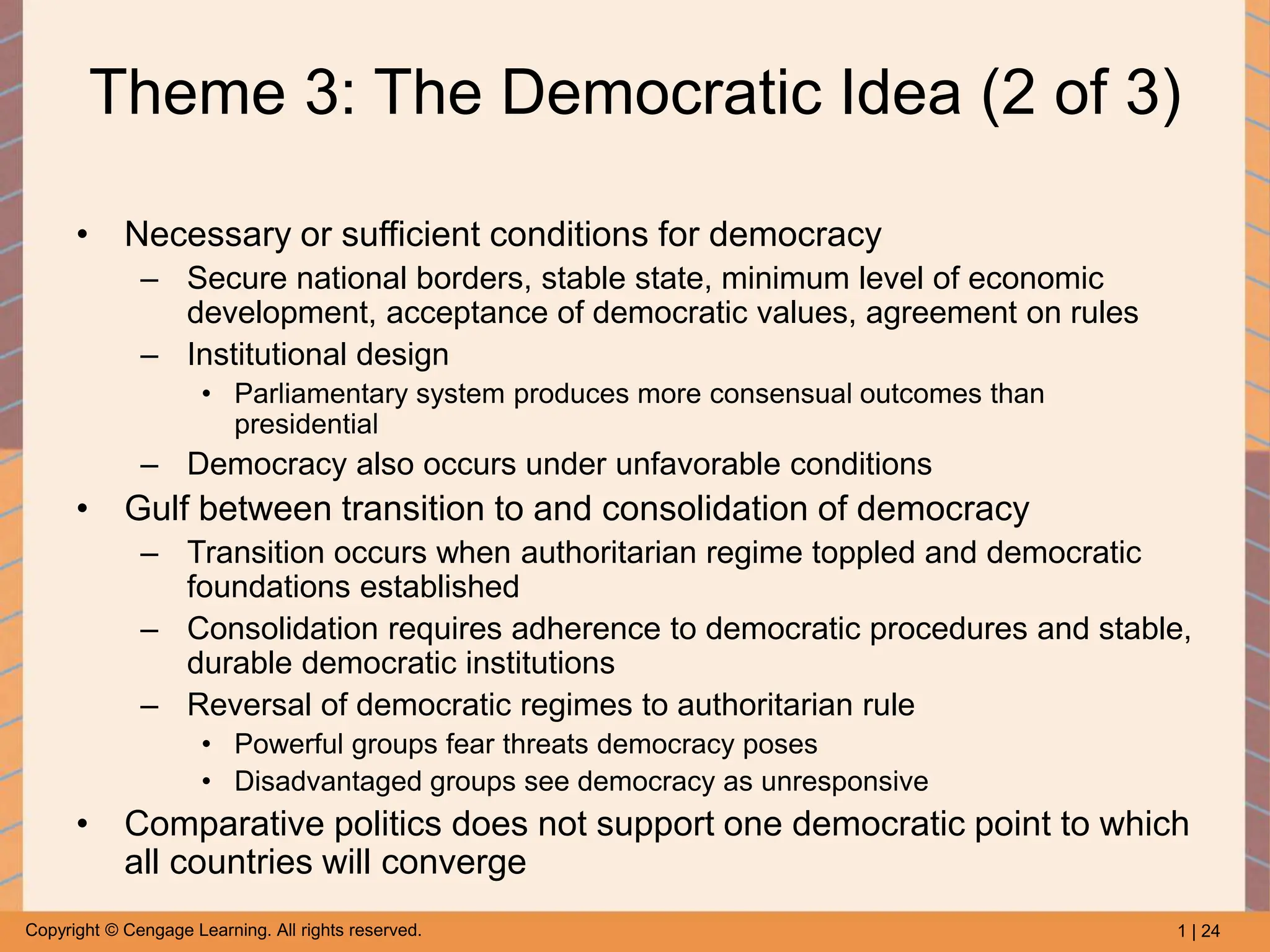
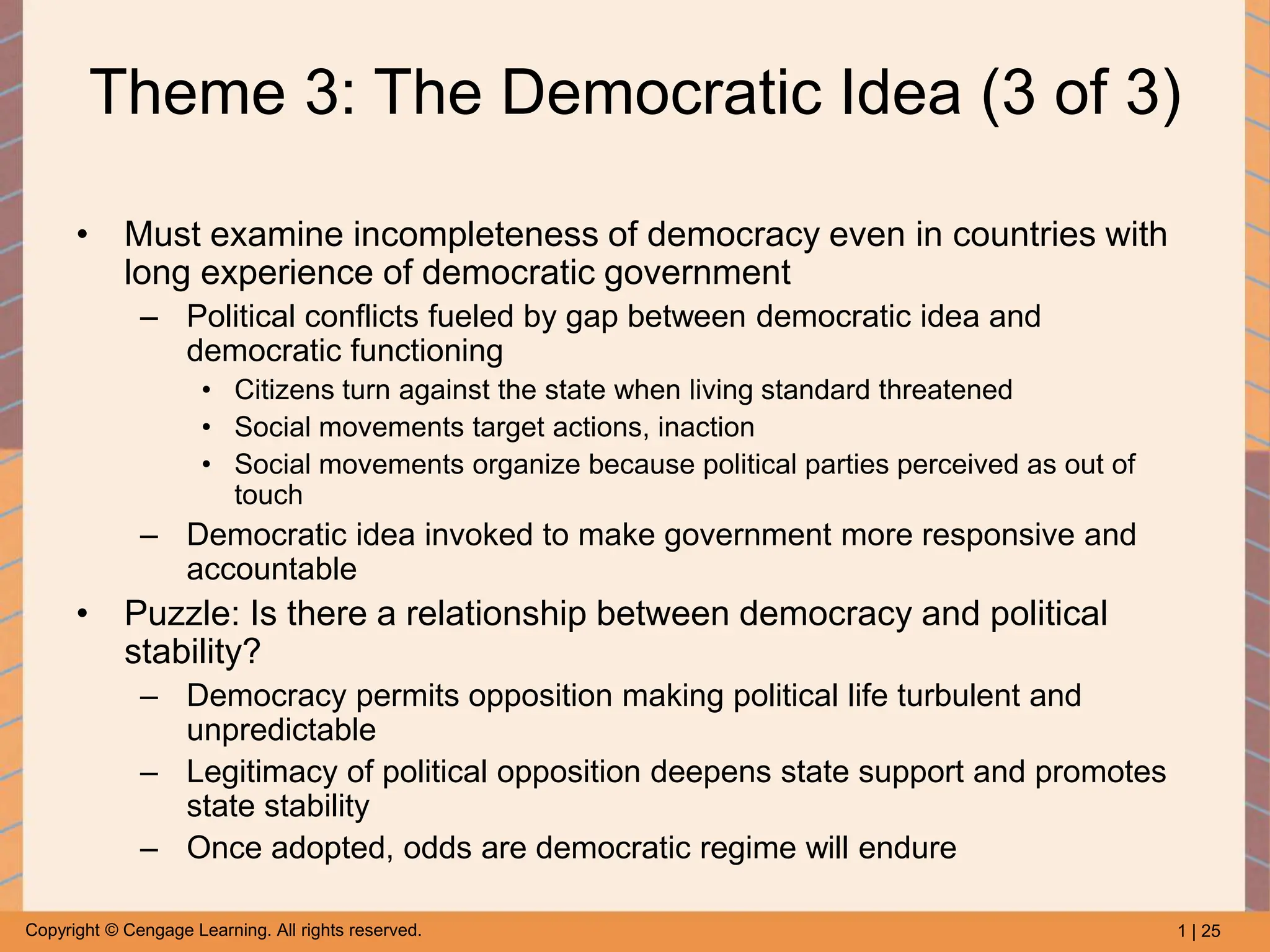
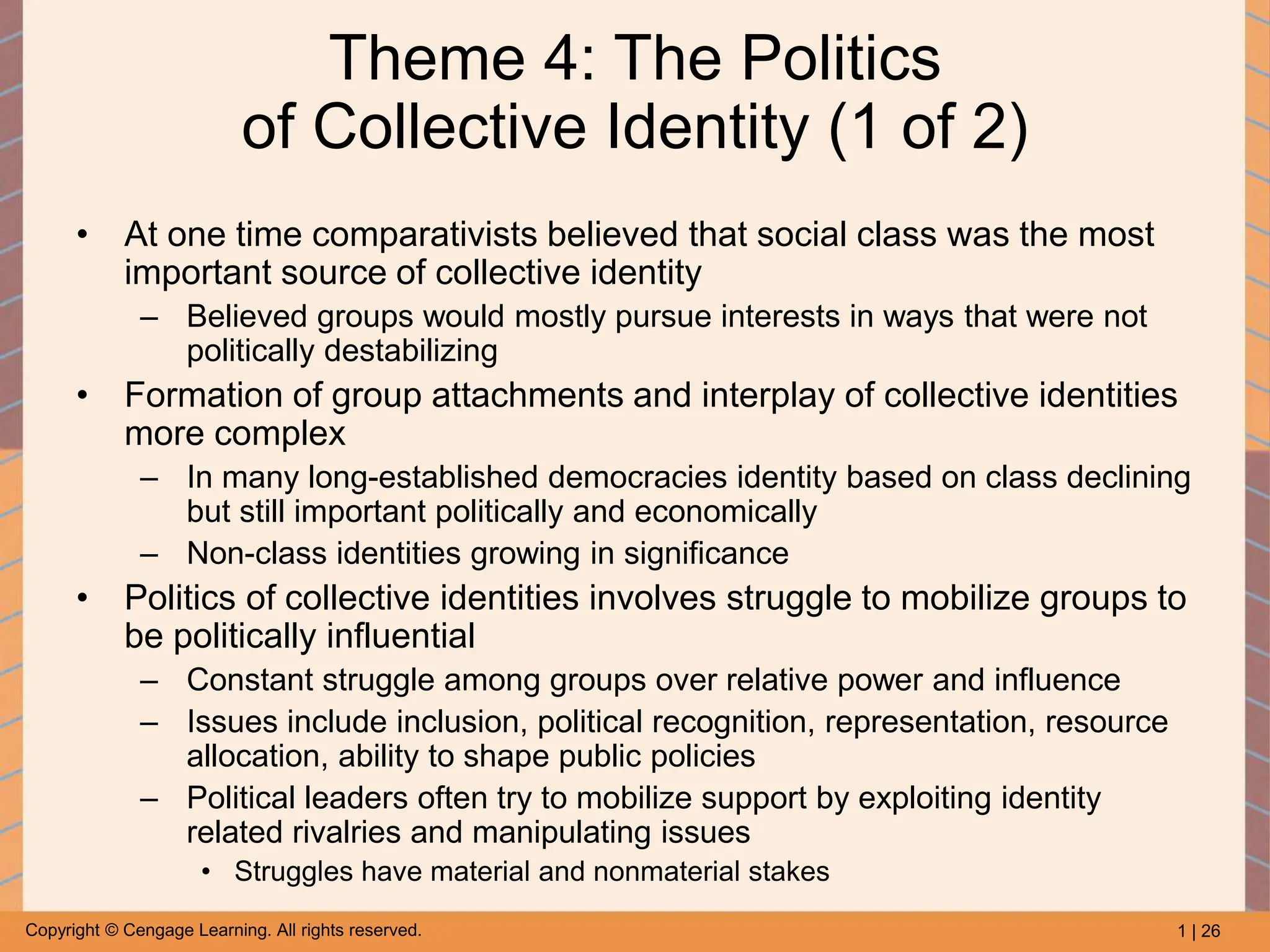
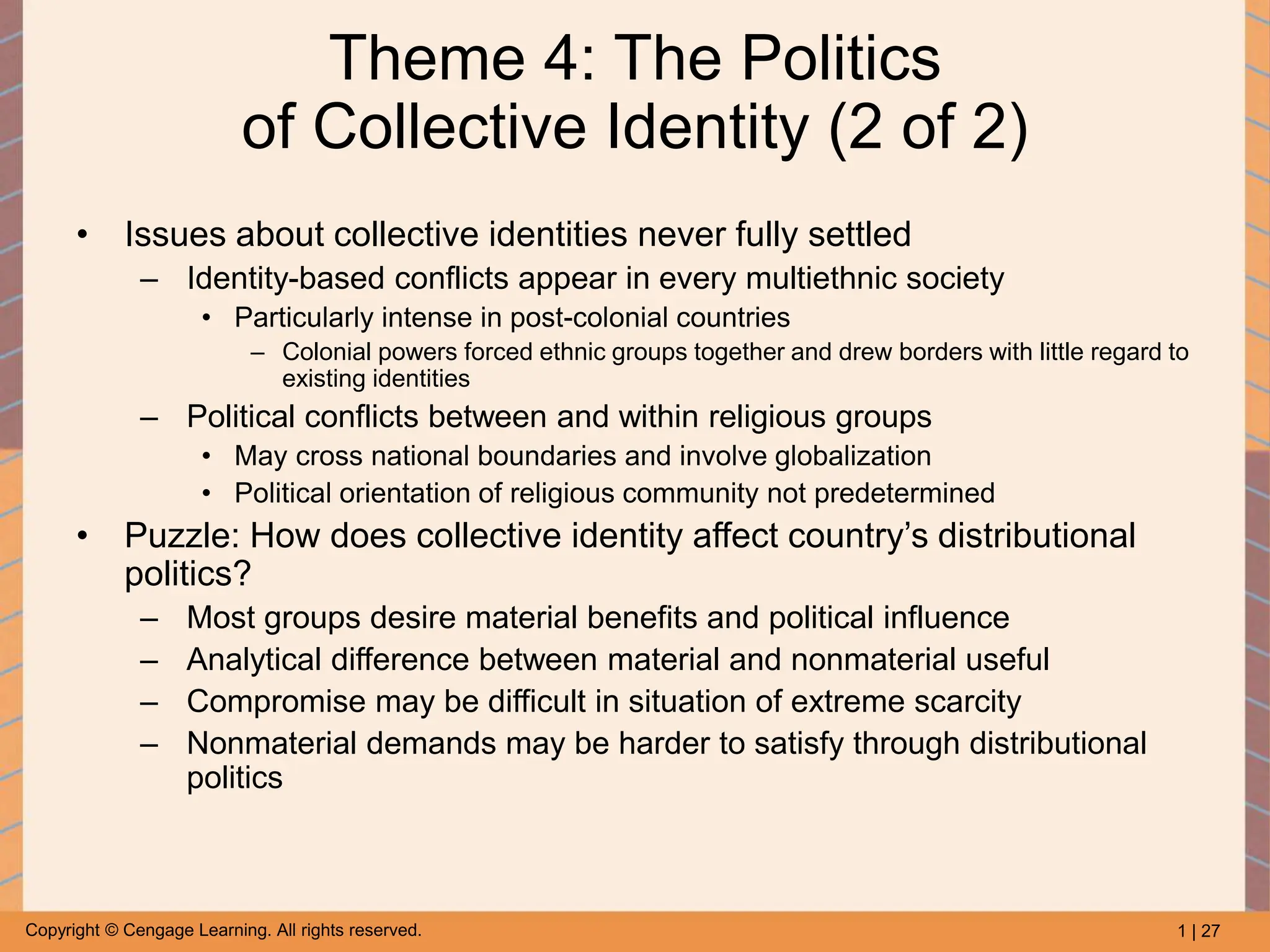
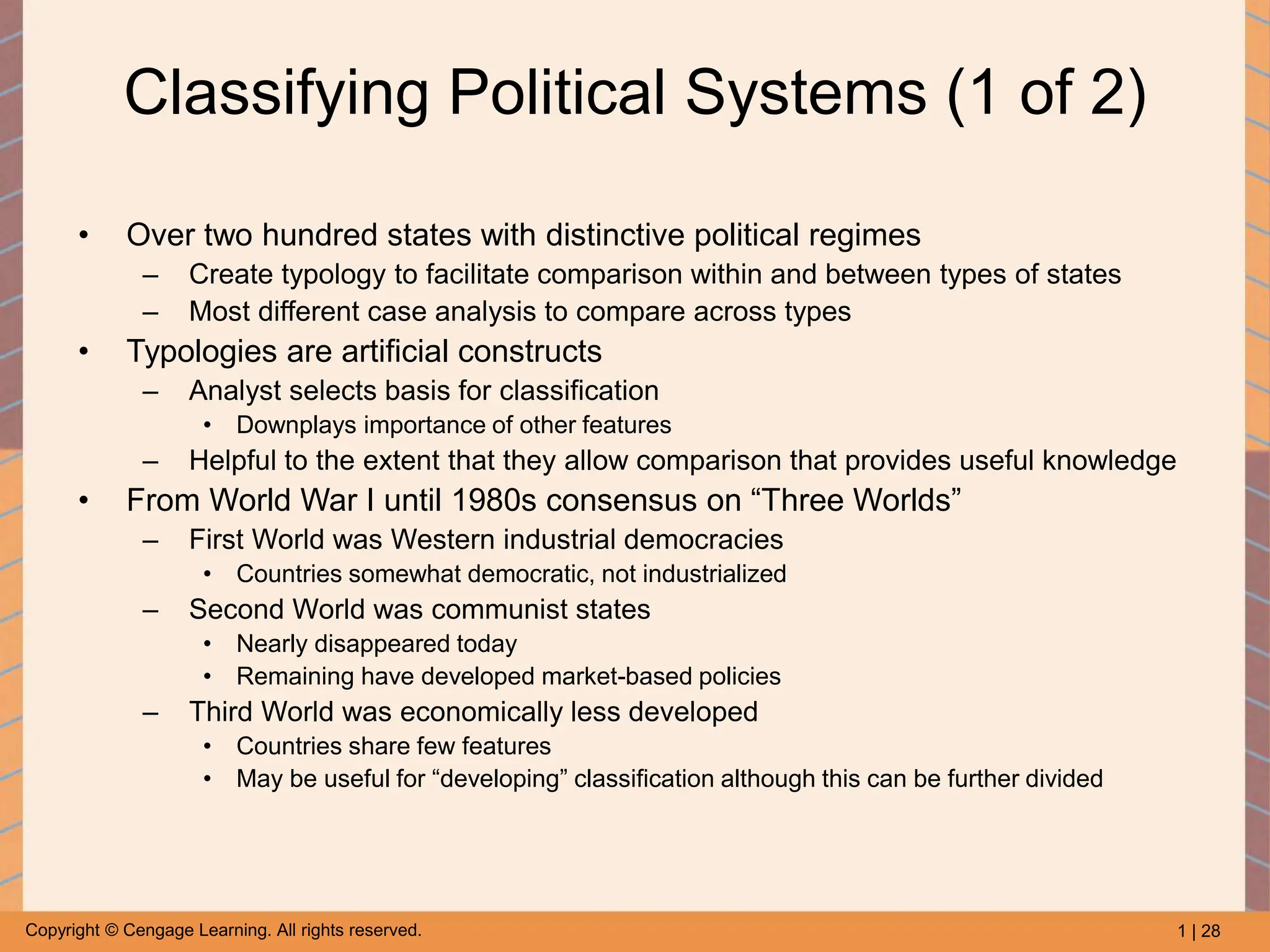
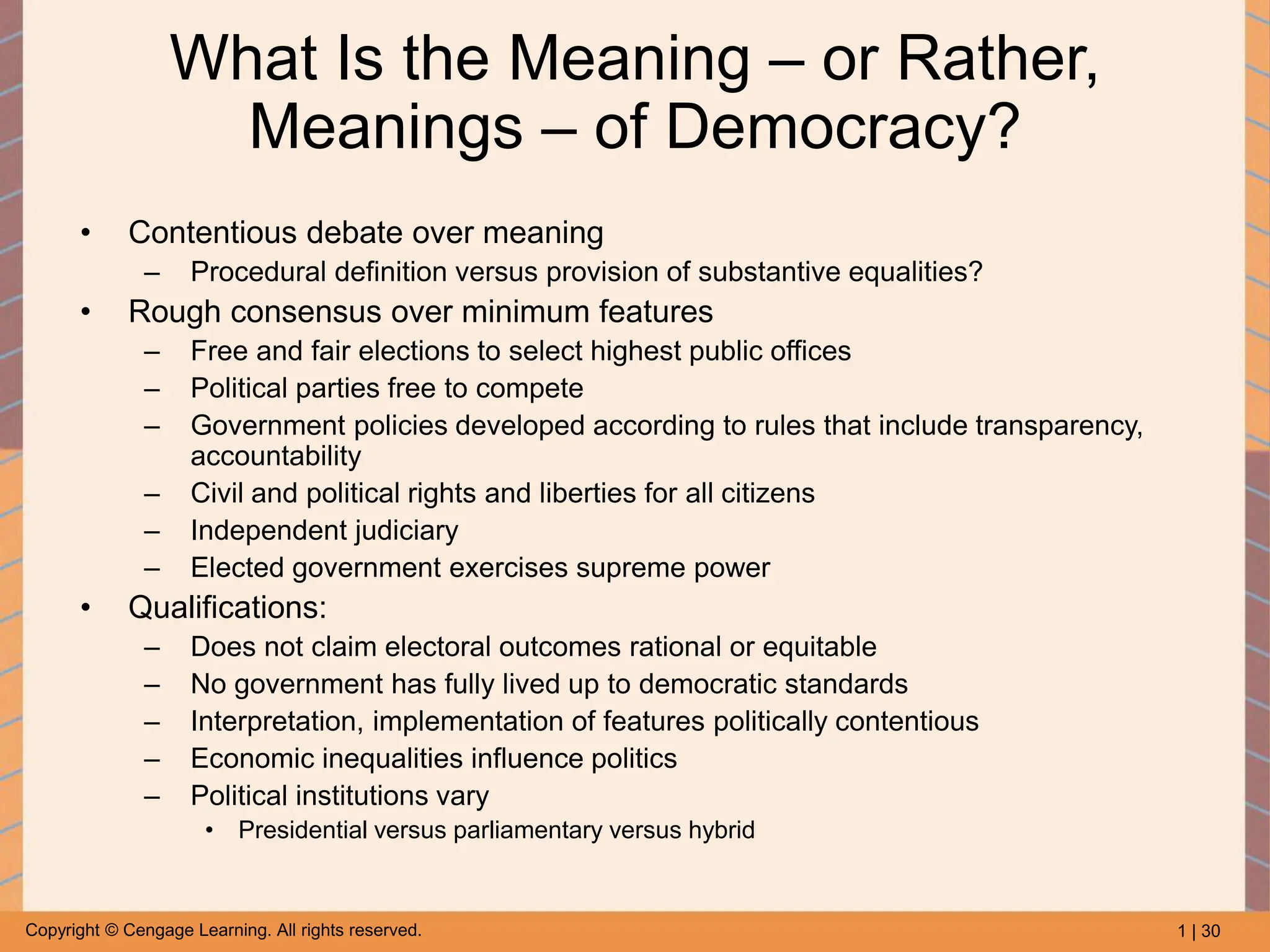
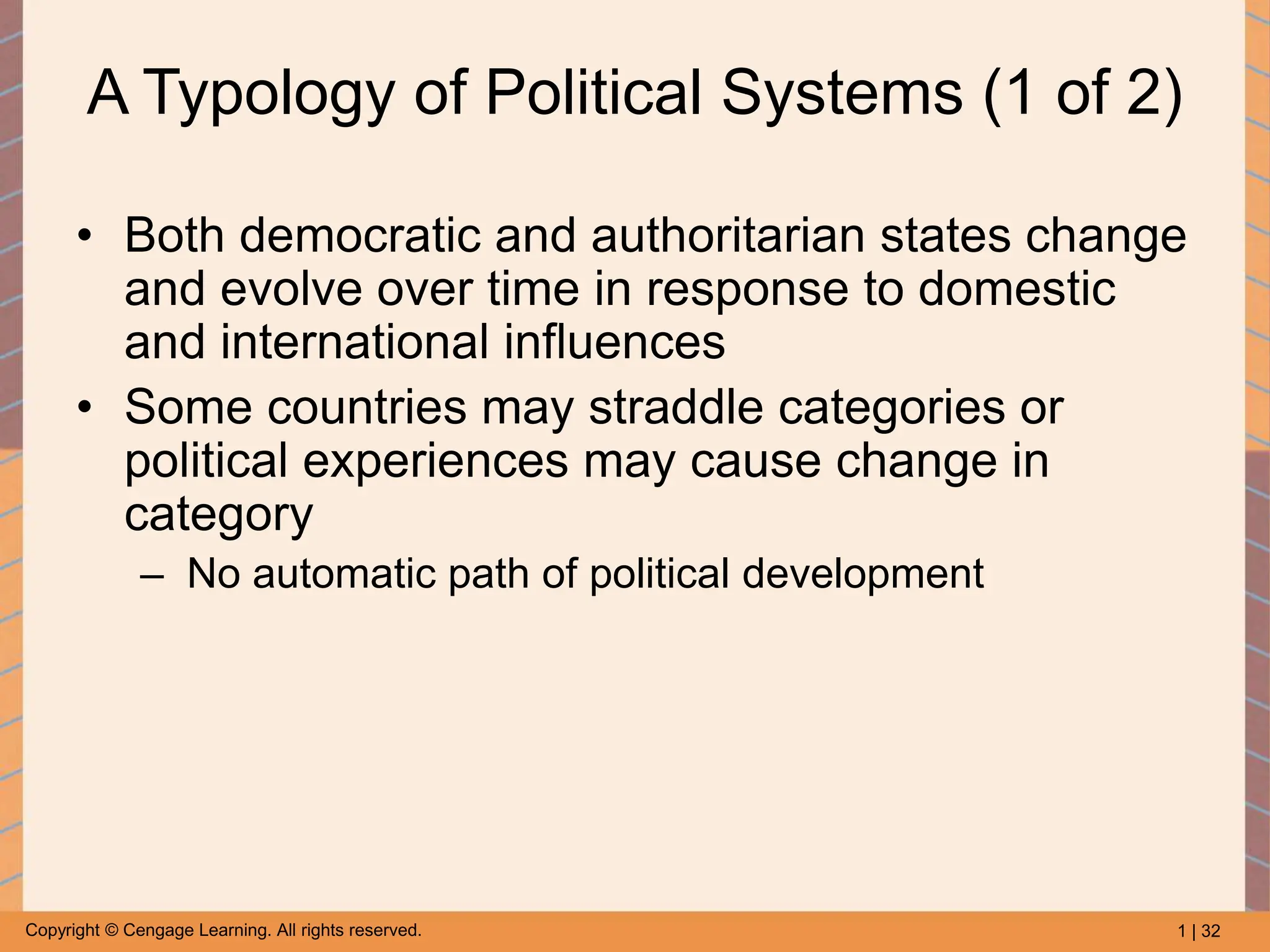
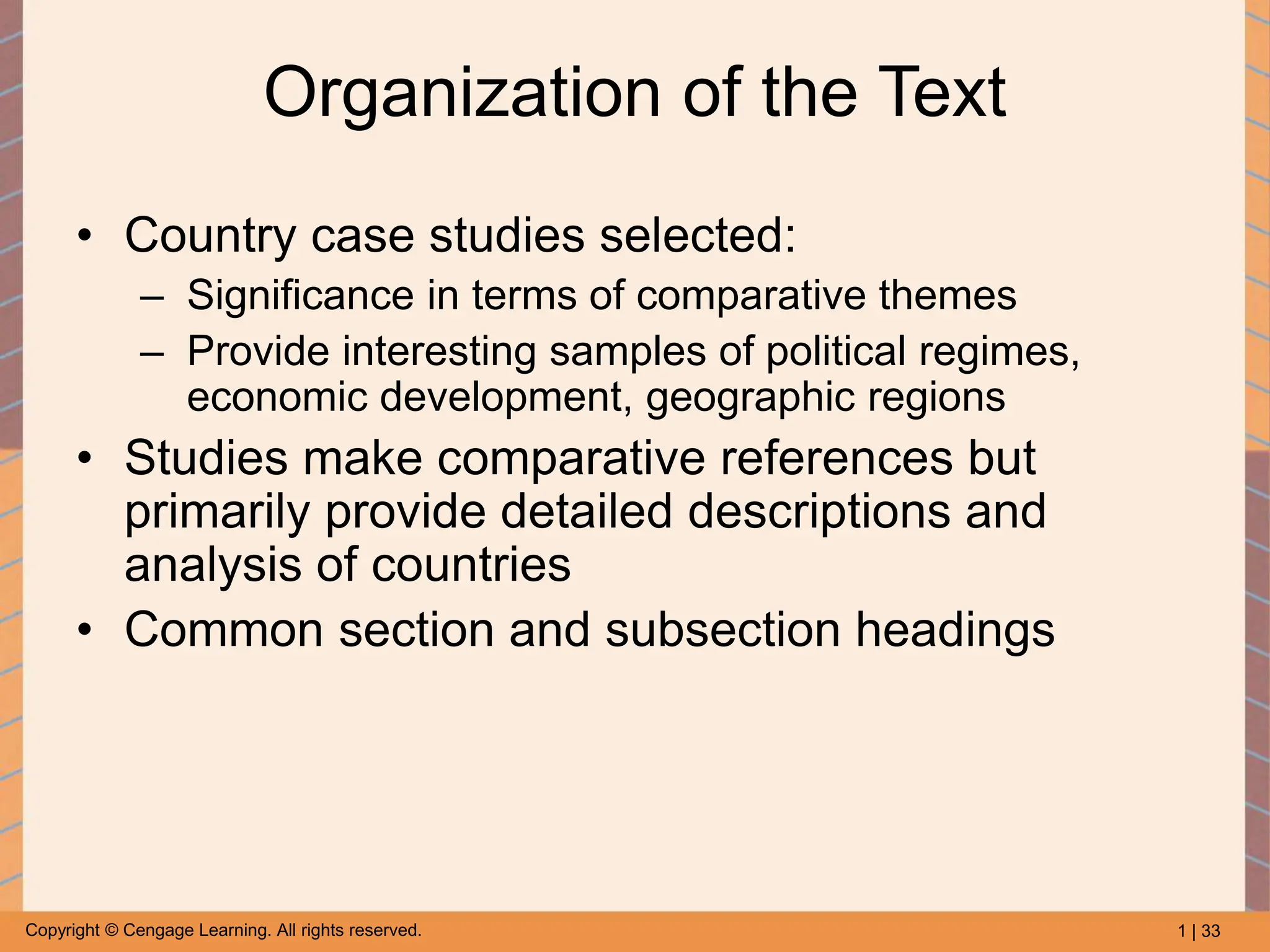
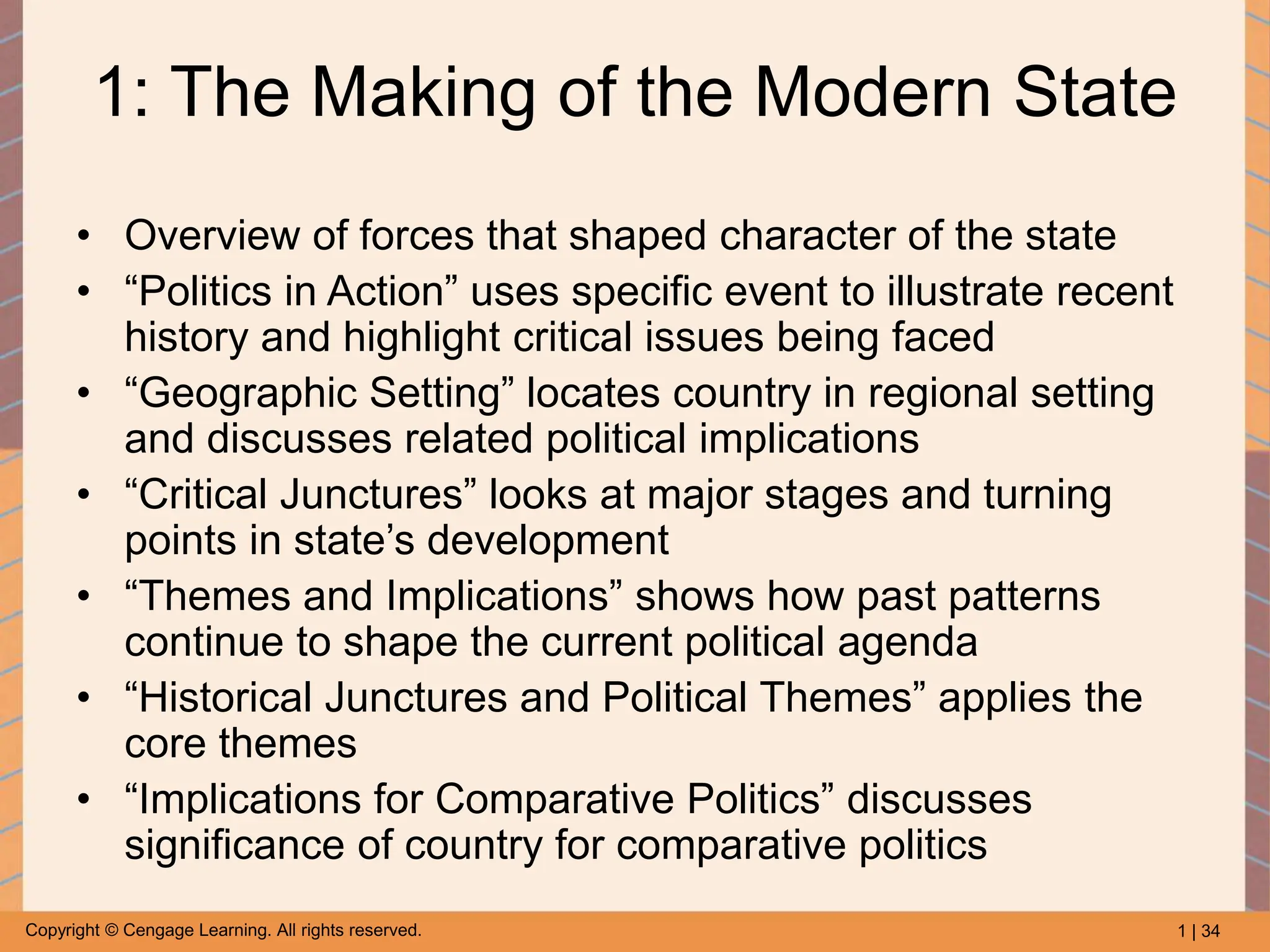
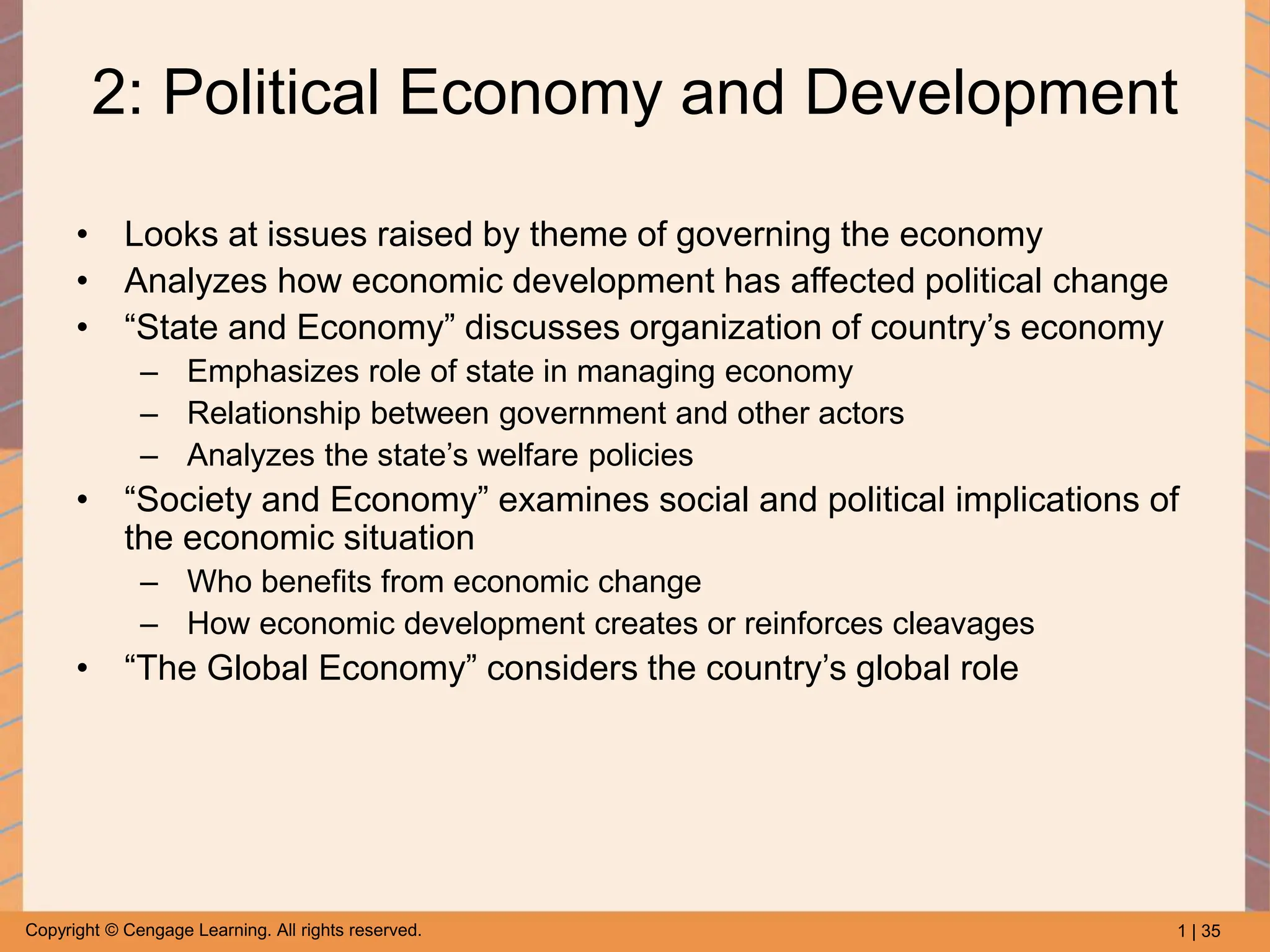
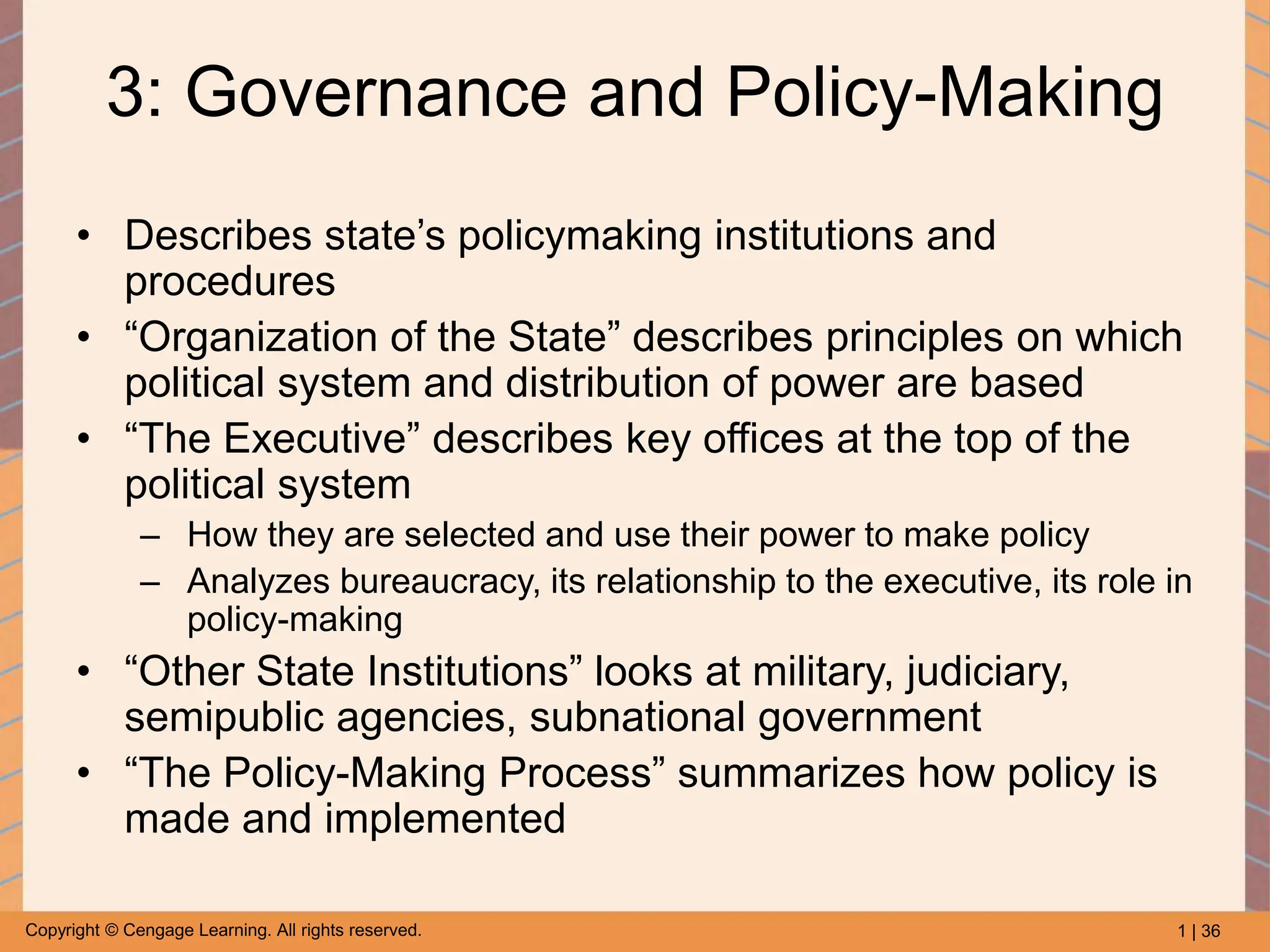
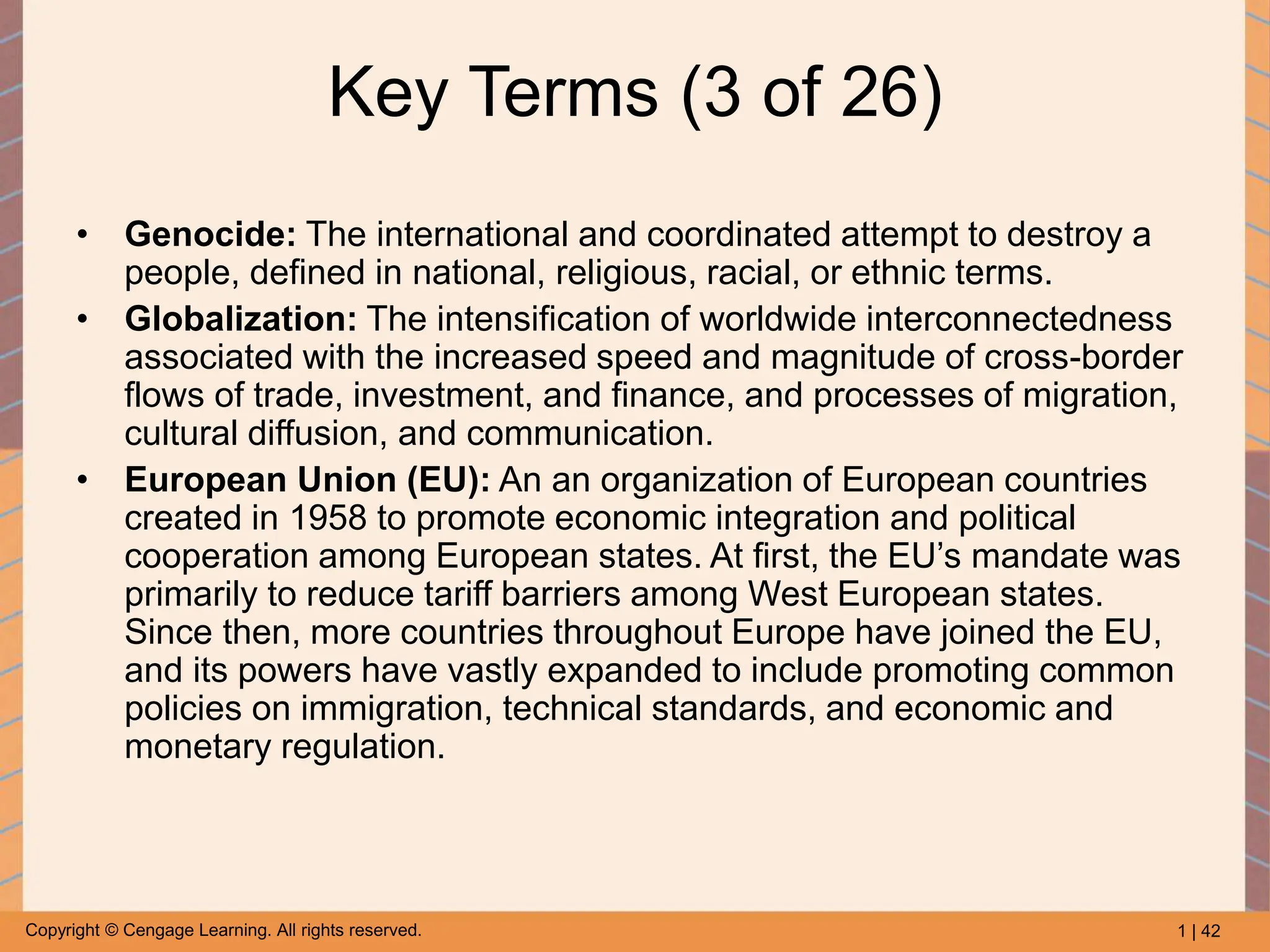
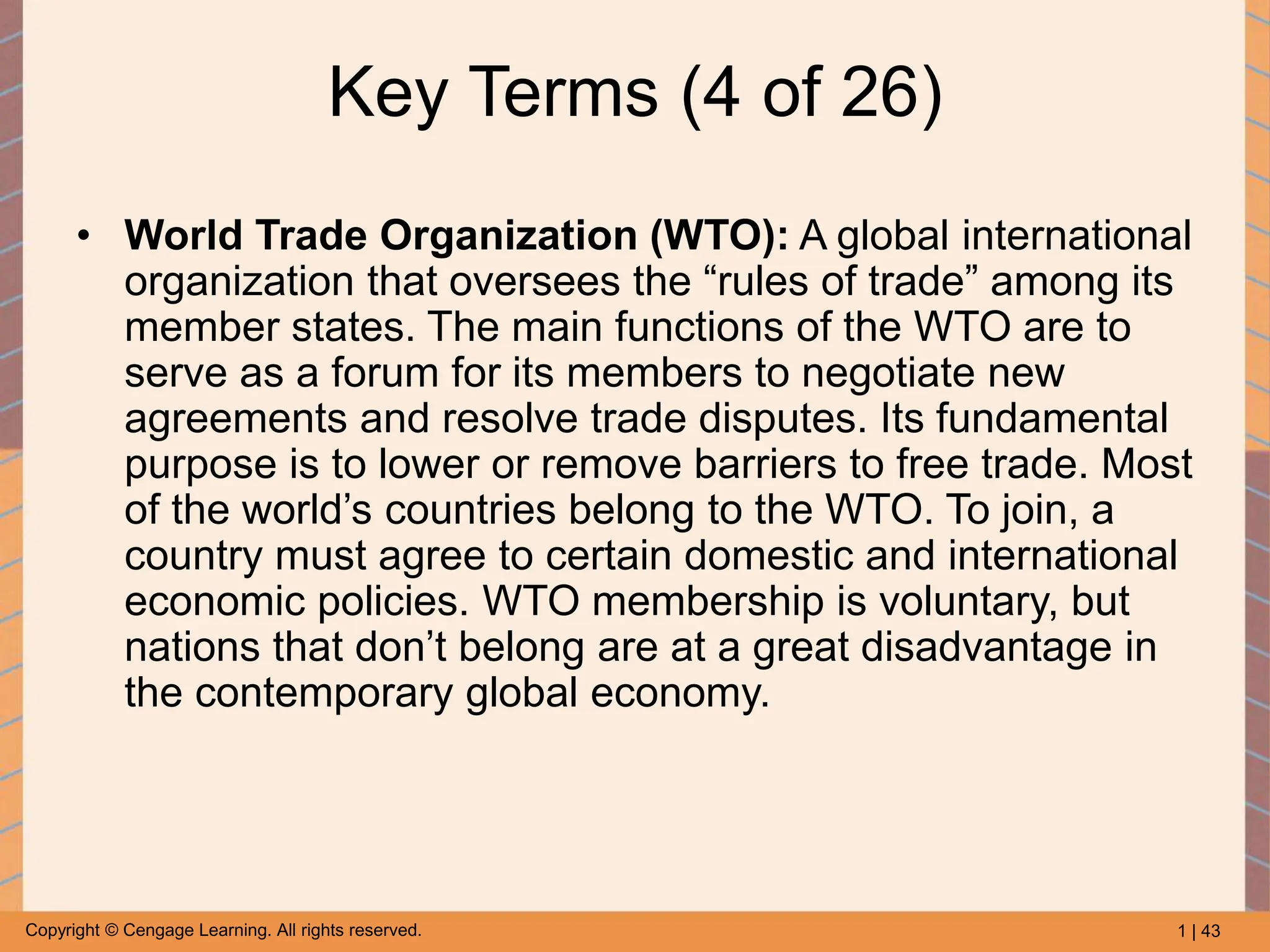
The document introduces the field of comparative politics, emphasizing how countries influence and are influenced by global events, particularly focusing on critical junctures from 1989, 2001, and 2008 that shaped the modern political landscape. It explores globalization's role in altering domestic political dynamics, challenges in governance, and the significance of state sovereignty amid evolving international forces. Additionally, it outlines the analytical framework to study political institutions, economic management, democratic transitions, and the complexities of collective identities in a comparative context.