Stomach and duodenum Surgery
Dr. Sherzad Hasand MD, MS
Dept. of Surgery
Shaikh zayed University
Introduction
 The stomach is a remarkable organ with
important digestive, nutritional, and endocrine
functions.
 Located between esophagus and small
intestine.
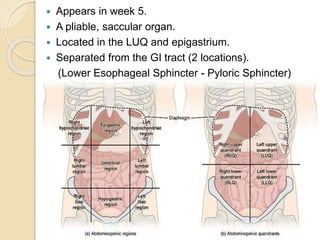
 Appears in week 5.
 A pliable, saccular organ.
 Located in the LUQ and epigastrium.
 Separated from the GI tract (2 locations).
(Lower Esophageal Sphincter - Pyloric Sphincter)
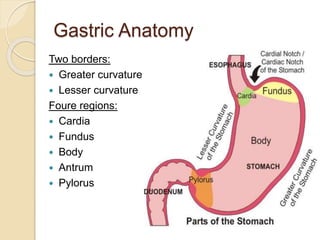
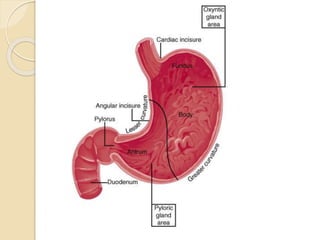
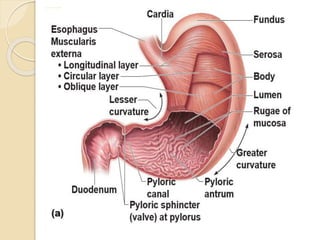
Gastric Anatomy
Two borders:
 Greater curvature
 Lesser curvature
Foure regions:
 Cardia
 Fundus
 Body
 Antrum
 Pylorus
From surgeon’s point of view:
Proximal gastric unit
 Distal esophagus, cardia, fundus, body
Distal gastric unit
 Gastric antrum, pylorus, 1st part of
duodenum
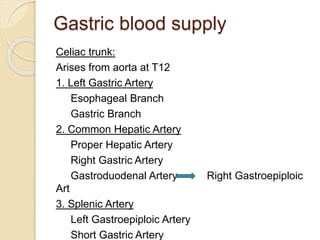
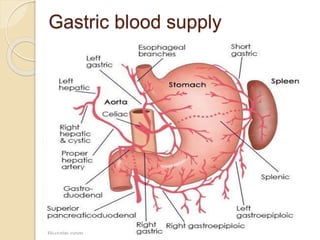
Gastric blood supply
Celiac trunk:
Arises from aorta at T12
1. Left Gastric Artery
Esophageal Branch
Gastric Branch
2. Common Hepatic Artery
Proper Hepatic Artery
Right Gastric Artery
Gastroduodenal Artery Right Gastroepiploic
Art
3. Splenic Artery
Left Gastroepiploic Artery
Short Gastric Artery
Gastric blood supply
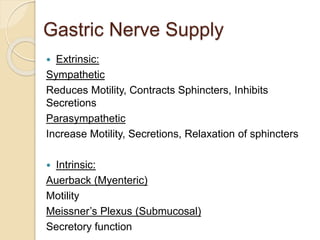
Gastric Nerve Supply
 Extrinsic:
Sympathetic
Reduces Motility, Contracts Sphincters, Inhibits
Secretions
Parasympathetic
Increase Motility, Secretions, Relaxation of sphincters
 Intrinsic:
Auerback (Myenteric)
Motility
Meissner’s Plexus (Submucosal)
Secretory function
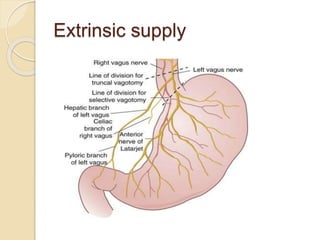
Extrinsic supply
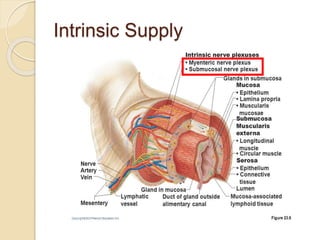
Intrinsic Supply
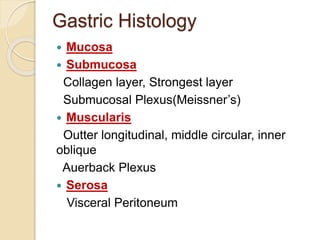
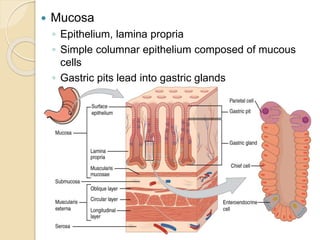
Gastric Histology
 Mucosa
 Submucosa
Collagen layer, Strongest layer
Submucosal Plexus(Meissner’s)
 Muscularis
Outter longitudinal, middle circular, inner
oblique
Auerback Plexus
 Serosa
Visceral Peritoneum
 Mucosa
◦ Epithelium, lamina propria
◦ Simple columnar epithelium composed of mucous
cells
◦ Gastric pits lead into gastric glands
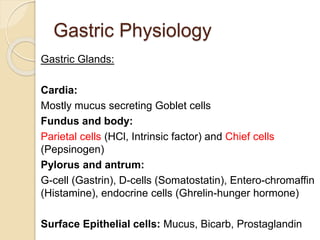
Gastric Physiology
Gastric Glands:
Cardia:
Mostly mucus secreting Goblet cells
Fundus and body:
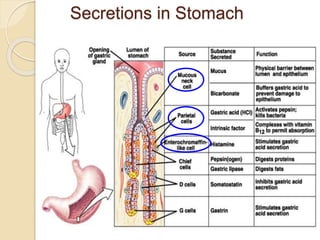
Parietal cells (HCl, Intrinsic factor) and Chief cells
(Pepsinogen)
Pylorus and antrum:
G-cell (Gastrin), D-cells (Somatostatin), Entero-chromaffin
(Histamine), endocrine cells (Ghrelin-hunger hormone)
Surface Epithelial cells: Mucus, Bicarb, Prostaglandin
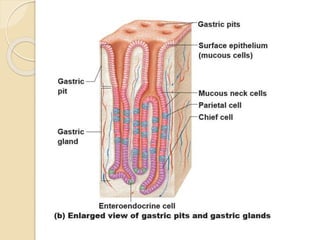
(b) Enlarged view of gastric pits and gastric glands
Mucous neck cells
Parietal cell
Surface epithelium
(mucous cells)
Gastric pits
Chief cell
Enteroendocrine cell
Gastric
pit
Gastric
gland
Secretions in Stomach
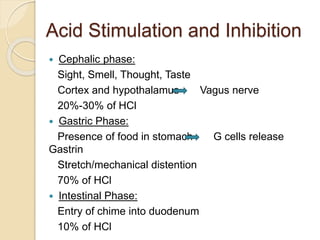
Acid Stimulation and Inhibition
 Cephalic phase:
Sight, Smell, Thought, Taste
Cortex and hypothalamus Vagus nerve
20%-30% of HCl
 Gastric Phase:
Presence of food in stomach G cells release
Gastrin
Stretch/mechanical distention
70% of HCl
 Intestinal Phase:
Entry of chime into duodenum
10% of HCl
‫مننه‬ ‫نړۍ‬ ‫مو‬ ‫څخه‬ ‫پاملرنې‬ ‫له‬

1.1 stomach and duodenum

  • 1.
    Stomach and duodenumSurgery Dr. Sherzad Hasand MD, MS Dept. of Surgery Shaikh zayed University
  • 2.
    Introduction  The stomachis a remarkable organ with important digestive, nutritional, and endocrine functions.  Located between esophagus and small intestine.
  • 3.
     Appears inweek 5.  A pliable, saccular organ.  Located in the LUQ and epigastrium.  Separated from the GI tract (2 locations). (Lower Esophageal Sphincter - Pyloric Sphincter)
  • 4.
    Gastric Anatomy Two borders: Greater curvature  Lesser curvature Foure regions:  Cardia  Fundus  Body  Antrum  Pylorus
  • 5.
    From surgeon’s pointof view: Proximal gastric unit  Distal esophagus, cardia, fundus, body Distal gastric unit  Gastric antrum, pylorus, 1st part of duodenum
  • 7.
    Gastric blood supply Celiactrunk: Arises from aorta at T12 1. Left Gastric Artery Esophageal Branch Gastric Branch 2. Common Hepatic Artery Proper Hepatic Artery Right Gastric Artery Gastroduodenal Artery Right Gastroepiploic Art 3. Splenic Artery Left Gastroepiploic Artery Short Gastric Artery
  • 8.
  • 9.
    Gastric Nerve Supply Extrinsic: Sympathetic Reduces Motility, Contracts Sphincters, Inhibits Secretions Parasympathetic Increase Motility, Secretions, Relaxation of sphincters  Intrinsic: Auerback (Myenteric) Motility Meissner’s Plexus (Submucosal) Secretory function
  • 10.
  • 11.
  • 12.
    Gastric Histology  Mucosa Submucosa Collagen layer, Strongest layer Submucosal Plexus(Meissner’s)  Muscularis Outter longitudinal, middle circular, inner oblique Auerback Plexus  Serosa Visceral Peritoneum
  • 14.
     Mucosa ◦ Epithelium,lamina propria ◦ Simple columnar epithelium composed of mucous cells ◦ Gastric pits lead into gastric glands
  • 15.
    Gastric Physiology Gastric Glands: Cardia: Mostlymucus secreting Goblet cells Fundus and body: Parietal cells (HCl, Intrinsic factor) and Chief cells (Pepsinogen) Pylorus and antrum: G-cell (Gastrin), D-cells (Somatostatin), Entero-chromaffin (Histamine), endocrine cells (Ghrelin-hunger hormone) Surface Epithelial cells: Mucus, Bicarb, Prostaglandin
  • 16.
    (b) Enlarged viewof gastric pits and gastric glands Mucous neck cells Parietal cell Surface epithelium (mucous cells) Gastric pits Chief cell Enteroendocrine cell Gastric pit Gastric gland
  • 17.
  • 18.
    Acid Stimulation andInhibition  Cephalic phase: Sight, Smell, Thought, Taste Cortex and hypothalamus Vagus nerve 20%-30% of HCl  Gastric Phase: Presence of food in stomach G cells release Gastrin Stretch/mechanical distention 70% of HCl  Intestinal Phase: Entry of chime into duodenum 10% of HCl
  • 19.
    ‫مننه‬ ‫نړۍ‬ ‫مو‬‫څخه‬ ‫پاملرنې‬ ‫له‬