Introduction to Horticulture Floral Design Flower: Carnation Term: Conditioning
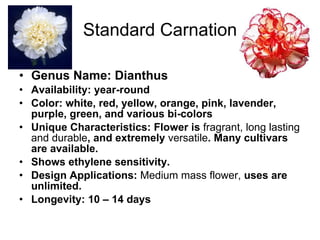
Standard Carnation Genus Name: Dianthus Availability: year-round Color: white, red, yellow, orange, pink, lavender, purple, green, and various bi-colors Unique Characteristics: Flower is  fragrant,   long lasting and durable , and extremely  versatile . Many cultivars are available.  Shows ethylene sensitivity. Design Applications:  Medium mass flower,  uses are unlimited. Longevity: 10 – 14 days
Conditioning Conditioning:  The process of preparing flowers for shipment, storage, or arrangement, Usually involves a conditioning solution to prolong flower life
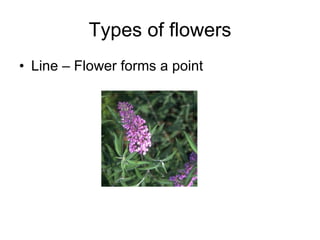
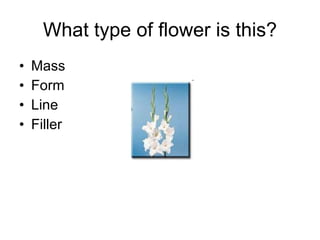
Types of flowers Line – Flower forms a point
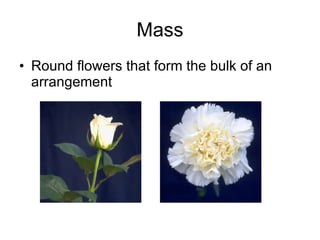
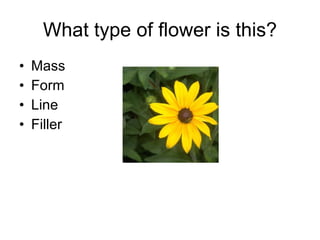
Mass Round flowers that form the bulk of an arrangement
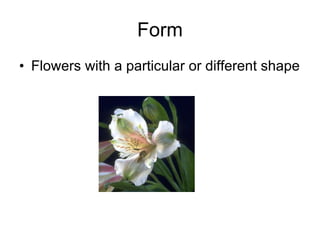
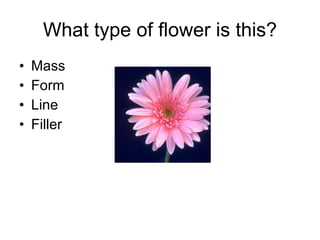
Form Flowers with a particular or different shape
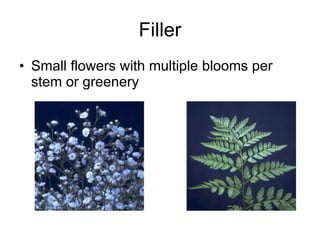
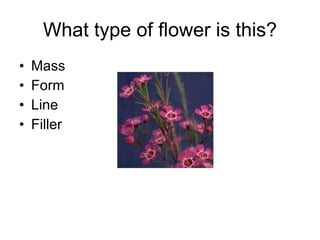
Filler Small flowers with multiple blooms per stem or greenery
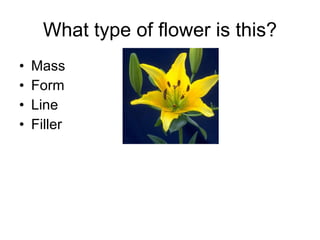
What type of flower is this? Mass Form Line Filler
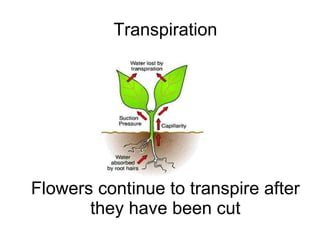
Transpiration Flowers continue to transpire after they have been cut
Why do Cut Flowers Deteriorate? Low water absorption Blocked xylem Loss of water Transpiration Loss of food No photosynthesis Disease Botrytis (fungus causes brown leaves) Ethylene Gas Produced by fruit and deteriorating plant material
Conditioning Replaces & prevents the conditions that cause deterioration Use a chemical mixture  Florists use “Floral Life” You can use Sprite or 7-up
Conditioned water Lower pH – acidic water (pH3.2 – 4.5) maximizes hydration  & slows bacterial growth Provide nutrition – glucose/sugar Kill bacteria and fungus – preservative
Conditioning old flowers Replace the water every 2 – 3 days Use  warm water  for maximum absorption Mix 1 heaping TBS conditioner per quart of water  Stir until dissolved Cut flowers on a slant 2” from bottom or above any decay Remove any wilted leaves or flowers and any leaves that would be submerged Replace in clean containers w/ 3-4” of solution in the bottom.
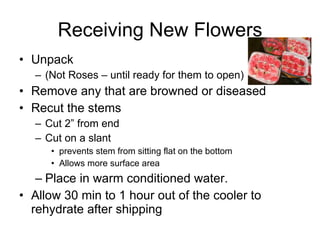
Receiving New Flowers Unpack (Not Roses – until ready for them to open) Remove any that are browned or diseased Recut the stems Cut 2” from end Cut on a slant prevents stem from sitting flat on the bottom Allows more surface area Place in warm conditioned water. Allow 30 min to 1 hour out of the cooler to rehydrate after shipping
Receiving Flowers Roses: Cut stems under water Prevents air bubble blockage Milky or sappy flowers Burn the end with a candle Remove all foliage that will be underwater Slows bacterial growth
This week Floral Design Monday – Condition flowers, greenhouse Tuesday – bows, budvases, greenhouse,  Wednesday -  Design Basics, wiring taping Thursday – Substitute – worksheet & movie Friday - Bring in a coffee mug to make an arrangement to take home.

11 30 Conditioning

  • 1.
    Introduction to HorticultureFloral Design Flower: Carnation Term: Conditioning
  • 2.
    Standard Carnation GenusName: Dianthus Availability: year-round Color: white, red, yellow, orange, pink, lavender, purple, green, and various bi-colors Unique Characteristics: Flower is fragrant, long lasting and durable , and extremely versatile . Many cultivars are available. Shows ethylene sensitivity. Design Applications: Medium mass flower, uses are unlimited. Longevity: 10 – 14 days
  • 3.
    Conditioning Conditioning: The process of preparing flowers for shipment, storage, or arrangement, Usually involves a conditioning solution to prolong flower life
  • 4.
    Types of flowersLine – Flower forms a point
  • 5.
    Mass Round flowersthat form the bulk of an arrangement
  • 6.
    Form Flowers witha particular or different shape
  • 7.
    Filler Small flowerswith multiple blooms per stem or greenery
  • 8.
    What type offlower is this? Mass Form Line Filler
  • 9.
    What type offlower is this? Mass Form Line Filler
  • 10.
    What type offlower is this? Mass Form Line Filler
  • 11.
    What type offlower is this? Mass Form Line Filler
  • 12.
    What type offlower is this? Mass Form Line Filler
  • 13.
    Transpiration Flowers continueto transpire after they have been cut
  • 14.
    Why do CutFlowers Deteriorate? Low water absorption Blocked xylem Loss of water Transpiration Loss of food No photosynthesis Disease Botrytis (fungus causes brown leaves) Ethylene Gas Produced by fruit and deteriorating plant material
  • 15.
    Conditioning Replaces &prevents the conditions that cause deterioration Use a chemical mixture Florists use “Floral Life” You can use Sprite or 7-up
  • 16.
    Conditioned water LowerpH – acidic water (pH3.2 – 4.5) maximizes hydration & slows bacterial growth Provide nutrition – glucose/sugar Kill bacteria and fungus – preservative
  • 17.
    Conditioning old flowersReplace the water every 2 – 3 days Use warm water for maximum absorption Mix 1 heaping TBS conditioner per quart of water Stir until dissolved Cut flowers on a slant 2” from bottom or above any decay Remove any wilted leaves or flowers and any leaves that would be submerged Replace in clean containers w/ 3-4” of solution in the bottom.
  • 18.
    Receiving New FlowersUnpack (Not Roses – until ready for them to open) Remove any that are browned or diseased Recut the stems Cut 2” from end Cut on a slant prevents stem from sitting flat on the bottom Allows more surface area Place in warm conditioned water. Allow 30 min to 1 hour out of the cooler to rehydrate after shipping
  • 19.
    Receiving Flowers Roses:Cut stems under water Prevents air bubble blockage Milky or sappy flowers Burn the end with a candle Remove all foliage that will be underwater Slows bacterial growth
  • 20.
    This week FloralDesign Monday – Condition flowers, greenhouse Tuesday – bows, budvases, greenhouse, Wednesday - Design Basics, wiring taping Thursday – Substitute – worksheet & movie Friday - Bring in a coffee mug to make an arrangement to take home.