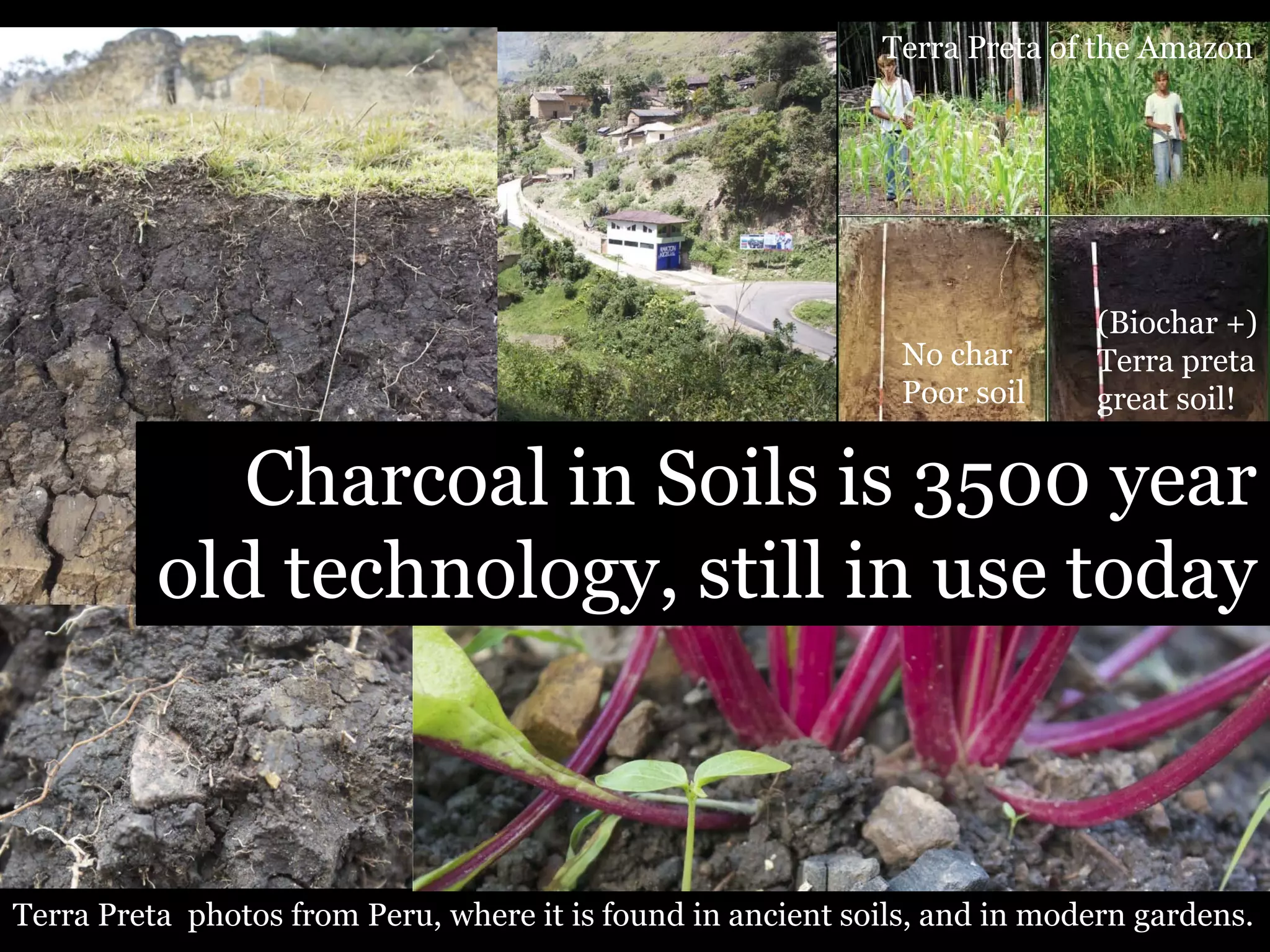
Terra Preta of the Amazon

No char
Poor soil

(Biochar +)
Terra preta
great soil!

Charcoal in Soils is 3500 year
old technology, still in use today

Terra Preta photos from Peru, where it is found in ancient soils, and in modern gardens.
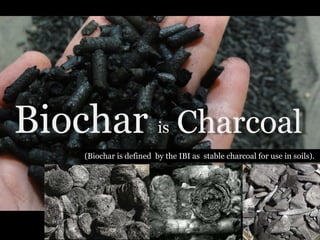
Biochar is Charcoal
(Biochar is defined by the IBI as stable charcoal for use in soils).
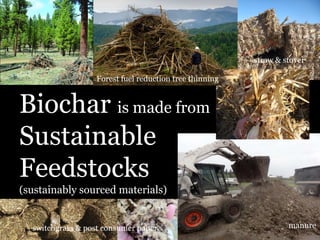
straw & stover
Forest fuel reduction tree thinning

Biochar is made from
Sustainable
Feedstocks
(sustainably sourced materials)
switchgrass & post consumer paper

manure
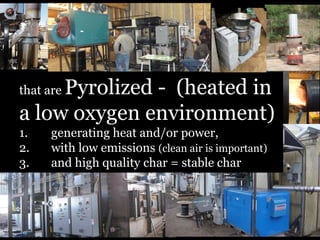
Pyrolized - (heated in
a low oxygen environment)
that are
1.
2.
3.

generating heat and/or power,
with low emissions (clean air is important)
and high quality char = stable char
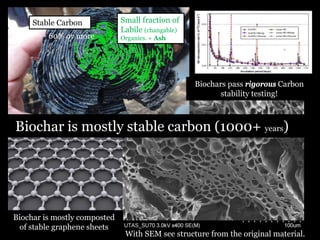
Stable Carbon
60% or more

Small fraction of
Labile (changable)

Organics. + Ash

Biochars pass rigorous Carbon
stability testing!

Biochar is mostly stable carbon (1000+ years)

Biochar is mostly composted
of stable graphene sheets

With SEM see structure from the original material.
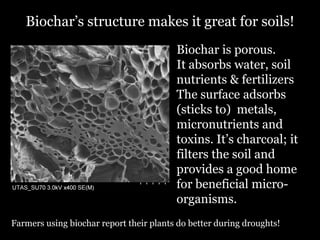
Biochar’s structure makes it great for soils!
Biochar is porous.
It absorbs water, soil
nutrients & fertilizers
The surface adsorbs
(sticks to) metals,
micronutrients and
toxins. It’s charcoal; it
filters the soil and
provides a good home
for beneficial microorganisms.
Farmers using biochar report their plants do better during droughts!
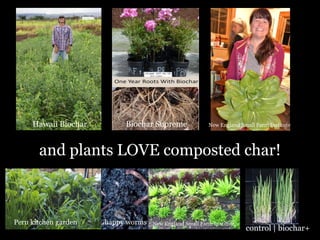
Hawaii Biochar

Biochar Supreme

New England Small Farm Institute

and plants LOVE composted char!

Peru kitchen garden

happy worms

New England Small Farm Institute

control | biochar+
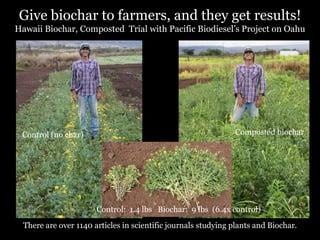
Give biochar to farmers, and they get results!

Hawaii Biochar, Composted Trial with Pacific Biodiesel’s Project on Oahu

Control (no char)

Composted biochar

Control: 1.4 lbs Biochar: 9 lbs (6.4x control)
There are over 1140 articles in scientific journals studying plants and Biochar.
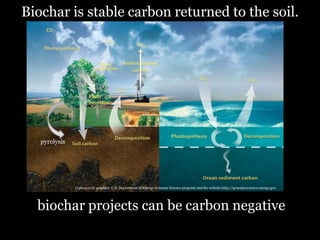
Biochar is stable carbon returned to the soil.

pyrolysis

Carbon cycle graphics U.S. Department of Energy Genomic Science program and the website http://genomicscience.energy.gov.

biochar projects can be carbon negative
and a transparent and reliable method
for carbon accounting for biochar projects is
close to completion, after years of
hard work by

International Biochar Initiative already provides trusted 3rd party biochar certification.
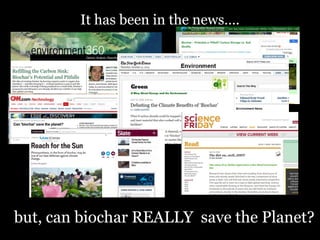
It has been in the news….

but, can biochar REALLY save the Planet?
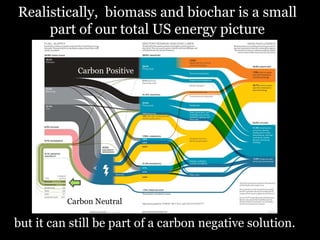
Realistically, biomass and biochar is a small
part of our total US energy picture
Carbon Positive

Carbon Neutral

but it can still be part of a carbon negative solution.
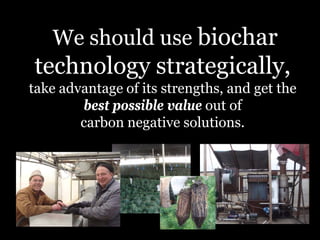
We should use biochar

technology strategically,

take advantage of its strengths, and get the
best possible value out of
carbon negative solutions.
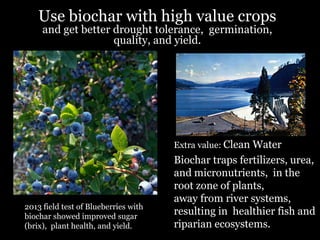
Use biochar with high value crops
and get better drought tolerance, germination,
quality, and yield.

Extra value: Clean Water

2013 field test of Blueberries with
biochar showed improved sugar
(brix), plant health, and yield.

Biochar traps fertilizers, urea,
and micronutrients, in the
root zone of plants,
away from river systems,
resulting in healthier fish and
riparian ecosystems.
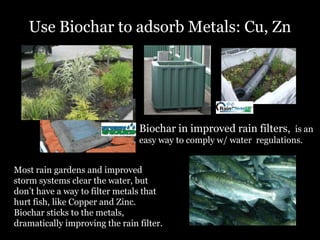
Use Biochar to adsorb Metals: Cu, Zn

Biochar in improved rain filters, is an
easy way to comply w/ water regulations.

Most rain gardens and improved
storm systems clear the water, but
don’t have a way to filter metals that
hurt fish, like Copper and Zinc.
Biochar sticks to the metals,
dramatically improving the rain filter.
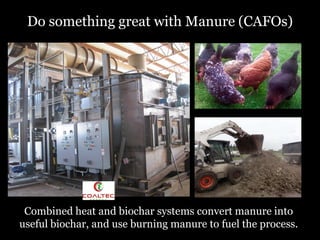
Do something great with Manure (CAFOs)

Combined heat and biochar systems convert manure into
useful biochar, and use burning manure to fuel the process.
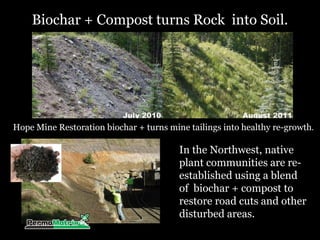
Biochar + Compost turns Rock into Soil.

Hope Mine Restoration biochar + turns mine tailings into healthy re-growth.

In the Northwest, native
plant communities are reestablished using a blend
of biochar + compost to
restore road cuts and other
disturbed areas.
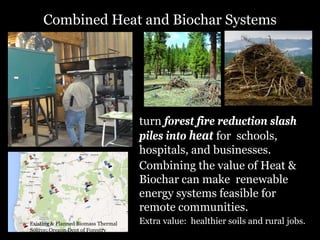
Combined Heat and Biochar Systems

turn forest fire reduction slash
piles into heat for schools,
hospitals, and businesses.
Combining the value of Heat &
Biochar can make renewable
energy systems feasible for
remote communities.
Existing & Planned Biomass Thermal
Source: Oregon Dept of Forestry

Extra value: healthier soils and rural jobs.
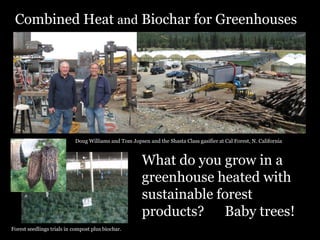
Combined Heat and Biochar for Greenhouses

Doug Williams and Tom Jopsen and the Shasta Class gasifier at Cal Forest, N. California

What do you grow in a
greenhouse heated with
sustainable forest
products? Baby trees!
Forest seedlings trials in compost plus biochar.
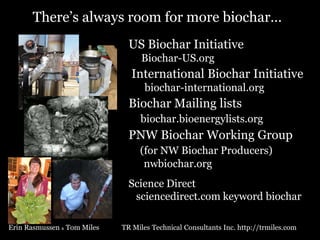
There’s always room for more biochar…
US Biochar Initiative
Biochar-US.org

International Biochar Initiative
biochar-international.org

Biochar Mailing lists
biochar.bioenergylists.org

PNW Biochar Working Group
(for NW Biochar Producers)
nwbiochar.org
Science Direct
sciencedirect.com keyword biochar
Erin Rasmussen & Tom Miles

TR Miles Technical Consultants Inc. http://trmiles.com

Erin Rasmussen Biochar talk from Ignite Portland 12

  • 1.
    Terra Preta ofthe Amazon No char Poor soil (Biochar +) Terra preta great soil! Charcoal in Soils is 3500 year old technology, still in use today Terra Preta photos from Peru, where it is found in ancient soils, and in modern gardens.
  • 2.
    Biochar is Charcoal (Biocharis defined by the IBI as stable charcoal for use in soils).
  • 3.
    straw & stover Forestfuel reduction tree thinning Biochar is made from Sustainable Feedstocks (sustainably sourced materials) switchgrass & post consumer paper manure
  • 4.
    Pyrolized - (heatedin a low oxygen environment) that are 1. 2. 3. generating heat and/or power, with low emissions (clean air is important) and high quality char = stable char
  • 5.
    Stable Carbon 60% ormore Small fraction of Labile (changable) Organics. + Ash Biochars pass rigorous Carbon stability testing! Biochar is mostly stable carbon (1000+ years) Biochar is mostly composted of stable graphene sheets With SEM see structure from the original material.
  • 6.
    Biochar’s structure makesit great for soils! Biochar is porous. It absorbs water, soil nutrients & fertilizers The surface adsorbs (sticks to) metals, micronutrients and toxins. It’s charcoal; it filters the soil and provides a good home for beneficial microorganisms. Farmers using biochar report their plants do better during droughts!
  • 7.
    Hawaii Biochar Biochar Supreme NewEngland Small Farm Institute and plants LOVE composted char! Peru kitchen garden happy worms New England Small Farm Institute control | biochar+
  • 8.
    Give biochar tofarmers, and they get results! Hawaii Biochar, Composted Trial with Pacific Biodiesel’s Project on Oahu Control (no char) Composted biochar Control: 1.4 lbs Biochar: 9 lbs (6.4x control) There are over 1140 articles in scientific journals studying plants and Biochar.
  • 9.
    Biochar is stablecarbon returned to the soil. pyrolysis Carbon cycle graphics U.S. Department of Energy Genomic Science program and the website http://genomicscience.energy.gov. biochar projects can be carbon negative
  • 10.
    and a transparentand reliable method for carbon accounting for biochar projects is close to completion, after years of hard work by International Biochar Initiative already provides trusted 3rd party biochar certification.
  • 11.
    It has beenin the news…. but, can biochar REALLY save the Planet?
  • 12.
    Realistically, biomass andbiochar is a small part of our total US energy picture Carbon Positive Carbon Neutral but it can still be part of a carbon negative solution.
  • 13.
    We should usebiochar technology strategically, take advantage of its strengths, and get the best possible value out of carbon negative solutions.
  • 14.
    Use biochar withhigh value crops and get better drought tolerance, germination, quality, and yield. Extra value: Clean Water 2013 field test of Blueberries with biochar showed improved sugar (brix), plant health, and yield. Biochar traps fertilizers, urea, and micronutrients, in the root zone of plants, away from river systems, resulting in healthier fish and riparian ecosystems.
  • 15.
    Use Biochar toadsorb Metals: Cu, Zn Biochar in improved rain filters, is an easy way to comply w/ water regulations. Most rain gardens and improved storm systems clear the water, but don’t have a way to filter metals that hurt fish, like Copper and Zinc. Biochar sticks to the metals, dramatically improving the rain filter.
  • 16.
    Do something greatwith Manure (CAFOs) Combined heat and biochar systems convert manure into useful biochar, and use burning manure to fuel the process.
  • 17.
    Biochar + Compostturns Rock into Soil. Hope Mine Restoration biochar + turns mine tailings into healthy re-growth. In the Northwest, native plant communities are reestablished using a blend of biochar + compost to restore road cuts and other disturbed areas.
  • 18.
    Combined Heat andBiochar Systems turn forest fire reduction slash piles into heat for schools, hospitals, and businesses. Combining the value of Heat & Biochar can make renewable energy systems feasible for remote communities. Existing & Planned Biomass Thermal Source: Oregon Dept of Forestry Extra value: healthier soils and rural jobs.
  • 19.
    Combined Heat andBiochar for Greenhouses Doug Williams and Tom Jopsen and the Shasta Class gasifier at Cal Forest, N. California What do you grow in a greenhouse heated with sustainable forest products? Baby trees! Forest seedlings trials in compost plus biochar.
  • 20.
    There’s always roomfor more biochar… US Biochar Initiative Biochar-US.org International Biochar Initiative biochar-international.org Biochar Mailing lists biochar.bioenergylists.org PNW Biochar Working Group (for NW Biochar Producers) nwbiochar.org Science Direct sciencedirect.com keyword biochar Erin Rasmussen & Tom Miles TR Miles Technical Consultants Inc. http://trmiles.com