International Journal of Marketing and Human Resource Management (IJMHRM), ISSN 0976
INTERNATIONAL JOURNAL OF MARKETING AND HUMAN
– 6421 (Print), ISSN 0976 – 643X (Online), Volume 5, Issue 1, January-February (2013)

RESOURCE MANAGEMENT (IJMHRM)

ISSN 0976 – 6421 (Print)
ISSN 0976 – 643X (Online)
Volume 5, Issue 1, January – February (2014), pp. 09-21
© IAEME: www.iaeme.com/ijmhrm.asp
Journal Impact Factor (2013): 4.6901 (Calculated by GISI)
www.jifactor.com

IJMHRM
©IAEME

STUDY ON MEDICAL TOURISM GLOBAL COMPETITION IN
HEALTHCARE AND A STUDY ON SATISFACTION LEVEL AMONG
FOREIGN PATIENT’S
Dr. Satpal Singh1,
1

Dr. Sahil2

Associate Professor, Coordinator of Department of Hospital Administration,
D.C.R.U.S.T. Murthal, Sonepat
2
Masters of Hospital Administration, D.C.R.U.S.T. Murthal, Sonepat,

ABSTRACT
Healthcare, like food and shelter, is a basic need of Humanity. Given the potential
India holds as a healthcare destination, the healthcare tourism sector can be a major source of
foreign exchange earnings for the country. India’s healthcare sector has made impressive
strides in recent years and the country is increasingly projected as a ‘healthcare hub’. Several
features have positioned India as an ideal healthcare destination, like cost effective healthcare
solutions, availability of skilled healthcare professionals, reputation for successful treatment
in advanced healthcare segments, increasing popularity of India’s traditional wellness
systems and rapid strides made in information technology. The present study analyses and
concludes the main reasons why the developing country like India attracts foreign tourists for
the medical treatment. Finally this study is undertaken to evaluate the satisfaction level and
quality of care received by foreign patients admitted for treatment at FORTIS HOSPITAL,
Shalimar Bagh, New Delhi.
Keyword: Medical Tourism, Patient Satisfaction, Global Competition.
INTRODUCTION
Tourism and healthcare, being an integral part of many economies services industry
are both important sources of foreign exchange. Globalization has promoted a consumerist
culture leading to the mushrooming of corporate healthcare settings seized with the necessity
9
International Journal of Marketing and Human Resource Management (IJMHRM), ISSN 0976
– 6421 (Print), ISSN 0976 – 643X (Online), Volume 5, Issue 1, January-February (2013)

to maximize profits and expand their coverage. However, the constraint lies in the fact that
these services can be afforded by a relatively small size of population in developing
countries. Low insurance penetration, lack of standardization of services, poor information
base, ineffective monitoring leading to low quality, high levels of fraud and corruption,
misallocation of investments and low efficiency of existing hospitals have impeded effective
performance leading to a stagnation of the healthcare sector. In this scenario, corporate
interests in the medical care sector are looking for opportunities beyond the national
boundaries. This is the genesis of “Medical Tourism” industry. The term medical tourism
refers to the increasing tendency among people from the UK, the US and many other third
world countries, where medical services are either very expensive or not available, to leave
their countries in search for more affordable health options, often packaged with tourist
attractions. So it should be named” medical value travel”. In recent years, India is being seen
as an important player in the globally growing “Medical Tourism”, which is projected as a
new segment in travel and healthcare business. The former Indian finance minister Jaswant
Singh envisaged to make India a “Global health destination” and the budget tabled by him
included government policy for collaboration between the available medical expertise in the
country and tourism industry.
PREVIOUS REVIEWS ON MEDICAL TOURISM
1. Martinez-Alvarez, M. Rupa Chanda, and R. Smith in their study on “Medical tourism: a
review of the literature and analysis of a role for bi-lateral trade” published in year 2011
concludes that there is a dearth of data and discussion on such bi-lateral trade. This limited
evidence offers some suggestions. Exporting countries may benefit from medical tourism by
generating foreign exchange and reversing the brain drain, but run the risk of creating a dual
system, where the local population is crowded out. Importing countries can benefit from
alleviating waiting lists & lowering healthcare costs, but may risk quality of care and legal
liability. However, evidence from a bi-lateral perspective suggests that the positive aspects
can be capitalized, and the negative ones reduced.1
2. Dr. Suman Kumar Dawn; Swatia Pal, Both Asst. Professor, Centre for Management
Studies, JIS College of Engineering (Under West Bengal University of Technology), Block
―A’, Kalyani , Nadia -741235 , West Bengal in their study on “Medical Tourism in India:
Issues, Opportunities and Designing Strategies for Growth and Development” published in
year 2011 concludes that the strengths of India’s medical tourism service providers and
points at a number of problems that may reduce the growth opportunity of this industry. This
paper focuses on the key issues and opportunities possessed by Indian medical tourism sector
that enable it to overcome domestic and international barriers on upgrading its medical
services. Finally, this paper analyses and concludes the main reasons why the developing
country like India attracts foreign tourists for the medical treatment.2
3. Dr. Anjana Sharma, Dr. Anupama Sharma, Mr. Saurabh Tiwari in their study on “Medical
Tourism: Building the India Brand Abroad (An Analytical Study of Potential of Medical
Tourism in Gurgaon)” published in year 2012 concludes that India is in an advantageous
position to tap the global opportunities in the medical tourism sector. The government’s role
is crucial to the development of medical tourism. The government should take steps in the
role of a regulator and also as a facilitator of private investment in healthcare. Mechanisms
10
International Journal of Marketing and Human Resource Management (IJMHRM), ISSN 0976
– 6421 (Print), ISSN 0976 – 643X (Online), Volume 5, Issue 1, January-February (2013)

need to be evolved to enable quicker visa grants to foreign tourists for medical purposes
where patients can contact the Immigration Department at any point of entry for quick
clearance.3
4. Ferdosi Masoud, Jabbari Alireza, Keyvanara Mahmoud, and Agharahimi Zahra in their
study on “Medical tourism for any study area is complex” published online in year 2013
examine systematically published articles about medical tourism in the interval 2000-2011
and concludes that Among the 28 articles reviewed, 11 cases were a kind of research articles,
three cases were case studies in Mexico, India, Hungary, Germany, and Iran, and 14 were
case studies, review documents and data were passed. The main topics of study included the
definition of medical tourism, medical tourists’ motivation and development of medical
tourism, ethical issues in medical tourism, and impact on health and medical tourism
marketing. The findings indicate the definition of medical tourism in various articles, and
medical tourists are motivated. However, most studies indicate the benefits of medical
tourism in developing countries and more developed countries reflect the consequences of
medical tourism.4
5. Mane Vivekanand A., Dr. Hundekar S. G. in their study on “Indian medical tourism:
Growth, challenges and opportunities” published in year 2013 concludes that India offers
world class medical facilities, comparable with any of the western countries. India has stateof-the-art hospitals and best-qualified doctors. With the best infrastructure, the best possible
medical facilities, accompanied with the most competitive prices, one can get the treatment
done in India at the lowest charges. Medical Tourism in India is currently generating around
US$ 2 billion in revenues and expected to generate around US$ 3 billion by 2013, with the
number of medical tourists to grow at a CAGR of over 19 per cent during 2011–2013 to
reach 1.3 million by 2013. India's share in the global medical tourism industry is predicted to
be around 3 per cent by the end of 2013 -according to a report by research firm RNCOS,
released in December 2010. This paper focuses on the structure, growth, challenges and
opportunities possessed by Indian medical tourism sector that enable it to overcome domestic
and international barriers on upgrading its medical services. Finally, this paper analyses and
concludes with suggestions for attracting more foreign tourists for the medical treatment in
India.5
6. Pankaj Mochi, Niyat Shetty and Dilip Vahoniya in their study on “Medical Tourism Destination India” published in year 2013 concludes that In present scenario tourism industry
is gaining enormous economic benefits. It is not confined itself only to hotels, restaurants and
viewing historical sight scenes, but has touched rural areas, health sector as well. The
globalization of the health care sector and the massive demand for low cost-high quality
treatment for health in recent times has caught the attention of many developing countries
like India that have the adequate resources and potential to meet these demands. The
developing concept of Medical tourism in India has gained tremendous popularity and is
attracting people from all over the world for their medical and relaxation needs. Now a day
people from other countries prefer India for their medical treatment like heart surgery, knee
transplant, cosmetic surgery, hip replacement and dental surgery. This study explains why
India has emerged as destination for medical tourism. It also explores challenges and
competitive advantages and future outlook of medical tourism in India.6

11
International Journal of Marketing and Human Resource Management (IJMHRM), ISSN 0976
– 6421 (Print), ISSN 0976 – 643X (Online), Volume 5, Issue 1, January-February (2013)

7. Rajesh Garg, Department of Community Medicine, VCSGGMS and RI, Srinagar-Garhwal
(Uttrakhand), India in their study on “All is not well" with medical tourism published in year
2013 concludes that India is moving not only to western countries but also to the African
world for attracting medical tourists. The Indian government is vigorously promoting medical
tourism by providing tax concessions. The government is putting red carpets for the
foreigners lured by their dollars. Medical tourism is the mockery of that nation (India) that is
still having one of the worst health indicators in the world, maximum number of
malnourished children and maximum privatized health care delivery system in the world.7
8. Sumanth Gopala Reddy in their study on “Medical Tourism in India: An Exploratory
Study” A DISSERTATION submitted in partial fulfillment of the requirements for the degree
DOCTOR OF PHILOSOPHY, Department of Geography, College of Arts and Sciences,
KANSAS STATE UNIVERSITY, Manhattan, Kansas, 2013 states and conclude that the
objective of this research was to answer the questions: 1) how do the attitudes and behaviors
of patients towards the concept of medical tourism influence their decision to become a
medical tourist; 2) why do medical tourists seek treatment in India; and 3) what are the issues
and challenges they face before coming to India as well as while in India. Interviews of
thirty-four foreign patients were conducted in six sites spread across the South-Indian cities
of Bangalore, Hyderabad, and Chennai which revealed useful information in addressing the
research objectives. The three most important reasons that these medical tourists chose India
for their treatments were: 1) the high quality of the doctors and medical facilities in India, 2)
the affordable cost of treatments, and 3) the availability of specific treatments that might not
have been available in their home countries. Patients also researched the topic thoroughly
before they came to India. Knowledge was gained primarily from the Internet, print media,
television shows and friends. Overall, the patients had very positive attitudes towards medical
tourism. Most of them felt that they could get treatment because of their positive opinion on
medical tourism, their ability to get treatment if they desired, and support from their families
and loved ones.8
OBJECTIVES OF THE STUDY
To study the foreign patients awareness about the medical tourism in Fortis Hospital.
To study the foreign patients needs and wants under medical tourism services.
To study satisfaction level of the foreign patient in the Fortis Hospital.
Finally to find out the gap under study of medical services and quality in the Fortis
Hospital.
NEED AND SCOPE OF THE STUDY
The purpose of this master thesis is to academically contribute to the understanding of
the growing phenomenon of medical tourism, which impacts the tourism industry by forming
a new type of niche tourism. Medical tourism refers to a practice of participants of mostly
higher income countries engaging in medical treatments in developing countries with lower
prices. The particular focus is set on exploring the generators of trust, respectively distrust,
12
International Journal of Marketing and Human Resource Management (IJMHRM), ISSN 0976
– 6421 (Print), ISSN 0976 – 643X (Online), Volume 5, Issue 1, January-February (2013)

that influence the patient satisfaction towards undertaking a medical treatment in India. In
this paper, we identify the importance of these aspects in the decision-making process of
medical travelers. This qualitative study is carried out by conducting qualitative structured
interviews with patients and their attendants, whose first-hand experiences and perspectives
enrich and complete the theoretical knowledge which is carried out by filling of
questionnaire.
RESEARCH METHODOLOGY
Research methodology is the procedure for conducting the research. A lot of attention
has to be devoted to the procedure and step of the research of the researcher wishes to have
any claims on objectivity or if he wishes to establish a truth and gain wide acceptability.
Research Methodology guiding the present research work has been explained under
the following sub head.
•

RESEARCH DESIGN

The present study is analytical and descriptive as it involves findings about “Medical
Tourism, Global Competition In Healthcare And Satisfaction Level Among Foreign Patients”
at Fortis Hospital, Shalimar Bagh, New Delhi. since the purpose of the study is to select
variable which would likely to be influential in determining ‘Medical Tourism, global
competition in healthcare and satisfaction level among foreign patients” at Fortis Hospital,
Shalimar Bagh, New Delhi..So, the research has a ‘Casual Design’ also.
•

SAMPLE DESIGN

The researcher has taken 50 samples of respondents which include Foreign Patients or
their Attendants which is selected at randomly from Fortis Hospital, Shalimar Bagh, New
Delhi.
•

DATA COLLECTION METHOD

For present study, primary data are collected by personal interviews, observation and
a set of questionnaire which are filled up by Patients or Attendants. A number of questions
pertaining to the different aspects of Medical Tourism and Satisfaction level among foreign
patients are framed and these questions are in proper sequence. Most of the questions are of
rating scale and close ended type and filled by using survey method.

13
International Journal of Marketing and Human Resource Management (IJMHRM), ISSN 0976
– 6421 (Print), ISSN 0976 – 643X (Online), Volume 5, Issue 1, January-February (2013)
January February

DATA ANALYSIS & INTERPRETATION
PRETATION
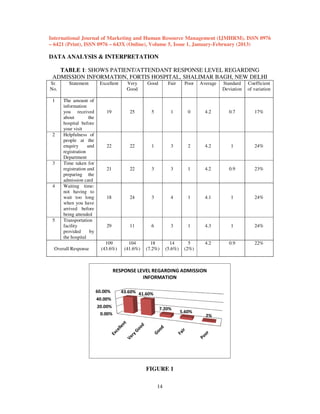
TABLE 1: SHOWS PATIENT/ATTENDANT RESPONSE LEVEL REGARDING
ADMISSION INFORMATI0N, FORTIS HOSPITAL, SHALIMAR BAGH, NEW DELHI
Sr.
No.

Statement

1

The amount of
information
you received
about
the
hospital before
your visit
Helpfulness of
people at the
enquiry
and
registration
Department
Time taken for
registration and
preparing the
admission card
Waiting time:
not having to
wait too long
when you have
arrived before
being attended
Transportation
facility
provided
by
the hospital

2

3

4

5

Overall Response

Excellent

Very
Good

Good

Fair

Poor

Average

Standard
Deviation

Coefficient
of variation

19

25

5

1

0

4.2

0.7

17%

22

22

1

3

2

4.2

1

24%

21

22

3

3

1

4.2

0.9

23%

18

24

3

4

1

4.1

1

24%

29

11

6

3

1

4.3

1

24%

109
(43.6%)

104
(41.6%)

18
(7.2%)

14
(5.6%)

5
(2%)

4.2

0.9

22%

RESPONSE LEVEL REGARDING ADMISSION
INFORMATION
60.00%

43.60% 41.60%

40.00%
20.00%
0.00%

7.20%

FIGURE 1
14

5.60%

2%
International Journal of Marketing and Human Resource Management (IJMHRM), ISSN 0976
– 6421 (Print), ISSN 0976 – 643X (Online), Volume 5, Issue 1, January-February (2013)

Mean satisfaction of patients/attendants towards the admission information was
4.2+0.9 with coefficient of variation 22% which shows that there is variation in response of
patients regarding helpfulness of people at the enquiry and Registration Department, Time
taken for registration and preparing the admission card, Waiting time and Transportation
facility. Hence there is scope for improvement on the subject of admission procedure in a
hospital.
The present study reveals that 43.6% of the respondent/patients rated admission
information to be excellent and 41.6% of the respondent/patients rated admission information
to be very good and approximately 15 % of the respondent patients answered that there is
possibility of improvement in the admission system of hospital.
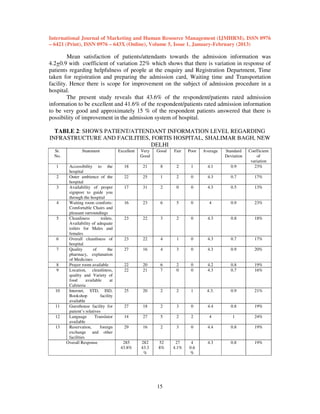
TABLE 2: SHOWS PATIENT/ATTENDANT INFORMATION LEVEL REGARDING
INFRASTRUCTURE AND FACILITIES, FORTIS HOSPITAL, SHALIMAR BAGH, NEW
DELHI
Sr.
No.
1
2
3

4

5

6
7

8
9

10

11
12
13

Statement

Accessibility to the
hospital
Outer ambience of the
hospital
Availability of proper
signpost to guide you
through the hospital
Waiting room comforts:
Comfortable Chairs and
pleasant surroundings
Cleanliness
toilets.
Availability of adequate
toilets for Males and
females
Overall cleanliness of
hospital
Quality
of
the
pharmacy, explanation
of Medicines
Prayer room available
Location, cleanliness,
quality and Variety of
food
available
at
Cafeteria
Internet, STD, ISD,
Bookshop
facility
available
Guesthouse facility for
patient’s relatives
Language
Translator
available
Reservation,
foreign
exchange and other
facilities
Overall Response

Excellent

Very
Good

Good

Fair

Poor

Average

Standard
Deviation

18

21

8

2

1

4.1

0.9

Coefficient
of
variation
23%

22

25

1

2

0

4.3

0.7

17%

17

31

2

0

0

4.3

0.5

13%

16

23

6

5

0

4

0.9

23%

23

22

3

2

0

4.3

0.8

18%

23

22

4

1

0

4.3

0.7

17%

27

16

4

3

0

4.3

0.9

20%

22
22

20
21

6
7

2
0

0
0

4.2
4.3

0.8
0.7

19%
16%

25

20

2

2

1

4.3.

0.9

21%

27

18

2

3

0

4.4

0.8

19%

14

27

5

2

2

4

1

24%

29

16

2

3

0

4.4

0.8

19%

285
43.8%

282
43.3
%

52
8%

27
4.1%

4
0.6
%

4.3

0.8

19%

15
International Journal of Marketing and Human Resource Management (IJMHRM), ISSN 0976
– 6421 (Print), ISSN 0976 – 643X (Online), Volume 5, Issue 1, January-February (2013)
January February

INFORMATION LEVEL REGARDING INFRASTRUCTURE AND
FACILITIES
43.84% 43.33%

50.00%

8%

4.15%

0.00%
Exellent

Very
Good

Good

Fair

0.60%

Poor

FIGURE 2
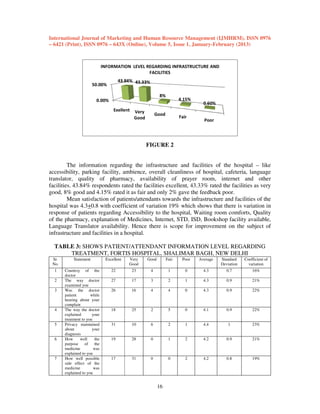
The information regarding the infrastructure and facilities of the hospital – like
accessibility, parking facility, ambience, overall cleanliness of hospital, cafeteria, language
translator, quality of pharmacy, availability of prayer room, internet and other
facilities. 43.84% respondents rated the facilities excellent, 43.33% rated the facilities as very
good, 8% good and 4.15% rated it as fair and only 2% gave the feedback poor.
Mean satisfaction of patients/attendants towards the infrastructure and facilities of the
action
hospital was 4.3+0.8 with coefficient of variation 19% which shows that there is variation in
0.8
19
response of patients regarding Accessibility to the hospital, Waiting room comforts, Quality
of the pharmacy, explanation of Medicines, Internet, STD, ISD, Bookshop facility available,
Language Translator availability. Hence there is scope for improvement on the subject of
y.
infrastructure and facilities in a hospital.
TABLE 3: SHOWS PATIENT/ATTENDANT INFORMATION LEVEL REGARDING
TREATMENT, FORTIS HOSPITAL, SHALIMAR BAGH, NEW DELHI
Sr.
No.

Statement

Excellent

Very
Good

Good

Fair

Poor

Average

Standard
Deviation

Coefficient of
variation

1

Courtesy of the
doctor
The way doctor
examined you
Was the doctor
patient
while
hearing about your
complain
The way the doctor
explained
your
treatment to you
Privacy maintained
about
your
diagnosis
How
well
the
purpose
of
the
medicine
was
explained to you
How well possible
side effect of the
medicine
was
explained to you

22

23

4

1

0

4.3

0.7

16%

27

17

3

2

1

4.3

0.9

21%

26

16

4

4

0

4.3

0.9

22%

18

25

2

5

0

4.1

0.9

22%

31

10

6

2

1

4.4

1

23%

19

28

0

1

2

4.2

0.9

21%

17

31

0

0

2

4.2

0.8

19%

2
3

4

5

6

7

16
International Journal of Marketing and Human Resource Management (IJMHRM), ISSN 0976
– 6421 (Print), ISSN 0976 – 643X (Online), Volume 5, Issue 1, January-February (2013)
January February
Sr.
No.
8

9
10

11
12
13

14

15

16

17

Statement

Excellent

How well is the
effectiveness
of
treatment
Your confidence in
the doctor
Overall
interpersonal skills
of the doctor
Overall
clinical
skills of the doctor
Courtesy of the
nurse
Responsiveness of
the nurses to your
needs
Length of time
nursing staff took to
respond to your
needs
Helpfulness of the
hospital staff in
General
Opportunity to ask
questions
about
your treatment
Were you satisfied
with the assistant
doctors
Overall
Response

Good

Fair

Poor

Average

21

Very
Good
19

4.1

Standard
Deviation
1

Coefficient of
variation
23%

5

5

0

26

19

3

2

0

4.4

0.8

18%

25

29

2

3

0

4.3

0.8

19%

27

15

5

3

0

4.3

0.9

21%

16

27

5

3

0

4.1

0.8

18%

15

25

7

3

0

4

0.8

21%

15

27

5

3

0

4.1

0.8

20%

14

24

7

3

2

3.9

1

26%

13

23

11

1

2

3.9

1

25%

18

26

4

2

0

4.2

0.8

18%

350
(41.11%)

375

73

42

10

4.2

0.9

21%

(44.1%)

(8.5%)

(4.9%)

(1.1%)

INFORMATION REGARDING TREATMENT
50.00%

41.11%44.11%
8.58%

0.00%
Exellent Very
Good

Good

4.94%

Fair

1.17%

Poor

FIGURE 3
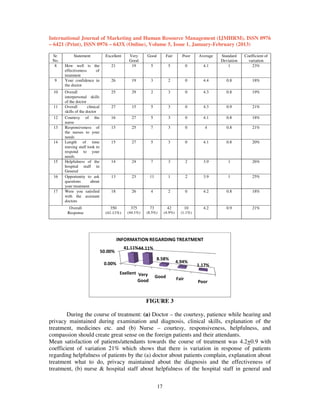
During the course of treatment: (a) Doctor – the courtesy, patience while hearing and
privacy maintained during examination and diagnosis, clinical skills, explanation of the
treatment, medicines etc. and (b) Nurse – courtesy, responsiveness, helpfulness, and
compassion should create great sense on the foreign patients and their attendants.
sense
Mean satisfaction of patients/attendants towards the course of treatment was 4.2
4.2+0.9 with
coefficient of variation 21% which shows that there is variation in response of patients
regarding helpfulness of patients by the (a) doctor about patients complain, explanation about
treatment what to do, privacy maintained about the diagnosis and the effectiveness of
treatment, (b) nurse & hospital staff about helpfulness of the hospital staff in general and
17
International Journal of Marketing and Human Resource Management (IJMHRM), ISSN 0976
– 6421 (Print), ISSN 0976 – 643X (Online), Volume 5, Issue 1, January-February (2013)
January February

opportunity to ask questions about your treatment. Hence there is scope for improvement on
unity
the subject of course of treatment in a hospital.
The present study reveals that 41.11% of the respondent/patients rated treatment facilities to
be excellent and 44.11% of the respondent/patients rated to be very good and approximately
15 % of the respondent patients answered that there is possibility of improvement in the
treatment coordination of hospital.
TABLE 4: SHOWS PATIENT/ATTENDANT INFORMATION LEVEL REGARDING
HOSPITAL RESPONDED TO PATIENTS NEED, FORTIS HOSPITAL, SHALIMAR
ITAL
NEED,
BAGH, NEW DELHI
Sr.
No.
1

2

3

4

Statement

Yes

No

Did the hospital staff
encourage
Your feedback?
Were aware that you could
Formal complaint in the
hospital?
Did you have a reason to
make a complaint during
your
Treatment period?
If yes, were you satisfied
with the way your complaint
was handled?

48

Overall Response

2

Average
Mean
0.1

Standard
Deviation
0.2

Coefficient
of variation
21%

47

3

0.9

0.2

26%

49

1

1

0.1

14%

41

9

0.8

0.4

47%

185
(92.5%)

15
(7.5%)

0.9

0.3

29%

HOSPITAL RESPONDED TO YOUR
NEEDS
92.50
%
100.00%
7.50%
0.00%
YES

NO

FIGURE 4
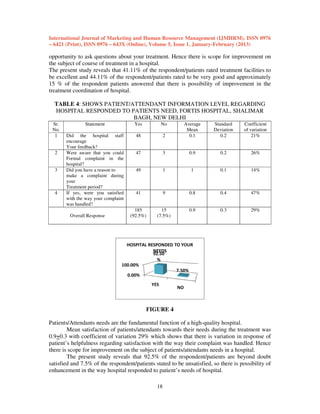
Patients/Attendants needs are the fundamental function of a high-quality hospital.
high quality
Mean satisfaction of patients/attendants towards their needs during the treatment was
0.9+0.3 with coefficient of variation 29% which shows that there is variation in response of
29
patient’s helpfulness regarding satisfaction with the way their complaint was handled. Hence
there is scope for improvement on the subject of patients/attendants needs in a hospital.
hos
The present study reveals that 92.5% of the respondent/patients are beyond doubt
satisfied and 7.5% of the respondent/patients stated to be unsatisfied, so there is possibility of
enhancement in the way hospital responded to patient’s needs of hospi
hospital.
18
International Journal of Marketing and Human Resource Management (IJMHRM), ISSN 0976
– 6421 (Print), ISSN 0976 – 643X (Online), Volume 5, Issue 1, January-February (2013)
January February

TABLE 5: SHOWS PATIENT/ATTENDANT RESPONSE LEVEL REGARDING
OVERALL HOSPITAL EXPERIENCE, FORTIS HOSPITAL, SHALIMAR BAGH, NEW
EXPERIENCE,
DELHI
Sr.
No.

Statement

Great

Quite
Bit

Little

Not At
All

Not
Sure

Average
Mean

Standard
Deviation

Coefficient
of
variation

1

Thinking about all
aspects
how
satisfied are you?
How much do you
were
actually
helped by treatment
in the hospital?

24

19

7

0

0

4.3

0.7

17%

232

19

7

1

0

4.3

0.8

18%

22

20

7

0

1

4.2

0.8

20%

18

25

4

2

1

4.3

0.8

21%

87
(43.5%)

83
(41.5%)

25
(12.5%)

3
(1.5%)

2
(1%)

4.3

0.8

19%

2

3

4

If need arises what
are the chances you
would go back to
the hospital:
What
are
the
chances you will
recommended the
hospital to family
and friends
Overall Response

ABOUT OVERALL HOSPITAL EXPERIENCE
60.00%

43.50% 41.50%

40.00%
12.50%

20.00%

1.50%

0.00%
Great Quite
Bit

Little

1%

Not At
All

Not
Sure

FIGURE 5
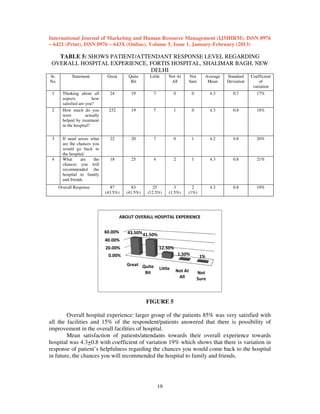
Overall hospital experience: larger group of the patients 85% was very satisfied with
all the facilities and 15% of the respondent/patients answered that there is possibility of
improvement in the overall facilities of hospital.
Mean satisfaction of patients/attendants towards their overall experience towards
towards
hospital was 4.3+0.8 with coefficient of variation 19% which shows that there is variation in
0.8
19
response of patient’s helpfulness regarding the chances you would come back to the hospital
in future, the chances you will recommended the hospital to family and friends.

19
International Journal of Marketing and Human Resource Management (IJMHRM), ISSN 0976
– 6421 (Print), ISSN 0976 – 643X (Online), Volume 5, Issue 1, January-February (2013)

CONCLUSIONS
1. The Admission information desk is at par with the world's best centers having
qualified & experienced staff members with a facility of interpretation for
conversation. Approximately all the respondents are personally satisfied with the
registration department and a bit of them signify to improve services much then
better.
2. Infrastructure & facilities of the hospital has overall scope for up gradation as nothing
is perfect in this world. Hospital has to be updated according to patients need time by
time.
3. Treatment is the main course in the hospital menu card as it serves to the each &
every patient. This study shows that behavior and services rendered by both doctors
and nurses was overall satisfactory with having little bit issues about the explanation
of the treatment by them to patients which can never be completely overcome.
4. Agencies specializing in international medical travel (known as health travel planners
or medical concierge agencies) are a growing part of the medical travel industry and
work with hospitals, clinics, physicians, surgeons, airlines, hotels and recovery
retreats abroad to offer patients the best quality at the most affordable rates.
5. Medical tourism focuses on treatment of acute illness, elective surgeries such as
cardiology, DSA and lasiks, among others.
6. Word-of-mouth is the most common method to be aware of the best hospitals,
surgeons and treatments across the country. Now internet is also pacing up its spread
as more and more people are becoming comfortable using computers.
SUGGESTIONS
1. The information regarding admission procedure makes the first impression on patients
and their attendants about services to be provided, so admission information should be
clear, precise and accommodating. Up gradation and renovation is always a part of
every procedure so it is very compulsory to update the hospital according to needs.
2. The information regarding infrastructure and facilities makes the physical
environment of a hospital which directly effects on patients and their attendants mind
about services to be provided, so it should be always up grade and renovated on time
to time according to needs.
3. The information regarding treatment is the key to success for any hospital in the
market. As better and on time medical services are the primary task of any hospital.
Comprehensively explanation of treatment level should be improved by both doctors
and nurses.
4. The information level regarding hospital responded to patients needs convey the
patient satisfaction graph of any hospital. As there is little bit unsatisfied patient and it
should be improved by doctors, nurses and other staff members.
5. The response level regarding overall hospital experience is not so poor, hence there is
little bit scope for improvement on the subject of patients/attendants overall hospital
experience.

20
International Journal of Marketing and Human Resource Management (IJMHRM), ISSN 0976
– 6421 (Print), ISSN 0976 – 643X (Online), Volume 5, Issue 1, January-February (2013)

REFERENCES
1.
2.

3.
4.
5.
6.

7.
8.
9.

10.

11.
12.
13.
14.
15.
16.
17.
18.
19.
20.
21.
22.
23.
24.
25.

Author’s Martinez-Alvarez, M. Rupa Chanda, and R. Smith /Journal Health Policy/
Vol. 103, PP 276-282/Year 2011
Author’s DR. Suman Kumar Dawn; Swati Pal, Both Asst. Professor, Centre for
Management Studies, JIS College of Engineering (Under West Bengal University of
Technology), Block ―A’, Kalyani , Nadia -741235 , West Bengal/ZENITH
International Journal of Multidisciplinary Research Vol.1 Issue 3, July 2011
Author’s Dr. Anjana Sharma, Dr. Anupama Sharma, Mr. Saurabh Tiwari /Paripex Indian Journal of Research X 179/Volume:1/Issue:1/ December2012
Author’s Ferdosi Masoud, Jabbari Alireza, Keyvanara Mahmoud, and Agharahimi
Zahra/Journal of Education and Health Promotion/Year2013
Author’s Mane Vivekanand A., Dr. Hundekar S. G./ ZENITH International Journal of
Business Economics & Management Research/Volume:3,Issue:6/Year2013
Author’s Pankaj Mochi, Niyat Shetty and Dilip Vahoniya /Abhinav National Monthly
Refereed Journal of Research in Commerce & Management/Volume No. 2, Issue
No.3/ ISSN 2277-1166 29
Author Rajesh Garg, Department of Community Medicine, VCSGGMS and RI,
Srinagar-Garhwal (Uttrakhand)/Indian Journal of Community Medicine/31-Jan-2013
Author Sumanth Gopala Reddy/Dissertation/Department of Geography, College of
Arts and Sciences, KANSAS STATE UNIVERSITY, Manhattan, Kansas/2013
Ramesh U and Kurian Joseph, “The Holistic Approach of Ayurveda Based Wellness
Tourism in Kerala”, International Journal of Advanced Research in Management
(IJARM), Volume 3, Issue 2, 2012, pp. 29 - 39”. ISSN Print: 0976 – 6324,
ISSN Online: 0976 – 6332.
Prof. Shraddha Chowdhary, “‘Health is Wealth’: Medical Tourism Industry in India The New Revenue Generator”, International Journal of Management (IJM), Volume 4,
Issue 4, 2013, pp. 141 - 148, ISSN Print: 0976-6502, ISSN Online: 0976-6510.
Indiabudget.nic.in
http://www.cbc.ca/news/background/healthcare/medicaltourism.html
Me Kinsey CII study, 2003, health care in India, The Road Ahead
http://www.cbc.ca/news/background/healthcare/medicaltourism.html
Me Kinsey CII study, 2003, health care in India, The Road Ahead
Choi SH. WHO Strategy and Activities in Traditional Medicine. Chin Med. 2009;20
http://www.ncbi.nlm.nih.gov/pmc/articles/PMC3255448/
https://www.healthbase.com/hb/pages/Top-10-Reasons-Why-Medical-Tourism-isPopular.jsp
www.medicaltourismguide.org
www.ijme.in
www.expresshealthcaremgmt.com
www.ibef.org
www.cbc.ca/news/medicaltourism
www.indmedica.com
www.mediscapes.org

21

10320140501002

  • 1.
    International Journal ofMarketing and Human Resource Management (IJMHRM), ISSN 0976 INTERNATIONAL JOURNAL OF MARKETING AND HUMAN – 6421 (Print), ISSN 0976 – 643X (Online), Volume 5, Issue 1, January-February (2013) RESOURCE MANAGEMENT (IJMHRM) ISSN 0976 – 6421 (Print) ISSN 0976 – 643X (Online) Volume 5, Issue 1, January – February (2014), pp. 09-21 © IAEME: www.iaeme.com/ijmhrm.asp Journal Impact Factor (2013): 4.6901 (Calculated by GISI) www.jifactor.com IJMHRM ©IAEME STUDY ON MEDICAL TOURISM GLOBAL COMPETITION IN HEALTHCARE AND A STUDY ON SATISFACTION LEVEL AMONG FOREIGN PATIENT’S Dr. Satpal Singh1, 1 Dr. Sahil2 Associate Professor, Coordinator of Department of Hospital Administration, D.C.R.U.S.T. Murthal, Sonepat 2 Masters of Hospital Administration, D.C.R.U.S.T. Murthal, Sonepat, ABSTRACT Healthcare, like food and shelter, is a basic need of Humanity. Given the potential India holds as a healthcare destination, the healthcare tourism sector can be a major source of foreign exchange earnings for the country. India’s healthcare sector has made impressive strides in recent years and the country is increasingly projected as a ‘healthcare hub’. Several features have positioned India as an ideal healthcare destination, like cost effective healthcare solutions, availability of skilled healthcare professionals, reputation for successful treatment in advanced healthcare segments, increasing popularity of India’s traditional wellness systems and rapid strides made in information technology. The present study analyses and concludes the main reasons why the developing country like India attracts foreign tourists for the medical treatment. Finally this study is undertaken to evaluate the satisfaction level and quality of care received by foreign patients admitted for treatment at FORTIS HOSPITAL, Shalimar Bagh, New Delhi. Keyword: Medical Tourism, Patient Satisfaction, Global Competition. INTRODUCTION Tourism and healthcare, being an integral part of many economies services industry are both important sources of foreign exchange. Globalization has promoted a consumerist culture leading to the mushrooming of corporate healthcare settings seized with the necessity 9
  • 2.
    International Journal ofMarketing and Human Resource Management (IJMHRM), ISSN 0976 – 6421 (Print), ISSN 0976 – 643X (Online), Volume 5, Issue 1, January-February (2013) to maximize profits and expand their coverage. However, the constraint lies in the fact that these services can be afforded by a relatively small size of population in developing countries. Low insurance penetration, lack of standardization of services, poor information base, ineffective monitoring leading to low quality, high levels of fraud and corruption, misallocation of investments and low efficiency of existing hospitals have impeded effective performance leading to a stagnation of the healthcare sector. In this scenario, corporate interests in the medical care sector are looking for opportunities beyond the national boundaries. This is the genesis of “Medical Tourism” industry. The term medical tourism refers to the increasing tendency among people from the UK, the US and many other third world countries, where medical services are either very expensive or not available, to leave their countries in search for more affordable health options, often packaged with tourist attractions. So it should be named” medical value travel”. In recent years, India is being seen as an important player in the globally growing “Medical Tourism”, which is projected as a new segment in travel and healthcare business. The former Indian finance minister Jaswant Singh envisaged to make India a “Global health destination” and the budget tabled by him included government policy for collaboration between the available medical expertise in the country and tourism industry. PREVIOUS REVIEWS ON MEDICAL TOURISM 1. Martinez-Alvarez, M. Rupa Chanda, and R. Smith in their study on “Medical tourism: a review of the literature and analysis of a role for bi-lateral trade” published in year 2011 concludes that there is a dearth of data and discussion on such bi-lateral trade. This limited evidence offers some suggestions. Exporting countries may benefit from medical tourism by generating foreign exchange and reversing the brain drain, but run the risk of creating a dual system, where the local population is crowded out. Importing countries can benefit from alleviating waiting lists & lowering healthcare costs, but may risk quality of care and legal liability. However, evidence from a bi-lateral perspective suggests that the positive aspects can be capitalized, and the negative ones reduced.1 2. Dr. Suman Kumar Dawn; Swatia Pal, Both Asst. Professor, Centre for Management Studies, JIS College of Engineering (Under West Bengal University of Technology), Block ―A’, Kalyani , Nadia -741235 , West Bengal in their study on “Medical Tourism in India: Issues, Opportunities and Designing Strategies for Growth and Development” published in year 2011 concludes that the strengths of India’s medical tourism service providers and points at a number of problems that may reduce the growth opportunity of this industry. This paper focuses on the key issues and opportunities possessed by Indian medical tourism sector that enable it to overcome domestic and international barriers on upgrading its medical services. Finally, this paper analyses and concludes the main reasons why the developing country like India attracts foreign tourists for the medical treatment.2 3. Dr. Anjana Sharma, Dr. Anupama Sharma, Mr. Saurabh Tiwari in their study on “Medical Tourism: Building the India Brand Abroad (An Analytical Study of Potential of Medical Tourism in Gurgaon)” published in year 2012 concludes that India is in an advantageous position to tap the global opportunities in the medical tourism sector. The government’s role is crucial to the development of medical tourism. The government should take steps in the role of a regulator and also as a facilitator of private investment in healthcare. Mechanisms 10
  • 3.
    International Journal ofMarketing and Human Resource Management (IJMHRM), ISSN 0976 – 6421 (Print), ISSN 0976 – 643X (Online), Volume 5, Issue 1, January-February (2013) need to be evolved to enable quicker visa grants to foreign tourists for medical purposes where patients can contact the Immigration Department at any point of entry for quick clearance.3 4. Ferdosi Masoud, Jabbari Alireza, Keyvanara Mahmoud, and Agharahimi Zahra in their study on “Medical tourism for any study area is complex” published online in year 2013 examine systematically published articles about medical tourism in the interval 2000-2011 and concludes that Among the 28 articles reviewed, 11 cases were a kind of research articles, three cases were case studies in Mexico, India, Hungary, Germany, and Iran, and 14 were case studies, review documents and data were passed. The main topics of study included the definition of medical tourism, medical tourists’ motivation and development of medical tourism, ethical issues in medical tourism, and impact on health and medical tourism marketing. The findings indicate the definition of medical tourism in various articles, and medical tourists are motivated. However, most studies indicate the benefits of medical tourism in developing countries and more developed countries reflect the consequences of medical tourism.4 5. Mane Vivekanand A., Dr. Hundekar S. G. in their study on “Indian medical tourism: Growth, challenges and opportunities” published in year 2013 concludes that India offers world class medical facilities, comparable with any of the western countries. India has stateof-the-art hospitals and best-qualified doctors. With the best infrastructure, the best possible medical facilities, accompanied with the most competitive prices, one can get the treatment done in India at the lowest charges. Medical Tourism in India is currently generating around US$ 2 billion in revenues and expected to generate around US$ 3 billion by 2013, with the number of medical tourists to grow at a CAGR of over 19 per cent during 2011–2013 to reach 1.3 million by 2013. India's share in the global medical tourism industry is predicted to be around 3 per cent by the end of 2013 -according to a report by research firm RNCOS, released in December 2010. This paper focuses on the structure, growth, challenges and opportunities possessed by Indian medical tourism sector that enable it to overcome domestic and international barriers on upgrading its medical services. Finally, this paper analyses and concludes with suggestions for attracting more foreign tourists for the medical treatment in India.5 6. Pankaj Mochi, Niyat Shetty and Dilip Vahoniya in their study on “Medical Tourism Destination India” published in year 2013 concludes that In present scenario tourism industry is gaining enormous economic benefits. It is not confined itself only to hotels, restaurants and viewing historical sight scenes, but has touched rural areas, health sector as well. The globalization of the health care sector and the massive demand for low cost-high quality treatment for health in recent times has caught the attention of many developing countries like India that have the adequate resources and potential to meet these demands. The developing concept of Medical tourism in India has gained tremendous popularity and is attracting people from all over the world for their medical and relaxation needs. Now a day people from other countries prefer India for their medical treatment like heart surgery, knee transplant, cosmetic surgery, hip replacement and dental surgery. This study explains why India has emerged as destination for medical tourism. It also explores challenges and competitive advantages and future outlook of medical tourism in India.6 11
  • 4.
    International Journal ofMarketing and Human Resource Management (IJMHRM), ISSN 0976 – 6421 (Print), ISSN 0976 – 643X (Online), Volume 5, Issue 1, January-February (2013) 7. Rajesh Garg, Department of Community Medicine, VCSGGMS and RI, Srinagar-Garhwal (Uttrakhand), India in their study on “All is not well" with medical tourism published in year 2013 concludes that India is moving not only to western countries but also to the African world for attracting medical tourists. The Indian government is vigorously promoting medical tourism by providing tax concessions. The government is putting red carpets for the foreigners lured by their dollars. Medical tourism is the mockery of that nation (India) that is still having one of the worst health indicators in the world, maximum number of malnourished children and maximum privatized health care delivery system in the world.7 8. Sumanth Gopala Reddy in their study on “Medical Tourism in India: An Exploratory Study” A DISSERTATION submitted in partial fulfillment of the requirements for the degree DOCTOR OF PHILOSOPHY, Department of Geography, College of Arts and Sciences, KANSAS STATE UNIVERSITY, Manhattan, Kansas, 2013 states and conclude that the objective of this research was to answer the questions: 1) how do the attitudes and behaviors of patients towards the concept of medical tourism influence their decision to become a medical tourist; 2) why do medical tourists seek treatment in India; and 3) what are the issues and challenges they face before coming to India as well as while in India. Interviews of thirty-four foreign patients were conducted in six sites spread across the South-Indian cities of Bangalore, Hyderabad, and Chennai which revealed useful information in addressing the research objectives. The three most important reasons that these medical tourists chose India for their treatments were: 1) the high quality of the doctors and medical facilities in India, 2) the affordable cost of treatments, and 3) the availability of specific treatments that might not have been available in their home countries. Patients also researched the topic thoroughly before they came to India. Knowledge was gained primarily from the Internet, print media, television shows and friends. Overall, the patients had very positive attitudes towards medical tourism. Most of them felt that they could get treatment because of their positive opinion on medical tourism, their ability to get treatment if they desired, and support from their families and loved ones.8 OBJECTIVES OF THE STUDY To study the foreign patients awareness about the medical tourism in Fortis Hospital. To study the foreign patients needs and wants under medical tourism services. To study satisfaction level of the foreign patient in the Fortis Hospital. Finally to find out the gap under study of medical services and quality in the Fortis Hospital. NEED AND SCOPE OF THE STUDY The purpose of this master thesis is to academically contribute to the understanding of the growing phenomenon of medical tourism, which impacts the tourism industry by forming a new type of niche tourism. Medical tourism refers to a practice of participants of mostly higher income countries engaging in medical treatments in developing countries with lower prices. The particular focus is set on exploring the generators of trust, respectively distrust, 12
  • 5.
    International Journal ofMarketing and Human Resource Management (IJMHRM), ISSN 0976 – 6421 (Print), ISSN 0976 – 643X (Online), Volume 5, Issue 1, January-February (2013) that influence the patient satisfaction towards undertaking a medical treatment in India. In this paper, we identify the importance of these aspects in the decision-making process of medical travelers. This qualitative study is carried out by conducting qualitative structured interviews with patients and their attendants, whose first-hand experiences and perspectives enrich and complete the theoretical knowledge which is carried out by filling of questionnaire. RESEARCH METHODOLOGY Research methodology is the procedure for conducting the research. A lot of attention has to be devoted to the procedure and step of the research of the researcher wishes to have any claims on objectivity or if he wishes to establish a truth and gain wide acceptability. Research Methodology guiding the present research work has been explained under the following sub head. • RESEARCH DESIGN The present study is analytical and descriptive as it involves findings about “Medical Tourism, Global Competition In Healthcare And Satisfaction Level Among Foreign Patients” at Fortis Hospital, Shalimar Bagh, New Delhi. since the purpose of the study is to select variable which would likely to be influential in determining ‘Medical Tourism, global competition in healthcare and satisfaction level among foreign patients” at Fortis Hospital, Shalimar Bagh, New Delhi..So, the research has a ‘Casual Design’ also. • SAMPLE DESIGN The researcher has taken 50 samples of respondents which include Foreign Patients or their Attendants which is selected at randomly from Fortis Hospital, Shalimar Bagh, New Delhi. • DATA COLLECTION METHOD For present study, primary data are collected by personal interviews, observation and a set of questionnaire which are filled up by Patients or Attendants. A number of questions pertaining to the different aspects of Medical Tourism and Satisfaction level among foreign patients are framed and these questions are in proper sequence. Most of the questions are of rating scale and close ended type and filled by using survey method. 13
  • 6.
    International Journal ofMarketing and Human Resource Management (IJMHRM), ISSN 0976 – 6421 (Print), ISSN 0976 – 643X (Online), Volume 5, Issue 1, January-February (2013) January February DATA ANALYSIS & INTERPRETATION PRETATION TABLE 1: SHOWS PATIENT/ATTENDANT RESPONSE LEVEL REGARDING ADMISSION INFORMATI0N, FORTIS HOSPITAL, SHALIMAR BAGH, NEW DELHI Sr. No. Statement 1 The amount of information you received about the hospital before your visit Helpfulness of people at the enquiry and registration Department Time taken for registration and preparing the admission card Waiting time: not having to wait too long when you have arrived before being attended Transportation facility provided by the hospital 2 3 4 5 Overall Response Excellent Very Good Good Fair Poor Average Standard Deviation Coefficient of variation 19 25 5 1 0 4.2 0.7 17% 22 22 1 3 2 4.2 1 24% 21 22 3 3 1 4.2 0.9 23% 18 24 3 4 1 4.1 1 24% 29 11 6 3 1 4.3 1 24% 109 (43.6%) 104 (41.6%) 18 (7.2%) 14 (5.6%) 5 (2%) 4.2 0.9 22% RESPONSE LEVEL REGARDING ADMISSION INFORMATION 60.00% 43.60% 41.60% 40.00% 20.00% 0.00% 7.20% FIGURE 1 14 5.60% 2%
  • 7.
    International Journal ofMarketing and Human Resource Management (IJMHRM), ISSN 0976 – 6421 (Print), ISSN 0976 – 643X (Online), Volume 5, Issue 1, January-February (2013) Mean satisfaction of patients/attendants towards the admission information was 4.2+0.9 with coefficient of variation 22% which shows that there is variation in response of patients regarding helpfulness of people at the enquiry and Registration Department, Time taken for registration and preparing the admission card, Waiting time and Transportation facility. Hence there is scope for improvement on the subject of admission procedure in a hospital. The present study reveals that 43.6% of the respondent/patients rated admission information to be excellent and 41.6% of the respondent/patients rated admission information to be very good and approximately 15 % of the respondent patients answered that there is possibility of improvement in the admission system of hospital. TABLE 2: SHOWS PATIENT/ATTENDANT INFORMATION LEVEL REGARDING INFRASTRUCTURE AND FACILITIES, FORTIS HOSPITAL, SHALIMAR BAGH, NEW DELHI Sr. No. 1 2 3 4 5 6 7 8 9 10 11 12 13 Statement Accessibility to the hospital Outer ambience of the hospital Availability of proper signpost to guide you through the hospital Waiting room comforts: Comfortable Chairs and pleasant surroundings Cleanliness toilets. Availability of adequate toilets for Males and females Overall cleanliness of hospital Quality of the pharmacy, explanation of Medicines Prayer room available Location, cleanliness, quality and Variety of food available at Cafeteria Internet, STD, ISD, Bookshop facility available Guesthouse facility for patient’s relatives Language Translator available Reservation, foreign exchange and other facilities Overall Response Excellent Very Good Good Fair Poor Average Standard Deviation 18 21 8 2 1 4.1 0.9 Coefficient of variation 23% 22 25 1 2 0 4.3 0.7 17% 17 31 2 0 0 4.3 0.5 13% 16 23 6 5 0 4 0.9 23% 23 22 3 2 0 4.3 0.8 18% 23 22 4 1 0 4.3 0.7 17% 27 16 4 3 0 4.3 0.9 20% 22 22 20 21 6 7 2 0 0 0 4.2 4.3 0.8 0.7 19% 16% 25 20 2 2 1 4.3. 0.9 21% 27 18 2 3 0 4.4 0.8 19% 14 27 5 2 2 4 1 24% 29 16 2 3 0 4.4 0.8 19% 285 43.8% 282 43.3 % 52 8% 27 4.1% 4 0.6 % 4.3 0.8 19% 15
  • 8.
    International Journal ofMarketing and Human Resource Management (IJMHRM), ISSN 0976 – 6421 (Print), ISSN 0976 – 643X (Online), Volume 5, Issue 1, January-February (2013) January February INFORMATION LEVEL REGARDING INFRASTRUCTURE AND FACILITIES 43.84% 43.33% 50.00% 8% 4.15% 0.00% Exellent Very Good Good Fair 0.60% Poor FIGURE 2 The information regarding the infrastructure and facilities of the hospital – like accessibility, parking facility, ambience, overall cleanliness of hospital, cafeteria, language translator, quality of pharmacy, availability of prayer room, internet and other facilities. 43.84% respondents rated the facilities excellent, 43.33% rated the facilities as very good, 8% good and 4.15% rated it as fair and only 2% gave the feedback poor. Mean satisfaction of patients/attendants towards the infrastructure and facilities of the action hospital was 4.3+0.8 with coefficient of variation 19% which shows that there is variation in 0.8 19 response of patients regarding Accessibility to the hospital, Waiting room comforts, Quality of the pharmacy, explanation of Medicines, Internet, STD, ISD, Bookshop facility available, Language Translator availability. Hence there is scope for improvement on the subject of y. infrastructure and facilities in a hospital. TABLE 3: SHOWS PATIENT/ATTENDANT INFORMATION LEVEL REGARDING TREATMENT, FORTIS HOSPITAL, SHALIMAR BAGH, NEW DELHI Sr. No. Statement Excellent Very Good Good Fair Poor Average Standard Deviation Coefficient of variation 1 Courtesy of the doctor The way doctor examined you Was the doctor patient while hearing about your complain The way the doctor explained your treatment to you Privacy maintained about your diagnosis How well the purpose of the medicine was explained to you How well possible side effect of the medicine was explained to you 22 23 4 1 0 4.3 0.7 16% 27 17 3 2 1 4.3 0.9 21% 26 16 4 4 0 4.3 0.9 22% 18 25 2 5 0 4.1 0.9 22% 31 10 6 2 1 4.4 1 23% 19 28 0 1 2 4.2 0.9 21% 17 31 0 0 2 4.2 0.8 19% 2 3 4 5 6 7 16
  • 9.
    International Journal ofMarketing and Human Resource Management (IJMHRM), ISSN 0976 – 6421 (Print), ISSN 0976 – 643X (Online), Volume 5, Issue 1, January-February (2013) January February Sr. No. 8 9 10 11 12 13 14 15 16 17 Statement Excellent How well is the effectiveness of treatment Your confidence in the doctor Overall interpersonal skills of the doctor Overall clinical skills of the doctor Courtesy of the nurse Responsiveness of the nurses to your needs Length of time nursing staff took to respond to your needs Helpfulness of the hospital staff in General Opportunity to ask questions about your treatment Were you satisfied with the assistant doctors Overall Response Good Fair Poor Average 21 Very Good 19 4.1 Standard Deviation 1 Coefficient of variation 23% 5 5 0 26 19 3 2 0 4.4 0.8 18% 25 29 2 3 0 4.3 0.8 19% 27 15 5 3 0 4.3 0.9 21% 16 27 5 3 0 4.1 0.8 18% 15 25 7 3 0 4 0.8 21% 15 27 5 3 0 4.1 0.8 20% 14 24 7 3 2 3.9 1 26% 13 23 11 1 2 3.9 1 25% 18 26 4 2 0 4.2 0.8 18% 350 (41.11%) 375 73 42 10 4.2 0.9 21% (44.1%) (8.5%) (4.9%) (1.1%) INFORMATION REGARDING TREATMENT 50.00% 41.11%44.11% 8.58% 0.00% Exellent Very Good Good 4.94% Fair 1.17% Poor FIGURE 3 During the course of treatment: (a) Doctor – the courtesy, patience while hearing and privacy maintained during examination and diagnosis, clinical skills, explanation of the treatment, medicines etc. and (b) Nurse – courtesy, responsiveness, helpfulness, and compassion should create great sense on the foreign patients and their attendants. sense Mean satisfaction of patients/attendants towards the course of treatment was 4.2 4.2+0.9 with coefficient of variation 21% which shows that there is variation in response of patients regarding helpfulness of patients by the (a) doctor about patients complain, explanation about treatment what to do, privacy maintained about the diagnosis and the effectiveness of treatment, (b) nurse & hospital staff about helpfulness of the hospital staff in general and 17
  • 10.
    International Journal ofMarketing and Human Resource Management (IJMHRM), ISSN 0976 – 6421 (Print), ISSN 0976 – 643X (Online), Volume 5, Issue 1, January-February (2013) January February opportunity to ask questions about your treatment. Hence there is scope for improvement on unity the subject of course of treatment in a hospital. The present study reveals that 41.11% of the respondent/patients rated treatment facilities to be excellent and 44.11% of the respondent/patients rated to be very good and approximately 15 % of the respondent patients answered that there is possibility of improvement in the treatment coordination of hospital. TABLE 4: SHOWS PATIENT/ATTENDANT INFORMATION LEVEL REGARDING HOSPITAL RESPONDED TO PATIENTS NEED, FORTIS HOSPITAL, SHALIMAR ITAL NEED, BAGH, NEW DELHI Sr. No. 1 2 3 4 Statement Yes No Did the hospital staff encourage Your feedback? Were aware that you could Formal complaint in the hospital? Did you have a reason to make a complaint during your Treatment period? If yes, were you satisfied with the way your complaint was handled? 48 Overall Response 2 Average Mean 0.1 Standard Deviation 0.2 Coefficient of variation 21% 47 3 0.9 0.2 26% 49 1 1 0.1 14% 41 9 0.8 0.4 47% 185 (92.5%) 15 (7.5%) 0.9 0.3 29% HOSPITAL RESPONDED TO YOUR NEEDS 92.50 % 100.00% 7.50% 0.00% YES NO FIGURE 4 Patients/Attendants needs are the fundamental function of a high-quality hospital. high quality Mean satisfaction of patients/attendants towards their needs during the treatment was 0.9+0.3 with coefficient of variation 29% which shows that there is variation in response of 29 patient’s helpfulness regarding satisfaction with the way their complaint was handled. Hence there is scope for improvement on the subject of patients/attendants needs in a hospital. hos The present study reveals that 92.5% of the respondent/patients are beyond doubt satisfied and 7.5% of the respondent/patients stated to be unsatisfied, so there is possibility of enhancement in the way hospital responded to patient’s needs of hospi hospital. 18
  • 11.
    International Journal ofMarketing and Human Resource Management (IJMHRM), ISSN 0976 – 6421 (Print), ISSN 0976 – 643X (Online), Volume 5, Issue 1, January-February (2013) January February TABLE 5: SHOWS PATIENT/ATTENDANT RESPONSE LEVEL REGARDING OVERALL HOSPITAL EXPERIENCE, FORTIS HOSPITAL, SHALIMAR BAGH, NEW EXPERIENCE, DELHI Sr. No. Statement Great Quite Bit Little Not At All Not Sure Average Mean Standard Deviation Coefficient of variation 1 Thinking about all aspects how satisfied are you? How much do you were actually helped by treatment in the hospital? 24 19 7 0 0 4.3 0.7 17% 232 19 7 1 0 4.3 0.8 18% 22 20 7 0 1 4.2 0.8 20% 18 25 4 2 1 4.3 0.8 21% 87 (43.5%) 83 (41.5%) 25 (12.5%) 3 (1.5%) 2 (1%) 4.3 0.8 19% 2 3 4 If need arises what are the chances you would go back to the hospital: What are the chances you will recommended the hospital to family and friends Overall Response ABOUT OVERALL HOSPITAL EXPERIENCE 60.00% 43.50% 41.50% 40.00% 12.50% 20.00% 1.50% 0.00% Great Quite Bit Little 1% Not At All Not Sure FIGURE 5 Overall hospital experience: larger group of the patients 85% was very satisfied with all the facilities and 15% of the respondent/patients answered that there is possibility of improvement in the overall facilities of hospital. Mean satisfaction of patients/attendants towards their overall experience towards towards hospital was 4.3+0.8 with coefficient of variation 19% which shows that there is variation in 0.8 19 response of patient’s helpfulness regarding the chances you would come back to the hospital in future, the chances you will recommended the hospital to family and friends. 19
  • 12.
    International Journal ofMarketing and Human Resource Management (IJMHRM), ISSN 0976 – 6421 (Print), ISSN 0976 – 643X (Online), Volume 5, Issue 1, January-February (2013) CONCLUSIONS 1. The Admission information desk is at par with the world's best centers having qualified & experienced staff members with a facility of interpretation for conversation. Approximately all the respondents are personally satisfied with the registration department and a bit of them signify to improve services much then better. 2. Infrastructure & facilities of the hospital has overall scope for up gradation as nothing is perfect in this world. Hospital has to be updated according to patients need time by time. 3. Treatment is the main course in the hospital menu card as it serves to the each & every patient. This study shows that behavior and services rendered by both doctors and nurses was overall satisfactory with having little bit issues about the explanation of the treatment by them to patients which can never be completely overcome. 4. Agencies specializing in international medical travel (known as health travel planners or medical concierge agencies) are a growing part of the medical travel industry and work with hospitals, clinics, physicians, surgeons, airlines, hotels and recovery retreats abroad to offer patients the best quality at the most affordable rates. 5. Medical tourism focuses on treatment of acute illness, elective surgeries such as cardiology, DSA and lasiks, among others. 6. Word-of-mouth is the most common method to be aware of the best hospitals, surgeons and treatments across the country. Now internet is also pacing up its spread as more and more people are becoming comfortable using computers. SUGGESTIONS 1. The information regarding admission procedure makes the first impression on patients and their attendants about services to be provided, so admission information should be clear, precise and accommodating. Up gradation and renovation is always a part of every procedure so it is very compulsory to update the hospital according to needs. 2. The information regarding infrastructure and facilities makes the physical environment of a hospital which directly effects on patients and their attendants mind about services to be provided, so it should be always up grade and renovated on time to time according to needs. 3. The information regarding treatment is the key to success for any hospital in the market. As better and on time medical services are the primary task of any hospital. Comprehensively explanation of treatment level should be improved by both doctors and nurses. 4. The information level regarding hospital responded to patients needs convey the patient satisfaction graph of any hospital. As there is little bit unsatisfied patient and it should be improved by doctors, nurses and other staff members. 5. The response level regarding overall hospital experience is not so poor, hence there is little bit scope for improvement on the subject of patients/attendants overall hospital experience. 20
  • 13.
    International Journal ofMarketing and Human Resource Management (IJMHRM), ISSN 0976 – 6421 (Print), ISSN 0976 – 643X (Online), Volume 5, Issue 1, January-February (2013) REFERENCES 1. 2. 3. 4. 5. 6. 7. 8. 9. 10. 11. 12. 13. 14. 15. 16. 17. 18. 19. 20. 21. 22. 23. 24. 25. Author’s Martinez-Alvarez, M. Rupa Chanda, and R. Smith /Journal Health Policy/ Vol. 103, PP 276-282/Year 2011 Author’s DR. Suman Kumar Dawn; Swati Pal, Both Asst. Professor, Centre for Management Studies, JIS College of Engineering (Under West Bengal University of Technology), Block ―A’, Kalyani , Nadia -741235 , West Bengal/ZENITH International Journal of Multidisciplinary Research Vol.1 Issue 3, July 2011 Author’s Dr. Anjana Sharma, Dr. Anupama Sharma, Mr. Saurabh Tiwari /Paripex Indian Journal of Research X 179/Volume:1/Issue:1/ December2012 Author’s Ferdosi Masoud, Jabbari Alireza, Keyvanara Mahmoud, and Agharahimi Zahra/Journal of Education and Health Promotion/Year2013 Author’s Mane Vivekanand A., Dr. Hundekar S. G./ ZENITH International Journal of Business Economics & Management Research/Volume:3,Issue:6/Year2013 Author’s Pankaj Mochi, Niyat Shetty and Dilip Vahoniya /Abhinav National Monthly Refereed Journal of Research in Commerce & Management/Volume No. 2, Issue No.3/ ISSN 2277-1166 29 Author Rajesh Garg, Department of Community Medicine, VCSGGMS and RI, Srinagar-Garhwal (Uttrakhand)/Indian Journal of Community Medicine/31-Jan-2013 Author Sumanth Gopala Reddy/Dissertation/Department of Geography, College of Arts and Sciences, KANSAS STATE UNIVERSITY, Manhattan, Kansas/2013 Ramesh U and Kurian Joseph, “The Holistic Approach of Ayurveda Based Wellness Tourism in Kerala”, International Journal of Advanced Research in Management (IJARM), Volume 3, Issue 2, 2012, pp. 29 - 39”. ISSN Print: 0976 – 6324, ISSN Online: 0976 – 6332. Prof. Shraddha Chowdhary, “‘Health is Wealth’: Medical Tourism Industry in India The New Revenue Generator”, International Journal of Management (IJM), Volume 4, Issue 4, 2013, pp. 141 - 148, ISSN Print: 0976-6502, ISSN Online: 0976-6510. Indiabudget.nic.in http://www.cbc.ca/news/background/healthcare/medicaltourism.html Me Kinsey CII study, 2003, health care in India, The Road Ahead http://www.cbc.ca/news/background/healthcare/medicaltourism.html Me Kinsey CII study, 2003, health care in India, The Road Ahead Choi SH. WHO Strategy and Activities in Traditional Medicine. Chin Med. 2009;20 http://www.ncbi.nlm.nih.gov/pmc/articles/PMC3255448/ https://www.healthbase.com/hb/pages/Top-10-Reasons-Why-Medical-Tourism-isPopular.jsp www.medicaltourismguide.org www.ijme.in www.expresshealthcaremgmt.com www.ibef.org www.cbc.ca/news/medicaltourism www.indmedica.com www.mediscapes.org 21