This has been agile 101
 101 puppies and 101
 other working titles
101 Exciting Tips To
Get The Site You Need
While Saving Time And
       Money
(And Get That Promotion You
  Deserve In The Process)
Which is pretty much
 the nonsense title
       (or the hook)
I am
Andre Molnar
Drupal
Drupal
                 8.5 Years
(Has it really been that long? It really has)
Web Application
  Developer
Web Application
  Developer
     13(ish) Years
First Web Page
      1994
First Web Page
      1994
    18 Years Ago
18
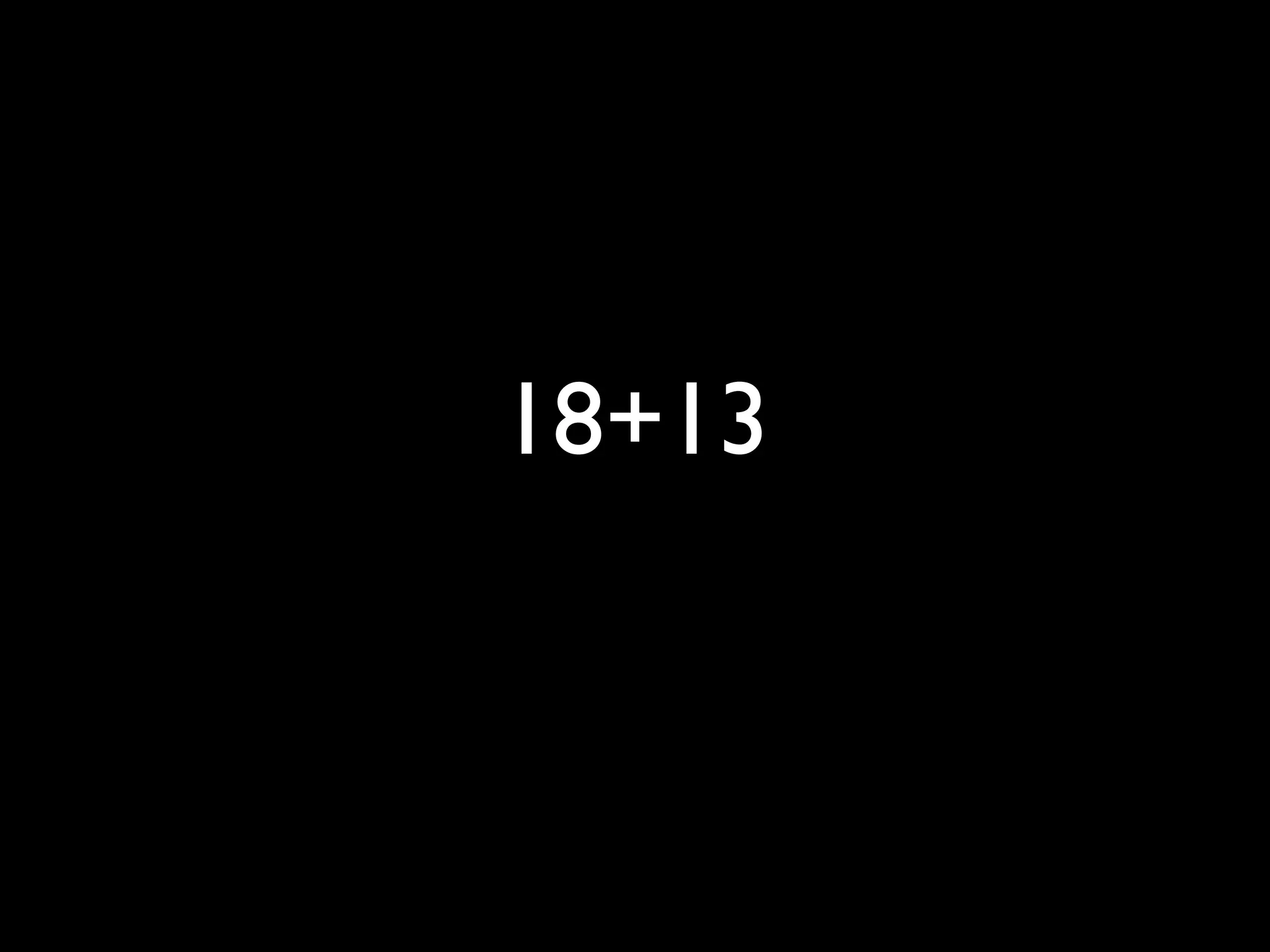
18+13
18+13+8
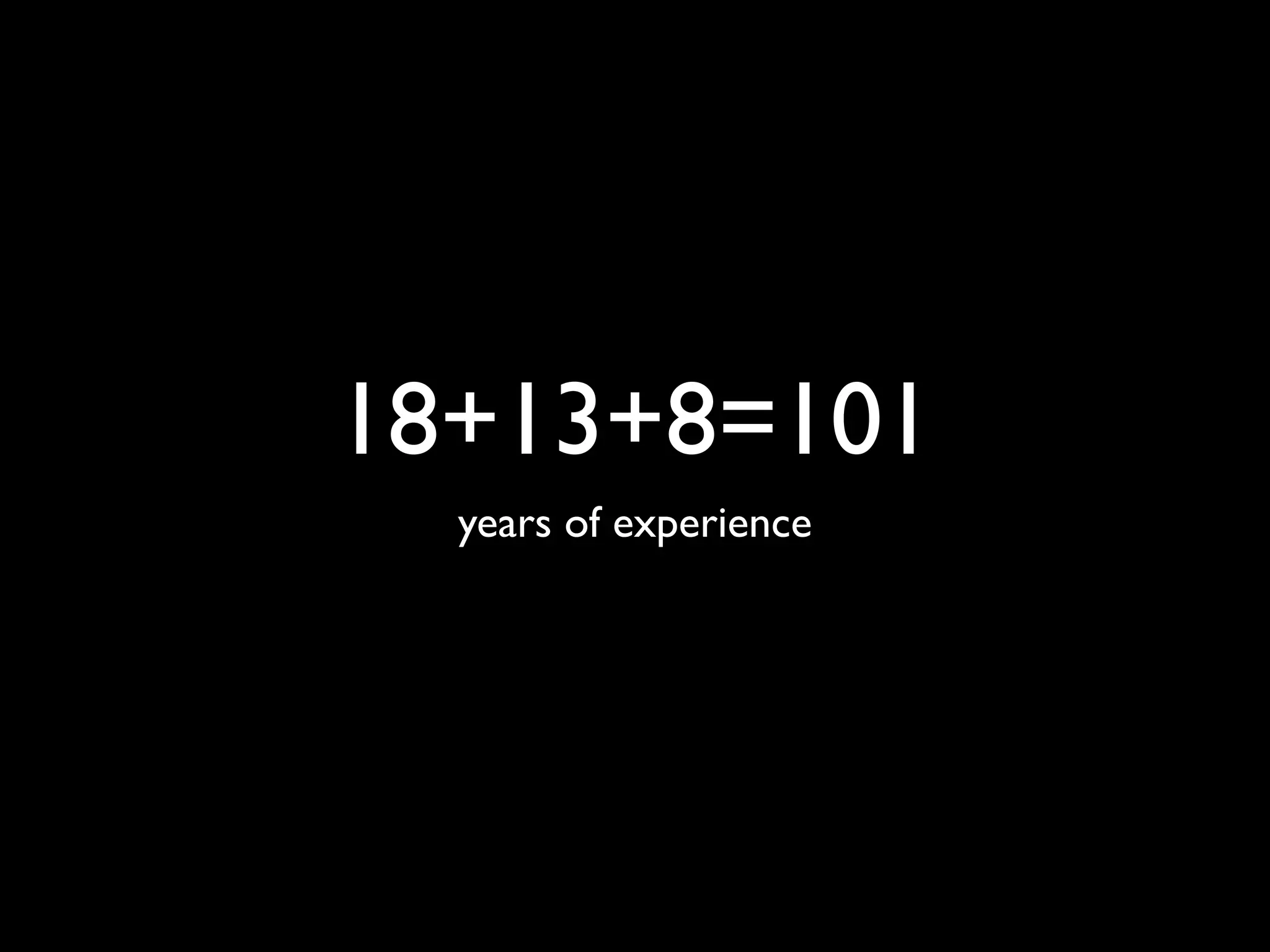
18+13+8=101
  years of experience
Freelancer
Currently at
They’re Pretty Cool
They’re Pretty Cool
A lot of talks here this year by smart myplanet folks!
Plug
Get Paid to Learn
          Drupal
Myplanet Academy (see MPD table in the main room)
I’m talking from my
  own experience
Tip #1
Always come to work
each day prepared to
      be fired
Don’t *try* to get fired
Be willing to do things
      differently
We’ll come back to
        that
Getting the website
     you need
Different from the
website you want
Answer this question
   Over and over and over again
Why?
Why
are you building this site?
Why
do you want that feature?
Why
do you want it to be exactly the way you specified it?
What is the business
     reason?
Good Reasons:
Good Reasons:
    Increase sales
Good Reasons:
Comply with the law (e.g. accessibility)
Good Reasons:
Improve conversion of visitors to customers
Good Reasons:
Create awareness around “product X”
Good Reasons:
     others?
Bad reasons:
Bad reasons:
 ummm... I don’t know
Bad reasons:
  we want to go viral
Bad reasons:
our competition has it we want it too
Bad reasons:
Drupal is supposed to solve all our problems
Drupal MIGHT solve
some of your problems
But you need to know
 in detail which ones
More good reasons:
More good reasons:
Its too painful for our staff to use what we have
More good reasons:
    Employee satisfaction
More good reasons:
      Rebranding
More good reasons:
Rebranding (assuming there was a good reason
                  for that)
There are far too many
  projects where the
 reason or purpose is
     far too vague
For each and every
feature answer this:
Which will provide the
    highest ROI
Return on Investment
For every dollar we
      spend
For every dollar we
      spend
(Because your vendor doesn’t work for free)
how will the
functionality it buys get
 us closer to achieving
  our business goals?
If you can’t answer
these questions your
 project is doomed
How many of your have
    issued RFPs?
Responded to them?
Request for Proposal
Do:
Do:
Have your objectives clearly defined.
Do:
Be completely honest
Do:
Be completely transparent
Do:
Ask tough questions of potential vendors
Do:
Ask for examples of work
Do:
Ask questions about process
Do:
Ask questions about staff
Do:
Ask for references
Don’t
Don’t
treat it as a request for quote
Don’t
   treat it as a request for quote
(if it is, issue a request for quotes)
Don’t
throw in every feature you ever imagined
Do
your homework
Do
find out if your vendor is capable of doing things
Do
find out if your vendor is capable of doing things
   (even if you never ask them to do them)
Because you already
know all your ‘whys’
      right?
You asked for a
proposal, right?
Accept proposals
Accept proposals
    Be open to ideas
Don’t
use your RFP as a requirements document that is set in
                        stone
Accept that you don’t
 have all the answers
Accept that you don’t
 have all the answers
         (yet)
Pick a project or
 product owner
If you are that owner
      see tip #1
And all the other tips
Give them the
  authority
Give them the
  authority
  To make decisions
Give them the
  authority
  To provide answers
Give them the
resources (time)
Give them the
resources (time)
  To work with your vendor
Give them the
resources (time)
    To be available
Support them
Support them
By getting them answers they don’t have
Support them
By getting them resources they request (data, source
                   material etc.)
Maybe its more than
   one person
BUT NEVER
EVER
Have a committee
They are too slow
Time is quite literally
   money in web
   development
Be Agile
Agility matters
I’m not necessarily
  talking about Agile
Software Development
     Methodology
Be quick
Adapt to change
Reprioritize on the fly
If a resource is delayed
have the next highest
 priority item ready
        to go
Be aware of Agile
Software Development
Educate yourself
Many of your vendors
will claim to be Agile
Know what it means
If you choose an Agile
        vendor
Be prepared for the
      process
NEWS FLASH
NEWS FLASH
That’s what I’ve been doing
NEWS FLASH
Preparing you for Agile vendors
But these tips are just
 as valid for waterfall
Or other processes
But lets talk about Agile
     for a moment
Agile Manifesto
...we have come to
           value:
Individuals and interactions over processes and tools
Don’t do anything for
the sake of sticking to
       process
Don’t avoid things
because they don’t fit
    your process
Your vendors/clients
are people too. Talk to
        them.
...we have come to
           value:
Working software over comprehensive documentation
For you this is a ROI
              question. documentation
How much value does comprehensive
               give you?
Compare that to a
 working website
...we have come to
          value:
Customer collaboration over contract negotiation
Work with your
 vendor/client
Communicate
Communicate ALL THE
      TIME
CYA, but only as much
    as necessary
...we have come to
       value:
Responding to change, over following a plan
Not everything goes to
        plan
Priorities change
Opportunities arise
Higher ROI items
present themselves
Be prepared to pivot
      quickly
Other Random Tips
MoSCoW
Must Haves
Should Haves
Could Haves
Won’t Haves
Have good reasons
Be ready willing and
able to defend those
choices to your boss
and to demand them
 from your vendor
Demand accountability
Demand demos
Regularly
See the progress
Don’t sweat it if design
is not pixel perfect in
        demos
Don’t sweat it if design
is not pixel perfect in
             demos like)
     (I can tell you why if you
DO demand that
 software defects are
fixed if present in demo
DO demand pixel
perfection for launch
Provide feedback often
Provide constructive
   feedback often
Know the difference
 between a defect
and something that isn’t
quite how you imagined
          it
A defect is something
 that doesn’t work
or does not meet the
 required objective
or does not meet the
 required objective
(you know, the ‘why the thing was being done in the
                    first place’)
If it works, and meets
      the objective
but could be better...
Consider the ROI
before asking for the
       change
Questions?
Horror Stories?
Oh wait...
Puppies
Inspirational Music
Thank You
This has been agile 101
 101 puppies and 101
 other working titles

101 Exciting Tips To Get The Site You Need While Saving Time And Money (And Get That Promotion You Deserve In The Process)