10
management
talent
10
steps
for
talent
management
@sezaikayaoglu
Consultant, Psychologist, HR Professional
kayaoglu@gmail.com
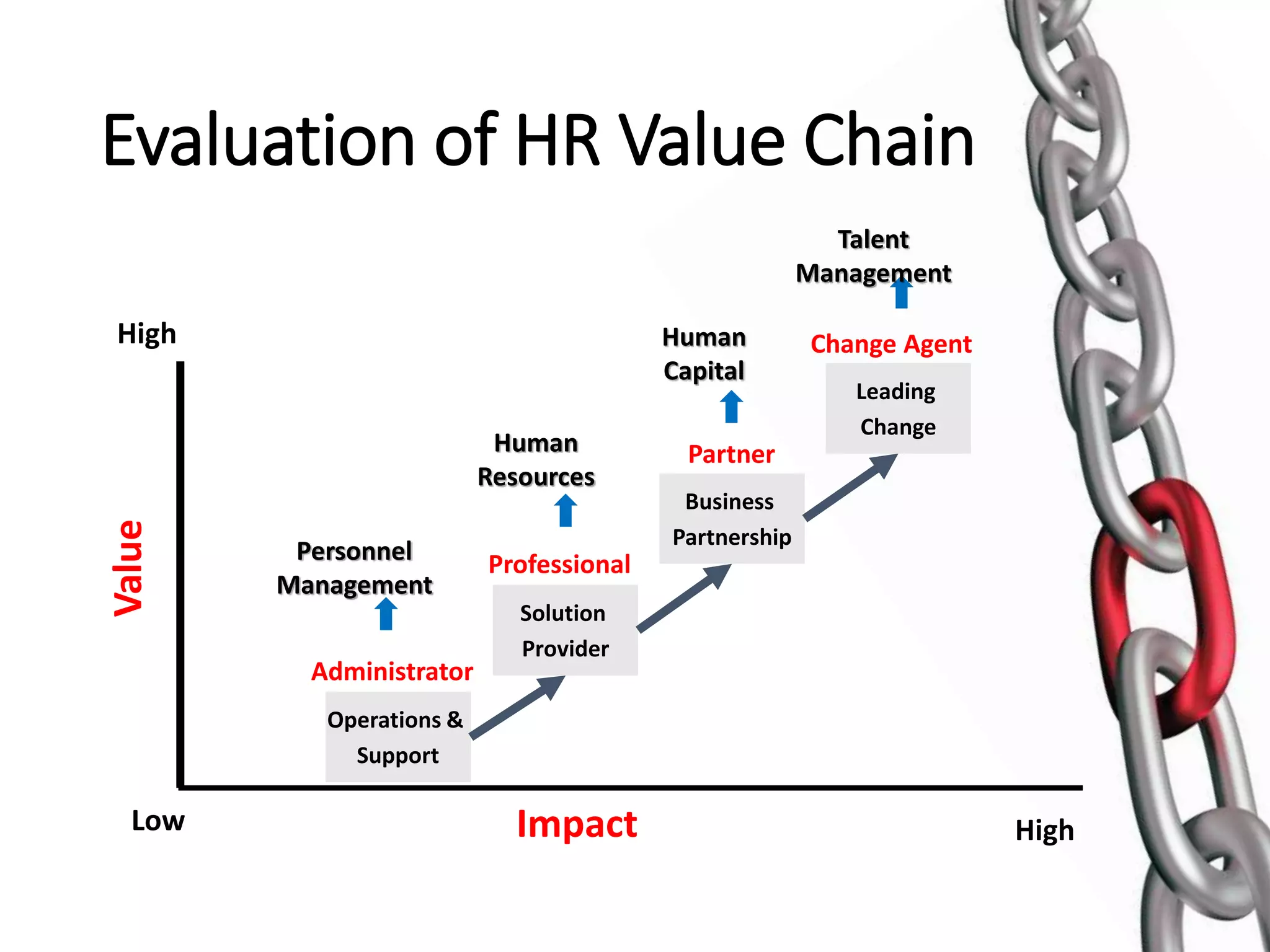
Evaluation of HR Value Chain
Solution
Provider
Business
Partnership
Operations &
Support
Leading
Change
High
HighLow
Value
Impact
Administrator
Professional
Partner
Change Agent
Personnel
Management
Human
Resources
Human
Capital
Talent
Management
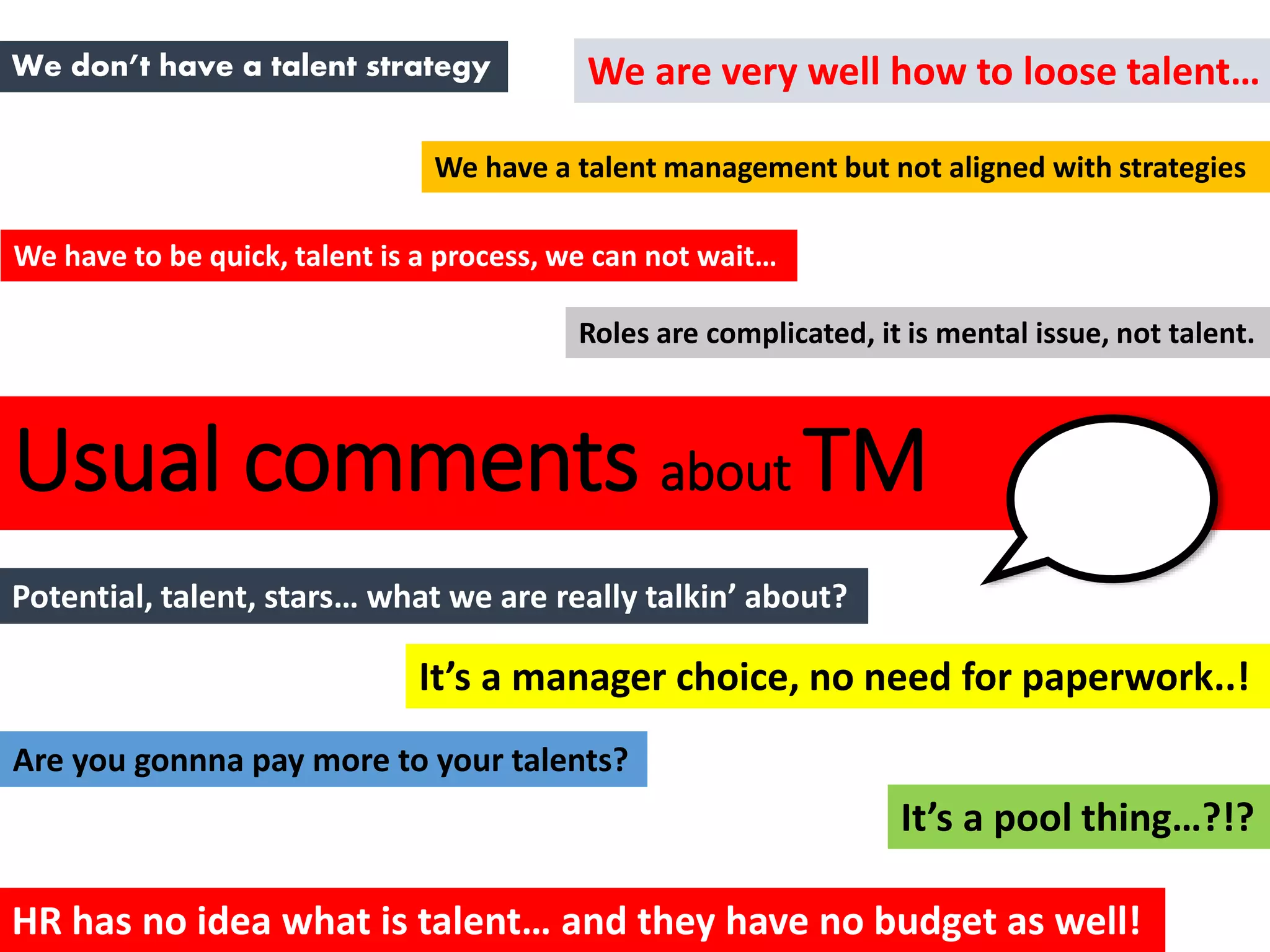
Usual comments about TM
We don’t have a talent strategy
We have a talent management but not aligned with strategies
We have to be quick, talent is a process, we can not wait…
Roles are complicated, it is mental issue, not talent.
Potential, talent, stars… what we are really talkin’ about?
It’s a manager choice, no need for paperwork..!
Are you gonnna pay more to your talents?
It’s a pool thing…?!?
HR has no idea what is talent… and they have no budget as well!
We are very well how to loose talent…
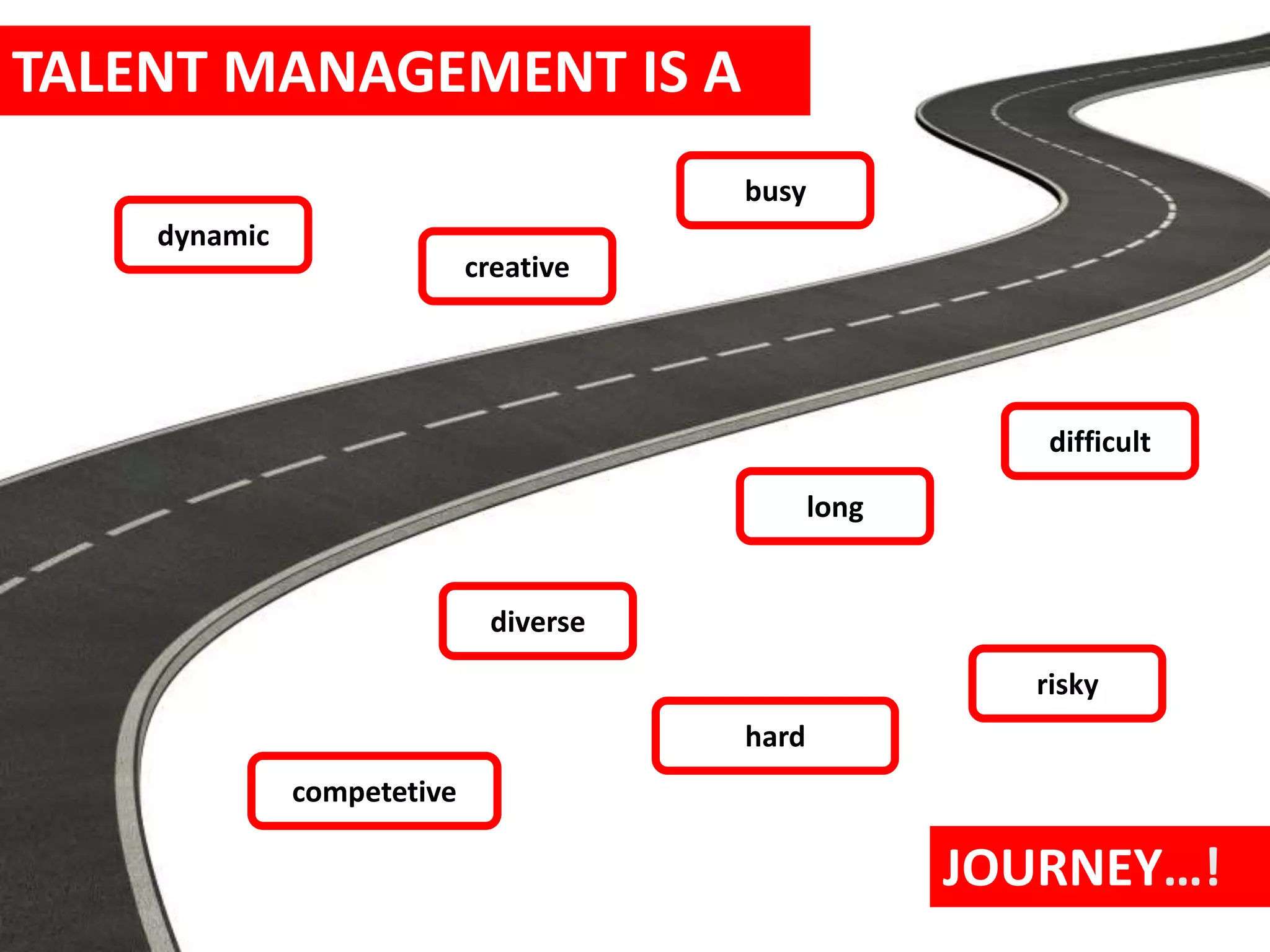
TALENT MANAGEMENT IS A
JOURNEY…!
dynamic
diverse
creative
difficult
long
risky
competetive
busy
hard
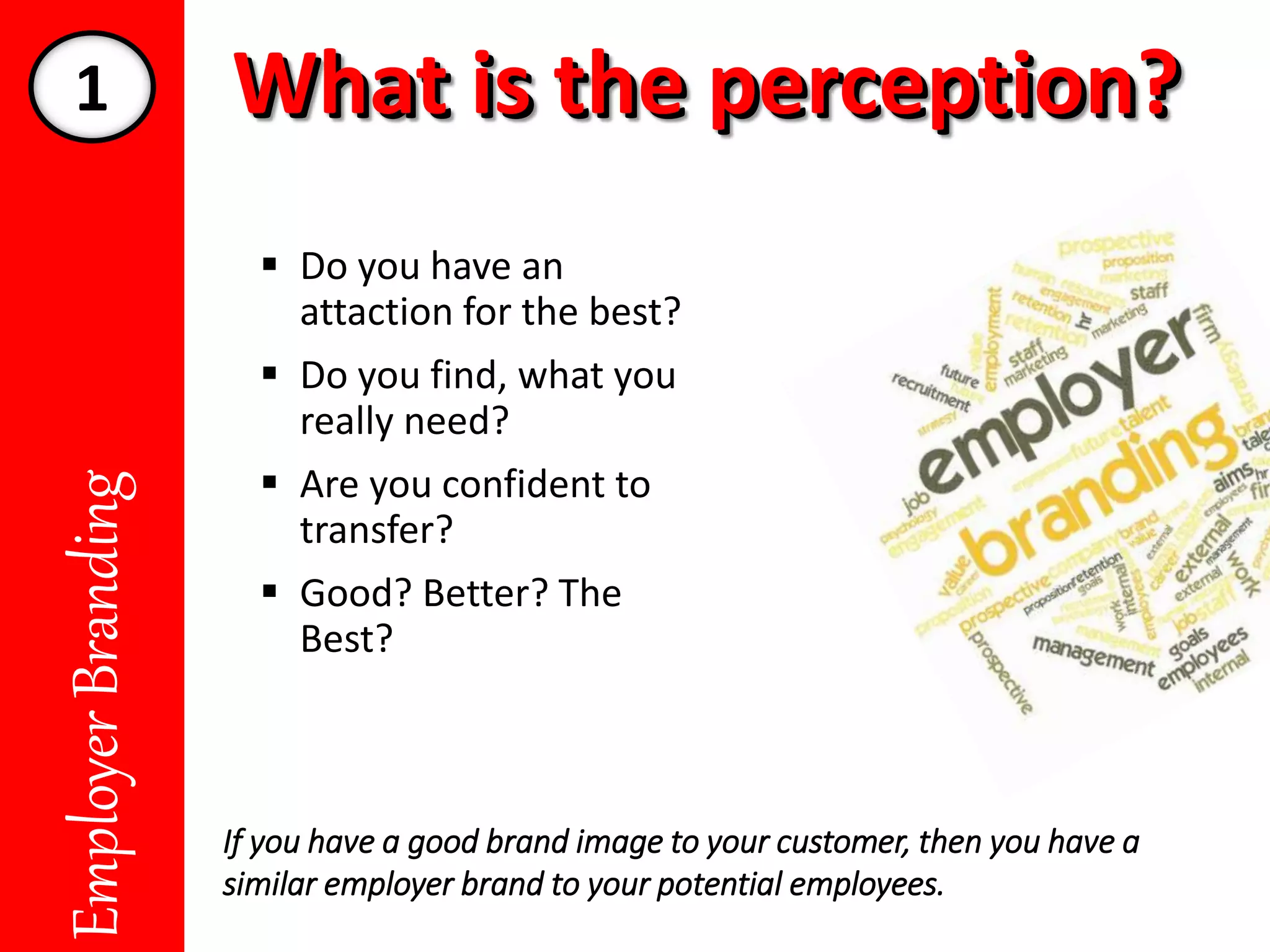
What is the perception?What is the perception?EmployerBranding
 Do you have an
attaction for the best?
 Do you find, what you
really need?
 Are you confident to
transfer?
 Good? Better? The
Best?
If you have a good brand image to your customer, then you have a
similar employer brand to your potential employees.
1
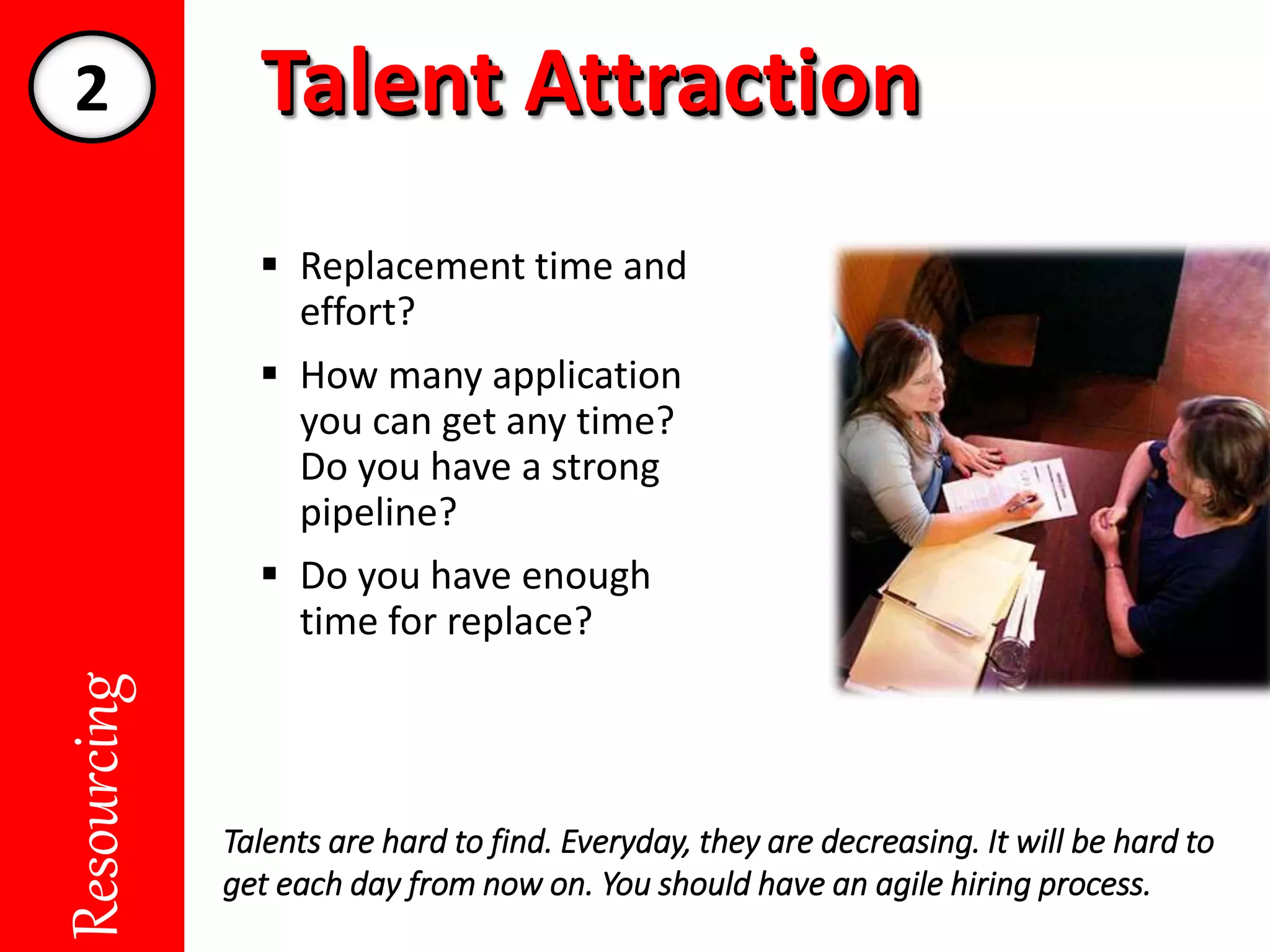
Talent AttractionTalent AttractionResourcing
 Replacement time and
effort?
 How many application
you can get any time?
Do you have a strong
pipeline?
 Do you have enough
time for replace?
Talents are hard to find. Everyday, they are decreasing. It will be hard to
get each day from now on. You should have an agile hiring process.
2
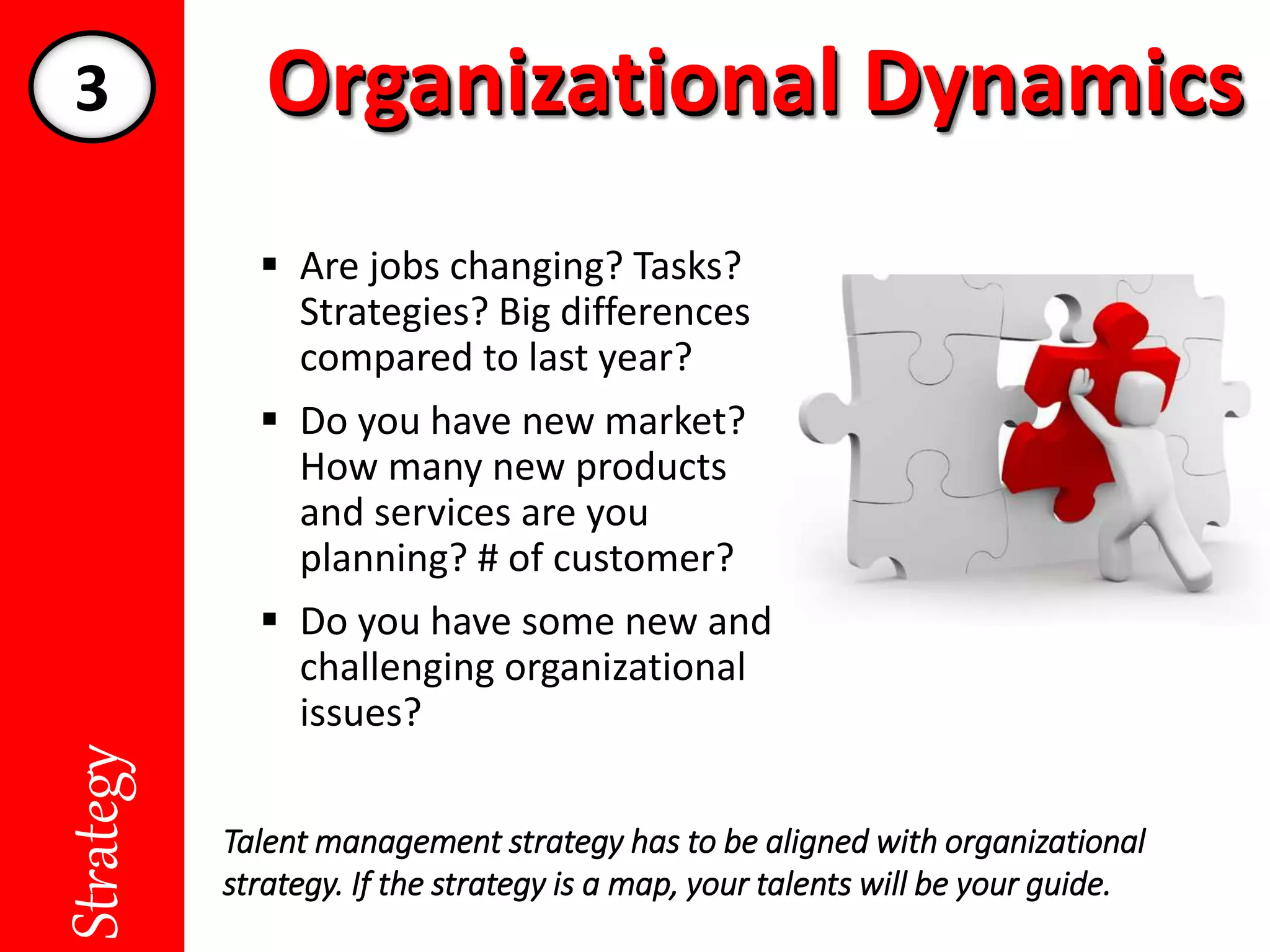
Organizational DynamicsOrganizational DynamicsStrategy
 Are jobs changing? Tasks?
Strategies? Big differences
compared to last year?
 Do you have new market?
How many new products
and services are you
planning? # of customer?
 Do you have some new and
challenging organizational
issues?
Talent management strategy has to be aligned with organizational
strategy. If the strategy is a map, your talents will be your guide.
3
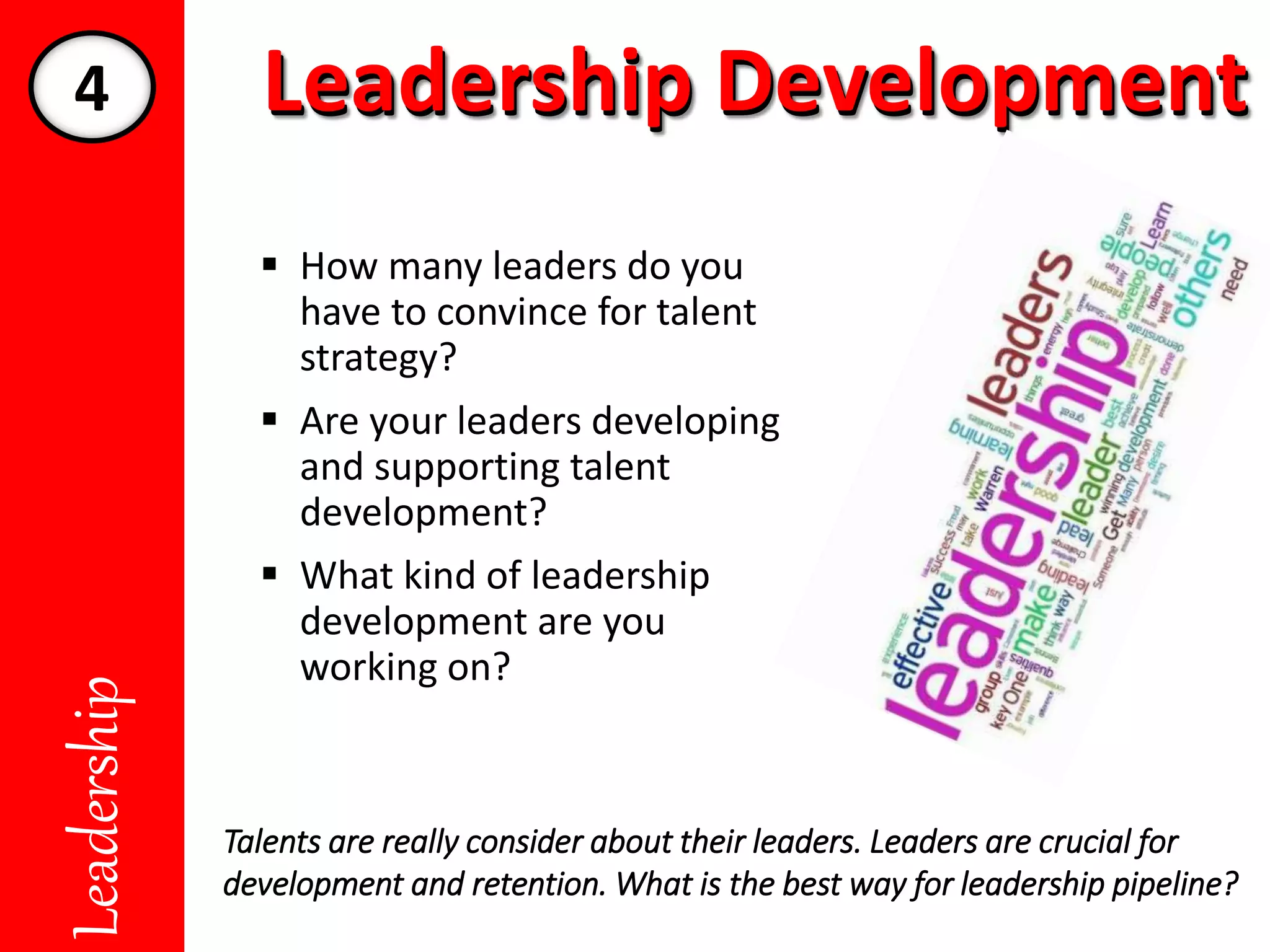
Leadership DevelopmentLeadership DevelopmentLeadership
 How many leaders do you
have to convince for talent
strategy?
 Are your leaders developing
and supporting talent
development?
 What kind of leadership
development are you
working on?
Talents are really consider about their leaders. Leaders are crucial for
development and retention. What is the best way for leadership pipeline?
4
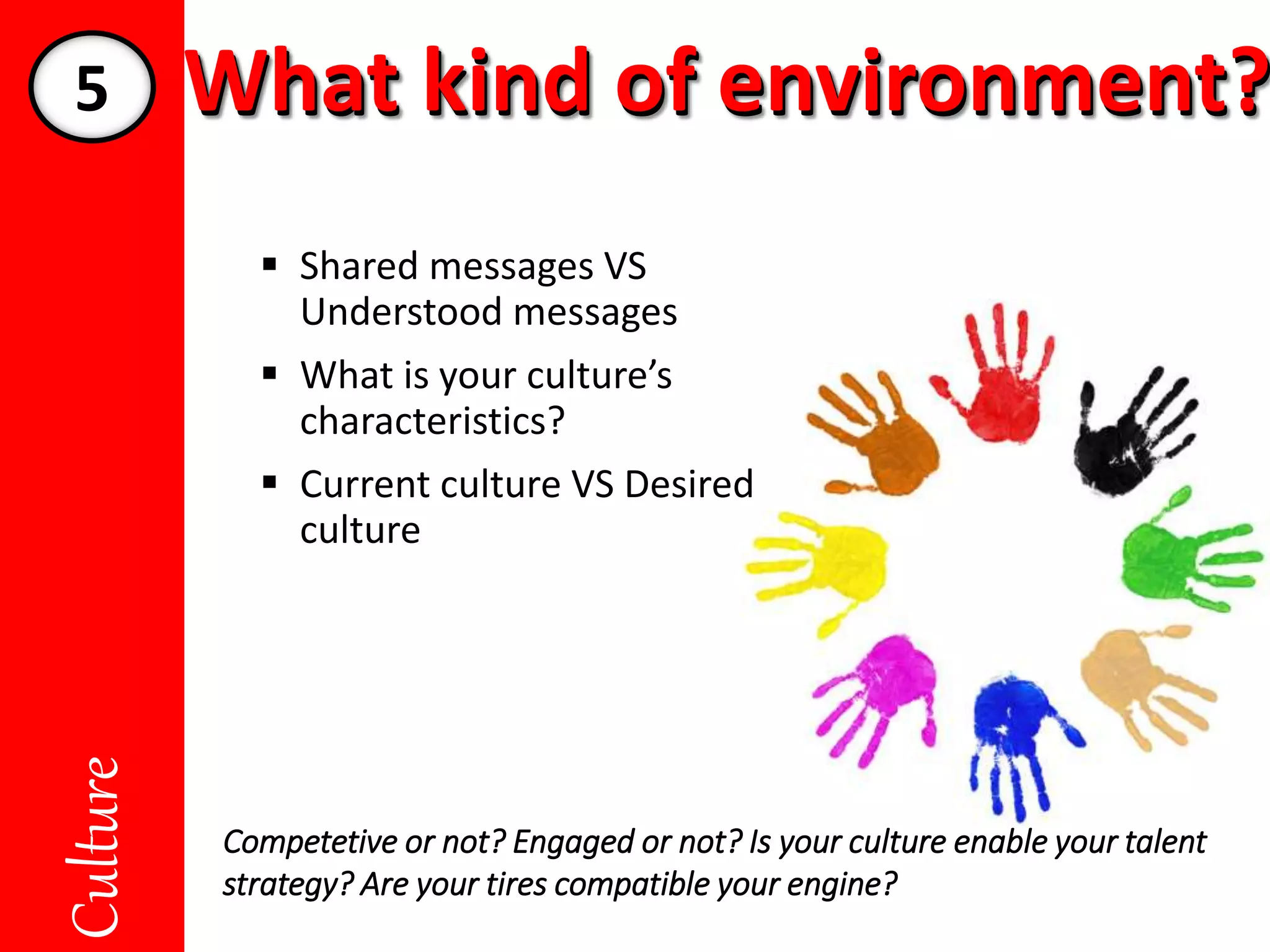
What kind of environment?What kind of environment?Culture
 Shared messages VS
Understood messages
 What is your culture’s
characteristics?
 Current culture VS Desired
culture
Competetive or not? Engaged or not? Is your culture enable your talent
strategy? Are your tires compatible your engine?
5
Talent DevelopmentTalent DevelopmentTraining/Development
 Do you have a learning
path?
 What is your learning
agility?
 How are you developing
your talents? What kind of
tools do you have?
 Talent = Curiosity and self-
development, depth
knowledge, expertise…etc?
Learning agility is a must.. Curiosity is a only way for future adaptation.
Development is mandatory for talent management cycle.
6
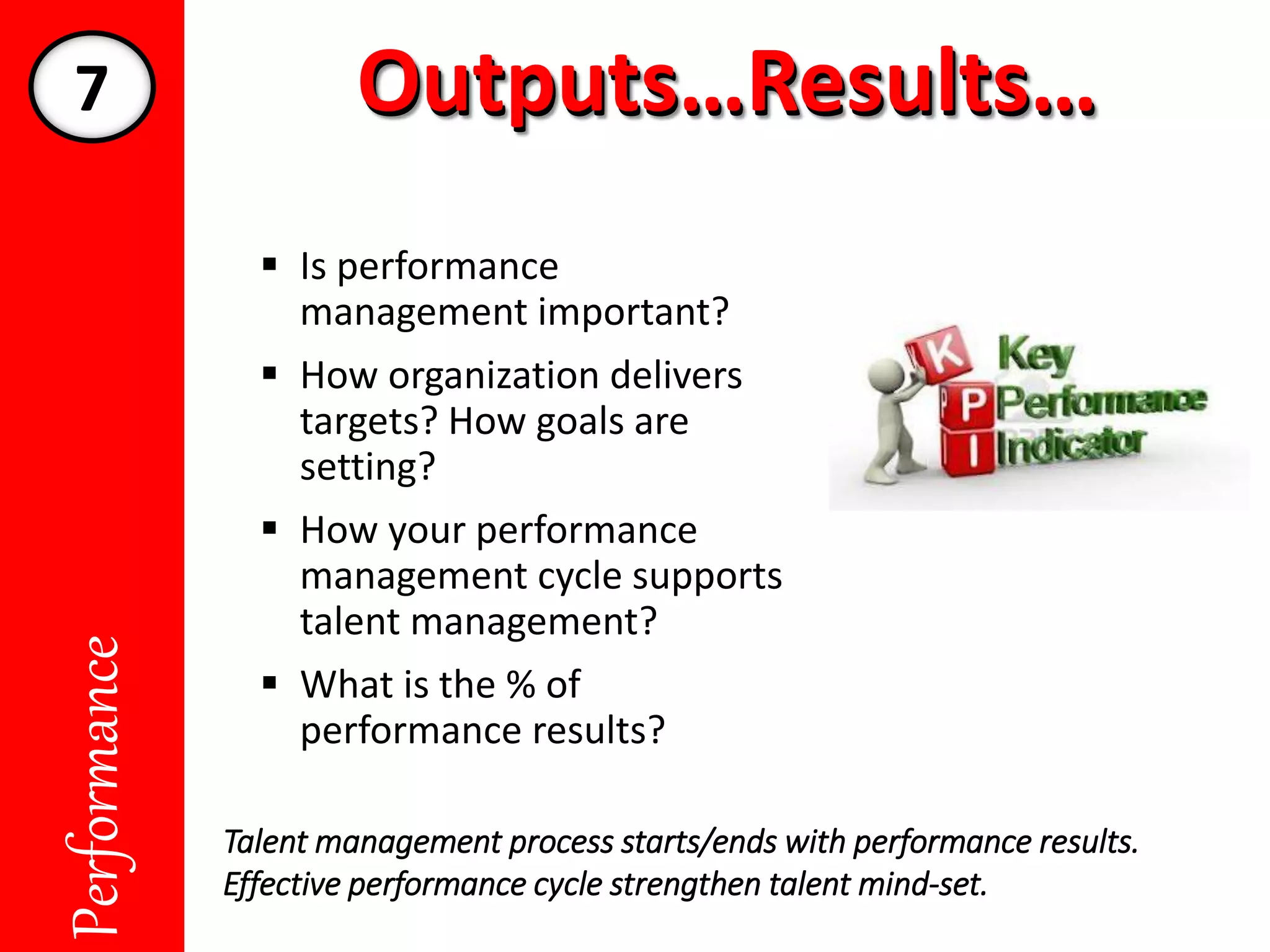
Outputs…Results…Outputs…Results…Performance
 Is performance
management important?
 How organization delivers
targets? How goals are
setting?
 How your performance
management cycle supports
talent management?
 What is the % of
performance results?
Talent management process starts/ends with performance results.
Effective performance cycle strengthen talent mind-set.
7
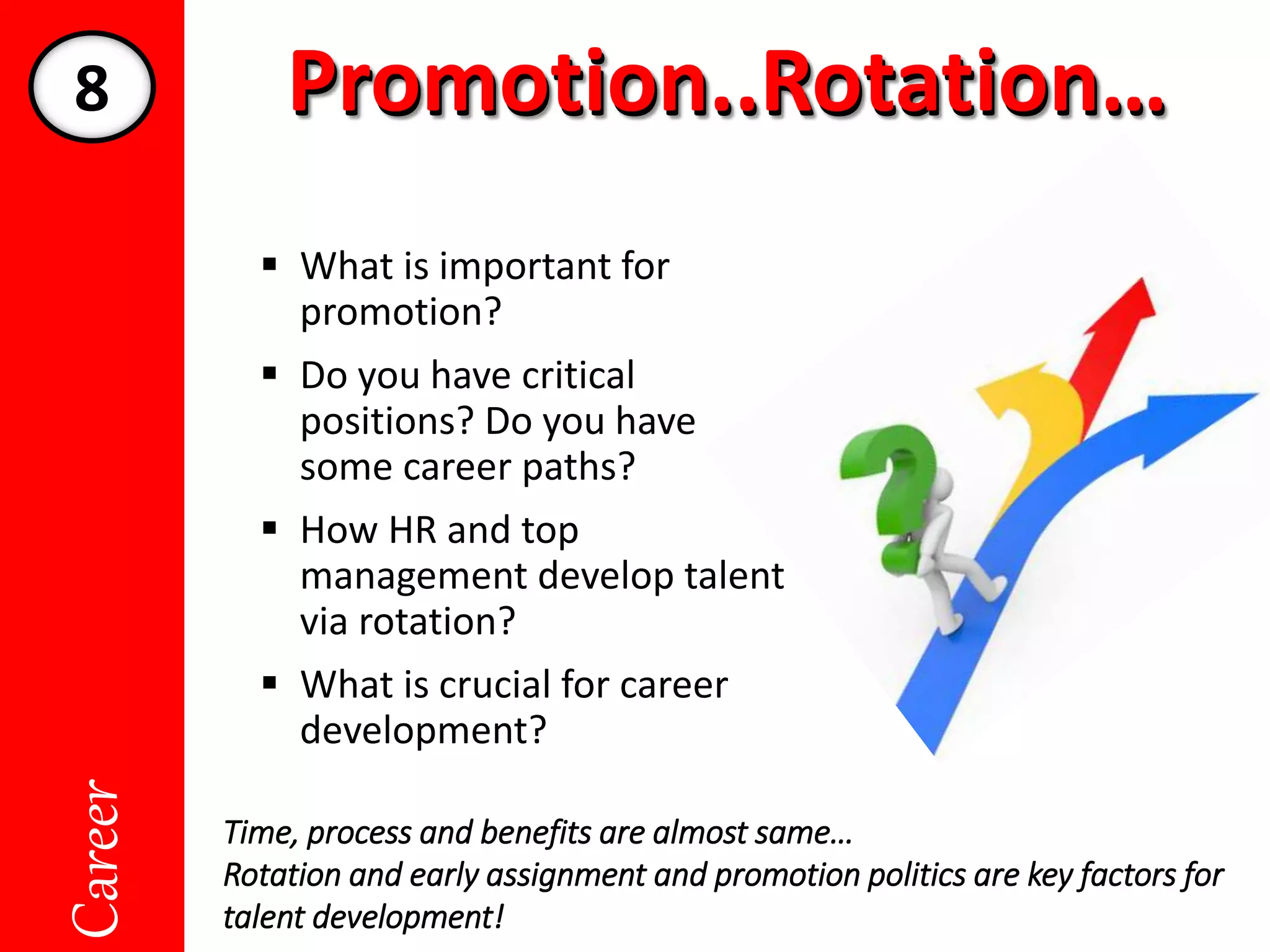
Promotion..Rotation…Promotion..Rotation…Career
 What is important for
promotion?
 Do you have critical
positions? Do you have
some career paths?
 How HR and top
management develop talent
via rotation?
 What is crucial for career
development?
Time, process and benefits are almost same…
Rotation and early assignment and promotion politics are key factors for
talent development!
8
Segmentation of talentsSegmentation of talentsReward&Recognition
 What is reward strategy? Any
differentation for talents?
 What is the key points for
recognition in the
organization?
 What is the difference
between expected and
outperformed performance?
Human motivation is the main driver for the behaviors.
Behaviors driven by thoughts… Fairness is important for thoughts.
9
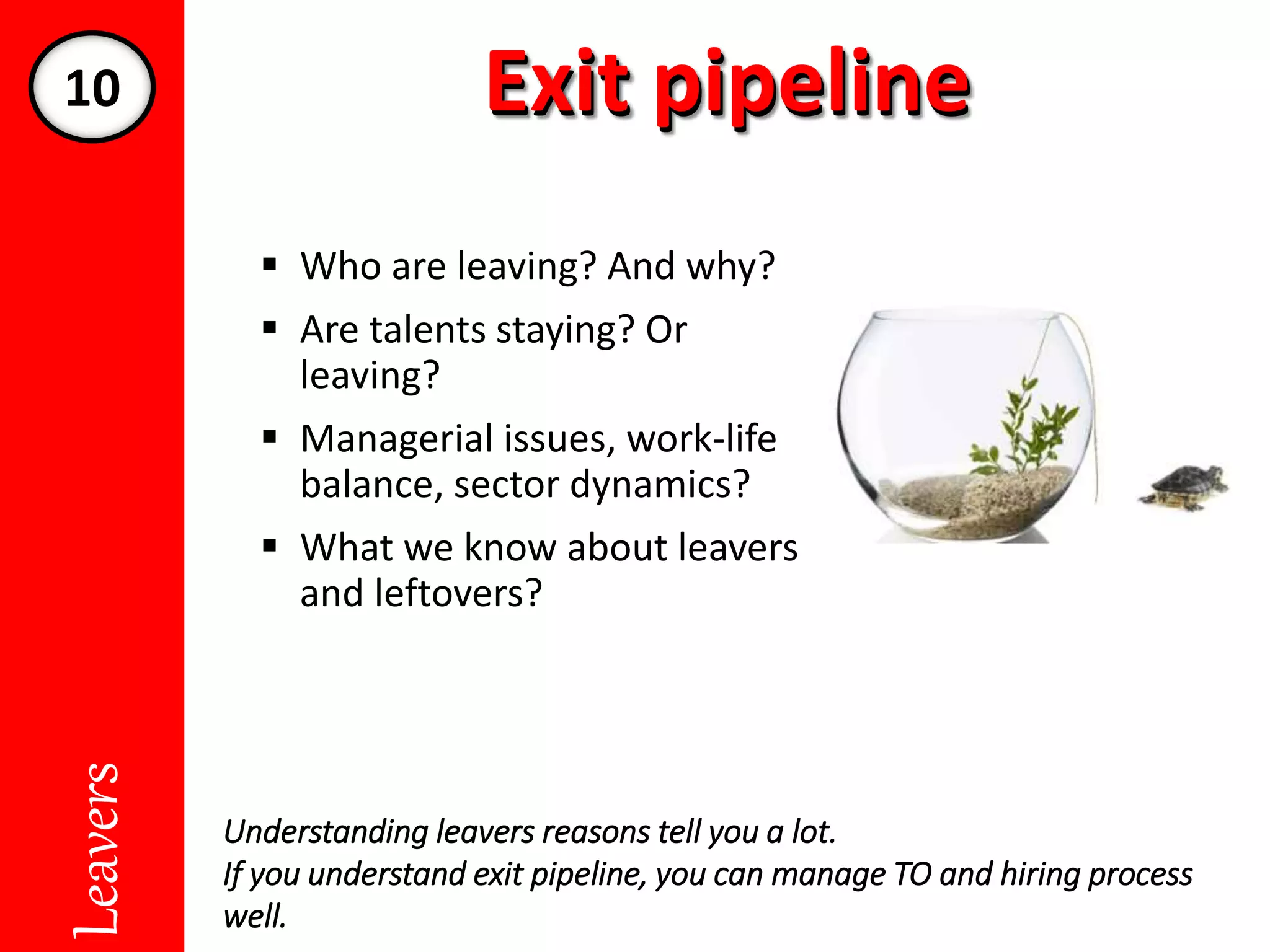
Exit pipelineExit pipelineLeavers
 Who are leaving? And why?
 Are talents staying? Or
leaving?
 Managerial issues, work-life
balance, sector dynamics?
 What we know about leavers
and leftovers?
Understanding leavers reasons tell you a lot.
If you understand exit pipeline, you can manage TO and hiring process
well.
10
«If you like this presentation, please like and share with your
comments»
thank youthank you
@sezaikayaoglu
Consultant, Psychologist, HR Professional
«If you like this presentation, please like and share with your
comments»
kayaoglu@gmail.com

10 Steps to Successful Talent Management

  • 1.
  • 2.
    Evaluation of HRValue Chain Solution Provider Business Partnership Operations & Support Leading Change High HighLow Value Impact Administrator Professional Partner Change Agent Personnel Management Human Resources Human Capital Talent Management
  • 3.
    Usual comments aboutTM We don’t have a talent strategy We have a talent management but not aligned with strategies We have to be quick, talent is a process, we can not wait… Roles are complicated, it is mental issue, not talent. Potential, talent, stars… what we are really talkin’ about? It’s a manager choice, no need for paperwork..! Are you gonnna pay more to your talents? It’s a pool thing…?!? HR has no idea what is talent… and they have no budget as well! We are very well how to loose talent…
  • 4.
    TALENT MANAGEMENT ISA JOURNEY…! dynamic diverse creative difficult long risky competetive busy hard
  • 5.
    What is theperception?What is the perception?EmployerBranding  Do you have an attaction for the best?  Do you find, what you really need?  Are you confident to transfer?  Good? Better? The Best? If you have a good brand image to your customer, then you have a similar employer brand to your potential employees. 1
  • 6.
    Talent AttractionTalent AttractionResourcing Replacement time and effort?  How many application you can get any time? Do you have a strong pipeline?  Do you have enough time for replace? Talents are hard to find. Everyday, they are decreasing. It will be hard to get each day from now on. You should have an agile hiring process. 2
  • 7.
    Organizational DynamicsOrganizational DynamicsStrategy Are jobs changing? Tasks? Strategies? Big differences compared to last year?  Do you have new market? How many new products and services are you planning? # of customer?  Do you have some new and challenging organizational issues? Talent management strategy has to be aligned with organizational strategy. If the strategy is a map, your talents will be your guide. 3
  • 8.
    Leadership DevelopmentLeadership DevelopmentLeadership How many leaders do you have to convince for talent strategy?  Are your leaders developing and supporting talent development?  What kind of leadership development are you working on? Talents are really consider about their leaders. Leaders are crucial for development and retention. What is the best way for leadership pipeline? 4
  • 9.
    What kind ofenvironment?What kind of environment?Culture  Shared messages VS Understood messages  What is your culture’s characteristics?  Current culture VS Desired culture Competetive or not? Engaged or not? Is your culture enable your talent strategy? Are your tires compatible your engine? 5
  • 10.
    Talent DevelopmentTalent DevelopmentTraining/Development Do you have a learning path?  What is your learning agility?  How are you developing your talents? What kind of tools do you have?  Talent = Curiosity and self- development, depth knowledge, expertise…etc? Learning agility is a must.. Curiosity is a only way for future adaptation. Development is mandatory for talent management cycle. 6
  • 11.
    Outputs…Results…Outputs…Results…Performance  Is performance managementimportant?  How organization delivers targets? How goals are setting?  How your performance management cycle supports talent management?  What is the % of performance results? Talent management process starts/ends with performance results. Effective performance cycle strengthen talent mind-set. 7
  • 12.
    Promotion..Rotation…Promotion..Rotation…Career  What isimportant for promotion?  Do you have critical positions? Do you have some career paths?  How HR and top management develop talent via rotation?  What is crucial for career development? Time, process and benefits are almost same… Rotation and early assignment and promotion politics are key factors for talent development! 8
  • 13.
    Segmentation of talentsSegmentationof talentsReward&Recognition  What is reward strategy? Any differentation for talents?  What is the key points for recognition in the organization?  What is the difference between expected and outperformed performance? Human motivation is the main driver for the behaviors. Behaviors driven by thoughts… Fairness is important for thoughts. 9
  • 14.
    Exit pipelineExit pipelineLeavers Who are leaving? And why?  Are talents staying? Or leaving?  Managerial issues, work-life balance, sector dynamics?  What we know about leavers and leftovers? Understanding leavers reasons tell you a lot. If you understand exit pipeline, you can manage TO and hiring process well. 10
  • 15.
    «If you likethis presentation, please like and share with your comments» thank youthank you @sezaikayaoglu Consultant, Psychologist, HR Professional «If you like this presentation, please like and share with your comments» kayaoglu@gmail.com