
Introduction to
Renewable &
Solar
Energy
Nithya Susan Varghese
Content
 Types of Renewable energy
 Mix of Renewable Energy in the world
 Solar Energy
 Scope of Solar energy
 Solar Technologies
 Applications, Benefits and Drawbacks
 Conclusion
8/30/2015
8/30/2015
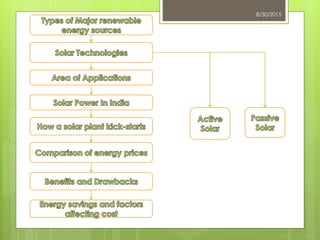
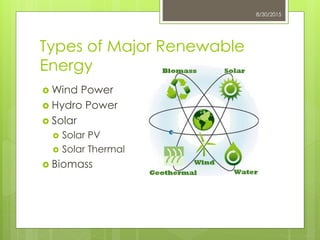
Types of Major Renewable
Energy
 Wind Power
 Hydro Power
 Solar
 Solar PV
 Solar Thermal
 Biomass
8/30/2015
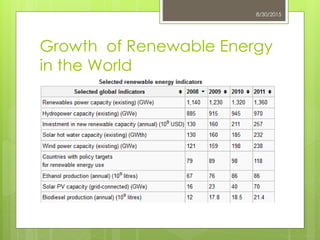
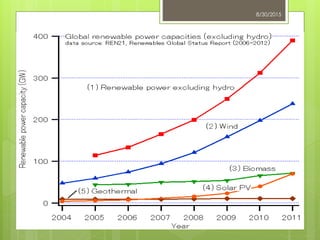
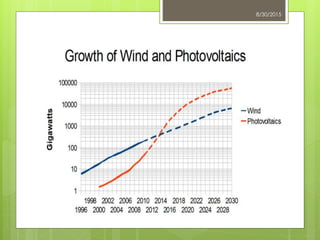
Growth of Renewable Energy
in the World
8/30/2015
8/30/2015
Last updated 17th Aug 2013
8/30/2015
Last updated 17th Aug 2013
8/30/2015
Last updated 17th Aug 2013
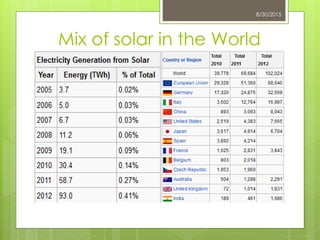
Mix of solar in the World
8/30/2015
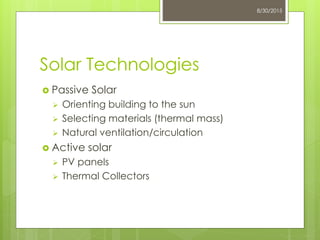
Solar Technologies
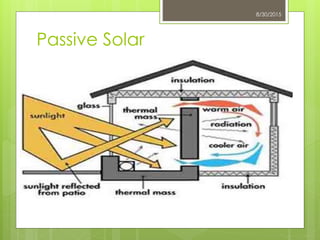
 Passive Solar
 Orienting building to the sun
 Selecting materials (thermal mass)
 Natural ventilation/circulation
 Active solar
 PV panels
 Thermal Collectors
8/30/2015
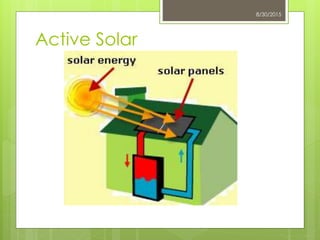
Active Solar
8/30/2015
Passive Solar
8/30/2015
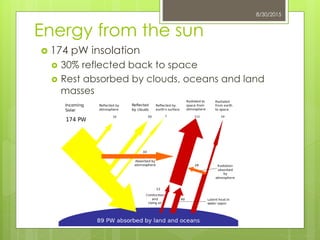
Energy from the sun
 174 pW insolation
 30% reflected back to space
 Rest absorbed by clouds, oceans and land
masses
8/30/2015
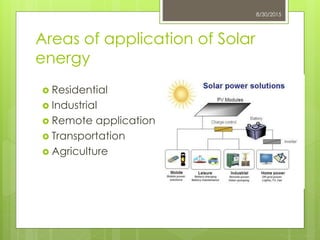
Areas of application of Solar
energy
 Residential
 Industrial
 Remote application
 Transportation
 Agriculture
8/30/2015
8/30/2015
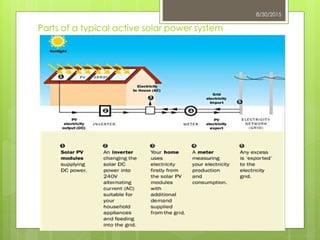
Parts of a typical active solar power system
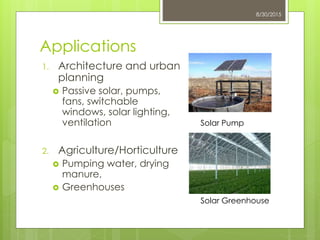
Applications
1. Architecture and urban
planning
 Passive solar, pumps,
fans, switchable
windows, solar lighting,
ventilation
2. Agriculture/Horticulture
 Pumping water, drying
manure,
 Greenhouses
8/30/2015
Solar Pump
Solar Greenhouse
8/30/2015
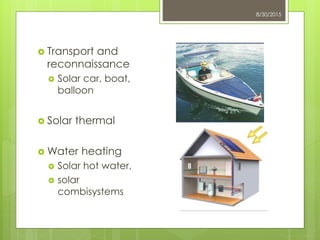
 Transport and
reconnaissance
 Solar car, boat,
balloon
 Solar thermal
 Water heating
 Solar hot water,
 solar
combisystems
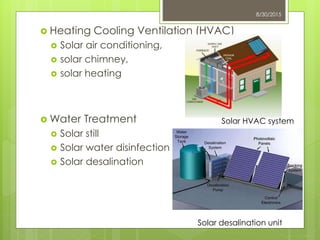
 Heating Cooling Ventilation (HVAC)
 Solar air conditioning,
 solar chimney,
 solar heating
 Water Treatment
 Solar still
 Solar water disinfection
 Solar desalination
8/30/2015
Solar HVAC system
Solar desalination unit
8/30/2015
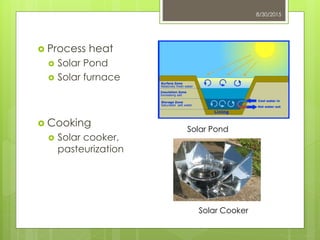
 Process heat
 Solar Pond
 Solar furnace
 Cooking
 Solar cooker,
pasteurization
Solar Pond
Solar Cooker
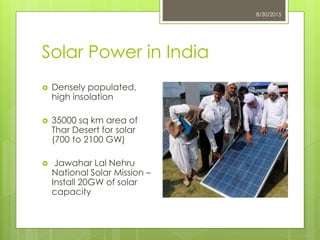
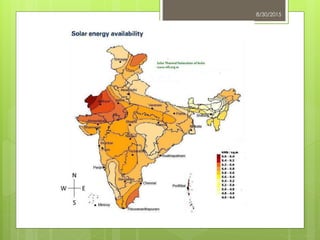
Solar Power in India
8/30/2015
 Densely populated,
high insolation
 35000 sq km area of
Thar Desert for solar
(700 to 2100 GW)
 Jawahar Lal Nehru
National Solar Mission –
Install 20GW of solar
capacity
8/30/2015
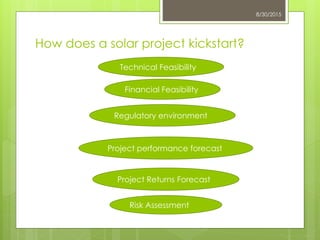
How does a solar project kickstart?
8/30/2015
Technical Feasibility
Financial Feasibility
Regulatory environment
Project performance forecast
Project Returns Forecast
Risk Assessment
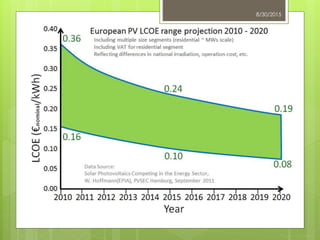
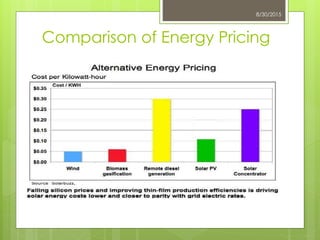
Comparison of Energy Pricing
8/30/2015
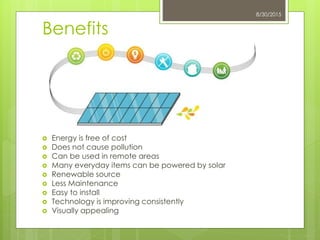
Benefits
 Energy is free of cost
 Does not cause pollution
 Can be used in remote areas
 Many everyday items can be powered by solar
 Renewable source
 Less Maintenance
 Easy to install
 Technology is improving consistently
 Visually appealing
8/30/2015
Drawbacks
 Can be harnessed only during daytime
 Solar panels, cells collectors expensive, though rates
are falling.
 Don’t match power requirements of similar sized
conventional power stations
 Large areas required , unreliable climate
problematic
 Large batteries required (For Off Grid systems)
8/30/2015
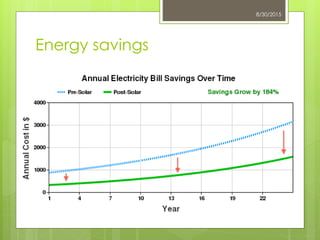
Energy savings
8/30/2015
Last updated 17th Aug 2013
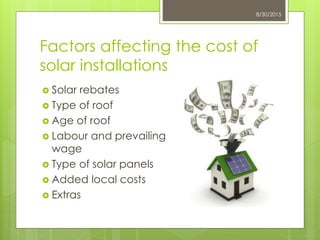
Factors affecting the cost of
solar installations
 Solar rebates
 Type of roof
 Age of roof
 Labour and prevailing
wage
 Type of solar panels
 Added local costs
 Extras
8/30/2015
Why choose solar?
 Possible to take advantage of
government rebates
 Increase property value
 Protect yourself from increasing electricity
costs
 Reduce carbon footprint and go green
 Supply back to the grid/ Rent solar panels
and earn money
8/30/2015
Thank You!
8/30/2015

1 renewable, solar energy, scopes

  • 1.
  • 2.
    Content  Types ofRenewable energy  Mix of Renewable Energy in the world  Solar Energy  Scope of Solar energy  Solar Technologies  Applications, Benefits and Drawbacks  Conclusion 8/30/2015
  • 3.
  • 4.
    Types of MajorRenewable Energy  Wind Power  Hydro Power  Solar  Solar PV  Solar Thermal  Biomass 8/30/2015
  • 5.
    Growth of RenewableEnergy in the World 8/30/2015
  • 6.
  • 7.
  • 8.
  • 9.
    Mix of solarin the World 8/30/2015
  • 10.
    Solar Technologies  PassiveSolar  Orienting building to the sun  Selecting materials (thermal mass)  Natural ventilation/circulation  Active solar  PV panels  Thermal Collectors 8/30/2015
  • 11.
  • 12.
  • 13.
    Energy from thesun  174 pW insolation  30% reflected back to space  Rest absorbed by clouds, oceans and land masses 8/30/2015
  • 14.
    Areas of applicationof Solar energy  Residential  Industrial  Remote application  Transportation  Agriculture 8/30/2015
  • 15.
    8/30/2015 Parts of atypical active solar power system
  • 16.
    Applications 1. Architecture andurban planning  Passive solar, pumps, fans, switchable windows, solar lighting, ventilation 2. Agriculture/Horticulture  Pumping water, drying manure,  Greenhouses 8/30/2015 Solar Pump Solar Greenhouse
  • 17.
    8/30/2015  Transport and reconnaissance Solar car, boat, balloon  Solar thermal  Water heating  Solar hot water,  solar combisystems
  • 18.
     Heating CoolingVentilation (HVAC)  Solar air conditioning,  solar chimney,  solar heating  Water Treatment  Solar still  Solar water disinfection  Solar desalination 8/30/2015 Solar HVAC system Solar desalination unit
  • 19.
    8/30/2015  Process heat Solar Pond  Solar furnace  Cooking  Solar cooker, pasteurization Solar Pond Solar Cooker
  • 20.
    Solar Power inIndia 8/30/2015  Densely populated, high insolation  35000 sq km area of Thar Desert for solar (700 to 2100 GW)  Jawahar Lal Nehru National Solar Mission – Install 20GW of solar capacity
  • 21.
  • 22.
    How does asolar project kickstart? 8/30/2015 Technical Feasibility Financial Feasibility Regulatory environment Project performance forecast Project Returns Forecast Risk Assessment
  • 23.
    Comparison of EnergyPricing 8/30/2015
  • 24.
    Benefits  Energy isfree of cost  Does not cause pollution  Can be used in remote areas  Many everyday items can be powered by solar  Renewable source  Less Maintenance  Easy to install  Technology is improving consistently  Visually appealing 8/30/2015
  • 25.
    Drawbacks  Can beharnessed only during daytime  Solar panels, cells collectors expensive, though rates are falling.  Don’t match power requirements of similar sized conventional power stations  Large areas required , unreliable climate problematic  Large batteries required (For Off Grid systems) 8/30/2015
  • 26.
  • 27.
    Factors affecting thecost of solar installations  Solar rebates  Type of roof  Age of roof  Labour and prevailing wage  Type of solar panels  Added local costs  Extras 8/30/2015
  • 28.
    Why choose solar? Possible to take advantage of government rebates  Increase property value  Protect yourself from increasing electricity costs  Reduce carbon footprint and go green  Supply back to the grid/ Rent solar panels and earn money 8/30/2015
  • 29.